Category Archives: Security

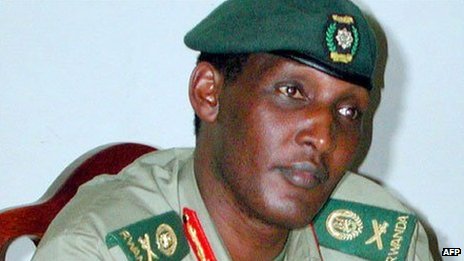
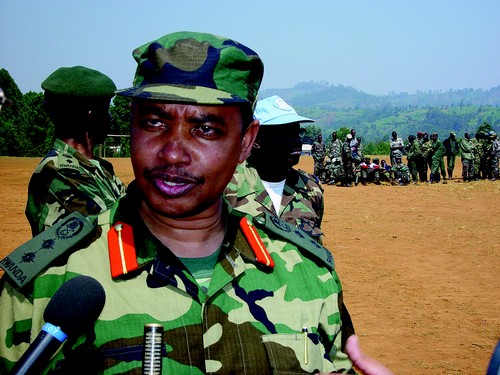
Le colonel Mamadou Ndala tué dans une embuscade à Beni

mamadou ndalaLe colonel Mamadou Ndala, commandant de la Brigade Commando URR (Unité de réaction rapide), a été tué ce jeudi 2 janvier dans une embuscade tendue par des hommes armés non encore identifiés dans le village appelé Ngadi, entre l’aéroport de Mavivi et Beni-ville (Nord-Kivu). Joint au téléphone, le porte-parole du gouvernement, Lambert Mende, a confirmé la nouvelle.

Selon des sources militaires, plusieurs membres du convoi ont également été tués. Pour l’instant, les Casques bleus népalais de la Monusco, arrivés sur les lieux, s’activent à éteindre le feu mis par les assaillants à l’un des véhicules du convoi. Celui-ci aurait perdu plusieurs autres de ses membres dont le nombre reste à déterminer.

Peu avant la confirmation de sa mort, son garde du corps, le caporal Paul Safari, a fait ce témoignage à l’AFP :

« Une roquette est arrivée du côté droit de la route et a atteint notre jeep, surmontée d’une arme lourde. J’ai commencé à tirer jusqu’à terminer toutes mes munitions, mais nos agresseurs avançaient toujours. Quand la roquette a touché la jeep, le colonel était toujours en vie. Quand j’ai fui, je ne l’ai pas vu sortir de la voiture, je ne sais pas s’il est vivant ou pas ».

Le colonel Mamadou Ndala a été au premier plan lors des opérations des Forces armées de la RDC contre le M23. Après avoir délogé les rebelles à Nyiragongo et Rutshuru, des rumeurs avaient annoncé sa relève de Goma pour Kinshasa.

Cette rumeur avait suscité en juillet dernier des vives protestations dans les rues de Goma (Nord-Kivu) où des jeunes avaient manifesté pour demander le maintien en fonction de cet officier militaire.

Mamadou Ndala était obligé de démentir cette rumeur en déclarant : « Ce n’est pas vrai, c’est une rumeur. Une manipulation des rebelles qui veulent déstabiliser le moral de la population et des troupes engagées au sol ».

Le colonel Mamadou Ndala menait une autre opération contre des rebelles ougandais de l’Adf-Nalu. L’armée avait déjà réussi à récupérer la localité de KamangoKisiki et le pont de Semliki, jadis occupé par des rebelles.

C’est lorsque le convoi des FARDC est arrivé dans le village appelé Ngadi, qu’il a été ciblé par des rebelles qui ont tué le colonel Mamadou Ndala.

Source : Radio Okapi
Patrick Karegeya: Rwanda exile ‘murdered’ in Johannesburg


_72042008_photo2

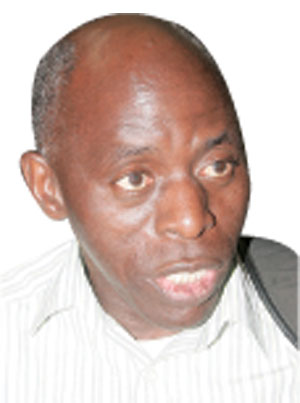
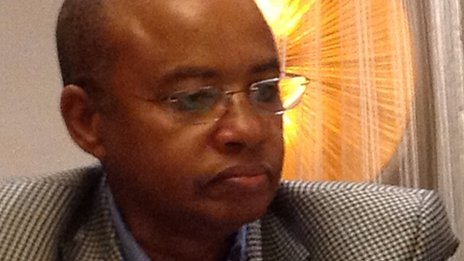
Patrick Karegeya formed an opposition party in 2010

Exiled former Rwandan intelligence chief Patrick Karegeya has been apparently murdered in a Johannesburg hotel room, South African police say.

They say the dissident might have been strangled, with a rope and bloodied towel found in the hotel room safe.

Mr Karegeya was stripped of the rank of colonel after falling out with his former ally, President Paul Kagame.

President Kagame’s allies have previously denied accusations of links to a series of dissident attacks.

Mr Karegeya, 53, formerly head of Rwanda’s foreign intelligence service, had lived for the past six years in South Africa, where he had been granted political asylum.

A fellow exiled dissident, former army chief Faustin Kayumba Nyamwasa, has survived two assassination attempts since fleeing to South Africa in 2010.

The pair formed a new opposition party – the Rwanda National Congress – in 2010.

Gen Nyamwasa told the BBC that Mr Karegeya had gone to the upmarket Michelangelo Towers hotel to meet “somebody he knew very well, somebody who had come from Kigali”.

He accused the Rwandan government of being behind the killing.

_72036984_rwanda464afp

Patrick Karegeya’s ally, Lt Gen Faustin Kayumba Nyamwasa, has survived two assassination attempts in South Africa

Rwanda’s ambassador to South Africa, Vincent Karega, dismissed this as an “emotional reaction and opportunistic way of playing politics”, reports The Associated Press news agency.

“We encourage the authorities to really look into the matter so that we know exactly what happened,” the Reuters news agency quotes him as telling local radio.

A police statement on Mr Karegeya’s death said: “Preliminary investigations revealed that his neck [was] swollen – there is a possibility that he might have been strangled.”

He leaves a widow and three children.

Rwandan exiles in several Western countries including the UK and US say local security agents have warned them of plots to kill them.

The Rwandan government has denied trying to kill its opponents.

Mr Karegeya and Gen Nyamwasa were among four exiled former top officials for whom Rwanda issued international arrest warrants in 2011.

A military court earlier sentenced them to long jail terms in absentia for threatening state security and promoting ethnic divisions.

Both men were part of Mr Kagame’s rebel forces which came to power in 1994, ending the genocide of their fellow ethnic Tutsis.

Mr Kagame has been accused of not tolerating opposition.

He maintains that Rwanda needs a strong government to prevent a return to ethnic conflict.

Source: BBC News


Rwanda: a key opponent assassinated, Rwandan intelligence operatives involved.


karegeya

Like other political opponents, Col Patrick Karegeya was targeted by Kagame’s operatives

The Rwandan opposition is deeply saddened to announce the assassination of Colonel Patrick Karegeya today in Johannesburg, South Africa. His body was found in a Hotel where he went for a meeting. The South African authorities are investigating the murder. Colonel Patrick Karegeya was a key figure in the Rwandan opposition and a founding member of the Rwanda National Congress.

Rwandan opposition key figures have been a target in South Africa and other parts of the world. We all remember our colleague General Kayumba Nyamwasa who survived two assassination attempts in Johannesburg on June 18, 2010 and June 20, 2010. Investigations have found overwhelming evidence of the involvement of Rwandan Intelligence operatives in those attempts.

By killing its opponents, the criminal regime in Kigali seeks to intimidate and silence the Rwandan people into submission. The regime is hugely mistaken. Such criminal activities make Rwandan people more emboldened to struggle to remove the dictatorship.

Colonel Patrick Karegeya was a courageous soldier who died on the battlefield. We are determined more than ever before to carry the torch of struggling for freedom, for which he died. We shall win. We extend our condolences to Mrs. Leah Karegeya and the children, and pray that they find strength in these difficult times.

May the Almighty God grant his soul to rest in peace.

Further details will be communicated later.

On behalf of the opposition Platform RNC, FDU-INKINGI and Amahoro People’s Congress.

Dr. Theogene Rudasingwa
Coordinator
Rwanda National Congress.
ngombwa@gmail.com

There are few or no more secrets left: NSA ‘hacking unit’ infiltrates computers around the world – report

A-hackers-silhouette-007

Der Spiegel reported that TAO’s areas of operation range from counter-terrorism to cyber attacks. Photograph: Getty Image

A top-secret National Security Agency hacking unit infiltrates computers around the world and breaks into the toughest data targets, according to internal documents quoted in a magazine report on Sunday.

Details of how the division, known as Tailored Access Operations (TAO), steals data and inserts invisible “back door” spying devices into computer systems were published by the German magazine Der Spiegel.

The magazine portrayed TAO as an elite team of hackers specialising in gaining undetected access to intelligence targets that have proved the toughest to penetrate through other spying techniques, and described its overall mission as “getting the ungettable”. The report quoted an official saying that the unit’s operations have obtained “some of the most significant intelligence our country has ever seen”.

NSA officials responded to the Spiegel report with a statement, which said: “Tailored Access Operations is a unique national asset that is on the front lines of enabling NSA to defend the nation and its allies. [TAO’s] work is centred on computer network exploitation in support of foreign intelligence collection.”

Der Spiegel has previously reported on documents leaked by the formerNSA contractor Edward Snowden. The report on Sunday was partly compiled by Laura Poitras, who collaborated with Snowden and the Guardian on the first publication of revelations about the NSA’s collection of the telephone data of thousands of Americans and overseas intelligence targets.

On Friday, the NSA phone data-collection programme was ruled legal by a federal judge in New York, days after a federal judge in Washingtondeclared the operations unconstitutional and “almost Orwellian”.

On Sunday, appearing on the CBS talk show Face the Nation, former air force general and NSA and CIA chief Michael Hayden called Snowden a traitor and accused him of treason. He also accused Snowden of making the NSA’s operation “inherently weaker” by revealing not just the material that comes out of the agency but the “plumbing”, showing how the system works inside the government.

On NBC’s Meet the Press Ben Wizner, a legal adviser to Snowden, said the contrasting opinions of the two federal judges were now likely to see the case end up in front of the supreme court.

“It’s time for the supreme court to weigh in and to see whether, as we believe, the NSA allowed its technological abilities to outpace democratic control,” Wizner said.

Asked if Snowden, who was granted one year’s asylum in Russia, should return to the US to face charges, Wizner said: “For now, he doesn’t believe and I don’t believe that the cost of his act of conscience should be a life behind bars.”

In a recent interview with the Washington Post, Snowden declared that he had “already won” and accomplished what he set out to do. On Sunday, Wizner said Snowden’s mission was to bring the public, the courts and lawmakers into a conversation about the NSA’s work.

“He did his part,” Wizner said. “It’s now up to the public and our institutional oversight to decide how to respond.”

According to the Spiegel report, TAO staff are based in San Antonio, Texas, at a former Sony computer chip factory, not far from another NSAteam housed alongside ordinary military personnel at Lackland Air Force Base. The magazine described TAO as the equivalent of “digital plumbers”, called in to break through anti-spying “blockages”. The team totalled 60 specialists in 2008, the magazine said, but is expected to grow to 270 by 2015.

TAO’s areas of operation range from counter-terrorism to cyber attacks, the magazine said, using discreet and efficient methods that often exploit technical weaknesses in the technology industry and its social media products.

The documents seen by Der Spiegel quote a former chief of TAO saying that the unit “has access to our very hardest targets” and its mission would be to “support computer network attacks as an integrated part of military operations” using “pervasive, persistent access on the global network”.

By 

Source: http://www.theguardian.com/world/2013/dec/29/der-spiegel-nsa-hacking-unit-tao?CMP=EMCNEWEML6619I2

Christmas, South Sudan and Pan Africanism.

Thinking+Critically-Dr+Lwatama

Dr Azaveli Feza Lwatama

On December 25 most citizens of the world take time off to eat and drink and be merry wishing there was peace on earth. For citizens of the world who belong to the Christian religious faith, this is a day when they sing joy to the world because now redemption is possible through the birth of what they call Christ or the messiah or the anointed who they claim was sent to redeem us from the original sin. The day is celebrated by a mass and that may explain why it is called Christmas meaning Christ’s mass with Christ, Khrīstos in Greek, thus the day also being referred to as Xmas.

The day is celebrated as ‘birthday’ of the redeemer who increases the prospects for peace in the world resulting from all humans repenting and vowing to be born again as peace loving people who refuse to be slaves of their crude un-socialized animal instincts, so-called human nature, that tends to make them to want to glorify their individual egos at the expense of serving the noble goal of promoting the common good.

It is this fundamental idea of Christmas as ‘ the day of birth’ that explains why the day is celebrated with nativity rituals, whereby birth translates into nātīvitās in Latin and ‘noël’ in Old French; thus, Xmas also being referred to as ‘Noel’. Whether one is Christian or not, it is possible to relate the core value of Noel, which is rebirth by all humanity through pledging to reject all forms of egoistic primitive accumulation of wealth aimed at satisfying greedy wild animal-like instincts, including wanting to exercise absolute power over others and wanting to prosper at the expense of the misery of others.

If the key message of Noel cerebrations had been heeded by all global citizen, there would never have been such exploitative social, political and economic systems of human governance as feudalism and capitalism. The Atlantic Slave trade would never have happened nor would there have been what historian and political activist Walter Rodney called How Europe Underdeveloped Africa that culminated in the colonization and neo-colonization of Africa.

Due to the continued existence of these exploitative systems, today, as world citizens celebrate Christmas, the people of South Sudan are passing through trying times. They are being killed, maimed, turned into refugees or made into internally displaced people by an unfolding civil war brought upon them by the rapacious appetites for power of their so-called revolutionary leaders. People who yesterday were preaching unity to them, are now busy trying to tear them apart on ethnic lines in order to justify their bid for territorial state power or their attempt to perpetuate their current hold on it.

People who yesterday were telling them that they were one people called South Sudanese, distinct from being Sudanese or Africans, are now busy telling them that they are Dinka and Nuer. People who yesterday were telling them they were all one people in Christ unlike their brothers and sisters in the North who were supposedly Muslim, are now hastily constructing new buzz words to hide the fact that they lied big time in the past when they sought to unity people of South Sudan on the false basis of being a so-called harmonious Christian ‘nation’ who did not belong to the Muslim ‘nation’ in North Sudan. Social class analysis would suggest that although President Salva Kiir Mayyardit may be a Dinka, former Vice President Dr Riek Machar Teny may be a Nuer, and the widow of the late leader of the Sudan People’s Liberation Army ( SPLA) Rebecca Nyadeng Garang de Mabior may also be Dinka, their current socioeconomic status in the territorial national state of South Sudan places them in the same social class as their Pan African national brother in North Sudan, President Omal al Bashir of the Republic of Sudan.

What is happening right now in South Sudan, just as the rest of the world is marking the re-birth of humanity through Nelson Mandela-like sacrifices for peace ought to make all of us in Africa reflect on the goals of the formation of the Organization of African Unity, 50 years ago.

The heart breaking news we are receiving from South Sudan, as we eat and drink in celebration of the birth of Khrīstos as an harbinger of peace, ought to make us to think critically about the merits of embracing the ideology of Pan Africanism and Kwame Nkrumah’s slogan of ‘Forward ever towards the United States of Africa!’

By  Dr Azaveli Feza Lwatama

The Citizen

Machar hits at Ugandan force over town raids.

ugandanians

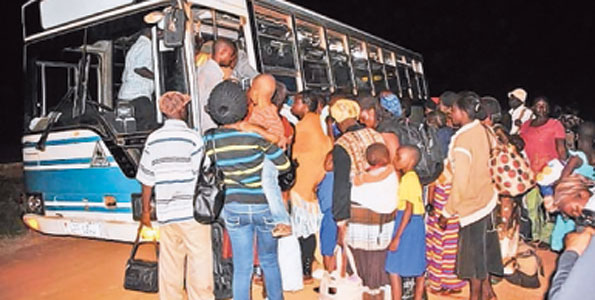
Ugandans board a bus at Entebbe International Airport, shortly after arriving from South Sudan on Sunday evening.  Uganda has evacuated 600 of its citizens from violence-wracked South Sudan.

Former South Sudan Vice President Riek Machar has claimed that Ugandan fighter jets backing President Salva Kiir’s forces bombed Bor town on Saturday, a claim the Ugandan government has denied. The State minister for International Affairs, Mr Oryem Okello, yesterday described claims that Ugandan fighter jets had bombed areas in Jonglei state controlled by mutinying soldiers loyal to Mr Machar as a “bunch of lies” intended to taint Uganda’s image.

South Sudan plunged into turmoil after President Kiir accused Mr Machar of attempting to carry out a coup. Mr Machar told BBC on Saturday that UPDF had bombed the Jonglei’s capital, Bor.

But Mr Oryem insisted that UPDF is not militarily involved. “Let him not drag us into their problems. Uganda is not involved militarily. We are just evacuating our citizens.

Let him not mislead the world. Uganda would only get involved under the auspices of the United Nations,” he said. Soldiers loyal to Mr Machar shot at American aircrafts in Bor on Saturday and injured four soldiers who are receiving treatment in Nairobi. Mr Machar also confirmed that the forces fighting the government were under his command, adding that they are in control of “much of the country” including Bor, a strategic town, which is the capital city of Jonglei state. The SPLA spokesperson, Col Philip Aguer, confirmed the fall of Unity state following a declaration by the SPLA 4th Division commander, Maj Gen Koang Chuol, that the region had fallen under the control of Machar.

Sources told the Daily Monitor yesterday that there were several killings in Bentiu, capital of Unity State, estimating that 3,000 people, mainly of the Dinka tribe have been killed in the last six days.

And by 6pm on Sunday, security source, said soldiers loyal to Machar had taken full control of Unity state’s oilfields. If confirmed, it will be a huge economic blow for the government. South Sudan has been in turmoil since President Kiir accused Mr Machar a week ago of attempting a coup.

Source: The Citizen

Soudan du Sud: un avion américain touché

Un avion de l’armée américaine, en mission pour aider aux évacuations de ressortissants américains dans les zones de combat, a été touché samedi par un tir au Soudan du Sud, selon des sources militaire et diplomatique.


Quatre militaires américains auraient été blessés par ce tir contre l’avion à Bor, la capitale de l’Etat de Jonglei, tenue par les rebelles de Riek Machar.

“Après avoir essuyé des tirs à partir du sol en approchant du site, l’appareil s’est dérouté sur un terrain d’aviation en dehors du pays et a interrompu la mission”, déclare le Commandement des États-Unis pour l’Afrique dans un communiqué.


Le président du sud-soudanais Salva Kiir, qui appartient à l’ethnie des Dinkas, accuse son ancien vice-président Riek Machar, un Nuer qu’il a limogé en juillet dernier, d’avoir tenté de s’emparer du pouvoir par la force. Après avoir fait rage dans la capitale Juba, les combats se sont étendus à d’autres régions. 

Source: Le Figaro

Understanding Rwandan future instability according to AFRICOM

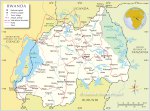
rwanda-map

The U.S. Africa Command (AFRICOM ) commissioned a study to examine the risks of instability in 10 African countries over the next decade. Among these is Rwanda.

Understandably events in Tunisia, Egypt and Libya and in the Middle East unfolded without many Western policymakers knowing exactly the underlying causes. Have they been able to predict the upheavals and revolutions we have witnessed since early 2011, they would apparently and certainly have better protected their national interests in each particular situation. Forget about the humanitarian pretexts.

For targeted countries, the aim of the study was to understand underlying factors, possibly stretch out some potential scenarios, analyse the dynamics that could result into instability, and ultimately prepare for action to face it [this last outcome is assumed].

Jennifer G. Cooke, the author of the study on Rwanda, makes the following possible scenarios which, in the coming years, could result for the country in a situation of instability

  1. A stalling of the government’s development programme which has become its flagship; this could come for example from a decrease of external flow of capital (aid and others including hard currencies from exports and tourism), or an increase of key commodity prices which could change radically the current economic and social parameters
  2. The situation in Eastern Congo could create favourable conditions, or become with time a strong base for a serious military opposition to Kagame’s regime
  3. The assassination of a high level figure within the RPF or in the opposition could provoke on the one hand a disproportionate security response from the RPF, or on the other hand, a spontaneous popular uprising
  4. The high level of uncertainty surrounding Kagame’s succession, come 2017, if he manages to finish in office his second constitutional term.

In Rwanda, many, if not all channels for social and political debate are either absent or under strict control of the RPF regime. Jennifer predicts what may happen because of such situation. ‘The Rwandan government inability to manage political competition within a democratic framework may ultimately radicalise opponents who have no legitimate means to challenge the regime,’ she explains.

In January 1994, the CIA desk bureau in Kigali predicted that if the then Rwandan president Juvenal Habyarimana was killed [as one of RPF strategies to gain political power], there would be between 300,000 and 500,000 of casualties. On 6 April 1994, he was killed and the genocide ensued. The death toll exceeded the predictions. Since then the Americans have almost achieved the influence they wanted to get in the region.

With this study key points in mind, there are some of the scenarios which are highlighted and could become reality in the coming years. The question that one can ask is whether U.S. and other external partners of Rwanda would want to see any change and prevent from happening the suggested worse case scenarios.

From past experience, more exactly the last two decades, it is recommendable to Rwandans who will be the most affected by any instability to preserve their own security as much they can.  Whatever will happen, U.S. and other countries which are today supporting Kagame’s regime have demonstrated enough that they work with him for their own selfish national and private interests. They don’t care much about ordinary citizens.

To read the study report, click here.

Source: The rising Continent


US supports regional dialogue to uproot causes of conflicts in Great Lakes region of Africa.

usdos-logo-sealMedia Note

Office of the Spokesperson
Washington, DC
December 3, 201

Special Envoy for the Great Lakes Region of Africa and the Democratic Republic of the Congo (D.R.C.) Russell D. Feingold will travel to Kigali and Paris to meet with government representatives and Great Lakes heads of state this week. He intends to discuss next steps in the implementation of the Peace, Security, and Cooperation Framework, including the possibility of a regional mediated dialogue aimed at resolving the root causes of conflict in the region. The United States stands ready to support the region in launching such a dialogue and advancing the Framework peace process.


PRN: 2013/1515

Source: US Department of State

Centrafrique: près de 400 morts à Bangui

download (3)Près de 400 personnes ont été tuées dans les violences au cours des trois derniers jours à Bangui, a indiqué aujourd’hui le chef de la diplomatie française Laurent Fabius, qui a estimé que le calme était désormais revenu dans la capitalecentrafricaine.

“On dénombre dans les trois derniers jours 394 morts. Le calme est revenu à Bangui même s’il y a encore quelques exactions ici ou là”, a-t-il déclaré sur France 3, ajoutant que des opérations de l’armée française étaient en cours et que “les opérations de désarmement (des ex-rebelles) de la Seleka allaient commencer”.

“Notre rôle est clair et net, c’est d’abord un rôle sécuritaire. L’ordre a été donné de désarmer et de cantonner, nous le faisons avec les Africains” de la Misca, la force africaine de l’Union africaine qui compte pour l’heure 2500 soldats dans le pays, a expliqué M. Fabius. “Le problème c’est que certains (combattants de la Seleka) abandonnent leur treillis pour se mettre en civil, d’où la difficulté”, a-t-il poursuivi.

Les habitants de Bangui, traumatisés par les massacres des derniers jours, attendaient fiévreusement dimanche que les militaires français qui ont quadrillé les boulevards de la capitale, rentrent désormais dans les quartiers pour neutraliser les hommes en armes.

Parallèlement à son déploiement dans Bangui, l’armée française a également commencé samedi à prendre position dans le nord-ouest du pays, où les affrontements à caractère inter-religieux éclatent régulièrement depuis septembre.

Source: Le Figaro