Category Archives: Justice

Procès du Dr RWAMUCYO: la justice française condamnera-t-elle sans preuves ?

Après plusieurs semaines d’audience devant la Cour d’assises d’appel de Paris, le procès du Dr Eugène RWAMUCYO est arrivé à son terme. Le verdict est désormais attendu. Il appartient maintenant aux jurés de répondre à une question fondamentale : la culpabilité du médecin a-t-elle été démontrée par des preuves établies au-delà de tout doute raisonnable ?

Au cours des plaidoiries de la défense, une phrase a particulièrement marqué les esprits. L’un des avocats a lancé cet avertissement solennel à la Cour : « Ne condamnez pas Eugène Rwamucyo pour rembourser la dette que la France doit au Rwanda. »

Cette formule résume le danger auquel toute justice doit résister : celui de laisser des considérations politiques, diplomatiques ou mémorielles prendre le pas sur l’exigence de la preuve.

Continue reading

Le procès Rwamucyo: Comment la France a condamné un homme qui aurait pu être acquitté par le Tribunal de l’ONU ?

La justice française peut-elle s’écarter de la jurisprudence du TPIR ?

Le 30 octobre 2024, la cour d’assises de Paris a condamné le Dr Eugène Rwamucyo à vingt-sept ans de réclusion criminelle pour (1) complicité de génocide, (2) participation à une entente en vue de la préparation du génocide, (3) complicité de crimes contre l’humanité et (4), participation à une entente en vue de la préparation de crimes contre l’humanité. Pourtant, cette condamnation soulève une interrogation fondamentale : est-elle compatible avec la jurisprudence élaborée pendant près de vingt ans par le Tribunal pénal international pour le Rwanda (TPIR), la juridiction créée par le Conseil de sécurité des Nations Unies précisément pour juger les principaux responsables du génocide de 1994 ?

Analyse

Depuis sa création, le TPIR a construit une jurisprudence exigeante sur la responsabilité pénale individuelle. Les Chambres ont constamment rappelé qu’une condamnation ne pouvait reposer sur des suppositions, sur le contexte général du génocide ou sur la seule qualité d’un accusé. Elles ont exigé, au-delà de tout doute raisonnable, la preuve d’une contribution personnelle, substantielle et intentionnelle aux crimes poursuivis.

Continue reading

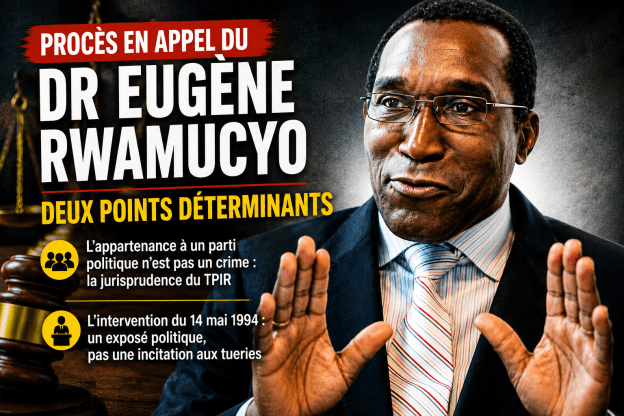
Procès en appel du Dr Eugène Rwamucyo : quatre principes fondamentaux du droit pénal international qui pourraient influencer l’issue du procès.

ANALYSE

Le procès en appel du Dr Eugène Rwamucyo devant la Cour d’assises de Paris constitue l’un des derniers grands procès liés au génocide perpétré contre les Tutsi au Rwanda en 1994 devant une juridiction française. Comme dans toute procédure pénale, il appartient à la Cour d’apprécier souverainement les faits et les preuves présentés par les parties. Toutefois, cette appréciation doit s’inscrire dans le respect des principes fondamentaux du droit pénal international, largement développés par la jurisprudence du Tribunal pénal international pour le Rwanda (TPIR), dont la mission était précisément de juger les personnes présumées responsables du génocide et des autres violations graves du droit international humanitaire commises au Rwanda en 1994.

Au fil des audiences, plusieurs éléments débattus devant la Cour appellent une réflexion juridique. Deux d’entre eux méritent une attention particulière. Le premier concerne la portée juridique de l’appartenance à un parti politique dans le Rwanda de 1994. Le second porte sur l’intervention du Dr Eugène Rwamucyo lors de la rencontre du 14 mai 1994 entre le Premier ministre du gouvernement intérimaire et les intellectuels de l’Université nationale du Rwanda.

L’intérêt de ces questions dépasse largement le cas particulier du Dr Rwamucyo. Elles interrogent la manière dont la justice pénale internationale distingue la responsabilité politique de la responsabilité pénale individuelle, principe fondateur de tout État de droit.

Continue reading

Quand le témoin principal se rétracte : le procès Rwamucyo relance le débat sur la fiabilité des preuves venues du Rwanda.

Le procès en appel du Dr Eugène Rwamucyo, ancien médecin rwandais de Butare âgé de 67 ans, connaît un développement majeur devant la cour d’assises de Paris. En appel, le principal témoin à charge de l’accusation est revenu et a affirmé de manière catégorique que le Dr Rwamucyo était innocent.

Devant la cour, ce témoin a affirmé avoir été contraint – dans la phase d’instruction au Rwanda – d’accuser faussement le Dr Rwamucyo, et a déclaré qu’il souhaitait désormais rétablir la vérité, même si cela devait lui coûter sa sécurité. Il a soutenu que l’innocence de l’ancien médecin était évidente à ses yeux et que les accusations formulées contre lui avaient été construites sur des mensonges imposés par le régime de Kigali.

Le témoin a décrit un système de coercition reposant sur des menaces, des violences et un encadrement destiné à produire des témoignages conformes à une version prédéfinie des faits. Il a désigné nommément Karenzi Théoneste, fonctionnaire de l’État rwandais, comme l’un des responsables du « coaching » et de la fabrication de faux témoignages dans cette affaire. Selon ses déclarations, celui-ci l’aurait menacé de mort afin qu’il maintienne ses accusations contre le Dr Rwamucyo.

Continue reading

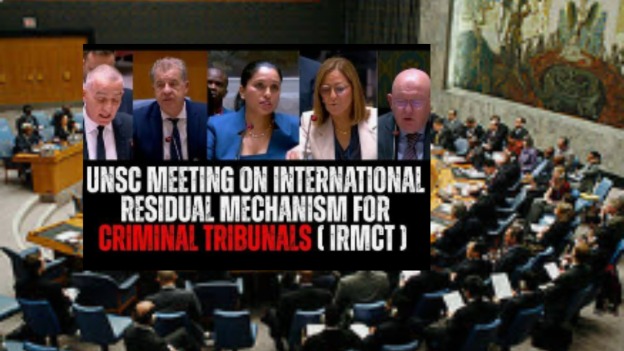
Justice internationale à géométrie variable : l’incohérence française sur le dossier du Mécanisme international appelé à exercer les fonctions résiduelles des tribunaux pénaux.

Le 12 juin 2026, le Conseil de sécurité des Nations unies s’est réuni pour examiner l’avenir du Mécanisme international appelé à exercer les fonctions résiduelles des tribunaux pénaux (MIRCT), héritier des tribunaux pénaux internationaux pour le Rwanda (TPIR) et pour l’ex-Yougoslavie (TPIY). Derrière les discussions techniques sur le sort des détenus et la conservation des archives se cache une question fondamentale : celle de la cohérence des principes qui doivent guider la justice internationale.

À cet égard, la position défendue par la France soulève de sérieuses interrogations.

Concernant le Rwanda, Kigali a demandé à accueillir sur son territoire les personnes condamnées par le TPIR ainsi que les archives du tribunal. La France semble disposée à soutenir, ou du moins à ne pas s’opposer à cette demande. Pourtant, les archives du TPIR ne constituent pas de simples documents administratifs. Elles représentent l’un des patrimoines judiciaires les plus importants du continent africain. Elles contiennent des milliers de témoignages, de pièces à conviction, d’analyses et de décisions qui documentent non seulement le génocide de 1994, mais également l’ensemble du contexte politique et militaire de l’époque.

Continue reading

“Kuvuga ko KAGAME na FPR Inkotanyi ari abicanyi si uguhakana, si no gupfobya jenoside”. – Urukiko rw’ubujurire rwo mu Bufaransa.

Urukiko rw’ubujurire rw’i Paris mu gihugu cy’Ubufaransa rwatesheje agaciro ikirego cyaregwaga umunyamakuru Natacha Polony. Ishyirahamwe IBUKA – France ni rimwe mu yaregaga uyu munyamakuru ko ngo yaba yaravuze amagambo ahakana itsemabwoko ryakorewe abatutsi mu Rwanda mu mwaka wa 1994. Ku wa kane tariki ya 11/05/2023, perezida w’urukiko, yanzuye ko amagambo ya Natacha Polony adahakana cyangwa ngo apfobye ubwicanyi bwakorewe abatutsi, ko bityo aya mashyurahamwe adashobora gusaba indishyi. Koko rero mu rukiko rw’ubucamanza narwo rwari rwagize umwere uyu munyamakuru ku itariki ya 20/05/2022, ariko IBUKA – France ifatanyije n’irindi shyirahamwe ryitwa MRAP (Mouvement contre la Racisme et pour l’Amitié entre les Peuples) bajurira basaba indishyi.

Continue reading

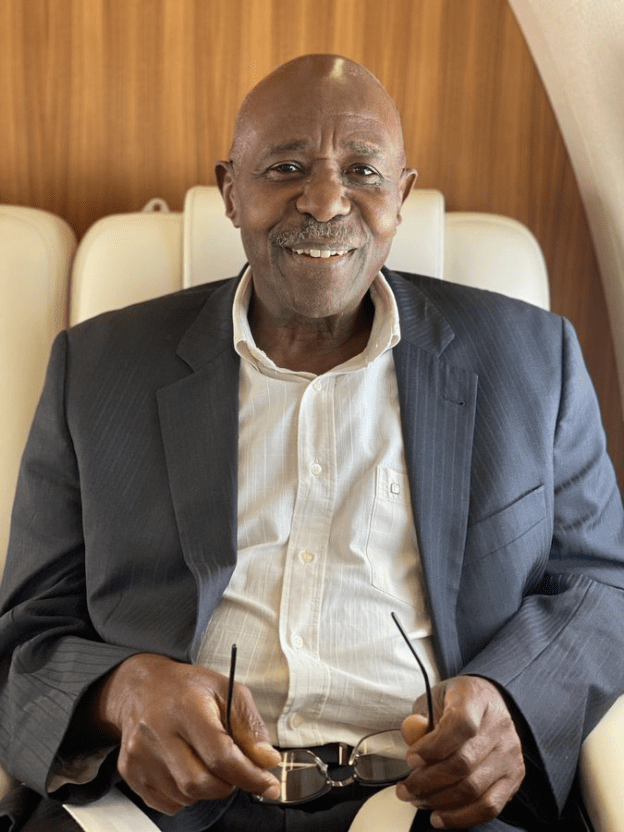
‘Hotel Rwanda’ hero Paul Rusesabagina returning home to San Antonio.

Paul Rusesabagina, who hid more than 1,000 potential victims of genocide in Rwanda in 1994, has come home to San Antonio. 

Kidnapped and imprisoned for 2½ years by a Rwandan regime lambasted by the European Union for its human rights abuses, Rusesabagina, 68, was released last weekend and landed Wednesday afternoon at Houston’s George Bush Intercontinental Airport. From there, he was to enter Brooke Army Medical Center in San Antonio.

“They have LANDED!” Kathleen Tobin Krueger, wife of the late Ambassador Robert Krueger and a close friend of the Rusesabagina family, said in a text message just before 4 p.m.

At BAMC, he’ll be cared for in a facility known for its treatment of former prisoners of war and hostages. Its patients have included three Americans held captive for five years by rebels in Colombia and WNBA star Brittney Griner, who was released in December from a Russian penal colony where she was held on drug charges.

Continue reading

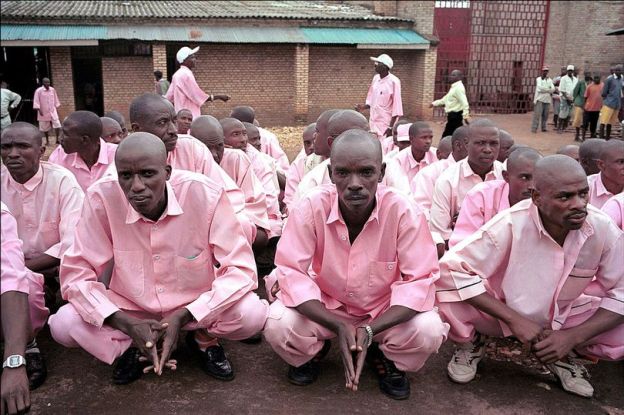
World’s ‘most inhumane’ jail where ‘prisoners eat bodies of dead lags to survive’

Rwanda’s Gitarama prison can lay claim to the dubious honour of being the filthiest, most overcrowded and most brutal jails on Earth, even though a former governor admits it’s ‘possible’ that some of its inmates are innocent.

Gitarama Prison is considered to be one of the most hellish places on Earth.

The brutal jail on the outskirts of Rwanda’s capital, Kigali, was built in 1960 as housing for British workers. It was later converted into a jail designed to hold around 400 prisoners.

It currently holds over 7,000, and at its peak after the horrifying Rwandan genocide of the mid-1990s, was estimated to hold closer to 50,000 inmates.

Continue reading

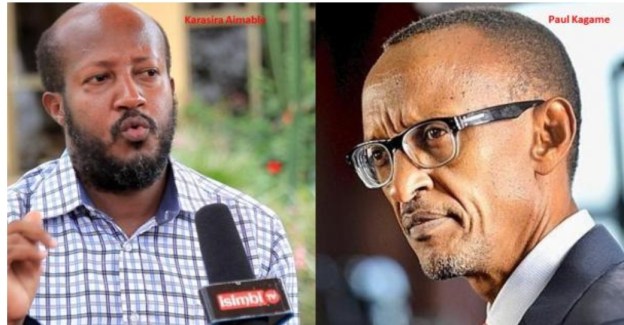
WILL PAUL KAGAME’S REGIME PIN AN ASSASINATION OF AIMABLE KARASIRA ON COVID-19?

The Kagame Regime is the enemy of free-thinking Rwandans. On almost every occasion that someone — Rwandan or otherwise– has spoken up about the repression by the regime, the government builds a case for a smear campaign against critics.

Following smear campaigns are disappearances, prison sentences, and assassinations. In countless cases, the Kagame regime has combined prison sentences and assassinations.

Such is the case of Aimable Karasira, a university professor, musician, and famous YouTuber who speaks out on issues affecting ordinary Rwandans. He is bold and energetic, charismatic, and charming. He is also fearless, humane, and compassionate. His human values and compassion are demonstrated in the platform he built and used to address injustices affecting his fellow citizens within Rwanda. Unfortunately, Aimable Karasira has been a target of formal and informal smear campaigns and demonization by the RPF since 2019.

How Does Rwanda Smear & Outcast Dissenters?

Demonization and smear campaigns are run formally (by the government) and informally (by Kagame’s or his regime’s supporters). Formal smear campaigns typically utilize government tabloids and propaganda newspapers as well as known agents of the Rwandese Patriotic Front. In a coordinated attack, publications run articles demonizing and smearing Kagame critics while RPF agents take to social media to slander the victim. Inside the country, intelligence services track people down to express free thought against the Kagame regime.

Meanwhile, domestic and global supporters of Paul Kagame run informal smear campaigns. Those operating outside of the country compliment formal Kagame agents by spreading rumors about the victim and using “innocent criticism” to fuel anti-victim sentiments. They often claim the victim is too radical and should temper their criticism of the government, meanwhile overlooking blatant governmental abuses of power. They feign support while spreading the idea that the victim will eventually be “punished” for speaking out and us the fear of punishment as their reasons not to speak out against the regime.

Channels withing the government of Rwanda such as The Rwanda Diaspora also known as The Rwandan Community Abroad (RCA), the Center for the Fight Against Genocide (CNLG) and Ibuka often spearhead these informal movements. Even though CNLG is an official govenrment entity, the RCA and Ibuka present themselves as unaffiliated with the government. These channels seem harmless and front as anti-genocide and genocide survivor advocates. However, their demonstrated commitment to the Kagame regime and erasure of Rwandan Genocide survivors who do not align with the regime prove otherwise. Ibuka and CNLG serve as attack dogs for the Kagame regime, often using the 1994 genocide as blackmail against the victims of their smear campaigns. Abroad, RCA and Ibuka members conduct community surveillance and are coordinated and financed by Rwandan embassies in countries they operate in. They harass critics globally and infiltrate with the intent to destroy groups that are critical of the government. This isn’t conspiracy talk, either. It is a well-known fact among Rwandans that this happens. Global journalists, such as those at the New York Times, are also beginning to pick up on these tactics. Kagame’s advisor, general James Kabarebe stated recently in a vitriolic speech that they conduct these types of activities abroad intending to destroy exiles and refugees or Rwanda.

These cover-ups work two ways. First, they distract the general population from the abuses of power under the Kagame regime, including the ongoing killings within the country and the Congo (including babies). Second, these slur campaigns scare others into refraining from discussing the issues for fear of what will happen to them. The cycle continues in Rwanda until the newest targeted victim is willfully disappeared by government agents, indefinitely imprisoned, assassinated, or a combination of one or more of these events.

About Aimable Karasira

Aimable Karasira is a survivor of the Rwandan genocide that took place in 1994. The RPF won the war during which the genocide occurred, and the party claimed to stabilize the country. However, during their “stabilization efforts,” the RPF massacred hundreds of thousands of people– including Karasira’s parents and two siblings who had survived the initial genocide. Talking about his family and what was done to them by the RPF after the genocide has brought the hammer of government newspapers, the groups mentioned above, agents, and sympathizers of the government onto Aimable Karasira’s shoulders.

Supporters of the Kagame regime have even accused him of denying the genocide, which he has openly talked about surviving. In Rwanda, denying the genocide is a crime. Misinformation and false rumors by RPF agents about his genocide denial increased calls for imprisonment across the country. This all culminated in Karasira being arrested on May 31st, 2021.

For three weeks, Karasira has been held without a single appearance in court. During this time, he has reportedly been held in the Kicukiro jail without contact with other inmates. Rwandan law states he is supposed to appear in court within three days of his arrest, so his detainment without court appearance is unlawful.

On the weekend of June 19th, Karasira was moved to an unknown location with the claim that he contracted Coronavirus. Readers and defenders of global justice worldwide should be worried about this. Karasira has been quarantined for the last three weeks in a jail cell by himself, begging the question of how and where he picked up the virus. Those who have a working knowledge of the injustices of the Kagame regime understand this news is likely grim. The government might have detained Karasira to a torture chamber. It’s also possible that they plan on assassinating him and covering up the death as a coronavirus death. His safety has been in danger for years now, but he may be in much greater danger of being assassinated with this claim.

This would not be the first of such inmate deaths at the hands of the government. Countless outspoken critics of the Kagame regime have been assassinated in Rwandan jails. Kizito Mihigo died in police custody, and the government of Rwanda claimed that he committed suicide. There are dozens of cases of prisoners who the government has shot, and the government attempted to cover up the deaths by claiming they were trying to flee jail or prison. Many of these victims were shot while handcuffed.

What Can Be Done To Stop This?

Citizens of donor nations are generally unaware of their governments supporting repressive regimes like the one in Rwanda. One thing they can do is to share this article widely to ensure the rest of the world or their networks are informed about this issue.

Knowing about the injustices and human rights violations done by the Kagame regime, donor nations such as the US and the UK must withhold aid to Rwanda and be wary of accounts about dissidents coming from the government. The Netherlands, in particular, funds Rwanda’s judicial system — a system that has been proven to be broken. Their withholding of aid would go a long way to spark change at the government level. When criminals such as Kagame are given resources, they commit more crimes. Holding off on aid sends a message that human rights violations will never be rewarded and begs the regime to change its standards.

Donor nations must call for an immediate release of Aimable Karasira and other prisoners of conscience and political prisoners. These include Paul Rusesabagina (the real-life hero of the Hollywood film Hotel Rwanda), Deo Mushayidi, Mitsindo Viateur and many more innocent Rwandans languishing in prisons. They must also produce poet Bahati Musa who has been missing since early February 2021.

https://www.blackstarnews.com

Paul Rusesabagina, who inspired Oscar-nominated film, facing prospect of life in Rwandan prison

It’s unclear precisely how Paul Rusesabagina ended up in Rwanda after flying from U.S. to Dubai.

Rwanda Hotel Rwanda Arrest
Paul Rusesabagina appears in front of the media at the headquarters of the Rwanda Bureau of Investigations building in Kigali in August 2020. Rwandan prosecutors on Thursday requested a life sentence for Rusesabagina, who inspired the film Hotel Rwanda after saving hundreds of people from the 1994 Rwandan genocide. He has been charged with terrorism, but his family says he’s facing mistreatment and an unfair trial. (The Associated Press).

Rwandan prosecutors on Thursday requested a life sentence for the man who inspired the film Hotel Rwanda as he faces terrorism charges, while his family asserts that he faces mistreatment and an unfair trial.

Paul Rusesabagina, once praised for saving hundreds of ethnic Tutsis from Rwanda’s 1994 genocide as a hotel manager, faces charges related to attacks by an armed group inside Rwanda in 2018 and 2019.

The nine charges include the formation of an irregular armed group, membership in a terrorist group and financing terrorism. Prosecutors seek to link him to activities that killed at least nine people.

Rusesabagina, a Belgian citizen and Texas resident, has denied the charges, arguing his case is politically motivated in response to his criticism of Rwanda’s longtime President Paul Kagame.

Abduction alleged

Rusesabagina alleges that he was abducted last year while visiting Dubai and taken to Rwanda, where he was charged. But a court ruled that he was not kidnapped when he was tricked into boarding a chartered flight.

Rwanda’s government has asserted that Rusesabagina was going to Burundi to co-ordinate with armed groups based there and in neighbouring Congo.

“My father Paul Rusesabagina is a political prisoner. He is accused of invented charges, and zero evidence against him has been presented in the Rwandan kangaroo court,” daughter Carina Kanimba tweeted after the prosecution sought the life sentence.

The family also has said Rusesabagina was being denied access to food and water, but Rwanda’s prison authority has denied it.

Global attention

Rusesabagina’s case has received global attention.

This month the Lantos Foundation for Human Rights and Justice said it had filed a formal submission in the U.S. recommending sanctions against Rwandan Justice Minister Johnston Busingye and the head of the Rwanda Investigation Bureau, Col. Jeannot Ruhunga, for their role in Rusesabagina’s detention.

Rusesabagina stopped appearing in court in March, saying he doesn’t expect justice after his request to postpone the trial to prepare his defence was rejected.

His attorney, Felix Rudakemwa, has asserted that Rusesabagina’s legal papers were confiscated by prison authorities.

The Oscar-nominated 2004 film Hotel Rwanda starred Don Cheadle as Rusesabagina. A year later, president George W. Bush awarded Rusesabagina the Presidential Medal of Freedom.

With files from CBC News

ABC