Category Archives: Region

LAKE ZONE: Uganda, Burundi lead East Africa in military spending

A Ugandan officer serving with the African Union Mission in Somalia (AMISOM) ranges a scope on a heavy machine-gun. Tanzania is lagging behind its East African partners in military spending, a new report shows. The country spent just $380 million since 2011. PHOTO | FILE

By The Citizen CorrespondentTanzania is lagging behind its East African partners in military spending, a new report shows. The country spent just $380 million since 2011.

Uganda and Burundi led the rest of East Africa in military spending last year allocating 2.2 and 2.3 per cent of GDP respectively to defence with Kenya increasing her expenditure to the highest level ever in nominal terms.

The two countries stayed ahead of Kenya, Tanzania and Rwanda which spent 1.9, 1.2 and 1.1 per cent of their GDP respectively.

Uganda’s defence spending has stayed over 2 per cent of GDP rising to 4 per cent in the last two decades, even as the rest of the region made deliberate efforts to cut their spend in the same period.

Data released on Monday by the Stockholm International Peace Research Institute shows that Kenya increased her defence budget by Sh3 billion last year to Sh74.1 billion, the highest in the region on nominal terms.

SIPRI is an independent international institute dedicated to research into conflict, armaments, arms control and disarmament funded by the Swedish government.

Kenya is faced with problems of terrorism, attacks from Oromo militias in Ethiopia and piracy in the Indian Ocean that have exposed the country’s military inadequacies.

“Due to the military “achievement” of KDF against Al-Shabaab militants in Somalia, Kenya would most likely want to obtain a greater influence on the political and administrative future of the region,” said Sipri.

Adjusted for inflation since 2011 SIPRI said Kenya spent $861 million compared to Uganda’s $465 million with Tanzania spending just $380 million.

Kenya’s military spending had been ranging between Sh20 and Sh30 billion in the early 2000s but had started rising to Sh40 billion after the country started modernising its military hardware that culminated into the Anglo Leasing scandal.

Africa is the only continent whose military budget stayed on a growth path as Europe, Asia and Americas cut their defence budget in austerity measures.

Source: The citizen

Al-Shabaab ‘planning’ major Uganda attack

Uganda warned yesterday that Somalia’s Al-Qaeda linked Al-Shabaab insurgents were planning to use fuel tankers as bombs, one day after Kenya thwarted a “massive” car bomb a

 Kampala, Tuesday. Uganda warned today that Somalia’s Al-Qaeda linked Al-Shabaab insurgents were planning to use fuel tankers as bombs, one day after Kenya thwarted a “massive” car bomb attack. Both Uganda and Kenya are key contributors of troops to the African Union force fighting the Al-Shabaab in Somalia, and the Islamists have carried out major attacks in both countries in retaliation in the past.

“We have received credible information to the effect that Al-Shabaab are planning to blow up fuel trucks in Kampala to cause extensive damage to people and property,” Ugandan police chief Kale Kayihura said in a statement.

“The public is asked to be very vigilant and help the police and report any suspicious movement or activity”.

Al-Shabaab bombers killed at least 76 people in Uganda’s capital Kampala in 2010.

On Monday, Kenyan police arrested two men driving a vehicle packed with explosives in the Indian Ocean port city of Mombasa.

The gunmen

Top Kenyan coastal government official Nelson Marwa said Tuesday the two men arrested had been preparing a “massive attack”.

Foreign special forces were part of the operation to stop them, he said.

“The two were tracked from Somalia by both Kenyan and foreign forces,” Mr Marwa said today.

Kenya has suffered a string of attacks blamed on the Islamist insurgents, including the September massacre in Nairobi’s Westgate mall in which at least 67 people were killed.

The group said the carnage was retribution for Kenya’s invasion of southern Somalia two years ago.

The UN-backed African Union force in Somalia this month launched a fresh offensive against Al-Shabaab bases, with the gunmen largely fleeing ahead of the assault, only to later stage guerrilla attacks. (AFP)

Spource: The citizen

Museveni Warns West Against Destabilising Africa

Something very surprising: Museveni has been in power since 1986 and up to now he wants another term. He was referred to as a darling for the West. He was instrumental in attacking and destabilizing Rwanda in 1990, DR Congo in 1996 up to now. He did all this in the interests of the west against his own people, Africans. Now that he is realizing and condemning the west’s intent, can we say that he seems to have changed or he is being hypocrite as usual? Funny enough, he knows that factors preventing African countries from developing include ideological disorientation by the political elite  and lack of democracy!!!

President Yoweri Museveni has advised African governments to be strong to prevent Western countries from intervening in their national and continental affairs.

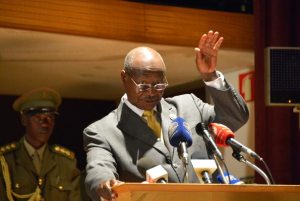
President Museveni addressing Pan-African Parliament on occasion of the 10th Anniversary of its foundation, 18th March 2014, Midrand, South Africa:

According to the President’s Special Communications Assistant, Ms Sarah Kagingo, Mr Museveni said this on Tuesday during celebrations to mark 10 years of the Pan-African Parliament in Midrand, South Africa.

Mr Museveni said by being weak and under developed, Western powers were returning with a new wave of colonialism.

“You were weak and got colonized. Fortunately we survived and got our freedom again. We did not use our freedom to make ourselves stronger; now they have come back to start from where they stopped,” said a statement from the Pan-African Parliament.

“After independence we did not analyse why we had been colonized so that we quickly rectify the problems. We simply relaxed and enjoyed being in power forgetting that the lion cannot live with the lamb,” he said using the Biblical references on how the lamb would lay with the lion in heaven. The Pan-African Parliament (PAP) was established in March 2004, as one of the nine organs of the African Union.

It is intended to “provide a common platform for African peoples and their grass-roots organizations to be more involved in discussions and decision-making on the problems and challenges facing the continent.”

The Parliament is expected to evolve into an institution with full legislative powers, whose members are elected by universal adult suffrage, which awaits a decision from the African Union Heads of State Summit.

Uganda’s representatives to PAP are Onyango Kakoba (NRM, Buikwe North), Barumba Rusaniya (NRM, Kiruhura district), Amooti Otada (Ind., Kibanda), Jacqueline Amongin (NRM, Ngora district and Elijah Okupa (FDC, Kasilo).

Museveni was unhappy that Western countries had intervened in Libya, which, he said has never recovered, ignoring possible solutions proposed by the African Union (AU).

He said it was contemptuous of NATO to prevent a team of six presidents with the AU mandate to try and resolve the Libyan issue, from travelling to the country.

He said that although he was part of the named AU team, he was not on the fateful flight to Libya.

“African Presidents, on African soil, carrying out an African mission were ordered by NATO to go back (arguing) that they had not allowed them to land. This was contempt,” he said.

“I want to advise African governments, we should not tempt the greedy people, to come and colonise us by being weak. When you are weak, you tempt the greedy,” he said, adding that, “It is your fault to be weak, why would you allow yourself to be weak. Avoid making yourself so vulnerable.”

Museveni identified ten factors preventing African countries from developing including ideological disorientation by the political elite; attacking the private sector; inadequate infrastructure; underdevelopment of human resource, lack of education and health; small markets; lack of industrialisation, underdeveloped services, agriculture and lack of democracy.

The President of Saharawi Mohamed Abdelaziz, the President of Mauritania Mohamed Ould Abdel Aziz and the former President of Ghana Jerry Rawlings also addressed the sitting, advocating for the granting of legislative powers to the Pan African Parliament.

– See more at: http://chimpreports.com/index.php/news/politics/18268-museveni-warns-west-on-libya.html#sthash.o507VGc1.dpuf

Perezida Paul Kagame ngo yaba agiye kwirenza Petero Nkurunziza


Baca umugani mu kinyarwanda ngo « urwishe ya nka ruracyayirimo« . Abarundi n’abanyarwanda bibuka ukuntu ingabo z’abatutsi zivuganye perezida Melchior Ndadaye ubwo yari amaze gutorerwa kuyobora Uburundi. Kugeza n’uyu munsi abishe Ndadaye ntibigeze bagezwa imbere y’ubutabera, kandi barakidegembya.


Paul Kagame ari kumwe n'abo ari hafi kwivugana

Paul Kagame ari kumwe n’abo ari hafi kwivugana


Nyuma y’urupfu rwa Melchior Ndadaye, umuperezida wa mbere w’umuhutu wari watowe n’abaturage, havutse umutwe wa CNDD wari uyobowe na Léonard Nyangoma, maze ushinga n’igisirikari cyahanganye n’ingabo z’abatutsi kugeza ubwo umuryango mpuzamahanga wumvise uko ikibazo kimeze, usaba ko abarwana bajya mu mishyikirano.


Iyo mishyikirano yabereye mu gihugu cya Tanzaniya mu mujyi w’Arusha, iyobowe n’umuhuza waturutse muri Afrika y’epfo, yarangiye impande zombi zumvikanye kugabana ubutegetsi, kandi bagakora igabana rishingiye ku bwoko. Abatutsi barabyemeye, ariko bagononwa, mbese bavuga bati ntacyo nimuze tuzaba tureba imitegekere y’abahutu.


Nyuma y’aho leta ishingiye ku masezerano ya Arusha igiriyeho, hagiye hagaragara urwikweke cyane, mu bagize iyo leta. Rimwe ukumva abaministre ba UPRONA, ishyaka ryahoze ku butegetsi, batemera ibyo leta barimo yemeje, ubundi ukumva ubuyobozi bw’ishyaka butemera ibyo abadepite baryo batoye mu nteko nshingamategeko. Ako kaduruvayo karakomeje, kugeza ubwo vuba aha icyari kibyimbye cyamenetse, maze uwari visi perezida w’Uburundi, Bernard Busokoza, akuwe ku mirimo ye na perezida wa repubulika, Petero Nkurunziza.


Bernard Busokoza, wari visi perezida w'Uburundi

Bernard Busokoza, wari visi perezida w’Uburundi


Uyu Bernard Busokoza uva mu ishyaka rya UPRONA, n’umwe mu bashinjwa kugira uruhari rukomeye mu rupfu rwa Ndadaye, ariko yari akidegembya, kugeza nubwo yashyizwe mu bushorishori bw’ubuyobozi bw’igihugu. Kuva aho Bernard Busokoza yirukaniwe ku mwanya wa Visi perezida, hahise hasohoka amakuru ko yaburiwe irengero hamwe n’ibindi bikomerezwa byo muri UPRONA. Abakurikira ibibera i Burundi batangiye gukeka ko ngo baba barahungiye muri ambasade y’Amerika i Bujumbura, nyamara sibyo na gato.


Ikaze Iwacu imaze iminsi ikora itohoza kuri iki kibazo, twasanze abo batutsi b’intagondwa bibereye i Kigali, mu mahoteli, aho barindiwe umutekano n’abasirikari bo muri republican guard, wa mutwe urinda Paul Kagame. Amakuru Ikaze Iwacu ikesha bamwe mu ba DMI, aravuga ko hari gucurwa umugambi ukomeye cyane wo kwica perezida Petero Nkurunziza, maze abatutsi bakongera bakisubiza ubutegetsi bwabo, bavuga ko batwawe n’abahutu kubera igitutu cy’abazungu. Amakuru yari amaze iminsi acicikana ko Uburundi nabwo bugiye kuba nka Sudan y’epfo nibyo rwose. Nibica Nkurunziza, intambara izongera yaduke.


Uwo mugambi wo kwica Nkurunziza uri gucurwa n’abiru ba FPR, ni muremure cyane. Si ugufata Uburundi gusa, ahubwo nibamara kubufata bazahita batera igihugu cya Tanzaniya, nkuko Paul Kagame yabyivugiye ko azashirwa aruko akocoye Perezida Jakaya Kikwete wa Tanzaniya. FPR na Paul kagame baraziza Petero Nkurunziza kuba yaramennye amabanga yabo yo kwica Kikwete, ubwo rero ngo agomba kubizira. Kagame yaravuze ngo « ntuzahemukire u Rwanda ngo ubikire« ! Abenshi bumvaga gusa ko ari kubwira abahoze muri FPR gusa, nyamara yabwiraga abaperezida b’ibihugu bikikije u Rwanda, bazi amabanga ye. Aha twavuga cyane cyane, Joseph Kabila wa Congo na Petero Nkurunziza w’Uburundi.


Petero Nkurunziza ararye ari menge

Petero Nkurunziza ararye ari menge


Iyo rero urebye ukuntu abanyapoltiki b’abahutu b’abanyarwanda bo bibereye muri za sinema ngo zo gushyira hamwe, kandi FPR na Paul Kagame bo bari gutegura kwimika abatutsi mu bihugu bikikije u Rwanda, urumirwa. Iki kibazo cy’abatutsi bavukanye imbuto ngo batazigera bemera gutegekwa n’abahutu ni ingorabahizi. N’ikibazo gikenewe ko gihagurukirwa n’abagabo b’intarumikwa batari nkaba duhora twumva ngo bafite amashyaka yo kubohoza u Rwanda. Si u Rwanda rugomba kubohorwa gusa, ni akarere kose k’ibiyaga bigari by’Afrika kagomba kubohozwa mu maboko y’intagondwa z’abatutsi ngo « bavukanye imbuto ».


Ubu kandi turongeye turababuriye, nimwumva Petero Nkurunziza yishwe, bikongera kugira ingaruka ku Rwanda, nkuko byagenze Ndadaye yishwe, muzavuga ngo turi kuzura akaboze. Turarengana amateka yisubiramo, ahubwo n’abanyapolitiki b’abanyarwanda batajya bigira ku mateka. Abwirwa benshi akumvwa ne beneyo!


Ngendahayo Damien


Ikazeiwacu.unblog.fr

Ubundu: un chef milicien soumet les habitants de 3 secteurs aux travaux forcés

L’administrateur intérimaire du territoire d’Ubundu, Komisele- Ali- Bilali, affirme que depuis plus de deux ans, le chef milicien Thomas Mesandu et ses hommes soumettent aux travaux forcés les habitants des secteurs de Mituku-Basikake, Mituku-Bamoya et Walengola-Lowa. En visite à Kisangani, il a déclaré le jeudi 6 fvrier être venu dans le chef-lieu de la Province Orientale pour informer « pour la nième fois » les autorités de cette situation.

« Ce chef milicien gouverne comme une autorité du gouvernement. Il fait travailler la population comme il veut. Il soumet la population à des travaux pour son compte », a expliqué l’administrateur du territoire.

La même source a indiqué que ces miliciens abattent les éléphants dans la forêt et exigent aux habitants des secteurs de transporter la viande et l’ivoire.

Selon l’administrateur du territoire, une grande partie de la population de cette partie de la province s’est déplacée.

« Au moment où je vous parle, il y a 205 familles dont les miliciens ont incendié les maisons. Une partie de cette population a trouvé refuge à Banamukwa et une autre partie à Masimango. Ça sera mieux si les autorités nous viennent en aide et prendre des dispositions », a-t-il fait savoir, précisant qu’environ 60 000 personnes habitent ce coin.

Le commandant de la 9è région militaire déclare avoir déjà pris des dispositions au niveau de la localité d’Obenge, située à proximité des secteurs occupés par Thomas Mesandu et ses hommes.

Source: Radio Okapi

Plus de 700 familles on fui les combats qui opposent les FARDC et le milices.

Des déplacés de Mugunga au Nord-Kivu lors de la visite des diplomates africains, 24/02/2011.

Plus de 700 familles déplacées vivent, depuis quatre jours, dans des conditions déplorables, dans les localités de Nyamitaba, Lushebere et Muheto, du groupement de Bashali Kahembe, en territoire de Masisi (Nord-Kivu). Ils ont fui les combats entre les Forces armées de la RDC (FARDC) et les miliciens de l’Alliance des Patriotes pour un Congo Libre et Souverain (APCLS) coalisés aux Nyatura, dans les localités de Kasira et Mutembere.

Cette information est confirmée par des sources coutumières du groupement de Bashali Kahembe qui indiquent que certains déplacés ont trouvé refuge dans des églises et d’autres passent la nuit à la belle étoile. Selon ces derniers, ces déplacés effectuent des petits travaux manuels pour les autochtones. Ce qui leur permet de gagner un peu d’argent. La plupart d’entre eux vivent de la solidarité des populations qui les accueillent.

L’administrateur du territoire de Masisi, Dieudonné Tshishiku, a appelé samedi tous les groupes armés locaux et étrangers actifs dans ce territoire à déposer les armes et à rejoindre le processus de désarmement, réintégration et réinsertion (DDR) enclenché par le gouvernement congolais.

Dieudonné Tsishiku a aussi appelé chaque habitant à «prêcher la paix, la cohabitation pacifique et la cohésion nationale». Des miliciens APCLS et Nyatura avaient déserté le centre de regroupement d’ex-combattants de Bweremana pour investir à nouveau les localités qu’ils occupaient avant de se rendre à l’armée.

Ces miliciens sont réfractaires au plan de désarmement, réintégration et réinsertion sociale, présenté le 20 novembre dernier par le gouvernement congolais. Son porte-parole, Lambert Mende avait assuré que ce plan veillera à offrir un accueil digne et mérité aux compatriotes qui acceptent de déposer les armes.

Source: Radio Okapi


in-angola

Speech by H.E. Yoweri Kaguta Museveni
President of the Republic of Uganda
15th January, 2014, Luanda, Angola

His Excellency Eduardo Dos Santos,
President of the Republic of Angola,

Your Excellencies, the Heads of State and Government,
Ladies and Gentlemen.

I greet Your Excellencies.

As I said in South Africa, the concept of the Great Lakes is not a new one but an ancient one in our area.  Uganda, Rwanda, Burundi, Eastern Congo, South Sudan have, since time immemorial, been linked to the East African Coast of Zanzibar through mainland Tanzania.  We would get textiles (emyenda), glass beads(enkwaanzi) and guns from or through the Coast and we would send elephant tusks(emiino) to the Coast.  We would also send them bark cloth (ebitooma-embugu) and iron-ore (obutare) products (hoes, pangas, spears, arrows, etc).  Out of the Congo forest, we would get copper products (emiriinga), animal skin products (amooshe), timber products as well as ivory products (engoro). The word lake is translated as“Nyaanja” or “Nyaanza” in many of the Bantu dialects of the area.

That is why you hear of the Kinyaanja of Malawi, Zambia and Mozambique and of Nyaanza province in Kenya.  Actually, in my other role as a linguist of African dialects, I have proposed that the interlacustrine Bantu dialects of the Great Lakes found in Uganda, Rwanda, Burundi, Eastern Congo, North-Western and Western Tanzania, Western Kenya and even, Northern Zambia and possibly Northern Angola, should be given the collective name of Kinyaanja North to distinguish them from the Kinyaanja of Zambia, Malawi and Mozambique.  In that connection, I have not yet understood why Malawi and Mozambique are not part of the Great Lakes’ fraternity because, historically and culturally, they are very much part of this region.  Therefore, the Cushitic, Nilotic, Bantu and Semitic peoples of this area are either similar or linked culturally.  Besides, as mentioned above, they have been trading among themselves for millennia.  It was colonialism that interfered, for some decades, with these linkages by establishing Belgian, British, French and Portuguese colonies in the different parts of this vast region.
It is good that we have re-assembled this region under the ICGLR, COMESA and EAC.

The conflicts that have afflicted this area are actually linked.  They, essentially, came from three sources as indicated below:
(i)    the colonial manipulation of the indigenous castes (occupational specializations) of Rwanda and Burundi in the colonial period, climaxing into the first genocide organized by the Belgians in Rwanda in 1959 and 1960;

(ii)   the wrong foreign and domestic policies of Mobutu of, on the other hand, harbouring enemies of neighbours (Angola, Uganda, Rwanda, Burundi, Brazzaville) and, on the other hand, denying the rights of some of their own people as not being Congolese; and

(iii)   the failure by the people of Sudan (the former United Sudan) to resolve the issues of their diversity resulting in the prolonged civil war in that country, involving eventually, Uganda.

The Belgian sponsored genocide of 1959-60 in Rwanda created a Tutsi diaspora that dispersed in the region (Uganda, Congo, Burundi and Tanzania).

After being told by Kayibanda and Habyarimaana for 30 years that they can never go back to their country because the people who had remained in Rwanda and taken their property had multiplied and, therefore, there was no space for them in the country of their heritage, they organized (under the RPF) and launched the attack of 1990 on Rwanda.  The sectarian and bankrupt Hutu regime, spurred on by the greedy foreigners who are always hovering around with a lot of confusion and shallowness, thought that genocide was the solution to the “Tutsi” problem ─ just like Hitler with the Jews of Europe.  Hence, to the bankrupt Hutu regime of Rwanda, there was a “Tutsi” problem, just like to Hitler was a “Jewish” problem in Europe.  The second genocide of Rwanda of 1994 did not save the Hutu regime.  The Hutu regime fled with a million people to Goma, Congo, with arms.  With Mobutu’s support, they were threatening to re-invade Rwanda and finish their genocide programme.  That is what started the first Congo war of 1996 that resulted in the down fall of Mobutu.  Apart from Mobutu threatening to re-launch the Hutu reactionaries into Rwanda, he had also started a campaign against the Banyarwanda of Eastern Congo, especially the Tutsi ─ targeting a group known as Banyamulenge.

Up to now the presence of the Rwanda genocidaires in Eastern Congo has not been solved ─ leading to endless problems such as the 2nd Congo war, the Nkunda uprising, the M-23, etc.  All these have been linked to the original problem of the Rwandan genocidaires in Eastern Congo.  Yet, this should never have been a problem if there was clarity.  In order to avoid the Hutu diaspora of 1994 substituting for the Tutsi diaspora of 1959, the solution should have involved the right of return by those new exiles but with accountability for the crimes they committed using a graduated scale of separating the misleaders from the misled and being harsh on the former and lenient on the latter.   If there are those that did not want to go back to Rwanda, they should have been removed from the border to deep inside Congo and should have been disarmed.  This has never been done conclusively.  This must be done.  All the other eruptions have been the consequences of this mistake and the one of denying the Banyarwanda of Eastern Congo, especially the Tutsi, either overtly or covertly, the inalienable right to the land of their ancestry.  To deal with the consequences without dealing with the cause is not a durable solution.

Meanwhile, the failure to handle the issue of diversity in the Sudan had generated a Civil War right from 1956, at the dawn of Independence of that country.  The Southern Sudanese who spearheaded the rebellion against the Arab Government of the whole of Sudan after independence were very closely linked to our own Nilotic and Bantu peoples of Uganda, Kenya, Congo, Tanzania and Ethiopia.  Therefore, some of the elements in Khartoum were always very suspicious of the neighbours.  When our Movement won the protracted civil war in Uganda in 1986, against the fascist dictators of Uganda (Idi Amin and groups), some elements in Khartoum declared it as unacceptable and resolved to remove us, by force of arms from Government. Working with remnants of the old regimes (Obote, Amin, etc), they sponsored two groups: Kony’s so called LRA (Lord’s Resistance Army) claiming to be Christians and ADF (Allied Democratic Front) claiming to establish Islamic fundamentalist rule in Uganda which is 86% Christian and where the tribes mainly practiced symbiosis of barter trade even before colonialism, apart from some few inter-tribal wars that were being promoted by myopic chiefs.    We defeated the two groups.  Where did they flee to?  They fled to the poorly controlled areas of Eastern Congo and CAR.  At one time, the Congo Government allowed us to flush Kony out of Garamba National Park. Otherwise, there has been the exercise of terrorism conservation in Eastern Congo supervised by the UN all these years ─ since 2003 when our army withdrew from Congo under the Lusaka Agreement.  Fortunately, we are working well with the Congo Government to end the presence of the ADF in Eastern Congo and also our problems with Khartoum have improved.

Last year, the democratically elected Government of CAR was removed by a bankrupt, reactionary group known as Seleka while regional forces looked on.   This bankrupt group entered the heavily populated Bangui, murdered people, raped women and looted the meagre properties of those already impoverished people.  This is a real betrayal of our people.  Why should we allow or tolerate armed groups overthrowing elected Governments in African unless they show that they are fighting genociders?  After all, we should not forget that Hitler was elected in 1933.  Even elected Governments can lose legitimacy if they do not respect, especially, the right to life and property.  You cannot say that an elected Government has a right to kill people extra-judicially or loot their property.

Now that that bankrupt regime has collapsed in Bangui, I hope new problems will not be created for the people of CAR by those who are wheeling and dealing targeting the natural resources of CAR.  Let the people elect their leaders freely, without interference or manipulation and let the elected leaders respect the legitimate interests of all the citizens of the country without discrimination.

Recently, we had an outbreak of serious fighting in our young brother-country of South Sudan.  There are two versions of how that fighting started.  The Government says that there was an attempted coup which was defeated in Juba but spreading to the Provinces: Bentiu, Jonglei and Malkal.  The opposition says that it is the Government that provoked the fighting by trying to disarm some of the soldiers on a sectarian basis.  The truth will come out with time.  What is clear is that the problem started within the SPLM, the ruling party, as a power struggle. You detect ideological, organizational and discipline issues in this situation.  Why should there be sectarian undertones or overtones in  a political debate?  Why should intraparty matters go public before they are resolved within the party?  Why should we have so many reported killings, lootings of people’s property, etc. but never hear of soldiers who are executed for committing those crimes by the different actors in these situations?  We were able to stabilize Uganda in security terms but also in politics by disciplining the Army.  You kill a person or you rape a woman, you are a dead person in the very place where you committed the crime.

Coming back to the issue of whether there was an attempted coup in South Sudan or not, the question is:  “If Riek Macher did plan a coup in Juba, then why did his supporters capture Malakal, Bor, Akobo, etc?”  The SPLA has flushed them out of Bentiu and Malakal.  Only the other day, 13th of January, the SPLA and elements of our army had a big battle with these rebel troops at a point about 90 kms from Juba where we inflicted a big defeat on them.  Unfortunately, many lives were lost on the side of the rebels.  We also took casualties and also had some dead.  By yesterday evening, the Government of South Sudan, with the support from our troops, had regained control of Jemeza and the SPLA troops, on their own , had gone ahead to Sudan Safaari.  In my opinion, if Riek Machar had not planned a coup and it had all been mistakes on the Government side, he could have done two things: withdraw to a remote area of the country to avoid attack and to start talks unconditionally so as to resolve the problem quickly and not to protract it.  The SPLM party should resolve their disagreements within those structures.  If some people are not satisfied with the SPLM, they should go out and form another Party and the Government should neither stop them nor impede them.  However, to turn a political problem into a military one, having mismanaged the political problem itself in the first place is not acceptable.

In my view, the problems of the Great Lakes, as already stated have been ideological, organizational and the discipline of the actors.  The manipulation of tribes and religions is a pseudo ideology ─ is a false ideology ─ not reflecting the interests of the people but those of the opportunists and parasites ─ spurred on by foreign interests.

I always like to use the example of my tribe the Banyankore, who are cattle keepers and grow bananas, coffee and tea.  How does my tribe benefit me as an individual producer of the four commodities?  I produce milk and beef and so do my neighbours. They cannot buy from me because they are producing similar products and nor can I buy from them.  The people who make me rich and prosperous are the people of Kampala, the people of Kigali in Rwanda, the people of Nairobi in Kenya, the people of Bukoba and Mwanza in Tanzania, the people of Juba in South Sudan, the people of Eastern Congo and Burundi, who buy my milk and beef.  The only support the people of my tribe render me, is that by producing similar products in big volumes, they make processing and marketing easy.  Even if I only cared about my tribe, I would have to care about the whole of Uganda, the whole of East African, the whole of the Great Lakes because it is those that give us prosperity by buying what is produced in my locality.  It is, therefore, the parasites that promote this pseudo ─ ideology.  With the conflicts in Eastern Congo and South Sudan, the food prices in Uganda have collapsed to the detriment of the farmers that were getting used to the higher prices because of the bigger demand in the region.  It is only the parasites who do not engage in production that do not see these issues.

The last problem of the Great Lakes is lack of infrastructure ─ roads, the railways, electricity, piped water and ICT backbone.  It shows you the great potential of the region that business is booming, provided there is peace, even when the infrastructure is absent.  What would happen if there was peace, infrastructure and free ─ trade?  The sky would be the limit.

Down with the pseudo –ideology, down with opportunism, down with parasitism, down with the indiscipline and impunity of soldiers and long live infrastructure development, peace and socio transformation of the Great Lakes.

I am always very happy to come to Luanda, Angola, because I started working with the MPLA in 1967 in  Dar-es-Salaam with Dr. Augustinho Noto, Dr. Boavida and other comrades.  I am always very happy to associate with the old freedom fighters in Angola, Tanzania, Mozambique, South Africa, Zimbabwe, Namibia, etc.  It is always a pleasure to be here.

I thank Your Excellencies.

LUANDA: PAUL KAGAME YITWAJE INAMA YA CIGLR AJYA KUGUYAGUYA JACOB ZUMA.

Urupfu rwa Patrick Karegeya, rukomeje kurikoroza. Mu gihe abakuru b’ibihugu byo mu karere k’ibiyaga bigari by’Afrika bahangayikishijwe n’ikibazo cy’umutekano, kubera intambara zugarije bimwe mu bihugu bigize CIGLR, nka RDC, Sudani y’epfo, Centre Africa, Paul Kagame we ahangayikishijwe bikomeye no kuba zimwe mu nkoramaraso ze zaramaze gucakirwa.

Kagame ntiyaraherutse guca iryera Uhuru Kenyatta

Kagame ntiyaraherutse guca iryera Uhuru Kenyatta

Nkuko byagaragaye ku mafoto aturuka i Luanda muri Angola, Paul Kagame wari umaze iminsi yarasuzuguye inama za CIGLR, akimara kumva ko perezida w’Afrika y’epfo, Jacob Zuma, azaza muri iyo nama, yahise asimbuka yihuta cyane, ndetse akaba ari no mu ba perezida bagezeyeyo mbere, ngo arebe ko yaguyaguya Zuma akaba yazarekura inkoramaraso zagize uruhare mu guhitana Patrick Karegeya.

Birumvikana kandi ko Kagame agira ubwoba, kubera ko ibihugu by’ibihangange cyane cyane Leta Zunze ubumwe z’Amerika, bidahwema kumuhamagara, bamwiyama gukomeza gutera ibindi bihugu, ajya guhigayo abanyarwanda barwanya leta ye mpotozi. Amakuru yasohowe na RFI uyu munsi yavugaga ko Amerika yanamwiyamye ngo ntazahirahire ngo azajye kwicira umunyarwanda ku butaka bw’Amerika, ko byazamukoraho rikaka.

http://www.rfi.fr/afrique/20140115-rwanda-affaire-karegeya-washington-condamne-attentat-habyarimana

Kagame rero ubu yirahuriyeho umuriro. Amakuru aturuka muri Mozambike aravuga ko abantu 4 bafashwe na polisi yaho, babashinje kuba baravogereye ubusugire bw’icyo gihugu kandi bakanagaba igitero mu gihugu cy’abaturanyi cy’Afrika y’epfo. Amakuru Ikaze Iwacu ikesha umwe mu bapolisi b’i Maputo, tutari buvuge amazina ye kubera uburemere bw’iki kibazo, avuga ko muri abo bafashwe, uwitwa Vital Hitimana, uzwi ku izina rya jenerali, polisi yasanze ari we watwaye mu modoka ye, imbunda yakoreshejwe mu kurasa Kayumba Nyamwasa mu 2010, ayivanye i Maputo ayigeza i Johanesbourg.

http://www.washingtonpost.com/world/africa/police-arrest-4-for-rwandan-spymaster-murder/2014/01/15/92c7dba2-7df6-11e3-97d3-b9925ce2c57b_story.html

Paul Kagame ntiyigeze atuma Jacob Zuma ahumeka.

Paul Kagame ntiyigeze atuma Jacob Zuma ahumeka.

Mu kwica Karegeya, uyu Vital niwe watwaye na none mu modoka ye abicanyi abavanye i Maputo abageza i Johanesbourg. Amakuru rero avuye i Luanda aravuga ko ibyo Kagame yakekaga ko, yakora amanyanga maze Zuma akaba yamudohorera, ahubwo byamuviriyemo nko gukoza agati mu ntozi. Na mbere yo kugira icyo yisabira Zuma, ikibazo cy’uko  we na Museveni bari gutegura kongera gutera Congo, nicyo cyahise kimubera ingorabahizi.

Amakuru CIGLR ndetse na MONUSCO, nayo yari muri iyi nama, yemeza ko u Rwanda n’Ubuganda bari gushaka kongera kuzura M23. Ibi kandi bihuye neza n’amakuru Ikaze Iwacu yabonye uyu munsi ko mu ijoro ryo ku wa 13 Mutarama 2014, abarwanyi ba Mai Mai Tcheka bafatanyije n’abacengezi ba RDF, bagabye igitero shuma i Pinga, maze bica abasirikari 3 ba FARDC ahitwa Katanga, harimo ufite ipeti rya Majoro. MONUSCO yahise itabara, ikoresheje indege, maze izo nkoramaraso ziyabangira ingata.

Kagame yaguyaguye Jacob Zuma, ariko biba iby'ubusa

Kagame yaguyaguye Jacob Zuma, ariko biba iby’ubusa

Mu Rwanda naho ntibyoroshye, ubu ingabo za RDF ziri gucengera ku bwinshi muri Congo mu rwego rwo kwitegura kugaba igitero simusiga. Muri iyo myiteguro, ingabo z’u Rwanda ziri gukoresha abahoze ari abasirikari bazwi ku izina rya « DEMOBE », bakabigisha amayeri yo kwinjira muri Congo biyita abahinzi, abikorezi, cyangwa se abacuruzi b’amakara. RDF kandi ubu iri gushyira amatara ku mihanda yose ngo kugira ngo umwanzi azaze hagaragara.

Paul Kagame rero nareke gukomeza yiriza, ahubwo niyemere akanirwe urumukwiye, kubera ko imbaga y’abantu amaze kurimbura, amaraso yabo ari gutabaza. Bitinde bitebuke nawe azaraswaho, kandi nawe azabona ko na nyina w’undi abyara umuhungu!!

Gasigwa Norbert

Ikazeiwacu.unblog.fr

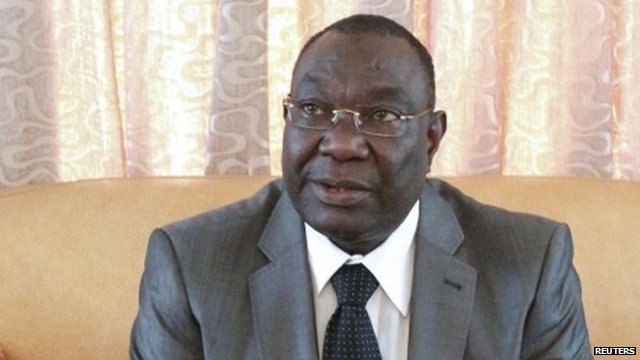
Central African Republic interim President Michel Djotodia resigns

_72208956_72208955

 Central African Republic’s interim President Michel Djotodia has resigned at a regional summit aimed at ending violence that has engulfed the country.

PM Nicolas Tiengaye also resigned at the meeting in Chad.

Thousands of people took to the streets in CAR’s capital, Bangui, most of them celebrating the news.

Mr Djotodia, CAR’s first Muslim leader, seized power last year. Since then 20% of the population have fled fighting between Christian and Muslim militias.

The UN has warned of an impending humanitarian disaster.

Since December and the arrival of more regional peacekeepers and French troops, 1,000 people have died in sectarian clashes.

Many villages are deserted and in the past month the number of those who have fled their homes has doubled – including almost half of those living in the capital, Bangui.

Following the announcement from Chad, there were jubilant scenes in Bangui.

Carine Gbegbe, who has been living in a displacement camp, told Associated Press: “Finally we are free. We are going to return home at last.”

French tanks were quickly deployed around the presidential palace.

French Defence Minister Jean-Yves Le Drian called for a replacement for Mr Djotodia “as soon as possible”.

Flown in

Mr Djotodia’s resignation was made in a statement by the 10-nation Economic Community of Central African States (Eccas).

The whole of CAR’s National Transitional Council (CNT) had been flown in at short notice to decide the leadership of their nation.

The lawmakers met regional leaders while Mr Djotodia held separate talks with allies from his former Seleka rebel alliance, AFP reported.

Under a deal brokered by regional powers last year, the CNT was charged with choosing a transitional leader to take CAR to elections due at the end of 2014. It formally elected Mr Djotodia to his position as interim president last April.

Seleka seized power last March overthrowing the then-President Francois Bozize, from CAR’s majority Christian population.

Although Mr Djotodia officially disbanded the Seleka rebels, he has proved unable to keep them in check.

Their actions have prompted Christians to form vigilante groups, sparking a deadly cycle of revenge attacks.

The African Union now has some 4,000 peacekeepers in the country and France has deployed 1,600 troops to try to restore peace.

Source: bbc.co.uk

Luanda: 5è sommet de la CIRGL sur la paix, la sécurité et le développement dans la région

download (3)

Le thème de ce 5 ème sommet est : « Promouvons la paix, la  sécurité,  la stabilité et le développement dans la Région des Grands Lacs. »

Les Etats de la Conférence internationale sur la région des Grands lacs (CIRGL) ouvrent vendredi 10 janvier à Luanda (Angola) leur 5è sommet consacré à la paix, la sécurité, la stabilité et le développement dans la région. Ce forum de six jours débute au Centre de conférence de Talatona par une réunion des chefs d’Etat-major général des forces armées et chefs de services de renseignement des pays des Grands Lacs, indique le communiqué du secrétariat exécutif de la CIRGL à Kinshasa.

Les ministres des Affaires étrangères de la CIRGL se réuniront mardi 14 janvier à la veille de l’ouverture du sommet des chefs d’Etat et de gouvernement de la région.

Durant ce sommet, premier de l’an 2014, les Etats membres de la CIRGL devront envisager des solutions adéquates pour continuer à promouvoir la paix, la sécurité, la stabilité et le développement dans les Grands lacs.

La création de la CIRGL résulte de la reconnaissance de la dimension régionale de multiples conflits armés et de la nécessité d’un effort concerté en vue de promouvoir la paix dans la région.

Le sommet de Luanda intervient deux mois après la victoire des FARDC sur les rebelles du M23.

La CIRGL compte douze membres qui sont : l’Angola, le Burundi, la RCA, le Congo, la RDC, le Kenya, l’Ouganda, le Rwanda, le Soudan, Le soudan du Sud, la Tanzanie et La Zambie.

Ces pays avaient signé, en février 2012 à Addis-Abeba (Ethiopie), un accord pour restaurer la paix dans l’est de la RDC et dans toute la région.

Source: Radio Okapi