Category Archives: environment

Kenya: At least 300 indigenous families evicted from their homes!

Kenya Forest Service evicts 300 Ogiek families from their homes in the Mau Forest. Despite the African Court on Human and Peoples’ Rights 2017 ruling that the Ogiek should not be evicted.

In May 2017, the Ogiek Indigenous People won an important land rights victory at the African Court on Human and Peoples’ Rights. The Court ruled that the Ogiek have the right to live in the Mau Forest and that the government of Kenya was wrong to evict them. At the end of June 2020, 100 officers from the Kenya Forest Service and Kenya Police Service started evicting the Ogiek and demolishing their homes.

On 7 July 2020, Kenya Forest Service guards evicted 300 families from the Ogiek community. According to the Star, as many as 30,000 Ogiek families could end up homeless.

The evictions are taking place despite a moratorium on forced evictions issued by the government only one month ago.

On 11 May 2020, Fred Matiangi’i, Kenya’s Cabinet Secretary, Ministry of Interior and Coordination of National Government, went on national television to announce a moratorium on forced evictions during the coronavirus evictions.

The Star comments,

Although the Environment and Land Court on Friday halted any pending evictions, the government’s record in obeying court orders offers no respite for the homeowners.

Defending the future

In May 2020, the Katiba Institute and the Ogiek Peoples Development Program put out a report titled, “Defending our future: Overcoming the challenges of returning the Ogiek home”.

Kenya’s Ministry for Environment and Forestry had set up a taskforce to advise the government on how to implement the Ogiek judgement.

In the Preface to the report Daniel Kobei, Executive Director of the Ogiek Peoples Development Program, writes,

This taskforce, like colonial rule in Kenya in times past, did not include representation of our community even though the deliberations directly concerned us. We understand its mandate ended on 24 January 2020 but its report has not been made public despite our attempts to seek disclosure. The Ogiek community made submissions to the taskforce seeking complete restitution of our ancestral land, with at least seven non-transferable community titles.

Lucy Claridge, Senior Counsel at the Forest Peoples Programme, summarises the key findings of the Ogiek judgement in the report. The Court recognised the Ogiek as an Indigenous community and that the Mau Forest is their ancestral home. For centuries the Ogiek have depended on the Mau Forest as a source of livelihood.

Article 14, of the African Charter on Human and Peoples’ Rights, states that “The right to property shall be guaranteed”. The Court recognised the Ogiek’s “right to own, use, develop and control the lands, territories and resources that they possess by reason of traditional ownership or other traditional occupation or use”, as stated in the UN Declaration on the Rights of Indigenous Peoples. Claridge writes that,

Importantly, the Court recognized that such rights ‘do not necessarily entail the right of ownership in its classical meaning, including the right to dispose thereof ’, recognizing that, unlike other property rights, indigenous rights over their ancestral lands are inalienable: they cannot be transferred or taken away. Since the government had not disputed that the Ogiek have occupied lands in the Mau Forest since time immemorial, the Court ruled that they have the right to occupy, use and enjoy their ancestral lands. Further, although the Court accepted that the right to property under Article 14 can be restricted in the public interest where necessary and proportionate, it found that the degradation of the Mau Forest could neither be attributable to the Ogiek nor did the preservation of the ecosystem justify their eviction. Accordingly, the expulsion of the Ogiek from their ancestral lands against their will, without prior consultation, constitutes a violation of Article 14.

Instead of respecting the ruling of the African Court on Human and Peoples’ Rights the Kenyan government is destroying the homes of the Ogiek Indigenous communities. It is also evicting Sengwer Indigenous communities. These evictions are taking place during the coronavirus pandemic. Making people homeless makes them more at risk from the coronavirus. And all of this is taking place in the name of conservation.

Source: https://redd-monitor.org
Rwanda : vers une solution de l’énergie Ă©lectrique?

centrale_electrique 2

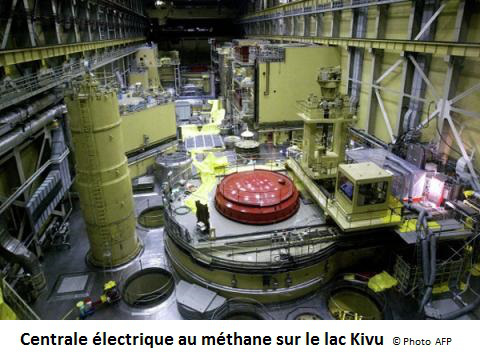
C’est Ă  juste titre que les Rwandais et particuliĂšrement les riverains du lac Kivu, peuvent ĂȘtre fiers de la centrale KivuWatt. D’abord parce que le pompage du mĂ©thane rĂ©duira le niveau du gaz (potentielle menace Ă  la vie), et ensuite, du fait que ce produit, au dĂ©part dangereux, sera transformĂ© en Ă©nergie Ă©lectrique; une premiĂšre au « pays des mille collines ». AprĂšs 14 mois, le Rwanda vient donc, d’inaugurer une nouvelle centrale. Mais, la production est-elle satisfaisante au jour d’aujourd’hui?

Au regard de la situation, on est encore trop loin du compte. Les attentes restent trop Ă©levĂ©es, et deux questions pertinentes se posent. Pourquoi un tel retard dans un secteur aussi important? Pourquoi l’électrification n’a pas Ă©tĂ© parmi les prioritĂ©s? Ces mĂȘmes questionnements mĂ©ritent Ă©galement des solutions dans un autre secteur vital, trĂšs en retard, Ă  savoir l’alimentation en eau potable et raccordement au rĂ©seau d’eau.

Restons sur le sujet en titre. Il est vrai que 54MW acquis en une annĂ©e,  ne sont pas nĂ©gligeables. En mars 2015, c’était la centrale hydro-Ă©lectrique de Nyabarongo pour produire 28MW, et le 16 mai 2016 c’était l’inauguration de la centrale au mĂ©thane sur le lac Kivu, dĂ©jĂ  opĂ©rationnelle depuis dĂ©cembre 2015 avec 26 mĂ©gawatts. Construite Ă  l’Ouest du pays, cette centrale produit de l’énergie qui s’ajoute Ă  la capacitĂ© de production d’environ 160MW dont disposait dĂ©jĂ  le pays.

Quel Ă©tait l’objectif 2020 en Ă©lectrification?

Le gouvernement rwandais avait tablĂ© sur 563MW d’une valeur de 2.7milliards d’ici 2019-2020. De trĂšs bonnes ambitions, mais avec quelles stratĂ©gies et capacitĂ©s financiĂšres? Le pays prĂ©voit d’importer 30MW du Kenya (sachant que la distance est de 1350kms) et 400MW de l’Ethiopie (Ă  2700kms du Rwanda). C’est un projet coĂ»teux et difficile Ă  rĂ©aliser dans 3 ans. En 2012, le ministre de l’époque, ayant en charge des infrastructures, avait mĂȘme promis la production de 1000MW pour 2017!

Selon  geopolitique-electricite.fr, « 700 000 Rwandais avaient accĂšs Ă  l’électricitĂ© en 2008, et presque un million en plus dĂ©but 2013. La proportion est passĂ©e de 6 Ă  17% de la population de 2008 en 2014 ». Un pas a Ă©tĂ© franchi,  cependant, beaucoup reste Ă  faire. En 2016, on n’a mĂȘme pas atteint ÂŒ de la population ayant accĂšs Ă  l’électricitĂ©.

Ce ne sont pas des financements qui font défaut!

Selon la Banque mondiale, le programme de dĂ©ploiement d’électricitĂ© au Rwanda, en anglais EARP (Electricity Access Rollout Project) est financĂ© par un crĂ©dit de 70 millions de dollars, sans intĂ©rĂȘts, de l’Association internationale de dĂ©veloppement (IDA), de la Banque mondiale, en partenariat avec la Banque africaine de dĂ©veloppement, la Banque arabe pour le dĂ©veloppement Ă©conomique en Afrique, la Belgique, l’Union europĂ©enne (UE), le Japon, les Pays-Bas, le Fonds de l’OPEP pour le dĂ©veloppement international (OFID) et le Fonds saoudien pour le dĂ©veloppement qui ont, au total, mobilisĂ© 348,2 millions de dollars pour ce programme.

nyabarongo 2

Les coupures, problĂšmes d’entretien, exploitation et le coĂ»t Ă©levĂ©

Il y a deux ans, une enquĂȘte menĂ©e par la Banque mondiale faisait Ă©tat de 14 coupures d’électricitĂ© par mois, c’est-Ă -dire, une coupure tous les deux jours. Sur une dizaine de centrales inspectĂ©es, huit n’étaient pas en Ă©tat d’entretien rĂ©gulier, et subissaient des pannes frĂ©quentes. Les inspecteurs auront aussi remarquĂ© que les transformateurs et pylĂŽnes n’étaient pas tous intacts. Par ailleurs, la centrale hydro-Ă©lectrique de Nyabarongo avait Ă©tĂ© en arrĂȘt quelques mois seulement, suite Ă  la forte diminution du flux liĂ©e au manque de stratĂ©gies efficaces en faveur de l’écologie.

D’aprĂšs un responsable de la Commission Economique des Nations Unies pour l’Afrique (UNECA) basĂ© Ă  Kigali, l’électricitĂ© est plus chĂšre au Rwanda qu’à ses voisins. En moyenne, le prix est de 0,24 $ le kWh, comparĂ© Ă  0,15 $ au Kenya, 0,17$ en Ouganda et 0,05$ en Tanzanie. MĂȘme en se basant sur une autre source qui indique 0,20$ le kWh, le prix reste plus Ă©levĂ©.

Les experts dans le domaine, estiment qu’il faudrait au moins 1000MW pour satisfaire les attentes de 12millions de Rwandais, en plus des investisseurs Ă©trangers, les ambitions d’amĂ©nagement et planification Ă  moyen et long terme.

En toute Ă©vidence, les responsables du pays ont du pain sur la planche, pour rattraper le temps perdu, et pour amĂ©liorer le systĂšme de fonctionnement. L’électricitĂ© et l’eau sont des produits de premiĂšre nĂ©cessitĂ©. Certains observateurs n’hĂ©sitent pas Ă  relever que ces deux secteurs importants n’ont pas retenu l’attention ni la prioritĂ© qu’ils mĂ©ritaient, ni les efforts qu’il fallait.

Au contraire, les investissements ont Ă©tĂ© orientĂ©s vers des secteurs moins urgents, l’objectif Ă©tant la belle image du pays, rĂ©ellement en « trompe l’Ɠil ». L’accent a Ă©tĂ© mis sur les « gratte-ciel » et la dĂ©coration de la capitale! La construction des « buildings » et l’embellissement d’une ville, est une bonne chose, si et seulement si, elle est prĂ©cĂ©dĂ©e par le dĂ©veloppement de ces deux secteurs vitaux, l’eau et l’électricitĂ©. Lors de la CHAN 2016, les organisateurs ont frĂŽlĂ© le scandale. Il suffit de lire les articles des journalistes Ă©trangers venus couvrir l’évĂšnement. Ils n’ont pas manquĂ© de souligner le manque d’eau et les difficultĂ©s en Ă©lectricitĂ©. Il est grand temps, de redoubler les efforts et mettre en avant les prioritĂ©s.

Source: mulijeanclaude.wordpress.com

Launch of Solar Power Facility in Rwanda

usdos-logo-seal

Press Statement

John Kerry
Secretary of State
Washington, DC
February 18, 2015

I welcome the completion and launch of an 8.5 MW solar installation in Rwanda by Gigawatt Global. This is the first utility-scale solar project to come online under the U.S.-Africa Clean Energy Finance (ACEF) program, which is now an integral part of Power Africa. The project expands electricity generation capacity by more than 6 percent in a country where more than 80 percent of the people live without access to electricity, and is providing enough grid-connected power to supply 15,000 homes.

With continually decreasing costs, minimal maintenance, and no fuel costs, renewable energy makes more sense now than ever before, especially in remote settings.

Projects like Gigawatt Global’s, realized with the support of the U.S. Department of State, the Overseas Private Investment Corporation (OPIC), and the U.S. Trade and Development Agency through ACEF, underscore that the best path to energy access and economic development is also the sustainable path of clean energy.

Source:US Department of State