Category Archives: International

How UN didn’t want you to know facts about Rwanda genocide

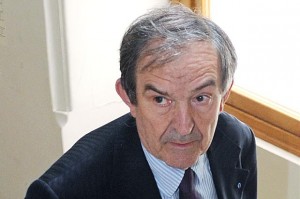
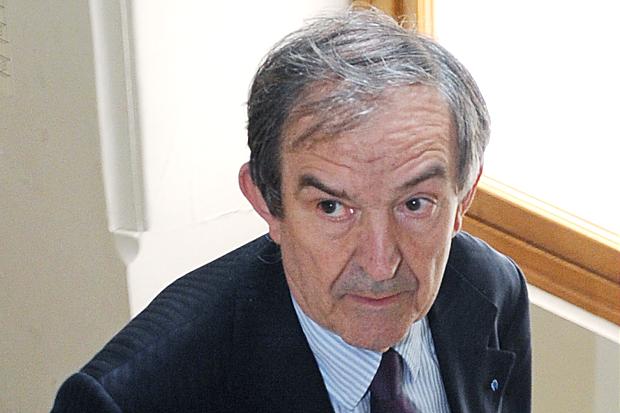
French-Judge-Bruguiere-300x199

French Judge Bruguiere whose attempts top have President Kagame charged with the assassination of Presidents Habyarimana and Ntaryamira were thwarted by Kofi Annan, among others.

In exactly a month from today, the people of Rwanda will commemorate 20 years since the start of the 1994 genocide that showed the limits to which man can go to eliminate each other. Close to a million people are said to have been massacred in 100 days of frenzied, human degradation by two tribes speaking the same language.

Rwandan President Paul Kagame has been celebrated, wined and dined the world over as the person who brought to an end this carnage and who has since built “a strong and democratic country”. But what is the real story behind what happened in Rwanda on 7 April 1994?

Starting today, The London Evening Post is going to go “behind the scenes” and try to expose what really happened that day. In addition to talking to renowned world academics, we will talk to the people who were there that day and try to go through what happened and how it came about.

We start today with an exclusive interview with Prof Peter Erlinder, professor of law at William Mitchell Law College in St Paul, Minnesota. Author of The Accidental Genocide, Prof Erlinder was arrested in Rwanda in May 2010 while working as a lead defence council for the International Criminal Tribunal for Rwanda (ICTR). He was detained for 21 days after he had travelled to the country to defend then presidential candidate Victoire Ingabire Umuhoza against charges of ‘genocide ideology’. He was charged with ‘genocide denial’ and only released after he faked an attempt to commit suicide, something that the Kagame regime would not permit to happen on his watch.

In this exclusive interview, Prof Erlinder exposes the depth to which the international community has gone in trying to protect the Rwandan government by hiding what exactly happened in Rwanda 20 years ago next month. He exposes what happened when former Rwandan and Burundian presidents Juvenal Habyarimana and Cyprien Ntaryamira lost their lives when their private jet was shot out of the sky when approaching it final destination in Kigali, the Rwandan capital, after talks with the now ruling Rwanda Patriotic Front (RPF) in neighbouring Tanzania.

Prof Erlinder reveals in his book secret documents that he says the UN wanted kept out of the public eye for, can you believe it, 100 years. That’s precisely a time when most of us living today would not be alive any more. The rest is all told here in the interview.
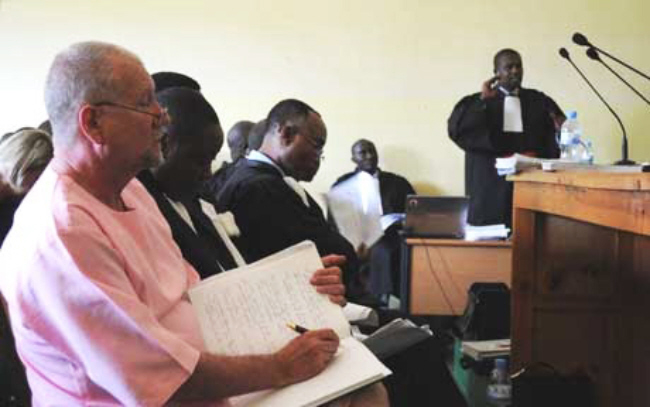
Peter-Erlinder-prosecutor-Jean-Bosco-Mutangana-in-Kigali-courtroom-061410

Prof Peter Erlinger appears in court in a prison garb during his imprisonment in Kigali

The London Evening Post:  You say your book – The Accidental Genocide – is the original version made out of UN documents – explaining day-by-day events that followed the 1994 genocide in Rwanda and after.  Please, explain more on this.

Prof. ErlinderDuring the ICTR Bagosora et al trial, I put thousands of pages of original UN documents into evidence that I was able to find in UN files that were not supposed to be released for 100 years.  The UN had dozens of persons reporting daily from Kigali and other places in Rwanda and Dallaire [Roméo Dallaire then UNAMIR Commander] met regularly with Kagame…These documents tell a completely different story than Kagame and the RPF told about the 4 year war and the 100 days of the “genocide”.  As a result, ALL leaders of the Habyarimana government and military were found not guilty of long-term planning of genocide or any other crimes BEFORE the assassination…. this means the mass violence was a reaction to the killing of the president…. NOT planned killing by a “genocidal government.”  The book explains how the mass killing in Burundi in the months before…. made Rwandans susceptible to fear of RPF…and the military superiority of RPF made the fear real.

The LEP: What was the primary objective of the original book?

Prof. Erlinder: To make the evidence that is already on the record at the UN Tribunal for Rwanda that acquitted the members of the Habyarimana government and military of long-planned conspiracy to commit crimes against civilians, including genocide, accessible to the general public using the original documents.

The LEP:  You have persistently rejected the official version about the 1994 Rwandan Genocide. Why? 

Prof. Erlinder: Because I was given access to documents in the UN archives that no other defence lawyer had…and got access to U.S. government documents, which are available to researchers; the documents require a different conclusion than the victors in the four-year war for power in Rwanda would prefer.  Before the Chief UN Prosecutor told the UN Security Council in 2003 that Paul Kagame assassinated President Habyarimana, I got access to these documents…. I believed the same story as everyone else.  The evidence changed my mind and the ICTR judges agreed.  Please see the Appeals Chamber Judgement of December 11, 2011.  Bagosora was found innocent of all crimes except for April 7, 8, 9…and Kagame said he was the “architect” of the genocide…but there was no evidence to support the claim.

The LEP:  The public, which is the majority, would say that you’re on a different page [knowledge about Rwanda Genocide] from what they know or have been told. Are you suggesting the public are disconnected from the truth?

Prof. Erlinder: After every war the winners tell the story – this is normal.  The public has heard the Kagame/RPF story repeatedly for 20-years.  UN and USG (United States Government) documents created at the time events were occurring tell a completely different story.  What is different this time is that documents that were to be secret for 100 years have been exposed, and have been put into evidence in the ICTR to acquit the losing side.

The LEP:  Who is fighting to see that he status quo remains as has been told?

Prof. Erlinder: Certainly the Kagame/RPF side that won the war wants to see that their story dominates.  But they were created and supported by the U.S./U.K…, which have an interest in the story remaining the same.  In 2003, UN Prosecutor Carla del Ponte was removed from her UN position by the U.S./UK when she insisted on prosecuting Kagame for killing Habyarimana and starting the genocide…. according to her own book (Madam Prosecutor) published in 2009.

The LEP: You mention about people in authority who have conspired to hide the truth. How are you prepared if they file a civil suit against you?

Prof. Erlinder: In the US courts, truth is a defense.  All of the statements and conclusions in my published work are supported by documented sources from USG, the UN or sworn testimony.  I merely accumulate and present evidence that is already on the record – which is what makes the publication important, not what I say.

The LEP:  As a human rights lawyer; what is your comment about how justice has been delivered to the perpetrators of the 1994 Rwandan Genocide?

Prof. Erlinder: The UN Tribunal has only prosecuted the crimes of those who lost the war.  The UN Tribunal was supposed to be a neutral body.  This means the Rwanda War was the only war in history in which only ONE side committed crimes OR the UN Tribunal was really a Victor’s Tribunal…. like Nuremberg and the Tokyo Tribunal.  My objection is that it should be recognized AS a victor’s tribunal…. and should NOT be sold to the world as something it was not.

The LEP:  What would you like to see with regards to the dispensing of justice?

Prof. Erlinder: Equal treatment for both sides in the Rwandan War and all national and international conflicts.  This means treating leaders of powerful and weaker nations equally.  The ICC (the International Criminal Court) has prosecuted only African leaders when it is plain that leaders of major powers such as the U.S. U.K, Russia, China, and France are at least as culpable.  We have not yet reached the point in history when the “rule of law” means the same for all leaders.

The LEP:  People would say that you’re on the wrong side. What would you tell such individuals who think, Prof. Peter Erlinder is on the wrong side about the 1994 Rwanda Genocide?

Prof. Erlinder: The evidence put before the ICTR judges caused them to agree with my analysis about whether there was a long-planned genocide by the Habyarimana government.  I have no opinions of my own.  I examine evidence and make conclusions based on the evidence.  It was UN Chief Prosecutor and the evidence that changed my mind…. when others have carefully examined all of the evidence, they might change their minds too.  But this is difficult because the emotions are so strong and it is much easier to respond emotionally than to do the difficult detailed research – which is why the book is based on historical records, not my opinions.

The LEP:  Given the dangers meted to you in Rwanda [experience], what you witnessed and what you’ve gone through as a result of your being involved in Rwanda issues at a level of an attorney in courts, why not just let it go to avoid being hunted by Kagame’s regime and secret agents?

Prof. Erlinder: I believe we all have a responsibility to history, to speak the truth and have to account to our actions to the infinite.  If one happens upon the truth based on evidence and does not speak, no religion in the world can respect that person.

The LEP:  Many people around the world see and consider President Paul Kagame as a saviour who stopped the genocide. In your own words-based on the UN documents you have gone through, how would you describe Kagame to a person who has never had a chance to look at what you have seen?

Prof. Erlinder: My book has a copy of the confession of Paul Kagame’s Chief of Staff Dr. [Theogene] Rudasingwa. He admits he was part of a 20-year cover-up of the killing of Habyarimana.  Former Chief UN Prosecutor Del Ponte has called for his prosecution openly since 2002.  The Chief UN Investigator Michael Hourigan called for his prosecution in 1997.  All of these facts have been covered-up…but they have long been in the public record.  Mr. Kagame tried to assassinate me in 2010 because I put this evidence in the ICTR record.  I think he knows already.

The LEP: Since you published The Accidental Genocide, have you received some kind of threats from Rwanda or from Kagame’s allies? If yes, who are they or what kind of threats did you receive?

Prof. Erlinder: I have been the subject of a personal “Wanted Dead or Alive” order directly from Mr. Kagame since October 1, 2010 after I escaped from Rwanda by pretending I had attempted suicide.  This order was given to all ambassadors, military attaché’ and military leaders.  The book has only refreshed the standing order, I imagine.

The LEP: Has anybody ever contact you to stop the publication of The Accidental Genocide? If yes, who and when?

Prof. Erlinder: No, the method of publication has been taken with precautions.

The LEP:    How do you manage to live this kind of life; watching your back all the time?

 Prof. Erlinder: As the information I have become more public and better understood, I become less important as an individual threat to Kagame. But, it is necessary to take precautions.

The LEP: With such evidences of the Rwanda Genocide coming into public domain, do you see in future; individual (s) taking responsibility to account for the atrocities? If your answer is ‘no’ or ‘yes’, why? 

Prof. Erlinder: In my opinion, Rwanda’s future lies in both sides taking responsibility and both sides mourning their losses.  A South African-style Truth and Reconciliation process is more likely to permit Rwanda to heal than a criminal tribunal process, which will never get the balance exactly right.  MOST important, the US and the UK MUST acknowledge the responsibility for creating and arming the RPF and manipulating the ICTR to make it appear that; the Hutu committed all crimes.  Demonizing a whole people is a form of “political genocide” that must be exposed and denounced as well.  THIS is what the US and UK have done in assisting the cover-up of RPF crimes.

The LEP:  You mean, Mr Paul Kagame issued an order mandating his all-inclusive ambassadors around the world to have you killed or kidnapped?

Prof. Erlinder: This is the report I received from a high-ranking military officer who has defected from the RPF who claimed to have been present at the meeting whose rank was such that he would have been at the meeting, the report was received person to person within days of the meeting from another defector who I know personally.  I must take it seriously just as Gen Nyamwasa [survived two attempt assassination]  and Col Keregeya [his body was discovered on New Year’s Day].


Americans, stop lying! You are as criminal as Kagame since he is your darling!

I have preferred to write the title  as above, and I hope I am not wrong. Read the story below and you will understand why! This means Americans are responsible for all those people killed by Kagame and other war crimes committed by the darling tyrant! Admin

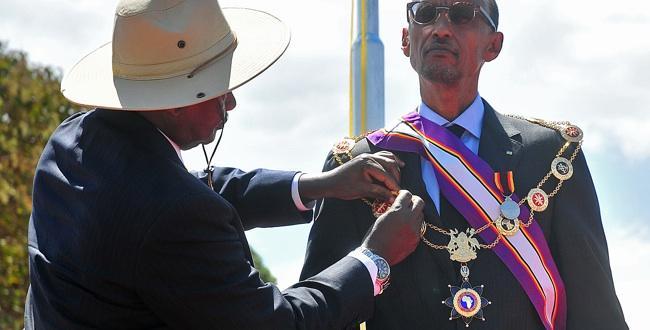
museveni_gives_medal_to_kagame_0

The thing to know about Rwandan President Paul Kagame is not just that he is a dictator responsible for human rights abuses but that, despite this, he has a great many friends.

Kagame, credited with commanding the rebel force that put an end to Rwanda’s genocide 20 years ago, has made himself a global celebrity. Bill Clinton hails him as among “the greatest leaders of our time.” Tony Blair calls him a “visionary.” Bill Gates works closely with him. Kagame has spoken at Harvard and received honorary doctorates from a number of universities in the United States and Europe. U.N. Secretary General Ban Ki-moon is also a fan, telling Kagame in May, “I hope many African nations will emulate what Rwanda is doing. I highly commend you.” The praise inside Rwanda, in the press and public forums, is even more effusive. When I ask Rwandan citizens why there is no criticism of their president, I am told there is nothing to criticize. The political “opposition” consists of parties that refuse to speak out against Kagame even during elections, and there is talk of soon scrapping the constitution’s two-term limit for presidents so he can run in 2017 for a third time.

After all, for Rwandans, it can be lethal to be Kagame’s enemy. When Patrick Karegeya—Kagame’s former spy chief and friend who became one of his fiercest critics—was found dead in a South African hotel room in January, the Rwandan foreign minister, asked for the government’s response, tweeted, “This man was a self-declared enemy of my Gov & my country, U expect pity?” The Rwandan defense minister added, “When you choose to live like a dog, you die like a dog.” And Kagame himself remarked in a speech, “Shouldn’t we have done it?”

Not only was the president justifying a murder—he was warning his critics that betraying Rwanda brings consequences. In fact, in Kagame’s 20 years as the de facto leader of the country, more than a dozen prominent dissidents have been assassinated, imprisoned, exiled and tortured. According to Human Rights Watch and Amnesty International, in recent years perhaps half a dozen well known investigators, journalists and opposition politicians have also been found dead in mysterious circumstances, including, six months ago, a Rwandan Transparency International worker who had been investigating police corruption.

Foreign governments, notably the United States, Britain, Germany and the Netherlands, are nonetheless lining up at Kagame’s door with praise, and money, desperate for a foreign aid success story after 50 barren years in Africa. Total publicly reported foreign aid to Kagame’s government stands at some $1 billion annually, of which the U.S. government provides about a fifth. It’s not surprising that these Western countries, as well as international institutions like the World Bank, believe Rwanda is one of their best hopes in the region: Kagame’s government says it lifted 1 million people out of poverty between 2008 and 2012, and that the country’s economy grew at a remarkable 8 percent clip during the global economic crisis—successes that seem even more remarkable in a country still recovering from the 1994 genocide, which killed nearly a million people and brought the economy to a standstill.

The catch: Kagame administers the Rwandan government’s foreign-funded aid programs with a strict autocratic hand. Political critics have been imprisoned for speaking out when government programs cause harm. In 2011, for instance, a pastor criticized a nationwide housing project to eliminate thatched roofs because it left thousands of people homeless, and in return he was sentenced to 18 months in prison. Foreign-funded media and human rights programs that once reported on Kagame’s excesses, repression or policy failings—including programs run by Transparency International, Lawyers without Borders and the Rwandan League for the Promotion and Defense of Human Rights —have shut down or become toothless under government pressure. The Rwandan people know that to survive in such an environment, and to benefit from any government- or foreign-funded aid, they must be loyal to their president. Few other countries can mimic the results—95 percent participation rates in everything from elections to government health programs. Foreign donors echo the faux optimism, celebrating these programs’ efficiency and praising Kagame as a progressive leader; he is acclaimed, for instance, for promoting gender equality in the Rwandan parliament, where women outnumber men—even though the legislature has little power.

The United States, without doubt, is Kagame’s staunchest ally and oldest supporter, eager to maintain Rwanda as a strategic partner with a powerful army in mineral-rich eastern Africa. In the 1990s, Kagame studied at the U.S. Army Command and General Staff College in Fort Leavenworth, Kans., before he returned to Rwanda and seized power in 1994. (More recently, his son Ivan trained at West Point.) Although the United States typically provides only about half a million dollars in bilateral military aid to Rwanda, high-ranking current and former U.S. officials—including not only Bill Clinton but also national security adviser Susan Rice and Jendayi Frazer, a former top Africa diplomat—have a history of backing Kagame, despite evidence of abuses by his forces.

U.N. documentation implicates senior Rwandan military staff who report directly to Kagame in the large-scale massacre of perhaps tens of thousands of civilians, including unarmed women and children, in 1996 and 1998—acts that the United Nations has said are war crimes and possibly acts of genocide. (Kagame has said in response that his troops were difficult to control just after the genocide.) At the time of the massacres, Rice, then the assistant secretary of state for African affairs, reportedly said in a private conversation, “The only thing we [the United States] have to do is look the other way.” Later, as U.S. ambassador to the United Nations, she reportedly tried to block the publication of a 2010 U.N. report about the killings. (Rice denies that the United States “supported, encouraged or condoned” Rwanda’s invasion of Congo, during which the massacres occurred.) Washington has also shielded Kagame from the International Criminal Tribunal for Rwanda (ICTR), set up to prosecute killings during the genocide: In 2003, the United States pushed to remove Carla del Ponte, an ICTR prosecutor, after she began to investigate crimes linked to Kagame, which the United States feared would destabilize his government.

U.N. evidence also shows that Rwanda long supported rebel groups in the Democratic Republic of the Congo that are accused of crimes against humanity and mass rape, though Kagame officially denies his military’s involvement. A portion of Rwanda’s support stopped last year after warnings from the United States, which suspended some military aid last year, though Washington is now considering reinstating the funds. The mostly symbolic U.S. aid cut, after months of foot-dragging, helped to restore peace in Congo at least temporarily. But millions of dollars in foreign aid continue to flow to the Rwandan government, and Kagame’s supporters seem reluctant to diminish their praise. Bill Clinton, asked last year about Kagame’s tight grip on the press and political opponents, insisted he did not support it but admitted, “I suppose I do make more allowances for a government that produces as much progress as this one.” Or, as Sen. James Inhofe (R-Okla.), visiting Rwanda in January, put it, “I speak on behalf of many fellow senators back home, and I assure you that [the United States] doesn’t have a better friend than Kagame.”

Read more: http://www.politico.com/magazine/story/2014/02/rwanda-paul-kagame-americas-darling-tyrant-103963.html#ixzz2vkfY6imG

South Africa takes a tough decision to protect exiled Rwandan politicians

01701201415381800000020140118_kagame

President Kagame has vowed to exterminate whoever dares speak his mind. What he hates the most is when he is reminded that one time he will face trial over his war crimes.

Rwanda and South Africa are still on speaking terms, but only barely – and if Dirco gets its way even this tenuous relationship will be terminated in the next few days. South Africa, finally, has had enough of Rwanda doing its dirty business on South African soil and has expelled three diplomats, with the ambassador to follow shortly. It’s a bold move, but have we thought it through? By SIMON ALLISON.

Relations between South Africa and Rwanda are at an all-time low after South Africa expelled three Rwandan diplomats on Thursday. And relations are about to get even worse.

South Africa, understandably, has had enough of Rwanda doing its dirty business on South African soil. First there was the assassination attempt on the life of Faustin Kayumba Nyamwasa, the former Rwandan general turned vocal critic of President Paul Kagame’s regime, in 2010. Then, earlier this year, there was the murder in a Sandton hotel room of Patrick Karegeya, the one-time head of Rwandan intelligence, who had fled his country looking for political asylum in South Africa.

After this murder, the Daily Maverick observed: “…with that regime’s track record, and South Africa’s undeniable appeal for Rwandan dissidents and exiles, Karegeya’s murder will not be the last such incident to happen within our borders.”

It wasn’t. The final straw came last week, when armed men broke in Nyamwasa’s Johannesburg home in another apparent assassination attempt (Nyamwasa was not home). This time was different, however. Previously, South Africa has not been able to link definitively the Rwandan government to the incidents, which means no public action could be taken against Rwanda – innocent until proven guilty, and all that.

But last week someone must have messed up. According to diplomatic sources, South Africa’s security forces were able to tie the break-in to three Rwandan diplomats working from their embassy in Pretoria (one Burundian diplomat was also involved, apparently).

The department of international relations (Dirco) wasted no time in taking action, revoking the dodgy diplomats’ credentials and sending them packing. Given their diplomatic immunity, this was the most serious punishment available to Dirco. Given that there were only four diplomats in the Rwandan embassy to start with, Ambassador Victor Karega must be feeling a little lonely.

Rwanda was just as quick to respond, with interest. “We have expelled six South African diplomats in reciprocity and concern at South Africa’s harbouring of dissidents responsible for terrorist attacks in Rwanda,” said Rwandan Foreign Minister Louise Mushikiwabo, parroting Rwanda’s official line that South Africa, with its ultra-progressive approach to refugees, provides a safe haven to Rwandan terrorists and genocidaires.

Mushikiwabo may have a point (although not one that justifies extrajudicial, extraterritorial assassination): Neither Nyamwasa or Karega are angels, and are both themselves implicated in the abuses of Kagame’s regime; while there has long been concern that perpetrators of the 1994 Rwandan genocide are hiding out among the Rwandan exile community in Johannesburg.

The row will escalate even further. Speaking anonymously, a senior Dirco official told the Daily Maverick that South Africa was planning to sever all diplomatic ties with Rwanda within 72 hours. “SA will not stand by and watch people be killed on our soil by another government, just because we happen to be opposed to a sitting regime,” the official said, adding that the freeze in relations is likely to continue for as long as the “cowboy” Kagame remains in office.

That could be for quite some time. Kagame’s term expires in 2017, and he’s not constitutionally permitted to run again. However, constitutions can be amended, and Kagame has previously floated the idea of a third term.

The rift between Rwanda and South Africa is likely to have implications far beyond their bilateral relationship. As part of the East African Community, Rwanda maintains very close ties with Kenya and Uganda. If sides must be taken – and it certainly looks like that is what South Africa is angling for – both countries would certainly favour their regional neighbour. Kenya wouldn’t need much convincing, anyway, with the current Kenyan administration already unhappy about South Africa’s stubborn commitment to the International Criminal Court (unsurprising, given that it is led by two men on trial at The Hague),

Of more immediate concern is the Democratic Republic of Congo, where South African troops are part of a United Nations force fighting rebels in the eastern provinces on the border with Rwanda. Those rebels are generally assumed to be supported by Rwanda, making the conflict something of a proxy war. At the moment, the rebels are very much on the back foot, having been overwhelmed by the UN force’s superior military power. The next step is to create some kind of lasting peace, addressing the issues which lie at the root of the conflict – an already difficult task, made exponentially more so if two of the protagonists in the conflict are no longer on speaking terms.

In expelling the three Rwandan diplomats, South Africa has taken a firm, principled stand against an outrageous violation of its sovereignty. But our diplomats must be wary: although they are currently enjoying the moral superiority, this situation could reverberate in uncertain and almost certainly unpleasant ways. Making Kagame an outlaw, and Rwanda a pariah state, risks becoming a self-fulfilling prophecy. DM

Source: http://www.dailymaverick.co.za/article/2014-03-10-south-africa-to-rwanda-dont-touch-us-on-our-sovereignty/#.Ux4WZvl5NLB

South Africa: Rwandan Politician’s home attacked by gunmen.

Kagame has vowed to kill all his political opponents. So many politicians have perished since RPF came in power. Recently, after Colonel Karegeya strangled on new year’s eve in Johanesbourg, General Nyamwasa’s home was attacked by gunmen yesterday (March 4th, 2014). Luckily General and his family were not at home. His computer was taken away. General Nyamwasa has survived death twice. Investigations have revealed that Kagame’s secret operatives were involved. Although politicians who oppose Kagame remain determined, they cannot afford to live like before. 

The blog admin

Read the story: http://www.therwandan.com/blog/general-kayumba-residence-attacked-by-gunmen-in-johannesburg-south-africa/

Vladimir Putin and Barack Obama engage in war of words over Ukraine

Vladimir Putin and Barack Obama traded accusations over the crisis inUkraine on Tuesday, with the Russian leader seeking to blame the Americans for the growing international standoff as the US president all but accused Putin of breaking international law.

The barbed exchanges, a sign of the escalating tensions between Washington and Moscow, came as Putin delivered his first public remarks on the crisis – ruling out a war days after his forces took control of the Ukrainian peninsula of Crimea, but reserving the right to use force to protect Russian speakers in the east of the country “as a last resort”.

Speaking from his country residence outside Moscow, Putin gave a robust performance during which he portrayed Kiev as being in the grip of “terror, extremists and nationalists” rampaging on the streets. Putin described what is broadly seen as a Russian land grab in Crimea as “a humanitarian mission”.

Obama and John Kerry, the US secretary of state, responded in apparent disbelief after Putin maintained there were no Russian forces occupying Crimea. “He really denied there were troops in Crimea?” said Kerry after arriving in Kiev, where he offered $1bn in loan guarantees to the new Ukraine government.

Vladimir Putin and Barack Obama engage in war of words over UkraineUS secretary of state John Kerry lights a candle and lays roses at the ‘shrine of the fallen’ for protesters killed in Kiev. Photograph: Valentyn Ogirenko/ReutersKerry accused the Kremlin of “hiding its hand behind falsehoods, intimidation, and provocations”.

Obama said: “There have been reports that Putin is pausing and reflecting on what’s happened. There is a strong belief that Russian action is violating international law. Putin seems to have a different set of lawyers, but I don’t think that is fooling anyone.”

On the ground in Crimea tensions remained high, with Russian forces firing warning shots at unarmed Ukrainian soldiers marching on an airfield.

Following several days of drama that saw Ukraine’s president toppled, a new government and interim head of state installed, and a Russian military seizure of Crimea, Putin said Moscow did not want to annex the territory.

“Regarding the deployment of troops, the use of armed forces. So far, there is no need for it, but the possibility remains,” he said. “What can serve as a reason to use the armed forces? Such a measure would certainly be the very last resort.”

Armed men in military fatigues block access to Ukrainian military barracks in the small Crimean city of Bakhchisaray.Armed men in military fatigues block access to Ukrainian military barracks in the small Crimean city of Bakhchisaray. Photograph: Genya Savilov/AFP/GettyBut the Americans accused Putin of preparing to expand his control over the country. “It is clear that Russia has been working hard to create a pretext for being able to invade further,” said Kerry.

The Americans are pushing for economic sanctions against the Kremlin elite and an EU emergency summit in Brussels on Thursday is also likely to decide on sanctions unless the Russians “de-escalate”.

It may be that the language employed by Putin will be taken as de-escalation and reduce the pressure for punitive action against Russia – global markets rose in response to tentative signals that the Kremlin was not seeking to escalate the conflict.

Putin also warned that sanctions were a two-way street and that ifEurope decided on that path, there would be a heavy cost to pay. EU trade with Russia is substantial, especially with Germany, more than 10 times the level of US-Russia trade, making it a lot less painful for Washington to decide on sanctions without fear of reprisals.

Link to video: Vladimir Putin: force in Ukraine is ‘last resort’“We are not going to go to war with the Ukrainian people. But there is the Ukrainian army,” Putin stated. “If we make this decision, we will make it for the people of Ukraine … Ukraine is not only our closest neighbour. It is our fraternal neighbour. Our armed forces are brothers in arms, friends. They know each other personally. I’m sure Ukrainian and Russian military will not be on different sides of the barricades but on the same side.”

The Russian leader strongly denounced the new administration in Kiev. He said he would refuse to recognize Ukrainian elections scheduled for the end of May. The acting president and government were illegitimate and Kiev was in the hands of “armed terrorists”, of “nationalists and extremists”.

“Our major concern is the … nationalists and radical extremists that are rampant on the streets of Kiev,” said Putin.

The deposed president, Viktor Yanukovych, who has fled to Russia leaving behind a lavish lifestyle in Kiev, remained the legitimate head of state, Putin insisted, although he also pronounced Yanukovych politically dead.

“There can be only one assessment of what happened in Kiev, in Ukraine in general. This was an anti-constitutional coup and the armed seizure of power,” he said.

A week after Yanukovych’s riot police killed dozens in Kiev and took fleeting control of a city centre square occupied since November by protesters, Putin retained the option of greater intervention on the basis of an alleged request from the toppled Yanukovych for Russian help. He contrasted that position with western behaviour.

“Our position is very different. Our position is completely legitimate. If we use force … we have received a request from a legitimate president. Also we have hisorical and cultural ties with those people. And this is a humanitarian mission. It’s not our goal to conquer somebody.”

Unarmed Ukrainian troops bearing their regiment and the Ukrainian flags march to confront soldiers under Russian command occupying the Belbek airbase in Crimea in Lubimovka, Ukraine.Ukrainian troops march to confront soldiers under Russian command occupying the Belbek airbase. Photograph: Sean Gallup/Getty ImagesThere were also signs of new negotiations on the crisis. Arseniy Yatseniuk, the acting Ukrainian prime minister, said his government was in touch with Russian ministers with a view to holding “consultations”.

Kerry called for negotiations, while it appeared that international observers and mediators would be dispatched by the Organisation for Security and Co-operation in Europe, of which both Russia and Ukraine are members.

“I’ve spoken as directly to President Putin today as I can,” said Kerry. “To invite him to engage in a legitimate and appropriate dialogue, particularly with the current government of Ukraine.”

Obama said: “There is a suggestion that Russia’s actions have been clever, but this has not been a sign of strength, rather a sign that countries near Russia have deep concerns about this kind of meddling and if anything it will push them further away from Russia.”

There are said to be 16,000 Russian troops securing control of Crimea, where they enjoy broad backing from the majority ethnic-Russian population.

Putin said there were no Russian forces, merely local self-defence units. “There are many military uniforms. Go into any local shop and you can find one,” he said. Putin also said he was continuing preparations to host a summit of the G8 countries in Sochi in June. All the other countries have frozen their preparations. While Washington has said Russia could be kicked out of the G8, Berlin is resisting such moves.

Putin was dismissive of the threats. “If the leaders don’t want to come, fair enough,” he said.

source: The Guardian

UNSCR Resolution 2140 on Yemen

usdos-logo-seal

Fact Sheet

Office of the Spokesperson                                                                                                                             Washington, DC                                                                                                                                               February 26, 2014

On February 26, 2014, the UN Security Council adopted a resolution welcoming the conclusion of Yemen’s historic National Dialogue Conference and reaffirming Council support for the implementation of subsequent stages in the country’s political transition process. The Council emphasized the critical need to turn the page on the presidency of former President Saleh and called for a cessation of all actions meant to disrupt the political transition in Yemen.

With this resolution, the Council has taken a significant, forward-leaning step in setting up a sanctions committee, which will allow the Council to respond quickly with targeted sanctions against individuals engaging in or providing support for acts that threaten the peace, security or stability of Yemen.

  • Resolution 2140 continues the Council’s active engagement on Yemen and reaffirms its support for Yemen’s political transition on the basis of the Gulf Cooperation Council (GCC) Initiative and Implementation Mechanism, signed by the Yemenis on November 23, 2011.
  • Resolution 2140 welcomes the outcomes of the comprehensive National Dialogue Conference, which provide a road map for Yemen’s continued democratic transition.
  • Resolution 2140 commends the leadership of President Hadi and the ongoing commitment of the people of Yemen to a peaceful and meaningful transition.
  • Resolution 2140 reaffirms the need for the full and timely implementation of Yemen’s political transition, as outlined in the GCC Initiative and its implementation mechanism, including the drafting of a new constitution and the holding of a referendum on the draft constitution and, ultimately, national elections. It encourages all stakeholders to continue their constructive, nonviolent engagement in implementing the transition.
  • Resolution 2140 establishes a sanctions committee with a mandate to sanction individuals found to be engaging in or providing support for acts that threaten the peace, security or stability of Yemen. The committee will be supported by a four-person panel of UN experts who will compile information about those who may engage in or provide support for such acts.

Source: U.S Department of State


Rwanda – RCA : Un réfugié rwandais abattu, les soldats rwandais dans le collimateur

Oreste Hasingizwimana vivait en République Centrafricaine (RCA) depuis plus de 15 ans, en qualité de réfugié, il a été abattu ce 20 février devant son magasin situé dans le centre de la capitale, Bangui. Plusieurs pistes sont à avancer dans ce meurtre, dont celle impliquant les soldats rwandais qui font partie de la Mission internationale de soutien à la Centrafrique (MISCA).

Oreste Hasingizwimana qui était connu comme « un homme sans histoires », tenait un magasin dans le quartier SICA II, situé au centre de Bangui. Il a été abattu jeudi dernier  vers 17h10 par des hommes à moto.

oreste 02

Joint par Jambonews, un réfugié rwandais sur Bangui livre le modus operandi « quelqu’un a appelé Oreste par téléphone lui demandant de sortir du magasin. Quand il est sorti, trois hommes à moto se sont présentés et lui ont tiré dessus, il a été touché par 4 balles et est mort sur le coup. L’homme qui était en arrière portait un treillis militaire (juste la veste), un autre homme ne portait que le pantalon militaire, le troisième homme était habillé tout en civil. Les assaillants ont aussi tiré une balle dans la jambe d’une fille présente au moment des faits ».

Il y a quelques mois, Oreste avait été arrêté puis emprisonné par  les milices de la Seleka qui avaient en même temps dérobé sa voiture. C’était à l’occasion de son intervention chez un autre réfugié rwandais dont le domicile avait été envahi par les Seleka. Certains à Bangui ont d’abord pensé que ce sont ces milices qui avaient  abattu la victime pour probablement l’empêcher de réclamer plus tard sa voiture volée. Cette hypothèse a vite été écartée car la Seleka n’est plus à Bangui. Le doute a été entièrement levé lorsque des témoins centrafricains ont dit avoir reconnu un des trois assaillants, un ressortissant rwandais connu sous le surnom « Tonton sans papiers », qui dit s’appeler Charles Ntaganda et qui vit à Bangui depuis deux ans à peu près et dont les réfugiés rwandais de Bangui ignorent l’histoire. Selon ces témoins, les trois hommes venaient de passer par le domicile d’un autre réfugié rwandais et n’y avaient retrouvé que les enfants et la domestique. Dans la précipitation,  les tueurs  auraient laissé un téléphone portable sur les lieux.

Selon le premier témoin, la thèse impliquant un autre compatriote est à écarter, car les réfugiés rwandais vivant à Bangui forment une petite communauté (entre 100 à 200 personnes), composée pour la plupart de familles sans histoires. De plus dans une situation d’insécurité qui règne à Bangui, on limite ses mouvements, surtout à la tombée de la nuit. « Je ne vois personne parmi nous qui se serait aventuré au début de la nuit pour aller assassiner Oreste », raconte le témoin sous le choc.   

Les soldats rwandais de la MISCA dans le collimateur

Huit cent cinquante soldats rwandais sont arrivés le 16 janvier dernier en République Centrafricaine, pour y renforcer les effectifs de la Mission internationale de soutien à la Centrafrique déployée sous l’égide de l’Union africaine (UA). Un autre ressortissant rwandais à Bangui nous affirme que depuis leur arrivée, les réfugiés rwandais se sentent inquiets, car craignant que le régime de Kigali ait dissimulé des tueurs parmi cette force, pour terroriser les quelques centaines de réfugiés rwandais vivant en Centrafrique.

« Depuis l’arrivée des soldats rwandais à Bangui, on est très inquiets, on discute sans problèmes avec les burundais (qui font aussi parti de la mission NDRL), mais on reste le plus loin possible des rwandais », a confié à Jambonews l’ami de la victime installé en Centrafrique depuis plus d’une dizaine d’années.     

 La mort d’Oreste Hasingizwimana a accru cette inquiétude des réfugiés rwandais qui cherchent maintenant à quitter le pays car selon eux, leur sécurité n’y est plus garantie. Les réfugiés, pour la plupart rescapés du génocide des réfugiés rwandais perpétré par le FPR dans l’ex-Zaïre, sont d’autant plus inquiets que parmi les militaires rwandais de la Misca, il y a d’anciens réfugiés rwandais qui ont vécu en Centrafrique avant de rentrer au Rwanda et d’intégrer la même armée présumée auteure de massacres de réfugiés hutus en RD Congo. Ils connaissent donc bien les réfugiés rwandais vivant à Bangui, leurs domiciles, leurs opinions politiques sur le Rwanda et leurs habitudes.

Oreste Hasingizwimana avait 46 ans et était marié. La gendarmerie qui est arrivée sur le lieu du crime a ouvert une enquête, mais jusqu’à maintenant, elle s’est refusée à tout commentaire.


Jean Mitari

Jambonews.net

We unequivocally condemn the use of force against civilians by security forces

usdos-logo-seal

Situation in Ukraine

Press Statement

John Kerry
Secretary of State
Washington, DC
February 20, 2014


It’s with anger and anguish that we have watched renewed violence on the streets of Kyiv today destroy more lives and rip apart more families. The people of Ukraine deserve far better than senseless death and suffering on the streets of one of Europe’s great cities.

The violence must stop. We unequivocally condemn the use of force against civilians by security forces, and urge that those forces be withdrawn immediately. The people of Ukraine and the international community will hold to account those who are responsible for what has occurred, and the United States has already begun implementing sanctions through travel bans on Ukrainians responsible for the violence.

Protestors should exercise their rights peacefully, and we urge the Ukrainian military to remain true to its non-political heritage and its professional traditions.

There is no time for brinksmanship or gamesmanship. President Yanukovich must undertake serious negotiations with opposition leaders immediately to establish a new interim government that will have broad support. That is the only way to begin the difficult but essential constitutional and economic reforms that Ukraine needs.

We reaffirm the commitment of the United States to the people of Ukraine and urge all members of the international community to help Ukraine return to stability. We will work with our friends and allies to support Ukraine and Ukrainians in these difficult days.

Source: US State Department


South Sudan conflict, the US concerned

U.S. Concern About Violations of Cessation of Hostilities in South Sudan

 usdos-logo-seal

Press Statement

Jen Psaki
Department Spokesperson
Washington, DC
February 8, 2014

We are deeply concerned by reports of violations by both the Government of South Sudan and anti-government forces of the Cessation of Hostilities agreement that was signed in Addis Ababa on January 23. We urge the redeployment or phased withdrawal of foreign forces invited by either side, and warn of the serious consequences which could result from any regionalization of this conflict.

We welcome the arrival in Juba of the first component of the team that will eventually monitor and verify the implementation of the Cessation of Hostilities agreement. We strongly urge the Government of South Sudan to facilitate its important work, which will provide both sides with a mechanism to report any breaches of the agreement.

We look forward to the beginning of the IGAD-led political dialogue and inclusive reconciliation process. We urge the government of South Sudan to support these efforts and to release the remaining four political detainees. The expeditious release and transfer of all of the detainees would reduce tension and build confidence in an inclusive reconciliation process.

We also call on the government of South Sudan to fully cooperate with the United Nations Mission in South Sudan (UNMISS). It is imperative that the government ensure that any assaults on and threats against UNMISS facilities and personnel immediately cease. The Mission’s ability to carry out its mandate is critical to establish peace and meet the urgent humanitarian needs of the people of South Sudan.

Source: US State Dept

How UN didn’t want you to know facts about Rwanda genocide

French-Judge-BruguiereFrench Judge Bruguiere whose attempts top have President Kagame charged with the assassination of Presidents Habyarimana and Ntaryamira were thwarted by Kofi Annan, among others.

In exactly a month from today, the people of Rwanda will commemorate 20 years since the start of the 1994 genocide that showed the limits to which man can go to eliminate each other. Close to a million people are said to have been massacred in 100 days of frenzied, human degradation by two tribes speaking the same language.

Rwandan President Paul Kagame has been celebrated, wined and dined the world over as the person who brought to an end this carnage and who has since built “a strong and democratic country”. But what is the real story behind what happened in Rwanda on 7 April 1994?

Starting today, The London Evening Post is going to go “behind the scenes” and try to expose what really happened that day. In addition to talking to renowned world academics, we will talk to the people who were there that day and try to go through what happened and how it came about.

We start today with an exclusive interview with Prof Peter Erlinder, professor of law at William Mitchell Law College in St Paul, Minnesota. Author of The Accidental Genocide, Prof Erlinder was arrested in Rwanda in May 2010 while working as a lead defence council for the International Criminal Tribunal for Rwanda (ICTR). He was detained for 21 days after he had travelled to the country to defend then presidential candidate Victoire Ingabire Umuhoza against charges of ‘genocide ideology’. He was charged with ‘genocide denial’ and only released after he faked an attempt to commit suicide, something that the Kagame regime would not permit to happen on his watch.

In this exclusive interview, Prof Erlinder exposes the depth to which the international community has gone in trying to protect the Rwandan government by hiding what exactly happened in Rwanda 20 years ago next month. He exposes what happened when former Rwandan and Burundian presidents Juvenal Habyarimana and Cyprien Ntaryamira lost their lives when their private jet was shot out of the sky when approaching it final destination in Kigali, the Rwandan capital, after talks with the now ruling Rwanda Patriotic Front (RPF) in neighbouring Tanzania.

Prof Erlinder reveals in his book secret documents that he says the UN wanted kept out of the public eye for, can you believe it, 100 years. That’s precisely a time when most of us living today would not be alive any more. The rest is all told here in the interview.

Peter-Erlinder-prosecutor-Jean-Bosco-Mutangana-in-Kigali-courtroom-061410

Prof Peter Erlinger appears in court in a prison garb during his imprisonment in Kigali

The London Evening Post:  You say your book – The Accidental Genocide – is the original version made out of UN documents – explaining day-by-day events that followed the 1994 genocide in Rwanda and after.  Please, explain more on this.

Prof. ErlinderDuring the ICTR Bagosora et al trial, I put thousands of pages of original UN documents into evidence that I was able to find in UN files that were not supposed to be released for 100 years.  The UN had dozens of persons reporting daily from Kigali and other places in Rwanda and Dallaire [Roméo Dallaire then UNAMIR Commander] met regularly with Kagame…These documents tell a completely different story than Kagame and the RPF told about the 4 year war and the 100 days of the “genocide”.  As a result, ALL leaders of the Habyarimana government and military were found not guilty of long-term planning of genocide or any other crimes BEFORE the assassination…. this means the mass violence was a reaction to the killing of the president…. NOT planned killing by a “genocidal government.”  The book explains how the mass killing in Burundi in the months before…. made Rwandans susceptible to fear of RPF…and the military superiority of RPF made the fear real.

The LEP: What was the primary objective of the original book?

Prof. Erlinder: To make the evidence that is already on the record at the UN Tribunal for Rwanda that acquitted the members of the Habyarimana government and military of long-planned conspiracy to commit crimes against civilians, including genocide, accessible to the general public using the original documents.

The LEP:  You have persistently rejected the official version about the 1994 Rwandan Genocide. Why? 

Prof. Erlinder: Because I was given access to documents in the UN archives that no other defence lawyer had…and got access to U.S. government documents, which are available to researchers; the documents require a different conclusion than the victors in the four-year war for power in Rwanda would prefer.  Before the Chief UN Prosecutor told the UN Security Council in 2003 that Paul Kagame assassinated President Habyarimana, I got access to these documents…. I believed the same story as everyone else.  The evidence changed my mind and the ICTR judges agreed.  Please see the Appeals Chamber Judgement of December 11, 2011.  Bagosora was found innocent of all crimes except for April 7, 8, 9…and Kagame said he was the “architect” of the genocide…but there was no evidence to support the claim.

The LEP:  The public, which is the majority, would say that you’re on a different page [knowledge about Rwanda Genocide] from what they know or have been told. Are you suggesting the public are disconnected from the truth?

Prof. Erlinder: After every war the winners tell the story – this is normal.  The public has heard the Kagame/RPF story repeatedly for 20-years.  UN and USG (United States Government) documents created at the time events were occurring tell a completely different story.  What is different this time is that documents that were to be secret for 100 years have been exposed, and have been put into evidence in the ICTR to acquit the losing side.

The LEP:  Who is fighting to see that he status quo remains as has been told?

Prof. Erlinder: Certainly the Kagame/RPF side that won the war wants to see that their story dominates.  But they were created and supported by the U.S./U.K…, which have an interest in the story remaining the same.  In 2003, UN Prosecutor Carla del Ponte was removed from her UN position by the U.S./UK when she insisted on prosecuting Kagame for killing Habyarimana and starting the genocide…. according to her own book (Madam Prosecutor) published in 2009.

The LEP: You mention about people in authority who have conspired to hide the truth. How are you prepared if they file a civil suit against you?

Prof. Erlinder: In the US courts, truth is a defense.  All of the statements and conclusions in my published work are supported by documented sources from USG, the UN or sworn testimony.  I merely accumulate and present evidence that is already on the record – which is what makes the publication important, not what I say.

The LEP:  As a human rights lawyer; what is your comment about how justice has been delivered to the perpetrators of the 1994 Rwandan Genocide?

Prof. Erlinder: The UN Tribunal has only prosecuted the crimes of those who lost the war.  The UN Tribunal was supposed to be a neutral body.  This means the Rwanda War was the only war in history in which only ONE side committed crimes OR the UN Tribunal was really a Victor’s Tribunal…. like Nuremberg and the Tokyo Tribunal.  My objection is that it should be recognized AS a victor’s tribunal…. and should NOT be sold to the world as something it was not.

The LEP:  What would you like to see with regards to the dispensing of justice?

Prof. Erlinder: Equal treatment for both sides in the Rwandan War and all national and international conflicts.  This means treating leaders of powerful and weaker nations equally.  The ICC (the International Criminal Court) has prosecuted only African leaders when it is plain that leaders of major powers such as the U.S. U.K, Russia, China, and France are at least as culpable.  We have not yet reached the point in history when the “rule of law” means the same for all leaders.

The LEP:  People would say that you’re on the wrong side. What would you tell such individuals who think, Prof. Peter Erlinder is on the wrong side about the 1994 Rwanda Genocide?

Prof. Erlinder: The evidence put before the ICTR judges caused them to agree with my analysis about whether there was a long-planned genocide by the Habyarimana government.  I have no opinions of my own.  I examine evidence and make conclusions based on the evidence.  It was UN Chief Prosecutor and the evidence that changed my mind…. when others have carefully examined all of the evidence, they might change their minds too.  But this is difficult because the emotions are so strong and it is much easier to respond emotionally than to do the difficult detailed research – which is why the book is based on historical records, not my opinions.

The LEP:  Given the dangers meted to you in Rwanda [experience], what you witnessed and what you’ve gone through as a result of your being involved in Rwanda issues at a level of an attorney in courts, why not just let it go to avoid being hunted by Kagame’s regime and secret agents?

Prof. Erlinder: I believe we all have a responsibility to history, to speak the truth and have to account to our actions to the infinite.  If one happens upon the truth based on evidence and does not speak, no religion in the world can respect that person.

The LEP:  Many people around the world see and consider President Paul Kagame as a saviour who stopped the genocide. In your own words-based on the UN documents you have gone through, how would you describe Kagame to a person who has never had a chance to look at what you have seen?

Prof. Erlinder: My book has a copy of the confession of Paul Kagame’s Chief of Staff Dr. [Theogene] Rudasingwa. He admits he was part of a 20-year cover-up of the killing of Habyarimana.  Former Chief UN Prosecutor Del Ponte has called for his prosecution openly since 2002.  The Chief UN Investigator Michael Hourigan called for his prosecution in 1997.  All of these facts have been covered-up…but they have long been in the public record.  Mr. Kagame tried to assassinate me in 2010 because I put this evidence in the ICTR record.  I think he knows already.

The LEP: Since you published The Accidental Genocide, have you received some kind of threats from Rwanda or from Kagame’s allies? If yes, who are they or what kind of threats did you receive?

Prof. Erlinder: I have been the subject of a personal “Wanted Dead or Alive” order directly from Mr. Kagame since October 1, 2010 after I escaped from Rwanda by pretending I had attempted suicide.  This order was given to all ambassadors, military attaché’ and military leaders.  The book has only refreshed the standing order, I imagine.

The LEP: Has anybody ever contact you to stop the publication of The Accidental Genocide? If yes, who and when?

Prof. Erlinder: No, the method of publication has been taken with precautions.

The LEP:    How do you manage to live this kind of life; watching your back all the time?

 Prof. Erlinder: As the information I have become more public and better understood, I become less important as an individual threat to Kagame. But, it is necessary to take precautions.

The LEP: With such evidences of the Rwanda Genocide coming into public domain, do you see in future; individual (s) taking responsibility to account for the atrocities? If your answer is ‘no’ or ‘yes’, why? 

Prof. Erlinder: In my opinion, Rwanda’s future lies in both sides taking responsibility and both sides mourning their losses.  A South African-style Truth and Reconciliation process is more likely to permit Rwanda to heal than a criminal tribunal process, which will never get the balance exactly right.  MOST important, the US and the UK MUST acknowledge the responsibility for creating and arming the RPF and manipulating the ICTR to make it appear that; the Hutu committed all crimes.  Demonizing a whole people is a form of “political genocide” that must be exposed and denounced as well.  THIS is what the US and UK have done in assisting the cover-up of RPF crimes.

The LEP:  You mean, Mr Paul Kagame issued an order mandating his all-inclusive ambassadors around the world to have you killed or kidnapped?

Prof. Erlinder: This is the report I received from a high-ranking military officer who has defected from the RPF who claimed to have been present at the meeting whose rank was such that he would have been at the meeting, the report was received person to person within days of the meeting from another defector who I know personally.  I must take it seriously just as Gen Nyamwasa [survived two attempt assassination]  and Col Keregeya [his body was discovered on New Year’s Day].