Category Archives: News

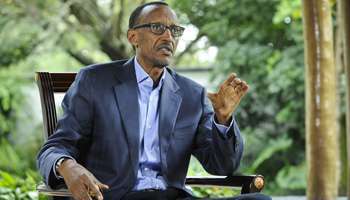
Paul Kagame avoue avoir tué Col Patrick Karegeya.

01701201415381800000020140118_kagameLe chef de l’État rwandais, Paul Kagamé, a accordé à Jeune Afrique sa première interview depuis l’assassinat de l’opposant Patrick Karegeya.

Après la mort, le 1er janvier en Afrique du Sud, de Patrick Karegeya, ancien chef des services de renseignement extérieur du Rwanda, le pouvoir de Kigali a immédiatement été pointé du doigt par les opposants en exil et la famille de la victime, et désigné comme responsable, voire coupable.

Le président rwandais a fini par briser le silence, le 10 janvier, avec des responsables lors d’une « breakfast prayer », lors de laquelle il a évoqué les conséquences de la trahison, sans pour autant citer Karegeya.

Dans l’édition de Jeune Afrique à paraître ce dimanche (n°2767, 19-25 janvier 2013), Paul Kagamé répond pour la première fois à une interview sur le sujet. “Le terrorisme a un prix, la trahison a un prix. On est tué comme on a soi-même tué”, répond-il à la question “Qui a tué Patrick Karegeya ?”.

Le dirigeant rwandais précise sa pensée et juge que la communauté internationale applique, pour le Rwanda, une politique du “deux poids, deux mesures”. “Quand il s’agit du Rwanda, l’injonction qu’on nous donne est la suivante : ces individus qui vous combattent et qui ont juré votre perte par tous les moyens, s’il vous plaît, protégez-les. […] Je suis désolé, mais je n’accepte pas cette logique.

Source: http://www.jeuneafrique.com/Article/ARTJAWEB20140117151109/


Gutsindwa kwa M23 kwazanye ihungabana ry’ubukungu bw’u Rwanda.

SONY DSC

Nk’uko tubikesha ikinyamakuru Jeune Afrique, ubukungu bw’u Rwanda mu gihembwe cya gatatu cya 2013 bwaracumbagiye cyane. Bivuye ku mibare itangazwa na banki y’igihugu ikaba yerekana ko ubukungu bwazamutseho 3.9% akaba ari bwo bwa mbere  kuva mu mwaka wa 2009.Ubusanzwe ubukungu bw’u Rwanda bwazamukagaho ku gipimo cyo hejuru ya 7% kuva mu mwaka wa 2008 kugeza muri 2012.

Ikigega mpuzamahanga FMI kigendeye ku mibare yari isanzwe itangazwa cyari cyatangaje ko ubukungu bw’u Rwanda bushobora kuzazamukaho 6.6% mu mwaka wa 2013 na 7.5 mu mwaka wa 2014. Cyakora iri hungabana ryo mu gihembwe gishize ritumye abantu batangira kubigiraho amakenga. Ubundi ku bazi iby’ibarurishamibare, guteganya uko ubukungu buzagenda bashingira ku byo babona bisanzwe biba. Urugero, niba ubukungu busanzwe buzamuka, biroroshye guhita ufata umwanzuro ko buzakomeza kuzamuka, nanone niba burimo kumanuka nta gihamya ifatika ko bugiye guhita buzamuka. Gusa rero abazi iby’ubukungu bagendera cyane ku ihame ryitwa “ceteris paribus” ni ukuvuga ngo hatagize igihinduka. N’ubwo mu buzima bigoye kubona ko nta kizahinduka, ariko ibyo abanyabukungu bavuga akenshi biba byo.

Hari ibintu bibiri by’ingenzi bijyanye n’iri hungabana ry’ubunkungu. Icya mbere ni uko M23 yatsinzwe muri iki gihembwe ikindi ni uko ifaranga ry’u Rwanda ryataye agaciro ku buryo burushije ibyabaye ku yandi mafranga. Mu gihe Leta y’u Rwanda ivuga ko ubukungu buzahita bwongera kuzamuka, ababikurikiranira hafi bo basanga gustindwa kw’umutwe M23 washinzwe ukanaterwa inkunga na Leta ya Kigali ari yo mpamvu nyirabayazana. Aba bemeza ko u Rwanda rwasahuraga ibintu byinshi muri Congo bikabarwa nk’umusaruro w’u Rwanda. Ibi bikaba bisobanura ko gutsindwa kwa M 23 kugomba kujyana no guhungabana kw’ubukungu bw’igihugu. Reka twibutse ko iki kibazo cya M23 ari cyo cyari cyatumye ibihugu bimwe na bimwe bihagarika inkunga byageneraga u Rwanda, dore ko 40% by’ingengo y’imari y’ u Rwanda iva mu mfashanyo z’amahanga. Hari abo ibi bitangaza cyane cyane iyo bumvise ivogonyo ry’abategetsi ba FPR.

Mu kwezi kwa Nyakanga 2013 idolari rimwe rya America ryavunjwaga ku mafranga 655 y’amanyarwanda , naho kurigura bigasaba 660. Nyamara muri uku kwezi kwa Mutarama 2014, idolari rimwe ry’America rivunjwa ku manyarwanda 666.1 naho kurigura bigasaba 709.1. Ni ukuvuga ko ifranga ry’u Rwanda ryataye agaciro ho amafranga 11 cyangwa se 1.7% mu gihe cy’amezi makeya cyane. Ikintu gitangaje ariko ni uko iyi mibare itangazwa na ORINFOR itandukanye cyane n’itangazwa na Banki y’igihugu kuko yo yerekana ko idolari ry’amanyamerika rivunjwa amanyarwanda 673.3 hanyuma rikagurwa 679.7.

Ikigega FMI cyo kiratangaza ko kidatangajwe n’iri hungabana ngo kuko n’ubundi ubukungu bw’igihugu busanzwe bujegajega kuko umusaruro uturuka mu Rwanda ari mukeya cyane. FMI itanga inama ko u Rwanda rugomba gushakisha uburyo bwo kubona amafranga yabwo yo gushora mu majyambere kuko no kugurisha impapuro z’agaciro ku masoko mpuzamahanga ngo bifite ibibazo bijyana nazo.

Ubwanditsi


in-angola

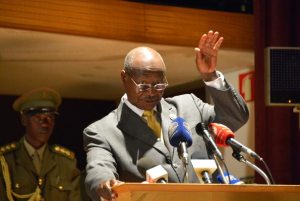
Speech by H.E. Yoweri Kaguta Museveni
President of the Republic of Uganda
15th January, 2014, Luanda, Angola

His Excellency Eduardo Dos Santos,
President of the Republic of Angola,

Your Excellencies, the Heads of State and Government,
Ladies and Gentlemen.

I greet Your Excellencies.

As I said in South Africa, the concept of the Great Lakes is not a new one but an ancient one in our area.  Uganda, Rwanda, Burundi, Eastern Congo, South Sudan have, since time immemorial, been linked to the East African Coast of Zanzibar through mainland Tanzania.  We would get textiles (emyenda), glass beads(enkwaanzi) and guns from or through the Coast and we would send elephant tusks(emiino) to the Coast.  We would also send them bark cloth (ebitooma-embugu) and iron-ore (obutare) products (hoes, pangas, spears, arrows, etc).  Out of the Congo forest, we would get copper products (emiriinga), animal skin products (amooshe), timber products as well as ivory products (engoro). The word lake is translated as“Nyaanja” or “Nyaanza” in many of the Bantu dialects of the area.

That is why you hear of the Kinyaanja of Malawi, Zambia and Mozambique and of Nyaanza province in Kenya.  Actually, in my other role as a linguist of African dialects, I have proposed that the interlacustrine Bantu dialects of the Great Lakes found in Uganda, Rwanda, Burundi, Eastern Congo, North-Western and Western Tanzania, Western Kenya and even, Northern Zambia and possibly Northern Angola, should be given the collective name of Kinyaanja North to distinguish them from the Kinyaanja of Zambia, Malawi and Mozambique.  In that connection, I have not yet understood why Malawi and Mozambique are not part of the Great Lakes’ fraternity because, historically and culturally, they are very much part of this region.  Therefore, the Cushitic, Nilotic, Bantu and Semitic peoples of this area are either similar or linked culturally.  Besides, as mentioned above, they have been trading among themselves for millennia.  It was colonialism that interfered, for some decades, with these linkages by establishing Belgian, British, French and Portuguese colonies in the different parts of this vast region.
It is good that we have re-assembled this region under the ICGLR, COMESA and EAC.

The conflicts that have afflicted this area are actually linked.  They, essentially, came from three sources as indicated below:
(i)    the colonial manipulation of the indigenous castes (occupational specializations) of Rwanda and Burundi in the colonial period, climaxing into the first genocide organized by the Belgians in Rwanda in 1959 and 1960;

(ii)   the wrong foreign and domestic policies of Mobutu of, on the other hand, harbouring enemies of neighbours (Angola, Uganda, Rwanda, Burundi, Brazzaville) and, on the other hand, denying the rights of some of their own people as not being Congolese; and

(iii)   the failure by the people of Sudan (the former United Sudan) to resolve the issues of their diversity resulting in the prolonged civil war in that country, involving eventually, Uganda.

The Belgian sponsored genocide of 1959-60 in Rwanda created a Tutsi diaspora that dispersed in the region (Uganda, Congo, Burundi and Tanzania).

After being told by Kayibanda and Habyarimaana for 30 years that they can never go back to their country because the people who had remained in Rwanda and taken their property had multiplied and, therefore, there was no space for them in the country of their heritage, they organized (under the RPF) and launched the attack of 1990 on Rwanda.  The sectarian and bankrupt Hutu regime, spurred on by the greedy foreigners who are always hovering around with a lot of confusion and shallowness, thought that genocide was the solution to the “Tutsi” problem ─ just like Hitler with the Jews of Europe.  Hence, to the bankrupt Hutu regime of Rwanda, there was a “Tutsi” problem, just like to Hitler was a “Jewish” problem in Europe.  The second genocide of Rwanda of 1994 did not save the Hutu regime.  The Hutu regime fled with a million people to Goma, Congo, with arms.  With Mobutu’s support, they were threatening to re-invade Rwanda and finish their genocide programme.  That is what started the first Congo war of 1996 that resulted in the down fall of Mobutu.  Apart from Mobutu threatening to re-launch the Hutu reactionaries into Rwanda, he had also started a campaign against the Banyarwanda of Eastern Congo, especially the Tutsi ─ targeting a group known as Banyamulenge.

Up to now the presence of the Rwanda genocidaires in Eastern Congo has not been solved ─ leading to endless problems such as the 2nd Congo war, the Nkunda uprising, the M-23, etc.  All these have been linked to the original problem of the Rwandan genocidaires in Eastern Congo.  Yet, this should never have been a problem if there was clarity.  In order to avoid the Hutu diaspora of 1994 substituting for the Tutsi diaspora of 1959, the solution should have involved the right of return by those new exiles but with accountability for the crimes they committed using a graduated scale of separating the misleaders from the misled and being harsh on the former and lenient on the latter.   If there are those that did not want to go back to Rwanda, they should have been removed from the border to deep inside Congo and should have been disarmed.  This has never been done conclusively.  This must be done.  All the other eruptions have been the consequences of this mistake and the one of denying the Banyarwanda of Eastern Congo, especially the Tutsi, either overtly or covertly, the inalienable right to the land of their ancestry.  To deal with the consequences without dealing with the cause is not a durable solution.

Meanwhile, the failure to handle the issue of diversity in the Sudan had generated a Civil War right from 1956, at the dawn of Independence of that country.  The Southern Sudanese who spearheaded the rebellion against the Arab Government of the whole of Sudan after independence were very closely linked to our own Nilotic and Bantu peoples of Uganda, Kenya, Congo, Tanzania and Ethiopia.  Therefore, some of the elements in Khartoum were always very suspicious of the neighbours.  When our Movement won the protracted civil war in Uganda in 1986, against the fascist dictators of Uganda (Idi Amin and groups), some elements in Khartoum declared it as unacceptable and resolved to remove us, by force of arms from Government. Working with remnants of the old regimes (Obote, Amin, etc), they sponsored two groups: Kony’s so called LRA (Lord’s Resistance Army) claiming to be Christians and ADF (Allied Democratic Front) claiming to establish Islamic fundamentalist rule in Uganda which is 86% Christian and where the tribes mainly practiced symbiosis of barter trade even before colonialism, apart from some few inter-tribal wars that were being promoted by myopic chiefs.    We defeated the two groups.  Where did they flee to?  They fled to the poorly controlled areas of Eastern Congo and CAR.  At one time, the Congo Government allowed us to flush Kony out of Garamba National Park. Otherwise, there has been the exercise of terrorism conservation in Eastern Congo supervised by the UN all these years ─ since 2003 when our army withdrew from Congo under the Lusaka Agreement.  Fortunately, we are working well with the Congo Government to end the presence of the ADF in Eastern Congo and also our problems with Khartoum have improved.

Last year, the democratically elected Government of CAR was removed by a bankrupt, reactionary group known as Seleka while regional forces looked on.   This bankrupt group entered the heavily populated Bangui, murdered people, raped women and looted the meagre properties of those already impoverished people.  This is a real betrayal of our people.  Why should we allow or tolerate armed groups overthrowing elected Governments in African unless they show that they are fighting genociders?  After all, we should not forget that Hitler was elected in 1933.  Even elected Governments can lose legitimacy if they do not respect, especially, the right to life and property.  You cannot say that an elected Government has a right to kill people extra-judicially or loot their property.

Now that that bankrupt regime has collapsed in Bangui, I hope new problems will not be created for the people of CAR by those who are wheeling and dealing targeting the natural resources of CAR.  Let the people elect their leaders freely, without interference or manipulation and let the elected leaders respect the legitimate interests of all the citizens of the country without discrimination.

Recently, we had an outbreak of serious fighting in our young brother-country of South Sudan.  There are two versions of how that fighting started.  The Government says that there was an attempted coup which was defeated in Juba but spreading to the Provinces: Bentiu, Jonglei and Malkal.  The opposition says that it is the Government that provoked the fighting by trying to disarm some of the soldiers on a sectarian basis.  The truth will come out with time.  What is clear is that the problem started within the SPLM, the ruling party, as a power struggle. You detect ideological, organizational and discipline issues in this situation.  Why should there be sectarian undertones or overtones in  a political debate?  Why should intraparty matters go public before they are resolved within the party?  Why should we have so many reported killings, lootings of people’s property, etc. but never hear of soldiers who are executed for committing those crimes by the different actors in these situations?  We were able to stabilize Uganda in security terms but also in politics by disciplining the Army.  You kill a person or you rape a woman, you are a dead person in the very place where you committed the crime.

Coming back to the issue of whether there was an attempted coup in South Sudan or not, the question is:  “If Riek Macher did plan a coup in Juba, then why did his supporters capture Malakal, Bor, Akobo, etc?”  The SPLA has flushed them out of Bentiu and Malakal.  Only the other day, 13th of January, the SPLA and elements of our army had a big battle with these rebel troops at a point about 90 kms from Juba where we inflicted a big defeat on them.  Unfortunately, many lives were lost on the side of the rebels.  We also took casualties and also had some dead.  By yesterday evening, the Government of South Sudan, with the support from our troops, had regained control of Jemeza and the SPLA troops, on their own , had gone ahead to Sudan Safaari.  In my opinion, if Riek Machar had not planned a coup and it had all been mistakes on the Government side, he could have done two things: withdraw to a remote area of the country to avoid attack and to start talks unconditionally so as to resolve the problem quickly and not to protract it.  The SPLM party should resolve their disagreements within those structures.  If some people are not satisfied with the SPLM, they should go out and form another Party and the Government should neither stop them nor impede them.  However, to turn a political problem into a military one, having mismanaged the political problem itself in the first place is not acceptable.

In my view, the problems of the Great Lakes, as already stated have been ideological, organizational and the discipline of the actors.  The manipulation of tribes and religions is a pseudo ideology ─ is a false ideology ─ not reflecting the interests of the people but those of the opportunists and parasites ─ spurred on by foreign interests.

I always like to use the example of my tribe the Banyankore, who are cattle keepers and grow bananas, coffee and tea.  How does my tribe benefit me as an individual producer of the four commodities?  I produce milk and beef and so do my neighbours. They cannot buy from me because they are producing similar products and nor can I buy from them.  The people who make me rich and prosperous are the people of Kampala, the people of Kigali in Rwanda, the people of Nairobi in Kenya, the people of Bukoba and Mwanza in Tanzania, the people of Juba in South Sudan, the people of Eastern Congo and Burundi, who buy my milk and beef.  The only support the people of my tribe render me, is that by producing similar products in big volumes, they make processing and marketing easy.  Even if I only cared about my tribe, I would have to care about the whole of Uganda, the whole of East African, the whole of the Great Lakes because it is those that give us prosperity by buying what is produced in my locality.  It is, therefore, the parasites that promote this pseudo ─ ideology.  With the conflicts in Eastern Congo and South Sudan, the food prices in Uganda have collapsed to the detriment of the farmers that were getting used to the higher prices because of the bigger demand in the region.  It is only the parasites who do not engage in production that do not see these issues.

The last problem of the Great Lakes is lack of infrastructure ─ roads, the railways, electricity, piped water and ICT backbone.  It shows you the great potential of the region that business is booming, provided there is peace, even when the infrastructure is absent.  What would happen if there was peace, infrastructure and free ─ trade?  The sky would be the limit.

Down with the pseudo –ideology, down with opportunism, down with parasitism, down with the indiscipline and impunity of soldiers and long live infrastructure development, peace and socio transformation of the Great Lakes.

I am always very happy to come to Luanda, Angola, because I started working with the MPLA in 1967 in  Dar-es-Salaam with Dr. Augustinho Noto, Dr. Boavida and other comrades.  I am always very happy to associate with the old freedom fighters in Angola, Tanzania, Mozambique, South Africa, Zimbabwe, Namibia, etc.  It is always a pleasure to be here.

I thank Your Excellencies.

PÉTITION: Pour la protection des rwandais contre les dérives criminelles de leur président dictateur Paul KAGAME

Lors de son discours prononcé le 12 janvier 2014 à l’occasion d’un déjeuner de prières avec les leaders du Rwanda (Rwanda Leaders Fellowship Prayer Breakfast)le président rwandais Paul KAGAME a fait preuve une nouvelle fois de sa volonté féroce d’éliminer à n’importe quel prix tout opposant politique ou toute autre personne désignée comme ennemie par son régime.

Des propos relayés largement par les réseaux sociaux : « Quiconque trahit notre cause ou souhaite du mal à notre peuple en subira des conséquences. Il reste seulement à savoir comment et à quel moment les conséquences s’abattront sur lui ».  Le président Kagame a aussi ajouté lors de ce déjeuner de prières ne pas avoir de scrupules à assumer l’assassinat de ces « ennemis » car il prétend avoir été élu pour protéger le Rwanda et avoir prêté serment pour affronter n’importe quel ennemi (guhangana n’uwo ariwe wese).

CLIIR condamne vigoureusement cette vision criminelle et cette volonté d’exterminer les opposants politiques. CLIIR met en garde le président Paul KAGAME et ses courtisans que ce droit de « neutraliser » les ennemis réels ou supposés dont ils s’arrogent abusivement le pouvoir, aura aussi des conséquences sur le plan judiciaire tôt ou tard. Aucun acte criminel ne restera impuni !

En réaction à ces propos bélliqueux et inacceptables, CLIIR, en complément d’autres actions à mener, a décidé de lancer immédiatement une pétition pour sensibiliser toutes les bonnes volontés du monde à  rassembler un maximum de signatures afin d’appeler la Communauté Internationale à protéger l’ensemble du peuple rwandais contre son président dictateur et mégalomane Paul KAGAME.

Cette pétition s’adresse donc :

– à tous ceux qui souhaitent que le président PAUL KAGAME réponde devant la justice de ses implications dans des assassinats politiques et crimes contre l’humanité dont il est accusé par le  DRC Mapping Report et les différents rapports des ONG qui opèrent dans la Région des grands Lacs ;

– à tous ceux qui refusent que le président  Paul KAGAME s’arroge le droit de tuer en toute impunité quiconque est désigné arbitrairement d’ennemi par lui et ses courtisans

– aux ONG internationales de condamner fermement les propos d’incitation à la violence du président Paul KAGAME qui encourage les fonctionnaires à verser également dans les assassinats pour protéger prétendument le Rwanda de ses ennemis réels ou supposés ;

 – aux sociétés civiles régionales et internationales pour exiger la création d’institutions fortes et indépendantes capables d’exercer un véritable contrôle sur le pouvoir exécutif en  prévenant et sanctionnant ses dérives éventuelles ;

 – aux partis politiques d’opposition pour exercer une pression sans relâche à l’ouverture immédiate de l’espace politique verrouillée par le FPR (Front Patriotique Rwandais), le parti du président Paul KAGAME ;

– aux sponsors et bailleurs de fonds internationaux pour cesser tout soutien financier, militaire et diplomatique au président Paul KAGAME et son régime dictatorial dans leurs activités criminelles ;

– à l’ensemble de la Communauté internationale pour qu’elle sorte enfin de son silence coupable et condamne avec conséquences les dérives criminelles du président Paul KAGAME qui impose depuis 20 ans d’inutiles et atroces souffrances aux populations du Rwanda et de la Région des Grands Lacs.

C’est aujourd’hui que vous pouvez influer sur le changement démocratique dont le Rwanda a grandement besoin en soutenant massivement cette pétition qui sera transmise aux sphères influentes et décisionnelles de la Communauté Internationale.

Avec vos proches, amis et connaissances, soyez parmi ceux qui auront accompli leur devoir citoyen de réclamer la protection des rwandais de l’intérieur et extérieur du pays. En signant cette pétition, vous exigez aussi de la Communauté Internationale sa contribution afin d’instaurer une démocratie et une paix sociale au Rwanda.

C’est la seule garantie du véritable progrès vers une réelle réconciliation entre les rwandais attendue depuis 20 ans. C’est une nécessité fondamentale pour le développement et la stabilité durables du pays.

Nous comptons sur votre signature! Les rwandais ont besoin de votre soutien.

Merci de signer, partager et diffuser largement cette pétition.

CLIIR, un regard impartial

Pétition adressée à :

Mr Ban KI-MOON, Secrétaire Général des Nations Unies
Mme Navanethem PILLAY, Haut-commissaire des Nations Unies aux droits de l’homme
Mme Nkosozana Dlamini ZUMA, Présidente de l’Union Africaine
Mrs Tax Lawrence STERGOMENA, Secrétaire Exécutif de la SADC
Mr Herman Van ROMPUY, Président de l’Union Européenne
Mr Manuel BARROSO, Président à la Commission Européenne
Mr Barack OBAMA, Président des Etats Unis d’Amérique
Mr François HOLLANDE, Président de la République de la France
Mr David CAMERON, Premier ministre de la Grande Bretagne
Mr Jacob ZUMA, Président de la République d’Afrique du Sud
Mr Jakaya Mrisho KIKWETE, Président de la République Unie de Tanzanie ;
Mr Joseph KABILA, Président de la République Démocratique du Congo 
Pour la protection des rwandais contre les dérives criminelles de leur président dictateur Paul KAGAME.

Cordialement,

Pour signer la pétition va sur le link suivant:

http://www.change.org/fr/p%C3%A9titions/pour-la-protection-des-rwandais-contre-les-d%C3%A9rives-criminelles-de-leur-pr%C3%A9sident-dictateur-paul-kagame?share_id=JdOqMFMKFE&utm_campaign=twitter_link&utm_medium=twitter&utm_source=share_petition

Rwanda: pour Faustin Twagiramungu, «il est temps de mettre fin au chantage de Kigali»

Faustin Twagiramungu.

Faustin Twagiramungu.

©2010 Faustin Twagiramungu
Par RFI

L’ancien Premier ministre rwandais, Faustin Twagiramungu, à la tête Rwandan Dream Intiative, parti d’opposition en exil, a décidé de rallier les Forces démocratiques de libération du Rwanda (FDLR) – accusées par le gouvernement rwandais d’héberger des génocidaires en leur sein – et le Parti social-Imberakuri, dont l’ancien président a été condamné pour « divisionnisme ». Les autorités rwandaises n’ont pour l’instant pas réagi.

L’ancien Premier ministre rwandais, Faustin Twagiramungu, a décidé, avec son parti politique en exil, le Rwandan Dream Initiative, de signer un accord de collaboration avec les Forces démocratiques de libération du Rwanda, les rebelles hutus rwandais réfugiés au Congo et le Parti social-Imberakuri.

Les FDLR sont accusées par Kigali d’avoir des génocidaires en leur sein et de propager l’idéologie du génocide. Le PS-Imberakuri, de son côté, a vu son ancien président Bernard Ntaganda condamné et emprisonné en 2010 pour « divisionnisme ».

→ A (RE)LIRE : RDC: les FDLR demandent un dialogue inter-rwandais

Malgré cela, et alors que 2014 marquera les vingt ans du déclenchement du génocide au Rwanda après l’attentat contre l’avion du président rwandais Juvenal Habyarimana le 6 avril 1994, Faustin Twagiramungu a tenu à s’associer à ces deux formations. Interrogé par RFI, il affirme qu’« il est temps de mettre fin au chantage de Kigali, notamment du président Kagame, qui essaie chaque fois d’instrumentaliser le génocide, pour qualifier tout le monde est génocidaire ».

« Je considère que les Rwandais, qui sont réfugiés depuis 1996 jusqu’à aujourd’hui et qui sont dans les forêts congolaises, ne sont pas des génocidaires. S’il y en avait, ils ne seraient pas nombreux et je pense que la justice devrait s’en occuper », avance-t-il. « Nous savons qu’il y a presque 75 % de jeunes gens entre 20 et 30 ans. Ceux-là ne peuvent pas être accusés d’être des génocidaires », dénonce-t-il encore.

 → A (RE)LIRE : Assassinat de Patrick Karegeya: pour Kagame, «la trahison a des conséquences»

Il affirme que l’objectif de cette coalition entre le Rwandan Dream Intiative – son parti – les FDLR et le PS-Imberakuri, est de faire pression sur la communauté internationale pour qu’elle « puisse [les] aider à chercher un dialogue avec Kigali ».

Pression de la communauté internationale

Au-delà de cette coalition, il en appelle également à tous les autres partis d’opposition rwandais en exil et à la communauté internationale. « Cette coalition n’est pas suffisante, à mon avis. Il y a plusieurs autres partis comme le RNC [Congrès national du Rwanda, ndlr], ou un autre qui s’appelle le PD [Parti démocrate, ndlr]… Il y a tout un tas de partis politiques et nous aimerions qu’ils se mettent ensemble, pour que la pression continue de croître, pour que la communauté internationale puisse prêter une oreille attentive à la situation du Rwanda qui perdure depuis vingt ans. »

 ► A (RE)ECOUTER : Faustin Twagiramungu, ancien Premier ministre rwandais président du nouveau parti Rwanda dream initiative (RDI)

Pour Faustin Twagiramungu, « nous ne pouvons pas continuer comme ça. S’il y a des criminels dans la forêt congolaise, il y a des criminels au Rwanda aussi. Il est temps, maintenant, que l’on suive l’exemple de l’Afrique du Sud, du Burundi. »

« Il faut qu’on apprenne à se parler, pas à se chasser et à se vanter que l’on peut tuer les gens dans les hôtels, et partout dans les pays où ils sont réfugiés », ajoute Faustin Twagiramungu, évoquant les propos du président rwandais Paul Kagame, dimanche 12 janvier, après l’assassinat, le 31 décembre en Afrique du Sud, de Patrick Karegeya, un ancien proche devenu l’un de ses plus farouches opposants. « La trahison a des conséquences », avait alors déclaré Paul Kagame, ajoutant à destination des opposants en exil, que « quiconque trahit notre cause ou souhaite du mal à notre peuple deviendra une victime. Il reste seulement à savoir comment il deviendra une victime. »

Interrogées par RFI sur cet accord entre Faustin Twagiramungu et les FDLR, les autorités rwandaises n’ont, pour l’instant, pas souhaité réagir.

Source: http://www.rfi.fr/afrique/20140116-rwanda-faustin-twagiramungu-kagame-kigali-karegeya-fdlr-genocide

“Ndi Umunyarwanda” est un programme divisioniste et terroriste. Deogratias Basesayabo

basasa

Le parti Ishema est très inquiet des dérives successives du gouvernement dictatorial de Paul Kagame dont divers programmes continuent de semer la zizanie et cultiver la haine ethnique entre Hutus et Tutsis du style «diviser pour régner».

Depuis l’accession au pouvoir du président Paul Kagame qui dirige le pays le doigt sur la gâchette, son gouvernement s’est vite spécialisé en manœuvres consistant à berner la communauté internationale par des programmes dits de réconciliation nationale mais qui,en réalité,n’avaient pour objectif que de déchiquetter les relations sociales en créant la méfiance entre Hutu et Tutsi. Le parti Ishema entend aider la communauté rwandaise à résoudre le problème ethnique par un programme politique phare dénommé:«la démocratie des jumeaux». Il s’agit ici de l’adaptation aux réalités rwandaises du principe républicain de “fraternité”. Nous estimons que les rwandais , dans leur diversité ethnique (twa, hutu et tutsi), ne sont pas seulement des frères mais des jumeaux ou même des triplés. Une fois que cette conscience aura été suffisamment développée, la justice sociale aura aquis une base solide, la segrégation battra en brèche.

C’est pourquoi le parti Ishema tient à condamner les contradictions véhiculées par le programme «ndi umunyarwanda» et lance un appel vibrant à la communauté rwandaise pour qu’elle se dissocie de ce programme ethnocide qui conduit immanquablement à la préparation d’autres génocides.

Le Programme «Ndi umunyarwanda» moyen de réconciliation nationale ou «Rwandité» à l’instar de l’Ivoirité à l’ivoirienne?

Il n’y a aucune ombre de doute que le programme gouvernemental dit « Ndi umunyarwanda » est dirigé contre les ressortissants de l’ethnie majoritaire hutu. Il s’agit au juste d’un plan machiavélique visant l’anéantissement moral et politique de cette ethnie que le FPR cherche mettre définitivement hors-circuit .

Par le programme «  Ndi umunyarwanda » , Paul Kagame et sa clique affirme que le génocide des Tutsi a été commis au nom de tous les hutu (du passé , du présent et de l’avenir)et que, par conséquent, ceux -ci doivent se reconnaître publiquement et solidairement coupables .Dès lors, il leur est imposé de demander pardon pour les crimes dont ils ne sont pas personnellement responsables. Il est donc évident que l’institution de ce nouveau « crime collectif » est le pilier central d’une nouvelle idéologie destinée détruire durablement l’ethnie des Bahutu. Et pour ce faire, tout l’appareil de l’État a été mobilisé pour faire l’éloge d’un soi-disant programme susceptible de reconstruire la confiance entre les Rwandais !Alors que ses effets sont tout le contraire de ce qui est annoncé aux non-initiés.

C’est dans ce cadre qu’en date du 30 novembre, la présidente du parlement rwandais a rencontré la diaspora rwandaise de Belgique pour «expliquer» les tenants et les aboutissants de ce fameux programme dit de «rerwandatisation» de la communauté rwandaise mais s’adressant en réalité à la seule jeunesse hutu forcée à demander pardonner pour les crimes réels ou supposés de leurs aïeux !

Après les explications fournies par les  “orateurs chevronnés en mensonge”, sur le bien-fondé du programme de rerwandatisation de la population rwandaise; diverses questions ont été posées dont l’une a suscité une attention particulière de notre part.

En effet, celui qui a posé la question voulait savoir si, pour tous les hutu, la reconnaissance de la « nationalité rwandaise» devenait désormais conditionnée par la demande de pardon au nom de tous les hutus devenus dès la naissance “présumés génocidaires” ! Il a voulu savoir également si les crimes commis contre les hutu par les soldats du FPR depuis l’invasion du Rwanda en 1990 faisaient aussi objet de demande de pardon.

La réponse donnée par le député Kaboneka fut d’une ironie massacrante ! Celui-ci préféra d’abord nier l’existence de massacres contre le peuple hutu avant de se moquer de la communauté internationale et particulièrement des Nations Unies incapable d’établir la réalité du génocide commis contre les hutu pourtant signalé dans un certain nombre de rapports onusiens dont le « Mapping Report » du 1/10/2010. Finalement, avec un culot sans précédent, le Député Kaboneka retourna la question à l’assemblée pour demander si quelqu’un pouvait désigner le planificateur de ces massacres et le nom de celui qui les aurait arrêtés pour qu’ils soient qualifiables de génocide ! Un critère jusqu’alors inconnu de ceux constitutifs du crime de génocide! Quand les intore se levent pour mentir, ils ont le verbe cerveau particulièrement intarissable!

Malgré le dégout de l’assemblée, personne n’a eu le courage de lui répondre signe d’une crispation du public horrifié surtout par les diverses expéditions punitives contre quiconque ose pointer du doigt les agissements du régime de Kigali. Nul n’ignore ce qui est arrivé aux opposants actuellement incarcérés pour avoir discrédité la politique dictatoriale de Kigali (dont Victoire Ingabire, Bernard Ntaganda et Déo Mushayidi pour ne citer que ceux-là); les journalistes tués ou emprisonnés pour avoir bien fait leur métier d’informer le public.

Aujourd’hui, je tiens à répondre à cette question moqueuse et cynique en prenant pour témoin la communauté internationale et en déclarant ce qui suit:

Le coup d’envoi du « génocide rwandais » a été donné par un homme du nom de Paul Kagame qui, vétu d’une peau de maquisard, a anvahi le Rwanda le 01 Octobre 1990. C’est cette personne qui n’a pas hésité à donner une leçon de cruauté à ses troupes en tirant à bout portant sur des paysans dans un centre de négoce à Nyagatare en 1992 .

Le même homme a ordonné l’exécution des religieux à Gakurazo dont 3 evêques , 4 religieux et un enfant de 4 ans qui ne demandait rien d’autre que sa protection. Il a ordonné et supervisé le massacre de plus de 8000 personnes à Kibeho le 22 Avril 1995.

C’est toujours la même personne qui n’a pas hésité à déclencher des opérations “préventives” et punitives contre des populations civiles des régions de Gisenyi et Ruhengeri entre 1996 et 1997(accusées de collusion avec les ex-FAR devenus de facto ennemis), lesquelles opérations ont emporté des milliers de femmes, enfants et vieillards sans histoire. Les massacres d’une rare violence commis dans un centre de négoce très connu et très fréquenté de la région de Gisenyi (voir Massacre de Mahoko par les troupes de l’APR) sont également signés de sa main !

Personne n’ignore non plus, que depuis que cet individu est au pouvoir au Rwanda, la guerre a vite été exporté en RDC où, assoiffé de sang et des richesses de ce pays, Kagame n’a pas hésité à traverser la frontière du Congo voisin pour y commettre des massacres contre des réfugiés Hutus rwandais et contre des populations congolaises non acquises à sa cause hégémonique sur la région des grands lacs, provoquant une mort atroce de plus de 4.500.000 personnes comme consigné dans le rapport des Nations Unies sur la RDC (mapping report).

Je ne terminerais pas sans évoquer les derniers en date, ces massacres perpétrés par des mouvements terroristes de dissidents soi-disant congolais créés et armés par le Rwanda à savoir le RCD; le CNDP et le M23 qui vient d’être mis en déroute par le gouvernement congolais épaulé par la SADEC, mouvement accusé par les nations Unies de crimes contre l’humanité, illustrés par le nombre de charniers découverts dans les zones qu’il occupait jadis.

Concluons

Je salue l’initiative du Parti Ishema de privilégier les « voies pacifiques » pour trouver une issue aux problème rwandais. Il en appelle à la conscience des autorités rwandaises de cesser toutes les activités à caractère terroriste destinées à détruire une partie du peuple rwandais et à liquider les opposants. Seul le dialogue et le débat contradictoire entre les forces politiques de la nation constituent un antidote contre les guerres civiles à répetion et les génocides.

C’est pour cela que le parti Ishema exhortent le peuple rwandais (hutu et tutsi confondu) épris de paix et d’unité nationale, à rejeter catégoriquement ce programme «Ndi umunyarwanda » profondément divisionniste.

Un criminel en vaut un autre. Pour ce qui est de la communauté rwandaise, on ne peut parler de réconciliation sans vérité et il ne peut y avoir de vérité sans justice. Tous les citoyens rwandais doivent absolument être égaux devant la loi sans qu’il y en aient qui soient considérés comme des citoyens de seconde zone.

Le Parti Ishema animé par une nouvelle génération de politiciens est prêt à aider le peuple rwandais à résoudre les deux problèmes majeurs, de régionalisme et d’ethnicisme, qui ont handicapé voire retardé son évolution.

Vive le Rwanda,

Vive le peuple rwandais libéré du joug de la tyrannie.

Dr BASESAYABO Déogratias

Secrétaire Général Adjoint du parti Ishema.


Rwanda and the New Scramble for Africa: “the Rwandan genocide was 100 percent American responsibility”

By Robin Philpot

“…essential reading.” Edward S. Herman

Baraka BOOKS

An accepted narrative holds that horrible Rwandan Hutu génocidaires planned and executed a satanic scheme to eliminate nearly a million Tutsis after a mysterious plane crash killed the former president of Rwanda on April 6, 1994. Yet former UN Secretary General Boutros-Ghali says, “the Rwandan genocide was 100 percent American responsibility.” Where lies the truth?

Based on vast research, extensive interviews, and close analysis, this fascinating account shows not only that the accepted narrative is false but also that it has been edified to cover-up the causes of the tragedy, protect the criminals responsible for it and then justify the invasion of the Congo.

***

Former UN Secretary General Boutros Boutros-Ghali declared, "The Rwandan genocide was 100% American Responsibility."

Former UN Secretary General Boutros Boutros-Ghali declared, “The Rwandan genocide was 100% American Responsibility.”

The book  comprises three parts. The first part addresses the little-discussed but crucial events preceding the assassination of the presidents of Rwanda and Burundi

Former UN Secretary General Boutros Boutros-Ghali declared, “The Rwandan genocide was 100% American Responsibility.”

on April 6, 1994, which triggered massive killings. These include the invasion in 1990, drawn-out guerrilla and terrorist warfare, imposition of a new political and economic order followed by an ill named “peace process” that sanctified the occupation of the country by the invading army, and the assassination of two African heads of state.

The second part, “The Heart of Dark Imaginations,” shows how popular literature on Rwanda has been built on the old clichés, metaphors, and conventions generated during 400 years of slavery, the slave trade, and colonialism, and helped justify them. The resulting narrative is perfectly crafted for the “new scramble for Africa.”

The third part takes down the so-called international criminal justice as applied to Rwanda and explains how and why the murderous, never-ending war in Congo began.

***

Praise

“Robin Philpot’s Rwanda and the New Scramble for Africa effectively dismantles a remarkable structure of disinformation on an important area and topic and it throws light on the broader thrust of imperial policy. This book is essential reading.” Edward S. Herman, Co-author of Manufacturing Consent (with Noam Chomsky) and The Politics of Genocide (with David Peterson).

“Explosive, very daring and solidly defended … a real bomb that rocks our interpretation of the Rwandan tragedy!” Le Devoir, Montreal

“Philpot’s investigations show that behind all the words can be found an operation to destabilize and remodel the region.” Africa International, Paris

***

In Slouching Towards Sirte, NATO’s War on Libya and Africa Max Forte wrote, “Everywhere is Rwanda for the humanitarian imperialist, which makes one want to know what really happened there in 1994.” This book attempts to answer that question.

Rwanda and the New Scramble for Africa, which is part of Baraka’s Africa, African Diaspora, and International Politics collection, appears as we approach the 20th anniversary of one of the worst tragedies in modern history.

Robin Philpot is a Montréal writer, translator, and publisher. Born in Thunder Bay, Ontario and a graduate of the University of Toronto, he lived and worked in Africa for several years before settling in Montreal, Quebec He is the author of six books on political on international as well as Quebec and Canadian political issues. He is also co-author of A People’s History of Quebec.

***

282 pages | Trade paper $24.95 | ISBN 978-1-926824-94-9 |
13 photos | index | bibliographic information | appendixes
Available in all ebook formats.

Orders: Independent Publishers Group
(800) 888-4741; fax: (312) 337-5985 orders@ipgbook.com

LUANDA: PAUL KAGAME YITWAJE INAMA YA CIGLR AJYA KUGUYAGUYA JACOB ZUMA.

Urupfu rwa Patrick Karegeya, rukomeje kurikoroza. Mu gihe abakuru b’ibihugu byo mu karere k’ibiyaga bigari by’Afrika bahangayikishijwe n’ikibazo cy’umutekano, kubera intambara zugarije bimwe mu bihugu bigize CIGLR, nka RDC, Sudani y’epfo, Centre Africa, Paul Kagame we ahangayikishijwe bikomeye no kuba zimwe mu nkoramaraso ze zaramaze gucakirwa.

Kagame ntiyaraherutse guca iryera Uhuru Kenyatta

Kagame ntiyaraherutse guca iryera Uhuru Kenyatta

Nkuko byagaragaye ku mafoto aturuka i Luanda muri Angola, Paul Kagame wari umaze iminsi yarasuzuguye inama za CIGLR, akimara kumva ko perezida w’Afrika y’epfo, Jacob Zuma, azaza muri iyo nama, yahise asimbuka yihuta cyane, ndetse akaba ari no mu ba perezida bagezeyeyo mbere, ngo arebe ko yaguyaguya Zuma akaba yazarekura inkoramaraso zagize uruhare mu guhitana Patrick Karegeya.

Birumvikana kandi ko Kagame agira ubwoba, kubera ko ibihugu by’ibihangange cyane cyane Leta Zunze ubumwe z’Amerika, bidahwema kumuhamagara, bamwiyama gukomeza gutera ibindi bihugu, ajya guhigayo abanyarwanda barwanya leta ye mpotozi. Amakuru yasohowe na RFI uyu munsi yavugaga ko Amerika yanamwiyamye ngo ntazahirahire ngo azajye kwicira umunyarwanda ku butaka bw’Amerika, ko byazamukoraho rikaka.

http://www.rfi.fr/afrique/20140115-rwanda-affaire-karegeya-washington-condamne-attentat-habyarimana

Kagame rero ubu yirahuriyeho umuriro. Amakuru aturuka muri Mozambike aravuga ko abantu 4 bafashwe na polisi yaho, babashinje kuba baravogereye ubusugire bw’icyo gihugu kandi bakanagaba igitero mu gihugu cy’abaturanyi cy’Afrika y’epfo. Amakuru Ikaze Iwacu ikesha umwe mu bapolisi b’i Maputo, tutari buvuge amazina ye kubera uburemere bw’iki kibazo, avuga ko muri abo bafashwe, uwitwa Vital Hitimana, uzwi ku izina rya jenerali, polisi yasanze ari we watwaye mu modoka ye, imbunda yakoreshejwe mu kurasa Kayumba Nyamwasa mu 2010, ayivanye i Maputo ayigeza i Johanesbourg.

http://www.washingtonpost.com/world/africa/police-arrest-4-for-rwandan-spymaster-murder/2014/01/15/92c7dba2-7df6-11e3-97d3-b9925ce2c57b_story.html

Paul Kagame ntiyigeze atuma Jacob Zuma ahumeka.

Paul Kagame ntiyigeze atuma Jacob Zuma ahumeka.

Mu kwica Karegeya, uyu Vital niwe watwaye na none mu modoka ye abicanyi abavanye i Maputo abageza i Johanesbourg. Amakuru rero avuye i Luanda aravuga ko ibyo Kagame yakekaga ko, yakora amanyanga maze Zuma akaba yamudohorera, ahubwo byamuviriyemo nko gukoza agati mu ntozi. Na mbere yo kugira icyo yisabira Zuma, ikibazo cy’uko  we na Museveni bari gutegura kongera gutera Congo, nicyo cyahise kimubera ingorabahizi.

Amakuru CIGLR ndetse na MONUSCO, nayo yari muri iyi nama, yemeza ko u Rwanda n’Ubuganda bari gushaka kongera kuzura M23. Ibi kandi bihuye neza n’amakuru Ikaze Iwacu yabonye uyu munsi ko mu ijoro ryo ku wa 13 Mutarama 2014, abarwanyi ba Mai Mai Tcheka bafatanyije n’abacengezi ba RDF, bagabye igitero shuma i Pinga, maze bica abasirikari 3 ba FARDC ahitwa Katanga, harimo ufite ipeti rya Majoro. MONUSCO yahise itabara, ikoresheje indege, maze izo nkoramaraso ziyabangira ingata.

Kagame yaguyaguye Jacob Zuma, ariko biba iby'ubusa

Kagame yaguyaguye Jacob Zuma, ariko biba iby’ubusa

Mu Rwanda naho ntibyoroshye, ubu ingabo za RDF ziri gucengera ku bwinshi muri Congo mu rwego rwo kwitegura kugaba igitero simusiga. Muri iyo myiteguro, ingabo z’u Rwanda ziri gukoresha abahoze ari abasirikari bazwi ku izina rya « DEMOBE », bakabigisha amayeri yo kwinjira muri Congo biyita abahinzi, abikorezi, cyangwa se abacuruzi b’amakara. RDF kandi ubu iri gushyira amatara ku mihanda yose ngo kugira ngo umwanzi azaze hagaragara.

Paul Kagame rero nareke gukomeza yiriza, ahubwo niyemere akanirwe urumukwiye, kubera ko imbaga y’abantu amaze kurimbura, amaraso yabo ari gutabaza. Bitinde bitebuke nawe azaraswaho, kandi nawe azabona ko na nyina w’undi abyara umuhungu!!

Gasigwa Norbert

Ikazeiwacu.unblog.fr

Selecting Transitional Leaders in the Central African Republic

usdos-logo-seal

Press Statement

Marie Harf
Deputy Department Spokesperson, Office of the Spokesperson
Washington, DC
January 15, 2014

The United States is closely following the ongoing deliberations of the Central African Republic’s Transitional National Council as it works to select a new President and Prime Minister. We urge that the selection process be transparent, include a full range of political, religious, and civil society representatives, and be consistent with provisions of the Transitional Charter and the Libreville Agreements, which call for the prime minister to come from the democratic opposition.

The Council has an historic opportunity to put the country on a path toward stability, democracy, and development, and we encourage the Council to seize this opportunity by selecting leaders of integrity who can restore stability to the Central African Republic (CAR), prepare for credible elections as soon as possible, but no later than February 2015, and earn the confidence of the international community.

The United States commends the leadership of the Economic Community of Central African States (ECCAS) in facilitating the political transition process in the CAR and remains deeply committed to working with ECCAS, the African Union, the UN, and representatives of civil society to support the political transition process.

The Office of Website Management, Bureau of Public Affairs, manages this site as a portal for information from the U.S. State Department.

Affaire Karegeya: Washington condamne le meurtre

Karegeya

L’assassinat, il y a deux semaines, d’un ancien haut responsable rwandais, inquiète la communauté internationale. L’ex-chef des renseignements extérieurs du Rwanda avait été retrouvé mort dans sa chambre d’hôtel à Johannesburg. Patrick Karegeya occupait son poste au moment de l’attentat contre le président Habyarimana, en 1994. Il avait d’ailleurs assuré détenir des preuves de l’implication de l’actuel chef de l’Etat, Kagame. L’Afrique du Sud et les Etats-Unis, sans accuser Kigali d’être impliqué dans la mort de Patrick Karegeya, dénoncent la mort de cet opposant.

Dimanche, le président rwandais avait affirmé que la trahison avait des conséquences, sans jamais citer le nom de son ancien chef des renseignements extérieurs, Patrick Karegeya retrouvé mort le 1er janvier dernier. Ajoutant « Ceux qui nous accusent d’être responsable ont fait de même un millier de fois pour défendre leurs nations ». Une remarque qui a beaucoup surpris. Puisqu’officiellement seule l’opposition en exil accuse le régime rwandais d’être derrière cet assassinat.

L’Afrique du Sud est le premier pays à avoir condamné officiellement cet assassinat. Mais la diplomatie sud-africaine a déclaré qu’il fallait attendre les résultats de l’enquête, qu’il était trop tôt pour évoquer de possibles tensions avec un quelconque gouvernement. Pas en l’absence de preuves. Même si par précaution, les services de sécurité sud-africains ont demandé au général Kayumba Nyamwasa, le compagnon d’exil de Patrick Karegeya, de renforcer sa sécurité.

Parmi les chancelleries qui condamnent également ce meurtre figurent les Etats-Unis. C’est ce qu’assure à RFI un responsable du département d’Etat américain, même si aucun communiqué n’a été rendu public. Cette source précise que Washington salue l’ouverture d’une enquête par Prétoria et attend les résultats. Tout en continuant de souligner l’importance du développement d’une opposition politique pacifique au Rwanda.

Pas de réaction au Rwanda

Plusieurs sources diplomatiques occidentales affirment que les Etats-Unis seraient allés plus loin en émettant un avertissement à l’égard de Kigali. Son contenu : si un tel incident se produisait sur le sol américain, cela aurait des conséquences sur les relations bilatérales. Deux des membres fondateurs du RNC, le parti de Patrick Karegeya, se trouvent effectivement aux Etats-Unis. Mais interrogé à ce propos, le responsable du département d’Etat américain joint par RFI n’a ni confirmé, ni infirmé l’existence d’un tel avertissement.

Sollicitées par RFI, les autorités rwandaises n’ont pour le moment pas réagi. A noter que dans une interview accordée à la BBC, l’ambassadeur rwandais en Grande-Bretagne avait démenti que les propos du président Kagame aient un quelconque lien avec la mort de l’ancien chef des renseignements extérieurs du Rwanda.


■ Attentat d’Habyarimana : les parties civiles inquiètent après la mort de Karegeya

Vingt ans après les faits, les parties civiles s’inquiètent de blocages dans l’enquête française sur l’attentat contre l’avion du président rwandais Juvenal Habyarimana en 1994, suite notamment au meurtre d’un témoin potentiel à Johannesburg, Patrick Karegeya. Il avait affirmé en juillet dernier détenir des preuves de l’implication de Paul Kagame dans ce dossier. Même déclaration du général Kayumba Nyamwasa, son compagnon d’exil, qui lui est cité dans ce dossier et inculpé par la justice française. Le juge d’instruction Marc Trevidic a fait plusieurs commissions rogatoires pour demander l’audition de Kayumba Nyamwasa, sans obtenir de réponse.

Maitre Philippe Meilhac

avocat de la famille Habyarimana

Nous assistons depuis pas mal de temps à la disparition de témoins.

Source: RFI