Category Archives: Politics

Understanding Rwandan future instability according to AFRICOM

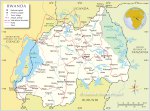
rwanda-map

The U.S. Africa Command (AFRICOM ) commissioned a study to examine the risks of instability in 10 African countries over the next decade. Among these is Rwanda.

Understandably events in Tunisia, Egypt and Libya and in the Middle East unfolded without many Western policymakers knowing exactly the underlying causes. Have they been able to predict the upheavals and revolutions we have witnessed since early 2011, they would apparently and certainly have better protected their national interests in each particular situation. Forget about the humanitarian pretexts.

For targeted countries, the aim of the study was to understand underlying factors, possibly stretch out some potential scenarios, analyse the dynamics that could result into instability, and ultimately prepare for action to face it [this last outcome is assumed].

Jennifer G. Cooke, the author of the study on Rwanda, makes the following possible scenarios which, in the coming years, could result for the country in a situation of instability

  1. A stalling of the government’s development programme which has become its flagship; this could come for example from a decrease of external flow of capital (aid and others including hard currencies from exports and tourism), or an increase of key commodity prices which could change radically the current economic and social parameters
  2. The situation in Eastern Congo could create favourable conditions, or become with time a strong base for a serious military opposition to Kagame’s regime
  3. The assassination of a high level figure within the RPF or in the opposition could provoke on the one hand a disproportionate security response from the RPF, or on the other hand, a spontaneous popular uprising
  4. The high level of uncertainty surrounding Kagame’s succession, come 2017, if he manages to finish in office his second constitutional term.

In Rwanda, many, if not all channels for social and political debate are either absent or under strict control of the RPF regime. Jennifer predicts what may happen because of such situation. ‘The Rwandan government inability to manage political competition within a democratic framework may ultimately radicalise opponents who have no legitimate means to challenge the regime,’ she explains.

In January 1994, the CIA desk bureau in Kigali predicted that if the then Rwandan president Juvenal Habyarimana was killed [as one of RPF strategies to gain political power], there would be between 300,000 and 500,000 of casualties. On 6 April 1994, he was killed and the genocide ensued. The death toll exceeded the predictions. Since then the Americans have almost achieved the influence they wanted to get in the region.

With this study key points in mind, there are some of the scenarios which are highlighted and could become reality in the coming years. The question that one can ask is whether U.S. and other external partners of Rwanda would want to see any change and prevent from happening the suggested worse case scenarios.

From past experience, more exactly the last two decades, it is recommendable to Rwandans who will be the most affected by any instability to preserve their own security as much they can.  Whatever will happen, U.S. and other countries which are today supporting Kagame’s regime have demonstrated enough that they work with him for their own selfish national and private interests. They don’t care much about ordinary citizens.

To read the study report, click here.

Source: The rising Continent


Bombori Bombori muri opposition: PPR-Imena ngo yaba ari ijwi rya FPR!

Nk’uko tubikesha itangazo ryashyizweho umukono na Bwana Karengera Augustin umwe mu bagize Ishyaka PPR Imena, ngo iri shyaka ryaba rihabwa inkunga na FPR naryo rikayifasha gushyira mu bikorwa zimwe mu ngamba zayo. Muri iryo tangazo, Karengera Augustin avuga ko  Kazungu Nyirinkwaya GustaveHabimana BonaventureHakizimana Célestin na Bakundukize Hassan bagize agatsiko gakorana na FPR, ngo n’ikimenyimenyi baherutse guhabwa amafranga y’amatike kugira ngo bajye mu Rwanda. 

Cyakora iri tangazo risa n’iriteye urujijo kuko Karengera atavuga niba yitandukanyije na ryo, niba se ishyaka ryirukanye bariya bavugwa…ahubwo agasoza avuga ko ngo ishyaka PPR IMENA rizakomeza ibikorwa ryiyemeje rigishingwa!

Nimwisomere iryo tangazo:

slide-image-1


Abayobozi ba PPR Imena

Mw’ izina rya bagenzi banjye nanjye ubwanjye,nshimishijwe no gutangariza abanyarwanda bose n’nshuti ry’ ishyaka ko twiyemeje gutandukana n’agatsiko kihaye kwamamaza ko ari ko kayoboye ishyaka PPR IMENA, kakaba kagizwe na :Kazungu Nyirinkwaya Gustave; Habimana Bonaventure; Hakizimana Célestin na Bakundukize Hassan.

Mu bushishozi butomoye n’ iperereza twakoze kuva ishyaka ryashingwa, twasanze iryo shyaka ryaragiye riterwa inkunga igaragara na FPR kugira ngo ibashe kwigarurira abanyarwanda bayirwanya;ibyo ikabigirira muri gahunda yayo yo gusenya amashyaka no gucyura abanyarwanda ibinyujije muri ya gahunda ya “Ngwino urebe(Come and see)”,gucyura mu mayeri no gusubiza impunzi zayiyobotse imitungo yazo.

Kubera ko FPR isigaye ibona ko igenda itsindwa muri gahunda zayo, yakomeje gushakisha amayeri yatuma yereka amahanga ko ishyigikiwe n’abanyarwanda bari hanze y’ igihugu, kandi bari mu mashyirahamwe ayirwanya;bikaba ari muri ubwo buryo yakoresheje kariya gatsiko,maze kakajya i Kigali kagamije kujya gacyura abantu kitwaje ishyaka PPR-IMENA.

Aha nkaba ntangariza abanyarwanda ko kariya gatsiko atari ishyaka rirwanya Leta y’ igitugu y’ i Kigali, ahubwo ari”Diaspora rwandaise” ihabwa inkunga y’ amafaranga na Paul Kagamé.Mfatiye nko ku rugendo bamwe baherutse gukorera mu Rwanda, nkaba nararwise ikinamico ya Habimana Bonaventure na Bakundukize Hassan,nasaba aha hangaha abanyamashyaka inkunga yo kumfasha kurwanya ako gatsindo navuze haruguru muri iri tangazo.

Aka gatsiko kabujije abarwanashyaka bacu kujya mu myigaragambyo(manifestations)kitwaje ko ngo byatuma” dialogue nationale” idashyirwa mu bikorwa.

Aka gatsiko kandi ntigashaka ko dufatanya n’andi mashyaka n’ amashyirahamwe,nko kujya muri za set-in zikorerwa imbere y’Ambassade y’ u Rwanda mu Bubiligi.

Aka gatsiko kanemeza ko kunenga discours za Kagame byemewe,kakabigira kagamije kwereka abanyarwanda ko nako karwanya Leta y’ i Kigali, kugira ngo bakajye inyuma.

Amahame remezo tugenderaho siyo abakagize bagenderaho. Urugero natanga ni ingingo ya 3 ivuga ku ntego z’ishyaka ahanditse ibi bikurikira:”Le Parti Populaire Rwandais a pour objet de conquérir et exercer le pouvoir d’État. Ni gute warwanya FPR, warangiza ikaguha n’inkunga y’ amafaranga yo kuyirwanya?

Ku bijyanye n’imyanya yo mu buyobozi bigaragara ko ntabandi bayobora atari utwo dukingirizo,ari two: Kazungu(Perezida akaba na Trésorier).Niwe ushaka imfashanyo afatanije na Hakizimana Célestin, bagacunga umutungo w’ishyaka.

Abashinze ishyaka bari muri PPR IMENA, si ko bose bari muri iriya diaspora ,hari nabayoboke b’ishyaka bamaze kwitandukanya n’abo.

Nkaba nsaba aba bose mbashimira ubutwari bukomeye bakomeje kugaragariza kuri uru rugamba,nkaba ngaya n’abandi biyemeje gukorana n’akariya gatsiko ndetse n’abagenda batseta ibirenge.

Nizeye ko kariya gatsiko tuzakamagana nk’uko twamaganye Inyumba yaje i Rouen/France na Ambassadeur Jack Kabare, ubwo yazengurukaga u Bufaransa bwose; isomo bakuyemo ni ryo n’abo bazakuramo.

Ndangije menyesha abanyarwanda ko ishyaka PPR IMENA rizakomeza ibikorwa ryiyemeje rigishingwa.


Bikorewe Rouen/France,tariki ya 15/12/2013


Karengera Augustin

Umuyobozi mukuru wa PPR-Imena mu Bufaransa.


Western donors must also encourage Kagame to engage the diverse political views of the Rwandan diaspora.


In her article, “Rwanda don’t let the good trump the bad”, Prof Susan Thomson advises ways through which Kagame can be dealt with:

RPF Gicumbi 2010

An RPF rally in Gicumbi, Rwanda. August 2, 2010. Image: Graham Holliday.

There was no doubting that Paul Kagame’s Rwandan Patriotic Front (RPF) would handily win September’s parliamentary elections, which it did with 76% of the vote. His party has ruled the country since July 1994, when it successfully ended the genocide of more than 500,000 ethnic Tutsi. In theory, the RPF was contending with nine other parties. In practice, Rwanda’s nearly six million voters had little choice on the ballot. A total of 98% of the votes went to the RPF and its four coalition parties. The additional five parties were not allowed to participate.

Once-cozy relations with donors have begun to sour because of Rwanda’s increasing authoritarianism at home as well as its continued involvement in neighboring eastern Congo.  The United Nations has systematically documented war crimes and other violations of international law by both the Rwandan army and its Congolese proxies. Since 2009, the RPF has worked with American and British public relations firms whose primary task is to drown out the voices of foreign critics and bury evidence of the RPF’s human rights abuses at home and in the Congo under rosy language about stability, economic growth, and commitments to help the poor. A democratic façade is essential to reassure foreign investors and Western donors that their money is being stewarded well.

This raises the question of how Rwanda’s donors can best work with the incumbent president, mindful that Kagame is constitutionally mandated to step down in 2017 with the next round of scheduled presidential elections. Rwanda’s main donors, notably the United States, the United Kingdom, and the European Union, must continue to nudge the RPF towards a real democratic opening. This must include more than the usual calls for free and fair elections or symbolic stoppages of their foreign aid, such as the Americans’ recent suspension of $200,000 in military aid due to Rwanda’s sponsorship of the now-defunct M23 proxy rebel group.

Rwanda’s influential friends—such as Britain’s Tony Blair and America’s Bill Clinton—must stop extolling president Kagame’s performance on economic policies so that they may hold his RPF government accountable for its lack of political freedoms and human rights abuses. Cutting aid in symbolic amounts will not result in policy changes, but conditioning aid could. Rwanda depends on foreign aid, which currently accounts for more than 40% of its budget. General support for the budget must be withheld until President Kagame demonstrates a sincere willingness to give his political opponents more space and adopts policies that reflect rather than exploit rural realities.

Donors must first evaluate the government’s ability to manage its only natural resources—people and land. The U.S. State Department estimates that by 2020, Rwanda will be home to some 13 million people. This will be the highest population density in Africa, with 225 people per square mile. Some 80 percent of Rwandans seek out their existence as subsistence farmers, living on less that $1.50 a day. The government requires rural farmers to grow coffee and tea instead of the crops they need to feed their families. A new land policy has decreased peasant holdings to less than half an acre, which is far from enough to produce crops for subsistence. International donors can withhold their general support to Rwanda’s budget to press for more equitable land and agricultural policies.

Rwanda’s donors can also encourage open dialogue and a culture of constructive criticism and debate of government policies amongst the political class. Foreigners write most of the academic and policy literature on Rwanda, because Kagame does not allow for thoughtful analysis that is remotely critical of his government’s current policies. Western donors can use their already-existing relationship with Rwanda’s Ministry of Education and other institutions of higher learning to sponsor and protect intellectuals whose ideas differ from those of the government as a way to spur openness and dialogue.

Western donors must also encourage Kagame to engage the diverse political views of the Rwandan diaspora. This is not to suggest that he reach out to those who claim that the RPF organized and implemented the genocide, or hold other extremist views. But he does need to acknowledge that sincere dissidents exist alongside political extremists. Kagame should not be allowed to lump together the good with the bad as a way to justify not including any outside or competing opinions in the Rwandan political sphere.

Without an open political sphere nudged and nurtured along by Rwanda’s Western donors, there will few other potential leaders to succeed Kagame in 2017; his rivals have died, are jailed, or have fled the country. Expect the lack of qualified political leaders to be Kagame’s rationale for amending the constitution to allow him to run for a third term.

Susan Thomson is assistant professor of peace and conflict studies at Colgate University. She has published articles in African Affairs, The International Journal of Transitional Justice and The Journal of Modern African Studies. She is also author of “Whispering Truth to Power: Everyday Resistance to Reconciliation in Postgenocide Rwanda” (Wisconsin UP, 2013). 

Source: http://journal.georgetown.edu/2013/12/16/rwanda-dont-let-the-good-trump-the-bad-by-susan-thomson/

ISHYAKA ISHEMA RITUMIYE ABATUYE MURI BRETAGNE(FRANCE) MU KIGANIRO-MPAKA, taliki ya 22.12.2013


Mu rwego rwo gukomeza kuganira no kungurana ibitekerezo ku byerekeye:

  • Ibibazo byugarije u Rwanda

  • Gusezerera ubutegetsi bw’igitugu mu Rwanda hagamijwe gushyirwaho ubutegetsi butanga amahirwe mashya kuri buri Munyarwanda nta vangura.

  • Inzira zanyurwamo mu gutinyura abanyarwanda bashegeshwe n’iterabwoba bashyirwaho n’ubutegetsi bw’igitugu n’iterabwoba bwa Paul Kagame n’Agatsiko ke;

Ubuyobozi bw’Ishyaka ISHEMA butumiye Abanyarwanda , Abarundi, Abanyekongo ndetse n’abandi bose babyifuza batuye muri BRETAGNE n’inkengero zayo, mu kiganiro kizayoborwa na Padiri NAHIMANA Thomas, Umunyamabanga Mukur w’iryo shyaka, mu mujyi wa RENNES (Ille-et-Vilaine).

Ni ryari?

  • KU CYUMWERU TALIKI YA 22/12/2013

  • GUHERA SAA MUNANI (14h00)

 Tuzahurira he ?

* Muri SALLE YA PAROISSE SAINT LUC DE RENNES – VILLEJEAN.

*8 AVENUE WINSTON CHURCHILL

*35000 RENNES

MUZAHABWA URUBUGA RWO GUTANGA IBITEKEREZO NO KUBAZA IBIBAZO BYOSE MUSHAKA. 

Murakaza neza murisanga.

Ubunyamabanga bw’Ishyaka Ishema

Which part of Victoire Ingabire’s speech is evidence of divisionism?

download (2)On the 16th January 2010, Mrs Victoire Ingabire Umuhoza, having stayed abroad for 16 years, returned to her country to register her political party and run for presidential elections. It was her first time back in Rwanda since the genocide committed against Tutsi people. On her very first day in Rwanda, she went to lay a wreath of flowers at the Gisozi Genocide Memorial Centre and made a speech on unity and reconciliation.

Her speech, translated in English below, has been submitted as evidence in the court of law on divisionism and revisionism charges leveled against her. We took a close look at the content of her speech and we are asking our readers which part is really evidence of divisionism.

“I would like to say that today, I came back to my country after 16 years, and there was a tragedy that took place in this country. We know very well that there was a genocide, extermination. Therefore, I could not have returned after 16 years to the same country after such actions took place. They took place when I was not in the country. I could not have fallen asleep without first passing by the place where those actions took place. I had to see the place. I had to visit the place.

“The flowers I brought with me are a sign of remembrance from the members of my party FDU and its executive committee. They gave me a message to pass by here and tell Rwandans that what we wish for is for us to work together, to make sure that such a tragedy will never take place again. That is one of the reasons why the FDU Party made a decision to return to the country peacefully, without resorting to violence. Some think that the solution to Rwanda’s problems is to resort to armed struggle. We do not believe that shedding blood resolves problems. When you shed blood, the blood comes back to haunt you.

“Therefore, we in FDU wish that all we Rwandans can work together, join our different ideas so that the tragedy that befell our nation will never happen again. It is clear that the path of reconciliation has a long way to go. It has a long way to go because if you look at the number of people who died in this country, it is not something that you can get over quickly. But then again, if you look around you realize that there is no real political policy to help Rwandans achieve reconciliation. For example, if we look at this memorial, it only stops at people who died during the Tutsi genocide. It does not look at the other side – at the Hutus who died during the genocide. Hutus who lost their people are also sad and they think about their lost ones and wonder, ‘When will our dead ones be remembered?’

“For us to reach reconciliation, we need to empathize with everyone’s sadness. It is necessary that for the Tutsis who were killed, those Hutus who killed them understand that they need to be punished for it. It is also necessary that for the Hutus who were killed, those people who killed them understand that they need to be punished for it too. Furthermore, it is important that all of us, Rwandans from different ethnic groups, understand that we need to unite, respect each other and build our country in peace.

“What brought us back to the country is for us to start that path of reconciliation together and find a way to stop injustices so that all of us Rwandans can live together with basic freedoms in our country.”

Since the day she made this speech on January 16th 2010, Ms. Ingabire Umuhoza continued to draw sharp criticism with regard to her position on the country’s law on genocide as well as being accused of inciting the public with inflammatory remarks.

In an interview accorded to News Time Africashe commented on her own speech and stated that  ”the big problem we have in Rwanda; and that’s the difference between us and the regime of general (President) Paul Kagame, we think if we are to really achieve reconciliation of the Rwandan people, we need to fully talk about what happened, why genocide was committed in the country, why the crimes against humanity were committed, whose responsibility was it and what we have to do together as Rwandan people to avoid the same problem in the future. Talking about it, we trust it is the only way to achieve total reconciliation.”

In an article on The Rising Continent, the author raises the same question about the speech and “ had most of the difficulties trying to find in above text some even far related invocations or references which could direct the prosecutor to any of the crimes Victoire Ingabire is accused of. My efforts remained futile. I had only to guess. Since she is clearly talking of Tutsis and Hutus, the two main Rwandan ethnic groups, and what happened in 1994, or before and even after, I had only to use my imagination and come to some conclusion that she must’ve stated something that the Rwandan government did not want to hear publicly.”

“Victoire Ingabire was and still is publicly requesting punishment for all the criminals who saddened Rwandans (Tutsis as well as Hutus), and sincere reconciliation among citizens from all ethnic groups. Unless the Rwandan government and its ruling party – Rwandan Patriotic Front, don’t want any of these for the population, there would be serious doubts about what they have been preaching inside the country and to the rest of the world on these specific issues.” (read The Rising Continent here)

Source: http://www.theproxylake.com/2011/10/ingabire-divisionist-speech/#


Paul Kagame, the man of the season: by sentencing Ingabire Victoire to 28 years of jail, he is putting Mandela back to the cross.

kagame-2-edKagame has broken the record in killings: More than 8 million Rwandans and Congolese have been murdered. Scared of democracy, he sends the main political opponent into jail. This is the most shameful wound of our time, and the complicated scar in our future.

For some time a certain circle of her supporters compares the imprisoned Rwandan woman politician Victoire Ingabire to the Thai political figure Aung San Suu. However, what is sure is that the sentence given by the Supreme Court in Kigali to that opposition leader might give her a status more close to Nelson Mandela than anybody else.

In fact, the judge presiding on the verdict explained that if it was not for the family of the accused living in The Netherlands she would have received 28 years of imprisonment instead of 15 years announced by the court.

It was on Friday December 13th, 2013. Probably if the verdict had been pronounced at a different time, its dimension could’ve been something else. The timing between the passing of Nelson Mandela and the sentencing of Victoire Ingabire can undoubtedly link the two personalities.

This is what Jean Bosco Mutarambirwa is saying on the two political figures:

“[…]the reporter tried to ask the right questions. Kagame mumbled throughout like a retard. The guy has nothing to say! Seriously! You can tell Kagame is ashamed of himself because he knows he stands against everything Mandela stood for.

… Why 15 years of jail? Simply because Ingabire wants justice for all Rwandans, tutsis and hutus alike. She’s the Madiba of Rwanda.

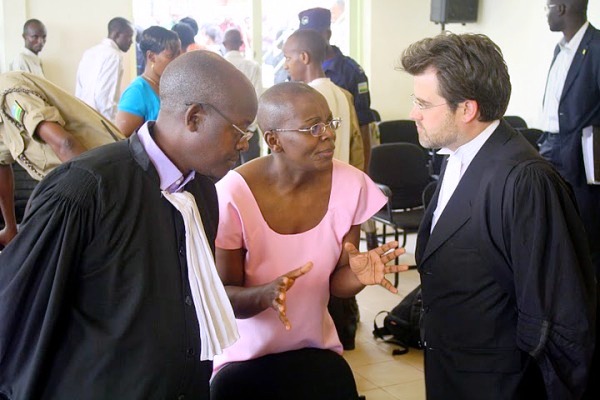
ingabire-with-her-2-lawyers

Ingabire Victoire  (in pink) jailed to have reminded Paul Kagame that like killed Tutsis, killed Hutus must be commemorated.

Kagame is basically torturing and putting Mandela him back to the cross, while pretending that he’s mourning. Mandela must have been turning in his coffin when he saw Kagame in the room today.

Kagame is accusing Madame Ingabire of exactly the same crimes PW Botha was accusing Mandela when he robbed 27 years of his life, taking him away from his beautiful wife and young children. Kagame is doing exactly the same to Ingabire, a wife, and a young mother of three. If the world believed Mandela was really a criminal, then the world wouldn’t be mourning Mandela. But if the world stands with Mandela today, the world will stand up for Ingabire as well. Kagame is the ultimate loser which he doesn’t seem to realize.

– Mandela formed a coalition government with his jailers; Kagame is murdering, sending to refuge, and throwing in jail those who dare to speak against his evil actions.

– Mandela negotiated peace with his jailers for the sake of a reconciled nation; Kagame is too busy calling FDLR names such as terrorists, genocidaires, etc, and has categorically refused to talk to them despite their expressed interest in negotiating a peaceful repatriation.

– Mandela has lived a simple life; Kagame is too busy collecting expensive private jets, filling his offshore bank accounts, buying mansions overseas, etc, while the average Rwandan citizen is literally crippling in poverty.

– Mandela put South Africa to the path of democracy through free elections, and left power in time to preserve a legacy; Kagame is busy crashing his opposition and rigging elections every time he organizes one, and has no plans to leave power.

I can go on and on and you would get tired of reading the differences between Kagame and Madiba. Long story short, Kagame stands against everything Mandela stood for. If you agree to some extent that Mandela deserves to be named a saint, then you would agree to some extent that Kagame deserves to be called a devil.

If you want to learn more, all you need is search the web. There’s ample evidence online about Kagame’s crimes and have let to the loss of over 6 million lives of Rwanda’s and DRC’s people, close enough to breaking Hitler’s slaughtering record. For a more comprehensive summary, check out Newsweek at http://www.thedailybeast.com/newsweek/2013/01/13/the-case-against-rwanda-s-president-paul-kagame.html”

At the end of her sentencing on Friday 13/12/13, Victoire Ingabire had this to say:  Do not be afraid, we continue our struggle. Time and History are on our side (…) so do not get discouraged, the fight continues.”She addressed her supporters while leaving the court in handcuffs, greeting them with her thumbs up as usual.

Congolese historian and activist BK Kumbi expresses the African dimension of Victoire Ingabire case this way:

“When Kagame will fall and Victoire will be out, most of the people will come and say what a great woman she was. If we don’t understand that this woman is hope for Africa, if we don’t understand that we as a people, as Congolese, Rwandans, Ugandans, we should support this woman and ask this criminal to set her free, is that we don’t understand the essence of the heart of Africa that beats in that woman’s body. The day Victoire set a foot back in Rwanda she became a hero and we should celebrate our African heroes when they are still alive.”

Kambale Musavuli, also Congolese activist and spokesperson of the Friends of the Congo raises a question and expresses his solidarity:

It is still sad that the many organizations working in Africa, pushing for women leadership, are all silent on the unjust imprisonment of Victoire Ingabire. As a Congolese human rights activist, I stand in solidarity with her and the many Rwandans fighting to have a representative government in their country, despite US interference in supporting dictator Paul Kagame.”

Source: http://therisingcontinent.wordpress.com/2013/12/15/kagame-gave-ingabire-an-african-hero-status-unwillingly/

The Rwanda National Congress (RNC): history, justice and the acceptance of its leaders

Rwandan political and judicial recent news lead us to attempt a better understanding of the political situation of the political opposition group RNC, headed by former senior officials of the RPF (Rwandan Patriotic Front).

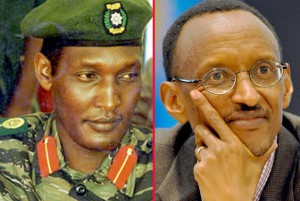
rnc_kagame_nyamyasaLeadership and its past in the RPF

The RNC core leaders include former high officials of the current regime in Kigali; some of them are prosecuted for crimes allegedly committed under their responsibility. This is the case of General Nyamwasa, who is under the scope of arrest warrants of three countries (chronologically France, Spain and Rwanda).

Nyamwasa is prosecuted in France for the April 1994 plane crash that killed two Heads of State, Burundian and Rwandan, their fellows and the French crew. He is one of the nine personalities of the Rwandan regime against whomFrench justice issued arrest warrants in 2006. He also appears on the list of forty Rwandan officers suspected by Spain over the deaths of Spanish nationals.Similarly,  Dr. Théogène Rudasingwa (former Secretary General of the RPF, former Paul Kagame’s Chief of staff Paul Kagame and currently Coordinator of the RNC),  used to be the most popular general in the army of the Rwandan Patriotic Front. Both generals claim to have information concerning  President Paul Kagame’s involvement in the attack that killed his predecessor and say they are ‘ready’  to transmit it to justice.

Barriers to justice: the Nyamwasa and South Africa case

General Kayumba Nyamwasa, former Defense Chief of Staff has been since the day of his exile in South Africa an element of diplomatic discord, legal or national security since the Rwanda would attempt on his life in 2010 in the middle atmosphere of the Football World Cup.

As RFI revealed on Friday, October 18, for a year and a half, French authorities unsuccessfully asks South Africa to extradite the General forhis alleged participation in the attack against former Rwandan President’s plane.  Mr. Meilhac, Habyarimana family’s lawyer, told Jambonews that “the procedure is being hindered by several kinds of barriers. According to him there are at least three arrest warrants against him; secondly, we cannot consider him as a simple witness for the judges to go in the South Africa to hear him because he is personally accused. Finally, there are also political and diplomatic issues that can explained the willingness of the South Africa to remain “neutral” in its relations with the applicant countries and their respective interests. In addition to these specific difficulties, we have to remember that even among countries that have a traditionally cooperation in judicial matters, extradition requests take long procedural time. Mr Meilhac pointed out.

Mr.Meilhac questions their reliability, the credit to be given to the testimonies of these former RPF’s leaders.Nyamwasain particular regarding the attack that triggered the 1994 genocide. He would have been himself at the heart of this crime and would have interest to blacken some truths.

Still according to Habyarimana family’s lawyer, regarding the possible arrival in France of Nyamwasa, is now question of relations between two States where judges do not have much room for maneuver.

The opposition movement and rehabilitation in the same opposition

Men, once pillars of the RPF system, including a former Chief of Staff and former intelligence chief, a former General Secretary, a former attorney general and a former chief of foreign intelligence ended their collaboration with General Paul Kagame and were “forced” to exile. Finding a political disorder and the absence of a strong political opposition in the Rwandan diaspora, they took advantage of their personalities and the positions they occupied to impose themselves as leaders who can be the alternative to Paul Kagame. However, they struggle to be accepted as trusted leaders in terms of their long history within the RPF organization, which they do not question practices, preferring to put its wrong doings on the account of one man without ever raising substantive issues regarding the collective movement aims, manners and many crimes committed when they were still in high responsibilities. These crimes include killing of civilians in areas occupied by the RPF during the 1990-1994 war, those of Kibeho in 1995, massacres of refugees in the Cathedral of Byumba, those of Rwandese refugees in the DRC or those committed in the Northern Rwanda in 1997-98 against civilians taken hostage in the crossfire.

The influence of the past on the present

If RNC’s top head is experiencing difficulties to emerge as popular leaders, this is also the case for most people who have been involved in Rwandan politics in the past. This also explains the absence of an experienced political class that would be an alternative to the RPF. Indeed, nearly all senior Rwandan politicians were involved, to some extend / or due political parties to which they were affiliated, in the descent into hell of Rwanda.

On September the 30th, 2013  Dr Rudasingwa complained at a conference held in Brussels that, on the one hand, the opposition audience constantly ask RNC leaders accounts of their past in the RPF – although they are denouncing  crimes that RPF has done and apologized for their responsibilities in that. On the other hand, however, he observed that to former officials in the reigns of Juvenal Habyarimana ‘s MRND and Kayibanda’s MDR, public do not do the same. At the same time, do note that leaders of those regimes are no longer interested in politics wanting to lead the opposition. This is explained by the fact that most of those who had political responsibilities in the 94 genocide are brought to justice or have been convicted, others took their pensions. For those who are still active in political parties, most of them are also still facing their political past.

Promised revelations only in front of judges

These former Rwandan strong man’s fellows say they know a lot about the crimes of a person, Paul Kagame, and promise to deliver content only to justice. Yet, the citizens for whom they spend their time explaining that they have to resist the dictatorship needs to know the truth about their past in the RPF. Why then give priority to the judges to find facts, which, if proven true, would highly be historical?

Although Théogène Rudasingwa now seems to want a different path in order to know the truth about the 1994 attack, namely to be submitted with Paul Kagame to a lie detector (polygraph) under international supervision, it rather seems to be an impractical approach.

The stake: the choice between the opposition and the RPF

The real dilemma for RNC leaders is the one consisting to choose for their side between RPF and the opposition. On one side there is the RPF that they have built and served with dedication, on the other side there is the opposition denouncing the RPF regime and its crimes, not only those of one man. This is also the reason why the public has trouble trusting people who want to lead them but do not say or think quite the same thing as them. For most of opposition voices in fact, the RPF is a criminal organization while for RNC leaders, Kagame hijacked the RPF,diverted its good intentions and its well doing ways. It is therefore to this question that these officials should clearly answer: their relationship with the RPF and the perception they have of it.

Habimana Pacific

Jambonews.net

Victoire Ingabire vs Kagame apartheid like Rwandan system

victoire-ingabire-rwandan-political-prisonerdownloadUnderstandably there can only be one Mandela and one only, particularly if one considers the 27 years he spent in prison. No cloning of his experience appears possible. The closer the Rwandan political prisoner, Victoire Ingabire, can get to the real Mandela is only in terms of similarities of segregation system she is up against.

The Rwandan apartheid led by extremist Tutsi elites around its president Paul Kagame seems to be worse than the South African one. The difference between them is mainly that the former does not say what it is on the tin. It is subtly covered up under oiled tuned schemes that its millions of hutu victims experience harshly every day since 1994. It is more real than the South African one in the sense that it kills in millions, it imprisons in tens of thousands. It rapes in hundreds of thousands of Congolese women and girls to occupy and plunder Eastern Congo mineral resources. It excludes every hutu it despises. It persistently kidnaps every young male and adult hutu and forces them into military training to defend its political and economic interests nationally and regionally.

However, like the South African one of the recent past, it has its neo-liberal sponsors in US, Britain, Israel and other western countries. They are all interested in material wealth. Lives of Africans are the least of their preoccupations, as long as they are able to access the mineral resources especially of the Democratic Republic of Congo they envy and pursue now for more than a century. No matter how many millions of Africans they want killed, nothing seems to ever stop them in their obsessive pursuit.

This Friday 13/12/13, many South Africans and other people around the world are still mourning the passing of Nelson Mandela. Victoire Ingabire, another African hero for millions of Rwandans is faced with an apartheid like system, which oppresses the hutu majority [85% of the population] in an unprecedented way hard to understand if you are not one of them. Whatever the verdict that the High Court in Kigali will give today on her case [she has been imprisoned since October 14th, 2010] might only be a minor event in that Rwandan apartheid of tutsi rulers against oppressed, exploited and excluded hutu. As I finalized this note, I learnt that she was given 15 years of imprisonment.

As people continue keeping alive the memory of Mandela, they should not forget also that Rwandan and African woman prisoner who left everything, her family and her professional comfort and devoted her life to fight the Rwandan apartheid institutionalized by Paul Kagame as a system of government against the majority hutu population.

Source: http://therisingcontinent.wordpress.com/2013/12/13/victoire-ingabire-vs-kagame-apartheid-like-rwandan-system/

How western powers profit from genocide?

300px-Snow2013

“Keith Harmon Snow is an independent journalist and former genocide investigator for UNICEF… He has worked tirelessly to change the mainstream narrative about the notion [of genocide].”

Keith Harmon Snow:

“We have to be careful by what we mean by the word genocide. I mean Norman G. Finkelstein has published this book called – The Holocaust Industry -, which makes it clear that there is an industry that profits from the holocaust versus the real holocaust against the Jewish people that occurred. We have the same thing in Rwanda today. We have the Rwandan genocide industry which is an industry international global industry which benefits from the calling claiming and labeling genocide in Rwanda a specific kind of genocide, meaning what we have been told there was a genocide against the tutsi people committed by the hutu people.

The standard propaganda line is that there is 800,000 people to 1,500,000 tutsi were killed in 100 days in 1994. There is nothing about that story that is true. The true story is that the hutu people had been suffering a genocide. The United States government, the British government and the Israeli government backed the invasion of Rwanda in 1990; the war concluded in August 1994 when the US side won.

And then we blame the other side, the losers, meaning the former [French supported] government, who at this point had been decapitated anyway because we assassinated the two presidents of Rwanda and Burundi in April 1994. So anyway we blame them, the losers, with genocide. And that became the biggest propaganda line. The truth is US, Britain and Israel invaded, overthrew the government of Rwanda and concluded that war. And we have been in power, controlling Paul Kagame since….”

Source: http://therisingcontinent.wordpress.com

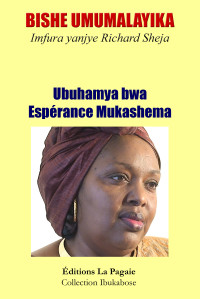
“Kagame nasabe imbabazi mu izina ry’abatutsi, banyiciye umwana” Esperance Mukashema


BISHE-UMUMALAYIKA-copierNyakubahwa perezida,

Maze kubona gahunda watangije hamwe n’umufasha wawe mwise “Ndi Umunyarwanda”, ndagusaba ibi bikulikira :

Nk’umukuru w’igihugu ni byiza ko watanga urugero rwiza. Urasaba ubwoko bw’abahutu gusaba imbabazi mu izina ry’abahutu kandi ubundi icyaha ni gatozi. 

Ese waba witeguye gusaba imbabazi mu izina ry’abatutsi ko nawe wakoze ubwicanyi?

Urugero :

Nyakubahwa perezida,

Hali ubwicanyi bwakozwe i Gakurazo aho Abihayimana bishwe hamwe n’umwana wange Sheja w’igitambambuga. Ubwo bwicanyi bukaba bwarakozwe na jenerali Ibingira ku mabwiriza wamuhaye.

Ibingira ni umututsi, nawe nyakubahwa perezida uli umututsi nubwo mwabanje kuvuga ko mu Rwana nta moko abaho, aliko kuko ubu alimwe mubigaruye reka twongere tubivugeho.

Kubera ko nk’umukuru w’igihugu ali wowe ugomba gutanga urugero rwiza, nagusabaga kujya imbere y’abanyarwanda ugasaba imbabazi iliya miryango y’abihaye Imana, nange ukansaba imbabazi, izo mbabazi ukazazisaba mu izina ry’abatutsi bakoze ubwicanyi ukabikorana na Ibingira. Ndagukangulira gusaba izo mbabazi kuko nawe ukangulira abahutu gusaba imbabazi mubyo abahutu bagenzi babo bakoze.

Nyakubahwa perezida,

Nutanga urwo rugero uzabarwa mu ntwali. Kandi niteguye kukubabalira kuko ijya gutera uburezi irabwibanza.

Mugire amahoro Y’Imana.


Mukashema Esperance.