Daily Archives: June 19, 2015

Guhindura itegekonshinga, impamvu y’intambara y’amasasu mu Rwanda.

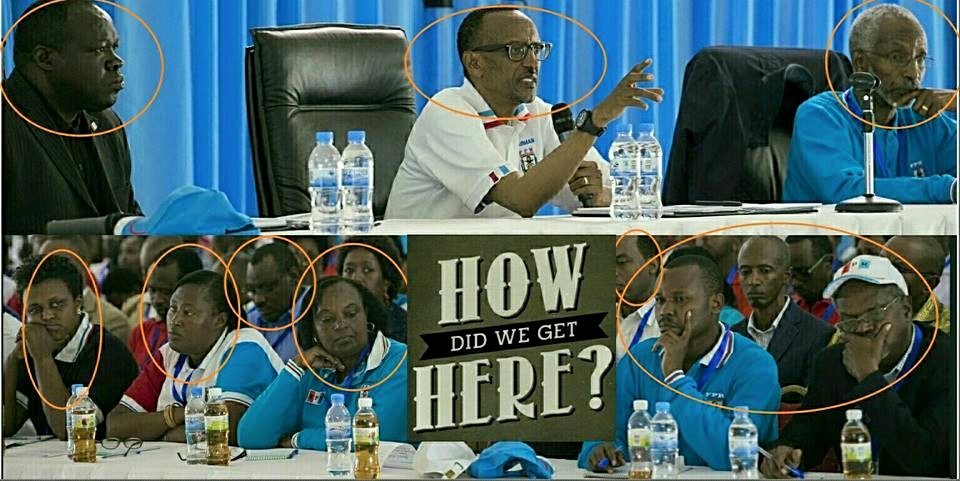
11401014_1000982639942682_4495741431164951401_n

Nta n’umwe mu bakada ba FPR utabona neza ko icyo Kagame agiye kubazanira ari intambara! Baribaza bati twageze aha dute koko( How did we get here?)

Nyuma y’umwiherero(cyangwa kongere!)  wabereye  mu  Murenge wa Rusororo, Akarere ka Gasabo , mu mujyi wa Kigali , ku mataliki ya 13 na 14 Kamena 2015 ukaba warahuje  Perezida Paul Kagame na ba bantu  600 bafite inshingano yo kumufasha kuyobora Ishyaka rya FPR-Inkotanyi no  gukwirakwiza iterabwoba mu giturage ,   ibyahwihwiswaga bibaye impamo.

Ubu noneho ibintu bitangiye kujya ahagaragara, impamvu y’intambara y’amasasu (causa belli) irabonetse mu Rwanda. Byumvikane neza ko atari ABATARIPFANA bateganya gushoza iyo ntambara isesa amaraso : ntayo dushyigikiye, ntayo dushaka , nta n’iyo dukeneye. Gusa iyo intambara ije igira uko irwanwa, ikagira abiyemeza kuyirwana ariko n’abo igwirira si bake!

Ibyo ngiye gutangaza  aha simbivuga nk’uwishimiye ibyago by’umuryango we, ndabivuga nk’UMUHANUZI urira igihugu cye abona neza ko cyatangiye gushorwa mu nzira yo kurimbuka!

I. Iyo intambara  zijya gutera haboneka abantu bigira ba “KAMARA”!

Ngo akamasa kazaca inka kazivukamo ! Amateka y’isi atwereka ko iyo mu gihugu runaka hadutse umuntu cyangwa Agatsiko k’abantu bumva :

(1)  Ko ari bo bonyine ba “KAMARA”,

(2)  Ko aribo bonyine bazi uko igihugu kiyoborwa,

(3)  Ko aribo bavukiye gutegeka abandi benegihugu bakaba baravukiye kubabera abagaragu

(4)  Ko ibyiza by’igihugu byose ari akarima kabo bonyine

(5)  Ko bavuye ku butegetsi igihugu kitakongera kubaho…..

intambara karundura iba igiye gutera ! Impamvu ya bene iyo ntambara ihora ari imwe rukumbi : ntihabura bamwe mu benegihugu banga guhindurwa INKOMAMASHYI n’ABAGERERWA kandi  biyumva nk’abagabo n’abagore biyubashye, bityo bagafata icyemezo kidakuka cyo kurwana ku ishema ryabo, aho gupfa nk’imbwa z’imirizo bagahitamo gupfana intwaro mu ntoki barengera uburenganzira bwabo !

Intambara zo guharanira ubwigenge (guerres de libération armée)  zagiye zitangira ari uko bamwe muri ba Kavukire  biyemeje kwanga Umukoloni wigize Kamara bagahitamo kurwanira ubwigenge bw’ibihugu byabo.

Intambara z’Abarevolisiyoneri (Guerres révolutionnaires) nazo ni uko zitangira, iyo habonetse abaturage banga guhindurwa Inkomamashyi n’Agatsiko k’abenegihugu  kigize kamara kagashaka kwambura abandi  benegihugu uburenganzira bwabo no kubahindura abacakara .

II. Byagenze bite mu  Rwanda ?

1.Kugeza mu myaka y’1959, hariho ingoma ya cyami na gihake yumvaga yaragenewe kuzagenga u Rwanda ubuziraherezo. Iyo ngoma yari ishingiye ku muntu, inzu, n’ubwoko bumwe.  Umwami wenyine niwe wafatwaga nk’isooko y’ubutegetsi (Au Souverain, la souveraineté).  Umwami n’abiru be biyumvaga nk’aho aribo bonyine batunze ibanga ry’uko igihugu kiyoborwa . Umwami yumvaga ari we Nyirigihugu wenyine  abandi benegihugu bose bakaba ABAGERERWA be. Abantu n’ibintu byose byo mu gihugu byabarwaga nk’umutungo bwite w’Umwami. Yaragabaga, akanyaga. Yicaga uwo ashatse agakiza uwo yishakiye. Yumvaga kandi ko Imana iri ku ruhande rwe bityo ingoma ye ikaba idateze kugira iherezo.

Iyo myumvire iteye ityo yateye abami 3 ba  nyuma b’u Rwanda ikintu gisa n’ubuhumyi buhambaye  bityo ibanga rikomeye rirabihisha, batungurwa no kumenya ko “ibihe bihora bisimburana iteka”, batahura impitagihe ko “BIHIBINDI” na we ari umwana w’umunyarwanda! Kubera gukikizwa n’abagereerwa mu mwanya w’abajyanama b’abataripfana , Umwami wa nyuma w’u Rwanda yagiye gukanguka asanga yarumiye ku ruhu nka cya kirondwe kandi inka yarariwe kera !

Mu myaka ya 55, abasore (Nouvelle Génération) bari barasogongeye kuri “Filozofiya” ikabafasha kwicengezamo icyo Uburenganzira bwa muntu bivuga ikabongerera gushishoza no kumenya bwangu aho Umuyaga w’impinduka( The wind of change) werekezaga, bafashe icyemezo cyo “gusheta”amagara yabo, bahagurutsa RUBANDA RUGUFI. Iyo rubanda rugufi ni  yayindi  i Bwami babaraga nk’umukumbi w’Abagaragu n’Abaja batagize ikindi bishoboreye uretse guhakirizwa , nyamara bagiye kurengera uburenganzira bwabo bahagurukana n’iyonka. Nibwo batangaje ko “Karinga n’izayo zose iciwe i Rwanda”,   baca iteka ko kuva taliki ya 28 Mutarama 1961 kugeza n’uyu munsi  u “Rwanda rubaye Repubulika”,  ko “ Ubutegetsi bwose bukomoka kuri rubanda, kandi nko nta muntu ku giti cye cyangwa agatsiko k’abantu gashobora kwiha no kwikubira ubwo butegetsi “ ! ( Reba ingingo ya 2 y’Itegekonshinga ryo mu 2003)

Ng’uko uko Ingoma ya Cyami na Gihake yagiye nka nyomberi, mu kanya nk’ako guhumbya ijisho kandi yari imaze imyaka isaga magana ane yariyise Kamara, Repubulika irashingwa kandi irafata, Demokarasi iravuka n’ubwo yari igikeneye kurerwa neza kugira ngo ishinge imizi !

Reka twature tubivuge uko biri : Repubulika na Demokarasi twabigabiwe na PARMEHUTU !

Muri icyo gihe habayeho ibitambo bya Revolisiyo. Bamwe barishwe, abandi barafungwa, habaho abagizwe imfubyi n’abapfakazi, habaho ibimuga n’impunzi. Ibyo byose ntibyari bikwiye, iyo igihugu kigira abategetsi bashisoza izo ngaruka mbi zose zashoboraga kuburizwamo.  Impinduka zikabaho ariko zikabaho mu mahoro, zikagirira abenegihugu bose akamaro. Habuze ubushishozi, nuko ba KAMARA bibwiraga ko u Rwanda rutabaho batarutegeka bonyine bararubisa ariko rukomeza kubaho.

2. Kugeza mu myaka y’1990,  byaje kugaragara ko Demokarasi ya PARMEHUTU  yananiwe kwihandura rya “hwa” ryo gushaka gushingira “ rubanda itanga ubutegetsi” ku muntu, ku karere n’ubwoko !

Ngo kubera iyo mpamvu bamwe mu bana b’u Rwanda, cyane cyane abo mu bwoko bw’Abatutsi b’impunzi  bumvaga batagishoboye kwihanganira guheezwa no kugirwa Abagereerwa n’Inkomamashyi (les citoyens de seconde zone”) beguye imbunda maze taliki ya 1/10/1990 baturuka Uganda “barasa igihumeka cyose” kugeza bafashe ubutegetsi bwose mu 1994, ndetse barambuka bakomereza muri Zayire !  Ibitambo byatanzwe ku mpande zombi bibarirwa muri za miliyoni z’abahasize ubuzima, z’impfubyi n’abapfakazi; n’ibihumbi amagana by’inkomere , imfungwa n’impunzi.

Iyo inzira y’amahoro n’ibiganiro iza guhabwa agaciro, u Rwanda ntiruba rwarahindutse umuyonga nk’uko twabyiboneye n’amaso yacu, kugeza na n’ubu imitima y’Abanyarwanda benshi ikaba icyituriye mu gahinda, umujinya n’ubwoba bidashira . Habuze ubushake n’ubushishozi ,ba KAMARA bararikoze.

3.  None dore na   “ DEMOKARASI y’INKOTANYI” yibarutse “ikiburaburyo” gisa na  “ REPUBULIKA YA CYAMI NA GIHAKE” !

Guhera muri Nyakanga 1994, rubanda yakomeje gutegerezanya ukwizera kwinshi Demokarasi isesuye twari twarasezeranyijwe na FPR-Inkotanyi , ya  demokarasi yagombye ikiguzi cy’amaraso y’abana b’u Rwanda batagira umubare ! None dore  italiki irageze , nyuma y’imyaka 21, Demokarasi y’INKOTANYI ntibaye baringa gusa , ahubwo yibarutse ikiburaburyo ( un monstre) cyenda gusa na  “REPUBULIKA YA CYAMI na GIHAKE”!

Kubera ko FPR-Inkotanyi yafashe icyemezo ko ingingo y’101 y’Itegekonshinga ry’u Rwanda ryatowe mu 2003 igiye guhindurwa ngo kugira ngo Paul Kagame agume ku butegetsi kuko ari we wenyine ushoboye kuyobora u Rwanda, akaba yaravukiye gutegeka naho abandi benegihugu bakagomba kumubera Abagereerwa  ubuziraherezo….”amagambo ashize ivuga.

Birumvikana ko Kagame agonze rwa rutare abamubanjirije baciriyeho amazuru : kwitiranya inyota ye bwite y’ubutegetsi n’ubushake bw’abenegihugu bose; kwitiranya nkana “rubanda itanga ubutegetsi” n’ubwoko cyangwa akarere bavukamo. Kagame we noneho yongeyeho n’agashya yihariye ko kwitiranya “rubanda itanga ubutegetsi” n’Agatsiko k’Abiru badashoboye bagizwe ahanini IBIGABO BY’IBINYABWOBA“ byitungiwe n’umwuga wo kuba INKOMAMASHYI. Harya ngo byashoboye gusinyisha ku ngufu abaturage basanga miliyoni ebyiri ? Nzaba mbarirwa ! Abo nyine mwasinyishije ku ngufu nibo bagiye kubibaryoza, nimutegereze gato .

Uko byamera kose biragaragarira buri wose ko icyaha gikomeye ari cya Paul Kagame ufashe icyemezo cyo gusubiza u Rwanda inyuma ho imyaka 53, akaba nibura atanashoboye kwiyita Umwami w’u Rwanda nk’abasekuruza be ngo bigire izina, ngo rubanda imenye uko itambira ingoma nshya ya Kagame wa mbere, ngo abahakwa bamenye uko bahakwa n’uko bazagabirwa…!

Turasanga iyi ngirwa DEMOKARASI y’INKOTANYI, iyi “demokarasi y’ibiseke by’ibipapuro bisinyishijwe rubanda ku ngufu”…., iyi yo nta kindi gitumye yaduka uretse gukungurira u Rwanda!  Turashishoza tukabona ko iyi “Demokarasi ya Kagame yo kubeshya amahanga”  igiye guteza indi ntambara ikarishye mu bana b’u Rwanda kuko tuzi neza ko umubare munini cyane ari uw’abenegihugu batemera kongera kugirwa Inkomamashyi n’Abagererwa indi myaka 400, bakaba nabo biteguye gusheta ubuzima bwabo barengera ubusugire bwa Repubulika, kandi nyine umubare wabo ukaba utambutse kure uw’abiyemeje kwitanga mu 1959, mu 1973, n’1990 ! Niba ubushishozi bwongeye kubura, ingingo y’101 igahindurwa, KAMARA arongeye araridukwegeye, nka ka Kamasa kazaca inka kazivukamo !

UMWANZURO

Guhindura ingingo y’101 y’itegekonshinga kugira ngo umuntu umwe witwa Paul Kagame akomeze abe Perezida w’u Rwanda mu nyungu ze bwite, ngo kuko nta wundi washobora kuyobora u Rwanda, ni cyo cyemezo kibi kurusha ibindi FPR igiye gufata!  Koko rero guhindura ingingo y’101 ni impamvu ihagije igiye guteza intambara  y’amasasu(causa belli) mu gihugu cyacu  . Paul Kagame n’umuryango we n’Ishyaka rye rya FPR-Inkotanyi bazirengere ingaruka zose zizakomoka  ku byemezo byabo byuzuye ubwikunde n’ubugwari bishobora gukururira igihugu cyacu mu ngorane zikomeye.

Gusa n’ubwo iki  kibazo cya “REPUBULIKA YA CYAMI NA GIHAKE“ kivutse  kandi kikaba ari ingorabahizi ,  haracyari ABATARIPFANA bacyizeye ko ibintu bitaradogera burundu, tukaba dusanga INZIRA y’AMAHORO igishobora gutanga ibisubizo bikwiye. Ariko kugira ngo u Rwanda rwirinde intambara yegereje hagomba gufatwa nibura ibyemezo by’ubwoko bune bikurikira

(1) Paul Kagame nazibukire gahunda yo guhindura ingingo y’101 no kwitangaho umukandinda mu matora yo mu 2017 kandi Itegekonshinga yishyiriyeho umukono ribimubuza

(2) Paul Kagame nafungure urubuga rwa politiki, imfungwa za politiki zose zirekurwe kandi zisubirane uburenganzira bwazo

(3)  Nihakurweho amananiza yose n’uburiganya bwabuza amatora y’umukuru w’igihugu yo mu 2017 gukorwa mu mucyo no mu bwisanzure.

(4) Paul Kagame nahamagare amashyaka yose ya Opozisiyo n’amashyirahamwe ya Societe Civile hakorwe ibiganiro ku mpinduka nziza igihugu cyacu gikenye.

(5) Paul Kagame nazibukire umuco mubi wo kurema no gushyigikira imitwe y’abicanyi igamije guhungabanya umutekano w’ibihugu duturanye cyane cyane UBURUNDI na Kongo.

Niba ibi byemezo bidafashwe mu maguru mashya , Abanyarwanda bakunda amahoro nibitegure bwangu kugira uruhare muri Revolisiyo ya karundura ariko itagamije gusesa amaraso y’abenegihugu. Koko rero Revolisiyo niyo nzira yonyine dusigaranye ishobora guhagarika umugambi mubisha w’Agatsiko gashaka guha ireme icyifuzo cy’abakeneye gushoza intambara y’amasasu .

Twamaganye twivuye inyuma ihindurwa ry’ingingo y’101 hagamijwe kwimika “Repubulika ya Cyami na gihake” iharanira inyungu za Paul Kagame n’ABIRU be bonyine bonyine.

Nta KAMARA ubaho kuri iyi si…..Kagame si KAMARA …..U Rwanda rwabayeho ataravuka, azapfa arusige.

Banyarwandakazi, Banyarwanda  nimukanguke, mushishoze maze mutabare igihugu cyanyu !

Imana ikomeze irengere u Rwanda n’Abanyarwanda, idutize imbaraga zo kwirinda umwiryane n’intambara zisesa amaraso.

Padiri Thomas Nahimana,

Ishema ry’U Rwanda.

Email: nahimanathom@gmail.com

Tel :0033652110445

EU: Rights Abuses at Home Drive Mediterranean Crisis

téléchargement (1)Migrants Detail Horrors That Caused Them to Flee

(Brussels) – Human rights abuses in their home countries are the driving force behind the surge in boat migration in the Mediterranean to reach Europe, Human Rights Watch said in a report released today. EU leaders should put human rights at the heart of its response. EU leaders will meet on June 25 and 26, 2015, to discuss European Commission proposals toward a “European Migration Agenda.”

The 33-page report, “The Mediterranean Migration Crisis: Why People Flee, What the EU Should Do,” documents the human rights abuses driving people to make the dangerous sea crossing and the shortcomings of EU migration and asylum policies. The report is based on over 150 interviews in May with recently-arrived migrants and asylum seekers in Italy – Lampedusa, Catania, and Milan – andGreece – the islands of Lesbos, Chios, Samos, Leros, and Kos. The conclusions are also based on extensive Human Rights Watch research in Syria,Eritrea, Afghanistan, and Somalia – the home countries of many of those arriving by sea.

“The majority of those crossing the Mediterranean are taking terrible risks because they have to, not because they want to,” said Judith Sunderland, senior Western Europe researcher at Human Rights Watch and author of the report. “Saving lives and increasing safe pathways into Europe should be the EU’s priorities, while ensuring that all cooperation with countries of origin and transit countries respects international human rights standards.”

Interactive Map (Click to Launch): Migration journeys to the European Union

interactive map
Over 100,000 migrants and asylum seekers have crossed the Mediterranean since the beginning of 2015. According to the UN refugee agency, UNHCR, over 60 percent of those taking the journey come from Syria, Somalia, and Afghanistan, countries torn apart by war and generalized political violence, or from Eritrea, which is ruled by a highly repressive government. Asylum seekers, including children, from these four countries who arrived in Italy and Greece in May described to Human Rights Watch the indiscriminate fighting, threats from insurgent groups such as the Taliban, Al-Shabaab, and ISIS, forced conscription and recruitment by armed groups, attacks on schools, and other abuses that forced them to flee.

Mubarek, from Parwan, in northern Afghanistan, left the country with his wife and three young sons in March to escape the Taliban. “Every day the Taliban would take people and children for suicide bombings,” he said. “I was worried about my children, my sons, that they would be forced to become suicide bombers.”

While many of those coming from other countries – Nigeria, The Gambia, Senegal, Mali – want to improve their economic opportunities or to live in more open and safe societies, some among them may be fleeing persecution or other serious harm. Some migrants who have lived in Libya since before the current hostilities broke out in May 2014, are fleeing insecurity and violence there.

Every year thousands of unaccompanied children make the journey across the Mediterranean without parents or other caregivers. In 2014, over 10,500 children traveled alone to Italy by sea. In Greece, over 1,100 unaccompanied children were registered in 2014.

The International Organization for Migration has identified the Mediterranean as the world’s deadliest migration route. The EU has recently taken some positive steps to save lives in the Mediterranean, but it remains focused primarily on ways to limit arrivals to European shores. But the severe human rights situations that people are fleeing shows why the EU’s priorities need to change, Human Rights Watch said.

The EU should maintain robust search and rescue operations as long as they are necessary, Human Rights Watch said. It should significantly increase the number of people resettled in the EU under UNHCR programs from the 20,000 proposed by the European Commission. EU countries should endorse and fully carry out the commission’s proposal to relocate 40,000 asylum seekers within the EU to share responsibility for asylum seekers more equitably across the EU.

UNCHR has asked the international community to resettle at least 130,000 Syrian refugees. The EU has pledged to resettle 45,000 but can respond more generously to the Syrian crisis as well as to other protracted refugee crises, Human Rights Watch said.

The deaths of over 1,000 migrants at sea within a week in April spurred positive, if belated, EU action to step up search and rescue efforts in the central Mediterranean. The EU should sustain this collective effort in the long term to minimize deaths at sea, and ensure that those rescued are brought to safe EU ports where those seeking asylum will have the opportunity for fair consideration of their claims, Human Rights Watch said.

In May the European Commission issued proposals for a “European Agenda on Migration.” The agenda includes some positive steps that if implemented fully – and more generously – could help save lives, ensure safer access to international protection in the EU, and correct distortions in the EU’s asylum system that affect the rights of asylum seekers, Human Rights Watch said. However, most of the commission’s agenda involves reinforcing measures to limit arrivals to the EU.

EU respect for international law and human rights norms should inform and shape its current and future deliberations on migration and asylum policies as well as its approach to boat migration in the Mediterranean, Human Rights Watch said. The right to life and protection against refoulement – the return to persecution, torture, or ill-treatment – are cornerstone rights of international human rights architecture. In addition to these rights, the European Convention on Human Rights guarantees the rights to liberty and security, the right to an effective remedy, and the right to privacy and family life. Enshrined in the Universal Declaration of Human Rights and the International Covenant on Civil and Political Rights, the right to leave any country, including one’s own, is key to ensuring the right to seek asylum. This is also guaranteed in the EU’s binding Charter of Fundamental Rights.

In advance of the EU Council on June 25-26, Human Rights Watch said, EU leaders should support farther-reaching proposals to increase safe and legal channels into the EU. These measures should include significantly expanding resettlement for refugees identified by the UNHCR, facilitated family reunification to enable people already in the EU to bring family members there, and the increased use of humanitarian visas to enable people in need of international protection to travel lawfully to the EU to apply for asylum.

Over the long term, the EU should ensure that cooperation with sending and transit countries does not effectively trap people in abusive situations, prevent them from accessing fair asylum procedures, or lead to refoulement. And the EU should use its influence and resources more effectively to address the major drivers of migration, including systematic human rights violations, poverty, inequitable development, weak governance, and violent conflict and lawlessness.

“There are no easy solutions to the terrible abuse and hardship that force people to leave their countries or the cruelty they face on the journeys,” Sunderland said. “This is a difficult challenge for the EU but one where human rights must take center stage.”

Source:HRW

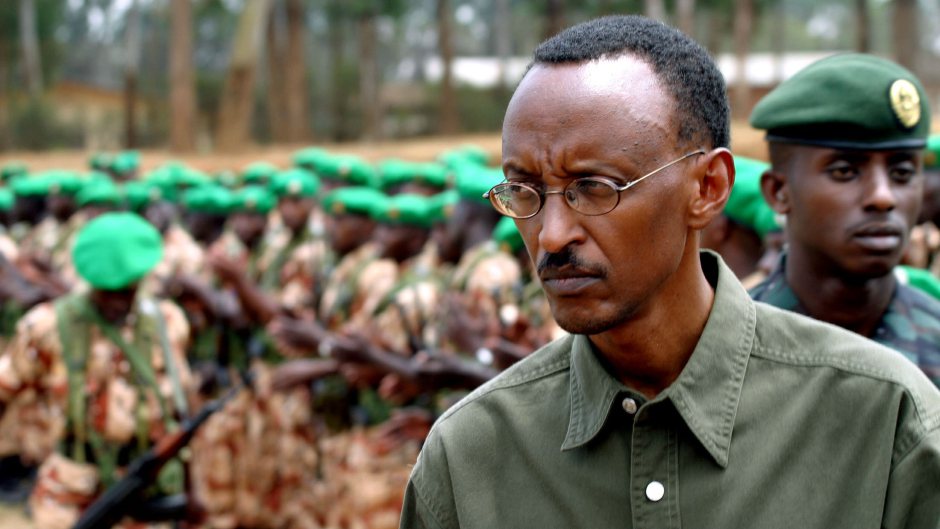
As with Dr. Faustus, who sold his soul to Satan, Kagame’s admirers will be bitterly disappointed.

kagame-and-troops

For Western governments, financiers and opinion leaders, Rwandan president Paul Kagame offers a Faustian bargain: Overlook my brutal behavior, and I will offer you a model for economic growth in an African nation.

As with Dr. Faustus, who sold his soul to Satan, Kagame’s admirers will be bitterly disappointed.

While sacrificing human rights on the altar of economic growth, Kagame is delivering neither democracy nor prosperity.

Kagame’s descent into despotism has been documented by respected sources, ranging from Human Rights Watch to the US State Department. In recent years, a growing number of Kagame’s critics have died under mysterious circumstances, even in exile. Opposition political parties and independent newspapers have been suppressed. Many Rwandans have fled the country, while many more have been scared into silence.

All the while, Rwanda receives almost a billion dollars annually in foreign aid from the United States, the United Kingdom and their allies, and Kagame continues to receive invitations to prestigious conferences from Davos to the White House.
While Kagame’s apologists boast that he has achieved an “economic miracle,” Rwanda’s performance remains mired in mediocrity. Having served as Kagame’s head of policy and strategy, I resigned not only because he was tyrannizing the nation, but also because he asked me to tamper with the truth about the economy.
Here are the facts that Kagame can’t falsify: After 14 years of Kagame’s leadership, Rwanda remains one of the smallest economies in East Africa. While Kenya’s annual per capita income is $1,200 and Tanzania’s is $695, Rwanda’s is only $630.
Far from moving forward, Rwanda’s economy remains largely informal, with most of the economically active population of 5.5 million still struggling to survive on subsistence agriculture, just like their parents and grandparents before them. Employment in the formal economy is only a little more than 300,000. Rwanda’s private sector is tiny, with tax-paying firms hovering around 113,200, of which only 354 (or 0.3%) are ”large taxpayers” with an annual turnover of $1.4 million.

Meanwhile, crony capitalism is on the rise. Crystal Ventures Ltd. (CVL), controlled by the investment arm of Kagame’s ruling party, has become, in its own words, “the biggest investment company in the country.” Its holdings include concrete products, construction, real estate development, telecommunications, agriculture, aviation, security services, printing and publishing, furniture trading, manufacturing, property management and engineering.

How does this disappointing economic performance translate into Rwandans’ living standards? On two crucial social indicators—education and health—Rwanda falls short. 

Because of its small tax base, Rwanda is dependent on foreign assistance. Of the national government’s $2.4 billion budget for 2014/2015, $777 million will come from development aid from overseas. Rwanda has the highest foreign aid per capita in east Africa—$77 per person, compared to Burundi’s $53, Kenya’s $61, Tanzania’s $59 and Uganda’s $46.

While foreign governments contribute almost 40% of Rwanda’s budget, foreign direct investment from private sources is small. In 2013, Rwanda received only $110 million in foreign direct investment, compared to $1.8 billion for Tanzania, $1.1 billion for Uganda and $514 million for Kenya.
Far from being a powerhouse in the global economy, Rwanda’s trade deficit is growing, having reached $443.1 million during the last quarter of 2013 alone, while its exports are declining. From January through September 2014, exports were valued at $247 million—a 10.5% decline from the same period in 2013.
How does this disappointing economic performance translate into Rwandans’ living standards? On two crucial social indicators—education and health—Rwanda falls short.

In education, Rwanda may be pursing the quantity of enrollment over the quality of learning. According to the United Kingdom’s Department for International Development (DFID), which has put considerable resources into Rwanda’s education: “To achieve near-universal primary enrollment but with a large majority of pupils failing to attain basic levels of literacy or numeracy is not, in our view, a successful development result. It represents poor value for money…”

Meanwhile, according to the World Health Organization, the ratio of health workers per 10,000 people in Rwanda is 0.6 for physicians, 6.9 for nurses/midwives, and 0.1 for dentists. This is far below the African average: 2.6 physicians, 12 nurses/midwives and 0.5 dentists per 10,000 people.
The failure of Rwanda’s Faustian bargain—trading democracy for development and ending up with neither—should come as no surprise to students of history and human nature.

A dictator who can’t be questioned; an elite that dominates the economy; and an atmosphere of anxiety—these are not the formula for economic growth. In Africa as elsewhere, people do their best work in an environment of freedom, not fear.

By David Himbara, Ph D

World Refugee Day:”We have a duty to the millions stranded away from home, not just to preserve life, but to safeguard hope” John Kerry.

Press Statement

John Kerry
Secretary of State

Washington, DC

June 18, 2015

World Refugee Day, marked on June 20, is a time to honor those who flee violence and persecution and those who help them on their journey.

It’s almost unfathomable that nearly 60 million men, women and children are now displaced inside and outside of their countries. That is the largest number the United Nations High Commissioner for Refugees has ever counted and 8 million more than the record set just one year ago. We’ve seen haunting images of Syrian families fleeing indiscriminate barrel bombings and young children rescued at sea after days without food. Escaping from bullets, bombs, or machetes is often just the beginning of the ordeal. Refugees remain in exile for an average of 17 years. Some are born and grow up in camps and never get to leave them.

I’ll never forget meeting with refugee leaders on my recent trip to Kenya, where 350,000 mainly Somali refugees live in a remote, dusty camp complex called Dadaab. By video link to Nairobi, I spoke to a group Dadaab’s best students. They told me how they dream of attending university and pursuing careers in medicine, politics and human rights. But they also shared their fears that they would end up trapped and jobless, and that all their striving would be in vain. We cannot let that happen.

For those scattered by violence and oppression, the United States is and will remain their most fervent defender. I am proud that U.S. humanitarian assistance exceeded $6 billion dollars last year. The United States is the world’s leading donor of humanitarian aid, and resettles more refugees than any other nation. The resilience, determination, and achievements of the millions resettled here in the United States prove the value and importance of our work. People who have been uprooted deserve more than food, shelter, and medical care. They deserve dignity and respect and the opportunity to build a better future.

We have a duty to the millions stranded away from home, not just to preserve life, but to safeguard hope.