Category Archives: Region

Dusangirijambo: Ese Liyetona Cyomoro Kagame yaba yasesekaye ku rugamba muri Kongo?

DUSANGIRIJAMBO : Ese Liyetona CYOMORO KAGAME yaba yasesekaye ku rugamba muri Kongo ?

Parution: Sunday 27 October 2013, 15:24
Par:Padiri Thomas Nahimana.

I.UHORAHO NTAZI KWIHANGANIRA URENGANYA UMUKENE .

Amasomo yo kuri iki cyumweru cya 30 gisanzwe – C

ISOMO RYA MBERE: Mwene Siraki 35,12-14.16-18. 

Koko rero, Uhoraho ni umucamanza,
nta bwo areba umuntu,
nta we yihanganira arenganya umukene,
kandi yumva isengesho ry’urengana.
Ntiyirengagiza amaganya y’imfubyi,
cyangwa ay’umupfakazi umutakambiye.
Ukorera Uhoraho uko abishaka, arashimwa,
kandi isengesho rye rigera mu bushorishori bw’ijuru.
Isengesho ry’uwicisha bugufi ricengera mu bicu,
ntarihwemera kugeza ubwo rigera mu ijuru;
ntashirwa atari uko Uhoraho amusuye,
ngo arenganure intungane, anasakaze ubutabera.

ZABURI 34(33),2-3.16.18.19.23. 

Nzashimira Uhoraho igihe cyose,

ibisingizo bye bizahora ubudahwema mu munwa wanjye.

Ishema mfite ryose ndikesha Uhoraho,
ab’intamenyekana nibabyumve, maze bishime!

Amaso y’Uhoraho ayahoza ku bantu b’intungane,
amatwi ye agahora yitaye ku maganya yabo.
Intungane ziratabaza, Uhoraho akazumva,
maze akazikiza amagorwa yazo yose.

Uhoraho aba hafi y’abafite umutima washengutse,
akaramira abafite umutima wihebye.
Uhoraho arengera amagara y’abayoboke be,
kandi nta n’umwe mu bamuhungiraho uzahabwa igihano.

ISOMO RYA KABIRI : 2 Timote 4,6-8.16-18. 

Naho jyewe, dore maze kumera nk’igitambo giseswa, n’amagingo y’ukwigendera kwanjye aregereje. Urugamba rwiza narurwanye inkundura, intera nagombaga kwiruka narayirangije, ukwemera nagukomeyeho.

None dore ikamba rigenewe intungane rirantegereje, iryo Nyagasani umucamanza utabera azangororera kuri wa Munsi we, ariko atari jyewe jyenyine, ahubwo n’abandi bose bazaba barakunze Ukwigaragaza kwe.

Ubwo najyaga mu rukiko bwa mbere kugira ngo niregure, nta n’umwe wanshyigikiye; bose barantereranye. Ntibazabihorwe! Naho Nyagasani we yambaye hafi, maze antera imbaraga kugira ngo mbashe kuhamamariza ubutumwa nshize amanga, kandi ngo abanyamahanga bose babwumve. Nuko nkizwa urwasaya rw’intare.
Nyagasani azansimbukisha ikintu cyose kigamije kungirira nabi, maze ankize anjyana mu Ngoma ye y’ijuru. Naharirwe ikuzo uko ibihe bigenda bisimburana iteka! Amen.

IVANJILI : Luka 18,9-14. 

Yezu yongera guca uyu mugani, awucira bamwe bibwiraga ko ari intungane, bagasuzugura abandi bose. Nuko aravuga ati «Abantu babiri bahuriye mu Ngoro baje gusenga. Umwe yari Umufarizayi, undi ari umusoresha. Umufarizayi aremarara, asengera mu mutima we avuga ati ’Mana, ndagushimira ko ntameze nk’abandi bantu b’ibisambo, b’abahemu, b’abasambanyi, mbese nk’uriya musoresha! Nsiba kurya kabiri mu cyumweru, ngatanga kimwe cya cumi cy’urwunguko rwanjye rwose. Umusoresha we yihagararira kure, atinya no kubura amaso ngo ayerekeze hejuru, maze yikomanga ku gituza avuga ati ’Mana yanjye, mbabarira jyewe w’umunyabyaha!’ Ndabibabwiye: uwo musoresha yasubiye iwe ari intungane, naho ureke undi! Kuko uwikuza wese azacishwa bugufi, naho uwicisha bugufi akazakuzwa.»

 II. WOWE AYA MASOMO AGUSIGIYE IKI ?

Ubutumwa bw’ingezi ni uko Uhoraho Imana abarizwa ku ruhande rw’umukene, agahungira kure inzu n’imigambi y’abanyamurengwe. Nanone Inkuru nziza y’uyu munsi ntabwo itwigisha ko gukena umuntu agatindahara ari indangagaciro ; ko abantu bagomba kwemera gukeneshwa bakabaho batagira n’urwara rwo kwishima !

Igitabo cy’intangiriro gihora cyibutsa mwenemuntu ko ubutumwa afite kuva atangiye kubaho ari « ugukora agamije guhindura isi nziza ». Bisobanuye ko ntawakagombye kubuzwa gutunga iby’ingenzi akeneye kugira ngo agire ubuzima buzira umuze.

 Umukene Uhoraho Imana yikundira kandi yishimira gufasha ni umeze ute ?

Isomo rya mbere riratwereka amafoto atatu y’umukene ufatwa nk’inshuti y’Uhoraho Imana :

(1)Urengana

(2)imfubyi

(3)umupfakazi

 Isomo rya Zaburi ryo rivuga muri rusange ibiranga umukene-nshuti y’Imana :

*ni intamenyekana

*ni intungane

*ni abafite amaganya

*abafite utima washengutse

*abafite umutima wihebye

*ni abahungira kuri Nyagasani

Isomo rya kabiri ritanga Pahulo Mutagatifu, ufunze, arengana, watereranywe na bose, nk’urugero rw’umukene Imana yishimira gutabara . We ubwe arivugira ko ugutabarwa nyakuri kuzasozwa n’uko yakiriwe mu bwami bw’ijuru.

Ivanjiri nayo iratanga urugero rw’uriya Musoresha wemera ibyaha bye,akabyicuza akazibukira ibyo kwishyira imbere.

Inyigisho ku Banyarwanda.

Abakene Imana irwanira ishyaka bamaze kuba benshi cyane mu gihugu cyacu: Imfubyi, Abapfakazi, imfungwa, abarengana…. biyongera uko bwije ni uko bukeye. Turabasaba ko batacika intege burundu ngo baheranwe n’amaganya ahubwo bakaba bakwiye kubura umutwe, bagashira amanga bagatera ijwi hejuru batabaza Uhoraho Imana ngo abagobotore mu nzara z’Abanyamurengwe.

Nanone bizwi neza ko igihugu cyacu cyigaruriwe n’Agatsiko k’Abantu bifata uko batari , ahari biyumva nk’Ibimanuka, bibwira ko ibyiza byose by’igihugu ari ibyabo bonyine na benewabo gusa : Ubutegetsi, imitungo…byose ngo ni ibyabo .

Aba Banyamurengwe barangwa n’iki ?

Abanyamurengwe ni ikinyuranyo cy’Umukene-nshuti y’Uhoraho Imana : Bahagarariwe n’uriya Mufarizayi unengwa n’Imana, kuko yishuka cyane akibona uko atari. Abanyamurengwe b’iwacu barngwa n’ibi bikurkira :

*Uzababwirwa n’uko buvangura imfubyi hakabaho imfubyi nziza n’imfubyi mbi,  izifashwa n’izitereranywa.

*Barangwa no gusumbanya Abapfakazi, bakagena abapfakazi bemewe n’abapfakazi batemewe,  bamwe bakitabwaho abandi bakagirwa ba nyagupfa. 

*Barangwa ahanini no KURENGANYA bya buri gihe abenegihugu batabarirwa mu Gatsiko,babambura imitungo yabo, babafungira akamama, babacuza, babacunaguza… babahatira kuba ABAGERERWA N’INKOMAMASHYI mu gihugu cyabo.

Byumvikane neza ko iyo Abanyamurengwe ari nabo bategetsi b’igihugu, nta rindi sengesho rikwiye guturwa Uhoraho Imana ritari ukumusaba gufasha abenegihugu gukura ishyano ku musozi.

Nanone ariko tugomba guhora twibuka ko Imana ifasha abantu kwifasha, ko idashobora kudusimbura mu byo dushoboye kwikorera. Kimwe mu byo twashobora kwikorera ni ukwikiza abategetsi batunyunyuza imitsi, abategetsi bigize ba gashozantambara bahora banezezwa no gusesa amaraso y’abana b’abakene ,mu gihe bo n’imiryango yabo bigaramiye !

Umwanzuro :

Liyetona CYOMORO KAGAME yaba yageze ku rugamba muri Kongo ?

Twizere ko Nyakubahwa Pawulo Kagame(ikinyuranyo cya Pawulo Mutagatifu twahaweho urugero), ataza gutinya kohereza imfura ye ku rugamba muri Kongo, ubwo bibaye ngombwa ko yongera gushoza intambara igamije gukungahaza umuryango we ari nako arimbura abana bacu n’abaturanyi bacu . Twizere ko Nyakubwahwa CYOMORO atazakomeza kujya yambikwa impeta za gisilikari yiyicariye iwabo mu mbere mu gihe abana b’intamenyekana bari gutikirira ku rugamba batazi icyo rugamije, rutagize n’icyo rubamariye. Sibwo uru rugamba rurangiye CYOMORO akaba ari we ugororerwa kuba Jenerali , abarurokotse baririra  mu myotsi ?Iby’iwacu ni umuti w’amenyo gusa ! Ubutabera buri ihe ?

Mu masengesho yacu y’iki cyumweru , tuzirikane ABAKENE bari kuzira ubusa muri Kongo, baba abacu, Abakongomani n’abiyemeje gutabara.

Icyumweru cyiza ku banga AKARENGANE urunuka, mutagerwa ishema no guharanira ubutabera Nimutere hejuru muririmbane n’umuhanzi wa zaburi muti :

 ” Ishema mfite ryose ndikesha Uhoraho,

ab’intamenyekana nibabyumve, maze bishime!”

Uwanyu Padiri Thomas Nahimana.

Sangira natwe aka karirimbo :http://www.youtube.com/watch?v=DocozrBnYbg


Renewed Fighting in Eastern DRC

usdos-logo-seal


Press Statement

Jen Psaki
Department Spokesperson

Washington, DC


October 26, 2013

We are deeply concerned about reports of increased fighting in North Kivu and call on all parties to refrain from acts of further escalation. We are particularly concerned about reports of cross-border firing. We call on all parties to refer reports of military incidents to the Expanded Joint Verification Mechanism (EJVM) for its immediate investigation, and to cooperate fully and promptly, and grant time for the EJVM to determine the facts of what occurred.

All parties should return to the negotiation table to overcome remaining hurdles to the signing of a final, principled peace agreement, which would establish a permanent ceasefire and hold accountable those who have committed serious crimes.

PRN: 2013/1296

Source: http://www.state.gov/r/pa/prs/ps/2013/10/215895.htm

War Looms As Rwanda Threatens To Strike DRC

Rwanda says it is ready to launch a surgical strike inside the Democratic Republic of Congo if there is a new cross-border shelling, raising the prospect of another war in the Great Lakes region of Africa.

rwanda3

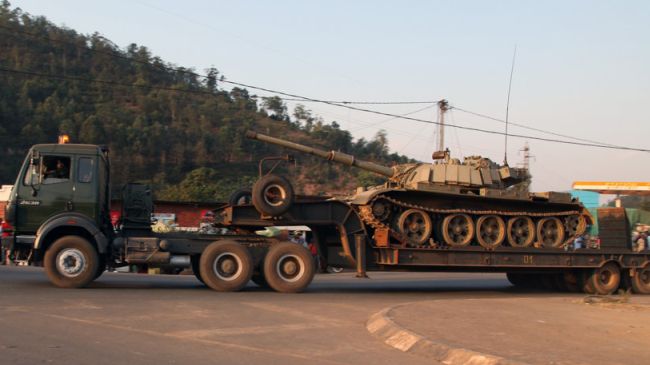
A trailer carrying a tank leaves the Rwandan capital of Kigali en route to the border town of Gisenyi, August 30, 2013. Rwanda has deployed troops on the Congolese border.

On Friday, rebels from Congo’s March 23 movement (M23) clashed with Congolese troops, and Rwanda accused the Congolese army, the FARDC, of cross-border shelling and shooting.

General Joseph Nzabamwita, the Rwandan army’s spokesman, said troops across the border had “fired three bombs and small arms fire” at a village in Rubavu district, close to the border towns of Gisenyi in Rwanda and Goma in the DR Congo.

The Congolese army “targeted innocent civilians in Rwanda, and fleeing Congolese refugees,” he said, saying a 58-year-old refugee was wounded.

The M23 rebels defected from the FARDC in April 2012 in protest over alleged mistreatment in the army.

The UN and Kinshasa have repeatedly accused Rwanda of helping the rebels in Congo. Rwanda has always denied the charges that it is backing the M23, but Kigali has never publicly condemned the militia, which is strengthening its grip over the provinces of North Kivu and South Kivu in the eastern Congo.

Gasana-and-UNMISS-199x300

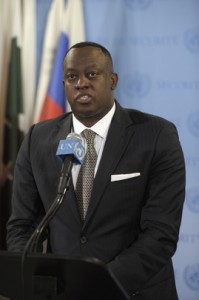
Rwandan UN Ambassador Eugene-Richard Gasana said Rwanda is ready to act and it will hurt.

Congo’s adventurous neighbor is reportedly planning to launch a military offensive against a country with which it fought two wars in the past two decades.

“If they are not ready to stop this, we will immediately act and it will hurt,” Rwandan UN Ambassador Eugene-Richard Gasana said on Friday after the UN Security Council held talks on the heightened tensions in the volatile region.

“We will do it with laser precision, we know where it is coming from,” said Gasana, whose country is a non-permanent member of the Security Council.

He went on to say that Rwanda had conveyed a tough message to the other 14 Security Council members.

“We are asking them to get along … and to take their fight far from our border. We already warned the government of Kinshasa,” Gasana added.

Rwanda has deployed troops on the Congolese border, the envoy revealed.

“If they dare to continue, it will hurt. We don’t need to increase anything. We have sufficient strength and we know how to deal with it.”

The M23 rebels and several other armed groups are active in the eastern Congo and are fighting for control of the country’s vast mineral resources, such as gold, the main tin ore cassiterite, and coltan (columbite-tantalite), which is used to make many electronic devices, including cell phones.

Since early May 2012, nearly three million people have fled their homes in the eastern Congo. About 2.5 million have resettled in Congo, but about 500,000 have crossed into neighboring Rwanda and Uganda.

Congo has faced numerous problems over the past few decades, such as grinding poverty, crumbling infrastructure, and a war in the east of the country that has dragged on since 1998 and left over 5.5 million people dead.


Source:  http://www.redpepper.co.ug/war-looms-as-rwanda-threatens-to-strike-drc/

The War in Eastern DR Congo: The United States deeply concerned


usdos-logo-seal


Press Statement

Jen Psaki

Department Spokesperson

Washington, DC


October 25, 2013


The United States is deeply concerned by reports of renewed fighting between the M23 armed group and the armed forces of the Democratic Republic of the Congo (DRC) in eastern Congo, with reports of casualties and of hundreds of families forced to flee the area of the fighting. We are also troubled by reports that at least one round landed across the border in Rwanda. This fighting puts at risk the fragile peace negotiations in Kampala and risks undermining the concerted efforts earlier this week to reach a final agreement and peacefully resolve the conflict. We commend the actions of the UN peacekeeping mission in the DRC (MONUSCO) to protect civilians and urgently call on all parties to exercise restraint to prevent military escalation of the conflict.

We specifically call on the M23 to commit to peacefully resolving the conflict by promptly signing a final agreement that provides for the disarmament and demobilization of the armed group and accountability for those responsible for the most serious human rights abuses. We commend the good faith efforts of the DRC government to negotiate a principled agreement and continue to call on all signatories of the Peace, Security, and Cooperation Framework to support such an agreement and to end all support to armed groups.

We continue to believe that the best way forward for the Great Lakes region is to conclude the Kampala Talks in a manner that does not grant amnesty to the worst offenders and to utilize the Framework peace process to focus on the root causes of the crisis in the DRC, including through expanded dialogue among signatory states.

PRN: 2013/1295

 Source: http://www.state.gov/r/pa/prs/ps/2013/10/215891.htm

Tension As Rwanda Accuses DRC Of Cross Border Shelling

kabila-kagame

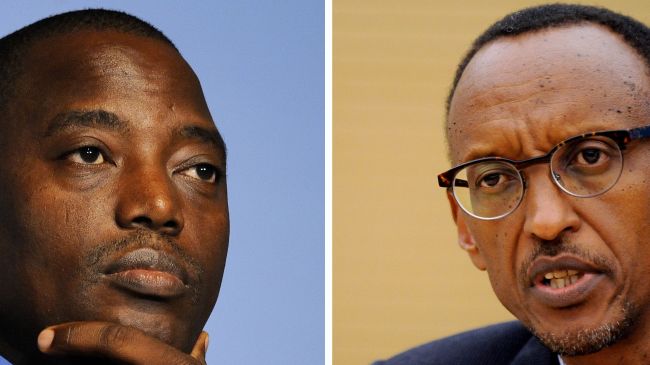
President Kabila of DRCongo(L) and Kagame of Rwanda(R)

The accusation came as DR Congo forces resumed heavy fighting against the M23 rebel group, which controls territory close to the Rwandan border in the eastern Kivu region.

Kigali is also accused of backing the rebels, a charge it denies.

General Joseph Nzabamwita, the Rwandan army’s spokesman, said troops across the border had “fired three bombs and small arms fire” at a village in Rubavu district, close to the border towns of Gisenyi in Rwanda and Goma in the DR Congo.

The Congolese army “targeted innocent civilians in Rwanda, and fleeing Congolese refugees,” he said, saying a 58-year-old refugee was wounded.

Rwanda has repeatedly complained that DR Congo government forces fire into its territory, and has described the attacks as a “provocation”.

Source: http://www.redpepper.co.ug/tension-as-rwanda-accuses-drc-of-cross-border-shelling/

Activities of the governments of Kenya, Rwanda and Uganda are illegal, Dixit Tanzania

world002px

The 3 Ks of East Africa: From left: Kaguta of Uganda, Kagame of Rwanda, Kenyatta of Kenya

The Tanzania government on Monday renounced the activities of the governments of Kenya, Rwanda and Uganda, saying they are illegal. This is in response to growing concerns among the public that the activities being advanced by the three EAC member countries are isolating Tanzania.

In a statement issued by the ministry of East African Cooperation, the government said the ongoing talks between the three countries were against the EAC protocol. According to the government, the projects under deliberation by the new coalition, and which have received the blessing of presidents Uhuru Kenyatta, Yoweri Museveni and Paul Kagame, should have been endorsed first by all the EAC member countries.

The statement was issued by the ministry’s head of communication, Mr Vedastina Justinian. He said Tanzania’s official stand regarding the willingness of other countries to enter bi-lateral or tri-lateral arrangements needed consensus before implementation. “This is notwithstanding the fact that the coalition of the three countries in exclusion of Tanzania and Burundi is being run under their respective foreign affairs dockets and not through the EAC secretariat,” the official said.

Mr Justinian said the Kenyan, Rwandan and Ugandan leaders were in contravention of Article 7(1) (e) of the EAC protocol. “Even though this Article allows member countries to enter bi-lateral or tri-lateral agreements, it is a must that issues under consideration for implementation are fully agreed upon by all member countries,” read the statement. He reiterated that Tanzania would wait for a response from the EAC council of ministers over the activities of the three member countries following a protest it sent in August 31.

Chaste Gahunde

Source: http://www.monitor.co.ug/News/World/Tanzania-government-protests–isolation–by-EA-nations/-/688340/2043104/-/14f8rjqz/-/index.html


Ibihugu bya Afurika ntibyabashije kumvikana ngo bitere ishoti urukiko mpanabyaha rwa La Haye.

download

Ku wa gatandatu taliki ya 12 Ukwakira 2012, ku cyicaro cy’umuryango w’ubumwe bwa Afurika  Addis Abebba muri Ethipia, ibihugu bya Afurika ntibyabashije kumvikana ku masezerano yo kwitandukanya n’urukiko mpanabyaha rukorera I La Haye mu Buholandi. Mbere gato y’iyi nama, amakuru yakomeje guhwihwiswa ko Afurika izahita icana umubano n’uru rukiko bitewe  ngo n’uko rudaha icyubahiro Abayobozi b’Abanyafurika. Iki kibazo cyazamuwe n’uko uru rukiko rwatangiye kuburanisha Visi Perezida wa Kenya Bwana William Ruto ku birego by’ubwicanyi bwabaye nyuma y’amatora yo mu mwaka wa 2007. Undi uteganyijwe gukurikiranwa ni Perezida Uhuru Kenyatta na we uregwa iby’ubwo bwicanyi.

Bimwe mu bihugu bya Afurika bisanga umuntu ukiri mu mirimo y’ubuyobozi atagombye gukurikiranwa, mu rwego rwo kubaha abamugiriye icyizere. Abandi bo basanga biramutse byemejwe bitya kwaba ari ukongera gushishikarira Abaperezida bakoze ibyaha kutarekura ubutegetsi. Reka dufate urugero: Mu ntambara Museveni yarwanye mbere y’uko afata ubutegetsi, yishe abantu benshi mu karere ka Luwero kugira ngo abigereke kuri leta yariho. Nyuma yaho kandi yicishije Abenegihugu bo mu majyaruguru ndetse abasahura inka zabo ashingiye ku ngengabitekerezo y’uko nta bundi bwoko bwigeze bworora inka uretse ubwo akomokamo bw’Abahima. Imyaka ibaye 27 Museveni ari ku butegetsi kandi aracyashaka gukomeza. Biramutse byemejwe ko yakurikiranwa kuri ibyo byaha, Museveni yakora uko ashoboye kose ngo atazavaho kugeza apfuye. Uru rugero umuntu yarufata no kuri Paul Kagame ufite ibyaha biruta iby’ingurube.

Tugarutse ku nama yo kuwa 12 Ukwakira, igitangira ibihugu byacitsemo ibice bibiri, igice kimwe gishyigikiye ko Afurika itakongera gukorana n’urukiko, ikindi gishyiikiye uru rukiko. Igice cyashakaga kuva mu rukiko kigizwe n’ibihugu bya Algeria, Ethiopia, Ghana,  Kenya, Malawi, Nigeria, Rwanda, South Africa, Sudan, Tanzania, Uganda na Zimbabwe.

Igihugu cya Kenya kivuga ko cyababajwe n’amagambo yavuzwe mu gihe urubanza rwa Ruto rwatangiraga. Ayo magambo yavuzwe n’umushinjacyaha yasabaga ko Kenya yashyiraho umusimbura wa Ruto kugira ngo imirimo y’urukiko itazabangamirwa. Kubera aya magambo, Kenya yasabye ibindi bihugu bya Afurika kuyishyigikira ngo kuko inkoni ikubise mukeba bayirenza urugo.

Ibi rero biragoye kubyemeza ibihugu biyoborwa n’abaperezida batagira icyo bikeka. Kuri bo ni nko guca wa mugani w’injangwe yacitse umurizo. Ngo umunsi umwe injangwe yagiye kwiba inkoko ifatwa mu mutego uyica umurizo isigarana akanifu. Kuva icyo gihe yagize ipfunwe kuko aho yanyuraga hose izindi zayisekaga. Ni uko yigira inama yo gutumiza izindi ngo zigirane ikiganiro. Mu gihe zaganiraga, izindi zari zatembagaye kubera ukuntu iyacitse umurizo yasaga. Ni uko injangwe yacitse umurizo irahaguruka iti: “Bavandimwe ndashaka kubagira inama. Burya imirizo yacu iratugora cyane rwose, cyane cyane nk’iyo tugiye kwifatira imbeba( yanze kuvuga ko ijya ifata n’inkoko) hari igihe tuzunguza umurizo maze imbeba zikamenya aho duherereye. None njye nasanze ari byiza ko nawuca kugira ngo njye mbasha gukora operation nta kibazo. Nkaba nagiraga ngo namwe munkurikize”. Izindi zarasetse cyane zikomeza kuyinnyega ziti “wavuze ko wagiza insanganya ( accident)! None urashaka kudushuka ngo natwe duce imirizo yacu kandi ntacyo idutwaye.

Umuntu agenekereje yasanga Kenya hamwe n’ibindi bihugu biyoborwa n’abicanyi byaravugaga biti: “Bavandimwe Banyafurika, ruriya rukiko ruratugora cyane rwose, cyane cyane iyo tumaze kwiyicira ibiturage ( batuka abaturage) dukurikiranye ubutegetsi cyangwa se twiyibira imitungo mu bindi bihugu. Twe ku bwacu twasanze icyemezo cyiza ari ugukuraho ruriya rukiko kugira ngo tujye twikorera ibyaha ntawe twikanga. None turagira ngo namwe mudukurikize”.

Ibihugu bivuga igifransa byo bisanga kwitandukanya n’urukiko bikwiye gukorwa igihugu ku gihugu bidakozwe mu kivunge. Byasabye umuryango w’ubumwe bw’Afurika gushyikiriza iki kibazo umuryango w’Abibumbye.

Ibihugu bya Senegal, Cote d’Ivoire, Gambia, Mali na Burkina Faso byemeza ko ruriya rukiko rufite akamaro cyane kuko umuryango w’Ubumwe bw’Afurika utajya wihutira gukemura ibibazo by’amakimbirane ku mugabane. Aha bavuze nk’ikibazo cyo mu Burasirazuba bwa Congo, ikibazo cyo muri Nigeria cya Boko Haram, n’ibibazo biheruka muri Mali aho umuryango w ‘ibihugu bya Afurika wananiwe kugira icyo ubikoraho mu maguru mashya. . Botswana nayo yunze mu ry’ibi bihugu mu kwemeza ko n’iyo abayobozi bakiri mu kazi batakorwaho, hadakwiye kubaho gushyigikira ubukozi bw’ibibi.

Umunyamabanga mukuru w’umuryango w’abibumbye yahamagaye buri mu perezida ku giti cye abasaba ko batakwitandukanya n’amasezerano ya Roma yashyizeho ruriya rukiko, anemeza ko azakora uko ashoboye ngo amasezerano asubirwemo.Twibutse ko umuryango w’ibihugu by’Afurika byahaye umuryango w’Abibumbye kugeza ku itariki ya 12 Ugushyingo ngo igisubizo kibe cyabonetse, bitaba ibyo, hagafatwa ingamba zikakaye, izi ngamba benshi bakeka ko zaba ugusezerera ruriya rukiko.

 Dukomeze tubitege amaso.

 Chaste Gahunde

Tanzania: understanding the reluctant East Africans

Richard-M-Kavuma

On a recent visit to Tanzania’s commercial capital, Dar es Salaam, I was eager to engage my hosts on this issue of the on-and-off marriage between Kenya, Uganda, Rwanda, Burundi and Tanzania.

With the ‘courtship’ on more than a decade now, the feeling has been that the East African Community affair should be taken to the next level.

But Tanzania has seemed politely hesitant – to put it mildly. The first major signs of the escalation of the tensions came in June.

Tanzania’s ‘big man’ Jakaya Kikwete (they call him JK) was preparing for one of his biggest days in office – hosting the president of the United States. Uganda’s YK Museveni, Rwanda’s Paul Kagame (PK) and Kenya’s Uhuru Kenyatta (UK) decided to have their own meeting to discuss East African matters.

Cynics suggested UK, YK and PK were just sourgraping after they were snubbed by the big boy from Washington.

But since then, Uganda, Kenya and Rwanda have become a bolder ‘coalition of the willing’. As we have reported, they have even flirted with the idea of doing their own thing and leaving out the foot-dragging Tanzanians.

And so, I wondered, do ordinary Tanzanians concur with Kikwete?

For Elly, a university lecturer, the issue is simple: many of his countrymen are genuinely sceptical, for good reason. First, both Kenya and Uganda, and even Rwanda, speak a lot of English whereas Tanzania is mostly about Kiswahili.

Some people, Elly tells me, think that further opening up their country could mean more loss of jobs, as new investors are likely to be swayed by the advanced language skills from the north.

Land is another critical factor. Elly speaks of fear that Rwandans, Kenyans and Ugandans are eying Tanzania’s land. It means, therefore, that JK’s expulsion of Banyarwanda immigrants in northern Tanzania, in August, while it raised eyebrows abroad, was not unpopular at home.

Sam, a lively civil society type, is particularly keen on a conversation about regional integration. It is, he says, his favourite dinner topic with his East African ‘brothers’. They need, he often tells them, to first step back and understand where Tanzania is coming from and why it is cautious.

First, Sam says, unlike the countries eager to rush into a marriage, Tanzania is already in a union. Lest it be forgotten, the country is a union of two nations – Tanganyika and Zanzibar, with the latter also having its own parliament and president.

That union has come with its own challenges, with simmering political tensions between the majority CCM party and the CUF in Zanzibar which stands for anything between ‘greater autonomy’ and secession. So, the Tanzanians are saying, “wait a minute; go slow”. They do not want to invite more trouble than they already have.

There are other issues too, Sam says, such as the big investments Tanzania has made into its Southern African Development Community (SADC) ties. Its economy is much more integrated with countries like Zambia and Malawi – not to mention the Asians that the Indian ocean effortlessly brings in.

The country, Sam says, needs to be given serious reasons for ‘rushing’ into this East Africa thing, when things are going well with SADC. In fact, Sam believes that if YK, UK and PK insisted on a union without Tanzania, Kenya would be the biggest loser – as its industrial products would lose a ‘favoured’ status, and become less competitive.

Employing organisational theory, Sam argues that some people are what he calls choleric’, in that they want things to happen quickly and urgently. While risky, choleric people are good for the energy they inject into things. But, he warns, if an organisation has too many choleric people, it can crash, as it will take too many reckless decisions.

In this case, therefore, Tanzania sees itself as the soberer, calmer, wise head trying to force her colleagues to think carefully before rushing in. The Congo conflict also features on Dar es Salaam’s bar menu.

It is claimed that through SADC, Tanzanians have landed on documents inside Congo, suggesting a deeper involvement of Rwanda in Congo than has previously been thought. These documents, one fellow said, have even been translated into English and could be unleashed if Kigali continues to play hard ball.

So, asks Sam, how can Tanzania trust Rwanda and Uganda in East Africa yet there is a risk of fighting them in Congo?

It leaves you thinking that the dynamics of the East African union have somewhat changed. The marriage, it seems, would now be between the ‘choleric coalition’ and the bride that is Tanzania.

And for now, she won’t be rushed. She seems to be saying: “Either we marry in my time and on my terms [possibly with Burundi as the bridesmaid], or you can forget me.” The debate on integration is, therefore, a test of character for the ‘choleric coalition’.

A strategic man could cede some ground and lose a battle, to win the war of the bride. Your ‘typical’ type would tell the woman to go hang.


The author is the editor of The Observer.

Source:http://www.observer.ug/index.php?option=com_content&view=article&id=27976:tanzania-understanding-the-reluctant-east-africans&catid=83:staff-writers&Itemid=60