


An interview with Boniface Musavuli
The Congo crisis is now one of the greatest humanitarian emergencies in the world and the most underreported. An average of 5,500 people a day flee violence and insecurity, even more than in Iraq, Syria, and Yemen. Unlike Iraq, Syria, and Yemen, however, the Congo wars are undeclared and there’s no front line. There are instead many wars over many concentrations of resource wealth in this immensely resource-rich country, especially in the eastern provinces. For more than 20 years the most rapacious and destabilizing aggressors have been US allies and military partners Uganda and Rwanda. The US is the top bilateral donor to both. Uganda has been led by dictator Yoweri Museveni since 1986, Rwanda by dictator Paul Kagame since 1994.
I spoke to Boniface Musavuli, author of the book “Les Massacres de Beni” about the Ugandan army’s attack on his native corner of Congo, Beni Territory, just in time for Christmas.
Ann Garrison: Boniface, last week Uganda promised to keep its troops on the Ugandan side of the Congolese border. Then its attack aircraft crossed into Congolese territory and began bombing while its troops fired long range weapons from across the border. Should we call this an invasion in violation of international law even though Uganda claims it hasn’t sent any ground troops in yet and the Congolese army is reported to be collaborating with them in this?
Boniface Musavuli: Firstly, this intervention is a violation of the UN charter and the sovereignty of the Congo. Uganda has already been condemned by the International Court of Justice for assaulting and occupying the Congo between 1998 and 2003. We are therefore dealing with an act of recidivism.
The UN Charter prohibits states from using military force on the territory of another sovereign state unless they have a UN mandate or authorization from the government of the country concerned. Until now, however, there has been no Security Council resolution authorizing Uganda to conduct military operations on Congolese territory. Also, in the Congo, there is no official decision from either the government or parliament authorizing the Ugandan army to conduct operations on Congolese territory. Finally, President Joseph Kabila cannot make such a decision because his term in office expired in December 2016. The DRC Constitution does not allow a president whose term of office has expired to invite a foreign army into Congolese territory. So Uganda is violating international law.
AG: Uganda says they’re hunting down the Islamist ADF militia to make sure it doesn’t attack Uganda. They say they fear it will because it attacked the UN’s Tanzanian peacekeepers last week, killing 15 and wounding more than 50. What’s really going on?
BM: This argument is problematic and violates the principles of international law which makes “preventive warfare” illegal. A state cannot conduct operations on the territory of another state because it suspects that a threat will come from that state. Uganda claims to be launching a preventive war against the ADF in Congo, but we know that the attack on Tanzanian peacekeepers was not carried out by the ADF. The ADF has not even existed as a military force since April 2014. The massacres and violence that have been taking place in Beni since 2014 are carried out by certain units of the Congolese army with Rwandan officers and criminals recruited in Rwanda to cause chaos in Beni.
Like Uganda’s President Yoweri Museveni, Congo’s President Kabila wants the world to believe that there is Islamist terrorism in Beni and a security crisis that requires him to remain in power indefinitely. Finally, the base where the Tanzanian peacekeepers were attacked is more than 50 km from the Ugandan border, where the Ugandan army says it is conducting operations against the “ADF positions.”
AG: So the people of Beni have Rwandan officers in their own army, and now they’ve got Ugandan attack aircraft overhead dropping bombs and Ugandan troops shelling them from across their border if they haven’t already moved troops into Congo. Is this the latest phase of the de facto occupation that began when Rwanda and Uganda invaded Congo in the 1990s?
BM: Thousands of Rwandan soldiers were poured into the ranks of the Congolese army following the Goma accords of March 2009. Since 2013, thousands of Rwandans have been sent to Beni where they occupy the territories formerly occupied by the ADF and the southern part of the neighboring province of Ituri. Uganda is currently in conflict with Rwanda and certainly does not welcome the massive influx of Rwandan soldiers and people into this part of Congo bordering Uganda.
AG: Given the current tensions between Rwanda and Uganda, is it possible that the Ugandan attack is in fact an attack on the Rwandan troops wearing Congolese uniforms?
BM: The Rwandans within the Congolese army are always surrounded by real Congolese soldiers. So if the Ugandan army targets the Rwandans, it will not attack the Congolese army directly. I believe that, at first, Uganda wants to reestablish its presence on Congolese soil and try to understand how Rwanda intends to consolidate its grip on this Congolese region. The two countries will monitor each other at first. Of course, officially, it’s all about “fighting the ADF.”
AG: Earlier this week, I wrote to MONUSCO’s Public Information Director to ask what the Tanzanian peacekeepers had been doing in Beni Territory, and she wrote back to say that when the UN Security Council last renewed the Tanzanian troops mandate, they “stressed the importance of neutralizing the Allied Democratic Forces (ADF) among other armed groups.” She also said that they had gone there initially to protect MONUSCO engineers and equipment sent to rebuild the bridge across the Semuliki River after it had been blown up by the “suspected Allied Democratic Forces (ADF).” Once the bridge had been rebuilt in 2015, she said, their temporary base became a permanent operating base and they’ve been there since.
After the December 7 attack, the Congo Research Group said that it had been a battle over control of the Mbau-Kamango road that goes through the Virunga park, crosses the Semuliki River (on the bridge), and leads to the Ugandan border at Nobili.
Now the UN News, the UN’s Radio Okapi, and MONUSCO Chief Maman Sidikoua all blame the ADF for this attack on the Tanzanian peacekeepers. Your response?
BM: The UN Security Council and MONUSCO have been talking about “alleged ADF fighters” for almost three years now, but they know that the real ADF fighters no longer exist. ADF leader Jamil Mukulu was arrested in Tanzania in April 2015 and has been in prison in Uganda since May 2015. All the area once controlled by the ADF has already been recovered by the army and MONUSCO. The attack on the Tanzanian peacekeepers was carried out by a force of several hundred combatants wearing Congolese uniforms in an area under Congolese army control. The ADF, even when they were active, could not carry out such a large-scale operation. Moreover, the number of ADF who survived the 2014 operations is no more than a hundred people scattered throughout the bush without coordination or supplies. How can anyone believe that they could mobilize several hundred combatants, attack a base of 100 highly trained and well armed soldiers from four sides, and sustain the battle for more than three hours?
AG: Several days before the attack, Radio Okapi reported that “Beni civil society” objected to Uganda’s plan to cross the border to go after the ADF because they thought the Ugandans were really coming to occupy Beni Territory and would not leave. They appear to have been the only organization or amalgam of organizations stating the obvious.
BM: Yes they were, and they are the ones being massacred.
AG: Could you say something about the Tanzanian peacekeepers, fifteen of whom died during the December 7 attack?
BM: The Tanzanian peacekeepers were an anomaly. Unlike other UN peacekeepers, they had earned the confidence of Beni’s population. They were the contingent most motivated to actually protect the civilian population, and the population was therefore far more likely to confide in them than in the Congolese soldiers. It must always be kept in mind that most Congolese army units in this part of the Congo are led by Rwandan officers who are hated by the population for their crimes and atrocities.
AG: What about the Tanzanians’ offensive mandate to go after the aggressors? The Tanzanian and South African peacekeepers were the first peacekeepers that the UN ever gave an offensive mandate. That happened back in 2013 when they joined the battle to drive M23 out of North Kivu Province, and the UN Security Council has renewed their mandate every year since. Have the Tanzanians used their offensive mandate in Beni, and if so, how? It’s hard to imagine they don’t know that the real aggressors are the Rwandan officers and soldiers in the so-called Congolese army, the FARDC.
BM: Tanzanian peacekeepers are in an uncomfortable situation. When they arrived in Congo in 2013, their country had all but declared war with Rwanda. The conflict began when former Tanzanian President Jakaya Kikwete called on the Rwandan government to negotiate with the FDLR, the armed group of Hutu refugee in eastern Congo. Kagame digested this proposal very badly and threatened to hit the Tanzanian president. The climate between the two countries became very tense, and Tanzania expelled several thousand Rwandans from its territory. Then when the Tanzanian soldiers arrived in Congo to fight the M23, they found that most of them were not Congolese rebels but Rwandan soldiers under Rwandan command.
AG: Kagame threatened to “hit” Kikwete? You mean assassinate?
BM: Kagame’s exact words were: “I’m going to wait for you in the right place and I’ll hit you!” He said that at a rally in Rwanda in 2013 as though he were speaking to the Tanzanian president.
Then the Tanzanian president, also in a rally, retorted that “he [Kagame] will be hit like a kid.”
After M23’s flight back into Rwanda and Uganda, the Tanzanians found that units of the Congolese army included several thousand Rwandan soldiers, consequent to the agreement agreement signed in Goma on March 23, 2009. Despite their offensive mandate, the Tanzanians were exposed to great risk because they could never trust the Congolese army that they were supposed to be working with. A hidden war between Tanzania and Rwanda has been taking place in Congo.
An incident occurred in May 2015, after the Tanzanian peacekeepers were secretly informed that a massacre was going to be committed in the town of Mavivi. They went there, hid, and waited. When they saw men armed with machetes and guns encircling the houses and taking the families out, they opened fire and killed about twenty of them. When they examined the bodies of the attackers, they saw that they were wearing Congolese uniforms and that they were really Rwandan soldiers who had been “integrated” into the ranks of the Congolese army by the 2009 Goma agreement.
This incident was quickly hidden by the Congolese authorities and even MONUSCO because it would have been a serious scandal. The Congolese government has never acknowledged the presence of Rwandan soldiers in the ranks of its army, and it has always denied that the killers of Beni are members of the army. If it had been made public that the Tanzanians had ambushed these soldiers in Congolese uniforms as they were pulling people out of their homes for a massacre, it would have been impossible to continue to deny it. Other soldiers in Beni might have reacted and regional tensions would have increased.
AG: I remember when Rwandans became part of the Congolese army in Kivu in 2009. It made no sense whatsoever, but American officialdom applauded as though it was a great step towards peace in the region.
BM: That followed a secret agreement between Kabila and Kagame. The Rwandan army returned to Congo officially to fight the FDLR alongside the Congolese army in January 2009. In March 2009, the Rwandan army announced that they had completed their mission and left Congolese soil, but in reality, the majority of the Rwandan soldiers did not return to Rwanda. They stayed in Congo, hidden inside the Congolese army. They were preparing the ground for the new war, that of M23, that broke out in April 2012. This war was part of a secret project to place the eastern Congo under the power of Rwanda. The goal is to balkanize Congo. This is what explains the large number of Rwandan soldiers in the ranks of the Congolese army, and the large numbers of Rwandan peasants who have appeared in Beni and settled on the land that the native people were driven off of. They are there to advance this project, despite the opposition of the Congolese people.
AG: OK, one last question for now. The Tanzanian peacekeepers sound heroic. This is the first time I’ve heard of any UN peacekeepers in Congo who were actually committed to protecting civilians. Their death is a tragedy that should outrage anyone who understands what really happened and how it’s being covered up. Whoever sent them into this very dangerous and deceptive conflict zone with a mandate to go after the ADF should be held accountable, and Tanzanian President John Magufuli has demanded a full investigation. Do you think he will be satisfied if investigators tell him that his soldiers were killed by ghosts of the ADF?
BM: I believe that President Magufuli already knows who killed his soldiers. Tanzanians in Beni are very knowledgeable because they have the confidence of the people, but Magufuli, as president, is obliged to wait for the conclusion of an investigation. Unfortunately, in the Congo, it is very difficult to get an investigation into serious crimes. For example, investigations into the killing of the two UN experts earlier this year are constantly hampered by the authorities. What is unfortunate is that now, the Tanzanians may become passive like other peacekeepers and let the attacks on the population go on without trying to protect them. The message behind this attack was that no real peacekeeping will be tolerated.
Ann Garrison is an independent journalist based in the San Francisco Bay Area. In 2014, she received the Victoire Ingabire Umuhoza Democracy and Peace Prize for her reporting on conflict in the African Great Lakes region. She can be reached at @AnnGarrison orann@kpfa.org
Boniface Musavuli is a native of Beni Territory now living in political exile in France and author of the books “The Massacres of Beni” and “The Genocides of the Congolese, from Leopold II to Paul Kagame.” He can be reached at bmusavuli@gmail.com.
Source: Blackstarnews


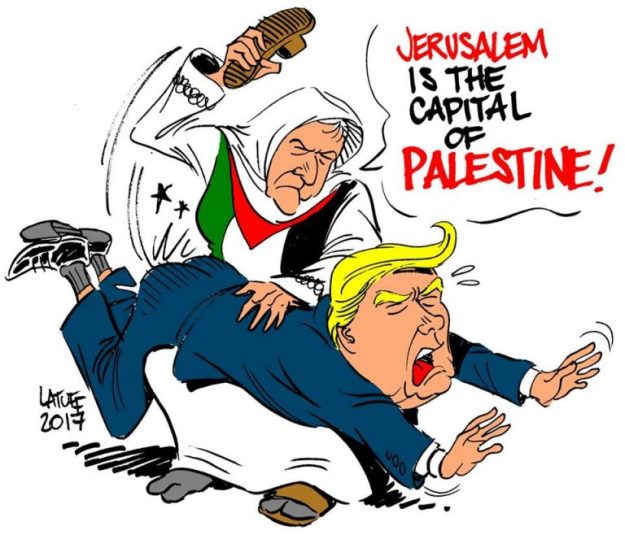 Il l’a montré récemment lors du vote de l’Assemblée Générale des Nations Unies condamnant la décision de l’Administration Trump de reconnaitre Jérusalem comme capitale d’Israël. La plupart des pays membres de l’Union Africaine ont voté pour cette résolution joignant leurs voix aux 127 autres pays, sauf le Rwanda de Paul Kagame qui s’est abstenu tout comme 34 autres pays qui, par la suite, furent vivement remerciés par la Représentante des Etats Unis à l’ONU.
 GAHUNDE