Category Archives: Economic Development

Le Rwanda accusé de manipuler ses chiffres sur la pauvreté

Selon des informations obtenues par France 24, les autorités rwandaises ont manipulé les dernières statistiques officielles sur la pauvreté. Enquête de notre spécialiste Afrique, Nicolas Germain.

La situation économique du Rwanda est-elle vraiment florissante ? Selon un rapport intitulé “Integrated Household Living Conditions Survey” (EICV4), publié en octobre 2015, la pauvreté est en net recul. Sauf que plusieurs sources, qui préfèrent garder l’anonymat pour des questions de sécurité, affirment auprès de France 24 que ces informations sont faussées.

À l’origine de ce rapport, l’institut privé britannique Oxford Policy Management (OPM) a pour habitude de communiquer des chiffres sur la situation économique aux autorités rwandaises, qui ont ensuite la main pour les publier. “Cette fois-ci, il y a eu un désaccord sur la méthodologie utilisée entre l’institut et les autorités”, explique un expert à France 24.

“Le taux de pauvreté a augmenté de 6 %”

Le gouvernement aurait changé les modes de calcul, notamment celui concernant le seuil de pauvreté. “Les paniers de consommation des Rwandais les plus démunis ont été modifiés”, confirme une autre source auprès de France 24. “Ils ont réduit massivement, de plus de 70 %, les quantités de trois ingrédients de base : la patate douce, la pomme de terre irlandaise et la banane”, poursuit-elle. Résultat : la version finale du rapport indique que le taux de pauvreté a diminué “de plusieurs pour cents alors qu’en réalité, il a augmenté de 6 % “, dénonce l’universitaire belge, l’un des meilleurs experts sur le pays, Filip Reyntjens.

Pour justifier ce nouveau mode de calcul, les autorités rwandaises ont expliqué dans le rapport qu’une “mise à jour” s’imposait. Sauf que ces nouvelles données sont comparées avec celles des rapports précédents, qui reposaient sur l’ancienne méthodologie. “Ce n’est pas correct, souligne la source. On ne peut pas se fier au nouveau seuil de pauvreté annoncé.”

Une question qui dérange

Rien ne justifie ce nouveau calcul, estime pour sa part Filip Reyntjens. “Il n’y a pas eu de changement majeur dans la structure de la consommation de ménages. Ils n’ont pas seulement mis à jour la ligne de pauvreté, comme ils le prétendent. Ils l’ont baissée artificiellement pour donner l’impression d’une baisse du taux de pauvreté”, affirme-t-il.

Cela pourrait expliquer pourquoi la version finale du rapport ne fait aucune mention de l’OPM, qui figurait pourtant en tant qu’auteur dans les précédentes études. Ses membres auraient refusé d’être cités, à la suite des changements effectués par Kigali. Interrogé par France 24, la direction de l’OPM confirme avoir collaboré sur ce rapport, sans pour autant s’étendre. “Notre contrat comporte une clause de confidentialité qui nous empêche de donner des informations sur le travail que nous avons fait pour les autorités rwandaises”, a déclaré le directeur Simon Hunt.

Également sollicité par France 24, le National Institute of Statistics of Rwanda, qui figure dans le rapport final en tant qu’auteur, n’a pas souhaité répondre à nos questions. “Le directeur est parti en vacances pour plusieurs semaines”, indique-t-on.

Le Rwanda, dont l’objectif de développement est ancré dans une stratégie intitulée “Vision 2020”, entend devenir un pays à revenu intermédiaire d’ici cinq ans. Pour cela, Kigali doit notamment ramener le taux de pauvreté sous la barre des 30 % et réduire le taux d’extrême pauvreté à moins de 9 %. D’où l’importance de ce rapport EICV4. La diminution de la pauvreté est le principal argument des pro-Kagame lorsqu’ils demandent à l’actuel chef de l’État de se représenter. Chose dorénavant possible depuis que les députés rwandais ont voté à l’unanimité, jeudi 29 octobre, en faveur d’une réforme constitutionnelle annulant la limitation des mandats présidentiels.

Londres ferme les yeux

Alors que le Royaume-Uni figure parmi les plus importants bailleurs de fonds du Rwanda, qui a rejoint le Commonwealth en 2009, le département britannique pour le développement (DFID) au Rwanda a estimé  “que la méthodologie utilisée pour estimer les niveaux de pauvreté dans le rapport EICV4 était justifiée”. Londres est régulièrement accusé d’être trop laxiste avec le régime de Paul Kagame, qui dirige “de facto” le pays depuis plus de 20 ans.

Pourquoi un tel silence des Occidentaux ? “Il y a des intérêts stratégiques, explique un spécialiste du dossier, qui préfère rester anonyme. Avant d’ajouter : “Si le Rwanda affiche de bons indicateurs en matière de développement, cela montre l’efficacité de l’aide du Royaume-Uni”.

Pour Filip Reyntjens “le dossier EICV4 est sérieux car le Rwanda se targue d’être fort dans le domaine du développement. La communauté internationale accepte un compromis entre développement et répression. Mais si ce développement n’est pas basé sur des faits réels, comme cela semble être le cas ici, alors il ne reste plus que la répression”.

Source: France 24

As with Dr. Faustus, who sold his soul to Satan, Kagame’s admirers will be bitterly disappointed.

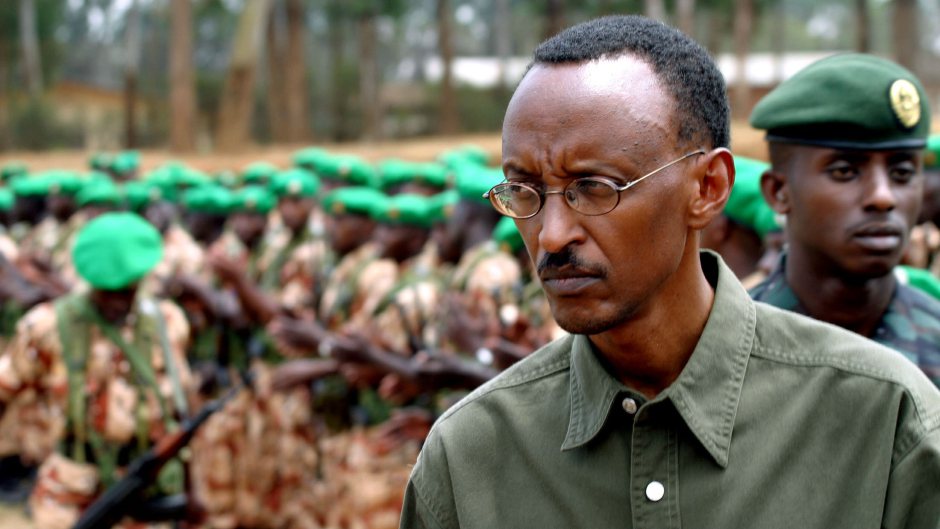
kagame-and-troops

For Western governments, financiers and opinion leaders, Rwandan president Paul Kagame offers a Faustian bargain: Overlook my brutal behavior, and I will offer you a model for economic growth in an African nation.

As with Dr. Faustus, who sold his soul to Satan, Kagame’s admirers will be bitterly disappointed.

While sacrificing human rights on the altar of economic growth, Kagame is delivering neither democracy nor prosperity.

Kagame’s descent into despotism has been documented by respected sources, ranging from Human Rights Watch to the US State Department. In recent years, a growing number of Kagame’s critics have died under mysterious circumstances, even in exile. Opposition political parties and independent newspapers have been suppressed. Many Rwandans have fled the country, while many more have been scared into silence.

All the while, Rwanda receives almost a billion dollars annually in foreign aid from the United States, the United Kingdom and their allies, and Kagame continues to receive invitations to prestigious conferences from Davos to the White House.
While Kagame’s apologists boast that he has achieved an “economic miracle,” Rwanda’s performance remains mired in mediocrity. Having served as Kagame’s head of policy and strategy, I resigned not only because he was tyrannizing the nation, but also because he asked me to tamper with the truth about the economy.
Here are the facts that Kagame can’t falsify: After 14 years of Kagame’s leadership, Rwanda remains one of the smallest economies in East Africa. While Kenya’s annual per capita income is $1,200 and Tanzania’s is $695, Rwanda’s is only $630.
Far from moving forward, Rwanda’s economy remains largely informal, with most of the economically active population of 5.5 million still struggling to survive on subsistence agriculture, just like their parents and grandparents before them. Employment in the formal economy is only a little more than 300,000. Rwanda’s private sector is tiny, with tax-paying firms hovering around 113,200, of which only 354 (or 0.3%) are ”large taxpayers” with an annual turnover of $1.4 million.

Meanwhile, crony capitalism is on the rise. Crystal Ventures Ltd. (CVL), controlled by the investment arm of Kagame’s ruling party, has become, in its own words, “the biggest investment company in the country.” Its holdings include concrete products, construction, real estate development, telecommunications, agriculture, aviation, security services, printing and publishing, furniture trading, manufacturing, property management and engineering.

How does this disappointing economic performance translate into Rwandans’ living standards? On two crucial social indicators—education and health—Rwanda falls short. 

Because of its small tax base, Rwanda is dependent on foreign assistance. Of the national government’s $2.4 billion budget for 2014/2015, $777 million will come from development aid from overseas. Rwanda has the highest foreign aid per capita in east Africa—$77 per person, compared to Burundi’s $53, Kenya’s $61, Tanzania’s $59 and Uganda’s $46.

While foreign governments contribute almost 40% of Rwanda’s budget, foreign direct investment from private sources is small. In 2013, Rwanda received only $110 million in foreign direct investment, compared to $1.8 billion for Tanzania, $1.1 billion for Uganda and $514 million for Kenya.
Far from being a powerhouse in the global economy, Rwanda’s trade deficit is growing, having reached $443.1 million during the last quarter of 2013 alone, while its exports are declining. From January through September 2014, exports were valued at $247 million—a 10.5% decline from the same period in 2013.
How does this disappointing economic performance translate into Rwandans’ living standards? On two crucial social indicators—education and health—Rwanda falls short.

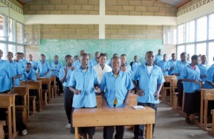
In education, Rwanda may be pursing the quantity of enrollment over the quality of learning. According to the United Kingdom’s Department for International Development (DFID), which has put considerable resources into Rwanda’s education: “To achieve near-universal primary enrollment but with a large majority of pupils failing to attain basic levels of literacy or numeracy is not, in our view, a successful development result. It represents poor value for money…”

Meanwhile, according to the World Health Organization, the ratio of health workers per 10,000 people in Rwanda is 0.6 for physicians, 6.9 for nurses/midwives, and 0.1 for dentists. This is far below the African average: 2.6 physicians, 12 nurses/midwives and 0.5 dentists per 10,000 people.
The failure of Rwanda’s Faustian bargain—trading democracy for development and ending up with neither—should come as no surprise to students of history and human nature.

A dictator who can’t be questioned; an elite that dominates the economy; and an atmosphere of anxiety—these are not the formula for economic growth. In Africa as elsewhere, people do their best work in an environment of freedom, not fear.

By David Himbara, Ph D

​Le modèle rwandais en question.

​Le modèle rwandais en question
De l’image du génocide à celle du Rwanda que nous connaissons aujourd’hui, il y a eu un travail admirable qui s’est effectué. Bien que 40% des rwandais vivent en dessous du seuil de pauvreté et que le pays est confronté à un sérieux problème de surpopulation, il enregistre cependant ces dernières années, des taux de croissance remarquables de l’ordre de 7 à 8% et connait une ruée impressionnante vers ses universités qui est passée de 3.000 avant le génocide à 80.000 étudiants de nos jours. Le Rwanda aujourd’hui, c’est aussi une vision économique et politique claire et des actions efficaces effectuées dans une dynamique sociale et holistique qui prend une forme que la communauté Africaine lui envie de plus en plus.
Apprendre du passé et s’ouvrir au monde  des affaires
L’une des pages notoires qu’écrit actuellement le pays se trouve être l’impressionnante décision de tourner la page française de son histoire pour en ouvrir une nouvelle tournée vers la renaissance socioculturelle et politico-économique à travers une langue officielle totalement différente : celle de Shakespeare.
Le Français fut introduit en tant que langue officielle par la Belgique en 1890. Deux ans après la fin du génocide au Rwanda, le Front Patriotique Rwandais prit le pouvoir et déclara l’anglais comme langue officielle avec  le kinyarwanda et le français. Ainsi, entre 1996 et 2008, les écoliers de cours moyens et ceux du secondaire étaient supposés être en mesure d’utiliser l’anglais ou le français comme langue d’instruction et utiliser le kinyarwanda et les autres langues comme matières. Les étudiants de niveau universitaire étaient supposés étudier en anglais aussi bien qu’en français. En 2009, une réforme considérée soudaine par la plupart des observateurs, fut adoptée sous le leadership du président Paul Kagamé. Cette réforme prôna que l’instruction dans les écoles serait dorénavant faite exclusivement en langue anglaise. Toute autre langue enseignée devenait donc une matière comme les autres.
L’anglais est considérée aujourd’hui comme la langue du progrès, celle des affaires, de la technologie mais surtout celle qui est perçue par les rwandais comme étant la langue qui leur permet de se départir du colonialisme de la Belgique et de la France ; celle qui leur permet de faciliter le négoce avec l’Afrique du Sud, la Tanzanie, l’Ouganda, le Burundi, le Kenya mais aussi les Etats-Unis et la Grande Bretagne. En réalité, le Rwanda a souvent accusé ses anciens colons d’avoir participé au génocide entre les Tutsi et les Hutus qui a emporté plus de 800.000 rwandais en 1994.
L’adoption de l’anglais leur permet de reconstruire une identité politique et culturelle qui élude l’ethnicité et transcende les valeurs d’unité nationale. La ferme résolution du président Rwandais à atteindre cet objectif fut clairement démontrée lorsqu’il répondit à des accusations de terrorisme, de part sa présumée implication dans l’abattement de l’avion de l’ancien président Habyarimana, en fermant le centre culturel français, l’ambassade de France et en enlevant la Radio France Internationale (RFI) des ondes Rwandaises.
Grâce à la ferme volonté politique et l’efficacité des systèmes supports mis en place, le Rwanda se trouve aujourd’hui classé deuxième en terme de facilité de faire des affaires sur le continent après les îles Maurices; Transparency International considère le pays comme le moins corrompu de sa région (49ème  mondialement).Langue et développement
L’une des pages notoires qu’écrit actuellement le Rwanda se trouve donc être l’impressionnante décision de tourner la page française de son histoire pour en ouvrir une nouvelle tournée vers la renaissance socioculturelle et politico-économique à travers l’adoption de l’anglais en plus de la langue nationale qu’est le Kinyarwanda. Bien que le one-size-fits-all soit de moins en moins réaliste à l’heure actuelle, il y des leçons qui peuvent être tirées du modèle rwandais.
Par la promotion du Kinyarwanda qui est une langue découlant du kiswahili, le Rwanda se positionne clairement comme un Etat qui promeut son identité nationale. Cette langue nationale permet également de rendre moins pénible l’alphabétisation des couches sociales analphabètes qui, en tant qu’agents économiques s’évertuent à améliorer leur niveau d’instruction et ainsi faciliter leur intégration dans un siècle dominé par les nouvelles technologies d’information et de communication, ne serait-ce que par la maîtrise de la langue nationale dans laquelle ils savent déjà très bien articuler leurs idées. De 6% en 2006, Il est estimé aujourd’hui qu’environ 60% des rwandais ont désormais accès aux téléphones portables et des efforts sont faits pour intégrer le Kinyarwanda dans la politique ICT mise en place à l’horizon 2020.
Le président américain Bill Clinton a certainement remporté les élections présidentielles en 1992 grâce à sa phrase culte ‘’It’s economics, stupid !’’. Pourtant, nombre d’observateurs de l’Afrique aujourd’hui s’accordent à dire que le développement du continent n’est pas forcément qu’une question d’économie. Les pays africains ne se développeront pas en réussissant des prouesses économiques mais en se transformant plutôt en entités politiques ayant des Etats fonctionnels. Le capital social et le capital humain auront un rôle essentiel à jouer dans un système où les Africains devront s’engager à contribuer effectivement au bien-être de leurs voisins.
Bien qu’il n’y ait aucun lien direct de causalité entre la langue d’instruction et le développement d’un pays, de nombreuses recherches suggèrent que l’apprentissage en langue maternelle au cours primaire pèse suffisamment lourd dans la balance en ce qui concerne le niveau d’instruction futur qu’une personne peut espérer atteindre. Une instruction réussie en retour peut contribuer à la réduction de la pauvreté lorsque les mesures et systèmes adéquats d’accompagnement sont mis en place. En adoptant le kinyarwanda comme langue nationale d’enseignement depuis le primaire entre 1996 et 2008, le Rwanda avait défié temporairement la règle selon laquelle l’Afrique est le seul continent au monde où la plupart des écoliers débutaient leur instruction dans une langue qu’ils ne comprennent pas bien et qui n’est pas la leur. L’héritage vernaculaire du Rwanda le place dans une position unique. En effet, le Kinyarwanda qui est la seule langue vernaculaire rwandaise, est parlé par environ 90% de la population.* Membre d’IMANI Francophone dont il coordonne les activités du programme béninois
Article publié en collaboration avec le think tank
Ghanéen IMANI
Par Alan Akakpo
Mercredi 25 Mars 2015

The United States led all other donors according to preliminary 2014 estimates

Today the Organization for Economic Cooperation and Development (OECD) Development Assistance Committee (DAC) released preliminary 2014 net Official Development Assistance (ODA) estimates. The data again shows that the United States led all other donors according to preliminary 2014 estimates, with $32.73 billion in net assistance, another record level. The United States provided $27.02 billion in bilateral aid and $5.53 billion in core contributions to multilateral organizations supporting development, which is historically the highest level of any donor country. The U.S. Agency for International Development (USAID), U.S. Department of State, U.S. Department of Health and Human Services, and U.S. Department of Treasury together delivered 94 percent of total U.S. development assistance disbursements in 2014.

2014 ODA levels are preliminary estimates for the DAC Advance Questionnaire. Assistance data will be reconciled with U.S. Government agencies in the coming weeks for incomplete, missing, questionable or to-be-revised data and for conformance with DAC reporting directives. Final ODA levels for 2014 and prior years will change by September after consultations with implementing U.S. Government agencies and the DAC Secretariat.

U.S. 2014 Calendar Year Assistance Highlights:

• The United States again provided more aid than any other donor country in the world in the 2014

• U.S. aid over this period increased $1.23 billion to $32.73 billion from 2013 levels, a historic high for all donors.

• U.S. bilateral assistance to other countries was $27.02 billion in 2014, an increase of $820 million over 2013.

• U.S. contributions to multilateral organizations supporting development totaled $5.53 billion in 2014, an increase of $420 million over 2013.

• USAID and the U.S. Departments of State; Health and Human Services; and Treasury distributed 94 percent or $30.6 billion of 2014 aid.

Source: OECD

Why are there still so many hungry people in the world?

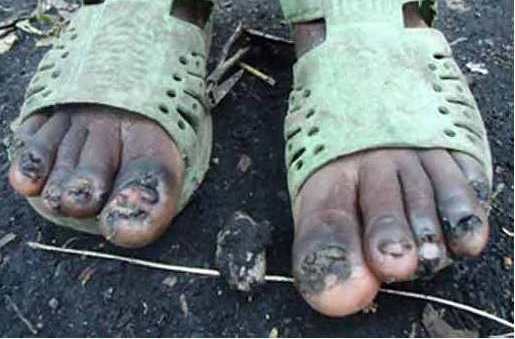
97b5f-umuntu2bmuri2bruzagayura-amavunja-Photo-Kayiranga-E_

Despite economic growth, extreme poverty is still ravaging.

The greatest challenge for the sustainable development goals (SDGs) is to eradicate poverty and hunger while maintaining sustainable food security for all in a crowded and dramatically unequal world. Although the world has succeeded in reducing poverty in accordance with the millennium development goal (MDG) targets, food security and adequate nutrition have not been achieved.

The MDGs failed to treat food as a human right. Experience shows us that neither markets nor governments protect access to sufficient and nutritious food for everyone. Only accountability by those who produce food and regulate society can hope to achieve this protection, and this means that access to food needs to be treated as a human right, and not just as a policy goal or an outcome of a productive economy. Several constitutions and courts in Latin America have recently moved in this DIRECTION by making the right to food a legally enforceable right, but the international system, including the UN, still lags behind.

According to the Food and Agriculture Organisation (FAO), almost 1 billion people suffer from chronic hunger and almost 2 billion are under- or overnourished.

Analysis What is the millennium development goal on poverty and hunger all about?
The first MDG set out to halve 1990 poverty and hunger rates by the end of this year. As the deadline approaches, we look at what progress has been made
Read more
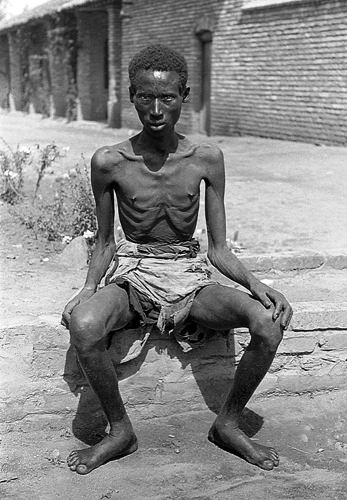
Children are the most visible victims of nutritional deficiencies. Approximately 5 million children die each year because of poor nutrition. Access to adequate food during the first 1,000 days of life is vitally important for healthy future generations. Even a temporary lack of food during that crucial time has a negative effect on physical and intellectual development. I was shocked when told that in Haiti, even before the devastating earthquake that ruined the country, that small mud balls were being sold in the market to ease children’s hunger pangs.

Of the world’s hungry people, 98% live in developing countries. The root causes of food insecurity and malnutrition are poverty and inequity rather than shortages. FAO statistics CONFIRM that the world produces enough food to feed the 7 billion people living today, and even the estimated 9-10 billion population in 2050. Global agriculture produces 17% more calories per person today than 30 years ago, despite a 70% increase in population.

Advertisement

Despite this, for the 2 billion people making less than $2 a day – many of whom live in rural areas where resource-poor farmers cultivate small plots of land – most can’t afford to buy food. It is the economic system that is responsible for this prevalence of poverty and hunger. Recently, climate change has been added to the list of causes.

Smallholder farmers tell us that this is a lifestyle for them, not a business. When they have had to leave their land for financial reasons, they have never emotionally recovered. I have heard these stories in many places; not only in poor developing countries. It is a global phenomenon.

If the international community is serious about eliminating hunger, a shift is needed from a development model based on charity and aid to one based on human rights, reinforced by accountability mechanisms. Marginalised, disempowered and excluded groups previously locked out of development planning must have a place, including minorities, migrants, and poor, disabled, older and indigenous people. Non-discrimination and equality must underpin the entire SDG framework.

The role of women in development and food security is pivotal. Highlighting women’s rights in all other targets of the SDGs should be a priority. Of those suffering chronic hunger, 60% are women. This is especially ironic as women do most of the agricultural work in developing countries. Much of the work women do is unpaid and invisible, despite its indispensable role in feeding children and elderly people. Upholding women’s financial, educational and legal rights would be the best use of funds dedicated to eradicating hunger, poverty and child undernourishment.
Sustainable development goals: changing the world in 17 steps – interactive
Read more
Food security is dependent on the sustainability of food supply. A major effort is needed to avoid practices that exacerbate the negative impacts of food production and consumption on climate, water and ecosystems. The SDGs should make a healthy environment an internationally guaranteed human right.

The SDGs should encourage governments to work towards policy coherence: agricultural policies should be compatible with environmental sustainability and TRADE rules consistent with food security. This will not be easy to implement. It will require allowing national food markets in developing countries to compete successfully against cheap imported food. It means altering international trade rules to prevent interference with domestic policies in developing countries designed to eradicate hunger and poverty.

Placing human rights at the heart of the SDGs presupposes both a strong accountability framework and the will to enforce this. Transnational corporations can be part of the problem, tending to undermine the livelihood of locals, displacing them from their home and land, interfering with their access to natural resources, and causing environmental destruction. Responsibility for human rights violations must extend to the private sector. International law has traditionally been reluctant to do this. It is encouraging to note that some modest steps have been taken recently to encourage corporate responsibility, including the UN Guiding Principles on Business and Human Rights and Maastricht Principles for Extraterritorial Obligations (pdf). The SDGs could incorporate these documents in their policy guidelines, or adopt their own version.

The new goals should not be allowed to operate as easily ignored principles, but need to be given teeth. We can eradicate poverty, maintain food security and ensure the right to adequate and nutritious food for all. These fundamental aims were long ago set forth in the Universal Declaration of Human Rights, and repeated in the International Covenant of the Economic, Social and Cultural Rights. The task is huge, but the tools are there. The challenge is mainly a matter of fashioning political will strong enough to overcome entrenched interests in maintaining food insecurity.

Source: The Guardian

GDP is a mirror on the markets. It must not rule our lives

male office worker looking through binoculars
‘What is the point of economic growth if it does not make most people better off?’ Photograph: Colorblind/Getty Images

Next month the Office for National Statistics will issue data for the first time on the UK’s wellbeing. In the exercise, the ONS is recognising that GDP, which now includes estimates for the market value of illegal drugs and prostitution, is at best only a partial measure of our economic health. Not that one would draw this conclusion from the political tub-thumping that improved GDP figures bring.

GDP is a measure of economic activity in the market and in the moment. So its key shortcoming is that it collapses time and makes us short-term in focus. It counts investment and consumption in the same way – an extra £100 spent on education is equivalent to the same amount spent on fizzy drinks.

Studies have repeatedly shown that the time horizon of the financial markets in particular is ever more short-term. Shaving about 0.006 seconds off the time it takes computer orders to travel from Chicago to the New Jersey data centre which houses the Nasdaq servers made it worth investing several hundred million dollars in tunnelling through a mountain range to lay the fibre optic cable in a straighter line. More than two-thirds of trades in US equity markets are high-frequency automated orders. How has the search for profit so foreshortened our vision?

It wasn’t always so. The term “Victorian values” now speaks to us of characteristics such as narrow-mindedness, hypocrisy and conformity, but it could also speak of hard work, self-improvement and above all self-sacrifice for the future. The list of the Victorians’ investments in our future is staggering. It includes railways, canals, sewers and roads; town halls and libraries, schools and concert halls, monuments and museums, modern hospitals and the profession of nursing; learned societies, the police, trades unions, mutual insurers and building societies – organisations that have often survived more than a century.

Why the Victorians managed to be so visionary is not entirely clear, but it had something to do with the confidence of an age of discovery both in science and other areas of knowledge, and also in geographical exploration and empire building. They made such strides against ignorance and the unknown, firm in their sense of divine approbation, it seems a belief in progress came naturally to them.

Civic and business leaders in the late 19th century had extraordinary confidence and far-sightedness, even as they too stood at the centre of social and economic upheaval. This Victorian sense of stewardship is something we could usefully remind ourselves of when thinking about how we measure value today. In the late 19th century it was the innovators and the builders of institutions who had standing, and it was the men and women of vision who were understood to be the creators of value.

They still are, even if it is often hard to measure or quantify what they build. Anything of value has its roots in values and vision, as much today as at any time in the past.

Financial markets have their place as a powerful way of harnessing incentives to achieve desirable outcomes. For example, the market in the US for trading permissions to emit sulphur dioxide, which helps cause acid rain, has been a triumphant success in removing what was once a serious environmental harm.

However, there is no sign that the wider public has stopped challenging the ascendancy of markets and money. The bestseller status of Thomas Piketty’s Capital in the 21st Century bears witness to that. It has put the question of the great inequality of wealth in the market economies at the centre of public debate, and it underlines another question: what is the point of economic growth if it does not make most people better off? Or, worse, if growth is actually destroying things that many of us value.

A further problem with GDP is that it obviously includes many things that are value-destroying. Natural disasters are good for GDP growth because of the reconstruction boom afterwards; the destruction of assets and human life is not counted. The metric ignores the depletion of resources, the loss of biodiversity, the impact of congestion, and the loss of social connection in the modern market economy.

People have long proposed alternative measures of progress – recently, environment-adjusted measures, or simply measuring happiness, directly by survey. What could be more straightforward than asking such a direct question? But reported happiness changes very little over time because, whether it’s the joy of a lottery win or the catastrophe of being disabled in an accident, it only takes about two years for people experiencing even a dramatic change in their life to revert to previous levels of happiness.

This takes us back to monetary measures, back to GDP and its inclusion of things that clearly have negative value. It also excludes “informal” activities such as housework and caring, many volunteer activities, and always excludes the full value of innovations. Nathan Mayer Rothschild was the richest man in the world at the time of his death from an infected tooth abscess in 1836. An antibiotic that hadn’t then been invented but now costs just $10 would have saved him. How much would he have paid for that medicine?

• This article is based on an essay Diane Coyle wrote for Vestra Wealth LLP

Source: The Guardian