Category Archives: International

DESIGNATIONS OF FOREIGN TERRORIST FIGHTERS

us-congress-logo

Media Note

Office of the Spokesperson
Washington, DC
September 24, 2014

As part of the effort to counter the threats posed by foreign terrorist fighters, the Department of State has designated ten individuals and two groups as Specially Designated Global Terrorists (SDGT) under Executive Order (E.O.) 13224, which imposes sanctions and penalties on terrorists and those providing support to terrorists or acts of terrorism. As a result of the designations, all property subject to U.S. jurisdiction in which these individuals or groups have any interest is blocked and U.S. persons are generally prohibited from engaging in any transactions with them or to their benefit.

Formed in February 2013, Jaish al-Muhajireen wal-Ansar (JAMWA) is a Chechen-led terrorist organization based in Syria that consists primarily of foreign fighters. Cooperating with other violent extremist organizations in Syria, including al-Nusrah Front and the Islamic State of Iraq and the Levant (ISIL), JAMWA has launched deadly assaults against civilian communities, and kidnapped civilians and other foreigners in Syria.

Formed in August 2013, Harakat Sham al-Islam (HSI) is a Moroccan-led terrorist organization operating in Syria principally composed of foreign fighters. HSI has carried out terrorist attacks and engaged in kidnappings against civilians with other violent extremist organizations in Syria, including al-Nusrah Front.

As of mid-July 2014, Amru al-Absi was selected as ISIL’s provincial leader for Homs, Syria, in the Aleppo region. As a principal leader of ISIL in Syria, he has been in charge of kidnappings.

Salim Benghalem is a Syria-based French extremist and ISIL member, who carries out executions on behalf of the group. In 2007, Salim was convicted and sentenced to prison in France for a 2001 murder. Today, Benghalem is the subject of a European arrest warrant because of his activities on behalf of ISIL.

In May 2013, Mohammed Abdel-Halim Hemaida Saleh was arrested in Egypt by authorities for plotting to attack Western embassies in Cairo. Saleh is a member of al-Qa’ida and believes in conducting attacks against American and Israeli interests. As of mid-2013, Saleh had been recruiting suicide bombers to send to Syria and had been planning terrorist activities against unspecified targets in Europe.

Lavdrim Muhaxheri is a Kosovar Albanian foreign fighter for ISIL who operates in both Syria and Iraq. Muhaxheri made international headlines in July 2014 after uploading to Facebook graphic photos of himself beheading a young man.

Murad Margoshvili is a well-known Chechen leader in Syria who built a terrorist training base in Syria near the Turkish border, where newly arrived foreign fighters received combat training. He is also the leader of Junud al-Sham, a militant group that fights alongside other extremist groups in Syria.

Nusret Imamovic is a Bosnian terrorist leader operating in Syria. After his arrival, Imamovic actively supported violent extremism, and is now believed to be fighting with al-Nusrah Front.

Muhannad al-Najdi is a Syria-based al-Qa’ida facilitator of Saudi nationality. Prior to traveling to Syria in 2013, al-Najdi was involved in facilitation and operational planning in support of attacks in Afghanistan. Since at least 2010, al-Najdi has also been involved in the development of improvised explosive devices (IEDs) for use in Afghanistan and Syria.

Abdessamad Fateh, also known as Abu Hamza, is a member of a Scandinavia-based network of extremists allegedly linked to al-Qa’ida, and has traveled to Syria.

Abd al-Baset Azzouz has had a presence in Afghanistan, the United Kingdom, and Libya. He was sent to Libya in 2011 by al-Qa’ida leader Ayman al-Zawahiri to build a fighting force there, and mobilized approximately 200 fighters. He is considered a key operative capable of training al-Qa’ida recruits in a variety of skills, such as IED construction.

Maalim Salman was chosen by now-deceased al-Shabaab leader Ahmed Abdi aw-Mohamed (aka Godane) to be the head of African foreign fighters for al-Shabaab. He has trained foreign nationals who were seeking to join al-Shabaab as foreign fighters, and has been involved in operations in Africa targeting tourists, “entertainment establishments,” and churches.

Additionally, the Department of State has nominated several previously-designated foreign terrorist fighters and related entities at the UN 1267/1989 al-Qa’ida Sanctions Committee, including Abdallah Azzam Brigades, Ansar al-Shari’a in Tunisia, Seifallah Ben Hassine, Ibrahim Suleiman Hamad Al-Hablain, Ahmed Abdullah Saleh al-Khazmari al-Zahrani, Azzam Abdullah Zureik Al-Maulid Al-Subhi, and Anders Cameroon Ostensvig Dale. Maalim Salman was also listed at the UN Somalia Sanctions Committee today.

Source:US State Department

“Turasaba Leta y’u Rwanda na l’ ONU gushaka inzira z’ukuri zatuma Abanyarwanda babona amahoro”: CLIIR

1981773_640941909313899_8814842215382593481_n

ITANGAZO K’UMUNSI MPUZAMAHANGA WAHARIWE AMAHORO Y’ABATUYE KU ISI
———————————————————————————–
Ku nshuro ya 30, Isi irizihiza umunsi mukuru washyizweho na ONU buri 21 Nzeri wahariwe amahoro y’abatuye Isi. Kuri iyi nshuro intego n’inyito bya ONU yahaye iyi sabukuru ikaba ari uko « Abaturage bafite uburenganzira ku mahoro n’umutekano ».

Ikigo giharanira kurwanya umuco wo kudahana no kurenganya mu Rwanda (CLIIR) wongeye kunga mu rya ONU wibutsa abayobozi b’U Rwanda ko abanyarwanda bafite uburenganzira bahabwa n’amategeko bwo kugira umutekano n’amahoro bisesuye.

Amahoro aba ku giti cy’umuntu : Umuntu agomba guhabwauburengazira bushobotse mu mibereho ye n’abandi atabangamiye rubanda nkuko nawe atakwifuriza uwamubangamira. Iryo rikaba ihame ridakuka mu Rwanda.

Amahoro ntagurwa kugirango aboneke : Buri muntu agomba kuyiyumvamo, akayaha uwo begeranye noneho amahoro agakwira hose, akanashyigikirwa kuburyo burambye.

Amahoro na Demokarasi birajyana : Iyo kimwe kibuze, ikindi kirahungabana. Ababuze Amahoro na Demokarasi bagatahwa n’ubwoba butuma batagira amahoro yo mu mitima no ku mibiri nkuko bimeze mu Rwanda rw’ubungubu.

Nkuko bigaragagara mu Rwanda nta mahoro akibarizwayo kuko ubona abaturarwanda ntayo bafite. Ibyo bikagaragazwa no guhunga, gushimutwa, kwicwa, ubwoba, urwikekwe gufungwa bya hato na hato, umwana yikanga nyina, umubyeyi akikanga umwana we, inzangano zibarizwa mu miryango abavukana barihakana, …

Ibyo byose birangwa mu gihugu cy’u Rwanda ni ikimenyetso cy’imiyoborere n’ubutegetsi bubi budakorera abaturage, budashishikajwe n’iterambere nyakuri, budatanga amahoro kubo bwakagombye kuyaha. Ntibwubahiriza amasezerano mpuzamahanga bashyizeho umukono n’amahame remezo ya Demokarasi.

CLIIR rero ikaba iboneyeho, gusaba Leta y’U Rwanda, abayobozi bayo, n’umuryango wa ONU gufata iy’ibanze mu gushaka inzira zose z’ukuri Abaturarwanda babona amahoro n’umutekano bisesuye nkuko ari uburenganzira ntakuka bahabwa n’amategeko.

Bikorewe i Buruseli,
21 Nzeri 2014

Alain Duval MUSONI
Komisseri ushinzwe uburenganzira bwa kiremwa muntu
CLIIR

“Ebola and AIDS are bio weapons being tested on Africans” Scientists allege.

Scientists allege deadly diseases such as Ebola and AIDS are bio weapons being tested on Africans. Other reports have linked the Ebola virus outbreak to an attempt to reduce Africa’s population. Liberia happens to be the continents’s fastest growing population.

Scientists Allege
By:
Dr. Cyril Broderick, Professor of Plant Pathology

Dear World Citizens:

I have read a number of articles from your Internet outreach as well as articles from other sources about the casualties in Liberia and other West African countries about the human devastation caused by the Ebola virus. About a week ago, I read an article published in the Internet news summary publication of the Friends of Liberia that said that there was an agreement that the initiation of the Ebola outbreak in West Africa was due to the contact of a two-year old child with bats that had flown in from the Congo. That report made me disconcerted with the reporting about Ebola, and it stimulated a response to the “Friends of Liberia,” saying that African people are not ignorant and gullible, as is being implicated. A response from Dr. Verlon Stone said that the article was not theirs, and that “Friends of Liberia” was simply providing a service. He then asked if he could publish my letter in their Internet forum. I gave my permission, but I have not seen it published. Because of the widespread loss of life, fear, physiological trauma, and despair among Liberians and other West African citizens, it is incumbent that I make a contribution to the resolution of this devastating situation, which may continue to recur, if it is not properly and adequately confronted. I will address the situation in five (5) points:
1.    EBOLA IS A GENETICALLY MODIFIED ORGANISM (GMO)
Horowitz (1998) was deliberate and unambiguous when he explained the threat of new diseases in his text, Emerging Viruses: AIDS and Ebola – Nature, Accident or Intentional. In his interview with Dr. Robert Strecker in Chapter 7, the discussion, in the early 1970s, made it obvious that the war was between countries that hosted the KGB and the CIA, and the ‘manufacture’ of ‘AIDS-Like Viruses’ was clearly directed at the other. In passing during the Interview, mention was made of Fort Detrick, “the Ebola Building,” and ‘a lot of problems with strange illnesses’ in “Frederick [Maryland].” By Chapter 12 in his text, he had confirmed the existence of an American Military-Medical-Industry that conducts biological weapons tests under the guise of administering vaccinations to control diseases and improve the health of “black Africans overseas.” The book is an excellent text, and all leaders plus anyone who has interest in science, health, people, and intrigue should study it. I am amazed that African leaders are making no acknowledgements or reference to these documents.
2.  EBOLA HAS A TERRIBLE HISTORY, AND TESTING HAS BEEN SECRETLY TAKING PLACE IN AFRICA
I am now reading The Hot Zone, a novel, by Richard Preston (copyrighted 1989 and 1994); it is heart-rending. The prolific and prominent writer, Steven King, is quoted as saying that the book is “One of the most horrifying things I have ever read. What a remarkable piece of work.” As a New York Times bestseller, The Hot Zone is presented as “A terrifying true story.” Terrifying, yes, because the pathological description of what was found in animals killed by the Ebola virus is what the virus has been doing to citizens of Guinea, Sierra Leone and Liberia in its most recent outbreak: Ebola virus destroys peoples’ internal organs and the body deteriorates rapidly after death. It softens and the tissues turn into jelly, even if it is refrigerated to keep it cold. Spontaneous liquefaction is what happens to the body of people killed by the Ebola virus! The author noted in Point 1, Dr. Horowitz, chides The Hot Zone for writing to be politically correct; I understand because his book makes every effort to be very factual. The 1976 Ebola incident in Zaire, during President Mobutu Sese Seko, was the introduction of the GMO Ebola to Africa.
3.    SITES AROUND AFRICA, AND IN WEST AFRICA, HAVE OVER THE YEARS BEEN SET UP FOR TESTING EMERGING DISEASES, ESPECIALLY EBOLA
The World Health Organization (WHO) and several other UN Agencies have been implicated in selecting and enticing African countries to participate in the testing events, promoting vaccinations, but pursuing various testing regiments. The August 2, 2014 article, West Africa: What are US Biological Warfare Researchers Doing in the Ebola Zone? by Jon Rappoport of Global Research pinpoints the problem that is facing African governments.
Obvious in this and other reports are, among others:
(a) The US Army Medical Research Institute of Infectious Diseases (USAMRIID), a well-known centre for bio-war research, located at Fort Detrick, Maryland;
(b) Tulane University, in New Orleans, USA, winner of research grants, including a grant of more than $7 million the National Institute of Health (NIH) to fund research with the Lassa viral hemorrhagic fever;
(c) the US Center for Disease Control (CDC);
(d) Doctors Without Borders (also known by its French name, Medecins Sans Frontiers);
(e) Tekmira, a Canadian pharmaceutical company;
(f) The UK’s GlaxoSmithKline; and
(g) the Kenema Government Hospital in Kenema, Sierra Leone.
Reports narrate stories of the US Department of Defense (DoD) funding Ebola trials on humans, trials which started just weeks before the Ebola outbreak in Guinea and Sierra Leone. The reports continue and state that the DoD gave a contract worth $140 million dollars to Tekmira, a Canadian pharmaceutical company, to conduct Ebola research. This research work involved injecting and infusing healthy humans with the deadly Ebola virus. Hence, the DoD is listed as a collaborator in a “First in Human” Ebola clinical trial (NCT02041715, which started in January 2014 shortly before an Ebola epidemic was declared in West Africa in March. Disturbingly, many reports also conclude that the US government has a viral fever bioterrorism research laboratory in Kenema, a town at the epicentre of the Ebola outbreak in West Africa. The only relevant positive and ethical olive-branch seen in all of my reading is that Theguardian.com reported, “The US government funding of Ebola trials on healthy humans comes amid warnings by top scientists in Harvard and Yale that such virus experiments risk triggering a worldwide pandemic.” That threat still persists.
4.    THE NEED FOR LEGAL ACTION TO OBTAIN REDRESS FOR DAMAGES INCURRED DUE TO THE PERPETUATION OF INJUSTICE IN THE DEATH, INJURY AND TRAUMA IMPOSED ON LIBERIANS AND OTHER AFRICANS BY THE EBOLA AND OTHER DISEASE AGENTS. 
The U. S., Canada, France, and the U. K. are all implicated in the detestable and devilish deeds that these Ebola tests are. There is the need to pursue criminal and civil redress for damages, and African countries and people should secure legal representation to seek damages from these countries, some corporations, and the United Nations. Evidence seems abundant against Tulane University, and suits should start there. Yoichi Shimatsu’s article, The Ebola Breakout Coincided with UN Vaccine Campaigns, as published on August 18, 2014, in the Liberty Beacon.
5.   AFRICAN LEADERS AND AFRICAN COUNTRIES NEED TO TAKE THE LEAD IN DEFENDING BABIES, CHILDREN, AFRICAN WOMEN, AFRICAN MEN, AND THE ELDERLY. THESE CITIZENS DO NOT DESERVE TO BE USED AS GUINEA PIGS! 
Africa must not relegate the Continent to become the locality for disposal and the deposition of hazardous chemicals, dangerous drugs, and chemical or biological agents of emerging diseases. There is urgent need for affirmative action in protecting the less affluent of poorer countries, especially African citizens, whose countries are not as scientifically and industrially endowed as the United States and most Western countries, sources of most viral or bacterial GMOs that are strategically designed as biological weapons. It is most disturbing that the U. S. Government has been operating a viral hemorrhagic fever bioterrorism research laboratory in Sierra Leone. Are there others? Wherever they exist, it is time to terminate them. If any other sites exist, it is advisable to follow the delayed but essential step: Sierra Leone closed the US bioweapons lab and stopped Tulane University for further testing.
The world must be alarmed. All Africans, Americans, Europeans, Middle Easterners, Asians, and people from every conclave on Earth should be astonished. African people, notably citizens more particularly of Liberia, Guinea and Sierra Leone are victimized and are dying every day. Listen to the people who distrust the hospitals, who cannot shake hands, hug their relatives and friends. Innocent people are dying, and they need our help. The countries are poor and cannot afford the whole lot of personal protection equipment (PPE) that the situation requires. The threat is real, and it is larger than a few African countries. The challenge is global, and we request assistance from everywhere, including China, Japan, Australia, India, Germany, Italy, and even kind-hearted people in the U.S., France, the U.K., Russia, Korea, Saudi Arabia, and anywhere else whose desire is to help. The situation is bleaker than we on the outside can imagine, and we must provide assistance however we can. To ensure a future that has less of this kind of drama, it is important that we now demand that our leaders and governments be honest, transparent, fair, and productively engaged. They must answer to the people. Please stand up to stop Ebola testing and the spread of this dastardly disease.
Thank you very much.
Sincerely,
Dr. Cyril E. Broderick, Sr.
About the Author:
Dr. Broderick is a former professor of Plant Pathology at the University of Liberia’s College of Agriculture and Forestry.  He is also the former Observer Farmer in the 1980s.  It was from this column in our newspaper, the Daily Observer, that Firestone spotted him and offered him the position of Director of Research in the late 1980s.  In addition, he is a scientist, who has taught for many years at the Agricultural College of the University of Delaware.


World population to hit 11bn in 2100 – with 70% chance of continuous rise.

The world’s population is now odds-on to swell ever-higher for the rest of the century, posing grave challenges for food supplies, healthcare and social cohesion. A ground-breaking analysis released on Thursday shows there is a 70% chance that the number of people on the planet will rise continuously from 7bn today to 11bn in 2100.

The work overturns 20 years of consensus that global population, and the stresses it brings, will peak by 2050 at about 9bn people. “The previous projections said this problem was going to go away so it took the focus off the population issue,” said Prof Adrian Raftery, at the University of Washington, who led the international research team. “There is now a strong argument that population should return to the top of the international agenda. Population is the driver of just about everything else and rapid population growth can exacerbate all kinds of challenges.” Lack of healthcare, poverty, pollution and rising unrest and crime are all problems linked to booming populations, he said.

“Population policy has been abandoned in recent decades. It is barely mentioned in discussions on sustainability or development such as the UN-led sustainable development goals,” said Simon Ross, chief executive of Population Matters, a thinktank supported by naturalist Sir David Attenborough and scientist James Lovelock. “The significance of the new work is that it provides greater certainty. Specifically, it is highly likely that, given current policies, the world population will be between 40-75% larger than today in the lifetime of many of today’s children and will still be growing at that point,” Ross said.

Many widely-accepted analyses of global problems, such as the Intergovernmental Panel on Climate Change’s assessment of global warming, assume a population peak by 2050.

Sub-saharan Africa is set to be by far the fastest growing region, with population rocketing from 1bn today to between 3.5bn and 5bn in 2100. Previously, the fall in fertility rates that began in the 1980s in many African countries was expected to continue but the most recent data shows this has not happened. In countries like Nigeria, the continent’s most populous nation, the decline has stalled completely with the average woman bearing six children. Nigeria’s population is expected to soar from 200m today to 900m by 2100.

The cause of the stalled fertility rate is two-fold, said Raftery: a failure to meet the need for contraception and a continued preference for large families. “The unmet need for contraception – at 25% of women – has not changed in for 20 years,” he said. The preference for large families is linked to lack of female education which limits women’s life choices, said Raftery. In Nigeria, 28% of girls still do not complete primary education.

population graph
Global population trend. Photograph: Guardian

Another key factor included for the first time was new data on the HIV/AIDS epidemic showing it is not claiming as many lives as once anticipated. “Twenty years ago the impact on population was absolutely gigantic,” Raftery said. “Now the accessibility of antiretroviral drugs is much greater and the epidemic appeared to have passed its peak and was not quite as bad as was feared.”

The research, conducted by an international team including UN experts, is published in the journal Science and for the first time uses advanced statistics to place convincing upper and lower limits on future population growth. Previous estimates were based on judgments of future trends made by researchers, a “somewhat vague and subjective” approach, said Raftery. This predicted the world’s population would range somewhere between 7bn and 16bn by 2100. “This interval was so huge to be essentially meaningless and therefore it was ignored,” he said.

But the new research narrows the future range to between 9.6bn and 12.3bn by 2100. This greatly increased certainty – 80% – allowed the researchers to be confident that global population would not peak any time during in the 21st century.

Another population concern is the ageing populations currently seen in Europe and Japan, which raises questions about how working populations will support large numbers of elderly people. But the new research shows the same issue will affect countries whose populations are very young today. Brazil, for example, currently has 8.6 people of working age for every person over 65, but that will fall to 1.5 by 2100, well below the current level in Japan. China and India will face the same issue as Brazil, said Raftery: “The problem of ageing societies will be on them, in population terms, before they know it and their governments should be making plans.”

In separate work, published on Monday, Wolfgang Lutz, director of the Vienna Institute of Demography, highlighted education as crucial in not only reducing birth rates but also enabling people to prosper even while populations are growing fast. In Ghana, for example, women without education have an average of 5.7 children, while women with secondary education have 3.2 and women with tertiary education only 1.5. But he said: “It is not primarily the number of people that’s important in population policy, it’s what they are capable of, their level of education, and their health.”

SOURCE: The Guardian

ACQUITTED RWANDAN GENERAL TO GO TO BELGIUM

ALeqM5iO1jWxuSHnqngQLaY5k-0LTHTQ4Q

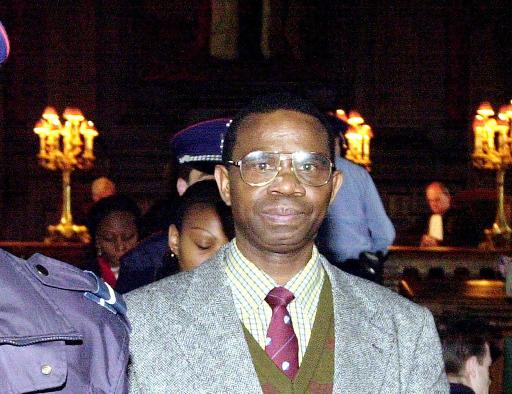
General Augustin Ndindiliyimana

Belgium has granted a visa to former Rwandan gendarmerie boss Augustin Ndindiliyimana, who was acquitted of genocide by the International Criminal Tribunal for Rwanda (ICTR), Hirondelle learned on Wednesday.

“General Ndindiliyimana has obtained a Belgian visa and is packing his suitcases,” said a source at the ICTR Registry who wished not to be named. This information was confirmed by other acquitted persons who spoke to Hirondelle in the corridors of the Tribunal.

Ndindiliyimana was convicted by a trial court in May 2011 and sentenced to 11 years in jail, but was acquitted by the ICTR Appeals Chamber last February.

He had been charged with crimes committed by his subordinates during the 1994 genocide, but the appeals judges found that he did not have effective control over the gendarmes that were deployed to fight rebels of the Rwandan Patriotic Front (now in power in Kigali) because they came under the command of the army chief of staff.

The judges also found that Ndindiliyimana, an officer from southern Rwanda who was also a Minister of Defence, opposed the massacres.

Relocating ICTR acquitted persons and convicts who have served their sentences is an ongoing headache for the Tribunal. These individuals refuse to return to Rwanda, saying they fear for their security.

As well as Ndindiliyimana, the ICTR houses and feeds eight acquitted persons and three who have served their sentences in the Tanzanian town of Arusha where it is based.

The UN Security Council has already adopted two resolutions calling on member states to host ICTR acquitted persons and convicts who have served their sentences, but these resolutions are not binding.

The ICTR Statute provides that states must cooperate in the arrest and transfer of accused persons, but it makes no mention of what should happen to acquitted persons and those who have served their sentences.

The eight acquitted in search of a host country include three former ministers, a general and a colonel as well as Protais Zigiranyirazo, brother-in-law of former president Juvénal Habyarimana whose assassination on April 6, 1994 triggered the Rwandan genocide.

They all want to join their families in Western countries.

The one who has been waiting the longest is former Transport Minister André Ntagerura who was acquitted in February 2004.

Five acquitted persons have been relocated up to now. France has taken two, while Switzerland, Belgium and Italy have each taken one.

Source:http://www.hirondellenews.com/ictr-rwanda/1038-collaboration-with-states/34827-170914–ictrbelgium–acquitted-rwandan-general-to-go-to-belgium

La violence n’est jamais une réponse – Caritas internationalis sur la crise au Moyen-Orient

ci

De l’Irak à la Syrie et à la Bande de Gaza : la solution des conflits doit passer par le « dialogue », ou quoi qu’il en soit par « une autre voie » par rapport à « une violence supplémentaire ». C’est ce qu’a dit le cardinal archevêque de Tegucigalpa, Óscar Andrés Rodríguez Maradiaga, président de Caritas Internationalis, en ouvrant hier, lundi 15, à Rome, la rencontre de haut niveau dédiée à la crise au Moyen-Orient avec les présidents et les directeurs de la Caritas des pays impliqués et leurs partenaires internationaux.

Dans la conscience « d’être face à la plus grande crise que le monde affronte depuis la Seconde Guerre mondiale », le cardinal a invité tous les gouvernements « à la cessation totale des envois d’armes dans les pays du Moyen-Orient », en réaffirmant que « la paix ne peut pas être imposée de l’extérieur, mais doit naître de l’intérieur » sur la base de la « justice sociale entre les personnes ».

La situation dramatique de la population est au centre des travaux, qui se concluent mercredi 17, avec l’objectif, comme l’a expliqué Michel Roy, secrétaire général de Caritas Internationalis, de «réfléchir ensemble sur quelle peut être la meilleure réponse, dans les prochains mois et années, à la tragédie qui frappe le Moyen-Orient, et sur comment on peut collaborer avec d’autres organisations de l’Eglise catholique ou en dehors d’elle pour promouvoir la paix et la stabilité dans la région ».

Actuellement, a rappelé le cardinal, « à chaque minute, quatre enfants syriens sont forcés d’abandonner leurs maisons. Les extrémistes en Irak et dans l’ouest de la Syrie sont en train d’étendre le nettoyage ethnique et religieux à une vaste zone sous leur contrôle. A Gaza, un demi-million d’enfants ne peuvent pas retourner à l’école parce que leurs classes ont été détruites. A Mossoul en Irak, la lettre N qui signifie Nazaréen, a été peinte sur les portes des maisons pour identifier les chrétiens puis les passer à tabac ou les tuer ». Environ 1,3 million d’Irakiens ont dû abandonner leurs maisons, les opérateurs de la Caritas eux-mêmes ont dû fuir. Et depuis le début de la crise en Syrie, plus de 13 millions de Syriens sont dans des conditions désespérées et 3 millions se sont réfugiés hors du pays, en Jordanie, au Liban, en Turquie.

Source: http://www.news.va/fr/news/la-violence-nest-jamais-une-reponse-caritas-intern

African States: Reject Immunity for Leaders

By Human Right Watch

141 Groups in 40 Countries Speak Out

Kenneth Roth, Director of Human Rights Watch

“The immunity provision is a regrettable departure from the AU’s Constitutive Act, which rejects impunity under article 4. Immunity takes away the prospect that victims can access justice at the African court when leaders commit atrocities. African states should take a clear stand opposing this immunity.”
George Kegoro, executive director of the International Commission of Jurists-Kenya
(Johannesburg) – African countries should reject immunity for sitting leaders for grave crimes before the African Court for Justice and Human Rights, 141 organizations said today in a declaration in advance of an African Union meeting in Nairobi. The organizations include both African groups and international groups and have a presence in 40 African countries.

The African Union (AU) Office of the Legal Counsel is convening a meeting in Nairobi on August 25 and 26, 2014, with government officials of AU member countries in East Africa to promote ratification of AU treaties. Discussions, which will take place at the Hilton Hotel , are expected to include a newly adopted protocol to extend the African Court’s jurisdiction to trials of genocide, war crimes, and crimes against humanity, while providing immunity for sitting leaders and other senior officials. The protocol to expand the authority of the African Court was adopted at the 23rd African Union summit, in Malabo in June.

“The immunity provision is a regrettable departure from the AU’s Constitutive Act, which rejects impunity under article 4,” said George Kegoro, executive director of the International Commission of Jurists-Kenya. “Immunity takes away the prospect that victims can access justice at the African court when leaders commit atrocities. African states should take a clear stand opposing this immunity.”

The adopted Protocol on Amendments to the Protocol on the Statute of the African Court of Justice and Human Rights is the first legal instrument to extend a regional court’s authority to criminal jurisdiction over genocide, war crimes, and crimes against humanity. The protocol also covers 11 additional crimes and notably provides for an independent defense office.

But Article 46A bis of the amendments provides immunity for sitting leaders, stating: “No charges shall be commenced or continued…against any serving African Union Head of State or Government, or anybody acting or entitled to act in such capacity, or other senior state officials based on their functions, during their tenure of office.”

The statutes of international and hybrid international-national war crimes tribunals reject exemptions on the basis of official capacity. Other international conventions, including the Convention against Torture, the Convention on the Prevention and Punishment of the Crime of Genocide, and the Geneva Conventions of 1949, recognize the crucial importance of accountability for serious crimes.

“Granting immunity to sitting officials is retrogressive, and risks giving leaders license to commit crimes,” and Timothy Mtambo executive director at Malawi’s Centre for Human Rights and Rehabilitation. “Immunity also risks encouraging those accused of the crimes to cling to their positions to avoid facing the law.”

Some African countries like Benin, Burkina Faso, Democratic Republic of Congo, Kenya, and South Africa rule out immunity for sitting officials for serious crimes under their national laws, the groups said.

This text of the group declaration was drafted by Malawi’s Center for Human Rights and Rehabilitation, with input from several African organizations and international organizations with a presence in Africa.

“Instead of retreating from important achievements to limit impunity, advance the rule of law, and promote respect for human rights, African governments should remain steadfast in supporting justice for victims of the worst crimes by rejecting immunity before the African Court,” said Angela Mudukuti, international criminal justice project lawyer at the Southern Africa Litigation Centre.

France: What made the government resign?

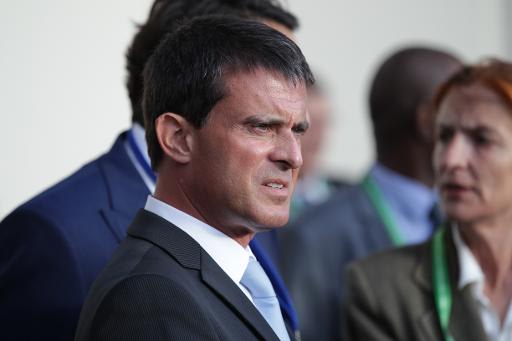
French Economy Minister Montebourg attends a news conference at the Bercy Ministry in Paris


Arnaud Montebourg

The french premier Manuel Valls has submitted the government resignation to the President who immediately requested a new list of ministers by Tuesday August 27th, 2014. The main reason is the views expressed by the minister of economy Arnaud Montebourg who last Sunday told the media that France should take a different approach to save euro zone economy.

”The time has come for France to resist Germany’s “obsession” with austerity and promote alternative policies across the euro zone that support household consumption, firebrand French Economy Minister Arnaud Montebourg said on Sunday”. Hours after, the whole government was called to resign and the prime minister is to compose a new team to be presented to the president on Tuesday August 27, 2014.

Here is how Reuters put the story:

Deficit-reduction measures carried out since the 2008 financial crisis have crippled Europe’s economies and governments need to change course swiftly or they will lose their voters to populist and extremist parties, Montebourg told a socialists’ meeting in eastern France.

France is the euro zone’s second-biggest economy, the world’s fifth-greatest power, and it does not intend to align itself, ladies and gentlemen, with the excessive obsessions ofGermany‘s conservatives,” Montebourg said.

“That is why the time has come for France and its government, in the name of the European Union’s survival, to put up a just and sane resistance [to these policies].”

Montebourg said consensus was growing among economists and politicians worldwide on the need for growth-oriented policies and mentioned his German socialist counterpart Sigmar Gabriel and Italy‘s premier Matteo Renzi as potential allies.

He cited former president Charles de Gaulle and former British prime minister Margaret Thatcher as having effectively spoken up to change the course of EU policies they opposed.

Montebourg said he had personally asked President Francois Hollande for “a major re-direction of our economic policy”. The government should now focus less on cutting debt than on supporting households to revive consumption, a traditional economic driver, he said.

Montebourg, who makes no secret of his own presidential ambitions, is known for his frequent attacks on austerity, but his latest comments are likely to embarrass Hollande, who despite mounting pressure said just days earlier he would not back away from his policy based on spending cuts and corporate tax breaks.

Hollande’s business-minded policies have alienated many left-wing lawmakers and voters already frustrated with his failed pledge to curb unemployment. He is now the most unpopular president in over half a century, with an approval score of 17 percent in the latest Ifop poll.

Hollande’s office declined to comment on what Montebourg said. A source close to Prime Minister Manuel Valls said Montebourg had gone too far.

“Firstly, there are declarations on economic policy and secondly, statements on our European partner Germany that are extremely harsh. Therefore, considering the line has been crossed, the prime minister has decided to act,” the source said, giving no further details.

In an interview published on Saturday, Montebourg had already warned the austerity measures pursued by France and its European peers were strangling growth.

Six years after the collapse of banking group Lehman Brothers and the start of the global economic crisis, the United States and Britain have returned to growth while euro zoneeconomies are still shrinking or stagnating, he noted on Sunday.

“There is a disease specific to the euro zone, a serious disease, persistent and dangerous,” Montebourg said, arguing that fiscal and monetary austerity would not help end the crisis but had only worsened and extended it.

“The time has come for us to take on an alternative leadership, to set up an alternative motor and promote ideas and practices alternative to this destructive ideology,” he said.


Le gouvernement français en éclats


Tempête au sommet de l’Etat: la fronde du ministre de l’Economie,Arnaud Montebourg, a provoqué la chute du gouvernement deManuel Valls, qui a été chargé par François Hollande de composer une nouvelle équipe dès mardi.

Après un week-end agité par les déclarations anti-austérité de M. Montebourg dans les pages du Monde et ensuite depuis son fief électoral de Frangy-en-Bresse, le Premier ministre a présenté à François Hollande la démission de l’ensemble du gouvernement.

Manuel Valls, reçu pendant une heure lundi matin par le chef de l’Etat, est désormais chargé de constituer, d’ici mardi, une “équipe en cohérence avec les orientations” que François Hollande “a lui-même définies pour notre pays”, a déclaré l’Elysée dans un bref communiqué.

Rendez-vous avait été pris dès dimanche soir pour ce tête-à-tête à l’Elysée, indique l’entourage du chef de l’Etat, qui sera en fin de matinée à l’île de Sein (Finistère) pour le 70e anniversaire de la Libération du pays.

Dimanche soir, l’entourage de Manuel Valls avait lancé un premier avertissement en déclarant que le ministre de l’Economie avait “franchi une ligne jaune”, dans la mesure où “un ministre de l’Economie ne peut pas s’exprimer dans de telles conditions sur la ligne économique du gouvernement et sur un partenaire européen comme l’Allemagne”.

“Le Premier ministre est décidé à agir”, avait-il mis en garde. Mais l’hypothèse d’un recadrage était privilégiée et personne ne s’attendait à un remaniement.

Arnaud Montebourg, invité sur Europe 1 peu avant l’annonce de la démission du gouvernement, avait persisté dans sa critique du cap fixé par François Hollande, assurant toutefois qu’il ne se plaçait pas “dans l’hypothèse” d’un départ de l’exécutif.

“Il ne me semble pas qu’on se sépare de ministres pour la simple raison qu’ils portent des propositions dans un débat justifié”, avait-il dit, sans regretter ses déclarations. Rejoint dans son analyse par Benoît Hamon, qui était son invité vedette dimanche à Frangy-en-Bresse, il avait estimé qu’il n’y avait “nulle remise en question de la solidarité gouvernementale”.

– La gauche du PS furieuse –

“Ce soir, s’il est encore en poste à l’Economie, il n’y a plus de Premier ministre”, avait au contraire jugé le chef de file des sénateurs écologistes, Jean-Vincent Placé, sur LCI et Radio Classique.

Soutenant la démarche de M. Montebourg, l’un de ses alliés quand elle était au gouvernement, l’ancienne ministre Cécile Duflot a affirmé de son côté: “nous serons nombreux à être aux côtés de tous ceux qui veulent ce changement de cap et de politique économique du gouvernement”.

Aux commandes depuis le printemps d’un grand pôle ministériel économique, Arnaud Montebourg, 51 ans, électron incommode de la famille socialiste, n’a cessé au cours de sa carrière politique de multiplier les coups d’éclat.

Dimanche, a Frangy-en-Bresse, il avait demandé à François Hollande une “inflexion majeure de notre politique économique”, assurant qu’il avait “le devoir” de “ne pas se taire” et “de proposer des solutions alternatives”.

Dans le journal Le Monde il demandait de “hausser le ton” vis-à-vis de l’Allemagne, “prise au piège de la politique austéritaire”, quand François Hollande, mercredi, déclarait ne pas vouloir de “face-à-face” avec Berlin.

Il représentait, avec son collègue de l’Education nationale, Benoît Hamon, la caution de l’aile gauche du gouvernement. Il avait d’ailleurs pris du galon à la faveur du gouvernement Valls en élargisssant son portefeuille à l’Economie, en plus du Redressement productif qu’il détenait depuis mai 2012.

Dimanche soir, Benoît Hamon n’avait pas été visé par le rappel à l’ordre de Matignon.

“On est maintenant devant une situation où la réponse est le durcissement et l’autorité. C’est la ligne désastreuse après ne pas avoir pris l’ensemble des forces de gauche qui avaient fait sa victoire, éliminé les écologistes puis éliminé l’aile récalcitrante qui représente quand même beaucoup de gens au sein du PS, François Hollande se trouve comme un roi nu”, a réagi Marie Noëlle Lienemann sur BFMTV.

Prise de court par l’annonce de la démission du gouvernement, la droite n’avait pas encore réagi à ce séisme politique en milieu de matinée

Why Ferguson is the Congo ?

 By BK Kumbi

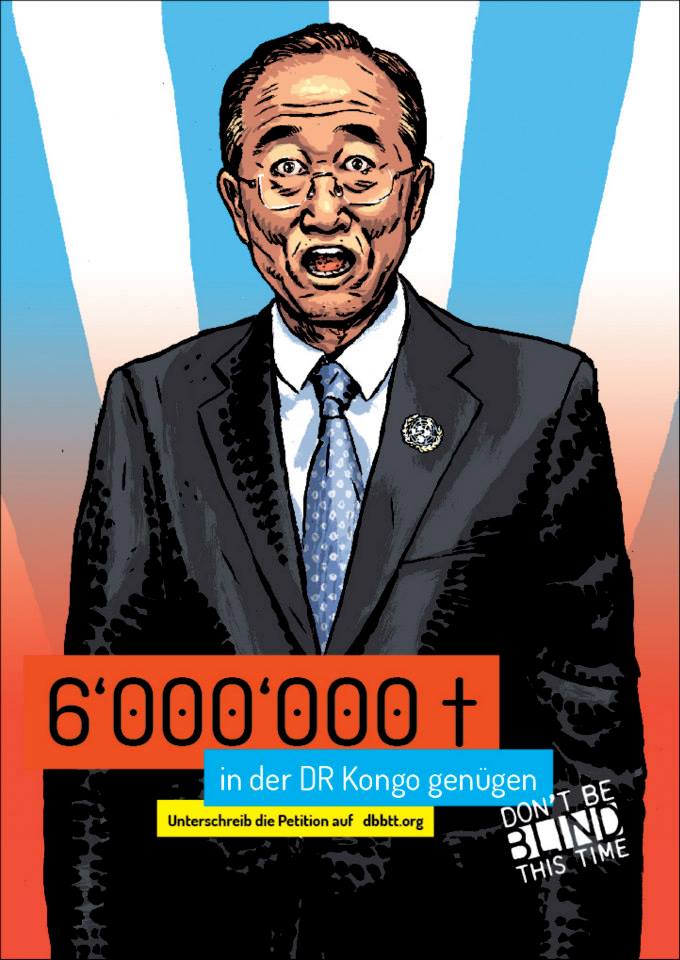
Picture of Ba Ki-Moon, UN Secretary General, by Don't Be Blind This Time

The author of the article that follows starts from an assumption that we all know Ferguson. If I hadn’t been reading recent news feeds on that nth US police brutality case against black people in America I wouldn’t know. I omitted deliberately putting the date when that happened, because it happens every day. Now you know. But where is the link between Ferguson and Congo?

In March 1978 US President Jimmy Carter commissioned a report – NSCM/46 – put together by the National Security Council Interdepartmental Group for Africa. Zbignew Brezinski as National Security Advisor had been tasked with reviewing what was happening in Black Africa from the point of view of possible impacts on the black movement in US. The exercise had to consider:

  1. Long-term tendencies of social and political developments and the degree to which they were consistent with or contradicted US interests
  2. Proposals for durable contacts between radical African leaders and leftists leaders of the US black community
  3. Appropriate steps to be taken inside and outside the country in order to inhibit any pressure by radical African leaders and organizations on the US black community for the latter to exert influence on the policy of the Administration towards Africa

When the report was submitted in the same year it included among other findings these ones:

  1. The mineral resources of the area [Black Africa] continue to be of great value for the normal functioning of industry in the United States and allied countries
  2. If the idea of economic assistance to black Americans shared by some African regimes could be realized by their placing orders in the United States mainly with companies owned by blacks, they could gain a limited influence on the US black community

The recommendations from the report privileged the sanctified principle of divide and rule in order to weaken any emergence of a strong black opposition to dominant policies serving inside and outside US national interests.

  1. Special clandestine operations should be launched by the CIA to generate mistrust and hostility in American and world opinion against joint activity of the two forces [Black America and Black Africa], and to cause division among Black African radical national groups and their leaders
  2. To preserve the present [we were then in 1978 but looking at it today 36 years later the situation has not much changed] climate which inhibits the emergence from within the Black leadership of a person capable of exerting national [or global] appeal.
  3. To support actions designed to sharpen social stratification in the Black community which would lead to the widening and perpetuation of the gap between successful educated Blacks and the poor, giving rise to growing antagonism between different black groups and a weakening of the movement as a whole.

BK Kumbi, Congolese activist, historian and founding member ofDon’t Be Blind This Time, decrypts what such measures and probably many others similar taken over the years by US authorities and allies have had as consequences to black American community and black Africa. She starts her analysis with the intentionally engineered and differing perceptions of the other between the two groups. She moves on the inadequacies that such differences create and the behavior of the white in a well wheeled tragedy where all black as a race becomes a consistent victim. She finds the ultimate exit from the situation to be within the victim itself, or its own humanity.

As Africans our eyes are often turned towards America because for some of us there is the illusion that attracts but for others the eye focuses on how the black man is staged in the American reality. For many black Americans, as for the majority of Americans, Africa is a land of savages and this idea has a particular resonance among the Afro-American population because it shows how they were taught to hate themselves through the figure of a so to say original man, the one that is stored in the sub-humanity. However, when we look at things more closely, one has to ask if there is a real difference of treatment for us all? Imperialist policies affecting African populations are the same as those applied to the black population in the United States precisely because the principle states that the black body shall be exploited alive or dead, it must generate profit. I come from a country, the Democratic Republic of the Congo, where more than 6 million people were murdered and where the killings continue so that the world benefits from the wealth of this country, namely from the coltan, a mineral that is used to make cell phones, but also to manufacture weapons which kill other blacks thousands miles away of my land.

This tragedy is absent from the majority of the American channels or if it is presented, it is to say that there are blacks who kill blacks. There are no questions raised as per the people or the countries who arms those blacks and for what purpose? The corporate media rather prefers to broadcast on the visits of the gang leaders of our region that the United States has hired to do the job and fuel the black on black theory at an international level. What is striking here is how the story is structured or the fact that there is no narrative at all about this issue, just silence. What I want to point out here specifically is the question of how our bodies became objects of spectacles. If there is generally silence that surrounds the Congolese tragedy, there is nevertheless one aspect of this conflict that is portrayed more than the others. The issue of rape used as a weapon of war is the beloved subject of a certain American ”intelligentsia” and it has helped forward the image of some American ‘celebrities’.

The mutilated bodies of Congolese women have become an image that is made pornographic and that it is diffused freely under the idea of a feminist fight and the narrative of this tragedy is assumed by white feminists who actually fight for their own rights in a capitalist environment. This is not done to help the Congolese women and it is also done to spread the idea that this is a femicide and not a genocide. The story of Congolese women is a way to raise funds for these organizations, to write and produce documentaries that will also generate money and, -and this is perhaps the most important, it’s a way to reaffirm the idea that the black man is a savage, a predator whose violence is atavistic, mad and he is therefore the sole instrument of the eradication of his own black being. Is not also the narrative that is served to explain to the Afro- Americans that they are the very instruments of their own annihilation and their own poverty? Is that not what is said when the corporate media uses false images to say that Brown had stolen into a store and that was the reason of his death?

We all need to have our eyes open about the way we are treated and portrayed, and I say we because the image that is conveyed of the African man in Africa necessarily affects the way the Afro-American man is perceived. For those who are looking at us, as if we were in a cage like Lumumba said, there is no difference between a black African or an African-American. We are the ones making this difference because we think that for the white man there are good blacks and there are bad blacks. We don’t look at us through our own eyes but through the eyes of another person who has defined us as not human. When Lewis said that Ferguson is not the Congo, he shows how he is very much inhabited by this idea, he shows that for him there are good and bad Negros. When one really reflects on what is happening in Ferguson, one sees precisely that Ferguson is the Congo. The lesson of this tragedy is how we all rebuild our own histories, how we teach our children to see their lives and the lives of those who look like them as valuable, how we teach them that they are human beings and that they are part of this world even though some want to deny them this right.

Source: http://therisingcontinent.wordpress.com/2014/08/22/why-ferguson-is-the-congo