Category Archives: Paul Kagame

Paris-France: imyigaragambyo yo kwamagana Paul Kagame kuwa 27/02/2015

ob_5b0efc_stop-impunity

Ku wa gatanu taliki ya 27/02/2015 prezida Paulo Kagame azatanga ikiganiro muli UNESCO, i Paris mu Bufransa.Amashyirahamwe nyarwanda n’amashyaka atavuga rumwe na Leta ya Kigali araritse kandi ashishikarije Abanyarwanda bose babishoboye kuzitabira imyigaragambyo iteganyijwe uwo munsi guhera saa saba nyuma ya saa sita.

Imyigaragambyo izatangira saa saba (13:00′) imbere y’ibiro bya posita ili ku masanganzira y’imihanda Avenue de Ségur na Avenue de Saxe 75007 Paris.

Kanda hano ureba carte/map

Abanyarwanda n’abandi bose bakunda ukuri n’ubutabera, abaharanira ubwiyunge bwuzuye hagati y’abanyarwanda no mu bihugu by’akarere k’ibiyaga bigari, bazaboneraho umwanya wo kugeza ubutumwa kuli prezida Kagame n’abamutumiye.

Ubwo butumwa buzibanda ku ngingo zikulikira :

– Gusaba ko ingoma y’igitugu yahinduka hakajyaho ubutegetsi bwa demokrasi isesuye abanyarwanda bose bibonamo, nta vangura moko cyangwa akarere, kandi iha abanyarwanda n’amashyaka ya politike kwishyira ukizana.

– Kwamagana ibikorwa byo gutoteza, kuzimiza abantu, guhohotera uburenganzira bw’ikiremwa muntu mu Rwanda, gufunga no kwica abatavuga rumwe na Leta, mu Rwanda no mu mahanga

– Gusaba ifungurwa, nta mananiza, ry’abanyapolitike bose baborera mu magereza ya Kagame bazira gusa ko basabye uburenganzira bwo gutanga ibitekerezo no gufatanya n’abandi banyarwanda kwubaka urwababyaye.

– Kwibutsa ubwicanyi FPR yakoreye abanyarwanda mu Rwanda n’abanyekongo muli RD Congo (rapport mapping), no gusaba ko abo ubwo bwicanyi bubarwaho bashyikirizwa inkiko mpuzamahanga zibishinzwe.

– Kugaragariza abanyarwanda n’amahanga ko twamagana kandi tutazemera amayeri n’amanyanga prezida Kagame n’agatsiko ke batangiye gukoresha bagamije guhindura Itegeko-nshinga kugira ngo abone uburyo bwo gukomeza kuyobora u Rwanda nyuma ya 2017 mu buryo bunyuranyije n’amategeko.

TUZAZE TULI BENSHI KANDI TWITWAJE BANDEROLLES ZIGARAGAZA UBUTUMWA BWACU KANDI ZISOMEKA NEZA. 

BIKOREWE I PARIS

Komite ishinzwe gutegura imyigaragambyo y’i Paris 27/02/2015

Ufite ibibazo wabariza kuli

– covigla@gmail.com

– Telephone : +336 15 73 15 10

Kagame’s Iron Fist Stokes Fires in Rwanda

By 

kagame-300x198

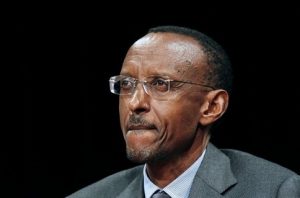
Rwandan President Paul Kagame

When the details of the 1994 Rwandan Genocide were revealed to the world, the horrifying and grizzly events of those 100 days shook the international forum. General Paul Kagame was revered as a hero for leading the Rwandan Patriotic Front to victory and ending the genocide, forcing more than 1 million Hutu refugees to flee the country. Among those refugees were approximately 50,000 Interahamwe militants who carried out the genocide, which cost the lives of 800,000 Tutsis and moderate Hutus.

Since then Kagame has served as the de facto leader of Rwanda, obtaining close powerful allies in the United States and the United Kingdom, using their guilt for failing to respond during the genocide to gain fervent support for the Kagame regime. Kagame has utilized this powerful backing to carry out two wars in the Democratic Republic of Congo, as well as countless support operations for rebel factions in Eastern Congo, most recently illegally backing the M23 rebellion. Only in the last six months has Kagame come under scrutiny from his powerful allies for supporting ongoing rebellions in the DRC and using this as a pretext to exploit the vast mineral wealth located in that region.

Kagame has been given infinite credit for pulling Rwanda out of the ashes of the genocide and rebuilding the country. This credit is somewhat justified. However, behind the scenes is a leader and a regime that operates in a manner much closer to a criminal organization than a state. The reality of modern day Rwanda is that of a police state in which the minority Tutsi and their leader impose harsh sentences and oppression on anyone that contradicts the will of the government. Kagame has even ostracized former Tutsi allies, handing down 20 to 24-year sentences to four close cabinet members in 2011. He has also targeted the majority Hutu opposition, using the charge of denying genocide to imprison journalists and the opposition leader Victoire Ingabire Umuhoza after she questioned why the genocide memorials did not provide tributes to Hutus that died during the slaughter as well.

Now Kagame has begun to take things a step further with political assassinations. On New Year’s Day, former Rwandan Spy Chief Colonel Patrick Karegeya was found strangled in the upscale Michelangelo Towers in Johannesburg, South Africa. A bloody towel and a curtain cord were found on the scene. Karegeya was once a Kagame ally in the Rwandan government, but fell out of favor when he spoke out against Kagame’s tactics and was charged with insubordination. He was one of the four cabinet members given a lengthy sentence in 2011 in absentia. He fled to South Africa in 2007, where he was granted asylum.

This is not the first time Kagame has allegedly attempted an assassination of a former colleague. Former Rwandan Army Chief of Staff General Kayumba Nyamwasa survived three assassination attempts in 2011. During the first attack, he was shot in the stomach and the next two attacks were foiled by the South African police shortly after as he recovered from the initial onslaught. Granted, both Karegeya and Nyamwasa were accused of a coup attempt against Kagame, but attacks on other states’ sovereign soil is bold, even for the seemingly invincible Kagame.

In addition, Kagame and his cronies have been accused of a slew of assassinations and assassination attempts against journalists, former employees, doctors and priests, as well as former Rwandan President Juvenal Habyarimana, an event that sparked the genocide. Whether or not the extent of these accusations are true (a French report has cleared Kagame of the assassination of Habyarimana), the slaying of Karegeya and the attempts against Nyamwasa are indeed alarming and point to a pattern of political assassinations designed to strike fear in the opposition and maintain the stranglehold that Kagame’s one-party system maintains.

2017 will be a very telling year for Rwanda as Kagame’s second term will come to an end. He is not permitted to seek re-election under the constitution. However, this may not deter him from changing the constitution or ushering in a successor that will report to his authority even after he leaves office. In a state where the press is run by the government and the 2010 elections saw all three of Kagame’s opponents either imprisoned or in exile, the strict dictatorial rule in Kigali shows all the signs of a continued authoritarian police state where the majority are oppressed and any competition is fervently put down. Couple this with the trend of assassinations of former Kagame confidantes and the outlook for Rwanda remains hazy.

Until the evils of the genocide can be put behind them and the country can find some semblance of harmony between ethnic groups, the nation as a whole is just one shot away from rekindling a bloody civil war that could see the horrors of the genocide resurface. For now, Kagame’s Western allies must understand that running a country with an iron fist and attacking opponents like a criminal organization is exactly the opposite of the ideals that democracy is supposed to be built upon. Rwanda cannot be considered the darling of Africa until illegal murders and financed rebellions in neighboring countries are stopped. If nothing is done, then the next Rwandan Civil War will be on the hands of those that supported this behavior.

Daniel Donovan is a writer for the Foreign Policy Association and the executive director of the African Community Advancement InitiativeYou can follow him on Twitter @DanielRDonovan or @ACAinitiative.

Source:http://www.usnews.com/opinion/blogs/world-report/2014/01/10/kagames-iron-fist-could-rekindle-rwandan-civil-war?src=usn_tw

Western donors must also encourage Kagame to engage the diverse political views of the Rwandan diaspora.


In her article, “Rwanda don’t let the good trump the bad”, Prof Susan Thomson advises ways through which Kagame can be dealt with:

RPF Gicumbi 2010

An RPF rally in Gicumbi, Rwanda. August 2, 2010. Image: Graham Holliday.

There was no doubting that Paul Kagame’s Rwandan Patriotic Front (RPF) would handily win September’s parliamentary elections, which it did with 76% of the vote. His party has ruled the country since July 1994, when it successfully ended the genocide of more than 500,000 ethnic Tutsi. In theory, the RPF was contending with nine other parties. In practice, Rwanda’s nearly six million voters had little choice on the ballot. A total of 98% of the votes went to the RPF and its four coalition parties. The additional five parties were not allowed to participate.

Once-cozy relations with donors have begun to sour because of Rwanda’s increasing authoritarianism at home as well as its continued involvement in neighboring eastern Congo.  The United Nations has systematically documented war crimes and other violations of international law by both the Rwandan army and its Congolese proxies. Since 2009, the RPF has worked with American and British public relations firms whose primary task is to drown out the voices of foreign critics and bury evidence of the RPF’s human rights abuses at home and in the Congo under rosy language about stability, economic growth, and commitments to help the poor. A democratic façade is essential to reassure foreign investors and Western donors that their money is being stewarded well.

This raises the question of how Rwanda’s donors can best work with the incumbent president, mindful that Kagame is constitutionally mandated to step down in 2017 with the next round of scheduled presidential elections. Rwanda’s main donors, notably the United States, the United Kingdom, and the European Union, must continue to nudge the RPF towards a real democratic opening. This must include more than the usual calls for free and fair elections or symbolic stoppages of their foreign aid, such as the Americans’ recent suspension of $200,000 in military aid due to Rwanda’s sponsorship of the now-defunct M23 proxy rebel group.

Rwanda’s influential friends—such as Britain’s Tony Blair and America’s Bill Clinton—must stop extolling president Kagame’s performance on economic policies so that they may hold his RPF government accountable for its lack of political freedoms and human rights abuses. Cutting aid in symbolic amounts will not result in policy changes, but conditioning aid could. Rwanda depends on foreign aid, which currently accounts for more than 40% of its budget. General support for the budget must be withheld until President Kagame demonstrates a sincere willingness to give his political opponents more space and adopts policies that reflect rather than exploit rural realities.

Donors must first evaluate the government’s ability to manage its only natural resources—people and land. The U.S. State Department estimates that by 2020, Rwanda will be home to some 13 million people. This will be the highest population density in Africa, with 225 people per square mile. Some 80 percent of Rwandans seek out their existence as subsistence farmers, living on less that $1.50 a day. The government requires rural farmers to grow coffee and tea instead of the crops they need to feed their families. A new land policy has decreased peasant holdings to less than half an acre, which is far from enough to produce crops for subsistence. International donors can withhold their general support to Rwanda’s budget to press for more equitable land and agricultural policies.

Rwanda’s donors can also encourage open dialogue and a culture of constructive criticism and debate of government policies amongst the political class. Foreigners write most of the academic and policy literature on Rwanda, because Kagame does not allow for thoughtful analysis that is remotely critical of his government’s current policies. Western donors can use their already-existing relationship with Rwanda’s Ministry of Education and other institutions of higher learning to sponsor and protect intellectuals whose ideas differ from those of the government as a way to spur openness and dialogue.

Western donors must also encourage Kagame to engage the diverse political views of the Rwandan diaspora. This is not to suggest that he reach out to those who claim that the RPF organized and implemented the genocide, or hold other extremist views. But he does need to acknowledge that sincere dissidents exist alongside political extremists. Kagame should not be allowed to lump together the good with the bad as a way to justify not including any outside or competing opinions in the Rwandan political sphere.

Without an open political sphere nudged and nurtured along by Rwanda’s Western donors, there will few other potential leaders to succeed Kagame in 2017; his rivals have died, are jailed, or have fled the country. Expect the lack of qualified political leaders to be Kagame’s rationale for amending the constitution to allow him to run for a third term.

Susan Thomson is assistant professor of peace and conflict studies at Colgate University. She has published articles in African Affairs, The International Journal of Transitional Justice and The Journal of Modern African Studies. She is also author of “Whispering Truth to Power: Everyday Resistance to Reconciliation in Postgenocide Rwanda” (Wisconsin UP, 2013). 

Source: http://journal.georgetown.edu/2013/12/16/rwanda-dont-let-the-good-trump-the-bad-by-susan-thomson/