Category Archives: Security

A Demilitarized Rwanda: From an Army with a State to a Nation without Soldiers

Contrary to Europe of the past, post-independence Africa has rarely experienced frequent wars of conquest since the 1960s. As Patrick H. O’Neil and Ronald Rogowski note in Comparative politics,  ‘Africa leaders recognized in the early 1960s that a potentially larger number of groups would want to secede from the states they are presently in, to join others or create entirely new ones. In order to prevent the continent from being thrown into the chaos of large-scale boundary change in which the stability and integrity of any state could be threatened, they created a system of explicit norms, propounded by the Organization of African Unity in 1963, which declared any change in the inherited colonial boundaries to be illegitimate.’ It has been almost fifty years now. With the exception of Eritrea separating from Ethiopia and Southern Sudan more recently, the principle of intangibility of African nations’ boundaries has generally prevailed.

There is a strong argument among scholars in political sciences which suggests that wars have generally played a significant role in state-building. Consequently, the lack of wars intended to change boundaries on the continent may be detrimental in getting to well organized states. In the case of post-genocide Rwanda the question arises of whether not participation of Paul Kagame, Rwandan president, in the two wars of Congo – 1996 and 1998 and persistently entertained hysteria about the threat of FDLR or any other Rwandan rebel movements against Kigali have somehow helped in enhancing the Rwandan state as an institution.

Rwanda is today hailed to be a well functioning state run like an army. There is numerous evidence to confirm that assertion. But the country is not unfortunately a nation-state with a sense of a common national identity. Policies related to education, justice, employment, habitat, land reform, etc that have dominated Kagame’s rule since July 4th, 1994 when his Rwandan Patriotic Front defeated Habyarimana government have made Hutus and Tutsis, respectively 85% and 14% of the Rwandan population alien from each others. Apparent gains in state-building which have been made in the last seventeen years can fall apart instantly and disappear because these two ethnic groups don’t feel sharing a common Rwandan identity. Tutsis are perceived to be more Rwandans than the rest and consequently treated more favorably by the regime in many respects.

A Tutsi army is ruling in Rwanda. Practically all institutions are led by military people, if not directly but surely indirectly. The Hutu population is marching on Kagame’s military orders. Tutsis are neither left out though they are following at a different pace. Under Habyarimana, who was also a military ruler, the country was initially led militarily but moved smoothly and quickly into more civilians participating in the running of public affairs, though there were no political openness in terms of freedom of expression. Under Kagame, Rwandans have an army with a government where military and other public functions are very intentionally intertwined to serve the supreme leader of the country.

Historically, what is the role of the army? Protecting a country against external enemies and making war to others. These are the basic functions of any traditional army. In addition there are characteristics which result from those roles. A country with an army may be perceived as weak or powerful depending on the level of sophistification of its military forces. Its responsibilities can also attract hatred against the country if its military power is being used to oppress its own people or those in directly or indirectly occupied territories of other countries (e.g. Morocco in Western Sahara and Rwanda in Eastern Congo).

The question arises of asking if a country can exist and prosper without an army. There are some cases of countries which don’t entertain any military forces for conquest purpose or at all: Switzerland with its long-standing neutrality does not get involved in armed conflicts, and Japan whose constitution states that the country does officially have no military, but only self-defense forces. With reference to what can emerge from countries coming out of wars, Germany and Japan, as vanquished sides of World War II, on top of being militarily speaking destroyed during the war, they couldn’t think of in the aftermath of rebuilding their military forces. They became occupied by victorious armies. They have since evolved and used their industrial and military genius to become economic giants. Their territorial protection is partially or significantly guaranteed by the fact they are part of military protection pacts which play as guarantor of their safety.

Can Rwanda become a country without an army? Are there any advantages of adopting such policy? Having or not having an army is a political decision that any sovereign country can take or sometime be forced into by circumstances. The destructive capacity that Rwanda has demonstrated over the last seventeen years (genocide in 1994, flows of millions of refugees in the Great Lakes region, more than five million of Congolese and Rwandan Hutu refugees killed in Democratic Republic of Congo, looting of mineral of the latter country, etc) should call the international community to impose to the Rwandan government that it shouldn’t have any army. Additionally, Rwandan security forces, instead of being there to protect citizens, it is regrettable to note that they have been persistently used to oppress, harass and persecute them.

The main advantage for a country of not having an army is that this removes any military threat coming from it towards other nations. Internal oppression against its own people may become less acute or inexistent because of lack of manpower, resources or instruments to apply it. There will be more freedom for its citizens to express themselves and participate fully in all aspects of their country’s life. Political leaders will not have any more platforms to sustain their eventual authoritarian or dictatorial tendencies. Resources usually and excessively allocated to security forces will be channeled into other beneficial programs (education, health, infrastructure, agriculture, technology, retraining the military whose careers would consequently change, etc) for the good of the whole population. There will be eventually more democracy than before.

Switzerland is a country with long-standing neutrality and a limited military force. It is very developed. Rwanda used to be compared to it because of its similar hilly and mountainous geography. Can the small East African nation like its European peer move from its current situation of an army with a government into a prosperous nation without a traditional army with thousands of soldiers? If this path could be seriously looked into by Rwandan politicians seeking positive change and the country’s partners, the benefits could ultimately outnumber the costs for many stakeholders of the prevailing context.

What do you think of the views expressed here?
Source:http://therisingcontinent.wordpress.com/2011/05/16/a-demilitarized-rwanda-from-an-army-with-a-state-to-a-nation-without-soldiers/

Israël/Palestine: Le secretaire d’Etat Americain, Kerry veut sauver la paix

download

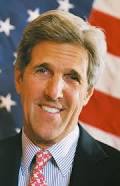
Le secrétaire d’Etat américain John Kerry a démarré aujourd’hui à Jérusalem un nouvelle mission au Proche-Orient avec des entretiens avec le Premier ministre israélien Benjamin Nétanyahou pour tenter de sauver des négociationsisraélo-palestiniennes en crise.

La rencontre Kerry-Nétanyahou devait débuter dans un grand hôtel de Jérusalem en début de matinée. Le secrétaire d’Etat américain se rendra ensuite à la mi-journée à Bethléem, en Cisjordanie, pour s’entretenir avec le président palestinien Mahmoud Abbas.
Ce nouveau round de discussions relancées en juillet, après près de trois ans d’interruption, se déroule dans une atmosphère de crise.

Les Palestiniens ont fait part hier soir de leur refus de poursuivre les négociations tant que la colonisation israélienne continuerait. À la veille de la visite de Kerry, Israël a lancé dimanche des appels d’offre pour construire près de 2.000 logements en Cisjordanie occupée et à Jérusalem-Est annexée.

Source: http://www.lefigaro.fr/flash-actu/2013/11/06/97001-20131106FILWWW00328-israelpalestine-kerry-veut-sauver-la-paix.php

“Abakoze ibyaha mu ntambara yatejwe na M23 bagombe babiryozwe” USA

usdos-logo-seal


Nk’uko tubikesha itangazo rya Leta zunze ubumwe z’America ryo kuwa Kabiri tariki ya 5 Ugushyingo, amasezerano hagati ya Leta ya Kabila n’umutwe wa M23 agomba guteganya uko abakoze ibyaha by’intambara babiryozwa. Icyo gihugu cy’igihangange kandi kirasaba ibihugu byo mu karere kuransura imizi yose yazanye umwiryane muri Repubulika iharanira Demokarasi ya Congo.

Dore uko itangazo rivuga.

Itangazo rigenewe Abanyamakuru

Marie Harf
Uwungirije umuvugizi wa  State Department,

Ibiro by’umuvugizi

Washington, DC

Tariki ya 5 Ugushyingo 2013

Leta Zunze ubumwe z’Amerika zishimiye itangazo ry’umutwe wa M23 rivuga ko uhagaritse ukwigomeka mu Burasirazuba bwa Repubulika iharanira Demokarasi ya Congo. Twishimiye kandi uburyo Leta yakiriye iryo tangazo rya M23, no kuba Leta yiteguye kugaruka I Kampala gushyira umukono ku masezerano ya nyuma.

Dushimiye cyane Perezida wa Uganda Yoweri Kaguta Museveni na Ministri w’ingabo Crispus Kiyonga kuba barabaye abahuza mu biganiro bya Kampala. Turashishikariza impande zose gukurikirana uburyo bwa Politiki buzageza ku masezerano ya nyuma ateganya kwambura intwaro no gusubiza mu buzima busanzwe abagize M23, kandi hagakorwa ku buryo abakoze ibyaha by’intambara n’ibyaha byibasiye inyoko babibazwa. Kugera ku masezerano yumvikanyweho yo kurangiza ukwigomeka, ni intambwe ya mbere ya ngombwa cyane kugira ngo hagerwe ku kurangiza ikibazo cy’umutekano muke muri Repubulika iharanira Demokarasi ya Congo.

Tuboneyeho akanya kandi ko guhamagarira leta zo mu bihugu by’akarere kubakira kuri izi ntambwe nziza mu gutangiza imishyikirano yaguye hagamijwe gushyira mu bikorwa  Amasezerano y’amahoro, umutekano n’ ubufatanye arandura imizi yose yateye umutekano muke wakunze kurangwa muri Repubulika iharanira Demokarasi ya Congo n’ibihugu by’ibiyaga bigari, kandi hagatezwa imbere amajyambere n’ubukungu mu karere. Leta zunze ubumwe z’Amerika tuzakomeza gushyigikira ibi kimwe n’ibindi bikorwa byose bigamije kugera ku mahoro arambye.

Itangazo dukesha Department ya Leta ya Leta zunze ubumwe z’Amerika. Byahinduwe mu Kinyarwanda na Chaste Gahunde.

Developing: M23 Announce End To Rebellion

By: Alex Masereka

M23 rebel group in the Democratic Republic Congo says it is ending its insurgency, hours after the government claimed military victory.

 m231

The M23 rebel group in eastern Democratic Republic of Congo

This comes a day after African leaders wrapped up talks in Pretoria saying a peace deal for the Democratic Republic of Congo could be signed if the M23 movement declared an end to its rebellion.

M23 said in a statement it was going to ”purely political means” to achieve its goals and urged its troops to disarm and demobilise.

The M23 movement had entered peace talks with Kinshasa held in the Ugandan capital Kampala, but they fell apart last month, leading the Congolese army to launch an offensive against the rebels backed by a UN brigade. The M23 was founded by ethnic Tutsi former rebels who had been incorporated into the army under a 2009 peace deal but mutinied in April 2012.

The 3,000-strong UN intervention brigade in eastern DR Congo is drawn from Malawi, South Africa and Tanzania. It joined 17,000 peacekeepers already deployed in the country, but it carries a special mission to help Congo’s army quell the rebellions in the region.

On Monday, the brigade carried out what is believed to be its first direct combat against M23 rebels since the Congolese army began a major assault against the rebellion in late October and seized control of all of the M23 strongholds.

Who are the rebels?

The group is made up of fighters who deserted from the Congolese army in April 2012 following a mutiny.

They are mostly from the Tutsi ethnic group, a minority in eastern DR Congo but with ties to Rwanda’s leaders.

 sultan-makenga

Sultani Makenga, M23 rebel leader

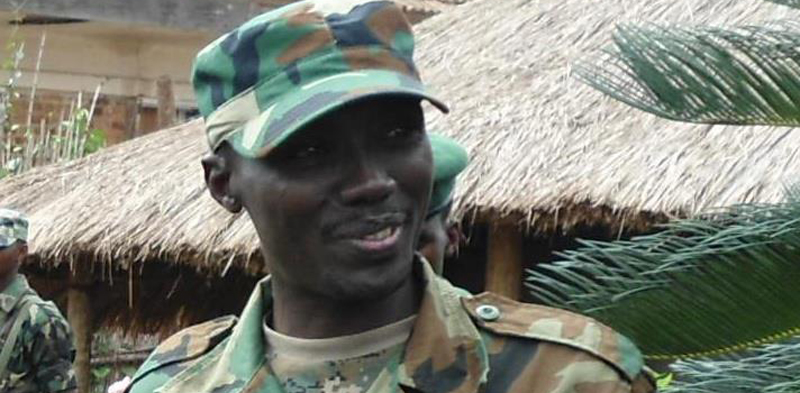
They were led by several top-ranking officers who were members of a former militia called the CNDP – including Col Sultani Makenga and Gen Bosco Ntaganda, who faces war crimes charges at the International Criminal Court.

Their movement is called M23 in reference to a 23 March 2009 peace deal, which the CNDP signed with the Congolese government.

Why did they rebel?

The rebels, also known as the Congolese Revolutionary Army, say the government has not lived up to its promises in the 2009 deal.

They say they were mistreated after being integrated into the army, were not paid enough and that the military lacked vital resources, with soldiers were going hungry.

But analysts believe the real reason for their rebellion stems from comments made by Congolese President Joseph Kabila in January 2012, who under pressure from the ICC, said the Congolese authorities would put Gen Ntaganda on trial.

Where is he now?

Gen Ntaganda, known as “The Terminator”, gave himself up to the US embassy in Rwanda in March 2013, after losing a power-struggle within the M23.

He has since been transferred to the ICC in The Hague.

Is that why they are now on the back foot?

The internal rifts probably didn’t actually make much difference.

Most analysts point to two far more significant developments: Reduced Rwandan support for the M23 and the intervention of a tough new brigade of UN troops.

Although this was always denied by Rwanda, UN investigators have long accused Rwanda of backing the M23.

This led several donors to cut financial and then military aid to Kigali and the UN says Rwandan backing to the M23 has now fallen off.

Meanwhile, the UN has sent a force of some 3,000 well-equipped troops with a tougher mandate than any other peacekeeping force, tasked with disarming and “neutralising” rebels forces in eastern DR Congo.

Their use of helicopter gunships against the rebels is credited with making a huge difference, paving the way for the army to retake the territory seized by the rebels in 2012.

Why did the UN send the extra troops?

The UN has had a huge mission – currently some 18,000 troops – in DR Congo for many years but the unrest never seems to end.

Many Congolese have derided them as “tourists” for many years and in 2012, they were unable to stop the M23 from seizing the regional capital, Goma, before they pulled out under international pressure.

But they remained camped on the outskirts of Goma until their recent reverses.

Inama y’ibihugu bya SADC na ICGL tuyitezeho iki?

kabila-kagame

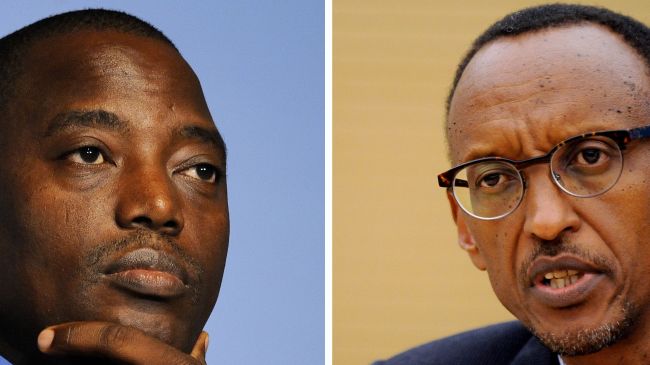
Nk’ubusanzwe, muri iyi nama ni Kagame na Kabila baraba bahanganye

Kuri uyu wa kabiri taliki ya 5 Ugushyingo  I Pretoria mu gihugu cya Africa y’epfo hateganyijwe inama izahuza abakuru b’ibihugu bigize umuryango w’ubukungu wa Afurika yo mu majyepfo, Southern African Development Community (SADC) hamwe n’ibihugu bihuriye mu muryango byo mu karere k’ibiyaga bigari, International Conference on Great Lakes (ICGL). Abakurikiranira hafi ibibera mu biyaga bigari bya Afurika bemeza ko iyi nama itumijwe igitaraganya kubera umwuka w’intambara ukomeje gututumba muri aka karere, bityo bamwe mu bayobozi b’ibihugu bakaba basanga hari ukundi byagenda kugira ngo intambara zikumirwe.

Uyu mwuka wakururutse cyane cyane bivuye ku mutwe wa M23 washinzwe kandi ugashyigikirwa n’igihugu cy’u Rwanda ariko bidaciye mu buryo busanzwe buzwi ibihugu bikoresha ngo bishoze intambara. Perezida Kagame ntiyigeze ageza ku nteko ishinga amategeko icyifuzo cyo koherereza ingabo muri Congo ngo inteko imuhe uburenganzira. Kagame kandi ntiyigeze akoresha ububasha ahabwa n’amategeko ngo atangaze ko kubera umutekano w’igihugu ubangamiwe afashe icyemezo cyo kohereza ingabo muri Congo.

Kubera ko Kagame ashyigikiwe n’abacuruzi b’abaherwe b’Abanyamerika n’Abayisraheli  bagura amabuye y’agaciro Kagame yiba muri Congo, izina rye ntiryigeze rigaragazwa nk’umuntu uteza akavuyo. Na none n’ubwo u Rwanda rwakomeje guhakana uruhare rwarwo mu ntambara ya Congo, Kagame ntiyigeze yamagana M23, ibi bikaba bisobanuye ko ayishyigikiye. Ahubwo Kagame akomeza kuvuga ko ikibazo atari M23 gusa kuko na FDLR ndetse n’indi mitwe ihari. Mu gihe rero Kagame yavugaga ko M23 yagombye gushyikirana na Leta ya Kabila muri Congo, Perezida Kikwete aba yamwumvise ati noneho rero nawe ugombe ushyikirane na FDLR ibibazo tubirangize. Kagame atangira gutukana nk’umurwayi wo mu mutwe.

Uburyo iyi nama izakorwamo ni ubusanzwe: guhura abantu bakongera kwiyemeza kugira ibyo bakora cyangwa bagomba kudakora. Ibi bikaba mu by’ukuri akenshi nta muti bitanga ku bibazo biba biriho bitewe n’uko hari ibihugu biba bimenyereye kuvuga indimi ebyiri, bikemera ikintu ariko bigakora ikinyuranye nacyo. Ikindi ni uko ibihugu bizaba bihagarariwe mu nama usanga akenshi bidahuje inyungu cyane cyane ku kibazo kireba Congo. Urugero ni uko amasezerano ashobora kuzasinywa atazaba abaye aya mbere. Mu kwezi kwa kabiri muri Ethiopia ibihugu byo mu karere byasinye amasezerano yo kudashyigikira imitwe irwanira mu Burasirazuba bwa Congo. Ibi u Rwanda na Uganda byabirenzeho.

Mu gihe Tanzania yibazaga impamvu nyamukuru y’aka kavuyo ka Kagame na Kaguta muri Congo, bivugwa ko hari documents zageze mu butasi bwa Tanzania zihishura ko Kagame na Kaguta bafite umugambi wo gufata Congo cyangwa igice cyayo bakahagira ahabo, barangiza bagafata Tanzania bagaherukira ku Burundi. Uyu mugambi ngo witwa Hima Empire initiative kandi ngo Kaguta awukomeyeho cyane.

Tanzania ikimara kumenya aya makuru nibwo yiyemeje kohereza ingabo zayo muri Congo muri Brigade d’intervention ya MONUSCO kugira ngo ibashe kurwanya ko Congo cyangwa igice cyayo cyafatwa, kuko ariho hatezwe kuzavanwa ubukungu bwo kugura intwaro zihagije zo gufata Tanzania. Ibi si byo byonyine Tanzania yakoze kuko yirukanye Abanyarwanda benshi bakekwaga kuba ibyitso by’u Rwanda ndetse bamwe bari mu myanya ikomeye ya Leta ya Tanzania bakaba bose bahuriye ku gisekuru cy’Ubunyarwanda.

Ikindi kigaragara ni uko bimwe mu bihugu by’aka karere bidasobanukiwe neza uko ikibazo giteye bigapfa gukurikira buhumyi cyangwa se bikemera gutangaho Abaturage ba Congo ibitambo mu ntambara z’urudaca kugira ngo bibashe kugera ku nyungu zindi za politiki. Urugero aha rugaragara kuri Perezida Uhuru Kenyatta ukomeje kugaragara mu bufatanye na Kaguta-Kagame mu cyagombaga kuba Umuryango w’ibihugu by Africa y’uburasirazuba, East African Community (EAC). Mu by’ukuri mu gihe uyu muryango wagombaga kuba uw’ubukungu, Kenyatta ashaka ko aba bagabo bazwiho ubwicanyi bwinshi bazamutiza amajwi ngo bamaganire hamwe urukiko mpuzamahanga rwa La Haye, kuko na we rumukurikiranyeho ibyaha by’ubwicanyi , we na Visi perezida we bakoze nyuma y’amatora yo mu mwaka wa 2007. Perezida Kikwete na Nkurunziza bo basa n’abahejwe, cyangwa se bariheje banga kujya mu gatebo kamwe n’inkozi z’ikibi.

Aha Abanyarwanda  bashaka impinduka bakwiye kuhakura isomo rikomeye: Iyo umuntu ashyizwe cyangwa yishyize ku butegetsi ari umunyabyaha (umwicanyi cyangwa se umujura) nta kindi ashyira imbere uretse guhora ashaka kwikingira ikibaba aho gutekereza no gushyira mu bikorwa gahunda zateza imbere Abenegihugu.

Izi nyungu zitandukanye rero nizo ziza gutuma iyi nama itagira icyo igeraho gifatika. Ubusanzwe umuryango wa SADC ugizwe n’ibihugu bya Angola, Botswana, Lesotho, Malawi, Mozambique, Swaziland, Tanzania, Zambia and Zimbabwe. Ibi bihugu byose bikaba bisanzwe bifasha Congo mu bibazo bikomeye cyane cyane mu ntambara kubera ko Congo ifite byinshi ibi bihugu byakenere mu bucuruzi. Zimbabwe yo icyakora yo kubera kwanga mpatsibihugu mpuzamahanga, Mugabe ari mu bantu bafashije Kaguta-Kagame-Kenyatta kwamagana urukiko mpuzamahanga, ariko na none ibi ntibyatuma areka gufasha Kabila.

ICGL yo ihuriwemo n’ibihugu bya Angola, Burundi,  Repubulika ya Centrafrica, Repubulika ya Rubanda ya Congo, Repubulika iharanira Demokarasi ya Congo , Kenya, Rwanda, Sudani y’amajyepfo, Sudani ya ruguru, Tanzania, Uganda, and Zambia.

Kubera ko ubu M23 nta mbaraga za gisirikare isigaranye kandi zikaba arizo zari gutuma ibasha kugira ibyo isaba mu mishyikirano bikemerwa, Kabila ni we ufite avantage. Ni ukuvuga ko we agiye kugaragara nk’umuntu watsinze urugamba noneho agakanira M23 uruyikwiye. Aha rero ibihugu bya Rwanda na Uganda birahatsindirwa cyane akaba ariyo mpamvu bikomeza kuvuga ko intambara itarangiza ikibazo cya Congo nyamara bikavuga ko intamabara yarangiza ikibazo cy’u Rwanda!

Ubu ikibazo kiriho ni uguhitamo muri bibiri: Gufata M23 igashyikirizwa ubutabera cyangwa se kuyiha imbabazi rusange (amnesty). Haramutse habayeho impaka zisaba gutora dore uko mbona ikibazo cyerekeye uburasirazuba bwa Congo cyatorerwa:

Abashyigikiye intambara n’ubutabera Abashigikiye imbabazi rusange
DRCongo, Congo, Angola, Zambia, South Africa, Tanzania, Zimbabwe, Burundi, Botswana, Lesotho, Malawi, Mozambique, Swaziland. Rwanda, Uganda, Kenya, Sudan y’epfo, Sudani ya ruguru, na Centrafrica.

Igihugu gishobora kwifata kuri aya matora ni Centrafrica, cyakora na cyo gishobora gutora ku ruhande rw’u Rwanda kuko Africa y’epfo itarebana neza n’ubutegetsi buriho muri Centrafrica muri iki gihe.

U Rwanda ruraza kuzamura ikibazo cya FDLR rusabe ko hagira igikorwa, Kabila arusubize ko ikibazo cya M23 nikirangira azahindukiza iminwa y’imbunda akarasa FDLR nk’uko amaze iminsi abivuze. Ibi nabyo nta gishya kibirimo.

Nk’uko mubibona rero nib anta gihindutse inama ya Pretoria nta kindi tuyitezeho uretse tourisme abakuru b’ibihugu baraba bigiriyemo.

Mubikurikirane muraza kumbwira.

Chaste Gahunde


RDC : l’armée reprend au M23 la colline de Mbuzi

Fullscreen capture 5222013 125418 PM

Les Forces armées de la RDC ont pris lundi  4 novembre la colline de Mbuzi, une des dernières positions des rebelles du M23 retranchés aux confins du Rwanda et l’Ouganda, au Nord-Kivu. Les combats se poursuivent depuis la matinée, malgré le cessez-le-feu unilatéral décrété dimanche par le M23 et l’appel à la retenue de la communauté internationale.

Le porte-parole des FARDC au Nord-Kivu, le colonel Hamuli, a déclaré à Radio Okapi que les combats pour la reprise de Mbuzi ont été très rudes.

« L’ennemi a été délogé après environ 3 jours de combats », a-t-il confié.

Vers 12 heures locales, un détachement de soldats congolais posté à Ntamugenga a laissé éclater sa joie en chantant après avoir reçu un message radio indiquant que leurs frères d’armes ont atteint la crête de la colline de Mbuzi et qu’ils progressent vers le sommet.

Mbuzi est l’une de trois collines qui culminent à environ 2.000 mètres d’altitude où résistent encore quelques centaines d’éléments du M23 depuis la chute deBunagana mercredi dernier.

L’armée a “conquis totalement le collectif montagnard de Mbuzi”, a indiqué à l’AFP un haut responsable militaire ayant requis l’anonymat.

Les militaires congolais considèrent la colline de Mbuzi comme « très stratégique ». Elle donne une vue sur les collines de Chanzu et Runyonyi, encore tenues par les rebelles.

Tôt le matin, trois obus lancés par le M23 depuis la colline de Chanzu ont fait six morts et dix blessés parmi les civils aux quartiers Karambo et Masoro obligeant les habitants de Bunagana à se réfugier en Ouganda. Un autre obus tombé dans ce pays n’a pas fait des victimes.

D’autres obus sont tombés dans la localité de Tchengerero, à environ 4 km de Bunagana. Des sources militaires indiquent qu’une femme et un homme ont été tués.

Dimanche, le président de la branche politique du M23, Bertrand Bisimwa, avait ordonné à ses troupes de «cesser immédiatement les hostilités avec les FARDC». Son ordre est tombé alors que l’armée pilonnait les derniers bastions des rebelles où étaient retranchés 200 à 300 combattants.

Dans un communiqué publié lundi 4 novembre, le porte-parole du gouvernement congolais, Lambert Mende a indiqué « le M23 doit faire une annonce claire, nette et sans ambiguïtés de la fin de la rébellion armée qu’il a lancé depuis 20 mois dans le Nord-Kivu ».

« Ce qui est attendu, ce n’est pas un cessez-le-feu. C’est la fin de toute activité militaire du M23 », précise le texte.

Poursuivre le processus politique

Les envoyés spéciaux des Nations unies, de l’Union européenne, de l’Union africaine et des Etats-Unis pour la région des Grands Lacs ont pour leur part «exhorté le M23 à renoncer à sa rébellion comme déjà convenu». Ils ont également demandé au gouvernement de la RDC de «s’abstenir de toute action militaire à ce stade».

Dans un communiqué publié le lundi 4 novembre, ils ont déclaré avoir pris acte de l’annonce du M23 de mettre fin aux hostilités. Ils considèrent cette annonce comme la première étape indispensable vers la paix.

Les Envoyés spéciaux exhortent le mouvement rebelle et le gouvernement congolais à poursuivre leur engagement pour faire aboutir le processus politique par un accord final et le principe garantissant le désarmement et la démobilisation du M23.

 Source:http://radiookapi.net/actualite/2013/11/04/rdc-larmee-reprend-au-m23-la-colline-de-mbuzi/

Nord-Kivu : les FARDC prennent le contrôle de Bunagana

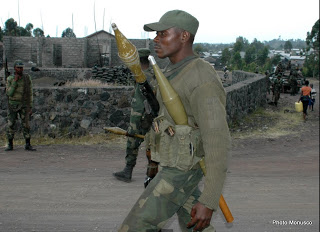
Des militaires congolais en patrouille à Goma (Photo Monusco)

Les FARDC en patrouille à Goma

Les militaires congolais ont pris le contrôle de Bunagana ce mercredi 30 octobre en début d’après-midi. Des témoins assurent que les FARDC ont conquis cette cité sans opposition des rebelles du M23 qui l’occupaient depuis une année. Bunagana, située à la frontière ougandaise, était considérée comme le fief politique de la rébellion.

L’armée congolaise a confirmé la reprise de cette cité sur twitter:

« Depuis un peu plus d’une heure, Bunagana est totalement sous notre contrôle. On a combattu depuis tôt ce matin. Les autres [les rebelles, NDLR] ont décroché et certains se sont repliés sur les collines de Mbuzi et Chanzu, d’autres sont partis en Ouganda, comme Bertrand Bisimwa », le président de la branche politique du M23, a déclaré à l’AFP Lambert Mende, porte-parole du gouvernement congolais.

Des sources dans la région rapportent que les combattants du M23 avaient déjà abandonné la cité avant l’arrivée des FARDC.

Dans la matinée, d’autres avaient révélé que le gros des troupes de la rébellion ainsi que les cadres politico-militaires du mouvement rebelle, n’étaient plus visibles à Bunagana.

Les mêmes sources affirmaient que les rebelles avaient pris position dans les collines de Chanzu, Mbuzi et Runyonyi.

C’est sur ces collines que les FARDC ont lancé un nouvel assaut.

Plusieurs témoignages font état des détonations d’armes lourdes et légères entendues à partir de ces collines cet après-midi.

Zuma calls on Congo rebels to lay down arms.

Jacob+Zuma+Joseph+Kabila+DRC+October+29+2013

Jacob Zuma ( L) and Joseph Kabila (R)

PRESIDENT Jacob Zuma called on rebel groups in the Democratic Republic of Congo (DRC) on Tuesday to lay down their arms.

“I must …express that South Africa remains deeply concerned by the enduring conflict in eastern DRC, perpetrated by local and externally supported armed groups on innocent Congolese civilians,” he said in a speech prepared for delivery at the DRC Parliament.

“Enough is enough, the time for peace is now and to those who would challenge this for their own self interests, we stand firm in the message that your time is now up, lay down your arms, as no longer will the misery you inflict be tolerated.”

In August, Mr Zuma informed the South African Parliament that 1345 soldiers had been deployed as part of the United Nations Force Intervention Brigade in the eastern DRC.

The deployment followed the passing of a UN resolution in March authorising a force to intervene in cases where people’s lives and property were threatened.

Mr Zuma said on Tuesday that South Africa stood in solidarity with the DRC in overcoming the conflict.

“As you will well know, the decision to call upon the sons and daughters of the nation’s defence forces to serve in the face of imminent danger, is always a difficult one,” he said. “Nevertheless, my decision to do precisely this, in support of the international community’s efforts to restore peace to eastern DRC, is one which I firmly believe in.” He said South Africa believed the conflict should be resolved through negotiated, political solutions.

“We commend the government of the DRC on its efforts in the Kampala talks (between it and the M23 rebels). It is nevertheless the case that this optimal strategy cannot take place indefinitely and at all costs,” he said.

“Through the presence of the intervention brigade and indeed through the parallel international forums focused on restoring peace … I am encouraged that now, perhaps more so than at any other time in history, the eventual resolution of the DRC’s eastern security problem is finally in sight.”

Meanwhile the rebels said on Tuesday that the army had forced them to retreat to their mountain holdout near the eastern border with Uganda.

After 36 hours of silence, the rebels published a statement on its website to say that the withdrawal was “in no way a sign of weakness”, but a tactical retreat to Bunagana, the base of its political leaders.

After four days of fierce fighting, which claimed the life of a Tanzanian peacekeeper, the head of the UN mission in the DRC (Monusco) said late on Monday that “practically all M23 positions were abandoned, except for a small triangle at the Rwandan border”.

Martin Kobler told the UN Security Council by video-link that “it is practically the military end of M23”. The Congolese army has the backing of forces of a UN intervention brigade of African troops with a special Security Council mandate to take the offensive against armed movements in eastern DR Congo.

However, Mr Kobler’s optimism was not shared on Tuesday by Fidel Bafilemba, a researcher for the US nongovernmental organisation Enough Project, who said that M23 is “capable of many surprises, even it is pushed back beyond the borders.”

The offensive against the M23 began days after the collapse of peace talks in the Ugandan capital Kampala, where the Kinshasa government refused amnesty to about 80 rebel leaders.

A resident reached by telephone told AFP that M23 fighters were deploying on Tuesday morning on the Chanzu and Mbuzi hills, about 80km north of Goma, capital of the strife-torn, mineral-rich North Kivu province.

The M23 rebellion was born of a mutiny in April 2012 by former mainly Tutsi rebels who had been integrated into the army in 2009 under a peace pact, then accused the Kinshasa government of reneging on the deal.

Kinshasa and the UN both accuse Rwanda and Uganda of supporting the M23, allegations that are strongly denied in Kigali and Kampala.

From Rumangabo, a major military base about 65km north of Goma that was recaptured from rebels on Monday, an AFP journalist could hear nearby mortar fire at about 09.30am GMT.

In the military base built by Belgians before independence in 1960, the reporter also saw large quantities of ammunition, including mortar shells of different calibres, abandoned by the rebels.

The past few days of renewed fighting has sparked international calls for restraint in a country wracked by successive civil wars and where hundreds of thousands have been forced from their homes by the rebellion in the east.

Local transport was back on the road linking Goma to the town of Rutshuru, 80km further north, which was cleared of M23 forces on Sunday. Minibuses and lorries carrying merchandise were moving in both directions.

A scorched tank was left near Kibumba, 25km north of Goma. Lt-Col Olivier Hamuli, the military spokesman in North Kivu province, said the wreck was “the only tank taken by the rebels during the capture of Goma” in November 2012.

M23 was then at its height and occupied the city of a million people for 10 days before withdrawing under regional pressure.

About 100 local people, mainly women and children loaded with their belongings, were trudging back to Kibumba on Tuesday, now that the town was again fully controlled by government forces.

“I am happy to be going home. The war is over. We are going to live under the rule of the government again,” Judith Bora told AFP, carrying her baby.

“Gone the rebellion, finished the harassment. We suffered with the rebels. We want the government to let us live in peace,” said Elias Nzibonera who was leading his goats.

Another resident who had been among thousands to flee into Rwanda last Friday said that he had already returned home. “The situation is calm, there is no problem,” he said by telephone.

“We can’t hear any more explosions but friends in Bunagana and Mbuzi tell me that fighting is under way in their area.”

Sapa-AFP

Source: http://www.bdlive.co.za/africa/africannews/2013/10/29/zuma-calls-on-congo-rebels-to-lay-down-arms

Renewed Fighting in Eastern DRC

usdos-logo-seal


Press Statement

Jen Psaki
Department Spokesperson

Washington, DC


October 26, 2013

We are deeply concerned about reports of increased fighting in North Kivu and call on all parties to refrain from acts of further escalation. We are particularly concerned about reports of cross-border firing. We call on all parties to refer reports of military incidents to the Expanded Joint Verification Mechanism (EJVM) for its immediate investigation, and to cooperate fully and promptly, and grant time for the EJVM to determine the facts of what occurred.

All parties should return to the negotiation table to overcome remaining hurdles to the signing of a final, principled peace agreement, which would establish a permanent ceasefire and hold accountable those who have committed serious crimes.

PRN: 2013/1296

Source: http://www.state.gov/r/pa/prs/ps/2013/10/215895.htm

War Looms As Rwanda Threatens To Strike DRC

Rwanda says it is ready to launch a surgical strike inside the Democratic Republic of Congo if there is a new cross-border shelling, raising the prospect of another war in the Great Lakes region of Africa.

rwanda3

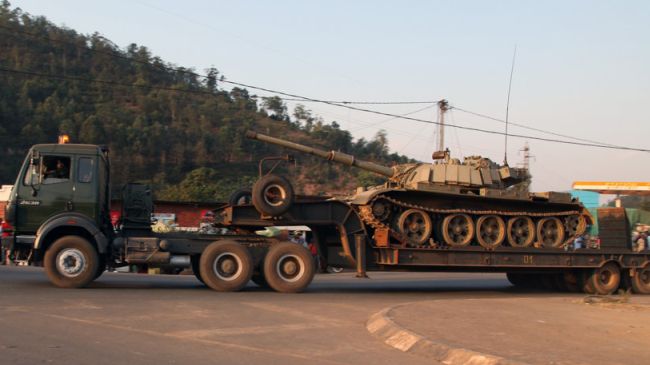
A trailer carrying a tank leaves the Rwandan capital of Kigali en route to the border town of Gisenyi, August 30, 2013. Rwanda has deployed troops on the Congolese border.

On Friday, rebels from Congo’s March 23 movement (M23) clashed with Congolese troops, and Rwanda accused the Congolese army, the FARDC, of cross-border shelling and shooting.

General Joseph Nzabamwita, the Rwandan army’s spokesman, said troops across the border had “fired three bombs and small arms fire” at a village in Rubavu district, close to the border towns of Gisenyi in Rwanda and Goma in the DR Congo.

The Congolese army “targeted innocent civilians in Rwanda, and fleeing Congolese refugees,” he said, saying a 58-year-old refugee was wounded.

The M23 rebels defected from the FARDC in April 2012 in protest over alleged mistreatment in the army.

The UN and Kinshasa have repeatedly accused Rwanda of helping the rebels in Congo. Rwanda has always denied the charges that it is backing the M23, but Kigali has never publicly condemned the militia, which is strengthening its grip over the provinces of North Kivu and South Kivu in the eastern Congo.

Gasana-and-UNMISS-199x300

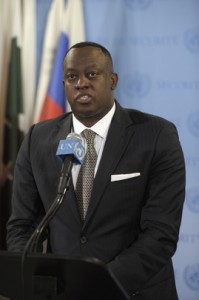
Rwandan UN Ambassador Eugene-Richard Gasana said Rwanda is ready to act and it will hurt.

Congo’s adventurous neighbor is reportedly planning to launch a military offensive against a country with which it fought two wars in the past two decades.

“If they are not ready to stop this, we will immediately act and it will hurt,” Rwandan UN Ambassador Eugene-Richard Gasana said on Friday after the UN Security Council held talks on the heightened tensions in the volatile region.

“We will do it with laser precision, we know where it is coming from,” said Gasana, whose country is a non-permanent member of the Security Council.

He went on to say that Rwanda had conveyed a tough message to the other 14 Security Council members.

“We are asking them to get along … and to take their fight far from our border. We already warned the government of Kinshasa,” Gasana added.

Rwanda has deployed troops on the Congolese border, the envoy revealed.

“If they dare to continue, it will hurt. We don’t need to increase anything. We have sufficient strength and we know how to deal with it.”

The M23 rebels and several other armed groups are active in the eastern Congo and are fighting for control of the country’s vast mineral resources, such as gold, the main tin ore cassiterite, and coltan (columbite-tantalite), which is used to make many electronic devices, including cell phones.

Since early May 2012, nearly three million people have fled their homes in the eastern Congo. About 2.5 million have resettled in Congo, but about 500,000 have crossed into neighboring Rwanda and Uganda.

Congo has faced numerous problems over the past few decades, such as grinding poverty, crumbling infrastructure, and a war in the east of the country that has dragged on since 1998 and left over 5.5 million people dead.


Source:  http://www.redpepper.co.ug/war-looms-as-rwanda-threatens-to-strike-drc/