Category Archives: Human rights

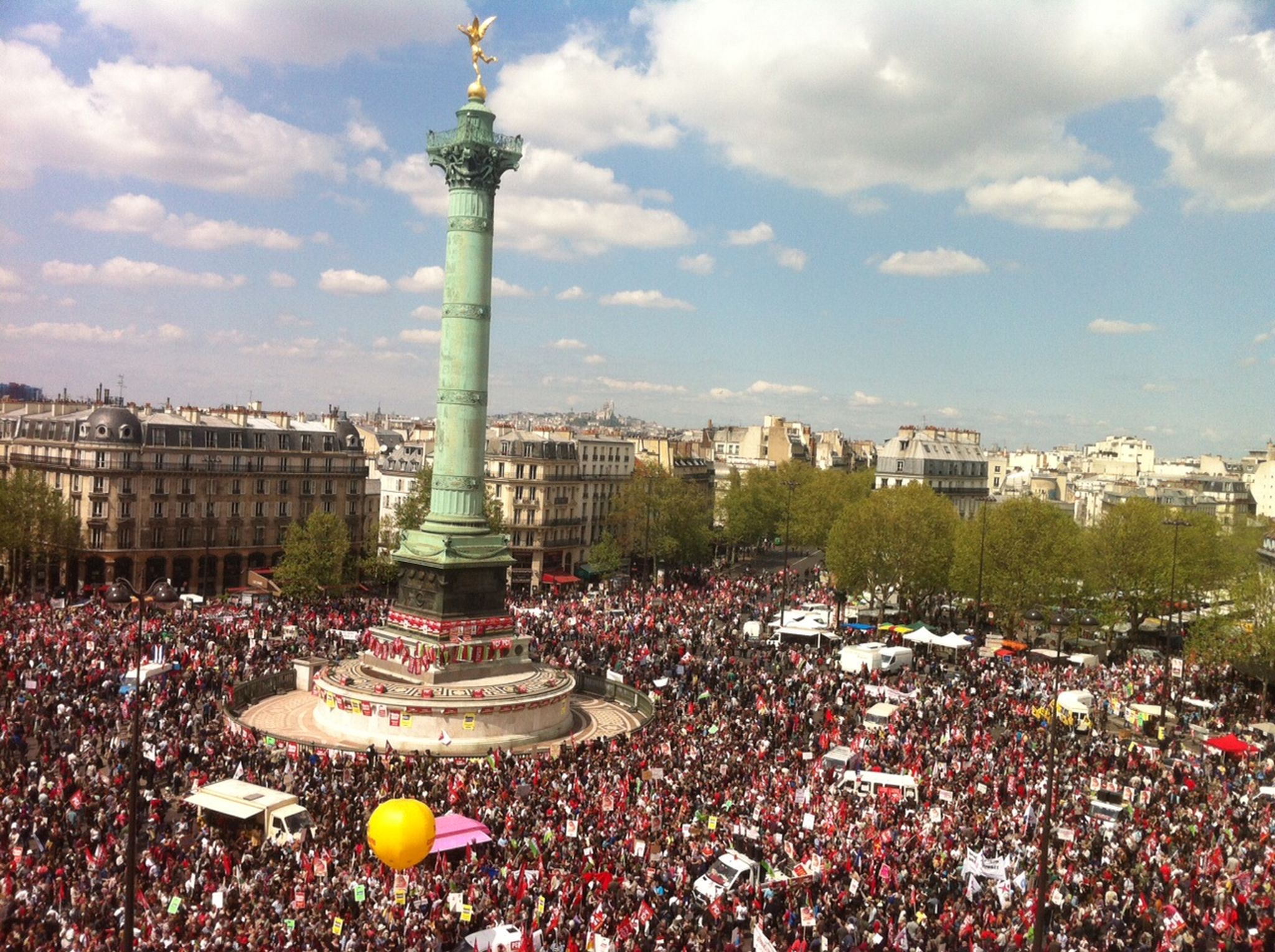
Imyigaragambyo y’Impuruza izabera i Paris, PLACE DE LA BASTILLE kuwa kane , le 29/1/2015.

place

Place de la Bastille, Paris

Mu guha Abanyarwanda uruhushya rwo kwigaragambya, Ubuyobozi bw’umujyi wa Paris(France) bwadusabye gutoranya ahantu twifuza gukorera imyigaragambyo yacu taliki ya 29/1/2015, guhera saa munani z’amanywa (14h).

Ntitwazuyaje, twahisemo PLACE DE LA BASTILLE, kuko ari ahantu hafite amateka yagira icyo yigisha abanyarwanda.

Place de la Bastille ni ahantu nyaburanga hibutsa Revolisiyo y’Abafaransa. Koko rero Revolisiyo y’Abafaransa yatangiye ubwo abaturage bariye karungu biyemezaga gusezerera ingoma ya cyami na gihake, bagashyiraho Repubulika.  Barahagurutse, bafata Gereza ya Bastille, yafungirwagamo cyane cyane abatavuga rumwe n’ubutegetsi, barayikingura, ndetse baranayisenya. Ni cyo gikorwa cya mbere gifatwa nk’intangiriro ya Revolisiyo y’Abafaransa. Hari kuri ya taliki Abafaransa badateze kwibagirwa, ya 14 /7/1789.

Twibutse ko La Bastille, ari naho amashyaka ya Opozisiyo nyarwanda aherutse guhurira, taliki ya 10/1/2015, akemeza ko Abanyarwanda nabo bakwiye guhaguruka bagakora Imyigaragambyo y’Impuruza. Iyo myigaragambyo igamije kwamagana icyemezo cya LONI cyo kurasa impunzi zicyihishe mu mashyamba ya Repubulika Iharanira Demokarasi ya Kongo no kuzishyira Kagame zimeze nk’iziboheye amaboko inyuma.  Iyo myigaragambyo igamije kandi gusaba Umuryango mpuzamahanga gufasha Abanyarwanda mu kuzana impinduka nziza mu Rwanda, hakurwaho ubutegetsi bw’igitugu bwa Paul kagame n’Agatsiko ke, ubutegetsi bwubakiye ku iterabwoba, ikinyoma n’ukwikubira ibyiza byose by’igihugu. Ubwo butegetsi bw’igitugu nibwo NYIRABAYAZANA ituma Abanyarwanda benshi bakomeza guhunga igihugu cyabo. Mu by’ukuri nta mpunzi yishimiye kuba ishyanga ariko igitugu n’ubwicanyi bya FPR, nibyo bibuza Impunzi gutahuka.

Mu kwigaragambiriza PLACE DE LA BASTILLE Abanyarwanda bazaba berekanye ko basezereye umuco mubi wo KWITURAMIRA, bakaba biyemeje guhaguruka kugira ngo bagire uruhare rufatika mu mpinduramitegekere igihugu cyacu gikeneye.

Nyuma y ‘imyagaragambyo hazatangwa Memorandum ikubiyemo ibyifuzo by’Abanyarwanda izashyikirizwa :

*Perezida Francois Hollande w’Ubufaransa

*Perezida Barack Obama binjujijwe kuri Ambasaderi wa Amerika uri i Paris

*Prezida Paul Kagame binyujijwe kuri Ambasaderi w’u Rwanda uri i Paris.

*Perezida Joseph Kabila binyujijwe kuri Ambasaderi  wa RDC i Paris.

Iyo Memo kandi izashyikirizwa n’abategetsi b’ibindi bihugu bifite inyungu mu karere kacu.

Muzaze muri benshi, dutangize iki gikorwa kiganisha kuri Revolisiyo ya Rubanda.

ICYITONDERWA : Uko muzahagera

*Adresse y’ahazabera imyigaragambyo ni iyi :

2 bis, Place de la Bastille,

75011 Paris

*Station ya Metro ni iyitwa :BASTILLE

  • Ku bazaturuka Gare du Nord na Gare de l’Est muzafata Metro Ligne 5 (M 5), direction Place d’Italie.
  • Ku bazaturuka Gare d’Austerlitz, muzafata Metro Ligne 5, direction Bobigny/Pablo Picasso

Mu izina rya Komite ngari itegura imyigaragambyo:

Abdallah AKISHULI,

Immaculee UWIZEYE,

Augustin KARENGERA

Boniface HITIMANA,

Jean Damascène NTAGANZWA

Dr Paulin MURAYI

Claudette MUKAMUTESI

Chaste GAHUNDE

Padiri Thomas NAHIMANA.

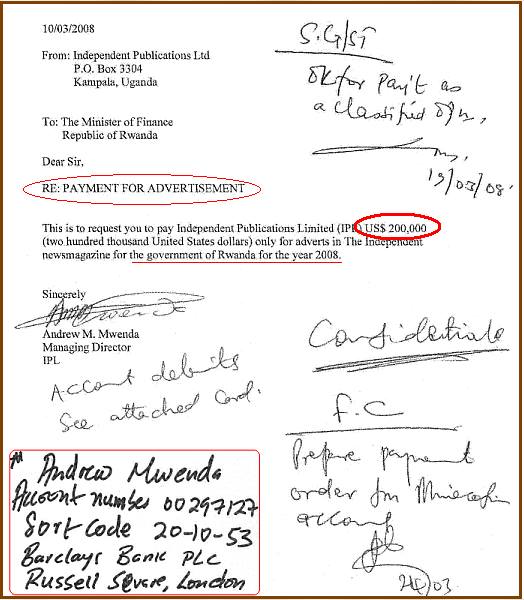
Andrew Mwenda does his job: praising Paul Kagame.

andrew_mwenda10308353_605887509531182_2445154976391889442_n

How the discourse on press freedom in Rwanda has missed the promising developments in that country

Last week I attended President Paul Kagame’s lecture at Chatham House in London. It was without the usual hecklers i.e. mindless anti-Kagame fanatics. It attracted the more refined minds of British intellectual society. So the discussion was calm and reflective. Later in the week, I spoke at the universities of Oxford in England and Bremen in Germany – again before audiences of the sophisticated, thoughtful type. In all events, some people raised the issue of press freedom in Rwanda, saying that is Kagame’s worst score.

There is a fundamental misunderstanding of what is happening in Rwanda’s media. The human rights Taliban have distorted the discourse because they treat democracy as a religion. Religion does not need “pre-conditions” – you can plant the seed of Christianity or Islam in any society regardless of its level of development and it will germinate. But even here it takes generations for people to completely abandon their traditional superstitions.

Democracy, as a system of government, needs structural foundations; and it takes time to build regardless of the intentions of leaders. Governments can write high-sounding constitutions promising freedom and equality. However, if the structural conditions for it are missing, little will be realised in practice. That is why it took America 90 years from independence to freeing slaves. Yet the American constitution clearly stated: “We hold these truths to be self-evident that all men are born equal…” This self-evidence certainly did not apply to poor white men, all blacks, women and other ethnic minorities – each of whom gained rights at different times.

America’s democratic institutions did not end slavery; they perpetuated it. Instead it took a civil war to end it. Even then, it lasted another 100 years from the 13th amendment (which guaranteed every adult male a franchise) for America to give its black people the right to vote. And this was because a large and educated black middleclass had grown as a result of industrialisation. Even then, the civil rights movement lasted 15 years of protests and boycotts accompanied by unprecedented police brutality and KKK terrorism.

Let’s return to Rwanda. The global human rights police have a habit of picking one unfortunate incident (like the arrest of a journalist) and present is as a daily pattern. They have been extremely successful partly because Kigali often plays into their hands. But how many journalists have been arrested in Rwanda over the last four years? Zero! Yet if you read Human Rights Watch reports and listen to Kagame critics, you would think it is 100.

Over the last 20 years, Rwanda’s Gross Domestic Product has grown at an average rate of 6.6% (and 7.7% since Kagame became president in 2000). This has led to the growth of nominal per capita incomes in Rwanda from $150 in 1994 to $700 ($1600 in purchasing power parity) in 2014. This income growth has largely been driven by deregulation, privatisation and liberalisation all of which have freed a significant share of the economy from the state. The growth of the private sector as a source of wealth and power has been accompanied by the emergence of an increasingly large, educated middle-class – a vital social infrastructure for democratic politics.

The above is accompanied the mass access to education opportunities. University enrolment in Rwanda has risen from under 1,500 in 1995 to over 80,000 today. There is free education up to the first 12 years of schooling; primary school enrolment in Rwanda is at 98% and over 60% of its youth studying in secondary schools. Mass education is moving hand in hand with rapid urbanisation – both of which form the software for democratic politics.

Finally, Rwanda is a small country of 26,338 km²that has so far laid 4,000km of Fibre Optic Cable – the highest density of any country in the developing world including China. Its vision is to have 95% of all Rwanda connected to the 4G LT (the highest speed internet) by 2017. With its one-laptop-per-child policy, the spread of smart phones (made possible by increased education and income), Rwanda is creating the most promising hardware and software for free publicity/expression in the developing world.

Consequently, most Rwandans do not read printed newspapers. Instead, they depend on the Internet for information and debate on public policy. Government deliberately encourages the use of social media and has thereby turned almost every adult citizen into a journalist and a publisher and broadcaster. This is the most rapid expansion of space for free expression in history. Therefore, even if it were true that Kagame jails journalists and shuts down newspapers, his methods would be archaic and self-defeating. He would be fighting freedom tactically while building it strategically; which would result in overall good.

It is possible that in all his aforementioned policies towards education, Internet and income growth, Kagame’s aim is not democracy but development. Granted! But that is beside the point. Freedom may not be his subjective motivation but it is likely to be the objective outcome. It is also possible that in spite of all these developments, democracy may fail to gain a foothold on the steep hills of Rwanda. But it is also true that without these developments in education, income and urbanisation in Rwanda, it is unlikely that the nation can build a genuinely democratic political dispensation.

A country like Singapore has all these but has not democratised to the same degree as Norway. However, there is a consensus among its elites in favour of its current political arrangement. Public satisfaction with the political system is higher in Singapore than France and UK. So Rwanda can follow suit. America has the infrastructure for democratic politics. But democracy has found it difficult to flourish in that multi-racial nation whose foundation was genocide of native peoples and the enslavement of its black population. Because of these early distortions, America has remained an oligarchy of corporations – the ruling classes relying ever more on propaganda to keep the illusion of democracy especially to the less observant.

There are many un-freedoms in Rwanda. Some are products of its social structure. Some are unnecessary actions by the state (and this is where the debate should be). However, given its history, many un-freedoms in Rwanda are necessary for ensuring social order – itself the first pre-condition of democracy. Freedom without order is license. The seed of democracy does not germinate on the sands of anarchy. Just look at Libya, Iraq and Mali! In England and Germany last week, the audiences appreciated these arguments.

amwenda@independent.co.ug

– See more at: http://www.independent.co.ug/the-last-word/the-last-word/9459?task=view#sthash.BHVmLF0f.dpuf

United States Deeply Concerned by DRC’s Expulsion of MONUSCO Human Rights Officer

Press Statement

Marie Harf
Deputy Department Spokesperson, Office of the Spokesperson
Washington, DC
October 20, 2014

The United States is deeply concerned by the decision of the Democratic Republic of the Congo (DRC) Government to expel the Director of the United Nations Joint Human Rights Office (UNJHRO) in the DRC because of a report the UNJHRO released alleging serious violations by some members of the DRC security forces that resulted in 9 deaths and 32 enforced disappearances. We strongly urge the DRC Government to reverse its decision.

The United Nations plays a vital role in contributing to the security and well-being of the Congolese people, including through MONUSCO, its humanitarian operations, and its support for good governance, democracy, and human rights. MONUSCO is specifically mandated by the UN Security Council to prepare regular reports on the status of human rights in the DRC. The United States reaffirms its strong support for the work of the UN and its commitment to fight against impunity for violations of human rights.

We urge the DRC Government to investigate the allegations of extrajudicial killings and enforced disappearances by some members of its security forces highlighted in the UNJHRO report and to hold those responsible to account.

Source: US Department of State

Increasing arrests and disappearances rattle Rwandans

Fear is growing in Rwanda as top members of the military are arrested and ordinary people disappear. President Kagame appears to be determined to stifle all opposition. Human rights organizations are alarmed.

President Paul Kagame

About a month ago, in late July 2014, Rwandan president Paul Kagame reshuffled his cabinet. He said a reorganization would bring about a better working climate and promote development and wealth in the East African country. The move triggered a series of events which quickly attracted the attention of international human rights organizations. One such event was the news on Monday (25.08.2014) that three high-ranking members of the armed forces had been arrested, including Rwandan Defense Force Colonel Tom Byabagamba. The reason given for his arrest: crimes against state security.

What is new about this is that it is no longer just supporters of the opposition who find themselves targeted by police, but also people considered to be allies of President Kagame. “Support for him in his own ranks is disappearing rapidly,” Gerd Hankel, an expert in international law at the Hamburg Institute for Social Research, said in an interview with DW. “Kagame is highly controversial. What was promised to the Rwandans and to his own close circle, has not been fulfilled. People are waiting for clear signs of progress.”

Such signs could be a willingness to share power or steps towards a general democratization, Hankel added. But Kagame, who has been in power for 14 years, and his country seem far removed from such prospects.

A newspaper seller in Kigali‘There are no longer any free media in Rwanda’

“We have been closely observing the situation experienced by human rights activists, members of the opposition and also the Rwandan media for several years,” said Gesinde Ames from the Ecumenical Network for Central Africa, an association of German church organizations. “There are no longer any free media in Rwanda,” Ames said. “There is a state organ which is under strict control. And it is the same with opposition movements.” Any attempts to counter Kagame by establishing new political parties were quickly stifled, with “party leaders arrested and sentenced to life imprisonment,” Ames told DW.

People ‘don’t just disappear’

Any meaningful opposition has been reduced to a single party, the Democratic Green Party, which is frequently the target of initimidation attempts. Party leader Damascene Munyeshyaka has been missing since June. The government denies any involvement.

Minister for Internal Security Sheik Mussa Harerimana plays down the case. “These are just accusations intended to tarnish the government’s reputation. People don’t just disappear here,” he told DW. “But there are people who are in prison as the result of criminal activities. While they are in detention awaiting trial, it seems that relatives claim they have disappeared.”

US-based human rights watchdog Human Rights Watch (HRW) sees this differently. A recent report says that dozens of Rwandans have gone missing since March this year. HRW accuses the Rwandan army and police of removing critics of the Kagame regime.

For years observers have criticized moves to suppress any opposition and increasing acts of intimidation. International law expert Hankel says recent events show this has clearly intensified. According to Hankel, Kagame’s enemies are no longer to be found abroad, such as the Rwandan Hutu FDLR militia (Democratic Forces for the Liberation of Rwanda), but close to Kagame himself. “There is a large group of politicians who are not happy with the course Kagame is taking but who have no opportunity of articulating this in public. And so conspiratorial groups are created.”

Diplomacy takes a one-sided view

Members of the Rwandan policeRwandan police are said to be involved in ‘disappearances’ of Kagame critics

Internationally, Rwanda’s economic successes and victories in the battle against corruption are highly praised. But, says Hankel, this is an incomplete picture. “What is not seen is that nothing has changed for ordinary Rwandans. Wealth is concentrated in the hands of just a few.”

Gesine Ames from the Ecumenical Network for Central Africa calls for more straight talking from Europe and from Germany in particular. There is a need for “more discussions between Rwanda and donor nations, especially concerning the human rights situation,” she said. “Human rights are universal and Rwanda must also respect them. The international community has an obligation to remind Rwanda of this.”

Source: DW

“Turasaba Leta y’u Rwanda na l’ ONU gushaka inzira z’ukuri zatuma Abanyarwanda babona amahoro”: CLIIR

1981773_640941909313899_8814842215382593481_n

ITANGAZO K’UMUNSI MPUZAMAHANGA WAHARIWE AMAHORO Y’ABATUYE KU ISI
———————————————————————————–
Ku nshuro ya 30, Isi irizihiza umunsi mukuru washyizweho na ONU buri 21 Nzeri wahariwe amahoro y’abatuye Isi. Kuri iyi nshuro intego n’inyito bya ONU yahaye iyi sabukuru ikaba ari uko « Abaturage bafite uburenganzira ku mahoro n’umutekano ».

Ikigo giharanira kurwanya umuco wo kudahana no kurenganya mu Rwanda (CLIIR) wongeye kunga mu rya ONU wibutsa abayobozi b’U Rwanda ko abanyarwanda bafite uburenganzira bahabwa n’amategeko bwo kugira umutekano n’amahoro bisesuye.

Amahoro aba ku giti cy’umuntu : Umuntu agomba guhabwauburengazira bushobotse mu mibereho ye n’abandi atabangamiye rubanda nkuko nawe atakwifuriza uwamubangamira. Iryo rikaba ihame ridakuka mu Rwanda.

Amahoro ntagurwa kugirango aboneke : Buri muntu agomba kuyiyumvamo, akayaha uwo begeranye noneho amahoro agakwira hose, akanashyigikirwa kuburyo burambye.

Amahoro na Demokarasi birajyana : Iyo kimwe kibuze, ikindi kirahungabana. Ababuze Amahoro na Demokarasi bagatahwa n’ubwoba butuma batagira amahoro yo mu mitima no ku mibiri nkuko bimeze mu Rwanda rw’ubungubu.

Nkuko bigaragagara mu Rwanda nta mahoro akibarizwayo kuko ubona abaturarwanda ntayo bafite. Ibyo bikagaragazwa no guhunga, gushimutwa, kwicwa, ubwoba, urwikekwe gufungwa bya hato na hato, umwana yikanga nyina, umubyeyi akikanga umwana we, inzangano zibarizwa mu miryango abavukana barihakana, …

Ibyo byose birangwa mu gihugu cy’u Rwanda ni ikimenyetso cy’imiyoborere n’ubutegetsi bubi budakorera abaturage, budashishikajwe n’iterambere nyakuri, budatanga amahoro kubo bwakagombye kuyaha. Ntibwubahiriza amasezerano mpuzamahanga bashyizeho umukono n’amahame remezo ya Demokarasi.

CLIIR rero ikaba iboneyeho, gusaba Leta y’U Rwanda, abayobozi bayo, n’umuryango wa ONU gufata iy’ibanze mu gushaka inzira zose z’ukuri Abaturarwanda babona amahoro n’umutekano bisesuye nkuko ari uburenganzira ntakuka bahabwa n’amategeko.

Bikorewe i Buruseli,
21 Nzeri 2014

Alain Duval MUSONI
Komisseri ushinzwe uburenganzira bwa kiremwa muntu
CLIIR

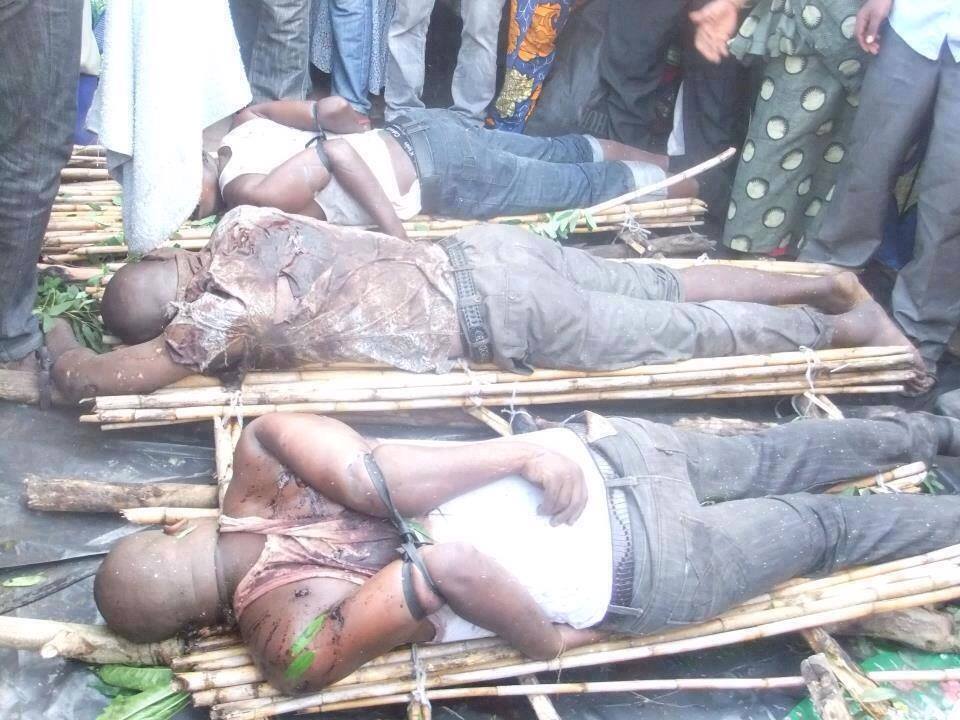
RWANDA/BURUNDI: Rotting bodies with bound limbs or stuffed in sacks,…

Some of dead bodies carried down by Akagera river into lake Rweru. Geographical situation hints that these bodies came undoubtedly from RWANDA. This takes place months after Human Rights Watch and the US State Department reported thousands of missing persons in Rwanda. Admin

Where they have come from and why they are there remains a mystery. Investigations have stalled as the case embarrasses Burundi and its powerful neighbour denies all knowledge.

Officially, just four bodies were found tied up in sacks last month – already enough to set alarm bells ringing in a region scarred by decades of political unrest and serious rights abuses.

Fishermen report seeing as many as 10 times that number, carried by the currents in the lake 270km north-east of Bujumbura.

Late last month a joint Burundi-Rwanda commission was set up to find the origin of the bodies, and Burundi’s presidential spokesman Willy Nyamitwe repeated this week that the two countries were working together on the case.

But on the ground, little seems to be done to unravel the mystery.

“On our side, we investigated by asking leaders in the area if there were any missing people, and they said no,” said local Burundian governor Aline Manirabarusha.

One diplomat in Burundi’s capital Bujumbura says the bodies were buried without an autopsy.

“It means that the people can never be identified, or know where they come from,” the diplomat said.

In 2006, the bodies of Burundian opponents murdered in political violence were thrown into various rivers in the country.

That was the year Burundi emerged from more than a decade of brutal civil war, and its political climate remains fractious ahead of presidential polls due next June.

Neighbouring Rwanda is led by strongman President Paul Kagame, who despite being credited with overseeing dramatic economic advances while in office, has also come in for mounting criticism for suppressing dissent, including the alleged assassinations of exiled opposition figures.

On both banks of Lake Rweru, which is 10km long, residents say they are sure the bodies were washed downstream by the Nyabarongo-Kagera river.

The river originates in Rwanda before flowing into Lake Rweru, on into Burundi and Tanzania, and emptying into Lake Victoria.

It has a grim history: during the Rwandan genocide in 1994, the bodies of some of those massacred floated down the river.

Near the water, a young Rwandan farmer describes how the main river, which splits into different channels, has in recent months taken a new path.

That is why the bodies have appeared in the lake, he says.

“Had they remained in the Kagera river, the injustice would never have come to light,” said the farmer, who lives with his family in a small hut at the edge of the river, a short boat ride from the border with Burundi.

“It was God who wanted these crimes not to go unpunished.”

The farmer says he has seen around 20 bags containing bodies flowing downstream in the river.

Local residents say the bodies started coming in mid-July. But after discovering them, they pushed them back into the water, for fear of bringing trouble on themselves.

Local official Manirabarusha also insisted the bodies come “down the Kagera river”.

But asked if that means the bodies come from Rwanda, the governor declined to comment.

“I do not know where exactly the Kagera is… I forget, ask geographers who have studied this,” she said, visibly embarrassed.

A senior Burundi official, speaking on condition of anonymity, said the case may never be brought to light because “Burundi will sacrifice the truth on the altar of its relations with Kigali”.

“It is crucial, because Burundi cannot afford to antagonise its powerful neighbour,” he said.

When contacted by AFP, Rwandan police spokesman Damas Gatera dismissed any suggestion the bodies have come from his country.

“There were no dead bodies in Rwanda or found in Rwanda, the ones we are talking about were found in Burundi,” he said.

When asked why Rwandan farmers have been ordered not to talk to journalists in the area, he said he did not know. – Sapa-AFP

source: iol.co.za

Rwanda : «#Twahisemo » kwica abanyarwanda tukabajugunya mu kiyaga cya RWERU !

ob_2f2387_kabarebe
Kuva mu kwezi kwa gatatu uyu mwaka, abanyarwanda bakomeje kunyerezwa ku bwinshi n’inzego zishinzwe umutekano za Paul Kagame, izo nzego zageze naho zishimuta abanyarwanda bafite ubuhungiro muri Uganda harimo Lt Joel Mutabazi, nyuma zikurikizaho abandi banyarwanda benshi barimo n’abarwanashyaka ba PS Imberakuri bari muri Uganda n’imbere mu gihugu. Kubera igitutu cy’abanyamakuru mpuzamahanga bari baje mu kwibuka imyaka 20 jenoside ibaye mu Rwanda, byatumye polisi y’u Rwanda igaragaza Kizito  Mihigo na Ntamuhanga bari bamaze kunyerezwa mu ntangiriro z’ukwezi kwa Mata 2014, naho ubundi ibyabo byari kuba byararangiye, ubu baba barageze mu kiyaga cya Rweru  nk’abandi bose tubona!
Abanyarwanda barababaye cyane kubera uko kunyerezwa no kwicwa bakajugunywa mu biyaga bakajya kuribwa n’ingona nta cyaha bazi bakoze, abandi banyarwanda byitwa ko bagihumeka bakaba bari kwicwa n’inzara ndetse n’indwara ya Bwaki bitewe na leta yategetse abaturage guhinga igihingwa kimwe, abacuruzi bari kwamburwa utwabo ngo ntibatanga imisoro ihagije, abakozi ba leta ntibagihembwa n’ababonye uwo mushahara leta iwugabanya uko ishatse umukozi agaceceka ngo batamukubita agafuni bakamushyira mu mufuka bakajugunya muri Rweru!
Nubwo bimeze gutyo ariko, biratangaje kubona Paul Kagame ajya kwidegembya muri Amerika (USA) ngo agiye muri rwanda day, icyo gihugu kikamwemerera kwidegembya kandi kizi neza ko yamariye abaturage mu kiyaga cya Rweru ! Kabarebe n’izindi nkomamashyi ubu zikingira ikibaba Paul Kagame zikaba zarahawe akazina k’akabyiniriro ko kwitwa KAPOTE ZA KAGAME bari kwirirwa bandika ku mbuga za interineti ijambo ryitwa ngo « #twahisemo» ! Nyuma y’ako kababaro kose abanyarwanda bafite, Kabarebe agatinyuka akavuga ngo «#Twahisemo umutekano w’abanyarwanda » ! None se iriya mirambo y’abanyarwanda iri mu kiyaga cya Rweru si abanyarwanda ? Ruriya rupfu yabahaye  niwo mutekano yabahitiyemo ?
Muri perefegitura ya Ruhengeri honyine (dore ko bakuyeho amazina ya komine na perefegitura kugira ngo bajijishe ngo ubwicanyi bakora mu gihugu butazamenyekana), abantu barenga 2000 bamaze kunyerezwa n’inkotanyi ! Mu nkuru yasohowe na RFI kuwa kane, umuryango w’ibihugu by’ubumwe bw’iburayi na HRW birasaba ko haba iperereza ryimbitse ku mirambo iri gutoragurwa mu kiyaga cya Rweru ariko abicanyi bayoboye u Rwanda muri iki gihe, bo bavuga ko ntamuturage wigeze abura mu Rwanda, ko mbese iby’iyo mirambo ntacyo bibabwiye ,kandi birumvikana kuko abo bategetsi nibo bishe abo bantu!
Umushakashatsi witwa Clément Boursin ukorera umuryango urwanya iyicarubozo muri Afurika witwa ACAT, yabwiye radiyo mpuzamahanga ya RFI ko amagambo avugwa na HRW kimwe n’ibihugu by’i Burayi adahagije, ahubwo umuryango mpuzamahanga ugomba gukora iperereza ritabogamye rigomba kwerekana imyirondoro y’abantu bishwe, ababishe, uko babishe n’igihugu abo bishwe bakomokamo. Ntabwo iryo perereza ryakorwa n’abayobozi b’u Rwanda kandi aribo babishe ! Uwo mushakashatsi yavuzeko amahanga yicecekeye ku berako amahano yakozwe n’u Rwanda kandi ruhagarikiwe n’ingwe (USA) kandi hari ibimenyetso bidashidikanywaho byerekana ko abo bantu bishwe ari abanyarwanda kandi bakicwa ku buryo bwitondewe n’abantu babitojwe !
Umwe mu bahanga bazi amategeko mpuzamahanga asanga kuba imirambo igaragara mu kiyaga cya Rweru iba iziritse amaguru n’amaboko kandi iri mu mifuka, byerekana ko abo bantu bazize ubwicanyi buteguwe, akaba ari ngombwa gukora iperereza kuri ubwo bwicanyi kuko bigaragara ko ari ubwicanyi bukoranye ubugome bukomeye kuburyo amahanga atagomba guceceka ! Hagati aho, abaturage baturiye akarere ka Ruhengeri batangiye kwandikira ibinyamakuru ngo bibafashe gutabariza abantu babo banyerejwe mu kwezi kwa kamena (6) uyu mwaka ubu akaba ntagakuru kabo bafite ; abo baturage basabye umuyobozi w’akarere ka Musanze Madame Mpembyemungu Winfrida kimwe na Bwana Rwabugande Benon ushinzwe maneko za FPR muri ako karere kugarura abo bashimuswe kuko aribo babatwaye ariko abo bayobozi batereye agati mu ryinyo !
Dore urutonde rw’abantu bake banyerejwe mu Ruhengeri rumaze kugera mu binyamakuru :
Aya Namazina Yabantu Baherutse Gushimutwa Na Dmi Ya Fpr Mukarere Ka Musanze (Ruhengeri) Mukwezi Kwa Gatandatu Gusa (The Following Is A List Of People From Musanze District Who Were Picked Up By The Rwandan Dmi In June 2014 And Never Returned Home)
AMAZINA/NAMES
AHO BAKOMOKA/LOCALITY
1.    Kamana Deogratias
Busogo
2.    Niyitanga Chantal
Busogo
3.    Ngezahayo J.M.V
Busogo
4.    Niyitegeka Antoine
Busogo
5.    Josephine M
Byangabo
6.    Kanyamuhanda Faustin
Byangabo
7.    Anastase Ahorwabaye
Byangabo
8.    Habarurema J Luc
Kabyaza
9.    NDAHAYO THEOPHILE
Kabyaza
10.  Umutoni Jeannine
Kabyaza
11.  Uzabuwe Kagoyire
Kabyaza
12.  Uwiduhaye
Kabyaza
13.  RUGWIZA Alice
Shingiro
14.  Céline Nyirarudodo
Cyuve
15.  RUTAGANDA PASCAL
Cyuve
16.  Tungunika Aimee
Shingiro
17.  Akingeneye Jeannette
Shingiro
18.  Ndeka Boka
Kubuguzo
19.  Espérance Mugirishyaka
Shingiro
20.  Renovat Ngwabije
Shingiro
21.  Mukagatare Joséphine
Kibuguzo
22.  KAMPIRE M. Anne
Kabyaza
23.  Vincent Ndikumana
Kabyaza
24.  Habyarimana Jerome
Kabyaza
25.  Barabwiriza Aimable
Kimonyi
26.  Sindayigaya Marie
Kimonyi
27.  UWAYEZU Cheryne
Kimonyi
28.  Kambari Kamateke
Nyange
29.  Gatima sonia
Nyange
30.  Mutima Jeanne d’arc
Shingiro
31.  Ndahayo Shumbusho
Shingiro
32.  Mbanje Mutangana
Shingiro
33.  Mbanzabugabo Elie
Shingiro
34.  Dusabe Angelique
Shingiro
35.  Mukesha Epimaque
Gacaca
36.  Majyambere Eliab
Gacaca
37.  Kamana Yoshua
Gacaca
38.  Karimunda Isaac
Gacaca
39.  Byuma Sebagabo
Gashaki
40.  Mwambara Leonard
Gashaki
41.  Nsabagasani Jules
Gashaki
42.  Ntuyenabo Deogratias
Kinigi
43.  Havugimana Jean Damas
Kinigi
44.  Rubondo Jules
Busogo
45.  Mbonabucya Froduard
Kinigi
46.  Nkundakozera Elie
Busogo
47.  Nkuriyingoma Ephraim
Busogo
48.  Twagirayezu Yvone
Kabyaza
49.  Nizeyimana Camarade
Kabyaza
50.  Afrika Clémentine Uwase
 Kabyaza
51.  Karangwa Karimwabo
Gataraga
52.  Nsengiyaremye Epa
Mutobo
53.  MATABARO Aimable
Gataraga
54.  GIRUKUBONYE JMV
Gataraga
55.  Karimwabo Samwel
Gataraga
56.  Twagirayesu Schadrack
Gataraga
57.  Gerard Nduwayezu
Gataraga
58.  Nshimiyimana Jean François
Gataraga
59.  Bizumuremyi Yves
Gataraga
60.  Mbakuriyemo Ayub
Gataraga
61.  Bihoyiki Yohwana
Mutobo
62.  Mujyarugamba Philip
Shingiro
63.  Badeshi Papias
Shingiro
64.  Munyantarama Elizaphan
Mutobo
65.  Ndabalinze Anatole
Bukamba
66.  Habumuremyi Anastase
Bukamba
67.  Makabuza JeanPaul
Bukamba
68.  Ndimuto Calixte
Bukamba
69.  Namahoro Aline
Bukamba
70.  Uwineza Henriette
Bukamba
71.  Ntamakuliro Jack
Bukamba
72.  Mukamusoni Ancille
Kinigi
73.  Uzabakiliho
Kinigi
74.  Hitimana J.
Kinigi
75.  Mbonigaba P
Nyange
76.  Uwimana Antoine
Nyange
77.  MILIMO Burungi
Nyange
78.  Serushago Benestoli
Kinigi
79.  Nkurukiyingoma A.
Kinigi
80.  Nzamutuma E
Bugarura
81.  Uwimana Aloysia
Bugarura
82.  Ndibwami Jean
Bugarura
83.  Murorunkwere Beatrice
Ubwanditsi  
 Source: Veritasinfo.fr

La guerre n’est pas la réponse.

Pope_Francis_in_March_2013

Pape François

La guerre est une folie «dont l’humanité n’a pas encore appris la leçon». Avec le souvenir encore vif dans son cœur de la visite accomplie le jour précédent à Redipuglia, à l’Angelus du dimanche 14 septembre le Pape a également parlé des conflits «qui aujourd’hui encore sont en cours» dans diverses parties du monde. En se demandant «quand nous apprendrons cette leçon» que l’histoire continue à donner aux hommes sans résultats appréciables, il a invité «à regarder Jésus crucifié pour comprendre que la haine et le mal sont vaincus par le pardon et le bien», et pour comprendre une fois pour toutes «que la réponse de la guerre ne fait qu’augmenter le mal et la mort».

A ce propos, il a cité les « chiffres effrayants» de la Grande guerre — «on parle de près de 8 millions de jeunes soldats tombés et de près de 7 millions de personnes civiles» — et plusieurs drames qui frappent l’humanité en ce moment historique particulier: comme le conflit en cours en République centrafricaine, où aujourd’hui (lundì 15) commence officiellement la mission organisée par les Nations unies pour favoriser la pacification du pays et protéger la population. Le Pape a assuré de «l’engagement et de la prière de l’Eglise catholique» et encouragé «l’effort de la Communauté internationale», en souhaitant que «la violence cède la place au dialogue» et que «les factions opposées laissent de côté les intérêts particuliers et œuvrent afin que chaque citoyen, quelle que soit l’ethnie et la religion à laquelle il appartient, puisse collaborer» au bien commun.

Rappelant la fête liturgique de l’exaltation de la Sainte-Croix, la pensée émue du Pape François est en outre allée aux «nombreux frères et sœurs qui sont poursuivis et tués à cause de leur fidélité au Christ», en particulier «là où la liberté de religion n’est pas encore garantie ou pleinement mise en application».

Enfin, le Pape a confié à la protection de la Vierge Marie les vingt couples d’époux que, peu auparavant, il avait unis en mariage dans la basilique Vaticane.

– See more at: www.osservatoreromano.va

Cadavres du lac Rweru: la présidence burundaise répond à HRW

imirambo

L’organisation de défense des droits de l’homme Human Rights Watch (HRW) avait appelé, mardi 16 septembre, les gouvernements rwandais et burundais à enquêter après la découverte de plusieurs corps sur les rives du lac Rweru, à la frontière entre les deux pays. La présidence du Burundi, par la voix de son conseiller en communication, Willy Nyamitwe, joint par RFI, assure que des enquêtes sont menées en synergie par les polices rwandaises et burundaises.

« On ne peut pas dire que les enquêtes sont au point mort », insiste le conseiller en communication du président burundais Pierre Nkurunziza.

« Les autorités burundaises et rwandaises sont en train de travailler en synergie pour essayer de comprendre ce qui s’est passé. Vous savez, quand vous voyez des corps en décomposition, ça crée des inquiétudes », poursuit Willy Nyamitwe.

Human Rights Watch ainsi que d’autres organisations de défense des droits de l’homme s’étaient étonnées que les corps retrouvés flottant sur le lac Rweru soient immédiatement enterrés, enlevant tout espoir d’identification des victimes.

Des risques sanitaires

« Ce n’est qu’une question de principe. Des corps qui sont déjà en décomposition doivent être enterrés », explique encore le conseiller à la présidence burundaise, évoquant des risques sanitaires pour les populations riveraines du lac.

RFI avait recueilli des témoignages au Burundi ainsi qu’au Rwanda de riverains et pêcheurs qui assuraient que ces corps provenaient de la rivière Akagera, située du côté rwandais de la frontière.

« La seule chose que nous pouvons confirmer, c’est que ces corps ne proviennent pas du Burundi, parce qu’ils ont été charriés par cette rivière », ajoute Willy Nyamitwe.

Le conseiller à la présidence du Burundi se refuse à tout commentaire concernant la provenance de ces corps « en attendant les résultats des investigations en cours ».

Willy Nyamitwe assure que les relations entre le Rwanda et le Burundi sont « au beau fixe ». Néanmoins, précise-t-il, « nous ne sacrifions aucune victime au nom de ces bonnes relations. Ce qui s’est passé est condamnable et le Burundi ne peut que s’associer à tout effort afin de déterminer ce qui s’est passé. Le Burundi est gêné, quand même, de continuer à enterrer des corps qui ne proviennent pas de notre territoire », a-t-il conclu.

Source:  RFI

ACQUITTED RWANDAN GENERAL TO GO TO BELGIUM

ALeqM5iO1jWxuSHnqngQLaY5k-0LTHTQ4Q

General Augustin Ndindiliyimana

Belgium has granted a visa to former Rwandan gendarmerie boss Augustin Ndindiliyimana, who was acquitted of genocide by the International Criminal Tribunal for Rwanda (ICTR), Hirondelle learned on Wednesday.

“General Ndindiliyimana has obtained a Belgian visa and is packing his suitcases,” said a source at the ICTR Registry who wished not to be named. This information was confirmed by other acquitted persons who spoke to Hirondelle in the corridors of the Tribunal.

Ndindiliyimana was convicted by a trial court in May 2011 and sentenced to 11 years in jail, but was acquitted by the ICTR Appeals Chamber last February.

He had been charged with crimes committed by his subordinates during the 1994 genocide, but the appeals judges found that he did not have effective control over the gendarmes that were deployed to fight rebels of the Rwandan Patriotic Front (now in power in Kigali) because they came under the command of the army chief of staff.

The judges also found that Ndindiliyimana, an officer from southern Rwanda who was also a Minister of Defence, opposed the massacres.

Relocating ICTR acquitted persons and convicts who have served their sentences is an ongoing headache for the Tribunal. These individuals refuse to return to Rwanda, saying they fear for their security.

As well as Ndindiliyimana, the ICTR houses and feeds eight acquitted persons and three who have served their sentences in the Tanzanian town of Arusha where it is based.

The UN Security Council has already adopted two resolutions calling on member states to host ICTR acquitted persons and convicts who have served their sentences, but these resolutions are not binding.

The ICTR Statute provides that states must cooperate in the arrest and transfer of accused persons, but it makes no mention of what should happen to acquitted persons and those who have served their sentences.

The eight acquitted in search of a host country include three former ministers, a general and a colonel as well as Protais Zigiranyirazo, brother-in-law of former president Juvénal Habyarimana whose assassination on April 6, 1994 triggered the Rwandan genocide.

They all want to join their families in Western countries.

The one who has been waiting the longest is former Transport Minister André Ntagerura who was acquitted in February 2004.

Five acquitted persons have been relocated up to now. France has taken two, while Switzerland, Belgium and Italy have each taken one.

Source:http://www.hirondellenews.com/ictr-rwanda/1038-collaboration-with-states/34827-170914–ictrbelgium–acquitted-rwandan-general-to-go-to-belgium