Category Archives: News

1/7/1962 : TWIZIHIZE ISABUKURU Y’UBWIGENGE TUZIBUKIRA POLITIKI YA « SHINJAGIRA USHIRA » YAZANYWE NA POLO KAGAME.

Ijambo rya Perezida wa Guverinoma y’u Rwanda ikorera mu buhungiro

Banyarwandakazi,
Banyarwanda,
Baturanyi namwe ncuti z’Abanyarwanda,

Imyaka 55 irashize u Rwanda rwinjiye mu ruhando rw’amahanga nk’igihugu cyigenga.

  1. Hari taliki ya mbere Nyakanga 1962 ubwo ibendera rya Repubulika y’u Rwanda ryatumbagizwaga mu bicu bwa mbere ari nako ibendera ry’ubwami bw’Ababiligi ryururutswa bwa nyuma ku butaka bw’u Rwanda. Uwo munsi kandi haririmbwe indirimbo nshya, indirimbo yubahiriza igihugu igira iti :

    « Impundu nizivuge mu Rwanda hose
    Repubulika yakuye ubuhake
    ubukolonize bwagiye nk’ifuni iheze
    Shinga umuzi demokarasi waduhaye kwitorera abategetsi
    Banyarwanda : abakuru namwe bato mwizihiye u Rwanda
    Turubumbatire mu mahoro mu kuri, mu bwigenge no mu bwumvikane »

  2. Ibyabaye byose kuri uwo munsi bifite igisobanuro gihanitse kandi gifite ingaruka zikomeye zari zigiye kugaragara mu mikorere y’igihugu no mu buzima bw’abenegihugu.
  3. Kuva uwo munsi igihugu cyari cyihaye inshingano yo gukora ibishoboka byose kugirango buri mwenegihugu yishyire yizane, abeho mu mahoro kandi afashwe kugera ku munezero yifuza, we n’abe.
  4. Taliki ya mbere Nyakanga yasinye iherezo rya politiki ya gihake, isezerera na mpatsibihugu yahatiraga umunyarwanda kwiyibagirwa ari nako aruhira guteza imbere inyungu z’abanyamahanga.
  5. Taliki ya mbere Nyakanga yari ije guca burundi ipfunwe ryo kwitwa umuja mu gihugu cyawe.
  6. Taliki ya mbere Nyakanga ni ishingiro ry’Ishema buri munyarwanda wese agomba kwiyumvamo, ryahungabana agafata umuheto akarirwanirira byaba ngombwa akaripfira . Nka Habarurema JD abaturage baricwa urubozo buri munsiBanyarwandakazi, Banyarwanda,
    Baturanyi namwe ncuti z’Abanyarwanda,
  7. Mu gihe twizihiza ku ncuro ya 55 isabukuru y’ubwigenge bw’u Rwanda, biteye umujinya n’agahinda kubona abitwa abategetsi b’u Rwanda muri iki gihe nta gaciro bagiha iyo taliki nziza. Icyo ni ikimenyetso cya mbere simusiga kigaragaza ko u Rwanda rwasubijwe mu icuraburindi ritambukije ubukana iryo mu gihe cy’ingoma ya gihake na gikolonize.
  8. Ku ngoma ya FPR-Inkotanyi, ikiboko cyaragarutse, abenegihugu barakubitwa buri munsi ndetse bakandagiwe ku gakanu
  9. Ku ngoma ya Paul Kagame, abenegihugu nta gaciro bakigira, bararaswa ku manywa y’ihangu nk’ibisimba bitagira kirengera ; uwiciwe ntiyemerewe kunama no kuyagirwa.
  10. Ku ngoma ya Paul Kagame nta munyarwanda ukigira umutungo we bwite ntavogerwa, « umuco wo kunyaga » waragarutse, abambuzi ba FPR bagutwara ibyawe izuba riva, kandi uwarenganyijwe ntagire aho aregera.
  11. Kugoma ya Paul Kagame amazu y’abaturage arasenywa ; bakamburwa amasambu yabo ; bagacibwa imisoro, amakoro n’amahoro by’urudaca ; bakarandurirwa imyaka ; bagatindahazwa nkana, bakicishwa inzara…
  12. Muri iki gihe urubyiruko nta mirimo rubona, rurakennye, rurashonje, kandi ntirugira kirengera.Banyarwakazi, Banyarwanda
    Baturanyi namwe ncuti z’Abanyarwanda
  13. Hejuru y’ayo mahano akorerwa Abanyarwanda, Paul Kagame n’Agatsiko ke ntibaterwa isoni no kongera umurego mu gucengeza poliki yabo ruvumwa ya « Shinjagira ushira ».
  14. Paul Kagame arasaba abanyarwanda bahinduwe abatindi nyakujya ngo nibarenzeho birarire, bereke amahanga ko ariwe wabakuye mu bukene bidasubirwaho.
  15. Paul Kagame arahatira urubyiruko rwihebye kubera ubushomeri, ivangura n’ubukene, « kwishongora » ngo u Rwanda ruyobowe na « Visionary Leader » kandi ahubwo rwaragushije ishyano ryo kwigarurirwa n’umurwayi urembye kurusha « Yuhi Mazimapaka » !
  16. Paul Kagame arirukana abandi bakandida rubanda ishaka kwitoreramo abategetsi hanyuma agahatira abaturage kwikiriza intero y’abanyamurengwe ngo u « Rwanda rwahindutse icyitegererezo mu miyoborere myiza », ngo Kagame ni « Umudemokarate » wavukanye imbuto, akaba ariwe wenyine ushoboye kuyobora, abandi banyarwanda bose bakaba ari ibibwa gusa .
  17. Paul Kagame aracira abenegihugu ishyanga akababuza gusubira mu gihugu cyabo, ariko agategereza ko birirwa bamusingiza bamuvuga ibigwi ngo ataraba umutegetsi u Rwanda ntirwari ruriho !
  18. Paul Kagame aratwicira abantu buri munsi agashaka ko tumushimira ndetse tukamutura n’amayoga !


Banyarwandakazi,
Banyarwanda,
Baturanyi namwe ncuti z’Abanyarwanda,

  1. Ninde utabona neza ko uyu Paul Kagame n’Agatsiko ke na politiki yabo ya « Shinjagira ushira » bitakijyanye n’ibihe tugezemo ? Ninde wahakana ko imikorere mibisha y’uyu munyagitugu imaze kurambira Abanyarwanda ku buryo budasubirwaho ? Ninde wahamya ko Abanyarwanda bazongera kumwihanganira indi myaka irindwi…. Ninde wakwifuza kuguma muri ubu bucakara kuzageza mu mwaka 2034 ?
  2. Niyo mpamvu nsanga abenegihugu tubyumva kimwe twari dukwiye kwihutira guhindura imyumvire n’imikorere bityo tugafata umwanzuro wa kigabo.
  3. Muri iki gihe, U Rwanda rukeneye Abarwanashyaka banganya ubutwari n’abarukuye mu minwe ya gihake na gikolonize.
  4. Muri iki gihe, U Rwanda rukeneye ko haboneka abarwitangira bakarema urugamba rwo kurugarurira ubwigenge.
  5. Muri iki gihe, u Rwanda rukeneye impinduramitegekere yihuse kugira ngo igihugu gisubizwe mu nzira nzima amazi atararenga inkombe.
  6. Hakenewe abenegihugu bahaguruka bakanga agasuzuguro, bagakora Revolisiyo
  7. Hakenewe abenegihugu babangukira guhagarika abakoresha intwaro zica abenegihu kandi zari zaraguriwe kubarinda
  8. Kuko u Rwanda ruri mu kaga, abenegihugu bakaba batsikamiwe n’ubutegetsi budashoboye kandi budashobotse, hakenewe ko wowe nanjye duhaguruka tukitangira u Rwanda, buri wese mu nzira imubangukiye.
  9. Biturutse ku bwitange bwawe nanjye,Impundu zizongera zivuge mu Rwanda hoseAbanyarwanda bazasubiza umutima mugitereko,Basubirane icyizere cyo kubaho,mu bwingenge no mu bwumvikane.
  10. Mbifurije mwese isabukuru nziza y’ubwigenge
  11. Twifurije kandi isabukuru nziza abavukanyi bo mu Burundi nabo bariho bahimbaza iyi taliki . Imana ihe umugisha igihugu cyabo , ibagwirize ubutunzi, amahoro n’umutekano.

Harakavumwa politiki ya « shinjagira ushira »
Harakabaho u Rwanda rwigenga
Harakabaho Abenegihugu bishyira bakizana mu gihugu cyabo.

Uwanyu Padiri Thomas Nahimana,


Perezida wa Guverinoma ya rubanda ikorera mu buhungiro

This is how Gacaca Courts were used to build an authoritarian regime in Rwanda!

inkiko-gacaca

Often lauded by international observers, Rwanda’s gacaca courts have long been held up by their proponents as a model for successful, post-conflict reconciliation efforts. Confronted with the nearly impossible challenge of rebuilding a country after genocide, Rwanda needed a mechanism to hold those who committed genocide accountable in an efficient and effective manner. The solution was gacaca: a system of 12,000 community-based courts that sought to try genocide criminals while promoting forgiveness by victims, ownership of guilt by criminals, and reconciliation in communities as a way to move forward. While the organizers and leaders of the genocide were mostly sent for trial at the International Criminal Tribunal for Rwanda in Arusha, Tanzania, gacaca courts tried more than  1 million ordinary people who served as the foot soldiers of the genocide.

Relying on dozens of interviews, quantitative analysis of data on genocide crime prisoners, and firsthand observations of gacaca court proceedings in four regions of Rwanda, Anuradha Chakravarty’s new book suggests that the reality of gacaca is much more complicated. In “Investing in Authoritarian Rule: Punishment and Patronage in Rwanda’s Gacaca Courts for Genocide Crimes,” Chakravarty offers a detailed and nuanced look at the ways that Rwanda’s ruling party used the courts to build its own legitimacy, as well as the ways that participants in the courts viewed their role in punishing the guilty through the gacaca process.

Her findings are unsettling and suggest that the gacaca process was far more political and much less conciliatory than the casual observer might want to believe. Chakravarty’s central argument is that Rwanda’s ruling party, the Tutsi-dominated Rwandan Patriotic Front (RPF), used gacaca courts as a tool of patronage to build the new, post-genocide government’s legitimacy, which in turn allowed the RPF to entrench its rule into the virtually unchallenged authoritarian system in Rwanda today.

Chakravarty convincingly demonstrates that the RPF’s post-genocide consolidation of power in Rwanda evolved based on the cooperation of individual Hutus, who constitute the vast majority of Rwanda’s population and many of whom had committed genocide crimes. While the early RPF consolidation of power “depended on the use of blatant force through killings and arbitrary arrests,” as time passed a system of mutual benefit developed between the RPF and the majority Hutu population it sought to rule. Writes Chakravarty:

In denouncing others, submitting self-incriminating confessions, and judging their friends and co-ethnics, thousands upon thousands of individual Hutu acted upon and enforced RPF rules, reinforcing the regime with their cooperation in exchange for reduced sentences, security guarantees, the possibility of private gains in the form of personal vengeance or economic windfalls, and opportunities to access public power and social prestige. The RPF unleashed a stream of individualized benefits and sanctions that made “opportunistic investors” of ordinary Hutu who backed RPF rule in their own interests.

Thus it was that through the strengthening of a form of patronage that provided Hutus with protection from problems and access to opportunities, it was Hutus themselves who built and reinforced the RPF’s authoritarian rule, particularly through participation in and performance at the gacaca courts.

This incentive-based relationship, though, was not without risks. Because the RPF was the only option for any Hutu seeking to gain better status or avoid worse punishment for crimes, those Hutus had no choice but to work within the RPF’s system of patronage, but this did not mean that most Hutus accepted “that the RPF were legitimate rulers with the requisite clean hands.”

Importantly, Chakravarty does not argue that the RPF intended this outcome from the gacaca process; rather, the social processes of clientelism and increasing authoritarian control evolved over time in response to the incentives that  gacaca  and other post-conflict rebuilding processes set in place. She grounds her findings in a deep understanding of the role patronage relationships have played in Rwandan history and argues that clientelism has always driven relationships between powerful and ordinary actors in Rwanda. Thus, the decision to go along with the gacaca proceedings was a case in which “vulnerable individuals implicitly understood that they needed to solicit the protection and good will of this unrivaled patron.”

Unfortunately, these incentives led to negative outcomes for many Rwandans, particularly those who were falsely accused of participation in genocide. Chakravarty shows how Rwandans, faced with competing loyalties to different family and clan members alongside the need to demonstrate commitment to the gacaca courts, made decisions about whom to denounce and at what times to do so. Fortunately, she finds that “gacaca courts had secured some local peace,” preventing further violence and limiting the space for disputes to escalate into more dangerous situations. That limited space is a double-edged sword, however, as authoritarian control is essential to maintaining it.

Chakravarty’s findings suggest the need for much more scholarly work on the “tacit bargains” that govern relations between elites and mass publics in the aftermath of atrocity crimes; as she notes, the bargain expressed in and built through the gacaca process is not an inter-elite legislative or ruling party bargain, but rather “an informal elite-mass social contract that consolidated the new order by tying the new elites to their social constituents, and demonstrating to them (‘clients’) the benefits of cooperating with and advancing within the system.” Of particular interest is a question Chakravarty raises in the context of comparison with Nazi Germany’s postwar accountability and justice processes: the ways that individual citizens having a choice of patrons rather than being forced to rely on a sole patron (as in Rwandan) influences outcomes in modern transitional justice processes.

Chakravarty’s work is an indispensable read for anyone interested in transitional justice, post-conflict reconciliation or Africa’s Great Lakes region. Comments from her subjects on topics ranging from how Hutus and Tutsis perceive the RPF’s dominance to whether the gacaca courts actually provided justice offer invaluable insight into how ordinary Rwandans think about their relationship to their government and whether reconciliation has really happened since the genocide ended. Chakravarty does not evaluate whethergacaca was a success, nor does she claim that gacaca was Rwanda’s only potential path to authoritarian rule, but her findings should compel more scholars to explore comparative cases in which vulnerable populations might respond to incentives that lead to the consolidation of authoritarian rule in the wake of mass atrocities.


Laura Seay is an Assistant Professor of Government at Colby College. She studies African politics, conflict, and development, with a focus on central Africa. She has also written for Foreign Policy, The Atlantic, Guernica, and Al Jazeera English

Source: https://www.washingtonpost.com/news/monkey-cage/wp/2017/06/02/59162/?utm_term=.e3db11738e7b

The Rwandan People Government in exile on an official visit in Australia.

GREX Australie

Press release no: 001/5/2017

  1. The Rwandan People Government in Exile official visit in Australia
    Considering the planning and the priorities set by the Rwandan People Government in Exile;
  2. After important consultations with some US Government Officials in March, 2017;
  3. From the date of 19th May, 2017, the delegation of the Rwandan People Government in exile, led by H.E Father Thomas NAHIMANA, the President , is in official visit in Australia;
  4. This visit aims at alerting the international community and nations friends of Rwanda the following:

a) Paul Kagame is leading a military dictatorship and oppressive regime that ultimately gives him the power to kill democracy and human rights in Rwanda. He has also maneuvered 2015 Referendum results as a false excuse for him to cling to power,

b) Since Paul Kagame is not confident of winning the elections by universal suffrage and feeling the political pressure the opposition is exerting on him, he has closed political space and as a proof, he has refused entry to Rwanda to Father Thomas NAHIMANA (Leader of Ishema Party and the New Generation Movement) and his delegation on November 23, 2016, and January 23, 2017, respectively. Father Thomas NAHIMANA had a plan to register ISHEMA political party and participate in the upcoming presidential elections taking place on 3-4th August, 2017. This decision confirms Kagame’s intention to refuse the rights of Rwandan people to repatriate and contribute to the development of their home country.

c) Kigali dictatorial and discriminatory regime is wasting lots of money trying to force african countries harboring Rwandan refugees to forcibly repatriate them when their leaders cannot be given access to Rwandan soil.
d) The government of Rwanda in exile ask the international community and the donor partners of Rwanda to exert pressure on Kagame’s regime for some specific reasons:

1. Opening talks with the Rwandan People Goverovernment in exile.
2. Unconditional release of all political prisoners including madam Victoire INGABIRE and Mr. Deogratias MUSHAYIDI.
3. Postponing the presidential elections.
4. Forming a transition government including opposition parties that will prepare free and fair elections.
5. When Kagame refuses to listen to the voice of rwandan people and intentionally rejects the political inclusion in Rwanda, he should be held responsible for any consequences this can cause.

Conclusion
5. The delegation of the Rwandan People Government in exile led by H.E Father Thomas NAHIMANA has great pleasure to thank various officials of Australian Government including members of parliament, senators, cabinet members, members of Senate’s Joint Standing Committee on Foreign Affairs, Défense and Trade, respectively, for their warm welcome and strong support to the Rwandan People Government in exile in achieving its main goal to bring all citizens « Together to Modernize Rwanda ».
6. The Rwandan People Government in exile will also meet religious leaders, investors, civil society and some Australian peace-keeper soldiers who were in Kibeho in 1995 when RPF army massacred more than 8,000 innocent people in a camp of internally displaced people.
7. The Rwandan People Government in exile is also planning to meet Rwandans, Burundians and Congolese people living in Australia on 27-28th May 2017, in Adelaide. We, the Rwandan People Government in exile, invite all of you to come and share the experience with us; together we can find a way to promote peace and security in the Great Lakes Region.

Done in Canberra, Australia
On May 24, 2017
Madam Marine UWIMANA
Minister of Finance and Commerce

ITANGAZO NO 001/5/2017 : GUVERINOMA YA RUBANDA MU RUZINDUKO MU GIHUGU CYA AUSTRALIA

ITANGAZO NO 001/5/2017 RIGENEWE ITANGAZAMAKURU

GREX Australie

  1. Hakurikijwe ingengabihe y’ibikorwa byihutirwa Guverinoma y’u Rwanda ikorera mu buhungiro yagennye
  2. Nyuma yo guhura n’abayobozi b’igihugu cya Leta Zunze ubumwe z’Amerika mu kwezi kwa gatatu (Werurwe) 2017,

III. Guhera kuwa Gatanu tariki ya 19/05/2017, intumwa za Guverinoma y’u Rwanda ikorera mu buhungiro ziyobowe na Nyakubahwa Perezida Padiri Thomas NAHIMANA ziri mu ruzinduko mu gihugu cya Australia.

grex australie 1

  1. Uru ruzinduko rugamije gukomeza kwereka amahanga n’incuti z’u Rwanda ko :
    1.Umunyagitugu Paul Kagame akomeje gahunda z’ubwikanyize akaba kandi yariyemeje kwizirika ku butegetsi ku buryo bunyuranyije n’amategeko kandi buhabanye n’ubupfura bukwiye kuranga abayobozi baharanira demokarasi no guteza imbere inyungu rusange z’Abenegihugu.
    2.Kubera ubugwari bumuranga n’ubwoba ahorana bwo gutsindwa amatora, Umunyagitugu Paul Kagame akomeje kwiharira wenyine urubuga rwa politiki bityo taliki ya 23/11/2016 n’iya 23/1/2017 akaba yarafashe icyemezo kigayitse cyo guheza hanze y’igihugu Nyakubahwa Padiri Thomas NAHIMANA n’intumwa yari ayoboye werekezaga mu Rwanda hagamijwe gufatanya n’Abanyarwanda gutangiza impinduka nziza bifuza mu miyoborere y’igihugu cyabo no guhatanira umwanya w’umukuru w’igihugu mu matora ateganyijwe taliki ya 3 n’iya 4/8/2017 . Icyo gikorwa cy’urugomo Paul Kagame yakoze kikaba cyaracuuje n’abandi benegihugu batari bake uburenganzira bwabo bwo gutaha mu Urwababyaye nta mususu, atari inkomamashyi n’abagereerwa.
  2. « Guverinoma y’Agatsiko » iyobowe n’Umunyagitugu Paul Kagame ikomeje gutanga ruswa mu bihugu binyuranye bya Afurika isaba ko impunzi zahunze ubutegetsi bwe bwubakiye ku ivangura n’akarengane zakwimwa ibyangombwa biziranga ahubwo zikajyanwa mu Rwanda ziboheye amaboko mu mugongo mu gihe Abalideri babo ba Politiki bo babuzwa gutaha.
    4.Umuryango mpuzamahanga muri rusange n’ibihugu bisanzwe bifasha u Rwanda ku buryo bw’umwihariko bikwiye gushyira igitutu ku munyagitugu Paul Kagame, agasabwa kureka amananiza akemera :
    (a)kwihutira kuganira na Guverinoma y’Urwanda ikorera mu buhungiro.
    (b) gufungura Abanyapolitiki bafungiye akamama barimo Madame Victoire Ingabire na Bwana Deogratias Mushayidi,
    (c)kwimura italiki y’amatora,
    (d) gushyiraho Guverinoma y’inzibacyuho irimo n’amashyaka ya Opozisiyo kugira ngo itegure amatora akozwe mu nzira y’umucyo n’ubwisanzure .
    (e) mu gihe yakomeza kwinangira umutima, agasuzugura ibyifuzo by’abanyarwanda akazafatwa nka nyirabayazana uhembera umwiryane n’intamabara z’urudaca mu bana bu Rwanda kandi akazabiryozwa.

UMWANZURO
V.Intumwa za Guverinoma y’u Rwanda ikorera mu buhungiro zirashima zibikuye ku mutima abategetsi banyuranye b’igihugu cya Australiya ( Abadepite ; Abasenateri ; Abaministri ; bamwe mu bagize Komisiyo nkusanyabikorwa ya Sena ishinzwe ububanyi n’amahanga, umutekano, ubucuruzi,n’uburenganzira bw’ikiremwamuntu), bazakiranye icyubahiro n’urugwiro bakemera no kuzatanga inkunga igaragara kugira ngo Guverinoma y’Urwanda ikorera mu buhungiro ishobore gusohoza inshingano nziza yihaye yo « Kunga Abenegihugu kugira ngo bafatanye kwiyubakira u Rwanda rujya mbere ».
VI.Intumwa za Guverinoma zirateganya kuganira n’abandi banya Australia banyuranye barimo Abanyamadini, Abashoramari, abikorera ku giti cyabo ndetse n’Abasilikari bari mu butumwa i Kibeho mu 1995, ubwo ingabo za Paul Kagame zaharimburiraga abenegihugu basaaga ibihumbi munani.
VII. Intumwa za « Guverinoma ya rubanda » zirateganya kandi kuzagenderera Abanyarwanda , Abarundi n’Abanyekongo batuye muri Australia kuva kuwa gatandatu tariki ya 27 kugera ku cyumweru tariki ya 28/05/2017 . Ibiganiro bizabera mu mujyi wa Adelaide. Muzaze muri benshi dukomeze kungurana ibitekerezo no kubagezaho gahunda zagirira akamaro Akarere kacu k’Ibiyaga Bigari.
Bikorewe i Canberra, Australia,
Taliki ya 24/5/2017
Madame Marine UWIMANA
Minisitiri w’imari n’ubucuruzi.

Guverinoma ikorera mu buhungiro igiye gushyiraho Urukiko rwa Rubanda …

Inama ya Guverinoma yashimye umushinga wa Ministeri y’ubutabera wo gushyiraho URUKIKO RWA RUBANDA rufite ububasha bwo gucira imanza Abategetsi bakoze kandi bakomeje gukora ibyaha byo guhemukira abaturage, ibyaha byibasira inyokomuntu, n’ibyaha by’intambara ariko bakaba batarabasha gushyikirizwa ubutabera bitewe n’uko bakingiwe ikibaba n’ubutegetsi bwa FPR-Inkotanyi.

Itangazo No 006/04/2017

IBYEMEZO BY’INAMA YA GUVERINOMA Y’U RWANDA IKORERA MU BUHUNGIRO YO KUWA 23 MATA 2017

Ku cyumweru tariki ya 23 /04/2017 hateranye Inama isanzwe ya Guverinoma y’u Rwanda ikorera mu buhungiro iyobowe na Nyakubahwa Padiri Thomas NAHIMANA, Perezida.
Ku murongo w’ibyigwa hari ingingo zikurikira :

  1. Gusuzuma, kugorora no kuzuza no kwemeza burundu raporo y’inama ya Guverinoma yateranye ku itariki ya 02/04/2017.
  2. Kurebera hamwe uko gahunda z’icyunamo zagenze
  3. Kungurana ibitekerezo ku mishinga yateguwe na za Ministeri iy’ubutabera, n’iy’ubutegetsi bw’igihugu n’iterambere ry’umurenge.

Izi ngingo zasuzumwe imwe ku yindi :

  1. Inama ya Guverinoma yemeje ibikubiye mu nyandikomvugo y’inama yo kuwa 02/04/2017 imaze kuyikorera ubugororangingo.
  2. Nyakubahwa Perezida wa Repubulika ikorera mu buhungiro yashimiye intumwa za Guverinoma ku butumwa zasohoje zifatanya n’Abanyarwanda muri gahunda zo kwibuka Abanyarwanda bazize jenoside nyarwanda. Inama ya Guverinoma yongeye gutsindagira ko hakwiye kubaho uburyo bushya bwo kwibuka hashyirwa imbere ukubaka ubumwe bw’umuryango nyarwanda kugira ngo babashe kwiteza imbere no kubaka u Rwanda rujya mbere. Gukomeza guhindura abenegihugu imbohe z’amateka ababaje ntibyubaka ahubwo birasenya.
  3. Inama ya Guverinoma yashimye umushinga wa Ministeri y’ubutabera wo gushyiraho URUKIKO RWA RUBANDA rufite ububasha bwo  gucira imanza Abategetsi bakoze kandi bakomeje gukora ibyaha byo guhemukira abaturage, ibyaha byibasira inyokomuntu, n’ibyaha by’intambara ariko bakaba batarabasha gushyikirizwa ubutabera bitewe n’uko bakingiwe ikibaba n’ubutegetsi bwa FPR-Inkotanyi.
    Inama yasabye Minisitiri ufite ubutabera mu nshingano ze kunonosora uwo mushinga afatanyije na Komisiyo ishinzwe uburenganzira bw’ikiremwamuntu, kandi bigakorwa mu gihe kitarambiranye. Abanyarwanda b’ingeri zose bafite uburenganzira bwo kuzaregera uru rukiko. Ibyerekeye imiterere, ububasha n’imikorere y’URUKIKO RWA RUBANDAbizagenwa n’iteka rya Perezida rizatangazwa mu minsi mike itaha.
  4. Inama ya Guverinoma yashimangiye kandi umushinga wateguwe na Ministeri y’ubutegetsi bw’igihugu n’iterambere ry’umurenge isaba ko wakwihutishwa kugira ngo ugezwe ku Banyarwanda.
  5. Mu gusoza, Inama ya Guverinoma yashimiye Abanyarwanda bakomeje kuyitera inkunga kandi yibutsa n’abasigaye ko u Rwanda ruzazamurwa n’amaboko y’abana barwo. Bityo no kugira ngo Guverinoma ibashe kugera ku ntego zayo zo gufasha abenegihugu kugera ku mpinduka nziza bifuza mu gihugu hagomba inkunga ya buri wese.


Bikorewe i Paris, tariki ya 27/04/2017
Chaste GAHUNDE
Minisitiri ushinzwe itangazamakuru


Didas GASANA: A rational inquiry into the ”Tutsi Genocide” and its declining currency as an export.

Something of fundamental importance happened last week in the Ethiopian capital Addis Abbeba. At the AU summit of heads of states, the AU peace and security commission’s proposal to send AU peace keepers to Burundi was unwelcome. That’s the basic message. But beneath the rejection lies a hidden message- that the world is waking up to the commercialization and politicization of a legal term “genocide”. This, assuming you know what underpinned the clamor for AU peacekeepers in Burundi, which has been aptly explained on this forum.

At the center of the trajectory lies a debate- and consequent exporting of it, of a genocide- central of which is what has been referred to as the “Tutsi genocide” of 1994. After the military 1 and 11 trials at the ICTR and the BBC’s untold story, the rejection of the AU PSC’s proposal is yet another indictment of people benefitting from the genocide currency.

In my earlier submissions, i presented a lot of legal literature on why the events of 1994 leave grey areas subject to a rational, legal inquiry. In this note, I intend to examine the events of 1994 from the RPA/F point of view.

To get to this; we need to examine the character of the RPA from the onset of the invasion. It is almost a “judicial notice” that prior to RPA invasion, there was already deadly intrigue within the military ranks of the RPF Tutsi exile community in Uganda. It was clan rivalry that would result in the murder of the first commander, Major General Fred Rwigyema at the hands of Maj. Dr. Peter Bayingana and Maj. Chris Bunyenyezi. Why is this important? It is important because, as my good friend Kalyegira put it, if there was this level of bad blood and struggle for power within the RPF and it could result in the murder of their overall commander so soon into the war, what havoc would these ruthless men inflict on the Hutu civilians they encountered in villages as they made their way into Rwanda after October 1990?

When the RPA invaded Rwanda, they made their rationale very clear. Reported the Uganda government-owned newspaper, the New Vision: “The force which invaded Rwanda on Monday [Oct. 1, 1990] has the prime aim of overthrowing the government of President Juvenal Habyarimana…They say they are not planning an immediate overthrow but a prolonged struggle which would mobilise the people…The RPF has an 8-point programme calling for, among other things, national unity, democracy, a self-sustaining economy and an end to corruption…They said they had no plans as to who should be Rwanda’s president and that the ‘people will choose”. The RPA further said they were prepared for a protracted war: ‘We don’t mind about speed, we mind about getting to the people’” (New Vision, Oct. 4, 1990, p.1, 12).

That was their first formal statement. Even the pro-RPF New Vision admitted that “its aim is to overthrow the government of President Juvenal Habyarimana.” There was no mention or allegation that the Habyarimana regime was massacring or planning to massacre the Tutsi. From there, we realize that had the RPF surely uncovered any plan by Habyarimana to exterminate the Tutsi, it would have been the number one point among the eight. Yet here was the summary of the RPF’s philosophy and goals and there was no single point on averting a genocide or even anything remotely to do with human rights.

Where then does genocide and death at a grisly, monumental level start, since we now know that at the time the RPF invaded Rwanda, there was no plan by the Hutu to massacre the Tutsi? Asks Kalyegira?

In late April 1994, a Kampala radio station, 91.3 Capital FM invited the long-serving Rwandese ambassador to Uganda, Claver Kanyarusoke as a guest on their Sunday evening programme, Desert Island Discs. Kanyarusoke, a Hutu, arrived on a Thursday afternoon for the recording, dressed in a dark brown business suit. At the time, the Rwanda genocide was underway and bodies were floating down the River Kagera from Rwanda into Lake Victoria in Uganda and during the interview, William Pike, then New Vision MD and co-Managing Editor of 91.3 Capital FM, asked Kanyarusoke to explain the massacre of innocent Tutsi civilians.

Kanyarusoke reminded Pike that under the 1993 Arusha peace accords between the Habyarimana government and the RPF guerrillas, Rwanda had been divided into two geographical areas of control, one for the Tutsi and the other for the Hutu. Since the world believed that the Tutsi-dominated RPF was a both a strong and disciplined force, fully in control of its area, Kanyarusoke asked, how were we to explain the fact that all the bodies floating down the river, without exception, were from the RPF-controlled region of Rwanda?

What happened in April 1994? 

Stephen Kinzer, in his book about Rwandan President Paul Kagame, writes that the Habyarimana regime started killing opposition members and presumed RPA sympathizers; indiscriminately. May be or may be not. But the truth of the matter is that in early 1994, as Kalyegira aptly puts it, Kigali saw a sudden rise in violence and insecurity, with many people being killed. Leaders of the opposition Social Democrat Party and Liberal Party, as well as 2,300 other people, were gunned down in the months before April 6, 1994.

The Ugandan newspsper, The Monitor published an interview on March 25, 1994, with Justin Bahunga, who was the Second Counsel at the Rwanda Embassy in Kampala. Bahunga’s answers give us a clue to what the world might be missing as to what happened in 1994. “In whose interests would the government of Habyarimana cause insecurity in Kigali”?

Bahunga further added: “If you want to rule, you can’t rule by insecurity…So the only person who can cause insecurity is the one who wants to make a government fail.”Less than two weeks later, President Habyarimana was dead in an assassination after a surface-to-air missile was fired on the presidential jet. Fighting broke out in Kigali and in many other parts of Rwanda.

Let us read the news reports of the time, starting with the French news agency AFP, in a report from Kigali by Annie Thomas: “Wednesday 13 April 1994, KIGALI – Tutsi rebels fought their way into the Rwandan capital yesterday, sending the government, foreigners and thousands of residents fleeing in fear of a new wave of tribal bloodletting. Below is the whole story:

Intense fighting rocked several parts of the city.

“The Hutu-dominated interim government fled its headquarters in the Hotel des Diplomates in the city centre ‘for a more secure place’, a Rwandan soldier in the hotel said. Unconfirmed reports said the week-old government had moved to the town of Gitarama, south-west of the city. As the rebels closed, residents emerged from hiding and tried to escape an expected wave of revenge killings by the Tutsi forces. ‘It’s going to be carnage,’ predicted a Nairobi-based Rwandan diplomat. 

The last foreign residents seeking to leave the city were escorted to the airport by French and Belgian paratroopers. France, Russia, Germany and the United States said they had evacuated virtually all their nationals from Kigali.

In Kampala, Christine Umutoni, spokeswoman for the Rwandan Patriotic Front (RPF), said its forces had entered Kigali and were about to join a battalion of 600 fellow rebels camped outside the city under a UN-sponsored peace plan approved by the government and the rebels in August.


She said RPF forces were awaiting instructions to seize the capital, where she said ‘government forces had dispersed, many of them surrendering with their arms to the RPF’. The rebels’ entry into the city was later confirmed by the UN in New York.

The RPF has around 20,000 soldiers, against an estimated 30,000 government troops. RPF radio said advancing rebel forces had signed an agreement with UN officials yesterday guaranteeing the evacuation of foreign nationals.”At this juncture, we pause to reflect.

Over the years, President Paul Kagame has railed against the UN and the world community for failing Rwanda in its time of great danger. “Where was the UN?” is a refrain we have heard countless times from Kagame in person and many of the top RPF leadership over the last 15 years.

…………………………………End of the story…………………………………………..

We now see, in the report, that the RPF’s own radio station broadcast a news item saying they had “signed an agreement with UN officials yesterday guaranteeing the evacuation of foreign nationals.” The UN was cooperating with the RPF, not standing by indifferently as we have been told.

Secondly, the first paragraph of this AFP report states that “Tutsi rebels fought their way into the Rwandan capital yesterday, sending the government, foreigners and thousands of residents fleeing in fear of a new wave of tribal bloodletting.”In other words, as the RPF advanced on Kigali, the former Habyarimana government fled. The second paragraph shows the government, still in disarray, fleeing to a “more secure place.”

Clearly the RPF was in a stronger position and was rapidly gaining the upper hand in the days following Habyarimana’s assassination.Thirdly, the AFP report said “In Kampala, Christine Umutoni, spokeswoman for the Rwandan Patriotic Front (RPF), said its forces had entered Kigali and were about to join a battalion of 600 fellow rebels camped outside the city…” The RPF was in Kigali, according to its spokeswoman, within a week of Habyarimanas death.

These news reports were written in the fast-moving atmosphere of the day, and so nobody can claim that because the AFP is a French state news agency, it was somehow doctoring its reports. However, just in case some detractors might dismiss the AFP report, is there any other we can turn to for an alternative angle to this story? Indeed there is.

The Monitor, founded by Kevin Aliro, Wafula Oguttu, James Serugo, Teddy Seezi Cheeye, Richard Tebere, Davi Ouma Balikowa, and Charles Onyango-Obbo was a decidedly pro-RPF Kampala newspaper. There can be no question about it for those who know its history.

Certainly there was a pro-RPF mood in Uganda in 1994, especially in central and western Uganda. So we can now go to a lead story in The Monitor of April 12, 1994, just six days after the shooting down of the Habyarimana plane. The story was written by Monitor reporters Steven Shalita and Dismas Nkunda:

…………………………..the he story here………………………….


“As the looting, indiscriminate killing by the Presidential Guard, regular troops and rampaging Hutu vigilantes went from bad to worse, there were indications that Kigali is about to fall to the rebel Rwanda Patriotic Army (RPA).

Information reaching The Monitor from Kigali said an advance RPA force which had been infiltrated into the capital earlier were poised to take the Post Office and the Central Bank…The RPA, which said it was going into the city to restore order and rescue the battalion of its 600 soldiers who had gone into Kigali as part of the peace process, had ben giving out a call for all foreigners to leave within 12 hours if they could…

Truckloads of reinforcements for RPA rebels could be seen moving to Kigali from their northern stronghold.

By day break [April 11] RPA had easy prey of the Rwanda army. The RPA commander-in-chief Maj. Gen. Paul Kagame told Voice of America (VOA) that his troops had overrun government positions in Mutara, formerly a stronghold for the government forces…

In another interview with the BBC Swahili, Maj. Gen. Kagame boasted ‘We are in Kigali and we have had very little resistance to get here.’

Hundreds of Rwanda government forces are said to be deserting to the RPA to secure positions in the subsequent government when the RPA topples the current interim government under the leadership of Theodore Sindikubwabo which was installed a few days ago. A member of the RPF Poliical Bureau (Maj.) Christine Umutoni yesterday told journalists at Speke Hotel [in Kampala] that the RPA will advance to ‘crush’ any forces which stand in defence of the ‘hoax government’ headed by Theodore Sindikubwabo, whether thos forces are local or foreign.

“If any foreign force comes our way, while we are advancing, we shall regard them as the enemy,’ she said. ‘We are going to crush them.” Though Umutoni could not commit herself to actual distances, she said the RPA forces are ‘very, very close.’ So far, RPA has faced minimal resistance and has reported 3 casualties and no deaths.

Reports from Kigali say that rampant massacres by Habyarimana loyalists have narrowed to specific targets, killing whole families of people opposed to their government. The targets include nearly every Tutsi and what has been described as ‘moderate Hutus.’ Umutoni however told journalists that Kigali remains a horror town and condemned the United Nations for their passive role. ‘The situation about massacres in Kigali now is very horrific,’ she said. ‘The UN has failed to control the situation.’ Maj. Umutoni boasted that the RPA had been capable of taking power as far back as February 8. ‘It was capable long ago…even February 8 when we were 30km from the town [Kigali].

Umutoni said the RPA was recruiting several more forces as it advanced to beef up its more than 20,000 strong man army. Commenting on the military strength of the RPA, she said their main source of armament is the Rwandese forces. “Habyarimana has always been our quarter master. Even now we are going to use those very weapons he bought.”

Once again, we stop and reflect on this story by the Monitor. It is even more revealing than the AFP story.

The reports by AFP and the Monitor showed :

1) The RPF in a position of increasing strength, advancing on Kigali and at various stages of taking control or having already taken control.

2) Hutu government troops either fleeing or surrendering to the RPF and the government in disarray.

The RPF is reported to be at 20,000-strong while the rapidly crumbling government army, the FAR, is at 30,000, so the two armies are at nearly the same strength.


We see, in fact, Christine Umutoni, the RPF spokesperson, “boasting” that the RPF was in a position to capture Kigali as far back as February 1994.

Take a careful look at this Monitor news story: “The overall RPF/RPA commander, Maj. Gen. Paul Kagame talks of the RPF overrunning government bases and positions and, according to the Monitor, boasting to the BBC World Service Kiswahili service that (in his own words) “We are in Kigali and we have had very little resistance to get here.”And then, we have the strange turnabout from Umutoni.

She was the first RPF official to accuse the UN of doing nothing, and yet all other reports, including one by the RPF’s own radio, were speaking of an agreement between the RPF and the UN to ease the humanitarian crisis. Umutoni’s comments at Speke Hotel in Kampala were the first indications of the dishonesty of the RPF. This is why it is so important for research and investigation to become a part of our societies. So much history is distorted and allowed to remain so, because we are not bothered about re-reading and re-searching what we have been told.

Having now seen, both from the AFP and the pro-RPF Monitor, that the RPF was in a position of rising strength and the remnant of the Habyarimana army and government was in disarray and either fleeing or surrendering, we come to the all-important question: What then happened? Remember, the RPF stalwarts Gerald Gahima and Claude Dusaidi had just penned an ultimatum to the UN with a clear threat: There are no Tutsis left to save and there is no need for additional UNAMIR troops to Rwanda (this writer is in possession of their letter to that effect).

It is clear that the RPF was in control, or gaining control, of Kigali and other towns and was unchallenged by the fleeing FAR government army. If, as we have seen too, the Hutu-dominated government was fleeing Kigali, the army also fleeing or surrendering, how then was this government, falling apart and fleeing, able to orchestrate a genocide that claimed more than 800,000 lives, with the 20,000-man RPF army in control or about to be, but not doing anything about it?

If Christine Umutoni told that Speke Hotel press conference that the RPF was strong enough to take power as far back as Feb. 8, 1994, what then prevented the RPA from stopping the genocide, if, as they claim, they knew of a plan by Habyarimana to exterminate the Tutsi minority? The answer begins to appear when we go to the next news excerpt from 1994.


Here once again is the The Monitor’s lead story in its April 15, 1994 edition, headlined: “RPA in trouble?”, written by Steven Shalita and Dismas Nkunda:

————————————–The story by The pro-RPF Monitor——————————–

“What is happening? Eleven days have gone and Rwandese Patriotic Army (RPA) is still in a bloody battle with Rwandese government troops for Kigali.”

Parts of the Rwandese capital remain in the hands of The Presidential Guard, regular troops and paramilitary forces to former president Juvenal Habyarimana who was assassinated in a rocket attack on his plane April 6…Anxiety has gripped supporters of the RPA/F cause who view their ‘delay’ to capture Kigali as a sign of trouble.

On Wednesday afternoon an RPF official told a Monitor reporter at Mulindi, the RPF headquarters, that Kigali would fall in 12 hours, but it did not happen. The rebels have besieged Kigali for almost a week now but have failed to take full control.

There is an estimated force of 18,000 RPA men laying siege to Kigali on three fronts. Latest reports say that some strategic hills around Kigali such as Nyamirambo, are in the hands of RPF.

According to a military analyst, the RPF is being cautious about destroying down-town Kigali. The Monitor was told that RPA was surrounding Kigali leaving only one outlet through Gitarama that could be used by fleeing soldiers.

RPF spokesman Shaban Rutayisire told the journalist at Mulindi that “It is a question of time and tactics so that we rout the murderous Rwanda army.” ‘The puzzlement that Kigali has not fallen is only deepened, because the entire interim cabinet fled Kigali on Tuesday. Interim President Theodore Sindikubwabo and 19 of his ministers fled to Gitarama, 50km, south west of Kigali.

A Uganda military expert told The Monitor yesterday that with the murders of civilians estimated about 20,000 so far, most of them suspected to be pro-RPF and Tutsi, RPA has a political obligation to go in to stop the bloodletting…


Another source watching developments said “The RPA was militarily ready to enter Kigali and there is no doubt they will win the fight within the week, but they were not politically ready.

But, on the face of it, the death of Habyarimana and the blood that flowed the Kigali streets was an ‘opportune time’ for the RPF to enter Kigali.

He said that while RPA had support, it was not clear whether they had the majority of the people on their side; and now that they were bogged down in Kigali, the Hutu hardliners have been given time to mobilise the people with fears of Tutsi massacring them.”

There we have it. The story of the 1994 Rwandan genocide, in crystal clear light at last. There is no question that the RPF held the upper hand militarily by the beginning of 1994.

That much Christine Umutoni was able to tell a public press conference at Kampala’s Speke Hotel. And in case we might want to dismiss her observation as that from a junior official, we have Maj. Gen. Paul Kagame’s own direct and unambiguous words to the BBC Kiswahili service that “‘We are in Kigali and we have had very little resistance to get here.

“Crucially, according to this Monitor news report, the RPF was so comfortably in control of Kigali a week after Habyarimana’s death that they even left the road to Gitarama open so that it “could be used by fleeing soldiers.”

Far from the FAR government army embarking on a mass murder of Tutsi, they were fleeing Kigali, as we have already seen and, in fact, even being helped by the RPF to escape. The comments by the Ugandan military expert to the Monitor fill in all the remaining blanks.

Here is the critical passage in the story by the Monitor on April 15, 1994: “Another source watching developments said ‘The RPA was militarily ready to enter Kigali and there is no doubt they will win the fight within the week, but they were not politically ready.’

But, on the face of it, the death of Habyarimana and the blood that flowed the Kigali streets was an ‘opportune time’ for the RPF to enter Kigali.

He said that while RPA had support, it was not clear whether they had the majority of the people on their side…”It confirms that the RPF was militarily victorious but, being a minority ethnic group, moreover from a foreign, English-speaking country Uganda, they could have walked into Kigali, taken control, but how would they have governed politically?


They had to develop their political standing. How? By resorting to the sinister tactics their mentor President Yoweri Museveni had employed so successfully in Luwero in central Uganda — commit atrocities against the population and then blame them on your adversary and by that make the population believe it was your enemy who carried out the massacre, so that you gain the population’s support, some have argued.

And they are not entirely wrong. Many a times have I expounded Yoweri Museveni’s under-graduate thesis at the university of Dar-El-Salaam where he dwelt on Franz Fanon’s theory of violence. If you have been following, then you know what is being talked about here.

Enter Museveni Yoweri- The mentor

A simple question can answer all this: If Museveni used the tactics of causing havoc in Luwero, dressing his NRA men up in UNLA uniform, in order to convince the population that it was the UNLA killing them, and it worked, leading many Baganda to support the NRA, and we read that Paul Kagame was deeply influenced by the tactics and success of the NRA in Luwero, would the RPF, made up of commanders who had served under Museveni in Luwero, not resort to the tactics they had seen work so well in Luwero when it came to Rwanda?

Let’s get a panoramic view of events: the RPF advances on Kigali and is within distance of gaining power by early February. When Habyarimana is killed on April 6, the government and the Hutu-majority army start to fall apart as the RPF rapidly moves in.

The RPF moves in, takes control or near control, then…..silence. It does nothing. It allows the Hutu soldiers to flee by way of the Kigali-Gitarama road.

It cooperates with the UN in evacuating all foreign nationals. They leave. The RPF is now in charge of Rwanda. But they sit….and do nothing.

For three months from April to July 1994, the RPF is in total charge of Rwanda, including the capital Kigali. A genocide starts to take place.

Bodies are scatterd everywhere. Tens of thousands float down the Kagera River into Uganda.


But this force of Tutsi exiles, most of them born in Uganda, away for 30 years, this force which says it knew of a plan by the Hutu government to massacre hundreds of thousands of Tutsi, is in full control of Kigali, as its own Paul Kagame and Christine Umutoni publicly boast, but it watches…and does nothing.

It is obvious, given all this evidence, given the fact that the RPF was part of the NRA that fought in the central Ugandan region of Luwero in the 1980s, that what was going on from April to July 1994 may prolly have been war crimes by the RPF against the Rwandans so as to have it blamed on the Hutu to acquire the much needed legitimacy.

Don’t rush. Let us cast an eagle’s eye on this.

Where have we heard of this guerrilla tactic before? Certainly in Luwero Triangle in central Uganda during the NRA war.

In the aforementioned book, A Thousand Hills: Rwanda’s rebirth and the man who dreamed it, the American journalist Stephen Kinzer described Kagame’s formative years as a guerrilla in Luwero:

“Central Uganda is a good place to wage guerrilla war. Its heartland, known as the Luweero Triangle, comprises 3,000 square miles of savannah and tropical forests. Enough people live there to provide a social base for rebels, but there are also vast empty areas where fighters can move and hide…This was Paul Kagame’s home for five years. The way the NRA fought made a deep impression on Kagame. It decisively shaped his idea of what a guerrilla force should be and do. The lessons he learned proved invaluable to him when he began to forge, and later emerged to lead, the force that would liberate his homeland.”

So if “The way the NRA fought made a deep impression on Kagame” and it “decisively shaped his idea of what a guerrilla force should be and do” and furthermore “it proved invaluable to him when he began to forge, and later emerged to lead, the force that would liberate his homeland,” we must then go to Luwero to examine what these vital lessons were that left such a mark on Kagame that he would use years later in Rwanda.

For the answer to that, we go — ironically (given his fanatically pro-RPF stance) — to an interview published on April 15, 2005 in the Daily Monitor by its then Political Editor Andrew Mwenda with the former President Milton Obote as he explained the Luwero killings. Said Obote, speaking in Lusaka, Zambia in Oct. 2004:


“Museveni has for the last twenty three years [2004] fought different enemies in different parts of Uganda…In all these wars, the adversaries are different, the theatre of war different, the period different. There are only two elements that are constant: Museveni on the one hand and massive atrocities on the other….It is Museveni who employs atrocities against civilians to achieve military victory, but in a more subtle way by ensuring that his adversary instead takes blame for Museveni’s atrocities.”

This method of fighting, where you commit the atrocities in order to blame them and have them blamed on your adversary, was the central plank of the NRA war in Luwero.

A report on this was published by the Shariat newsletter, a Kampala publication edited in the mid 1990s by Haruna Kanaabi and the late Musa Hussein Njuki.

Said the Shariat, Jan. 24, 1995: “On 6 February, 1981, Yoweri Museveni and a gang of his Rwandese cousins launched a war on the Republic of Uganda. They knew quite well that the people of Ankole where Museveni comes from could never support them in their madness which was a result of Museveni’s insatiable lust for power. They went to Luwero which was a good choice because they knew it had more Rwandese than any other part of Uganda……

A few days ago through Capital Radio’s “Desert Island Program”, Lt. Col. Pecos Kutesa, Museveni’s aide de camp in Luwero, revealed that they killed thousands and thousands of Obote’s soldiers in Luwero. It is also true that they killed thousands and thousands of non-Baganda and some Baganda who could not support them. They blew up buses killing many civilians who were passing through Luwero…

…[Museveni] kept the skulls of those he killed or caused to be killed to use in his campaigns…He knew that if he could keep on telling Baganda that the skulls are the creation of Milton Obote, he could remain a hero for as long as he showed the skulls of UNLA soldiers which he now claims to be of innocent civilians — something he calls ‘heroes’”.

Obote put it more succinctly to Andrew Mwenda:

“At the burial of [UPC stalwart] Adonia Tiberondwa recently [on December 28, 2004], Maj. Gen. Kahinda Otafiire, for example, revealed that the National Resistance Army rebels used to wear UPC colours and then go into villages in Luwero and kill people in order to make the people think these were actions of the UPC government. Otafiire was boasting of the “tricks” NRA employed to win support in Luwero, but was also revealing the sinister side of Museveni and his insurgents… Each time there was a reported case of mistreatment of civilians by the army, we arrested those responsible and punished them severely.

“The truth is that most of the soldiers in the army who were committing atrocities were Museveni’s people. And whenever we zeroed in on them, they would run to join him in the bush in Luwero. Take the example of [Colonel] Pecos Kutesa. He had an interview with William Pike on Capital Radio in Kampala in [January] 1995 in a programme called Desert Island Discs. He told Pike that he was in UNLA but as an NRA infiltrator whose mission was to undermine the credibility of the army from within.

“Pecos Kutesa’s testimony is instructive of how Museveni personally orchestrated the killings of innocent people and the harassment of civilians not just in Luwero but other parts of Uganda as well during the 1980s. His testimony is also important because it fits very well with what Otafiire and Lt. Gen. Elly Tumwine have confessed. Let us listen to Pecos Kutesa, whose interview on Capital Radio Tim has kept as evidence. He told Pike that he used to be at a roadblock in Konge. As a lieutenant, he was the man in charge of that roadblock. According to Pecos Kutesa’s own testimony on Capital Radio, Konge roadblock was the most notorious in harassing civilians, robbing them of their money and killing some. Kutesa says reports reached army headquarters of his harassment of the civilians and Oyite Ojok summoned him to Kampala for disciplinary action. He ran to the bush.” (Daily Monitor, April 15, 2005).

From all the above quotes, we must ask ourselves the all-important question: If this is the way Museveni’s NRA conducted itself in Luwero and according to Stephen Kinzer’s admiring book on Kagame, the methods of guerrilla warfare in Luwero we have just read about left a “deep impression on Kagame”, is there anything more to be said about the way the RPF fought its war under the command of the now Maj. Gen. Paul Kagame between 1990 and 1994?

According to the Citizen newspaper in Jan. 1991, this is late Dec. 1990 and what do we already see, long before the 1994 genocide? Reports of bodies floating down the Kagera River from the RPF-held areas.

Why do the international media, governments, historians, the ICTR in Arusha, and others not want to listen to this side of the story? Why are the Hutu being persecuted when this report plus the one on today’s cover story clearly point to who it was who orchestrated that 1990-94 genocide in order to have it blamed on the Hutu?

Keith Harmon Snow, a controversial war correspondent who has worked in 16 African countries, including conflict areas in Congo, Ethiopia, Rwanda, Uganda and Sudan and a former genocide and war crimes investigator for Genocide Watch, Survivor’s Rights International and the United Nations, who has worked at the International Criminal Tribunal on Rwanda, provides an insight in his essay in Global Research:

“The New York Times led the charge into Rwanda, and the Western media continued to beat the ‘Tutsis as victims’ drum roll. There was, after all, a lot of money to be made. Wall Street vultures began drooling. Military and intelligence operatives like David Kimche (Israel) and Roger Winter (USA) jockeyed for position – organizing logistics, maintaining supply chains, arranging weapons shipments – to support ‘our’ man Kagame and our proxy guerrilla army, the RPF. The Washington Post, Boston Globe, CNN, the Observer all described the RPF guerrillas as a highly ‘disciplined’ army: if any woman was raped or civilian massacred, it was an accident, a rogue soldier, and said soldier would be duly punished (of course, they never were).

Continues Keith: Paul Kagame put into practice what his teachers, the military strategists at the US Army Command and Staff College, Fort Leavenworth, Kansas (USA), taught him: psychological operations and how to overthrow a country. “As the English-speaking ‘Tutsis’ marched into Rwanda they conscripted and lured ‘Tutsi’ youth to the ‘freedom’ cause. These were young French-speaking Tutsis who were also subjected to Kagame’s ruthless modus operandi: many of them were tortured, killed, disappeared, but many survived the initiation into the RPF. Kagame and his elite Ugandan comrades didn’t trust Tutsis who had stayed behind, and they clearly sacrificed the French-speaking Tutsis of Rwanda for the cause of absolute military power.”

Just as Museveni had infiltrated, massacred and terrorized Uganda (1980-1985), the RPF infiltrated soldiers disguised as civilians into Hutu villages, Hutu political parties, even into Hutu youth groups organized to defend Rwanda from the invading terrorist guerrillas. While the RPF used the airwaves to terrorize the people, scapegoat and stereotype enemies real and perceived, and whip up fear of ‘Hutu power’ – the same kinds of nasty propaganda, often sexualized, used by the Kagame regime to demonize its detractors from the West even today – we only even hear about ‘Hutu power’ hate radio, not extremist Radio Muhabura.


Keith concludes: “No such planning or organization of genocidal intent has been proven against the Hutu government of Juvenal Habyarimana – which, in any case, was decapitated on April 6, 1994 – or against the Interim Hutu government that briefly held sway after April 6, 1994, and the judges at the ICTR have found as such. There were indeed hundreds of thousands of French-speaking Tutsis raped, brutalized and massacred in what amount to very real acts of genocide in Rwanda, and these occurred over the now sacred ‘100 days of genocide’. But there were also hundreds of thousands of Hutus killed, and far more Hutu than Tutsi.”

Don’t remind me that Keith is a genocide denier. I have already heard of that. But how about Jonathan Cook- an award winner of the Martha Gellhorn Special Prize for Journalism whose latest books include “Israel and the Clash of Civilisations: Iraq, Iran and the Plan to Remake the Middle East(Pluto Press) and Disappearing Palestine: Israel’s Experiments in Human Despair (Zed Books)?

According to him, Paul Kagame, the hero of the official story of Rwanda’s genocide, was almost certainly the biggest war criminal to have emerged from those horrifying events. Kagame led the Tutsis’ main militia, the RPF. He almost certainly ordered the shooting down of the Rwandan president’s plane, the trigger for a civil war that quickly escalated into a genocide; on the best estimates, his RPF was responsible for killing 80% of the 1 million who died inside Rwanda, making the Hutus, not the Tutsis, the chief victims; and his subsequent decision to extend the civil war into neighbouring Congo, where many Hutu civilians had fled to escape the RPF, led to the deaths of up to 5 million more.

From his own experience covering Israel-Palestine, he says: “I can guess what happened. The reporters on the ground feared straying too far from the consensus in their newsrooms. Rather than telling their editors what the story was (the model of news production most people assume to be the case), the editors were creating the framework of the story for the reporters, based on the official narrative being promoted in political and diplomatic circles. Correspondents who cared about their careers dared not challenge the party line too strongly, even when they knew it to be a lie.”

Are we still in doubt at what happened?

The Hutus have pleaded innocence but world opinion refuses to believe them. May be the world is right. I don’t claim to be right or wrong but rather making a rational inquiry.

In Dec. 2005, a British-based team of investigators, the Sanders Research Associates, published a report that questioned the basis for apportioning blame for the 1994 Rwandan genocide. We already discussed the Stam and Davenport report about the numbers of the dead; supported by the 1991 government census that clearly make the numbers of the Tutsi dead an impossibility.

But there is as well the Sanders report, which stated thus: “There is a stunning lack of documentary evidence of a [Habyarimana] government plan to commit genocide”.

There were no orders, minutes of meetings, notes, cables, faxes, radio intercepts or any other type of documentation that such a plan ever existed. The ICTR, needless to say, confirmed this in military trials 1 and 11. In fact, the documentary evidence establishes just the opposite.” (View from Rwanda: The Dallaire Genocide Fax: A Fabrication, Sanders Research Associated Ltd., December 1, 2005).

Of paramount importance is not only the fact that this story is being revisited but the fact that its export base is declining, as we saw last week in Addis Abbeba. But how about for the sake of historical clarity for the sake of a genuine co-existence between Rwanda’s bi-polar divide? Unless the right questions are asked, the past is blurred and the future is constructed on lies. It’s nigh that right questions should be asked at 10 Downing Street and the Pentagon. Till then!


Didas Gasana


TWIBUKE ABACU TWIRINDA KUGIRWA IMBOHE Z’AMATEKA ABABAJE

Banyarwandakazi, Banyarwanda
Baturanyi namwe ncuti z’Abanyarwanda

  1. Tugeze muri kwa kwezi kwa Mata Abanyarwanda badashobora kwibagirwa kubera ko kwibutsa ibihe bikomeye  byasenye cyane  umuryango nyarwanda n’igihugu cyacu.
  2. Koko rero hari amataliki abiri azahora afatwa nka « nyirabayazana » y’amahano akabije yagwiririye u Rwanda :
    • Ku italiki ya 1/10/1990 umutwe wa FPR-Inkotanyi, uturutse ku butaga bw’igihugu cya Uganda, wagabye igitero cya mbere ku Rwanda bityo uba utangije intambara y’amasasu yaherekejwe no kurimbura, gukomeretsa no kwangaza Abanyarwanda b’inzirakarengane batagira ingano.
    • Gahunda y’ubwo bugizibwanabi ndengakamere bwazanye n’intambara yaje kuzuzwa n’iraswa ry’indege y’uwari Perezida w’u Rwanda Yuvenali Habyarimana   mu ijoro ry’iya 6 rishyira iya 7 Mata 1994, icyo gikorwa cy’iterabwoba akaba aricyo Umuryango mpuzamahanga LONI wafashe nk’intandaro ya Jenoside yakorewe Abanyarwanda.
  1. Nyuma y’uko FPR ifashe ubutegetsi bwose muri Nyakanga 1994 ubugizibwanabi ntibwahagaze kuko Abanyarwanda bakomeje kurimburwa haba imbere mu gihugu ndetse no mu nkambi z’impunzi, by’umwihariko mu gihugu cya Kongo cyitwaga Zayire.
  2. Guhera mu mwaka w’1995 ubutegetsi bwa FPR bwatangiye gushishikariza abanyarwanda kwibuka « Itsembabwoko n’Itsembatsemba » ryarimbuye abenegihugu basaga miliyoni. Ndetse Itegeko Ngenga no 40/2000 ryo kuwa 26 Mutarama 2001 rishyiraho Inkinko Gacaca kandi rigena imiterere y’ikurikirana ry ‘ibyaha bigize icyaha cya Jenoside n’ibindi byaha byibasiye inyokomuntu, ryemeje ko italiki-fatizo y’itangira ry’ibyaha by’Itsembabwoko n’itsembatsemba ari iya 1/10/1990, umunsi FPR yagabyeho igitero cya mbere !
  3. Gusa rero FPR ya Paul Kagame imaze kubona ko Inkiko Gacaca n’Urukiko Mpuzamahanga Mpanabyaha rwashyiriweho u Rwanda rukorera Arusha( TPIR) zifite ububasha bwo gucira imanza n’ibyaha byakozwe n’abayobozi bakuru ba FPR ubwayo, hatangiye amanyanga aremereye yo kunaniza Urukiko rwa Arusha ndetse no guhindagura ibyerekeye imiterere y’Inkiko Gacaca kugira ngo zizacire imanza igice kimwe gusa cy’Abanyarwanda. Nguko uko hadutse uguhindura inyito, « Itsembabwoko n’Itsembatsemba »(Génocide rwandais) nk’uko yari yariswe na LONI ribatizwa izina rishya rya « Jenoside yakorewe Abatutsi » . Bidateye kabiri FPR ica iteka ko Abanyarwanda bose bishwe batagomba gushyingurwa mu cyubahiro no kwibukwa kimwe, ko hakwiye kwibukwa gusa abazize « Jenoside yakorewe Abatutsi ».
  4. Hagati aho abandi benegihugu bari baratakaje imiryango yabo bakomeje kwifuza no gusaba ko, mu rwego rwo gushimangira ubumwe n’ubwiyunge, Abanyarwanda bishwe muri biriya bihe bibi bashyingurwa neza kandi bakajya bibukwa BOSE.
  5. Guhera ubwo ikibazo cy’italiki ngarukamwaka yo kwibuka cyateye amahane akomeye. Bamwe bagasanga italiki ikwiye ari iya 6 Mata, abandi bakemeza ko iya 7 Mata ariyo nziza….kugeza n’uyu munsi nta taliki yo kwibuka Abanyarwanda bahuriraho.
  6. Ikigaragararira buri wese ni uko Abanyarwanda barambiwe uku guhozwa mu gihirahiro.

Baragaya bikomeye :

  • Kuba FPR yarakomeje gukoresha icyunamo no kwibuka nk’intwaro yo kuvangura abanyarwanda no kubahemberamo umujinya n’umwiryane
  • Kuba FPR ibuza abo yiciye gushyingura mu cyubahiro ababo no kubibuka
  • Kuba FPR  idahwema gushinyagurira imirambo y’Abahutu yishe ku mugaragaro ikabajyana mu nzibutso ikayita iy’Abatutsi bazize jenoside
  • Kuba FPR itemera gushyingura mu butaka inzirakarengane zazize jenoside

Banyarwandakazi, Banyarwanda
Baturanyi namwe ncuti z’Abanyarwanda,

  1. Kubera izi mpamvu zose n’izindi tutiriwe turondora, Guverinoma y’u Rwanda ikorera mu buhungiro yasuzumanye ubushishozi ikibazo cyerekeye icyunamo ngarukamwaka n’ukwibuka maze igera ku myanzuro ikurikira :
    Padiri Thomas Nahimana ashyira indabo ku Rwibutso rw'ubwicanyi bwakorewe Abanyarwanda bose.
    6 Mata 2017: Padiri Thomas Nahimana ashyira indabo ku Rwibutso rwa Genoside yakorewe Abanyarwanda bose.
    1. Ishyaka rukumbi rya FPR-Inkotanyi ryatsinzwe bidasubirwaho urugamba rwo kunga Abanyarwanda kuko rishyira ingufu mu kubacamo ibice no kubateranya
    2. Uko « Kwibuka » byakozwe kuva mu 1995 kugeza ubu nta kamaro bifitiye abanyarwanda kuko bibahoza mu cyunamo kidashira, bikaba birushaho kongera  agahinda, ubwoba n’uburakari mu mitima y’abarokotse bahora berekwa ibisigazwa by’ababo. Bikaba rero byararangije kugaragarira buri wese ko « imihango ngarukamwaka yo kwibuka » FPR iyikoresha nk’intwaro ya politiki yo guhembera uburakari n’umwiryane mu benegihugu.
    3. Guhera mu mwaka utaha wa 2018 hakwiye kujyaho uburyo bushya kandi bwubaka bwo kunamira abacu no kubibuka
    4. Tugennye ko ukwezi kwa Mata kwa buri mwaka kwitwa« UKWEZI KW’AMAJYAMBERE y’UMURENGE »
    5. Dushyizeho ICYUMWERU CY’UBWIYUNGE gihera taliki ya 1 kugera kuya 7 Mata, buri mwaka. Ibikorwa  biteza imbere ubwiyunge bizagikorwamo bizajya bigenwa buri mwaka.
    6. Ibyumweru bitatu bisigaye by’ukwezi kwa Mata bizaharirwa ibikorwa bishyigikira imishinga iteza imbere UMURENGE.
    7. Iyi gahunda izajyana no korohereza Abanyarwanda bose baba hanze y’igihugu gusura u Rwanda, bakakirwa neza n’abategetsi b’igihugu, bakoherezwa iwabo mu Mirenge bavukamo ,bakajya kubana n’abaturage b’iwabo, bakaganira, bagasangira , bagasabana, bagatekerereza hamwe imishinga yateza imbere umurenge wabo kandi bakayitera inkunga.
    8. Abanyarwanda bose bishwe guhera taliki ya 1/10/1990 bakwiye gushyingurwa mu rwibutso rumwe  rukitwa « Ingoro y’Ubwiyunge bw’Abanyarwanda »

UMWANZURO

Banyarwandakazi, Banyarwanda
Baturanyi namwe ncuti z’Abanyarwanda,

  1. Kunamira no kwibuka abacu birakwiye ariko iyo bidakozwe mu mu buryo bwubaka bisenya umuryango nyarwanda ndetse bikadutera kwanduranya n’ibihugu by’abaturanyi.  Kubaha abacu bishwe ntibyagira ireme hatabayeho ukurwanya no gutsinsura icyatumye bicirwa akamama, ni ukuvuga politiki y’igitugu yubakiye ku irondakoko, umuco mubi wo kwihambira ku butegetsi n’ingeso yo kwikubira ibyiza byose by’igihugu.
Urwibutso rwa Genoside yakorewe Abanyarwanda rwubatse i Bruxelles.
  1. Mu gihe twibuka ku ncuro ya 23, Umunyagitugu Paul Kagame we aritegura kwiyamamaza wenyine nyuma yo gufunga amarembo y’igihugu akabuza abandi benegihugu kujya gukorera politiki mu Rwababyaye. Akomeje guheza mu gihome Victoire Ingabire, Deogratias Mushayidi, Dogiteri Theoneste Niyitegeka, Kizito Mihigo n’izindi nzirakarengane zaranzwe no guharanira ubwiyunge bwuzuye bw’Abanyarwanda.

Ese murabona koko dukwiye kurambika amaboko hasi maze Umunyagitugu agakomeza agacura abanyarwanda bufuni na buhoro ?

  1. Guverinoma y’u Rwanda ikorera mu buhungiro yiteguye gufasha Abanyarwanda gukora ibishoboka byose hakabaho impinduka nziza mu miyoborere y’u Rwanda, uyu mwaka kugira ngo tuzashobore no gutera intambwe yo kwibuka abacu twirinda kugirwa imbohe z’amateka ababaje.

Ku Banyarwanda BOSE batakaje imiryango yabo, turabifuriza ihumure no kwihangana.

Ku bavandimwe b’Abarundi batakarije umukuru w’igihugu cyabo iwacu, tubasabye imbabazi tunabizeza umubano mwiza hagati y’ibihugu byombi mu minsi iri imbere.

Harakabaho Repubulika y’u Rwanda

Harakabaho abaharanira ubwiyunge bw’Abanyarwanda mbere ya byose.


Padiri Thomas Nahimana
Perezida wa Guverinoma y’u Rwanda ikorera mu buhungiro

INAMA YA GUVERINOMA Y’U RWANDA IKORERA MU BUHUNGIRO YEMEJE GAHUNDA N’IBIKORWA BYIHUTIRWA

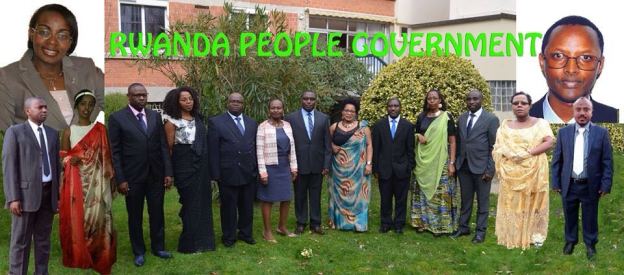
rwanda_people_government_in_exileKu cyumweru tariki ya 2 Mata (4) 2017  hateranye inama ya Guverinoma y’u Rwanda ikorera mu buhungiro  iyobowe na Perezida Padiri Thomas NAHIMANA yiga kandi ifata ingamba ku ngingo zikurikira :
  1. Kumva raporo y’ibyavuye mu ruzinduko intumwa za Guverinoma y’u Rwanda ikorera mu buhungiro zagiriye mu gihugu cya Leta zunze ubumwe z’Amerika guhera tariki ya 15 kugeza ku ya 30 ukwezi kwa gatatu (3) 2017.
  2. Kwemeza no kunoza ingengabihe y’ibikorwa bikurikira itariki ya 23 Werurwe (3) 2017
  3. Kuganira kuri gahunda ngarukamwaka y’icyunamo
  1. Abagize inama bagejejweho uko uruzinduko rwo mu gihugu cya Leta zunze ubumwe z’Amerika rwagenze:
    1. uko bakiriwe neza,
    2. uko basobanuye ibibazo bikomeye bibangamiye Abanyarwanda muri iki gihe , baba abari mu gihugu muri rusange ndetse n’impunzi ku buryo bw’umwihariko, ibyo bibazo bikaba bishingiye ahanini  ku butegetsi bubi bw’umunyagitugu Paul Kagamé wiyemeje kuzapfira ku ntebe y’umukuru w’igihugu ,
    3. inama zubaka bagiriwe
    4. Abagize inama bashimiye itsinda rya Guverinoma rigizwe na Perezida Padiri Thomas NAHIMANA, Minisitiri w’Uburezi Madame Chantal MUKAMANA MUTEGA na Minisitiri w’ubukungu n’ubucuruzi Madame Marine UWIMANA ryakoze ubutumwa bwiza. Inama ya Guverinoma kandi yashimiye Abanyarwanda n’inshuti z’u Rwanda zagize uruhare mu gutunganya urwo rugendo.
  2. Inama ya Guverinoma, nyuma yo kubona ko Agatsiko kayobowe na Paul Kagame kadakozwa ibyerekeye “gukingura urubuga rwa politiki nta mananiza bitarenze taliki ya 23/03/2017” nk’uko bikubiye mu ngingo ya XII, igika cya mbere n’icya kabiri by’itangazo rishyiraho Guverinoma y’u Rwanda ikorera mu buhungiro, yemeje  “ingamba zikakaye” zigamije kugamburuza Agatsiko gakomeje gucura bufuni na buhoro  Abanyarwanda haba mu gihugu ndetse no mu mahanga.
  3. Inama ya Guverinoma yize kandi kuri gahunda ngarukamwaka y’icyunamo :
    1. Inama ya Guverinoma isanga nta Munyarwanda ushyira mu gaciro wakwirengagiza amateka mabi igihugu cyacu cyagize, nanone ariko bikaba bikwiye ko hakorwa ibishoboka byose kugira ngo Abanyarwanda cyane cyane urubyiruko badakomeza kugirwa imbohe z’ayo amateka mabi, ko ahubwo bakwiye gushishikarizwa gushyira ingufu mu kubaka ejo hazaza heza.  Bityo bikaba bikwiye ko hashakwa umuti nyawo wakiza umuryango nyarwanda imizi yose iganisha ku mwiryane ariyo ivangura, ihezwa rya bamwe, kwizirika ku butegetsi, kwikubira ibyiza by’igihugu, n’ibindi.
    2. Inama ya Guverinoma yagaye cyane Agatsiko kayobowe na Jenerali Paul KAGAME gakoresha « icyunamo no kwibuka » kagamije guhoza Abanyarwanda mu maganya no mu buja bwo guhora bakomera Umunyagitugu amashyi ngo iyo batamugira ntibaba bakiriho. Koko rero aho gushaka icyatuma ubumwe bw’abanyarwanda busagamba, FPR Inkotanyi na Paul KAGAME bakomeje gukoresha gahunda z’icyunamo no kwibuka mu guhembera umujinya n’uburakari biganisha mu kwihorera no kwimakaza inzangano mu benegihugu.
    3. Inama ya Guverinoma yemeje ko hakwiye uburyo bushya bwo « kwibuka abanyarwanda bose bishwe » hagamijwe guha icyubahiro ubuzima bwa buri munyarwanda no kunga abenegihugu ngo bafatanye kwiyubakira u Rwanda rujya mbere aho guhora mu ndwano zidashira.
    4. Inama ya Guverinoma yiyemeje kugeza ku Banyarwanda « umurongo mushya » wo « kwibuka » mu buryo bunoze kandi bufitiye igihugu cyacu akamaro.

Bikorewe i Paris, kuwa 04/04/17
Chaste GAHUNDE
Minisitiri ushinzwe itangazamakuru

Kagame i Vatikani: Iyo umugabo yasumbirijwe asubira ku cyo yangana !

IMG-20170320-WA0088

UMUNYAGITUGU PAUL KAGAME YAHAWE UMUKORO WO GUSUBIZA UBUSITANI AHO YAHINDUYE UBUTAYU !

1.Mu gihe abanyamahanga benshi mu bamufashije kugera ku butegetsi bamaze kumutahura bakaba bakomeje kumutera utwatsi kubera inyota ye ikabije y’ubutegetsi, Umunyagitugu Paul Kagame ahisemo kugarukira Kiliziya Gatolika yari yarateye umugongo  n’imijugujugu mu gihe cy’imyaka isaga 23 amaze ku butegetsi.

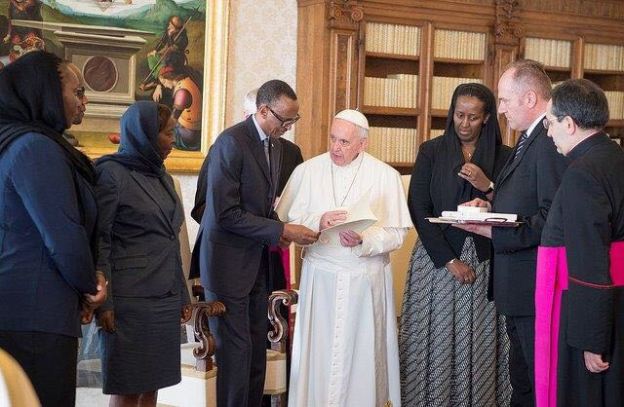
2.Koko rero guhera taliki ya 19 kugera kuya 20 /3/2017 Umunyagitugu Paul Kagame ari mu ruzinduko i Vatikani.  Uru ruzinduko yari yararwifuje cyane muri iyi minsi ye ya nyuma: ni ubwambere yicishije bugufi akagaragaza ko akeneye cyane  kuvugana n’umushumba wa Kiliziya gatolika.

3.Nk’uko twese tubyibuka, guhera mu mwaka w’1994 Umunyagitugu Paul Kagame  yaranzwe no gutinya Kiliziya Gatolika, kuyiharabika, kuyitoteza bya hato na hato no kuyigirira nabi mu buryo bwinshi bunyuranye. Ntacyo atakoze ngo ayicengere, bimunaniye ashakisha uko yayibabaza bikomeye, byamushobokera akayisenya ikavaho . Yagerageje kuyica umutwe mu kwica  Abepiskopi bane, afunga Musenyeri Misago , abapadiri , ababikira n’Abafurere batagira ingano  kandi atorongeza abandi Bihayimana benshi.

4.N’ubwo bivugwa ko Umunyagitugu Paul Kagame yaba yarabatijwe ndetse akaba ari umuyoboke wa Kiliziya Gatolika, yakunze kwigaragaza nk’umuntu w’indakoreka, udaha agaciro na gake iyobokamana, haba mu magambo ye ndetse no mu bikorwa.

5.Ubwo rero yisubiyeho agafata icyemezo cyo kujya i Vatikani kwivuganira na Nyirubutungane Papa Francis, maze Papa nawe akamwakira nk’umubyeyi udahutaza umwana w’ikirara, turasanga iyi ntambwe itewe ikwiye gushimwa kuko ishobora kugirira Abanyarwanda bose akamaro.

6.Ibyo Paul Kagame yaganiriye n’abayobozi bakuru ba Kiliziya gatolika ni byinshi kandi ntabwo byose byavugwa mu itangazo risoza uru ruzinduko. Ikitashyizwe mu itangazamakuru ni uko yabwijwe ukuri ku byerekeye ibibazo bikomereye igihugu cyacu ndetse n’akarere k’Ibiyaga bigari, n’uruhare rukomeye abifitemo .

7.Mu mpano Umunyagitugu Paul Kagame yahawe uretse ibitabo bitatu byanditswe na Papa Francis, yashyikirijwe kandi  n’UMUDARI ushushanyijeho UBUTAYU, Papa akaba yahaye Paul Kagame umukoro wo gukora ibishoboka byose akagarura  UBUSITANI aho yahinduye .

8.Twese tuzi ukuntu u Rwanda ndetse n’Akarere k’Ibiyaga bigari Umunyagitugu Paul Kagame yahahinduye ubutayu. Abaturage b’u Rwanda bageze igihe  “barya imbwa” kubera kwicishwa inzara, akarengane kahawe intebe, urubuga rwa politiki rufunze, ivangura mu itangwa ry’imirimo n’amashuri ryarenze igipimo…. Paul Kagame ageze n’ubwo afunga Kaminuza ya Gitwe kuko ariyo yonyine yahaga abana bose itavanguye amahirwe yo kwiga iby’ubuvuzi !

  1. Kuba Papa atangaza ko “asaba Imana imbabazi” ku byaha bikomeye byakozwe n’abakirisitu gatolika harimo na Jenoside ntakwiye kubigayirwa kuko ari inshingano ye nk’umushumba. Umunyagitugu Paul Kagame nawe ubwe yabitangariye atangaza ku rubuga rwe rwa Twitter ko abibonamo igikorwa cy’ubutwari n’ubweramutima bukomeye .
  2. Icyo Nyirubutungane Papa Francis yashatse kwigisha Umunyagitugu Paul Kagame ni uko umunyabyaha ukwiye gusaba imbabazi kurusha abandi ari Paul KAGAME ubwe kuko ariwe wikoreye ku mutwe we ibyaha bikomeye cyane byahemukiye benshi. Abo yapfakaje, abo yagize impfubyi,abo yagize incike ….bamutezeho guhinduka mu mutima akabasaba imbabazi ku mugaragaro. Bitabaye ibyo urugendo avuyemo i Vatikani ruzamuviramo urubanza rukarishye mu minsi itarambiranye.

Umwanzuro

Twizeye ko uruzinduko rw’Umunyagitugu Paul Kagame i Vatikani rutaje nka ya mvugo ngo: “Iyo umugabo yasumbirijwe asubira ku cyo yangaga”.

Ubwo Paul Kagame yiviriye i Vatikani twizeye ko :

1.Yemera ko Abasenyeri  Visenti Nsengiyumva na Yozefu Ruzindana yishe bakaba bagicumbikiwe by’agateganyo mu gituro kimwe i Kabwayi bajya gushyingurwa mu cyubahiro muri Katedalari zabo I Kigali n’i Byumba

2.Agiye guha abasenyeri ba Kiliziya Gatolika amahoro ntazongere kubabuza uburyo abahatira gukora ibitari mu nshingano zabo

  1. Afungura imfungwa zose zifungiye ubusa zirimo Victoire Ingabire na Deogratias Mushayidi
  2. Akingura urubuga rwa politiki , amashyaka ya politiki akiyandikisha mu mutuzo kandi akazagira uruhare mu matora yegereje
  3. Yihutira kuganira na Guverinoma y’u Rwanda ikorera mu buhungiro nayo iremo yitegura kujya kuganira na Nyirubutungane Papa Francis.

Harakabaho Repubulika y’u Rwanda

Harakabaho umubano mwiza hagati ya Vatikani  n’u Rwanda

Padiri Thomas Nahimana,

Perezida wa Guverinoma y’u Rwanda ikorera mu buhungiro

Umukandida mu matora ya Perezida wa Repubulika yo mu 2017.

Rwanda: Impamvu 20 zatumye hashyirwaho Guverinoma y’u Rwanda ikorera mu buhungiro

rwanda_people_government_in_exileTariki ya 20 Gashyantare 2017 i Paris mu Bufaransa harangiye umwiherero wahuje abanyapolitiki baturutse mu mashyaka atandukanye atavuga rumwe na FPR-Inkotanyi, abakangurambaga ba sosiyete sivile ndetse n’abandi banyarwanda bifuza impinduka mu Rwanda. Mu myanzuro bafashe harimo gushyiraho Guverinoma y’u Rwanda ikorera mu buhungiro, bayiha intego yo gusimbura  Leta ya Kagame igaragaza ko icyuye igihe.

Impamvu zatumye bashyiraho iyo Guverinoma zikubiye mu ngingo 20. Izi ngingo zose iyo uzisesenguye usanga zemezwa n’amaraporo atandukanye atangazwa n’imiryango mpuzamahanga iharanira uburenganzira bw’ikiremwamuntu ndetse n’ibihugu bikomeye nka Leta Zunze Ubumwe z’Amerika (USA) ndetse n’ibihugu by’Uburayi. Dore izo ngingo:

Leta iyobowe na Paul KAGAME

  1. Yafunze burundu urubuga rwa politiki kugirango rwikubirwe n’Ishyaka rukumbi rya FPR-Inkotanyi n’umuyobozi waryo Paul Kagame umaze imyaka isaga 23 ku butegetsi ;
  2. Yafashe icyemezo kigayitse kandi gihonyora itegekonshinga n’andi mategeko agenga u Rwanda muri iki gihe cyo kubuza kwinjira ku butaka bw’u Rwanda abenegihugu bagize Ikipe ya Padiri Thomas Nahimana umuyobozi w’Ishyaka ISHEMA akaba n’umukandida mu matora ya Perezida wa Repubulika ateganyijwe muri Kanama 2017; bikaba byaragaragaye ko taliki ya 23/11/2016 Guverinoma ya Paul Kagame yanditse urwandiko rushyira iterabwoba ku makompanyi yose y’indege ageza abagenzi mu Rwanda ruyabuza gutwara Padiri Thomas Nahimana n’Ikipe ye  bityo bakaba barasohowe mu ndege taliki ya 23/11/2016 i Nayirobi muri Kenya ndetse no ku italiki ya 23/01/2017 i Buruseli mu Bubiligi;
  3. Yibye amajwi mu matora y’umukuru w’igihugu yo mu 2003 no mu 2010 kugira ngo Paul Kagame akomeze abe umukuru w’igihugu kandi mu by’ukuri atatowe na rubanda;
  4. Ibinyujije muri Referendumu itekenitse yabaye mu Ukuboza 2015, yahinduye ingingo y’101 y’itegekonshinga ryo mu 2003 yateganyaga ko nta mukuru w’igihugu ugomba gutorerwa manda zirenze ebyiri, bikorwa hagamijwe guha Paul Kagame icyanzu cyo gukomeza kwiba ubutegetsi kugeza apfiriye ku ntebe y’umukuru w’igihugu;
  5. Ifata igafunga, ikica (André RWISEREKA) cyangwa igatorongeza Abalideri b’amashyaka ya politiki ya Opozisiyo, abanyamakuru n’abakangurambaga b’amashyirahamwe aharanira iyubahirizwa ry’uburenganzira bw’ikiremwa-muntu ;
  6. Yafunze ikanakatira gufungwa burundu Bwana Déogratias MUSHAYIDI wazize kuba aharanira impinduka nziza mu mitegekere y’igihugu cye ;
  7. Yafunze ikanakatira imyaka 15 y’igifungo cy’akamama Madame Victoire INGABIRE UMUHOZA watashye mu Rwanda mu mwaka wa 2010imuziza gusa ko yari agamije kwandikisha Ishyaka rye no kugira uruhare mu miyoborere y’igihugu cye ;
  8. Yafunze ku buryo bw’akamama bwana Théoneste NIYITEGEKA, ikatira igihano cy’imyaka ine bwana NTAGANDA Bernard n’abandi benshi ibaziza gusa ko bashaka impinduka mu miyoborere y’igihugu ;
  9. Yabujije inzego z’ubutabera ubwisanzure izihindura igikoresho cyo gufunga umubare urenze urugero w ‘abaturage barimo abadafite amadosiye, abafite amadosiye afifitse (atekinitse), n’abarangije ibihano ntibafungurwe ;
  10. Ikoresha inzego zishinzwe umutekano mu bikorwa bigayitse by’iyicarubozo, igakubita, ikica, ikanafungira abenegihugu b’inzirakarengane mu myobo n’ahandi hatazwi kandi hatagerwa ‘imiryango yabo ;
  11. Yakunze kugaba ibitero bya gisilikari ku banyarwanda bayihunze igamije kurimbura umubare munini w’abenegihugu ibatsinze mu mashyamba ya Kongo ;
  12. Ikomeje ingeso yo gusanga impunzi z’Abanyarwanda mu bihugu zahungiyemo hagamijwe kuzibuza uburyo, kubangamira umutekano wazo ndetse no gucuza ubuzima bamwe muri zo (Colonel. Patrick KAREGEYA) ;
  13. Yakwirakwije abasilikari mu giturage kugira ngo itere abenegihugu guhora bahagaritse umutima kubera iterabwoba rikaze ibahozamo ;
  14. Ishyira imbere gahunda za politiki zigamije gukenesha rubanda no kubicisha inzara nko kubasenyera amazu, kubambura ibibanza n’amasambu byabo, kubarandurira imyaka iri mu mirima no gutema intoki, kubategeka guhinga igihingwa kimwe kitabafitiye akamaro ndetse ikanabahatira kwinjira mu makoperative atabafasha ahubwo agenewe kubanyunyuza imitsi ;
  15. Yagize uruhare rukomeye mu guteza inzara ikomeye yiswe « Nzaramba », aho gufata ingamba ziwkiye ngo itabare abaturage bari kwicwa n’iyo nzara ihitamo kubihishira no gukomeza politiki mbisha yo kujijisha no gukina rubanda ku mubyimba ngo u Rwanda nta kibazo rufite, ngo uhubwo rwageze ku iterambere ry’akataraboneka ;
  16. Yimika ivangura mu itangwa ry’akazi no mu itangwa rya buruse zo kujya kwiga ; ubwironde mu kwita ku mfubyi n’abapfakazi no mu gutanga serivisi zikenewe mu buzima bwa buri munsi ;
  17. Yikubira amasosiyete yose y’ubucuruzi, igakubita kandi ikarasa ku manywa y’ihangu abaturage baciye bugufi yita ABAZUNGUZAYI bagerageza kwicururiza utwo bashoboye kugira ngo baronke ikiramira urubyaro rwabo ;
  18. Isahura ikanasesagura umutungo w’igihugu ugakoreshwa mu kwigurira indege bwite za Perezida wa Repubulika no kuzikodesha Leta ku giciro gihenze cyane muri « business » zimufitiye akamaro, we n’Agatsiko ke ;
  19. Iteza intambara z’urudaca n’umwiryane mu bihugu duturanye, by’umwihariko muri Repubulika iharanira Demokarasi ya Kongo no mu Burundi, ibyo bikaba bibangamiye cyane inyungu z’u Rwanda rufashwe nk’igihugu kiyobowe n’abanyarugomo bahungabanya umutekano mu Karere kose k’Ibiyaga bigari, ibi bikaba byaratangiye kugira ingaruka mbi ku buzima bw’abanyarwanda muri rusange ;
  20. N’andi mahano menshi tutakwirirwa turondora

Biragaraga koko ko Paul KAGAME amaze kunanirwa akaba akwiye gusimburwa na Guverinoma ifite icyerekezo kinogeye Abanyarwanda.

Ubuyobozi bw’urubuga.