Category Archives: Opinion

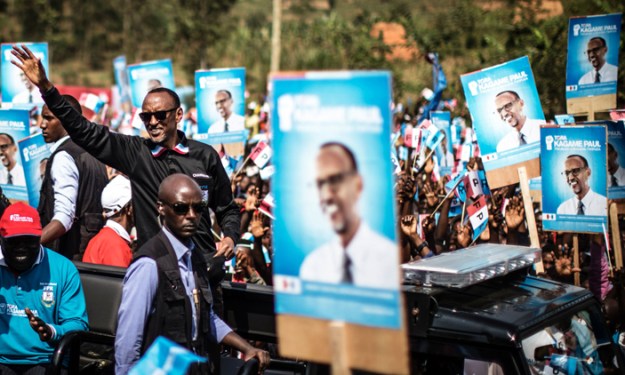
Umunyagitugu Paul KAGAME acyuye igihe. Ni iki kitezwe muri politiki y’u Rwanda ?

kagame

Guhera tariki ya 05 /08/2017 Paul Kagame waranzwe no gutegekana igitugu guhera mu mwaka wa 1994 azaba atakiri Perezida wa Repubulika y’u Rwanda. Itegekonshinga yarahiriyeho ryamwemereraga kugeza kuri manda ebyiri gusa kuko nta narimwe umuntu yemererwa kuyobora manda zirenze izo. Umunyagitugu abonye manda ebyiri zirangiye yashatse gukora itekinika ngo itegekonshinga rihindurwe bityo yemererwe kwiyamamaza indi nshuro. Cyakora na nyuma ya referendumu ififitse, Paul Kagame ntiyemerewe kwiyamamaza. Abaza gusoma ibi baribaza bati none se ko tumaze minsi tubona Kagame yiyamamaza, ubwo si uko abyemerewe?

Igisubizo kuri iki kibazo kigaragararira mu gisobanuro, imyitwarire n’imikorere y’umunyagitugu. Kagame nk’umunyagitugu wakuye agahu ku nnyo ntakeneye itegeko iryo ariryo ryose ngo yiyamamaze. Ni umunyagitugu utagendera ku mategeko. Kuri we amategeko icyo amaze ni ukwiyerekana mu rubuga mpuzamahanga ariko mu by’ukuri igifite agaciro ni amabwiriza we yishyiriraho ngo agere kubyo ashatse. None se Abanyapolitiki ntibafungwa mu Rwanda kandi itegekonshinga ribemerara gukora umurimo wa politiki? Kwandikisha amashyaka atavuga rumwe na FPR se ntibyabaye ikibazo kandi nyamara u Rwanda rwemera amashyaka menshi? Abaharanira uburenganzira bw’ikiremwamuntu se bo basiba guhungetwa kandi nyamara u Rwanda rwarasinye amasezerano mpuzamahanga agena uburenganzira bw’amashyirahamwe guhera mu mwaka wa 1975? Abantu se birirwa bicwa buri munsi kandi nyamara igihano cy’urupfu kitaravanyweho mu mategeko y’u Rwanda? Kagame ntacyo amategeko amubwiye we ashaka kwigumanira ubutegetsi ngo akomeze ahonyore abenegihugu uko yishakiye ari nako akomeza kwikubira ibyiza by’igihugu. Na manda Paul KAGAME azategeka guhera ku itariki ya 05/08/2017 ntizaba yemewe n’amategeko niyo mpamvu azaba ari umuperezida utemewe, ufite ubutegetsi butemewe, bugomba gusimburwa vuba na bwangu.

Ni iki kitezwe muri iyi manda ?

  1. Mu rubuga mpuzamahanga: Kagame azaba yamaze guta ibara yitwa umunyagitugu nk’abandi bose, umujura, umunyakinyoma ndetse na bya byaha bye benshi bajyaga batinya kuvuga bazabigarukaho. Bya bigwi n’imidari yajyaga yambikwa ngo yahagaritse jenoside bizahagarara kuko iyo umuntu akoze ibyiza akabirenzaho ibibi byose biba bibi gusa. Niko isi ikora, ni nako tuyibamo.

Cyakora kubera ko Paul Kagame yaryohewe n’ibyo yabonye, azatanga amafranga y’umurengera agure abanyamakuru n’ibigo bikomeye kugira ngo bigerageze kwerekana ko isura ye itari mbi nk’uko igaragara! Hari ibintu bimwe na bimwe batazashobora gukiza Kagame : Nko kuba atihanganira abatavuga rumwe n’ubutegetsi bwe ntazashobora kubihindura. Kuba mu myaka amaze ku butegetsi atarashoboye kureka ngo abandi bagaragaze impano zabo mu miyoborere ntazapfa kubishobora ngo nibura afungure imfungwa za demokarasi Ingabire Victoire, Deo Mushayidi n’abandi. Kuba mu bo batangiranye umugambi benshi baramucitseho bizakomeza kumwokama.

Kagame azakomeza kugerageza kwiyegereza abahutu b’inkomamashyi agamije kugaragaza ko atavangura ariko ntazashyiraho chef d’état-major cyangwa ministiri w’ingabo utari uwo muri FPR. Abatutsi batinyuka kwamagana politiki ya Kagame nka Kizito Mihigo na Diane Rwigara bazakomeza kwitwa abanzi b’igihugu.

  1. Mu rubuga rwa politiki nyarwanda: Abaturage bazakomeza guceceka ngo bategereje ko Imana izabakuriraho Kagame. Amashyaka ya opozisiyo akorera hanze azakomeza kwamagana ubutegetsi bwa Kagame ariko arasabwa gushaka udushya. Abalideri bazakomeza kuba bakeya ndetse abazifuza kuva mu mahanga ngo batashye mu Rwanda gufatanya na rubanda Kagame ntazabemerera. Guverinoma y’u Rwanda ikorera mu buhungiro izarushaho kumvikanisha ibibazo by’u Rwanda ari nako yotsa igitutu ubutegetsi bw’umunyagitugu ngo bwemere gufungura urubuga rwa politiki. Urukiko Mpanabyaha rwa Rubanda rwashyizweho na rubanda ruzakira ibirego rukore kandi ruburanishe amadosiye y’abayobozi bakekwaho ibyaha bya jenoside, ibyibasiye inyokomuntu n’ibyaha by’intambara. Ibihano bazabahwa bizashyikirizwa ibihugu n’umuryango mpuzamahanga kugira ngo aba bantu bafatirwe ibihano. Abazaba bahamwe n’ibyo byaha bazagira ibibazo mu kubona visa zo kwinjira mu bindi bihugu, imitungo yabo iri hanze izafatirwa, kandi ntibazemererwa ubuhungiro mu gihe bazaba babusabye. Uzagerageza gusohoka azafatwa maze ashyirwe aho agomba kurangiriza ibihano. Abitwaje intwaro barwanya Kagame bazaba bafite impamvu yo kugaba ibitero ariko imbaraga zabo zizakomeza kuba nkeya ku mpamvu nyinshi zitandukanye. Ku ruhande rwa APR, abasirikare benshi batangiye urugamba rwa 1990 bazaba bageze mu gihe cy’iza bukuru, bityo Kagame azajya yirukana uwo ashatse yitwaje ibyo.

Ubutegetsi bwa Kagame buzaba butemewe ariko nta munyamahanga uzabukuraho uretse kubuvuga nabi. Abemera iby’ubuhanuzi n’indagu bahamya ko Kgame atazabasha gutegeka iyi myka irindwi igiye kuza, cyakora umupira uri mu kibuga cy’abanyarwanda ubwacu. Turasabwa gukora ibirushije ubukana ibyo twakoraga mbere, gufata ibyemezo bisharira no kwirinda utunyungu tw’abantu ku giti cyabo.

Biracyaza…
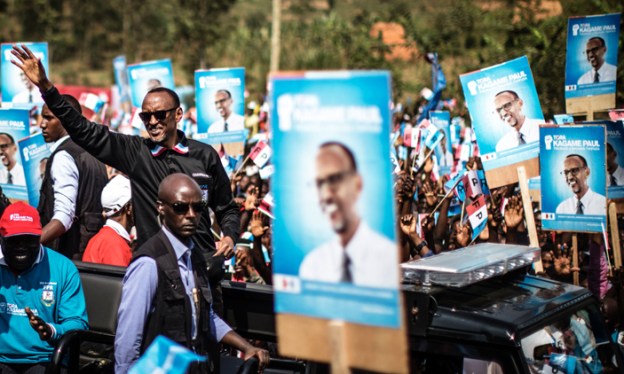
Don’t be fooled by those happy campaign rallies. Rwandans live in fear.

Kagame rally Gakenke

Rwandan President Paul Kagame, left, greets a crowd of supporters as he arrives for a campaign rally on Monday in Gakenke. (Marco Longari/AFP via Getty Images)

By Fred MUVUNYI

Fred Muvunyi, a former chairman of the Rwanda Media Commission, is an editor at Deutsche Welle, Germany’s international broadcaster.

On Friday, Rwandan voters will go to the polls and overwhelmingly reelect Paul Kagame as their president. Kagame himself has said that the result is a foregone conclusion. So where does he get his remarkable self-confidence?

One important clue comes from campaign rallies. Thousands of people, joyously singing and dancing, routinely flock to events staged for the incumbent president by the ruling party. There are two other officially allowed candidates, but almost no one shows up to see them speak.

The stark difference is easily explained. Show up at an opposition rally and you can bet that the authorities will note your presence. Attendance at Kagame’s events, by contrast, is expected — since the president has given orders to all local officials to ensure turnout. The key, in both cases, is one simple word: fear. Anyone who doesn’t show loyalty to Kagame is considered to be “an enemy of the state.”

The supporters of the regime sneer at those who claim that Kagame’s popular support is buttressed by intimidation. The president, they say, is genuinely loved by Rwandans for his success in bringing economic growth, reliable health care and a relatively fair court system, all while reducing corruption to levels many other countries would envy. Plus, through sheer force of personality, he has managed to unite the country after the horrific genocide of 1994, in which close to a million Rwandans — overwhelmingly members of the Tutsi minority — were slaughtered in just 100 days.

Kagame’s positive achievements are genuine. But they can also be seen as the more palatable side of an all-encompassing system of social control that knows few equals in the world. Rwanda’s government, led by Kagame’s ruling Rwandan Patriotic Front (RPF), is a finely meshed organization that reaches down into the smallest villages. Local government officials maintain detailed files on every household, and a dense network of informers keeps track of citizens’ behavior and thinking. Visiting foreigners are rarely aware of this reality, but Rwandans know it well. People from my country often use an idiom in our native language of Kinyarwanda that captures it well: “Even the trees are listening,” they say.

Rwanda has a long history of intrusive government, but it is the experience of genocide — which was finally brought to an end by the invading RPF, then an insurgent group based in neighboring countries — that has given birth to what can only be described as a form of institutionalized paranoia. Kagame and his comrades in the Tutsi-dominated RPF are only too aware that many members of the majority Hutus were once active participants in mass murder. As a result, the current government tends to view any attempt to question the existing system as subversion at best, and often as a first step to a new genocidal conspiracy at worst.

This mentality is reinforced by Kagame’s own background as a former military intelligence officer and rebel leader. During his long years in Ugandan exile, he knew that he and his party would never be able to come to power by peaceful means, and events bore that prediction out. For him, “constructive opposition” is a contradiction in terms. To Kagame and his entourage, criticism always entails a security threat.

Kagame has correspondingly tightened his control of the armed forces. Today, the most respected and outspoken military officers are in prison, exile or dead. To name but one of the most recent examples, Patrick Karegeya, Rwanda’s former intelligence chief, was killed in South African exile on Jan. 1, 2014.

But this grim fate is not restricted to former military men. Journalists, independent businessmen and members of the opposition have all faced various degrees of state-sponsored terror. They range from Charles Ingabire, a reporter who was shot to death in Uganda in 2011, to Pasteur Bizimungu, Kagame’s predecessor as president, who stepped down in 2000, and was later arrested and sentenced to 15 years in prison on charges of embezzlement, inciting ethnic hatred and attempting to form a militia. His defenders say that his real crime was attempting to form his own opposition party. When Rwandans see what can happen to people who once enjoyed power and prestige, they rightly conclude that they are better off keeping their mouths shut.

In 2012, three years before I was forced to leave for an exile of my own, I had the privilege to pay a visit in prison to Victoire Ingabire Umuhoza. In 2010, Ingabire, an outspoken and eloquent woman, had returned to Rwanda from the Netherlands, where she had lived for the previous 17 years, to challenge Kagame. But, as she told me in a voice strikingly subdued, she had failed to reckon with the nature of the Rwandan regime. After four months in Kigali, she was thrown in jail, where she remains today.

Kagame is smart. He knows how to turn his country’s dark history to his own advantage. When westerners try to criticize him for his failure to uphold human rights, Kagame points out that their countries either failed to prevent the genocide or actively abetted it, skillfully using their own feelings of guilt to silence them. So far it’s been a highly effective strategy. But that doesn’t change the reality that Rwanda is a country where fear reigns supreme.

Source: Washington Post


Kagame’s Iron Fist Stokes Fires in Rwanda

By 

kagame-300x198

Rwandan President Paul Kagame

When the details of the 1994 Rwandan Genocide were revealed to the world, the horrifying and grizzly events of those 100 days shook the international forum. General Paul Kagame was revered as a hero for leading the Rwandan Patriotic Front to victory and ending the genocide, forcing more than 1 million Hutu refugees to flee the country. Among those refugees were approximately 50,000 Interahamwe militants who carried out the genocide, which cost the lives of 800,000 Tutsis and moderate Hutus.

Since then Kagame has served as the de facto leader of Rwanda, obtaining close powerful allies in the United States and the United Kingdom, using their guilt for failing to respond during the genocide to gain fervent support for the Kagame regime. Kagame has utilized this powerful backing to carry out two wars in the Democratic Republic of Congo, as well as countless support operations for rebel factions in Eastern Congo, most recently illegally backing the M23 rebellion. Only in the last six months has Kagame come under scrutiny from his powerful allies for supporting ongoing rebellions in the DRC and using this as a pretext to exploit the vast mineral wealth located in that region.

Kagame has been given infinite credit for pulling Rwanda out of the ashes of the genocide and rebuilding the country. This credit is somewhat justified. However, behind the scenes is a leader and a regime that operates in a manner much closer to a criminal organization than a state. The reality of modern day Rwanda is that of a police state in which the minority Tutsi and their leader impose harsh sentences and oppression on anyone that contradicts the will of the government. Kagame has even ostracized former Tutsi allies, handing down 20 to 24-year sentences to four close cabinet members in 2011. He has also targeted the majority Hutu opposition, using the charge of denying genocide to imprison journalists and the opposition leader Victoire Ingabire Umuhoza after she questioned why the genocide memorials did not provide tributes to Hutus that died during the slaughter as well.

Now Kagame has begun to take things a step further with political assassinations. On New Year’s Day, former Rwandan Spy Chief Colonel Patrick Karegeya was found strangled in the upscale Michelangelo Towers in Johannesburg, South Africa. A bloody towel and a curtain cord were found on the scene. Karegeya was once a Kagame ally in the Rwandan government, but fell out of favor when he spoke out against Kagame’s tactics and was charged with insubordination. He was one of the four cabinet members given a lengthy sentence in 2011 in absentia. He fled to South Africa in 2007, where he was granted asylum.

This is not the first time Kagame has allegedly attempted an assassination of a former colleague. Former Rwandan Army Chief of Staff General Kayumba Nyamwasa survived three assassination attempts in 2011. During the first attack, he was shot in the stomach and the next two attacks were foiled by the South African police shortly after as he recovered from the initial onslaught. Granted, both Karegeya and Nyamwasa were accused of a coup attempt against Kagame, but attacks on other states’ sovereign soil is bold, even for the seemingly invincible Kagame.

In addition, Kagame and his cronies have been accused of a slew of assassinations and assassination attempts against journalists, former employees, doctors and priests, as well as former Rwandan President Juvenal Habyarimana, an event that sparked the genocide. Whether or not the extent of these accusations are true (a French report has cleared Kagame of the assassination of Habyarimana), the slaying of Karegeya and the attempts against Nyamwasa are indeed alarming and point to a pattern of political assassinations designed to strike fear in the opposition and maintain the stranglehold that Kagame’s one-party system maintains.

2017 will be a very telling year for Rwanda as Kagame’s second term will come to an end. He is not permitted to seek re-election under the constitution. However, this may not deter him from changing the constitution or ushering in a successor that will report to his authority even after he leaves office. In a state where the press is run by the government and the 2010 elections saw all three of Kagame’s opponents either imprisoned or in exile, the strict dictatorial rule in Kigali shows all the signs of a continued authoritarian police state where the majority are oppressed and any competition is fervently put down. Couple this with the trend of assassinations of former Kagame confidantes and the outlook for Rwanda remains hazy.

Until the evils of the genocide can be put behind them and the country can find some semblance of harmony between ethnic groups, the nation as a whole is just one shot away from rekindling a bloody civil war that could see the horrors of the genocide resurface. For now, Kagame’s Western allies must understand that running a country with an iron fist and attacking opponents like a criminal organization is exactly the opposite of the ideals that democracy is supposed to be built upon. Rwanda cannot be considered the darling of Africa until illegal murders and financed rebellions in neighboring countries are stopped. If nothing is done, then the next Rwandan Civil War will be on the hands of those that supported this behavior.

Daniel Donovan is a writer for the Foreign Policy Association and the executive director of the African Community Advancement InitiativeYou can follow him on Twitter @DanielRDonovan or @ACAinitiative.

Source:http://www.usnews.com/opinion/blogs/world-report/2014/01/10/kagames-iron-fist-could-rekindle-rwandan-civil-war?src=usn_tw

Western donors must also encourage Kagame to engage the diverse political views of the Rwandan diaspora.


In her article, “Rwanda don’t let the good trump the bad”, Prof Susan Thomson advises ways through which Kagame can be dealt with:

RPF Gicumbi 2010

An RPF rally in Gicumbi, Rwanda. August 2, 2010. Image: Graham Holliday.

There was no doubting that Paul Kagame’s Rwandan Patriotic Front (RPF) would handily win September’s parliamentary elections, which it did with 76% of the vote. His party has ruled the country since July 1994, when it successfully ended the genocide of more than 500,000 ethnic Tutsi. In theory, the RPF was contending with nine other parties. In practice, Rwanda’s nearly six million voters had little choice on the ballot. A total of 98% of the votes went to the RPF and its four coalition parties. The additional five parties were not allowed to participate.

Once-cozy relations with donors have begun to sour because of Rwanda’s increasing authoritarianism at home as well as its continued involvement in neighboring eastern Congo.  The United Nations has systematically documented war crimes and other violations of international law by both the Rwandan army and its Congolese proxies. Since 2009, the RPF has worked with American and British public relations firms whose primary task is to drown out the voices of foreign critics and bury evidence of the RPF’s human rights abuses at home and in the Congo under rosy language about stability, economic growth, and commitments to help the poor. A democratic façade is essential to reassure foreign investors and Western donors that their money is being stewarded well.

This raises the question of how Rwanda’s donors can best work with the incumbent president, mindful that Kagame is constitutionally mandated to step down in 2017 with the next round of scheduled presidential elections. Rwanda’s main donors, notably the United States, the United Kingdom, and the European Union, must continue to nudge the RPF towards a real democratic opening. This must include more than the usual calls for free and fair elections or symbolic stoppages of their foreign aid, such as the Americans’ recent suspension of $200,000 in military aid due to Rwanda’s sponsorship of the now-defunct M23 proxy rebel group.

Rwanda’s influential friends—such as Britain’s Tony Blair and America’s Bill Clinton—must stop extolling president Kagame’s performance on economic policies so that they may hold his RPF government accountable for its lack of political freedoms and human rights abuses. Cutting aid in symbolic amounts will not result in policy changes, but conditioning aid could. Rwanda depends on foreign aid, which currently accounts for more than 40% of its budget. General support for the budget must be withheld until President Kagame demonstrates a sincere willingness to give his political opponents more space and adopts policies that reflect rather than exploit rural realities.

Donors must first evaluate the government’s ability to manage its only natural resources—people and land. The U.S. State Department estimates that by 2020, Rwanda will be home to some 13 million people. This will be the highest population density in Africa, with 225 people per square mile. Some 80 percent of Rwandans seek out their existence as subsistence farmers, living on less that $1.50 a day. The government requires rural farmers to grow coffee and tea instead of the crops they need to feed their families. A new land policy has decreased peasant holdings to less than half an acre, which is far from enough to produce crops for subsistence. International donors can withhold their general support to Rwanda’s budget to press for more equitable land and agricultural policies.

Rwanda’s donors can also encourage open dialogue and a culture of constructive criticism and debate of government policies amongst the political class. Foreigners write most of the academic and policy literature on Rwanda, because Kagame does not allow for thoughtful analysis that is remotely critical of his government’s current policies. Western donors can use their already-existing relationship with Rwanda’s Ministry of Education and other institutions of higher learning to sponsor and protect intellectuals whose ideas differ from those of the government as a way to spur openness and dialogue.

Western donors must also encourage Kagame to engage the diverse political views of the Rwandan diaspora. This is not to suggest that he reach out to those who claim that the RPF organized and implemented the genocide, or hold other extremist views. But he does need to acknowledge that sincere dissidents exist alongside political extremists. Kagame should not be allowed to lump together the good with the bad as a way to justify not including any outside or competing opinions in the Rwandan political sphere.

Without an open political sphere nudged and nurtured along by Rwanda’s Western donors, there will few other potential leaders to succeed Kagame in 2017; his rivals have died, are jailed, or have fled the country. Expect the lack of qualified political leaders to be Kagame’s rationale for amending the constitution to allow him to run for a third term.

Susan Thomson is assistant professor of peace and conflict studies at Colgate University. She has published articles in African Affairs, The International Journal of Transitional Justice and The Journal of Modern African Studies. She is also author of “Whispering Truth to Power: Everyday Resistance to Reconciliation in Postgenocide Rwanda” (Wisconsin UP, 2013). 

Source: http://journal.georgetown.edu/2013/12/16/rwanda-dont-let-the-good-trump-the-bad-by-susan-thomson/