Category Archives: News

Rwanda: A country where people open their mouth only to see the dentist!

This article was blogged  here for the first time in January 2014. It predicted exactly what is happening right now ( and has been going on for two decades)  in Rwanda. Kizito Mihigo, a musician, Cassien Ntamuhanga a private radio director  and many others paid a price for reminding the dictator that the national unity can only be built through the recognition of all victims be they due to genocide or by war engaged by RPF since 1990. The police accuses them falsely to plot against General Kagame  and his regime. According to the catholic priest, Father Thomas Nahimana, the presidential candidate in 2017 elections who rightfully deserves my support, “plotting against a tyranny of Kagame’s style is a noble task that should be embraced by every good citizen”.

It has become a norm. Rwandans have no right to speak out. Somebody wrongs you and cynically asks you how it feels, and the only correct answer you have to provide is “I am alright”. Really? are you alright? Serious?

Somebody who survived killings in Byumba, Kabgayi, Kibeho, Kashusha, Nyabibwe, Mugunga, Itebero, Osso, Tingi tingi, Kisangani, Mbandaka…is asked if RPF killed Hutu  refugees and the only right answer is “No, they helped me to come home”. Nobody can talk against the government led by the 21st century’s unbeatable dictator, Paul Kagame. In this country the freedom of speech has no space.

Rwanda is referred to as a country that has made tremendous economic development but something very integral is missing:freedom. Look at the picture below:

Chiens en cage

The puppy in the cage looks, and is healthy. He/she has a space to play and can see what is happening in all the four directions. But look at the size of the cage! This puppy gets all necessary treatments, morning, day and night. However, this puppy would like to be walked around and breathe fresh air.  For Kagame, this puppy is developed, just like Rwandans are said to be. The puppy is even better off since it does not have to worry about the future, but Rwandans must!

Sen’s theory of development.

Since 1999, nobody in academia, political and socioeconomic arena was able to convincingly challenge Sen’s Development as freedom. Sen asserts that the enhancement of freedom is the only acceptable way to evaluate human progress and that development depends on the free agency of the people. By bringing out this invaluable piece in the literature, Sen challenges the Singaporean model of development according to which denying political and civil rights is acceptable if it promotes economic development and the general wealth of the population (Sen, 1999:15). For Denis O’Hearn, it is rightfully put when we agree  that we should approach political freedoms and civil rights not through the means of eventually achieving them (GDP growth) but as a direct good in their own right (O’Hearn, 2009).

In its most recent report, Human Rights Watch (HRW) gives us the state of things in Rwanda.

“Rwanda has made important economic and development gains, but the government has continued to impose tight restrictions on freedom of expression and association”.

But why does Kagame think nobody should open their mouth unless for teeth check up?

kagame290511

Paul Kagame (in front) was supported by westerners to secure a military victory in 1994

This man, a former officer of the National Resistance Army of Museveni,  the leader of Tutsi rebellion (Rwandese Patriotic Front-RPF Inkotanyi) after Rwigema’s death, a man well known for his cruelty when he was serving as a senior intelligence officer in Uganda or even when he was hunting down Hutu from the north of Rwanda; a machiavellian guy who did not give a damn when he sacrificed his own people, Tutsi, as a price to achieve power via genocide; this man does not want to hear anybody talk about his war crimes and crimes against humanity. Whoever dares, is accused to promote genocide ideology or instigate hatred among the people or for making a threat to the national security.

Deo Mushayidi, a Tutsi and genocide survivor and the founder of Pacte Démocratique du Peuple (PDP-Imanzi), entered politics to tell the truth on how Kagame uses Tutsi and genocide for his own interests. He (D. Mushayidi) was kidnapped by Kagame’s secret services in Tanzania, brought to Rwanda and sentenced to life imprisonment. Ingabire Victoire Umuhoza, the president of Forces Démocratiques Unifiées (FDU-Inkingi) came to Rwanda to contest the presidential election. She reminded Kagame that Hutus who were killed should be remembered and those responsible brought to justice. She was sentenced to 15 year in prison.

Numerous other politicians, journalists and military men were either killed , jailed, or forced into exile because they tried to reason the strong man of Kigali, Paul Kagame. Some were hunted down and killed in exile, a recent example is the former spymaster, Colonel Patrick Karegeya killed in South Africa on last Saint Sylvester’s night.

Diverse views have warned that should Kagame fail to change his style, Rwanda could see itself in another cycle of tribal killings like two decades ago. These calls seem fruitless because Kagame feels too strong to be influenced by words.He has built a strong army inside and outside the country, he has befriended influential personalities in the world such as Bill Clinton and Tony Blair, he has forged cooperation with giant business people like Bill Gates and religious business such as Rick Warren. Above all, it is said that Kagame joined the Illuminati order, a secret organization that oppose religious influence over public life. The membership of this order has grown for centuries and is believed to include many leaders in the world, thus its ability to influence the global decision-making.

That is why Kagame despite all crimes he is accused of, remains unpunished and is given so many favors. One sound example is the dispatch of  Rwandan soldiers in different peace keeping missions in Haiti, Liberia, Sudan, and recently, in the Central African Republic. Why would a psychologically fit person give such a consideration to a criminal regime? Two possible answers can go for this. (1)Either the decision makers are not psychologically fit or (2) they are criminals just like Kagame himself and they do not see anything wrong in what he is doing, or both.

This explains why Kagame remains untouched despite all his mischief in Rwanda and in Congo for decades, this is why in Rwandan people open their mouth only when the have to see the dentist for a check up.

Chaste Gahunde


Avis aux lecteurs: Nos articles peuvent être reproduits à condition de citer le nom d'auteur et le site web source.
Notice to readers: Our articles may be reproduced provided the author's name and the source website are cited.

LAKE ZONE: Uganda, Burundi lead East Africa in military spending

A Ugandan officer serving with the African Union Mission in Somalia (AMISOM) ranges a scope on a heavy machine-gun. Tanzania is lagging behind its East African partners in military spending, a new report shows. The country spent just $380 million since 2011. PHOTO | FILE

By The Citizen CorrespondentTanzania is lagging behind its East African partners in military spending, a new report shows. The country spent just $380 million since 2011.

Uganda and Burundi led the rest of East Africa in military spending last year allocating 2.2 and 2.3 per cent of GDP respectively to defence with Kenya increasing her expenditure to the highest level ever in nominal terms.

The two countries stayed ahead of Kenya, Tanzania and Rwanda which spent 1.9, 1.2 and 1.1 per cent of their GDP respectively.

Uganda’s defence spending has stayed over 2 per cent of GDP rising to 4 per cent in the last two decades, even as the rest of the region made deliberate efforts to cut their spend in the same period.

Data released on Monday by the Stockholm International Peace Research Institute shows that Kenya increased her defence budget by Sh3 billion last year to Sh74.1 billion, the highest in the region on nominal terms.

SIPRI is an independent international institute dedicated to research into conflict, armaments, arms control and disarmament funded by the Swedish government.

Kenya is faced with problems of terrorism, attacks from Oromo militias in Ethiopia and piracy in the Indian Ocean that have exposed the country’s military inadequacies.

“Due to the military “achievement” of KDF against Al-Shabaab militants in Somalia, Kenya would most likely want to obtain a greater influence on the political and administrative future of the region,” said Sipri.

Adjusted for inflation since 2011 SIPRI said Kenya spent $861 million compared to Uganda’s $465 million with Tanzania spending just $380 million.

Kenya’s military spending had been ranging between Sh20 and Sh30 billion in the early 2000s but had started rising to Sh40 billion after the country started modernising its military hardware that culminated into the Anglo Leasing scandal.

Africa is the only continent whose military budget stayed on a growth path as Europe, Asia and Americas cut their defence budget in austerity measures.

Source: The citizen

Polisi y’u Rwanda irashinjwa kunyereza Munganyinka Godbertha n’umuhungu we Copin.

Kuva mu mwaka wa 1995 byabaye akamenyero ko mu gihe cyo kwibuka jenoside cyangwa mbere yaho gatoya mu Rwanda haba ibikorwa by’urugomo rukorerwa abaturage. Bimwe muri ibyo bikorwa harimo nko kurigisa abantu bikorwa n’abibona mu butegetsi kandi badashobora gukorwaho iperereza na polisi.

Muri iyi minsi mike ishize twese twabonye uko umuhanzi Kizito Mihigo yashimuswe n’inzego z’ubutasi zikamufungira mu mwobo i Kami, cyakora itangazamakuru ryateye hejuru ndetse na Kiliziya Gatolika ibikurikiranira hafi maze polisi n’ikimwaro cyinshi itangaza ko ariyo imufite kandi mbere yari yanangiye.Iyicarubozo ryakorewe Kizito nta wundi ushobora kuryiyumvisha keretse uwanyuze i Kami. Ibi bikaba ari ikimenyetso ko Kizito yari agiye gupfa urwo abandi nka ba Major Cyiza na Depite Hitimana bafuye.

Kugeza ubu kandi uretse Kizito na Ntamuhanga bagaragajwe,  Gerard Niyomugabo Nyamihirwa na n’ubu ntawe uzi uko byamugendekeye. Muri iki gitondo nibwo twamenye ko hari n’abandi benshi bakomeje kuburirwa irengero mu Rwanda abo tugiye kuvuga akaba ari Munganyinka Godbertha n’umuhungu we Ndanyuzwe Serge uzwi ku kabyiniriro ka Copin.

Ibya Godbertha na Copin byagenze bite?

Ntawe uzi uko byagenze. Cyakora abantu baheruka kubona Godbertha n’umuhungu kuwa mbere tariki ya 3 Werurwe 2014 ubwo bavugaga ko berekeje i Kigali. Icyari kibajyanye i Kigali nta kindi uretse kwishyuza amafaranga y’ikodi ku mazu yabo aherereye ku Kabeza werekeza Kanombe mu mujyi wa Kigali. Kuva icyo gihe nta wigeze amenya uko byabagendekeye. Ayo mazu ubusanzwe atuwemo n’abasirikare bakaba bari basanzwe bishyura bigoranye akaba ari nayo mpamvu byabaye ngombwa ko Godbertha ajyana n’umuhungu we. Munganyinka Godbertha yavutse mu mwaka wa 1962 naho umuhungu we Ndanyuzwe Serge alias Copin yavutse mu mwaka wa 1993. Bari batuye mu kagari ka Gacu umurenge wa Rwabicuma mu karere ka Nyanza, intara y’amajyepfo.


   2014-04-16 11.29.41

Godbertha Munganyinka na Ndanyuzwe Serge alias Copin

Kuki Polisi y’u Rwanda ikemangwa mu ibura ry’aba bantu?

Kuva aba bantu baburirwa irengero, abaturanyi baratatse ariko polisi ivunira ibiti mu mu matwi. Ubundi hano mu Rwanda dusanzwe tumenereye ko iyo inzu yawe ikodeshwa n’umusirikare biba ari iki bazo kuko hari igihe azindukana umujinya akakurasa agasigarana amazu yawe. Mu gihe cyegereje icyunamo byo biba ari ibindi kuko polisi usanga isa n’itabyitayeho cyangwa ikavuga ngo n’inyange zirapfa nkanswe ibyiyoni!Chief-Supertendent-Hubert-Gashagaza_-umuvugizi-wa-Polisi-y_Igihugu-mu-Ntara-y_Amajyepfo-akaba-n_umugenzacyaha-muri-iyo-Ntara-

Chief Superintendent Hubert Gashagaza yanze gukora iperereza

Ubusanzwe mu gihe itegeko ryo kumviriza amatelephone ryatorwaga, Ministri Mussa Fazil yavuze ko rigamije kurinda umutekano w’abantu. Bitera akantu rero iyo polisi itakiwe ntijye muri network ngo icukumbure irebe uwavuganye n’uwabuze bwa nyuma cyangwa se ngo ishakishe n’aho iyo telephone iba iherereye. Kuba ibi bidakorwa, twe tubifata nk’ikimenyetso ndakuka cy’uko polisi iba ibyihishe inyuma. Kandi rero ni mu gihe, hari igihe usanga nk’abo basirikare bakekwa bafite barumuna babo muri polisi maze ugasanga uwo urega ariwe uregera. Bityo rero ubwo Polisi yirengagije umurimo wayo wo kurinda umutekano w’abaturage ndagira ngo nisabire uwaba yaramenye uko byagenze azadutungire agatoki tubikurikirane mu nzego zo hejuru tuzumve icyo Perezida Kagame abivugaho cyangwa anatubwire niba ariwe wabarigishije tuve mu gihirahiro.

Niyoyita Marcel

Umutaripfana w’ISHEMA

Intara y’amajyepfo


FPR irusha ubugome abazima n’abapfuye: ibihangano bya Kizito byaciwe mu Rwanda!

Kizito_Mihigo_for_Peace_foundation_(logo)

Ikirango cya KMP( Kizito Mihigo for Peace Foundation)

Mu ibaruwa Havugimana Aldo, umuyobozi wa Radiyo Rwanda yandikiye abayobozi b’ibiganiro ku maradiyo ya RBA yose yabasabye kuba bahagaritse ibihangano bya Kizito Mihigo ubu ufunze akekwaho guhungabanya umutekano w’igihugu no gushaka kwica abayobozi bakuru b’igihugu.

Mu ibaruwa yabandikiye, Umuryango wabashije kubonera kopi, yagize ati :” Nshingiye ku itangazo ryashyizwe ahagaragara na Polisi taliki 14/4/2014, rihishura ko uwitwa Kizito Mihigo ari mu bantu batawe muri yombi bakurikiranweho ibyaha birimo guhungabanya umutekano w’igihugu, mutegetswe guhera none uyu munsi taliki 14/4/2014 kuba muhagaritse gucuranga kuri radiyo ibihangano bya Kizito Mihigo . Ibi bihangano ni ukuvuga ibiganiro , indirimbo aririmba cyangwa acuranga ku giti n’izo afatanyije n’abandi”.

Indirimbo za Kizito Mihigo zirimo izijyane n’idini rye rya gatulika ndetse n’izo yaririmbye zijyanye n’icyunamo. Mu minsi ijana u Rwanda rwibukamo buri mwaka jenoside yakorewe abatutsi (ari nayo twatangiye kuri 7 Mata) usanga indirimbo ze zumvikana hirya no hino haba ku maradiyo na televiziyo binyuranye ndetse no ku biriyo aho bashyinguye mu cyubahiro imibiri y’abishwe muri jenoside yakorewe abatutsi.

Iki cyemezo cya RBA n’abandi bashobora kucyicyiriza ntihagire indirimbo ya Kizito Mihigo yongera gucurangwa mu buryo bweruye ku butaka bw’u Rwanda.

Ibi nkaba mbivuga nshingiye ko na Minisitiri Mitali, ubwo yari mu muhango wo gushyingura imibiri y’abazize jenoside yakorewe abatutsi I Rusororo kuri uyu wa kabiri taliki 15/4/2014, yasabye abari aho n’abanyarwanda muri rusange kudakomeza gufata Kizito Mihigo nk’umuntu uzwi cyane “Star” kuko ngo ibye byamenyekanye.

Yagize ati :“Ubundi twakoranaga (Kizito) twibwira ko dukorana neza no muri gahunda nk’izi zo kwibuka. Ntabwo Kizito Mihigo uyu munsi akwiye gukomeza kuba umusitari, yari umusitari mu ndirimbo, mu buhanzi bwe, ariko ntakomeze kuba umusitari kuko yafashwe, ni mumufate nk’umugizi wa nabi nk’abandi bose.”

Kizito Mihigo kandi, muri iyi minsi ijana yo kwibuka jenoside yakorewe abatutsi, cyabaga ari igihe kiza cyo gukorera amafaranga yifashishije indirimbo ze zijyane n’iki cyunamo. Henshi aho bashyinguraga babaga bifuza bikomeye kumutumaho ngo abaririmbire ndetse henshi banateranyaga amafaranga ngo babashe kumwigondera.

Umwe mu bigeze kuba ari mu bakuriye imihango yo gushyingura mu gace atifuje ko dutangaza cyangwa ngo nawe tuvuge izina rye, yadutangarije ko ubwo bamutumagaho ( Kizito Mihigo) ngo abaririmbire yabaciye amafaranga ibihumbi 500 y’amanyarwanda barayamwishyura.

Inkuru dukesha Umuryango .com 15/04/2014

“Ubuhanzi bwa Kizito bwari bugamije ikibi….” Mitali

Kizito


Mu mbwirwaruhame yagejeje kubari bitabiriye umuhango wo gushyingura no kwibuka abazize Jenoside yakorewe Abatutsi i Ruhanga, mu Murenge wa Rusororo, mu Karere ka Gasabo, Minisitiri w’Umuco na Siporo Mitali Protais yasabye Abanyarwanda kudakomeza gufata Kizito Mihigo nk’umuntu w’umusitari ahubwo batangira kumufata nk’umugizi wa nabi, wagiriye nabi igihugu.

Mu mbwirwaruhame ye, Minisitiri Mitali yagarutse kenshi ku banyapolitiki bakorera hanze y’igihugu ariko ngo ugasanga nta cyiza bashakira Abanyarwanda uretse kongera kubabibamo amacakubiri n’inzangano nk’ibyo bahozemo, ari nabo ngo bagushije Kizito Mihigo mu mutego.

Benshi muri abo banyapolitiki kandi ngo baracyafite umugambi wo gupfobya Jenoside yakorewe Abatutsi.

Yagize ati “Abafite umugambi wo kuyipfobya, igihe ubwacyo kizagenda kibereka ko nta gaciro, nta n’umwanya nta n’uruvugiro bafite haba mu Rwanda haba no ku Isi yose.”

Abanyapolitiki Minisitiri Mitali yatungaga agatoki barimo nk’abo mu mutwe urwanya Leta y’u Rwanda wa “FDLR” na RNC n’ubwo we ngo abifata nk’imitwe y’iterabwoba.

Ygize ati “Bariya bose ni ayanda, ni amaco y’inda, ni bya bindi bya mpemuke ndamuke ariko ikibabaje ni uko hari ababumva kandi bitari bikwiye.”

N’ubwo aba yita Abanyapolitiki bagifite ibitekerezo bibi ngo barwanywa, ariko haracyari ibisigisigi by’imbuto mbi babibye.

Ati “Hari abo inyigisho z’urwangano zacengeye bananirwa kuzigobotora, n’ubu bumva iturufu y’amoko ariyo bashyira imbere ngo bagere ku nyungu zabo.”

Muri abo babumva, bakemera gukorana nabo yatanze urugero rw’abaherutse gufatwa barimo n’umuhanzi Kizito Mihigo.

Mitali ati “Ubundi twakoranaga (Kizito) twibwira ko dukorana neza no muri gahunda nk’izi zo kwibuka.

Ntabwo Kizito Mihigo uyu munsi akwiye gukomeza kuba umusitari, yari umusitari mu ndirimbo, mu buhanzi bwe, ariko ntakomeze kuba umusitari kuko yafashwe, ni mumufate nk’umugizi wa nabi nk’abandi bose.”

Minisitiri Mitali kandi ngo asanga n’ubuhanzi bwa Kizito bwari bugamije ikibi gusa.

Yagize ati “Na buriya buhanzi bwe, muby’ukuri uko bigaragara wari umwitozo cyangwa inzira yo gushaka kumenyekana cyane kugira ngo bazagere ku mugambi wabo wo kuyobya bamwe mu Banyarwanda.”

Minisitiri Mitali kandi arahumuriza buri we wese ushobora gukeka ko wenda byaba bidafatika.

Ati “Inzego z’umutekano zacu ntabwo zihubuka, amakuru zatangaje ni uko zifite gihamya ko hari agatsiko k’abantu nawe (Kizito) arimo bamaze igihe kitari gito bakorana n’aba bagizi ba nabi navugaga.”

Minisitiri w’umuco kandi arakebura Abanyarwanda kutajya bibeshya ku muntu uwo ariwe wese ngo ni uko yarokotse cyangwa yari mubahagaritse Jenoside kuko ngo bitavuze ko atahindukira ngo nawe kubera inyungu z’inda nini nawe abe umwanzi w’igihugu nk’uko na ba Kizito byagenze.

Ati “Birababaje kubona abana b’u Rwanda, birababaje kumva umwanzi agira amayeri yo gukoresha abantu nka bariya bazwi cyane, bari bafite ababibonamo batari bacyeya kugira ngo bagere ku migambi mibisha harimo no guhungabanya umutekano w’igihugu.”

Minisitiri Mitali asaba buri wese ko mu bihe nk’ibi byo kwibuka, ibyabaye bidakwiye kubahungabanya ahubwo ngo bitume barushaho kuba maso.

Ati “Tumenye ko abagome bagira amayeri menshi, cyane cyane kandi bakanyura ahoroshye, mu bantu bafite amaroso ashyushye, mu rubyiruko.”

Mitali avuga ko ubundi urubyiruko rw’u Rwanda rufite imyumvire myiza ariko ntihaburamo bacyeya bashobora gushukishwa indoke zitazaramba bakaba bashorwa mu bikorwa bibi nk’ibyo Kizito na bagenzi be bari bamazemo iminsi.

Minisitiri Mitali asaba Abanyarwanda ko batakomeza guta umwanya ku bantu we avuga ko batannye bagata umurongo, ahubwo ngo barusheho kuba maso no gukangura ubugizi bwa nabi n’aho bwava hose.

Ati “Uru ni urugero rufatika rw’uko twese tugomba kwisuzuma kugira ngo buri wese yumve niba ahagaze neza mu myemerereye, mu kugendana n’igihe, mu guhangana n’ikibi, mu gutera umugongo ikibi aho cyaturuka hose, uwakivuga uwo ariwe wese, isano mwaba mufitanye iyo ariyo yose.”

Mitali yemeza ko u Rwanda rumaze intambwe ishimishe bityo ntawukwiye gukomeza guha umwanya abantu bashaka gusenya kugira ngo batazarusubiza inyuma.

Vénuste Kamanzi
UMUSEKE.RW

Was Clinton’s “No Genocide” Dictate On Rwanda Meant To Ensure Kagame’s Military Victory In 1994?

By Milton Allimadi

Who killed Juvenal Habyarimana?
[Black Star News Commentary]

It’s generally accepted that Bill Clinton opposed a vigorous international community- and American armed intervention when the massacres erupted in Rwanda in 1994 because he feared this country could get bogged down in a messy operation with unpredictable outcome.

There has never been an internationally supervised research to estimate the numbers of civilians murdered in Rwanda however the figure of “nearly 800,000″ has been widely quoted and accepted for years.

It’s also generally accepted that Clinton wouldn’t allow his administration officials to use the term “genocide” to describe the mass killings in Rwanda because the word carries legal connotations that would have obligated intervention.

But how credible is this explanation as to why Clinton opposed use of the word and outside intervention?

If that was indeed the true motive for barring the use of the term and opposing intervention how did Clinton hope for the killings to come to an end? He was president of the United States, the world’s only remaining superpower.

Is it conceivable that Clinton was willing to let the U.S. stand aside and risk the possibility of Hutus, the 85% majority population in Rwanda, annihilating all Tutsis?

This is a difficult proposition to accept or believe.

The killings had been triggered when on April 6, 1994 the plane carrying Rwanda’s Hutu president Juvenal Habyarimana and Burundi’s Cyprian Ntaryamira was downed by two missiles as it approached Kigali airport.
Is it more likely that Clinton in fact knew that the massacres would come to an end — with victory by the RPF, under its leader Paul Kagame?

So, in fact, by refraining from calling the massacres a “genocide” and triggering an international armed intervention did Clinton’s decision at the time actually buy time for Kagame and allow his RPF to seize power?

Former Rwandan President Juvenal Habyarimana assassinated by current president Paul Kagame

Habyarimana was returning from Tanzania, where regional leaders were pressing the warring parties to carry out the Arusha Peace Accord to halt fighting between his army and the opposing force, which included units of Uganda’s army and the Rwanda Patriotic Front (RPF).

The Arusha deal was detrimental to the RPF’s goal and U.S. interests which included displacing France’s influence in the region.

Arusha called for a Transitional government, power-sharing between Habyarimana’s party, Kagame’s RPF, and other parties. It also called for elections and given that Hutus comprised 85% of the population, Kagame wouldn’t have become president.

Kagame stood to gain the most from the assassination of President Habyarimana and to lose the most from negotiated peace. The use of the term “genocide” by the Clinton administration and robust outside intervention most likely would have saved hundreds of thousands of lives.

It also would have closed Kagame’s path to presidential powers in Rwanda.
So was it mere coincidence that Clinton’s withholding the use of the term “genocide” benefitted Kagame?

Consider some points that indicate U.S. preference of an RPF/Kagame victory at the time.

1) At the time of the October 1, 1990 invasion of Rwanda from Uganda, Paul Kagame was being trained at the U.S. Military Academy at Fort Leavenworth, Kansas. He had been sent here by Uganda’s ruler Gen. Yoweri Museveni.

He came on a Ugandan passport because at the time he was chief of Uganda’s Military Intelligence. He and many Tutsis of his generation had grown up in Uganda; his family had fled the massacres of 1959 when the monarchy under King Kigeri V in Rwanda was overthrown by the Hutu majority.

When the first commander of the 1990 invading force from Uganda, Gen. Fred Rwigyema, who had been Uganda’s deputy defense minister, was killed under questionable circumstances, Museveni recalled Kagame and installed him commander of the invading army which initially included 4,000 regular Ugandan army soldiers. Later the force became the Rwanda Patriotic Front.

2) The U.S. took no action to censure Uganda or to denounce the invasion, which was a war of aggression which has consequences under international law. Moreover the U.S. allowed Uganda to keep sending more officers for U.S. training under the International Military Education Training (IMET) program that had brought Kagame to Fort Leavenworth.

In 1995 when I was a reporter at The City Sun newspaper, I asked then Vice President Al Gore about this and he told me Uganda “deceived” the U.S. It was a disingenuous response since in subsequent years after I asked the question the number of officers sent for IMET training by Uganda actually increased.

3) France, a supporter of the Habyarimana government, when Francois Mitterand was president, tried to bring action against Uganda for launching a war of aggression against Rwanda on October 1, 1990, through the United Nations Security Council. The U.S. opposed this move.

So a battlefield stalemate maintained from 1991 to 1994, with the RPF controlling much of the areas of Rwanda towards Uganda — the supply route for recruiting fighters and for obtaining arms. During this period, while abuses by Habyarimana’s army was widely quoted in media those of the RPF, including massacres documented by Human Rights Watch, were rarely mentioned.

The stalemate ended after the assassination of Habyarimana.
According to documents from French archives “Mitterrand and his advisers” believed “that the Rwandan Patriotic Front wanted to use its superior military position to restore a Tutsi-dominated regime in Rwanda. French military advisers reported that the rebel movement had acquired surface-to-air missiles from Uganda. When President Habyarimana’s plane was shot down by a SAM missile on April 6, 1994, triggering the genocide, French officials immediately suspected the RPF.”

In recent years, Theogene Rudasingwa, who had been Kagame’s chief of staff and then Rwanda’s ambassador to the United States has said Kagame in fact was the one who ordered the assassination of Habyarimana. A French government minister had claimed that the U.S. gave the missiles to Uganda, from stockpiles seized in Iraq; Uganda then provided them to the RPF — the U.S. denied the allegation.

According to Rudasingwa, the purpose was strategic. Knowing the ethnic volatility in Rwanda, Kagame was aware the Hutu civilian majority would unleash vengeful massacres after Habyarimana’s death. The power vacuum and the bloody mayhem would create the excuse for Kagame seizing power.

Kagame would then be hailed as Rwanda’s “savior.” Kagame would no longer have to fulfill the requirements of Arusha including the elections the RPF could not have won.

In subsequent years the United Nations and Human Rights Watch repory that Kagame has exported the war into the Democratic Republic of Congo (DRC).

Was Clinton, given U.S. intelligence capabilities, unaware of the alleged Machiavellian scheme by Kagame in 1990?

– See more at: http://www.blackstarnews.com/global-politics/africa/was-clintons-no-genocide-dictate-on-rwanda-meant-to-ensure-kagames-military#sthash.qdQsOlMj.rNTRfch1.dpuf

Source: Black Star News

What the author of this article forgets to mention is that the Arusha Peace Accord which was signed on August 3rd, 1993 recommended the presence of 5,000 UN peacekeepers to supervise its implementation. Though it was initially difficult to assemble such force, by mi-December of that year there were already in Rwanda near 2,500 for that contingent. However, surprisingly, even that number was going to be reduced significantly to the point that when the plane of President Juvenal Habyarimana was shot down on April 6th, 1994, there were only 297 UN peacekeepers left. Prior to that, the CIA Kigali desk had sent to Washington an analysis of the political situation prevailing in Rwanda around January 1994. One of the main points the report highlighted was the fact that the assassination of Habyarimana could cause between 300,000 and 500,000 casualties. And this prediction was apparently based on what had happened in neighboring Burundi when president Melchior Ndadaye had been assassinated in October 1993. In summary, when Washington resisted declaring the massacres of Rwanda genocide and probably ensured that there were not enough external forces to intervene, they knew what they were doing. This made the former UN secretary Boutros Boutros Ghali to say that the Rwandan genocide was a 100% US responsibility.

Was Clinton’s “No Genocide” Dictate On Rwanda Meant To Ensure Kagame’s Military Victory In 1994?

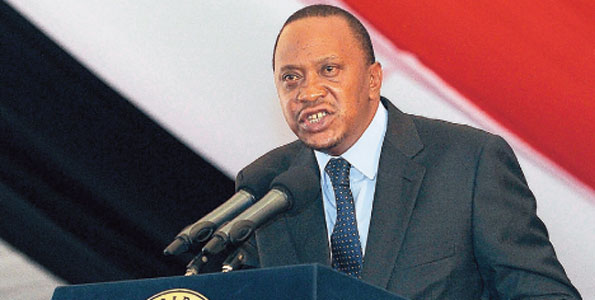
Kenyatta, Kagame under fire at media conference

Image

Cape Town. President Uhuru Kenyatta of Kenya has been criticised for signing into law legislation giving the state the power to decide what journalists report.

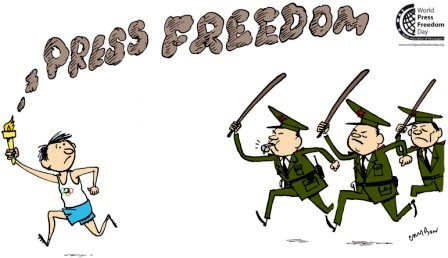
Similar attention was given to President Paul Kagame of Rwanda for limiting media freedom and called on him to allow independent journalists to work freely.

The criticism came during the official opening of the International Press Institute 43rd world congress in Cape Town, South Africa, yesterday.

In her formal report to the congress on the state of press freedom worldwide, IPI executive director Alison Bethel McKenzie told delegates of increasing attacks on journalists.

“Kenya is another concern. President Kenyatta has signed legislation … the Information and Communication Act … that we believe would lead to state control of news and information during emergencies, plus give the government the power to perform functions currently executed by the country’s Media Council.”

She said IPI had protested the new measures by the Kenya government and acknowledged that local journalists had moved to the courts to fight for their freedom.

“Kenyan journalists are not about to have their rights trampled on. They’ve filed legal challenges against the Information and Communication Act on the grounds that it is unconstitutional,” Ms McKenzie said.

On Rwanda, the IPI boss said as the world marks the 20th anniversary of the genocide, even though some local media played a “terrible role in fanning ethnic hatred in 1994”, reasonable space must be curved for free expression.

“While there is no defence for such hate speech, we are concerned that the Rwandan authorities use that experience to maintain tight control over today’s news media and call on the government to allow independent media to flourish.” Globally, Turkey was identified as one of the worst countries for press freedom and the world’s leading jailer of journalists with 44 currently behind bars.

“Media owners’ economic dependence on government connections continues to stifle reporting in Turkey, as did the reported attacks by police on dozens of journalists as they covered protests that erupted last year following the brutal treatment of demonstrators opposing the demolition of Gezi Park in Istanbul,” she said.

IPI tracked 119 journalists killed in the line of duty in 2013, a slight decline from the 133 who died in 2012. So far in 2014, more than 20 have either been killed while on the job or died while on duty.

“Sauver un maximum de vies… c’est le défi que beaucoup jugeaient impossible et que les troupes françaises de Turquoise ont pourtant relevé”, Jean-Yves Le Drian.

Génocide rwandais : pour Le Drian, “certaines accusations ne peuvent rester sans réponse”

11/04/2014 à 14:36 Par Jeune Afrique
Le ministre français de la Défense, Jean-Yves Le Drian.
Le ministre français de la Défense, Jean-Yves Le Drian. © AFP

Jean-Yves Le Drian a tenu vendredi à défendre l'”honneur” de l’armée française lors de l’opération Turquoise en 1994, après les accusations de complicité de génocide réitérées par le président rwandais, Paul Kagamé. Car, pour le ministre français de la Défense, “certaines accusations ne peuvent rester sans réponse”. Explications.

Après le Premier ministre Manuel Valls, c’est au tour du ministre de la Défense, Jean-Yves Le Drian, de réagir à la polémique entre la France et le Rwanda relancée par Paul Kagamé dans une interview à Jeune Afrique publiée le 7 avril. Dans un message aux armées, diffusé vendredi 11 avril, Jean-Yves Le Drian a défendu l'”honneur” de l’armée française lors de l’opération Turquoise en 1994, après les accusations de complicité de génocide réitérées par le président rwandais.

“Les mots ont un sens et, dans ces circonstances, certaines accusations ne peuvent rester sans réponse”, écrit Le Drian, sans mentionner le nom du chef de l’État rwandais. Selon le ministre, “l’honneur de la France et de ses armées, c’est d’avoir, avant les autres, réagi au drame qui se déroulait sous le regard d’une communauté internationale paralysée”.

“Sauver un maximum de vies sans prendre parti dans la lutte pour le pouvoir qui était alors engagée: c’est le défi que beaucoup jugeaient impossible et que les troupes françaises de Turquoise ont pourtant relevé”, poursuit Jean-Yves Le Drian.

>> Lire aussi : “L’histoire mythique de l’opération Turquoise ne correspond pas à la réalité” (Guillaume Ancel)

“Accusations inacceptables”

La France “ne s’est pas dérobée à son devoir”, affirme-t-il encore. “Les conclusions de la mission [menée par Paul Quilès en 1998, NDLR], indépendante et pluraliste, ne laissaient aucune place aux accusations inacceptables qui ont été proférées à l’encontre de l’armée française ces derniers jours”, insiste-t-il, en soulignant que “plus de 1 100 documents” ont été déclassifiés en vingt ans par le ministère de la Défense, dans le cadre des procédures judiciaires.

Lors de sa déclaration de politique générale mardi à l’Assemblée nationale, Manuel Valls avait déjà rejeté ces accusations, selon lui “injustes” et “indignes”.

Dans une interview à Jeune Afrique, le président rwandais Paul Kagamé avait accusé la France d’avoir eu un “rôle direct” dans “la préparation politique du génocide” et dans “son exécution même”.

Réagissant à ces déclarations, Paris avait annulé le voyage de la ministre de la Justice, Christiane Taubira, qui devait représenter la France à la commémoration du vingtième anniversaire du génocide, à Kigali le 7 avril. Après que Paris avait annoncé la participation de l’ambassadeur de France à Kigali, Michel Flesch, le ministère rwandais des Affaires étrangères avait fait savoir à ce dernier qu’il n’était pas le bienvenu.

(Avec AFP)