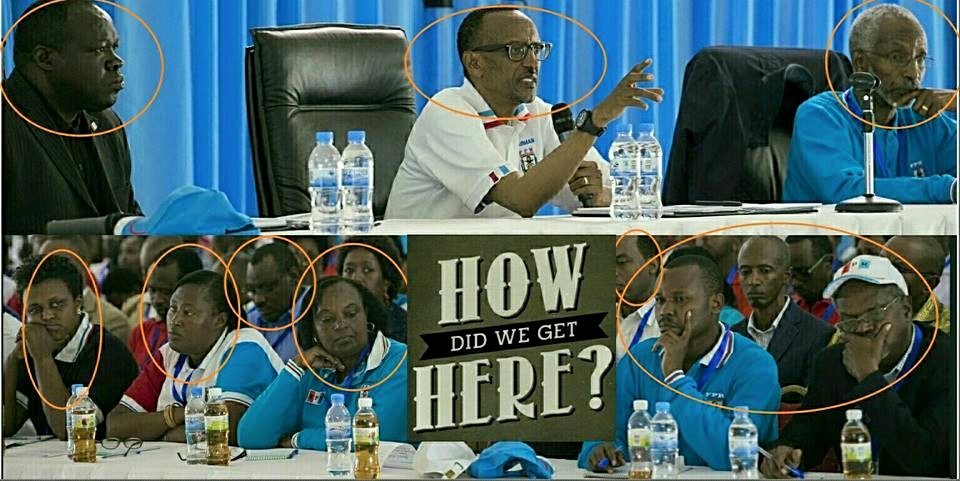
1/7/2015: Duhimbaze Isabukuru y’Ubwigenge bw’u Rwanda dusezerera umuco mubi wo kuba INDOREREZI !

kayibandusi-248x300Nguyu Nyiricyubahiro Gregoire Kayibanda,

wagejeje u Rwanda ku bwigenge ( RIP).

UBUTUMWA BW’UMUYOBOZI W’ISHYAKA ISHEMA RY’U RWANDA

Banyarwandakazi , Banyarwanda, baturanyi namwe nshuti z’Abanyarwanda,

1.Ku italiki ya mbere Nyakanga,  Abanyarwanda bagifite umutima wo gukunda igihugu bibukana ubwuzu italiki nziza u Rwanda rwabonyeho UBWIGENGE, dore imyaka ishize ari 53.

2.Koko rero ubutegetsi bw’Abakoloni baturutse mu mahanga ya kure ntibwarangwaga  no guharanira inyungu z’ibihugu bikolonijwe. Ahubwo umukoloni yagenzwaga mbere na mbere no gusahura ibihugu yigaruriye agamije gukungahaza icyo akomokamo,  ibyo bikamutera gufata uwakolonijwe nk’umuntu wo hasi cyane, utazi ubwenge, utazi ikimufitiye akamaro,  bityo akamucisha bugufi bitavugwa.  Muri rusange, akarengane kakorwaga n’Abakoloni niko katumye abakolonijwe bahumuka, barisuganya, bageza n’ubwo biyemeza kwivumbura.

3.Nibyumvikane neza ko UBWIGENGE(Indepandansi)  bw’igihugu ari indangagaciro ikomeye cyane ibihugu byinshi byaharaniye, birayirwanirira ndetse abaturage babyo batari bake bemera no kumena amaraso yabo kugira ngo bayigereho.

4.Ndibutsa ko hari umwihariko w’amateka y’u Rwanda tudakwiye kwibagirwa. Ni uko Abarwanashyaka baharaniye ubwigenge bw’u Rwanda bagombye kubifatanya n’urugamba rwo kwigobotora ingoma ya cyami na gihake , babonaga neza ko irusha iy’Umubiligi amakare n’ubugome mu kurenganya rubanda rugufi.

5.Niyo mpamvu bashyize ingufu mu kubanza kubona inzego zishingiye kuri demokarasi mbere yo  gusezerera Umukoloni w’Umubiligi . Niko byagenze.

6.Koko rero ntacyo byajyaga kuba bimariye rubanda rugufi gusezerera Umubiligi ukareka gihake igakomeza guheza abasokuruza bacu “ MU BUJA”.

7.Reka rero tubisubiremo twishimye, kubona UBWIGENGE  taliki ya 1Nyakanga 1962, byari amahirwe akomeye cyane ku Rwanda no ku Banyarwanda.

8.Kubona ubwigenge ni uguhabwa ububasha bwo kwitorera abategetsi b’abenegihugu.

9.Kubona ubwigenge ni ukugira ububasha bwo kwigenera imishinga y’iterambere rifitiye rubanda rugufi akamaro.

10.Kubona ubwigenge ni ugusezerera ikiboko na shiku, ni ukugira ububasha bwo kwiyubakira igihugu mu nyungu z’abenegihugu ubwabo.

11.Kubona ubwigenge ni ukwishyira ukizana, ugahinga umurima wawe kandi ukazasarura ibyo wejeje, ni uguhahira urugo rwawe kandi ukarya ibyo wakoreye ntawe uguhagaze hejuru.

GUSA MURI IKI GIHE  AYO MAHIRWE  ARAGENDA AYOYOKA !

Dasso

Ngiyi imikorere ya FPR-Inkotanyi

12.Mu guhimbaza isabukuru y’ubwigenge ku ncuro ya 53 , ntitwakwibagirwa akaga gakomeye igihugu cyacu kiri kongera gusubiramo uko imyaka igenda isimburana.

13.Ako kaga twese turakabona kuko kakuruwe n’ishyano ry’intambara yatangiye taliki ya 1 Ukwakira 1990, itangijwe n’umutwe wa FPR-Inkotanyi,  wimika ingoma y’igitugu gikaze  kuva muri Nyakanga 1994.

14.Akaga turimo ni uko Repubulika ya gatatu iyobowe na FPR-Inkotanyi  yataye umurongo, ihindura kamere y’ubutegetsi, ubutegetsi bukomoka kuri rubanda ibusimbuza ubutegetsi butangwa n’imbunda n’iterabwoba,  imikorere yabwo  ikaba ifite byinshi ihuriyeho n’iy’ingoma ya cyami na gihake twari twarasezereye mu 1959.

15.Aka kaga turimo karaturuka ku bategetsi bokamwe n’ingengabitekerezo yahoze ari ya LUNARI y’uko bo bavukiye gutegeka, rubanda y’Abanyarwanda ikaba igomba kubabera abaja n’abagaragu.

16.Akaga turimo karaturuka kuri Perezida Paul Kagame urangije imyaka 21 ku butegetsi, akaba kandi ashoje manda ze ebyiri z’imyaka 14 yemerewa n’Itegekonshinga ariko bikaba bigaragara ko inyota ikabije y’ubutegetsi ikomeje kumutera  kwitabaza uburiganya n’iterabwoba kugira ngo ahindure ingingo y’101 y’iryo tegekonshinga bityo rimwemerere kwibera umwami w’u Rwanda, uzakurwaho n’urupfu.

17.Aka kaga karaterwa n’uko mu Rwanda nta mukuru wahanura abandi ukiharangwa, abakabikoze bose barangije guhindurwa Abagererwa n’Inkomamashyi nsa, abandi baracecekeshwa.

NONE SE DUKORE IKI ?

kayibanda_kennedy

18.Mu guhimbaza umunsi w’ubwigenge ku nshuro ya 53, turamagana twivuye inyuma iyi Repubulika ya gatatu yiyuburuyemo ubutegetsi bwa cyami na gihake bwubakiye ku iterabwoba, ikinyoma, ivanguramoko  n’ukwikubira ibyiza byose by’igihugu.

19.Turahamagarira abenegihugu kudakomeza kuba indorerezi ahubwo bagahagurukira kwitanga ngo gutabara igihugu cyabo amazi atararenga inkombe burundu.

20.Turahamagarira abenegihugu b’u Rwanda kwisubiza ububasha bwo kwishyiriraho amategeko no KWITORERA ABATEGETSI batari Abahinza n’Abatware bakorera inda zabo n’iy’Umwami wabo gusa.

22.Turabashishikariza mwebwe rubyiruko gutangira kwisuganyano kwitegura amatora yo mu 2017 kugirango  tuyahindure “IGIFARU” kizasezerera bidasubirwaho ingoma y’igitugu n’itarabwoba, kikatugarurira ISHEMA ryo kubaho nk’abenegihugu bishyira bakizana mu Rwababyaye.

23.Ishyaka ISHEMA ry’u Rwanda rizakomeza kwibutsa Abanyarwanda ko rubanda itakaza ubwigenge , igahinduka  ikivunge cy’Abagererwa n’Inkomamashyi ari uko twabyemeye.

24.Tuzakomeza gutoza abenegihugu ko tudakeneye intwaro zisesa amaraso kugira ngo tuvudukane abadusubije mu buja maze tubereke ko turi igihugu kigenga.

25.Niduhaguruka tukisuganya, tukanga agasuzuguro, muzirebera ukuntu uwahekwaga mu ngobyi azagomba gushyira ibirenge hasi akigenza.

26.Umunsi mwiza ku benegihugu bafungiye mu Rwanda no mu mahanga, baba abari muri Gereza zinyuranye cyangwa abari mu ngo iwabo ariko bakomeje kubuzwa ubwigenge bubakwiye, bagahatirwa kubaho bubitse umutwe ,kubera ubwoba bwo kugirirwa nabi.

27.Mugire umunsi mwiza wo guhimbaza ubwigenge mwebwe mpunzi z’Abanyarwanda mukumbuye gusubira mu byanyu mu Rwababyaye,

28.Umunsi mwiza w’Ubwigenge n’amizero ku benegihugu bari mu kaga mu mashyamba ya Kongo,

29.Umunsi mwiza wo kwicengezamo icyifuzo cyo guharanira ubwigenge ku Banyarwanda mwese mwahisemo kwitangira abandi mukora politiki irwanya igitugu.

30.Nitwirinda gukomeza kuba INDOREREZI, buri wese agafata icyemezo cyo gutanga umuganda we, tuzatsinda bwangu iyi gihake ya Kagame, dore ko atari ubwa mbere rubanda nyarwanda yaba itsinze abami.

Padiri Thomas Nahimana,

Umuyobozi w’ishyaka Ishema ry’u Rwanda

Umukandida w’Ishyaka ISHEMA ry’u Rwanda,

 mu matora ya Perezida yo mu 2017

Amateka: umunsi mwiza w’ubwigenge bw’u Rwanda

Kuri iyi tariki ya 1 Nyakanga, u Rwanda rwibuka isabukuru y’ubwigenge bw’u Rwanda.

Kuri iyi nshuro ya 53 y’iyo sabukuru nifuje kubagezaho amagambo yari agize indirimbo yubahiriza igihugu u Rwanda rukibona ubwigenge.

Rwanda Rwacu 

  1. Rwanda rwacu Rwanda Gihugu cyambyaye
    Ndakuratana ishyaka n’ubutwari
    Iyo nibutse ibigwi wagize kugeza ubu
    Nshimira Abarwanashyaka
    Bazanye Repubulika idahinyuka
    Bavandimwe, b’uru Rwanda rwacu twese
    Nimuhaguruke
    Turubumbatire mu mahoro, mu kuli
    Mu bwigenge no mu bwumvikane
  1. Impundu nizivuge mu Rwanda hose
    Repuburika yakuye ubuhake
    Ubukolonize bwagiye nk’ifuni iheze
    Shinga umuzi Demokarasi
    Waduhaye kwitorera Abategetsi
    Banyarwanda: abakuru namwe abato
    Mwizihiye u Rwanda
    Turubumbatire mu mahoro, mu kuli
    Mu bwigenge no mu bwumvikane
  1. Bavuka Rwanda mwese muvuze impundu
    Demokarasi yarwo iraganje
    Twayiharaniye rwose twese uko tungana
    Gatutsi, Gatwa na Gahutu
    Namwe Banyarwana bandi mwabyiyemeje
    Indepandansi twatsindiye twese hamwe
    Tuyishyigikire
    Tuyibumbatire mu mahoro, mu kuli
    Mu bwigenge no mu bwumnvikane
  1. Ni mucyo dusingize Ibendera ryacu
    Arakabaho na Perezida wacu
    Barakabaho abaturage b’iki Gihugu
    Intego yacu Banyarwanda
    Twishyire kandi twizane mu Rwanda rwacu
    Twese hamwe, twunge ubumwe nta mususu
    Dutere imbere ko
    Turubumbatire mu mahoro, mu kuli
    Mu bwigenge no mu bwumvikane

US 2014 Country Reports on Human Rights Practices: Rwanda underperformance due to bad leadership

usdos-logo-seal

EXECUTIVE SUMMARY

Rwanda is a constitutional republic dominated by a strong presidency. The ruling Rwandan Patriotic Front (RPF) led a coalition that included four smaller parties. In 2010 voters elected President Paul Kagame to a second seven-year term with 93 percent of the vote. Three other registered political parties participated in the elections. Elections for parliament’s lower house, the Chamber of Deputies, took place in September 2013. Candidates from the RPF and two other parties that supported RPF policies won all of the open seats, and election observers reported numerous flaws, including possible irregularities in the vote tabulation process. State security forces (SSF) generally reported to civilian authorities, although there were instances in which elements of the security forces acted independently of civilian control.

The most important human rights problems in the country were disappearances, government harassment, arrest, and abuse of political opponents, human rights advocates, and individuals perceived to pose a threat to government control and social order; disregard for the rule of law among security forces and the judiciary; and restrictions on civil liberties. Due to restrictions on the registration and operation of opposition parties and nontransparent vote-counting practices, citizens did not have the ability to change their government through free and fair elections.

Other major human rights problems included arbitrary or unlawful killings, torture, harsh conditions in prisons and detention centers, arbitrary arrest, prolonged pretrial detention, and government infringement on citizens’ privacy rights. The government restricted freedoms of speech, press, assembly, and association. Security for refugees and asylum seekers continued to improve but was at times inadequate. The government restricted and harassed local and international nongovernmental organizations (NGOs), particularly organizations that monitored and reported on human rights. There was a small and declining incidence of trafficking in persons. The government restricted labor rights and child labor continued to be a problem.

The government in many cases took steps to prosecute or punish officials who committed abuses, whether in the security services or elsewhere, but impunity involving civilian officials and the SSF was a problem.

The government ceased providing support to the M23 armed group when it was militarily defeated in November 2013. In contrast to previous years, the government did not provide support to armed groups in neighboring countries.

Section 1. Respect for the Integrity of the Person, Including Freedom from:

a. Arbitrary or Unlawful Deprivation of Life

There were several reports the government committed arbitrary or unlawful killings.

On May 17, Alfred Nsengimana, the former executive secretary of Cyuve Sector in Musanze District, was shot and killed while in police custody. Nsengimana was among at least 77 people arrested in Musanze and Rubavu districts from January through May for suspected links to the Democratic Forces for the Liberation of Rwanda (FDLR). Police stated that a Rwanda Correctional Services (RCS) guard shot Nsengimana while trying to escape after leading police to an FDLR weapons cache. Nsengimana was allegedly tortured prior to his death, and police reportedly refused to release Nsengimana’s body to his family. The government responded that Nsengimana’s body was turned over to his family for burial, and that an internal investigation found he was not tortured.

On June 5, President Kagame defended the government’s policy and practices with regard to individuals suspected of posing a threat to state security. During a speech in Nyabihu District, Kagame stated, “those who talk about disappearances…we will continue to arrest more suspects and if possible shoot in broad daylight those who intend to destabilize our country.”

On September 25, the commissioner of the Rwanda National Police (RNP) Criminal Investigations Division announced the arrest of two RNP officers in connection with the July 2013 murder of Transparency International Rwanda Office Coordinator Gustave Makonene. Makonene was strangled and his body dumped on the shores of Lake Kivu near the town of Rubavu; the government and domestic observers noted that Makonene was investigating cases of local police corruption and the trafficking of conflict minerals from the Democratic Republic of the Congo (DRC) at the time of his death.

From July to October, a number of corpses appeared in Lake Rweru, which is bisected by the border between Rwanda and Burundi. Fishermen reported seeing dozens of floating bodies, some bound and wrapped in sacks. The fishermen alleged that the bodies were carried into the lake by the Nyabarongo River and that the majority of the bodies were then carried away from the lake by the Kagera River. Four bodies were recovered and buried near Kwidagaza village in Burundi’s Muyinga Province. Fishermen living near Kwidagaza reported that on the nights of September 21 and 22, Rwandan marines attempted to exhume the bodies, allegedly to return them to Rwanda. Both Rwanda and Burundi called for a joint investigation into the identity and origin of the bodies. On December 16, Burundi’s minister of foreign affairs accepted an offer of forensic assistance from a group of countries through an international NGO for an investigation led by the African Union. Rwandan officials stated that the government also supported a joint investigation, but no investigation was conducted by year’s end.

The government did not investigate reports that SSF were responsible for the death of former Rwandan intelligence chief and government critic Patrick Karegeya, who was killed on the night of December 31, 2013, in a hotel room in Johannesburg, South Africa. The government denied responsibility for and involvement in the murder, although senior officials publicly welcomed the news of Karegeya’s death. The South African government expelled four Rwandan diplomats, and one from Burundi, in March in connection with Karegeya’s killing and a March attack on the home of another prominent Rwandan government critic.

Government support to the M23 armed group ceased in November 2013, and in contrast to previous years, there were no reports of material support to armed groups. The government continued to deny it provided any support to the M23.

b.Disappearance

There were more reports of disappearances and politically motivated abductions or kidnappings than in previous years. The NGO Human Rights Watch (HRW) and domestic observers alleged the SSF–including the Rwandan Defense Force (RDF), the National Intelligence and Security Services (NISS), and the RNP–were involved in reported disappearances. The government stated the police opened missing persons investigations for all individuals reported to be missing by families or human rights organizations, but no perpetrators were identified or punished.

Local human rights organizations ceased investigating disappearances in 2012 after reporting pressure from government officials, including threats and allegations of treason.

From March to September, domestic observers alleged that several hundred persons disappeared in Musanze and Rubavu districts in connection with an extensive security operation conducted by the RDF and RNP. The SSF reportedly detained individuals incommunicado without access to legal representation for up to two months. The SSF released numerous individuals without charge; however, the government charged 77 individuals with crimes against state security, including for collaborating with the FDLR. Of those 77 individuals, judges ordered the release of 33, while upholding charges against 44 in pretrial hearing. At year’s end 44 cases awaited full trial, while the whereabouts of at least 150 individuals reported missing during the March to September security operation remained unknown. The government noted the majority of persons reported to be missing by human rights organizations had not been reported to the police by family or community members.

On April 23, Rwandan SSF reportedly detained Norbert Manirafasha, a refugee under United Nations High Commissioner for Refugees (UNHCR) protection, in Goma, the DRC, and forcibly repatriated him to Rwanda. Manirafasha reportedly was held incommunicado until his appearance in court on May 19, when authorities charged him in Rubavu District for crimes against state security alongside 15 other defendants connected to the January to May arrests of alleged FDLR agents.

On June 27, the organizing secretary for the Democratic Green Party of Rwanda (DGPR), Jean Damascene Munyeshyaka, disappeared after meeting with an unknown individual in Nyamata town, Bugesera District. Police investigated the disappearance but reported no credible leads.

Leaders of the unregistered faction of opposition party Parti Social-Imberakuri (PS-Imberakuri) and the unregistered United Democratic Forces-Inkingi (FDU-Inkingi) alleged that party members disappeared and the RNP failed to investigate the disappearances.

c. Torture and Other Cruel, Inhuman, or Degrading Treatment or Punishment

The constitution and law prohibit such practices, but there were numerous reports of abuse of detainees and prisoners by police, military, and NISS officials. Authorities dismissed or disciplined some police officers for use of excessive force and other abuses. Police investigations led to formal criminal charges filed in court in more serious cases.

In 2012 the government signed into law a penal code that upgrades torture from an aggravating circumstance to a crime in itself. The law mandates the maximum penalty, defined by the extent of injury, for SSF and other government perpetrators.

HRW and local observers reported that individuals detained during the January to May arrests of alleged FDLR collaborators were interrogated, abused, and in some instances tortured at military and police detention centers, including the Kwa Gacinya detention center in Kigali and the Kami military intelligence camp.

There were numerous reports of detainee abuse and lengthy illegal detention by police and the SSF at the Gikondo Transit Center (locally known as Kwa Kabuga), the Kwa Gacinya detention center in Kigali, and the Kami military intelligence camp.

On March 21, a court sentenced Jean-Baptiste Icyitonderwa to six years in prison for presentation of a petition that prosecutors alleged was a “false document” to the prime minister. Icyitonderwa was one of two university students who were arrested in September 2013 following an attempt to deliver a petition to the Office of the Prime Minister protesting the government’s decision to levy fees on university students in certain socioeconomic categories. The students reported police beat them with metal rods at the Remera police station in Kigali and held them in solitary cells without food and water for two days. Authorities released the students one week later after a judge dismissed all charges. Despite reporting their torture allegations to a judge, no public investigation occurred. In November 2013 Icyitonderwa was rearrested and charged with using false documents after police alleged that some of the signatories to the petition were not enrolled as university students.

There were reports that torture continued in the Kami military intelligence camp, Mukamira camp, Ministry of Defense headquarters, and undeclared detention facilities as first reported by Amnesty International (AI). In 2012 AI documented 18 allegations of torture and other cruel, inhumane, or degrading treatment or punishment perpetrated by military intelligence and other SSF personnel in 2010 and 2011 to secure information or force confessions. Former detainees alleged they endured sleep deprivation, sensory deprivation, starvation, extraction of fingernails, electric shocks, scalding, melting of plastic bags over the head, suffocation, burning or branding, beating, and simulated drowning through confinement in cisterns filled with rainwater. Local and international human rights organizations reported the RDF took positive steps in 2012 to reform military interrogation methods and detention standards, resulting in fewer reports of torture and other cruel, inhumane, or degrading treatment or punishment at Kami and other military detention facilities. They cautioned, however, that the increased use of undeclared detention facilities by NISS, the RDF J-2, and RNP Intelligence made monitoring more difficult.

Prison and Detention Center Conditions

Prison and detention center conditions ranged from harsh and life threatening to meeting international standards. The government continued to improve prison conditions, although conditions in detention centers did not improve. There were numerous reports police at times beat newly arrested suspects to obtain confessions. There were reports military intelligence personnel and the SSF employed torture and other cruel, inhuman, or degrading treatment or punishment to obtain confessions in military detention centers (see section 1.c.). The SSF used undeclared detention facilities to interrogate persons detained on security charges and military officials accused of insubordination.

Physical Conditions: Men and women were held separately in similar conditions, although overcrowding was more prevalent in male wards. Fewer than 100 children under age three lived with their parents in prison. The RCS provided food and fresh milk to children at its five nursery schools and one psychosocial center. Authorities held juveniles at the Nyagatare Rehabilitation Center, Gitagata Youth Center, or in special wings of regular prisons. There were no reports of abuse of juveniles, and the RCS continued to improve education, job training, and access to legal counsel for juveniles. Persons convicted of genocide-related offenses comprised a majority of the adult prison population. Authorities generally separated pretrial detainees from convicted prisoners, although there were numerous exceptions due to the large number of detainees awaiting trial.

Two major fires damaged prisons and in one instance led to loss of life. On June 4, a fire in the Muhanga Prison in Southern Province destroyed part of the prison structure and inmates’ belongings; the RCS reported no deaths or injuries as a result. On July 7, a fire destroyed one of the four cellblocks at the Rubavu Prison in Western Province; the RCS stated that five inmates died and more than 40 were injured in the fire. The RCS investigation of both fires determined that wiring illegally installed by prisoners to power cooking stoves had overheated.

The government continued to hold eight prisoners of the Special Court for Sierra Leone in a purpose-built detention center, which the United Nations deemed met international standards for incarceration of prisoners convicted by international criminal tribunals. The government held international transfers and some high-profile “security” prisoners in similarly upgraded maximum-security wings of Kigali Central “1930” Prison.

In March 2013 the government disarmed and detained more than 600 M23 combatants who crossed into the country from the DRC after an internal power struggle within the M23 armed group. Authorities interned the combatants in a converted police training facility in Ngoma. Several hundred detainees departed or escaped the Ngoma internment center, and the government was unable to account for their whereabouts.

Prisoner deaths resulted from anemia, HIV/AIDS, respiratory diseases, malaria, and other diseases at rates similar to those found in the general population. Medical care in prisons was commensurate with care for the public at large, as the government enrolled all prisoners in the national health insurance plan. Prisoners had access to potable water. The Ministry of Internal Security had full responsibility to provide food for prisoners through contracted cafeteria services, canteens, and prison gardens. Authorities permitted family members to supplement the diets of vulnerable prisoners with health problems. Ventilation and temperature conditions improved as overcrowding continued to decline. According to the RCS, each prison had dormitories, toilets, sports facilities, a health-care center, a guest hall, a kitchen, water, and electricity, as required by a 2006 presidential order governing prison conditions.

Conditions in police and military detention centers varied. Overcrowding was common in police detention centers, and poor ventilation often led to high temperatures. Provision of adequate food and medical care was inconsistent, and some detainees claimed they went for several days without food. There were complaints regarding inadequate sanitation in some detention centers, and not all detention centers had toilets. There were numerous reports of substandard conditions for civilians held in military detention centers.

The Gikondo Transit Center, locally known as Kwa Kabuga–where Kigali authorities held street children, vagrants, suspected prostitutes, and street sellers–continued to operate despite a Senate committee’s 2008 call for its closure due to substandard conditions (see section 1.d.). There were numerous reports of detainee abuse, prolonged detention without charge, systematic police corruption, and deaths of detainees in the center. The government disputed reports of abuse, and stated that Gikondo operated as a center for emergency social assistance that referred petty criminals, delinquent youth, and street children to rehabilitation programs.

Two other transit centers, where conditions generally met basic international standards, operated under the management of the Ministry of Gender and Family Promotion, as did one transit center under church management. Authorities transferred male transit center detainees and at-risk youth between the ages of 18 and 35 to the Iwawa Rehabilitation and Vocational Development Center on Iwawa Island. Sanitation, nutrition, and health services improved on Iwawa Island and generally met international standards.

Administration: Recordkeeping on prisoners and detainees remained inadequate, but authorities continued to develop an electronic database of prisoners. Domestic and international human rights organizations reported instances of long delays and failures to locate prisoners and detainees. There were reports of forgotten detainees and prisoners who remained incarcerated beyond their release date due to misplaced records. The RCS continued to provide training to its staff on the shift from penal to rehabilitative detention as it coped with the continuing merger of the National Prisons Service and the Works for General Interest community service program for perpetrators of the genocide. In 2012 the government amended the penal code to allow community service as alternative sentencing for misdemeanors and petty offenses, and the Ministry of Justice instructed judges to utilize alternative sentencing in place of incarceration for nonviolent offenders.

The law provides for an ombudsman who has the power to carry out investigations of prisons. The National Human Rights Commission (NHRC) also has legal authority to order the release of suspects held in pretrial detention and convicted prisoners. The ombudsman also receives and examines complaints from individuals and independent associations relating to civil servants, state organs, and private institutions. Prisoners and detainees had daily to weekly access to visitors with visitation rules established by prisons and authorities permitted religious observance. Prison staff held regular meetings with prisoners and detainees to listen to inmates’ complaints and took action to resolve them when possible. The Ministry of Internal Security’s permanent secretary personally inspected prisons and took steps to hire staff for a human rights inspectorate within the ministry. The chief of defense staff supervised detention reform efforts in the Ministry of Defense.

Independent Monitoring: The government permitted independent monitoring of prison conditions on a limited basis by diplomats, HRW, and local NGOs as well as the International Committee of the Red Cross, although it at times restricted access to specific prisoners and did not permit monitors to visit undeclared detention centers and certain military intelligence facilities.

HRW obtained access to visit prisons, but the government repeatedly blocked access to individual prisoners. Journalists could access prisons with a valid press card but had to request permission from the RCS commissioner to interview or take photographs.

Improvements: There were continued improvements in the treatment of the general prison population. Overcrowding in prisons continued to decline. The Ministry of Internal Security took full responsibility for providing food to prisoners. Under its strategic plan for 2012-17, the RCS renovated some of the 14 existing prison facilities and continued construction of Butamwa Prison intended to replace Kigali Central “1930” Prison upon completion. Authorities recorded and submitted all juvenile cases to the Ministry of Justice and other government institutions quarterly. The domestic organization Legal Aid Forum (LAF) provided legal assistance to inmates.

d. Arbitrary Arrest or Detention

The constitution and law prohibit arbitrary arrest and detention, but SSF personnel regularly arrested and detained persons arbitrarily and without due process.

From March to September, members of opposition parties alleged that police detained and held incommunicado more than 200 individuals suspected of links to the FDLR; many individuals were later released without charge (see section 1.b).

Unregistered opposition political parties reported authorities frequently arrested their supporters. Most were released after a detention period of one week or less, although some were allegedly tortured or disappeared (see sections 1.b. and 1.c.).

Laurent Nkunda, the former leader of the Congolese armed group National Congress for the Defense of the People, which reportedly received support from the Rwandan government, remained under house detention without charges. The RDF detained Nkunda in 2009 when he returned to the country, reportedly for consultations with government officials. The government did not act during the year on the DRC’s 2009 extradition request for Nkunda.

Role of the Police and Security Apparatus

The RNP, under the Ministry of Internal Security, is responsible for internal security. The RDF, under the Ministry of Defense, is charged with providing external security, although the RDF also works on internal security and intelligence issues alongside the RNP. Authorities generally maintained control over the RNP and the RDF, and the government had mechanisms to investigate and punish abuse and corruption. The Inspectorate General of the RNP generally disciplined police for excessive use of force and prosecuted acts of corruption. The RDF normally displayed a high level of military professionalism, although elements of the SSF at times may have acted independently of civilian control. For example, there were reports the RDF J-2, NISS, and RNP intelligence forces were responsible for disappearances, illegal detention, and torture in military and police intelligence detention centers, both declared and undeclared (see section 1.c.).

Police at times lacked sufficient basic resources–such as handcuffs, radios, and patrol cars–but observers credited the RNP with generally strong discipline and effectiveness. Nevertheless, there were reports of police indiscipline such as arbitrarily arresting and beating individuals and engaging in corrupt activities. The RNP institutionalized community-relations training, which included appropriate use of force and human rights. The National Police Academy offered an undergraduate program in police studies.

There also were reports of abuse of suspects by local defense forces (LDF), a statutorily established law enforcement organization of approximately 20,000 members under the Ministry of Local Government that assisted police. Communities chose volunteers to serve in the LDF. The RNP exercised tactical control of the LDF, while local officials had responsibility for operational oversight. The LDF performed basic security guard duties throughout the country and chased illegal street vendors, petty criminals, and prostitutes from public areas. Members of the LDF ordinarily were unpaid and received less training than the RNP officers. The government warned the LDF against involvement in criminal activity and prosecuted members who committed crimes. Although reports of LDF abuses continued to decrease, some human rights groups considered the LDF abusive and accused the government of not taking sufficiently strong action against some members.

Arrest Procedures and Treatment of Detainees

The law requires authorities to investigate and obtain a warrant before arresting a suspect. Police may detain suspects for up to 72 hours without an arrest warrant. Prosecutors must submit formal charges within five days of arrest. There were numerous reports police and prosecutors disregarded these provisions and held individuals for months without charge, particularly in security-related cases. The SSF held some suspects incommunicado or under house arrest. At times police employed nonjudicial punishment when minor criminals confessed and the victims agreed to the police officer’s recommended penalty, such as a week of detention or restitution.

The law permits investigative detention if authorities believe public safety is threatened or the accused might flee, and judges interpreted these provisions broadly. A judge must review such detention every 30 days, and it may not extend beyond one year, but the SSF held numerous suspects indefinitely after the first authorization of investigative detention. The government attributed this to judicial backlog and delays in obtaining a court date and stated it generally completed investigations within 30 days. After prosecutors formally file a charge, detention may be indefinite unless bail is granted. Bail exists only for crimes with a maximum sentence of five years’ or less imprisonment, but authorities may release a suspect pending trial if satisfied there is no risk the person may flee or become a threat to public safety and order. Authorities generally allowed family members prompt access to detained relatives, unless the individuals were held on state security charges, at intelligence-related detention centers such as Kami or Kwa Gacinya, or in undeclared detention facilities. The government frequently violated the right to habeas corpus.

By law detainees are allowed access to lawyers, but the scarcity of lawyers and their reluctance to take on cases that were considered to be sensitive for political or state security reasons limited access to legal representation. Some lawyers working on politically sensitive cases reported harassment and threats by government officials and denial of access to the evidence against their clients. According to the LAF, there were approximately 1,200 practicing lawyers, 3,000 paralegals, and 30,768 local mediators known as Abunzi as of September. The government did not provide indigent persons with legal representation, although the LAF, composed of 37 organizations that included domestic and international NGOs, the Rwandan Bar Association, the Corps of Judicial Defenders, and university legal aid clinics, provided legal aid services to indigent persons and vulnerable groups. Such resources were at times insufficient to provide lawyers for all those in need. The law requires the government to provide minors with legal representation, which judicial observers cited as a factor in juvenile trial delays. The government continued to hold an annual Legal Aid Week, during which it processed as many juvenile cases as possible to reduce the backlog.

Defendants sometimes remained in prison after completing their sentences while waiting for an appeal date or due to problems with prison records. The law provides that pretrial detention, illegal detention, and administrative sanctions be fully deducted from sentences imposed, but it does not provide for compensation to persons who were acquitted. The law allows judges to impose detention of equivalent duration and fines on SSF and other government officials who unlawfully detained individuals.

Arbitrary Arrest: Police arbitrarily arrested members of opposition parties, journalists, and members of Jehovah’s Witnesses (see sections 1.d. and 3).

Although there is no requirement for individuals to carry identification, police and the LDF regularly detained street children, vendors, and beggars without identification and sometimes charged them with illegal street vending or vagrancy. Authorities released adults who could produce identification and transported street children to their home districts, to shelters, or for processing into vocational and educational programs.

Despite a 2008 Senate committee report calling for the closure of Kigali’s Gikondo Transit Center for violations of detainee rights and lack of social services, the facility continued to operate as a temporary detention facility for street children, substance abusers, vagrants, suspected prostitutes, and street vendors. Center officials asserted the right to operate, based on a 2007 official gazette notice that reopened the center after previous human rights complaints, and that they held persons for no more than 10 days, although some detainees reported waiting several months before being released. Relatives often reported that authorities denied them access to detainees.

The Ministry of Youth, Information, and Communications Technology continued to operate the Iwawa Rehabilitation and Vocational Development Center on Iwawa Island in Lake Kivu. The center provided six months’ psychotherapy and then six months’ vocational and technical training to approximately 1,500 men between the ages of 18 to 35, most of whom were homeless, substance abusers, or petty criminals who were placed in the center without recourse to judicial process. During the year the government built a medical center that provided acute care and mental health services, significantly improving the living conditions on the island. Nutrition and accommodation standards were adequate, and parents were able to visit their adult children at Iwawa.

Pretrial Detention: Lengthy pretrial detention was a serious problem. The NHRC reported to parliament November 2013 that authorities often detained prisoners for extended periods without arraignment. The NHRC report noted authorities held three individuals–Louis Rurangwa, Leodomir Ngarambe, and Celestin Minirarora–since their arrests in 1994 and 1995 without presentation to a court, although the Justice Ministry denied that any prisoners were incarcerated without trial. The law permits the detention of genocide suspects until they face trial. Authorities permitted the majority of convicted prisoners (those who confessed their genocide crimes) to return to their families, with prison time to be served after the suspended and community service portions of their sentences.

The government made strides toward eliminating the case backlog and reducing the average length of pretrial detention. The government and the LAF worked to train paralegals and Abunzi mediators to handle minor civil cases through alternate dispute mechanisms outside of the court system.

The inspector general of the National Public Prosecution Authority (NPPA) sanctioned government officials who abused regulations on pretrial detention with penalties such as fines and suspensions.

Despite progress in shortening pretrial detention in the majority of cases, there were reports of lengthy pretrial detention and illegal detention of defendants charged with threatening state security (“undermining national defense” in the penal code), terrorism, contempt for the head of state, and other security-related crimes. Such cases were also more likely to experience repeated delays after trials began.

e. Denial of Fair Public Trial

The constitution and law provide for an independent judiciary, and the judiciary operated in most cases without government interference. There were constraints on judicial independence, however, and government officials sometimes attempted to influence individual cases. Authorities generally respected court orders.

Trial Procedures

The law provides for a presumption of innocence. The law requires that defendants be informed promptly and in detail of the charges in a language they comprehend, but this requirement was at times not followed, and judges postponed numerous hearings because this requirement was not observed.

Defendants have the right to a fair trial without undue delay, but there were an insufficient number of prosecutors, judges, and courtrooms to hold trials within a reasonable period of time. In the ordinary court system, the law provides for public trials, although courts closed proceedings in cases involving minors to protect witnesses or at the request of defendants. Judges, rather than juries, try all cases. Defendants have the right to communicate with an attorney of their choice, although few could afford private counsel. The law provides for legal representation of minors. The law does not provide for an attorney at state expense for indigent defendants. The Rwandan Bar Association and 36 other member organizations of the LAF provided legal assistance to some indigent defendants but lacked the resources to provide defense counsel to all in need.

The law requires that defendants have adequate time and facilities to prepare their defense, and judges routinely granted requests to extend preparation time. Defendants and their attorneys have the right to access government-held evidence relevant to their cases, but courts did not always respect this right. Defendants have the right to be present at trial, confront witnesses against them, and present witnesses and evidence on their own behalf. By law defendants may not be compelled to testify or confess guilt, and judges generally respected the law during trial. There were numerous reports that the SSF coerced suspects into confessing guilt. There were also reports that judges accepted confessions obtained through torture despite defendants’ protests and failed to order investigations when defendants alleged torture during their trial. The law provides for the right to appeal, and this provision was respected.

The RDF routinely tried military offenders and civilians who previously served in the RDF before military tribunals, which rendered sentences of fines, imprisonment, or both. Military courts provided defendants with similar rights as civilian courts, including the right of appeal and access to government-held evidence relevant to their cases. Defendants often appeared before military tribunals without legal counsel due to the cost of hiring private attorneys and the unwillingness of some attorneys to defend individuals accused of crimes against state security. The law stipulates military courts may try civilian accomplices of soldiers accused of crimes. The government did not release figures on the number of civilians tried as co-perpetrators or accomplices of military personnel.

In 2012 the International Criminal Tribunal for Rwanda (ICTR) turned over its remaining genocide cases to a Tanzania-based branch of the Mechanism for International Criminal Tribunals (MICT). The MICT continued to prosecute genocide suspects (see section 5).

Political Prisoners and Detainees

There were reports local officials and the SSF briefly detained some individuals who disagreed publicly with government decisions or policies. Numerous individuals identified by international and domestic human rights groups as political prisoners remained in prison, including Victoire Ingabire, Bernard Ntaganda, Deo Mushayidi, and Theoneste Niyitegeka.

Former 2003 presidential candidate Theoneste Niyitegeka remained in prison following his 2008 conviction and sentence to 15 years in prison for complicity in genocide. In February the FDU-Inkingi party claimed Niyitegeka was beaten and tortured in Mpanga prison. Prison officials denied the reports of mistreatment and transferred Niyitegeka to Rusizi prison. International and domestic human rights organizations claimed the charges against Niyitegeka were politically motivated and there were serious irregularities in Niyitegeka’s appeal proceedings in sector-level courts, which followed his acquittal by the community justice “gacaca” court system.

On June 4, authorities released PS-Imberakuri party founder Bernard Ntaganda from prison after he served a four-year sentence. Ntaganda alleged authorities beat him and denied medical care during his time in prison.

Civil Judicial Procedures and Remedies

The judiciary was generally independent and impartial in civil matters. Mechanisms exist for citizens to file lawsuits in civil matters, including for violations of human rights. They may appeal to the African Commission on Human and Peoples’ Rights and the East African Court of Justice, but none did so. The Office of the Ombudsman processes claims of judicial wrongdoing on an administrative basis. According to a LAF study released in 2012, 78 percent of judgments in favor of claimants were not fully enforced within three months, as required by law.

f. Arbitrary Interference with Privacy, Family, Home, or Correspondence

Although the constitution and law prohibit such actions, there were numerous reports the government monitored homes, movements, telephone calls, e-mail, other private communications, and personal and institutional data. There were reports of government informants working within international NGOs, local civil society organizations (CSOs), religious organizations, and other social institutions.

The penal code provides legal protection against unauthorized use of personal data by private entities, although these provisions were not invoked during the year.

RPF cadres regularly visited citizens’ homes to demand contributions to the political party and the government’s Agaciro Development Fund, and there were some reports of persons being denied public services if they had not contributed. Despite orders from cabinet ministers not to do so, there were reports that local leaders, employers, and others coerced persons into donating one month’s salary to the Agaciro Development Fund.

Section 2. Respect for Civil Liberties, Including:

a. Freedom of Speech and Press

The constitution provides for freedom of speech and press “in conditions prescribed by the law,” but the government restricted these rights. Despite establishing a self-regulatory media commission, the government intimidated and arrested journalists who expressed views it deemed critical on sensitive topics or who it believed had violated the law or journalistic standards. Journalists reported that government agents questioned, detained, and at times threatened bodily harm or death in response to reporting that the government considered critical. Numerous journalists practiced self-censorship.

Freedom of Speech: Individuals could criticize the government publicly or privately on policy implementation and some other issues, but criticism of the presidency generally was not tolerated. Laws prohibiting divisionism, genocide ideology, and genocide denial continued to discourage citizens from expressing viewpoints that might be construed as promoting societal divisions. The law prohibits the propagation of ideas based on “ethnic, regional, racial, religious, language, or other divisive characteristics.” Public incitement to “genocide ideology” or “divisionism,” which includes discrimination and sectarianism, is punishable by five to nine years in prison and fines of 100,000 to one million Rwandan francs ($151 to $1,510). The 2012 penal code expanded former provisions that prohibited the display of contempt for the head of state or other high-level public officials to include administrative authorities or other public servants, with sentences of one to two years in prison and fines of 50,000 to 500,000 Rwandan francs ($76 to $755). Slander of foreign and international officials and dignitaries remains illegal, with sentences of one to three years in prison. The 2012 penal code revised the crime of “spreading rumors aimed at inciting the population to rise against the regime” to “spreading false information with intent to create a hostile international opinion against the Rwandan state,” with much more severe penalties, including life in prison for acts committed during wartime and seven to 10 years in prison for acts committed during peacetime.

On August 29, the government charged retired brigadier general Frank Rusagara and retired colonel Tom Byabagamba in the Nyamirambo Military Court with spreading rumors intended to incite the population to rise up against the government, making false statements intended to impugn the government, insulting the president, and encouraging RPF party members to dialogue with members of the Rwandan National Congress in addition to other state security charges, including possession of illegal firearms.

In August 2013 the government signed into law a revised genocide ideology law that introduced international definitions for genocide and narrowed the scope of what constitutes “genocide ideology” and related offences to a more specific range of actions and statements. Specifically, the law states that “genocidal ideology” must be clearly linked to specific acts or statements, rather than the broader “aggregate of thoughts” standard defined in the 2008 law. International and local human rights organizations, including HRW and the Rwandan League for the Promotion and Defense of Human Rights (LIPRODHOR), welcomed the revised law but expressed concern that, despite clearer protections and narrower definitions, the government still could use the law to restrict freedom of speech and press.

The government investigated and prosecuted individuals accused of threatening or harming genocide survivors and witnesses or of espousing genocide ideology, which the law defines as dehumanizing an individual or a group with the same characteristics by threatening, intimidating, defaming, inciting hatred, negating the genocide, taking revenge, altering testimony or evidence, killing, planning to kill, or attempting to kill someone.

The government reported prosecutions for divisionism and “genocide ideology-related crimes” declined from 772 cases from July 2012 through 2013 to 20 cases from January to August.

Press Freedoms: Vendors sold both private and government-owned newspapers published in English, French, and Kinyarwanda. There were 53 newspapers, journals, and other publications registered with the government, although fewer than 10 published regularly. Sporadically published independent newspapers maintained positions both in support of and contrary to or critical of the government. There were 27 radio stations (six government-owned and 21 independent), one government-run television station, and five independent television stations.

A set of five media laws passed in 2013 granted greater press freedoms but had no discernable effect on press freedom. Under these laws, professional journalists no longer are required to hold a journalism degree. The Media High Council, which previously had the power to suspend newspapers, served in a “capacity-building” role. The laws established the Rwanda Media Commission (RMC), a self-regulatory body that oversaw the media and accredited journalists.

Despite these reforms, media professionals reported government officials sought to influence reporting and warned journalists against reporting information deemed sensitive or critical of the government. The government frequently interfered in the work of the ostensibly independent RMC.

On October 24, the government shut down radio frequencies carrying the BBC’s Kinyarwanda service following a documentary about the Rwandan genocide that BBC Two broadcast October 1 in the United Kingdom. The government and civil society groups alleged that the documentary constituted a denial of the genocide, which is a crime under Rwandan law, and members of parliament alleged the BBC had engaged in hate speech. The chairman of the RMC criticized the contents of the documentary but opposed suspending the BBC; however, in contravention of laws on media self-regulation the Rwanda Utilities Regulatory Authority ordered the BBC to be taken off the air.

Under the 2013 media laws, journalists must refrain from reporting items that violate “confidentiality in the national security and national integrity” and “confidentiality of judicial proceedings, parliamentary sessions, and cabinet deliberations in camera.” The laws provide journalists the freedom to investigate, express opinions, and “seek, receive, give, and broadcast information and ideas through any media.” Censorship of information is explicitly prohibited, although censorship occurred. The laws restrict these freedoms if journalists “jeopardize the general public order and good morals, an individual’s right to honor and reputation in the public eye and to the right to inviolability of a person’s private life and family.” Authorities may seize journalists’ material and information if a “media offense” occurs but only if a court orders it. Courts may compel journalists to reveal confidential sources in the event of an investigation or criminal proceeding. Persons wanting to start a media outlet must apply with the “competent public organ.” All media rights and prohibitions apply to persons writing for websites.

Violence and Harassment: There were reports police and the SSF at times detained and harassed journalists, such as in April and May during a security operation focused on alleged networks of Rwandan National Congress and FDLR supporters. The government did not expel any resident members of the media from the country. In March the government refused entry upon arrival to foreign journalist Steve Terrill, citing an article linking Terrill to a narcotics arrest in the United States. Terrill alleged the government refused him entry due to his reporting on a Twitter account, run by individuals in President Kagame’s office, which was used to attack government critics. One journalist fled to Uganda after reporting threats from government agents shortly after the genocide commemoration in April; government officials stated the journalist fled in connection with a corruption investigation. Several journalists who fled in recent years remained outside the country.

Censorship or Content Restrictions: The law allows the government to restrict access to some government documents and information, including information on individual privacy and information or statements that are deemed to be slander or defamation.

Authorities released Agnes Uwimana, editor of the Umurabya newspaper, from prison in June after she served a four-year sentence for incitement to civil disobedience, contempt for the head of state, spreading rumors to cause public disorder, denying the genocide, and likening President Kagame to Adolf Hitler. Uwimana reopened Umurabya upon her release.

Radio stations broadcast criticism of government policies, including using popular citizen call-in shows. Some radio stations, including Radio 1, Radio Isango Star, and Radio Salus, had regular call-in shows that featured discussion of government programs or policies. One radio station suspended a morning call-in show in early April after reportedly receiving threats from the government related to an on-air discussion of the arrest of popular musician Kizito Mihigo; the program resumed broadcasting several weeks later.

Libel Laws/National Security: Defamation (libel and slander) is a criminal offense punishable by fines and imprisonment. Libel laws generally were not used to suppress the publication of material that criticized government policies or government officials.

Internet Freedom

The new media laws include the right of all citizens to “receive, disseminate, or send information through internet,” including the right to start and maintain a website. All provisions of the media laws apply to web-based publications. Restrictions such as website blocking remained in place, however. There were numerous reports that the government monitored e-mail and internet chat rooms. Individuals and groups could engage in the peaceful expression of views via the internet, including by e-mail, but were subject to monitoring. There were reports monitoring led to detention and interrogation of individuals by the SSF. The government announced plans to build a 4G wireless broadband network in order to provide internet access to 95 percent of the population by 2015. According to the International Telecommunication Union, 8 percent of the population used the internet in 2012.

Government-run social media accounts were used to debate and at times intimidate individuals who posted online comments considered critical of the government. In March, the Washington Post reported that a Twitter account purporting to represent the views of a private individual was run by President Kagame’s office and used to attack and attempt to discredit individuals deemed hostile to Rwanda. The Presidency deleted the account and tweeted that the staff who had managed the account were disciplined.

The government at times blocked access within the country to several websites critical of its policies. Such sites included diaspora-run websites, such as Umuvugizi and Le Profete.

There was one report of a cyberattack against an opposition website in which progovernment messages were posted without the involvement of site administrators.

Academic Freedom and Cultural Events

The government generally did not restrict academic freedom or cultural events, but authorities frequently suspended secondary and university students for divisionism or engaging in genocide ideology, which led to self-censorship.

b. Freedom of Peaceful Assembly and Association

Freedom of Assembly

The constitution and law provide for freedom of assembly, but the UN special rapporteur on the rights to freedom of assembly and association, Maina Kiai, reported in January that “peaceful protests voicing dissent and criticizing government policies are reportedly not allowed.” Authorities may legally require advance notice for public meetings and demonstrations but must respond to such requests within one week or 15 days, depending on the type of event. The government limited the types of locations where religious groups could assemble, at times citing municipal zoning regulations as the reason.

In the period preceding the September 2013 Chamber of Deputies’ elections, opposition parties reported local officials at times denied permission for political rallies or instructed citizens not to attend the rallies.

Freedom of Association

While the constitution provides for freedom of association, the government limited the right. The law requires private organizations to register. While the government generally granted licenses, it impeded the formation of new political parties and restricted political party activities (see section 3). In addition the government imposed difficult and burdensome NGO registration and renewal requirements, especially on international NGOs, as well as time-consuming requirements for annual financial and activity reports (see section 5).

c. Freedom of Religion

See the Department of State’s International Religious Freedom Report at www.state.gov/religiousfreedomreport/.

d. Freedom of Movement, Internally Displaced Persons, Protection of Refugees, and Stateless Persons

The constitution and law provide for freedom of internal movement, foreign travel, emigration, and repatriation, and the government generally respected these rights.

The government generally cooperated with the UN High Commissioner for Refugees (UNHCR) and other humanitarian organizations in providing protection and assistance to internally displaced persons, refugees, returning refugees, asylum seekers, stateless persons, and other persons of concern.

The UNHCR recommended that countries invoke the “ceased circumstances” clause for Rwandans who fled their country between 1959 and 1998. The cessation clause forms part of the 1951 Refugee Convention and may be applied when fundamental and durable changes in a refugee’s country of origin, such that they no longer have a well-founded fear of persecution, remove the need for international protection. Both the UNHCR and the government agreed that since the end of the civil war and the 1994 genocide, the country has been peaceful, and more than three million exiled Rwandans have returned. Many of the estimated 100,000 Rwandans who continued to live outside the country–mainly in eastern, central, and southern Africa–remained unwilling to be repatriated, citing fear of persecution by the government.

On April 23, Rwandan SSF reportedly detained Norbert Manirafasha, a refugee under UNHCR protection, in Goma, the DRC, and forcibly repatriated him to Rwanda (see section 1.b.).

On October 3, a military court sentenced Joel Mutabazi to life in prison and Innocent Kalisa to 25 years in prison on state security charges. Mutabazi and Kalisa, refugees under UNHCR protection, were arrested and deported from Uganda in October 2013. The UNHCR, HRW, and AI condemned the deportation of Mutabazi as a violation of the principle of nonrefoulement. The military court rejected Mutabazi’s argument of illegal refoulement, stating that the convention on refugees does not preclude prosecuting citizens living abroad from criminal acts. Rwanda had issued an Interpol arrest warrant for Mutabazi prior to his arrest and deportation from Uganda.

Foreign Travel: The law allows a judge to deprive convicted persons of the right to travel abroad as a stand-alone punishment or as punishment following imprisonment. Authorities denied or confiscated passports of political opponents and their relatives.

Exile: The law prohibits forced exile. Some political dissidents, journalists, social activists, and former “security” detainees who claimed harassment and intimidation by the government and left the country in previous years, remained in self-imposed exile. There were no reports of departures during the year.

In September 2013 the City of Kigali seized ownership of the United Trade Center, a shopping mall owned by Tribert Rujugiro Ayabatwa, a Rwandan businessman living in self-imposed exile in South Africa, and during the year the government reportedly seized Ayabatwa’s remaining assets, including a tea plantation and his personal residence. The government asserted the assets were abandoned property.

Emigration and Repatriation: According to the UNHCR, the government accepted more than 27,000 nationals returning from other countries from 2011 to October 2014, most of whom settled in their districts of origin. The government worked with the UNHCR and other aid organizations to assist the resettled returnees.

The government continued to intern former Congolese M23 combatants in a detention facility in Ngoma, but nearly half of the combatants fled the facility during the year or in late 2013.

The government continued to accept former Rwandan combatants who returned from the DRC. The Rwandan Demobilization and Reintegration Commission, with international support, placed adult former combatants in a three-month re-education program at Mutobo Demobilization Center in Northern Province. The Musanze Child Rehabilitation Center, relocated from Muhazi, Eastern Province, treated former child combatants in Northern Province. After a three-month re-education period, each adult former combatant was enrolled automatically in the RDF Reserve Force and received approximately 60,000 Rwandan francs ($91) and permission to return home. Two months later each former combatant received an additional 120,000 Rwandan francs ($181).

Internally Displaced Persons (IDPs)

From July to December 2013, Tanzania expelled 14,461 Rwandans who it claimed were living illegally in Tanzania. The rate of deportations declined significantly during the year, with 61 deported Rwandan citizens registered. The government resettled the deportees to their home communities in Rwanda and provided resettlement support including housing and vocational training.

Protection of Refugees

Access to Asylum: The law provides for the granting of asylum or refugee status, and the government has established a system for providing protection to refugees.

The UNHCR, with government support, continued to assist approximately 73,000 refugees and asylum seekers, 99 percent of whom were from the DRC. Other refugees were from Angola, Burundi, Chad, Eritrea, Ethiopia, Kenya, Somalia, and Uganda.

Human rights organizations reported that Israel deported several dozen Eritrean asylum seekers to Rwanda during the year; some were subsequently transported to Uganda. There were allegations the government of Rwanda worked with Israel in support of the deportations.

Refugee Abuse: Authorities improved security and physical protection within refugee camps. The RNP worked with the UNHCR to station police officers in refugee camps, and refugees were free to file complaints at area police stations. Intimidation of police and victims by camp leaders and youth gangs contributed to a general sense of impunity within the refugee community, especially in relation to gender-based violence (GBV).

Employment: No laws restrict refugee employment, and the Ministry of Disaster Management and Refugee Affairs supported efforts by refugees to work in the local economy. Officials acknowledged very few refugees were able to find local employment, however. Refugee camps offered periodic job training and livelihood programs to assist refugees in finding or creating income-generating opportunities.

Access to Basic Services: Refugees had access to public education, public health care, housing within the refugee camps, law enforcement, courts and judicial procedures, and legal assistance. The UNHCR funded education through grade nine but did not provide tuition at the secondary and university levels.

Durable Solutions: Rwanda is not a refugee resettlement country. The government assisted the safe, voluntary return of refugees to their countries and sought to improve local integration of refugees in protracted stays by permitting them to accept local employment, move freely in the country, and by establishing markets to facilitate trade between refugees and local citizens. The government did not facilitate the naturalization of refugees resident in the country.

Temporary Protection: The government provided temporary protection to individual asylum seekers who might not qualify as refugees.

Section 3. Respect for Political Rights: The Right of Citizens to Change Their Government

The constitution and law provide citizens the ability to change their government through free and fair elections, but government restrictions on the formation of opposition parties limited that ability. The RPF and allied parties controlled the government and legislature, and its candidates continued to dominate elections at all levels.

Elections and Political Participation

Recent Elections: Elections for parliament’s lower house, the Chamber of Deputies, in September 2013 were peaceful and orderly, but international observers reported they did not meet the generally recognized standards for free and fair elections. Observers reported they were denied access to the vote tabulation process at the polling station, district, and national level, which undermined confidence in the integrity of the results. Opposition parties experienced difficulties in registering ahead of the election, depriving voters of a meaningful choice at the polls.

Political Parties and Political Participation: The constitution outlines a multi-party system but provides few rights for parties and their candidates. There were some reports the RPF pressured youth into joining the party during mandatory “ingando” civic and military training camps held after secondary school graduation. There were also reports the RPF cadres coerced political donations from both party members and nonmembers. Some parties were not able to operate freely, and parties and candidates faced legal sanctions if found guilty of engaging in divisive acts, destabilizing national unity, threatening territorial integrity, or undermining national security. The government’s enforcement of laws against genocide ideology, divisionism, and spreading false information with intent to create a hostile international opinion against the state discouraged debate or criticism of the government and resulted in occasional detentions.

The government no longer required but continued strongly to encourage all registered political parties to join the National Consultative Forum for Political Organizations (NCFPO), which sought to promote consensus among political parties, and required member parties to support publicly policy positions developed through dialogue. At year’s end all registered parties were members of the NCFPO. Government officials praised the NCFPO for promoting political unity, while critics argued it stifled political competition and public debate.

To register as a political party, an organization must present a list of at least 200 members, with at least five members in each of the 30 districts, and it must reserve at least 30 percent of its leadership positions for women and provide a written party statute signed by a notary.

The DGPR was registered officially as a political party in August 2013, after the government blocked previous attempts to register it in 2009 and 2010. Authorities granted the registration one working day before candidate lists for the September 2013 Chamber of Deputies elections were due, and the DGPR was unable to register candidates for the election. DGPR leaders reported the party was permitted to publish policy proposals as alternatives to RPF policy and hold small meetings with party supporters, although the DGPR also stated that local officials often threatened party members with dismissal from employment or the withholding of state services unless they dissociated with the party. On June 27, the organizing secretary for DGPR, Jean Damascene Munyeshyaka, disappeared after meeting with an unknown individual in Nyamata town, Bugesera District (see section 1.b.).

Party leaders for the unregistered Pacte Democratique du Peuple-Imanzi (PDP-Imanzi) and a splinter party, the People’s Democratic Alliance (PDA), continued to seek permission to hold a founding party congress following the cancellation of the PDP-Imanzi congress in Gasabo District in November 2013. The Ministry of Local Government and local officials continued to deny PDP-Imanzi and PDA permission to hold such meetings, citing the two parties’ connections to Deo Mushayidi, who remained incarcerated on state security charges.

Opposition leaders reported police arbitrarily arrested some members of PS-Imberakuri (Bernard Ntaganda faction), FDU-Inkingi, PDP-Imanzi, and the PDA. Party members reported receiving threats because of their association with those parties.

In accordance with the constitution, which states a majority party in the Chamber of Deputies may not fill more than 50 percent of cabinet positions, independents and members of other political parties allied with the RPF held key positions in government, including that of prime minister. PS-Imberakuri and the DGPR were not represented in the cabinet.

Participation of Women and Minorities: The constitution requires that at least 30 percent of the seats in parliament’s Chamber of Deputies be reserved for women. At year’s end there were eight women in the 25-seat Senate and 51 women in the 80-seat Chamber of Deputies. Women filled 11 of 29 cabinet positions.

Section 4. Corruption and Lack of Transparency in Government

The law provides criminal penalties for corruption by officials and private persons transacting business with the government that include imprisonment and fines. The law also allows citizens who report requests for bribes by government officials to receive financial rewards when officials are prosecuted. While the government continued to implement anticorruption laws and encourage citizens to report requests for bribes, corruption remained a problem.

Corruption: Transparency International Rwanda and other CSOs reported the government investigated and prosecuted reports of corruption among police and government officials. Police frequently undertook internal investigations of corruption among police officers and sting operations against them. The Office of the Ombudsman released quarterly lists of persons convicted of corruption, but journalists and other observers noted that corruption investigations focused on local officials and private persons. The government prosecuted only one senior official, a permanent secretary in the Ministry of Local Government, for corruption during the year. Authorities removed but did not prosecute cabinet ministers and other senior officials reportedly involved in corruption. For example, in January a group of farmers petitioned the government for recourse after the Ministry of Agriculture and the Rwanda Development Bank provided sick cattle from Kenya to them instead of European cattle the farmers had agreed to purchase. Authorities removed–but did not investigate or prosecute–the agriculture minister and the ministry’s permanent secretary

There were reports district officials manipulated or falsified statistics in order to meet development targets.

International and domestic investors reported the government generally supported the establishment of new businesses. Nevertheless, investors reported contract disputes with the government and stated they were subject to arbitrary tax, immigration, and investment rules.

Investors, particularly those residing abroad, at times encountered business difficulties because of political disputes. For example, in June investor Tribert Rujugiro Ayabatwa alleged the government illegally seized ownership of his shares in the Nshili Kivu Tea factory as well as his private residence in Kigali. The seizure followed the government’s 2013 expropriation of Ayabatwa’s ownership of the Union Trade Center, a $20 million shopping mall he built in 2006, after he went into self-imposed exile in South Africa. Rujugiro filed a lawsuit against the government with the East African Court of Justice, which continued at year’s end.

Anticorruption groups faced intimidation. On July 29, a gunman approached Transparency International Rwanda’s headquarters and made threats against chairperson Marie Immaculee Ingabire. Separate security breaches were reported at the home of the organization’s senior staff member. The RNP investigated both cases but made no arrests. The government announced the arrest of two RNP officers in connection with the 2013 murder of Transparency International staff member, Gustave Makonene; their cases were pending at year’s end.

The NPPA prosecuted civil servants, police, and other officials for fraud, petty corruption, illegal awarding of public tenders, and mismanagement of public assets. The NPPA, under the Ministry of Justice, is responsible for prosecuting police abuse cases. The RNP Inspectorate of Services investigated cases of police misconduct, and in March the RNP launched an anticorruption unit. The RNP dismissed 78 officers for corruption related charges from July 2013 to July 2014, suspended an unknown number of additional officers for corruption, abuse of power, or misconduct, and imposed administrative punishment for indiscipline. The RNP referred criminal offenses committed by police to the NPPA, and several prosecutions were underway at year’s end. The RNP advertised a toll-free hotline number in the local radio and press and provided deposit boxes in many communities to encourage citizens to report both positive and negative behavior by police and the LDF.

The Office of the Auditor General worked to prevent corruption, including by investigating improper ministerial tendering practices. The RNP and the NPPA used the auditor general’s annual report to pursue investigations into government-owned businesses. The Office of the Ombudsman led the National Anticorruption Council and had an active good governance program and several local-level anticorruption units. The Office of the Ombudsman launched a public comment initiative and installed information boxes in government offices and police stations to solicit anonymous reports of corruption but stated that it received few reports. Between January and June, the office investigated 174 cases of embezzlement and corruption and referred 27 cases for prosecution, the majority of which involved misuse of public funds. In 2013 the Office of the Ombudsman was granted legal authority to prosecute corruption cases, but it had not hired prosecutors by year’s end. The Rwanda Governance Board monitored governance more broadly and promoted mechanisms to control corruption. The Rwanda Revenue Authority’s Anticorruption Unit had a code of conduct and an active mechanism for internal discipline. The National Tender Board, the Rwanda Utilities Regulatory Agency, and the National Bureau of Standards also enforced their own regulations.

Financial Disclosure: The constitution and law require annual reporting of income and assets by public officials as well as reporting them upon entry into and exit from office. There is no requirement for public disclosure of those assets except in cases where irregularities are discovered. The Office of the Ombudsman, which monitors and verifies disclosures, reported that 98 percent of officials complied with the requirement in 2013. In cases of noncompliance, the Office of the Ombudsman has the power to garnish wages and impose administrative sanctions, which often involved loss of position or prosecution.

Public Access to Information: The government promulgated the Access to Information Law in March 2013. The law grants wide access to government information upon request and in some cases to information held by private entities when disclosure is deemed to be in the public interest. The government may limit access to information if its release is deemed to be against the public interest or if the information pertains to national security, as determined by the Prosecutor General’s Office. During the year no formal challenges under the law were taken to court. The government granted several requests for information.

Illicit Trade in Natural Resources: The government utilized a “bagging and tagging” system to aid companies with regional and international due diligence requirements related to conflict minerals. The government maintained a ban on the purchase or sale of undocumented minerals from neighboring countries. Observers and government officials reported smugglers succeeded in trafficking an unquantifiable amount of undocumented minerals through the country.

Section 5. Governmental Attitude Regarding International and Nongovernmental Investigation of Alleged Violations of Human Rights

Several domestic and international human rights groups operated in the country, investigating and publishing their findings on human rights cases. Some human rights groups reported that government officials generally were cooperative and responsive to their privately expressed views. Other groups indicated the government was intolerant of criticism, suspicious of local and international human rights observers, and often rejected their criticism as biased and uninformed. Human rights NGOs expressed fear of the government, reported SSF monitoring of their activities, and self-censored their comments. An international NGO working on human rights issues experienced delays during the annual registration process that it attributed to government opposition to the group’s work.

In June the Justice Ministry published an assessment of the NGO HRW in the New Times newspaper that claimed HRW was engaged in a “deliberate, sustained, and politically motivated propaganda campaign against the Government of Rwanda” and functioned as the “campaign mouthpiece” of the FDLR armed group. HRW issued a statement rejecting allegations made in the assessment.

A few domestic NGOs–including LIPRODHOR, the Youth Association for Human Rights Promotion and Development (AJPRODHO), the Rwandan Association for the Defense of Human Rights, and the League for Human Rights in the Great Lakes Region–focused on human rights abuses.

Attempts by LIPRODHOR’s former leadership to retake control of the organization continued. The former leadership was deposed in July 2013 after several LIPRODHOR members called an extraordinary meeting; observers noted the meeting violated LIPRODHOR’s bylaws and that the leadership was replaced due to its decision to withdraw LIPRODHOR from the Collective of Leagues and Associations for the Defense of Human Rights, which the LIPRODHOR leadership accused of being progovernment. In August the Nyarugenge District Court ruled against the former leadership in a suit filed concerning their replacement.

A progovernment NGO, the Rwanda Civil Society Platform, managed and directed some NGOs through umbrella groups, which theoretically aggregated NGOs working in particular thematic sectors. Many observers believed the government controlled some of these groups.

In January the Office of the Prime Minister published regulations that require NGOs and CSOs to participate in Joint Action and Development Forums (JADFs) at the district and sector level. The regulations grant local governments broad powers to regulate activities, levy fees, and bar organizations from operating in districts or sectors if they do not comply. NGO leaders expressed concern that the JADF structure may further tighten government control over NGOs and CSOs; the government responded that the JADF structure was intended to coordinate but not direct the activities of NGOs and CSOs.

In 2012 the government passed two NGO laws.

The law on local NGOs moved their oversight from the Ministry of Local Government to the Rwanda Governance Board, replaced annual registration with one-time registration, and required submission of annual budgets and reports. The law allows local NGOs to lobby for political causes but not candidates and permits government funding in exchange for greater government control over budgets and activities. Local NGOs welcomed the advent of one-time registration and permission to advocate for their causes but also worried the 2012 law would serve to increase government interference and control of programming.

The law on international NGOs allows for registration in up to five-year increments, depending on the duration of an NGO’s funding, but keeps oversight with the Directorate General of Immigration and Emigration, which falls under NISS. The government granted single-year registration to most international NGOs. International NGOs widely criticized the draft ministerial order implementing the 2012 law, particularly provisions that would give the government authority to preapprove hiring and personnel decisions by international NGOs. In response the government delayed publication of the ministerial order, which was under review at year’s end. In recent years the government limited the number of foreign staff granted visas to work for international NGOs.

Local and international NGOs often found the registration process difficult, in part because they must present their objectives, plan of action, and detailed financial information to the local authorities of every district in which they would like to work. Another concern was the requirement to sign a memorandum of understanding with relevant government ministries before presenting registration applications to the Directorate General of Immigration. International NGOs reported that the government used the registration process to pressure them into financially supporting government programs and supporting government policies. The government threatened legal action against organizations that did not submit reports or registration paperwork on time and threatened not to register NGOs whose scope of work was outside of government development policies or programs. Many international and some local NGOs complained that government delays and unpublished requirements caused late submissions and that the regulatory environment worsened.

The United Nations or Other International Bodies: The government sometimes cooperated with international human rights bodies but criticized HRW, Reporters without Borders, Freedom House, and AI as well as the United Nations and several of its agencies, as being inaccurate and biased. The government reportedly conducted surveillance on certain international and domestic NGOs. Some NGOs reported authorities pressured individuals affiliated with them to provide information on their activities, and several NGOs expressed concerns that intelligence agents infiltrated their organizations to gather information, influence leadership decisions, or create internal problems.

There were reports the government sought to subvert the role of the NGOs and CSOs in providing independent assessments to the UN Universal Periodic Review on Human Rights. NGO staff reported they were told not to publish assessments critical of the government or that differed from the government’s official position.

There were isolated reports of government officials asking international NGOs to hand over their assets, programs, and staff to local NGOs and government agencies.

Government Human Rights Bodies: The independent and adequately funded Office of the Ombudsman operated with the cooperation of executive agencies and took action on cases of corruption and other abuses, including human rights cases (see sections 1.e. and 4).

The government funded and cooperated with the NHRC. According to many observers, the NHRC did not have adequate resources to investigate all reported violations and remained biased in favor of the government. Some victims of human rights abuses stated they did not report abuses to the NHRC because they perceived it as biased and feared retribution by the SSF.

In 2012 the ICTR, based in Tanzania, turned over its remaining genocide cases to a Tanzania-based branch of the MICT. The MICT continued to prosecute genocide suspects. From 1994 through year’s end, the ICTR completed 75 cases, with 52 convictions, 11 convictions pending appeal, and 12 acquittals. At year’s end there were nine fugitives. The ICTR neither indicted nor tried any RPF members from 1994 through 2012.

Section 6. Discrimination, Societal Abuses, and Trafficking in Persons

The constitution provides that all citizens are equal before the law, without discrimination based on ethnic origin, tribe, clan, color, sex, region, social origin, religion or faith, opinion, economic status, culture, language, social status, or physical or mental disability. The constitution and law are silent on sexual orientation and gender identity. The government generally enforced these provisions, although problems remained.

Women

Rape and Domestic Violence: The law criminalizes rape and spousal rape, and the government handled rape cases as a judicial priority. Penalties for rape ranged from five years’ to life imprisonment with fines of 500,000 to one million Rwandan francs ($755 to $1,510). Penalties for spousal rape ranged from two months’ to life imprisonment with fines of 100,000 to 300,000 Rwandan francs ($151 to $453).

The law provides for imprisonment of three to six months for threatening, harassing, or beating one’s spouse. Domestic violence against women was common. Although many incidents remained within the extended family and were not reported or prosecuted, government officials encouraged the reporting of domestic violence, and the RNP stated that reporting of such cases increased. The UN Children’s Fund (UNICEF) reported in 2010 that 48 percent of adolescent girls believed a husband was justified in hitting or beating his wife under certain circumstances. According to the National Institute of Statistics’ Gender Monitoring Office, a 2010 survey noted that 41 percent of women and girls older than age 15 had experienced physical violence and 22 percent had experienced sexual violence.

Police headquarters in Kigali had a hotline for domestic violence. Several other government ministries also had free GBV hotlines. Each of the 78 police stations nationwide had its own gender desk, an average of three officers trained in handling domestic and gender-based violence, and a public outreach program. The RNP Directorate against GBV handled all cases of such violence and child protection. Fifteen one-stop centers were established throughout the country, providing medical, psychological, legal, and police assistance at no cost to victims of domestic violence. The government continued to expand the network of one-stop centers in hospitals, districts, and refugee camps.

The government continued a whole-of-government, multi-stakeholder campaign against GBV, child abuse, and other types of domestic violence. GBV was a required training module for police and military at all levels.

Female Genital Mutilation/Cutting (FGM/C): According to the UN Office for the Coordination of Humanitarian Affairs, FGM/C was not widely practiced in the country. The government ratified the Maputo Protocol to the African Charter on Human and Peoples’ Rights on the Rights of Women in Africa (2003), which prohibits “all forms of female genital mutilation, scarification, medicalization and para-medicalization of female genital mutilation and all other practices in order to eradicate them.”

Sexual Harassment: The law prohibits sexual harassment by employers or any other person and provides for penalties of two months’ to two years’ imprisonment and fines from 100,000 to 500,000 Rwandan francs ($151 to $755). Nevertheless, sexual harassment remained common. According to a 2010 Transparency Rwanda study, gender-based corruption was perceived to be fundamentally linked to recruitment practices and to the determination of salary and other benefits. In the study, 21 percent of female respondents believed their salary determination was not objective, and some claimed their salaries were determined by their willingness to have sex with company executives. The study also found, in contrast, that respondents believed promotion, evaluation, and opportunities for training or travel were based on more objective and transparent criteria. Fifty-six percent of interviewees stated they did not report gender-based corruption cases. The City of Kigali launched a program to combat sexual harassment of women and girls in public spaces; it found that 56 percent of women in the country reported verbal or physical sexual harassment in public places and 42 percent of women in Kigali reported being afraid of walking to school alone. The effectiveness of government enforcement efforts was unknown.

Reproductive Rights: The government encouraged citizens to have no more children than they could afford but also respected the rights of couples and individuals to decide freely and responsibly the number, spacing, and timing of children, to have the information and means to do so, and to attain the highest standard of reproductive health free from discrimination, coercion, and violence. The government made available reproductive health services and contraceptives to all citizens regardless of age, sex, or ethnicity. The government promoted the involvement of men in family planning decisions and launched a campaign to reduce social stigma against vasectomies. More than 90 percent of the population participated in private or government-sponsored health insurance plans, and the poorest of the population received free coverage. There was a small copayment for obstetric services, but this fee was waived for women who completed the recommended four prenatal care visits. Insurance plans did not provide adequate coverage for more expensive medical care.

According to the United Nations, the estimated maternal mortality ratio in 2013 was 320 deaths per 100,000 live births, with a lifetime risk of maternal death of one in 66. Major factors influencing maternal mortality included lack of skilled health-care attendants at birth, lack of access to health facilities due to cost or distance, and unhygienic conditions. In 2013, 2.4 percent of the 1300 maternal deaths were AIDS related. Between 2005 and 2010, skilled attendance at birth rose from 39 percent to 69 percent, according to the 2010 Demographic and Health Survey. The proportion of assisted births at health facilities increased from 45 percent in 2007-08 to 69 percent in 2010.

In 2013 the government reported that the use of modern methods of contraception among married women was 44 percent; the United Nations reported the use of modern contraceptives increased from 26 percent to 44 percent between 2008 and 2010. The Guttmacher Institute and the National University of Rwanda estimated that 19 percent of married women and 56 percent of unmarried sexually active girls and women between ages 15 and 29 had an unmet need for contraception in 2010. An estimated 47 percent of pregnancies were unintended, of which an estimated 22 percent were aborted. The study found that of some 60,000 abortions performed annually, approximately 18,000 required treatment for complications, but 30 percent of women needing post-abortion care did not receive adequate treatment in a health facility. This situation was most acute in rural areas, and observers attributed it both to insufficient facilities for post-abortion care and the reluctance of women to seek medical help due to stigma or prosecution. Minors below age 14 needed parental permission for medical treatment, including for contraceptives. HIV testing was available to children age 14 and older.

Discrimination: Women have the same legal status and are entitled to the same rights as men. The law allows women to inherit property from their fathers and husbands, and couples may make their own legal property arrangements. Women experienced some difficulties pursuing property claims due to lack of knowledge, procedural bias against women in inheritance matters, multiple spousal claims due to polygyny, and the threat of GBV. The law requires equal pay for equal work and prohibits discrimination in hiring decisions (see section 7.d.). Women, however, were more likely to be paid in kind than in cash, and only one-third of married women with earnings made as much as their husband.

After the 1994 genocide, which left many women as heads of households, women assumed a larger role in the formal sector, and many operated their own businesses. According to the National Institute of Statistics 2012 Integrated Household Living Conditions Survey, 28 percent of households were headed by women, and 47 percent of these households were below the poverty line, compared with 45 percent of all households. Women’s work was more concentrated in the agricultural sector, with 82 percent of women engaged in agricultural work, compared with 61 percent of men. The other main occupations in which women found work were sales and commerce, which engaged similar proportions of men and women.

Women comprised 64 percent of the Chamber of Deputies and one-third of cabinet ministers, but they represented a minority in district and sector-level government positions. According to the Ministry of Industry and Commerce’s 2011 Establishment Census, women managed approximately 26 percent of all formal enterprises. Men owned the major assets of most households, particularly those at the lower end of the economic spectrum, making bank credit inaccessible to many women and rendering it difficult to start or expand a business.

The government-funded National Women’s Council served as a forum for women’s issues and consulted with the government on land, inheritance, and child protection laws. The Ministry of Gender led government programs to address women’s issues and coordinated programs with other ministries, police, and NGOs, including the national action plan for the implementation of UN Security Council Resolution 1325 on women, peace, and security. The government provided scholarships designated for girls in primary and secondary school and loans to rural women. A number of women’s groups actively promoted women’s and children’s concerns, particularly those of widows, orphaned girls, and households headed by children. The government-run Gender Monitoring Office tracked the mainstreaming of gender equality and women’s empowerment throughout all sectors of society and collected gender-disaggregated data to inform policy processes.

Children

Birth Registration: Children derive citizenship from their parents. Children born to two Rwandan parents automatically receive citizenship. Children with one Rwandan parent must apply for citizenship before turning 18. Children born in the country to unknown or stateless parents automatically receive citizenship. Minor children adopted by Rwandans, irrespective of nationality or statelessness, automatically receive citizenship. Children retain their citizenship in the event of dissolution of the parents’ marriage. Births are registered at the sector level upon presentation of a medical birth certificate. Anecdotal evidence indicated a low prevalence of birth registration due to complex procedures and associated penalties for late registration. There were no reports of unregistered births leading to denial of public services.

Education: The government implemented a 12-year basic education program in 2012 that extended free universal public education by three additional years of secondary education and six years of primary education and made three years of secondary education compulsory. Parents were not required to pay tuition fees, although most parents were required to pay unofficial fees to support basic school operations. There was no significant difference between the treatment of or attendance rates of girls and boys.

Child Abuse: While statistics on child abuse were unreliable, such abuse was common within the family, in the village, and at school. Child abuse conviction statistics were not available. The government continued a high-profile public awareness campaign against GBV and child abuse. The government expanded the network of one-stop centers and hospital facilities that offered integrated police, legal, medical, and counseling services to victims of GBV and child abuse.

Early and Forced Marriage: The minimum age for marriage is 21. Between 2000 and 2010, UNICEF reported that the common law marriage rate for children under age 18 was 13 percent. Anecdotal evidence suggested that child marriage was more common in rural areas and refugee camps than in urban areas.

Female Genital Mutilation/Cutting (FGM/C): The law considers all sex-based practices carried out on children, regardless of form or method and including FGM/C, to be defilement, which is punishable by life in prison and a fine of 100,000 to one million Rwandan francs ($151 to $1,510). There were no reports of FGM/C perpetrated against children during the year.

Sexual Exploitation of Children: The law provides that sexual relations with a child under age 18 are considered child defilement and are punishable by life in prison and a fine of 100,000 to one million Rwandan francs ($151 to $1,510). According to 2013 statistics from the RNP, statutory rape topped the GBV crime list, representing 47 percent of the total cases reported. The number of cases was not published. A 2013 report by the CSO Rwanda for Justice found the average age of child sexual abuse victims was age nine and 49 percent of the victims were between the ages of four and eight. The report found that neighbors and relatives were the most common perpetrators. In 2012 the director of Nyagatare Juvenile Rehabilitation Center reported that the majority of juvenile detainees were serving time for child defilement (statutory rape), usually six-month sentences. Noting an increase in child sexual abuse and exploitation, UNICEF reported in 2012that child heads of household, especially girls, were increasingly coerced into selling sex in exchange for money, basic goods, or protection.

The law prohibits commercial sexual exploitation of children and child pornography, which are punishable by penalties of six months to seven years in prison and a fine of 500,000 to 20 million Rwandan francs ($755 to $30,200). Conviction statistics were not available.

Child Soldiers: Since the defeat of the M23 armed group in November 2013, there have been no reports of the recruitment of Rwandan children as child soldiers.

The government continued to support the Musanze Child Rehabilitation Center in Northern Province (relocated during the year from Muhazi, Eastern Province), which provided care and social reintegration preparation for children who previously served in armed groups in the DRC. The center provided education, psychosocial support, recreational and cultural activities, medical care, and agricultural vocational training.

Displaced Children: There were numerous street children throughout the country. Authorities gathered street children in transit centers and placed them in rehabilitation centers. Street children processed in one of the Ministry of Gender’s two transit centers or in the sole church-run transit center benefited from better social worker screening than those detained at Kigali City’s Gikondo Transit Center, where conditions and screening were substandard (see section 1.d.). In 2012 the National Commission for Children (NCC) reported it provided psychological counseling, education, and vocational training to 161 former street children between the ages of nine and 16 at the Gitagata Child Rehabilitation Center, the only government-run center for street children. According to center officials, 70 percent of children at Gitagata became street children due to poverty, 20 percent because they were orphaned, and 10 percent due to family conflict. The dilapidated but spacious center mandated a one-year stay, after which children could be reintegrated with their families or paired with foster homes. Conditions and practices varied at 29 privately run rehabilitation centers for street children.

Institutionalized Children: As part of government plans to downsize and eventually phase out orphanages, the NCC reported it reintegrated 622 orphans with their families between March and May 2012 and closed the three worst performing government-run orphanages. Management of orphanages and the Gitagata center transferred from the Ministry of Gender to the NCC in 2012. UNICEF reported the remaining 30 government-run and one privately run child-care institutions provided shelter, basic needs, and rehabilitation for approximately 3,000 orphans and street children. According to the NCC, 70 percent of children in orphanages were not orphans but had either run away or been abandoned by their families. The government worked with international organizations and NGOs to provide vocational training and psychosocial support to orphans and street children, reintegrate them into their communities, and educate parents on how to prevent their children from becoming street children.

International Child Abductions: The country is not a party to the 1980 Hague Convention on the Civil Aspects of International Child Abduction.

Anti-Semitism

There was a very small Jewish community, consisting entirely of foreigners, and there were no reports of anti-Semitic acts.

Trafficking in Persons

See the Department of State’s Trafficking in Persons Report at www.state.gov/j/tip/rls/tiprpt/.

Persons with Disabilities

The law prohibits discrimination against persons with physical, sensory, intellectual, and mental disabilities in employment, education, air travel and other transportation, access to health care, and the provision of other state services, and the government generally enforced these provisions (see section 7.d.). The law also mandates access to public facilities, accommodations for taking national examinations, provision of medical care by the government, and monitoring of implementation by the NHRC. The government generally implemented all of the foregoing provisions. Despite a continuing campaign to create a barrier-free environment for persons with disabilities, accessibility remained a problem throughout the country. For example, civil society groups reported a need for translators fluent in sign language in police stations and courts.

The National Council of Persons with Disabilities estimated there were 3,500 primary school students in special centers established to serve children with disabilities. Few students with disabilities reached the university level because many primary and secondary schools were unable to accommodate their disabilities. Many children with disabilities did not attend primary or secondary school. Although resources were inadequate to train all teachers, the Ministry of Education and UNICEF collaborated to train teachers to be more sensitive in responding to the needs of children with disabilities. For example, in 2012 Murama Primary School in Bugesera District appointed a UNICEF-supported special needs education coordinator for students with hearing and speech disabilities and waived lunch and school supply expenses for children with disabilities as incentives to keep them in school. Institutes of higher education admitted students with disabilities, but only the National University of Rwanda and the Kigali Institute of Education were able to accommodate students with visual disabilities.

There was one government psychiatric referral hospital in Kigali, with district hospitals providing limited psychiatric services. All other mental health facilities were nongovernmental. Facilities were often underequipped and understaffed, although the government worked to improve staffing and equipment in health facilities throughout the country. A judge may commit individuals to Ndera Psychiatric Hospital involuntarily, but district officials must first refer them after counseling and consultation with family members. Gikondo Transit Center officials reported committing persons with disabilities to Ndera involuntarily and without review.

Some citizens viewed disability as a curse or punishment, which could result in social exclusion and sometimes abandonment or the hiding of children from the community.

The National Council of Persons with Disabilities, which assisted government efforts to provide for the rights of persons with disabilities, designated one member with disabilities to the Chamber of Deputies. The National Union of Disability Organizations in Rwanda provided an umbrella civil society platform for advocacy on behalf of persons with disabilities. A disabilities coordination forum was organized every trimester. In 2012 the Ministry of Health formed the Department of Injuries and Disabilities within the Noncommunicable Diseases Division of the Rwanda Biomedical Center.

Persons with mental disabilities were required to submit a medical certificate before they were allowed to vote. Some disabilities advocates complained that requirements for electoral candidates to hold secondary education diplomas or higher degrees, depending on position, disadvantaged persons with disabilities.

National/Racial/Ethnic Minorities

Longstanding tensions in the country culminated in the 1994 state-orchestrated genocide in which Rwandans killed between 750,000 and one million of their fellow citizens, including approximately three-quarters of the Tutsi population. Following the killing of the president in 1994, an extremist interim government directed the Hutu-dominated national army, militia groups, and ordinary citizens to kill resident Tutsis and moderate Hutus. The genocide ended later the same year when the predominantly Tutsi RPF, operating out of Uganda and northern Rwanda, defeated the national army and Hutu militias and established an RPF-led government of national unity that included members of eight political parties. Voters elected President Kagame in 2003.

Since 1994 the government has called for national reconciliation and abolished the policies of the former government that created and deepened ethnic cleavages. The government removed all references to ethnicity in official discourse and eliminated ethnic quotas for education, training, and government employment.

In June and July 2013, President Kagame and several other political leaders called for young Hutus to apologize publicly for the genocide on behalf of their parents. In November 2013 cabinet ministers endorsed the Ndi Umunyarwanda (We are Rwandan) program that included as a resolution the statement that “the genocide against Tutsis was committed in the name of Hutus, thus for the real healing of Rwandan society it is indispensable that Hutus whose name was used in the genocide crime apologize to Tutsi victims, denounce such acts and distance themselves from perpetrators, and fight clearly against the genocide ideology and ethnical divisionism.” Several observers noted these proposals suggested that the Hutu ethnic group was collectively responsible for the genocide and contributed to the exacerbation of ethnic tension. Schools, local governments, and other groups utilized the Ndi Umunyarwanda program.

The constitution provides for the eradication of ethnic, regional, and other divisions in society and the promotion of national unity. Most citizens know the regional or ethnic origin of their fellow citizens. Some individuals continued to accuse the government of favoring Tutsis, particularly English-speaking Tutsis, in government employment, admission to professional schooling, recruitment into or promotion within the army, and other matters.

Indigenous People

Beginning in the 1920s, colonial authorities formally assigned “racial” categories to all citizens and required them to carry identity cards indicating their designated ethnicity: Hutu, Tutsi, or Twa. Government authorities continued this practice until after the 1994 genocide. The post-genocide government banned identity card references to ethnicity and prohibited social or political organizations based on ethnic affiliation as “divisionist” or contributing to genocide ideology. As a result, the Twa, who number approximately 34,000, lost their official designation as an ethnic group. The government no longer recognizes groups advocating specifically for Twa needs, and some Twa believed these government policies denied them their rights as an indigenous ethnic group. Nonetheless, the government recognized the Community of Rwandan Potters, an organization focused primarily on Twa community needs, as an advocate for the most marginalized. Most Twa continued to live on the margins of society with very limited access to health care and education, and other citizens viewed them generally as second-class citizens.

Acts of Violence, Discrimination, and Other Abuses Based on Sexual Orientation and Gender Identity

There are no laws that criminalize sexual orientation or consensual same-sex sexual conduct, and cabinet-level government officials expressed support for the rights of lesbian, gay, bisexual, and transgender (LGBT) persons. LGBT persons reported societal discrimination and abuse, and LGBT rights groups’ staff reported occasional harassment by neighbors and police.

There were several reports that students at the secondary and university levels were suspended or expelled for same-sex relationships, but authorities did not arrest or prosecute students. The status of the cases was unknown at year’s end.

There were no known reports of physical attacks against LGBT persons, nor were there any reports of LGBT persons fleeing the country due to harassment or attack.

HIV and AIDS Social Stigma

Discrimination against persons living with HIV/AIDS occurred, although such incidents remained rare. According to a 2012 report by AJPRODHO, persons with HIV/AIDS often were denied the right to inheritance in the belief they would die soon. The government actively supported relevant public education campaigns, including establishing HIV/AIDS awareness clubs in secondary schools and making public pronouncements against stigmatization of those with the disease.

According to RDF policy and in keeping with UN guidelines, the military did not permit its members with HIV/AIDS to participate in peacekeeping missions abroad but allowed them to remain in the force.

Section 7. Worker Rights

a. Freedom of Association and the Right to Collective Bargaining

The law provides all salaried formal sector workers, except for certain senior public servants, police, and soldiers, the right to form and join independent unions, conduct legal strikes, and bargain collectively. Most provisions of the law generally do not protect family businesses, cooperatives, and informal sector workers.

The law also permits informal sector workers to join unions, conduct strikes, and bargain collectively, although informal workers did not avail themselves of these rights. The law grants “every worker in every enterprise” the right to be a member of a trade union. Informal sector workers are exempt from provisions in the law, “except for issues relating to social security (and) the trade union organizations.”

The law restricts voluntary collective bargaining by requiring prior authorization or approval by authorities and requiring binding arbitration in cases of non-conciliation. The law allows unions to negotiate with employers for an industry-level minimum wage in certain sectors.

The law provides some workers the right to conduct strikes, subject to numerous restrictions. Public servants, soldiers, and employees providing “essential services” are generally not permitted to strike, and participation in unauthorized demonstrations may result in employee dismissal, nonpayment of wages, and civil action against the union. A union’s executive committee must approve any strike, and the union must first try to resolve its differences with management through complex compulsory arbitration, conciliation, and mediation processes prescribed by the Ministry of Public Service and Labor.

Other provisions of the law frequently abrogated these rights. For example, a ministerial order that broadly defines essential services to include public transportation, security, education (during national exams), water and sanitation, and telecommunications severely restricts the right to strike in these fields.

Ministerial orders define the implementation of the labor law; there are no significant gaps between the law and ministerial orders. All unions must register with the Ministry of Public Service and Labor. The application process was cumbersome, lengthy, and costly, and required unions to disclose their membership and property.

The law allows unions to conduct activities without interference, prohibits antiunion discrimination, and requires employers to reinstate workers fired for union activity. Antiunion interference and discrimination are subject to penalties of up to two months in prison and fines of 50,000 to 300,000 Rwandan francs ($76 to $453), which were not sufficient to deter violations. Workers discriminated against or fired due to affiliation with a trade union did not receive restitutive justice or compensation.

There were 31 labor unions organized into three confederations: CESTRAR (Centrale Syndicale des Travailleurs du Rwanda), COTRAF (Congres du Travail et de la Fraternite des Travailleurs), and COSYLI (Conseil National des Organisations Syndicales Libres au Rwanda). All three federations ostensibly were independent, but CESTRAR had close links to the government and the ruling RPF party.

Freedom of association and the right to collective bargaining generally were not respected. The government did not enforce applicable laws effectively and restricted these rights. A government-led aggregation of small and medium enterprises into sector-specific cooperatives precluded unionization and led to the shutdown of unions. Authorities forced some unions, such as those for rural workers, to reorganize as labor NGOs, reducing their legal protections and powers. In addition local government officials and employers routinely impeded workers from joining or forming unions. Employers often harassed union members and prohibited workers from meeting during work hours. Employers sometimes dismissed union representatives and members because of their union activities and did not reinstate them.

The government severely limited the right to collective bargaining, and legal mechanisms were inadequate to protect this right. The government was heavily involved in the collective bargaining process, since most union members worked in the public sector. Labor union officials commented that many private sector businesses controlled by the RPF or RDF were off limits to collective bargaining negotiations. The government also controlled collective bargaining with cooperatives. No labor union had an established collective bargaining agreement with the government. Employers, including the government, perpetually delayed agreements to bargain or bargained with employer-controlled unions. Employers across a number of industries, such as mining and construction, employed subcontractors in order to avoid hiring workers with bargaining rights or paying benefits required by law.

In February, Sorwathe Tea, a U.S. firm, renewed its collective bargaining agreement with its employees. In 2012 Sorwathe became the first company in the country to sign a collective bargaining agreement. CESTRAR, COTRAF, and the Ministry of Public Service and Labor participated in the negotiations.

There were neither registered strikes nor anecdotal reports of unlawful strikes during the year.

There were no functioning labor courts or other formal mechanisms to resolve antiunion discrimination complaints, and COTRAF reported that it could take four to five years for labor disputes to be resolved through the civil courts. According to several trade unions, employers in small companies frequently used transfers, demotions, and dismissals to intimidate union members.

b. Prohibition of Forced or Compulsory Labor

The law prohibits most forms of forced or compulsory labor, and the government generally enforced the law. In 2012 the government greatly strengthened antitrafficking provisions of law. Government efforts to prevent and eliminate forced labor focused on trafficking in persons and child labor (see section 7.c.). Statistics on the number of victims removed from forced labor were not available.

Also see the Department of State’s annual Trafficking in Persons Report at www.state.gov/j/tip/rls/tiprpt/.

c. Prohibition of Child Labor and Minimum Age for Employment

The minimum age for full-time employment is 16. The law prohibits children younger than age 18 from participating in hazardous work, defined as night work (between 7 p.m. and 5 a.m.); the worst forms of child labor as defined under International Labor Organization Convention 182; or any work deemed difficult, unsanitary, or dangerous by the Ministry of Public Service and Labor. Prohibited sectors include work in industrial institutions, domestic service, mining and quarrying, construction, brick making, or applying fertilizers and pesticides. The law prohibits forced or compulsory labor by children; children in military service, prostitution, or pornography; and child trafficking and slavery. Children must have a rest period of at least 12 hours between work periods. The law provides six months to 20 years’ incarceration and fines of 500,000 to five million Rwandan francs ($755 to $7,550) for violations. The law applies to contractual employment but not noncontractual employment, such as subsistence family farming or casual labor in agricultural cooperatives, and thus leaves most working children unprotected. In addition to national law, some districts enforced local regulations against hazardous child labor and sanctioned employers and parents for violations. The government did not enforce the law effectively. Police, immigration officials, local government officials, and labor inspectors received training on identifying victims of trafficking.

The NCC took the lead role in designating responsible agencies and establishing actions to be taken, timelines, and other concrete measures in relation to the integrated child rights policy and various national commissions, plans, and policies related to child protection subsumed therein. In June 2013 the National Advisory Committee on Child Labor completed the National Policy on the Elimination of Child Labor and a five-year action plan to combat child labor. At the local level, 149 child labor committees monitored incidents of child labor, and each district was required to establish a steering committee to combat child labor. The government had 30 labor inspectors, one in each district. The Ministry of Public Service and Labor conducted labor inspections of firms previously known to employ children, focusing on companies operating in the mining, construction, and agriculture sectors. The RNP continued to operate a Child Protection Unit. District government officials, as part of their performance contracts, enforced child labor reduction and school attendance benchmarks.

The government continued to work with NGOs to raise awareness of the problem and to identify and send to school or vocational training children involved in child labor. The Ministry of Public Service and Labor invited private sector businesses to sign a memorandum of understanding committing them to eradicate child labor. The government’s 12-year basic education program aided in reducing the incidence of child labor, although many children who worked also attended school. The government fined those who illegally employed children or parents who sent their children to work instead of school. Teachers and local authorities continued to receive training on the rights of children and other human rights. The ministry raised public awareness of the worst forms of child labor through radio shows, television announcements, and skits. The government continued efforts to stop child prostitution through a high-profile public campaign to discourage intergenerational sex and sexual procurement.

Approximately 80 percent of child laborers worked in the agricultural sector. Child labor also persisted among household domestics, in small companies and light manufacturing, in cross-border transportation, and in the brick-making, charcoal, rock-crushing, and mining industries. Children received low wages, and abuse was common. In addition child prostitution and trafficking of children were problems. According to the Department of Labor’s Findings on the Worst Forms of Child Labor 2013 report, approximately 482,000 children (16.1 percent of children between ages five and 14) were engaged in child labor.

In contrast to previous years, the UNHCR reported no confirmed cases of trafficking of refugee children to Kigali, Uganda, Kenya, and elsewhere. There were reports that Rwandan girls were trafficked to Uganda to work in prostitution and as domestic workers.

Also see the Department of Labor’s Findings on the Worst Forms of Child Labor at www.dol.gov/ilab/reports/child-labor/findings/.

d. Discrimination with Respect to Employment or Occupation

The law prohibits discrimination based on race, ethnicity, national origin, gender, marital status, religion, political affiliation, pregnancy, disability, socioeconomic status, and “any other type of discrimination.” The law does not specifically protect sexual orientation, gender identity, and HIV-positive status.

The government sought to enforce antidiscrimination laws, but there were numerous reports of discrimination based on gender, pregnancy, disability, and political affiliation that were not challenged in court. Migrant workers enjoyed the same legal protections, wages, and working conditions as citizens.

e. Acceptable Conditions of Work

The national minimum wage has not been updated since 1974, when it was set at 100 Rwandan francs ($0.15) per day, but the Ministry of Public Service and Labor set industry-specific minimum wages in the small formal sector. For example, in 2010 the minimum wage in the tea industry ranged from 500 to 1,000 Rwandan francs ($.76 to $1.51) per day, while in the construction industry it ranged from 1,500 to 5,000 Rwandan francs ($2.26 to $7.60) a day, depending on skill level. Minimum wages provided a higher standard of living than that of the approximately 80 percent of the population relying on subsistence farming. The government, as the country’s largest employer, effectively set most other formal sector wage rates. The constitution requires equal pay for equal work.

According to the World Bank, 45 percent of the population lived below the national poverty line in 2011.

The law provides a standard workweek of 45 hours and 18 to 21 days paid annual leave in addition to official holidays. Maternity leave is set at six weeks with full salary, plus an optional six weeks at 20 percent of salary. The law provides for premium pay for overtime for some salaried employees and sets prohibitions on excessive compulsory overtime, but these provisions were often disregarded and rarely enforced. The law provides employers with the right to determine daily rest periods. Most employees received a one-hour lunch break.

The law regulates hours of work and occupational health and safety standards in the formal wage sector. Ministerial orders determine the modalities for establishing and operating occupational health and safety committees and the conditions for occupational health and safety set forth in the country’s comprehensive occupational health and safety standards regulations, although the committees have not been established. The same labor standards applied to migrant and foreign workers as to citizens. There were no effective labor standards for the informal sector, which accounted for 89 percent of all establishments according to the 2011 Establishment Census.

The ministry had 30 labor inspectors, one in each district, who reported to district mayors. Inspectors did not enforce labor standards effectively, particularly in urban areas. While penalties helped to deter the worst forms of child labor, as indicated by the continuing decrease in child labor, the high level of media attention to arrests for the worst forms of child labor, and action by some key industries to eliminate child labor, the government did not enforce the law consistently. With regard to adult labor, the many violations reported to labor unions compared to the relatively few actions taken by the government and employers to remedy substandard working conditions suggested penalties were insufficient to deter violations.

Some workers accepted less than the minimum wage. Families regularly supplemented their incomes by working in small businesses or subsistence agriculture. Most workers in the formal sector worked six days per week. Violations of wage, overtime, and occupational health and safety standards were common in both the formal and informal sectors. Local media highlighted the common problem of employers not registering employees for social security or occupational health insurance and not paying into those benefit systems as required by law. Workers in the subcontractor and business process outsourcing sectors were especially vulnerable to hazardous or exploitative working conditions. Statistics on workplace fatalities and accidents were not available, but ministry officials singled out mining as a sector with significant problems in implementing occupational health and safety standards. There were no major industrial accidents during the year.

While workers do not have the right to remove themselves from situations that endangered their health or safety without jeopardizing their jobs, they were generally permitted to do so, although workers in some sectors, such as mining, were less protected in this regard. The Ministry of Public Safety and Labor sought to promote the health and safety of workers by maintaining a list of dangerous professions subject to heightened safety scrutiny. There were no reports of individuals losing their employment due to removing themselves from dangerous situations.

http://m.state.gov/md236394.htm

Cherie Blair’s Firm Lied Over Maldives Contract: Maldivian Democratic Party

7-Cherie-Blair-AFPGetLike her huband, Cherie Blair makes money to whiten dictators

Soon after getting hired by the Maldives government to ‘improve its image’, Cherie Blair’s Omnia Strategy LLP, sought to distance themselves from any controversy even with many suggesting an end to the democratic process for hiring a third party.

The opposition Maldivian Democratic Party (MDP) on Saturday accused Cherie Blair’s law firm, of lying over its role advising the authoritarian regime of Maldives President Abdulla Yameen.

Initially, Omnia Strategies said their work was limited to “legislative and constitution reform to which the Government is committed.”

“Our objective is to assist the Government in strengthening democracy, rule of law and restoring investor confidence,” Omnia said. They further stated that they would not get involved in domestic politics.

However, on Saturday, Toby Cadman appeared at a press conference in Male’ alongside Foreign Minister Dunya Maumoon, where he revealed Omnia’s actual work involved responding to the claim submitted by President Nasheed to the UN Working Group on Arbitrary Detention.

In the press conference, Cadman made a robust defense of Nasheed’s jailing, and even suggested that his 13-year sentence should have been a life sentence.

Moving away from the truth, Cadman even went as far as suggesting that former president Nasheed’s right to legal counsel was guaranteed. Mohamed Nasheed however, was repeatedly denied the right ot legal council and often appreared without his lawyer in court.

Commenting on Omnia Strategies, MDP Spokesperson Hamid Abdul Gafoor said:

“Omnia Strategies is the very worst kind of mercenary outfit. They are taking possibly millions of dollars in exchange for helping a dictatorship keep a democracy hero in jail.

“Blair and Cadman should be utterly ashamed of themselves. They are no friends of the Maldives.”

Source:Focusnews

Related links:Cherie Blair ‘s firm unethical

Dore uko iburanishwa ry’Inkotanyi Karenzi Karake ryagenze kuri 25/06/2015

westminster-magistrates-court-300x159Leta y’u Rwanda yatanze akayabo ka miliyoni imwe y’amapawundi – ni ukuvuga amanyarwanda arenga miliyari – kugira ngo Inkotanyi Karenzi Karake ifungirwe kijyambere mu nzu ikodeshwa na Ambasade y’u Rwanda i London.

Kuri uyu wa kane tariki ya 25/06/2015, umucamanza Quentin Purdy yatangije urubanza rwa General Karenzi Karake mu rukiko Westminster Magistrates Court.
Icyumba kiburanirwamo cyari cyuzuye abanyamakuru n’abandi bantu bari babukereye baje kureba uko urubanza rugenda.
Hari n’abategetsi bakuru ba Leta y’Inkotanyi y’u Rwanda, barimo Ambasaderi w’u Rwanda mu Bwongereza Williams Nkurunziza ndetse na Ministri w’Ubutabera Johnston Busingye.

Abakozi ba Ambasade nabo bari bahuruye bagaragiwe n’abanyarwanda b’intore za Leta y’Inkotanyi, bari bazinduwe no kwamagana ifatwa n’iburanisha ry’inkotanyi Karenzi Karake. Uretse abo, hari n’abanyarwanda b’impunzi baharanira ko ubutabera bwagera kuri bose, bakaba bagaragazaga ko bishimiye ko noneho n’inkotanyi zitangiye gukurikiranwa ku byaha zakoze harimo ibya jenoside n’ibihonyora inyokomuntu.

Urubanza rwari ruteganijwe gutangira saa 14h isaha y’i London, ariko rwatangiye rukereweho hafi igice cy’isaha.

Muri ekipe y’abavoka baburaniraga inkotanyi Karenzi Karake, harimo Cherie Blair, umugore wa Tony Blair wabaye Ministri w’Intebe w’Ubwongereza igihe kirekire, akaba n’umwe mu bajyanama bakuru b’umukuru wa Leta y’inkotanyi Paul Kagame.

Inkotanyi Karenzi Karake yicajwe mu kumba bashyiramo abashinjwa ibyaha. Yicaye akikijwe n’abacunga-mbohe babili, naho uwa gatatu akaba yari yicaye areba mu cyerekezo cy’abo bagenzi be babiri bakikije uregwa. Inkotanyi Karenzi Karake yazanywe mu rukiko yambaye igisalupeti cy’amabara abonerana y’icyatsi n’umuhondo cyanditsweho mu bitugu amagambo HM PRISON, bita hano mu Bwongereza “escape suits”, bakunze kwambika ba ruharwa bakekwaho ko bashobora gutoroka.

Agitunguka muri ako kumba bicazamo abashinjwa, yambaye icyo gisalubeti, mu banyarwanda bari aho mu cyumba cy’indorerezi hari abatangaye, barimyoza, barahuuma, bigaragaza ko batunguwe no kumubona muri iyo myenda y’imbohe. Hari n’abagore bapfunetse bararira ku buryo bugaragara.
Mbere yo kwicara aho bamweretse yazamuye akaboko areba mu cyerekezo cy’ahicarwa n’indorerezi, bamwe mu ntore za Leta y’Inkotanyi zari zirimo bakoma amashyi.

Mu gutangiza urubanza, umucamanza Quentin Purdy yasabye inkotanyi Karenzi Karake guhaguruka akavuga amazina ye n’igihe yavukiye. Karake amaze kubivuga, yabajijwe niba yemera kwoherezwa mu gihugu cya Espagne kuburanirishwayo ibyo abaespanyole bamushinja, cyangwa niba atabyemera. Yashubije ko atemera kwoherezwa muri Espagne.

Mbere yo gusuzuma niba Karake ashobora kuburana ibyo bya extradition ari mu munyururu cyangwa ari hanze, umucamanza Purdy hamwe na ba avoka bombi, uhagarariye Ubushinjacyaha n’uhagarariye Karake bagiye muby’amatariki kugira ngo bemeze igihe amadosiye n’ibimenyetso bizaba byarangije kwegeranywa n’igihe urubanza rushobora kuzatangira kuburanishwa nyabyo. Bumvikanye ko rwazaburanishwa mu mpera z’ukwezi kwa 10, ku tariki ya 29.

prison-escape-suitMu rukiko, Inkotanyi Karenzi Karake yari yambaye umwenda w’abanyururu nk’uyu.

Ku birebana no kuba yahabwa uburenganzira bwo kuba ari hanze ya gereza kugeza igihe umwanzuro urebana na extradition uzafatwa n’urukiko, uhagarariye ubushinjacyaha yasobanuye impamvu abona ko bitaba byiza ko inkotanyi Karenzi Karake yaba ari hanze by’agateganyo. Yavuze ko afite impungenge zikomeye ko Karenzi Karake yakoresha amayeri yose agatoroka akava mu Bwongereza, cyane cyane ko nta muryango cyangwa imitungo afite mu Bwongereza kandi Leta y’inkotanyi ikaba yashobora no kumufasha gutoroka, cyane cyane ko byagaragaye ko iyo Leta na Ambasade yayo mu Bwongereza barwanya bikomeye iby’ifatwa n’iburanishwa ry’inkotanyi Karenzi Karake.

Bwana Mark Summers waburaniraga inkotanyi Karenzi Karake we yasobanuriye umucamanza impamvu uwo aburanira yakurwa mu munyururu akaburana ibya extradition ari hanze.

Mu mpamvu z’ingenzi yatanze harimo:

– Kuba bazerekana bihagije ko impapuro za Espagne zo kumuta muri yombi bagendeyeho zidakwiye guhabwa agaciro

– Kuba Karenzi Karake agendera kuri pasiporo diplomatique akaba yagombaga ubudahangarwa; aha, avoka wa Karenzi Karake yahaye umucamanza pasiporo itukura y’abadiplomates Karenzi Karake yagendeyeho ndetse ikaba yari irimo na viza yatewemo na Ambasade y’Abongereza. Umucamanza yabajije impamvu bavuga ko Karenzi Karake yari mu misiyo y’igihugu kandi viza iteye muri iyo pasiporo ikaba yerekanye ku yari agiye muri Visit na Business. Uwunganira Karenzi Karake yavuze ko ariko Abongereza bakunze kubigenza.

– Kuba bizagaragazwa ko gusaba ko Karenzi Karake ajya imbere y’ubucamanza bwa Espagne ari igikorwa cya politiki atari ukubera gushishikazwa koko n’ubutabera kandi hakaba hari ibimenyetso ko imiryango yo muri Espagne ikomeza gusaba iburanishwa ry’abategetsi b’u Rwanda ifite ubufatanye n’abagize uruhare muri jenoside, harimo na FDLR;

– Kuba Karenzi Karake atari umuntu wo muri rubanda rusanzwe, ahubwo akaba ari umuntu ukomeye cyane kandi wubashwe mu Rwanda no mu mahanga. Aha umwunganizi wa Karenzi Karake yasobanuye ko urebye imirimo Karenzi Karake ashinzwe mu Rwanda, kumufunga ari kimwe no gufunga Diregiteri wa CIA. Yibukije kandi ko Karenzi Karake yabaye umwe mu bayobozi bubashwe kandi bashoboye bategetse Misiyo ngaruramahoro y’ingabo za LONI i Darfur muri Sudan.
Yakomeje avuga ko u Rwanda ari igihugu cyizewe kandi kinafashwa n’Ubwongereza ndetse ko no mu madosiye arebana n’iyicwa ry’abasipanyole, u Rwanda rwakoze ibishoboka byose mu gukora anketi, gucira imanza abo anketi zagaragaje no kwerekana ubushake mu gufatanya na Espagne kurangiza icyo kibazo.

Ku birebana rero no kuba Karenzi Karake yavanwa mu gihome by’agateganyo, umwunganiye yavuze ko Leta y’u Rwanda yamwishingira rwose kandi ikizeza umucamanza ko Karenzi Karake atazatoroka u Bwongereza.

Ku birebana n’aho yaba mu gihe Karenzi Karake ategereje iburanishwa ry’urubanza n’umwanzuro warwo, umwunganira yahaye umucamanza adresi z’amazu abiri akodeshwa na ambasade y’u Rwanda i London ariko akaba adatuwemo ubu , anagerekaho ko umucamanza aramutse atizeye iby’ayo mazu, ashobora kwemerera akazaba kuri adresi y’inzu ituwemo na Ambasaderi ubwe. Umucamanza abajije ibyerekeranye n’ubudahangarwa bw’inzu nk’iyo ya Ambasaderi, umwunganizi yavuze ko Ambasaderi w’u Rwanda yiteguye gusinya impapuro zivana ubudahangarwa ku nzu bazacumbikiramo inkotanyi Karenzi Karake muri icyo gihe cyose.

Umucamanza yabajije abunganira inkotanyi Karenzi Karake kumubwira umubare w’amafaranga y’ingwate baba biteguye gutanga kugira ngo rwose bigaragare ko uwo Karenzi Karake azakurikiza amabwiriza azahabwa yose kugira ngo ategererereze hanze iburanishwa n’umwanzuro by’uru rubanza. Abunganira Karenzi Karake bahise bongorerana hagati yabo, banavugana na Ministri w’Ubutabera w’u Rwanda hamwe na Ambasaderi w’u Rwanda bari babicaye inyuma, maze babwira umucamanza ko biteguye gutanga ibihumbi 200 by’amapawundi. Umucamanza yabyumvishije ariko ababwira ko umuntu wo mu rwego nka ruriya, uregwa ibyaha biremereye nk’ibyo ashinjwa, atagwatirirwa munsi ya miliyoni y’amapawundi. Umwunganizi wa Karenzi Karake yavuze ko iramutse ariyo yemejwe n’umucamanza nayo bayitanga.

Umucamanza yanabajije niba, aramutse yemeye kumurekura by’agateganyo, bashobora gutanga numero ya telefone igendanwa inkotanyi Karenzi Karake yahora afite aho ari hose kugira ngo igihe abapolisi bamushakiye bamubone. Umwunganizi yemeye ko iyo numero ya telefone bayitanga rwose.

Umucamanza yababwiye ko aramutse yemeye ko Karenzi Karake yarekurwa by’agateganyo yategekwa kujya yitaba kuri stasiyo ya polisi ya hafi y’aho yacumbikirwa. Umucamanza yabahaye urupapuro ruriho urutonde rwa za sitasiyo za polisi i London, abasaba guhitamo stasiyo ya polisi imwe iri hafi y’imwe muri ya mazu abiri akodeshwa na ambasade ariko adatuwemo ubu. Ambasaderi yahamagaye Bwana James Uwizeye, umwe mu bakozi ba Ambasade wari wicaye mu cyumba cy’indorerezi, maze abafasha guhitamo sitasiyo babwira umucamanza.

Ibyo byose birangiye, umucamanza yahise abwira uregwa n’abari aho bose ibyo ategetse.

Yemeye kurekura inkotanyi Karenzi Karake by’agateganyo kugeza igihe umwanzuro w’urubanza rwo kumwohereza muri Espagne uzafatirwa.
Umucamanza akimara gutangaza icyo cyemezo, Cherie Blair yahindukiye areba Ambasaderi na Ministri w’Ubutabera ba Leta y’Inkotanyi bari bicaye inyuma ye, maze yerekeza igikumwe cye hejuru, nko kwerekana ati ‘turagitsinze’!

kayenzi

Conditions zijyana n’iyo ‘bail’ umucamanza yatanze ni:

Karenzi Karake:

1) ategetswe gutanga ingwate ya miliyoni imwe y’amapawundi (£1,000,000) kugira ngo ave mu munyururu aburane urubanza rwa extradition ari hanze;

2) agomba gucumbikirwa gusa mu nzu umucamanza yahisemo muri za zindi ebyiri zidatuwe Ambasade ikodesha;

3) agomba buri joro kuba ari kuri iyo adresi kuva saa 20h nimugoroba kugeza saa 08h mu gitondo;

4) agomba kwambikwa ku kaguru akuma ka ‘electronic tag’ adashobora kwiyambura kagenewe kwereka abapolisi buri gihe aho aherereye kugira ngo bazajye bahita bamenya igihe yaba ageze aho atemerewe kujya.

5) agomba kujya kwiyerekana buri munsi mbere ya saa sita kuri sitasiyo ya polisi y’i Barnet;

6) agomba, aho ari hose, kuba afite telefone igendanwa kandi iyo telefone ntizigere ibura umuriro na rimwe; numero y’iyo telefoni izaba iri ku rupapuro umucamanza azasinya ngo Karenzi Karake arekurwe by’agateganyo;

7) ntashobora gusubizwa pasiporo yagenderagaho;

8) abujijwe kuba yashaka indi pasiporo cyangwa izindi mpapuro z’inzira zatuma ashobora kujya hanze y’u Bwongereza, haba ku mazina ye bwite cyangwa ku matirano;

9) abujijwe kuba yakwegera hafi y’aho abajya mu mahanga bashobora kunyura, nko ku bibuga by’indege;

10) abujijwe kurenga imbibi z’umuhanda M25 ukikije umujyi wa London;

11) azahita afatwa asubizwe mu munyururu naramuka arenze kuri imwe muri izo conditions z’ubugwate kandi icyo gihe ntazasubizwa iyo ngwate ya £1,000,000.

12) azasubizwa iyo ngwate yose uko yakabaye gusa nyuma y’uko urubanza rwo kumwohereza cg kutamwohereza muri Espagne rurangiye atarigeze arenga kuri condition n’imwe y’ubugwate bwe.

Umucamanza yabajije inkotanyi Karenzi Karake niba yumvise neza izo conditions kandi niba azemeye, amusubiza ko azumva neza kandi azemeye.

Umucamanza yategetse ko iburanishwa ry’urubanza nyirizina rizaba ku tariki ya 29/10/2015.

Umucamanza akimara kugenda, abapolisi bahise basohokana inkotanyi Karenzi Karake. Icyo gihe zimwe mu ntore za Leta y’Inkotanyi zasohokaga mu cyumba cy’indorerezi zatangiye kuririmba ngo ‘Tuzarurwanirira’, mu gihe abandi bavugaga ngo ‘shiiiiii” babibutsa ko ari ngombwa kutifata nk’ababuraburere cyangwa abasazi mu rukiko.

Simeon.
Ijwi Rya Rubanda.

  1. Mu byavuzwe n’uwaburaniraga inkotanyi Karenzi Karake ariko ntasobanukiweho neza impamvu byazamuwe, ni ibyerekerana ngo na‘Mongolian case’ yaba yarateye ibibazo bikomeye hano mu Bwongereza. Aho ntibaba barakoraga reference ku bibazo byavutse mu rubanza rwa maneko mukuru wa Mongolia, nawe wafashwe n’abongereza, imanza zikavurungutana, bikarangira yoherejwe mu Budage bwari bwatanze impapuro zo kumuta muri yombi? Uwaba yari mu rukiko akaba yarumvise neza iby’iyo case bakozeho reference yazadufasha gusobanukirwa.

Imikorere ya FPR-Inkotanyi isa neza neza n’iy’ingoma ya PILATO !


barabasi11-300x200

« Turashaka BARABASI……. », « Turashaka BARABASI……. »

1. PILATO

Hari umugabo w’Umuromani wabaye ikirangirire cyane kubera imikorere ye n’urubanza yaciye rutazibagirana mu mateka y’isi . Uwo ni Ponsiyo PILATO(Pontius Pilatus) wabaye Guverineri  w’Intara ya Yudeya ahagana mu myaka 26-37 nyuma ya Yezu.

Hari ikintu kidasanzwe  cyatumye amateka agumana izina rya PILATO  kurusha iry’abami b’ibihangange . Ni uko mu rubanza rumwe yakatiye “intungane” Yezu w’i Nazareti (Yudeya) igihano cyo kwicwa abambwe ku musaraba hanyuma akamugurana  “umugiziwanabi”  kabuhariwe witwaga BARABASI wari waramaze abantu ! Ibyo kandi yabifashijwemo n’Abaherezabitambo b’abayahudi bashoye rubanda mu myigaragambyo basabira Yezu ngo “ Nabambwe”, ndetse bakongeraho ngo “Rekura BARABASI”, mbese nk’uko  byifashe i Kigali uyu munsi, aho rubanda iri gutera hejuru ngo nibayirekurire BARABASI (KK)wayo!

ponce

Iryo banga-ngengamikorere ryo “guha intebe ikibi ukavumira icyiza ku gahera”, niryo ryatumye uyu mugabo Pilato akomeza kuvugwa uko ibisekuruza byagiye bisimburana, ndetse bigera n’aho izina rye ryandikwa mu ndangakwemera y’abakirisitu ngo : “ Yabambwe ku musaraba ari twe agirira, ku ngoma ya Ponsiyo Pilato, niho yababajwe, arapfa maze arahambwa”.

2. Ingoma ya POLO Kagame mu kirenge cy’iya PILATO

Kuva FPR yafata ubutegetsi mu Rwanda hadutse umuco udasanzwe wo Gucurika Indangagaciro: imyitwarire yari isanzwe yarumvikanyweho nk’ikwiye kubahwa no kubahirizwa iteshwa agaciro burundu ! By’umwihariko hari ingeso mbi eshatu zahawe intebe kurusha uko byari bisanzwe mu Rwanda. Koko rero uwazigwagamo mbere yahabwaga induru, akicwa n’isoni, agacyura ikimwaro. Ariko ubu ahubwo izo ngeso zagizwe indangagaciro “Regime” ya POLO yubakiyeho  :

(1)Kubeshya no kubeshyera abandi mu ibanga, mu ruhame no mu Nkiko bikitwa ubwenge(Kumeneka-Abamene, Gutekinika-Abatekinisiye ),

(2)Kurushanwa kurenganya no kwica abaturage ukabihemberwa (amapeti , kuzamurwa mu ntera)

(3)Ingeso yo « Gusahura iby’abandi »  yagizwe nk’itegeko rikungahaza abibona mu nda y’ingoma.

Isanduku-y-abo-kagame-yishe

(Iyi  igaragaza Kagame yikoreye isanduku yo ni photo montage)

Byumvikane neza ko kugira ngo UMUCURI nk’uyu (renversement des valeurs) ushobore gukwirakwizwa mu gihugu hose byabaye ngombwa ko  hifashishwa ingufu z’iterabwoba rya gisilikari. Aha ni naho dushingira twemeza ko uyu MUCURI utagwiririye u Rwanda ahubwo watekerejwe nka “strategie” y’ubutegetsi bwa FPR-Inkotanyi buhora bukenera “gucanga” abaturage (guhinduranya AMAKATA) kugira ngo bushobore kubayobora buhumyi.

By’umwihariko mu byerekeye Ubutabera n’ubucamanza niho FPR yerekaniye kamere nyakuri yayo mu kugaragara ku buryo buhoraho nk’ishyize imbereuguhana yihanukiriye inzirakarengane no kugororera abicanyi ruharwa n’abagizibanabi b’amoko yose !

Aha niho Ingoma ya POLO ihurira n’iya PILATO, bikaba mahwi !

3.Niba ubishidikanya ngaho nsubiza ibi bibazo bikurikira :

(1)Kuki ubuzima bugomba guhagarara mu igihugu ngo rubanda igata imirimo ngo igiye kwigaragambya iririra  KARENZI KARAKE mu gihe nta wemerewe kwigaragambya asaba ko harenganurwa KIZITO Mihigo, Victoire Ingabire UMUHOZA, Deogratias MUSHAYIDI…?

Ese abo Karenzi Karake yiciye nabo bafite uburenganzira bwo kwigaragambya basaba ubutabera ? Ariko nanjye ndigiza nkana wa, babanje se bagahabwa n’ubwo gushyingura abo!

Ibyaha by’ubwicanyi Karenzi Karake na bagenzi be nibura 40 bakurikiranyweho si ibihimbano, si ibyo dushidikanyaho, si ibyo tubarirwa, ni ibyo twiboneye n’amaso yacu ! Byinshi muri byo byakozwe ku manywa y’ihangu, n’ibyakozwe nijoro ntihabuze  bake babirokotse  akaba ari nabo ubu batanga ubuhamya . Koko rero nta bapfira gushira!

Intwari-Kizito-Mihigo

(2)Nyamara se Kizito Mihigo yakoze iki kibi cyatumye igihugu kimuhagurukira kikamukoza isoni imbere y’isi yose, aho yari yarambariye inkindi akahambarira incocero(roza) ? Azira UBUSA ! Nashoboye kumenya inkuru y’ukuntu yajyaga  yegura inanga ku mugoroba akajya KWIBIKIIRA umukecuru nyina wa Paul Kagame, akamucurangira uturirimbo dutuje, umukecuru yamara gusinzira, Kizito akabona gutaha! None inyiturano ibaye iyo kumuzimya atabyaye. Ikibi se yakoze ni ikihe ?  Itekenika rigasubiza ngo : « Yavuze ko azica Kagame », (Nka babandi ngo  « Yavuze ko azasenya Hekaru akayubaka mu minsi itatu !!!!). Ukibaza uti « Ese Kizito azicisha Kagame indirimbo ko nta yindi ntwaro agira kandi akaba ntawundi yaririmbye ibigwi nka Kagame » ?!!  Abatekinisiye bati : “Nafungwe burundu ye ” ! Igihugu nk’icyacu cyihutira kwitura inabi Umucuranzi w’ineza si icyahaye intabe Inkozizibibi ? “VOILA”, ngiyo imikorere ya PILATO neza neza!

Victoire-Ingabire-handcuffed-in-court

(3)Nk’uyu mubyeyi Victoire Ingabire UMUHOZA, intwari yatabaye aho abagabo bahuutswe, ikemera gusiga byose , urugo, umugabo n’abana bato, ikitangira uRwanda yifuza ko habaho ubutegetsi bushingiye ku mahame ya demokarasi, abenegihugu bose bakabana bareshya ntabaryamira abandi, ninde wagaragaza ikibi yaba yarakoreye u Rwanda cyatuma asuzugurwa bigeze hariya, akogoshwa umusatsi,  agafungwa nk’ingambanyi n’umugome ? Igihugu nk’iki cyacu gikoma mu nkokora INTWARI nk’iyi si icyigaruriwe n’IBIGWARI ? Ngiyo ingengabitekerezo  nyakuri ya PILATO !

Mushayidi

(4)Naho se Deogratias MUSHAYIDI  wakomeje kuburira Abanyarwanda atinimugarukire ukuri n’ugusaranganya neza ibyiza by’igihugu, mwirinde irondakoko; ati kuko niba dusubiye muri gihake yo ku ngoma ya cyami, tuzongera tugire ingorane nk’izo twahuye nazo muri za 59!  Aho yabeshye ni he? Ubu se umutegetsi ukatira urwo gupfa umuhanuzi nk’uyu, si uwanga urumuri akikundira umwijima, akarwanya ukuri maze akihitiramo kwimika ikinyoma ?  PILATO se nyine si uko yakoraga,  neza neza ?

UMWANZURO

Ingoma ya POLO irasa neza neza n’iya PILATO, mu korora Abicanyi n’Abatekamutwe, ikica Abagiraneza n’Inyangamugayo.

Ubu rero igihugu cyose cyatawe ku munigo ngo gikunde gicike ururondogora ku ngufu, ngo ishyano riraguye, ngo isi irashize, ngo « Abanyafurika basuzuguwe n’Abanyabulayi « (nk’aho Abanyafurika bose ari abicanyi nka Karake!) ngo kubera ko ruharwa KARENZI K. yafatiwe mu Bwongereza hagamijwe kumushyikiriza Urukiko rw’igihugu cya Espagne kugira ngo asobanure   iby’Abasipanyolo yishe cyangwa yicishije! Kuki se atagomba kubibazwa nyine ? Kuko ari Inkotanyi y’amarere gusa ? Kuki Inkotanyi zikomeza kwishuka ko zahawe  UBUDAHANGARWA buzira iherezo buzahora buzifasha kugirira abandi nabi ? Ninde washutse Inkotanyi ko ibyaha by’ubwicanyi bwa buri munsi, ikinyoma kirenze urugero, iterabwoba rikabije, ugusahura iby’abandi nta rutangira n’akarengane kadahuga bagirira rubanda…  bitazagira ingaruka ku babikora ? Ni kuki POLO n’ABIRU be batabona ko ibihe birimo kubahindukana ngo bahindure imvugo n’ingiro, bacishe make, bafungure urubuga rwa politiki, bemere ibyaha bakoze, babisabire imbabazi bityo dutangire turebe ko twazihangana tukabagabanyiriza ibihano !?

Nyir’amaso yerekwa bike, ibindi akibonera.  Gusa ndahamya ko rubanda nyarwanda irambiwe bidasubirwaho imikorere iteye nk’iy’ingoma ya PILATO !

Turashaka UBUTABERA nyabwo, kandi ubu nyine twavuye hasi tuje kubuharanira. Ntawundi rero ubitubereyemo !

Padiri Thomas Nahimana,

ISHEMA ry’u RWANDA

Tel: 0033652110445

Email: nahimanathom@gmail.com

Ifatwa n’ifungwa ry’umwicanyi kabuhariwe Jenerali Karenzi Karake: Ikimenyetso cya nyuma cy’Ukurunduka kw’ingoma y’Agatsiko ?

karenzi-300x184Kuri uyu wa gatandatu taliki ya 20/6/2015 Liyetona Jenerali Karenzi Karake, Maneko mukuru wa Kagame(NISS) yafatiwe ku kibuga cy’indege cya Heathrow kiri hafi y’umujyi wa Londres, mu gihugu cy’Ubwongereza . Ubu Karenzi Karake yamaze kugezwa muri Gereza ya BELMARSH (High Security Prison) ahafungirwa abicanyi kabombo, akaba ariho ategerereje koherezwa mu gihugu  cya  Espagne ngo kimuburanishe.

Twibutse ko mu mwaka w’2008, Umucamanza w’Umusipanyoro witwa Fernando Andreu Merelles yasohoye Manda mpuzamahanga 40 zo gufata abayobozi bakuru b’igisilikari cy’Inkontanyi abashinja jenoside n’ibyaha by’intambara  bijyanye ahanini no kurimbura abantu benshi  mu Rwanda no muri Kongo.

Ifatwa rya Karenzi Karake risobanura iki !

Si ubwa mbere Karenzi Karake yari agiye kwidegembya mu Bwongereza nyamara ntiyari yarigeze afatwa , manda yo kumufata yahoraga yirengangizwa!

Iri fatwa rero rifite igisobanuro cyane cyane ko rije risoza uruhererekana rw’ibindi bikorwa n’ibimenyetso bidasanzwe. Reka twiyibutse iby’ingenzi muri byo :

(1) Kagame yatangiye gutsindwa ruhenu mu mwaka w’2013 ubwo umutwe w’abicanyi yiremeye witwa M23 wakoranirwaga n’amahanga bakawushwanyagurisha umuriro nk’abatwika ibihunda byumye! Terminator wawuyoboraga yarafashwe ajyanwa i La Haye, ubu ategereje kuburanishwa vuba aha . Kagame ntiyahakuye isomo ngo yikengere.

(2) Bwarakeye abicanyi be bafata gahunda yo kwambuka imipaka bajya gutsinda impunzi mu buhungiro, muri zo Koloneli Patrick Karegeye yicwa mu ijoro rishyira italiki ya 1 Mutarama 2014, anigishijwe ikiziriko muri Hotel y’i Johanesburg! Kagame watunzwe agatoki n’Urukiko rwa Afurika y’Epfo ntiyatinye kubyigamba ku mugaragaro, agira ngo bizarangirira aho, Abiru be si ukumuha amashyi bava hasi ! Ntibakamenye….

(3) Hakurikiyeho kwaduka mu banyarwanda banyuranye barafungwa karahava , abadashoboye gutorongera baricwa . Nta wakwirengagiza uko barenganyije umwana Kizito Mihigo wabaririmbye, akabacurangira, akabahimbira ibisigo n’ibisingizo…bakamwitura kumuvuna ibyubi ! Ntawakwirirwa arondora amazina y’abasilikari bakuru batawe mu kagozi ku maherere. Ntawaceceka urupfu rwa Assinapol Rwigara…n’imirambo yagaragaye ireremba mu Kiyaga cya Rweru ! Ibyo byose Kagame yakomeje kwibwira ko bitazagira ingaruka!

(4) Taliki ya 1/10/2014 (Umunsi ngaruka mwaka w’itangazwa rya Mapping Report) Abongereza baratunguranye basohora Cinema ikarishye yitwa Rwanda’s untold story yashinjaga Paul Kagame n’abagererwa be kugira uruhareRUFATIKA muri jenoside yarimbuye Abatutsi no mu bwicanyi ndengakamere bwarimbuye Abanyarwanda n’Abanyekongo basaga miliyoni eshanu.

(5) Leta ya Kagame yakiriye nabi isohoka ry’iyo sinema, yiciraguraho karahava maze igiye kwihenura ikuraho agahu: nibwo ifunze burundu umurongo wa Radio BBC-Gahuzamiryango ngo ntizongere kuvugira mu Rwanda ukundi ! Kagame yakomeje gusuzugura icyifuzo cy’Ubwongereza cyo kongera gufungura iyo Radiyo, n’uyu munsi Abongereza n’Abanyamerika bari bakimusaba kuyifungura ! Koko ye ngo “utazi ikimuhatse areba…..”! Iyuzurize nawe singiye kuba umushiziwisoni .

(6) Mu minsi ishize Kagame n’Abiru be badukanye gahunda idasanzwe yo kubeshya amahanga no gusuzugura Abanyarwanda mu kubasinyisha ku ngufu za ‘petitions” ngo zisaba ko ingingo y’101 y’Itegekonshinga ryo mu 2003 yahindurwa kugira ngo Kagame agirwe umwami w’u Rwanda ubuziraherezo ! Ngo kuko ariwe wenyine  “Gitangaza” gishoboye kuyobora u Rwanda bambe !

(7) Leta y’Amerika imaze kumenya neza ko iryo hindurwa ry’ingingo y’101 riri gutegurwa mu buriganya bukabije(dol) n’iterabwoba (contrainte) rirenze ukwemera yihutiye gutangaza ko yiteguye gukorana n’umuperezida mushya w’u Rwanda kuko basanga Kagame acyuye igihe , amategeko yishyiriyeho akaba atamwemerera kongera kwiyamamaza bwa gatatu! Kagame yabiyemeyeho ku mugaragaro avuga ko iyo yumvise hari abantu biha kumubuza kugundira butegetsi, ngo yumva yabikorera icyo ! Muri make yibwiye ko abakubye na zero ! Igikenya nticyumva ihoni koko !

(8) Muri iyi minsi ikibazo cy’Uburundi gihangayikishije benshi , amahanga yarangije kubona neza ko Paul Kagame afite uruhare rukomeye mu kaduruvayo kari guhitana inzirakarengane mu gihugu cy’Uburundi. Ndetse byarangije gusakara hose ko abicanyi ba Kagame barimo gutoreza ku butaka bw’u Rwanda umutwe w’insoresore ziteguye kugaba igitero ku Burundi hagamijwe kurimbura umubare munini w’abarundi, gukuraho ubutegetsi buriho no kwimika abasogosi Kagame yishakiye . Iyi ntambara yegereje hagati y’u Rwanda n’Uburundi ikaba kandi  ibonwa n’abashishoza nk’ishobora kwatsa umuriro mu Karere kose k’Ibiyaga Bigari.  Aho Kagame we nayiteza azayihonoka ?

UMWANZURO

Kagamepix

Niba ibihugu by’ibihangange byashyize Kagame ku butegetsi bikanakomeza kumufasha no kumukingira ikibaba bimaze kugaragaza ko birambiwe amakosa ye akabije , ndetse akaba amaze guhinduka “ Un allié encombrant “,  ararye ari menge , IBIHE BYAHINDUTSE , iminsi ye irabaze.

Ugufatwa kwa Karenzi Karake nicyo kimenyetso cya nyuma cyerekana ko noneho koko ubutegetsi bw’Agatsiko bwinjiye muri “Mteremko sans retour”! Karenzi Karake naramuka yoherejwe imbere y’urukiko, akuburanira muri Espagne, amabanga yose azajya ahagaragara, n’ abafatanyacyaha be bose harimo HE, bazatoragurwa nk’imegeri mu minsi iri imbere aha. N’iyo bahitamo  kwifungiranira mu Rwanda ntibogere gusohoka, nta cyemeza ko batafatirwa no mu Rwanda  cyane cyane nibakomeza kwishora mu bikorwa byo guteza akaduruvayo mu Karere k’Ibiyaga bigari. Guterwa mu buryo bwa gisilikari nabyo bizaba bishoboka kuko kurwanya abagizibanabi (terroristes) ari inshingano y’Umuryango mpuzamahanga.

Muri make , igihe cyo gukomeza kwigira ba Nyiramukubitwa kirarangiye, hatangiye igihe cy’Ubutabera na Demokarasi.

Niyo mpamvu twongeye guhamagarira Abanyarwanda kutemera gukomeza kuba INDOREREZI mu gihe igihugu cyabo kiri mu kaga. Amahanga arakora umurimo wayo, ariko ntazadukorera uwacu : KWIBOHOZA iyi ngoma y’igitugu yubakiye ku iterabwoba n’ugusahura ibyiza byose by’igihugu ni inshingano yacu nk’abenegihugu.

Ubu noneho ya Revolisiyo ya rubanda irashoboka uyu munsi,kurusha ejo hashize , kereka nidukomeza kwirangaraho!

Gusa njye ndareba ngasanga Paul Kagame akwiye guhabwa  amahirwe ya nyuma yo kugarura ibintu mu nzira nzima…ikibazo ni uko yikundira kumva abamushuka bonyine!

Padiri Thomas Nahimana,

ISHEMA Party 

Tel :0033652110445

Email: nahimanathom@gmail.com

UK arrests Rwanda spy chief over alleged war crimes

29E5477800000578-0-image-a-9_1435355500540

(CNN)UK officials arrested Rwandan intelligence chief Emmanuel Karenzi Karake at London’s Heathrow Airport in “connection with war crimes” in a move that has outraged Rwandan government officials.

The British High Commission in Rwanda confirmed Tuesday that the Metropolitan Police arrested Karake, who’s the head of Rwanda’s National Intelligence and Security Services, early Saturday on behalf of the Spanish authorities.

“This was a legal obligation, following the issue of a valid European Arrest Warrant,” the commission said on its Facebook page. It added that Britain had been “a close partner in Rwanda’s remarkable progress since the horrific events of the genocide in 1994.”

The Metropolitan Police said Karake, 54, appeared before Westminster Magistrates’ Court on Saturday afternoon “after being arrested on a European Arrest Warrant on behalf of the authorities in Spain, where he is wanted in connection with war crimes against civilians.”

Karake was remanded in custody and is due to appear in court again Thursday, police said.

His arrest will doubtless stir up painful memories around the Rwandan genocide two decades ago.

Louise Mushikiwabo, minister for foreign affairs and co-operation in Rwanda, expressed her anger over the arrest via Twitter.

“Western solidarity in demeaning Africans is unacceptable!! It is an outrage to arrest #Rwanda-n official based on pro-genocidaires lunacy!” she tweeted.

Mushikiwabo also said that the United Nations had in 2009 “amply documented” that the Spanish nongovernmental organizations she said were behind the “preposterous” European Arrest Warrant for Karake supported a Hutu militia group.

In 1994, Hutu extremists in Rwanda targeted minority ethnic Tutsis and moderate Hutus in a three-month killing spree that left an estimated 800,000 people dead. Hutu attackers burned down churches with hundreds or thousands of Tutsis inside. In some cases, wielding machetes, they entered homes and slaughtered children and grandparents.

The violence was triggered by the death of President Juvenal Habyarimana, an ethnic Hutu, in an April 1994 plane crash.

The armed forces of now-President Paul Kagame’s Rwandan Patriotic Front, of which Karake was also a member, eventually defeated the troops, stopping the wave of bloodletting.

Rights groups have since accused the Rwandan Patriotic Front — a Tutsi-dominated group — of killing thousands of Hutu civilians in the aftermath of the genocide.

The European Arrest Warrant issued by a Spanish judge in 2008 accused 39 other Rwandan officers besides Karake of wrongdoing.

Remembering — and trying to forget — Rwanda’s genocide, 20 years on

Guhindura itegekonshinga, impamvu y’intambara y’amasasu mu Rwanda.

11401014_1000982639942682_4495741431164951401_n

Nta n’umwe mu bakada ba FPR utabona neza ko icyo Kagame agiye kubazanira ari intambara! Baribaza bati twageze aha dute koko( How did we get here?)

Nyuma y’umwiherero(cyangwa kongere!)  wabereye  mu  Murenge wa Rusororo, Akarere ka Gasabo , mu mujyi wa Kigali , ku mataliki ya 13 na 14 Kamena 2015 ukaba warahuje  Perezida Paul Kagame na ba bantu  600 bafite inshingano yo kumufasha kuyobora Ishyaka rya FPR-Inkotanyi no  gukwirakwiza iterabwoba mu giturage ,   ibyahwihwiswaga bibaye impamo.

Ubu noneho ibintu bitangiye kujya ahagaragara, impamvu y’intambara y’amasasu (causa belli) irabonetse mu Rwanda. Byumvikane neza ko atari ABATARIPFANA bateganya gushoza iyo ntambara isesa amaraso : ntayo dushyigikiye, ntayo dushaka , nta n’iyo dukeneye. Gusa iyo intambara ije igira uko irwanwa, ikagira abiyemeza kuyirwana ariko n’abo igwirira si bake!

Ibyo ngiye gutangaza  aha simbivuga nk’uwishimiye ibyago by’umuryango we, ndabivuga nk’UMUHANUZI urira igihugu cye abona neza ko cyatangiye gushorwa mu nzira yo kurimbuka!

I. Iyo intambara  zijya gutera haboneka abantu bigira ba “KAMARA”!

Ngo akamasa kazaca inka kazivukamo ! Amateka y’isi atwereka ko iyo mu gihugu runaka hadutse umuntu cyangwa Agatsiko k’abantu bumva :

(1)  Ko ari bo bonyine ba “KAMARA”,

(2)  Ko aribo bonyine bazi uko igihugu kiyoborwa,

(3)  Ko aribo bavukiye gutegeka abandi benegihugu bakaba baravukiye kubabera abagaragu

(4)  Ko ibyiza by’igihugu byose ari akarima kabo bonyine

(5)  Ko bavuye ku butegetsi igihugu kitakongera kubaho…..

intambara karundura iba igiye gutera ! Impamvu ya bene iyo ntambara ihora ari imwe rukumbi : ntihabura bamwe mu benegihugu banga guhindurwa INKOMAMASHYI n’ABAGERERWA kandi  biyumva nk’abagabo n’abagore biyubashye, bityo bagafata icyemezo kidakuka cyo kurwana ku ishema ryabo, aho gupfa nk’imbwa z’imirizo bagahitamo gupfana intwaro mu ntoki barengera uburenganzira bwabo !

Intambara zo guharanira ubwigenge (guerres de libération armée)  zagiye zitangira ari uko bamwe muri ba Kavukire  biyemeje kwanga Umukoloni wigize Kamara bagahitamo kurwanira ubwigenge bw’ibihugu byabo.

Intambara z’Abarevolisiyoneri (Guerres révolutionnaires) nazo ni uko zitangira, iyo habonetse abaturage banga guhindurwa Inkomamashyi n’Agatsiko k’abenegihugu  kigize kamara kagashaka kwambura abandi  benegihugu uburenganzira bwabo no kubahindura abacakara .

II. Byagenze bite mu  Rwanda ?

1.Kugeza mu myaka y’1959, hariho ingoma ya cyami na gihake yumvaga yaragenewe kuzagenga u Rwanda ubuziraherezo. Iyo ngoma yari ishingiye ku muntu, inzu, n’ubwoko bumwe.  Umwami wenyine niwe wafatwaga nk’isooko y’ubutegetsi (Au Souverain, la souveraineté).  Umwami n’abiru be biyumvaga nk’aho aribo bonyine batunze ibanga ry’uko igihugu kiyoborwa . Umwami yumvaga ari we Nyirigihugu wenyine  abandi benegihugu bose bakaba ABAGERERWA be. Abantu n’ibintu byose byo mu gihugu byabarwaga nk’umutungo bwite w’Umwami. Yaragabaga, akanyaga. Yicaga uwo ashatse agakiza uwo yishakiye. Yumvaga kandi ko Imana iri ku ruhande rwe bityo ingoma ye ikaba idateze kugira iherezo.

Iyo myumvire iteye ityo yateye abami 3 ba  nyuma b’u Rwanda ikintu gisa n’ubuhumyi buhambaye  bityo ibanga rikomeye rirabihisha, batungurwa no kumenya ko “ibihe bihora bisimburana iteka”, batahura impitagihe ko “BIHIBINDI” na we ari umwana w’umunyarwanda! Kubera gukikizwa n’abagereerwa mu mwanya w’abajyanama b’abataripfana , Umwami wa nyuma w’u Rwanda yagiye gukanguka asanga yarumiye ku ruhu nka cya kirondwe kandi inka yarariwe kera !

Mu myaka ya 55, abasore (Nouvelle Génération) bari barasogongeye kuri “Filozofiya” ikabafasha kwicengezamo icyo Uburenganzira bwa muntu bivuga ikabongerera gushishoza no kumenya bwangu aho Umuyaga w’impinduka( The wind of change) werekezaga, bafashe icyemezo cyo “gusheta”amagara yabo, bahagurutsa RUBANDA RUGUFI. Iyo rubanda rugufi ni  yayindi  i Bwami babaraga nk’umukumbi w’Abagaragu n’Abaja batagize ikindi bishoboreye uretse guhakirizwa , nyamara bagiye kurengera uburenganzira bwabo bahagurukana n’iyonka. Nibwo batangaje ko “Karinga n’izayo zose iciwe i Rwanda”,   baca iteka ko kuva taliki ya 28 Mutarama 1961 kugeza n’uyu munsi  u “Rwanda rubaye Repubulika”,  ko “ Ubutegetsi bwose bukomoka kuri rubanda, kandi nko nta muntu ku giti cye cyangwa agatsiko k’abantu gashobora kwiha no kwikubira ubwo butegetsi “ ! ( Reba ingingo ya 2 y’Itegekonshinga ryo mu 2003)

Ng’uko uko Ingoma ya Cyami na Gihake yagiye nka nyomberi, mu kanya nk’ako guhumbya ijisho kandi yari imaze imyaka isaga magana ane yariyise Kamara, Repubulika irashingwa kandi irafata, Demokarasi iravuka n’ubwo yari igikeneye kurerwa neza kugira ngo ishinge imizi !

Reka twature tubivuge uko biri : Repubulika na Demokarasi twabigabiwe na PARMEHUTU !

Muri icyo gihe habayeho ibitambo bya Revolisiyo. Bamwe barishwe, abandi barafungwa, habaho abagizwe imfubyi n’abapfakazi, habaho ibimuga n’impunzi. Ibyo byose ntibyari bikwiye, iyo igihugu kigira abategetsi bashisoza izo ngaruka mbi zose zashoboraga kuburizwamo.  Impinduka zikabaho ariko zikabaho mu mahoro, zikagirira abenegihugu bose akamaro. Habuze ubushishozi, nuko ba KAMARA bibwiraga ko u Rwanda rutabaho batarutegeka bonyine bararubisa ariko rukomeza kubaho.

2. Kugeza mu myaka y’1990,  byaje kugaragara ko Demokarasi ya PARMEHUTU  yananiwe kwihandura rya “hwa” ryo gushaka gushingira “ rubanda itanga ubutegetsi” ku muntu, ku karere n’ubwoko !

Ngo kubera iyo mpamvu bamwe mu bana b’u Rwanda, cyane cyane abo mu bwoko bw’Abatutsi b’impunzi  bumvaga batagishoboye kwihanganira guheezwa no kugirwa Abagereerwa n’Inkomamashyi (les citoyens de seconde zone”) beguye imbunda maze taliki ya 1/10/1990 baturuka Uganda “barasa igihumeka cyose” kugeza bafashe ubutegetsi bwose mu 1994, ndetse barambuka bakomereza muri Zayire !  Ibitambo byatanzwe ku mpande zombi bibarirwa muri za miliyoni z’abahasize ubuzima, z’impfubyi n’abapfakazi; n’ibihumbi amagana by’inkomere , imfungwa n’impunzi.

Iyo inzira y’amahoro n’ibiganiro iza guhabwa agaciro, u Rwanda ntiruba rwarahindutse umuyonga nk’uko twabyiboneye n’amaso yacu, kugeza na n’ubu imitima y’Abanyarwanda benshi ikaba icyituriye mu gahinda, umujinya n’ubwoba bidashira . Habuze ubushake n’ubushishozi ,ba KAMARA bararikoze.

3.  None dore na   “ DEMOKARASI y’INKOTANYI” yibarutse “ikiburaburyo” gisa na  “ REPUBULIKA YA CYAMI NA GIHAKE” !

Guhera muri Nyakanga 1994, rubanda yakomeje gutegerezanya ukwizera kwinshi Demokarasi isesuye twari twarasezeranyijwe na FPR-Inkotanyi , ya  demokarasi yagombye ikiguzi cy’amaraso y’abana b’u Rwanda batagira umubare ! None dore  italiki irageze , nyuma y’imyaka 21, Demokarasi y’INKOTANYI ntibaye baringa gusa , ahubwo yibarutse ikiburaburyo ( un monstre) cyenda gusa na  “REPUBULIKA YA CYAMI na GIHAKE”!

Kubera ko FPR-Inkotanyi yafashe icyemezo ko ingingo y’101 y’Itegekonshinga ry’u Rwanda ryatowe mu 2003 igiye guhindurwa ngo kugira ngo Paul Kagame agume ku butegetsi kuko ari we wenyine ushoboye kuyobora u Rwanda, akaba yaravukiye gutegeka naho abandi benegihugu bakagomba kumubera Abagereerwa  ubuziraherezo….”amagambo ashize ivuga.

Birumvikana ko Kagame agonze rwa rutare abamubanjirije baciriyeho amazuru : kwitiranya inyota ye bwite y’ubutegetsi n’ubushake bw’abenegihugu bose; kwitiranya nkana “rubanda itanga ubutegetsi” n’ubwoko cyangwa akarere bavukamo. Kagame we noneho yongeyeho n’agashya yihariye ko kwitiranya “rubanda itanga ubutegetsi” n’Agatsiko k’Abiru badashoboye bagizwe ahanini IBIGABO BY’IBINYABWOBA“ byitungiwe n’umwuga wo kuba INKOMAMASHYI. Harya ngo byashoboye gusinyisha ku ngufu abaturage basanga miliyoni ebyiri ? Nzaba mbarirwa ! Abo nyine mwasinyishije ku ngufu nibo bagiye kubibaryoza, nimutegereze gato .

Uko byamera kose biragaragarira buri wose ko icyaha gikomeye ari cya Paul Kagame ufashe icyemezo cyo gusubiza u Rwanda inyuma ho imyaka 53, akaba nibura atanashoboye kwiyita Umwami w’u Rwanda nk’abasekuruza be ngo bigire izina, ngo rubanda imenye uko itambira ingoma nshya ya Kagame wa mbere, ngo abahakwa bamenye uko bahakwa n’uko bazagabirwa…!

Turasanga iyi ngirwa DEMOKARASI y’INKOTANYI, iyi “demokarasi y’ibiseke by’ibipapuro bisinyishijwe rubanda ku ngufu”…., iyi yo nta kindi gitumye yaduka uretse gukungurira u Rwanda!  Turashishoza tukabona ko iyi “Demokarasi ya Kagame yo kubeshya amahanga”  igiye guteza indi ntambara ikarishye mu bana b’u Rwanda kuko tuzi neza ko umubare munini cyane ari uw’abenegihugu batemera kongera kugirwa Inkomamashyi n’Abagererwa indi myaka 400, bakaba nabo biteguye gusheta ubuzima bwabo barengera ubusugire bwa Repubulika, kandi nyine umubare wabo ukaba utambutse kure uw’abiyemeje kwitanga mu 1959, mu 1973, n’1990 ! Niba ubushishozi bwongeye kubura, ingingo y’101 igahindurwa, KAMARA arongeye araridukwegeye, nka ka Kamasa kazaca inka kazivukamo !

UMWANZURO

Guhindura ingingo y’101 y’itegekonshinga kugira ngo umuntu umwe witwa Paul Kagame akomeze abe Perezida w’u Rwanda mu nyungu ze bwite, ngo kuko nta wundi washobora kuyobora u Rwanda, ni cyo cyemezo kibi kurusha ibindi FPR igiye gufata!  Koko rero guhindura ingingo y’101 ni impamvu ihagije igiye guteza intambara  y’amasasu(causa belli) mu gihugu cyacu  . Paul Kagame n’umuryango we n’Ishyaka rye rya FPR-Inkotanyi bazirengere ingaruka zose zizakomoka  ku byemezo byabo byuzuye ubwikunde n’ubugwari bishobora gukururira igihugu cyacu mu ngorane zikomeye.

Gusa n’ubwo iki  kibazo cya “REPUBULIKA YA CYAMI NA GIHAKE“ kivutse  kandi kikaba ari ingorabahizi ,  haracyari ABATARIPFANA bacyizeye ko ibintu bitaradogera burundu, tukaba dusanga INZIRA y’AMAHORO igishobora gutanga ibisubizo bikwiye. Ariko kugira ngo u Rwanda rwirinde intambara yegereje hagomba gufatwa nibura ibyemezo by’ubwoko bune bikurikira

(1) Paul Kagame nazibukire gahunda yo guhindura ingingo y’101 no kwitangaho umukandinda mu matora yo mu 2017 kandi Itegekonshinga yishyiriyeho umukono ribimubuza

(2) Paul Kagame nafungure urubuga rwa politiki, imfungwa za politiki zose zirekurwe kandi zisubirane uburenganzira bwazo

(3)  Nihakurweho amananiza yose n’uburiganya bwabuza amatora y’umukuru w’igihugu yo mu 2017 gukorwa mu mucyo no mu bwisanzure.

(4) Paul Kagame nahamagare amashyaka yose ya Opozisiyo n’amashyirahamwe ya Societe Civile hakorwe ibiganiro ku mpinduka nziza igihugu cyacu gikenye.

(5) Paul Kagame nazibukire umuco mubi wo kurema no gushyigikira imitwe y’abicanyi igamije guhungabanya umutekano w’ibihugu duturanye cyane cyane UBURUNDI na Kongo.

Niba ibi byemezo bidafashwe mu maguru mashya , Abanyarwanda bakunda amahoro nibitegure bwangu kugira uruhare muri Revolisiyo ya karundura ariko itagamije gusesa amaraso y’abenegihugu. Koko rero Revolisiyo niyo nzira yonyine dusigaranye ishobora guhagarika umugambi mubisha w’Agatsiko gashaka guha ireme icyifuzo cy’abakeneye gushoza intambara y’amasasu .

Twamaganye twivuye inyuma ihindurwa ry’ingingo y’101 hagamijwe kwimika “Repubulika ya Cyami na gihake” iharanira inyungu za Paul Kagame n’ABIRU be bonyine bonyine.

Nta KAMARA ubaho kuri iyi si…..Kagame si KAMARA …..U Rwanda rwabayeho ataravuka, azapfa arusige.

Banyarwandakazi, Banyarwanda  nimukanguke, mushishoze maze mutabare igihugu cyanyu !

Imana ikomeze irengere u Rwanda n’Abanyarwanda, idutize imbaraga zo kwirinda umwiryane n’intambara zisesa amaraso.

Padiri Thomas Nahimana,

Ishema ry’U Rwanda.

Email: nahimanathom@gmail.com

Tel :0033652110445

EU: Rights Abuses at Home Drive Mediterranean Crisis

téléchargement (1)Migrants Detail Horrors That Caused Them to Flee

(Brussels) – Human rights abuses in their home countries are the driving force behind the surge in boat migration in the Mediterranean to reach Europe, Human Rights Watch said in a report released today. EU leaders should put human rights at the heart of its response. EU leaders will meet on June 25 and 26, 2015, to discuss European Commission proposals toward a “European Migration Agenda.”

The 33-page report, “The Mediterranean Migration Crisis: Why People Flee, What the EU Should Do,” documents the human rights abuses driving people to make the dangerous sea crossing and the shortcomings of EU migration and asylum policies. The report is based on over 150 interviews in May with recently-arrived migrants and asylum seekers in Italy – Lampedusa, Catania, and Milan – andGreece – the islands of Lesbos, Chios, Samos, Leros, and Kos. The conclusions are also based on extensive Human Rights Watch research in Syria,Eritrea, Afghanistan, and Somalia – the home countries of many of those arriving by sea.

“The majority of those crossing the Mediterranean are taking terrible risks because they have to, not because they want to,” said Judith Sunderland, senior Western Europe researcher at Human Rights Watch and author of the report. “Saving lives and increasing safe pathways into Europe should be the EU’s priorities, while ensuring that all cooperation with countries of origin and transit countries respects international human rights standards.”

Interactive Map (Click to Launch): Migration journeys to the European Union

interactive map
Over 100,000 migrants and asylum seekers have crossed the Mediterranean since the beginning of 2015. According to the UN refugee agency, UNHCR, over 60 percent of those taking the journey come from Syria, Somalia, and Afghanistan, countries torn apart by war and generalized political violence, or from Eritrea, which is ruled by a highly repressive government. Asylum seekers, including children, from these four countries who arrived in Italy and Greece in May described to Human Rights Watch the indiscriminate fighting, threats from insurgent groups such as the Taliban, Al-Shabaab, and ISIS, forced conscription and recruitment by armed groups, attacks on schools, and other abuses that forced them to flee.

Mubarek, from Parwan, in northern Afghanistan, left the country with his wife and three young sons in March to escape the Taliban. “Every day the Taliban would take people and children for suicide bombings,” he said. “I was worried about my children, my sons, that they would be forced to become suicide bombers.”

While many of those coming from other countries – Nigeria, The Gambia, Senegal, Mali – want to improve their economic opportunities or to live in more open and safe societies, some among them may be fleeing persecution or other serious harm. Some migrants who have lived in Libya since before the current hostilities broke out in May 2014, are fleeing insecurity and violence there.

Every year thousands of unaccompanied children make the journey across the Mediterranean without parents or other caregivers. In 2014, over 10,500 children traveled alone to Italy by sea. In Greece, over 1,100 unaccompanied children were registered in 2014.

The International Organization for Migration has identified the Mediterranean as the world’s deadliest migration route. The EU has recently taken some positive steps to save lives in the Mediterranean, but it remains focused primarily on ways to limit arrivals to European shores. But the severe human rights situations that people are fleeing shows why the EU’s priorities need to change, Human Rights Watch said.

The EU should maintain robust search and rescue operations as long as they are necessary, Human Rights Watch said. It should significantly increase the number of people resettled in the EU under UNHCR programs from the 20,000 proposed by the European Commission. EU countries should endorse and fully carry out the commission’s proposal to relocate 40,000 asylum seekers within the EU to share responsibility for asylum seekers more equitably across the EU.

UNCHR has asked the international community to resettle at least 130,000 Syrian refugees. The EU has pledged to resettle 45,000 but can respond more generously to the Syrian crisis as well as to other protracted refugee crises, Human Rights Watch said.

The deaths of over 1,000 migrants at sea within a week in April spurred positive, if belated, EU action to step up search and rescue efforts in the central Mediterranean. The EU should sustain this collective effort in the long term to minimize deaths at sea, and ensure that those rescued are brought to safe EU ports where those seeking asylum will have the opportunity for fair consideration of their claims, Human Rights Watch said.

In May the European Commission issued proposals for a “European Agenda on Migration.” The agenda includes some positive steps that if implemented fully – and more generously – could help save lives, ensure safer access to international protection in the EU, and correct distortions in the EU’s asylum system that affect the rights of asylum seekers, Human Rights Watch said. However, most of the commission’s agenda involves reinforcing measures to limit arrivals to the EU.

EU respect for international law and human rights norms should inform and shape its current and future deliberations on migration and asylum policies as well as its approach to boat migration in the Mediterranean, Human Rights Watch said. The right to life and protection against refoulement – the return to persecution, torture, or ill-treatment – are cornerstone rights of international human rights architecture. In addition to these rights, the European Convention on Human Rights guarantees the rights to liberty and security, the right to an effective remedy, and the right to privacy and family life. Enshrined in the Universal Declaration of Human Rights and the International Covenant on Civil and Political Rights, the right to leave any country, including one’s own, is key to ensuring the right to seek asylum. This is also guaranteed in the EU’s binding Charter of Fundamental Rights.

In advance of the EU Council on June 25-26, Human Rights Watch said, EU leaders should support farther-reaching proposals to increase safe and legal channels into the EU. These measures should include significantly expanding resettlement for refugees identified by the UNHCR, facilitated family reunification to enable people already in the EU to bring family members there, and the increased use of humanitarian visas to enable people in need of international protection to travel lawfully to the EU to apply for asylum.

Over the long term, the EU should ensure that cooperation with sending and transit countries does not effectively trap people in abusive situations, prevent them from accessing fair asylum procedures, or lead to refoulement. And the EU should use its influence and resources more effectively to address the major drivers of migration, including systematic human rights violations, poverty, inequitable development, weak governance, and violent conflict and lawlessness.

“There are no easy solutions to the terrible abuse and hardship that force people to leave their countries or the cruelty they face on the journeys,” Sunderland said. “This is a difficult challenge for the EU but one where human rights must take center stage.”

Source:HRW