Category Archives: Economy

Miracle ou mirage rwandais: faut-il croire aux chiffres?

rfi_2_vue_ville_kigali_0
Vue de la ville de Kigali.© RFI/Stéphanie Aglietti
Des Journées européennes de développement au sommet du G7, Paul Kagame, actuel président en exercice de l’Union africaine, est invité partout, malgré son troisième mandat officiellement obtenu à près de 99% des suffrages exprimés. Même en France, malgré les accusations réciproques et l’interdiction de l’enseignement du français, c’est au Rwanda et à sa candidate Louise Mushikiwabo que le président Emmanuel Macron apporte son soutien pour le poste de secrétaire général de la Francophonie. Le Rwanda est présenté comme un modèle de développement pour l’Afrique et le bon élève de la politique de l’aide. Pourtant, tout comme sur la question des droits de l’homme et de la démocratie, de plus de plus de voix se font entendre pour critiquer ce modèle qui exclut des fruits de la croissance des millions de paysans rwandais parmi les plus défavorisés.

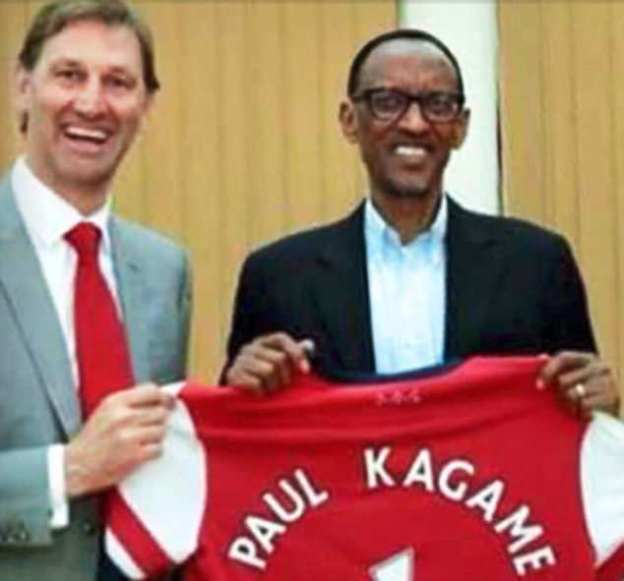
« Le Rwanda est aujourd’hui perçu comme l’un des pays les plus avancés et les plus respectés d’Afrique », justifie un porte-parole d’Arsenal. En s’achetant une manche du maillot de son équipe fétiche, Paul Kagame a créé une polémique, suscitant des critiques, y compris chez les parlementaires britanniques et néerlandais, deux pays qui ont longtemps été les soutiens du pays. Mais le célèbre club anglais persiste et signe, parlant d’un contrat de sponsoring signé après un processus d’évaluation menée par des « experts indépendants ». « Le Rwanda s’est transformé radicalement ces derniers temps », croit savoir le porte-parole du club.

Dans un contexte de restriction, de l’aide humanitaire internationale, le Rwanda qui figure toujours parmi les plus pauvres et les plus assistés d’Afrique, vient de débourser 40 millions de dollars sur trois ans pour cette campagne des plus ambitieuses, « Visit Rwanda ». Selon l’Agence rwandaise de promotion des investissements, avec cette simple mention sur un maillot vu 35 millions de fois par jour, selon le club, les revenus du tourisme devraient doubler sur les six prochaines années pour dépasser les 800 millions de dollars. L’une des principales attractions touristiques du Rwanda, ce sont ses parcs, ses volcans et les gorilles des montagnes chers à l’anthropologue Diane Fossey. Un fan d’Arsenal devra débourser 1 500 dollars pour une heure en leur compagnie. Comme dans d’autres secteurs, le petit Rwanda a toujours visé un tourisme haut de gamme, cantonné aux lodges et aux hôtels de luxe. Pour atteindre son objectif, il lui faudra entre 10 000 à 15 000 touristes supplémentaires par an, avec des poches bien garnies. Rien que l’on considère impossible au pays des Mille Collines, 24 ans après un génocide qui, selon l’ONU, a coûté la vie à 800 000 Tutsis et Hutus modérés, soit un dixième à l’époque de sa population.

Aujourd’hui présenté par les bailleurs comme l’une des économies les plus dynamiques d’Afrique, le Rwanda a connu une croissance du PIB d’environ 8% par an entre 2001 et 2014, sous la conduite de son homme fort. L’ancien chef rebelle, Paul Kagame, prend officiellement le pouvoir six ans après le génocide. L’an dernier, le président rwandais s’est officiellement fait réélire à près de 99%. Une modification de la Constitution peut lui permettre aujourd’hui de garder les rênes du pays jusqu’en 2034. Il n’y a plus beaucoup de détracteurs pour lui barrer la route. Au Rwanda, presque tous les opposants ont été tués, emprisonnés ou vivent en exil, selon l’ONU. Même les bailleurs, sans doute sur fond de culpabilité liée au génocide, mais aussi peut-être par crainte de représailles, hésitent à le contredire.

Des distributions alimentaires ciblées

Dans une Afrique de l’Est et centrale soumise depuis 2014 à des sécheresses, des inondations à répétition causées par le changement climatique, le Rwanda est étrangement absent des rapports du Programme alimentaire mondial sur la sécurité alimentaire, comme si les phénomènes climatiques s’arrêtaient à la frontière. « C’est sans doute faute de données récentes », assure un porte-parole du PAM qui se dit bien conscient de la gravité de la sécheresse au Rwanda. Mais l’agence onusienne dit espérer être en mesure de publier dans les prochaines semaines les résultats préliminaires de l’analyse sur la sécurité alimentaire et la vulnérabilité des personnes au Rwanda. Quand la presse régionale fait état de déplacements dans les pays voisins de milliers de familles rwandaises frappées par la sécheresse, le HCR dit ne pas être informé.

L’existence des distributions alimentaires d’urgence était quasi-taboue au Rwanda. Des journalistes ont été inquiétés pour avoir voulu évoquer la question de la malnutrition. Mais en janvier 2018, le gouvernement rwandais a finalement reconnu avoir assisté en 2016 quelque 100 000 « foyers », soit plus d’un demi-million de Rwandais, avec une aide alimentaire d’urgence dans les provinces du sud et de l’est. Selon le New Times, quasi-agence de presse du régime, la ministre des Affaires sociales s’est engagée cette année encore à ce que « aucun Rwandais ne meure de faim », malgré une nouvelle période de sécheresse débutée en octobre 2017 puis des inondations qui ont déjà fait des centaines de morts.

Depuis le début de l’année, Kigali annonce tous les mois des distributions alimentaires ciblées et assure avoir suffisamment de nourriture pour tout le monde. Selon des documents internes au PAM, le gouvernement avait pourtant en 2016 demandé au moins une fois à l’agence onusienne d’assister quelque 125 000 Rwandais et l’agence onusienne avait planifié cette opération. Interrogé sur la fréquence et l’importance de ces distributions depuis, le Programme alimentaire mondiale assure que cette assistance ne s’est finalement pas révélé nécessaire et dit n’avoir fait depuis aucune distribution « à grande échelle » et « indiscriminée » à des Rwandais vivant au Rwanda. L’agence onusienne qui connaît de graves difficultés financières décrit comme une « évolution positive » le fait que Kigali se retrouve aujourd’hui seule en première ligne.

Les statistiques sont-elles truquées ?

En 2014, l’Institut rwandais des statistiques a annoncé que la pauvreté au Rwanda était en net recul, passant de 44,9 % en 2010 à 39,1% en 2014, soit une baisse de six points. L’Institut britannique OPM, qui jusque-là apportait un appui technique sur ce projet, s’est refusé à cosigner l’étude sans plus d’explication. Mais des chercheurs belges, comme Filip Reyntjens ou plus récemment Sam Desiere, ont remis en cause ces chiffres ; l’un dénonçant une manipulation derrière la « mise à jour » opérée par l’Institut rwandais dans le calcul du panier de consommation de base des ménages rwandais ; l’autre, démontrant que l’inflation était plus élevée que ce que les autorités pouvaient reconnaître.

Pour Sam Desiere, spécialiste de la question des statistiques dans les pays en voie de de développement, le taux de pauvreté au Rwanda n’aurait pas baissé de six points, mais augmenté d’un peu plus d’un point. Sur la même période, le taux d’inflation ne serait pas de 17%, mais de plus de 30%, ce qui entraînerait une plus grande vulnérabilité, notamment dans les couches les plus pauvres de la population rwandaise.

L’ancien expert de la Banque mondiale, Bert Ingelaere, en fait même une tribune dans le New York Times publiée le 2 août 2017 et intitulée « Le président pour toujours ». Quelques jours avant la réélection annoncée de Paul Kagame, il décrit publiquement comment, alors qu’il travaillait encore pour l’institution de Bretton Woods, on lui a demandé de ne pas poursuivre une étude dont les questions ne plaisaient pas au gouvernement rwandais. « Les questions étaient standard pour tous les pays, certaines portaient sur la gouvernance », précise Bert Ingelaere. « Je n’ai rien dit publiquement sur le coup parce que je pensais à la sécurité de nos équipes rwandaises sur le terrain », conclut ce désormais maître de conférences à l’Université d’Antwerp et auteur du livre Les cours Gacaca au Rwanda : rechercher la justice après le génocide.

Une autre experte explique avoir été elle aussi censurée. Elle avait effectué un rapport d’évaluation pour le compte d’une ONG d’un programme de lutte contre la pauvreté. « Mon rapport montrait des taux de malnutrition très inquiétants dans certains villages rwandais, l’ONG n’a pas voulu le publier parce que cela démontrait aussi que ses programmes n’avaient pas les résultats escomptés », confie encore l’experte. « Entretenir l’idée d’un miracle rwandais, ça profite tout autant aux bailleurs et aux ONG qu’au gouvernement rwandais », confirme un responsable d’ONG, qui poursuit : « Il y a une indulgence, sans doute emprunte d’un fond de culpabilité du génocide, mais qui ne rend pas compte de la réalité. »

Paul Kagame tape du poing sur la table

Au mois de février 2018, lors de la retraite organisée chaque année par le régime rwandais, le président Paul Kagame a lui-même tancé ses ministres pour les mauvais résultats en termes de malnutrition chronique. 37% des enfants de moins de cinq ans en souffrent toujours. « Est-ce que nous manquons à ce point de nourriture ? » a lancé l’homme fort du Rwanda, se disant fatigué de devoir répéter les mêmes choses. « Paul Kagame aime faire ça, il aime jouer les sauveurs, mettre le gouvernement en ordre, comme un PDG efficace », s’amuse un observateur. Officiellement, ces quatre dernières années, ce taux est resté quasi-inchangé. 37%, c’est six points de moins que son voisin, la République démocratique du Congo, souvent décriée pour sa mauvaise gestion.

De l’autre côté de la frontière, au Congo, avec un taux de malnutrition chronique de 43%, l’Unicef parle d’une « urgence silencieuse », d’un risque de retard dans l’éducation et le développement de ces enfants. Pour René Mugenzi, activiste rwandais en exil en Grande-Bretagne, la faim fait tellement partie du quotidien des Rwandais que pour pouvoir en parler sans violer le tabou, ils l’ont appelée « Nzaramba », ce qui signifie « que ta vie soit longue ». Un journaliste rwandais confirme : « C’est l’expression utilisée dans l’est du pays, mais il existe d’autres expressions “Warwaye ryani”, “Shira Umuteto”… Il y en a presque autant que de districts ». Pour les organisations paysannes rwandaises, certains de leurs partenaires, des chercheurs rwandais comme étrangers, cette insécurité alimentaire croissante dans certaines parties du pays n’est pas uniquement due au changement climatique.

Une mauvaise répartition de la croissance ?

Il y a dix ans, le Rwanda s’engageait à bras le corps dans la « révolution verte » promue par le FMI et la Banque mondiale, imposant des cultures de rente comme le maïs ou le blé, plus sensibles aux aléas climatiques, et un développement à marche forcée, à coup de semences améliorées, de fertilisants et d’engrais chimiques, à des paysans rwandais qui constituent aujourd’hui encore la frange de la population la moins éduquée et la plus pauvre du Rwanda. La production agricole, elle, contribue pourtant à plus de 30% du PIB. « Il y a des réels gains de productivité, c’est un facteur à ne pas négliger dans un pays aussi densément peuplé »,  explique An Ansoms, professeure à l’université catholique de Louvain.

An Ansoms fait partie d’un collectif de chercheurs étrangers qui, depuis l’an dernier, tire la sonnette d’alarme. Cette course à la productivité aurait surtout bénéficié aux élites rwandaises, devenues les intermédiaires dans cette « révolution verte », et aux agriculteurs qui disposent d’au moins deux hectares, quand 70% des parcelles cultivables font aujourd’hui moins d’un hectare et que 70% de la population vit encore de ce qu’elle produit.

« Ce qui n’est jamais expliqué dans toute la littérature sur la révolution verte ou dans les success stories sur le Rwanda relayées par le gouvernement et les bailleurs, c’est que pour chaque Rwandais qui accepte d’ouvrir un compte en banque et toutes les conditions des politiques d’Etat, il y a au moins un Rwandais qui en est exclu », affirme Chris Huggins, professeur à l’université d’Ottawa et auteur de La réforme agricole au Rwanda : autoritarisme, marchés et zones de gouvernance, paru en octobre 2017.

Les paysans aussi se plaignent d’être les laissés pour compte du « miracle rwandais ». « Ce n’est pas comme pour tous les autres métiers, nous, c’est un peu comme si on opérait dans l’informel », déplore un paysan rwandais. « Quand on distribuait les cartes d’identité, toute personne qui n’avait pas de boulot, qui était chômeur et travaillait une heure par jour, était enregistrée comme un agriculteur. » Au Rwanda, 17epays le plus pauvre au monde, le taux de chômage est officiellement de 16,7%, un chiffre comparable à celui de l’Espagne, 14e puissance mondiale.

« Même ceux qui ont quelques ares de terrain, même l’agent de l’Etat, même la prostituée avec un jardin, sont considérés comme des agriculteurs. Et ça empêche de faire des politiques adaptées aux différentes catégories », peste encore l’agriculteur.

Pour lui, comme pour d’autres sur les collines rwandaises, il faut aujourd’hui assouplir les politiques publiques, offrir des « services spécifiques ». Même si l’Etat fait « beaucoup d’efforts », reconnaissent ces paysans, en subventionnant les intrants pour ceux qui acceptent de rejoindre son programme d’intensification des cultures, ces efforts restent tournés vers le développement d’un agrobusiness dans lequel l’Etat, le régime et leurs démembrements tiennent une place prépondérante. Une des sociétés du ministère de la Défense, l’APTC (Agro Processing Trust Corporation), a longtemps été l’un des principaux acteurs dans la chaîne d’approvisionnement en fertilisants et en semences. « Nous, tout ce qu’on demande, c’est un traitement équitable » conclut l’agriculteur.

Sonia Rolley

Source: RFI

Miracle ou mirage rwandais: faut-il croire aux bienfaits de la révolution verte?

Rwanda-The_0Des Journées européennes de développement au sommet du G7, Paul Kagame, actuel président en exercice de l’Union africaine, est invité partout, malgré son troisième mandat officiellement obtenu à près de 99% des suffrages exprimés. Même en France, malgré les accusations réciproques et la suppression de l’enseignement du français au primaire, c’est au Rwanda et à sa candidate Louise Mushikiwabo que le président Emmanuel Macron apporte son soutien pour le poste de secrétaire général de la Francophonie. Le Rwanda est présenté comme un modèle de développement pour l’Afrique et le bon élève de la politique de l’aide. Pourtant, tout comme sur la question des droits de l’homme et de la démocratie, de plus de plus de voix se font entendre pour critiquer ce modèle qui exclut des fruits de la croissance des millions de paysans rwandais parmi les plus défavorisés.
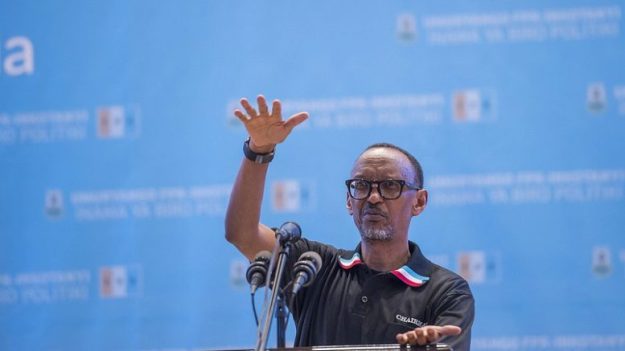
La Fédération des agriculteurs et des éleveurs du Rwanda, Imbaraga, ose aujourd’hui le dire tout haut, ce que beaucoup d’observateurs étrangers n’auraient pas cru possible il y a encore quelques mois. « Le gouvernement fait beaucoup d’efforts, mais les agriculteurs rwandais restent les plus pauvres parce qu’ils dépensent aujourd’hui plus qu’ils ne reçoivent », assure son secrétaire général, Joseph Gafaranga. Une déclaration que les experts du régime rwandais jugent exagérée. « Ces paysans sont des assistés, le gouvernement dépense des millions en subventions et en formation », insiste l’un d’eux. Et pourtant la liste des dépenses est longue, de l’achat des semences et des fertilisants à l’imposition de taxes réelles ou illégalement établies par les dirigeants des coopératives ou des autorités locales. Mais des discussions sont en cours entre le gouvernement et la fédération paysanne qui a formulé une série de propositions visant à améliorer les conditions de vie des paysans les plus pauvres, très largement majoritaires dans le pays.

Avec la politique d’intensification des cultures mise en place depuis dix ans, le Rwanda s’est inscrit dans la « révolution verte » âprement défendue par la Banque mondiale et le FMI, maintes fois réformée officiellement pour produire plus de justice sociale, mais toujours aussi critiquée quarante ans pour les inégalités qu’elle creuse et son coût écologique. L’idée de cette « révolution » est simple : avec des semences améliorées et des fertilisants, la production peut croître et nourrit une population toujours croissante. En Asie, entre 1970 et 1995, grâce à l’introduction de nouvelles variétés de blé et de riz, la production agricole a cru de 310 millions à 650 millions de tonnes par an, alors que la population asiatique a plus que doublé.

Pour les détracteurs de la révolution verte, cette politique a eu un coût écologique élevé et aurait même plongé jusqu’à 800 millions d’Asiatiques sous le seuil de pauvreté. Vivre avec moins d’un dollar par jour, c’est le niveau choisi par la Banque mondiale pour définir le seuil de la pauvreté, selon ses plus âpres critiques. Certains de ses défenseurs rétorquent que, sans la Révolution verte, au vu de la croissance de la population mondiale (quatre milliards de plus d’êtres humains), le nombre de pauvres serait plus élevé encore. Le débat est presque aussi vieux que l’idée, même si les Institutions de Bretton Woods promettent à chaque réforme que la redistribution des ressources sera plus équitable.

L’épineuse question des terres

« Il y a beaucoup de rapports d’études là-dessus, ce sont les paysans les plus pauvres qui s’en sortent le moins avec la révolution verte, mais au Rwanda, malheureusement, cela constitue une très grande majorité de la population », explique Chris Huggins, professeur à l’université d’Ottawa. Ce dernier a passé plus de quinze ans à travailler sur l’épineuse question des terres, notamment au Rwanda, il a publié l’an dernier un livre intitulé La réforme agricole au Rwanda : autoritarisme, marchés et zones de gouvernance. Au pays des Mille Collines, la question des terres reste un sujet sensible. Ce n’est que dix ans après le génocide qu’une loi encadrant la propriété a été adoptée, avec pour objectif affiché de renforcer les droits des propriétaires terriens.

Pour enrayer le morcellement des terres, le gouvernement rwandais a interdit de diviser les terres de moins d’un hectare. « Même si c’est une bonne mesure d’essayer d’éviter les subdivisions à l’infini, chaque médaille a son revers », explique un membre de la société civile. « 70% des Rwandais n’ont que ça à transmettre en héritage à leurs enfants ». L’autre mesure qui réduit la possibilité pour le petit paysan de vendre ou de transmettre sa terre, ce sont les 30 000 francs rwandais de frais administratifs, exigés jusqu’ici pour enregistrer le titre de propriété, quelle que soit la taille de la parcelle. Pour le professeur Chris Huggins, cette dernière mesure est de nature à encourager les petits paysans à transmettre illégalement leurs parcelles et à nuire à terme à la fiabilité du cadastre que le gouvernement rwandais a mis quatre ans à constituer.

Avec 500 habitants au kilomètre carré, le Rwanda, c’est Taïwan sans les gratte-ciel, un maillage serré de micro-parcelles cultivées flanquées sur des collines plus ou moins escarpées, des agriculteurs, des éleveurs, des déplacements de populations depuis l’indépendance et des conflits fonciers à foison. Au Rwanda, même les marécages sont mis à contribution, surtout en saison sèche. Seuls les parcs, ses volcans et ses gorilles, sont protégés. Or depuis le génocide de 1994, la population rwandaise a doublé, dépassant les 13 millions d’habitants. Le nombre de terres cultivées au Rwanda croît chaque année.

Une surexploitation sur fond de croissance démographique

Selon le dernier rapport de l’Institut de recherche et de dialogue pour la paix (IRDP), entre 2007 et 2010, le nombre de terres officiellement cultivées a été multiplié par dix. Aujourd’hui encore, la Fédération des paysans et éleveurs du Rwanda demande au ministère de l’Agriculture à pouvoir utiliser les terres disponibles le long des rivières, des lacs, à l’aider à consolider les terres d’altitude. Toutes ces propositions ont été favorablement accueillies par le gouvernement tant la pression sur les terres est forte. « Depuis 2012, les femmes peuvent aujourd’hui hériter au Rwanda, ce qui est une bonne chose, mais cela rajoute encore de la pression », dit Chris Huggins.

Au Rwanda, c’est dans les milieux ruraux que la croissance de la population reste la plus forte. Sur les collines, les femmes continuent de faire cinq à six enfants. « Le nombre d’agriculteurs augmente et la superficie de terres cultivées par famille diminue. Nous avons moins de terres que nos voisins, ça nous rend moins compétitifs, on ne produit pas assez », regrette le patron du syndicat paysan Joseph Gafaranga, quand la production agricole représente déjà 30% du PIB. C’est aussi sur les collines qu’on enregistre les taux de malnutrition chronique les plus élevés chez les enfants de moins de cinq ans, 37% au niveau national, jusqu’à 60% dans certains districts selon les statistiques officielles de 2015. Ces districts défavorisés sont aussi trop souvent ceux qui ont été frappés ces dernières années par la sécheresse, les inondations, les invasions de parasites.

« Si vous comparez la taille des enfants par rapport à leur âge, ils sont très petits, ils ont des problèmes d’anémie, ils ont du mal à suivre à l’école, ils sont condamnés à ne pas être productifs, c’est une génération de perdue », déplore un membre de la société civile. Comme dans les autres pays qui ont adopté la révolution verte, le gouvernement a dû subventionner les intrants pour permettre aux petits producteurs de pouvoir produire plus, visant non seulement l’autosuffisance alimentaire, mais aussi l’exportation. « Comme la densité augmente, il y a une surexploitation des terres qui nécessite d’utiliser beaucoup d’intrants agricoles, en particulier des fertilisants. »

Des prix imposés aux paysans

Le réseau européen pour les Grands Lacs, EurAc, va plus loin, en reprenant tout ce qui fait le socle des critiques de la révolution verte. « Les politiques du gouvernement ont changé de façon radicale la manière dont les Rwandais produisent de la nourriture et cela dégrade leur sécuritaire alimentaire », explique l’un de ses chargés de plaidoyer et chercheur sur le Rwanda, Giuseppe Cioffo. Le sorgho, la banane à bière et parfois même la patate douce, « que l’on peut pourtant récolter toute l’année », ont été remplacés par des cultures destinées à la commercialisation et à l’exportation, un modèle « plus risqué » face au changement climatique, pas adapté à une « agriculture encore vivrière », modèle « trop cher » aussi pour la majorité des Rwandais et avec un coût écologique élevé qui est contraire à toute idée de durabilité. « Il y a des terres érodées, des terres qui deviennent infertiles, des semences qui n’ont pas donné la production promise », martèle le chargé de plaidoyer.

Dans son dernier rapport daté d’avril 2018, l’IRDP partage une partie de ces conclusions, mais soutient que les faiblesses observées sont moins du fait de la politique en elle-même que dans sa mise en œuvre. « On ne peut pas nier que dans la politique d’intensification des cultures (CIP), il y a une vision. Sur le papier, ce modèle se veut équitable », explique son directeur, Eric Ndushabandi. Dans les textes, la CIP est censée permettre aux petits paysans réunis en coopérative de « consolider leur terre », en produisant suivant les instructions du gouvernement une culture désignée comme favorable pour son district.

Au niveau national, toutes ses productions devaient amener à créer une alimentation peu chère et diversifiée pour les Rwandais. Mais selon l’enquête de satisfaction menée par l’IRDP, 47% des paysans interrogés disent ne pas être intéressés par cette politique, persuadés après dix ans de mise en œuvre qu’elle entraînerait des famines ou permettrait à l’Etat de s’accaparer leurs terres. Cette insatisfaction envers les réformes agraires et foncières est même perceptible dans le Citizen Report Card financé par l’ONU et basé sur des statistiques produites par le comité de gouvernance du Rwanda.

Ce que dénoncent les paysans et chercheurs, c’est qu’au Rwanda, sans surprise, on est bien loin du modèle libéral pourtant claironné par les institutions de Bretton Woods. Dans un pays où presque toutes les voix dissidentes ont été réprimées, c’est difficile de négocier. « Le petit paysan n’a pas beaucoup son mot à dire sur le prix des semences, des fertilisants, le prix d’achat des récoltes. Ce sont les gros vendeurs et acheteurs qui les fixent », explique Joseph Gafaranga, secrétaire général du syndicat paysan. Le docteur Eric Ndushabandi renchérit sur ce point : « Il y a deux choses que les coopératives ne doivent pas faire : imposer des contributions supérieures au prix que le paysan va obtenir avec sa récolte ; et elles doivent surtout, comme c’est écrit dans les textes, favoriser les petits paysans et non les grands producteurs ». Pour l’IRDP, il est crucial de rendre le système des coopératives plus attractif, et de mieux vulgariser ses effets positifs, car c’est dans cet espace que se concentrent les interventions du gouvernement, appui technique, formation, subventions.

« Education, éducation, éducation »

Pour la Fédération des paysans et éleveurs du Rwanda, il y a urgence à donner un statut aux agriculteurs, de définir des catégories pour pouvoir adapter les services, alors que trop souvent « même ceux qui n’ont pas de terres, même ceux qui ne travaillent pas ont ce statut », justifie son secrétaire général. Pour Joseph Gafaranga, cette proposition « est aussi avantageuse pour le gouvernement », parce qu’elle permettrait de lister les devoirs des agriculteurs vis-à-vis des terres ou de l’Etat. « Les objectifs de commercialisation et d’exportations sont bons, mais la réalité, c’est qu’au Rwanda, cela reste en majorité une agriculture de subsistance, avec des paysans très attachés à leur terre, à leurs traditions et encore trop peu formés aux nouvelles techniques », commente le docteur Eric Ndushabandi.

Une révolution est pourtant en marche au Rwanda. Selon l’étude menée par l’IRDP, moins de 3% des jeunes de 15 à 24 ans vivent des activités agricoles. Les trois quarts des paysans rwandais ont aujourd’hui entre 35 et 54 ans et ils ont à peine un niveau d’éducation primaire. « Le gouvernement rwandais fait beaucoup d’efforts sur la formation des jeunes et sur la création d’emplois, car c’est le défi d’avenir », souligne le directeur de l’IRDP. Mais ce dernier insiste sur la nécessité de renforcer l’information et la formation des agriculteurs pour « réduire les résistances au changement » : « Je n’ai qu’un mot pour les autorités : éducation, éducation, éducation pour créer des perspectives d’emploi. »

L’autre aspect de cette révolution dans les campagnes, c’est que, selon cette étude, un petit plus de la moitié des agriculteurs possède sa propre terre. Les autres 40% louent ou travaillent sur des propriétés qui appartiennent à des tiers. « C’est l’une des conséquences de cette politique, les paysans s’endettent, ils finissent par perdre leurs terres, doivent travailler pour d’autres pour des salaires souvent très limités »,  explique An Ansoms, professeure à l’université catholique de Louvain. Il est difficile d’évaluer le volume de « paysans sans terres » ni même d’expropriations. Mais la loi autorise les pouvoirs publics depuis 2015 à exproprier des citoyens pour une large palette de motifs, infrastructures « et autres activités sur décret ministériel ».

La hantise de l’expropriation

Selon une étude menée cette fois par la société civile sur les expropriations et transferts des terres, publiée en octobre 2017, le monde agricole, peu informé des lois et des recours, reste le principal touché par ce phénomène, inhérent à la politique du gouvernement rwandais d’un développement à marche forcée, à coup de grands projets pilotés par l’Etat. Si un système de compensation est prévu dans la loi, l’écart entre les villes et les campagnes peut dépasser les 150% et renforce le ressenti vis-à-vis du régime d’une partie des paysans, privés de leurs moyens de substances. « Pour comprendre ce ressenti, il ne faut pas négliger le poids du passé et les interférences permanentes exercées par le régime à la base. Mais cette tension porte moins aujourd’hui sur l’ethnie que sur l’adhésion politique ou non au FPR », explique encore le professeur Chris Huggins.

Depuis presque deux ans, des discussions sont ouvertes entre le gouvernement et les représentants du monde paysan, avec une liberté de ton qui surprennent les partenaires, comme les observateurs étrangers, habitué aux discussions plus policées dans une sphère publique très contrôlée. Pour la professeure An Ansoms, Kigali, comme les bailleurs de fonds, reconnaît jusqu’ici « des couacs » dans la politique agricole, mais n’est pas encore prête à une « remise en cause systémique » plus à même de permettre une meilleure répartition des ressources. « Le gouvernement sait aussi qu’il doit parfois les entendre », car la faim reste « le meilleur catalyseur pour une révolte », estime un observateur avisé. « Il ne peut y avoir deux Rwanda, celui qu’on vend à l’extérieur et la réalité du quotidien », renchérit un responsable de la société civile. « Ces paysans, c’est la majorité de la population, ils peuvent faire disparaître les pauvres dans les villes, mais pas dans les campagnes. Il faut faire avec. »

Sonia Rolley

RFI

The deal Rwanda-Arsenal: not about the poor giving to the rich, rather the question of transparency and accountability towards Rwandans

The statement by Akamanzi of Rwanda Development Board (RDB) that tourism sector made $400 M in revenues does not explain the $40 M donated to Arsenal , #Kagame‘s favorite english club. Akamanzi argues that the donation is an investment in tourism since a ‘visit Rwanda’ logo will be on shirt sleeves of Arsenal’s players.
A good manager does not make decisions based on Total revenue (TR) only, to conclude that an investment will be profitable. The lady should remember how the profit maximization is achieved. For that, Akamanzi should reveal the cost and profit within the $400 M. At least that would show us that the sector made a profit bigger, equal to zero or even less.
That could provide answer to the first concern: we should know whether the money being given to Arsenal is not taken from foreign aids.
Another concern relates to the profitability of the so called investment. $40M marginal cost must generate the same amount in marginal revenue.
For that to materialize, the so called investment should attract $13M in marginal revenue the first year and much more than that in following years considering the expected inflation rates. A good decision maker would take into account the population growth too to cater for the new born ones to enjoy profits.

1. The duo #Kagame #Akamanzi should have done a small feasibility study before spending carelessly
2. The debate should not be displaced. It is not why Rwanda is donating to Arsenal (the poor giving to the rich) rather the public funds being spent without informing the citizens either directly by making data available for consultation or via the representatives of the people in national assembly.
3. Choosing Arsenal as the beneficiary of the funds should have been decided after considering other potential partners whith whom doing business could bring more profits.
4. Two officials (Clare Akamanzi & Olivier Nduhungirehe ) who spoke about the issue were not able to say how much money was involved in that deal. Knowing Kagame’s style, the poor guy and lady are cleansing the crime scene of dictator of Rwanda.

Chaste Gahunde

Consultant Economist/ Geographer

Rwanda’s Forever President

kagame-fpr-bureau-politiqueANTWERP, Belgium — There is an election in Rwanda on Friday, but its outcome already is nearly certain: President Paul Kagame will win a third seven-year term. Elections there are not a contest for power. They are the ritual confirmation of the power in place.

Mr. Kagame generally wins by margins that would make a dictator proud: In 2010, he scored some 93 percent of the vote. He is the only ruler most Rwandans born since the 1994 genocide know. The Rwandans who remember leaders before him have reason to wonder if they will ever see another: The state’s mighty security apparatus is quietly eloquent, with all those soldiers and police officers routinely patrolling both city streets and the countryside.

Mr. Kagame is up against two innocuous candidates after the national election commission disqualified Diane Rwigara, his strongest opponent, and two other independent contenders. The opposition leader Victoire Ingabire, who was placed under house arrest in the lead-up to the 2010 election, is now in jail serving a dubious 15-year sentence for threatening state security, among other things. Journalists have also been intimidated and stifled; Freedom House categorizes Rwanda as “not free.”

Mr. Kagame wasn’t supposed to run this time because he would be coming up against the two-term limit set by the Constitution. But in 2015 the government proposed an amendment and had it sanctioned in a referendum (roundly criticized by human rights groups), opening the way for Mr. Kagame to stand for re-election this year — and again until 2034.

Burundi was condemned internationally in 2015 after President Pierre Nkurunziza flouted term limits to run for a third mandate. Last year, President Joseph Kabila of the Democratic Republic of Congo skirted term restrictions by simply delaying the next election, triggering protests and then a crackdown that led to sanctions against his government. Yet nothing of the sort has happened to Mr. Kagame or his administration despite its ploys to keep him in power basically unchallenged.

Why? Because Mr. Kagame has been masterful at deflecting criticism of his illiberalism by pointing to Rwanda’s economic performance. The country is touted as a model: The government claims that the economy grew by an average of about 8 percent a year between 2001 and 2014, and that the rate of poverty dropped from nearly 57 percent in 2006 to less than 40 percent in 2014. Neither Mr. Nkurunziza nor Mr. Kabila could proffer such results.

Mr. Kagame’s supporters, in Rwanda and beyond, sing to his tune. In a way, they have to. Western donors and international organizations may well prefer democratic values to big-man politics. But having poured great sums of money into Rwanda since the 1994 genocide, they want to be impressed by the headway Mr. Kagame claims to have made — on economic growth and poverty reduction, but also maternal health care and the prosecution of suspected mass killers. Asia has tigers; now Africa has found its lion. Many want to believe that while Mr. Kagame may have been cutting corners on democracy, he has delivered on development.

Has he, though?

In fact, his government’s record is shakier than it looks, including on some of the major achievements it is credited with.

Consider poverty reduction. Back in 2005, I was stationed in Rwanda with a World Bank team, working on a large-scale study of poverty. Six months into it, after we had collected hundreds of survey questionnaires about the well-being of ordinary Rwandans and conducted hundreds of discussions with villagers, the Rwandan security forces seized half of our files on the pretext that our research’s design was tainted by “genocide ideology” — a vague notion supposedly something like sectarianism that the government often invokes to criminalize what it sees as challenges to its authority. After lengthy negotiations between World Bank and Rwandan officials, the project was abandoned. We never determined what the poverty trends were: The information we had collected was destroyed before it could be analyzed.

Matters have hardly improved. Major studies can only be carried out by the Rwandan authorities or under their close supervision. Independent researchers have come to question the government’s methodology for analyzing data.

Officially, the poverty rate decreased by nearly 6 percentage points between 2011 and 2014. But Filip Reyntjens, a Rwanda expert at the University of Antwerp, has argued that it might actually have increased by about 6 percentage points during that period. Several articles published by the Review of African Political Economy also challenge Rwanda’s official poverty figures, as well as its G.D.P. growth rates.

I’m of the view that expanding individual freedoms is essential, not incidental, to a country’s long-term development. As Angus Deaton, a Nobel laureate in economics, said to a Rwandan minister in 2015, “improvements in public health can never be truly secure in nondemocratic states.” But I concede that Rwanda has made remarkable economic progress since facing near-total destruction in 1994, and that some think it is still worth debating the merits of trade-offs between democracy and development.

Whatever one thinks of these issues, however, everyone should be concerned that the Kagame government has been fudging, hiding or selectively presenting the raw facts of its economic record. Rwanda may be forgoing democracy for development only to wind up with no democracy and far less development than many think.

Faking it: The Rwandan GDP Growth Myth

This is a follow up to the blog-post, which was published on roape.net on 31 May, 2017, in which we showed that poverty increased by between 5 and 7 percentage points between 2010 and 2014 in Rwanda, even as the government claims it decreased by 6 percentage points. The blogpost concluded that the information emerging from the household survey data appeared to be incompatible with the official figures on economic growth, and invited researchers to more closely scrutinize the data coming out of the National Institute of Statistics of Rwanda (NISR). Indeed, with agriculture accounting for more than one third of GDP and two thirds of the workforce, it is difficult to imagine a scenario in which total GDP growth could average between 6% and 8% annual growth, while incomes in the agricultural sector appear to be decreasing for a substantial proportion of farmers. This blogpost tries to substantiate those claims using the NISR’s Integrated Household Living Conditions Survey (EICV) data as well as looking at more recent trends in relevant macroeconomic variables.

According to economic theory, GDP per capita measured from National Account Statistics (NAS) should be equivalent to average income or consumption measured from Household Surveys (HHS). In practice, this is rarely the case because of measurement errors. For instance, households tend to deliberately under-report earnings, while NAS have trouble capturing illicit and informal economic activity (read Ken Simler’s 2008 paper on this theme). Even when there are differences in levels of income estimated by the two methods, however, Martin Ravallion (2003) concludes that, “NAS consumption growth rate is an unbiased predictor of the HHS consumption growth rate.” Furthermore, he finds that NAS/HHS estimates should converge over time as the economy develops and becomes more formalized.[1]

In figure 1 below, we show the evolution of average household consumption between 2000 and 2013 in Rwanda, as estimated from the EICV datasets and nominal GDP per capita in local currency units, as reported in the World Bank’s World Development Indicators databank. [2] As the graph shows, estimates of average income/consumption from the EICV and national accounts were almost identical in 2000 and 2005, and started to grow apart thereafter. By 2013, the national account estimate was more than 50% higher than the average consumption estimated from the EICV. This does not constitute incontrovertible proof that GDP growth rates have been over-estimated in Rwanda, since there are different factors listed above that could explain such discrepancies. But it does strongly suggest that something is amiss in Rwanda’s GDP growth figures. At the very least, it does raise serious questions about the reliability of national account statistics, which the government and donors rely on to claim the success of their policies. As mentioned in our previous blogpost, GDP figures are easier to manipulate than household survey data, as the Greek case famously showed a few years back.

Figure 1: GDP per capita vs. Average EICV consumption

Source: EICV1-4, World Bank WDI

Even if we were to conclude that growth data have not been manipulated in the past, there are reasons to be concerned about the current performance of the Rwandan economy. The most recent growth data coming out of Rwanda shows that economic growth slowed to its lowest level since 2002 (1.7%) in the first quarter of 2017. With a population growth rate of 3% per year, this means that Rwanda’s GDP per capita growth rate is now effectively negative, even according to the NISR’s own estimates (see figure 2 below).

Figure 2: GDP Annual Growth Rate

Source: tradingeconomics.com

This should come as no surprise to those who have paid attention to the facts behind the dazzling numbers that Rwanda and its donors like to boast about. While there has been undeniable progress since the war, much of the improvements we see in Kigali today are cosmetic and driven by the government’s obsession to portray an image of success rather than to lay the foundations of lasting economic growth. As we mentioned in the previous blogpost, much of the investments have been financed with public debt, leading to a surge in external debt levels (see figure 3 – remember that actual debt to GDP ratios may be even higher, if GDP has been overestimated as our analysis suggests).

Figure 3: Debt to GDP

Source: tradingeconomics.com

This would all be fine, if the investments had been strategically targeted at growth areas aimed at leapfrogging development Korean style. But to date, the vast majority of investments have gone into cosmetic – and crucially loss-making – prestige projects, such as the Kigali Convention Centre, Rwanda Air, Kigali skyscrapers and luxury housing units for the non-existent Rwandan upper-middle class. Even if these investments were not making a loss, this would arguably be a questionable use of public resources, since they are all highly regressive and aimed at subsidizing the super-rich or foreign clients.  Rather than enabling economic development, these projects cost the Rwandan taxpayer dearly in running costs and take away precious resources from more pressing areas of development, such as the agricultural sector. The result of these irresponsible investments is beginning to  be felt. For the first time in recent years, capital account flows to Rwanda were negative by a large margin in 2016, indicating that investors may be starting to put their assets abroad (see figure 4 below).

Figure 4: Capital Flows

Source: tradingeconomics.com

At the same time, Rwanda’s current account deficit reached a whopping 16.6% of GDP, even as the government put in place draconian measures to restrict imports (see figure 5)

Figure 5: Current Account

Source: tradingeconomics.com

With such economic fundamentals, it is not surprising that the value of the Rwandan franc has almost been halved in the past few years (see figure 6 below):

Figure 6: Rwf/ USD exchange rate

Source: tradingeconomics.com

The situation is likely to get worse, not better, over the coming years as even larger prestige projects come online and existing ones start accumulating more losses. The East African reported on 3 July that “Rwanda’s foreign reserves are expected to fall below the East African Community’s convergence criterion of four months [of imports] in the coming year” and may fall below IMF’s critical threshold of three months of imports.

The conclusion of this brief analysis is that if there ever was a Rwandan economic miracle it has probably fizzled out some time ago and is likely to come crashing down very soon. At the very least, the data shows that the development strategy adopted by the Rwandan government is risky in the extreme, bordering on reckless. The closest example we can find in recent history of similar policies is Mobutu’s Zaire that squandered the country’s resources on space projects, nuclear power plants and a Concord airplane. As outlandish as they seem today, these projects also helped to give Mobutu an image of success up until the 1970s (remember the Rumble in the Jungle?) But Rwanda’s PR machine has even surpassed Mobutu’s, having managed to keep the narrative of success going for all these years even as evidence to the contrary has been in plain sight, or just below the surface waiting to be scratched. Even today, there is not a single article in the press (even the critical ones) that does not mention Rwanda’s alleged economic success, and its low levels of corruption – forgetting to mention that close associates of Kagame appeared in the Panama Papers last year and a transparency international coordinator was assassinated.

The authors of this article have asked for anonymity. 

Featured Photograph: Kigali Convention Centre dome (2014)

Notes

[1] Ravallion, M. 2003. “Measuring Aggregate Welfare in Developing Countries: How Well do National Accounts and Surveys Agree?” Review of Economics and Statistics 85(3): 645–652

[2] The do-files required to estimate average household consumption are the same ones that were published in the previous blogpost. Once the do-file has run its course, you simply need to run the following command to obtain average household consumption: svy: mean adtot. For EICV2 use this do-file (click here to download the file). For EICV1, we used the figures in Table 2, page 13 in: McKay, A. (2015). The recent evolution of consumption poverty in Rwanda (No. 2015/125). WIDER Working Paper.

Source: A Review Of African Political Economy (ROAPE)

The Evidence Mounts: Poverty, Inflation and Rwanda

By Sam Desiere

In a recent blogpost an anonymous researcher on roape.net showed that poverty in Rwanda has increased from 2011 to 2014 by 5 percentage points. This contradicts the official poverty statistics and narrative, which claim that poverty decreased by 5.8 percentage points, namely from 44.9% in 2011 to 39.1% in 2014 (NISR, 2015). Importantly, the author published the Stata-files used to analyse the data of the EICV 3 and EICV 4 household surveys, enabling other researchers to verify his claims.

Recently, I also calculated trends in poverty using the same datasets. Although I used a slightly different (and, arguably, less sophisticated) methodology, the results confirm that poverty did not decrease. In addition, I show that the poverty trends are very sensitive to the inflation rate used. With an inflation of 16.7% (as reported by the National Institute of Statistics of Rwanda, NISR), poverty indeed decreased by at least 5 percentage points. With an inflation rate of 30% – which is in my view more in line with the ‘real’ inflation rate – my estimates show that poverty increased by 1.2 percentage points.

The fact that two researchers arrive – independently from each other – at the same conclusion, strengthens my belief that the EICV surveys show that poverty in Rwanda has increased. This has important implications for the current debate about (rural) policies in Rwanda, but I leave a discussion of these implications to researchers and policy makers more familiar with the reality on the ground and focus in this blogpost on the technical aspects of estimating poverty trends.

In this this post, I briefly describe my methodology and key findings and discuss (food) price inflation, which turns out to be a critical parameter. The Stata do-files required to replicate my findings can be found here.

Methodology

Rwanda’s poverty estimates are based on the Integrated Household Living Conditions Survey (EICV by their French acronym), which are conducted every three years. I used data from EICV 3, conducted in 2010/11 and EICV 4, conducted in 2013/14, which are made publicly available by the NISR. More specifically, I used the modules on food consumption purchased on the market and food consumption from own production. In both waves, the questionnaire of both modules is nearly identical. Food consumption is reported for more than 100 food items.

Unlike the anonymous researcher, I did not use the modules on non-food expenditure. I did so for two reasons. First, the NISR reports that most households spend over 60% of their budget on food. Hence, food expenditure is a good proxy of poverty. Second, non-food expenditure would require some additional data cleaning, which requires additional assumptions. Hence, I simply calculated food expenditure in both waves.

The meta-data of EICV 4 (available on NISR’s website) clearly stipulates that each sampled household in Kigali was visited 11 times over a period of 33 days. The modules on food consumption were administered during every visit. Rural households were visited 8 times over a period of 16 days. The meta-data of EICV 3, however, does not provide information on the number of times a household was visited. I simply assumed that the same methodology, for both rural and urban households, was followed in wave 3 as in wave 4. If this assumption is wrong – something I could not check – the results presented below will be erroneous.

In both waves, households reported how much they had spent on food purchased on the market by food item since the previous visit of the enumerator. I simply added up expenditure on all food items. Households also reported how much they had consumed from own production. Converting the consumption from own production in monetary values was more challenging. Households typically reported consumption from own production in kg. Some households also reported in the same module how much they would have paid on the market for this food item. I used this information to calculate the median, national price for each food item and used this price to convert consumption from own production in its monetary value. Since relatively few households reported prices, I did not attempt to calculate region specific prices nor did I correct for price seasonality. On this point my methodology differs from the anonymous researcher, who calculated a Laspeyres price index to account for spatial and temporal price variation.

To verify my assumptions, I checked whether my estimates of food expenditure are correlated with the household poverty status as reported by the NISR and included as a separate variable in the datasets. In both waves, food expenditure was lower for households classified by the NISR as extremely poor compared to household classified as poor, and the expenditure of this group was in turn lower than the expenditure of non-poor households. These results, available upon request, confirm that my assumptions are at least partially similar to the assumptions of the NISR.

Food expenditure can only be compared between the waves if the food inflation rate between 2010/11 and 2013/14 is known. I used two different inflation rates. First, I used an inflation rate of 16.7%, which is reported by the NISR (NISR, 2016, p. 43). Second, I estimated inflation based on food prices reported by the respondents, which I also used to convert food consumption from own production in monetary values. Inflation is then defined as a weighted average of the price increase of nine important crops. I used the same weights as those used by NISR to construct the 2013/14 adjusted food poverty line (NISR, 2015, table B4, p. 38). These estimates of inflation will be discussed in greater detail below.

Since I did not calculate total expenditure, but only food expenditure, I could not use the poverty lines proposed by the NISR. I therefore followed the ‘inverse’ methodology. First, I assumed that the NISR correctly estimated poverty in 2010/11 (44.9%) and used this information to determine the food expenditure threshold in 2010/11 prices that corresponds with this poverty rate. Second, I deflated food expenditure in 2013/14 using two different inflation rates, namely 16.7% and 30%. The first inflation rate corresponds with the inflation rate used by the NISR and thus allows me to replicate the findings of the NISR. The second inflation rate corresponds with my own estimate of inflation using the price data from EICV 3 and EICV 4. Third, I used the food expenditure threshold as an alternative to a poverty line to estimate the poverty rate in 2013/14. This approach is valid because I am not interested in ‘absolute’ poverty figures, but only in poverty trends.

In all analyses, I used the population weights to make the results nationally representative.

Results

Poverty trends

Using the EICV 3 and EICV 4 datasets, I calculated food expenditure per adult equivalent, respectively in 2010/11 prices and 2013/2014 prices. In order to estimate poverty trends, food expenditure in 2013/14 has to be deflated to express it 2010/11 prices. Poverty trends are very sensitive to the inflation rate used to deflate food expenditure. Results are presented for two inflation rates: (1) an inflation rate of 16.7% as reported by NISR and (2) an inflation rate of 30%, which is at the lower end of my inflation estimates based on ESOKO price data or EICV price data (see below for a discussion of inflation).

Figure 1 shows cumulative frequency distributions of food expenditure for these two situations, while table 1 summarizes poverty trends

With an inflation rate of 16.7% (left panel, figure 1), real food expenditure per adult equivalent increased for all households from 2010/11 to 2013/14 and, as a result, poverty decreased. Assuming a poverty rate of 44.9% in 2010/11 (which corresponds to a food poverty line of 100,232 RWF per adult equivalent), poverty decreased by 7.9 percentage points. This poverty reduction is even more pronounced than reported by official statistics, which states than poverty decreased by 5.8 percentage points.

With an inflation rate of 30% (right panel, figure 1), food expenditure does no longer increase between 2011 and 2014 for all households. Again assuming that poverty is 44.9% in 2010/11, poverty even increased by 1.2 percentage points.

Figure 1: Cumulative distribution of food expenditure per adult equivalent for EICV 3 and EICV 4 for an inflation rate of 16.7% and 30%

Table 1: Poverty trends in function of the inflation rate

  Inflation: 16.7% Inflation: 30%
Poor HH EICV 3 (official statistics) 44.9% 44.9%
Poor HH EICV 4 (own estimates) 37.4% 46.1%
Trends in poverty (percentage points) -7.5 +1.2

In sum, the poverty trends are very sensitive to the inflation rate. With an inflation of 16.7% from 2011-2014, poverty decreased by at least 5 percentage points, which is in line with the official reports. With an inflation rate of 30%, poverty does not decrease. The question thus boils down to an accurate estimation of the inflation rate between 2011 and 2014.

Inflation rate

The EICV survey is not an ideal dataset to estimate inflation, because it does not contain much information on food prices. As explained earlier, some households report prices for those food items consumed from own production. This does not only mean that the number of observations is relatively limited, but also that households report prices of those items they did not buy on the market. I nevertheless used this information to calculate mean and median average prices by food item. I calculated national averages without taking into account price seasonality or regional price differences. In order to estimate ‘average’ inflation, a weighted average is taken over nine crops. The weights are proportional to the weights used for the construction of the 2013/14 adjusted food poverty line (NISR, 2015, table B4, p. 38). These nine crops account for 86% of the total calorific intake of the food basket. Two crops dominate this index: cassava (fermented) (weight: 38%) and dry beans (weight: 25%).

Figure 2 shows the increase in mean and median prices between 2010/11 and 2013/14 for nine crops, while the horizontal lines indicate the weighted average. The increase in median prices ranges from 10% for sorghum to 50% for cassava (both flour and roots). Median and mean inflation are 33% and 42%, respectively. This corresponds to an annual inflation of 9.5% and 12.5%, respectively.

Figure 2: Price increase for nine crops from 2010/11 to 3013/14 (mean and median prices)


These inflation estimates are substantially higher than the ones reported by NISR, which states that food prices increased by 16.7% between Jan 2011 and Jan 2014 (NISR, 2016, p. 43). Moreover, the estimates based on the EICV surveys are remarkably similar to the estimates based on detailed ESOKO price data, where I estimated inflation at 30.5% over the 2011-2014 period (details not reported here).

In sum, I believe that the ‘real’ food inflation rate is substantially higher than the one used by NISR to estimate poverty trends. This probably explains why I find that poverty increased, while the NISR reported that poverty decreased. These findings raise concerns, not only for Rwanda’s (rural) policies, but also for international donors that have presented Rwanda as a model for development because of the supposedly strong poverty reductions.

Sam Desiere is currently a senior researcher at HIVA, the research institute for work and society of the University of Leuven, Belgium. In 2015 he obtained a PhD in agricultural economics from Ghent University, Belgium, which focused on data quality of household surveys in developing countries.

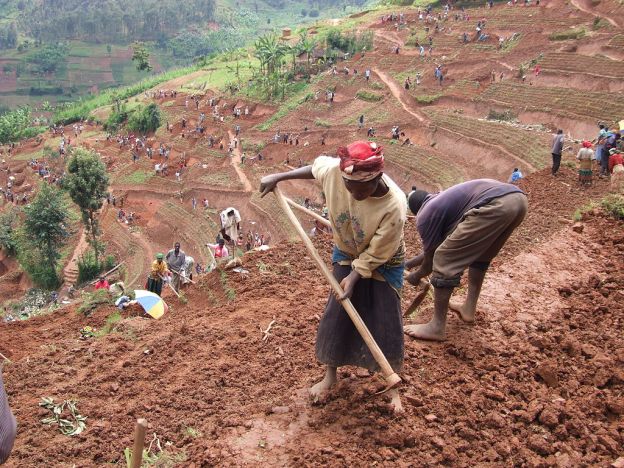
Featured Photograph: As part of the DFID funded Vision 2020 Umurenge Programme (VUP), Rwanda’s flagship Social Protection Programme, women and men in northern Rwanda work on a public works site in 2012, building terraces to prevent soil erosion

Source: A Review of African Political Economy (ROAPE)

Rwandan Poverty Statistics: Exposing the ‘Donor Darling’

In his book entitled Poor Numbers, Morten Jerven cautioned against taking African development statics at face value, given the high political and financial stakes attached to these numbers, as well as the lack of institutional mechanisms to prevent political interference in many countries. Few countries illustrate his case more starkly than Rwanda. As An Ansoms et al pointed out in an article in the print issue of ROAPE earlier this year, ‘Statistics versus livelihoods: questioning Rwanda’s pathway out of poverty, the Rwandan government has used its record on poverty reduction and economic growth to legitimize its authoritarian rule and to deflect criticism of its human rights record, just as the previous regime had done up until 1990. Furthermore, Rwanda’s spectacular recovery after the genocide has made it somewhat of a “donor darling”, and has enabled the government to attract significant foreign resources in the form of aid from donors desperate to claim a share in this African success story.

Yet, questions have been mounting in recent years about the reality and sustainability of the “Rwandan miracle”, given the heavy-handed nature of the state-led agricultural transformation project (Dawson et al. 2016), and the government’s propensity for debt-financed investments in unproductive prestige projects, such as the Kigali Convention Centre. These questions came to a head in September 2015, when the National Institute of Statistics of Rwanda (NISR) published a poverty profile (NISR, 2015) based on the most recent household budget survey (EICV4 by its French acronym). The report claimed that the proportion of Rwandans living below the poverty line had fallen from 45% in 2010 to 39% in 2014, after a string of similarly successful decreases in the previous surveys. Two months later, Filip Reyntjens published a critique, claiming that the “decrease” in poverty had been artificially engineered by NISR by changing the type of poverty line used, from an “average” consumption basket based on actual consumption patterns of poor Rwandan households, to a “minimum” or “optimal” consumption basket, containing mostly highly caloric and inexpensive food types.

The change is not in itself problematic, as the choice of a poverty line is always, to some extent, arbitrary and there are many different acceptable ways to define a poverty line. The normative minimum consumption basket adopted by NISR is one such way. However, to make trend comparisons, all experts agree that it is crucial to use consistent methodologies, assumptions and definitions across time. Reyntjens claimed that had they done that, they would have found the proportion of people living below the minimum poverty line to have increased by 6 percentage points between 2010 and 2014. Unfortunately, Reyntjens never published the syntax files he used to compute his estimate. Neither did NISR accept to publish its own syntax files. Without this key piece of evidence, the debate has never been closed from a technical point of view, as it is impossible to show convincingly whether poverty has actually increased or decreased in Rwanda between 2010 and 2014.

We hope to contribute to settling this issue by publishing open, transparent and verifiable syntax files built using a publicly available dataset, which can be downloaded from NISR’s own microdata catalogue on its website (the two syntax files can be opened with .txt notepad or STATA software here). There are many ways to compute these things and there are innumerable adjustments and assumptions that must be made to arrive at an aggregate number. Consequently, it is difficult to replicate exactly the official estimates without access to the original syntax files. However, we hope that by submitting these to public scrutiny, such differences can be ironed out in an open and transparent manner, and any mistakes can be corrected to arrive at an estimate that all parties can accept. In constructing these estimates, our main priority has been to ensure consistency between the two surveys. We therefore try to use exactly the same code and assumptions in both years wherever possible. Below, we provide an overview of the key parameters and assumptions that entered the construction of these indices. Since there are several different poverty lines that have been generated by now, we decided to compute trends for all of them, namely:

  • Average consumption basket: representing the minimum amount required to consume 2,500 kcal per day (adjusted for age and gender), using prevailing culinary habits of poor Rwandan households in 2001. This was the official poverty line used in 2001, 2005, 2010.
  • Updated average basket: representing the minimum amount required to consume 2,500 kcal per day (adjusted for age and gender), using prevailing culinary habits of poor Rwandan households in 2014. This was the new poverty line computed by NISR in 2014, which should have been used in EICV4, but was never used because it was deemed too high.
  • Minimum consumption basket: representing the minimum amount required to consume 2,500 kcal per day (adjusted for age and gender), using optimal (i.e. cheap and highly caloric) food types. This was the official poverty line used in 2014 (EICV4).
  • Reyntjen’s poverty line: Reyntjens argued that since the minimum consumption basket was 19% lower than the updated average basket, trend comparisons with 2010 should have been made using a poverty line that was 19% lower than the one used in 2010.[1] For this poverty line, we did not construct a food basket, but simply calculated 81% of the figure from the total poverty line computed from the average consumption basket.


In all consumption baskets, the quantities and caloric values are kept constant across surveys. Prices for each item are given as the national median price across regions and across months, as reported in the auto-consumption module of the EICV survey (see table 3 below). Consumption aggregates have been adjusted for spatial and temporal price differences using a Laspeyres index (see table 2 below). The Laspeyres index was chosen because it yielded estimates that were closest to official poverty estimates in EICV3 for the average basket. The choice of price index does not affect the conclusions of this blogpost.

The results are reported in table 1 below. All poverty lines yield similar trends when used consistently over time, indicating that poverty increased between 5% and 7% points between 2010 and 2014. All changes are statistically significant at the 5% level.

It should be noted that our results differ from those obtained by simply updating the poverty line for inflation using CPI data, as was done by NISR in their 2016 trend report (NISR, 2016). In principle, if the data are of good quality and sufficiently disaggregated, both methods should be equivalent and should not yield significantly different results. This therefore raises questions about the quality / reliability of official CPI data, and/or the quality of price data collected by the EICV. In either case, this would undermine our ability to correctly estimate poverty levels in Rwanda. The discrepancies found here should invite us to more closely scrutinize official statistics coming out of the Rwandan statistical office. GDP growth figures appear to be incompatible with the findings of the EICV survey, given than agriculture still accounts for about one third of GDP and two thirds of the labour force.

Tables

Table 1: Summary of poverty lines and poverty rates

Average basket Updated basket Minimum basket Reyntjen’s poverty line
2010 2014 2010 2014 2010 2014 2010 2014
Share of non-food[2](% of total cons.) 31 34.8
Total caloric intake (kcal/ adult/ day) 1346 1215 1212
Total food cost per pers./year (Rwf) 96,797 121,795 98,069 125,504 77,559 101,116
Non-food component (Rwf/ pers/year) 43,489 54,720 52,344 66,987 41,397 53,899
Total poverty line (Rwf/ pers/ year) 140,286 176,515 150,413 192,491 118,956 155,015 113,632 142,977
Poverty rate (% of pop< tot. pov. Line) 45.2 50.2 49.2 55.8 35.2 42.2 32.5 37.1
Change in poverty rate +5* +6.6* +7* +4.6*
*Change is statistically significant at 5% level


Table 2: Laspeyres price index by quarter and province (computed from price data in auto-consumption file)

2010 Kigali City Southern Western Northern Eastern
First quarter 1.47 0.98 0.89 0.98 1.14
Second quarter 1.31 0.98 0.92 0.96 1.05
Third quarter 1.38 0.98 0.92 0.98 1.13
Fourth quarter 1.31 0.98 0.92 1.00 1.14
2014 Kigali City Southern Western Northern Eastern
First quarter 1.22 0.93 1.01 0.96 1.09
Second quarter 1.20 0.95 0.96 0.91 1.08
Third quarter 1.27 0.98 1.06 1.05 1.04
Fourth quarter 1.14 0.92 1.07 0.99 1.02


Table 3: Food baskets used to compute poverty lines

PRODUCE NAME KCAL/ 100G PRICE[3] QUANTITY CONSUMED (KG/ ADULT EQUIVALENT PER DAY)
AVERAGE BASKET UPDATED BASKET MINIMUM BASKET
both years 2010 2014 both years both years both years
Sweet potato 92 80 100 0.4033 0.3114 0.0915
Irish Potato 67 120 150 0.1763 0.1257 0.0242
Banana – cooking (Inyamunyo) 75 120 150 0.0573 0.0783 0.0227
Dry beans 341 300 400 0.1130 0.0758 0.0758
Cassava (root) 109 100 150 0.0410 0.0694 0.0694
Cassava (flour) 338 200 300 0.0134 0.0391 0.0063
Sorghum juice(Ubushera) 173 150 180 0.0000 0.0000 0.0000
Tomato 17 200 200 0.0106 0.0146 0.0146
Corn (flour) 363 300 350 0.0100 0.0184 0.0012
Cabbages 19 100 100 0.0207 0.0172 0.0172
Local Banana beer 48 300 300 0.0096 0.0000 0.0000
Avocado 119 90 100 0.0036 0.0143 0.0494
Amarante (small leafed green) 22 100 150 0.0124 0.0150 0.0150
Local sorghum beer(ikigage) 173 150 180 0.0150 0.0000 0.0000
Cassava (fermented) 362 150 200 0.0056 0.0113 0.1097
Dry maize (grain) 356 180 240 0.0103 0.0138 0.0225
Eggplant 21 150 200 0.0070 0.0082 0.0082
Cassava leaves 53 150 200 0.0068 0.0093 0.0093
Local rice 280 500 600 0.0027 0.0092 0.0035
Tarot/amateke 86 100 150 0.0098 0.0189 0.0476
Maize (fresh) 36 100 150 0.0065 0.0000 0.0000
Fresh milk 61 150 200 0.0010 0.0062 0.0062
Fresh bean 53 200 250 0.0002 0.0000 0.0000
Banana fruit (Imineke) 60 150 200 0.0038 0.0056 0.0028
Sorghum (flour) 343 300 350 0.0031 0.0051 0.0075
Onion 24 250 325 0.0017 0.0024 0.0024
Curdled Milk 75 200 200 0.0007 0.0053 0.0053
Local banana juice 48 200 200 0.0000 0.0035 0.0020
Groundnut flour 387 900 1000 0.0004 0.0000 0.0000
Sorghum 343 250 250 0.0253 0.0028 0.0143
Amarante (large leafed green) 22 100 170 0.0039 0.0028 0.0028
Pumpkin 19 100 100 0.0068 0.0058 0.0058
Pineapple 26 100 125 0.0002 0.0013 0.0013
Carrot 38 200 250 0.0003 0.0011 0.0011
Papayas 26 100 150 0.0006 0.0014 0.0014
Mangos 45 100 125 0.0000 0.0022 0.0074
Beef meat 150 1400 1400 0.0006 0.0016 0.0000
Green pea (fresh) 37 400 500 0.0006 0.0000 0.0000
Fish (fresh / frozen) 49 1000 1020 0.0005 0.0000 0.0000
Eggs 139 70 240 0.0007 0.0009 0.0009
Guava 17 70 100 0.0002 0.0000 0.0000
Soya (dry) 335 300 400 0.0000 0.0004 0.0004
Yams/Ibikoro 109 130 160 0.0000 0.0104 0.0104
Pepper 17 250 300 0.0002 0.0000 0.0000
Plums 24 425 600 0.0001 0.0000 0.0000
Pork meat 220 1150 1400 0.0000 0.0003 0.0000
Wheat (flour) 364 350 450 0.0001 0.0000 0.0000
Goat meat 164 1500 1800 0.0002 0.0000 0.0000
Orange (local) 34 200 200 0.0000 0.0002 0.0002
String bean 32 200 200 0.0068 0.0000 0.0000
Soya (fresh) 405 200 250 0.0023 0.0000 0.0000
Green pea (dry) 339 500 700 0.0010 0.0000 0.0000
Ground nuts (peanuts) 567 800 1000 0.0009 0.0001 0.0001
Fish (dry / smoked) 199 500 500 0.0000 0.0127 0.0127
Other Meats 126 550 800 0.0000 0.0000 0.0005
Bread 261 239 303 0.0011 0.0000 0.0000
Imported rice 363 460 583 0.0014 0.0000 0.0000
Palm oil 884 668 846 0.0036 0.0000 0.0000
Sugar (local) 380 500 634 0.0027 0.0000 0.0000

The authors of this article have asked for anonymity.  

Featured Photograph: Parc National des Volcans, Rwanda. August 4, 2005

References

Reyntjens, F. 2015. “Lies, Damned Lies and Statistics: Poverty Reduction Rwandan-style and How the Aid Community Loves It.” Blog of 3 November 2015 posted on http://www.africanarguments.org.

NISR. 2015. Rwanda Poverty Profile Report 2013/2014: Results of Integrated Household Living Conditions Survey. Kigali: NISR.

An Ansoms, Esther Marijnen, Giuseppe Cioffo, and Jude Murison, “Statistics versus livelihoods: questioning Rwanda’s pathway out of poverty”, Review Of African Political EconomyVol. 44 , Iss. 151, 2017.

National Institute of Statistics of Rwanda (NISR), Poverty Trend Analysis Report, June 2016.

Jerven, Morten. Poor numbers: how we are misled by African development statistics and what to do about it. Cornell University Press, 2013.

Dawson, Neil, Adrian Martin, and Thomas Sikor. ‘Green revolution in sub-saharan Africa: Implications of imposed innovation for the wellbeing of rural smallholders.’ World Development 78 (2016): 204-218.

Notes

[1] Note that Reyntjens argument is not strictly speaking correct, since it would still require us to compare two different consumption baskets. To be methodologically sound, the 19% reduction would thus need to be applied to the same basket in both years, as we are doing here.

[2] In the average consumption basket, the non-food component is computed based on the average food share for households in the 7th decile in 2001. In the updated and minimum baskets, the non-food components are computed based on the average food share for households in the 5th decile in 2014.

[3] National median price of product as reported in the auto-consumption module.

Source: A Review of African Political Economy (ROAPE)

World is plundering Africa’s wealth of ‘billions of dollars a year’

More wealth leaves Africa every year than enters it – by more than $40bn (£31bn) – according to research that challenges “misleading” perceptions of foreign aid.

By 

Analysis by a coalition of UK and African equality and development campaigners including Global Justice Now, published on Wednesday (May 24th, 2017 ndlr ), claims the rest of the world is profiting more than most African citizens from the continent’s wealth.

It said African countries received $162bn in 2015, mainly in loans, aid and personal remittances. But in the same year, $203bn was taken from the continent, either directly through multinationals repatriating profits and illegally moving money into tax havens, or by costs imposed by the rest of the world through climate change adaptation and mitigation.

This led to an annual financial deficit of $41.3bn from the 47 African countries where many people remain trapped in poverty, according to the report, Honest Accounts 2017.

The campaigners said illicit financial flows, defined as the illegal movement of cash between countries, account for $68bn a year, three times as much as the $19bn Africa receives in aid.

Tim Jones, an economist from the Jubilee Debt Campaign, said: “The key message we want to get across is that more money flows out of Africa than goes in, and if we are to address poverty and income inequality we have to help to get it back.”

The key factors contributing to this inequality include unjust debt payments and multinational companies hiding proceeds through tax avoidance and corruption, he said.

African governments received $32bn in loans in 2015, but paid more than half of that – $18bn – in debt interest, with the level of debt rising rapidly.

The prevailing narrative, where rich country governments say their foreign aid is helping Africa, is “a distraction and misleading”, the campaigners said.

Aisha Dodwell, a campaigner for Global Justice Now, said: “There’s such a powerful narrative in western societies that Africa is poor and that it needs our help. This research shows that what African countries really need is for the rest of the world to stop systematically looting them. While the form of colonial plunder may have changed over time, its basic nature remains unchanged.”

The report points out that Africa has considerable riches. South Africa’s potential mineral wealth is estimated to be around $2.5tn, while the mineral reserves of the Democratic Republic of the Congo are thought to be worth $24tn.

However, the continent’s natural resources are owned and exploited by foreign, private corporations, the report said.

Bernard Adaba, policy analyst with Isodec (Integrated Social Development Centre) in Ghana said: “Development is a lost cause in Africa while we are haemorrhaging billions every year to extractive industries, western tax havens and illegal logging and fishing. Some serious structural changes need to be made to promote economic policies that enable African countries to best serve the needs of their people, rather than simply being cash cows for western corporations and governments. The bleeding of Africa must stop!”

However, Maya Forstater, a visiting fellow for the Centre for Global Development, a development thinktank, said the report did not provide a meaningful look at the issues.

Forstater said: “There are 1.2 billion people in Africa. This report seems to view these people and their institutions as an inert bucket into which money is poured or stolen away, rather than as part of dynamic and growing economies. The $41bn headline they come up with needs to be put into context that the overall GDP of Africa is some $7.7tn. Economies do not grow by stockpiling inflows and preventing outflows but by enabling people to invest and learn, adapt technologies and access markets.

“Some of the issues that the report raises – such as illegal logging, fishing and the cost of adapting to climate change – are important, but adding together all apparent inflows and outflows is meaningless.”

Forstater also questioned some of the report’s methodology.

The coalition of campaigners, including Jubilee Debt Campaign, Health Poverty Action, and Uganda Debt Network, said those claiming to help Africa “need to rethink their role”, and singled out the British government as bearing special responsibility because of its position as the head of a network of overseas tax havens.

Dr Jason Hickel, an economic anthropologist at the London School of Economics, commenting on the report, agreed that the prevailing view of foreign aid was skewed. Hickel said: “One of the many problems with the aid narrative is it leads the public to believe that rich countries are helping developing countries, but that narrative skews the often extractive relationship that exists between rich and poor countries.”

A key issue, he said, was illicit financial flows, via multinational corporations, to overseas tax havens. “Britain has a direct responsibility to fix the problem if they want to claim to care about international poverty at all,” he said.

The report makes a series of recommendations, including preventing companies with subsidiaries based in tax havens from operations in African countries, transforming aid into a process that genuinely benefits the continent, and reconfiguring aid from a system of voluntary donations to one of repatriation for damage caused.

Source: https://www.theguardian.com/global-development/2017/may/24/world-is-plundering-africa-wealth-billions-of-dollars-a-year

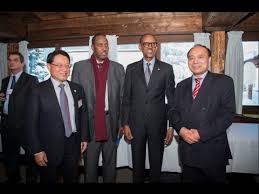
LE PRÉSIDENT KAGAME À DAVOS : UN TROU DE TROP DANS LE BUDGET RWANDA

kagame-davos

Le président Paul Kagame vient d’assister au Forum Economique mondial de Davos (Suisse) qui a ouvert son 47è sommet le 17/01/2017. Il est légitime de se poser la question : que va-t-il y faire ? Car, à voir la configuration du sommet, il n’est pas taillé pour un président d’un pays comme le Rwanda qui a de la peine à financer son budget. Pour cette année 2017, il doit quémander 40% pour combler son déficit budgétaire.

Davos : un gouffre d’argent

Davos est une ville des Alpes suisses. Elle doit sa notoriété au fait qu’elle abrite chaque année  le Forum économique mondial (World Economic Forum, WEF). Celui-ci est une invention de Klaus M. Schwab, professeur d’économie à l’Université de Genève qui, en 1971, invita des centaines de chefs d’entreprises européennes pour un développement d’un nouveau management à l’américaine. Le Forum prit une grande ampleur de telle sorte qu’en 1974, des responsables politiques y sont également invités. La cuvée 2017 a réuni près de 3.000 participants, dont 1200 patrons d’entreprises et une cinquantaine de chefs d’Etat et de gouvernement issus presque tous des pays développés. Le président rwandais est un des rares chefs d’Etat des pays pauvres à y participer : de mauvaises langues, en paraphrasant Jean de la Fontaine, parlent de la grenouille qui veut se faire plus grosse que le bœuf.

De fait le WEF est une question de gros sous : 19.000 dollars de ticket d’entrée à Davos, une cotisation annuelle à la fondation de 52.000 dollars ; 137.000 dollars pour accéder aux rencontres privées ; 263.000 dollars pour un billet d’un accompagnant. Pour un maximum de cinq personnes, il faut  527.000 dollars de cotisation et 95.000 dollars de billets. Sans parler du prix du transport en jets privés, des frais de logement qui peuvent  aller jusqu’à plus de 600 dollars par nuit.

Des dépenses d’apparat

Paul Kagame avec ses deux enfants au sommet de Davos 2016. Les prix ci-haut cités sont dans la normale des choses quand on sait que les participants sont entre autres Bill Gates de Microsoft, Lloyd Blankfein de Goldman Sachs, ou Eric Schmidt de Google, etc. Mais ces prix, ramenés à la taille du budget du Rwanda, sont un gouffre d’argent. De plus, le président Paul Kagame y participe avec une délégation consistante (l’année passée, il était avec ses deux enfants et quelques ministres), ce qui contribue à alourdir la facture. L’on ne peut que déplorer ce gaspillage qui sent une irresponsabilité criante. Il s’agit ni plus ni moins des dépenses d’apparat car les retombées attendues sont inexistantes.

Devos : chantre de la mondialisation

Des critiques de Forum ne manquent d’ailleurs pas : le sommet de Davos a acquis, au fil des années un pouvoir impressionnant qu’il est l’incarnation de l’impérialisme. Qui osera encore alors dire que Paul Kagame est un nationaliste ?

En outre le sommet de Davos prône la mondialisation ultralibérale, et fait en sorte que des dirigeants des multinationales jouent un rôle de plus en plus important dans la prise de décisions importantes dans l’économie des pays au détriment du rôle de régulation des États. Davos œuvre à affirmer la légitimité d’une nouvelle « gouvernance globale » où les entreprises ont de plus en plus tendance, contre toute éthique, et sans une implication citoyenne, à remplacer le rôle des États. Soulignons ici que Paul Kagame s’inscrit bien dans cette gouvernance mondiale. N’a-t-il pas un gouvernement parallèle composé de conseillers internationaux (board advisors), dont l’ex-président américain Bill Clinton, l’ex-premier ministre anglais Tony blair, ou le richissime homme d’affaires Warren Buffet, qui orchestre le contrôle de la région à partir du Rwanda.

Le WEF ne représente pas les intérêts de la population mondiale mais seulement ceux de très grandes entreprises, des banques et des États les plus riches ; il s’arroge le droit de prendre des décisions majeures sur les orientations économiques du monde ; c’est la réunion des nantis, des chantres de la mondialisation économique. Encore une fois Paul Kagame y trouve son compte : son holding, Crystal Ventures rentre bien dans la philosophie du Forum économique de Davos. N’a-t-il pas fait main basse sur l’économie rwandaise (bâtiment, ingénierie, agro-alimentaire, travaux publics, matériau de construction, électricité, granite, café,…) tout  en favorisant des multinationales de s’installer au Rwanda souvent contre des intérêts de la population. Les exemples ne manquent pas : en avril 2011, n’a-t-il pas autorisé la société Merck à administrer le Gardasil à plus de 100.000 fillettes rwandaise sous prétexte de lutter contre le cancer du col utérin alors que l’efficacité de ce vaccin était contestée par certaines études. Ces élèves ont servi en fait de cobayes pour les recherches de la société. Récemment, le Rwanda a autorisé l’entreprise américaine de robotique Zipline, d’expérimenter ses drones au Rwanda sous prétexte de faciliter l’acheminement du sang dans les hôpitaux ; la priorité des hôpitaux rwandais, ce ne sont pas des drones mais des ambulances car la plupart s’en sont pas pourvues. Des centaines d’hectares ont été distribués aux riches hommes d’affaires dans bon nombre de coins du pays. Comme la terre manque cruellement, cela s’est souvent opéré au prix des expropriations sauvages des paysans.

De l’argent jetés par la fenêtre alors que le pays en a besoin

Alors Paul Kagame était en partance pour Davos, le courant électrique de l’université nationale du Rwanda, campus de Butare, a été coupé à cause des factures impayées des 12 derniers mois. Selon certaines études réalisées par des spécialistes de l’économie rwandaise, le Rwanda devra demander de l’aide aux bailleurs de fonds pour équilibrer son budget de 2017 qui accuse un déficit de 40%. Et ce n’est pas tout.

Florilèges : des articles de presse ne cessent de dévoiler des hôpitaux dans lesquels les femmes accouchent sur un éclairage de lampes-torches faute de courant électrique ; des étudiants qui ne peuvent pas poursuivre leurs études faute de bourse ; la famine qui fait rage depuis des années et qui a occasionné des émigrations massives des paysans vers l’Ouganda ; un manque d’eau dans bon nombre de régions dont la capitale Kigali où les moins nantis se contentent des eaux usés des rigoles ou des flaques d’eau comme dans le Mutara, etc.

A ces sommes dépensées à Davos s’ajoutent d’autres dépenses qui déforcent le budget de l’Etat, à savoir celles occasionnées par des voyages incessants du président Paul Kagame. Déjà en ce mois de janvier 2017, il était en Inde du 9 au 12 janvier pour un énième sommet économique ;  du 13 au 14 il était à Bamako au Mali pour le sommet France-Afrique et après ce fut le départ pour Davos. Ce train de vie s’apparente ni plus ni moins aux voyages touristiques tellement le président s’y plaît. Il en a été ainsi pour 2016 : pour le seul mois d’octobre par exemple, il a enchaîné des voyages : Maputo (Mozambique) du 24 au 25 /10/2016 ; du 27 au 28/10/2016 à Brazzaville (Congo) ; 28/10/2016 : Libreville (Gabon), etc.

Le Rwanda n’est pas au bout de ces peines car Paul Kagame, qui va rempiler pour un nouveau mandat de 7 ans cet été 2017, a taillé la Constitution à sa mesure de façon qu’il va rester aux commandes du pays jusqu’en 2034 !

Jean-Charles Murego
20/01/2017

Source: http://www.musabyimana.net/20170120-le-voyage-du-president-kagame-a-davos-un-trou-de-trop-dans-le-budget-rwandais/


ITERAMBERE RYA LETA YA KAGAME NI IGIPINDI GISA : Yananiwe no guha abaturage amazi meza ! Ikwiye amanota 15 /100.

Amazi

ITERAMBERE RYA LETA YA KAGAME NI IGIPINDI GISA : Yananiwe no guha abaturage amazi meza ! Ikwiye amanota 15 /100.

Igihe kirageze ngo abantu batobore bavuge, bamagane ibipindi bya FPR -Inkotanyi wagira ngo bibereyeho gushinyagurira abaturage cyangwa kubakina ku mubyimba ! Kwirirwa biyerekana imbere y’amahanga ngo bazanye iterambere ry’indashyikirwa mu Rwanda mu gihe Leta ntacyo ikora ngo nibura ihe abaturage amazi meza yo kunywa, ni agahomamunwa !

Mu mahugurwa duherutse gukorera Abayobozi b’Amakipe Ishema twibanze ku bintu 10 by’ingenzi ushobora gupimiraho iterambere ry’igihugu. Reka mbibasangize .

I. Ubundi iterambere nyaryo rigaragarira he, ripimirwa he ?

Dore ibintu icumi by’ibanze byerekana ko igihugu runaka kiri gutera intambwe igaragara mu iterambere :

(1)  Abaturage bafite ibyo kurya bihagije

(2) Abaturage bafite aho gutura (inzu) heza

(3) Abaturage bafite ubushobozi bwo kwivuza iyo barwaye

(4) Abana bashobora kwiga nta nkomyi

(5) Abaturage bafite amazi meza

(6) Abaturage bafite amashanyarazi mu ngo zabo

(7) Abaturage bambara ku buryo buboneye

(8) Abaturage barindiwe umutekano

(9) Abaturage bafite inzego z’ubutabera zikiranura abagiranye amakimbirane

(10) Urubyiruko rushobora kubona imirimo no kugira amizero y’ejo hazaza hazima

II. Ese mu Rwanda byifashe bite ?

Gahunda zose za Leta ishishikajwe n’iterambere ry’ukuri zakagombye kuba zigenewe  guteza abaturage intambwe ijya mbere muri ibi bintu icumi bivuzwe haruguru. Iyo Leta itabishoboye iregura ikavaho cyangwa se abaturage bagahaguruka bakayivudukana.

Iyo bikomeje kuririmbwa ko Kagame ariwe ushoboye kuyobora u Rwanda wenyine kubera ko yazaniye Abanyarwanda iterambere ry’akataraboneka, byakagombye kugaragarira mu bisubizo bihamye Leta ye itanga bijyanye n’izi ngingo icumi zavuzwe hejuru .

Twebwe nk’abenegihugu, iyo dusuzumye dusanga Leta ya Paul Kagame ikwiye amanota 15/100 mu byerekeye iterambere yazanye . Dore aho ayo manota aturuka :

(1).Abanyarwanda bafite ibyo kurya bihagije ?   Amanota : 1/10

Igisobanuro : Inzara yitwa NZARAMBA igiye kumarira abaturage ku icumu biturutse ahanini ku byemezo bya Leta bihubutse kandi byuje urugomo nko :

*Kwambura abaturage ubutaka bwabo hashingiwe ku mategeko afifitse,

* Politiki yiswe iyo guhuza ubutaka yabahatiye guhinga igihingwa kimwe kitabafitiye akamaro

*Ubukunguzi bwo gutema intoki no kurandura imyaka y’abaturage ….


(2). Abaturage bafite aho gutura (inzu) heza ?  1.5/10

Politiki yo guca nyakatsi yashoboraga kugira umusaruro mwiza iyo iza gukorwa mu bwitonzi, ikabanza gusobanurirwa abaturage, kandi ntigaragaremo akarengane . Gusenyera umuturage inzu ngo ni uko yubatse muri rukarakara cyangwa isakaje ibyatsi ariko ntumutere inkunga ngo yubake inzu iboneye ni ububisha bwakorwa gusa na Leta yanga abaturage bayo. Abasenyewe bakomeje kwangara, kurara hanze, kwandura indwara zibahuta …..

Imiturirwa y’abaherwe n’abanyamahanga bigaruriye Kigali Leta ya Kagame ihora  ikinga abazungu mu maso  sicyo gipimo cy’iterambere ry’u Rwanda.  Ni ikinyoma . N’ikimenyimenyi ngo ayo magorofa y’i Kigali yabuze abayakodesha !

Politiki yo gutuza abantu mu midugudu yashoboraga kugira akamaro iyo bidakorwa mu gitugu gikabije. Aho Leta ishaka gushyira umudugudu, yagombaga kubanza kuhageza amazi meza, amashanyarazi , ishuri, ivuriro….Iyo biza gukorwa gutyo abaturage bari kwijyanayo  ku bwende kandi bishimye.

(3) Abaturage bafite ubushobozi bwo kwivuza iyo barwaye?   1.5/10

Politiki ya « Mutuwele yo kwivuza » cyari igitekerezo cyiza. Ariko cyaje guhinduka icyanzu cyo gusahura rubanda no kubabeshya ngo baravurwa kandi mu by’ukuri batavurwa. Ntibikiri ibanga amafaranga yose batanze nka « Cotisation ya mutuelle »yaranyerejwe . Leta ubwayo yabyemeye mu kwirukana nabi Ministri w’ubuzima Agnes BINANGWAHO ndetse na ba Meya benshi baherutse kwirukanwa bashinjwa kunyereza amafaranga ya Mituweli. Hagati aho abari bayatanze bahitanywe n’icyorezo cya Malariya ku bwinshi, ababyeyi batagira ingano bo bagafungirwa mu bitaro babuze ubwishyu !

(4) Abana bashobora kwiga nta nkomyi ? 3/10

Raporo zinyuranye zikozwe n’inzego z’ubuyobozi bukuru bw’igihugu (Inteko Ishingamategeko …) zakomeje kwemeza ko uburezi buhabwa abana ba rubanda guhera mu mwaka w’1994, mu mashuri abanza, ayisumbuye na kaminuza, nta REME bufite.

Ku ruhande rumwe, igitekerezo cyo gushuka abaturage ko abana bose baziga bagatunga dipolome ariko zitagize icyo zibamariye kiragayitse cyane kandi kizagira ingaruka zikomeye kuri ejo hazaza h’igihugu.

Ku rundi ruhande, bigaragara ko abana b’abategetsi aribo batangwaho umutungo w’igihugu kugira ngo bige mu mashuri y’akataraboneka  yo muri Kigali , ndetse bigasozwa no kubohereza mu Bulayi na America . Uku kwikubira ibyiza by’igihugu kurakabije kandi kugomba guhagarara.

Nanone kandi hari ivangura rikaze rikomeje kugaragarira mu gukoresha umutungo w’igihugu hagafashwa abana bamwe  barihirwa amashuri , abandi ndetse b’abahanga bakabura ubufasha. Ninde utabona ko iri vangura rishingiye ku irondakoko niridakosorwa amaherezo rizadusenyera igihugu bikomeye !

Uku gusumbanya abana b’igihugu bisa n’ibyimitse politiki ya « apartheid » hagati y’abana b’u Rwanda, FPR yarishyizeho igamije kwimika ubusumbane bukomeye mu gihe kizaza. Ninde wabishima uretse uwanzi w’igihugu ?

(5)Abaturage bafite amazi meza ? 0.5/10

Abaturage badafite amazi meza nta buzima buzira umuze bashobora kugira. Bagira umwanda, bakazongwa n’indwara z’ibyorezo zinyuranye. Ihere amaso iyi videwo ikurikira urebe uko iki kibazo cyazahaje abaturage kandi Leta ya Kagame ikaba idashaka kugikemura!

Yewe ngo n’ahubatswe amariba ya kijyambere , abaturage babanje gutanga imisanzu, nta mazi yigeze ageramo ! Ngiyo rero politiki y’igipindi  ye !


(6) Abaturage bafite amashanyarazi mu ngo zabo ? 2.5/10

Abaturage bahatiwe gutanga amafaranga atagira ingano kugira ngo bahabwe amashanyarazi . N’ubwo insinga zakwirakwijwe ahatari hake, incuro babona umuriro mu kwezi ni mbarwa . Nyamara barakomeza bakariha …. Buri kwezi !

Reka twibutse ko amashyanyarazi afite uruhare rukomeye mu iterambere ry’igihugu n’abaturage bacyo .

(7) Abaturage bambara ku buryo buboneye ? 2/10

Politiki yo guca « Caguwa » mu Rwanda yagaragaje ko Leta ya Kagame ihora ifata ibyemezo bibangamiye cyane inyungu za rubanda . Bizwi ko U Rwanda rudafite inganda zakora imyenda mishya ihagije. Ikindi kandi abaturage bose ntibaragira ubushobozi bwo kugura imyenda mishya gusa. Iki cyemezo cyo guca caguwa cyagaragaye nko kwishongora bikabije kandi bitarimo ubwenge. Yewe n’ibihugu by’i Bulayi byakataje mu majyambere biracyacuruza imyenda ya caguwa !


Aha urubyiruko rurannyega icyemezo cya Leta cyo guca caguwa.

Aho Leta ya Nyakubahwa Paul Kagame ntiyibwira ko u Rwanda rutuwe n’abaministri n’abaherwe batuye Kigali gusa ? Ndetse twumva ko n’abagizwe abamisitiri bagurizwa amafaranga yo kugura iyo myenda mishya ! Abaturage basanzwe se bo bazagurizwa nande ?

(8)Abaturage barindiwe umutekano : 1/10

Mu Rwanda imbere nta ntambara y’amasasu ihari nyamara inzego zishinzwe gucunga umutekano(Polisi, igisirikari, Inkeragutabara…) ntizisiba kurasa abaturage b’inzirakarengane ku manywa y’ihangu no kubahoza mu iterabwoba ridahuga.

Intambara z’urudaca Leta ihozamo ibihugu duturanye nazo amaherezo zizabyarira Abanyarwanda akarambaraye niba iyi politiki yo kwigira gashozantambara mu karere idahagaritswe .

Nta mutekano abanyarwanda bafite, bahora babunza imitima, buracya ngo ntibwira, bwakwira ngo ntibucya ! Ababonye icyanzu bakizwa n’amaguru bagahungira mu mahanga ;

Uyu se niwo mutekano ukwiye igihugu biririmbwa ko ari intangarugero mu iterambere no mu miyoborere myiza ?

(9) Abaturage bafite inzego z’ubutabera zikiranura abagiranye amakimbirane ? 2/10

Hari ingero nyinshi zerekana ko ruswa yahawe intebe ; umuco kirimbuzi wo « gutekinika amadosiye » ntukiri inkuru mbarirano ; inzego z’ubutebera ntizigenga ahubwo zahinduwe ibikoresho by’inyungu z’ishyaka rukumbi rya FPR . Gereza zuzuye abaturage batagira amadosiye kimwe n’abafunze gusa kubera ko banenga politiki idahwitse ya FPR.

Leta yimika akarengane bigeze aha , si Leta yo kwizerwa .

(10) Urubyiruko rufite imirimo n’amizero y’ejo hazaza hazima ? 0/10

Urubyiruko nirwo maboko y’igihugu rukaba n’amizero y’iterambere rizaramba. Iyo urubyiruko rwihebye ntiwavuga ko uri kubaka igihugu.


Mu Rwanda urubyiruko ruremerewe cyane n’iterabwoba, ubushomeri n’ubukene. Umugabane ungana na 85 % w’urubyiruko ntacyo Leta ya Kagame ikora ngo irufashe kwikura mu bukene no kwizera ejo hazaza hazima. Icyo Leta ya Kagame imariye urubyiruko ruyikeneyeho ibisubizo ni ukujya kubafungira ku karwa ka IWAWA ; kubashora mu ntambara zo mu bihugu duturanye zibatikiza umusubizo n’uzirokotse agasigara ari igisenzegeri kitazagira icyo cyimarira.

Umwanzuro

Leta ya Paul Kagame abaturage baramutse bayigiriye ubuntu bayiha amanota angana na 15 /100 , ubundi bakayisezerera bwangu . Leta nk’iyi ntabwo ikwiye guhabwa amahirwe yo gukomeza kugaraguza abaturage agati no kwivuga ibigwi itagira . Politiki z’ibipindi Abanyarwanda barazirambiwe. Niyo mpamvu hakenewe IMPINDUKA.

By’umwihariko Urubyiruko rw’u Rwanda rukwiye kwishakamo ubutwari, rugahagurukana impirita maze mu matora ataha ya Perezida wa Repubulika yo mu 2017 n’ay’Intumwa za rubanda yo mu 2018, rukihitiramo abayobozi bashya . Njyewe ndetse ndashishikariza abasore n’inkumi kuzitabira amatora ari benshi kandi bakitorera abakandida ba « Nouvelle Génération » kuko umushinga   wacu «  Kunga abenegihugu ngo dufatanye kwiyubakira u Rwanda moderne(Together to modernize Rwanda) », ukubiyemo ibisubizo bifatika kuri ziriya ngingo 10 zagaragajwe hejuru, ari nazo zubakirwaho iterambere rirambye ry’igihugu .

Mbifurije mwese guhorana ishema.

Padiri Thomas NAHIMANA,

Umukandida wa Opozisiyo mu matora ya Perezida wa Repubulika yo mu 2017.