Category Archives: Economy

Rwanda: ubukungu bwifashe nabi cyane, uburezi bukahababarira!

Prof-Rwakabamba-s

Mu nteko ishinga amategeko Minisitri w’uburezi Prof Silas RWAKABAMBA yagaragarije abadepite ko izingiro ry’ibibazo bihora mu nguzanyo z’abanyeshuri biga Muri kaminuza ari amafaranga make igihugu u Rwanda rufite atajyanye n’umubare w’abanyeshuri. Abadepite bibajije impamvu ibi byari byaragizwe ubwiru n’abayobozi mu nzego z’uburezi kugeza ubwo abanyeshuri batabaza itangazamakuru n’inteko.

Imwe mu mafoto ikunze gucicikana ku mbuga nkoranyambaga abanyeshuri bagaragaza ko bashonje (Photo Internet)

Mu itangazamakuru hakunze kumvikana amajwi y’abanyeshuri ba Kaminuza bavuga ko badahabwa amafaranga yo kubatunga nkuko baba barayemerewe. Bamwe bakavuga ko bitewe no gutinda kubona aya mafaranga ndetse n’ibirarane baberewemo; bahagarika kurya ndetse abandi bagahora mu makimbirane n’ababacumbikiye. Uyu mwaka bigeze mu kwezi kwa 12 nta faranga na rimwe ry’uyumwaka riratangwa; bivuze amezi atatu y’ubukererwe.

Umuyobozi ushinzwe inguzanyo mu kigo cy'igihugu cy'uburezi REB Louise Karamage
Umuyobozi ushinzwe inguzanyo mu kigo cy’igihugu cy’uburezi REB Louise Karamage

Ministeri y’uburezi n’ikigo cy’igihugu cy’uburezi REB bitabye inteko ishingamategeko ku kibazo cy’inguzanyo zemererwa abanyeshuri ntibazibone. Umuyobozi ushinzwe inguzanyo muri REB Louise KARAMAGE avuga ko aya mafaranga REB nayo itinda kuyabona. Yagize ati “Gutinda kw’amafaranga hari impamvu nyinshi zibitera. Iya mbere ni bureaucracy ( usanga liste zica muri institution(ibigo) nyinshi kandi REB idafiteho ububasha.”

Bamwe mu banyeshuri biga muri Kaminuza bagejeje ku badepite ibibazo by’uko bakuwe ku rutonde rw’abahabwa amafaranga yo kubatunga kandi bakennye. Abazemerewe nabo bagataka ko batazibona nkuko bikwiriye. Abadepite bibaza impamvu zituma Ministeri y’uburezi y’uburezi itasobanuriye abanyeshuri impamvu zabyo mbere y’uko bajya mu itangazamakuru.

Abadepite bavuze ko mu rwego rw’uburezi harimo ibibazo by’agatereranzamba kandi bihora bigonga Ministeri na REB. Bibajije ukuntu umwana wemewe ko atabasha kwitunga ashobora kumara amezi 5 adahawe ikimutunga. Bati “ Ubwo se yaba arya iki? Ese ubundi bizakemuka burundu ryari?

Ahawe umwanya ngo asobanure iki kibazo Minitre w’uburezi Prof Silas RWAKABAMBA yavuze ko u Rwanda rudafite amafaranga ahagije ugereranije n’umubare w’abanyeshuri rwemerera kwiga kandi batishoboye. Yagize ati” we have a limited Budget (nta mafaranga ahagije dufite)”

Ministre RWAKABAMBA kandi yanikomye ikigo cy’igihugu cy’uburezi REB ku guhuzagurika mu guhitamo abagenerwa inguzanyo. RWAKABAMBA yagize ati “uyu mwaka twari dufite abanyeshuri twarabaze azafasha abanyeshuri 5 841 ariko bitewe n’abajuriye barenze 6 000. Ibi byatewe nuko REB yakiriye abandi banyeshuri bari bajuriye yagiye mu birarane birenga Miliyoni 2. Ayo Minisiteri y’imari ntiyayaduha.”

Ministre yakomeje agira ati “ ubwo nazaga mu Rwanda muri 1997 hari abanyeshuri 3 000 bigaga muri Kaminuza leta yishyuriraga buri wese. Bagushyiraga mu Mvaho bagahita bakwishyurira. Ubu dufite abarenga 85 000 bose tugiye kubishyurira nta mafaranga wabona kuri buri wese”.

Amakosa yo mu burezi kandi Ministre yagaraje ko hari n’aterwa no kuba Kaminuza y’u Rwanda ikiri kwiyubaka. Minisiteri y’uburezi yijeje inteko ishinga amategeko ko hari kwiga uburyo ibi bibazo biri mu burezi bitazasubira umwaka utaha.

NIYODUSHIMA Dieudonne/ Aheza.com

Revealed: how the wealth gap holds back economic growth

OECD report rejects trickle-down economics, noting ‘sizeable and statistically negative impact’ of income inequality

Organisation for Economic Co-operation a

OECD secretary-general Angel Gurría said that ‘addressing high and growing inequality is critical to promote strong and sustained growth’. Photograph: Eric Piermont/AFP/Getty Images

The west’s leading economic thinktank on Tuesday dismissed the concept of trickle-down economics as it found that the UK economy would have been more than 20% bigger had the gap between rich and poor not widened since the 1980s.

Publishing its first clear evidence of the strong link between inequality and growth, the Paris-based Organisation for Economic Cooperation and Development proposed higher taxes on the rich and policies aimed at improving the lot of the bottom 40% of the population, identified by Ed Miliband as the “squeezed middle”.

Trickle-down economics was a central policy for Margaret Thatcher and Ronald Reagan in the 1980s, with the Conservatives in the UK and the Republicans in the US confident that all groups would benefit from policies designed to weaken trade unions and encourage wealth creation.

The OECD said that the richest 10% of the population now earned 9.5 times the income of the poorest 10%, up from seven times in the 1980s. However, the result had been slower, not faster, growth.

It concluded that “income inequality has a sizeable and statistically negative impact on growth, and that redistributive policies achieving greater equality in disposable income has no adverse growth consequences.

“Moreover, it [the data collected from the thinktank’s 34 rich country members] suggests it is inequality at the bottom of the distribution that hampers growth.”

According to the OECD, rising inequality in the two decades after 1985 shaved nine percentage points off UK growth between 1990 and 2000. The economy expanded by 40% during the 1990s and 2000s but would have grown by almost 50% had inequality not risen. Reducing income inequality in Britain to the level of France would increase growth by nearly 0.3 percentage points over a 25-year period, with a cumulated gain in GDP at the end of the period in excess of 7%.

“These findings have relevant implications for policymakers concerned about slow growth and rising inequality,” the paper said.

“On the one hand it points to the importance of carefully assessing the potential consequences of pro-growth policies on inequality: focusing exclusively on growth and assuming that its benefits will automatically trickle down to the different segments of the population may undermine growth in the long run, in as much as inequality actually increases.

“On the other hand, it indicates that policies that help limiting or – ideally – reversing the long-run rise in inequality would not only make societies less unfair, but also richer.”

Rising inequality is estimated to have knocked more than 10 percentage points off growth in Mexico and New Zealand, nearly nine points in the UK, Finland and Norway, and between six and seven points in the United States, Italy and Sweden.

The thinktank said governments should consider rejigging tax systems to make sure wealthier individuals pay their fair share. It suggested higher top rates of income tax, scrapping tax breaks that tend to benefit higher earners and reassessing the role of all forms of taxes on property and wealth.

However, the OECD said, its research showed “it is even more important to focus on inequality at the bottom of the income distribution. Government transfers have an important role to play in guaranteeing that low-income households do not fall further back in the income distribution”.

The authors said: “It is not just poverty (ie the incomes of the lowest 10% of the population) that inhibits growth … policymakers need to be concerned about the bottom 40% more generally – including the vulnerable lower-middle classes at risk of failing to benefit from the recovery and future growth. Anti-poverty programmes will not be enough.”

Angel Gurría, the OECD’s secretary general, said: “This compelling evidence proves that addressing high and growing inequality is critical to promote strong and sustained growth and needs to be at the centre of the policy debate. Countries that promote equal opportunity for all from an early age are those that will grow and prosper.”

Source: The Guardian, December 9, 2014.

GDP is a mirror on the markets. It must not rule our lives

male office worker looking through binoculars
‘What is the point of economic growth if it does not make most people better off?’ Photograph: Colorblind/Getty Images

Next month the Office for National Statistics will issue data for the first time on the UK’s wellbeing. In the exercise, the ONS is recognising that GDP, which now includes estimates for the market value of illegal drugs and prostitution, is at best only a partial measure of our economic health. Not that one would draw this conclusion from the political tub-thumping that improved GDP figures bring.

GDP is a measure of economic activity in the market and in the moment. So its key shortcoming is that it collapses time and makes us short-term in focus. It counts investment and consumption in the same way – an extra £100 spent on education is equivalent to the same amount spent on fizzy drinks.

Studies have repeatedly shown that the time horizon of the financial markets in particular is ever more short-term. Shaving about 0.006 seconds off the time it takes computer orders to travel from Chicago to the New Jersey data centre which houses the Nasdaq servers made it worth investing several hundred million dollars in tunnelling through a mountain range to lay the fibre optic cable in a straighter line. More than two-thirds of trades in US equity markets are high-frequency automated orders. How has the search for profit so foreshortened our vision?

It wasn’t always so. The term “Victorian values” now speaks to us of characteristics such as narrow-mindedness, hypocrisy and conformity, but it could also speak of hard work, self-improvement and above all self-sacrifice for the future. The list of the Victorians’ investments in our future is staggering. It includes railways, canals, sewers and roads; town halls and libraries, schools and concert halls, monuments and museums, modern hospitals and the profession of nursing; learned societies, the police, trades unions, mutual insurers and building societies – organisations that have often survived more than a century.

Why the Victorians managed to be so visionary is not entirely clear, but it had something to do with the confidence of an age of discovery both in science and other areas of knowledge, and also in geographical exploration and empire building. They made such strides against ignorance and the unknown, firm in their sense of divine approbation, it seems a belief in progress came naturally to them.

Civic and business leaders in the late 19th century had extraordinary confidence and far-sightedness, even as they too stood at the centre of social and economic upheaval. This Victorian sense of stewardship is something we could usefully remind ourselves of when thinking about how we measure value today. In the late 19th century it was the innovators and the builders of institutions who had standing, and it was the men and women of vision who were understood to be the creators of value.

They still are, even if it is often hard to measure or quantify what they build. Anything of value has its roots in values and vision, as much today as at any time in the past.

Financial markets have their place as a powerful way of harnessing incentives to achieve desirable outcomes. For example, the market in the US for trading permissions to emit sulphur dioxide, which helps cause acid rain, has been a triumphant success in removing what was once a serious environmental harm.

However, there is no sign that the wider public has stopped challenging the ascendancy of markets and money. The bestseller status of Thomas Piketty’s Capital in the 21st Century bears witness to that. It has put the question of the great inequality of wealth in the market economies at the centre of public debate, and it underlines another question: what is the point of economic growth if it does not make most people better off? Or, worse, if growth is actually destroying things that many of us value.

A further problem with GDP is that it obviously includes many things that are value-destroying. Natural disasters are good for GDP growth because of the reconstruction boom afterwards; the destruction of assets and human life is not counted. The metric ignores the depletion of resources, the loss of biodiversity, the impact of congestion, and the loss of social connection in the modern market economy.

People have long proposed alternative measures of progress – recently, environment-adjusted measures, or simply measuring happiness, directly by survey. What could be more straightforward than asking such a direct question? But reported happiness changes very little over time because, whether it’s the joy of a lottery win or the catastrophe of being disabled in an accident, it only takes about two years for people experiencing even a dramatic change in their life to revert to previous levels of happiness.

This takes us back to monetary measures, back to GDP and its inclusion of things that clearly have negative value. It also excludes “informal” activities such as housework and caring, many volunteer activities, and always excludes the full value of innovations. Nathan Mayer Rothschild was the richest man in the world at the time of his death from an infected tooth abscess in 1836. An antibiotic that hadn’t then been invented but now costs just $10 would have saved him. How much would he have paid for that medicine?

• This article is based on an essay Diane Coyle wrote for Vestra Wealth LLP

Source: The Guardian

Policy Choices for a Connected World

usdos-logo-seal

Catherine A. Novelli
Under Secretary for Economic Growth, Energy, and the Environment 

University of Pretoria

Pretoria, South Africa

November 13, 2014

Good afternoon.  I am delighted to be here to speak at this distinguished university and to visit your beautiful country.  Thank you so much for inviting me.  South Africa is the last stop on an Africa trip that included Tanzania and Kenya.  Along the way, I’ve seen incredible energy and dynamism.

I’d like to speak today about a new economic reality and the policy choices we all face.  These choices are in front of every government, business, university, and individual as they determine their economic future.  The reality is, the world is more connected than ever before, with goods, services, information, people, and financial resources crossing borders at an unprecedented rate.

Before this speech and after it – perhaps during it – you will be looking at mobile devices, tapping into the internet, engaging in social media, and conducting business and commercial transactions on line. The object in your hand, perhaps a smart phone, is the result of a manufacturing process that started with innovation and design at various locations around the world, manufacturing at a host of other sites, and distribution and marketing from even different corners of the globe.

That’s the reality of today’s world, whether you are in South Africa, Kenya and Tanzania – as I was in recent days – or Washington, DC, or London or Tokyo.  Global supply chains have come to define the way we do business in today’s economy.

The Connected World

McKinsey Global Institute recently wrote that cross-border flows of goods and services totaled $26 trillion in 2012.  This represents 36 percent of global gross domestic product, more than 50 percent larger than 20 years ago.  About half of those flows are knowledge-intensive, compared to labor-intensive, and the proportion is growing. Intermediate goods – ones that are incorporated into a finished product—have become an ever-increasing proportion of trade.   These goods in turn are fueling exports from the countries that have imported them.  Over a quarter of the total value of global exports is made up of intermediate imports, and this share has nearly doubled since 1970. These statistics bring to light the changing nature of business.  Older models of single-country, soup-to-nuts manufacturing arrangements are giving way to globally integrated supply chains.  Innovation and design come from a worldwide network of research and development.  Raw materials and components flow from site to site, supported by worldwide procurement systems, logistic hubs and warehousing.  Marketing and financial services may be at other locales. Consumers are targeted for sales around the globe.

How Countries Can Take Advantage of Value Chains

So what are the implications for countries, companies and citizens of a world where global value chains are increasingly dominating trade?  What policies should countries follow to benefit the most from value chains? I would suggest that countries need to focus on five policy areas as they enable their citizens to fully reap the benefits of today’s connected world.

First, open markets facilitated by fast customs procedures, international product standards and modern infrastructure is critical. Supply chain production is more complex than traditional export systems, with more import and export transactions for each unit of value added.  This means that as goods and services move across multiple borders on their way to the final market, even small barriers can add up and affect the competitiveness of a product.

In the connected world, policies that may have offered protection to domestic firms in an earlier era, like import substitution, local content requirements, or data localization obligations, now make them less attractive as supply chain partners.  An OECD study of local content requirements, found that local content requirements not only made countries less innovative, these requirements actually harmed the domestic market by raising prices for the public for products of lesser quality.

Because of just-in time production, concentrating on bread and butter trade facilitation issues like customs procedures, transportation and modern infrastructure is all the more important.  Since products need to be sold in many markets, adhering to international standards is essential for their international viability.

Second, countries need to adopt legal and regulatory processes for doing business that are transparent, predictable, streamlined and include input from all stakeholders. The ability for investors to enforce contracts, and high standards for labor and environmental protections along with an intolerance for corruption are all key considerations for businesses in deciding where to locate or source.

I have heard some voices suggest that these “doing business” issues don’t matter, and that companies merely want to find the lowest labor costs.  But in my experience, that’s not true.  The ability to do business transparently matters a great deal to the bottom line.  Morever, branded companies value their brand image, and don’t want to risk harming it due to scandals over labor or environmental conditions. Nor do they want to be in the position of being labor and environment regulators.  Besides the moral issues surrounding poor labor and environmental enforcement, the need to constantly oversee these practices among suppliers when countries are not policing them themselves adds a great deal of cost.

Fostering Global Collaboration Through the Internet

Third, an open Internet, access to broadband, and free flows of data are essential to competitiveness. As I mentioned earlier, global supply chains are dynamic and highly collaborative, with teams of suppliers and purchasers from various stages of the value chain working together across borders to solve design, manufacturing, and marketing problems.   This really is the essence of today’s connected world. This cannot occur without internet.

The best way to unleash the creativity and ingenuity of your people, your companies, and your universities is to let them connect with others to develop new ideas and start new businesses.

There is an inaccurate perception that the Internet mostly benefits industrialized countries.  The truth is that the Internet’s economic benefits are increasingly shifting to the developing world.  The Internet economy is growing at 15 to 25 percent per year in developing countries, double the rate in the developed world.  In Turkey, for example, smaller businesses that use the web have experienced revenue growth 22 percent higher than those that do not.  Here in South Africa, Ronnie Apteker founded the first Internet service provider and enabled countless new technology businesses.  I am looking forward to meeting some of those new entrepreneurs tomorrow.

A recent report by the American think tank, the Brookings Institution, showed how the internet and cross-border data flows are providing opportunities for small and medium-sized enterprises. The report notes that SMEs on eBay are almost as likely to export as large businesses and, in fact, over 80 percent of SMEs export to five or more countries.

Fourth, strong intellectual property protection allows countries to be part of a higher-value global supply chain. At a recent conference in Washington, General Electric noted that it maintains research and development centers in Shanghai, Bangalore, Munich, Rio de Janeiro and New York.  Many other international firms have similar R&D footprints.  This geographic diversity allows for an R&D operation that, given time zones, literally never stops.  Companies look at many factors when considering where to locate their R&D centers, including the level of education, vocational training, and scientific collaboration.  But the level of intellectual property protection is also critical.

Closely related to this is a fifth policy— an open market for services. We often think of trade as the physical movement of goods from place to place.  But in today’s global economy, knowledge-intensive trade and investment, particularly in the services sector, plays an increasingly central role.

Economists from the Organization for Economic Cooperation and Development have found that services now constitute 50% of the manufacturing process.  Insurance, accounting and other financial services, and creative and design services, are all integral parts of supply chains.  But in many countries, markets for these services are closed, or heavily regulated.   If the goal is to maximize participation in global value chains, closed market policies like these no longer make sense.

Regional Trade Liberalization

The policies I have set forth are important, but not sufficient to be globally competitive.  In addition to being islands of good practices, countries need to join together to create regions where those good practices are integrated.

Last August, I chaired a roundtable on global supply chains at the U.S-Africa Leaders Summit in Washington.  We invited corporate representatives as well as trade, investment, and economic ministers from African countries.

One of the most interesting themes was the need to create regional markets in Africa. Companies were clear that the markets in many individual countries in Africa are too small to support operations just for that market. That does not mean that there are no opportunities for smaller countries to benefit from the global supply chain.  In fact, recent research indicates that, on average, regional trade agreements increase member countries’ trade about 86 percent within 15 years.

The European Union is perhaps the largest, best known and most successful example or regional integration.  There is also the North American Free Trade Agreement, which just celebrated its 20th anniversary.  With Asia, we are now negotiating a Trans-Pacific Partnership, and with Europe we have launched talks on a Transatlantic Trade and Investment Partnership.

Arrangements such as these, which lower barriers to trade and investment, deliver a big boost to commerce in member countries. These arrangements also offer ready-made hubs for setting up a global supply chain.  Countries who haven’t established some type of true regional integration will find it harder to compete for the investment that a global supply chain brings.

In Africa, regional organizations like the Economic Community of West African States, the East African Community, and the Southern African Customs Union are working to create regional integration and address barriers so that countries can achieve economies of scale and maximize their comparative advantages.  Nelson Mandela recognized the importance of looking at regional integration when he  conceived of Development Corridors along cross-border  transportation routes.

Africa and Supply Chains

Here in South Africa, I had a wonderful illustration of the connected world yesterday at the Ford factory in Silverton.  It is an American investment, creating jobs in South Africa.  Inputs, like raw materials and components, arrive from various locations around the world.  Local workers assemble those components and the factory exports to other African countries and to European markets.

The United States recognizes Africa as a dynamic continent where economies are growing and innovation is taking root.  Many African countries are reaping the benefits of economic reforms, better governance and social investments.  We would like to be a part of this positive change and contribute to Africa taking its place in the global supply chain, so that the people of Africa can reap the benefits of global growth.

The United States is supporting Africa’s growth through the African Growth and Opportunity Act (AGOA), the Trade Africa Initiative, and similar efforts.  The Millennium Challenge Corporation, for example, has issued grants of almost $10 billion to support projects in sectors like transportation, education, and property rights and land policy.  Through President Obama’s Power Africa initiative, a number of U.S. agencies are making available $7 billion in financial assistance to double access to power in six sub-Saharan African countries.

Some continue to argue that African nations need “protectionism” to compete.  I disagree.  Africans are strong, resilient, and ingenious, and I have seen in my meetings with entrepreneurs, businesses, and students people who can go toe-to-toe with the most competitive companies in the world.  We need to go forward together towards openness, high standards, and opportunity for all of our citizens.

Thank you very much.

Source: US Department of State

Andrew Mwenda does his job: praising Paul Kagame.

andrew_mwenda10308353_605887509531182_2445154976391889442_n

How the discourse on press freedom in Rwanda has missed the promising developments in that country

Last week I attended President Paul Kagame’s lecture at Chatham House in London. It was without the usual hecklers i.e. mindless anti-Kagame fanatics. It attracted the more refined minds of British intellectual society. So the discussion was calm and reflective. Later in the week, I spoke at the universities of Oxford in England and Bremen in Germany – again before audiences of the sophisticated, thoughtful type. In all events, some people raised the issue of press freedom in Rwanda, saying that is Kagame’s worst score.

There is a fundamental misunderstanding of what is happening in Rwanda’s media. The human rights Taliban have distorted the discourse because they treat democracy as a religion. Religion does not need “pre-conditions” – you can plant the seed of Christianity or Islam in any society regardless of its level of development and it will germinate. But even here it takes generations for people to completely abandon their traditional superstitions.

Democracy, as a system of government, needs structural foundations; and it takes time to build regardless of the intentions of leaders. Governments can write high-sounding constitutions promising freedom and equality. However, if the structural conditions for it are missing, little will be realised in practice. That is why it took America 90 years from independence to freeing slaves. Yet the American constitution clearly stated: “We hold these truths to be self-evident that all men are born equal…” This self-evidence certainly did not apply to poor white men, all blacks, women and other ethnic minorities – each of whom gained rights at different times.

America’s democratic institutions did not end slavery; they perpetuated it. Instead it took a civil war to end it. Even then, it lasted another 100 years from the 13th amendment (which guaranteed every adult male a franchise) for America to give its black people the right to vote. And this was because a large and educated black middleclass had grown as a result of industrialisation. Even then, the civil rights movement lasted 15 years of protests and boycotts accompanied by unprecedented police brutality and KKK terrorism.

Let’s return to Rwanda. The global human rights police have a habit of picking one unfortunate incident (like the arrest of a journalist) and present is as a daily pattern. They have been extremely successful partly because Kigali often plays into their hands. But how many journalists have been arrested in Rwanda over the last four years? Zero! Yet if you read Human Rights Watch reports and listen to Kagame critics, you would think it is 100.

Over the last 20 years, Rwanda’s Gross Domestic Product has grown at an average rate of 6.6% (and 7.7% since Kagame became president in 2000). This has led to the growth of nominal per capita incomes in Rwanda from $150 in 1994 to $700 ($1600 in purchasing power parity) in 2014. This income growth has largely been driven by deregulation, privatisation and liberalisation all of which have freed a significant share of the economy from the state. The growth of the private sector as a source of wealth and power has been accompanied by the emergence of an increasingly large, educated middle-class – a vital social infrastructure for democratic politics.

The above is accompanied the mass access to education opportunities. University enrolment in Rwanda has risen from under 1,500 in 1995 to over 80,000 today. There is free education up to the first 12 years of schooling; primary school enrolment in Rwanda is at 98% and over 60% of its youth studying in secondary schools. Mass education is moving hand in hand with rapid urbanisation – both of which form the software for democratic politics.

Finally, Rwanda is a small country of 26,338 km²that has so far laid 4,000km of Fibre Optic Cable – the highest density of any country in the developing world including China. Its vision is to have 95% of all Rwanda connected to the 4G LT (the highest speed internet) by 2017. With its one-laptop-per-child policy, the spread of smart phones (made possible by increased education and income), Rwanda is creating the most promising hardware and software for free publicity/expression in the developing world.

Consequently, most Rwandans do not read printed newspapers. Instead, they depend on the Internet for information and debate on public policy. Government deliberately encourages the use of social media and has thereby turned almost every adult citizen into a journalist and a publisher and broadcaster. This is the most rapid expansion of space for free expression in history. Therefore, even if it were true that Kagame jails journalists and shuts down newspapers, his methods would be archaic and self-defeating. He would be fighting freedom tactically while building it strategically; which would result in overall good.

It is possible that in all his aforementioned policies towards education, Internet and income growth, Kagame’s aim is not democracy but development. Granted! But that is beside the point. Freedom may not be his subjective motivation but it is likely to be the objective outcome. It is also possible that in spite of all these developments, democracy may fail to gain a foothold on the steep hills of Rwanda. But it is also true that without these developments in education, income and urbanisation in Rwanda, it is unlikely that the nation can build a genuinely democratic political dispensation.

A country like Singapore has all these but has not democratised to the same degree as Norway. However, there is a consensus among its elites in favour of its current political arrangement. Public satisfaction with the political system is higher in Singapore than France and UK. So Rwanda can follow suit. America has the infrastructure for democratic politics. But democracy has found it difficult to flourish in that multi-racial nation whose foundation was genocide of native peoples and the enslavement of its black population. Because of these early distortions, America has remained an oligarchy of corporations – the ruling classes relying ever more on propaganda to keep the illusion of democracy especially to the less observant.

There are many un-freedoms in Rwanda. Some are products of its social structure. Some are unnecessary actions by the state (and this is where the debate should be). However, given its history, many un-freedoms in Rwanda are necessary for ensuring social order – itself the first pre-condition of democracy. Freedom without order is license. The seed of democracy does not germinate on the sands of anarchy. Just look at Libya, Iraq and Mali! In England and Germany last week, the audiences appreciated these arguments.

amwenda@independent.co.ug

– See more at: http://www.independent.co.ug/the-last-word/the-last-word/9459?task=view#sthash.BHVmLF0f.dpuf

Paul Kagame: umuperezida w’inzererezi, usesagura.

mobile president

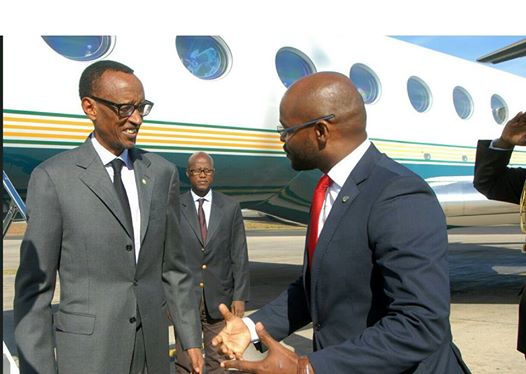
P.Kagame(ibumoso) amaze kwegukana akazina ka Mobayilo Purezidenti (Mobile President)

Mu Kinyarwanda inzererezi bivuga umuntu wirirwa cyangwa akarara agenda, cyangwa byombi icyarimwe. Kera bene uyu muntu bamuvugiragaho bati imbwa yamurigase mu karenge, ni kabwera, ni ikirara, ni inzererezi. Muri iki gihe iyo bavuze inzererezi humvikana ba bana baba mu muhanda bazwi no ku izina rya mayibobo. Ikintu abantu bitwa aya mazina bahuriyeho ni ukutagira akazi kazwi, baba bagafite kakaba katemewe n’amategeko. Perezida Paul Kagame we, n’ubwo afite akazi kazwi, ingendo ze za buri munsi ziteye ikibazo cyane cyane ko akoresha amafranga aturuka mu misoro y’abenegihugu kandi ingendo ze zirahenda cyane. Bityo abantu bakagira bati iyaba yagendaga mu gihe koko ari ngombwa ubundi akibuka ko igihugu gikennye.

Iyo witegereje  zimwe mu ngendo Kagame ajyamo ziba zihenze ku buryo bukabije. Urugero, mu kwezi kwa Nzeri 2011 perezida Kagame yaraye muri Hotel Mandarin Oriental Hotel aho yishyuraga amadolari agera ku bihumbi makumyabiri  maganatandatu na mirongo itandatu n’ane(US$20,664 y’abanyamerika ku ijoro rimwe!!! Ni ukuvuga arenga miliyoni cumi n’enye z’amanyarwanda ( 14.000.000Frws). Igitangaje ni uko uyu mugabo iyo agiye atarara ijoro rimwe ahubwo amara nk’ibyumweru bibiri nibura. Ikindi cyiyongeraho ni uko mu ngendo ze akoresha indege ye bwite ariko Leta akaba ariyo iyikodesha.

Kuba Perezida wa repubulika yajya mu ruzinduko ntacyo byari bitwaye niba koko ari ahantu ha ngombwa. Ariko iyo urebye ingendo nyishi akora aba ari izashoboraga gukorwa nabamwe mu ba minisitiri. Cyakora inyinshi ziba ari mu nyungu ze, ngo azajya guhabwa iBihembo cyangwa impamyabumenyi z’ikirenga (atigiye) bita iz’icyubahiro. Ahandi akunda kujya mu nama ni izerekeye iz’ishoramari. Aha naho hashobora kujyayo minisitiri ushinzwe ubukungu, cyangwa se umuyobozi w’ikigo gishinzwe ishoramari,…

Muri uyu mwaka wa 2014, Perezida Kagame umaze gutsindira akazina ka mobile president ( mobayilo purezidenti) yamaze iminsi hafi 90 yose hanze mu ngendo zidasobanutse ariko zifite intego izwi: gusesagura umutungo wa leta. Hai aha hari urutonde rw’izo ngendo.

  1. 12 Mutarama, Luanda, Angola
  2. 21 Mutarama , Naivasha, Kenya
  3. 24 Mutarama, Davos, Switzerland
  4. 30 Mutarama, Addis, Ethiopia
  5. 05 Gashyantare , Cap Vert
  6. 12 Gashyantare , Los Angeles World , Wisdom Conference, visits to Berkeley University, University of California, and Palo Alto University)
  7. 20 Gashyantare, Kampala, Uganda
  8. 23 Gashyantare,  Dublin, Ireland
  9. 25 Gashyantare , Luanda, Angola
  10. 02 MataA, Brussels, Belgium
  11. 22 Mata, Eastern USA ( MIT, Tufts and Brandeis University)
  12. 25 Mata, Western USA (Milken Institute, Saddleback Church, and Stanford University)
  13. 02 Gicurasi, Nairobi, Kenya
  14. 08 Gicurasi, Abuja, Nigeria
  15. 11 Gicurasi ,Nairobi, Kenya
  16. 16 Gicurasi ,Geneva, Switzerland
  17. 23 Gicurasi , Gabon
  18. 27 Gicurasi, New York, USA
  19. 27 Kamena, Malabo, Equatorial Guinea
  20. 08 Nyakanga, Accra, Ghana
  21. 03 Kanama, Aspen, USA
  22. 06 Kanama, Washington, DC, USA
  23. 20 Kanama, Rwanda Day (Mercier University), Atlanta, USA.
  24. 21 Kanama, New York City
  25. 01 Ukwakira, Dubai
  26. 05 Ukwakira, Trieste, Italy
  27. 07 Ukwakira, Kampala, Uganda

Iyo ubaze iminsi uyu mugabo yamaze muri izi ngendo usanga ari 88 ni ukuvuga amezi atatu aburaho iminsi ibiri. Muri izi ngendo nk’uko bigaragara 17 zabereye muri Afurika, Uburayi, n’uburasirazuba bwo hagati kandi wasangaga buri rugendo rumara nibura iminsi itatu(3). Ni ukuvuga iminsi 51 yose hamwe. Mu kwezi kwa Gashyantare, Kagame yamaze icyumweru cyose muri Leta zunze ubumwe z’America (USA) yongera kumarayo ikindi cyumweru mu kwezi kwa Mata. Ukwezi kwa Nzeri 2014 Kagame yazereraga muri Leta zunze ubumwe z’Amerika (USA) atangirira Aspen, Colorado; akomereza Atlanta, Georgia ahava yerekeza New York. Ahavuye Kagame yanyuze i Dubai agera mu Rwanda tariki ya 2 Ukwakira nyuma y’iminsi itatu asubira mu Burayi kuya 5 Ukwakita aho yagiye mu Butaliyani. Yose hamwe iminsi 36 wayiteranya na  51 twabonye haruguru ikaba iminsi 87 yuzuye ni ukuvuga hafi amezi atatu umukuru w’igihugu yamaze azerera.

Ubu Kagame aritegura kujya i Londres mu Bwongereza kuwa 20 Ukwakira 2014 ntawamenya iminsi azamarayo.

Ikibazo gikomeye ni aha kiri: Ni kuki Kagame atareka ngo ba minisitiri be bakore akazi kabo bajye mu ngendo zijyana n’akazi kabo? Uko byagenda kose mission ya minisitiri itwara makeya kurusha aya Kagame ujyana indege ye! Niba ibi abyanze se yakuyeho guverinoma ubwo mbona byose ashaka kubyikorera?

Murabona aho ya mafranga yo mu kigega agaciro ashirira. Kandi ntajya atanga raporo ngo avuge uko yayakoresheje. Ng’ibyo ibya Mister Mobile President! Harahagazwe!

Umwanzuro:

Igihe kirageze ngo Kagame afate ikiruhuko kuko biragaraga ko ananiwe. Ariko abe anitegura kuzasubiza ibibazo imber y’ubucamanza ku byerekeye uko yakoresheje nabi umutungo wa leta. Miliyoni 14 Kagame akoresha mu ijoro rimwe umwarimu wo mu Rwanda yazikorera mu gihe kingana n’amezi 238 ni ukuvuga imyaka 19 n’amezi abiri. Murumva aho bigeze? Aya mafranga yakwishyurira Abana 14 muri Kaminuza mu gihe cy’umwaka. Ufashe ayo Kagame yakoresheje muri iyi minsi 87 Abanyeshuri1200 babona bourses.

Uyu mugabo azi kwihesha agaciro koko.

Chaste Gahunde

Paul Kagame: a mobile president who spent three out of nine months abroad !

One other interesting thing you did not know about Kagame…He is always on trips using his personal jet but hired by the government. David Himbara has followed this amusing (not amazing) man’s movements. Kagame is the real “Mobile president”.

mobile president

The man (left) knows how to spend taxpayers’ money!

If we include Kagame’s forthcoming trip to London to attend the Global African Investment Summit (20-21 Oct) and give a lecture on “Rwanda’s Role in an Emerging Africa and Uncertain World” at Chatham House, 21 Oct 2014, he will have made 28 trips overseas in ten months. Of the 28 trips, 17 were in Africa, Europe and Middle East averaging 2 days each – meaning 34 days in total. In February, the President spent a week in western USA, and another week in eastern and western part of America in April – a total of 14 days. The President then spent the entire month of September in the United States, beginning in Aspen, Colorado in the west, swinging to the south in Atlanta, Georgia, before jetting to New York City for the UN events. From there, Kagame continued on to Dubai on 1 October, returning to Rwanda on 2 October and flying back to Europe for the event in Italy on 5 October 2014 – a total of 36 days. This means that in total Kagame was absent from Rwanda for a grand total of 84 days, or nearly 3 months.

Putting aside the costs which runs into millions of dollars, who runs Rwanda when Kagame is away, and how?

HERE IS A MORE COMPREHENSIVE LIST OF PRESIDENTIAL TRIPS JAN-OCT 2014

  1. 12 Jan: ICGLR Summit, Luanda, Angola
  2. 21 Jan: Nation Media Group Governor’s Summit, Naivasha, Kenya
  3. 24 Jan: World Economic Summit, Davos, Switzerland
  4. 30 Jan: AU Summit, Addis, Ethiopia
  5. 05 Feb: Africa Innovation Summit, Cape Verde
  6. 12 Feb: Western USA visit (including Los Angeles World Affairs Council, Wisdom Conference, visits to Berkeley University, University of California, and Palo Alto University)
  7. 20 Feb: Northern Corridor Integration, Kampala, Uganda
  8. 23 Feb: UN Broadband meeting, Dublin, Ireland
  9. 25 Feb: ICGLR Summit, Luanda, Angola
  10. 02 April: EU-Africa Summit, Brussels, Belgium
  11. 22 April: Eastern USA (including MIT, Tufts and Brandeis University)
  12. 25 April: Western USA (including Milken Institute, Saddleback Church, and Stanford University)
  13. 02 May: Northern Corridor Integration, Nairobi, Kenya
  14. 08 May: World Economic Forum for Africa, Abuja, Nigeria
  15. 11 May: Signing of standard railway gauge, Nairobi, Kenya
  16. 16 May: World Telecommunications and Information Society Award, Geneva, Switzerland
  17. 23 May: New York Forum Africa, Gabon
  18. 27 May: UN meeting on sustainable urbanization, New York, USA
  19. 27 June: AU Summit, Malabo, Equatorial Guinea
  20. 08 July: Honor of Wole Soyinka, Accra, Ghana
  21. 03 Aug: Aspen Institute, Aspen, USA
  22. 06 Aug: USA-Africa Summit, Washington, DC, USA
  23. 20 Aug: Rwanda Day (plus Mercier University), Atlanta, USA.
  24. 21 Aug: UN General Assembly (plus other events, including Global Citizen Festival), New York City
  25. 01 Oct: Global Business Forum, Dubai
  26. 05 Oct: 50th anniversary of International Center for Theoretical Physics, Trieste, Italy
  27. 07 Oct: Uganda-Rwanda Business Forum, (plus Uganda Independence celebrations), Kampala, Uganda
  28. 20 Oct: Global African Investment Summit (plus Chattam House Lecture), London, UK

We wait to see where the gentleman jets for November and December.

HABYARIMANA YAZANYE AMAJYAMBERE : AMATEKA Y’AMAJYAMBERE Y’U RWANDA N’ABABIGIZEMO URUHARE.

 Par:Jean de Dieu Musemakweli

Intego nyamukuru y’ingoma ya Habyarimana (1973-1994) yari amajyambere. Ishyaka rye rimwe rukumbi ryari Muvoma revolisiyonei iharanira amajyambere y’u Rwanda (MRND). Intego ishinga amategeko yitwaga Inama y’igihugu iharanira amajyambere (Conseil National de développement – CND -). Ministeri y’ubutegetsi bw’igihugu yari kandi na ministeri y’amajyambere ya komini (intérieur et développement communal). Ikigega cyari gihuriweho n’amakomini, kikagoboka arushije andi kugira ibibazo cyitwaga “isandugu mpuzamakomini igamije amajyambere” (Caisse intercommunale de développement – CID -). Uko buri mwaka utangiye, umukuru w’igihugu yabwiraga Abanyarwanda intego izitabwaho kurusha izindi mu rwego rwo gutsura amajyambere (gutura heza, ubuhinzi n’ubworozi, amazi meza mu cyaro  -hydrolique rurale- …..). Habaga kandi mu cyi rya buri mwaka icyumweru cyo gutaha no gutangiza imishinga. Hari ubwo icyo cyumweru cyamaraga iminsi 15 cyangwa 21.

Ntibyari amagambo cyangwa indirimbo gusa, ku ngoma ya Habyarimana amajyambere mu Rwanda yariyongereye koko ku buryo bugaragara cyane cyane ayo mu cyaro. Impamvu zatumye ayo majyambere agerwaho ni nyinshi, ariko twavuga nk’eshatu : ubushake (volonté politique), umuganda (Travaux communautaires de développement), imfashanyo z’amahanga n’imishinga y’amajyambere y’icyaro (projets de développement rural). “Ntawe ushimwa na bose”, ibyo birasanzwe, hari n’abatanyurwa na rimwe. Umuntu ntiyabura icyo anegura ku umuganda. Na FPR yawuvugaga nabi yarawugaruye. Ntawabura icyo anenga ku micungire (gestion financière) y’imishinga y’amajyambere yaterwaga inkunga n’imfashanyo z’amahanga ; ariko muri rusange amajyambere yariyongereye cyane mu Rwanda ku ngoma ya Habyarimana, amajyambere y’icyaro utaretse n’ayo mu migi.

Hari uwaherako atera hejuru ngo “naho se ku ngoma ya Kagame na FPR amajyambere ntari kwiyongera ?” Ari kwiyongera, ariko ntabwo ari kimwe. Amajyambere yo ku ngoma ya Kagame ni ibintu by’inkaburamatsiko, biturutse hejuru, ndetse uwashaka yanavuga ko biturutse hanze (exogène). Bizafata igihe kirekire ngo bizagere ku muturage, bishobora no kutazamugeraho na rimwe. Amajyambere yo ku ngoma ya Habyarimana yari amajyambere ahereye hasi (endogène). Yego, no ku ngoma ya Habyarimana u Rwanda rwari igihugu gikennye, ariko mu cyaro hari amafaranga aruta ahari ubungubu. Ubu mu cyaro nta n’ifaranga rihari, abaturage “bararirira mu myotsi”. Impamvu nyamukuru ibitera ni ikinyuranyo kiri hagati ya Habyarimana na Kagame, n’uburyo bwabo bunyuranye bwo gutegeka no gukora umurimo wa politiki.

Abakurambere barabivuze koko ngo “Ntayima nyina akabara” bakongera bati “isuku igira isoko, …..”. Habyarimana yari mwene Rubanda. Ise yari umwarimu wa gatigisimu. Yari azi ubukene buba mu cyaro, akamenya ko umuhinzi mworozi abona icyo kurya yiyushye akuya. Kagame we akomoka mu muryango w’Abatutsi bahunze kubera ko batashakaga gutegekwa n’Abahutu. Kuri bo u Rwanda n’ibyiza byarwo byose byari umwihariko w’Abatutsi ; Abahutu n’Abatwa bakagomba kubabera abagaragu n’abacakara.Yakuriye mu nkambi z’impunzi, bamucengezamo umunsi n’ijoro (endoctrinement) ko Abahutu bigobotoye ingoma  ya cyami, gihake na gikolonize ari abantu babi, kandi ko mu cyaro cyo mu Rwanda abahatuye benshi, hafi 98%  ari Abahutu. Ngibyo nguko, “impamvu ingana ururo”.

Abo bagabo bombi (Habyarimana na Kagame) banyuranye nanone mu buryo bwo kumva imitegekere y’igihugu n’icyo umurimo wa politiki ugamije. Nta gushidikanya, bombi bakunda ubutegetsi. Iyo intambara idatera, ntawamenya igihe Habyarimana yari kuzasezerera. Ubu Kagame nawe arahomereye, ubanza ahari ntakizamuvana mu Urugwiro. Icyo bataniyeho ni iki : igihe cyose utabaga ubangamiye ubutegetsi bwe, Habyarimana yarakurekaga ukikorera ku giti cyawe. N’Abatutsi bavuga ngo barakandamizwaga ku ngoma ya Habyarimana, yabahaga rugari bakicururiza, bagashinga nabo inganda nini, iziciriritse n’intoya. Kagame we si uko abyumva. We agendera ku ihame rivuga ko “iyo umuntu afite ubutegetsi, ashaka n’amafaranga ; yaba afite amafaranga, agashaka n’ubutegetsi”. Kubera rero ko amafaranga atuma uyafite ashaka ubutegetsi, kandi koko akaba yamufasha kubugeraho, birakwiye gukora ibishoboka byose kugirango Abahutu batagira amafaranga.

Umuturage yakuraga ifaranga mu bihingwa ngandurarugo. Politiki yo guhuza ubutaka n’iy’igihingwa kimwe rukumbi yasubije Abanyarwanda inyuma cyane. Kugirango bazaveyo bizafata igihe. Hejuru y’ibyo kandi, abaturage benshi bambuwe amasambu yabo, aha ngo ni politiki yo gusaranganya. Ko tudasaranganya se imiturirwa, imishahara, amamodoka n’ibindi byose abantu bo mu gatsiko n’abambari babo bafite ? Umuturage yavanaga ifaranga mu buhinzi bw’ibihingwa ngengabukungu (ikawa, icyayi, ikinini, pireteri n’ibindi). FPR yamaze imyaka myinshi ica intege abaturage ngo badakomeza kubihinga. Kugirango bizongere kugoboka umuhinzi nk’uko byamugobokaga ku ngoma ya Habyarimana bizafata imyaka myinshi. Umuturage yavanaga ifaranga mu bushoramari. Ubu abacuruzi boroherezwa mu kugurizwa n’amabanki, mu gutumiza ibintu no kubicuruza, ahanini ni abantu bo mu gatsiko cyangwa abemeye kujya mu kwaha kwako. Abandi bo bamburwa ubucuruzi bwabo, bagahombywa, ndetse bamwe bakahasiga n’ubuzima bwabo. Umuturage yakuraga ifaranga ku umwana we wize, akabona akazi, akagira icyo yimarira, akakimarira n’umuryango we. Ubu kugirango umwana w’umuhutu azabone amafaranga y’ishuri ni ingorabahizi. Niba abashije kwiga, kugirango azabone akazi biragoye, azira gusa “icyaha cy’inkomoko” (kuberako akomoka mu bwoko bw’Abahutu).

Umwanzuro

Hari umugani wa kinyarwanda uvuga ngo “gutwara (gutegeka) ntawe byananiye kireka uwo batabihaye”. Gutwara Abanyarwanda ntibyagombye kuba ikintu gikomeye, kuko nta kindi basaba kitari uko ubareka bakikorera imirimo ibateza imbere. Kandi amajyambere nyakuri ni ahereye hasi mu baturage, igihugu kikagenda kizamuka buhoro buhoro. Habyarimana muri rusange yarabarekaga bakikorera, hafi buri wese agatungwa mu mahoro n’utwo yiyuhiye akuya. Ingoma ya Kagame yo ihoza Abanyarwanda, cyane abo mu bwoko bw’Abahutu ku nkeke. Ikabita abicanyi, ibisambo, ibipinga n’ibindi bitutsi byinshi. Nta burenganzira bafite bwo gutera imbere kubera ko, uko Kagame abyumva, “iyo umuntu afite ubutegetsi, ashaka n’amafaranga ; yaba afite amafaranga, agashaka n’ubutegetsi”.

Twagereranije amajyambere yo ku gihe cya Habyarimana n’ayo kuri iyi ngoma ya Kagame na FPR. Kayibanda se we nta majyambere yazanye ? Ingoma ya cyami se yo nta mayambere yasize ? Abakoloni se bo nta majyambere bazanye ?

Niba Abakoloni se barazanye amajyambere, kuki ibihugu byahoze bikolonijwe byifuje kwigenga ? Niba ingoma ya cyami yarazanye amajyambere, kuki Abanyarwanda bahisemo repubulika ? Kuki se havugwa amajyambere Habyarimana yazanye, ayo ku ngoma ya Kayibanda ntavugwe cyane ?  Kuki Kagame na FPR ye birirwa bavuza iya bahanda ngo mu Rwanda hari amajyambere, ariko mu cyaro (ndetse no mu migi) inzara ikaba ivuza ubuhuha, abaturage ibihumbi mirongo na mirongo bakaburirwa irengero, mu kiyaga cya Rweru hakaboneka imirambo y’abantu 40 bishwe (na leta ?) baboheye amaboko inyuma kandi  bazingiye mu mifuka ? Mu rwego rwo gusubiza ibyo bibazo, tuzatangira kubagezaho ubutaha icyo twakwita “Amateka y’amajyambere mu Rwanda kuva ku mwaduko w’Abazungu kugeza ubu”.


Banyarwanda, Banyarwandakazi, basomyi namwe bakunzi b’urubuga Umuhanuzi-leprophete, mugire amahoro kandi Imana y’i Rwanda ikomeze ibarinde.

BIRACYAZA….


Jean de Dieu Musemakweli

France: What made the government resign?

French Economy Minister Montebourg attends a news conference at the Bercy Ministry in Paris


Arnaud Montebourg

The french premier Manuel Valls has submitted the government resignation to the President who immediately requested a new list of ministers by Tuesday August 27th, 2014. The main reason is the views expressed by the minister of economy Arnaud Montebourg who last Sunday told the media that France should take a different approach to save euro zone economy.

”The time has come for France to resist Germany’s “obsession” with austerity and promote alternative policies across the euro zone that support household consumption, firebrand French Economy Minister Arnaud Montebourg said on Sunday”. Hours after, the whole government was called to resign and the prime minister is to compose a new team to be presented to the president on Tuesday August 27, 2014.

Here is how Reuters put the story:

Deficit-reduction measures carried out since the 2008 financial crisis have crippled Europe’s economies and governments need to change course swiftly or they will lose their voters to populist and extremist parties, Montebourg told a socialists’ meeting in eastern France.

France is the euro zone’s second-biggest economy, the world’s fifth-greatest power, and it does not intend to align itself, ladies and gentlemen, with the excessive obsessions ofGermany‘s conservatives,” Montebourg said.

“That is why the time has come for France and its government, in the name of the European Union’s survival, to put up a just and sane resistance [to these policies].”

Montebourg said consensus was growing among economists and politicians worldwide on the need for growth-oriented policies and mentioned his German socialist counterpart Sigmar Gabriel and Italy‘s premier Matteo Renzi as potential allies.

He cited former president Charles de Gaulle and former British prime minister Margaret Thatcher as having effectively spoken up to change the course of EU policies they opposed.

Montebourg said he had personally asked President Francois Hollande for “a major re-direction of our economic policy”. The government should now focus less on cutting debt than on supporting households to revive consumption, a traditional economic driver, he said.

Montebourg, who makes no secret of his own presidential ambitions, is known for his frequent attacks on austerity, but his latest comments are likely to embarrass Hollande, who despite mounting pressure said just days earlier he would not back away from his policy based on spending cuts and corporate tax breaks.

Hollande’s business-minded policies have alienated many left-wing lawmakers and voters already frustrated with his failed pledge to curb unemployment. He is now the most unpopular president in over half a century, with an approval score of 17 percent in the latest Ifop poll.

Hollande’s office declined to comment on what Montebourg said. A source close to Prime Minister Manuel Valls said Montebourg had gone too far.

“Firstly, there are declarations on economic policy and secondly, statements on our European partner Germany that are extremely harsh. Therefore, considering the line has been crossed, the prime minister has decided to act,” the source said, giving no further details.

In an interview published on Saturday, Montebourg had already warned the austerity measures pursued by France and its European peers were strangling growth.

Six years after the collapse of banking group Lehman Brothers and the start of the global economic crisis, the United States and Britain have returned to growth while euro zoneeconomies are still shrinking or stagnating, he noted on Sunday.

“There is a disease specific to the euro zone, a serious disease, persistent and dangerous,” Montebourg said, arguing that fiscal and monetary austerity would not help end the crisis but had only worsened and extended it.

“The time has come for us to take on an alternative leadership, to set up an alternative motor and promote ideas and practices alternative to this destructive ideology,” he said.


Imicungire mibi n’ubujura mu bigo bya Leta bitumye Leta igabanya abakozi.

Nyuma y’uko mu minsi ishize abakozi 126 ba Banki nkuru y’igiuhugu basezerewe ku kazi mu buryo budasobanutse, noneho Leta ya FPR iremera ko igiye gukomeza guhagarika abakozi. Dore inkuru dukesha Igihe.com


Mu rwego rwo gutunganya imikorere ya guverinoma no kugabanya umutwaro w’ingengo y’imari ishyirwa mu mishahara y’abakozi ba Leta bitari ngombwa, hitezwe impinduka zigabanya bamwe mu bakozi baba basa nk’aho bakora akazi kamwe cyangwa inshingano bafite zitari ngombwa.

Nk’uko tubikesha The New Times, inyandiko ya Minisiteri y’Abakozi n’Umurimo igaragaza ko izi mpinduka zitezwe muri uyu mwaka imari wa 2014-2015 zikurikiye ubushakashati bwakozwe ku bigo bya Leta hagati ya Kamena 2013 na Gashyantare 2014.

The New Times ivuga ko nta gushidikanya ko impinduka zizakora ku bakozi bamwe na bamwe, cyane cyane aho usanga hari abakora inshingano zijya gusa mu bakozi ba Leta, aho kuri ubu babarirwa ku bihumbi 94 mu gihugu hose.

Guverinoma y’u Rwanda yateganyaga gutanga miliyari 207 z’amafaranga y’u Rwanda ku mishahara y’uyu mwaka w’imari wa 2014-2015 mu gihe umwaka ushize bagenzeho zisaga miliyari 195.

Ubugenzuzi bwakorewe ibigo byose bya Leta bwagaragaje icyuho gihambaye mu miterere y’inzego za Leta, hakaba harafashwe umwanzuro wo kuzisubiramo.
Itangazo rya Minisiteri y’Abakozi ba Leta n’Umurimo rigaragaza ko hari ugukorana guke mu biro bitangukanye n’imyanya y’abakozi igenda yisubiramo cyangwa itari ngombwa.

Amakuru aturuka mu bakozi ubwabo, yagaragaje ko hari abakozi badakoreshwa cyane, ugasanga bahabwa inshingano nke cyane n’abakoresha babo, bituma akenshi bahemberwa ibyo baba batakoze mu mutungo wa Leta.

Gusa na none kandi birumvikana ko ibi ari byo byatumye Guverinoma ishaka impuguke ziturutse hanze zo gusuzuma imikorere y’abakozi ba Leta. Ikigo cyatoranyijwe gukora uyu murimo ni icyo muri Singapore (Singapore Cooperation Enterprise/SCE).

Itangazo riragira riti “ Impinduka ziri mu buryo bwo guhangana n’icyuho cyagaragajwe mu miterere y’umurimo mu bigo bya Leta no kubifasha kugera ku nshingano zabyo”.

Itangazo na none kandi rigaragaza ko abayobozi bakuru bungirije bashobora gukurwaho mu bigo bimwe na bimwe.

Rikomeza rigira riti “ Nk’igisubizo, guverinoma izagabanya ingengo yatakazwaga ku mishahara n’izindi nyungu bizazamura umusaruro. Impinduka zizafasha kongera ubushobozi n’intsinzi ku bigo bya Leta”.

Abazagerwaho n’ingaruka z’impinduka bazahabwa igihe cyo kwitegura gusezera bahabwe ibyo bagombwa n’amategeko byose.

Na none kandi impinduka zitezweho guhuza abakozi ku buryo bufatika binoroshye igenzura iryo ari ryo ryose ryakorwa ku bakozi no ku bushobozi bwabo.

Umujyanama wa Minisitiri w’Abakozi ba Leta n’Umurimo, Edmond Tubanambazi, yemeje ko impinduka zitegerejwe mu gihe gito cyane.

Yasobanuye ko impinduka zizafasha guverinoma kwegereza zimwe mu nshingano abaturage bijyanye na gahunda ya Leta isanzweho yo kwegereza ubuyobozi abaturage.

Gaspard Mupiganyi, unuyobozi wa gahunda mu impuzamahuriro y’abakozi mu Rwanda (CESTRAR) yavuze ko kuba hagiye kuba impinduka zemewe n’itegeko nta kibazo gishobora kuvukamo.

Yagize ati “Umukoresha afite uburenganzira bwo kwirukana abakozi ariko bigomba gukorwa hagendewe ku itegeko. Hari amategeko yashyiriweho kurinda abakozi ba Leta n’inyungu bakwiriye kubona ku murimo bakoraga iyo birukanwe ; iyo ibi byose byubahirijwe, twe nta mpungenge tuba dufite”.