Category Archives: Human rights

World Refugee Day:”We have a duty to the millions stranded away from home, not just to preserve life, but to safeguard hope” John Kerry.

Press Statement

John Kerry
Secretary of State

Washington, DC

June 18, 2015

World Refugee Day, marked on June 20, is a time to honor those who flee violence and persecution and those who help them on their journey.

It’s almost unfathomable that nearly 60 million men, women and children are now displaced inside and outside of their countries. That is the largest number the United Nations High Commissioner for Refugees has ever counted and 8 million more than the record set just one year ago. We’ve seen haunting images of Syrian families fleeing indiscriminate barrel bombings and young children rescued at sea after days without food. Escaping from bullets, bombs, or machetes is often just the beginning of the ordeal. Refugees remain in exile for an average of 17 years. Some are born and grow up in camps and never get to leave them.

I’ll never forget meeting with refugee leaders on my recent trip to Kenya, where 350,000 mainly Somali refugees live in a remote, dusty camp complex called Dadaab. By video link to Nairobi, I spoke to a group Dadaab’s best students. They told me how they dream of attending university and pursuing careers in medicine, politics and human rights. But they also shared their fears that they would end up trapped and jobless, and that all their striving would be in vain. We cannot let that happen.

For those scattered by violence and oppression, the United States is and will remain their most fervent defender. I am proud that U.S. humanitarian assistance exceeded $6 billion dollars last year. The United States is the world’s leading donor of humanitarian aid, and resettles more refugees than any other nation. The resilience, determination, and achievements of the millions resettled here in the United States prove the value and importance of our work. People who have been uprooted deserve more than food, shelter, and medical care. They deserve dignity and respect and the opportunity to build a better future.

We have a duty to the millions stranded away from home, not just to preserve life, but to safeguard hope.

The United States will continue to urge Rwanda to respect the rights of all its citizens.

usdos-logo-seal

Rwandan Human Rights and U.S. Relations With Rwanda

Testimony

Steven Feldstein
Deputy Assistant Secretary, Bureau of Democracy, Human Rights, and Labor
House Foreign Affairs Committee, Subcommittee on Africa, Global Health, Global Human Rights, and International Organizations
Washington, DC
May 20, 2015

As Prepared

Chairman Smith, Ranking Member Bass and Members of the House Subcommittee on Africa, Global Health, Global Human Rights and International Organizations. Thank you for holding this important hearing on Rwanda and for the opportunity to speak today.

Rwanda holds a very personal connection for me. Fifteen years ago I first went to Rwanda as a fellow with the International Rescue Committee. I spent a year in the country supporting its efforts to recover from war and genocide – helping unaccompanied children and youth reintegrate back into their communities, working with villages to provide access to clean water, and traveling throughout the country to try to better understand what gives people the capacity to pick up their feet and move forward after such a shattering experience. Living in Rwanda had a profound impact on me and has been a key inspiration for my decision to pursue a career in foreign policy and human rights.

Indeed, Rwanda’s progress since the 1994 genocide has been remarkable. Rwanda’s GDP has grown at an estimated annual rate of 7 percent, youth literacy rates have improved from 65 percent in 2000 to 77 percent in 2010, and child and infant death rates have plummeted, going from an under-5 mortality rate of 152 children out of every 1,000 in 1990 to just 52 out of 1,000 in 2013. Rwanda also plays a crucial role in international peacekeeping operations, and has made great strides in its inclusion of women at all levels of government. Several years ago I paid a return visit to Kigali, and I found a city profoundly changed. Modern office towers have replaced dilapidated buildings. The streets were spotless – thanks in part to a widely acclaimed ban on plastic bags. New businesses seemed to be springing up daily, such as coffee ventures supplying top quality beans to U.S. brands like Starbucks and Peet’s.

But this is only part of the story. Alongside Rwanda’s remarkable development progress, there have been equally consistent efforts to reduce space for independent voices and to diminish the ability of the media, opposition groups, and civil society to operate. This space matters. It is essential not only for democratic progress, but for cementing Rwanda’s impressive economic and development gains.

When it comes to the human rights situation in Rwanda, we see three trends of note. First, political space in Rwanda and the overall human rights environment continues to shrink. There are reports of targeted killings, and an increasing number of reports of disappearances and harassment of civil society groups and opposition parties. Second, this trend is reinforcing the wrong lessons for Rwanda– particularly that a country can continue to experience robust economic growth and foreign investment even while repressing its citizens further and reducing democratic space. This is not a sustainable path. At some point – if unchecked – human rights violations will begin to affect Rwanda’s economic performance, stability and the willingness of foreign investors to pump in outside capital and do business. Third, Rwanda’s human rights records is setting a disturbing precedent for the region and continent. Other countries are carefully watching Rwanda’s model of economic liberalization and political repression. In my discussions, counterparts frequently point to Rwanda and question whether protecting the rights of their citizens matters if they can achieve substantial economic development.

The answer, of course, is that protecting the rights of all of Rwanda’s citizens and residents matters immensely to Rwanda’s long term stability and prosperity, to its continued positive economic trajectory, and to whether other countries recognize they can follow a similar path to greater prosperity. When governments repress fundamental freedoms and universal human rights, international investment can falter because this repression is a sign of societal fissures that can lead to instability and violence. This is also true when governments stifle civil society organizations that provide checks and balances on corruption and increase government accountability. Rwanda can be a model for the region, or it can slip backwards over time, never truly fulfilling its potential.

We have articulated our concerns about Rwanda’s human rights record for years directly to Rwanda’s senior leaders, including President Kagame, and we have highlighted the deteriorating situation in Rwanda, through the State Department’s annual human rights report. The Department’s 2013 human rights report for Rwanda noted that the government targeted political opponents and human rights advocates for harassment, arrest, and abuse. It reported that the government disregarded the rule of law and placed significant restrictions on the enjoyment of freedoms of expression, peaceful assembly and association, as well as restrictions on press freedoms. It observed that the government harassed and placed substantial limitations on local and international NGOs, particularly organizations that monitored and reported on human rights. And it highlighted reports that arbitrary or unlawful killings took place both inside and outside Rwanda.

The credibility of elections provides an important indication of the level of space for independent voices and views. Unfortunately, Presidential elections in 2010 and parliamentary elections in 2013 were beset by irregularities both in the pre-electoral period and on Election Day. Part of this is due to the passing in 2008 of the “genocide ideology” law, which was intended to restrict any actions that could lead to genocide. In practice, the government has used this law to impede the activities of opposition parties, opposition candidates, and civil society organizations. In the 2010 elections, in which President Kagame was reelected with 93 percent of the vote, there was a lack of critical opposition voices in the pre-election period, opposition political parties were unable to register, and two opposition party leaders were arrested on what appear to be spurious charges. Two unregistered political parties were unable to field presidential candidates due to legal or administrative issues.

International observers reported that Rwanda’s 2013 parliamentary elections also failed to meet standards for free and fair elections. While the elections were calm and well organized, there were numerous irregularities, including the presence of security officials in polling rooms, multiple voting, and local election officials filling out ballots in the absence of voters. Rwandan electoral officials also denied U.S. Embassy observers access to polling stations and vote tabulation centers, thereby making it impossible to verify the accuracy of the final vote count and official participation rate. Rwanda’s next presidential election is in 2017, and we are cautiously hopeful that this election will mark an improvement upon previous contests.

Our concerns about restrictions on press freedom, freedom of assembly, expression, and association extend beyond electoral processes. Most Rwandan news outlets follow party lines. Rwandan journalists self-censor their work, and some have fled the country out of fear of government harassment. The Rwandan government has also stepped up its use of a law amended in 2012 that allows security officials to monitor online communications. During the period surrounding the 20-year genocide commemoration in spring 2014, the country’s few remaining independent journalists were increasingly targeted for harassment and arrest. This led the United States to issue a statement in June 2014 expressing deep concern about the arrest and disappearance of dozens of Rwandan citizens and credible reports that individual journalists were being threatened, and in some cases directly censored.

We are also deeply troubled by the succession of what appear to be politically motivated murders of prominent Rwandan exiles. This includes the December 2013 killing of former Rwandan government official Colonel Patrick Karegeya, who was found dead in a hotel room in South Africa. Months later, armed men raided the South African home of former Rwandan Army Chief of Staff Kayumba Nyamwasa, who had previously been targeted for assassination attempts. President Kagame’s 2014 statements about “consequences” for those who betray Rwanda has further heightened these concerns.

Also of deep concern are corpses that appeared in Lake Rweru, along the border between Rwanda and Burundi, between July and October in 2014. Fishermen reported seeing dozens of floating bodies, some bound and wrapped in sacks. Four bodies were recovered and buried near a village in Burundi’s Muyinga Province. Fishermen reported that on the nights of September 21 and 22, Rwandan marines attempted to exhume the bodies, allegedly to return them to Rwanda. Both Rwanda and Burundi called for a joint investigation into the identity and origin of the bodies. In December, Burundi’s minister of foreign affairs accepted an offer of forensic assistance funded by the United States and several other donor governments for an investigation led by the African Union. Rwandan officials stated that the government also supported a joint investigation, but no investigation has been conducted. The United States continues to press the African Union to move forward with an investigation into these killings and accountability for those responsible.

As a close partner with Rwanda on many global and regional issues, we have and will continue to maintain a close dialogue with the government on these concerns, while recognizing their strong policies and actions with respect to issues of concern, such as women’s rights, the rights of LGBTI persons, and access to health and education.

In closing, Rwanda is an important ally. It is a respected contributor to peacekeeping missions throughout the region, it has rebuilt itself from genocide, and it has achieved impressive development and economic gains. I have seen with my own eyes the remarkable progress that Rwanda has made. I believe there is a bright future ahead for its people, which is why Rwanda’s current human rights situation is so personally disappointing to me. Ensuring respect for freedoms of expression, association, and peaceful assembly, and respect for the rule of law is essential for cementing, and building from these gains. The United States will continue to urge Rwanda to respect the rights of all its citizens.

Thank you very much and I welcome your questions.

Un journaliste condamné à 25 ans de prison au Rwanda

media freedom

Le Rwanda se retrouve une fois de plus dans le viseur des organisations de défense des droits de l’Homme. Cette fois, Reporters sans frontières dénonce la condamnation à 25 ans de prison du journaliste rwandais, Cassien Ntamuhanga. Vendredi, 27 février, le tribunal de Kigali l’a reconnu coupable de « formation d’un groupe criminel », « conspiration contre le gouvernement ou le président de la République », « entente en vue de commettre un assassinat » et « complicité de terrorisme ».

Il était jugé aux côtés du célèbre chanteur Kizito Mihigo et de trois autres co-accusés. Kizito Mihigo, qui avait plaidé coupable, a été condamné à une peine de dix ans de prison. L’accusation avait requis la perpétuité contre ces quatre accusés, qui avaient été arrêtés en avril 2014 durant la commémoration des 20 ans du génocide. Reporters sans frontières (RSF) a exprimé son indignation face à « ce verdict sévère et disproportionné ». Et de critiquer « le caractère répressif du régime du président Kagamé et sa volonté grandissante de museler toute voix dissidente à l’approche de la présidentielle de 2017 ». Le Rwanda figure à la 161e place sur 180 pays dans le classement mondial de la liberté de la presse 2015 réalisé chaque année par RSF.

Faire table rase de toute opposition

Ancien chef rebelle à la tête du Front patriotique rwandais (FPR), Paul Kagamé est président du Rwanda depuis 2000. Il est soupçonné de vouloir changer la constitution pour briguer un nouveau mandat en 2017. Et de faire table rase de toute opposition y compris de ses anciens alliés, comme les transfuges du FPR partis en exil dont certains ont rejoint le Congrès national rwandais (RNC). Ce parti d’opposition est considéré comme une organisation terroriste par Kigali. Et des anciens proches de Kagamé ralliés au RNC sont traqués et ont été retrouvés morts à l’étranger, comme l’ancien chef des services de renseignement tué en Afrique du Sud en janvier 2014.

Les atteintes à la liberté de la presse au Rwanda sont fréquemment dénoncées par des organisations étrangères. En décembre dernier, le Comité de protection des journalistes (CPJ) publiait un rapport qui pointait une « presse rwandaise régie par la censure aussi bien volontaire que forcée ». Et ce, malgré le vote d’une loi en 2013 renforçant légèrement la protection des journalistes et la mise en place d’une instance d’autorégulation des médias. Toutefois, des lois sévères encadrent tout outrage au chef de l’Etat et plus largement aux autorités.

En octobre 2014, c’est la diffusion de la chaîne britannique BBC qui y a été suspendue. Le parlement rwandais s’était prononcé en faveur de l’interdiction de la BBC qui avait diffusé un documentaire jugé controversé sur le génocide de 1994. Les émissions en kinyarwanda, la langue nationale du Rwanda, diffusées par la BBC avaient alors été suspendues pour une durée indéterminée.
En savoir plus sur http://www.lemonde.fr/afrique/article/2015/03/03/un-journaliste-condamne-a-25-ans-de-prison-au-rwanda_4586522_3212.html#mloRrQl103suHLCK.99

EU Urges Rwanda to develop a true multiparty democracy and allow space for peaceful dissent

téléchargement (4)

Open letter from European Union Heads of Mission in Rwanda on the occasion of Human Right Day

The theme of this year’s Human Rights Day is “Human Rights 365”, reminding us that every day is Human Rights Day and that each person, everywhere, is at every moment entitled to the full range of human rights. Respect for human rights is one of the European Union’s core values, embedded in the founding treaty, and we continue to ensure that these principles are upheld in all our actions.

We work with the people and the Government of Rwanda to promote human rights, democracy and good governance. We support the ambition of the Government’s Economic Development and Poverty Reduction Strategy with its goal of accelerating progress to middle income status to provide better quality of life for all Rwandans. We especially welcome the emphasis placed on respect for rule of law, gender, family and children’s rights as crosscutting issues in the strategy.

As we continue to support Rwanda’s ambitious development and growth targets, we encourage the development of a vibrant and vocal civil society. In its conclusions of 22 July 2014, the EU Foreign Affairs Council welcomed the progress made by Rwanda on structural reforms, but noted with concern the constraints faced by political parties and civil society. The EU encouraged Rwanda to further open up the political space and to allow greater freedom of expression in order to facilitate fuller democratic participation.

The Government demonstrated openness to discuss difficult topics by inviting the UN Special Rapporteur on the Rights to Freedom of Peaceful Assembly Maina Kiai to Rwanda. While commending Rwanda for its progress over the last 20 years, the Special Rapporteur stressed the importance of building upon that foundation by developing a true multiparty democracy and allowing space for peaceful dissent. The Special Rapporteur made recommendations addressed to the Government, civil society and the international community. We are committed to implementing the recommendations addressed to us and encourage Rwanda to do the same.

We urge the Government to continue working towards the universal implementation of human rights. The legitimate fight against terrorism and other security considerations should not be used to restrict the right to express dissent or criticism. That includes journalists, civil society and those advocating for greater political freedoms.

“Human Rights 365” emphasises the universal rights and fundamental freedoms as expressed in the Universal Declaration of Human Rights. It was adopted by representatives of all regions and cultures, demonstrating that human rights apply to all human beings without discrimination. The EU is committed to advancing the cause of human rights globally, and we look forward to continue working with the Government and people of Rwanda to realise this commitment.

Signed

  • Gerhard Braun, Chargé d’Affaires a.i. of the Embassy of the Federal Republic of Germany
  • HE Leoni Cuelenaere, Ambassador of the Kingdom of the Netherlands
  • HE Michel Flesch, Ambassador of the French Republic
  • HE William Gelling, High Commissioner of the British High Commission
  • Maria Håkansson, Chargé d’Affaires of the Embassy of the Kingdom of Sweden
  • HE Arnout Pauwels, Ambassador of the Kingdom of Belgium
  • HE Michael Ryan, Head of Delegation, Delegation of the European Union

“RWANDA: Severe Restrictions on Freedom of Expression and Association, and Intolerance towards Dissent”. Human Right Watch

téléchargement (1)

[In its latest report on human rights, Human Rights Watch declares Rwanda a country where the government continues to:

  • Impose severe restrictions on freedom of expression and association
  • Not tolerate dissent.
  • Extremely limit the political space and independent civil society
  • Weaken the civil society and media remain
  • Contiinue target real or suspected opponents inside and outside the country

Following is the part of the annual report speaking to Rwanda and its dictatorial regime under Paul Kagame] Admin

Rwanda

The 20th anniversary of the 1994 genocide was commemorated in ceremonies and other events across Rwanda, and in many other countries.

Progress in economic and social development remain impressive, but the government continues to impose severe restrictions on freedom of expression and association and does not tolerate dissent. Political space is extremely limited and independent civil society and media remain weak. Real or suspected opponents inside and outside the country continue to be targeted.

Detainees were held unlawfully for several weeks or months in police or military custody, in unrecognized detention centers. Dozens of people were reported disappeared. Some reappeared in prison after prolonged incommunicado detention, but others remain unaccounted for.

Political Opposition

The ruling Rwandan Patriotic Front (RPF) dominates all aspects of political and public life. Opposition parties cannot operate in a meaningful way.

In December 2013, the Supreme Court increased from eight to fifteen years the prison sentence of Victoire Ingabire, president of the FDU-Inkingi opposition party, who had been convicted of conspiracy to undermine the government and genocide denial in 2012. Several other FDU-Inkingi members, including the party’s secretary general, Sylvain Sibomana, also remained in prison.

Bernard Ntaganda, leader of the PS-Imberakuri opposition party, was released in June after serving a four-year sentence for endangering national security and divisionism.

The Democratic Green Party of Rwanda, which was granted registration in 2013, joined the National Consultative Forum of Political Organizations in April. There were no arrests in connection with the murder of the party’s Vice President André Kagwa Rwisereka in July 2010.

Attacks on Opponents Abroad

On January 1, Patrick Karegeya, former head of Rwanda’s external intelligence services and a prominent government opponent exiled in South Africa, was found murdered in a hotel room in Johannesburg. South African authorities launched an investigation, which was ongoing at time of writing. Karegeya was a leading member of the Rwanda National Congress (RNC), an opposition group in exile. Other RNC members have also been attacked and threatened outside Rwanda. The Rwandan government denied any involvement in these attacks, but President Paul Kagame came close to publicly condoning Karegeya’s murder on January 12, 2014, when he said, among other things, “whoever betrays the country will pay the price.”

In August, a South African court convicted two Rwandans and two Tanzanians of the attempted murder of General Kayumba Nyamwasa—a former senior military official and leading RNC member—in South Africa in 2010, and sentenced them in September to eight years’ imprisonment. It acquitted two other Rwandan defendants. The judge stated that the attack was politically motivated and emanated from a group of people in Rwanda.

Civil Society Organizations

Independent civil society organizations remain extremely weak as a result of years of state intimidation and infiltration. The only remaining effective Rwandan human rights group, the Rwandan League for the Promotion and Defence of Human Rights (LIPRODHOR), took legal action in protest at a takeover of its leadership by members sympathetic to the government in 2013. The Rwanda Governance Board, the state body with oversight of national nongovernmental organizations, recognized the new leadership in 2013. After numerous adjournments, a court in Kigali ruled on procedural grounds in August 2014 that the case was unfounded. The ousted LIPRODHOR leaders have filed an appeal.

In September, two police officers were arrested in connection with the murder of anti-corruption activist Gustave Makonene. After initially denying the murder charges, both suspects pleaded guilty in pretrial hearings in October. The trial had not started at time of writing. Makonene, coordinator of Transparency International Rwanda’s Advice and Legal Advice Center in Rubavu, was found dead in July 2013.

In June the pro-government New Times newspaper published an “assessment” of Human Rights Watch’s work in Rwanda by the Ministry of Justice, which grossly misrepresented the organization’s work. Among other allegations, it accused Human Rights Watch of supporting the Democratic Forces for the Liberation of Rwanda (FDLR), a predominantly Rwandan armed group operating in eastern Congo, some of whose leaders participated in the 1994 genocide in Rwanda.

Freedom of Media

Media remained heavily dominated by pro- government views. Most journalists were unable or unwilling to engage in reporting on sensitive issues due to threats, intimidation, and prosecution in previous years. However, some radio stations occasionally broadcast call-in programs in which listeners can raise a broader range of issues and put questions to political leaders.

Agnès Uwimana, editor of Umurabyo newspaper, was released in June after serving four years in prison for endangering national security and defamation, in connection with articles published in the newspaper.

On October 24, the Rwanda Utilities Regulatory Authority (RURA) suspended the British Broadcasting Corporation’s (BBC) Kinyarwanda service’s broadcasts in Rwanda. RURA said it had received complaints of incitement, hatred, divisionism, genocide denial and revision from members of the public after the October 1 BBC television documentary, “Rwanda’s Untold Story” was broadcast. On November 19 a commission of inquiry, established by RURA and headed by former Prosecutor General Martin Ngoga, began investigations into these allegations against the BBC. It was expected to produce its report in three months.

Unlawful Detention and Enforced Disappearances

Dozens of people were held unlawfully, incommunicado in the military Camp Kami and other detention centers, some for several weeks or months. Some were tortured and pressured to confess to alleged crimes or to incriminate others. Some of these detainees were later tried on security-related charges.

From March to time of writing, at least 30 people were reported missing, many in northwestern Rwanda. Some were arrested by state agents and taken to unknown destinations. After several weeks, some of the disappeared reappeared in police detention and were transferred to civilian prisons. Some were among a group of 16 people who appeared before a court in Rubavu in June, accused of endangering state security and collaborating with the FDLR. Government authorities did not acknowledge their unlawful detention or account for their whereabouts during the preceding period, failings which render their detentions enforced disappearances. In a speech on June 5, President Kagame said authorities would continue to arrest suspects and, if necessary, shoot in broad daylight those intending to destabilize the country.

Throughout the year, hundreds of men, women, and children—many of them street children, commercial sex workers, or street hawkers—were detained unlawfully, without charge or trial, in very poor conditions in an unrecognized detention center commonly known as Kwa Kabuga, in the Gikondo area of Kigali. Many were beaten by police, or by other detainees in the presence of police.

Security-Related Trials

The trial of Joel Mutabazi, a former presidential bodyguard forcibly returned from Uganda to Rwanda in October 2013, and 15 co-accused began before a military court in Kigali in January. The defendants were charged with terrorism, murder, forming an armed group, and other offenses, linked to alleged collaboration with the RNC and the FDLR. Mutabazi and several co-defendants stated in court that they had been tortured and forced to sign statements. Mutabazi was found guilty of all charges and sentenced in October to life in prison. Thirteen defendants received sentences ranging from 3 months to 25 years. Two were acquitted.

Well-known singer Kizito Mihigo, journalist Cassien Ntamuhanga, and co-defendants Agnès Niyibizi and Jean-Paul Dukuzumuremyi were arrested in April and charged, among other things, with offenses against the state and complicity in terrorist acts for allegedly collaborating with the RNC and FDLR. Mihigo’s whereabouts were unknown for several days before he appeared in police custody. In November, he confessed to all the charges. Two of his co-defendants, Ntamuhanga and Dukuzumuremyi, pleaded not guilty. The trial was ongoing at time of writing and Niyibizi had not entered a plea.

In August, two senior military officers, retired Brig. Gen. Frank Rusagara and Col.Tom Byabagamba, were arrested and charged with, among other offenses, inciting insurrection and public disorder, and tarnishing the country’s image. The accusations are believed to be related to their alleged contacts with the RNC. They appeared in a military court alongside a third co-defendant, demobilized Sgt. François Kabayiza. They were awaiting trial at time of writing.

Justice for the Genocide

The International Criminal Tribunal for Rwanda was expected to conclude all proceedings by the end of 2014, with the exception of one appeal due to conclude in 2015. Nine suspects wanted by the ICTR continue to evade justice. The ICTR and the United Nations mechanism for international criminal tribunals launched a new initiative in July to track and arrest these remaining fugitives.

Genocide trials took place in the domestic courts of several countries under the principle of universal jurisdiction, and further cases were pending. In the first such prosecution in France, conducted by a newly established war crimes unit, a court in Paris tried former intelligence chief, Pascal Simbikangwa, and sentenced him in March to 25 years in prison for genocide and complicity in crimes against humanity. In February, a court in Germany sentenced former Rwandan mayor, Onesphore Rwabukombe, to 14 years in prison for aiding and abetting genocide.

Key International Actors

The UN special rapporteur on freedom of association and assembly, Maina Kiai, visited Rwanda in January and expressed concern about restrictions on nongovernmental organizations and political parties, among other issues. In his report to the UN Human Rights Council in June, he raised a number of concerns, including the prevailing opposition to vigorous debate and free expression of opinions, the government’s hostility toward peaceful initiatives by its critics and the existence of a legal framework that silences dissent. The Rwandan government refuted several of his findings.

In January, the United States Department of State publicly condemned the murder of Patrick Karegeya. It expressed concern about what appeared to be politically motivated murders of prominent Rwandan exiles and President Kagame’s statements about the “consequences” for those who betrayed Rwanda. In June, a US government press statement expressed concern about the arrest and disappearance of dozens of people and incommunicado detention for periods of up to two months.

To read the whole report please click  

Click to access wr2015_web.pdf

Imyigaragambyo y’impuruza yabereye i Edinburgh mu Bwongereza yagenze neza

edinburgh1

Nk’uko byari byateguwe kandi bigatangazwa n’amashyaka ya opozisiyo y’u Rwanda, kuri uyu wa kane tariki ya 29 Mutarama 2015 imyigaragambyo y’impuruza yabereye ahantu hatandukanye ku isi yose yakorewe na hano i Edinburgh.

Iyo myigaragambyo igamije kwamagana icyemezo cya LONI cyo kurasa impunzi zicyihishe mu mashyamba ya Repubulika Iharanira Demokarasi ya Kongo no kuzishyira Kagame zimeze nk’iziboheye amaboko inyuma.  Iyo myigaragambyo igamije kandi gusaba Umuryango mpuzamahanga gufasha Abanyarwanda mu kuzana impinduka nziza mu Rwanda, hakurwaho ubutegetsi bw’igitugu bwa Paul kagame n’Agatsiko ke, ubutegetsi bwubakiye ku iterabwoba, ikinyoma n’ukwikubira ibyiza byose by’igihugu. Ubwo butegetsi bw’igitugu nibwo NYIRABAYAZANA ituma Abanyarwanda benshi bakomeza guhunga igihugu cyabo. Mu by’ukuri nta mpunzi yishimiye kuba ishyanga ariko igitugu n’ubwicanyi bya FPR, nibyo bibuza Impunzi gutahuka.

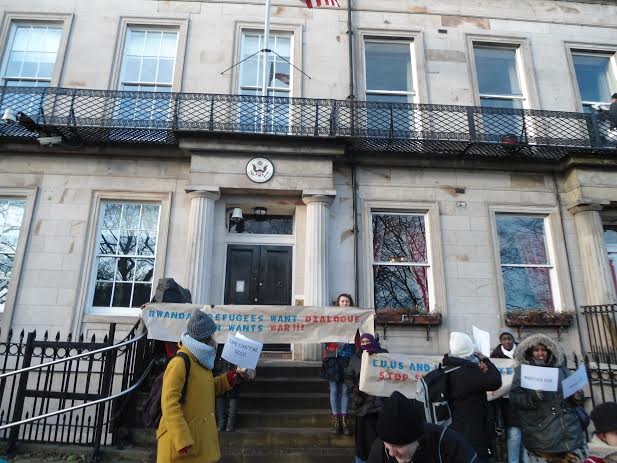
Tutitaye ku rubura n’imvura byagwaga twahagurutse ku isaha ya saa sita mu mujyi wa Glasgow twerekeza i Edingburgh kuri ambasade ya Leta zunze ubumwe z’Amerika. Tuhageze twakomeje kuririmba indirimbo zitandukanye dusaba ko umuryango w’abibumbye wareka gukomeza kuba igikoresha cya Paul Kagame uhora ashaka kumara impunzi kugeza n’aho zamuhungiye. Mu byapa twari twitwaje hari handtse amagambo nka: “Rwanda refugees want peace, UN wants War”  aribyo kuvuga ngo impunzi z’abanyarwanda zirashaka amahoro ariko LONI igashaka intambara.

Byaje kugera aho n’abatubonaga baza kutubaza icyo twigaragambiriza maze tubabwira ko impunzi zirimo kwicwa n’umuryango w’abibumbye kandi ari wo wagakwiye kuzirinda. Nabo bageze aho baza kudufasha.

Ndashimira abantu bose bitabiriye iki gikorwa kandi nsaba ko byaba intangiriro tukazaruhuka ari uko ikibazo cy’impunzi cyumvikanye neza aho kuraswa ahubwo ubutegetsi bwa Kagame bugatanga espace politique kugira ngo impunzi zibashe gutaha mu mahoro zitange umusanzu wazo mu buyobozi bw’igihugu binyujijwe muri Demokarasi, kandi zitikanga kwicwa, cyangwa se ngo zijugunywe muri Rweru, ngo zitikirwe muri Nyungwe  se, cyangwa ngo zifungirwe ubusa.

unnamed

Bamwe mu bari bayoboye imyigaragambyo bamaze kuvugana n’umukozi wa Ambasade y’Amerika.

Umwe mu bitabiriye imyigaragambyo

Glasgow, UK.

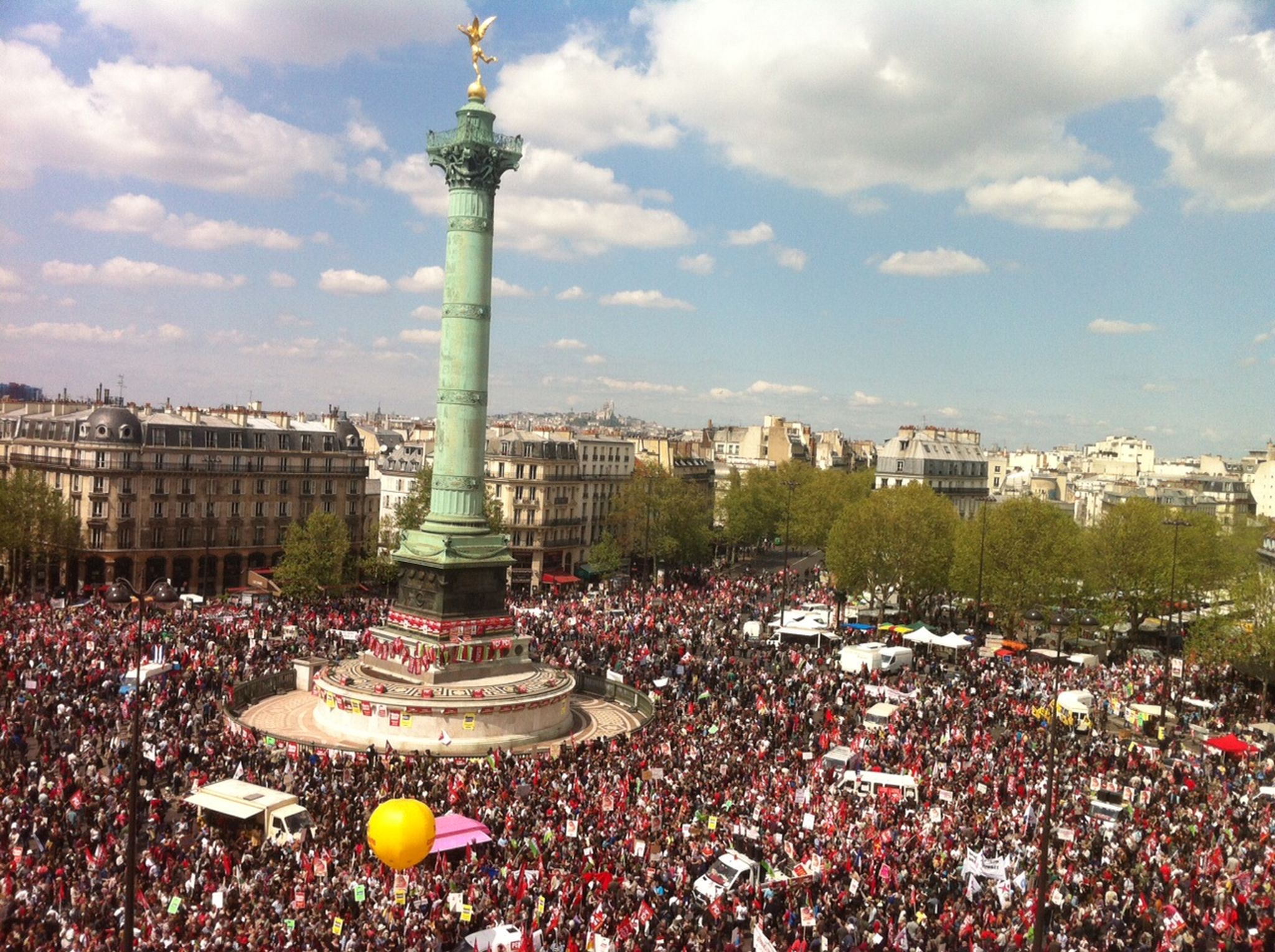
IMYIGARAGAMBYO Y’ IMPURUZA YABEREYE PLACE DE LA BASTILLE YAGENZE NEZA.

SONY DSC

Abayobozi b’Amashyaka yateguye iyi myigaragambyo

Imyigaragambyo y’Impuruza yari iteganyijwe kubera i Paris kuri Place de la Bastille yabaye kuri uyu wa kane taliki ya 29/1/2015 kandi yagenze neza. N’ubwo hari imvura nyinshi n’ubukonje, abanyarwanda batari bake bashoboye kwigomwa barayitabira . Icyari kigamijwe ni ukuvuganira impuzi z’Abanyarwanda zisaga ibihumbi 245 zibarizwa  muri Repubulika Iharanira Demokarasi ya Kongo zishobora kugabwaho ibitero n’ingabo za Kongo zifatanyije n’iz’umuryango w’Abibumbye , ngo hagamijwe gusenya umutwe wa FDLR.

Muri iyo myigaragambyo hatanzwe ubutumwa bunyuranye hakoreshejwe itangazamakuru nka radiyo  BBC, VOA, Ijwi rya rubanda n’Inyabutatu. Hatanzwe ubuhamya ku buzima n’akaga abanyuze inzira ndende yo  mu mashyamba ya Kongo bahuye nako . Hatanzwe n’ubuhamya ku mikorere mibisha y’ubutegetsi bw’igitugu bwa FPR ari nayo ituma impunzi z’Abanyarwanda zidatinyuka gutahuka ahubwo abaturage benshi bakaba bakomeza guhunga igihugu kugeza n’uyu munsi.

Imyigaragambyo yajyanye kandi no kugeza ubutumwa bwanditse(Memorandum) ku bategetsi b’ibihugu nka Amerika, Ubufaransa, Repubulika iharanira Demokarasi ya Kongo, Ibihugu bya SADC ndetse n’u Rwanda.

Nyuma y’imyigaragambyo twabwiwe inkuru mbi y’uko ibyo bitero twamagana bishobora kuba byatangiye. Gusa icyo ntigikwiye kuduca intege.

Niyo mpamvu dusaba Abanyarwanda aho bari hose ko bakomeza kuba “MOBILISES”, ntibahweme gutera ijwi hejuru basaba ko iyo gahunda yo kurasa impunzi yakurwaho. Ariko tuzi neza ko icyakemura bidasubirwaho ikibazo cy’impunzi z’Abanyarwanda ari uko zahabwa inzira yo gusubira iwabo habanje gukurwaho icyatumye bahunga kuko ari nacyo kibahejeje ishyanga. Nta munyarwanda uri mu mashyamba kubera ko abikunze cyangwa bimunyuze. Twese tuzi ko dufite iwacu, ni ukuvuga mu RWANDA. Ni ubutegetsi bw’igitugu bwa Paul Kagame n’Agatsiko ke bukwiye guhindurwa binyuze mu nzira y’ibiganiro n’amatora byakwanga hakitabazwa Revolisiyo ya rubanda.

Turashishikariza Abanyarwanda ko bakwitabira ari benshi n’imyigaragambyo izabera i Bruxelles , kuwa gatatu w’icyumweru gitaha, taliki ya 4/2/2015. N’ahandi hose mu bihugu birimo abanyarwanda mushobora gutegura imyigaragambyo nk’iyi mukayimenyesha abandi kugira ngo ababishoboye bazayitabire.

Dukomeze tuvuganire abavandimwe bacu bari mu kaga.

Nidufatanya TUZATSINDA.

Padiri Thomas Nahimana

Ishema Party.

Welcoming the Start of Military Operations Against the FDLR

usdos-logo-seal

Press Statement

Jen Psaki
Department Spokesperson
Washington, DC
January 29, 2015

The United States welcomes the announcement by the Government of the Democratic Republic of the Congo (DRC) of the start of military operations against the Democratic Forces for the Liberation of Rwanda (FDLR), an armed group that has inflicted immeasurable suffering on the civilian population of eastern DRC and Rwanda for over 20 years. The UN Security Council has mandated the UN Organization Stabilization Mission in the DRC (MONUSCO) to protect civilians and, in support of the DRC authorities, to neutralize armed groups including the FDLR. Last July, the International Conference on the Great Lakes Region (ICGLR) and the Southern African Development Community (SADC) gave the FDLR, including its leadership, a clear deadline of January 2, 2015 to surrender fully and unconditionally or face military consequences. However, the FDLR failed to deliver on its promise to surrender and instead used this period to continue to commit human rights abuses, recruit new combatants, and pursue its illegitimate political agenda.

In October, the ICGLR and SADC heads of state reaffirmed that military action should take place in the absence of a full surrender of the FDLR, and on January 8, the UN Security Council reiterated the need to neutralize the FDLR through immediate military operations.

The United States fully supports DRC military operations with MONUSCO against those members of the FDLR who have failed to surrender. We encourage the DRC and MONUSCO to continue their coordination and joint planning and to take immediate steps to end the threat from the FDLR.

We stress the importance of these military operations being conducted in a way that protects and minimizes the impact on civilians, in accordance with international law, including international humanitarian law, and in line with the UN’s human rights due diligence policy. The neutralization of the FDLR will contribute to long-term peace and stability for the people of the Great Lakes region.

Source:US Department of State

NTA GISIBYA IMYIGARAGAMBYO Y’IMPURUZA YO KUWA 29 MUTARAMA 2015 IZABA.

place-de-la-bastille-450107-sw[1]

  1. Dushingiye ko ku itariki ya 10 Mutarama 2015 amashyaka ya opozisiyo yateraniye i Bastille h’i Paris mu Bufaransa agamije gusuzuma uko bahuriza amajwi hamwe ngo bavuganire impunzi z’abanyarwanda zibarizwa muri Repubulika iharanira Demokarasi ya Kongo zishobora kuraswa nyuma y’uko FDLR itarangije gushyira intwaro hasi ku itariki ya 2 Mutarama 2015,
  2. Tumaze kubona ko kimwe mu byemezo byafashwe n’iyo nama ari ugutegura no gukora imyigaragambyo y’impuruza igamije kwamagana icyemezo cyo kurasa impunzi zisaga ibihumbi 250 hagendewe ku rwitwazo rw’uko izo mpunzi zibana n’abarwanyi ba FDLR babarirwa hagati y’igihumbi na magana atanu (1500) n’ibihumbi bibiri (2000),
  3. Twongeye kwibutsa ko iyo myigaragambyo yemewe kandi igatangirwa uruhusa na Leta y’Ubufaransa izaba tariki ya 29 Mutarama 2015 ikabera ahitwa Place de La Bastille mu mujyi wa Paris,
  4. Tugendeye ku nyandiko zikomeje gukwirakwizwa hirya no hino ku mbuga nkoranyambaga zanditswe n’abantu batewe ipfunwe n’ubwoba bwabahejeje mu myobo bakaba badashobora kwigaragaza ngo bavuganire impunzi z’abanyarwanda nyamara abo ari na bo ba babandi bahoraga basakuza ngo ni inshuti magara za FDLR banigira abavugizi b’impunzi z’abahutu muri rusange, igitangaje kikaba ari uko izo nyandiko zigamije mu by’ukuri guca abantu intege no kubabuza kwitabira imyigaragambyo y’impuruza igamije kurengera izo mpunzi,

Turatangariza Abanyarwanda bose ibi bikurikira :

  1. Imyigaragambyo y’impuruza nta kizayibuza kuba nk’uko byateganyijwe. Izabera aha hakurikira no ku masaha akurikira :
  • Place de La Bastille Paris, France saa munani zuzuye (14h00)
  • Mu Bwongereza saa munani zuzuye (14h00)
  • Lilongwe, Malawi, saa munani zuzuye (14 h00 )
  • Maputo, Mozambique, saa munani zuzuye (14h00)
  • Oslo, Norway, saa sita n’igice (12h30)
  • Kampala, Uganda saa munani zuzuye (14h00)
  • Canberra, Australia saa munani zuzuye (14h00)
  1. Abategura ikinamico bakanirishyira mu bikorwa ni abigaragaraza nk’abakunzi b’impunzi nyamara igihe cy’ ukuraswa kwazo cyagera bagahenengera mu myobo ari nako bashaka gusenya ibyo abandi batangiye kandi bishimwa n’Abanyarwanda bose bashyira mu gaciro.
  2. Twongeye kwibutsa ko umuco mwiza uranga abantu bashyira mu gaciro ugena ko mu bihe by’amage n’imidugararo abenegihugu bagerageza gushyira ku ruhande  ibyo bari basanzwe bapfa bakishyira hamwe ngo babanze bahangane n’icyorezo kibangamiye rubanda.
  3. Twamaganye abashaka gushoza impaka zidafite ishingiro bakina ku mubyimba impunzi zibabariye zibunza imitima zibaza niba buri bucye cyangwa buri bwire. Bene abo turabasaba kuba baretse iby’imiteto no guterana amagambo, nibatuze bazabigarure nyuma niba ari ngombwa twiteguye kubijyaho impaka zubaka.

Banyarwandakazi Banyarwanda mubabajwe n’akaga impunzi z’abanyarwanda ziri muri Kongo zirimo ntimucibwe intege n’inyangabirama zivuga ngo ‘Nirugurumane haguma amagara’ muzitabire imyigaragambyo y’impuruza muri benshi. Nimwime amatwi abo babaca intege, bo bibereye mu bususuruke bw’Amerika n’u Burayi kandi ikibashishikaje ni inyungu zabo bwite niyo mpamvu umusonga w’impunzi utababuza gukomeza kwikinira n’ubugambo.

Bikorewe i Paris kuwa 27 Mutarama 2015

  1. Akishuli Abdallah
  2. Immaculée Kansiime Uwizeye
  3. Augustin Karengera
  4. Boniface Hitimana
  5. Yohani Damaseni Ntaganzwa
  6. Dr Murayi Paulin
  7. Claudette Mukamutesi
  8. Padiri Thomas Nahimana
  9. Chaste Gahunde

Imyigaragambyo y’impuruza yo kuwa 29 Mutarama 2015: Twese biratureba

place

Place de la Bastille

Uyu mwaka wa 2015 twawutangiranye impungenge nyinshi ziturutse ku banyarwanda b’impunzi baba mu gihugu cya Repubulika iharanira Demokarasi ya Congo bashobora kuraswa n’ingabo z’umuryango w’abibumbye. Icyo izo mpunzi zizira  ngo ni ukuba FDLR itarashoboye kurangiriza igihe igikorwa yiyemeje cyo gushyira intwaro hasi, igikorwa kitagombaga kurenza tariki ya 2 Mutarama 2015. Ntawe utabona ko iri raswa ry’impunzi ryagira ingaruka mbi ku baturage b’akarere k’uburasirazuba bwa Kongo ariko cyane cyane impunzi z’Abanyarwanda ubu zibarirwa mu bihumbi 245. By’umwihariko ariko, abenshi nanjye ndimo basanga gukemura ikibazo cy’umutekano muke kirangwa mu karere bidakwiye gukorwa hashozwa izindi intambara zimena amaraso kuko ayamenetse kugeza ubu ahagije.

Ni muri urwo rwego ku itariki ya 10 Mutarama 2015, bamwe mu banyamashyaka atavuga rumwe na Leta y’u Rwanda bagaragagaje ko bahangayikishijwe n’iki kibazo bahuriye i Bastille h’ i Paris mu Bufaransa maze barebera hamwe icyakorwa ngo izi mpunzi zivuganirwe. Kimwe mu byo biyemeje harimo gutegura no gukora imyigaragambyo y’impuruza (SOS Manif/ SOS Protest)  yo gutabariza abari mu kaga. Muri iyi nyandiko ndagira ngo twongere turebere hamwe impamvu nta muntu n’umwe yaba umunyapolitiki cyangwa se impunzi isanzwe udakwiye kwitabira imyigaragambyo y’impuruza izaba kuwa kane tariki ya 29 Mutarama 2015.

  1. Igitekerezo cy’inama

Hakimara gutangazwa ko ibitero kuri FDLR aricyo kigezweho ariko hagatumizwa inama ya SADC na ICGLR ngo irebere hamwe uko ibyo bitero byatangira, byagaragaye ko hashobora kuboneka idirishya ry’icyizere. Ni muri urwo rwego bamwe mu banyapolitiki bafashe icyemezo cyo guhura ngo babyigire hamwe.  Mu butumire bw’inama bwagejejwe ku mashyaka 26 yose harimo 23 akorera mu mahanga hamwe n’andi atatu akorera mu Rwanda, hari igitekerezo nifuza ko buri wese yakwibuka. Kigira kiti:

‘umuco mwiza uranga abantu bashyira mu gaciro ugena ko mu bihe by’amage n’imidugararo abenegihugu bagerageza gushyira ku ruhande  ibyo bari basanzwe bapfa bakishyira hamwe ngo babanze bahangane n’icyorezo kibangamiye rubanda’. Nyuma bitunguranye iyo nama ya SADC na ICGLR yaje kuvanwaho.

  1. Imyanzuro ya Bastille

Inama imaze gutegurwa neza yabereye i Batille –Paris mu Bufaransa. Itangazo https://gahunde.org/2015/01/11/bastille-paris-itangazo-risoza-inama-yamashyaka-ya-opozisiyo-nyarwanda/ riyisoza naryo ryagejejwe kuri rubanda rikaba rivuga ko abanyapolitiki bahamagariwe kugaragaza ko mu gihe cy’amage bashyize imbere inyungu za rubanda aho kuba utunyungu twabo ku giti cyabo. Itangazo rivuga ko kandi Abanyapolitiki barisinye basanga ikibazo cy’impunzi zo muri Kongo kigomba gukemurirwa hamwe n’icy’abarwanyi ba FDLR kandi byombi bigahabwa ibisubizo biboneye cyane cyane hakitabwa ku guca impamvu zituma habaho imitwe yitwaza intwaro ndetse n’impamvu zitera ubuhunzi. Iri tangazo rinatumira abanyarwanda bose b’impunzi mu myigaragambyo idasanzwe yo kumvikanisha ijwi ry’impunzi no gukangurira LONI, SADC na ICGLR ko inzira zitamena amaraso arizo zahabwa agaciro mu gukemura ibibazo. Iyo myigaragambyo yiswe iy’impuruza cyangwa SOS Manif mu rurimi rw’igifaransa izaba tariki ya 29 Mutarama 2015 ikazabera mu mujyi wa Paris no mu yindi mijyi ndetse no mu makambi y’impunzi hagatangwa ubutumwa bumwe bwumvikanyweho. Ubwo butumwa buzaba busaba ibintu bibiri y’ingenzi:

  • Ko icyemezo cyo kurasa impunzi cyakurwaho bwangu ahubwo impunzi zo muri Kongo zari zaratereranywe zigahabwa ubufasha bwose zikeneye.
  • Gufasha Abanyarwanda gushyira igitutu ku butegetsi bw’igitugu bwa Paul Kagame kugira ngo akingure urubuga rwa politiki, amashyaka ya politiki akorere mu bwisanzure, Itangazamakuru ryigenga rikore, imfungwa za politiki zifungurwe nta yandi mananiza, impunzi zibone inzira yo gutaha zitikanga kugirirwa nabi.

Abantu benshi bakomeje kwitegura kuzajya muri iyi myigaragambyo cyane ko ubuhungiro bumaze kurambirana kandi koko burya  ngo nta shyo ry’ishyanga.

  1. Twese biratureba

Hari umuntu twaganiriye ambaza impamvu imyigaragambyo y’impuruza izaba ari ku munsi w’akazi kandi hari abazaba bagiye gukora. Igisubizo namuhaye ndetse nkaba ngiha n’abandi bibaza nka we gikubiyemo ibice bibiri.

Icya mbere ni uko abo twigaragambiriza, abo dushaka ko bumva ibibazo byacu nta handi twababonera uretse ku kazi. Byaba bimaze iki guhata inzira ibirenge ngo urigaragambya mu gihe abagakwiye kubona akababaro ufite bibereye muri week end cyangwa mu biruhuko?

Icya kabiri ni uko ntawe ukwiye gusiba imyigaragambyo yitwaje ko yagiye gukora. Kubera iki? Kubera ko impunzi ya politiki itandukanye n’impunzi y’ubukungu. Twe abanyarwanda b’impunzi turi impunzi za politiki ni ukuvuga ko tutavuye mu gihugu cyacu tuje gushaka akazi, twaje duhunze itotezwa rya politiki. Ni ukuvuga ko rero niba dufite akazi dukora, tugakora ngo turebe ko twaramuka ariko ntikaturutita kugira igihugu cyacu twigengamo kandi dukunda. Niba dukunda igihugu cyacu rero kwigomwa amasaha makeya y’ikigoroba tukagaragaza ko natwe dufite uburenganzira ku gihugu cyacu, ko tudakunda izina ry’impunzi, nta mpamvu tutabikora.

Iyi myigaragambyo ikwiye gufatwa nka priority. Ni ukuvuga ikintu kikurutira ibindi. Tekereza muri wowe bakubwiye ko umwana wawe agize impanuka, umubyeyi wawe apfuye, cyangwa se ku bakunda amatungo bakubwiye ko inka yawe itembye ku manga, icyo ukora ni iki ? Uhita uva mubyo wakoraga ugatabara ibisobanuro iyo bibaye ngombwa ubitanga nyuma. Abasaba impushya tuzisabe cyane cyane dusobanure ikibazo uko kimeze. Umukoresha wawe azi ko utavukiye mu gihugu wahungiyemo. Yewe n’ubwo waba ufite ubwenegihugu bakubaza aho wavukiye. Fata akanya usobanure impamvu uri impunzi unasobanure uko igihugu cyawe ugikeneye, umusobanurire ko abantu ibihumbi 245 bigiye kuraswa kubera akagambane gakorwa n’ingoma mpotozi ya FPR kandi ko nawe washoboraga kuba uri muri izo ngorwa. Nta shiti umukoresha wese ushyira mu gaciro azakumva. Nataguha uruhushya nibura bizatuma atekereza ku Rwanda burya ijambo ni nk’imvura ngo ni yo idasubira hejuru itabobeje ubutaka.

Uyu muntu wambazaga nanjye namubajije igihe aherukira gusaba konji. Ansubizanya umutima mwiza ngo yasabye agahushya kugira ngo yishimishe n’umuryango we. Kandi barakamuhaye. Nanjye namubwiye ko nta kabuza umuntu uguha agahushya ko kwishimisha si we wabura kuguha agahushya ko gutabara.

Umwanzuro :

Imyigaragambyo y’impuruza twese iratureba. Ni koko mu gihe cy’amage abantu bareka byose bakibagirwa ibyabatanyaga maze bagahanga n’icyago cyugarije rubanda. Dukwiye kuva mu miteto cyangwa se kumva ko ubwo atari twe tugiye kuraswa nta kibazo. Ruriye abandi rutakwibagiwe kandi inkoni ikubise mukeba abayirenza urugo. Ngaho rero egerana n’abo muturanye mwumvikane uko muzagera aho imyigaragambyo izabera dutabarize abari mu kaga. Abashaka n’abakunda guterana amagambo mureke wenda muzabikomeze nyuma y’iki gikorwa.

Ikitonderwa:

*Adresse y’ahazabera imyigaragambyo ni iyi :

2 bis, Place de la Bastille,

75011 Paris

*Station ya Metro ni iyitwa :BASTILLE

  • Ku bazaturuka Gare du Nord na Gare de l’Est muzafata Metro Ligne 5 (M 5), direction Place d’Italie.
  • Ku bazaturuka Gare d’Austerlitz, muzafata Metro Ligne 5, direction Bobigny/Pablo Picasso

Liste y’abatumiwe mu gikorwa cyo gutegura iyi myigaragambyo:

  1. ARRDC-Isangano, Minani Jean Marie Vianney
  2. Amahoro People Congress, Gallican Gasana
  3. Banyarwanda,Rutayisire Boniface
  4. CNR-Intwari, Habyarimana Emmanuel
  5. CNR-Intwari, Rwaka Theobald
  6. DGPR, Frank Habineza
  7. FDLR, Byiringiro Victor
  8. FDU-Inkingi,Victoire Ingabire
  9. FDU-MN-Inkubiri, Eugene Ndahayo
  10. FPP-Urukatsa, Abdallah Akishuri
  11. ISHEMA Party, Nahimana Thomas
  12. MLR, President
  13. MRP, Bonaventure Uwanyirigira
  14. ODR-Dufatanye, Ildephonse Munyeshyaka
  15. PDR-Ihumure, Paul Rusesabagina
  16. PDP-Imanzi, Deogratias Mushayidi
  17. PRM/MRP –Abasangizi, Anastase Gasana
  18. PPR-Imena, Habimana Bonaventure
  19. PS-Imberakuri, Bernard Ntaganda
  20. RDI -Rwanda Rwiza, Faustin Twagiramungu
  21. RDU- Murayi Paulin
  22. RUD-Urunana, Higiro Jean Marie Vianney
  23. Rwanda National Congress, Theogene Rudasingwa
  24. RPRK Ihuriro ry’Inyabutatu, Joseph Mutarambirwa
  25. RPP-Imvura, John Karuranga
  26. UDFR-Ihamye, Hitimana Boniface
  27. AIPAD
  28. CLIIR
  29. CPCH
  30. COVIGLA
  31. IBUKABOSE
  32. OPJDR
  33. JAMBONEWS
  34. PCN
  35. Hotel Rwanda Rusesabagina Foundation
  36. Réseau International des Femmes pour la Démocratie et la Paix 
  37. CORWABEL asbl
  38. IKONDERA INFO
  39. RIPRODHOR
  40. FEIDAR
  41. TUBEHO TWESE

United we stand, Divided we fall.

Chaste Gahunde

Ishema Party