Category Archives: Human rights

ITOTEZWA RYA KIZITO MIHIGO:Noneho Umuministri wa Kagame ataye ipantalo asigaje kwiruka ku gasozi!

Parution: Wednesday 16 April 2014, 21:30 
Par:Shema Jeremie , Umutaripfana w’Ishema Party i Kigali.

Minisitiri-Mitali-ubwo-yavugaga-ku-kibazo-cya-Kizito-Mihigo
Dore uko areba nk’umutindi usaziye mu kinyoma.

Twajyaga twibwira ngo Abaministri ba Kagame bafite akenge mu mutwe, bakaba nibura bazi amwe mu mategeko y’ingenzi agenga igihugu, bakamenya nibura ko umuntu utarahamywa icyaha n’urukiko aba ari umwere (Presomption d’innocence)! None uyu we arakonkobotse asimbuye urukiko izuba riva, urubanza araruciye ararangije: “Ntago Kizito akwiriye gukomeza kuba umusitari. Yari umusitari mu ndirimbo no mu buhanzi bwe ariko ntabe umusitari kubera ko yafashwe. Nimumufate nk’umugizi wa nabi nk’abandi bose”.

Ubu se Ministri Mitali(ni aho babuze !) ntatamaje Leta y’Agatsiko, akaba yerekanye ko ubutabera bwabo ari ikinamico risa: ibyemezo byo kugirira nabi Kizito Mihigo byarangije gufatwa kera, urubanza ruzaba rumaze iki kindi uretse kurangaza rubanda ?!Ikimwaro nticyica !

Mitali yihutiye kugaragaza ko kuba Kizito MIHIGO yari “UMUSITARI (Star) ni ukuvugaIcyamamare aribyo byateye iyi Leta y’Inkotanyi kumugirira ishyari risenya none bakaba bafashe icyemezo cyo kumuhimbira ibyaha ngo bamuhananture.Ibi kandi babikorera n’undi wese ubashije kuzamuka akagira icyo yigezaho, yaba umuhutu, yaba umututsi. Iyi ngeso iteye ishozi, ndahamya ko abanyarwanda benshi batagishoboye kuyihanganira.

Uyu Birihanze Mitali yongeraho ngo ntiyifuza ko Kizito akomeza kuba umusitari kandi yafashwe, bishatse kuvuga ko batifuza ko Abakunda Kizito bamuvuganira. Abicanyi ba FPR barifuza rwose ko Kizito yibagirana bakamuniga atagira kirengera nk’uko babikorera abandi bana b’imfubyi batagira ingano,  buri munsi.

Ariko barabeshya tu, nibatarekura Kizito Mihigo mu maguru mashya, amaherezo arabahagama.Nibatureke gato tubanze twisuganye, aho bukera imizinga iravamo imyibano.

     téléchargement

Urubyiruko rw’u Rwanda rurebere ku bibaye kuri Kizito Mihigo bityo rumenye ko Leta ya FPR idakunda abashobora kugira icyiza bigezaho. Iyi Leta yishimira gusa kubahindura ibikoresho by’inyungu z’Agatsiko,kubashora mu nzangano z’ABEGA n’ABANYIGINYAzidafitiye igihugu akamaro, kubashora mu bikorwa by’iterabwoba n’ubugizi bwa nabi buhitana abenegihugu b’inzirakarengane, kubinjiza mu ntambara za Kongo basigamo ubuzima bwabo, abazirokotse ikabajugunya mu iyarara nk’ibishingwe(Useless).

Uzashobora kugera kuri Kizito bwangu azamutubwirire ngo yitondere ubuhendabana abicanyi ba Kagame bakomeza kumukinga mu maso, bamushukashuka ngo yemere ibyaha atakoze ngo kugira ngo bazakunde bamufashe! Mumubwire ko uwo yizera ari NYAMURYABANA, mumumenyeshe ko batangiye “campagne” ikomeye yo kumusenyagura no kumuharabika mu bitangazamakuru byo mu gihugu n’ibyo mu mahanga, bamugaragaza nk’”Umuteroriste” kabuhariwe. Mumubwire ngo yihagarareho, yemere apfe nk’umugabo areke kwizera abamusonga, ngo yandavure yigerekaho n’ibyo atakoze. Iyi “technique” yo gushuka abantu ngo bandike inzandiko bemera ibyaha batakoze babone kubabarirwa,  FPR iyifitemo uburambe. Ababyemeye bose bagera aho bakabyicuza .Ibyo wigeretseho nibyo FPR ikoresha iguhorahoza!

Banyarwanda , Banyarwandakazi mwirinde gutererana uyu umwana wanyu Kizito Mihigo : ARARENGANA. Ibyo bamushinja ntabyo yakoze.Baratinya ko yazakomeza gukundwa n’abantu benshi noneho akabakura ku butegetsi.Rya shyari ry’umwami Herodi n’umwamikazi Herodiyada si umugani , riri n’iwacu i Rwanda, dore ngiri niryo rigiye kutumaraho urubyaro!

By’umwihariko mwebwe Abatutsi barokotse ntimukwiye guhara uyu mwana w’imfubyi kandi w’inzirakarengane ngo ahambwe abona, azira ubusa. Abo mwapfushije ntibahagije? Mwikwituramira nimutere hejuru musabe ko arenganurwa. Kandi ntimuzatangare ejo mu gitondo nimusanga FPR yamuhinduye UMUHUTU,dore ko aribo Agatsiko kazi kogeraho uburimiro nta kivugira, ntimugatungurwe nibababwira ko bazi n’uko nyina yaba yaramusamye……!

Uko byamera kose, ibyo Ministri Mitali yavugiye mu ruhame ni urukozasoni, akwiye kwegura kuko ari Bihwahwa. Biteye isoni rwose kuyoborwa na Guverinoma irimo umugabo w’ikibwa nka MITALI Protazi. Asyi we!

Ngaho nawe isomere ayo mateshwa yatangaje :

http://kigalitoday.com/spip.php?article16741

Shema Jérémie,

Umutaripfana w,Ishema Party i Kigali
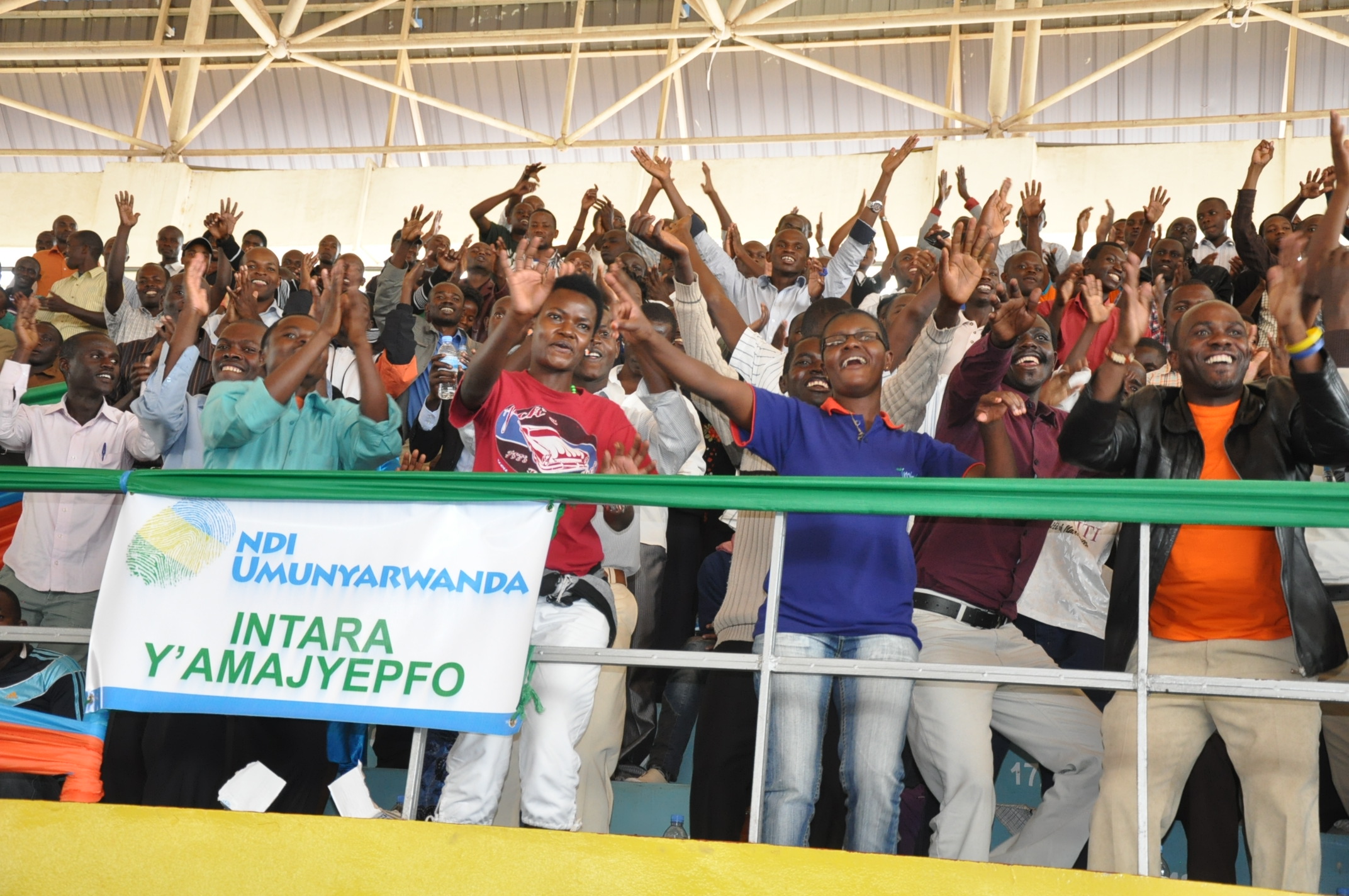
 

Gutabariza Abanyarwanda: Ibaruwa umusore yandikiye Paul Kagame ku bijyanye na gahunda ya “Ndi umunyarwanda”

Image

“N’ubwo tubyina iyo gahunda, njye numva umutima unkomanga…sinabyihererana”

Nyakubahwa Umukuru w’Igihugu cy’ U RWANDA,

Impamvu: Gutabariza abanyarwanda.

Nyakubahwa,

Mbanje kubasuhuza mugire amahoro atagabanyije amwe ava ku Mana isumba byose Umuremyi w’isi n’ijuru kandi we nyiri biremwa byose.

Nyakubahwa, mbandikiye iyi baruwa ifunguye nyuma yo gukurikira neza ibiganiro bitandukanye bivuga kuri gahunda nshya ya Leta yiswe NDUMUNYARWANDA ku maradiyo atandukanye hano mu gihugu sinemeranyijwe niyo gahunda nshya. Iyo gahunda ntago nanyuzwe nayo nagato kuko nabonyemo gahunda zisubiza abantu bamwe inyuma mu mitekerereze no mu myitwarire bikaba byazamura umwiryane, ipfunwe no kwishishanya mu muryango mugali Nyarwanda. Nyakubahwa Itegeko nshinga igihugu cyacu kigenderaho ribaha ububasha bwo kuba ari mwe mureberera abanyarwanda twese, mukaba kandi muhagarariye Leta y’Urwanda. Ni muri urwo rwego mbandikiye kugira ngo icyo gikorwa cyatangiwe kandi gihagarariwe na Leta muhagarariye mugihagarike kuko cyibasiye igice kimwe cy’abanyarwanda mushinzwe kuyobora no kureberera ubwisanzure ntayegayezwa bahabwa n’itegekonshinga kuko ari abanyarwanda.

Nyakubahwa bamwe mu bayobozi bari gusobanura iyi gahunda hirya no hino mu bitangazamakuru bashishikariza abahutu bose ko bakwiye gusaba imbabazi abatutsi kubera Genocide ngo yakozwe mu izina ryabo. Nkumusore ukunda  igihugu kandi ukurikirana ibijyanye na politike y’igihugu cyacu, mbona ibi bihabanye nibyo mwakomeje gushishikariza abanyarwanda mu magambo mbwirwaruhame (Discours) mutahwemye kutugezaho mu bihe byashize ubwo kenshi mwadukanguriraga kwibona nk’abanyarwanda kuruta uko twakwibona aho twavuye (Imiryango, amoko, uturere ….), urubyiruko mbona twarakuranye koko uwo muco mwiza wo kumva ko tureshya ariko ibi byo byantunguye, rero nimba koko imvugo yanyu ariyo ngiro iyi gahunda mukwiye kuyihagarika kuko izazamura umwuka mubi mubo muyobora bikaba bishobora kuzateza ibindi bibazo nk’ipfunwe, agahinda no kwicuza ibyiza bamwe batanzeho umusanzu, igikomeye kurushaho amoko yari asigaye mubantu bakuru none n’abana bagiye kubyinjizwamo kandi uko babyinjijwemo si byiza kuko byerekana ko ubwoko bumwe ari bubi ubundi ari bwiza. Muri make impamvu nenga iyi gahunda ni uko yirengagiza nkana izi ngingo 6 zikurikira:

  1. Hari abahutu beza kandi benshi cyane badakwiye kwikorezwa uwo musaraba wo gukora Genocide, nabaha ingero: Nyuma ya Genocide hari Abana bigaga I Nyange b’abahutu (bashyizwe no mu ntwali z’igihugu kuko banze kwitandukanya na bagenzi babo b’Abatutsi) imiryango yabo kuri ubu nkeka ko yari ifite ishema ko yabyariye Igihugu intwali, none ko bagiye gusigwa ubusembwa bw’icyaha batakoze, batanatumye umuntu kugikora mu izina ryabo? Hari abahutu bakijije abatutsi muri Genocide bahigwaga, hari n’abandi bahutu bapfanye n’abatutsi muri genocide kuko banze kubatanga ngo bicwe urugero ruzwi cyane n’urw’umupadiri w’I Mukarange (Kayonza), Hari abahutu b’abanyeporitike barwanyije gahunda  za Leta yacyuye igihe zacagamo abanyarwanda ibice babarwanyiriza mu gihugu bashinga amashyaka bacishamo ibitekerezo byabo birwanya iyo politike mbi ingero hano ni nyinshi sinazirondora. Mwibuke ko hari n’ababiguye mo bashyinguye ku I Rebero imiryango yabo n’amashyaka yabo nkeka  bari bafite ishema ry’ibyo barwaniye none imiryango yabo nayo isabe imbabazi?, urugero rwanyuma natanga ni urw’abahutu bafashe iyambere nabo bakajya ku rugamba bagafatanya n’abandi bagahagarika Genocide. Mu by’ukuli nabo ibyo byagakwiye kubatera ishema, Nyakubahwa mumbabarire hano ntarugero mbaha kuko nziko mubazi kundusha kuko mwari mu ishyaka rimwe icyo gihe. Abo ni bamwe mu bahutu bafatwa nk’ ibyitegererezo byiza k’Urubyiruko rw’U Rwanda kuko bafashe imyanzuro ikwiye mu gihe byari bikomeye. Abatabarutse Imana ibahe iruhuko ridashira kandi nemera ko barwaniye ukuli, arikose abakiriho bahumeka babarizwa mu byiciro navuze cyangwa imiryango yaba Nyakwigendera nabo bazagende basabe imbabazi kandi benshi baranabihombeyemo, bakicirwa imiryango…? Nyakubahwa icyaha ni gatozi nta bwoko bwabazwa ibyo abantu bandi bakoze ngo mu izina ryabo kuko ubwoko bwose ntibwaba bubi cyangwa bwiza.
  1. Abatutsi bose siko bahizwe muri genocide, amateka avuga neza ko abatutsi bose atariko bahizwe, abari barayobotse Muvoma ntakibazo bagize ingero zirahari kuko nk’Interahamwe uwari uzikuriye mu rwego rw’Igihugu yari umututsi. Kubw’ibyo mbona umuryango w’umututsi wakoze genocide nawo udakwiye gusabwa imbabazi kuko wagize uruhare mu mahano yagwiririye igihugu cyacu. Kandi mubyukuli  abo na bo bafite abavandimwe bandi bazize Genocide bagomba gusabwaho imbabazi, ku rundi ruhande bakagira abahitanywe na bamwe mu muryango wabo; ubwo bo bazabarwa he?
  1. Generalisation niyo yoretse imbaga mu Rwanda: Imbarutso ya Genocide yabaye  mu ijoro ryo kuya 06/04/1994 ubwo indege yaritwaye uwari Umukuru w’Igihugu Nyakubahwa Juvenal Habyarimana yahanurwaga n’igisasu, Abatutsi nabitwaga ibyitso by’inyenzi batangira kwicwa bazira ko ngo bahanuye indege y’umubyeyi, umututsi wo mucyaro hasi ku mudugudu utazi gusoma no kwandika yewe utazi no kurashisha itopito yashinjwe iryo hanurwa ry’indege kandi yahanuriwe I Kigali hakoreshejwe misire. None muri iyi gahunda Umuhutu warwanye muri FPR, Uwahishe abatutsi bakarokoka ndetse n’uwarwanije ubutegetsi bwahozeho nabo bashyizwe mu gatebo kamwe ngo bihanire ubwoko bwabo Hutu bwakoze genocide? Iki se kibaye icyaha cy’inkomoko umuhutu wese azihana? NDUMUNYARWANDA se ibaye Batisimu abahutu bose bakwiye gucamo? Mbona harimo akarengane kuko leta yacyuye igihe abataragiye muri POWER yabise abagambanyi babuzwa amahoro, bicirwa imiryango, birukanwa kukazi abandi barapfa none no kuri ubu bagiye kwambikwa ubusembwa bwa Genocide batahwemye kurwanya? Bahungire hehe handi ko bari bageze igihe cyo gusoroma ibyo babibye? Numva gushyira mu gatebo kamwe (Generalisation) ari politike ishaje kandi mbi yatumazeho abantu kuyikoresha ubu ni ikosa rikomeye kuko ubwo amateka ntacyo yaba yaratwigishije! Nta bwoko bwaba bubi bwose.
  1. Uburemere bw’icyaha cya Genocide: Genocide mu mategeko mpuzamahanga ni icyaha gikomeye cyane kandi kidasaza kubw’ibyo uruhare rwose wayigiramo ntuba ukiri inyangamugayo amategeko agukuraho ubudahangarwa bwose. Numva mu rwego rwo guha icyubahiro gikwiye abaguye muri Genocide ari ukubaha ubutabera nyabwo mugahana ababigizemo uruhare bose kandi mwibuka ko imbabazi zitavanaho ibihano, nkaba numva uruhare rwose umuntu yakwiyemerera yakoze harebwa mu mategeko agahanwa. Ibiri gukorwa byashyirwa mu rwego rwo gufatanya icyaha n’abakoze amarorerwa, mbibutse ko hari abafunzwe kuko batatabaye abari mu kaga ubwo abandi nabo mbona abari kuzisaba aribyo nabo bakoze.
  1. Ninde uhagarariye Ubwoko ubwo aribwo bwose?: Nyakubahwa ubwo mperuka mu ngando (2011) nigishijwe ko amoko mu Rwanda atakibaho, ariko ikigaragara nanjye nemera mu kanwa byavuyemo, Munyandiko birahishwa, mu ndangamuntu ni amateka ariko mu mitima ntibyigeze bivamo. None Nyakubahwa muzemera ko hagira uhagararira ubwoko hutu, twa cyangwa Tutsi Kugirango asabwe cyangwa asabe imbabazi? Numva bitaba ari byo kuko uwo muryango cyangwa iyo groupe yaba ishingiye ku bwoko kandi Itegeko Nshinga ribuza umutwe uwo ariwo wose wavuka ushingiye ku bwoko,…. Byatandukanya abanyarwanda. Ubwo rero mbona iyi gahunda itararebye abazasaba n’abazasabwa imbabazi. Nkuko nabivuze igiye kugarura amoko mu bana batari bayazi kandi aze mu buryo bubi bwerekana ko ubwoko bumwe ari bubi ubundi bukaba bwiza.
  1. Imbabazi zigira umumaro nI izivuye ku mutima sizivuye mu gihiriri: Nyakubahwa, ubundi muri rusange imbabazi zisabwa umuntu wakorewe icyaha zigasabwa n’uwagikoze kuko amaze kumenya kandi yemera neza ko ibyo yakoze ari amakosa cyangwa ari icyaha akaba kandi yiteguye kutazongera gusubira mu ikosa ibyo abikora nta gahato ahubwo ari umutima nama we ubimwemeza. Uzitanga ntategetswe kuzitanga kungufu ahubwo areba koko uzisabye niba azikwiye kandi atazongera kumuhemukira yarangiza akazimuha kandi nyuma ntabimucyururire nawe ntagahato ashyirwaho mukuzitanga. None umuntu uzasabira undi imbabazi dore ko atanamutumye ni iki cyemeza ko uwo wabikoze atazongera agakora nkabyo dore ko atariwe uzisabiye? Uzitanze se n’iyihe garanti yagira imwemeza ko bitazongera? Dore ko dukwiye kwibuka ko uwakoze icyaha siwe uri gusaba imbabazi…  Nyakubahwa ndabona atariko bizagenda ahubwo birasa n’agahato, kuko umwanya munini utwarwa nuwo kubyigishwa (Gusaba imbabazi) ubundi bamwe bakemera kubera umwiherero tutamenya ibyawubereyemo. Nkabona rero nta mumaro izo mbabazi zagira igihe zitari gutangwa kubushake, uwakoze ikosa yishakire uwo yahemukiye amusabe imbabazi atabibwirijwe. Anaduhe garantie ko atazongera kudusiga icyo cyasha nk’abanyarwanda.


Nyakubahwa nsoza iyi baruwa natanga umusanzu wanjye mbagira inama zikurikira:

  1. Nyakubahwa Itegekonshinga ribaha uburenganzira bwo guhagararira abanyarwanda twese, amarorerwa yagwiririye u Rwanda ni ibyago bikomeye kandi icyasha cyagiye k’umunyarwanda wese, rero mbona ko gahunda ya NDUMUNYARWANDA ikwiye kuza twese abanyarwanda hadaciwemo ibice tugakubitwa icyuhagiriro ndetse tukemera ko habaye Genocide yaduhesheje isura mbi mu ruhando mpuzamahanga iryo pfunnwe rikaba iryacu twese aho kuba irya bariya cyangwa bano dore ko buri gice nyarwanda ukijoye utakiburaho inenge, ubundi Nyakubahwa mububasha muhabwa n’itegeko bwo guhagararira u Rwanda n’abanyarwanda mukaduhagararira abakorewe n’abakoze Genocide izo mbabazi mukazisaba mu izina ry’abanyarwanda muhagarariye batavanguye kuko nyine TURABANYARWANDA ntituri ABAHUTU, ABATUTSI cg ABATWA ubundi mukizeza amahanga ko nta Genocide izongera kubaho dore ko itanashoboka hatabayeho inkunga ya Leta.

2. Nyakubahwa ikindi mbona ko cyafasha, numva iki aricyo gihe hajyaho campain ku Murenge cyangwa ku Kagali yo kurata ubutwari bw’ababashije guhisha abandi bahigwaga muri uwo murenge cyangwa Akagali abahizwe bagatanga ubuhamya uko bahishwe ababahishe nabo bakavuga uko biyemeje gukora ibitari byoroshye, bakambikwa imidari yakwitwa izina kurwego rubishinzwe maze abana mu midugudu bagakura babona umuntu wakoze ibyo abandi batinye gukora, akabagira inama zo kwanga ikibi cyose kabone niyo baba ari ababyeyi be bagikora. Mbona byaba urugero rwiza aho kubereka ko hari ubwoko bwavukanye icyaha bukamara abantu. Ubundi kurwego rw’igihugu hakambikwa Imidende abanyapolitike bikuye umugati mu kanwa cyera bagatinyuka bakavuga ibitaragendaga muri icyo gihe bigatuma bangwa na benewabo, bagakurwa ku kazi, bagafungwa, bakitwa ibyitso… ndetse n’amashyaka yose yarwanije ibitekerezo bya cyera byavanguraga abantu nayo ntabure kuri uwo Mudende tukayamenya, tukayaratira abandi. Bityo Abasore n’inkumi bashaka kuba abanyaporitiki bakabona abo bagisha inama zo kwanga ikibi kabone niyo cyaba gikorwa n’abo basangiye ishyaka. Bityo abasore n’inkumi tugakurana imihigo nk’iyizo ntashyikirwa zakoze ibitoroshye. Abo bakazaba abantu ndeberwaho bityo iyi gahunda ya NDUMUNYARWANDA isige umurage ku bana bato wo guharanira kwanga ikibi niyo byaba bigukura amata kumunwa cyangwa niyo byaba bikorwa na mwene wanyu ukabyanga wivuye inyuma. Bitabaye ibyo nkukombona iyi gahunda izasiga NDUMUHUTU, NDUMUTUTSI, NDUMUTWA aho gusiga NDUMUNYARWANDA NYAWE.

Amashyaka yarwanije ingoma mbi, abanyapolitike barwanije ibitekerezo bibi bya cyera byavanguraga abanyarwanda, abantu batabaye abandi bakabahisha cg bakajya muri opposition kurwanya ikibi ….. cyo nimuze abo bantu mvuze tubarinde kwicuza ibyiza bakoze ahubwo baterwe ishema n’uko batabaye abari bababaye bakabaha ubuzima.


Muhorane amahoro n’U Rwanda ruzira amacakubiri.

Umusore utuye mu ntara y’amajyepfo

Rwanda.

Niba ushaka kugira icyo usubiza uyu musore , wanyura ku buyobozi bwa Blog cyangwa ukatwandikira kuri addresse ikurikira: busenock@yahoo.fr

U.N. to Send Peacekeepers to Central African Republic

UNITED NATIONS — The United Nations Security Council on Thursday voted unanimously to send 12,000 peacekeepers authorized to do whatever necessary to protect civilians in the Central African Republic, where a vicious sectarian conflict has effectively partitioned the country into Christian and Muslim swaths and left a trail of gruesome killings.

France, which wrote the resolution, has said it will keep its 2,000-member force in the Central African Republic, a former French colony, until the new peacekeeping force can be deployed in full. How long that will take remains unclear, as does the question of how capable the troops will be of protecting civilians without abusing them.

Peacekeepers from neighboring Chad pulled outfrom the Central African Republic this month after some of them were accused of shooting civilians in a busy market in the capital, Bangui. Many of the roughly 5,000 African Union peacekeeping troops in the country now could be incorporated into the United Nations peacekeeping mission.

The resolution calls for 10,000 soldiers and nearly 2,000 police officers. Rights groups that have been pressing the United Nations to take a more assertive role in the crisis welcomed its passage.

“Precious time wasted but #CARcrisis resolution creates strong UN mission to protect civilians, monitor human rights, help rule of law,” wrote Philippe Bolopion, the United Nations director at Human Rights Watch, on Twitter.

Rare for a United Nations mission, due to start in September, the peacekeepers are additionally authorized to support law and order in the country, at a time when its police and court system have basically collapsed.

They are also supposed to monitor human rights abuses and help the national authorities arrest war criminals. The Central African Republic is a signatory to the treaty that created the International Criminal Court, which has already opened an investigation into atrocities in the course of the conflict. “Justice is necessary to the process. Impunity led us to where we are now,” its foreign minister, Toussaint Kongo-Doudou, told reporters after the Security Council vote.

Dr Christophe Mpozayo arazira gutanga ibitekerezo bye!

Image

Nk’uko tubikesha ikinyamakuru umuryango.rw , umugabo Christophe Mpozayo afungiye kuri polisi i Remera azira gutanga ibitekerezo bye. Polisi yo imurega ko akwirakwiza ibihuha kandi ngo akaba agamije kwangisha abaturage ubutegetsi buriho. Koko iyo ubutegetsi bugeze mu marembera burenganya  kandi bukikanga buri wese. Ese twakora iki ngo twumvishe FPR n’agatsiko kayiyobora ko gutanga ibitekerezo bitandukanye n’ibyabo ari umusanzu wo guhindura ibitagenda neza?

Biragaragara ko aka gatsiko gafite byinshi kishinja kandi ni mu gihe. Kuva tariki ya 1/10/1990 amaraso y’inzirakarengane y’abanyabyumba n’abanyaruhengeri ndetse n’ayamenetse mu gihugu hose kugeza n’uyu munsi abarwa kuri ko. Igitangaje ariko ngo ni uko Mpozayo yari afite na gahunda yo gukura umukuru w’igihugu ku butegetsi!? Iki se ni icyaha? Ubundi se ntazabuvaho?

Itegeko nshinga rya repubulika y’u Rwanda n’ubwo dufite byinshi turinenga ariko risobanura ko nta mukuru w’igihugu ugomba kurenza manda ebyiri. Kagame arazirangije. Bityo rero gutegura kumusimbura nta cyaha kibirimo. Mu rwego rwo gutekinika dossier, polisi irashinja Dr Mpozayo gutunga grenade! Umuntu nka Mpozayo nta grenade akeneye yewe n’ubwo yaba ashaka guhirika leta ubwonko bwe burusha imbaraga grenade igihumbi. ahubwo polisi nibanze ibare ama grenades ari mu bubiko bw’intwaro maze itubwire ko iyo grenade yabonetse kwa Mpozayo itari iya Leta yazanywe n’abaje kumusaka!  (Administration)

Umugabo witwa Mpozayo Christophe afungiye kuri sitasiyo ya polisi I Remera mu mujyi wa Kigali, akekwaho gukwirakwiza ibihuha yifashishije imirongo nkoranyambaga ya interineti agamije kwangisha abaturage Leta iriho.

Mpozayo yaratawe muri yombi kuri uyu wa gatatu nyuma y’uko polisi imenye amakuru ko yaba ari gukwirakwiza ibihuha mu baturage ngo bivumbure kuri leta iriho.

Si ubwa mbere kandi Mpozayo afunzwe, kuko no mu Ugushyingo umwaka ushize yafashwe ashinjwa gutunga intwaro mu buryo butemewe n’amategeko no gusebanya.

Mpozayo yakoraga mu ihuriro rishyiraho amategeko muri Afurika y’iburasirazuba EALA (East African Legislative Assembly). Akaba yarakoreraga Arusha muri Tanzaniya.

Newtimes dukesha iyi nkuru ikaba itangaza ko uyu mugabo yakoraga ibi bikorwa byo gukwirakwiza ibihuha ahamagarira abaturage kwangaLeta iriho yifashishije imirongo nkoranyambaga ya interineti (social media ).

Umuvugizi wa polisi y’u Rwanda, ACP Damas Gatare na we yemeje ifatwa rya Mpozayo. Yagize ati :”Twongeye gufata Dr Christophe Mpozayo kubera kugerageza kwangisha abaturage ubuyobozi abinyujije mu nyandiko mu guhungabanya ubusugire bw’igihugu.”

Gatare yavuze ko Mpozayo afungiye kuri sitasiyo ya polisi I Remera, mu gihe iperereza rigikomeje.

Itegeko rivuga ko”umuntu wese ukwirakwiza ibihuha, wangisha abaturage ubuyobozi, kwanganisha abaturage ubwabo cyangwa uhamagarira abaturage guteza akaduruvayo mu gihugu abinyujije mu mvugo , inyandiko, mu mashusho, mu byapa n’ibindi mu guhungabanya umutekano w’u Rwanda, ahanishwa igihano cy’igifungo kuva ku myaka 10 kugera kuri 15.

Iperereza rikaba rigikomeje ngo bamenye niba ntaho ahuriye n’udutsiko tw’iterabwoba cyangwa abahakana Jenoside.

As Rwanda marks genocide, no justice for DR Congo massacres

Rwandan youths carry a flame of remembrance to a ceremony in the town of Kirehe, where villagers from surrounding areas gathered to hear genocide recollections, the symbolic fire is travelling the country as the nation prepares to mark 20 years since the horrific killings that claimed more than 1 million lives. Twenty years after the genocide, the massacres of Hutu civilians who fled across the border into the DR Congo remain a taboo subject in Kigali. PHOTO | FILE

Kigali. Twenty years after the genocide of Rwanda’s Tutsi minority, the massacres of Hutu civilians who fled across the border into the DR Congo remain a taboo subject in Kigali.

In DR Congo’s restive east, however, the memories are painfully acute, of families rounded up and murdered, bodies dumped in mass graves, pregnant women disembowelled.

The Tutsi-led Rwandan government sees as tantamount to negationism any suggestion that the victims of genocide were themselves responsible for mass ethnic killings in 1996-97. Kinshasa has never truly investigated the subject.

But Roberto Garreton of Chile, the first to investigate the slaughter on behalf of the United Nations in April 1997, says he concluded fairly quickly that around 150,000 people had been slain on Congolese soil.

The killings are blamed on forces of the post-genocide government in Kigali who backed a rebel movement led by Laurent-Desire Kabila, the late father of current DR Congo President Joseph Kabila.

“There were many clues showing that the goal was to exterminate those who committed the genocide” against the Tutsis, Garreton told AFP by telephone from Santiago.

But, he added: “It wasn’t possible to say with certainty that there was a genocide,” that is, the wilful extermination of an ethnic group.

Here in Rutshuru in the country’s east, a Congolese Hutu told AFP: “They killed many! They set up barricades and if you had a Hutu name they took you away (and) they killed you!”

A woman who gave her name only as Chiza said: “I saw a pregnant woman whose stomach had been cut open, and the baby was beside her, still attached by the umbilical cord. The woman’s belly was full of flies.”

Located some 50 kilometres (30 miles) from the regional mining hub Goma, Rutshuru and its surrounding area was a major target of killings in 1996.

That was when Laurent-Desire Kabila kicked off his rebellion in North and South Kivu provinces in what was then Zaire.

Kabila’s rebel ADFL army, which would succeed in overthrowing the dictator Mobutu Sese Seko in 1997, was backed by Rwandan troops who poured across the border, where hundreds of thousands of Rwandan Hutu refugees had fled in 1994.

Hiding among them were genocide perpetrators, the so-called Interahamwe militiamen, members of the former Rwandan military and other civilians who took an active part in mass killings. (AFP)

At the same time the Rwandan Patriotic Front, the minority Tutsi force that halted the genocide in Rwanda and took power in Kigali, mounted an operation to halt cross-border incursions into Rwanda by the Interahamwe.

When Kabila’s rebellion took off, the Rwandan soldiers who flooded into Zaire did not simply track down the Interahamwe; according to many residents, they targeted Rwandan as well as Congolese Hutus indiscriminately, including civilians — men, women, old and young alike.

The soldiers from Kigali are accused of having staged phoney reconciliation meetings, only to rob people and then kill them or recruit them as cannon fodder to fight for Kabila.

“A pastor told his flock that if they stayed together in a house Rwandan soldiers would do nothing. But they burned down the house,” recalls one resident.

– No prosecutions –

Later, around 1,500 families at a camp for displaced Hutus in Nyongera, just north of Rutshuru “were all killed,” said Chiza, who belongs to a women’s association.

“They killed educated people. They killed the youth of Rutshuru!”

A Congolese Hutu civil servant recalled how, in late 1996, several dozen people were rounded up one evening at a local official’s house.

“They took groups of five or 10 people, tied them up, brought them here, and killed them with a hoe.”

The man, who requested anonymity, pointed to a spot where the executions allegedly took place and where the bodies were thrown — now covered with weeds.

The bones were excavated in 2005.

Another said he escaped a “planned massacre” at the end of 1996 in Rwanguba, east of Rutshuru.

“One morning, when we came back, we found those who didn’t escape: they were bound, and their brains had been hacked out with a hatchet,” he said.

Like others, he said attacks sometimes targeted non-Hutus.

Hutus were allegedly hunted down elsewhere as Kabila’s AFDL fighters advanced on Kinshasa, some 1,000 kilometres (600 miles) to the west.

Hundreds of thousands of Hutus fled ever deeper into the DR Congo for weeks, and mass graves can be found along their route.

The UN probe, which faced continual obstruction from Kinshasa, took years before finally concluding in 2010 that “the apparent systematic and widespread attacks” perpetrated by the AFDL and Rwandan soldiers “reveal a number of inculpatory elements that, if proven before a competent court, could be characterised as crimes of genocide.”

But no prosecutions resulted from the probe, and nearly 20 years later, those responsible for the crimes have not been brought to justice.

Source: http://www.thecitizen.co.tz/News/As-Rwanda-marks-genocide-/-/1840360/2271486/-/item/2/-/589ot5z/-/index.html

Prix Victoire Ingabire Umuhoza pour la Paix et la Démocratie- édition 2014

Remise du Prix

Pour la troisième fois, le RifDP  vient de décerner publiquement le Prix Victoire Ingabire Umuhoza  pour la Démocratie et la Paix  à l’occasion de la journée internationale de la Femme.

Ce samedi 8 mars 2014, au cours d’une soirée haute en couleurs et rehaussée de la présence de plusieurs personnalités importantes de la communauté rwandaise de Belgique, des pays limitrophes et d’autres pays aussi lointains que le Canada ou l’Espagne, le Réseau international des Femmes pour la Démocratie et la Paix a décerné, pour la troisième fois consécutive, le Prix Victoire Ingabire Umuhoza pour la Démocratie et la Paix.

Pour rappel, ce Prix, attribué chaque année à l’occasion de la Journée internationale de la Femme, récompense toute personnalité, physique ou morale, qui s’est distinguée dans la promotion de la démocratie, de la paix, du leadership féminin et dans la défense des droits élémentaires, spécialement dans la Région des Grands Lacs africains.

Cette année, le Prix a été attribué à :

1. Ms. Ann Garrison

Ann GarrisonLe Prix lui a été attribué pour son combat pour la promotion de la démocratie, la liberté d’expression et les droits de l’Homme. Ms. Ann Garrison est un journaliste indépendant, elle collabore avec diverses radios et journaux aux USA. Elle y dénonce notamment le pillage des ressources naturelles des pays en guerre en Afrique et les dictatures qui s’installent à la fin de ces guerres.

Elle s’est particulièrement investie de la cause de Mme Victoire Ingabire Umuhoza en couvrant largement son procès et en parlant de son incarcération.

Quelques articles de l’auteur sur Mme Ingabire :

“I am honored and humbled as I will ever be in my life” – Ann Garrison.

Pour plus d’informations, visitez son site internet: www.anngarrison.com

2. Monsieur Pere Sampol i Mas

pere-sampolMonsieur Pere Sampol i Mas, ayant œuvré pour la résolution pacifique des conflits, la promotion de la démocratie, la liberté d’expression, les droits de l’homme et la recherche de la paix en Afrique des Grands lacs. Il est ancien Vice-Président des Iles Baléares, sénateur et politicien espagnol.
(A lire: Allocution de Mr Pere Sampol après l’attribution du Prix)

Pere Sampol i Mas est né à Mallorca en 1951. Il a été élu membre du Parlement des Iles Baléares en 1991, il a occupé le poste de porte-parole de la commission parlementaire de gauche – nationaliste MHP deux ans plus tard. En 1999, il a été élu vice-président et ministre de l’Economie, du Commerce et de l’Industrie du gouvernement des îles Baléares.

En 2007 il a été choisi par le Parlement des îles Baléares au nom du Bloc “Mallorca – PSM-Vert”, comme sénateur au niveau fédéral, un poste qu’il a occupé jusqu’en 2011. Mr Pere Sampol a été la première haute autorité espagnole à se préoccuper du problème de violation des Droit de l’Homme en Afrique Centrale. Mr Pere Sampol à travers les institutions dans lesquels il a exercé des mandats publics, a collaboré avec Juan Carrero et la Fundació S’Olivar dans des actions en faveur de la vérité et de la justice dans la région des Grands Lacs, entre autres la grève de la faim initiée par Juan Carrero et l’interpellation de Mme Emma Bonino lors de la destruction des camps de réfugiés en RDC en 1996.

Il a en outre participé à plusieurs sessions consacrées au Dialogue interRwandais et s’est rendu en Afrique Centrale pour plaider en faveur d’un Dialogue InterRwandais. Il a aussi interpelé à maintes reprises le gouvernement espagnol afin qu’il se prononce contre la violation des droits de l’Homme en Afrique Centrale.

À qui est décerné ce prix ?

Ce prix est décerné à toute personne physique ou morale, s’étant distinguée par son travail, de manière pacifique, dans le domaine de la promotion de la démocratie, de la paix, de la liberté d’expression, du respect des droits de la personne et qui a contribué de manière significative à instaurer le rapprochement des peuples par le dialogue, le respect de la personne humaine, de la justice sociale dans le but d’améliorer la qualité de vie de la population de la région des grands lacs africains.

Historique

Ce prix a été créé par le Réseau International des Femmes pour la Démocratie et la Paix le 12 mars 2011, en hommage à Madame Victoire Ingabire Umuhoza. Ce prix incarne le courage, le leadership de Victoire Ingabire Umuhoza dans sa démarche pacifique et démocratique de résolution de conflits.

Femme d’un courage exceptionnel, impliquée dans un processus de résolution du conflit qui afflige le peuple rwandais depuis 1994, Victoire Ingabire Umuhoza se démarque par son leadership, son esprit d’abnégation qui dépasse les intérêts de son noyau familial et de son appartenance ethnique et régionale. Elle a pris sur ses épaules le destin de tout un peuple et de toute une nation en décidant d’affronter l’oppression qui règne dans son pays d’origine, dans l’espoir d’offrir au peuple rwandais une alternative de gouvernance démocratique et de paix durable.

Elle est emprisonnée au Rwanda depuis le 14 octobre 2010 pour avoir osé exprimer des opinions différentes de celles du pouvoir en place.

Source:http://www.rifdp-iwndp.org/prix-victoire-ingabire-umuhoza-pour-la-democratie-et-la-paix-edition-2014/


Americans, stop lying! You are as criminal as Kagame since he is your darling!

I have preferred to write the title  as above, and I hope I am not wrong. Read the story below and you will understand why! This means Americans are responsible for all those people killed by Kagame and other war crimes committed by the darling tyrant! Admin

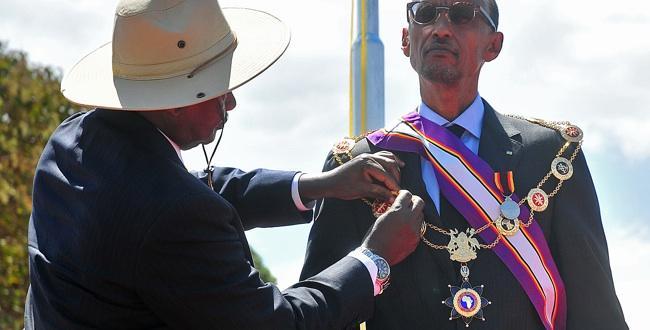
museveni_gives_medal_to_kagame_0

The thing to know about Rwandan President Paul Kagame is not just that he is a dictator responsible for human rights abuses but that, despite this, he has a great many friends.

Kagame, credited with commanding the rebel force that put an end to Rwanda’s genocide 20 years ago, has made himself a global celebrity. Bill Clinton hails him as among “the greatest leaders of our time.” Tony Blair calls him a “visionary.” Bill Gates works closely with him. Kagame has spoken at Harvard and received honorary doctorates from a number of universities in the United States and Europe. U.N. Secretary General Ban Ki-moon is also a fan, telling Kagame in May, “I hope many African nations will emulate what Rwanda is doing. I highly commend you.” The praise inside Rwanda, in the press and public forums, is even more effusive. When I ask Rwandan citizens why there is no criticism of their president, I am told there is nothing to criticize. The political “opposition” consists of parties that refuse to speak out against Kagame even during elections, and there is talk of soon scrapping the constitution’s two-term limit for presidents so he can run in 2017 for a third time.

After all, for Rwandans, it can be lethal to be Kagame’s enemy. When Patrick Karegeya—Kagame’s former spy chief and friend who became one of his fiercest critics—was found dead in a South African hotel room in January, the Rwandan foreign minister, asked for the government’s response, tweeted, “This man was a self-declared enemy of my Gov & my country, U expect pity?” The Rwandan defense minister added, “When you choose to live like a dog, you die like a dog.” And Kagame himself remarked in a speech, “Shouldn’t we have done it?”

Not only was the president justifying a murder—he was warning his critics that betraying Rwanda brings consequences. In fact, in Kagame’s 20 years as the de facto leader of the country, more than a dozen prominent dissidents have been assassinated, imprisoned, exiled and tortured. According to Human Rights Watch and Amnesty International, in recent years perhaps half a dozen well known investigators, journalists and opposition politicians have also been found dead in mysterious circumstances, including, six months ago, a Rwandan Transparency International worker who had been investigating police corruption.

Foreign governments, notably the United States, Britain, Germany and the Netherlands, are nonetheless lining up at Kagame’s door with praise, and money, desperate for a foreign aid success story after 50 barren years in Africa. Total publicly reported foreign aid to Kagame’s government stands at some $1 billion annually, of which the U.S. government provides about a fifth. It’s not surprising that these Western countries, as well as international institutions like the World Bank, believe Rwanda is one of their best hopes in the region: Kagame’s government says it lifted 1 million people out of poverty between 2008 and 2012, and that the country’s economy grew at a remarkable 8 percent clip during the global economic crisis—successes that seem even more remarkable in a country still recovering from the 1994 genocide, which killed nearly a million people and brought the economy to a standstill.

The catch: Kagame administers the Rwandan government’s foreign-funded aid programs with a strict autocratic hand. Political critics have been imprisoned for speaking out when government programs cause harm. In 2011, for instance, a pastor criticized a nationwide housing project to eliminate thatched roofs because it left thousands of people homeless, and in return he was sentenced to 18 months in prison. Foreign-funded media and human rights programs that once reported on Kagame’s excesses, repression or policy failings—including programs run by Transparency International, Lawyers without Borders and the Rwandan League for the Promotion and Defense of Human Rights —have shut down or become toothless under government pressure. The Rwandan people know that to survive in such an environment, and to benefit from any government- or foreign-funded aid, they must be loyal to their president. Few other countries can mimic the results—95 percent participation rates in everything from elections to government health programs. Foreign donors echo the faux optimism, celebrating these programs’ efficiency and praising Kagame as a progressive leader; he is acclaimed, for instance, for promoting gender equality in the Rwandan parliament, where women outnumber men—even though the legislature has little power.

The United States, without doubt, is Kagame’s staunchest ally and oldest supporter, eager to maintain Rwanda as a strategic partner with a powerful army in mineral-rich eastern Africa. In the 1990s, Kagame studied at the U.S. Army Command and General Staff College in Fort Leavenworth, Kans., before he returned to Rwanda and seized power in 1994. (More recently, his son Ivan trained at West Point.) Although the United States typically provides only about half a million dollars in bilateral military aid to Rwanda, high-ranking current and former U.S. officials—including not only Bill Clinton but also national security adviser Susan Rice and Jendayi Frazer, a former top Africa diplomat—have a history of backing Kagame, despite evidence of abuses by his forces.

U.N. documentation implicates senior Rwandan military staff who report directly to Kagame in the large-scale massacre of perhaps tens of thousands of civilians, including unarmed women and children, in 1996 and 1998—acts that the United Nations has said are war crimes and possibly acts of genocide. (Kagame has said in response that his troops were difficult to control just after the genocide.) At the time of the massacres, Rice, then the assistant secretary of state for African affairs, reportedly said in a private conversation, “The only thing we [the United States] have to do is look the other way.” Later, as U.S. ambassador to the United Nations, she reportedly tried to block the publication of a 2010 U.N. report about the killings. (Rice denies that the United States “supported, encouraged or condoned” Rwanda’s invasion of Congo, during which the massacres occurred.) Washington has also shielded Kagame from the International Criminal Tribunal for Rwanda (ICTR), set up to prosecute killings during the genocide: In 2003, the United States pushed to remove Carla del Ponte, an ICTR prosecutor, after she began to investigate crimes linked to Kagame, which the United States feared would destabilize his government.

U.N. evidence also shows that Rwanda long supported rebel groups in the Democratic Republic of the Congo that are accused of crimes against humanity and mass rape, though Kagame officially denies his military’s involvement. A portion of Rwanda’s support stopped last year after warnings from the United States, which suspended some military aid last year, though Washington is now considering reinstating the funds. The mostly symbolic U.S. aid cut, after months of foot-dragging, helped to restore peace in Congo at least temporarily. But millions of dollars in foreign aid continue to flow to the Rwandan government, and Kagame’s supporters seem reluctant to diminish their praise. Bill Clinton, asked last year about Kagame’s tight grip on the press and political opponents, insisted he did not support it but admitted, “I suppose I do make more allowances for a government that produces as much progress as this one.” Or, as Sen. James Inhofe (R-Okla.), visiting Rwanda in January, put it, “I speak on behalf of many fellow senators back home, and I assure you that [the United States] doesn’t have a better friend than Kagame.”

Read more: http://www.politico.com/magazine/story/2014/02/rwanda-paul-kagame-americas-darling-tyrant-103963.html#ixzz2vkfY6imG

L’Onu s’inquiète de la situation politique au Rwanda

Le gouvernement rwandais mène une campagne de persécution contre les opposants destinée à faire taire toute voix dissidente au sein de la classe politique et des organisations de défense des droits de l’homme, a affirmé lundi un rapporteur spécial de l’Onu.

Paul Kagamé, ancien chef rebelle devenu président, est souvent loué pour avoir accompagné la transformation économique du pays depuis le génocide de 1994 et pour avoir envoyé des forces de maintien de la paix dans plusieurs régions d’Afrique.

Mais ses opposants et les défenseurs des droits de l’homme l’accusent de bafouer les libertés élémentaires, ce que le gouvernement dément.

Selon le rapporteur de l’Onu, Maina Kiai, les hommes politiques qui rejettent ce que Paul Kagamé présente comme un consensus politique sont régulièrement traduits devant les tribunaux, pour avoir minimisé le génocide ou pour sectarisme.

Il n’est pas rare non plus, selon Maina Kiai, que des responsables politiques ayant quitté le parti au pouvoir, le Front patriotique rwandais (FPR), soient accusés de corruption.

“Dans tous ces cas-là, les responsables politiques sont accusés de violence ou d’entretenir des liens avec des groupes violents”, a-t-il affirmé à l’issue d’un séjour de huit jours dans le pays à l’invitation du gouvernement.

“Tout cela envoie des signaux inacceptables qui tendent à faire peur et à montrer que le fait de faire entendre pacifiquement une voix discordante relève de la criminalité”, a ajouté le Kenyan Maina Kiai.

Aucun porte-parole du gouvernement n’a pu être joint dans l’immédiat.

Il y a dix jours, les Etats-Unis avaient fait part de leur inquiétude au sujet de la situation politique dans le pays après l’assassinat, en Afrique du Sud, d’un opposant en exil (voir ID:nL6N0KC18X). Le Rwanda a fermement nié toute implication. (Jenny Clover, Simon Carraud pour le service français, édité par Bertrand Boucey)

Source:http://www.zonebourse.com/