Category Archives: Rwanda

REVOLISIYO : Nta manda ya gatatu kuri Paul Kagame! Agatego abaswa bazakubiramo ikirenge!

Kagame yaba azi aho ingoma ya Cyami itandukanira na Repubulika ?

Habayeho indirimbo yasingizaga Abaparmehutu ikannyega Abalunari, yagira iti : Itora mwisabiye(karampaka), dore niryo ribakozeho , indi Loni izava he !  Koko rero Ishyaka rya Lunari ryari rishyigikiye umwami na gihake niryo ryasabye Loni ko yakoresha amatora ya Kamarampaka mu Rwanda, n’abagore bagahabwa uburenganzira bwo gutora ! Ayo matora niyo nyine yakuyeho gihake, Kalinga n’izayo zose zigenda nk’ifuni iheze. Hari taliki ya 25 Nzeri 1961.

FPR imaze gufata ubutegetsi  byabaye ngombwa ko yandika itegekonshinga rinyuze Paul Kagame 100%. Iryo tegeko ryanditswe mu mwaka w’2003 niryo u Rwanda rugenderaho ubungubu. Ryahaye Kagame nka Perezida wa Repubulika ububasha bwose yifuzaga, riniga amashyaka ya Opozisiyo mu buryo buteye isoni.

Gusa burya koko nta bapfira gushira! Muri FPR harimo n’abantu batari basamariye intsinzi (insinzi!!!) gusa ahubwo bashyiraga mu gaciro bitangaje. Abo nyine nibo bakoze ku buryo itegekonshinga ryandikwa uko Kagame abyifuza ariko bashyiramo n’agatego abaswa bazakubiramo ikirenge ! Abaturage baritoye muri Referendum muri mata 2003 nabo bari bazi ko amaherezo iryo tegekonshinga rizakorera ishyano ba Mutimamukewomurutiba ! Bateze Kagame umutego ukomeye ntiyarabukwa none dore niwo nyine ugiye kumufata mu ijosi ku manywa y’ihangu!

Mu ngingo y’101, bifuje ko Perezida Kagame yakwica agakiza uko abyifuza ariko ntarenze manda ebyiri zihwanye n’imyaka 14 ku butegetsi!

Dore uko iyo ngingo ibivuga:

“Perezida wa Repubulika atorerwa manda y’imyaka irindwi. Ashobora kongera gutorwa inshuro imwe.

 Nta na rimwe umuntu yemererwa gutorerwa manda zirenze ebyiri ku mwanya wa Perezida wa Repubulika”.

téléchargement

                Musa Fazili : Umushukanyi

Manda ya nyuma ya Paul Kagame izarangira mu mwaka w’2017 ! Gusa inyota afite yo kuguma ku butegetsi iramutera igishuko cyo gushaka uko yahindura itegeko nshinga  kuko ahari  mu  mutwe we yibwira ko ubutegetsi bwa Repubulika n’ubutegetsi bwa cyami byose ari kimwe. Afite n’abanyendanini nka ministri Musa Faziri bamushishikariza kurihindura ngo bakomeze bamurireho ! Ariko bizwi ko nahasiga agahanga batazamuherekeza.

Icyo birengagiza ni uko nyine ba bahanga banditse Itegekonshinga bari bamuzi neza ari nabo nyine bakoze uko bashoboye ngo bamufungire amayira kuburyo atazoroherwa no guhindura Itegekonshinga uko yishakiye.  Ng’uko uko bateganyije ingingo yaryo y 193 igira iti:

(1)Ububasha bwo gutangiza ivugurura ry’Itegeko Nshinga bufitwe na Perezida wa Repubulika bimaze kwemezwa n’Inama y’Abaminisitiri; bufitwe kandi na buri Mutwe w’Inteko Ishinga Amategeko binyuze mu itora ku bwiganze bwa bibiri bya gatatu by’amajwi y’abawugize.

Ivugururwa ryemezwa ritowe ku bwiganze bwa bitatu bya kane by’amajwi y’abagize buri mutwe w’inteko.

(2)Ariko iyo iryo vugururwa ryerekeye manda ya Perezida wa Repubulika, ubutegetsi bwa demokarasi ishingiye ku bitekerezo binyuranye cyangwa ku bwoko bw’ubutegetsi buteganyijwe n’iri Tegeko Nshinga cyane cyane ku butegetsi bwa Leta bushingiye kuri Repubulika n’ubusugire bw’Igihugu, rigomba kwemezwa na referendumu, rimaze gutorwa na buri Mutwe w’Inteko Ishinga Amategeko.

(3)Nta mushinga w’ivugururwa ry’iyi ngingo ushobora kwakirwa.

Bisobanuye ko guhindura manda ya Perezida wa Repubulika ari inzira ndende, itangirira muri guverinoma, ikaba yakomereza mu mutwe w’abadepite, babyemeza ikajya muri Sena,  igasozwa no kubaza rubanda niba ibyemera. Nyamara muri Referendumu yo muri mata 2003 rubanda nyine yavuze ko idashaka Perezida wa Repubulika wigira umwami!

Niyongera guhabwa ijambo binyuze muri Referendum rubanda izavuga OYA kuko mpamya ko itazemera ko bayihindura injajwa. Ngo Umugabo nyawe ahindukira mu kiryamo ntahindukira mu ijambo. Nta gushidikanya, amarorerwa Kagame na FPR bakoreye Abanyarwanda muri iyi myaka 20 bamaze ku butegetsi (ikinyoma, iterabwoba, kwikubira ibyiza byose by’igihugu…) azatuma abaturage badatora umushinga wo guhindura manda ya Perezda wa Repubulika hagamijwe gusa guha Paul Kagame amahirwe yo kongera kuba umukuru w’igihugu mu nyungu ze bwite! Abamotsi ba Kagame nibadukana ka kageso kabokamye ka ‘Tora aha” cyangwa bakitabaza bwa bukorikori bwabo bwa nzikoraho bwo gutekinika amajwi, rubanda izaba ifite uburenganzira bwo kuvuga ngo OYA binyuze mu myivumbagatanyo na Revolisiyo.  Aha ho kubyitegura tubigeze kure!

Umwanzuro

Paul Kagame nka Perezida wa Repubulika yarahiriye kuzakurikiza kandi akarinda itegekonshinga! Ntabwo yarahiriye kurisuzugura no kurihindura . Iyo ndahiro iteganywa n’ingingo y’104 y’itegekonshinga  we ubwe yasinye :

«Jyewe, [Paul Kagame], ndahiriye u Rwanda ku mugaragaro:

     ko nzakorana umurava imirimo nshinzwe;

     ko ntazahemukira Repubulika y’u Rwanda;

3°     ko nzakurikiza nkanarinda Itegeko Nshinga n’andi mategeko;

     ko nzaharanira amahoro n’ubusugire bw’Igihugu kandi ko nzashimangira ubumwe bw’Abanyarwanda;

     ko nzubahiriza mbikuye ku mutima inshingano zanjye nta vangura iryo ari ryo ryose;

     ko ntazigera nkoresha ububasha nahawe mu nyungu zanjye bwite;

     ko nzaharanira iyubahirizwa ry’ubwigenge n’uburenganzira bw’ibanze bwa muntu n’ibyagirira akamaro Abanyarwanda bose.

 Nintatira iyi ndahiro nzabihanirwe n’amategeko. Imana ibimfashemo. »

Inama tugira Paul Kagame ni uko yakwirengagiza igishuko kimukirigira mu mutima we kimwe n’abamushuka ngo ahindure itegekonshinga ! Narangize manda ye mu mahoro ubundi yegame, abandi banyarwanda batorerwe kuyobora igihugu cyabo. Yavutse asanga u Rwanda ruriho, azapfa arusige. Yavutse asanga abanyarwanda bamaze ibinyejana byinshi bariho, siwe wababeshagaho. Naho yabicamo miliyoni nyinshi, azapfa abasige kandi bazabaho kuko atari we ubabeshaho. Nareke kwishuka, siwe Mana y ‘u Rwanda. Naramuka afunze umutwe agatangiza ibyo guhindura itegekonshinga, aririwe ntaraye ! Rubanda iri maso…..

Na Perezida Blaise Compaore wa Burkina Faso, mu myaka 27 yose yari amaze ku butegetsi, yibwiraga ko yarangije kwifatira abaturage be bidasubirwaho. None dore abuze byose nk’ingata imennye kandi ntibirangiriye aho! Mu minsi itarambiranye n’Urukiko mpuzamahanga rukorera La Haye ( ICC ) ruraba rumutumyeho ngo Mzee ngwino hano hari utubazo duke ugomba gusobanura turimo n’urupfu rwa Thomas Sankara, hanyuma urahita witahira ! Mbese nka kurya Inkotanyi ziryoshyaryoshya zikanasekera uwo zenda gukubita agafuni!

Amahirwe menshi kuri Paul Kagame, gusa yari akwiye kwirinda ko imvugo ya kinyarwanda igira iti “Amatwi arimo urupfu ntiyumva” yamwuzurizwaho kandi yaraburiwe.

Padiri Thomas Nahimana

Umuyobozi w’Ishema Party

Rajab Kakyama responds to Andrew Mwenda

European walls to most Africans have eyes, ears and brains too. I am not suggesting that Mwenda was attended to with empty seats but that the atmosphere is quite unique from the usual African setting and one is apt to feel the presence of “sophistication” and “intellectualism.” It’s unfortunate that I am passing judgment on a person I hardly know. But when one listens to Andrew, the first time one is drawn to two aspects, 1) the sharpness and 2) the loudness in his voice. If one tends to easily come up to conclusions, then Andrew passes for a “wit thinker.” However, if you took the time and analyzed his statements, half of the time they fall short of this description.

In other words, Andrew tends to think with his “tongue” rather than the necessary brain muscle.
If religion does not need “preconditions” to germinate, why doesn’t he throw some seeds of Islam into the Vatican? Why doesn’t he throw other seeds of Christianity into Mecca? In the Quran, the Surahs that were revealed in Mecca are different in citation from those that were revealed in Madinah. This was because the people and the life-styles was different. Jesus had to plan for his journey into Jerusalem, why? I think this was a misguided thought that was largely irrelevant to the intended discussion.

Like he so accuses of the BBC’s failure to come up with “something new” in their ‘untold story’, Andrew finds himself in the same predicament when he has to “regurgitate” the RPF/Kagame mantra. Sometimes, he says it from the top, at times from the middle and other times from the bottom. But it remains the same. The only (major) achievement of the RPF/Kagame government is to have silenced the guns. As for peace, why would there be political exiles if dissent was tolerated? There are still political murders inside Rwanda. Those who flee from extrajudicial killings are at times followed.

Among those, is former Army commander. Kayumba, Karegeya (RIP), Rudasigwa and Joel Mutabazi, a former Rwandan army lieutenant who was extradited from Uganda on orders of the Rwandan government. After the murder of Karegeya, Mwenda and President Kagame have since “praised” the act. But no competent court inside and outside Rwanda had passed a sentence of “Death” for Karegeya. Karegeya was not shot in “combat”, he was murdered in a hotel room. So, who gives the right to kill in Rwanda? It is not in doubt that Rwanda has witnessed an impressive economic recovery since the 1994 genocide but only in that regard.

There is nothing magical about Rwanda comparing with the economies of its neighbouring countries. The average GDP of the East African countries is about 6%. With the introduction of UPE (regardless of the quality), the number of primary pupils in Uganda rose from about 500,000 to 7,000,000. The idea of one pupil – one laptop is not only unique to Rwanda- Kinyatta of Kenya has amplied it and on even a larger scale. “Consequently, most Rwandans do not read printed newspapers. Instead, they depend on the Internet for information and debate on public policy.” Another unguided statement from “the old man of the clan.”

What would inform this statement is that in Rwanda there are facilities that simplify/ease the use of the internet. One such factor would be the availability of electricity in almost all parts of Rwanda. Let us examine this fact. 80% of electricity consumption occurs in Kigali, where only 5% of the population live. For the rest of the population residing in the rural areas, wood remains the main source of energy. With the privatisation of Electrogaz and the development of future hydropower projects, Rwanda is looking to ensure an increased energy supply in the near future. However, only about 6% of the population is able to have access to the grid, mostly those living in urban areas.

According to the Rwanda Vision 2020, wood is the source of energy for 99 % of the population, which leads to massive deforestation and soil destruction. Actually, through the Mbarara-Gikondo transmission line, Uganda exports 132 KV of its meagre power to Rwanda. So the laid 4,000km of Fibre Optic Cable is an impressive gesture but to what purpose if the cables are to lay humbly in the ground without power supply. It also tells a lot about the planning of a country, what would have come first, the fibre cables or the power cables? Lastly, Rwanda’s revenues as a share to GDP is only 30%, what forms its 70%?

Source: Comments

Andrew Mwenda does his job: praising Paul Kagame.

andrew_mwenda10308353_605887509531182_2445154976391889442_n

How the discourse on press freedom in Rwanda has missed the promising developments in that country

Last week I attended President Paul Kagame’s lecture at Chatham House in London. It was without the usual hecklers i.e. mindless anti-Kagame fanatics. It attracted the more refined minds of British intellectual society. So the discussion was calm and reflective. Later in the week, I spoke at the universities of Oxford in England and Bremen in Germany – again before audiences of the sophisticated, thoughtful type. In all events, some people raised the issue of press freedom in Rwanda, saying that is Kagame’s worst score.

There is a fundamental misunderstanding of what is happening in Rwanda’s media. The human rights Taliban have distorted the discourse because they treat democracy as a religion. Religion does not need “pre-conditions” – you can plant the seed of Christianity or Islam in any society regardless of its level of development and it will germinate. But even here it takes generations for people to completely abandon their traditional superstitions.

Democracy, as a system of government, needs structural foundations; and it takes time to build regardless of the intentions of leaders. Governments can write high-sounding constitutions promising freedom and equality. However, if the structural conditions for it are missing, little will be realised in practice. That is why it took America 90 years from independence to freeing slaves. Yet the American constitution clearly stated: “We hold these truths to be self-evident that all men are born equal…” This self-evidence certainly did not apply to poor white men, all blacks, women and other ethnic minorities – each of whom gained rights at different times.

America’s democratic institutions did not end slavery; they perpetuated it. Instead it took a civil war to end it. Even then, it lasted another 100 years from the 13th amendment (which guaranteed every adult male a franchise) for America to give its black people the right to vote. And this was because a large and educated black middleclass had grown as a result of industrialisation. Even then, the civil rights movement lasted 15 years of protests and boycotts accompanied by unprecedented police brutality and KKK terrorism.

Let’s return to Rwanda. The global human rights police have a habit of picking one unfortunate incident (like the arrest of a journalist) and present is as a daily pattern. They have been extremely successful partly because Kigali often plays into their hands. But how many journalists have been arrested in Rwanda over the last four years? Zero! Yet if you read Human Rights Watch reports and listen to Kagame critics, you would think it is 100.

Over the last 20 years, Rwanda’s Gross Domestic Product has grown at an average rate of 6.6% (and 7.7% since Kagame became president in 2000). This has led to the growth of nominal per capita incomes in Rwanda from $150 in 1994 to $700 ($1600 in purchasing power parity) in 2014. This income growth has largely been driven by deregulation, privatisation and liberalisation all of which have freed a significant share of the economy from the state. The growth of the private sector as a source of wealth and power has been accompanied by the emergence of an increasingly large, educated middle-class – a vital social infrastructure for democratic politics.

The above is accompanied the mass access to education opportunities. University enrolment in Rwanda has risen from under 1,500 in 1995 to over 80,000 today. There is free education up to the first 12 years of schooling; primary school enrolment in Rwanda is at 98% and over 60% of its youth studying in secondary schools. Mass education is moving hand in hand with rapid urbanisation – both of which form the software for democratic politics.

Finally, Rwanda is a small country of 26,338 km²that has so far laid 4,000km of Fibre Optic Cable – the highest density of any country in the developing world including China. Its vision is to have 95% of all Rwanda connected to the 4G LT (the highest speed internet) by 2017. With its one-laptop-per-child policy, the spread of smart phones (made possible by increased education and income), Rwanda is creating the most promising hardware and software for free publicity/expression in the developing world.

Consequently, most Rwandans do not read printed newspapers. Instead, they depend on the Internet for information and debate on public policy. Government deliberately encourages the use of social media and has thereby turned almost every adult citizen into a journalist and a publisher and broadcaster. This is the most rapid expansion of space for free expression in history. Therefore, even if it were true that Kagame jails journalists and shuts down newspapers, his methods would be archaic and self-defeating. He would be fighting freedom tactically while building it strategically; which would result in overall good.

It is possible that in all his aforementioned policies towards education, Internet and income growth, Kagame’s aim is not democracy but development. Granted! But that is beside the point. Freedom may not be his subjective motivation but it is likely to be the objective outcome. It is also possible that in spite of all these developments, democracy may fail to gain a foothold on the steep hills of Rwanda. But it is also true that without these developments in education, income and urbanisation in Rwanda, it is unlikely that the nation can build a genuinely democratic political dispensation.

A country like Singapore has all these but has not democratised to the same degree as Norway. However, there is a consensus among its elites in favour of its current political arrangement. Public satisfaction with the political system is higher in Singapore than France and UK. So Rwanda can follow suit. America has the infrastructure for democratic politics. But democracy has found it difficult to flourish in that multi-racial nation whose foundation was genocide of native peoples and the enslavement of its black population. Because of these early distortions, America has remained an oligarchy of corporations – the ruling classes relying ever more on propaganda to keep the illusion of democracy especially to the less observant.

There are many un-freedoms in Rwanda. Some are products of its social structure. Some are unnecessary actions by the state (and this is where the debate should be). However, given its history, many un-freedoms in Rwanda are necessary for ensuring social order – itself the first pre-condition of democracy. Freedom without order is license. The seed of democracy does not germinate on the sands of anarchy. Just look at Libya, Iraq and Mali! In England and Germany last week, the audiences appreciated these arguments.

amwenda@independent.co.ug

– See more at: http://www.independent.co.ug/the-last-word/the-last-word/9459?task=view#sthash.BHVmLF0f.dpuf

Paul Kagame: umuperezida w’inzererezi, usesagura.

mobile president

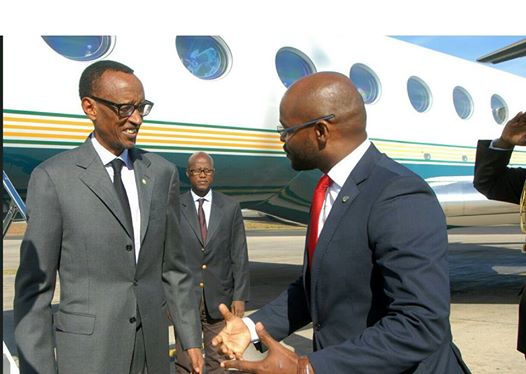
P.Kagame(ibumoso) amaze kwegukana akazina ka Mobayilo Purezidenti (Mobile President)

Mu Kinyarwanda inzererezi bivuga umuntu wirirwa cyangwa akarara agenda, cyangwa byombi icyarimwe. Kera bene uyu muntu bamuvugiragaho bati imbwa yamurigase mu karenge, ni kabwera, ni ikirara, ni inzererezi. Muri iki gihe iyo bavuze inzererezi humvikana ba bana baba mu muhanda bazwi no ku izina rya mayibobo. Ikintu abantu bitwa aya mazina bahuriyeho ni ukutagira akazi kazwi, baba bagafite kakaba katemewe n’amategeko. Perezida Paul Kagame we, n’ubwo afite akazi kazwi, ingendo ze za buri munsi ziteye ikibazo cyane cyane ko akoresha amafranga aturuka mu misoro y’abenegihugu kandi ingendo ze zirahenda cyane. Bityo abantu bakagira bati iyaba yagendaga mu gihe koko ari ngombwa ubundi akibuka ko igihugu gikennye.

Iyo witegereje  zimwe mu ngendo Kagame ajyamo ziba zihenze ku buryo bukabije. Urugero, mu kwezi kwa Nzeri 2011 perezida Kagame yaraye muri Hotel Mandarin Oriental Hotel aho yishyuraga amadolari agera ku bihumbi makumyabiri  maganatandatu na mirongo itandatu n’ane(US$20,664 y’abanyamerika ku ijoro rimwe!!! Ni ukuvuga arenga miliyoni cumi n’enye z’amanyarwanda ( 14.000.000Frws). Igitangaje ni uko uyu mugabo iyo agiye atarara ijoro rimwe ahubwo amara nk’ibyumweru bibiri nibura. Ikindi cyiyongeraho ni uko mu ngendo ze akoresha indege ye bwite ariko Leta akaba ariyo iyikodesha.

Kuba Perezida wa repubulika yajya mu ruzinduko ntacyo byari bitwaye niba koko ari ahantu ha ngombwa. Ariko iyo urebye ingendo nyishi akora aba ari izashoboraga gukorwa nabamwe mu ba minisitiri. Cyakora inyinshi ziba ari mu nyungu ze, ngo azajya guhabwa iBihembo cyangwa impamyabumenyi z’ikirenga (atigiye) bita iz’icyubahiro. Ahandi akunda kujya mu nama ni izerekeye iz’ishoramari. Aha naho hashobora kujyayo minisitiri ushinzwe ubukungu, cyangwa se umuyobozi w’ikigo gishinzwe ishoramari,…

Muri uyu mwaka wa 2014, Perezida Kagame umaze gutsindira akazina ka mobile president ( mobayilo purezidenti) yamaze iminsi hafi 90 yose hanze mu ngendo zidasobanutse ariko zifite intego izwi: gusesagura umutungo wa leta. Hai aha hari urutonde rw’izo ngendo.

  1. 12 Mutarama, Luanda, Angola
  2. 21 Mutarama , Naivasha, Kenya
  3. 24 Mutarama, Davos, Switzerland
  4. 30 Mutarama, Addis, Ethiopia
  5. 05 Gashyantare , Cap Vert
  6. 12 Gashyantare , Los Angeles World , Wisdom Conference, visits to Berkeley University, University of California, and Palo Alto University)
  7. 20 Gashyantare, Kampala, Uganda
  8. 23 Gashyantare,  Dublin, Ireland
  9. 25 Gashyantare , Luanda, Angola
  10. 02 MataA, Brussels, Belgium
  11. 22 Mata, Eastern USA ( MIT, Tufts and Brandeis University)
  12. 25 Mata, Western USA (Milken Institute, Saddleback Church, and Stanford University)
  13. 02 Gicurasi, Nairobi, Kenya
  14. 08 Gicurasi, Abuja, Nigeria
  15. 11 Gicurasi ,Nairobi, Kenya
  16. 16 Gicurasi ,Geneva, Switzerland
  17. 23 Gicurasi , Gabon
  18. 27 Gicurasi, New York, USA
  19. 27 Kamena, Malabo, Equatorial Guinea
  20. 08 Nyakanga, Accra, Ghana
  21. 03 Kanama, Aspen, USA
  22. 06 Kanama, Washington, DC, USA
  23. 20 Kanama, Rwanda Day (Mercier University), Atlanta, USA.
  24. 21 Kanama, New York City
  25. 01 Ukwakira, Dubai
  26. 05 Ukwakira, Trieste, Italy
  27. 07 Ukwakira, Kampala, Uganda

Iyo ubaze iminsi uyu mugabo yamaze muri izi ngendo usanga ari 88 ni ukuvuga amezi atatu aburaho iminsi ibiri. Muri izi ngendo nk’uko bigaragara 17 zabereye muri Afurika, Uburayi, n’uburasirazuba bwo hagati kandi wasangaga buri rugendo rumara nibura iminsi itatu(3). Ni ukuvuga iminsi 51 yose hamwe. Mu kwezi kwa Gashyantare, Kagame yamaze icyumweru cyose muri Leta zunze ubumwe z’America (USA) yongera kumarayo ikindi cyumweru mu kwezi kwa Mata. Ukwezi kwa Nzeri 2014 Kagame yazereraga muri Leta zunze ubumwe z’Amerika (USA) atangirira Aspen, Colorado; akomereza Atlanta, Georgia ahava yerekeza New York. Ahavuye Kagame yanyuze i Dubai agera mu Rwanda tariki ya 2 Ukwakira nyuma y’iminsi itatu asubira mu Burayi kuya 5 Ukwakita aho yagiye mu Butaliyani. Yose hamwe iminsi 36 wayiteranya na  51 twabonye haruguru ikaba iminsi 87 yuzuye ni ukuvuga hafi amezi atatu umukuru w’igihugu yamaze azerera.

Ubu Kagame aritegura kujya i Londres mu Bwongereza kuwa 20 Ukwakira 2014 ntawamenya iminsi azamarayo.

Ikibazo gikomeye ni aha kiri: Ni kuki Kagame atareka ngo ba minisitiri be bakore akazi kabo bajye mu ngendo zijyana n’akazi kabo? Uko byagenda kose mission ya minisitiri itwara makeya kurusha aya Kagame ujyana indege ye! Niba ibi abyanze se yakuyeho guverinoma ubwo mbona byose ashaka kubyikorera?

Murabona aho ya mafranga yo mu kigega agaciro ashirira. Kandi ntajya atanga raporo ngo avuge uko yayakoresheje. Ng’ibyo ibya Mister Mobile President! Harahagazwe!

Umwanzuro:

Igihe kirageze ngo Kagame afate ikiruhuko kuko biragaraga ko ananiwe. Ariko abe anitegura kuzasubiza ibibazo imber y’ubucamanza ku byerekeye uko yakoresheje nabi umutungo wa leta. Miliyoni 14 Kagame akoresha mu ijoro rimwe umwarimu wo mu Rwanda yazikorera mu gihe kingana n’amezi 238 ni ukuvuga imyaka 19 n’amezi abiri. Murumva aho bigeze? Aya mafranga yakwishyurira Abana 14 muri Kaminuza mu gihe cy’umwaka. Ufashe ayo Kagame yakoresheje muri iyi minsi 87 Abanyeshuri1200 babona bourses.

Uyu mugabo azi kwihesha agaciro koko.

Chaste Gahunde

La BBC confirme la macabre supercherie

arution: Thursday 16 October 2014, 17:26
Par: Bernard DESGAGNÉ

Bernard DESGAGNÉ

Le mur du mensonge vient de se lézarder sérieusement. Pour la première fois en 20 ans, un média de masse réécrit l’histoire du génocide rwandais telle qu’elle aurait toujours dû être racontée. Le 1er octobre 2014, dans le cadre de son émission Panorama, la BBC a diffusé « Rwanda’s Untold Story », un documentaire d’une heure réalisé par la journaliste vedette Jane Corbin. Ceux qui connaissent bien le dossier du Rwanda n’ont rien appris, car la plupart des informations que contient le documentaire circulent depuis longtemps. Certaines étaient même dans Ça ne s’est pas passé comme ça à Kigali, le livre de Robin Philpot. Candidat du PQ en 2007, ce courageux auteur a été trainé dans la boue par Radio-Canada et La Presse pour avoir écrit en 2003 ce que la BBC a fini par comprendre en 2014.

Pour ma part, j’ai déjà diffusé l’information contenue dans le documentaire au fil de nombreux articles à propos du Rwanda publiés depuis 2008. On les retrouve sur Vigile, dans le site du Québécois, dans le Huffington Post et dans plusieurs autres médias. J’ai également communiqué cette information à des dizaines de journalistes de Radio-Canada ainsi qu’à des centaines de députés et de sénateurs du Parlement d’Ottawa et de l’Assemblée nationale à Québec, sans qu’aucun d’entre eux n’y donne suite autrement que de manière symbolique. Finiront-ils par écouter maintenant que c’est la BBC qui parle ?

Le dictateur et tueur en série Paul Kagame est un grand ami du gouvernement d’Ottawa, comme le démontre cette photo où la souriante Michaëlle Jean, envoyée par Stephen Harper en 2010, lui transmet les respectueuses salutations du gouvernement conservateur. Cette amitié transcende les partis politiques fédéraux, puisque Kagame peut compter aussi, parmi les néodémocrates et les libéraux, sur de grands défenseurs de la mythologie officielle, par exemple, Paul Dewar et Irwin Cotler.

Stam, Davenport et les autres experts interdits à Radio-Canada

« Ce que le monde croit et ce qui s’est vraiment passé sont deux choses très différentes », nous dit Allan Stam dans le documentaire, qui défait un à un quelques-uns des principaux mythes sur le génocide rwandais. Premier constat : si l’on tient compte uniquement de l’année 1994 et si l’on se fie aux données fournies par l’ONU et le gouvernement de Kigali eux-mêmes, le nombre de Hutus tués est quatre fois plus élevé que le nombre de Tutsis. Et si l’on calcule le nombre de personnes qui, entre 1990 et aujourd’hui, sur une période de 24 ans, ont été massacrées par les exterminateurs aux ordres de Paul Kagame ou qui sont mortes de faim ou de maladie en tentant de fuir, on arrive à un bilan similaire à celui de l’Holocauste, où l’immense majorité des victimes sont des Hutus ou d’autres populations bantoues. Les morts tutsis ne constituent même pas 5 % du total.

Pourtant, les Tutsis exerçant aujourd’hui sans partage le pouvoir à Kigali sont les seuls qui ont le droit de pleurer leurs morts, selon Kagame et ses parrains occidentaux chaque année faussement contrits pour la galerie. Autour du 7 avril dernier encore, Radio-Canada nous a asséné des dizaines de fois que « les Hutus ont tué les Tutsis au Rwanda ». Ses journalistes grassement rémunérés avec notre argent s’en sont donné à coeur joie dans le copier-coller des litanies habituelles et dans les entrevues avec des survivants spécialistes du parjure et de la comédie. Jamais ces sinistres carriéristes n’ont mentionné en ondes les noms d’Allan Stam ou de son collègue Christian Davenport, que je leur ai pourtant indiqués à maintes reprises, depuis des années. Une courageuse journaliste de la BBC vient d’interrompre leur bal costumé.

On pourrait réaliser un documentaire de 100 heures s’il fallait faire entendre tous les témoignages étayés de preuves photographiques et d’autres preuves matérielles queRadio-Canada occulte systématiquement au profit des caisses de résonance de Kagame. C’est pareil dans les autres grands médias québécois, à quelques rares exceptions près, dont celle du critique littéraire du Devoir Louis Cornellier, qui fait bande à part et dont je salue l’intégrité. Mais, tandis que les journalistes de TVA ont l’excuse de ne pas être capables de situer le Rwanda sur une carte de l’Afrique, ceux de RadioCanada mentent souvent en toute connaissance de cause, surtout les grands « spécialistes » comme les mythomanes François Brousseau et Léo Kalinda, un sympathisant du FPR qui en aurait même été membre, à ce qu’on dit.

Bien que ce ne soit pas le coeur du propos, le documentaire de la BBC parle, au début, d’un « rétablissement remarquable » et de la prospérité retrouvée du Rwanda. Là-dessus, Jane Corbin aurait dû pousser son enquête un peu plus loin. Peut-on vraiment parler d’une réussite économique ?

En fait, Kigali n’est qu’une façade. Dans les campagnes, la population crève. La moitié du budget de l’État vient de l’aide étrangère. Et le PIB était de 633 $ par habitant en 2013. Le Rwanda est non seulement l’un des pays les plus pauvres au monde ; c’est aussi l’un des plus pauvres d’Afrique. Kagame est un dictateur impitoyable qui ne peut même pas prétendre avoir fait faire des gains matériels à son peuple. Il se contente d’emprisonner et de tuer ceux qui ne lui obéissent pas, tout en permettant à une petite clique de vivre dans l’opulence.

Les anciens du FPR traqués par Kagame parlent à la caméra

En plus de Stam et Davenport, Jane Corbin nous fait entendre plusieurs acteurs du drame rwandais dont le public de Radio-Canada, les yeux rivés sur les mensonges dont il est abreuvé tous les jours, ne connait même pas l’existence. Qui d’autre parait dans le documentaire de la BBC ? La journaliste Corbin fait appel notamment à deux témoins de taille, Théogène Rudasingwa et Kayumba Nyamwasa, respectivement ancien chef de cabinet de Kagame et ancien chef d’état-major de l’Armée patriotique rwandaise, qui ont tous les deux vu de l’intérieur les crimes de masse orchestrés par leur patron.

Nyamwasa ne mâche pas ses mots : « Kagame n’a jamais eu l’intention d’arrêter le génocide. Jamais. Son intention était de gagner la guerre pour accéder au pouvoir. Que des gens meurent dans le génocide ou se fassent tuer était le cadet de ses soucis. […] Paul Kagame est sans l’ombre d’un doute [celui qui a fait abattre l’avion transportant les présidents du Rwanda et du Burundi, le 6 avril 1994]. Je suis bien placé pour le savoir, et il sait que je le suis. »

Kayumba Nyamwasa, qui est sous haute protection en Afrique du Sud, a fait l’objet de trois tentatives d’assassinat récentes, toutes commises par des hommes de main de Kagame. Son ami Patrick Karegeya, un autre ancien militaire du FPR ayant fait défection, n’a pas été aussi chanceux que lui. Il a été tué dans la nuit du 31 décembre 2013 au 1er janvier 2014.

Nyamwasa a lui-même participé au complot pour commettre l’attentat du 6 avril 1994 et a dirigé les troupes de Kagame pendant qu’elles commettaient d’immenses massacres. Il est parfaitement au courant. Il affirme que Paul Kagame était pleinement conscient des conséquences aussi inéluctables que dramatiques qui devaient résulter de l’attentat : « Si nous sommes en pleine saison sèche et que vous jetez une allumette dans l’herbe, vous viendra-t-il à l’idée de penser que l’herbe ne brûlera pas ? »

Pas de planification du génocide

M. Nyamwasa dit par ailleurs être convaincu que le pouvoir hutu avait un plan d’extermination, mais s’il fait cette affirmation, c’est peut-être pour se dédouaner lui-même de l’horrible traque des Hutus à Goma et ailleurs en République démocratique du Congo, au cours des années 1996 et 1997. Le prétexte de cette traque était d’éliminer les « génocidaires ». N’en déplaise à M. Nyamwasa, le Tribunal pénal international pour le Rwanda (TPIR) n’a jamais retrouvé l’ombre d’une preuve de planification du génocide, même après s’être acharné sur l’ancien pouvoir hutu pendant 19 ans, avec un budget annuel qui, par exemple, était de 227 millions de dollars en 2010-2011. Une partie de cet argent a été puisé dans les poches des contribuables canadiens.

L’historien Bernard Lugan a bien démontré l’absence de planification dans son ouvrage Rwanda — Un génocide en question (Éditions du Rocher, 2014), où il s’appuie sur un bilan exhaustif des travaux du TPIR. Les massacres de Tutsis ont été spontanés et se sont terminés bien avant que le FPR ne s’empare du territoire, comme le précise Allan Stam. La fureur a été déclenchée par l’attentat, véritable allumette que Kagame a jetée non pas dans de l’herbe sèche, mais plutôt dans une grosse poudrière créée par trois années et demie de souffrances infligées aux Hutus, qui avaient de très bonnes raisons pour être révoltés contre le FPR et ses partisans, essentiellement des Tutsis.

Comme l’explique le documentaire, la guerre et l’occupation du territoire par les tueurs de Kagame, à partir de septembre 1990, avaient donné lieu à des massacres de masse de la population civile hutue. Un million de réfugiés essentiellement hutus, chassés de leurs terres, s’étaient agglutinés autour de Kigali, dans des camps de la mort d’où l’on sortait une centaine de cadavres par jour, à cause des maladies et de la faim. De plus, un grand nombre de réfugiés en provenance du Burundi avaient afflué au Rwanda en 1993 pour fuir les massacres dont étaient victimes les Hutus dans ce pays, aux mains de l’armée et de civils tutsis. Voir leurs frères burundais ainsi persécutés ne fit rien pour rassurer les Hutus du Rwanda devant l’armée tutsie du FPR et le sadique Paul Kagame.

Lorsque l’avion transportant les deux présidents hutus fut abattu, les Hutus, déjà martyrisés, en vinrent à la conclusion que le FPR et ses partisans ne voudraient jamais de la démocratie, ce que confirment d’ailleurs le documentaire de la BBC ainsi que beaucoup de témoignages et de faits avérés. Pour Kagame, le pouvoir a toujours été au bout du fusil, et non dans les urnes. Certains Hutus, désespérés et fous de rage, prirent des machettes et décidèrent de tuer ceux qu’ils percevaient comme les responsables de leurs souffrances. Qu’on le qualifie de génocide ou non, le massacre des Tutsis, en avril 1994, n’était pas le résultat d’un plan diabolique du pouvoir hutu. Il a sans doute été horrible, mais il a duré quelques jours seulement et était essentiellement terminé à la fin d’avril. Par comparaison, les massacres de Hutus et d’opposants politiques, eux, sont systématiques et bien organisés par le FPR. Ils se sont étirés sur 24 ans, jusqu’à aujourd’hui. Ils se poursuivent encore, sous le regard indifférent ou complice des thuriféraires de Kagame et du public berné par eux.

Par ailleurs, en supposant qu’il y aurait eu malgré tout planification du génocide des Tutsis, il faudrait plutôt regarder du côté du FPR, surtout quand on sait que le chef de la milice Interahamwe était un Tutsi, Robert Kajuga, et qu’il était un agent du FPR selon Aloys Ruyenzi, un ancien membre de la garde rapprochée de Paul Kagame qui apparaît également dans le documentaire de la BBC. Il est possible qu’une minorité de jeunes Hutus révoltés aient été poussés à tuer des Tutsis par des manipulateurs à la solde de Kagame qui voulaient justement lui fabriquer un alibi en vue des massacres de Hutus qui allaient venir. Cette hypothèse reste à vérifier, mais elle est plausible.

Ottawa complice comme Londres

Le documentaire de la BBC traite bien entendu des accointances britanniques de Kagame, notamment Tony Blair, qui, comme son copain de Kigali, a refusé de donner son point de vue à Jane Corbin. Comment pourrait-il justifier l’injustifiable devant la caméra, de toute manière ? En avouant qu’il est un psychopathe ? Or, Ottawa est, comme Londres, un repaire de gens affairés à consolider le pouvoir tutsi absolutiste de Kigali. Le documentaire nomme une Canadienne, Louise Arbour, ancienne juge de la Cour suprême du Canada et ancienne procureure du TPIR. Mme Arbour n’a pas daigné rappeler la journaliste Corbin, elle non plus. Mieux vaut répondre aux questions uniquement quand elles sont posées par des journalistes à gages obéissants.

L’icône canadienne Arbour, présentée par les médias comme une grande philanthrope, a ordonné la fin des enquêtes sur l’attentat du 6 avril 1994 lorsque ses enquêteurs lui ont dit que toutes les pistes menaient au FPR et à Paul Kagame. Jim Lyons, qui était enquêteur à l’époque, en témoigne dans le documentaire de la BBC. Symbole de la relativité de la justice d’Ottawa, Louise Arbour est, de toute l’histoire du Canada, la seule juge de la Cour suprême à avoir démissionné de son poste avant la fin de son mandat. Rien de plus normal après avoir commis une faute d’une extrême gravité : corrompre une procédure judiciaire pour protéger le plus grand meurtrier de masse que la terre ait porté depuis Hitler. Jamais plus Mme Arbour ne réintègrera la magistrature, ni même le Barreau. On lui a trouvé une petite job peinarde à l’International Crisis Group, où elle se spécialise dans la propagande de guerre déguisée en travail humanitaire.

Évidemment, comment parler des relations d’Ottawa avec Kagame sans mentionner saint Dallaire, l’ex-sénateur aux neuf pilules et chouchou des émissions d’infodivertissement de Radio-Canada ? Il n’est pas question de lui dans le documentaire, car Jane Corbin lui a préféré un militaire plus crédible, le colonel Luc Marchal, qui n’est pas programmé pour raconter l’histoire convenue et qui déplait donc souverainement à Radio-Canada et à Hollywood.

De son propre aveu, Roméo Dallaire est encore aujourd’hui un habitué de Kigali. Il fréquente assidument le FPR et n’hésite pas à se livrer à toutes les contorsions imaginables pour justifier en public les horreurs du régime de Kagame. Roméo Dallaire aime les vrais hommes qui savent résoudre les problèmes avec une mitraillette. N’appelle-t-il pas encore constamment le gouvernement du Canada à déployer des troupes pour « éviter les génocides » ?

Au Mali, en Centrafrique et en Irak, l’ex-général voit partout des génocidaires qui méritent une sévère correction. Quand il était au Rwanda, Roméo Dallaire aidait le FPR et son ami Kagame à stocker des armes et à préparer la prise du pouvoir à l’abri des regards indiscrets de la communauté internationale. Les armes rentraient à la tonne, y compris les missiles sol-air qui allaient servir à abattre l’avion de Juvénal Habyarimana. C’est que, voyez-vous, il fallait être équipé pour mâter ceux qui allaient devenir des génocidaires, conformément au scénario écrit d’avance. Pour de plus amples renseignements sur ce grand héros canadien, j’invite les habitués de la propagande médiatique à lire « Saint Dallaire », la série de 6 articles que j’ai publiée en juin dans le Huffington Post.

Le comportement pro-Kagame d’Ottawa n’est pas seulement l’oeuvre de quelques vedettes du génocide et de politiciens trop heureux de se draper dans la vertu en épousant publiquement la cause des détenteurs exclusifs du droit de pleurer ses morts. Ottawa recèle également des juges profondément marqués par les fictions cinématographiques, des procureurs dévorés par leur ambition de devenir les nouveaux justiciers de Nuremberg ainsi que des fonctionnaires bien dressés par leurs collègues infiltrés du FPR, qui sont positionnés stratégiquement dans certains ministères canadiens. Tous ces gens généreusement rétribués déploient constamment des efforts considérables pour traquer les Hutus ciblés par Kigali. Ils leur font des simulacres de procès avec des faux témoignages secrets, comme le procès de Désiré Munyaneza. Ils envoient en pâture à Kagame des innocents comme Léon Mugesera, qui croupit aujourd’hui dans une geôle de Kigali, après avoir dû abandonner au Québec sa femme et ses enfants. Nombreux sont les Hutus qui ont été harcelés par Ottawa ou qui le sont encore, sur la foi des mensonges propagés par le FPR à l’aide de ses syndicats de délateurs affabulateurs.

Mais, au-delà de toutes ces magouilles des serviteurs empressés de Kagame, une forfaiture nous montre que l’hypocrite gouvernement d’Ottawa ne s’intéresse que superficiellement aux droits de la personne, à la justice, aux victimes de crime et à la sécurité des citoyens canadiens : son mutisme absolu concernant les assassinats, par le FPR, des prêtres québécois Claude Simard et Guy Pinard, en 1994 et 1997. Ottawa n’a jamais levé le petit doigt pour que les responsables soient traduits devant la justice. Tout pour plaire à Kagame, conformément, bien sûr, aux ordres qui viennent de Washington.

À l’instar des Hutus traqués et accusés collectivement d’être des génocidaires par une bande de menteurs et d’assassins, les familles des pères Simard et Pinard n’ont pas le droit de faire entièrement leur deuil. Elles n’ont pas le droit à la justice. Elles doivent comprendre que les assassins de Claude Simard et Guy Pinard sont les protégés d’Ottawa, donc qu’ils ont la permission de continuer de tuer en toute liberté.

Si je vivais au Rwanda, le présent article me vaudrait soit d’être exécuté sommairement, soit d’être emprisonné pendant 8 ou 15 ans, comme l’opposante Victoire Ingabire, peut-être même pendant plus longtemps. Pourquoi ? Parce que je serais coupable d’avoir contesté les vérités officielles. Je serais coupable du délit de refus de se prosterner devant le chantage des supposés survivants qui s’arrogent l’exclusivité des larmes de la communauté internationale, sous prétexte qu’ils ont subi le crime suprême de génocide. Ce crime devrait effacer tous les autres, qui ne méritent même pas qu’on s’y arrête. Sa seule évocation devrait suffire pour nous rendre sourds, muets et aveugles et même pour nous faire perdre tout esprit critique et tout sens moral.

« Rwanda’s Untold Story », le documentaire de la BBC qui dit la vérité pour la première fois dans les médias de masse, après plus de 20 ans de mensonges. Une réalisation de Jane Corbin diffusée seulement au Royaume-Uni le 1er octobre 2014, à l’émission Panorama, puis rediffusée le 2 octobre à l’émission This World. À voir absolument.

Source: http://www.vigile.net/La-BBC-confirme-la-macabre

“Mu gatendo ngiye gukora, muzambere ba mudahunga” Kagame Paul

Mu ijambo yavuze amaze kwakira indahiro z’abayobozi bashya ba sena y’u Rwanda, Perezida Kagame yatunguye benshi bari basanzwe bamuziho amakare n’ubukaka. Mu ijwi ryuzuye ikiniga, umukuru w’igihugu yahamagariye abari bamaze kurahira kwirinda guharanira inyungu zabo bwite, ahubwo bagaharanira inyungu rusange z’u Rwanda n’abenegihugu. Avuye kuri ibi, yahise atandukira maze arihambura ( se défouler), agaragaza umujinya afitiye abanyamakuru ndetse n’ubuyobozi bw’ikigo cy’itangazamakuru cy’Ubwongereza BBC (British Broadcasting Corporation) kubera sinema kimaze iminsi gihitishije igaragaza ubwicanyi Kagame yagizemo uruhare rukomeye, ndetse akaba ariwe watanze itegeko ryo kurasa indege ya Habyarimana.

Ubusanzwe ibyavuzwe muri iyo sinema nta gishya kirimo, kuko si ubwa mbere byari  bishyizwe ahagaragara, kandi harimo n’amagambo Kagame we ubwe yivugiye abyemera. Ubusesenguzi buragaragaza ko igiteye ubwoba Kagame  ari uko noneho Ubwongereza na bwo bwemeye ko Kagame ari umwicanyi. Ibi simbitindaho ahubwo mu ngingo enye(3) reka turebere hamwe uko Kagame yiteguye guhangana n’ikizakurikiraho nk’uko yabibwiye abamwumvaga. Izo ngingo ni izi:

  1. Muzabe ba Mudahunga
  2. Isi yose irimo akavuyo
  3. Ndangije amagambo, ngiye gukora “agatendo”(real things).

Umuntu yitegereje izi ngingo yasanga zidakurikiranye neza, sinzi niba umukuru w’igihugu cyacu yarabigize nkana, ariko icy’ingenzi ni uko ubutumwa bwe yabuhitishije bwose uko bungana. Iyo aza kuba umuhanga mu kuvuga yashoboraga gutangira ati : “Ubwo basigaye bemera ko turi abicanyi….  kandi (1) isi yose ikaba irimo akavuyo (2)njye ndangije iby’amagambo ngiye gukora agatendo (3)kandi ndabasaba ngo muzambe hafi muzabe ba Mudahunga”. Uko bimeze kose reka tuzikurikiranye uko Kagame yabikoze, ni ukubaha uburenganzira bwe.

  1. Muzabe ba Mudahunga

Ibi yabihereye aho yinubiraga ko ngo abahawe ijambo muri iriya sinema ari abantu bahunze igihugu. Avuga ko nta yindi nyungu yo guhunga uretse guhabwa ijambo kuri BBC. Aha Kagame arashaka kubeshya ko uhunze wese ahabwa ijambo kuri BBC cyangwa andi ma radiyo atandukanye, nyamara yamaze imyaka 30 mu buhungiro nta jambo yahawe. Yarinze gutegereza ko intambara y’Inkotanyi itangizwa kugira ngo ahabwe ijambo.

Kagame azi uko BBC yamukoreye publicité mu gihe na nyuma y’intambara, akaba rero ubu azi neza ko ubwo abandi nabo bahawe ijambo, we bishobora kumugwa nabi. Gusaba rero abamwumvaga kudahunga ni ukugira ngo na bo BBC itazabaha urubuga maze bakamushyira hanze. Ikindi arabashuka kugira ngo mu gihe atangije agatendo (yari atarakavuga) bazamugwe inyuma ngo barimo kurwanira inyungu z’u Rwanda.

Ariko na none Kagame si umuswa. Asaba aba bantu kudahunga ni uko yari azi icyo avuga. Aha reka twibukiranye ibintu bitera ubuhunzi twese tuzi. Umuntu uhunga ni uko aba abona ariho hasigaye amakiriro ye. Wahunga intambara cyangwa se umutekano mukeya, wahunga ubukene, ni uko aba ariyo chance usigaranye yo gukiza amagara yawe. Ibyo aribyo byose aba basenateri, abaministiri n’abadepite yabwiraga bose ama konti yabo aruzuye, nta bukene bafite. Ni ukuvuga ko ikindi bashobora guhunga ari intambara cyangwa se umutekano mukeya. Mu yandi magambo Kagame aratwereka ko igiye kuba intambara irimo gutegurwa akaba asaba aba bantu kuzamugwa inyuma.

  1. Isi yose irimo akavuyo

Kagame avuga ko isi yose yuzuyemo ibibazo by’intambara z’iterabwoba n’ibindi bibazo. Byashoboka ko yaba ashaka kunyura mu rihumye amahanga arangariye ahandi maze agakora agatendo ke. Byakunze kugaragara ko iyo abantu barangaye Kagame ahita akora ikintu gikomeye. Muzakurikirane neza muzasanga buri gihe yagiye yohereza ingabo muri Congo amahanga yabaga ahugiye muri Burasirazuba bwo hagati mu bibazo bihahora. Kugira ngo asasire icyifuzo cye, aravuga ati iyo chaos iri ahantu hose ntibazavuga ko ari twe twayiteje. Ni nk’aho yavuze ati hano naho haramutse habaye chaos nta gitangaza cyaba kirimo. Aravuga rwose yeruye ko u Rwanda na rwo rugomba kubamo chaos. Uyu mugabo Imana imuturinde!

  1. Ndangije amagambo, ngiye gukora “agatendo”

Ibi abivuze yabitekerejeho kuko amaze iminsi arunda ingabo ku mupaka w’u Burundi n’u Rwanda. Abinyujije mu binyamakuru bivugira leta kandi, yatangiye gushinja u Burundi ko mu gihe ingabo zabwo zavaga muri Congo zazamukanye na FDLR. Ibi bikaba aribyo aheraho ashaka kwishora mu ntambara kandi biragaragara ko ariyo izamuhitana cyane cyane ko nk’uko abyivugira imbaraga asigaranye ari nkeya.

Aha hanyibukije ya mvugo y’abakurambere igira iti “amagambo ashize ivuga”.  Koko rero Kagame amagambo yamushiranye, ariko si n’amagambo gusa ahubwo n’ibitekerezo byashize. Arabigaragaza aho avuga ko ngo atumva ukuntu abantu bamufashije kubaka ikintu (jenoside) ari na bo baza kugisenya. Koko rero Abongereza ndetse na benshi mu bahoze muri FPR batanga ubuhamya, bubatse FPR ndetse bayitera inkunga nyuma ya genocide. Raporo za mbere zashinjaga FPR na Kagame ni Abongereza (bafatanyije n’Abanyamerika ) bahitaga bazisisibiranya bakoresheje iturufu ya genocide y’abatutsi nyamara bari bazi neza ko Kagame abifitemo uruhare.

Mu buhamya bwa Carla Del Ponte, yemeza ko yashatse gufata abantu bo muri FPR , Koffi Annan akamubwira ko ari politiki kandi ko bashakaga ko u Rwanda rubanza rukisana. Kuba Kagame atumva uyu mukino rero bishobora gutuma afata n’ibyemezo byo kumuhitana. Iyo ntambara se yo ashaka gushora, inganda zo mu Rwanda zikora amasasu angahe? Uwamufatira embargo ntiyongere kubona amasasu rahira ko igihuru kitabyara igihunyira!?

Umwanzuro:

Iyo witegereje uburyo u Rwanda ruyobowe, ukareba uko abaturage babayeho n’umujinya bamaze kugira, ukongera ukareba akazi gakomeye amashyaka atavuga rumwe na Kagame akomeje gukora, nta shiti uhita ubona ko ibintu bigiye guhinduka mu Rwanda. The wind of change is blowing. Perezida Kagame nk’umuntu ubikurikiranira hafi, nawe azi uko ikibazo kimeze. Abanyarwanda ndabasaba gukurikira kandi bakamenya gusoma ibimenyetso by’ibihe. Akenshi iyo ingoma itangiye kurindimuka biragaragara ariko kumenya igihe ihombokera (ku ngoma ntibavuga guhomboka bavuga kubyara) bikunze gutungurana.

Gusa ntidukwiye kugira ubwoba, kuko na Karinga bavugaga ko nisezererwa nta mubyeyi uzongera kubyara, inka zitazongera konsa, imvura itazongera kugwa, isake ntizizabika,…. Nyamara yasimbuwe n’ibendera U Rwanda rurushahp gutera imbere. Kagame ashoze intamabara, imuhitane wenyine, dukomeze twubake Igihugu. Ikiniga afite kiramucira amarenga. Ariko na none muzirikane ko n’ubwo karinga yagiye abantu bagahumeka, imvugo ngo Habyarimana navaho impundu zizavuga yo ntiyigeze isohora. Ni ukubyitondamo.

Chaste Gahunde

Rwanda: Kagame yaba agiye kwiyahura?!

1781914_676140859114667_617787618_n

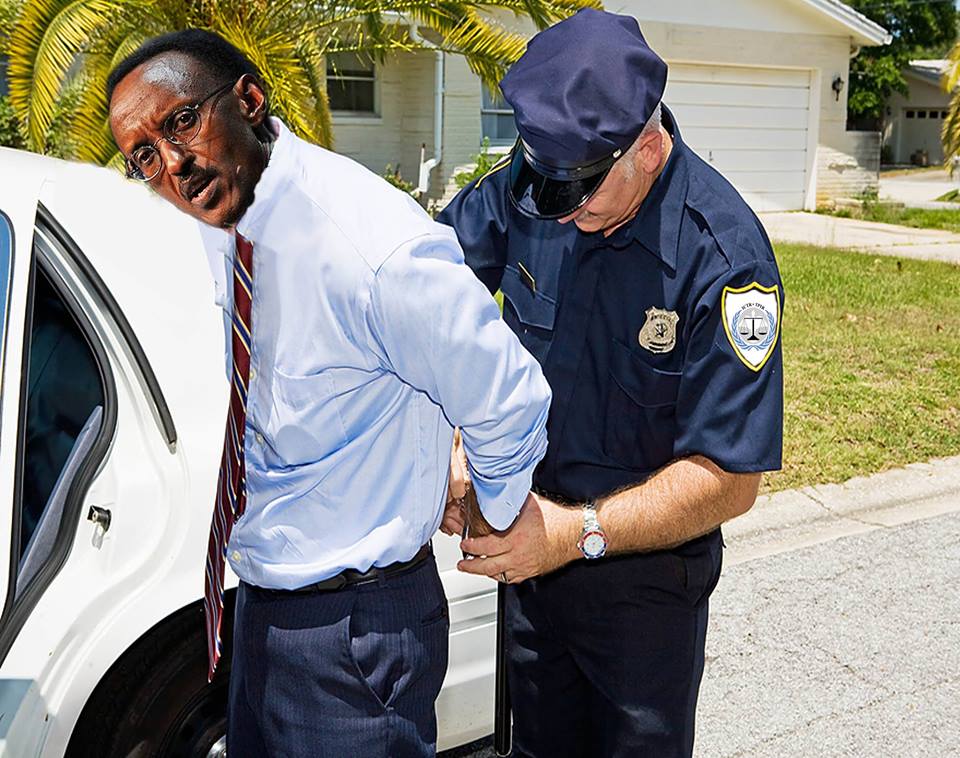
Iyi photo yahinduwe n’umuntu wemeza ko yabonekewe abona Kagame afatwa kubera ibyaha bya genocide aregwa.

Birakwiye gusesengura neza ijambo ridasanzwe Perezida Paul Kagame yavuze ejo taliki ya 14 Ukwakira 2014 ubwo yarahizaga mubyara we Bernard Makuza  usimbuye  Yohani Damaseni Ntawukuriryayo ku mwanya w’umuyobozi wa Sena.

Muri rusange, ryari ijambo rirerire cyane kuko ryamaze iminota 56 yose ! Ikintu cy’ingenzi cyariranze ni uko rya jwi ry’amakari Kagame  asanganywe ryari ryaguyemo imbeho, ejo rwose ryari ribuzemo imbaraga ku buryo yavugaga nk’umuntu wongorera, nk’unaniwe cyane cyangwa se umurwayi usohotse ibitaro ! Izo ntege nke na we ubwe yaziyumvagamo kuko hari aho yivugiye ngo” N’ubwo umubiri wananirwa umutima wo ntunanirwa”. Gusa aha yaribeshye  cyane kuko twese tuzi neza ko umutima utananirwa gusa ahubwo ugeze n’aho uhagarara burundu, iyo uruhijwe birenze imbaraga zawo . Aritondere uwe rero !

Maze gutega amatwi iri jambo nasanze mu by’ukuri ritari rijyanye neza n’ibirori byahimbazwaga ahubwo ryari rigenewe gufasha Kagame gusohora hanze (speaking out ) uruvangitarane rw’ ibyiyumviro by’ubwoba, uburakari n’agahinda, biremereye umutima we muri iyi minsi . Kandi impamvu y’uko kuremererwa Kagame yarayivuze ndetse ayitindaho cyane : ni Sinema yo mu bwoko bwa Documentaire yitwa “Rwanda: Untold story” yakozwe n’Abongeleza, yerekanwa incuro nyinshi kuri Televisiyo yabo yitwa BBC 2, irebwa n’amahanga menshi.  None rero ikibazo ni iki : Icyababaje kandi kikarakaza Kagame bigeze aho ni iki mu by’ukuri ?

Muri iri sesengura turibanda ku ngingo ebyiri gusa: Ikibabaje Kagame(I) n’Icyo ateganya gukora (II).

I. “UBU NITWE BICANYI….”

Uwansaba kuvuga mu magambo atatu gusa ubutumwa bwose Kagame yatambukije mu ijambo rye ryamaze iminota 56, sinazuyaza, nasubira muri aya magambo ya Kagame: “UBU NITWE BICANYI….”. Mbega ukuntu yishimiraga kubyita abandi  Banyarwanda harimo n’abarengana! None we bamuvuze uko ari, ngo Rusizi nticyambutswe!

Kagame arababaye

1.Icyababaje Kagame kurusha ibindi ni uko iriya sinema yerekana neza ko Abongereza batahwemye kumushyigikira kuva yatangira intambara zarimbuye Abanyarwanda  batagira ingano bamaze kubona ko badashobora gukomeza kwibeshya no kubeshya isi mu gushyigikira umutegetsi bazi neza ko ari umwicanyi kabuhariwe !

2.Kagame ababajwe n’uko Abongereza bateye intambwe yo gutangira  kumushinja ku mugaragaro ko ari we Nyirabayazana w’ibyago byagwiriye u Rwanda, ubwo yahanuraga  indege y’uwahoze ari umukuru w’u Rwanda Yuvenali Habyarimana, mu ijoro ry’iya 6 rishyira iya 7 mata 1994, icyo gikorwa cy’iterabwoba kikaba ari cyo cyabaye imbarutso ya jenoside yarimbuye Abanyarwanda basaga miliyoni, Abatutsi n’Abahutu. Ndetse iyo Sinema yo ijya kure ikerekana ko mu by’ukuri  gukomeza gushyira imbere Abatutsi bishwe bonyine birimo ikinyoma n’ubushinyaguzi kuko imibare itangwa n’u Rwanda ubwarwo igaragaza ko Abahutu bo mu Rwanda ari bo bagize umubare munini w’abarimbuwe bityo amateka y’u Rwanda akaba yirengagiza nkana kubavuga no kubibuka !

3. Kagame ababajwe n’uko  amahanga aha ijambo (Freedom of speech) abantu we ngo abona nta gaciro na busa bafite (Completely discredited). Mu mutwe we yumvaga ari we (Le Maître de l’univers) ugena abantu bafite agaciro n’abatagafite, intungane n’abanyabyaha ! Ubwo bubasha kandi akaba yishukaga ko abufite ku Rwanda no ku bindi bihugu. Kandi ni mu gihe, mu myaka isaga 20 amahanga yakomeje kumufata bajeyi, none atangiye kwibonera ko ibihugu by’ibihangange  birambiwe kandi byiyemeje kurambika hasi  “politiki ya ciraha nikubite”yateteshaga umwicanyi ruharwa Paul Kagame.

4. Kagame ababajwe no gutahura bitinze ko nta rundi rukundo ba Mpatsibihugu bari bamufitiye, ko yagizwe igikoresho cy’inyugu zabo gusa , ko mu by’ukuri we nta kandi GACIRO bamuhaga katari ako kubabera igikoresho, bityo babona amaze guhindana( Infrequantable) bakaba biyemeje kumuta bakifatira undi wakwita ku nyungu zabo kumurusha .

Kagame afite ubwoba

5.  Kagame  atewe ubwoba no gutahura ko atigeze yita na rimwe ku nyungu nyakuri z’Abanyarwanda none atangiye kuraga mubyara we Makuza ibyamunaniye: Ngo ntimuzahugire muguharanira inyungu zanyu musuzugura iza rubanda !

6. Kagame afite ubwoba bw’uko politiki ye yo guhindura umutwe wa FDLR ba Nyirurutwerunini (Bouc-emissaire) itazongera gushyigikirwa nk’uko abyifuza, bo yahoraga agerekaho ibyaha byose byakozwe mu Rwanda n’akaga kose Abanyarwanda barimo ubungubu, bikamufasha kurangaza amahanga no kwigaragaza nk’intungane n’umucunguzi w’Abatutsi bo ku isi yose!

7. Kagame afite ubwoba ko amateka y’u Rwanda agiye kuvugwa uko ari bityo uruhare rwe mu marorerwa yarimbuye abanyarwanda n’Abanyekongo batagira ingano  rurekere aho guhishwa ahubwo ruvugirwe ku kabonabose.

8. Kagame afite ubwoba bwo kwitwa umwicanyi bityo abari bamukingiye ikibaba bakaba bagiye kumukuraho amaboko burundu, ahasigaye imbwa zikamurya !

9.Kagame afite ubwoba bw’uko agiye gukurwa ku butegetsi maze Inkiko mpuzamahanga zikamufata, zikamuryoza ibyaha byose yakoze zitababarira .

Kagame afite umujinya

10. Kagame afite umujinya  ko ishema yaterwaga no kwita Umuyobozi “UDASANZWE”(Visionary Leader) rirangiriye aho, ahubwo akaba atangiye gucuncumuka agana ikuzimu (Descente aux enfers), kuko agiye kuba iciro ry’imigani, yerekanwe nk’umutegetsi w’UMUBISHA warushije abandi gukomeretsa no kwivugana abanyagihugu benshi, kuva isi yaremwa !

11. Kagame afite umujinya ndetse n’ ipfunwe ryo kuzasubira kuvugira kuri BBC, hahandi yahoraga ajya kwigamba ubumanzi bw’ubutekinikano: Aho yambariye inkindi azagira ubutwari bwo kwemera kuhambarira incocero?

12. Kagame afite umujinya mwinshi w’uko abo bafatanyije gusahura ibyiza by’igihugu n’iby’abaturanyi bamwigaritse akaba agiye kubibazwa wenyine, aka ya nteruro yo  muri Bibiriyango “abo nagaburiye umugati wanjye nibo banteye ishoti”!

13. Kagame afite umujinya ko mu batangabuhamya bamushinja harimo abavandimwe bahoze mu Gatsiko ke nyuma bakaza kwitandukanya n’ubugizi bwa nabi bwe.  Koko rero yagerageje kubatesha agaciro mu maso y’abanyarwanda n’abanyamahanga, abacira imanza zo kubacisha umutwe, agerageza kubatsinda ishyanga ngo ntihasigare n’iyonka……none ababajwe n’uko bakiriho kandi bakaba batamworoheye . Aricuza impamvu basubiranyemo, none bikaba biri mu bimukozeho….

II. KAGAME ARATEGANYA KWIYAHURA NO KOREKA U RWANDA

Kubera ko Kagame atiteguye “kwemera ibyaha bye ngo tuzarebe uko yagabanyirizwa ibihano”,mu ijambo rye ry’ejo yagerageje gushushanyiriza Abanyarwanda igikorwa cya nyuma cy’ubutwari yiteguye gukora : KWIYAHURA ariko ntagende wenyine.

Ongera utege amatwi uko Kagame yashoje ijambo rye : “From here ,I think, It is a time to go and do  a real thing  “, “Guhera  ubu , ndabamenyesha ko ngiye gukora “Agatendo” katazibagirana”. Ako gatendo ni akahe ? Aho si  “Apocalypse”  nk’iyo twiboneye n’amaso yacu muri 1994 ?

Mu by’ukuri, mu kwishuka ko agifite ibanga ryo kwikura mu kimwaro , Paul Kagame agiye gushoza indi intambara y’amasasu, gusa icyo atazi ni uko izaba ariyo ya nyuma kuko ari nayo izamuhitana. Ibimenyetso byose birerekana ko Kagame agiye gutera Kongo n’Uburundi icyarimwe. Gusa hari ibintu bitatu asa n’uwirengagiza nkana. Icya mbere ni uko  yibeshya ku ngufu z’Uburundi muri iki gihe kandi n’iyo turebye amateka tukaba dusanga  basekuru na basekuruza be b’indwanyi cyane batarigeze bigarurira Uburundi na rimwe. Icyakabiri ni uko asa n’utangiye kwibagirwa ukuntu umutwe we w’iterabwoba yari yarahaye izina rya M 23 wayobewe ikiwukubise, ugashwanyaguzwa nk’amakoma y’insina, izuba riva ! Icya gatatu ni uko inzangano  zikarishye yikururiye mu karere no mu mahanga ya kure zishobora kumubyarira amazi nk’ibisusa, nko mu kanya ko guhumbya ijisho!  Intamenya ntibwira umugenzi koko. Nagende rwiza, abagira iyo bajya baragenda. Mbabajwe n’abana b’inzirakarengane bagiye kongera gutikizwa bashorwa mu ntambara zitagize icyo zimariye u Rwanda n’Abanyarwanda. Njyewe Padiri Thomas Nahimana, ndamutse ndi mu ngabo za Kagame, iyi yo sinayirwana kandi sinakwibuza gushishikariza n’abandi kugenza nkanjye: twareka Kagame akayishoramo na Cyomoro we, bonyine!

UMWANZURO

Nyamara hari ukundi byagenda…! Haracyari akadirishya k’uko Kagame yakiza ubugingo bwe n’ubw’umuryango we, akarokora n’ubw’Abanyarwanda benshi . Nacishe make, aduhamagare, twicare TUGANIRE nta buhendanyi.

Mu gihe amahanga yizeraga atagishoboye kumucira akari urutega, Abanyarwanda nitwe twenyine ahari twamupfa agasoni, ngo n’ibyaye ikiboze irakirigata ! Umuti w’ikibazo Abanyarwanda ubwabo barawifitiye, bifitemo ubushobozi bwo gutera umugongo ibyahise, bakitangira kurema  igihugu cy’AMAHORO  arambye kandi asangiwe basonzeye .

Padiri Thomas Nahimana,

Umuyobozi w’Ishema Party

Akaba n’Umukandida w’iryo shyaka mu matora ya 2017.

Paul Kagame: a mobile president who spent three out of nine months abroad !

One other interesting thing you did not know about Kagame…He is always on trips using his personal jet but hired by the government. David Himbara has followed this amusing (not amazing) man’s movements. Kagame is the real “Mobile president”.

mobile president

The man (left) knows how to spend taxpayers’ money!

If we include Kagame’s forthcoming trip to London to attend the Global African Investment Summit (20-21 Oct) and give a lecture on “Rwanda’s Role in an Emerging Africa and Uncertain World” at Chatham House, 21 Oct 2014, he will have made 28 trips overseas in ten months. Of the 28 trips, 17 were in Africa, Europe and Middle East averaging 2 days each – meaning 34 days in total. In February, the President spent a week in western USA, and another week in eastern and western part of America in April – a total of 14 days. The President then spent the entire month of September in the United States, beginning in Aspen, Colorado in the west, swinging to the south in Atlanta, Georgia, before jetting to New York City for the UN events. From there, Kagame continued on to Dubai on 1 October, returning to Rwanda on 2 October and flying back to Europe for the event in Italy on 5 October 2014 – a total of 36 days. This means that in total Kagame was absent from Rwanda for a grand total of 84 days, or nearly 3 months.

Putting aside the costs which runs into millions of dollars, who runs Rwanda when Kagame is away, and how?

HERE IS A MORE COMPREHENSIVE LIST OF PRESIDENTIAL TRIPS JAN-OCT 2014

  1. 12 Jan: ICGLR Summit, Luanda, Angola
  2. 21 Jan: Nation Media Group Governor’s Summit, Naivasha, Kenya
  3. 24 Jan: World Economic Summit, Davos, Switzerland
  4. 30 Jan: AU Summit, Addis, Ethiopia
  5. 05 Feb: Africa Innovation Summit, Cape Verde
  6. 12 Feb: Western USA visit (including Los Angeles World Affairs Council, Wisdom Conference, visits to Berkeley University, University of California, and Palo Alto University)
  7. 20 Feb: Northern Corridor Integration, Kampala, Uganda
  8. 23 Feb: UN Broadband meeting, Dublin, Ireland
  9. 25 Feb: ICGLR Summit, Luanda, Angola
  10. 02 April: EU-Africa Summit, Brussels, Belgium
  11. 22 April: Eastern USA (including MIT, Tufts and Brandeis University)
  12. 25 April: Western USA (including Milken Institute, Saddleback Church, and Stanford University)
  13. 02 May: Northern Corridor Integration, Nairobi, Kenya
  14. 08 May: World Economic Forum for Africa, Abuja, Nigeria
  15. 11 May: Signing of standard railway gauge, Nairobi, Kenya
  16. 16 May: World Telecommunications and Information Society Award, Geneva, Switzerland
  17. 23 May: New York Forum Africa, Gabon
  18. 27 May: UN meeting on sustainable urbanization, New York, USA
  19. 27 June: AU Summit, Malabo, Equatorial Guinea
  20. 08 July: Honor of Wole Soyinka, Accra, Ghana
  21. 03 Aug: Aspen Institute, Aspen, USA
  22. 06 Aug: USA-Africa Summit, Washington, DC, USA
  23. 20 Aug: Rwanda Day (plus Mercier University), Atlanta, USA.
  24. 21 Aug: UN General Assembly (plus other events, including Global Citizen Festival), New York City
  25. 01 Oct: Global Business Forum, Dubai
  26. 05 Oct: 50th anniversary of International Center for Theoretical Physics, Trieste, Italy
  27. 07 Oct: Uganda-Rwanda Business Forum, (plus Uganda Independence celebrations), Kampala, Uganda
  28. 20 Oct: Global African Investment Summit (plus Chattam House Lecture), London, UK

We wait to see where the gentleman jets for November and December.

THE BBC MUST BE CONGRATULATED FOR LAUNCHING SCRUTINY WITH “RWANDA’S UNTOLD STORY”

Paul Kagame– wants only the victor’s side of the story to be heard

[Commentary: Open Letter to the BBC]

The letter objecting to the BBC documentary “Rwanda’s Untold Story” signed by a list of formerly credible academics and public figures reveals​ their inability to accept the fact that, after any major conflict the “victor’s tale” is not completely accurate, and that is particularly the case for the four-year war for power in Rwanda the last 100 days ​of which ​is called “the Rwanda genocide.”

This is a lesson taught to those of us in the U.S. ​who remember Vietnam by Robert S. McNamara in another documentary “The Fog of War” about another war built on half-truths​.

He also noted that​, had the Japanese won WWII, he and others who planned the gasoline bombing of Tokyo would be the war criminals.  It is quite amazing that “the myths of the victors” continue to be so easy to swallow — initially.  It is as if the signers of the letter seeking to suppress journalism have suspended disbelief despite what ​even the British must remember about the Weapons of Mass Destruction.

​But, the signatories are sticking to the Kagame/RPF victors’ saga long after the lack of evidence to support the “myth” has been exposed and contemporaneous data reported by third parties present in Rwanda has begun to create a new narrative.  The notables signing the letter have to ignore written judgments entered by the UN Tribunal for Rwanda, after Trial Chambers heard the best evidence the Rwandan government could muster for more than a decade, on exactly the same three issues raised in the letter, the UN Tribunal rejected all three.

Here are the facts:

First, IF there was any evidence to support the assertion that “30,000 interahamwe were trained as killers,” it was not introduced by the Prosecution as evidence in the trials of the government or military leaders of the Habyarimana government. The proponents of the letter cite no source.  In fact, the leaders of the government and military were acquitted of planning, conspiring, training, organizing, preparing, or any other sort of “planification” of any criminal acts against Tutsi civilians at all, prior to the assassination of President Habyarimana in the April 6, 1994 shootdown of the President’s plane.

This means that there was no evidence of planning to shoot down the President’s plane by his own forces, either.  This is what Trial Chamber-​found in the Bagosora Trial, Military-1:

When viewed against the backdrop of targeted killings and massive slaughter perpetrated by civilian and assailants between April and July 1994 as well as earlier cycles of violence, it is understandable why for many this evidence…shows a prior conspiracy to commit genocide….However, they are also consistent with preparations for a political or military power struggle…when confronted with circumstantial evidence [the Chamber] can only convict where it is the only reasonable inference…the Prosecution has not shown that the only reasonable inference based on credible evidence…was that [genocidal] intention was shared by the Accused.

…the Chamber is not satisfied that the Prosecution has proven beyond a reasonable doubt that the four Accused conspired among themselves, or with others to commit genocide before it unfolded on 7 April 1994. (emphasis added)

Second, according to ​the letter’s signatory ​Gen. Dallaire, in his ​own​ Sept 1993 Reconnaissance Report to the Security Council,  the RPF reported the total number of Tutsi in Rwanda was about 667,000, a number which the RPF did not consider an undercount in a UN estimate pre-Genocide. (see p. 30).

After July 1994,  IBUKA, the RPF survivors organization estimated 300,000 Tutsi survived in Rwanda.  This means that according to contemporaneous numbers from the RPF ​via Gen. Dallaire​, total Tutsi deaths must have been a blood-chilling 337,000 and even less than Davenport and Stam estimate and means even more Hutu deaths would be required to reach 800,000 to 1,000,000 total or some 460,000 to 660,000 Hutus. Please take note:  these numbers come from General Dallaire and the RPF. (Moreover, Gen. Dallaire has been a Kagame admirer for a long time, as far back as 1994 telling The New York Times, “He is absolutely brilliant,” and “He has an exceptionally disciplined mind.”)

Third, the shooting down of the plane was the conclusion reached in 1997 the elite International Criminal Tribunal for Rwanda (ICTR) Prosecutor’s Investigative Team by: Michael Hourigan, Australian Queen’s Prosecutor; frmr. FBI Special Agent, James Lyons; Gen. Dallaires Chief Mil. Int. Ofcr. Col. Amadou Deme; Chief ICTR Prosecutor Carla del Ponte; French Investigating Judge Bruggiere; Spanish Investigating Judge Merelles; the subject of confessions by frmr Kagame Chiefs of Staff Theogene Rudesingwa, M.D.; Gen. Rudesingwa; Lt. Joshua Abdul Rusebiza(ICTR testimony); Lt. Ruyenzi; and supported by ICTR testimony from eyewitnesses including Fr. Col. DeSanQuentin in Kanombe Base and first at the crash site with Maj. Ntabakuze on April 6, 1004.All of the above is documented in the film, in documents cited in my book “The Accidental Genocide,” or in the evidence and transcripts at the ICTR.

Davenport, Stam and Reyntjens were all Prosecution witnesses, not defense witnesses, who stopped being called by the Prosecution as their conclusions began to contradict the RPF myths.  Interahamwe leaders…witnesses A and BY in the Military-1 Trial both testified as Prosecution witnesses after guilty pleas in Belgium and both claimed to be trained ONLY as self-defense forces.  This evidence is IN the ICTR record.  Please confirm the assertion.

Please read the Trevidic Report, it does not say what is alleged by the letter.  It’s conclusions are far more ambiguous than the letter suggests and are based on an analysis of re-produced sound recordings, not on the testimonies of any individuals involved in the shootdown team, itself. Without studying and understanding:

the four-year war that began as an invasion from Uganda in October 1990;

that resumed with a full assault in Feb. 1993 that displaced nearly 1.5 million Rwandans from the Byumba breadbasket that nearly took power;

the Burundi genocide that drove 300,000 refugees into Rwanda; and the U.S. ambassador telling Kagame in Nov. 1993 that if he resumed the war, he would be responsible for a second Burundi genocide in Rwanda  (ICTR Testimony of Amb. Robert Flaten, July 2005):

As Dr. Stam stated, discussing the 100 days of the “Rwanda genocide” without discussing the 4-year war following the RPF invasion is like discussing the Holocaust without discussing WW-II.

Please note, none of the allegations in the letter signed by so many cite to any hard evidence in support.  At the ICTR, this same lack of support required the Trial and Appeal Chambers to reject the allegations of the ICTR Prosecutor, the Rwandan Government, and the several Prosecutors on loan from the U.S. Dept of Justice which pursued the issue for more than a decade without success.

The letter fails to note the incontrovertible evidence of RPF crimes in Congo from 1993-2003 documented in the October 2010 UNHCR “Mapping Report;” the UNS/C Expert Reports on Illegal Resource Extraction from Congo, 2002, 2003, 2004, 2008, 20012; Rwandan support for M23 and other occupying groups illegally extracting resources from Congo; the excess deaths in Congo and Central Africa between 5 and 10 million ​deaths attributed to invasions of 1996, 1998 and continual warfare over two decades.

In 2010, the Obama administration declared the Kagame election ​unfree and unfair, while Victoire Ingabire and other potential candidates were imprisoned and prevented from meaningful campaigning. In March 2014, HRW Reported the history of assassination of political opponents of Kagame dating back to 1993, and attempts on current opponents in exile.

In 2012, the U.S. War Crimes Ambassador, Stephen Rapp THREATENED with prosecution ala Charles Taylor for his support of M23 crimes in Congo.​ All of the foregoing are in the public record.​

The existence of this massive bloodshed, and its authorship in Kigali ​with assistance from Kampala cannot be denied by any honest signatories of the letter submitted to BBC.

The BBC documentary is true to the documentary record, and to the investigations and judgments of the United Nations ICTR despite the impunity enjoyed by Kagame and the RPF for crimes committed during the Rwanda genocide, described by former Chief ICTR Prosecutor Carla del Ponte.

The BBC is to be congratulated for following the story where the evidence leads.

Sincerely,

Prof. Peter Erlinder

Director, Int. Humanitarian Law Institute

Former Lead Counsel, Military-1, Ntabakuze Defense

Past-pres. ICTR-ADAD, Association des Avocat de la Defense

Source: http://www.blackstarnews.com/global-politics/africa/the-bbc-must-be-congratulated-for-launching-scrutiny-with-rwandas-untold

U.S. Urges Burundi and Rwanda to Investigate Deaths

usdos-logo-seal

Press Statement

Jen Psaki
Department Spokesperson
Washington, DC
September 25, 2014

The United States expresses its deep concern regarding the discovery of a number of corpses in July and August of this year, some bound and wrapped in plastic, in Lake Rweru, which borders Burundi and Rwanda. We note that several countries also raised their concern about these deaths during the Interactive Dialogue with the Working Group on Enforced or Involuntary Disappearances that was held in conjunction with the United Nations Human Rights Council in Geneva on September 12.

We urgently call on the Burundian and Rwandan Governments to conduct a prompt, thorough, and impartial and concerted investigation of these deaths with the assistance of independent, international forensic experts.

We firmly believe that these victims deserve to be identified, their families deserve to know their fate, and those responsible should be brought to justice.

Source:US Department of State