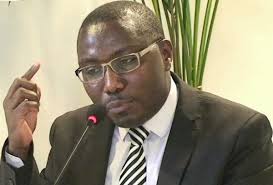
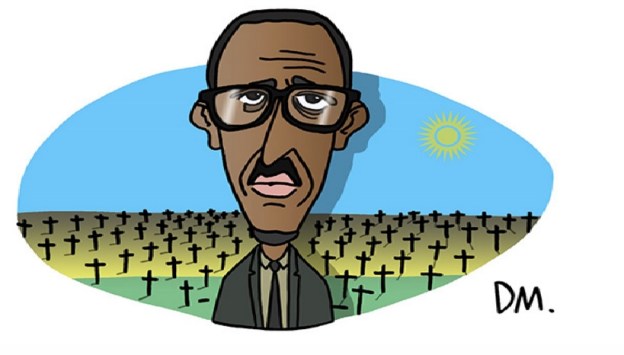
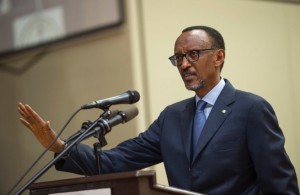
Portrait of Paul Kagame – President of the Republic of Rwanda

Portrait KP

Paul Kagame is not just any other African dictator. He seems to hold the keys to modernity. He enjoys, or at least has long enjoyed, a positive aura on the international scene. He governs Rwanda, which was home to one of the most horrible nightmares known by Humanity in recent decades. Too equanimous a writer would not have been suitable to discuss such a personality, particularly in such a context. Gérard Prunier’s portrait reflects both the passion of a man who is sensitive to the dramas occurring in the area and the science of a great historian of Africa’s Great Lakes region.

Michel Duclos, Geopolitical Special Advisor, editor of this series

In the twilight of the 20th century, the Rwandan genocide of 1994 appears as the worrying token of a world that we hoped would end with the opening of another, one that would bring hope. The last century had been one of horror, but the recent fall of the “Evil Empire” seemed to symbolically close it. Yet Rwanda suddenly cast a gloomy light on this brand new optimism, which we tried to conceal with a poorly constructed historical parallel. In this small, obscure country, of which almost no one had ever heard, there had been an outbreak of “tropical Nazism”. Yet, among the two great terrors of the 20th century (Westerners never succeeded in conceiving universal history as anything other than exotic declinations of their own history, the only one that counts and marks the world’s true scansions), the two worst horrors had been Nazism and Stalinism. And here came the “filthy beast”, resurfacing in Africa and rekindling our worst memories.

The problem is that this historical parallel was not adequate. President Habyarimana was not very Hitlerian (and he had died at the time of the genocide). France was jumping up and down frantically to explain that no, this was not something it had ever wanted, and that, in any case, it hadn’t done anything. The United Nations, symbol of the post-1945 mantra “never again”, were indeed present in Rwanda, but hadn’t done anything either. Meanwhile, the African Union, i.e. the continent’s self-proclaimed conscience, was entrenched in a deafening silence. But fortunately, there was the Rwandan Patriotic Front (RPF) – the good guys! – and their leader, who vaguely looked like some kind of warrior monk, Major Paul Kagame. What a relief. The tragedy had a hero, and the global public opinion welcomed him, finally relieved to find a savior in the midst of all this horror. But who was he really? Nobody knew. Not to mention that the general ignorance towards pre-genocide Rwanda was abyssal. The result was an unknown hero against a backdrop of African clichés.

Kagame very unconventional “military career” lasted 16 years and got him involved in some of the most extraordinary events of the century.

Paul Kagame was 36 years old at the time, and he was not really Rwandan. Having grown up in Uganda as the son of refugees since the age of four, he was a Major in the Ugandan army and a citizen of his host country. His trajectory was quite atypical for a refugee. Shortly after graduating from high school, he had joined the uprising guerrilla war in Uganda at the age of 20, as the Tanzanian army entered the country in 1978 to overthrow dictator Idi Amin Dada. His very unconventional “military career” lasted 16 years and got him involved in some of the most extraordinary events of the century.

He was profoundly shaped by this period of his life – his “Ugandan” life. Uganda in the 1970s and 1980s was a jungle dotted with corpses, where everyone betrayed everyone. The international community, which had rightly vilified Idi Amin, was walking away now that he had disappeared. It didn’t matter that dictator Milton Obote, elected in a rigged election approved by the British and Commonwealth authorities, killed more people than Idi Amin (more than 300,000 deaths between 1981 and 1986). What mattered was that, in the context of the Cold War, Obote was “a friend of the West”, even if he used North Korean artillery. In fact, this allowed Western powers to avoid getting their hands dirty in trying to keep the country together by their own means.

The West helped survivors to survive through international aid, and a division of labor that Kagame would later reproduce, first in Rwanda, and then in Congo. His contempt for the “international community”, his diplomatic cynicism and his humanitarian hypocrisy can be explained by his experience of the Ugandan civil wars between 1978 and 1986. So can his vision of the “hero”. Indeed, in January 1986, Kagame entered Kampala as a winner, alongside his leader Yoweri Museveni.That was before he saw this advocate of the extreme anti-colonialist left become, through a series of opportunist shifts, the perfect duplicate of what he had fought all his youth.

In 32 years, Museveni’s reformist power mutated into an authoritarian and corrupt State, and the former main opponent of the regime was the former head of the guerrilla’s medical services. Kagame reproduced exactly the same pattern, to the point that he now finds himself in conflict with an opposition composed by 80% of his former comrades in arms during the struggle of the 1990s (and not of ex-genocidaires as he suggests). First, of course, he served in the Ugandan regular army after the victory. Kagame, the chief’s loyal follower, became head of the army’s secret service. His profile was interesting to Museveni: Kagame was basically a foreigner, even after his years of war in Uganda. Some groups such as the Baganda or his own ethnic group, the Banyankole, constantly reminded him of this.

His contempt for the “international community”, his diplomatic cynicism and his humanitarian hypocrisy can be explained by his experience of the Ugandan civil wars between 1978 and 1986. So can his vision of the “hero”.

After all, there were only two “Rwandans” among the first 17 insurgents of 1981, the other being Fred Rwigyema, who became Chief of Staff of the Ugandan army. Two “foreigners” at the head of the country’s military establishment: what better way to prevent a coup? Kagame kept quiet, observed, learned. And he noticed the pursuit of the same humanitarian ambiguity that served Obote so well in his time. Amnesty International sent a mission to Uganda in order to criticize Museveni for his brutal treatment of imprisoned insurgents from northern ethnic groups, who supported Obote during the civil war and who continued to fight sporadically. The NGO called for the creation of a justice system able to deal with cases of detention of captives from the guerrillas. The President passed the problem on to Kagame, who was appointed President of the Armed Forces Itinerant Tribunal. He was perfect at the job, and the corpses resulting from the Tribunal’s convictions, which he brought back to Kampala, were always in excellent condition and showed no signs of abuse. The man is cold and merciless, but he is efficient and knows how to respect procedures.

In 1987, he began to extend his contacts within the Rwandan diaspora, who took advantage of his position in Uganda to set up a political military structure aiming to overthrow the Hutu regime in Kigali. However, anti-Rwandan pressure escalated in Uganda, where Museveni was forced to slowly marginalize an entire generation of refugees and their children who had supported his rise to power. After a brief hesitation, General Rwigyema, who, as a Ugandan, felt bitter and betrayed, switched sides and decided to join the RPF. For Kagame, this was a disaster: Rwigyema was very popular in the diaspora, while Kagame was not. Moreover, their two Rwandan affiliations were entirely antinomic: Rwigyema was the heir to the Banyingina royal family, while Kagame came from the Ababega clan, which overthrew and killed the King during the German colonial conquest in 1896.

The man is cold and merciless, but he is efficient and knows how to respect procedures.

A warm and friendly heir to the royal family versus the austere descendant of an usurping clan. The invasion of Rwanda that they were planning together was marked from the outset by personal and political ambiguity. Rwigyema was aware of the difficulty of having the Hutu majority accept a “liberation” led by the Tutsi minority. Even if the Habyarimana regime was a dictatorship, and even if its Hutu opponents were many. He relied on his charisma and his openness to the Hutus of the opposition to overcome the “feudal restoration” of which Habyarimana later spoke.

The RPF attacked Rwanda on 1 October 1990, and on 2 October, Fred Rwigyema, who had commanded the invasion forces, was killed by one of his own officers. The RPF will always deny the circumstances of this death, attributing it “to the fighting”. But apart from the fact that there was only one killed that day – the Commander-in-Chief – and that the given details of his death are contradictory, a worrying shadow hangs over the murder of the RPF leader. In fact, Museveni, who discreetly supported the invasion, also had Rwigyema’s two adjutants arrested and executed. Like many other episodes paving Paul Kagame’s road to power, this one will never be clarified. The war lasted four years, and burst into a genocide triggered by the assassination of President Habyarimana. The genocide was obviously planned by the most radical circles of Hutu power, but many accused Kagame of being the perpetrator of the attack. The most specific accusations came from former Tutsi members of the RPF, some of whom became active opponents of the Kagame regime. But the global impact of the genocide somewhat mesmerized the international community, which refused to think the unthinkable about the genocide’s liberator being an element of that same genocide. Yet, as Canadian General Dallaire, commander of the UN’s inactive forces, pointed out, the RPF leader did not seem overly moved by the passivity of the international community. Nor by the genocide itself. Dallaire, who was struggling with New York to get an order for intervention, felt more committed than the Rwandan. It actually seems like Kagame has never been too concerned about his fellow citizens. Among them, there were 80,000 Hutus, who were later “forgotten” in the commemorations of the genocide – which became known as “the genocide of the Tutsi”. As for the Tutsi deaths – between 700 and 800,000 – they seem to have been considered more as the “collateral damage” of the modernization process implemented later by the new post-genocidal power in Rwanda.

To realize this, one should have a conversation with members of Tutsi survivor associations, who are under no illusions regarding this issue. For Kagame, the genocide was a huge political opportunity, of which he managed to skillfully take advantage. He succeeded in exchanging a population of “indigenous” Tutsis, rooted in the complex and ambiguous Rwandan reality, for another population of diaspora Tutsi, much more educated, militarized and disciplined, who ended up being the ideal people for the RPF project.

Kagame had a plan for Rwanda. A plan similar to him: cold, efficient, entirely focused on technical success, not particular about the means employed. He managed to sell it to a relieved international public to whom he promised fundamental changes – an honest administration, security, urban cleanliness, improved transport and public health – as well as a few gadgets that always please Westerners, such as Internet access on buses or a ban on plastic bags.

Kagame, shrouded in the aura granted by his status as anti-genocidal hero, led the offensive and overthrew the old tyrant.

Protected by the genocidal shield, he knew he could practically do whatever he wanted. Moreover, he had always won in the past: escaping the fate of a stateless refugee to gain access to the highest levels of power in Uganda, taking control of the RPF, winning a second civil war in Rwanda by concealing his own violence thanks to the genocidal apocalypse, creating a government of “national unity” after the genocide, then abolishing it during a massacre committed by his own troops (Kibeho, 1995), and, finally, consolidating his absolute power thanks to election scores worthy of Stalin’s (95% in 2003, 93% in 2010 and 99% in 2017). He didn’t even need to cheat, everyone did actually vote for him. Fear was such that obedience became real. And the international community, trapped in its remorse and seduced by the progress he introduced, nodded along. He nonetheless did make a big mistake: invading Congo. It had all started so well: the surviving genocidaires, who had taken refuge just a few kilometres from the border, were constantly launching harassment raids on Rwanda, which were both unnecessary and deadly.

After two years of preparation, Kagame succeeded in gathering a coalition of African States, supported by the United States, which wanted to get rid of its old accomplice from the Cold War, Mobutu Sese Seko. Kagame, shrouded in the aura granted by his status as anti-genocidal hero, led the offensive and overthrew the old tyrant. This event was followed by President Clinton’s visit to Kigali, where the latter apologized for his country’s passive attitude during the genocide. The apology was justified, but the timing was not right. Kagame is steady-handed, but he is also extremely self-confident.

Encouraged by what he already saw as yet another success, a few months later, he took an unnecessary risk by attacking both some of his allies and the regime he had just succeeded to set up in Kinshasa. The war that ensued (1998-2002) shook the entire African continent and killed nearly three million people. At that moment, the “hero” had gone a little beyond his diplomatic comfort zone and had to leave the field. His failure even had unexpected side effects, as the international community finally dared to take a closer look at what the RPF had done since coming to power.

Kagame became President of the African Union in January 2018, which has allowed him to lecture his peers, for whom he only has limited respect.

When the International Criminal Tribunal for Rwanda was created, public opinion tried to do so but the Attorney General, the Canadian Louise Arbour, prohibited any investigation. It is only in June 2009 that the UN Mapping Report was published…on the Congo war! It did mention the “Rwandan army”, but only in a foreign perspective. Not a word about Rwanda itself, and thus of course nothing about its leader Paul Kagame.

Fascinated by Kagame’s heroic image, it seems like the international community hasn’t read this report, which is 500 pages long and highly documented, and continues to be indulgent towards the one Professor Filip Reyntjens from the University of Antwerp calls “the greatest war criminal in power today“. Kagame’s self-confidence was boosted by the disdain the international community displayed for the truth when, for example, the Paris Public Prosecutor requested a dismissal (13 October 2018) of the case against his associates who had been involved in the attack that cost Habyarimana his life.

Kagame became President of the African Union in January 2018, which has allowed him to lecture his peers, for whom he only has limited respect. The opposition had long been disciplined through robust methods. MP Léonard Hitimana and former President of the Court of Cassation Augustin Cyiza disappeared without trace. The Vice President of the Green Party (opposition) was found dead after being tortured. The journalist Jean-Léonard Rugambage, who was investigating the case of General Kayumba Nyamwasa, who had switched to the opposition, was killed in 2010 after Kayumba himself had been the target of two assassination attempts. Former Security Chief Patrick Karegeya was found strangled in a South African hotel room on 1 January 2014. Opposition journalist Charles Ingabire, a genocide survivor, was shot dead in the street in Kampala in November 2011. And so on and so forth.

Violence has even become “democratized” since 2016, with the summary executions of dozens of petty criminals (cow thieves, smugglers, fishermen using illegal nets…) killed by the army for no other reason than to frighten people in order to “keep order”. On her recent release, Victoire Ingabire, who had been sentenced to life imprisonment for daring to run in the elections against Kagame, said: “I hope this is the beginning of the opening of the Rwandan political sphere”. Unfortunately, this seems highly unlikely.

Kagame is an iron man. Yet even iron eventually rusts away. A few years ago, he faced all the challenges with a cool temper we could qualify as “British”, but that we call “itonde” in Kinyarwanda. When Colonel Tauzin declared, while defending Gikongoro, “that he would “give no quarter” if the RPF attacked and that an officer translated (Kagame did not understand the French expression “faire de quartier”) by saying: “it means that he will kill all the wounded”, he simply observed: “It is a little hostile, isn’t it?” Today, the same man is seen shouting at his bodyguards, slapping a secretary or trampling underfoot a Minister who crossed him. Many of his former comrades from 30 years ago have joined the opposition and live in exile. He and Museveni have hated each other since the Ugandan President investigated Rwigyema’s death and today, he helps a guerrilla group that has infiltrated the Nyungwe forest and entrenched itself there. Today, Paul Kagame is the master of Rwanda, the only African head of State who can speak as an equal with the world’s great leaders, and who can influence the decisions of most international tribunals. This involves a massive and solitary power, and absolute power is absolutely solitary.

gerard-prunier

By Gérard Prunier, Historian Horn of Africa specialist

Illustration : David MARTIN for Institut Montaigne

Source: Institut Montaigne

Rwanda: l’opposante Diane Rwigara acquittée

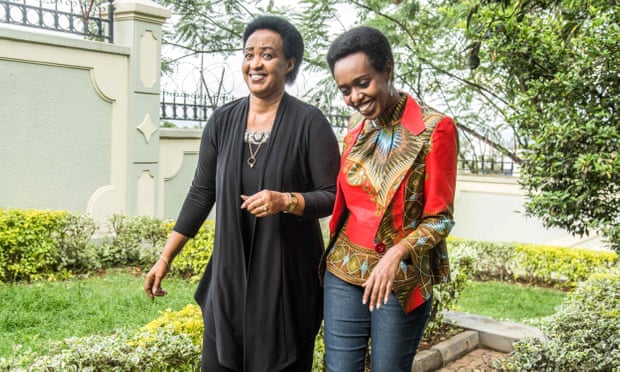
Diane &MotherL’opposante rwandaise Diane Rwigara, critique du président Paul Kagame, a été acquittée jeudi par un tribunal de Kigali d’incitation à l’insurrection et falsification de documents, des charges qui lui ont valu d’être emprisonnée pendant plus d’un an et dénoncées comme politiques par l’intéressée.

“Les charges retenues par l’accusation sont sans fondement”, a déclaré le juge président Xavier Ndahayo. La salle d’audience bondée, dans laquelle avaient notamment pris place des membres de la famille Rwigara, a laissé exploser sa joie une fois la lecture de la décision achevée. Les cinq coaccusés de Diane Rwigara dans cette affaire, dont sa mère Adeline, ont également été acquittés. “C’est la preuve que toutes ces charges retenues contre moi, ma mère et des membres de ma famille étaient montées de toute pièce”, a réagi Diane Rwigara auprès de l’AFP. “J’ai l’énergie et le zèle pour continuer à me battre pour la liberté d’expression et les droits de l’Homme au Rwanda.”

Le tribunal a estimé que les critiques de Diane Rwigara contre le gouvernement ne constituaient pas une “incitation à l’insurrection” car elles s’inscrivent dans le cadre de son droit à la liberté d’expression garantie par la Constitution rwandaise et les lois internationales. Les juges ont également estimé que l’accusation n’avait pas prouvé que Diane Rwigara avait falsifié des signatures de partisans dans le dossier présenté à la commission électorale en vue de sa participation à la présidentielle de 2017. Le rejet de cette candidature avait été critiqué par des gouvernements occidentaux et des groupes de défense des droits de l’Homme.

Le Figaro.fr avec AFP

Rwandan who challenged president faces 22 years in jail as trial opens

Diane Rwigara denies forgery and inciting insurrection in court in Kigali as prosecutors call for 22-year jail term

The trial of Rwanda’s leading dissident politician has opened with a demand from prosecutors that she be sentenced to 22 years in prison for inciting insurrection and forgery.

Diane Rwigara denies the charges, dismissing them as politically motivated after her blocked attempt to challenge the country’s president, Paul Kagame, in last year’s elections.

The 37-year-old appeared in court in Kigali, the capital, on Wednesday alongside her mother, who faces a similar sentence for alleged insurrection and promoting ethnic hatred.

The two women had spent more than a year behind bars before being released on bail last month ahead of their trial.

Kagame has won international praise for the stability and economic development he has brought to Rwanda since the 1994 genocide, when an estimated 800,000 people were killed, but he has also been accused of running an authoritarian, one-party state.

The 61-year-old former soldier won a landslide victory last year, securing a third term in office with 99% of the vote. His ruling Rwandan Patriotic Front remains unchallenged, and has developed substantial economic interests.

In court, Rwigara was defiant, insisting she had only spoken the truth about Rwanda and so could not be guilty of inciting the masses through falsehoods as the prosecution alleged.

“I stand by my remarks,” she told the court’s three judges. “They reflect my political journey, coupled with calling on Rwandans to resist fear and speak for our country.”

Rwigara denied forging signatures on electoral documents in an attempt to win a place on last year’s presidential ballot, an accusation she says was designed to derail her challenge to Kagame.

Watching proceedings in court was Victoire Ingabire, another woman who sought to run for the presidency in 2010, but was blocked from competing, arrested, tried and spent six years in jail before her release in September.

Ingabire was among more than 2,000 prisoners freed this month

Since Rwigara’s arrest last year, her brothers and sister have been interrogated, family assets have been forcibly auctioned to pay off a multi-million dollar tax claim, while a hotel the family owned was demolished for allegedly failing to abide by city guidelines.

Despite some discontent over unemployment and other domestic issues, and a controversial reputation overseas, Kagame appears to be genuinely popular in Rwanda, which has had some of the fastest economic growth rates in Africa and has become known for its stability in a deeply troubled region.

However, opposition activists, many in exile, say he runs a “police state”, jailing journalists and assassinating dissidents, even overseas. Others question the reliability of the economic statistics showing growth and allege that increasing cronyism could undermine economic progress.

Speaking to AFP earlier this week, Rwigara said Rwanda felt “like a prison”.

“The prison guard is none other than the ruling party … dictating to us how to live, what to do and what to say,” she said in an interview at her home in the capital Kigali.

Although the opposition Green party won its first-ever parliamentary seats earlier this year, Kagame and his party dominate and Rwigara is one of the very few openly critical voices in the country.

The high court is due to issue its verdict, and any sentence, on 6 December.

The Guardian

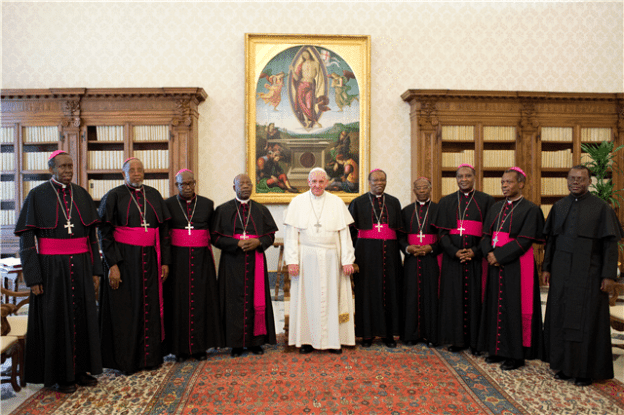
JEANNE MUKAMURENZI ARAHAMAGARIRA ABEPISKOPI GATOLIKA B’U RWANDA KUGIRA UBUTWARI BWO KURENGERA RUBANDIGOKA

Ibaruwa ifunguye ya banyiricyubahiro Abepiskopi ba kilizaya gatulika mu Rwanda.

Ba Nyiricyubahiro, ndabasuhuje.

Ndagirango ngire icyo mvuga ku ibaruwa yanyu mwanditse mwamagana itegeko ryo gukuramo inda mukanayishyiraho imikono taliki 19 Ukwakira 2018.

Ba Nyiricyubahiro,

Iyi baruwa yagombaga kwandikwa igihe abazunguzayi barimo bakubitwa na Daso.

Iyi baruwa yagombaga kwandikwa igihe Umubyeyi Tewodonsiya Uwamahoro yicwaga ubwo yari yagiye kuzunguza agataro mumujyi wa Kigali mu buryo bwo gushaka icyatunga abana be, yishwe n’abashinzwe umutekano ahetse umwana kugeza na n’ubu ntawe uzi uko impfubyi yasize zibayeho.

Iyi baruwa yagombaga kwandikwa igihe abana 3 batwikirwaga muri ruhurura babiri bakahasiga ubuzima undi umwe agashya bikomeye ngo hagamijwe gukora isuku muri Kigali.

Iyi baruwa yagombaga kwandikwa ibaza ubuyobozi bw’URwanda irengero rya Illuminée Iragena waburiwe irengero kugeza magingo aya azira gusa ko yagemuriraga victoire Ingabire, umuryango we ugizwe n’umugabo n’abana bakameneshwa batamenye irengero ry’umuntu wabo.

Iyi baruwa yagombaga kwandikwa yamagana ubutegetsi burandura imyaka y’abaturage, bakabuzwa guhinga ibyo bashaka mu mirima yabo n’abagize amahirwe yo guhinga bakabuzwa kubisarura bikaborera mu mirima (ibirayi) cyangwa bikababorana byabuze isoko kubera politiki mbi y’ubutegetsi bwa FPR ishaka kugena uko umuturage abaho bikaviramo uduce tumwe kwibasirwa n’inzara ahandi imyaka iborera mu mirima cyangwa mu kusanyirizo.

Iyi baruwa yagombaga kwandikwa yamagana akarengane k’imfungwa zuzuye muri gereza zimazemo imyaka zizira ubusa.

Iyi baruwa yagombaga kwandikwa yamagana igikorwa cyo gufungira ababyeyi ibyara batahaye uburenganzira abaribafungiye.

Ba Nyiricyubahiro,

Iyi baruwa yagombaga kwandikwa yamagana kuzamurwa mu mapeti abasirikare barimbaguye imbaga, barimo Fred Ibingira wishe abihaye Imana bagenzi banyu i Gakurazo akabicana n’umwana muto Richard Sheja.

Iyi baruwa yagombaga kwandikwa isaba ko Abepiskopi biciwe i Gakurazo bashyingurwa mu cyubahiro.

Ba Nyiricyubahiro, mwanditse mwamagana abakuramo inda zitaravuka, hari abavutse bicwa buri munsi mu Rwanda. Ese ababica bazamaganwa na nde Ba Nyiricyubahiro?

Ese abicwa ntibavukiye kubaho, ubuzima bwabo bukubahwa ntibuvogerwe?

Ba Nyiricyubahiro, ntarirarenga kuko akarengane karacyari kose mu Rwanda.

Nk’uko mwamaganye itegeko ryo gukuramo inda, nimwamagana ubutegetsi bwica abene gihugu buri munsi, nimusabe ubutegetsi buhotora rubanda gusubiza inkota mu rwubati.

Nimwamagane politike ikenesha abaturage.

Ni mwamagane politike ishyira abaturage mu byiciro by’ubudehe batarimo bituma abakene nyakujya badafashwa ngo kuko bari mu cyiciro cy’abifashije mu gihe badafite n’urwara rwo kwishima.

Ni mwamagane politike y’urugomo irandura imyaka y’abaturage.

Ni mwamagane politike irobanura impfubyi, aho imfubyi zimwe zifashwa izindi ntizifashwe.

Nimwamagane politike y’urugomo isenyera abaturage.

Nimwamagane politike ishimuta abaturage, igatuma imiryango myinshi ihorana impagarara za mbonye ndamuka sinzi uko ndibwiriwe cyangwa ndara.

Ni mwamagane politike irasa abaturage ku manywa y’ihangu.

Nimwamagane agatsiko k’abayobozi gasahura umutungo w’igihugu mu gihe rubanda ikomeza kwicwa n’inzara.

Ni mwamagane politike iheza abanyarwanda hanze.

Ni mwamagane abayobozi batsimbarara ku butegetsi bakica, bagafunga bakanatoteza undi munyapolitike cyangwa umunyarwanda wese utabona ibintu kimwe nabo.

Nimwamagane politike ya gashoza ntambara mu bihugu by’abaturanyi biviramo abanyarwanda kutarenga imipaka ngo bahahirane n’ibihugu by’abaturanyi.

Ba Nyiricyubahiro, aho ubuzima bw’igihugu cyacu bugeze, birasaba ijwi ryanyu rya kibyeyi gutakamba, ritabariza abarengana rikamagana abarenganya Intama z’Imana.

Amajwi yanyu ntarangirire mu kwamagana abashyiraho itegeko ryo gukuramo inda. Ni murangurure amajwi yanyu mwamagane abica abavutse.

Ba Nyiricyubahiro, ibaruwa mwanditse ibe ikimenyetso cy’uko nta munyarwanda uzongera kwicwa ngo muceceke mutabyamaganye,

Nta muturage uzarandurirwa imyaka ye, agasenyerwa mugaceceka, abantu bagafungirwa ubusa mugaceceka.

Bibe ikimenyetso cy’uko Ba Nyiricyubahiro bagiye kurwanya akarengane gakorerwa rubanda. Ibe ikimenyetso cy’uko Ba Nyiricyubahiro batazarebera mu gihe abaturage bahimbirwa ibyaha bagafungirwa ubusa.

Ibe ikimenyetso cy’uko intama zigiye kwisanzura mu rwuri kuko zizi ko zihagarariwe n’abashumba bazitayeho, urwuri zirimo ari ntavogerwa.

Ba Nyiricyubahiro, reka ndangize mbashimira ubushishozi muzakirana iyi baruwa.

Mbifurije kuyikuramo agasemburo gatuma murushaho kuba amajwi ndetse n’amaso y’abarengana mu gihugu cyacu bose.

Mugire amahoro y Imana.

Jeanne Mukamurenzi

Nyakimana : après Kibeho, un autre « Srebrenica » au Rwanda

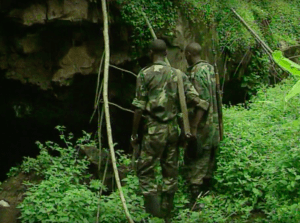
Entre le 23 et  le  28 octobre 1997, les soldats de l’Armée Patriotique Rwandaise (APR) ont tué entre 5000 et 8000 civils qui s’étaient réfugiés dans la grotte de Nyakimana pour fuir les représailles exercées par les soldats du Général Kagame dans le cadre de la guerre qui faisait rage entre ces derniers et les « abacengezi » au nord du Rwanda. Malgré que le nombre de victimes rappelle le massacre de Kibeho perpétré le 22 avril 1995[1]sous les yeux de la communauté internationale, dont des casques bleus de l’ONU, ainsi que celui de Srebrenica,  considéré comme étant « pire massacre commis en Europe depuis la fin de la Seconde Guerre mondiale », le massacre de Nyakimana reste fortement méconnu du grand public et notamment des Rwandais eux-mêmes.

Dans cet article Jambonews revient sur ce massacre qui est notamment documenté par Amnesty International dans son rapport  « Rwanda – Les civils pris au piège dans le conflit armé « On ne peut plus compter les morts ».

Entre le 23 et le 28 octobre 1997 : journées noires à Nyakimana

De nombreux civils non armés furent tués au Rwanda au cours de l’année 1997. La plupart des tueries étaient commises dans les préfectures de Gisenyi et de Ruhengeri, sur fond de guerre sanglante entre l’APR et les Infiltrés « Abacengezi ».

L’épisode de la grotte avait été précédé par des affrontements entre l’APR et des groupes d’opposition armés sur un marché de Mahoko situé dans la commune de Kanama, préfecture Gisenyi, entre le 8 et le 10 août 1997. Ces affrontements avaient emmené plusieurs milliers d’habitants, « terrorisés par les soldats de l’APR et par les groupes d’opposition armés (…)qui s’en prenaient aussi bien aux militaires qu’aux civils »  à quitter leurs foyers.[2] Ainsi les habitants des secteurs Bisizi, Kanama, Karambo et Kayove avaient fui vers les secteurs de Kigarama et de Mukondo.[3]

A la mi-octobre des soldats de l’APR faisaient irruption sur les lieux où vivaient les déplacés, en leur demandant de rentrer chez eux. La population avait refusé, évoquant le fait que l’insécurité qui l’avait poussée à fuir était toujours présente. En guise de réponse, les soldats de l’APR ont tiré sur la foule pour forcer la population à retourner chez elle. Amnesty International n’avait à l’époque pas pu vérifier le nombre de personnes décédées sur place sous les balles des militaires, ni le nombre de personnes décédées en chemin ou qui furent assassinées une fois reconduits chez eux dans le secteur de Kayove.[4]

Le reste des déplacés, estimés entre  5000 et 8000 personnes dont des femmes et des jeunes enfants  se sont réfugiés dans les grottes de Nyakimana afin d’échapper aux militaires de l’APR qui les prenaient pour cibles et avaient installé des barrages routiers pour les empêcher de fuir.[5]

Quelques jours plus tard, en date du 23 octobre 1997, les soldats de l’APR attaquèrent la grotte à l’aide de grenades et d’autres explosifs et condamnèrent ensuite l’entrée avec du ciment et des cailloux pour empêcher toute fuite tuant ou condamnant à une mort certaine toutes les personnes qui s’y étaient réfugiées.

Selon un témoin interrogé par la VRT, la principale chaine de télévision belge et qui a eu une vingtaine de membres de sa famille tués dans les grottes, entre 8000 et 12 000 civils de quatre secteurs, avaient pris l’habitude depuis plusieurs semaines de se réfugier dans les grottes en cas d’affrontements entre l’APR et les infiltrés « tous ceux qui sont entrés la dedans sont morts .»

L’intervention des médias internationaux

Ce massacre aurait pu passer inaperçu aux yeux de la communauté internationale sans les témoignages de personnes qui s’y étaient réfugiées et qui avaient pu en sortir in extremis. L’une de ces personnes, qui avait pu sortir le 23 octobre tout au début de l’attaque et n’avait pas pu retourner récupérer sa famille car les militaires assiégeaient la grotte à son retour, est partie à Kigali d’où il a alerté, par fax, le reste de sa famille en Belgique. C’est ainsi que le Centre de Lutte contre L’Impunité et l’Injustice au Rwanda (CLIIR), lança l’alerte aux médias et à la communauté internationale  par le communiqué n°22/97 du 22 novembre 1997.

Une fois ce massacre révélé, les autorités rwandaises nièrent dans un premier temps les faits mais finirent par prétexter que la grotte était une base arrière pour les Infiltrés et que dans ce cadre ils avaient bouclé les entrées pour empêcher les rebelles armés de fuir. Elles n’ont jamais admis que des milliers de civils non armés s’y trouvaient.[6]

Amnesty International a précisé ne pas avoir été en mesure de confirmer si, parmi la population cachée dans la grotte de Nyakimana, se trouvaient effectivement des éléments armés. Cependant, précise l’association de défense des droits de l’Homme « les informations obtenues des personnes présentes sur les lieux indiquent que ceux qui ont été tués entre le 23 et le 28 octobre étaient principalement des civils non armés, dont des femmes et de jeunes enfants qui étaient venus se mettre à l’abri. »[7]

Pour le centre de lutte contre l’impunité et l’injustice au Rwanda, « Les déclarations qui ont été diffusées par l’APR faisant état de la découverte d’un réseau de grottes servant de Centre de Commandement à la rébellion sont totalement fausses et visent à protéger les responsables militaires qui ont commis ce massacre de l’ampleur de celle de Kibeho. Contrairement à ce qu’elle a annoncé, la grotte ne contenait aucun infiltré. A moins que toute la population hutue ne soit considérée comme « infiltrée »! [8] 

Le Centre avait demandé à l’armée rwandaise de donner accès à la grotte aux observateurs des droits de l’Homme de l’ONU au motif que si comme elle le prétendait, « la grotte n’était qu’une base de la rébellion et ne contenait que des munitions et de la nourriture, elle ne devrait avoir aucune crainte de rouvrir la grotte et permettre son inspection par des enquêteurs indépendants », l’armée refusa catégoriquement d’accéder à toute demande d’inspection de la grotte par des observateurs indépendants.[9]

Le calvaire de Pierre Claver Nzabandora

Parmi les victimes piégées dans la grotte, figurent les quatre enfants de Pierre Claver Nzabandora, à l’époque responsable de la coopérative KIAKA, une coopérative regroupant les artisans de Kanama. En détresse, Nzabandora était allé, en compagnie d’autres civils, alerter les autorités locales sur le fait que ses enfants étaient dans la grotte et risquaient une mort imminente si aucun secours ne leur était apporté. En réponse, les autorités mirent au cachot tous les plaignants, ne les libérant qu’un mois et demi plus tard, suite aux critiques internationales que commençait à susciter l’affaire.

Au mois de décembre 1997, dans le cadre d’un reportage réalisé conjointement par la RTBF, Pierre-Claver Nzabandora a confié, à visage couvert, son calvaire aux journalistes belges : « Mes enfants étaient en train de fuir, ils ont croisé les gens qui fuyaient vers les grottes et les ont suivis. Nous avons essayé de contacter les autorités, quand nous avons expliqué la chose au bourgmestre, on nous a emprisonnés. Après un mois et demi ils nous ont relâchés. »[10]

Le 2 octobre 1998, quelques mois après son témoignage, il fut à son tour assassiné en plein jour lors d’une attaque contre la coopérative par « un groupe de 80 personnes en tenue militaire semblable à celle de l’Armée patriotique rwandaise ».[11]

Selon le témoignage d’un témoin oculaire parvenu au Centre de Lutte contre l’injustice et l’impunité au Rwanda, un assaillant a tiré froidement et à bout portant sur Pierre Claver Nzabandora, sans lui adresser la moindre parole.[12]

Durant l’attaque, plusieurs autres membres de la coopérative Kiaka, dont Gaëtan Nangwahafi, vice-président du CA et chef de la Section Traditionnelle, ainsi que plusieurs civils qui se trouvaient près des bâtiments, furent également tués.

« Les forces armées ont fait du très bon travail » selon Richard Sezibera

Face à l’ampleur que prenait l’affaire dans les médias internationaux, les responsables de l’APR organisèrent le 8 décembre 1997 une visite jusqu’à l’entrée de la grotte pour les journalistes. Alors que les autorités avaient dans un premier temps nié l’existence de cet épisode, face aux caméras internationales, et confrontées à l’odeur de cadavres qui émanait des grottes, les responsables durent admettre que des personnes avaient effectivement été enfermées dans les grottes mais ils affirmèrent qu’il s’agissait d’infiltrés qui s’y étaient repliés après avoir été repoussés par l’armée.

Après les avoir refoulés vers les grottes, l’armée aurait d’abord gardé les différents accès puis comblé ceux-ci. Dans le rapport d’Amnesty International, celui qui était à l’époque le porte-parole de l’APR et nommé depuis peu le ministre rwandais des Affaires étrangères du Rwanda (octobre 2018), le major Richard Sezibera, déclara : « Les forces armées ont fait du très bon travail. » Dans un autre reportage, il expliqua que les rapports des organisations de défense des droits de l’Homme font passer la situation comme si le gouvernement était en train de tuer la population, ce qui selon lui est faux, ce dernier estimant que ces accusations seraient formulées sans preuves.

« La guerre contre les Abacengezi a servi de prétexte pour réduire la population Hutu »

Aujourd’hui, 21 ans après les faits, les témoignages affluent. Patrick Horanimpundu qui vivait dans la région à l’époque du massacre et rescapé d’une épuration ethnique perpétrée dans sa commune, a ainsi raconté à Jambonews cet épisode : « Quand les soldats du FPR ont encerclé le secteur de Gihira, dans la commune de Giciye, mais dans la partie plus proche de chez moi à Gaseke, ils ont tiré sur les populations pendant toute la journée. Ne sachant pas comment fuir, les habitants se sont réfugiés dans une grotte. Ne voulant pas poursuivre leurs victimes dans cette grotte, les soldats ont bouté le feu aux pneus des véhicules placés à l’entrée de la grotte, dans le feu ils ont immergé du piment pour irriter leurs victimes et les pousser à sortir. Voyant qu’elles ne sortaient pas, les soldats ont lancé des grenades et se sont mis à tirer dans la grotte, et finalement ils ont fini par bétonner la seule entrée de la grotte, ne laissant aucune chance de survie aux centaines de personnes qui s’y étaient engouffrées, hommes, femmes et enfants confondus. »

Eric Maniriho, lauréat du Prix Jeunesse engagée 2018 décerné à Montréal par le Réseau international des femmes pour la démocratie et la paix a également raconté à Jambonews comment lui, en compagnie de plusieurs centaines d’autres civils qui fuyaient les exactions de l’APR, a échappé de peu au massacre de la grotte : « Quand je suis arrivé à la grotte, il y avait une longue file d’attente pour entrer, je me suis dit que quand mon tour d’entrée arriverait il serait trop tard et j’ai continué ma course. »

Du côté de l’APR, Judi Rever a pu recueillir le témoignage de  Serge qui vit actuellement en exil. Serge faisait partie de l’équipe DMI (Directorate of Military Intelligence, le service du renseignement militaire) qui a participé à l’attaque contre les civils réfugiés dans la grotte. L’opération a selon lui été dirigée et commandée directement par leur chef, le général Karenzi Karake. Il décrit que plusieurs brigades sont arrivées sur les lieux, où des milliers de civils et non des Infiltrés étaient cachés. Le 23 octobre 1997, témoigne-t-il, l’équipe DMI a interdit les accès à la grotte et les unités des militaires ont commencé à lancer des grenades dans l’entrée. Serge témoigne que l’attaque de la grotte faisait partie d’un grand schéma : « Il y avait un plan lors de la contre-insurrection d’éliminer la population civile dans le Nord, oui il y avait des Infiltrés qui essayaient de renverser le gouvernement. Mais la guerre contre eux a servi de prétexte pour réduire la population Hutu. Il n’y a pas de doute là-dessus. »[13]

Les victimes

Dans le rapport d’Amnesty International, quelques-unes des victimes mortes dans la grotte :

  • Uwimana, 27 ans, Dusabe 13 ans, et Murora, 8 ans, 3 sœurs
  • une femme nommée Dathive, son mari et leurs trois enfants ;
  • 5 enfants d’une même famille, le plus âgé ayant seulement 12 ans.
  • 20 membres d’une même famille, en majorité des femmes et des enfants :
    • Cécile Nyirabalisesa, 57 ans, ses filles et fils :
    • Nyiramajyambere, 25 ans
    • Marie-Claire Nyirabazimenyera, 29 ans, et ses 3 jeunes enfants, dont le plus âgé n’avait que six ans
    • Jean-Bosco Nshimiyimana, 27 ans, sa femme, et son bébé âgé de quelques mois.


Ruhumuza Mbonyumutwa et Constance Mutimukeye

Jambonews.net

[1]http://www.jambonews.net/actualites/20180422-kibeho-1995-20-ans-apres-un-massacre-aux-oubliettes-de-lhistoire-rwandaise/

[2]Amnesty international,  « Rwanda – Les civils pris au piège dans le conflit armé,  On ne peut plus compter les morts», mise à jour du rapport publié le 25 septembre 1997, p. 3.

[3]Centre de Lutte contre l’impunité et l’injustice au Rwanda, communiqué n°22/97 du 22 novembre 1997

[4]Amnesty international,o.c.p. 8.

[5]Ibid.

[6]Amnesty international, o.c., p. 9.

[7]Ibid.

[8]Communiqué n°22/97, o.c.

[9]Ibid.

[10]Son identité a été confirmée à Jambonews par Peter Verlinden, le journaliste ayant réalisé l’entretien.

[11]http://www.rwandavictimesoubliees.com/fr/victimes/nzabandora-pierre-claver

[12]Ibid.

[13]Judi Rever, “In praise of blood, the crimes of the Rwandan Patriotic Front”, Canada, Penguin Random House, 2018, p. 140.

Top Secret: Rwanda War Crimes Cover-Up

The United States and its allies are experts at covering their crimes and finding scapegoats to take the blame for them. They are doing it now with their disinformation campaigns against Russia, China, Iran, Venezuela, North Korea, and Syria. The show trials at the UN’s Yugoslav tribunal, the ICTY, were all about covering-up NATO’s war crimes and spinning lies to blame everything on the Serbs who resisted NATO’s aggression. They use their influence at the International Criminal Court for the same purposes. And now a document has come to light, leaked from the UN’s Rwanda war crimes tribunal, the ICTR, that contains a report on the war crimes of the US supported Rwanda Patriotic Front that invaded Rwanda from Uganda in 1990, conducted four years of terrorist operations against the Rwanda people and government, then in 1994 launched their final offensive and slaughtered their way to power. To discuss this document, marked “Top Secret” I have to burden the reader with a brief history of events from the evidence available in order to give it some context.

The night of April 6, 1994 the Hutu presidents of Rwanda and Burundi, Juvenal Habyarimana andCyprien Ntaryamira, and General Nsabimana, the Rwandan Army Chief of Staff, as well as several other dignitaries and a French flight crew were murdered when the plane they were on was shot down over Kigali airport by anti-aircraft missiles fired by members of the Tutsi-led Rwanda Patriotic Front, or RPF, with the assistance of the governments of several countries. Paul Kagame, the leader of the RPF junta now in control of Rwanda, and who was seen with US Army soldiers at his headquarters two days before the event, gave the final order for the shoot down but he did so with the assistance or complicity of the governments of the United States of America, Britain, Belgium, Canada, and Uganda. It was the United States and its allies, hoping to gain total control of the resources of Central Africa through their proxies in the Tutsi RPF, that provided the military support for the RPF invasion of Rwanda from Uganda beginning in 1990, flowing that support through Uganda.

It is known that the missiles used to shoot down the aircraft came from stockpiles the Americans had seized in their first war against Iraq, passed to Uganda, and it was in a warehouse at Kigali airport, rented by a CIA Swiss front company, that the missiles were assembled. In fact, the French anti-terrorist judgeJean-Louis Bruguiere, who spent several years investigating the shoot down on behalf of the families of the French flight-crew, told Boutros-Boutros Ghali, the Secretary-General of the UN in 1994, that the CIA was involved in the shoot down, adding strength to Boutros-Ghali’s statement to a Canadian journalist that the Americans are 100% responsible for what happened in Rwanda.

There is strong direct and circumstantial evidence that the Belgian and Canadian contingents of the UN peacekeeping force in Rwanda in 1993-94, known as UNAMIR, were also involved in the shoot down and assisted the RPF in their final offensive that was launched with the decapitation strike on the plane. It was the Canadian General Romeo Dallaire, Force Commander of UNAMIR, who arranged for one axis of the runway at the airport to be closed at the request of the RPF, making it easier to shoot down the plane as it tried to land.

ICTR3434323

Source: NEO

Dallaire consistently sided with the RPF during his mandate, gave continuous military intelligence to the RPF about government army positions, took his orders from the American and Belgian ambassadors and another Canadian general, Maurice Baril, in the Department of Peace-Keeping Operations in New York, then headed by Kofi Annan, lied to his boss, Jacques Roger Booh-Booh, about his knowledge of a build-up for a final Ugandan Army-RPF offensive, and turned a blind eye to the infiltration into Kigali of possibly 13,000 RPF combatants when they were permitted only 600 under the Arusha Peace Accords signed in October 1993. It was another Canadian, General Guy Tousignant, who took over from Dallaire after the RPF took power when UNAMIR II helped the RPF consolidate the rewards of its aggression.

Burundi was involved both by permitting 600 US Army Rangers to be situated in Burundi in case they were needed by the RPF and by invading Rwanda from the south in May, 1994 to link up with the RPF forces. Tanzania was involved in both the planning of the shoot down and, itself invaded Rwanda from the east and south blocking escape routes for the Hutu refugees fleeing the atrocities of the RPF in their sweep towards Kigali.

Finally, evidence indicates that Belgian UN soldiers were in the immediate area of the missile launch site at the time of the shoot down and were also involved.

The report into the shoot down of the plane by the French investigative judge Jean-Louis Bruguière was leaked to the French newspaper Le Monde in 2004 and states that the RPF was responsible with the help of the CIA. But before the French judge began his investigation The Chief Prosecutor for the Rwanda tribunal, Canadian judge Louise Arbour, the same woman that framed up President Milosevic on behalf of the USA at the Yugoslav tribunal, was told in 1997 by her lead investigator, Australian lawyer Michael Hourigan, that it was the RPF commando group known as the “Network”, with the assistance of a foreign power, implicating the CIA, that was responsible for the shoot down.

At that point Arbour, instead of prosecuting everyone involved, as she should have done, on American instruction, ordered the investigation closed and kept secret thereby making her an accessory to a war crime. The facts relating to Arbour’s action is detailed in Michael Hourigan’s affidavit, still available on the internet and his report to the Office of Internal Oversight of the UN.

During the war crimes trials at the Rwanda tribunal defence lawyers, representing the only group targeted for prosecution, the side that tried to resist aggression, members of the Rwandan government, its armed forces and officials as well as Hutu intellectuals, demanded full disclosure of all the evidence the prosecution had relevant to what happened in the war and the allegations of war crimes made against our clients. In the trial of my client, General Ndindilyimana, Chief of Staff of the Gendarmerie, who after a long struggle was finally acquitted, made repeated requests for disclosure of that evidence but we never received the complete disclosure we demanded because over time we became aware that the prosecution had much more material than they were willing to show us.

One famous example of this is the Gersony Report made by Robert Gersony, a USAID, official seconded to the UN, who filed a report to the High Commissioner For Refugees in October 1994 setting out his findings that the RPF forces engaged in the systematic massacres of Hutus across Rwanda during their offensive, which he characterized as genocide. This report too was kept secret by the UNHCR and by the prosecution lawyers in our trial who even denied that it existed. But in 2008 my team found it by chance, and in the prosecution files, and I was able to produce it into evidence in the trial, along with a letter from Paul Kagame dated August of 1994 in which he refers to a meeting with Ugandan president Museveni in which the “plan for Zaire” was discussed. Those two agreed that the Hutus were in the way of the “plan” but Kagame stated that they were working with the Belgian, American and British intelligence services to execute the “plan” and the problem would be solved, The world has since seen what this ‘plan” involved; the invasions of Zaire, the extermination of hundreds of thousands of Hutu refugees, the killings of millions of Congolese in the wars that followed, as detailed in the leaked UN Mapping Report of 2010, and the shattering of Congo into fragments to be easily exploited by western mining companies.

Yet, little did we know as our trial proceeded that the prosecution had in their hands another document, an internal report dated October 1, 2003 in which their own investigators list and describe in 31 pages the crimes of the RPF forces they had investigated. This report, designated Top Secret, has recently been leaked and a copy was sent to me, among others, to examine and it is as damning of the RPF, and therefore their western allies, as the others.

The document, with the subject reference General Report on the Special Investigations concerning the crimes committed by the Rwanda Patriotic Army (RPA) during 1994’ was sent to the then Prosecutor Hassan Jallow by three members of the Prosecution Special Investigations Unit. It provides to the Prosecutor the evidence they had gathered that the RPA had committed massacres of thousands of Hutus in various places across Rwanda, for example, Byumba, Kabgayi, Rambara, Gitarama, and Butare, as well as the murder of three Catholic bishops and nine other priests at a church. The circumstances set out in the report confirm Gersony’s Report of similar massacres and also confirms witness testimony we heard during the trials that the RPA forces had infiltrated men into civilian barricades to kill people in order to pin the crimes on the Rwandan government forces and the youth group known as the interahamwe.

Finally they provide, once again, further evidence that the RPA did shoot down the presidential plane, confirming the findings of Michael Hourigan in 1997 detailed above and which Louise Arbour had ordered kept secret, confirming the findings of the French report and confirming the evidence we filed at trial to the same effect, including a radio intercept from Kagame to his forces, the day after the plane was hit, celebrating the downing of the plane as a successful operation. It is a very important and damning report. Kept secret. One wonders how many more secret reports they have.

There is not space here to detail the horrific crimes set out in the document, or to relate to you the evidence we heard at the trials-what one Hutu refugee, speaking of the hunting down of Hutu refugees in the Congo by the RPF forces, assisted by spotter planes with US Air Force markings, called the “genocide with no name,” so I provide just a few examples from this document to give readers the picture. On page 28, in reference to the capital city of Rwanda, Kigali, it states:

Camp Kanombe (a government military base) at the end of May 1994. When the RPA captured Kanombe, approximately 1500 civilians had taken refuge in the camp. They were all massacred by the RPA.’

Kanombe Airport, at the end of May 1994, approximately 200 to 300 civilians of all ages were brought …and executed.”

Masaka, Kanombe commune, end of July 1994, – in 5 days approximately 6,000 women children and men were executed with their arms tied behind their back at the elbow.

Camp Kami, during the capture of the camp by the RPA thousands of civilians who had taken refuge there were executed”

The picture is clear. Yet, to this date not a single member of the RPF or their western allies has been charged for their responsibility for these crimes and Paul Kagame, who ordered these killings, is hosted with smiles by leaders from Canada to France to China. The prosecutors who decided to protect these war criminals, and who, by withholding evidence of what really happened, obstructed justice, conspired to frame up those standing accused before the tribunal, turned international justice into a travesty, and gave these criminals immunity from prosecution and encouragement to commit more crimes have moved on to lucrative positions. Fatima Bensouda, one of those former ICTR prosecutors, is now the prosecutor of the International Criminal Court.

Where is the justice for the 6,000 men, women and children murdered at Masaka? Where is the hue and cry for the head of Paul Kagame as there was for the head of President Milosevic and the allegations he faced or as President Aassad of Syria faces? Where is the hue and cry for the head of General Dallaire, or for Louise Arbour, who condoned these crimes, as there was for General Mladic regarding the allegations about Srebrenica? There is none. Instead they are made celebrities, for we live a world in which criminals have seized hold of morality and justice and hanged them from a tree.

*

Note to readers: please click the share buttons above. Forward this article to your email lists. Crosspost on your blog site, internet forums. etc.

Christopher Black is an international criminal lawyer based in Toronto. He is known for a number of high-profile war crimes cases and recently published his novel “Beneath the Clouds. He writes essays on international law, politics and world events, especially for the online magazine “New Eastern Outlook.” He is a frequent contributor to Global Research.

Remaniement ministériel au Rwanda: deux poids lourds quittent le gouvernement

Au Rwanda, le président Paul Kagame a remanié son gouvernement. Il concerne notamment deux portefeuilles stratégiques : les Affaires étrangères et la Défense. Pour le premier, Louise Mushikiwabo, élue à la tête de la francophonie, laisse sa place quant au ministre James Kabarebe, il devient conseiller spécial du président.

C’est tout d’abord un gouvernement plus restreint, plus féminin qu’a désormais le Rwanda. Le nombre de ministères passe de 31 à 26, dont la moitié est occupée par des femmes. Après l’Ethiopie, il y a quelques jours, le Rwanda devient donc le second pays africain à respecter l’équilibre paritaire. « Ce nouveau remaniement vise à rendre le gouvernement plus structuré, plus efficace et davantage axé sur les services aux populations », expliqué la présidence dans un communiqué officiel.

Le gros changement de ce gouvernement, c’est le départ de deux poids lourds. Après dix ans à la tête de la diplomatie rwandaise, Louise Mushikiwabo s’en va pour devenir la nouvelle secrétaire générale de la Francophonie. Elle est remplacée par Richard Sezibera, ancien secrétaire général de la Communauté d’Afrique de l’Est. Plus inattendu, c’est le départ d’un des piliers du régime, James Kabarebe. Ministre de la Défense depuis 2010, ex-chef d’état-major de l’armée, et ancien compagnon de lutte du président Kagame lors du génocide, ce dernier occupera désormais le poste nouvellement créé de conseiller spécial du président pour les questions de sécurité.

S’agit-il d’une promotion ou d’une mise à l’écart ? James Kabarebe fait partie des sept proches du président Kagame inculpés en France dans l’enquête sur l’attentat contre l’avion du président Juvénal Habyarimana, qui a précipité le génocide en 1994. Sept personnes contre qui le parquet de Paris a justement demandé la semaine dernière l’abandon des poursuites faute de preuves suffisantes.

Pour le chercheur André Guichaoua, il faut comprendre ce qu’il considère comme « l’éviction » de James Kabarebe dans ce contexte et dans celui de l’élection de Louise Mushikiwabo à la tête de la Francophonie. « James Kaberebe est le personnage-clé de la procédure engagée en France, rappelle-t-il. Au vu des succès récents acquis au niveau international, il faisait tâche d’autant plus qu’il avait plus ou moins été mis en retrait depuis plusieurs années, surtout depuis la relance de la procédure en 2017 quand il a été à nouveau convoqué par Paris ».

Kabarebe sort-il du jeu ? Une analyse contestée par des responsables rwandais. Si James Kabarebe perd en visibilité, il ne perd pas en influence et garde un regard sur la Défense.

RFI

Iperereza rya LONI (TPIR) ku bwicanyi bw’abasirikare bari aba FPR (APR) mu w’1994

Ku itariki ya 01 Ukwakira 2003, Lejmi Muhamed Ali, Hamidou Maiga, Jean Bastarache, bandikiye Umushinjacyaha mukuru muri TPIR Hassan Boubacar Jallow, ku bijyanye na raporo ku iperreeza ku bwicanyi bwakozwe n’ingabo zari iza FPR, bashyikirije mu mwaka w’1994. Imyaka 15 irashize. Turabaza umutumirwa wacu niba raporo nk’iyi izagera aho igahabwa agaciro k’icyo yari yateguriwe. Kuki bitashobotse mbere?

Ni mukiganiro naAmb Jean Marie Vianney Ndagijimana tariki ya 05/10/2018

LECP INFO

TUGIYE GUTANGIZA « MARCHE DE LA REVOLUTION »

Itangazo rigenewe itangazamakuru

TUGIYE GUTANGIZA « MARCHE DE LA REVOLUTION »

Nyuma y’ifungurwa rya Madamu Victoire Ingabire UMUHOZA ryo ku itariki ya 14/09/2018, Ishyaka Ishema ry’u Rwanda ryishimiye gutangariza Abanyarwanda inshuti z’u Rwanda n’imiryango mpuzamahanga ibi bikurikira :

1. Twishimiye ko Madamu Victoire INGABIRE UMUHOZA yafunguwe akavanwa mu buroko yari amazemo imyaka umunani azira akamama. Gusa ibi byishimo ntibikuraho icyaha gikomeye uyu mutegarugori yakorewe cyo kwamburwa uburenganzira bwe bwo guhatanira amatora ya Perezida wa Repubulika mu mwaka w’2010. Birakwiye ko abagize uruhare mu kugambanira, gushinja ibinyoma no guca urubanza rwo kubamba Ingabire Victoire UMUHOZA bagenerwa ibihano ntangarugero kugira ngo umuco wo kurenganya abenegihugu uranga ubutegetsi bwa FPR Inkotanyi ucike burundu.
2. Dushyigikiye byimazeyo umugambi wo gukorera politiki imbere mu gihugu kugirango hafungurwe urubuga rwa politiki kandi haboneke inzira ihamye yo kubohoza rubandigoka, imaze guhindurwa inkomamashyi n’abagererwa, nk’uko byahozeho mbere ya Revolution ya Rubanda yo muri 1959.


3. Tuributsa ko umugambi wo gucira INGABIRE Victoire ishyanga Kagame yashyize ahagaragara tariki ya 19 /09/2018 yawugeragereje ku ikipe y’Abataripfana yari igizwe na Padiri Thomas NAHIMANA, Madamu Claire Nadine KASINGE, Bwana Venant NKURURNZIZA na Bwana Skyler KEJO  ku matariki tariki ya 23/11/2016, na 22/02/2017. Mu gihe aba Bataripfana biyemezaga kujya gukorera politiki mu gihugu gakondo cy’abasogukuruza babo, KAGAME yanze ko binjira ku mbibi z’u Rwanda. Politiki yo kwishongora ya Bwana Paul Kagame no gucira ishyanga abanyarwanda batavuga rumwe na we, ni amahano ku benegihugu twese, tukaba tugomba kuyirwanya no kuyamaganira kure.
4. Mu rwego rwo guca iyi « politiki ya mucirishyanga » yadukanywe na Paul Kagame n’agatsiko k’ Abanyamurengwebagashize akuriye, Abataripfana biyemeje gusubukura umugambi wabo wo kwerekeza mu gihugu cy’abakurambere bemye mu rugendo bise « Urugendo rwa Revolusiyo » (Marche de la Revolution).

Bityo rero turasaba abanyarwanda bose

A. gufatana urunana muri uru « rugendo rwa Revolution » kugirango umugambi wo guhagurukira gufunguza urubuga rwa politiki no kubohoza rubandigoka ugerweho byihuse

B. Gukomeza gushyigikira no gukurikirana ibikorwa by’abalideri bahagurukiye by’ukuri uru rugamba rwo gutabara Rubandigoka yatawe ku munigo n’agatsiko k’Abanyamurengwebagashize

C. Kudakangwa n’imvugo z’iterabwoba z’umunyagitugu Paul Kagame ahubwo buri munyarwanda akamenya ko afite uburenganzira n’inshingano zo kutemera gukomeza kugirwa inkomamashyi n’umugererwa mu gihugu cyamwibarutse.

D. Kwemera kwitangira igihugu cyawe kabone nubwo wakimenera amaraso nibibangombwa no guhaguruka nk’abitsamuye tugatera ingabo mu bitugu Madame INGABIRE UMUHOZA Victoire, ukomeje kugaragaza ubutwari ntangarugero.

Turashimira abakomeje kutugaragariza ko bashishikajwe n’ubufatanye mu bikorwa byo kwihutisha Revolution ya Rubanda igamije gukuraho ubutegetsi bw’agatsiko k’Abanyamurengwebagashize no kwimika bidasubirwaho ubutegetsi bwa Rubanda, bushyizweho na Rubanda kandi bukorera Rubanda.
Urugendo rwa Revolusiyo twese ruratureba

Bikorewe Montreal kuwa 23/09/2018

Mme Nadine Claire Kasinge,
Presidente w’Ishyaka Ishema ry’u Rwanda