Monthly Archives: March 2023

‘Hotel Rwanda’ hero Paul Rusesabagina returning home to San Antonio.

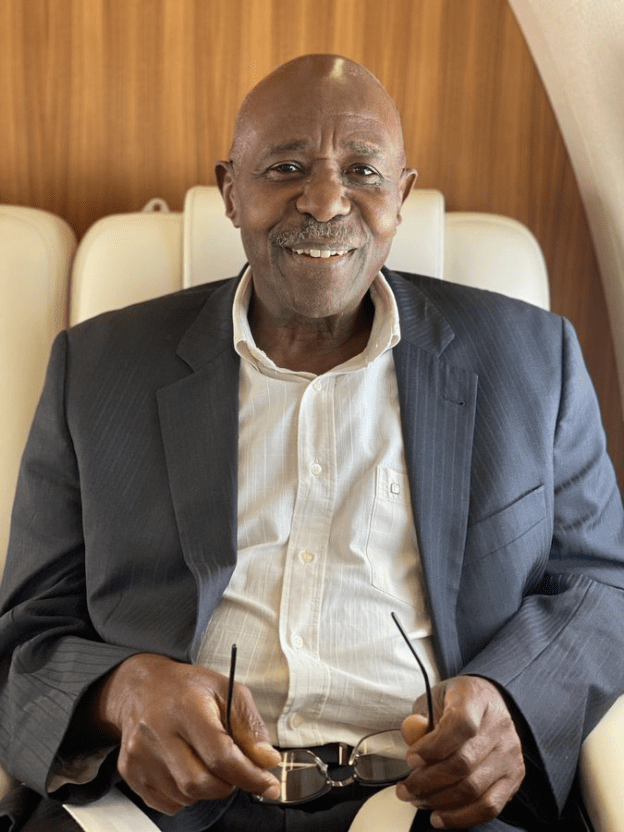
Paul Rusesabagina, who hid more than 1,000 potential victims of genocide in Rwanda in 1994, has come home to San Antonio. 

Kidnapped and imprisoned for 2½ years by a Rwandan regime lambasted by the European Union for its human rights abuses, Rusesabagina, 68, was released last weekend and landed Wednesday afternoon at Houston’s George Bush Intercontinental Airport. From there, he was to enter Brooke Army Medical Center in San Antonio.

“They have LANDED!” Kathleen Tobin Krueger, wife of the late Ambassador Robert Krueger and a close friend of the Rusesabagina family, said in a text message just before 4 p.m.

At BAMC, he’ll be cared for in a facility known for its treatment of former prisoners of war and hostages. Its patients have included three Americans held captive for five years by rebels in Colombia and WNBA star Brittney Griner, who was released in December from a Russian penal colony where she was held on drug charges.

Continue reading

Climat toxique à l’OIF selon un sondage interne

Les chiffres sont troublants : 44 % des répondants pensent avoir été victimes de harcèlement moral au travail, et 9 % de harcèlement sexuel.

En outre, 46 % affirment n’avoir pas été en mesure d’en parler ou de le signaler, et 75 % de ceux qui l’ont fait pensent que cela n’a pas abouti ou ne savent pas si cela a abouti à une solution.

Selon le document, la consultation vise à préparer la mise en œuvre de politiques en matière de fraude, de cadeaux et de harcèlement au travail. L’objectif de cet exercice est de permettre au comité du personnel de mieux comprendre votre connaissance, vos perceptions et vos attentes dans ces domaines, en particulier sur le harcèlement moral et/ou sexuel, peut-on y lire.

Continue reading

RUSESABAGINA TO BE FREED FROM KIGALI PRISON: ON WHAT CONDITIONS?

On March 24th, 2023; the government of Rwanda through its Minisiter of Justice, informed the public of the upcoming release of political prisoners sentenced over charges related to military attacks by the rebel movement FLN (Forces de Libération Nationale), the armed wing of the MRCD (Mouvement Rwandais pour le Changement Démocratique). Paul Rusesabagina is said to be among those to be released. While the government of Rwanda is advancing the presidential grace a the sole reason of this release, diffferent observers think that foreign governments might have played a key role in brokering the deal to set free Rusesabagina. Here is what is known on this case.

In August 2020, Paul Rusesabagina, a belgian citizen and US permanent resident boarded a plane he believed was heading to Bujumbura, Burundi, where he was expected to deliver key speeches in conferences on peace and reconciliation. It is believed that he was drugged, and slept to wake up at Kigali International airport where he was arrested immediately. He was held incommunicado for about ten days before he was presented to media. The Government of Rwanda kept changing versions of what really happened but all brought to conclude that the illegal rendition was masterminded, financed and operated on orders from Paul Kagame himself. Rusesabagina was accused to have formed armed group that aimed at dethrowing Paul Kagame. Along with dozens of former FLN’s combatants, including the movement’s Spokesperson illegally arrested and deported from the Comoros, Rusesabagina faced the court action under what was seen as sham trial. He was sentenced to 25 years.

Continue reading

Rwanda has to investigate killings of opposition members

On this International Right to Truth Day, I want justice for my colleagues who were killed or disappeared while fighting for a truly democratic Rwanda.

Today, we observe the International Day for the Right to the Truth Concerning Gross Human Rights Violations and for the Dignity of Victims. One purpose of this important annual observance, as stated by the United Nations, is to “pay tribute to those who have devoted their lives to, and lost their lives in, the struggle to promote and protect human rights for all”. The list of such people is long in my country, Rwanda. It includes members of opposition groups, independent activists and journalists, among many others.

While all those who fell in the battle to uphold human rights in Rwanda deserve to be remembered and honoured on this day, here I would like to pay special tribute to those who lost their lives, or disappeared, after responding to my call to struggle for the establishment of genuine democracy, respect for human rights and rule of law in our homeland.

Continue reading

Paul Rusesabagina of Hotel Rwanda fame to be freed from prison

THE SCOOP

Imprisoned political activist Paul Rusesabagina, whose story inspired the Oscar-nominated film Hotel Rwanda, will be released from his incarceration as early as Saturday morning, senior Rwandan and Qatari officials have told Semafor.

At the conclusion of a key cabinet meeting on Friday, Rwanda’s Minister of Justice, Emmanuel Ugirashebuja, plans to announce that Rusesabagina and twenty others sentenced with him on terrorism-related charges will have their prison terms commuted. Their underlying convictions will remain intact, according to two senior Rwanda government officials.

“Should any of these individuals return to the criminal activities for which they were originally charged, the sentence will be automatically reimposed,” one official said.

Rusesabagina, a high-profile critic of Rwadan President Paul Kagame, became a global celebrity after Hollywood memorialized his efforts to save more than 1000 Hutus and Tutsis during during his country’s 1994 genocide. But in 2021 he was sentenced to 25 years in prison on terrorism charges for his role leading the Rwandan Movement for Democratic Change, the dissident coalition whose militant wing Rwandan authorities accused of violent attacks resulting in civilian deaths.

Rusesabagina denied responsibility for the killings and in 2022 the U.S. State Department said he was “wrongly detained.” According to officials familiar with negotiations, that framing “evolved” in talks as the U.S. sought to acknowledge Rwandan concerns about the underlying security and terrorism issues involved in the case.

Rwandan officials plan to release a formal letter from Rusesabagina requesting a pardon from Kagame. In it, he expresses “regret for any connection” between his political work at the Movement for Democratic Change and acts of violence by its armed wing, as well as for “not taking more care to ensure that members” of his opposition coalition “fully adhered to the principles of non-violence in which I fully and deeply believe.”

Rusesabagina also writes that he will withdraw from Rwandan politics if released and “spend the remainder of my days in the United States in quiet reflection.” According to sources, the letter was prepared by Rusesabagina with assistance of his own legal counsels in the United States and Rwanda.

Title icon

STEVE’S VIEW

While details are still unfolding, both Qatar and the United States provided crucial help to secure Rusesabagina’s release. According to my sources, the Biden administration opened a channel from the White House that took a different approach to negotiations than previous U.S. government efforts, while the Emir of Qatar helped facilitate discussions about a “humanitarian” release. The countries reached a crucial compromise that opened the door to a deal by agreeing that Rwanda would not be expected to roll back the convictions of Rusesabagina and his associates.

A senior Rwanda government official told me that “the close personal relationship between Qatar Emir Tamim bin Hamad Al Thani and Rwanda President Paul Kagame played a key role in this equation, as did the very constructive tone from the White House seeking a reset in Rwanda-U.S. relations.”

While Semafor has not yet communicated with the Rusesabagina family, Qatari sources believe that after a short time in Kigali at the Qatar Embassy, the activist will be transported to Doha where his family may join him. And after some transitionary period, he will eventually travel to and live in the United States.

Title icon

NOTABLE

  • Kagame’s views on this issue have evolved dramatically in a matter of months. Speaking on stage at a Semafor event in December, the president suggested he had no plans to release Rusesabagina and half-joked that it would take a foreign “invasion” to free him. “We’ve made it clear there isn’t anyone going to come from anywhere to bully us,” he said at the time.
  • When I interviewed Kagame again this month at the Global Security Forum in Doha, he told me his government had begun discussions about freeing Rusesabagina, and struck a much softer tone, saying Rwandans “forgive the unforgivable” and “don’t get stuck with our past.”

Steve Clemons

SEMAFOR

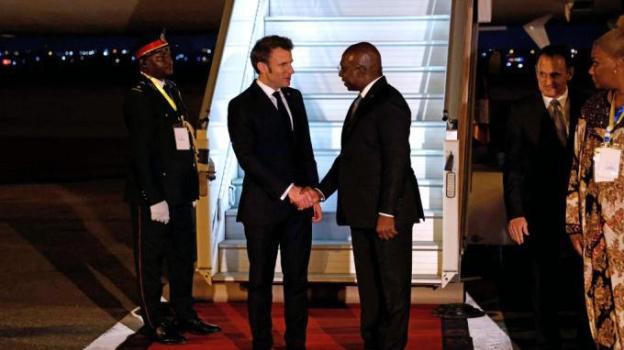
Emmanuel Macron se rend en Angola vendredi 3 mars, dans le cadre de sa tournée en Afrique. Ce pays n’a jamais fait partie de la sphère d’influence de la France. L’Angola importe énormément, l’Elysée espère nouer des liens avec ce pays.

Emmanuel Macron se rend en Angola vendredi 3 mars, dans le cadre de sa tournée en Afrique. Ce pays n’a jamais fait partie de la sphère d’influence de la France. L’Angola importe énormément, l’Elysée espère nouer des liens avec ce pays.

En Angola, la Françafrique ne pèse pas sur les esprits : c’est une ancienne colonie portugaise, le risque d’accusation d’ingérence dans la politique intérieure y est moindre que dans d’autres pays africains. Le pays a du pétrole, mais pas de denrées. Il importe quasiment tout ce que sa population consomme.

Face à cette faible, production l’Élysée souhaite en profiter pour nouer des relations avec l’Angola. L’idée est de proposer un appui pour développer l’agriculture du pays africain et de l’aider à mieux assurer sa sécurité alimentaire.

Des groupes céréaliers français sont du voyage

Pour ceIa, il va falloir pour cela identifier les bons produits à cultiver dans ce pays riche en eau. De grands groupes céréaliers sont du voyage pour apporter leur expertise. L’idée est aussi d’aider le président Lourenço à anticiper l’abandon des énergies fossiles et à s’assurer des revenus lorsque le pétrole ne sera plus une rente pour l’Angola.

Mais face à la Chine, à la Russie, déjà présente, la France part, peut-être, avec un train de retard dans cette bataille d’influence économique. “Nous verrons ce que l’on nous demande“, rétorque l’Élysée qui semble vouloir y aller en douceur, tout en rondeur, pour sortir de son pré carré.

FranceInfo