Category Archives: Economy

Kagame regime’s false claims on financial self-reliance.

General Paul Kagame and his regime live in fantasy land. They tirelessly seek to impress the world that Rwanda is an African success story and development model. The latest big lie is that Rwanda is weaning itself off from foreign aid. This fantasy was floated by the minister of finance who spectacularly claimed in his budget speech that Rwanda is moving towards financial self-reliance:

”Total domestic resources and loans combined account for 85.8 percent of the entire budget of 2019/2020 fiscal year, which is a good indication towards our objective of self-reliance.”

A closer look at the 2019/20 budget shows the reverse. Kagame’s Rwanda remains a Banana Republic heavily dependent on foreign aid.

The 2019/2020 budget demonstrates the reverse of the regime’s claim that it is moving towards self-reliance.

According to Rwanda finance minister, the total budget for 2019/20 is RWF2.87 trillion or US$3.2 billion. He then says that RWF1,963.8 or US$2.1 billion will come from ”domestic resources.” Here, the minister’s story begins to fall apart. The US$2.1 billion to be raised from within Rwanda, in the minister’s own words ”include domestic borrowing.” Even though the minister does not reveal the amount of money that will come from domestic borrowing, he nonetheless indicates what will be generated from government via taxes. In the minister’s own words, ”tax revenue collections are estimated at Frw 1,535.8 billion which accounts for 53.4% of the total budget.” Put in another way, the regime’s own contribution to the 2019/20 is US$1.7 billion representing 53.4%.

This is embarrassing in a double sense. First, here is a regime that can mobilize only 53.4% of its budget from its own tax revenue but keeps boasting that it is an African success story. Second, here is a regime that thinks everyone else is stupid and will swallow its falsehoods.

Where will the rest of budget financing come from?

Government briefing donors during budget formulation, 2019

The rest of budget financing for 2019/20 will come from donor grants and loans — and of course, domestic borrowing. The ministry of finance describes donor financing of the budget as follows:

”The remainder of the budget will be funded through external sources worth Frw906.7 billion which accounts for 31.5% of the total budget. These include grants worth Frw409.8 billion (14.2%) and loans worth 497.0 billion (17.3%).

There goes Kagame’s financial self-reliance. As indicated in the ministry of finance’s statement, the external grant and external loan components of the 2019/20 budget amount to RWF9 billion or US$1 billion representing 31.5%.

Enormous amounts of foreign grants and loans go into Rwanda’s development budget.

According to the World Bank, 58.6% of capital formation in Rwanda comes from foreign aid.

There is worse news than foreign grants and loans that amount to 31.5% of Kagame’s budget. This is shown by the financing of the development budget as opposed to the recurrent budget. In 2019/20 Rwandan budget, 49.5% of the total budget is earmarked for the recurrent budget, while 40% will finance development budget.

The development budget amounting to RWF1.15 trillion or US$1.2 billion reveals an additional form of donor dependence by the Kagame regime. Donors will pump into the development budget some RWF458.2 billion or US$511 million versus the regime’s own funding of RWF694 billion or US$775 million. In other words, the difference between what Kagame and the donors will spend in capital formation is a mere US$264 million. And if 2017/18 is any indication, the Kagame regime may not fulfill its promises and donors may once again step in to supplement the development budget. Here is how the Ministry of Finance explains what happened in 2017/18:

”During the FY 2017/18, total actual capital expenditure amounted to 850 billion FRW…The increased performance under this category was driven by foreign financed expenditure and offset the shortfall in domestic capital financed. Regarding the domestically financed portion, the amount of 463 billion FRW spent was 23.4 billion FRW lower…This lower spending was due to some delays in completing all spending documents including those of tendering on time. While the excess in foreign capital expenditure was due to accelerated implementation of several on-going infrastructural projects especially in the roads sector.”

Wonders never cease in Kagame’s Rwanda

The Kagame regime claimed that it is moving towards financial self-reliance. Stripped of domestic borrowing, foreign grants, and foreign loans, the regime’s own contribution to the 2019/20 is US$1.7 billion representing 53.4%. This is not an indication that Rwanda is achieving self-reliance. Far from it. This is further evidence that in Rwanda, wonders never cease.

Source :Himbara
Kagame lies on corruption issues

Kagame Fed Nigerians A Flattery And A Big Lie In His Speech On Corruption
Open Letter To General Paul Kagame

Dear General, you accomplished two objectives in your speech on corruption delivered at Abuja, Nigeria, on June 11, 2019. First, you flattered Nigerian leaders that they lead a model African nation — wealth side by side with mass poverty notwithstanding. Second, you shamelessly lied to your Nigerian hosts that in Rwanda that you are Mr. Clean while your opponents fled Rwanda because they were corrupt. General Kagame, it’s a truism that politicians bend the truth. But in your case, the question is whether there is an element of truth in what you utter. Case in point is your Abuja speech on corruption.

Kagame flattered his hosts that Nigeria is a great achiever that makes Africa proud

Dear General, here is your flattery to your Nigerian hosts in your own words:

”I wish to start by calling to mind the greatness of this nation. The diversity, creativity, and ambition of Nigerians represent Africa. The achievements of Nigeria’s sons and daughters, here at home and in your global diaspora, make our continent proud. Nigeria has always shown common cause with Africa’s progress and prosperity, and this does not go unnoticed. This country is truly the engine of Africa’s potential. This is how we see Nigeria. I hope you know that.”

General Kagame, if you had said that Nigeria has the potential to be great, that would have been truthful. Your words are above are ill-informed, embarrassing, and clearly opportunistic designed to impress your hosts.

Despite its enormous wealth over half the population of Nigeria lives in poverty.
According to the World Bank, 53.5% of Nigerians are poor — defined as the population living on less than US$1.90 a day. With a population of 200 million, therefore, 107 million Nigerians are poor. Yet, Nigeria is Africa’s largest economy and the largest oil and gas producer on the continent .
The reason for enormous wealth side by side with mass poverty, as the eminent son of Nigeria, Chinua Achebe used to explain, is failure of leadership, social injustice, and corruption. Add to this mix the rise of Boko Haram, a jihadist terrorist organization that has caused havoc in northeastern Nigeria and beyond.

General Kagame, instead of uttering sycophantic phrases to your Nigerian hosts, a real African statesman would have encouraged them to lead Africa in fighting corruption since this was the topic being discussed. You could have also congratulated Nigerians in their current efforts to repatriate from foreign banks billions of dollars stolen by previous dictators. Nigeria has recently begun to recover some of the stolen assets — which is highly commendable.

Kagame’s description of corruption in Rwanda was a big lie

General Kagame, this is how you described corruption in Rwanda:

”We tend to focus on the petty corruption of everyday life while turning a blind eye to the more consequential forms, that people only whisper about because the rich and powerful are the main beneficiaries…Corruption does not take decades to eradicate. Huge gains can be made relatively quickly, once we decide to break the habit…Officials who did not live up to the agreed standards were dismissed or brought to justice. Others fled into exile and pretended to be so-called “opposition” or “pro-democracy” groups…Between fighting corruption and being authoritarian, I prefer being authoritarian. Some thought we could not afford to take this zero-tolerance approach, given the fragility of our environment. The truth, however, is that we couldn’t afford not to do it. It is the foundation of the modest progress for which Rwandans continue to work.”

General Kagame, these are pure lies. The people of Rwanda do not turn a blind eye to the more consequential forms of corruption. Rwandans know you are the kingpin of corruption but they dare not say so because you will wipe them out. Rwandans know you are the Chairman of the ruling party, the Rwandan Patriotic Front (RPF), which owns the business empire known as Crystal Ventures Ltd (CVL). This is how The Economist described the Rwandan situation:

“The dominant political party, the Rwandan Patriotic Front (RPF), does more than help business: it runs its very own conglomerate. Crystal Ventures, the RPF’s holding company, has investments in everything from furniture to finance. It owns the country’s biggest milk processor, its finest coffee shops and some of its priciest real estate. Its contractors are building Kigali’s roads. There are several firms offering security services in Rwanda but the guards from ISCO, part of Crystal Ventures, are the only ones who tote guns. The company is reckoned to have some $500m of assets.”

General Kagame, very simply, you have entrenched corruption and cronyism that would not be tolerated anywhere on the African continent.

Kagame and the history of the big lie

General Kagame, you are a perfect example of politicians who pretty much bend the truth as they please. In your case, the issue is not bending the truth — rather, the question is whether you have ever uttered an element of truth. You belong to the thinking pioneered and mastered by Joseph Goebbels who infamously said that ”if you tell a lie big enough and keep repeating it, people will eventually come to believe it.” Goebbels added:

”The lie can be maintained only for such time as the State can shield the people from the political, economic and/or military consequences of the lie It thus becomes vitally important for the State to use all of its powers to repress dissent, for the truth is the mortal enemy of the lie, and thus by extension, the truth is the greatest enemy of the State.”

General Kagame, you are the best pupil of Joseph Goebbels. You get away with the big lie because your regime has used all its might to smash dissent at home and abroad. Because you are fully aware that the truth is the mortal enemy of your big lie, you hounded out of Rwanda anyone who stood in your way. As the cliché goes, “history is written by the victors” — that is how you are able to call your victims who fled Rwanda the corrupt ones instead of you.

Best Regards,
David Himbara

Kagame signed US$100M to develop special economic zones. What will he do ?

Kagame Signed US$100 Million Indian Loan To Build Special Economic Zones

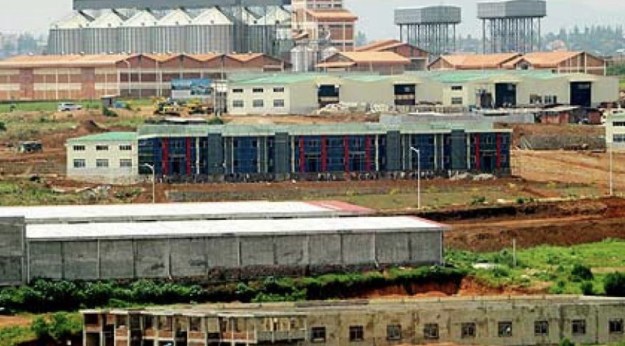
General Paul Kagame is into large loans to build large projects in the capital city, Kigali. Kagame just acquired another mega loan as indicated by his Presidential Order No 51/01 of May 20, 2019. Kagame’s decree ratified the loan agreement between his regime and the government of India via the Export-Import Bank of India. The loan amount is US$100 million. The purpose of the loan is to develop ”two special economic zones and the expansion of the Kigali Special Economic Zone”. The loan period is 25 years; repayment begins in 5 years from now.

Contractors restricted to Indian companies

According to the loan agreement, ”the bidding should be restricted to Indian companies registered in India and or incorporated under any law in force in India.”

What kind of economic zones are built by US$100 million?

Kigali Special Economic Zone

Special economic zones (SEZs) are typically packages of strong incentives aimed at attracting foreign direct investments. SEZs provide infrastructure, such as land and access to utilities including water and electricity. Other facilities provided in SEZs may include prefabricated factory units and warehouses.

My question is — what kind of infrastructure is Kagame building in his SEZs to warrant a US$100 million loan?

Will the Indian companies, perhaps, build a power plant to supply the badly needed electricity? Otherwise, it is hard to imagine how prefabricated factory units and warehouses can cost that much money. And, has the existing Kigali’s SEZ attracted any serious foreign direct investment before blindly sinking in US$100 million?As always, Kagame’s Rwanda is unfathomable.

Source : Himbara

Rwanda : 71 % of central government expenditure financed by foreign aid.

Kagame’s central government expenditure is financed by foreign aid to the tune of 70.9%. Rwanda is among the top three most aid-dependent countries in the world and the topmost aid-recipient state in East Africa. Kagame’s 2016 call for deadline to end aid addiction was empty rhetoric.

SUMMARY: What do we learn from the most recent Annual Activity Report of Rwanda Revenue Authority (RRA), namely, the 2017/2018 Report? Is the ability of Rwandans to pay taxes improving so as to achieve General Paul Kagame’s stated goal of ending the reliance on outsiders for basic sustenance? The taxpayer data in 2017/2018 RRA’s Annual Activity Report demonstrates that Rwanda’s prospects for lessening let alone ending aid-dependence are dismal. Kagame’s ill-conceived closure of the common border with Uganda, and by extension, Kenya, will undoubtedly sabotage Rwanda’s already wretched taxpayer base.

In 2016, Kagame called for a deadline to end Rwanda’s reliance on others.

In his “state of the Nation Address” of 2016, Kagame called for a deadline for restoring Rwanda’s dignity by ending the practice of “relying on others.” As Kagame put it:

”It is better to face things the hard way and go straight to the heart of any problem. An example, is something we have been talking about for a long time, the issue of relying on others to pay for things that benefit us. It is really a question of dignity, our agaciro. Therefore, among the decisions of this Umushyikirano, we should resolve to set a deadline, which should come sooner rather than later, after which Rwanda will no longer be waiting for what others hand out to us.”

This was a tall order. Rwanda is one of the top three most aid-dependent countries in the world, and the topmost aid-dependent state in the East African Community (EAC). Two World Bank indicators demonstrate this — foreign aid per capita and the percentage of foreign aid in the central government’s expenditure.

In the case of foreign aid per capita, Rwanda’s aid per capita is US$100 against Burundi at US$39; Kenya, US$50; Tanzania, US$45; and Uganda with an aid per capita of US$47. Foreign aid as a percentage of central government expenditure in Rwanda stands at 70.9%. There are only two countries in the world with a higher percentage of donor support to central government expenditure than Rwanda. These are Malawi at 127.9% and Micronesia at 120.6%.

Is Rwanda’s domestic capacity to generate revenue improving? Is the number of taxpayers increasing?

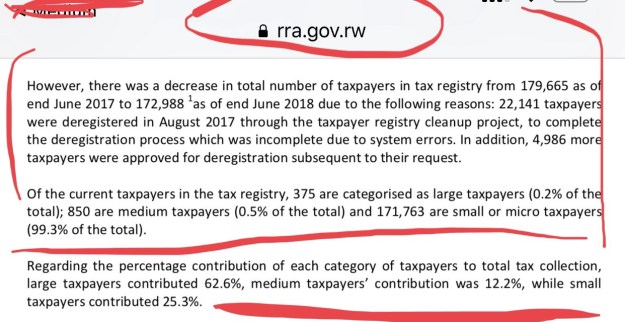
According to the 2017–2018 RRA’s Annual Activity Report, the number of taxpayers in Rwanda is 172,988 as of June 2018. RRA describes Rwandan taxpayers as follows:

”There was a decrease in total number of taxpayers in tax registry from 179,665 as of end June 2017 to 172,988 as of end June 2018…Of the current taxpayers in the tax registry, 375 are categorised as large taxpayers (0.2% of the total); 850 are medium taxpayers (0.5% of the total) and 171,763 are small or micro taxpayers (99.3% of the total). Regarding the percentage contribution of each category of taxpayers to total tax collection, large taxpayers contributed 62.6%, medium taxpayers’ contribution was 12.2%, while small taxpayers contributed 25.3%.”

In other words, the number of taxpayers in Rwanda decreased by 6,677 between 2017 and 2018. There is an even bigger problem than the drop in the number of taxpayers. That is the existing taxpayers’ ability to pay taxes which, naturally, are the means of ending the dependence on foreign aid.

Rwandan taxpayers’ ability to pay taxes is dismal.

As indicated by RRA’s data, of Rwanda’s 172,988 taxpayers, 171,763 or 99.3% are small and micro taxpayers. These are defined as entities having an annual turnover equal to or less than RWF 20 million (US$22,159). Put in another way, the number of taxpayers with an annual gross revenue of over US$22,159 is only 1,225 (0.7% of total taxpayers) comprising 375 ”large taxpayers” and 850 ”medium taxpayers.” The term “pitiful” describes both the profiles and capabilities of Rwandan taxpayers.

Kagame’s rhetoric on ending Rwanda’s dependence on foreign aid is just that — empty rhetoric.

Kagame’s Rwanda is Banana Republic per excellence. Rwandan taxpayers are mostly small and micro businesses. Shockingly, of 172,988 Rwandan taxpayers, only 1,225 or 0.7% have more than US$22,159 in annual gross revenue. Little wonder then that 70.9% of Kagame’s central government expenditure comes from foreign donations. Rwanda’s high foreign aid dependence is further illustrated by aid per capita. In comparison to its neighbours, Rwanda’s foreign aid per capita of US$100 more than doubles Burundi’s, and doubles that of Uganda. Kagame’s rhetoric of ending Rwanda’s dependence on foreign aid is just that – empty rhetoric. This gentleman has since February 27, 2019, closed the international that connects Rwanda to Uganda and to the Kenyan seaport of Mombasa via which a significant amount of Rwandan international trade is conducted. Preliminary reports indicate taxpayers in the transport sector that used to transport people on the Rwanda-Uganda-Kenya corridor have been decimated by this self-inflicted injury.


Rwanda destroys temporary bridges at border

A temporary crossing inside Rwanda. Several similar temporary bridges at the border have been destroyed to stop people crossing to Uganda

Kabale, Uganda

It has now become harder for Rwandan citizens attempting to sneak into Uganda against their government’s advice, to cross the border as several unofficial crossings have been blocked.

Rwandan Security Officers have reportedly destroyed all temporary bridges erected along Katuna, Gatuna and Mukensiyoona in Katuna Town Council to block Rwandan citizens from crossing to Uganda.

The development comes amid increased tension between Uganda and Rwanda.  For the last one week, the Rwandan border at Gatuna in Kabale, and Chanika, in Kisoro has been closed, blocking entry of hundreds of cargo trucks transiting through the busiest crossing point, to Kigali, and several other destinations.

Rwanda government instead advised cargo trucks to turn-back and use Mirama Hill border in Ntungamo district a distance of 100 kilometres away.

Amid the chaos, Rwanda, through its Minister of Foreign Affairs and International Cooperation, Richard Sezibera barred Rwandans from crossing into Uganda and accused Uganda of harbouring dissidents planning to topple the Kagame administration.

Despite the directive, Rwandan nationals neighbouring Ugandan borders continued to silently cross to Uganda especially to Katuna and the neighbouring areas through porous borders. Many of them were coming to Uganda to buy food for their survival, crossing through Gatuna and Mukensiyoona streams.

But Rwandan soldiers and police officers have now destroyed all the temporary bridges that were constructed along the streams.  Our area reporter says that there are police officers deployed at every footpath connecting the two countries, who are often replaced with heavily armed soldiers specifically to block Rwandan nationals from crossing to Uganda.

John Dushinzimana, a national found at Mukensiyoona market after escaping from Byumba in Northern Province, Rwanda to buy food says that all the temporary bridges at the streams separating the two countries have been destroyed and that the security personnel were whipping whoever attempted to cross through the porous borders.

Dushinzimana says that the blockage has left Rwandans stuck without food to eat and that most Rwandans are totally unhappy about the current situation.

Deus Ntahobari, another Rwandan national says that he crossed to Katuna on Tuesday to work for food to feed his family, but on returning back, he found all bridges destroyed. Ntahobari says that he decided to remain in Katuna in fear of being reprimanded for crossing into Uganda.

Jean Claude Afazari, another resident of Byumba in Rwanda says that the situation has forced him to cross back to Rwanda after witnessing from a distance how those who were caught crossing with food from Uganda were whipped. He adds that security officers poured paraffin in some of the food that had been bought by some of the residents.

Solange Mujawimana, a businesswoman dealing in agricultural produce is also stuck on the Ugandan side of the border. She says that although she used to buy foodstuffs from Uganda and sell them in Rwanda, her movement has now been curtailed.

Katuna Town Council Mayor Nelson Nshangabasheija says that tension is still mounting across the region. He adds that business at the border post has completely collapsed.

Speaking before parliament on Thursday, Prime Minister Dr Ruhakana Rugunda explained that Uganda is optimistic that the matter will be soon resolved.

Source : The Independent

Kagame’s worst case of insanity

Kagame Seized Ayabatwa’s Businesses And Says Uganda Must Do Same

General Paul Kagame extending his power beyond Rwanda’s borders.

Here comes the mother of surprises. According to the Observer newspaper, Kagame is demanding that Uganda closes Tribert Rujugiro Ayabatwa’s companies and kicks him out. Kagame apparently believes that Uganda’s President Yoweri Museveni and Ayabatwa are co-sponsors of Rwandan rebels seeking to remove him from power.

Somebody should inform Kagame of Albert Einstein’s definition of insanity. Einstein defined insanity as ”doing the same thing over and over again, but expecting different results.” Or, the English idiom ”The Boy Who Cried Wolf,” which describes someone unable to stop giving false alarm.

Kagame’s irrational and chronic hatred has driven him to decimate Rwanda’s business people using all manner of manipulative schemes. Case in point is Assinapol Rwigara. After his mysterious death, destruction of his hotel, and the auctioning of his factory in 2018, few genuine entrepreneurs remain in Kagame’s Rwanda.

Now we see a new phenomenon — Kagame is peeping outside Rwandan borders to finish the last business leader still standing. Uganda and other countries that host Ayabatwa’s businesses will not fall for the Boy Wolf noise. Ayabatwa has been doing business since 1970s when Kagame who struggling in secondary school. Ayabatwa built successful businesses in the East African Community (EAC), Southern African Development Community (SADC), The Economic Community of West African States (ECOWAS), Economic Community of Central African States (ECCAS), and the United Arab Emirates. This is a track record that any national leader would be proud of. But not General Kagame.

In fact, the only country in which Ayabatwa does not manufacture or trade his products is his homeland, the Republic of Rwanda. That is because Kagame grabbed Ayabatwa’s businesses and residences, including the flagship, the US$20 million Union Trade Center (UTC) shopping mall. Not only that — Kagame then revoked Ayabatwa’s citizenship, despite Article 25 of the Rwandan Constitution which reads in part: ”No one can be deprived of Rwandan nationality of origin.”

When Kagame was conducting this witch hunt, he claimed that Ayabatwa’s businesses were ”abandoned.” And now, Kagame is demanding that Uganda kicks Ayabatwa out, too, for a different reason — co-sponsorship of rebels with President Museveni. This is the worst case of insanity.

Kagame’s Vision City 2020 Became A Ghost Town

General Paul Kagame had a dream — build an ultra-modern city-within-a-city to showcase Rwanda’s socioeconomic transformation. The ultra-modern city-within-a-city would comprise of a variety of housing units, shopping malls, recreational and leisure facilities, restaurants, sports facilities, a three-star hotel, and a conference center. Kagame named his city-within-a-city Vision City 2020 which would be Africa’s housing wonderland with 4,500 units, including luxury villas and apartments with a capacity to accommodate over 22,000 people.

Construction began in 2013, and was completed in 2017-2018. By 2019, however, Kagame’s Vision City 2020 remained mostly empty — a ghost town. There were no buyers. The original prices of the housing units that ranged from US$179,000 to US$560,000 were sharply reduced but to no avail. General Kagame forgot one thing. In a country where most people earn less than US$1.90 a day, few can afford houses in his now ghost town.

The biggest losers in this fiasco are Rwandan workers. The money that built Kagame’s ghost town came from Rwandan workers’ pension fund — no less than US$150 million.

Source : David Himbara

La FAO craint la pénurie alimentaire fautede biodiversité

Le rapport est inédit, le tout premier d’ordre mondial sur l’état de la biodiversité qui sous-tend nos systèmes alimentaires. Paru vendredi 22 février, il révèle une grave menace pour l’alimentation, les moyens de subsistance, la santé et l’environnement.

Il s’agit d’un problème grave car irrémédiable: ce qui est perdu ne peut être récupéré. Les conséquences pour la faim dans le monde pourraient être importantes. «La perte de la biodiversité pour l’alimentation et l’agriculture compromet sérieusement notre capacité à alimenter et à nourrir une population mondiale en croissance constante. Cela réduit notre efficacité face aux défis croissants du changement climatique et limite notre capacité à cultiver sans nuire à l’environnement», a déclaré notamment José Graziano da Silva, directeur général de la FAO. Il rappelle que la sécurité alimentaire, déjà fragile aujourd’hui, est en péril.

Le rapport porte sur la biodiversité pour l’alimentation c’est-à-dire à la fois toutes les plantes et les animaux  qui peuvent être des aliments pour l’homme, mais aussi les animaux et l’ensemble des combustibles et des fibres. Il s’appuie sur les informations fournies spécifiquement pour son élaboration par 91 pays, de même que sur l’analyse des dernières données mondiales.

La base de nos systèmes alimentaires gravement menacée

Le rapport de 500 pages s’inquiète de la dégradation de la diversité végétale dans les champs avec 9 plantes qui représentent 66 % de la production agricole alors que 6 000 espèces existent. De même, le nombre de races d’élevage menacé de disparition est en hausse. Les stocks de poissons surexploités sont de plus en plus nombreux, représentant déjà 1/3 de l’exploitation totale. Le rapport signale aussi le déclin des aliments sauvages et la perte des pollinisateurs.

Les zones les plus touchées se trouvent en Amérique latine et aux Caraïbes mais aussi, de manière plus faible, en Asie Pacifique et en Afrique.

Les causes principales de la perte de la biodiversité alimentaire et agricole sont les changements dans l’utilisation et la gestion des terres et de l’eau, suivis par la pollution, la surexploitation et la surpêche, le changement climatique, la croissance démographique et l’urbanisation.

Le rapport souligne qu’il y a quand même un intérêt croissant pour les pratiques et approches respectueuses de la biodiversité.

Inverser les tendances menant à la perte de la biodiversité

Le rapport appelle à des changements de comportements, tout d’abord de la part des États, les cadres juridiques, politiques et institutionnels encourageant l’utilisation durable et la conservation de la biodiversité devant être développés.

La communauté internationale doit aussi s’attaquer aux causes de la biodiversités. Mais cela ne suffit pas, il faut aussi une prise de conscience, rappelle le rapport, incitant à améliorer l’état des connaissances sur la biodiversité pour l’alimentation et l’agriculture remarquant de nombreuses lacunes.

La collaboration entre les décideurs, les organisations de producteurs, les consommateurs, le secteur privé doit aussi être améliorée, le rapport encourageant le développement de marchés pour des produits respectueux de la biodiversité. Mais l’individu n’est pas en reste, selon le rapport, le rôle que peut jouer le grand public dans la réduction des pressions sur la biodiversité est important. Les consommateurs devraient pouvoir opter pour des produits cultivés de manière durable, d’acquérir directement sur les marchés des producteurs ou de boycotter les aliments considérés comme non durables.  C’est déjà le cas dans de nombreux pays où des «citoyens scientifiques» jouent un rôle important dans la surveillance de la biodiversité pour l’alimentation et l’agriculture.

Source:VATICANNEWS

Kagame is drowning Rwanda in debt

How donors wrote off Rwanda’s debts and thereafter Kagame accumulated new and larger debts

The Heavily Indebted Poor Countries (HIPC), 2000–2008, including Rwanda

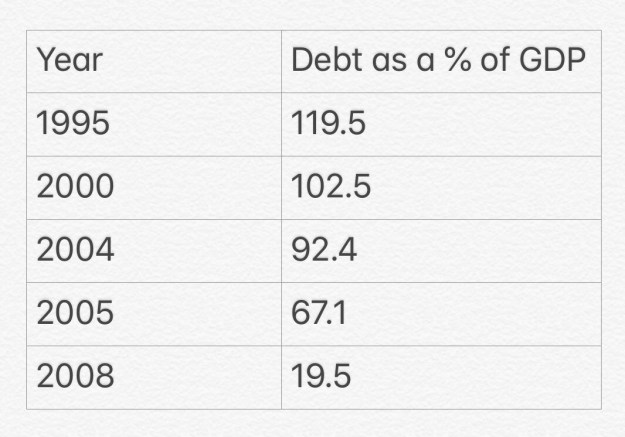
Under the Heavily Indebted Poor Countries (HIPC) Initiative, the larger part of Rwanda’s external was written off between 2000 and 2008. By 2008, donors had struck off US$1.4 Billion from Rwanda’s debt leaving US$688.9 Million.TABLE 1 shows the drastic reduction of Rwanda’s debt measured by the debt-GDP ratio.

TABLE 1 — Rwanda’s debt as a percentage of GDP, 1995 to 2000

Source: International Monetary Fund’s database

As indicated in TABLE 1, Rwanda’s debt was 119.5% of the GDP in 1995, dropping to 19.5% of the GDP in 2008. In other words, while Rwanda’s debt was bigger than its GDP in 1995-2000, the debt was sharply reduced to 19.5% of the GDP by 2008.

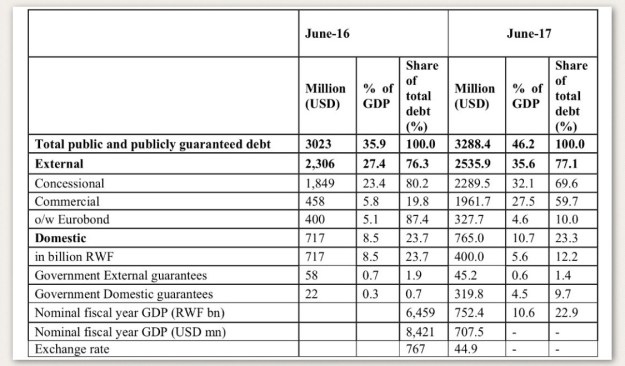
From 2010 to 2017, however, Rwanda reversed course, accumulating a massive debt. By 2017, as indicated in TABLE 2, Rwanda’s debt had steeply climbed to US$3.2 Billion, constituting 46.2% of the GDP. Servicing the external debt in principal and interests costs Rwanda US$72.3 Million annually.

TABLE 2 — Rwanda’s debt and its ratio to GDP in 2016 and 2017

Source: Rwanda Ministry of Finance, The Annual Economic Report Fiscal 2016/2017

How did Rwanda acquire the US$3.2 billion debt?

Kagame’s megaprojects — RwandAir, Kigali Convention Center, and Bugesera International Airport

The primary contributor to Rwanda’s debt are RwandAir and the Kigali Convention Center (KCC). The Bugesera International Airport (BIA) will also contribute to Rwanda’s indebtedness in 2019–2020.

RwandAir is the main culprit. By 2016, RwandAir had accumulated US$222 Million in losses. The government pumped in US$192 Million in grants. Additionally, the government gave the airline US$238 Million in loans, while loans from outside government were US$100 Million. This means that Rwanda government kept RwandAir afloat with US$430 Million in loans and grants between 2013 and 2016. When the US$100 Million external loan is added, US$530 Million was pumped into RwandAir between 2013 and 2016. In 2018, an additional US$87 Million loan for RwandAir was acquired — with the government indicating to the IMF that more loans for RwandAir were to follow:

”The indicative US$500 million ceiling on new external debt contracted by public enterprises was exceeded by US$87 million, due to a lease signed by Rwandair. To accommodate this as well as other leases in the pipeline, we propose to raise the indicative ceiling to US$800 million.”

For building KCC, Rwanda issued a US$400 Million Eurobond in 2013. The IMF indicated that Rwanda acquired a new loan for KCC as well as for RwandAir in 2016:

“In 2016, new debt associated with the KCC totaled US$160 million, 80 percent of which was external debt. RwandAir’s continued expansion included US$171 million in loans for two new aircraft and leases for two other aircraft which, together with associated debt servicing.”

Lastly, there is the Bugesera International Airport (BIA). BIA might have become Kagame’s biggest disaster. Recall that in September 2014, Kagame suddenly announced a Eurobond of up to US$1 Billion build BIA. Kagame proclaimed this at the African Leaders Summit in Washington, DC, asserting that he would more than double the US$400 million Eurobond he acquired the previous year. Thankfully, this did not come to pass — the insane idea died quietly.

BIA is now being built as private concession. Nonetheless, the government has indicated it will acquire loans in 2019-2020 amounting to US$163.6 Million ”to finance import of goods and services for Bugesera.”

And of US$326 Million loans borrowed from India and China in 2018, US$50 Million from the latter is earmarked to build the road from Kigali to Bugesera International Airport. This means that BIA loans for 2018 — 2020 will total to US$213.6 Million.

Kagame — or at least his finance minister now recognizes the tough road ahead in managing debt

The Budget Framework Paper for 2018/2019–2020/2021 acknowledges ”deterioration” that is explained as thus:

”The Present Value of debt service-to-exports stands at 7.2% in 2017 but increases sharply to 17.3% in 2023, the year of Rwanda’s Euro bond repayment. The main reason for this deterioration is an increase in the level of non-concessional borrowing (as highly concessional multilateral lending sources are restricted), and leases incurred for Rwandair fleet expansion plan, debt service and repayment associated with the Kigali Convention Center in 2019- 2020, and the pressure of the Eurobond rollover in 2023.”

At present, servicing Rwanda’s external debt costs Rwanda US$72.3 Million annually. This is about the same amount of money Rwanda hopes to earn from conference tourism in 2018. Servicing Kagame’s debt is about to become even more costly, however. The Eurobond and other loans Kagame that accumulated since 2013 are due for repayment. And repaying loans is not rocket science. Kagame and his government have to do three things to seriously raise the national income by all means possible. Firstly, they must drastically expand export earnings. Secondly, they must drastically expand domestic revenue. Thirdly, they need a cure for addiction to loans. Each of these imperatives is easier said than done in Kagame’s Rwanda. After all, this is what Vision 2020 was supposed to achieve. But instead it was recently pronounced dead. The objective of transforming Rwanda into a middle-income state is now postponed to 2034. Don’t hold your breath.

Volkswagen-Kagame Deal Shows Why The Carmaker Has A Serious Reputation Problem Open Letter Dr. Herbert Diess, Chairman of the Board of Volkswagen

VW - Kagame deal

Dear Dr. Herbert Diess,

this letter refers to Volkswagen’s investment in Rwanda. Volkswagen says it has built a US$20 Million assembly plant there. The company further asserts that the Rwandan plant is assembling no less than three models — Polo, Passat and Teramont. These claims are highly problematic. For a carmaker seeking to restore its reputation after it was caught cheating in 2015, calling the US$20 Million investment in Rwanda “an automobile assembly” is dubious. Before dealing with this matter, I first highlight what Volkswagen stated in its 2017 Annual Report with regards to the 2015 scandal:

”We overhauled our code of conduct and our whistleblowing systems…The combination of integrity, compliance, and culture is important and indispensable of the transformation process we are undergoing. We are renewing ourselves from the inside out and are evolving on a daily basis to merit our most important asset — the trust of our customers and stakeholders.

By this statement, Volkswagen is asking the public to trust it again after the 2015 scandal destroyed its reputation. Volkswagen admitted that 500,000 cars it sold in the US were fitted with “defeat devices” designed to fool emissions tests.

Volkswagen is storing its defective vehicles at various facilities around the US.

For this rigging, Volkswagen incurred around US$30 billion in fines— a figure that included the price of buying back the vehicles sold in the US.

Sadly, Volkswagen is still engaging in dishonest acts. Case in point is its venture in Rwanda, launched on June 27, 2018. It was on that day that Rwanda President Paul Kagame infamously informed the world that Volkswagen is now building cars in Rwanda. This is how Kagame put it:

”Some found it hard to believe that German cars could really be built in Rwanda. Yet today, the first vehicles are rolling off the assembly line.”

This, of course, is a big lie. Kagame is a man who routinely lies and exaggerates his socioeconomic accomplishments. He claims to have transformed Rwanda into the Singapore of Africa . Yet, the World Bank’s 2018 Economic Update shows that nearly 40% of Rwandan children suffer from chronic malnutrition. Britain which is the second largest aid donor to Rwanda reports that ”Rwanda remains one of the poorest countries in the world. Over a third of its population live in poverty.” So when Kagame boasts that German cars are rolling off the assembly line in Rwanda, that is Kagame being Kagame.

Surprisingly, Volkswagen echoed Kagame’s big lie.

One would have expected Volkswagen to launch its comparatively small investment with a modest announcement. Not Volkswagen. Instead, the company boasted that its investment marked ”a new era” in Rwanda. Like Kagame, Volkswagen described its project in Rwanda in self-aggrandizement terms:

Sure enough, Kagame repeated Volkswagen’s “new era” slogan. In his own words, Volkswagen’s assembly plant “undoubtedly represents a new chapter in Rwanda’s journey of economic transformation.”

Dear Dr. Herbert Diess, if I may say so, this is hardly the way to restore your reputation. Even for a small economy such as Rwanda with a GDP of US$8.3 Billion, a US$20 Million investment is hardly as remarkable as you describe it. Worse still, one must ask this question — where in the world can US$20 Million build an automobile assembly plant? Where in the world did you ever see an assembly line with only four workers?

Thomas Schaefer posing with the entire workforce of four men the so-called assembly plant in Rwanda.

Dr. Diess, as the Chairman of Volkswagen, you know how costly automobile assembly plants are. For example, your Uitenhage assembly plant in South Africa cost R4.5 Billion or US$328 Million in 2015. Volkswagen’s assembly plant in Chattanooga, Tennessee, USA cost US$1 Billion. And now Volkswagen shamelessly abuses people’s intelligence by claiming that it built an assembly line in Rwanda for US$20 Million.

Dr. Herbert Diess, the profile of the top leadership you deployed to run your Rwanda operations also revealed Volkswagen’s duplicity.

Michaella Rugwizangoga and Schaefer.

Your CEO in Rwanda is Michaella Rugwizangoga who apparently never worked in, let alone led an automobile company. Rugwizangoga was previously employed by President Kagame’s wife, Madam Jeannette Kagame Nyiramongi, in her Imbuto Foundation . Before that, Rugwizangoga worked for the Kagame government in Rwanda Development Board (RDB). This is no means to belittle Rugwizangoga’s accomplishments in the world of work. I am merely pointing out the absurdity of a US$20 Million automobile assembly led by someone who has no knowledge of the industry.

Would a person of such profile be hired to run Volkswagen’s Uitenhage assembly plant in South Africa, or the Chattanooga’s plant in Tennessee, USA, or the Thika plant in Kenya? The answer is obviously no — the three plants are genuine assemblers which require automobile-manufacturing leadership.

Dr. Herbert Diess, in conclusion, I wish to state that, evidently, Volkswagen is not renewing itself in order to merit public trust. Your company cannot be trusted. Here is a carmaker shamelessly aggrandizing a US$20 Million workshop into an automobile assembly plant. Suddenly, attaching tires, bumpers, and exhaust pipes to a vehicle become an assembly process. This scandal is not in the league of the 2015 “emissionsgate” — but it is a disgrace, nonetheless.

Sincerely,

David Himbara

Source: https://medium.com