Category Archives: Politics

CNR-INTWARI YAHAGARITSE GUKORERA MU MPUZAMASHYAKA YA CNCD.

cnr-intwari-copie-1

Guhera ku itariki ya 2 Werurwe 2013, CNR-Intwari ibisabwe kandi ibifashijwemo n’imiryango nyarwanda idaharanira inyungu za politiki yiyemeje gufatanya n’andi mashyaka atavuga rumwe n’ubutegetsi bw’igitugu buriho mu Rwanda. Icyo gikorwa cyari kigamije kugirango haboneke bwangu, ibisubizo bikwiye kandi byihuse, ku bibazo bibangamiye abanyarwanda.

Ni muri urwo rwego yiyemeje kwinjira mu Nama y’Igihugu iharanira Impinduka ya Demokrasi CNCD mu magambo ahinnye y’igifaransa, kugira ngo ishobore kurangiza inshingano yari yihaye. Mu ntango hakozwe ibikorwa byiza bikwiye gushimwa muri urwo rwego. Ariko uko iminsi yagiye yicuma habayeho kwibagirwa nkana ko turi mu bihe bidasanzwe kandi bikomeye,bisaba ubwitange, gushyira mu gaciro, kureba kure n’imikorere idasanzwe kugira ngo intego nyamukuru igerweho.

Igihe kinini cyakomeje gutakazwa mu nyandiko gusa aho gufata ibyemezo bikwiye no mu gihe gikwiye. By’umwihaliko iyo mikorere ntiyatumye CNR-Intwari ibona uko yitangira gahunda yari ifite yo gutabara abanyarwanda mu maguru mashya, ishingiye ku bikorwa yabatangarije mu nyandiko “ Programu ya Guverinoma ya Repubulika ya 3 ” yasohoye kuwa 4 Kanama 2011. (http://cnr -intwari.com/index.php/programme-politique)

Nta narimwe CNR-Intwari itagaragaje ubushake bwo gufatanya n’abandi banyarwanda mu gushakira hamwe ibisubizo bikwiye ku bibazo bikomereye u Rwanda, mu bwubahane, mu bwumvikane n’ubwuzuzanye ariko ntishobora kwemera ko ubufatanye ubwo aribwo bwose bwahinduka inzitizi yo kuyibuza kurangiza inshingano zayo z’ibanze. Kubera iyo mpamvu CNR-Intwari, isanze ari ngombwa kuba ihagaritse imikoranire yayo na CNCD kugirango isubirane ubwigenge bwayo busesuye butuma ishobora kurangizaneza inshingano zayo mu bihe bitarambiranye.

CNR-Intwari izakomeza gufatanya mu bwisanzure n’andi mashyaka yose arwanya ubutegetsi bw’igitugu bwimitswe mu Rwanda, mu gihe cyose ubwo bufatanye buzaba bugamije ibikorwa bifatika bitayibangamiye. Izafatanya mu bikorwa byose bishoboka kugirango amahoro arambye agaruke vuba mu Rwanda no mu karere kose k’Afurika y’ibiyaga bigari.

Bikorewe Manchester kuwa 2 Nyakanga 2014

Gakwaya Rwaka Théobald
Visi-Perezida akaba n’umuvugizi wa
CNR-Intwari

fichier pdf Communiqué de Presse

Twizihize isabukuru y’Ubwigenge bw’u Rwanda twiyemeza gusezerera GIHAKE nshya y’Agatsiko ka Paul Kagame

450px-Flag_Rwanda_1962_svg

“Bavandimwe b’uru Rwanda rwacu twese nimuhaguruke, turubumbatire mu mahoro, mu kuli, mu bwigenge no mu bwumvikane”.

Imyaka 52 irashize u Rwanda rubaye igihugu cyigenga. Burya koko ngo ibijya gushya birabanza bigashyuha. Ab’Impirimbanyi cyane muri rubanda babanje guhangara  ingoma ya Cyami yari ishingiye ku mavuko no kuri gihake, bashirwa bayihangamuye taliki ya 28 Mutarama 1961, i Gitarama. Nyuma yaho gato Rubanda ntiyazuyaje, yerekanye ko yifitemo icyifuzo n’ubushobozi bwo kwitegekera igihugu mu murongo ubereye inyungu za benshi ubwo yacaga impaka bidasubirwaho mu matora yiswe Kamarampaka, taliki ya 25 Nzeri 1961, ayo matora adafifise akaba yari ahagarariwe na LONI!  Ishyaka PARMEHUTU ryatsinze ayo matora rifatanyije n’abo barebaga mu cyerekezo kimwe bazanye impinduka itazibagirana, kuva icyo gihe hatangazwa ko Gatwa, Gahutu, Gatutsi bareshya imbere y’amategeko, ko nta mwenegihugu wavukiye gutegeka, ngo undi avukire kumubera umugaragu. Kugira ngo ibyo bigerweho ku buryo bwuzuye, ubutegetsi bw’umuzungu bwagombaga guhabwa iherezo mu Rwanda. Uwo munsi w’akataraboneka niwo nyine twizihiza uyu munsi.


Hari taliki ya 1 Nyakanga 1962 rero, ubwo ibendera ry’u Rwanda rwigenga ryazamurwaga, iry’Ububiligi rikamanurwa bidasubirwaho, naho Kalinga n’izayo zose ikagirwa umuziro mu Rwatubyaye. Uwo munsi haririmbwe indirimbo nshya twiteguye kongera kuririmba ku manywa y’ihangu, ubwo Revolisiyo idasesa amaraso turiho dutegura izaba imaze gushyira mu mwanya waryo Ibendera rya Ntare School n’indirimbo bijyana, ya yindi Abanyarwanda twese dukomeje guhatirwa kuririmba ariko mu by’ukuri tutazi neza  iyo yaturutse n’impamvu zayo. Reka tujye twibaza kandi twisubize: ko umunsi w’ubwigenge bw’u Rwanda wabaye umwe rukumbi, ni ukuvuga taliki ya 1 Nyakanga 1962, ibyabaye uwo munsi tukaba tubizi n’ibirango byahawe Repubulika y’u Rwanda rwigenga tukaba tutabiyobewe, kuki Paul Kagame na FPR ye bashishikajwe no gukomeza kudutobera amateka ?

1. Byagenze bite uwo munsi?

Imihango y’umunsi w’ubwigenge le 01/07/1962 i Kigali yabimburiwe n’igitambo cya Misa yabereye muri kiliziya y’Umuryango Mutagatifu (Sainte Famille). Misa yashojwe n’indirimbo yo gushimira Imana yitwa mu kilatini Te Deum”.

Hakurikiyeho ibirori byabereye ku rubuga rwitiriwe Repubulika (Place de la République). Aho rero ku rubuga rwa repubulika hari hubatswe ikiraramizi (igisharagati, tribune) cya kijyambere, perezida wa Repubulika Nyakubahwa Geregori Kayibanda yicayemo, akikijwe n’abafasha be ba hafi n’abashyitsi b’imena bari baturutse hirya no hino ku isi.

Ijuru ryari rikeye cyane. Habanje akarasisi (défilé) k’ingabo z’igihugu, hanyuma i saa yine zuzuye (10h00), haba umuhango nyamukuru wo kuzamura IBENDERA rya Repubulika  y’Urwanda ari nako iry’Ububiligi ryamanurwaga, haririmbwa kandi indirimbo yubahiriza igihugu ariyo Rwanda rwacu, Rwanda gihugu cyambyaye”.

Ibyishimo byari byuzuye imitima, bamwe mu bantu bakuru ntibashoboye kwifata. Bararize bibuka ibibi bari barakorewe n’ingoma ya gihake, cyami na gikolonize byari bigendeye rimwe nk’ifuni iheze. Abakiri bato bari bizihiwe, abana babishoboye bari buriye mu biti kugirango bashobore kureba neza ibirori no kubona abategetsi bashya b’Urwanda n’abashyitsi b’imena bari aho. Hakurikiyeho ijambo rya Nyiricyubahiro perezida wa Repubulika, Bwana Geregori Kayibanda.

Ibirori byarakomeje, birangiye habaho akanya ko kwakira abashyitsi. Igitekerezo cyari mu mitwe no mu mitima ya bose ni ikivi gikomeye Abanyarwanda bari batangiye cyo guteza igihugu cyabo imbere mu ngeri zose.

2.Ubutumwa bukomeye bw’uwo munsi bwahitishijwe mu ndirimbo yubahiriza igihugu yaririmbwe taliki ya 01 Nyakanga 1962

Twibuke ko indirimbo yubahiriza igihugu cy’u Rwanda yahimbwe na Bwana Michel Habarurema wayoboraga korali Abanyuramatwi. Ubutumwa bwayo bukomeye bugaragarira ahanini mu mpakanizi yayo ( interuro zigaruka muri nuri gitero) no mu magambo yose ayigize ariyo aya akurikira:

1.Rwanda rwacu, Rwanda gihugu cyambyaye,

Ndakuratana ishyaka n’ubutwali.

Iyo nibutse ibigwi wagize kugeza ubu,

nshimira Abarwanashyaka bazanye Repubulika idahinyuka.

Bavandimwe b’uru Rwanda rwacu twese, nimuhaguruke,

Turubumbatire mu mahoro, mu kuli,

mu bwigenge no mu bwumvikane.

2. Impundu nizivuge mu Rwanda hose,

Repubulika yakuye ubuhake,

Ubukolonize bwagiye nk’ifuni iheze.

Shinga umuzi Demokarasi

Waduhaye kwitorera abategetsi.

Banyarwanda: abakuru,

Namwe abato mwizihiye u Rwanda

Turubumbatire mu mahoro, mu kuli,

Mu bwigenge no mu bwumvikane.

3.Bavukarwanda mwese muvuze impundu,

Demokarasi yarwo iraganje.

Twayiharaniye rwose twese uko tungana.

Gatutsi, Gatwa na gahutu

Namwe banyarwanda bandi mwabyiyemeje,

Indepandansi twatsindiye

Twese hamwe tuyishyigikire,

Turubumbatire mu mahoro, mu kuli,

Mu bwigenge no mu bwumvikane.

4. Nimuze dusingize Ibendera ryacu.

Arakabaho na Prezida wacu.

Barakabaho abaturage b’iki Gihugu.

Intego yacu Banyarwanda

Twishyime kandi twizane mu Rwanda rwacu.

Twese hamwe, twunge ubumwe

Nta mususu dutere imbere ko,

Turubumbatire mu mahoro, mu kuli,

Mu bwigenge no mu bwumvikane.


Umwanzuro

Mu gihe duhimbaza umunsi ngarukamwaka w’Ubwingenge bw’U Rwanda ku nshuro ya 52 , abenegihugu benshi bari mu kababaro gakomeye baterwa n’uko igihugu cyacu kiri mu icuraburindi rikomeye cyaroshywemo na Paul Kagame n’Ishyaka rye ryitwa FPR Inkotanyi. Koko rero ubutegetsi bw’igitugu bwa Paul Kagame n’Agatsiko ke ntibuhwema gusiribanga ibyiza byose rubanda yari itegereje kuri Republika ishingiye ku mahame ya demokarasi. Paul kagame n’Agatsiko ke bagaruye GIHAKE nshya ishingiye ku iterabwoba rya gisilikari,irondakoko, ikinyoma n’ukwikubira ibyiza byose by’igihugu hagamijwe kongera guhindura Abenegihugu ABAGEREERWA n’INKOMAMASHYI ku buryo burushije ubukana ibyariho ku ngoma ya cyami na gikolonize.

Mu gihe duhimbaza isabukuru y’ukwishyira ukizana kwa buri mu nyarwanda, Perezida Paul Kagame we ahugiye mu manyanga yo guhindura Itegekonshinga ryo mu 2003 nk’uko ryahinduwe kugeza ubu, cyane cyane mu ngingo yaryo y’101 igena ku buryo budasubirwaho ko Umukuru w’igihugu atemerewe kurenza Manda ebyiri “Nta na rimwe umuntu yemererwa gutorerwa manda zirenze ebyiri ku mwanya wa Perezida wa Repubulika”.

Guhindura Itegekonshinga kugira gusa ngo Paul Kagame yongere yibe ubutegetsi, ntabwo biri mu nyungu z’u Rwanda n’Abanyarwanda ahubwo ni uburyo bwo gushaka guhembera umwiryane no gushoza indi ntambara isesa amaraso mu bana b’u Rwanda. Niba Kagame akomeje gahunda ye mbisha yo guhindura Itagekonshinga agamije kongera kwitoresha ku kingufu, azaba ateye intambwe ya nyuma igomba kwereka rubanda ko Inkotanyi zashubije Abanyarwanda mu buja, mu mikorere n’imigenzereze by’ingoma ya cyami na gihake, bigaragazwa no kutwambura uburengazira ku butaka , ku mitungo bwite y’abaturage. Ubuja bugaragarira na none mu gufungira igice kimwe cy’abenegihugu urubuga rwa politiki no kutwambura uburenganzira shingiro bwo kwitorera abategetsi twibonamo. Imbere y’agasuzuguro nk’ako, icyo dukwiye gukora ni iki, nka rubanda ? Nta kindi kitari icyo iyi ndirimbo ubahiriza igihugu itubwira: “Bavandimwe b’uru Rwanda rwacu twese, nimuhaguruke”, turubumbatire, hato ejo rutongera kuduhombokeraho twituramiye.

Si ubwa mbere dutsinda ingoma ya cyami!Iyi GIHAKE ya Paul Kagame nayo mubyiyemeje twayitumura nk’uko Abarwanashyaka b’ikubitiro ari nabo bakurambere bacu basezereye ingoma ya Kigeli wa V Ndahindurwa, ikagenda nk’ifuni iheze.


Nifurije Abanyarwanda bose umunsi mwiza w’ubwigenge,

nkanabibutsa ariko iri jambo ritoroshye : “Ubwigenge buraharanirwa”


“Bavandimwe b’uru Rwanda rwacu twese, nimuhaguruke , turubumbatire mu mahoro, mu kuli, mu bwigenge no mu bwumvikane”.


Padiri Thomas Nahimana

Umukandida w’ Ishema Party

Mu matora y’umukuru w’igihugu yo mu 2017.

Rwanda: Spate of Enforced Disappearances

2014AFR_Rwanda_Composite

Top row, from left to right: Anne-Marie Murekatete (Disappeared on March 18, 2014); Elie Semajeri (Disappeared on April 16, 2014); Shamusi Umubyeyi (Disappeared on April 16, 2014) Middle row, from left to right: Hassani Bizimana (Disappeared on April 16, 2014); Jean-Bosco Bizimungu (Disappeared on April 16, 2014) Bottom row, from left to right: Alphonse Butsitsi (Disappeared on April 22, 2014); Virginie Uwamahoro (Disappeared on April 23, 2014); Selemane Harerimana (Disappeared on April 30, 2014).

(Nairobi) – An increasing number of people have been forcibly disappeared or have been reported missing inRwanda since March 2014. Many of the cases occurred in Rubavu district, in Western Province.

In some cases, the whereabouts of the people involved are still unknown several weeks later. Human Rights Watch has received information that some of the people who were forcibly disappeared were detained by Rwanda Defence Force (RDF) soldiers and believes they may be in military custody.

“Enforced disappearances are a heinous crime, not least because of the anguish and suffering they cause to family and friends,” said Daniel Bekele, Africa director at Human Rights Watch. “Rwandan police and judicial authorities have strict and absolute obligations to thoroughly investigate any case of enforced disappearance.”

If the people who have been forcibly disappeared have been arrested, the authorities should immediately acknowledge their detention, reveal their whereabouts, and allow them access to their families and to a lawyer, Human Rights Watch said. The authorities should either release those being held or inform them of the charges against them and bring them before a court.

Human Rights Watch collected detailed accounts of 14 people who have been forcibly disappeared or who have been reported missing in Rubavu since March and has received credible accounts of several more cases in Rubavu and Musanze districts, as well as in the capital, Kigali. In at least eight of the Rubavu cases, there were indications of involvement of state agents in the disappearances. Several witnesses said they saw the executive secretary of Gisenyi sector, Honoré Mugisha, taking part in arrests of people who were forcibly disappeared.

Rwandan officials told Human Rights Watch that they were investigating the cases, but have not provided any information on the progress or results of their investigations.

The families of many of those who have been forcibly disappeared or gone missing have written to local and national authorities, asking that their loved ones’ location be made public so that they can visit them. One received a response from the office of the mayor of Rubavu, acknowledging receipt of the letter and saying they were looking into the case. The other family members who spoke to Human Rights Watch have not received any response. One woman said she had searched for her husband in vain and was giving up hope. “I have no idea where he is, I really don’t,” she told Human Rights Watch. “He is gone without a trace.”

Information gathered by Human Rights Watch indicates that some of the people who have been forcibly disappeared may have been detained on suspicion of being members of, or working with, the Democratic Forces for the Liberation of Rwanda (Forces démocratiques pour la libération du Rwanda,FDLR). The predominantly Rwandan armed opposition group, based in eastern Democratic Republic of Congo, consists in part of people who participated in the 1994 genocide in Rwanda. Several of those who have been forcibly disappeared used to visit relatives or conduct business in Congo, and these movements appear to have attracted the suspicion of Rwandan authorities.

Rubavu’s proximity to the Congolese town of Goma, just across the border, means that many Rwandans frequently cross the border for commercial activities. Others have relatives living in Congo.

Since 2010, Human Rights Watch has documented a number of cases of people accused of being FDLR members or collaborators, or charged with state security offenses, and who were detained incommunicado by the military and forced to confess to crimes, or implicate others, sometimes under torture. When they were eventually brought to trial, some of the defendants told the judges that their confessions had been extracted under torture. However, in many cases, the judges disregarded their claims and proceeded to convict them in the absence of any other evidence.

In view of the sensitivity of being associated with people suspected of links with the FDLR, the Rwandan government and police should ensure that relatives of the disappeared are not threatened or harmed for inquiring about their cases, Human Rights Watch said.

Civilians should not be detained in military custody, and all victims of enforced disappearances have a right to a remedy, Human Rights Watch said.

An enforced disappearance occurs when someone is deprived of their liberty by agents of the state or those acting with its acquiescence, followed by a refusal to acknowledge the deprivation of liberty or by concealment of the fate or whereabouts of the disappeared person.

“We are concerned that some of the people who have disappeared could face a similar fate to those accused of FDLR involvement or state security offenses in the past,” Bekele said. “The Rwandan authorities should make every effort to locate these people.”

For details about the circumstances of the disappearances, recommendations, and a summary of some of the cases Human Rights Watch investigated, please see below.

Involvement of Military and Local Government Officials
Several witnesses told Human Rights Watch that they saw a local government official and RDF soldiers detaining some of those who have disappeared.

On April 16, two village chiefs, Elie Semajeri and Shamusi Umubyeyi, and a traditional doctor, Jean-Bosco Bizimungu, were detained in the Kabuga, Majengo, and Ihuriro neighborhoods of Gisenyi sector. Local residents said that soldiers, together with the executive secretary of Gisenyi sector, Honoré Mugisha, detained these people near their homes. Witnesses also cited Mugisha in connection with other disappearances.

Mugisha told Human Rights Watch on May 8 that he had heard rumors of these accusations against him but said he did not understand them. He maintained that on April 16, he was in Ruhengeri, a town more than an hour away, visiting his sick mother, and said he did not learn that the two village chiefs had disappeared until April 18.

Yet six witnesses separately confirmed to Human Rights Watch that Mugisha was personally involved in the detentions on April 16. Witnesses told Human Rights Watch that when local residents questioned the detention of Umubyeyi, Mugisha said he took responsibility for it and said: “We are going to ask her some questions and then we will release her.” Similarly, Mugisha told a person close to Semajeri: “He has questions to answer and then we will release him.”

The Rwandan Penal Code prohibits kidnapping and unlawful detention and specifies that it is an offense for public servants to be involved in acts violating individual liberty. Failure by public servants who are aware of an illegal deprivation of an individual’s liberty to assist or to seek assistance from a competent authority to end it also constitutes an offense.

The Rwandan Penal Code states that any civil servant who puts or retains a person in detention without a legal order shall be liable to a term of imprisonment equivalent to the term incurred by the illegally detained person. An act of enforced disappearance is not yet defined as a crime under national law, although the Penal Code recognizes enforced disappearances as one of the acts that can constitute a crime against humanity.

Official Response
Human Rights Watch met with the District Police Commander of Rubavu District, Karangwa Murenge, on May 8. Murenge agreed that the number of reported cases of missing people had increased. He told Human Rights Watch: “I have seen the letters that have been dropped off here in which people say that they have loved ones missing. We are doing investigations. Just until now we can’t say how this is happening. We are trying to figure out what is going on.”

He disputed a list of 14 names presented by Human Rights Watch saying, “I really don’t think this can be right. This is too many people.” He said: “We are next to the DRC [Democratic Republic of Congo]. Some people can leave for the DRC for days or weeks or even months and not tell others.”

“If a soldier arrests a civilian, then he [the civilian] should immediately be sent to me,” he said. “The military can never arrest a civilian.”

On May 9, local and provincial officials held a public meeting at the football stadium in Gisenyi sector. Before this meeting, a rumor was circulating that the people who had been subject to enforced disappearance or were missing would be presented to the crowd.

This did not happen, but officials, including the governor of Western Province and the mayor of Rubavu, urged the population to reinforce local security efforts. A senior military official, Major General Mubarak Muganga, reportedly told the crowd that the RDF was detaining people who would later be presented to the public. He said these people had been detained because they collaborated with the FDLR and had confessed to this voluntarily.

Human Rights Watch raised cases of the disappeared and missing people with Brigadier General Joseph Nzabamwita, the spokesman for the RDF, on May 13. Responding to concerns that RDF soldiers may have been involved in unlawful detention, Nzabamwita said, “The RDF does not engage in such.” He questioned the relevance of Major General Muganga’s statement that the RDF was detaining people to reports of people subject to enforced disappearance.

Human Rights Watch also raised these cases with Justice Minister Johnston Busingye in an email on May 12. On May 13 Human Rights Watch met with Busingye, who said he would look into them.

The Law on Disappearances and Recommendations
The absolute prohibition on enforced disappearances is part of customary international law and is included as a crime in the Statute of the International Criminal Court (ICC). Multiple human rights instruments also address enforced disappearances. Rwanda has yet to ratify the International Convention for the Protection of All Persons from Enforced Disappearance.

Although a discrete crime in and of itself, the act of enforced disappearance has also long been recognized as simultaneously violating multiple human rights protections, including the prohibition of torture and freedom from arbitrary arrest and detention. An enforced disappearance is also a “continuing crime:” it continues to take place so long as the disappeared person remains missing, and information about his or her fate or whereabouts has not been provided.

An enforced disappearance has multiple victims. Those close to a disappeared person suffer anguish from not knowing the fate of the disappeared person, which amounts to inhuman and degrading treatment. They may also be further treated in an inhuman and degrading manner by authorities who fail to investigate or provide information on the whereabouts and fate of the disappeared person. These aspects make disappearances a particularly pernicious form of violation, and highlight the seriousness with which the authorities should take their obligations to prevent and remedy the crime.

The Rwandan government should ensure that:

–          All authorities who have received inquiries from families of people who have disappeared or are missing reply promptly, providing all known information on the whereabouts and fate of these people and on steps being taken to acquire such information if not readily available;

–          District and national authorities investigate all reported cases of enforced disappearances;

–          All those forcibly disappeared are immediately released or brought before a judge and any further custody is conducted in strict compliance with Rwandan and international law. Such custody should only be possible on the basis that the individual has been charged with a criminal offense, for which they will be promptly given a fair trial, with guarantees for absolute respect for their due process rights;

–          No information collected during the time the person was disappeared or that may have been acquired through torture or any other prohibited ill-treatment is allowed to be used as evidence in criminal proceedings, other than against those who engaged in any torture, ill-treatment or the act of enforced disappearance; and

–          All those involved in the acts of enforced disappearance are investigated and prosecuted under Rwandan law.

Selection of cases of disappearances in Rubavu district March to May 2014

Anne-Marie Murekatete – Disappeared on March 18, 2014

Anne-Marie Murekatete, 27, is an intern at the health clinic in Gatyazo, in Nyamyumba sector. She studied nursing in Congo. On March 18, she was taken by men in a vehicle just outside the clinic where she worked.

A witness told Human Rights Watch:

It was between 8:30 and 9 a.m. [and she was] dressed in her work clothes. She got a call from a girl she had studied with in Congo. I could hear the conversation. The caller said that Anne-Marie had to go outside. There was a vehicle parked there [and] two people were on the road. The men were in civilian clothes. The vehicle was a white pickup truck with tinted windows … As she was walking toward the truck, she was talking on the phone … One of the men said to her, ‘Is it you [the caller] is looking for? She is in the vehicle, you can find her there.’ As she got near the vehicle, the two men pushed her inside. They were walking behind her as she walked toward it and forced her inside. Then they sped off.

On April 14, a relative of Murekatete wrote letters to local government officials explaining what had happened and asking for help in finding her.

A relative inquired about her case in April at a regular district security meeting at which a member of the RDF addressed the local population. The RDF official responded: “If it is the enemy who took her, we will look for her. If she is with us, it is because there are things we need to ask her. We need to ask her questions and then we will release her.”

Although the men described as detaining Murekatete were dressed as civilians, the white vehicle into which she was forced matches the description of other vehicles allegedly used by government forces and civilians to detain other disappeared people.

Elie Semajeri – Disappeared on April 16, 2014
Elie Semajeri, 50, is the village chief of the Majengo neighborhood in Gisenyi sector. On April 16 uniformed armed soldiers arrived at his home around 11:30 p.m., accompanied by men in civilian clothes. They told one of his children, “Go tell [Semajeri] we need him now.”

An individual close to Semajeri who was near his home told Human Rights Watch:

Elie thought it had something to do with the neighborhood, so he got up and put on a jacket … [Another person] went outside and saw the soldiers walking Elie out of the compound. She then saw him try to resist and they [the soldiers] pushed him. She yelled, ‘[Semajeri] is being arrested!’ [Others] ran outside and threw stones at neighbors’ houses to tell everyone what was happening and to tell people to come outside…

I saw Honoré, the executive secretary, with the soldiers. The soldiers had their guns out and were pointing them up and down the street. Elie was being put into a vehicle and he yelled, ‘Look! They are arresting me! They are taking me and I will die!’ He was also crying. He yelled, ‘All the neighbors must see this!’ At this moment, they forced him into a vehicle. It was a white pickup truck.

Another witness told Human Rights Watch:

It was around 11 p.m. in the evening … I was in bed and all of a sudden, I heard a child crying, ‘Get up! They are taking [him]!’ I got up and opened the door. I saw soldiers… and men in civilian clothes. As I went outside, I saw Elie being taken by three men in civilian clothes. They told him to sit down and a soldier guarded him. There were many soldiers around. We all started to cry, ‘No! You can’t take him at night! He should stay here.’ There were many people around. Elie was yelling, ‘No! Don’t arrest me! … Leave me alone, I don’t want to go!’ We started to resist and the soldiers started to threaten us … A soldier pushed me to the ground. The soldiers scared the people back and they took Elie away in a white vehicle.

An individual close to Semajeri phoned Mugisha, the executive secretary of Gisenyi sector, who said, “He [Semajeri] has questions to answer and then we will release him.”

The next day, a relative of Semajeri went to Gisenyi police station to look for him. The police told her he was not there, and advised her that if he had been arrested by the military, she should check at the military camp.

On May 2 Semajeri’s relatives dropped letters at local government offices explaining how he was arrested by soldiers in the presence of Mugisha. They have not received a response.

Shamusi Umubyeyi – Disappeared on April 16, 2014
Shamusi Umubyeyi, approximately 45, is the village chief of the Ihuriro neighborhood in Gisenyi sector. On April 16, when soldiers arrived near Semajeri’s home (see above), one of Semajeri’s relatives ran to Umubyeyi’s home to inform her. As Umubyeyi was leaving, soldiers, accompanied by Mugisha, arrested her. Umubyeyi was last seen at a parking lot near the football stadium, where Mugisha and the soldiers had escorted her.

A local resident told Human Rights Watch:

We heard all the cries and we got up and went to look outside. People were running around yelling, ‘Come! Come! [Elie Semajeri] is being arrested!’ Shamusi got up in her night clothes and left her house. Near my house she stopped to talk to some local demobilized soldiers … At this moment the vehicle that took Elie came back. It was a white pickup truck. The executive secretary got out and approached me and asked where Shamusi was. His name is Honoré Mugisha.

He called Shamusi’s phone and I heard him say, ‘Come back, we need to see you.’ She came [and] they greeted each other. Honoré said to her, ‘You too. We are looking for you. If your conscience is clean, then come and explain yourself.’ Shamusi said, ‘I have no problems. I am here to see what has happened. I see you are a leader, so I will come.’ Honoré was with three men in civilian clothes … and three soldiers who were armed. [As she was walked off, some people asked] Honoré, ‘Who is arresting our neighbor?’ He said, ‘I am responsible. Go back to bed.’

Another local resident told Human Rights Watch, “When the military was taking Shamusi away, the population was crying out. Honoré got out of his truck and said to the population, ‘No, stay calm, we are going to ask her some questions and then we will release her.’”

On April 25 relatives of Umubyeyi dropped off letters at local government offices explaining how she was arrested and requesting help in finding her. They have not received a response. When a person close to Umubyeyi inquired about her at the Division III military headquarters in Gisenyi, commonly known as “CEPGL,” a military official told him, “If you continue to insist on following this case, you too could become a victim.”

Hassani Bizimana – Disappeared on April 16, 2014
On April 16, a soldier arrested Hassani Bizimana, 44, in the Ubutabazi neighborhood in Gisenyi sector, as he was closing his shop. A witness told Human Rights Watch:

It was around 6 p.m. and he was closing the shop. All of a sudden, a soldier was there … I turned around and I saw Bizimana … He said, ‘This soldier is saying they are going to take me somewhere.’ He yelled, ‘People! Look, the military are taking me somewhere! If you can’t find me, know that it was them who took me!’ I approached the soldier and tried to see his name, but the tag on his uniform had been removed. People started to approach, so the soldier said to Hassani, ‘Ok, let’s go.’ Someone yelled, ‘What has he done?’ The soldier said, ‘The people in charge of intelligence told me to take him.’

Another witness confirmed this, telling Human Rights Watch that he saw a soldier with a gun walking away with Bizimana and heard Bizimana shout out that he was being arrested.

An individual close to Bizimana went to the police station the same night to look for him, but the police told him that those arrested by the military were taken to a military base commonly known as the “gendarmerie,” near the border with Congo.

The next morning he went to the “gendarmerie.” Soldiers there asked him, “Who said he was arrested by the military? Is everyone in a uniform a soldier?”

On May 2 a relative of Bizimana dropped off letters to local government and police offices reporting Bizimana’s detention by a soldier and requesting that his location be revealed. There has been no response.

Jean-Bosco Bizimungu – Disappeared on April 16, 2014
Jean-Bosco Bizimungu, 51, is a traditional doctor who lives in the Kabuga neighborhood in Gisenyi sector. He often visited Congo as he had family there. Witnesses said that the executive secretary of the sector, accompanied by soldiers, detained him on April 16. One of them told Human Rights Watch:

It was around 1:30 a.m. when the executive secretary accompanied by the military went to his house. The executive secretary is named Honoré Mugisha. They knocked on the door and yelled, ‘Get up and open this door!’ Bizimungu opened the door and they said, ‘We have a man with a sick stomach. We want you to care for him.’ Bizimungu asked, ‘Where is he?’ They said, ‘You must come’ and they wanted to take him. Bizimungu said, ‘I am not leaving my house. Bring him here.’ Then the soldiers entered by force and they took him … There were six soldiers in uniform. They walked Bizimungu to the stadium where they had vehicles waiting.

Other witnesses also told Human Rights Watch they saw soldiers walking Bizimungu to the stadium.

The next morning a relative of Bizimungu’s went to the village chief to explain what had happened. The chief said, “You were not the only one with this problem last night. You should go look at the police.” The relative was not able to find Bizimungu at the police station.

Alphonse Butsitsi – Disappeared on April 22, 2014
Alphonse Butsitsi, 78, is well known locally, due to his age and outgoing personality. He lives in the Majengo neighborhood in Gisenyi sector. He was detained in town on April 22.

A witness told Human Rights Watch:

I was walking home with other people. A vehicle with Congo plates, a white pickup truck with tinted windows, passed me and parked in front of the Baptist church. Some men got out onto the road. There were three men in civilian clothes and one in a soldier’s uniform. The soldier was not armed. Butsitsi was on his bike. One of them called him. He went to them and they told him to get into the car. He agreed and they put the bike in the back of the truck.

The vehicle then sped off. Butsitsi has not been seen since.

The day he disappeared, Butsitsi’s relatives checked the local police cells but he was not there. On April 23 and 25, his relatives dropped letters at local government offices explaining how Butsitsi was detained and requesting assistance in finding him. They later received a letter from the office of the mayor of Rubavu, acknowledging receipt of their letter and saying they were looking into the case.

Individuals close to Butsitsi also inquired about him at the Division III military headquarters. They were not able to make direct inquiries to officers, but soldiers at the base asked them, “Does [Butsitsi] go to the DRC often?”

Virginie Uwamahoro – Disappeared on April 23, 2014
Virginie Uwamahoro, 38, is the director of a primary school in Gisenyi sector. She studied in Goma (eastern Congo), completing her degree in 2013.

On April 23 Uwamahoro was returning from a meeting in Kigali. Before arriving in Gisenyi, she called an individual close to her and said that Mugisha was looking for her, so she had to see him first. She never returned home.

An individual close to Uwamahoro asked Mugisha where she was. He said: “I asked [Mugisha] ‘Where is she and how can I see her?’ He said, ‘No, stay calm.’ But I insisted. I wanted to know where she was and he said, ‘I can’t tell you because if I reveal secrets, I risk consequences.’ He did tell me, though, that she had been arrested at the bus station in Gisenyi.” The person inquired at the police but the police simply told him to wait.

On April 25, April 29, and May 2, a relative of Uwamahoro wrote letters explaining to local officials that she was missing and asking them to reveal her location. There has been no response.

Selemane Harerimana – Disappeared on April 30, 2014
Selemane Harerimana, 38, works as a mason in Rubavu district and in the town of Goma, eastern Congo. He lives in the Amahoro neighborhood in Gisenyi sector.

On April 30 Harerimana left his home in the morning as usual. Later that morning he called a friend and told him he was being detained. He said he was going to be taken to the “gendarmerie” in the vehicle of the executive secretary. His friend went directly to the “gendarmerie” to look for him. He told Human Rights Watch:

They would not let me in, but I saw the vehicle of the executive secretary there. I stayed outside and watched as Selemane was put into a white pickup truck … I followed the truck to “CEPGL” but I could not get in. After seeing the truck go into “CEPGL”, I decided to ask the people there. [They said] ‘He was in the DRC a lot, so we arrested him to see what he does and to see if he collaborates with the FDLR.’

Source: http://www.hrw.org/

UMUNSI WO KWIBUKA INZIRAKARENGANE ZOSE WARI WATEGUWE NA NEW GENERATION LEADERS WAGENZE NK’UKO TWARI TWABYIFUJE.

Nouvelle-generation-300x199

Ku nshuro ya mbere mu mateka y’amashyaka ya opozisiyo nyarwanda kuri uyu wagatandatu tariki ya 17 gicurasi umwaka w’2014 amashyaka ane ya Nouvelle Géneration yafatanije gutegura no gushyira mu bikorwa umuhango wo kwibukira hamwe inzira karengane zose nta vangura nk’uko bimenyerewe ahandi.

Nk’uko byari biteganijwe kuri gahunda igikorwa cyo kwibuka cyari cyahariwe uwo munsi cyabimburiwe n’igitambo cya Misa cyabereye kuri 

Kiriziya Saint Charles , 15 Avenue Karreveld ,1080 Molenbeek mu mugi wa Buruseri mu gihugu cy’Ububiligi.

Uwo muhango ukaba warakurikiraniwe hafi n’anyarwandabenshi, en directe/live,kuri Radio Ijwi rya Rubanda kuva mu ntangiriro kugera ku iherezo.

Nk’uko twabimenyeshejwe n’ubuyobozi bw’iyo radio uwo muhango wakurikiranyewe n’amatsinda y’abanyarwanda atari munsi ya 200 ukurikije umubare wa za mudasobwa zakoreshejwe zikurikirana uwo muhango ni ukuvuga ko ari ikigereranyo cy’abantu byibura 600 bakurikiranye uwo muhango kuri radio.

Naho aho umuhango wari wabereye witabiriwe n’abantu bagera kuri 80.

Nk’uko byari biteganyijwe rero kuri gahunda, amashyaka ane yiganjemo abanyapolitiki bahuriye mu murongo wa Nouvelle Génération/New Generation yahuriye mu gikorwa cyo kwibuka inzirakarengane zo ku mpande zombi zazize amahano yagwiriye igihugu cyacu guhera ku itariki ya mbere Ukwakira umwaka w’i 1990 kugeza kuwa 31 Ukuboza 1994 nyuma ayo mahano agakomereza mu gihugu cya Zaire ariyo Repubulika iharanira Demokarasi ya Congo y’ubu hagati y’umwaka w’1996 kugeza mu mwaka w’ 2002 ndetse kugeza na n’ubu FPR ikaba igukomeje umugambi wayo mubisha wo guhiga abanyarwanda aho bayihungiye.

Ayo mahano akaba yariswe Jenoside mu ndimi z’amahanga ariko hakemezwa gusa iyakorewe abatutsi mu gihe iyakorewe abahutu igitegereje kwemezwa na Loni cyangwa urundi rwego rubifitiye ububasha

Tukaba twakwizeza abanyarwanda bose ko amashyaka ya Nouvelle Gération azafatanya n’abandi bafite ubushake mu guharanira ko n’iyo Jenocide yakorewe abahutu nayo yakwemezwa ndetse n’abayigizemo uruhare bagashyikirizwa inkiko zibifitiye ububasha.

Amashyaka yari yateraniye muri icyo gikorwa ni FPP-Urukatsa, ISHEMA Party, ISANGANO ARRDC- Abenegihugu ndetse na UDFR –Ihamye.

Hagaragaye kandi n’abandi bayobozi ndetse n’abayoboke bakomoka mu yandi mashyaka yari yaje kwifatanya natwe kwibuka abavandimwe bacu b’inzirakarengane twari twahariye uwo mu nsi. Intumwa z’imiryango ya sosiyete sivile nazo ntizatanzwe muri uwo muhango ndetse zihatanga n’ibitekerezo byubaka opozisiyo nyarwanda.

Nyuma y’igitambo cya Misa hakurikiyeho amasengesho mpuza matorero yahaye buri torero ryari ryaserukiwe umwanya wo gusengera inzirakarengane zose. Ayo masengesho akaba yarayobowe n’umupasteri wo kuruhande rw’itorero ry’abaprotestani ndetse n’intumwa yari yoherejwe na Sheikh ku ruhande rw’ idini y’abaislam nyuma hasoza amasengesho y’umusasaridoti wa kiliziya gatolika.

Gahunda y’amasengesho irangiye hakurikiyeho ubuhamya bw’abantu banyuranye baba abahutu cyangwa abatutsi bose bavuga ibyababayeho mu bwisanzure buhagije.

Nyuma y’ubuhamya bunyuranye bwakunzwe na benshi abari bitabiriye icyo gikorarwa bafashe akaruhuko baboneraho no gufata amafoto y’urwibutso.

Umuhango wo gufata amafoto y’urwibutso urangiye abari aho basubiye mu nzu bari bateraniyemo bahabwa umwanya wo kubaza ibibazo binyuranye ni uko abayobozi b’amashyaka yari yateguye icyo gikorwa bagerageza kubibonera ibisubizo bikwiriye.

Guhera mu ntangiriro kugeza ku musozo igikorwa cyaranzwe n’ituze ryinshi ndetse n’ubusabane busesuye bwaranzwe n’urukundo rutagira imbereka.

Abari bitabiriye icyo gikorwa bose bagaragaje ko kubera agaciro k’icyo gikorwa basanga umunsi umwe udahagije dore ko abifuzaga gutanga ubuhamya bari benshi ariko umwanya ukaba mugufi ndetse n’ababutanze bakaba barasanze umwanya bahawe utari uhagije bityo basaba abayobozi b’amashyaka yari yateguye icyo gikorwa ko ubutaha bazashaka uko batanga igihe kirenze umunsi umwe kugirango buri wese agabanye intimba imuri kumutima.

Iyi nkuru mwayiteguriwe kandi muyigejejweho na

AKISHULI ABDALLAH

Rwanda: Et si Paul Kagame était la réincarnation de l’empereur romain Caligula?

http://i2.wp.com/direct.cd/wp-content/uploads/2012/12/kagame-front.jpg?resize=640%2C473

Au Rwanda, le peuple a peur, les ministres ont peur, les paysans ont peur en plus d’avoir faim,  l’armée a peur, tout le monde a peur.

La vérité, écrivait Cécil Kami, est que l’organe décideur du Fpr est constitué d’authentiqueshématophylles, des véritables vampires qui ne peuvent survivre sans s’abreuver du sang du peuple. Et moi d’ajouter que le FPR s’abreuve même du sang de ses propres enfants, les piliers de la première heure.

Le Général Fred Rwigema? , mort. Adam Waswa?, mort. Chris Bunyenyezi?, mort. Peter Bayingana?, mort. Kayitare?, mort. Nduguteye?, mort. Biseruka?, mort. Mvunanyambo?, mort. Théoneste Lizinde? Mort. Seth Sendashonga? Mort.  Patrick Karegeya? mort. Et les autres et les autres. J’en passe les meilleurs et de loin les plus vaillants des combattants. Tous, dévorés par ces vampires du  FPR.

Paul Kagame rappelle l’histoire du troisième empereur romain Caligula qui a régné  de 37 à 41 de notre ère. Après avoir succédé à Tibère, qu’il avait fait assassiner, il avait suscité l’espoir auprès du peuple romain qui ne supportait plus Tibère et ses excès du pouvoir. Ce peuple ne pouvait que voir de bon œil cet événement salutaire.

Mais alors, les opposants au régime Habyarimana ne disaient-ils pas que le jour où Habyarimana ne sera plus au pouvoir ils sabreraient du champagne? La plupart d’entre eux ont salué la disparition de Habyarimana et accueilli Paul Kagame en héros. Aujourd’hui, ils ont déchanté.

Revenons à l’histoire de l’empereur Caligula qui était l’arrière-petit-fils de César Auguste et l’oncle  de Néron. Juste pour rappel! Paul Kagame est l’arrière-petit-fils des tristement célèbres  Kanjongera et Kabare . Voilà pour le décor.

 https://i0.wp.com/rwandarwiza.unblog.fr/files/2012/06/405377_10150560275838248_689018247_8994539_1236240180_n.jpg

Le début du règne de Caligula fut prometteur et harmonieux.  Cependant, cette harmonie fut de courte durée. Il devint, peu à peu, un empereur autocratique, tyrannique et mégalomane en faisant assassiner  ou bannir tous ceux qui avaient soutenu son ascension. Il pratiqua d’horribles tortures en plus des meurtres arbitraires. Il s’émerveillait devant l’agonie de gens qu’il faisait assassiner. Il était très heureux de voir que les gens qui étaient riches auparavant étaient devenus pauvres parce qu’il leur avait dépouillés de leurs biens. Il avait institué cette célèbre devise: “Qu’ils me haïssent pourvu qu’ils me craignent“.  Mais un  jour de l’an 41 de notre ère, il fut assassiné par sa propre garde prétorienne.

Et Paul Kagamé alors? Il a assassiné et/ou banni tous ceux qui l’ont aidé à être ce qu’il est. Il a chosifié la chose publique. Il se confond avec le Rwanda et l’armée républicaine. Le Rwanda c’est lui. L’armée, c’est lui. C’est son armée, ce sont ses soldats. Le peuple a peur. Les ministres ont peur. Les paysans ont peur en plus d’avoir faim. L’armée, son armée a peur. Tout le monde a peur.  Et si un jour ce peuple se réveillait?


Maurice Shankuru

Ndaje Rwanda

1.Ndaje Rwanda mutima w’abawe

Soko shingiro nshima inkomoko

Imikorere yawe iteye inkeke

Abacu buzuye amaganya

5. Ndaje Rwanda nkunda nkundira nkubaze

Ko wahoranye ubutwari

Abawe bakaririmba Repubulika

Ubu Ishema ryawe riri hehe

Abawe baheze i shyanga?

10. Nyemerera nkubwize ukuri

Nyamara  ukaraje uramwirenza!

Inzigo n’inzika byamarira iki Muntu?

Ibyiza ni ukubana neza

Ibyago ntawabihamagaye!

15. Erega amoko yabo sicyo cyasha

Ishavu ridashira ni inda yabo

Abacu ntibagihagije iyo ntare!

Imikorere yayo iteye inkeke!

Inkiko nta w’uzikomye!

20. Invune z’abawe zahinyuje intwari

Ariko intwarane twaje

Yego inva si uburyamo

Ariko uburyarya bwuje abawe!

None abacu barashize!

25. Gusa abagukunda tuzakwitangira

Kugupfira nta pfunwe bidutera

Inzira twatangiye ntigihagaze

Imana ikunda u Rwanda turi kumwe

Ubumwe bwacu ni agaciro karwooo!!!

30. Dore ibango nta banga

Dutere duterure twese

Twitse twange urwango

Twungurane ingurane

Ingorane zugarije u Rwanda.

35. Rwanda ko tuje turirimba amahoro

Imbeho igataha irebero urugwiro rukabura

Abanzi babaza impanvu Abakunzi bavuza impundu?

Intwaro zacu ntizivusha ngo zitere ishavu ababyeyi

Zacuzwe na Mutarenganya.

40. Twaje abarezwe neza

Indamu mu nduru ntituyishaka

Impaka ni iza kamarampaka

Intwaro zacu nitwe ubwacu

Ukuri kwacu kuzatsindaaa!!!

45. Dore ngeze kwa Sogokuru aho i Burasirazuba

Nsanga nyogokuru ababaye cyaneee!!!

Acyamura ugutwi ati icyampa ukunva

Ntunvune ukanvuna mwana wange

Nanjye ndita mu gutwi nti ahubwo wantindiye!

50. Ngeze Mu Buganza bw’I Gisaka

Nsanga barasakabaka

Kabaka ati muribande ubundi ?

Nanga kuripfana mpagarara nemye

Nti  erega naho dukura ubutwari,

55. Turi mwene Mutarenganya

Wa Luteri rwa Rolilala rwa Gahindi Mohandasi

Twanze intambara rero

Duhitamo inzira y’amahoro

Umurage wayo turawunyotewe

60. Ubwo indahiro iramurenga ngo intsinzi arayiruzi

Turikomereza dusaba urwagasabo

Kanyarwanda ati: Ko inzira ibaye ndende?

Nti : Intwaro ni ubutwari kandi ubutwari ni umutwaro

Agahinda k’abawe katubuza amahwemo,

65. Kiyongozi ati twikomereze

Ducyama ubwo twerecyeza Nduga

Ndungutse ati mwabatindiye indagu yeze kera

Gitera Ndongozi w’i Gitarama ati narimbiteze

Ijambo rye turizirikana ubwo.

70. Ibwami tuhacyama baduha impundu

Indirimbo y’amahoro  yamamara  i Nyaruguru

Ababyunvise biruhutsa bitsa amahoro

Twese tuti erega n’ubundi ntacyo twapfaga!

Twifatira inzira ubwo umwana asezera iwabo.

75. Mu nzira twunva ab’ i Ruhande

Induru bayigize ndende

Ngo dutabare aho Rukomeye

Dusanga ibyishimo byabarenze

Inzira tuyifatanya ubwo,

80. Twerekeza mu Kinyaga

Imihanda yose dusanga twisanga

Badusanganiza amafunguro

Amafu aradusaba

Badusaba gukomera ku ntego,

85. Intambwe tuyigira ndende

Ngo dusange ab’ i Musanze

Dusanga bari maso

Rukara adukubise amaso

Amasonzi aramuzenga,

90. Ngo n’ubundi yari yarabivuze

Ubutwari buravukanwa

Tumuzirikana ubwo turikomereza

Ibanga ryacu rikwira Urwagasabo

Umwezi utaha urwatubyaye.

95. Ndiruhutsa nti ahari harabaye

Umwami abyunvise ubwo agwa mu kantu

Tuti gutsimbarara nibyo byoretse u Rwanda

Indamu yawe si iyamwene Kanyarwanda

Tera iyo ntambwe nawe urwubake!

100. Ararahira arirenga

asanga amazi yarenzE inkombe

Imbuto yera imihanda yose

isarurwa na mwene Kanyarwanda

Mutarenganya ahabwa ishimwe.

105. Aho dushinze ikirenge

Rubanda iba yahatanzwe

Inzira imubanye inzitane

Ahitamo kubaza Rubanda

Ati nkoriki Rubanda

110. Twese tuti: Ahooo!!!

Tuti igisubizo ni icyo

Nta mwami uba umwana

ijwi rya rubanda ni rihabwe agaciro

Gucurama ntibigukwiye,

115. Cururuka wunve abawe

Ikibazo kibaye insobe

Ikiza ni ugusasa inzobe

Ikindi rubanda yanze ikinyoma

Ikimonyo gihirimana ubwiru

115. Mbwira abunva igisubizo ni urukundo

Igisigaye ni ugusaranganya

Isuri isambira byinshi igasohoza bikeya

Icyiza ni ukubana buhanga

Impanga zanga impagarara

120. U Rwanda nirwande twanze induru

Indirimbo yacu ni DEMOKARASI

Nisugire isagambe

Imbaga ihabwe ijambo

Ishema n’isheja birange Urwatubyaye.

Venant Nkurunziza,

Ishema Party

Revolisiyo ya rubanda ishingiye ku mahame ya ” non-violence active” ihendutse kurusha intambara!

ERNOULT571179

Mu nyandiko  yiswe “Resistance: igisubizo k’ubutegetsi bubi nk’ubw’ingoma ya FPR” yasohotse ku rubuga ikazeiwacu.unblog.fr kuwa 19 Mata 2014, Jean Paul Romeo Rugero arahamagarira Abanyarwanda gufata intwaro bakarwanya ubutegetsi bwa FPR kuko ngo ariyo nzira yonyine ishobora kugamburuza Kagame Paul n’agatsiko k’abicanyi bigaruriye Abanyarwanda.

Reka ariko mbanze nibutse Romeo ko resistance bitavuga gufata intwaro gusa nk’uko asa n’ushaka kubitwumvisha kandi nyamara amaze kuduha ibisobanuro by’iryo jambo. Resistance ni ukwanga kwemera(Refusal to comply). Mu isomo ry’ubugenge (physics) resistance bivuga imbaraga zose zituma igikorwa gihagarara, izigitinza, cyangwa se zituma icyo gikorwa kitagerwaho nta nkomyi. Muri context turimo igikorwa kivugwa ni ubutegetsi bw’igitugu. Ni ukuvuga rero ko ari ukoresha revolisiyo ya rubanda igendeye ku matwara ya non-violence active, ari n’ufata intwaro agakuraho ubutegetsi bose baba bakoze resistance, kuko baba banze kwemera ubwo butegetsi.

Bityo rero byumvikane neza ko umuntu wese uhitamo kujya muri opposition nyayo aba ari muri resistance keretse uwaba ayirimo ku izina. Mpereye kuri ibi ndasanga ari jye ari na Romeo twemera ko ubutegetsi bwa FPR bukeneye kurwanywa, gusa ntiduhuza uburyo byakorwamo kabone n’ubwo twese turi muri resistance.

I.Inyandiko ya Romeo

Ku muntu wese ukurikirira hafi politiki ya opposition y’u Rwanda arabona ko inyandiko ya Romeo igamije gushungura igitekerezo cya revolisiyo ishingiye ku mahame ya non violence active. Hashize iminsi Ishyaka Ishema ry’u Rwanda ritangaza ko umurongo nyawo ryahisemo wo kugeza Abanyarwanda ku butegetsi buzaca gatebe gatoki (cecle vicieux) y’ubwicanyi yaranze u Rwanda ari revolisiyo igendeye ku mahame ya non-violence active. Mu nyandiko itangiza Ishyaka Ishema ry’u Rwanda yo kuwa 28 Mutarama 2013, twemeje ko “dushyize imbere inzira y’amahoro kuko ariyo idasesa amaraso y’inzirakarengane kandi ikubahiriza uburenganzira bw’ikiremwamuntu’.

Ishyaka Ishema ry’u Rwanda kandi ryakomeje gusobanurira abaturage impamvu twahisemo iyo nzira aho kwegura intwaro ngo turwane inkundura. Zimwe muri izo mpamvu zishingiye mu ngingo ebyiri nise feasibility (uburyo ibintu bishoboka) na sustainability (uburambe bw’umusaruro) ngiye gusobanura aha hasi. Nyuma y’aho buri wese araba asobanukiwe neza n’impamvu twahisemo iyi nzira ndetse abashe kwikorera igereranya hagati y’inzira zishobora kwiyambazwa mu kurwanya ubutegetsi bw’igitugu.

A.Uburyo ibintu bishobora gukorwa (feasibility).

Ubusanzwe abamenyereye iby’imishinga bita cyane ku mwitozo witwa feasibility study. Ni inyigo y’uburyo ibintu bizashoboka. Uribaza uti ese ko nshaka gutera kawa 1000 nzakenera amafaranga angahe? Aya amafaranga niyo akenewe ngo haboneke umurima, ingemwe, ifumbire, ayo guhemba abakozi, imiti yica udusimba, n’ibindi. Ikindi kandi ugomba kwibuka ko icyo ugamije atari ugutera kawa gusa, ahubwo ukeneye ko zizera ugatangira kugurisha ukabona inyungu. Ni ukuvuga ko muri iyo nyigo ugomba no kwiga amasoko ukareba uko ibiciro bihindagurika ukareba abandi bahinga kawa niba batazakubuza gucuruza n’ibindi.

Iyo iyi nyigo ikozwe neza igufasha gufata icyemezo cyo guhinga kawa cyangwa se kuyireka. Uyireka iyo ubonye ibyo uzakoresha (igishoro) biri hejuru y’ibyo uzasarura (igicuruzo).

B. Uburambe bw’umusaruro (sustainability).

Aha wibaza uburyo uzakomeza ugasigasira umusaruro wawe, uburyohe bwa kawa, isoko, … kugira ngo ukomeze wunguke ndetse bigufashe gutera imbere kurushaho. Ntacyo byaba bimaze uramutse wejeje toni 20 umwaka wa mbere hanyuma umwaka ukurikiyeho ukeza toni imwe. Ntacyo byaba bimaze kawa yawe itaye uburyohe kurusha iyo wari ufite mbere kuko nta wakongera kuyigura. Ni ukuvuga ko inyigo yawe igomba kugaragaza uko kawa izakomeza kubaho kugeza aho ugarurije amafaranga washoye ndetse ukunguka birushijeho. Ubwo twakoresheje urugero rw’ubuhinzi reka twibutse ko ugomba no kureba niba kawa yawe aricyo gihingwa gitanga umusaruro uruta ibindi bikorwa bishobora gukorerwa kuri ubwo butaka. Ibi nibyo bita kwirinda amakimbirane mu mikoreshereze y’ubutaka (land use conflicts). Ushobora gusanga byaguha inyungu nyinshi kurushaho kawa uyitemye ugahinga ibishyimbo cyangwa se ukahubaka inzu ikodeshwa!

II. Revolisiyo ya rubanda ishingiye ku mahame ya non-violence active

Ni inzira ikoreshwa mu kuvanaho ubutegetsi bwigize kagarara mu gutoteza rubanda. Icyo isaba cya mbere ni uko abaturage basobanukirwa n’amahame yayo. Abaturage bagomba kubanza kumva ko aribo batanga ubutegetsi n’ubushobozi bukoreshwa n’ agatsiko kabategeka maze kakabakubitisha inkoni biciriye. Ubutegetsi bukenera imisoro n’amahoro ngo bubeho, bukenera umuganda w’abaturage, imirimo yose ikorwa n’abaturage rimwe na rimwe bakabeshywa ko bahembwa nyamara wareba ugasanga bahabwa intica ntikize mu gihe ababategeka bahembwa akayabo. Usanga abaturage aribo bakiriya (clients) b’amaduka n’ibindi bikorwa biha amafaranga agatsiko. Ibi byose ntibyajya mbere  abaturage banze kubitera inkunga. Igikuru muri byose ariko, abaturage nibo batora ababayobora. Niyo mpamvu twibutsa ko mu gihe cy’amatora ububasha bwose buba bwasubijwe rubanda.

Benshi muri twe twibuka umugabo Martin Luther King muri Leta zunze ubumwe z’Amerika wahamagariye Abirabura kwanga kugenda mu modoka z’abazungu mu rwego rwo kwanga ivangura. Ibi mu Rwanda birashoboka cyane kandi  nta n’igiceri cy’ifaranga bigusaba ngo bikorwe. Na Romeo ubwe arabizi. Mu Rwanda hari inganda n’amahoteri, amaduka n’ama bus biha amafaranga abagize agatsiko. Uruganda rw’amata yitwa Inyange ni urwa madamu Jeannette Kagame. Ndamutse nanze kunywa amata ngahitamo kwinywera rutuku nta wankubita cyangwa ngo ayampe ku ngufu. Hari Bralirwa nayo iri mu nganda zizanira Agatsiko amafranga menshi. Nyamara nshobora kwanga kunywa biere nkanywa urwagwa, ninde uzaza kumpatira kuyinywa ? Birumvikana hari abazumva agatima karehareha bakumva batayireka. Ariko nyine niyo mpamvu ari urugamba nk’urundi, ntacyo wageraho utigomwe.

Hari ibindi bikorwa byinshi abantu bakora kandi bemererwa n’amategeko. Urugero umunsi umwe abadamu bose bo mu gihugu bavuze ko bagiye mu kwezi imihango) ntibajye ku kazi icyumweru byagenda gute? Tekereza abarimu bose mu gihugu barwaye mu nda umunsi w’ibizamini! Tekereza twese twanze kugenda mu ma bus ya FPR! Ese byagenda bite twanze kujya kureba umupira ko na FERWAFA yamaze gufatwa na FPR? Ibi ni ibintu bishoboka cyane kandi nta mafaranga dukeneye ngo tubikore igikenewe ni uko buri wese asobanukirwa n’impamvu yabyo. Na Romeo arabivuga ariko agasa n’aho atabisobanukiwe.

Ni ukuvuga ko urebye feasibility y’iyi nzira usanga ishoboka cyane kuko nta gishoro kinini bidusaba. Icyo dukeneye ni ukumara ubwoba abaturage. Wari uziko igihugu cy’u Rwanda ubu kibarirwa abasirikare bagera ku bihumbi ijana. Ni ukuvuga ko umusirikare umwe arinda abaturage 110. Twongeyeho polisi local defense n’inkeragutabara byagera hafi ku bihumbi 300. Ni ukuvuga ko ku baturage 37 haba hari umuntu umwe ushinzwe umutekano. Koko se urumva bidateye agahinda ko umuntu umwe apfukamisha abantu hafi 40 akabategeka kurya amazirantoki bakayamira bunguri? Habura iki? Akanyabugabo ko kuvuga ngo turanze. Ya resistance twavugaga.

Icyiza cy’iyi nzira ni uko nyuma yayo abagiye ku butegetsi nta myenda myinshi baba barimo, ntibaba kandi baritabaje ibihugu by’amahanga ngo bizabishyuze nyuma. Ikindi ni uko nta byaha baba bikoreye bityo baba bazi ko bashobora kuzava ku butegetsi ntihagire ubajyana mu nkiko. Baba barakoranye na rubanda ku buryo rubanda ibibonamo. Ntibagira iterabwoba akenshi rikunze kuranga abafashe ubutegetsi binyuze mu gisirikare.

III.Inzira y’intambara  mu kurwanya igitugu

Ni inzira ikunze kwitabazwa n’abantu benshi. Mu karere k’ibiyaga bigari yarakoreshejwe cyane muri Uganda, Rwanda, Repubulika iharanira demokarasi ya Congo, u Burundi. Icyo dukwiye kwibaza ni ukureba niba ishoboka ubu mu gihugu cy’u Rwanda.

Iyo ugereranyije Intambara na ya nzira y’amahoro turangije kubona haruguru usanga isaba byinshi cyane. Isaba base arrière, ni ukuvuga aho abasirikare bisuganyiriza, bahagurukira ndetse bakahavurira inkomere, bakahogereza imbunda bakahakirira amasasu yatumijwe, n’ibindi. Kugira ngo iyi base iboneke hagomba kuba igihugu cyemera kuyitanga. Hagomba abasirikare bahagije kandi bahora biyongera kuko ari nako baba bapfa buri munsi. Hagomba amafaranga yo kugura ibibatunga, imyambaro, amasasu, imbunda nshya zigezweho, technology y’itumanaho, amaradio ya gisirikare, ibikoresho by’ubutasi. Intambara kandi ikenera na diplomacy iyisobanura. Mu by’ukuri ku bakunda intambara, kwica si icyaha, icyaha ni ukutamenya gutanga ibisobanuro. Abakora diplomacy rero bagomba kuba bemewe mu ruhando mpuzamahanga badahigwa, bagomba kuba bafite ibya ngombwa ngo babashe kuzenguruka amahanga basobanura gahunda zabo, bashakisha ubufasha n’ibindi. Kuzenguruka amahanga ntibikorwa ku maguru cyangwa ku gitogotogo nabyo bisaba amafaranga. Ubwo abashaka intambara nabo batubwira ibyo bafite uko bingana.

IV.Kuki nahitamo inzira ya revolisiyo ishingiye kuri non violence kurusha intambara?

Icya mbere base arrière yarabuze. Uganda niyo yaremye Kagame iramushyigikira. Kugeza ubu nta kigaragaza ko Roho mutagatifu azamanukira kuri Museveni akamutegeka ko agomba gufasha abarwanya Kagame. Tanzania ni igihugu cyikundira amahoro. Ikindi ubu perezida Kikewete asigaje imyaka ibiri gusa akigira muri pension. Ntashaka kwiteranya na Kagame werekanye ko ari umurwayi bagira inama akabyita igitutsi. Congo ni akaduruvayo gasa. U Burundi bwananiwe kwiyubaka ku buryo usanga atari ahantu hakwizerwa.

Uretse base arrière kandi ikibazo cy’amikoro kirakomeye. Imbunda zirahenda,amasasu arahenda imiti n’abaganga, diplomacy mpuzamahanga biragoye cyane kuyumvikasha ibibazo bya opposition idafite rubanda rwose ruyiri inyuma.

Tubaye nk’abasubiza amaso inyuma, FPR Inkotanyi yateje intambara mu Rwanda zivuga ko ziharanira uburenganzira bw’Abatutsi. Kugira ngo zifate ubutegetsi hari hasigaye mbarwa kuko abenshi bahaguye, hagwa abahutu batagira ingano ndetse n’abanyamahanga barishwe. Kubera ko FPR izi ko yafashe ubutegetsi ikoresheje imbunda igomba no kuburindisha imbunda. Ihora ikeka amababa uwo ari we wese kuko izi ko benshi batayikunda. Iyo iza kuba yarakoze igikorwa cya rubanda ntacyo yari kwikanga kuko rubanda yari kwibona mu musaruro wagezweho. FPR yagwatirije igihugu yemerera abayifashaga urugamba ibintu byinshi kugira ngo ibashe kubona ibikenerwa n’urugamba. Uyu munsi wa none gushaka kurwanya FPR bisaba kuyirusha diplomacy, abasirikare, imbunda n’amasasu. Ubwo uzashaka kuyirwanya azumve ko bishoboka, yego, ariko yereke Abanyarwanda uko uwo mushinga uri feasible, igihe uzamara n’uburyo umusaruro uzasigasirwa.

Gusa nanone iyo ngereranyije izi nzira zombi, nsanga iya mbere ariyo yarushaho kutworohera naho iya kabiri yo simvuga ko idashoboka ariko irasaba byinshi tudafite. Ikindi izakurura impunzi imene amaraso menshi twongere dusubire kuri case départ.

Umwanzuro

Mu gusoza rero nta shiti ko igisubizo cyihuse kiri muri revolisiyo ya rubanda ishingiye ku mahame ya non-violence active. Aya mahame atuma umuntu yambura umunyagitugu imbaraga nyamara atamukozeho. Nta tegeko rihana umuntu wanze kurya icyo adashaka. Revolisiyo igira imbarutso kandi muri iyi minsi hari ebyiri zishoboka:

Iya mbere ni uko Kagame ashaka guhindura itegekonshinga. Abanyamahanga bamaze kumwihanangiriza ko atagomba kugundira ubutegetsi nawe abizeza ko ariwe mutegetsi ntangarugero, ko azubahiriza itegekonshinga. Kuryubahiriza ni ukutongera kwiyamamaza. Ashobora rero gushyugumbwa agashaka kurihindura maze agasaba abaturage ngo bakore referendum. Ngiyo imbarutso ya revolisiyo kuko tuzahagurukira rimwe tukamuvugiriza induru maze abaturage 40 bakaba biteguye guhangana n’ushinzwe umutekano umwe uziha kubarwanya.

Indi mbarutso ishoboka ni amatora ya 2017. Kagame aramutse adahinduye itegekonshinga ashobora gushyiraho umuntu yizeye cyane azakoresha maze FPR ikamutangaho umukandida. FPR ntikunzwe na busa,nk’uko yabimenyereye nitsindwa amatora iziha ibyo kwiba amajwi bityo abaturage bamaze kurambirwa bayivunderezeho ubumara bw’umujinya yabateye imyaka ikaba ibaye 20. Ng’uko uko umukandida uzaba yatanzwe na opposition kandi Ishyaka Ishema ryarangije kumugena, azagera ku butegetsi maze akimakaza ingoma y’amahoro. Ibi nta base arriere bisaba, diplomacy ubwayo irikora kuko ntawavuguruza abaturage bavuze ijambo ryabo binyuze mu nzira zemewe n’amategeko.  Ninde utabona ko uyu ari umushinga ujya mbere?

ICYITONDERWA : Ushaka kumenya neza ibyerekeye Revolisiyo ishingiye ku mahame ya non-violence,agasobanukirwa uko itegurwa n’uko ishyirwa mu bikorwa,  yakurikira ibiganiro 10 byitwa Inzira y’amahoro Radiyo Ijwi rya rubanda yagiranye na Padiri Thomas Nahimana , Umuyobozi w’Ishyaka Ishema, akaba n’Umukandida uzahagararira iryo shyaka mu matora y’umukuru w’igihugu yo mu 2017.

Muragahorana Ishema

Chaste Gahunde

Umunyamabanga nshingwabikorwa.

Umuvugizi wa Kongere y’ISHEMA 2014.

ISHEMA ry’u Rwanda.


Secretary Kerry Travels to Addis Ababa, Kinshasa and Luanda

us-congress-logo

Press statement

Jen Psaki
Department Spokesperson
Washington, DC
April 25, 2014

Secretary of State John Kerry will visit Addis Ababa, Ethiopia, Kinshasa, Democratic Republic of the Congo, and Luanda, Angola, on April 29-May 5 to encourage democratic development, promote respect for human rights, advance peace and security, engage with civil society and young African leaders who will shape the continent’s future, and promote trade, investment and development partnerships in Africa.

The Secretary’s trip will also highlight U.S. investments in the President’s Emergency Plan for AIDS Relief (PEPFAR).

In Addis Ababa, Secretary Kerry will co-convene the Fourth Session of the U.S.-AU High-Level Dialogue and discuss a range of issues on which we partner with the African Union (AU). Secretary Kerry will meet with Prime Minister Hailemariam Desalegn and Foreign Minister Tedros Adhanom to discuss efforts to advance peace and democracy in the region, and strengthen important areas of bilateral cooperation with Ethiopia.

In Kinshasa, Secretary Kerry will meet with President Joseph Kabila and will discuss how the DRC government’s progress in neutralizing some of the dozens of dangerous armed groups that victimize the Congolese people can be consolidated and how to best advance the DRC’s democratization and long-term stability, including through a timely and transparent electoral process.

In Luanda, Secretary Kerry will commend President José Eduardo dos Santos for Angola’s leadership of the International Conference on the Great Lakes Region (ICGLR) and encourage the President’s continued personal engagement in the Great Lakes peace process. The Secretary will also discuss bilateral policy and trade issues with Foreign Minister Chikoti.

Secretary Kerry will also be accompanied by Assistant Secretary for African Affairs Linda Thomas-Greenfield, Special Envoy for the Great Lakes and the Democratic Republic of the Congo Russell Feingold, Special Envoy to Sudan and South Sudan Donald Booth, and Ambassador-at-Large for Global Women’s Issue Catherine Russell.

Angola renouvelle ses relations avec la France.

Image

Il faut aussi signaler que l’Angola est un acteur principal dans la SADC; la communauté des pays du sud de l’Afrique. admin

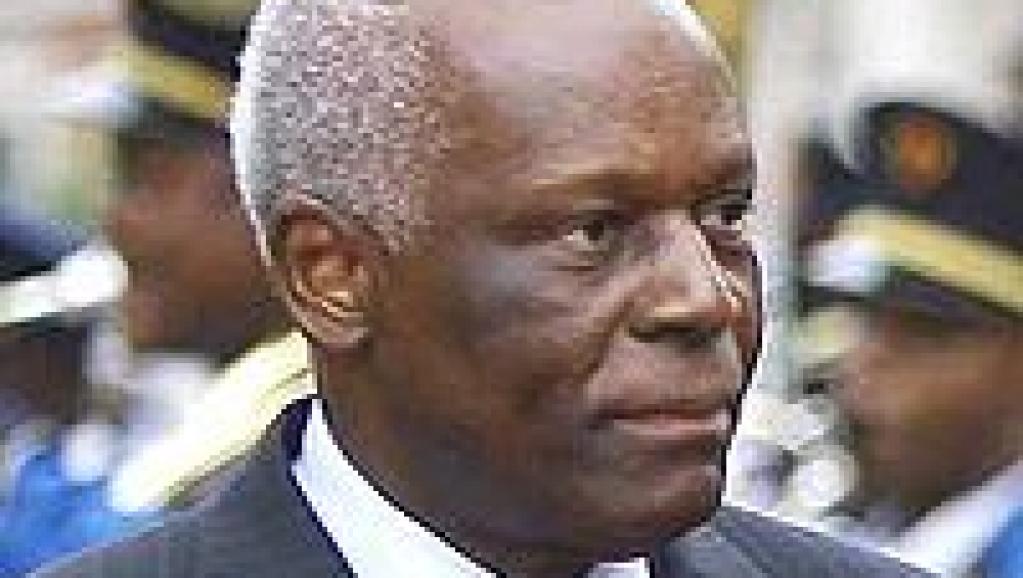
Le président angolais José Eduardo Dos Santos entame mardi 29 avril une visite officielle de deux jours en France. A midi, il aura un entretien et un déjeuner officiel à l’Elysée avec son homologue français, François Hollande. C’est la première visite en France du président Dos Santos depuis l’affaire des ventes d’armes russes à l’Angola – l’Angolagate – qui a éclaté en France à la fin de l’année 2000, avec des poursuites judiciaires contre l’homme d’affaires franco-brésilien Pierre Falcone. Une affaire qui a crispé les relations entre les deux pays.

Les relations entre les deux pays ont souvent été difficiles mais désormais, Paris souhaite « passer à une nouvelle étape ».

Il faut dire que le dernier épisode dans la querelle franco-angolaise ressemble plutôt à un pied de nez. Les autorités de Luanda ont effectivement décidé d’accorder à Pierre Falcone, sous contrôle judiciaire en France, le statut de conseiller diplomatique de leur délégation auprès de l’Unesco à Paris.

Pour Luanda, il fallait protéger Pierre Falcone qui a aidé l’Angola à acheter des armes à un moment où le pays en avait besoin pour sa survie, mais également passer un message de fermeté aux autorités françaises qui n’ont pas tenu leurs promesses dans « l’Angolagate ».

Dans cette affaire en effet, plusieurs personnalités politiques françaises, suspectées d’avoir été les bénéficiaires de commissions occultes, avaient été mises en cause et José Eduardo dos Santos s’était personnellement impliqué pour demander le retrait des plaintes. Depuis lors, le chef de l’Etat angolais boudait la France et notamment le sud où il avait l’habitude de passer ses vacances d’été.

Sur le plan économique, Luanda a également multiplié les menaces voilées concernant la poursuite du partenariat en matière de pétrole sans pour autant prendre des mesures de rétorsion contre Total, le groupe français, qui demeure dans ce secteur deuxième partenaire de l’Angola .

Lors de cette visite officielle en France, le président angolais s’entretiendra également avec le président de l’Assemblée nationale puis rencontrera des patrons de grandes entreprises françaises, des hommes d’affaires et des investisseurs représentant plusieurs secteurs d’activité.

Source: RFI

Shame on you Tufts, Harvard, MIT, Brandeis, and Stanford! You have sold your credibility to crown Kagame with a tenured professorship of dictatorship of the 21 century.

Image

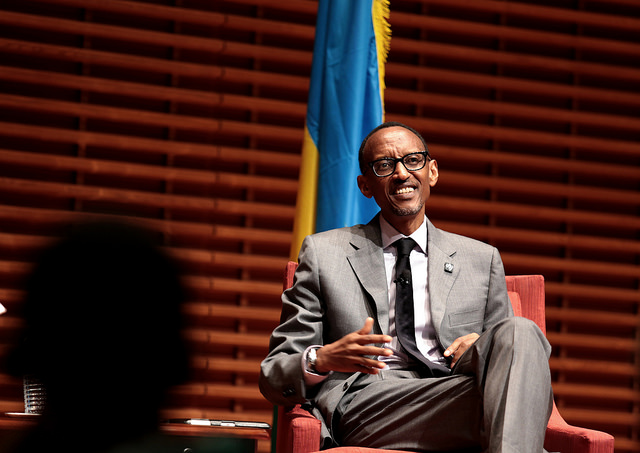
Kagame at Stanford Univeversity on last Friday. By this malign smile he will make you fall for him. Do you really want to know what he has in his mind? All you need is to remind him that he has killed Rwandans since October 1, 1990, sacrificed Tutsi to take the power and captured and sold Eastern Congo to the West to maintain himself finacially sound and wants to change the constitution so that he takes another 7-year term in office. He will show you his real nature which is nothing less than criminality. Admin

By Theogene Rudasingwa

President Kagame addresses Stanford University students last Friday

Paul Kagame has been touring top American universities giving speeches deceiving unsuspecting students and uncaring top brass at these academic institutions about what he calls accomplishments of his reign: peace, human rights, democracy, development, etc. This is vintage Kagame: he has the whole Rwandan population under lock and key, assassinates and imprisons dissenting voices, and then goes to the land of his benefactors to taunt the West as if to say, “I do what I want, you can go to hell!”

Other than his love of a million dollar luxury travel (money that ends in his private pockets because he rents the private jets bought on public money to the Rwandan state) and expensive $20k a night hotel, and an opportunity to visit his children studying here in the USA, Kagame seems to be thrilled to receive honorary doctorates and rub shoulders with academics. For a man who never stepped in a university out of indiscipline, and not lack of intelligence, has he discovered that universities are useful centres of learning, contributing to human progress?

Universities have historically been places where intellectual freedom, openness, and innovation have been nurtured. It is then ironical that Kagame, the enemy of freedom and openness in Rwanda, would be welcomed to Harvard, Tufts, MIT, Brandeis, and Stanford to extol the same values that he lacks and fights. He should be grateful to Tony Blair, Bill Clinton, Michael Porter, Rick Warren, Michael Fairbanks and other hired mercenaries whose greased hands can return favours that enable him to hobnob with academics who do not care about the plight of Africans.

Of late Kagame has not been received with fervour at U.S. State Department and the White House. He must be secretly lamenting that. Universities provide an alternative opportunity to be around here, and to continue his campaign of deceptions and denials. On this particular trip he seems to be indirectly telling his strongest supporter, the United States, that he will change the constitution, and run for as long as he wants, and nobody will stop him.

Nobody should ever not take Kagame’s threats seriously. He has killed and waged wars with impunity. He is fond of saying privately that the West and the so-called international community lack the interest and will to stop him from doing what he wants.  He is right in this regard but wrong in another sense. Rwandans have the interest and will to stop and reverse the effects of his murderous madness.

And when that happens, and Kagame survives the coming change in Rwanda, Tufts, Harvard, Brandeis, MIT and Stanford should perhaps crown him with a tenured professorship of dictatorship. After all, he has stolen enough money to offer generous endowments to these otherwise prestigious but heavily commercialized institutions. Shame on you Tufts, Harvard, MIT, Brandeis, and Stanford!

Dr Theogene Rudasingwa is a former Rwandan ambassador to the United States who now lives in New York after falling out with President Kagame. He is a member of Rwanda National Congress (RNC)one of the opposition political organizations.