Category Archives: News

UGANDA Polls: US encourages those who wish to contest results.

usdos-logo-seal

Press Statement

Mark C. Toner
Deputy Department Spokesperson
Washington, DC
February 20, 2016


The United States commends the Ugandan people for participating actively and peacefully in the February 18 elections. While the vote occurred without major unrest, we must acknowledge numerous reports of irregularities and official conduct that are deeply inconsistent with international standards and expectations for any democratic process.

Delays in the delivery of voting materials, reports of pre-checked ballots and vote buying, ongoing blockage of social media sites, and excessive use of force by the police, collectively undermine the integrity of the electoral process. The Ugandan people deserved better. We are also concerned by the continued house arrest of opposition presidential candidate Kizza Besigye. We call for his immediate release and the restoration of access to all social media sites.

We encourage those who wish to contest the election results to do so peacefully and in accordance with Uganda’s laws and judicial process, and urge the Ugandan government to respect the rights and freedoms of its people and refrain from interference in those processes.

Source: US Department of State

Uganda poll fails fairness, credibility test

On February 18, Ugandans went to the polls with high hopes that the country had turned the proverbial corner, following the political maturity exhibited during the three months when the presidential candidates ran largely issue-based campaigns.

Coming in after the 2011 elections that were characterised by voter apathy and low turnout, these elections promised to be different and the excitement of a people eager to choose their leaders was palpable. The social media was abuzz, with Ugandans rallying their friends and family members to turn up and exercise their democratic right.

Unfortunately, the outright mismanagement of the voting process by the Electoral Commission and the arrests and harassment of opposition leaders even before the announcement of the final results (the incumbent, unsurprisingly, was declared the winner) dampened the spirits of citizens and cast doubts on the Uganda government’s commitment to a transparent and credible election.

On Thursday voters, many of whom turned up at their polling stations before the 7.00am (0400 GMT) opening time, spent hours in long queues waiting for the voting to start after materials arrived late.

Some of the delays were simply inexcusable: How do you explain failure to deliver polling materials on time to a station that is 200 metres away from the headquarters of the Electoral Commission? In the end, some of the voters gave up and left. Voters in some 38 polling stations had to return the next day to vote, an inconvenience they had not anticipated.

In some polling stations, thousands of voters’ names were not in the voters’ register, which locked them out of the exercise. The net effect of the delays and hitches is that thousands of voters were disenfranchised.

As former Nigerian president and head of the Commonwealth Observer Mission Olusegun Obasanjo observed, delays of three, four, five and even six hours, especially in Kampala, were absolutely inexcusable and did not inspire trust in the system or process.

In addition to the mismanagement of the polling process, the aftermath of the voting has been anything but civil. Leaders of the opposition were harassed, arrested and their offices and homes raided, forcing at least one foreign mission to caution its citizens to stay indoors.

The vote-tallying process also left a lot to be desired. There were reports of candidates’ agents being denied access to the results coming into the national tallying centre from the districts. Matters were made worse by claims that some of the results being announced at the national tallying centre differed from those announced at polling centres.

Elections should provide an opportunity for people to choose the leaders they want, and reject those they don’t want. It would be unfortunate if it turns out the 2016 election failed to offer Ugandans this democratic right.

Source:http://www.theeastafrican.co.ke/OpEd/editorial/Uganda-poll-fails-fairness-and-credibility-test-/-/434752/3086010/-/11964ryz/-/index.html

Burundi: CNDD/FDD Uragiriza Perezida Kagame

cnddUmugambwe uri ku butegetsi mu Burundi CNDD/FDD wagiriza Umukuru w’ igihugu c’u Rwanda Paul Kagame ko ariwe yishe Perezida Cyprien Ntaryamira yararongoye Uburundi mu mwaka w’i 1994.

Perezida Ntaryamira yaguye mu mpanuka y’indege imwe na mugenzi we w’u Rwanda Juvenal Havyarimana kw’igenekerezo rya gatandatu y’ukwezi kwa kane 1994 mu micungararo y’umugwa mukuru w’u Rwanda Kigali.

Ivyo birego bikubiye mw’itangazo umugambwe CNDD/FDD uhejeje gusohora ku muhingamo wo kuruyu wa gatatu. Umushingantahe Gelase Daniel Ndabirabe, Umuvugizi wa CNDD/FDD ni we yashyikirije iryo tangazo.

Le Burundi et la RDC demandent au Conseil de sécurité de dénoncer le Rwanda.

conseil-de-securite-de-l-onu
Réunion du conseil de sécurité de l’ONU, le 1er mars, à New York. (archives)

Le Burundi et la République démocratique du Congo (RDC) ont demandé au Conseil de sécurité de rappeler à l’ordre le Rwanda, accusé de recruter des réfugiés burundais pour déstabiliser Bujumbura, dans des lettres rendues publiques mercredi.

L’ambassadeur burundais Albert Shingiro a réclamé une réunion d’urgence du Conseil afin de “prendre des mesures appropriées” pour s’assurer que Kigali ne cherche pas à déstabiliser le Burundi.

Dans une autre lettre au Conseil, l’ambassadeur de RDC Ignace Gata Mavita demande, lui, “d’inviter le Rwanda à respecter (ses) engagements internationaux et à arrêter sans délai ces recrutements et toutes les opérations qui s’en suivent”. Le Conseil doit “condamner sans atermoiements ce comportement” de Kigali, ajoute la lettre.

Des experts de l’ONU avaient accusé dans un récent rapport le Rwanda de recruter et d’entraîner des réfugiés du Burundi afin de renverser son président Pierre Nkurunziza.

Le gouvernement rwandais a toujours nié ces accusations.

Selon la lettre de la RDC, ces réfugiés, une fois entraînés au Rwanda, “sont infiltrés en RDC”, avec des fausses cartes d’électeurs “pour les faire passer comme des habitants de ce pays”, puis introduits ensuite au Burundi.

Le Burundi est plongé dans une profonde crise politique depuis la candidature fin avril 2015 du président Nkurunziza – réélu en juillet – à un troisième mandat, que l’opposition, la société civile et une partie de son camp jugent contraire à la Constitution et à l’Accord d’Arusha, qui avait mis fin à la guerre civile (1993-2006).

Plus de 400 personnes ont été tuées depuis le début de la crise, qui a poussé 230.000 personnes à l’exil.

Selon des diplomates, le secrétaire général de l’ONU Ban Ki-moon doit se rendre lundi au Burundi pour pousser Bujumbura à dialoguer avec l’opposition et à accepter une présence internationale accrue dans le pays afin d’apaiser les violences


– See more at: http://fr.africatime.com/rwanda/articles/le-burundi-et-la-rdc-demandent-au-conseil-de-securite-de-denoncer-le-rwanda#sthash.VonNxwvK.VWBQTNYT.dpuf

Rwandan schools increase fees as the Ministry of education stops funding

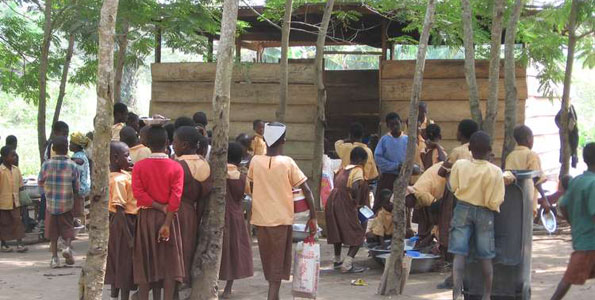
Pupils in a rural school in Rwanda take their meal during the lunch break.  PHOTO | FILE

Pupils in a rural school in Rwanda take their meal during the lunch break. Fee increment in public boarding schools follows a decision by the Education ministry to divert part of its funding to schools so as to support the school feeding programme in 9-12-year education schools. PHOTO | FILE

By Johnson Kanamugire

Rwanda’s public boarding schools have increased fees amid concerns that the move by the Ministry of Education (Mineduc) to withdraw financial incentives could lead to high operating costs.

Rwanda Today has established that major public schools in the country increased fees by between Rwf8,000 and Rwf20,000, pushing the cost of education much higher for struggling poor parents.

The development follows a decision by the ministry to divert part of its funding to schools so as to support the school feeding programme in 9-12-year education schools.

Last year, the issue came to the attention of the Finance Ministry, with Minister Claver Gatete reportedly warning Mineduc officials that the decision could, if not properly thought out, have negative implications.

However, as the new academic year begins, the much-disputed change has forced public schools to increase fees while others are considering convening parents’ meetings to discuss the increment.

“We only increased fees by Rwf9,000 for new students joining senior one and S4 as we plan to hold a parents meeting on March 5 to decide the increment,” said Sr M Goretti Umugwaneza, head of Lycee de Zaza, a public secondary school in Eastern Province.

“If we don’t get the money, students will hardly have food, for Mineduc’s decision came as a surprise when we had not notified parents of a possible change in the fees structure.”

Rwanda Today understands that Mineduc was paying Rwf156 per student per day which, according to school managers, is spent on three meals the student takes at school. The total funding is Rwf9,000 per student per school term, which many educators consider too little and not proportionate to the situation on the market.

Sources say ministry officials decided to stop part of the funding, leaving a student feeding on only Rwf56 as the rest of the fund is used in feeding students from poor families in 9-12-year day schools.

The majority of school authorities, parents and educators are however confused by the changes, with some boarding public schools passing the burden to parents by way of hiking fees while others said they are yet to be issued with the directive to follow.

A spot check by this newspaper revealed that urban public schools raised fees the most, by as much as Rwf20,000, while most rural schools made an increase ranging from Rwf8,000 to Rwf11,000.

While parents sending their children to Lycee Notre Dame de Citeaux in Kigali saw the fees go up from Rwf60,000 to Rwf90,000 in the new academic year, TTC Save in Southern Province augmented fees from Rwf68,000 to Rwf76,500 while Groupe Scolaire Shyogwe raised theirs from Rwf54,300 to Rwf65,300.

Hundreds of affected parents were seen queuing in banks days after other students had headed to school for the new academic year that started on February 1 in blatant rush to pay for their children. Those who could not raise the fees have had to accompany their children to school to plead with the authorities to pay the fees in installments.

Jerome Sebaganje, 55, from Rugera Sector in Nyabihu District on Monday accompanied one of his six school-going children to a school in Gicumbi since he could not immediately get the required Rwf91,100.

“It’s particularly hard for me because one of my children dropped out while in senior five, I could no longer be able to pay for them all,” said Mr Sebaganje, protesting the increase in school fees. “If they fees continue going up, I don’t think I will be able to educate this one unless I get government help.”

In addition to paying Rwf64,000 in school fees, parents at Lycee de Zaza have been footing the bills of two school projects — construction of a Rwf150 million multipurpose hall and removal of asbestos roofs, which will cost Rwf82 million.

Parents will now be required to pay an additional Rwf9,000, taking the fees to Rwf73,000, and Rwf13,000 in the two projects, school officials said.
“Now imagine telling parents that they must pay more money,” Sr Umugwaneza said.

The nun’s sentiments were echoed by Fr J Bosco Mupenzi, head of Groupe Scolaire St Joseph Birambo, a rural secondary school in Karongi, Western Province, who said rural poor parents could find it hard to maintain children in school.

“For us challenges are many because very few parents here can raise the required Rwf57,000,” said Fr Mupenzi.

Source:http://www.theeastafrican.co.ke/Rwanda/News/Rwandan-schools-increase-fees-as-Mineduc-stops-funding/-/1433218/3074456/-/item/1/-/nql6t0z/-/index.html

Rwanda’s economic system to collapse

Despite biased reports that praised the Rwanda’s economic “miracle “, the truth is something else. Since 2009, Rwanda has been spending over US$ 50,000  a month on a bill to block publications that reported on the true economic and poverty situation. On contrary, only “good” reports were brought out praising President Paul Kagame as a “visionary leader”. Some of results can’t be hidden:

  • Right now, Rwanda’s economy is experiencing hard times. Really hard. The country spends three dollars, but only earns one dollar.
  • For five years, from 2010 to 2014, the average current account deficit was almost 9% of the GDP. And then in 2014, the deficit stretched to 11.8% of GDP, its highest level since the mid-1990s.
  • The country had projected, under the Economic Development and Poverty Reduction Strategy (EDPRS II), Rwanda’s development blue-print, to earn slightly higher than $2 billion, in 2015, but it fell short of 45% and earned only $1.121 billion (55%).
  • The traditional exports declined mainly due to a crisis in the mining sector, which earned just $149 million.The sector had earned $226.2m in 2013 and projections were to fetch around $400m by 2017. This is obviously not likely to happen.

“It is a problem and it is hindering the development of our economy,” Makuza said, before we allow the invitees to step on the stage and offer their views.  “We need to discuss it, let’s focus much on giving ideas and suggestions.”

Who will fix Rwanda’s economy?

Policymakers in Rwanda are losing sleep. They have a nagging matter on their table to fix, as matter of priority.

A series of endless meetings, are being held. They call them ‘consultative meetings’.

In these meetings, some make power-point presentations or call them ‘situation analysis’, while others react by asking tough questions and making suggestions as solutions.

The ‘consultative meetings’ are about one thing. Just one; the economy.

Right now, Rwanda’s economy is experiencing hard times. Really hard. Apparently, the country spends three dollars, but only earns one dollar.

For five years, from 2010 to 2014, the average current account deficit was almost 9% of the GDP. And then in 2014, the deficit stretched to 11.8% of GDP, its highest level since the mid-1990s.

Meanwhile, the country had projected, under the Economic Development and Poverty Reduction Strategy (EDPRS II), Rwanda’s development blue-print, to earn slightly higher than $2 billion, in 2015, but it fell short of 45% and earned only $1.121 billion (55%).

According to Finance Minister, Claver Gatete, there are  two main reasons for this poor performance.

First, there is a strong growth in imports while exports remain vulnerable to price fluctuations and lack of economic diversity.

Secondly, there is a sharp decline in public transfers. Basically, the government is cutting spending and embracing frugality.

Indeed, in 2015, the economy was hit harder. The deficit widened even further. Exports fell dramatically.

The value of the export portfolio is heavily dependent on international prices and other geopolitical factors beyond Rwanda’s influence. The traditional exports declined mainly due to a crisis in the mining sector, which earned just $149 million.

The sector had earned $226.2m in 2013 and projections were to fetch around $400m by 2017. This is obviously not likely to happen. “We need to add value to our minerals,” says Evode Imena, State Minister for Natural Resources.

Prices for minerals, particularly Cassiterite and Coltan are declining for several factors. Asian countries such as Burma, have increased production and swarmed the market.

Factories are also recycling used products and making smaller gadgets thus consuming less raw minerals.

The way the market is happy about the decline in oil prices, is the way it is happy with the decline in price for minerals.

“But we still have market,” says Jean Marie Kalim, Director General for Wolfram Mining and Processing Company (WMPC).

Kalim says the industry needs a boost from government in form of waivers.

He said despite the increase to 4% tax from 0%, which the sector has complied to, the government has exempted the 15% withholding, but maintained the ‘principle’ which deters financiers from transferring funds prior to a purchase, yet local banks are reluctant to finance the sector.

Minister Gatete says the matter will be discussed and resolved through a public-private partnership platform.

Uncontrolled factors

Meanwhile, other factors increasing the trade balance deficit include political instabilities in the region, according to Trade Minister Francois Kanimba.

The situation in Burundi is hurting economies of its neighbours so was DRC, which has stabilised recently.

Earlier, the skirmishes in Eastern DRC, which is Rwanda’s major export destination, had affected trade significantly. Now, according to central bank data, the situation had improved.

By the 2nd quarter of 2015, exports which are dominated by milling industries especially food and beverages, edible vegetables, roots and tubers and live animals exported to DRC increased by 28.9% in value and by 30.9% in volume.

But again, that is just a drop in the ocean.

Rwanda’s imports continue to stretch. Such imports include textile, electronics and food products, among others.

Central Bank governor, John Rwangombwa says items such as wheat, sugar and rice continue to widen the deficit.

Sadly though, Rwanda imports even items the country should produce. About 300,000 eggs from Uganda alone, are imported per week. More so, chicken is one of the most expensive meats per kilogram in the country.

However, State Minister for Agriculture, Tony Nsanganira says the country now imports 150.000 day-old chicks every month from Uganda, Belgium and Holland hoping this will  close the gap.

Rwanda imports 300,000 eggs from Uganda

The Senate chips in

On Wednesday, the Senate invited strategic institutions including the ministries of trade, finance and economic planning, agriculture, natural resources and the Rwanda development board to digest this daunting challenge.

Senate President, Benard Makuza, presiding over a “consultative’ discussion to cope with the trade balance deficit, said the senate intended to engage various players.

“It is a problem and it is hindering the development of our economy,” Makuza said, before we allow the invitees to step on the stage and offer their views.  “We need to discuss it, let’s focus much on giving ideas and suggestions.”

He indirectly was suggesting there be no blame games, but a candid talk.

Minister Kanimba, before giving suggestions, opened up to some of the biggest obstacles the economy is facing.

First, he said, the main crosscutting constraints to export growth include the lack of access to land or high cost of land acquisition. “We have the free trade zone,” he said, but it is very expensive and is not a competitive advantage compared to other countries in attracting investment.

A square meter costs Rwf40.000. “This is not competitive at all,” he said.

Harder obstacles he said, include low capacity utilization of manufacturing companies due to; inadequate infrastructure, unreliable supply of raw materials, unreliable and expensive electricity, inadequate long-term financing and working capital.

He also said the country faces a serious lack of technological advancement and skilled labour.

For Minister Gatete there are also other major constraints. Rwanda’s foreign assets have

fluctuated, when at the same time export cover is fluctuating with them.

Yet, he added, despite commercial banks foreign assets have increased substantially throughout the most recent period until this year where they were hit substantially by uncertainty and a depreciating Rwandan Franc.

Way forward

Rwanda's Senate President(R) Bernanard Makuza and Trade Minister Francois Kanimba

In Rwangombwa’s view, there is need to go back to the drawing board. “This is real,” he said. “it’s is a real problem. We need to think of tangible solutions with a bigger impact in a shorter period.”

Emphatically, he explained, “Much as we are cutting our budget sufficiently, we are not addressing our balance of trade…we need to put in action what we discuss.”

For example, he offered a solution to food importation. “We have land for growing rice, sugar, and wheat for local consumption.”

Before other ideas were fronted, the Vice Chairperson of the Rwanda Elders Advisory Forum, who was invited to the discussion, wondered how Rwanda exports live cows to, for example, DRC.

“We have an abattoir in Rubavu with capacity for slaughtering 300 cows per day, but we export about 60 cows to DRC..which means the facility operates under capacity,” she said.

“If we slaughter the cows and sell the meat, that is value addition, and also have the skins.”

More ideas came in. Some members from the business community were invited too.

Serial entrepreneur, Sina Gerald, who is entrenched into agro-processing, suggested there be continuous research into better agriculture to facilitate making informed decisions.

The talk went on and on and then Senator Tito Rutaremara broke the ice. “We are sacred (of the imbalance), it is growing wider,” he said.

“We need to think big…let us focus on high value products…for example look at France, it will sell just three Airbus planes and be happy.

He believes Rwanda will face it rough if it continues in the same state. “Let us look at this imbalance at a higher level.”

“I am dreaming” he said. “I am dreaming big, and it your job to execute it.”

Source:http://ktpress.rw/2016/02/who-will-fix-rwandas-economy/


RWANDA-Ingabire Victoire’s case before the African Court on Human and Peoples’ Rights: Headache for the Rwandan Government

ingabire

Mrs. Ingabire Umuhoza Victoire, Chair of UDF-INKINGI opposition political party in Rwanda, detained in Kigali central prison, is to appear before The African Court on Human and Peoples’ Rights in Arusha, on March 4th, 2016. In the meantime, the government of Rwanda, which is a party to trial, is subjecting her to various forms of inhumane and degrading treatment as if to break her morale and make it hard to prepare her case properly.

Since Friday, February 5, 2016, the prison management has once again refused to allow her lawyer GATERA Gashabana to meet her in order to prepare her case.

We would like to recall that since Friday, January 29, 2016, the prison management has reduced the number of people who can visit her from 5 to one person per week. This limitation applies to her only.

On November 30th, 2015, her lawyer GATERA Gashabana, asked the President of the Kigali Bar Association to intervene and ask the Rwandan government to stop all the inhumane and degrading treatment of his client. Nothing has been done so far. In the opinion of lawyer Gatera, the molestation including the search of the lawyer and the reading of his legal notes constitute an unacceptable breach of international principles and rules protecting the legal profession.

Further to the first refusal of lawyer Gashabana’s visit, the conditions of detention of political prisoner Ms. Victoire Ingabire has deteriorated, this includes, painting black the windows of her prison cell in order to stop any natural light filtering into the cell, a vicious measure that we fear could lead to blindness.

While for medical reasons, her meal is brought in from outside the detention facility, the prison management has begun to systematically search the food brought by relatives of Mrs. Victoire Ingabire. Thus, in the process of checking the food under the pretext of looking for weapons or other prohibited items, a prison management official has systematically turns the food around in the container in a way that could make it look unpalatable to her, ostensibly to humiliate her and break her morale.

The paroxysm of the persecution is now the downright refusal of any contact between Mrs. Victoire Ingabire Umuhoza and her lawyer. The UDF- Inkingi sends an SOS message to governments, friends of the people of Rwanda and human rights organizations to:

–        Remind the inalienable and sacred right to a fair trial;

–        Remind the Government of Rwanda of its obligations regarding the treatment of prisoners;

–        Denounce human rights violations suffered by Mrs. Victoire Ingabire;

–        Remind the Rwandan government of its obligation to transport the complainant before her judges to Arusha in the best possible conditions;

–        Remind the Government of Rwanda the absolute right of Mrs. Ingabire to meet and work with her defense team on her case;

–        Support the appeal of FDU-Inkingi to the Commission of the African Union to take into account the obstacles that the Rwandan government imposes the proper judicial process.

Done in London, February 9th, 2016

Justin Bahunga

jbahunga@yahoo.co.uk

Rwandan agricultural policies hurting the poorest of the poor: study

By Laura Angela Bagnetto
everyone a farmer (Small) c. Neil Dawson_UEA

A new study of smallholder farmers in western Rwanda says the country’s agricultural policy has failed the poorest farmers, making them adapt to government policies, such as mono-cropping, or being forced to sell their land. Some 85 per cent of Rwandans work in the agriculture sector. RFI spoke to study author Dr Neil Dawson from the University of East Anglia, to find out how the Rwandan government’s much-lauded agricultural policy hurts the poorest.

Your study, Green Revolution is sub-Saharan Africa: Implications of Imposed Innovation for the Wellbeing of Rural Smallholders focuses on northwestern Rwanda. According to your study the Rwandan policies that are responsible for creating a viable agricultural society are actually bringing Rwandans down regarding socio-economic growth, culture and even well-being. Can you share some of this with us?

These policies have major implications for smallholder farmers across Africa. They have the potential to benefit the farmers of course, but the results of our study also show that there’s also the potential for negative implications as well. Really, the clue is in the title. These policies are called Green Revolution policies and they do promote revolution in the way that farmers use their land and the way they produce food. And to do that the strategy involves farming crops of approved seeds of a small number of crops that are economically viable and that there are markets for. They are also using chemical fertilizers to support using the growth of those crops. That involves risk for certain people. Some people are able to improve their income substantially. In our study, a third of the participants were able to do that, and they were primarily the wealthier participants. So changing agricultural practice for the poorer farmers involves taking on particular risks. You may have to take credit to use the fertilizers, and so you have to be confident at the end of the season that you can pay that money back, and also in the meantime that you are able to find enough food to feed your family. With that risk, it means that many farmers, instead of taking part in the scheme, end of having to sell their land, because it doesn’t work for them.

One of the issues in your piece is the lack of autonomy by this government because of imposing what crops to grow, or even only one crop to grow that actually leads to less of a feeling of well-being and nutrition problems for smallholder farmers.

Certainly in many countries these policies are being promoted and they provide choice to farmers so they can continue their traditional farming methods or they can choose to take on these modern methods as well. But in countries like Rwanda, that change is not only promoted, but imposed on people. So even if you think that growing maize or wheat is not suitable for your soil or your land, or that you have other priorities that you need to feed your family and grow a variety of other crops, you have no choice to do that, so you have to take that risk. The policies are often assessed as being successful, based on a very limited assessment criteria. And what this study shows is that we need to scrutinize these policies much more, and have a look at the potential negative outcomes of them in order to be able to refine the policies, to improve them, and to mitigate against some of these potential costs. Because where the policies are imposed, in a very top-down manner, and farmers haven’t really been consulted in the way they have been designed, that kind of thinking really needs to be brought into improving the way that they run.

The newer ways of thinking in terms of smallholder farmers is actually to speak to farmers, to consult with farmers, to find out what their results have been in the past. But the way the Rwandan government is structuring their agricultural policy is basically imposed on these people and you have some have some actual interviews within your article.

The policies are commonly assessed using economic data that the government collects, so a lot of the policies across sub-Saharan Africa are shown as being successful on the fact that these limited number of crops they yield in product ion is increasing ten-fold, twenty-fold. And that’s to be expected. Also, they show that perhaps on average the incomes of farmers are increasing. But, what we’ve done is look in a more exploratory way at the kinds of impacts, the broad range of impacts that farmers might suffer so we’ve used the smaller sample size, we had around 200 households that we spoke to and looked at the impact upon them. For a third of these households, they were having benefits and people complied with them, and their incomes were improving substantially. But for many of the other households, and particularly the poorest, their situation was deteriorating. Many of them were losing their land, partly because of these policies.

And one of the policies you point out is those who are required to grow tea. In your study, you interviewed people who had a hard time with growing tea because they couldn’t feed themselves.

Yes, certainly, particularly where a cash crop is involved, a non-edible crop such as tea. And that has an even greater risk. Tea takes three-to-four years before you can harvest it and get any income from it. So the scheme involves those households taking on a lot of credits in the meantime. So they provide funds to them to manage the land. By the time they get the first harvest, they’re in considerable debt. And for many, even from the outset, they will choose to sell their land, partly because of the risk. In Rwanda, if the farmer is not successful in managing their land with the new crop, a landlord has been introduced to show that the government has ultimate control over that land and they can choose to allocate that land to another, wealthier farmer instead. And perhaps there will be a risk of not being compensated by the government, so many people choose to sell it before that comes. Certainly in interviews people would say, “The tea is coming, we know it’s coming to our land. We could be evicted at any moment.” So they see it as a considerable risk.

In your report, you said that more than half of landless labourers (those who sold their land or the indigenous Twa people) fail to afford health insurance, despite nearly a third of households in that category being paid for by government or donors. So these are people who have fallen by the cracks even by their own government.

Again, that’s another policy where people need to pay to participate in. Universal health insurance is promoted, and government and other donors do pay for some of the poorest. But the year that we did the study the price of the health insurance had tripled, for example, and there were some prohibitive parts to that policy, whereby nobody within a household could be seen by a health professional unless everybody in that household had paid their health insurance. Even if they paid for one person and they were sick. Some of these policies do require quite a lot of investment from people to take part in.

Are you saying that basically the governments need to look at all aspects when they are creating this agricultural policy, from, as you said, the poorest of the poor? How would you characterize what needs to be done?

Some of these policies can have potential negative impacts. It’s not just like a development policy where you’re providing this mosquito net to people to combat malaria. They get something for free, it doesn’t really impact the way they live their lives. Where policies hold risk is where they can have impacts on the poor. They need to be assessed and scrutinized very carefully so that they can understand why they may not be benefitting, or even negatively impacting people, so they can be refined and improved. That’s normal, no policy is perfect. Really, it’s understanding and putting accountability onto the policies and the people, that the powerful organizations in the case of these agricultural policies who are promoting these as the major strategies to combat hunger and poverty.

Source:http://www.english.rfi.fr/africa/20160208-Rwandan-agricultural-policies-hurting-poorest-poor-study

IJISHORYARUBANDA: Ibyerekeye igitero cyaraye kigabwe i NDERA muri Kigali.


victime ndera

Nagirango mbwire Inyenzi guhagarika gutera abaturage ubwoba ngo hari igitero cyagabwe i Ndera!

1)Ibyabaye ni ibikorwa by’ubujura byakozwe n’abo twakwita ingegera zazahajwe n’urumogi n’utuyoga bita agashinguracumu tugura 200 hamwe na suruduwire za 250!

2)Kuba batemye abantu ni uko babikoreye mu gace karimo ingo nyinshi abantu bakicaye ku buryo icyatumye batiba ni uko aho bajyaga basangaga batararyama! Abahuruye babatemaga,babateraga amacupa,amabuye cyangwa bakabakubita ferabeto!

3)Bateshejwe i Ndera mu kagari ka Kibenga mu ma saa yine -saa tanu gutyo zijoro bambutse igishanga bagana mu kagari ka Rudashya i Gasogi aho bita kwa Kimeza ku ikoni.

4)Aha ku ikoni ni mu mahuriro y’umuhanda uva ku Murindi wa Kanombe ujya Gikomero unyuze kuri ESTH Gasogi n’umuhanda uva Rudashya ugana Cyaruzinge unyuze kuri College de l’Espoir de Gasogi, ikigo cya Afandi Andre Muhirwa wahoze ayobora Police i Burasirazuba!

5)Muri aya mahuriro y’imihanda hakunze kuba hahagaze aba GP iyo Kagame ari mu rugendo (Zone de protection presidentielle).

6)Centre ya Mulindi ibaho Mayibobo nyinshi ni ho abasirikare bava muri Camp Kanombe batari aba GP baba bahagaze, ba bandi bashinzwe kuragiza abaturage imbunda. Centre yakoreweho operation n’izo ngegera iri muri metero 250 uvuye ku gasoko ko ku Mulindi no hafi ya Gereza ya gisirikare yuzuyeho Military!
6)Uko ibisambo byakoze operation mu ma saa cyenda z’ijoro:
Baje ari nka 5 bafite ferabeto ikunje ukuntu bicisha ingufuri na serire y’urugi! Bateye ku nzu y’ubucuruzi y’umusirikare ifite imiryango ine ikodeshwa 50000frw n’abacuruzi. Si we ukoreramo aho bakinguye ni kwa John iruhande rwo kwa Manuel! Nta muzamu kuko ni butike nto rwose! Igisambo kimwe kinjiye gishaka iboro n’amafaranga ibindi bikora uburinzi mu tuyira twaturukamo abari buhurure!Akenshi biba hamwe ariko bakazibira amarembo y’ingo byegeranye haturuka abari buhurure!Iyo ubiroshyemo wa wundi winjiye atarasohoka barakumena. Baba bafite amabuye cyangwa amakaziye bavanye muri butike yo gukuramo amacupa yo gutera abaje kubafata!

dasso

8)Aho kwa Kimeza kuri butike ya John abatabaye babateye amacupa bariruka,bafata utuboro duke bakuye muri butike barigendera.

9)Militari yahageze bayikwepera mu rutoki bashoka igishanga kiri hagati ya Rusororo na Rudashya itora ubusurira! Mu kimwaro n’ibikabyo byinshi hahuruye abasirikare n’abapolisi igitero batunenga abaturage b’inzirakarengane ngo bacumbikiye abacengezi barashorera barafunga.

10)Turasaba abayobozi guhagarika ibikorwa by’urugomo bagirira abaturage babahondagura babicaza mu mavumbi kandi biviriye mu mihate!Ubwirwa cyane ni Gitifu wa Rudashya wari uri guhondagura abaturage bavuye mu mihate yabo bagana Rudashya kuri uyu mugoroba! Turasaba Leta ko yahimba imirimo izi nsoresore zigahagarika kwiheba zinywa ibiyobyabwenge.Turasaba abashinzwe umutekano guhagarika imvugo ihahamura abaturage ngo hari abagamije kubica kuko bigaragara ko batazi gusesengura!

Uko twakurikiranye iki kibazo twanzuye ko ari ibikorwa by’ubugegera bikorwa n’abahoze ari Mayibobo ku Mulindi bari batunzwe n’urusimbi bararubabuza bajya mu byo kwiba, uje kubatesha bakamutema! Batandukanye n’agaco k’amabandi kayoborwaga na Sergent Demobe Burahimu ubu ufunze kuko ko katatemaga ahubwo katoboraga amazu na Boutique kakiba ariko katica!

Abayobora amarondo ni icyuka! Inkeragutabara ni icyuka! DASSO ni icyuka! Police ni icyuka!Military ni icyuka!GP ni icyukaaaaaa!

Turamenyesha Abanyarwanda ko bimwe mu byatumye aba basore babura ibyiringiro ari ukubuzwa amahwemo na Police babafungira kwa Kabuga hafi ya bose bakaba barandujwe sida binyuze mu kibuno nyuma yo gufatwa ku ngufu iyo babafunze! Amahirwe ni uko ahatewe n’abakomeretse bahuruye ari abahutu naho ubundi bari kuvuga ko ari genocide igarutse iyo hagira umututsi ubikomerekeramo.

SINGIRANKABO E.

KIGALI

Madamu Uzamukunda Marie Claire azize uwo yasimbuye ku mwanya w’akazi!

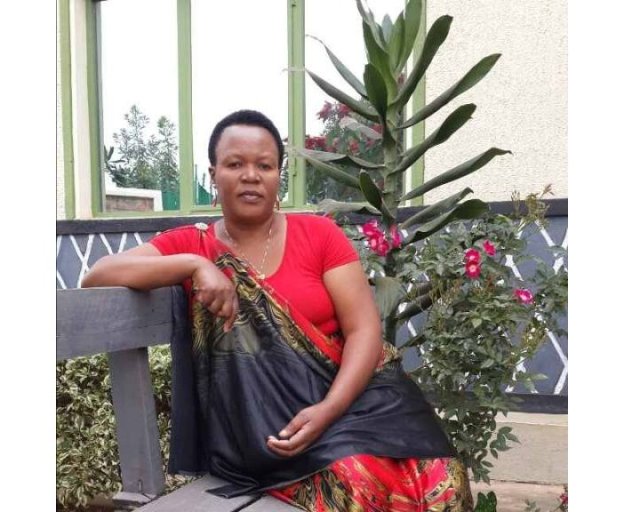
UzamukundaMadamu Uzamukunda Marie Claire yaburiwe irengero ku cyumweru taliki ya 24 Mutarama 2016, ubwo yari avuye iwe i Gicumbi yerekeza ku kazi ke ku bitaro by’i Rwamagana aho akora nka Administratrice . Yafatiwe Nyabugogo azimira atyo, kugeza na n’ubu .Abaturage bahangayikishijwe cyane n’iri rigiswa ritunguranye n’uburyo Polisi igaragaza ubushake buke mu gukurikirana irengero ry’uyu mutegarugori.
Abaturage bemeza ko uyu mudamu bafataga nk’indakemwa mu mico no mu myifatire yahaguruste iwe ku cyumweru mu gitondo nk’uko bisanzwe ari muzima, nta kibazo afite. Bamwe mu baturage bafite ubwoba ko ibi byaba bifitanye isano n’irigiswa ry’abantu rimaze iminsi rikomeje kuvugwa hirya no hino mu gihugu ndetse bikaviramwo bamwe kuraswa mu buryo budafututse mbere y’uko bagezwa imbere y’ubucamanza.

Umwe mu bakoranaga na Madame Uzamukunda Marie Claire utashatse ko tuvuga izina rye kubera umutekano we, yadutangarije uko abona iki kibazo muri aya magambo: « ndahamya rwose ko irigiswa ry’uyu mutegarugori rifitanye isano rya hafi n’umwanya w’akazi yari amaze igihe gito ahawe ». Uyu mukozi bakoranaga yakomeje agira ati:  « Madamu Uzamukunda akimara guhabwa uyu mwanya, yatangiye kwibasirwa n’iterabwoba ry’umusirikare mukuru ufitanye relation z’ubuhabara n’ umudamu wari usanzwe akora aka kazi ariko  akaba yari yaragaragaje ubushobozi buke mu mirimo ye bigatuma agatakaza » . Uyu mukozi w’ibitaro yatugejeho inkuru iteye ubwoba yabwiwe na Madamu Uzamukunda ubwe! Ngo umunsi umwe , uyu mugore wari utakaje umwanya  ariko akaba ihabara rya Afande yasanze Madame Uzamukunda mu biro amubwira n’agasuzuguro kenshi ngo :  » Umuntu nkawe ntiyakagombye kuba yicaye mu mwanya nk’uyu ngo  yibwireko azawutindaho igihe kirekire »!  Yoshoje ubuhamya bwe agira ati : « Kuri njye,  aho niho ruzingiye . Ngayo nguko »!

IMG-20160130-WA0001-300x199

Madamu Uzamukunda arubatse kandi afite abana batatu.  Hambere, yahoze ari umwarimukazi mu mashuri abanza, nyuma aza gukomereza amashuri ye muri Kaminuza y’ i Byumba aho yakuye impamyabushobozi ihanitse mu bya « Administration ». Uyu mutegarugori ariko yamenyekanye cyane kubera uruhare rukomeye yagize mu mu bikorwa binyuranye byo guteza imbere umwari n’umutegarugori mu karere ka Gicumbi. Mbere yo guhabwa umwanya wa Administrateur w’ibitaro by’i Rwamagana yabaye Umucungamari w’ibitaro bya Rutongo. Hose aho yakoze yagaragaje ubwitange n’ubukiranutsi mu kubaha ibyarubanda. Twibutse ko uyu mwanya wa Administratrice yari awumazeho amazi atandatu gusa.

Turasaba inzego zose z’ubutegetsi zarebwa n’iki kibazo ko zakora uko zishoboye zikagaragaza  aho uyu mubyeyi ari kandi zikihutira kumurenganura biriya bisumizi bitaramukata ijosi bimurenganya.  Koko umuntu azire ko ari inyangamuyagayo maze twese dukomeze twituramire?

Turashima abaturage ba Gicumbi barimo kwisuganya ngo bahagurukire rimwe barengera mugenzi wabo uriho kwicirwa rubozo hirya iyo mu bihome bicuze umwijima,  ari nta kindi azira uretse umururumba wa bamwe mu baturage bigize  INDAKOREKA mu gihugu, bakumva ko bafite ubudahangarwa n’ububasha bwose ku buzima bw’ abaturage baciye bugufi batagira kirengera.

UMUHANUZI.