Category Archives: Security

Rwanda: kugarika ingogo birakomeje hagamijwe gukaza Iterabwoba

Mu masaha ya nyuma ya saa sita z’amanywa zo kuri uyu wa Gatanu tariki ya 17 Ukwakira i Nyabugogo umupolisi yarashe umuntu usanzwe ukora ubucuruzi buzwi izina ry’ubuzunguzajyi ahita apfa.

Amakuru agera k’umuryango.rw, avuga ko uyu mupolisi yabanje guhangana n’umugore ucuruza agataro ubwo yari amufashe, nyuma hakaza umusore nawe aje gufasha uyu mugore ngo barwanye umupolisi hakaziraho n’abandi bakora ubwo bucuruzi aribwo umupolisi bamukubitaga hasi nawe mu mu kwirwanaho agahita arasa uyu musore amasasu atatu aho yahise ashiramo umwuka.

Kugeza ubu uwarashwe abakorera Nyabugogo twaganiriye batubwiye ko izina rye basanzwe ari Nyinya.

Umuvugizi wa polisi mu Mujyi wa Kigali, Supt. Mbabazi Modeste nawe yemeje aya makuru y’iraswa ry’uriya muntu ariko yirinda kugira byinshi avugaho kuko ngo yari agishakisha amakuru arambuye kuri kiriya gikorwa.

Igkorwa cyo kurwanya abakora ubucuruzi bwo kuzengurukana ibintu ku mihanda ndetse no muri gare gikunze gushyamiranya abagikora n’abakora ubu bucuruzi aho usanga bose baba bacungana ku jijsho ndetse akenshi abakora ubu bucuruzi ugasanga batumva impamvu Leta ibabuza kubukora ah obo babona nk’igikorwa kigamije kubangamira ubuzima bwabo.

N’ubwo ibi byabagaho ariko, ntago byageraga ku rwego rw’uko hagira uhasiga ubuzima azize amasasu.

Inkuru dukesha Umuryango.rw

Membe thrashes Wenje’s allegations : ‘Prove I was wrong about Rwanda stoking war in DRC, and I’ll resign’

benn

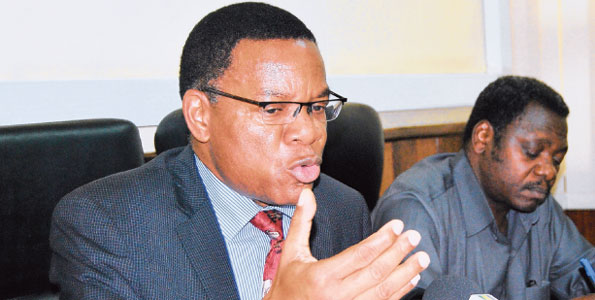
DRC Diplomacy Chief Bernard Membe(L) thrashes Ezekiah Wenje’s allegations.

Dodoma/Dar es Salaam. Foreign Affairs and International Cooperation minister Bernard Membe said yesterday that he would resign if the Opposition proved his controversial remarks about Rwanda were wrong.

Mr Membe was responding to allegations levelled against him by Shadow Foreign Affairs minister Ezekiah Wenje.

Winding up debate on his ministry’s 2014/15 budget proposals in Parliament, Mr Membe offered to resign if Mr Wenje would provide documentary proof that he was wrong when he said last September that the Banyamulenge in eastern Democratic Republic of Congo (DRC) were ethnic Tutsis originating from Rwanda.

“This is a fact that cannot be denied,” he said.

He said the Banyamulenge, who formed the M23 rebel group that fought the DRC government for a number of years, were Tutsis originating from Rwanda, while members of the the Democratic Forces for the Liberation of Rwanda (FDLR) were Rwandans, who fled to eastern DRC after the 1994 genocide.

“When I told the BBC that Rwandans were causing instability in Eastern Congo, I meant what I said…it’s the UN’s group of experts that originally accused Rwanda, not me,” Mr Membe told Parliament.

He admitted that relations between Tanzania and Rwanda were strained, but added that “opportunists” had taken advantage of the situation to fuel diplomatic tensions between the two countries.

Presenting the Opposition’s response to the ministry’s budget proposals earlier, Mr Wenje accused Mr Membe of stoking diplomatic tensions between the two countries.

Although Mr Membe made no mention of the frigid relations in the speech, Mr Wenje said the minister was to blame for the situation.

This forced Mr Membe to hit back when responding to MPs’ views, accusing Mr Wenje of being a stooge of a foreign country. The shadow minister strongly denied the claim.

Mr Wenje, who is also the Nyamagana MP, earlier told Parliament that Mr Membe’s remarks on the BBC’s Focus on Africa programme had worsened the fragile relations between Tanzania and Rwanda.

He said such comments could only heighten confusion and anger among ordinary citizens of the two countries.

The shadow minister claimed that Mr Membe said Rwanda had exported insecurity and instability to eastern DRC after sending rebels into country.

He said the minister made inaccurate comments about Rwanda and the M23 rebellion in eastern DRC.

But Mr Membe stood his ground, saying what he said was the truth, which had even been documented by UN experts.

Mr Wenje also said the government had not bothered to warn former Rwandan Prime Minister Faustine Twagiramungu after he was quoted saying he had held talks with Tanzania to strategise on how the FDLR could take over power in Rwanda.

Tanzania has repeatedly stated that if Mr Twagiramungu visited Dar es Salaam, he came on a private visit and was not invited by the government as claimed by the News of Rwanda website.

Mr Membe said Tanzania was playing a key role in finding lasting peace in the Great Lakes Region.

The United Nations Force Intervention Brigade, also known as the SADC Intervention Brigade and led by Brigadier General James Mwakibolwa from Tanzania, had successfully dismantled M23 restored peace in eastern DRC, he added.

Relations between Tanzania and Rwanda took a plunge in May 2013 following President Jakaya Kikwete’s appeal to Rwanda to engage FDRL rebels in talks.

Mr Kikwete’s suggestion at a meeting of the Great Lakes countries, which met on the sidelines of the African Union summit in Addis Ababa, did not go down well with Rwandan President Paul Kagame.

The government in Kigali links the FDLR with the 1994 genocide, in which over 800,000 people, mainly Tutsis and moderate Hutus, were slaughtered.

M23, which dominated the North Kivu Province since the end of the Second Congo War in 2003 before it was defeated last year by a joint force from Tanzania, South Africa and Malawi, is a reincarnation of the National Congress for Defence of the People.

In April, 2012 up to 700 former CNDP soldiers mutinied against the DRC government that was being supported by the peacekeeping contingent of the Unites Nations Organisation Stabilisation Mission in the Democratic Republic of Congo (Monusco).

The mutineers formed M23, also known as the Congolese Revolutionary Army, which was allegedly bankrolled by neighbouring Rwanda.

Source: http://www.thecitizen.co.tz/News/House-divided-as-Membe-hits-back/-/1840392/2328676/-/item/0/-/1214odm/-/index.html

FDLR echoes JK’s advise to kagame

fdrl

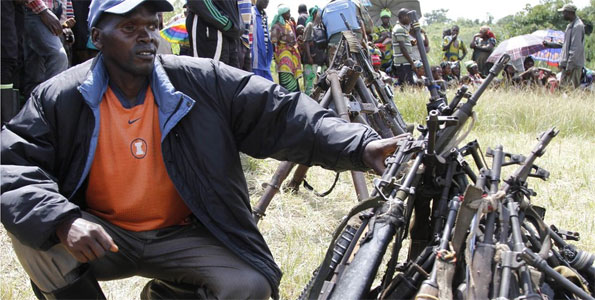
A pile of arms surrendered by FDLR fighters in eastern Congo earlier this year.

As Rwanda pushes for military action against the Democratic Forces for the Liberation of Rwanda (FDLR) even before the six-months deadline for the group’s disarming expires, the Hutu rebel faction has outlined fresh conditions for what it calls lasting peace solutions in the east of the Democratic Republic of Congo (DRC), The Citizen has learnt.

Kigali has been calling for a military offensive against FDLR, which has been operating freely in eastern Congo for two decades, but Tanzania, South Africa and DRC maintain that no military action should be taken until the deadline expires. The stance is also supported by the Southern Africa Development Community (SADC). The deadline for the voluntary disarmament of FDLR fighters is December, this year, according to details gathered by The Citizen.

Both SADC and the International Conference on the Great Lakes Region (ICGLR) want the deadline to elapse before military action is taken against FDLR.

DRC wants the FDLR fighters who want to surrender to do so now or face military action after the deadline expires. The DRC government wants FDLR fighters who surrender to be repatriated to a transit camp in Kisangani, about 900km from South and North Kivu areas where the rebels are based.

But, according to details obtained by The Citizen, Rwanda and the UN want military action now and are strongly opposed to the six-month deadline.

So far, only 183 fighters have surrendered with less than 200 weapons, mostly old guns, handed in.

But in their letter addressed to the SADC chairman, President Robert Mugabe of Zimbabwe, FDLR, among other things, says it would not move its former combatants from Eastern Kivu to Kisangani as agreed earlier.

FDLR says between 2001 and 2002, when its fighters disarmed to pave the way for peace in war-torn DRC, the former combatants were attacked, killed and others forcibly repatriated to Rwanda.

All this, claims FDLR in the letter signed by Major General Byiringiro Victor, who is the president of the rebel faction, happened under the watch of UN peacekeeping forces (Monusco) and Congolese and Rwandese military officers.

Alarmed by what transpired in the past, FDLR has issued key conditions that should be fulfilled if Rwanda, DRC and the international community want lasting peace in eastern Congo.

  • First, the rebel faction wants SADC to be actively involved in the whole peace process by being at the forefront of the efforts.
  • Secondly, the group wants SADC and the African Union (AU) to plead on its behalf in persuading the European Union, United States of America, United Kingdom and Canada to support the peace process in eastern Congo.
  • The third condition, according to the letter obtained by The Citizen, is SADC and AU to make use of both their respective diplomatic and strategic positions and persuade both the US and the UN Security Council to put more pressure on Rwanda’s President Paul Kagame to accept political dialogue between his government and the Hutu rebels.

The US, EU and United Nations still maintain that FDLR is a rebel faction, which, apart from being accused of playing a role in 1994 genocide, has also committed atrocities in eastern Congo during the past two decades.

The Citizen could not independently establish whether Rwanda would accept the proposal to have a political dialogue with FDLR.

When President Jakaya Kikwete suggested that it was time Mr Kagame launched political dialogue with FDLR, Kigali vehemently rejected the idea, straining relations between the two countries.

In its letter, the rebel faction says it is worth noting that the Rwandan problem is a political problem and therefore its solution is not military action, but political dialogue.

It is not clear why FDLR has changed its tone from an armed rebellion to political dialogue, bearing in mind that the group has in the past two decades been fighting to overthrow the Kigali regime.

A senior security officer in the Tanzania government told The Citizen on condition of anonymity, “Our position is that no military action should be taken before the deadline expires…after the expiry then we would make a decision.

“Our problem is that after we defeated the M23, the FDLR rebels, having sensed that they were the next target, decided to abandon combats and use locals as human shields. This situation complicates the military action process because you can’t fight them without killings innocent civilians.”

Last December, a Tutsi-dominated rebel faction known as M23 was militarily dismantled, ending 18 months of fighting in eastern Congo.

The M23 rebel faction, also known as Congolese Revolutionary Army, which was mainly formed by former National Congress for Defence of the People (CNDP) fighters led by Brigadier General Sultan Makenga and General Bosco Ntaganda, mutinied against the Kinshasa regime early in January 2012 and sparked a crisis that lasted for nearly two years.

But the group opted for peaceful means to attain their political goals in DRC following a sustained offensive by the UN Intervention Brigade.

Following the defeat, SADC and ICGLR leaders agreed that the focus should now be on FDLR and other rebel forces that have destabilized eastern Congo for years. Although there are about a dozen rebel factions in eastern Congo alone, FDLR is the most resilient, having operated from Congo for two decades during which it collected taxes and controlled illegal mining activities to fund its operations.

What is the FDLR?

According to documented evidence, FDLR rose from the ashes of the 1994 genocide perpetrators to form a strong Hutu extremist army, thanks to the free handout and safe heaven provided by the United Nations High Commission for Refugees in the DRC’s Kivu Province.

The assassination of former Rwandan president Juvenal Habyarimana in 1994 opened the bloody chapter of the massacre of over 800,000 Tutsis and moderate Hutus, sparking a full-scale offensive by the Rwandan Patriotic Front (RPF) led by Mr Kagame. The formation of FDLR was spearheaded by, among others, Theoneste Bogosora, said to be among the chief architects of the genocide, and General Augustine Bizimungu who was chief of staff of the Rwandese army during the genocide.

At the time of Habyarimana’s assassination, RPF fighters were just 40km outside Kigali, waiting for the implementation of the Arusha peace accord, which, among other things, would have given the Tutsi rebels key positions within the transition government that was to have been announced by Habyarimana.

After months of fierce battle, RPF ended three months of genocide, but also sparked the exodus of refugees who fled Rwanda fearing retaliation by the RPF regime.

In July 1994, an average of 12,000 Rwandan refugees, mainly Hutus, entered DRC every hour through the town of Goma, fleeing the RPF soldiers who had just toppled the Rwandan regime. Among those fleeing were soldiers and Hutu militia known as Interahamwe.

sOURCE:The citizen

Increasing arrests and disappearances rattle Rwandans

Fear is growing in Rwanda as top members of the military are arrested and ordinary people disappear. President Kagame appears to be determined to stifle all opposition. Human rights organizations are alarmed.

President Paul Kagame

About a month ago, in late July 2014, Rwandan president Paul Kagame reshuffled his cabinet. He said a reorganization would bring about a better working climate and promote development and wealth in the East African country. The move triggered a series of events which quickly attracted the attention of international human rights organizations. One such event was the news on Monday (25.08.2014) that three high-ranking members of the armed forces had been arrested, including Rwandan Defense Force Colonel Tom Byabagamba. The reason given for his arrest: crimes against state security.

What is new about this is that it is no longer just supporters of the opposition who find themselves targeted by police, but also people considered to be allies of President Kagame. “Support for him in his own ranks is disappearing rapidly,” Gerd Hankel, an expert in international law at the Hamburg Institute for Social Research, said in an interview with DW. “Kagame is highly controversial. What was promised to the Rwandans and to his own close circle, has not been fulfilled. People are waiting for clear signs of progress.”

Such signs could be a willingness to share power or steps towards a general democratization, Hankel added. But Kagame, who has been in power for 14 years, and his country seem far removed from such prospects.

A newspaper seller in Kigali‘There are no longer any free media in Rwanda’

“We have been closely observing the situation experienced by human rights activists, members of the opposition and also the Rwandan media for several years,” said Gesinde Ames from the Ecumenical Network for Central Africa, an association of German church organizations. “There are no longer any free media in Rwanda,” Ames said. “There is a state organ which is under strict control. And it is the same with opposition movements.” Any attempts to counter Kagame by establishing new political parties were quickly stifled, with “party leaders arrested and sentenced to life imprisonment,” Ames told DW.

People ‘don’t just disappear’

Any meaningful opposition has been reduced to a single party, the Democratic Green Party, which is frequently the target of initimidation attempts. Party leader Damascene Munyeshyaka has been missing since June. The government denies any involvement.

Minister for Internal Security Sheik Mussa Harerimana plays down the case. “These are just accusations intended to tarnish the government’s reputation. People don’t just disappear here,” he told DW. “But there are people who are in prison as the result of criminal activities. While they are in detention awaiting trial, it seems that relatives claim they have disappeared.”

US-based human rights watchdog Human Rights Watch (HRW) sees this differently. A recent report says that dozens of Rwandans have gone missing since March this year. HRW accuses the Rwandan army and police of removing critics of the Kagame regime.

For years observers have criticized moves to suppress any opposition and increasing acts of intimidation. International law expert Hankel says recent events show this has clearly intensified. According to Hankel, Kagame’s enemies are no longer to be found abroad, such as the Rwandan Hutu FDLR militia (Democratic Forces for the Liberation of Rwanda), but close to Kagame himself. “There is a large group of politicians who are not happy with the course Kagame is taking but who have no opportunity of articulating this in public. And so conspiratorial groups are created.”

Diplomacy takes a one-sided view

Members of the Rwandan policeRwandan police are said to be involved in ‘disappearances’ of Kagame critics

Internationally, Rwanda’s economic successes and victories in the battle against corruption are highly praised. But, says Hankel, this is an incomplete picture. “What is not seen is that nothing has changed for ordinary Rwandans. Wealth is concentrated in the hands of just a few.”

Gesine Ames from the Ecumenical Network for Central Africa calls for more straight talking from Europe and from Germany in particular. There is a need for “more discussions between Rwanda and donor nations, especially concerning the human rights situation,” she said. “Human rights are universal and Rwanda must also respect them. The international community has an obligation to remind Rwanda of this.”

Source: DW

“Turasaba Leta y’u Rwanda na l’ ONU gushaka inzira z’ukuri zatuma Abanyarwanda babona amahoro”: CLIIR

1981773_640941909313899_8814842215382593481_n

ITANGAZO K’UMUNSI MPUZAMAHANGA WAHARIWE AMAHORO Y’ABATUYE KU ISI
———————————————————————————–
Ku nshuro ya 30, Isi irizihiza umunsi mukuru washyizweho na ONU buri 21 Nzeri wahariwe amahoro y’abatuye Isi. Kuri iyi nshuro intego n’inyito bya ONU yahaye iyi sabukuru ikaba ari uko « Abaturage bafite uburenganzira ku mahoro n’umutekano ».

Ikigo giharanira kurwanya umuco wo kudahana no kurenganya mu Rwanda (CLIIR) wongeye kunga mu rya ONU wibutsa abayobozi b’U Rwanda ko abanyarwanda bafite uburenganzira bahabwa n’amategeko bwo kugira umutekano n’amahoro bisesuye.

Amahoro aba ku giti cy’umuntu : Umuntu agomba guhabwauburengazira bushobotse mu mibereho ye n’abandi atabangamiye rubanda nkuko nawe atakwifuriza uwamubangamira. Iryo rikaba ihame ridakuka mu Rwanda.

Amahoro ntagurwa kugirango aboneke : Buri muntu agomba kuyiyumvamo, akayaha uwo begeranye noneho amahoro agakwira hose, akanashyigikirwa kuburyo burambye.

Amahoro na Demokarasi birajyana : Iyo kimwe kibuze, ikindi kirahungabana. Ababuze Amahoro na Demokarasi bagatahwa n’ubwoba butuma batagira amahoro yo mu mitima no ku mibiri nkuko bimeze mu Rwanda rw’ubungubu.

Nkuko bigaragagara mu Rwanda nta mahoro akibarizwayo kuko ubona abaturarwanda ntayo bafite. Ibyo bikagaragazwa no guhunga, gushimutwa, kwicwa, ubwoba, urwikekwe gufungwa bya hato na hato, umwana yikanga nyina, umubyeyi akikanga umwana we, inzangano zibarizwa mu miryango abavukana barihakana, …

Ibyo byose birangwa mu gihugu cy’u Rwanda ni ikimenyetso cy’imiyoborere n’ubutegetsi bubi budakorera abaturage, budashishikajwe n’iterambere nyakuri, budatanga amahoro kubo bwakagombye kuyaha. Ntibwubahiriza amasezerano mpuzamahanga bashyizeho umukono n’amahame remezo ya Demokarasi.

CLIIR rero ikaba iboneyeho, gusaba Leta y’U Rwanda, abayobozi bayo, n’umuryango wa ONU gufata iy’ibanze mu gushaka inzira zose z’ukuri Abaturarwanda babona amahoro n’umutekano bisesuye nkuko ari uburenganzira ntakuka bahabwa n’amategeko.

Bikorewe i Buruseli,
21 Nzeri 2014

Alain Duval MUSONI
Komisseri ushinzwe uburenganzira bwa kiremwa muntu
CLIIR

Un salut ému aux trois missionnaires assassinées

Des milliers de personnes à la Messe de funérailles dans le sanctuaire du Mont Sion Gikungu dans les faubourgs de Bujumbura

Sœur Olga Raschietti, sœur Lucia Pulici et sœur Bernardetta Boggian, les trois missionnaires salésiennes tuées entre dimanche dernier et lundi dans leur couvent de Kamange, dans la banlieue de la capitale burundaise Bujumbura, reposeront à partir d’aujourd’hui dans le cimetière de Panzi, non loin de Bukavu, le chef-lieu du Sud Kivu, dans l’est de la République démocratique du Congo, leur précédente terre de mission.

Ayant explicitement fait ce choix, en effet, les trois sœurs, toutes originaires de Parme, resteront dans le cimetière qui accueille déjà beaucoup d’autres missionnaires, hommes et femmes, qui comme elles ont engagé – et souvent sacrifié – leur vie en Afrique. Des milliers de personnes ont rendu hommage hier(11/09/2014) après-midi dans le sanctuaire du Mont Sion Gikungu, dans les faubourgs de Bujumbura, aux trois cercueils blancs alignés devant l’autel de l’église où a été célébrée la Messe d’obsèques. A cette occasion, les trois sœurs ont été saluées par toute la population de façon unanime et émue, reconnaissante pour leur action missionnaire, particulièrement précieuse dans un pays déchiré par les conflits depuis plusieurs décennies entre hutus et tutsis. A Kamange se trouve en effet un centre pour les jeunes fondé par les congrégations xaviériennes masculines et féminines pour promouvoir la cohabitation entre ethnies différentes. Des paroles de paix et de refus de tout esprit de vengeance contre l’auteur du délit – un déséquilibré, semble-t-il, sans aucun mobile idéologique ou religieux – ont retenti pendant l’homélie de l’archevêque de Bujumbura, S.Exc. Mgr Evariste Ngoyagoye, qui a concélébré la Messe avec plusieurs évêques et des centaines de prêtres, séculiers et religieux.

– See more at: http://www.osservatoreromano.va/fr/news/un-salut-emu-aux-trois-missionnaires-assassinees#sthash.djvB5XPa.dpuf

RWANDA/BURUNDI: Rotting bodies with bound limbs or stuffed in sacks,…

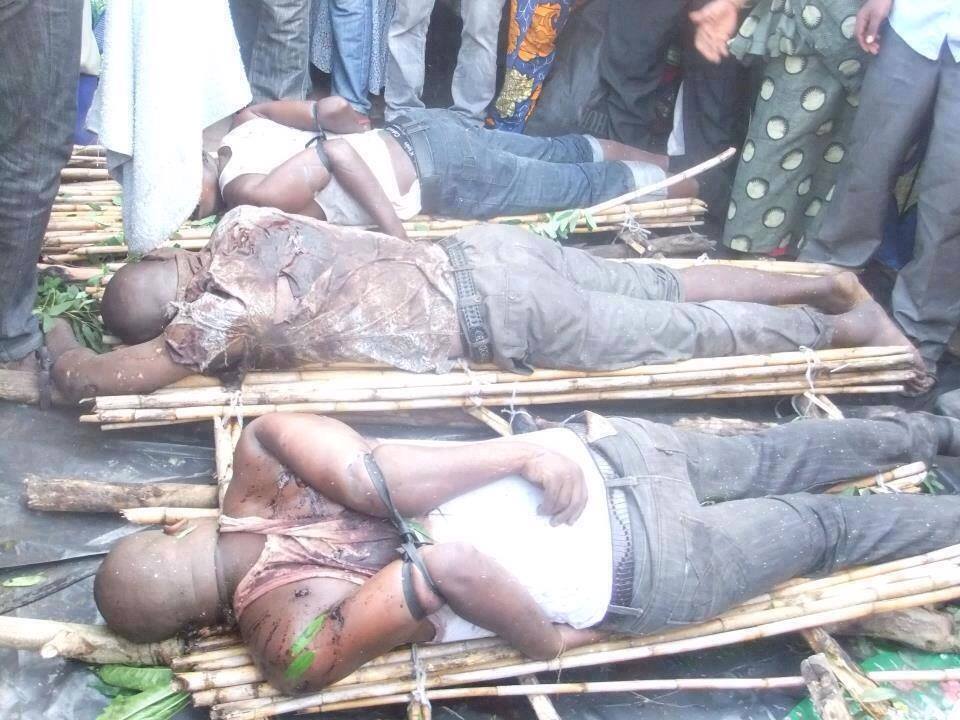
Some of dead bodies carried down by Akagera river into lake Rweru. Geographical situation hints that these bodies came undoubtedly from RWANDA. This takes place months after Human Rights Watch and the US State Department reported thousands of missing persons in Rwanda. Admin

Where they have come from and why they are there remains a mystery. Investigations have stalled as the case embarrasses Burundi and its powerful neighbour denies all knowledge.

Officially, just four bodies were found tied up in sacks last month – already enough to set alarm bells ringing in a region scarred by decades of political unrest and serious rights abuses.

Fishermen report seeing as many as 10 times that number, carried by the currents in the lake 270km north-east of Bujumbura.

Late last month a joint Burundi-Rwanda commission was set up to find the origin of the bodies, and Burundi’s presidential spokesman Willy Nyamitwe repeated this week that the two countries were working together on the case.

But on the ground, little seems to be done to unravel the mystery.

“On our side, we investigated by asking leaders in the area if there were any missing people, and they said no,” said local Burundian governor Aline Manirabarusha.

One diplomat in Burundi’s capital Bujumbura says the bodies were buried without an autopsy.

“It means that the people can never be identified, or know where they come from,” the diplomat said.

In 2006, the bodies of Burundian opponents murdered in political violence were thrown into various rivers in the country.

That was the year Burundi emerged from more than a decade of brutal civil war, and its political climate remains fractious ahead of presidential polls due next June.

Neighbouring Rwanda is led by strongman President Paul Kagame, who despite being credited with overseeing dramatic economic advances while in office, has also come in for mounting criticism for suppressing dissent, including the alleged assassinations of exiled opposition figures.

On both banks of Lake Rweru, which is 10km long, residents say they are sure the bodies were washed downstream by the Nyabarongo-Kagera river.

The river originates in Rwanda before flowing into Lake Rweru, on into Burundi and Tanzania, and emptying into Lake Victoria.

It has a grim history: during the Rwandan genocide in 1994, the bodies of some of those massacred floated down the river.

Near the water, a young Rwandan farmer describes how the main river, which splits into different channels, has in recent months taken a new path.

That is why the bodies have appeared in the lake, he says.

“Had they remained in the Kagera river, the injustice would never have come to light,” said the farmer, who lives with his family in a small hut at the edge of the river, a short boat ride from the border with Burundi.

“It was God who wanted these crimes not to go unpunished.”

The farmer says he has seen around 20 bags containing bodies flowing downstream in the river.

Local residents say the bodies started coming in mid-July. But after discovering them, they pushed them back into the water, for fear of bringing trouble on themselves.

Local official Manirabarusha also insisted the bodies come “down the Kagera river”.

But asked if that means the bodies come from Rwanda, the governor declined to comment.

“I do not know where exactly the Kagera is… I forget, ask geographers who have studied this,” she said, visibly embarrassed.

A senior Burundi official, speaking on condition of anonymity, said the case may never be brought to light because “Burundi will sacrifice the truth on the altar of its relations with Kigali”.

“It is crucial, because Burundi cannot afford to antagonise its powerful neighbour,” he said.

When contacted by AFP, Rwandan police spokesman Damas Gatera dismissed any suggestion the bodies have come from his country.

“There were no dead bodies in Rwanda or found in Rwanda, the ones we are talking about were found in Burundi,” he said.

When asked why Rwandan farmers have been ordered not to talk to journalists in the area, he said he did not know. – Sapa-AFP

source: iol.co.za

Rwanda : «#Twahisemo » kwica abanyarwanda tukabajugunya mu kiyaga cya RWERU !

ob_2f2387_kabarebe
Kuva mu kwezi kwa gatatu uyu mwaka, abanyarwanda bakomeje kunyerezwa ku bwinshi n’inzego zishinzwe umutekano za Paul Kagame, izo nzego zageze naho zishimuta abanyarwanda bafite ubuhungiro muri Uganda harimo Lt Joel Mutabazi, nyuma zikurikizaho abandi banyarwanda benshi barimo n’abarwanashyaka ba PS Imberakuri bari muri Uganda n’imbere mu gihugu. Kubera igitutu cy’abanyamakuru mpuzamahanga bari baje mu kwibuka imyaka 20 jenoside ibaye mu Rwanda, byatumye polisi y’u Rwanda igaragaza Kizito  Mihigo na Ntamuhanga bari bamaze kunyerezwa mu ntangiriro z’ukwezi kwa Mata 2014, naho ubundi ibyabo byari kuba byararangiye, ubu baba barageze mu kiyaga cya Rweru  nk’abandi bose tubona!
Abanyarwanda barababaye cyane kubera uko kunyerezwa no kwicwa bakajugunywa mu biyaga bakajya kuribwa n’ingona nta cyaha bazi bakoze, abandi banyarwanda byitwa ko bagihumeka bakaba bari kwicwa n’inzara ndetse n’indwara ya Bwaki bitewe na leta yategetse abaturage guhinga igihingwa kimwe, abacuruzi bari kwamburwa utwabo ngo ntibatanga imisoro ihagije, abakozi ba leta ntibagihembwa n’ababonye uwo mushahara leta iwugabanya uko ishatse umukozi agaceceka ngo batamukubita agafuni bakamushyira mu mufuka bakajugunya muri Rweru!
Nubwo bimeze gutyo ariko, biratangaje kubona Paul Kagame ajya kwidegembya muri Amerika (USA) ngo agiye muri rwanda day, icyo gihugu kikamwemerera kwidegembya kandi kizi neza ko yamariye abaturage mu kiyaga cya Rweru ! Kabarebe n’izindi nkomamashyi ubu zikingira ikibaba Paul Kagame zikaba zarahawe akazina k’akabyiniriro ko kwitwa KAPOTE ZA KAGAME bari kwirirwa bandika ku mbuga za interineti ijambo ryitwa ngo « #twahisemo» ! Nyuma y’ako kababaro kose abanyarwanda bafite, Kabarebe agatinyuka akavuga ngo «#Twahisemo umutekano w’abanyarwanda » ! None se iriya mirambo y’abanyarwanda iri mu kiyaga cya Rweru si abanyarwanda ? Ruriya rupfu yabahaye  niwo mutekano yabahitiyemo ?
Muri perefegitura ya Ruhengeri honyine (dore ko bakuyeho amazina ya komine na perefegitura kugira ngo bajijishe ngo ubwicanyi bakora mu gihugu butazamenyekana), abantu barenga 2000 bamaze kunyerezwa n’inkotanyi ! Mu nkuru yasohowe na RFI kuwa kane, umuryango w’ibihugu by’ubumwe bw’iburayi na HRW birasaba ko haba iperereza ryimbitse ku mirambo iri gutoragurwa mu kiyaga cya Rweru ariko abicanyi bayoboye u Rwanda muri iki gihe, bo bavuga ko ntamuturage wigeze abura mu Rwanda, ko mbese iby’iyo mirambo ntacyo bibabwiye ,kandi birumvikana kuko abo bategetsi nibo bishe abo bantu!
Umushakashatsi witwa Clément Boursin ukorera umuryango urwanya iyicarubozo muri Afurika witwa ACAT, yabwiye radiyo mpuzamahanga ya RFI ko amagambo avugwa na HRW kimwe n’ibihugu by’i Burayi adahagije, ahubwo umuryango mpuzamahanga ugomba gukora iperereza ritabogamye rigomba kwerekana imyirondoro y’abantu bishwe, ababishe, uko babishe n’igihugu abo bishwe bakomokamo. Ntabwo iryo perereza ryakorwa n’abayobozi b’u Rwanda kandi aribo babishe ! Uwo mushakashatsi yavuzeko amahanga yicecekeye ku berako amahano yakozwe n’u Rwanda kandi ruhagarikiwe n’ingwe (USA) kandi hari ibimenyetso bidashidikanywaho byerekana ko abo bantu bishwe ari abanyarwanda kandi bakicwa ku buryo bwitondewe n’abantu babitojwe !
Umwe mu bahanga bazi amategeko mpuzamahanga asanga kuba imirambo igaragara mu kiyaga cya Rweru iba iziritse amaguru n’amaboko kandi iri mu mifuka, byerekana ko abo bantu bazize ubwicanyi buteguwe, akaba ari ngombwa gukora iperereza kuri ubwo bwicanyi kuko bigaragara ko ari ubwicanyi bukoranye ubugome bukomeye kuburyo amahanga atagomba guceceka ! Hagati aho, abaturage baturiye akarere ka Ruhengeri batangiye kwandikira ibinyamakuru ngo bibafashe gutabariza abantu babo banyerejwe mu kwezi kwa kamena (6) uyu mwaka ubu akaba ntagakuru kabo bafite ; abo baturage basabye umuyobozi w’akarere ka Musanze Madame Mpembyemungu Winfrida kimwe na Bwana Rwabugande Benon ushinzwe maneko za FPR muri ako karere kugarura abo bashimuswe kuko aribo babatwaye ariko abo bayobozi batereye agati mu ryinyo !
Dore urutonde rw’abantu bake banyerejwe mu Ruhengeri rumaze kugera mu binyamakuru :
Aya Namazina Yabantu Baherutse Gushimutwa Na Dmi Ya Fpr Mukarere Ka Musanze (Ruhengeri) Mukwezi Kwa Gatandatu Gusa (The Following Is A List Of People From Musanze District Who Were Picked Up By The Rwandan Dmi In June 2014 And Never Returned Home)
AMAZINA/NAMES
AHO BAKOMOKA/LOCALITY
1.    Kamana Deogratias
Busogo
2.    Niyitanga Chantal
Busogo
3.    Ngezahayo J.M.V
Busogo
4.    Niyitegeka Antoine
Busogo
5.    Josephine M
Byangabo
6.    Kanyamuhanda Faustin
Byangabo
7.    Anastase Ahorwabaye
Byangabo
8.    Habarurema J Luc
Kabyaza
9.    NDAHAYO THEOPHILE
Kabyaza
10.  Umutoni Jeannine
Kabyaza
11.  Uzabuwe Kagoyire
Kabyaza
12.  Uwiduhaye
Kabyaza
13.  RUGWIZA Alice
Shingiro
14.  Céline Nyirarudodo
Cyuve
15.  RUTAGANDA PASCAL
Cyuve
16.  Tungunika Aimee
Shingiro
17.  Akingeneye Jeannette
Shingiro
18.  Ndeka Boka
Kubuguzo
19.  Espérance Mugirishyaka
Shingiro
20.  Renovat Ngwabije
Shingiro
21.  Mukagatare Joséphine
Kibuguzo
22.  KAMPIRE M. Anne
Kabyaza
23.  Vincent Ndikumana
Kabyaza
24.  Habyarimana Jerome
Kabyaza
25.  Barabwiriza Aimable
Kimonyi
26.  Sindayigaya Marie
Kimonyi
27.  UWAYEZU Cheryne
Kimonyi
28.  Kambari Kamateke
Nyange
29.  Gatima sonia
Nyange
30.  Mutima Jeanne d’arc
Shingiro
31.  Ndahayo Shumbusho
Shingiro
32.  Mbanje Mutangana
Shingiro
33.  Mbanzabugabo Elie
Shingiro
34.  Dusabe Angelique
Shingiro
35.  Mukesha Epimaque
Gacaca
36.  Majyambere Eliab
Gacaca
37.  Kamana Yoshua
Gacaca
38.  Karimunda Isaac
Gacaca
39.  Byuma Sebagabo
Gashaki
40.  Mwambara Leonard
Gashaki
41.  Nsabagasani Jules
Gashaki
42.  Ntuyenabo Deogratias
Kinigi
43.  Havugimana Jean Damas
Kinigi
44.  Rubondo Jules
Busogo
45.  Mbonabucya Froduard
Kinigi
46.  Nkundakozera Elie
Busogo
47.  Nkuriyingoma Ephraim
Busogo
48.  Twagirayezu Yvone
Kabyaza
49.  Nizeyimana Camarade
Kabyaza
50.  Afrika Clémentine Uwase
 Kabyaza
51.  Karangwa Karimwabo
Gataraga
52.  Nsengiyaremye Epa
Mutobo
53.  MATABARO Aimable
Gataraga
54.  GIRUKUBONYE JMV
Gataraga
55.  Karimwabo Samwel
Gataraga
56.  Twagirayesu Schadrack
Gataraga
57.  Gerard Nduwayezu
Gataraga
58.  Nshimiyimana Jean François
Gataraga
59.  Bizumuremyi Yves
Gataraga
60.  Mbakuriyemo Ayub
Gataraga
61.  Bihoyiki Yohwana
Mutobo
62.  Mujyarugamba Philip
Shingiro
63.  Badeshi Papias
Shingiro
64.  Munyantarama Elizaphan
Mutobo
65.  Ndabalinze Anatole
Bukamba
66.  Habumuremyi Anastase
Bukamba
67.  Makabuza JeanPaul
Bukamba
68.  Ndimuto Calixte
Bukamba
69.  Namahoro Aline
Bukamba
70.  Uwineza Henriette
Bukamba
71.  Ntamakuliro Jack
Bukamba
72.  Mukamusoni Ancille
Kinigi
73.  Uzabakiliho
Kinigi
74.  Hitimana J.
Kinigi
75.  Mbonigaba P
Nyange
76.  Uwimana Antoine
Nyange
77.  MILIMO Burungi
Nyange
78.  Serushago Benestoli
Kinigi
79.  Nkurukiyingoma A.
Kinigi
80.  Nzamutuma E
Bugarura
81.  Uwimana Aloysia
Bugarura
82.  Ndibwami Jean
Bugarura
83.  Murorunkwere Beatrice
Ubwanditsi  
 Source: Veritasinfo.fr

Cadavres du lac Rweru: la présidence burundaise répond à HRW

imirambo

L’organisation de défense des droits de l’homme Human Rights Watch (HRW) avait appelé, mardi 16 septembre, les gouvernements rwandais et burundais à enquêter après la découverte de plusieurs corps sur les rives du lac Rweru, à la frontière entre les deux pays. La présidence du Burundi, par la voix de son conseiller en communication, Willy Nyamitwe, joint par RFI, assure que des enquêtes sont menées en synergie par les polices rwandaises et burundaises.

« On ne peut pas dire que les enquêtes sont au point mort », insiste le conseiller en communication du président burundais Pierre Nkurunziza.

« Les autorités burundaises et rwandaises sont en train de travailler en synergie pour essayer de comprendre ce qui s’est passé. Vous savez, quand vous voyez des corps en décomposition, ça crée des inquiétudes », poursuit Willy Nyamitwe.

Human Rights Watch ainsi que d’autres organisations de défense des droits de l’homme s’étaient étonnées que les corps retrouvés flottant sur le lac Rweru soient immédiatement enterrés, enlevant tout espoir d’identification des victimes.

Des risques sanitaires

« Ce n’est qu’une question de principe. Des corps qui sont déjà en décomposition doivent être enterrés », explique encore le conseiller à la présidence burundaise, évoquant des risques sanitaires pour les populations riveraines du lac.

RFI avait recueilli des témoignages au Burundi ainsi qu’au Rwanda de riverains et pêcheurs qui assuraient que ces corps provenaient de la rivière Akagera, située du côté rwandais de la frontière.

« La seule chose que nous pouvons confirmer, c’est que ces corps ne proviennent pas du Burundi, parce qu’ils ont été charriés par cette rivière », ajoute Willy Nyamitwe.

Le conseiller à la présidence du Burundi se refuse à tout commentaire concernant la provenance de ces corps « en attendant les résultats des investigations en cours ».

Willy Nyamitwe assure que les relations entre le Rwanda et le Burundi sont « au beau fixe ». Néanmoins, précise-t-il, « nous ne sacrifions aucune victime au nom de ces bonnes relations. Ce qui s’est passé est condamnable et le Burundi ne peut que s’associer à tout effort afin de déterminer ce qui s’est passé. Le Burundi est gêné, quand même, de continuer à enterrer des corps qui ne proviennent pas de notre territoire », a-t-il conclu.

Source:  RFI

La violence n’est jamais une réponse – Caritas internationalis sur la crise au Moyen-Orient

ci

De l’Irak à la Syrie et à la Bande de Gaza : la solution des conflits doit passer par le « dialogue », ou quoi qu’il en soit par « une autre voie » par rapport à « une violence supplémentaire ». C’est ce qu’a dit le cardinal archevêque de Tegucigalpa, Óscar Andrés Rodríguez Maradiaga, président de Caritas Internationalis, en ouvrant hier, lundi 15, à Rome, la rencontre de haut niveau dédiée à la crise au Moyen-Orient avec les présidents et les directeurs de la Caritas des pays impliqués et leurs partenaires internationaux.

Dans la conscience « d’être face à la plus grande crise que le monde affronte depuis la Seconde Guerre mondiale », le cardinal a invité tous les gouvernements « à la cessation totale des envois d’armes dans les pays du Moyen-Orient », en réaffirmant que « la paix ne peut pas être imposée de l’extérieur, mais doit naître de l’intérieur » sur la base de la « justice sociale entre les personnes ».

La situation dramatique de la population est au centre des travaux, qui se concluent mercredi 17, avec l’objectif, comme l’a expliqué Michel Roy, secrétaire général de Caritas Internationalis, de «réfléchir ensemble sur quelle peut être la meilleure réponse, dans les prochains mois et années, à la tragédie qui frappe le Moyen-Orient, et sur comment on peut collaborer avec d’autres organisations de l’Eglise catholique ou en dehors d’elle pour promouvoir la paix et la stabilité dans la région ».

Actuellement, a rappelé le cardinal, « à chaque minute, quatre enfants syriens sont forcés d’abandonner leurs maisons. Les extrémistes en Irak et dans l’ouest de la Syrie sont en train d’étendre le nettoyage ethnique et religieux à une vaste zone sous leur contrôle. A Gaza, un demi-million d’enfants ne peuvent pas retourner à l’école parce que leurs classes ont été détruites. A Mossoul en Irak, la lettre N qui signifie Nazaréen, a été peinte sur les portes des maisons pour identifier les chrétiens puis les passer à tabac ou les tuer ». Environ 1,3 million d’Irakiens ont dû abandonner leurs maisons, les opérateurs de la Caritas eux-mêmes ont dû fuir. Et depuis le début de la crise en Syrie, plus de 13 millions de Syriens sont dans des conditions désespérées et 3 millions se sont réfugiés hors du pays, en Jordanie, au Liban, en Turquie.

Source: http://www.news.va/fr/news/la-violence-nest-jamais-une-reponse-caritas-intern