07 Mata 1994

Reka nunamire abatutsi bishwe mu mwaka wa 1994.

Tariki nk’iyi aho twari dutuye nta bwicanyi bwahabaye. Tariki ya 08/04/1994 mu ijoro nibwo hishwe umuryango wa Murari muri cellule Kunini, abapolisi ba Komine Mabanza bakoraga patrouille banyuze iwacu batubwira ko uwo muryango wishwe n’abantu ngo bari barakajwe n’amagambo umugore wa Murari yari amaze kuvugira ku kabari mu ga centre kitwaga GBK (Jebeka ).

Ngo uwo mugore yageze mu kabari agurira icupa buri wese wari aho , maze arababwira ngo : “Nimunywe mwuzuze ibyo bifu byanyu, ni byo abahutu mwamenyereye ubundi mugende musahure, ariko mumenye ko akanyu kashobotse “.

Ngo yaratashye baramukurikira bamwicana n’umuryango we. Ntibyari bikwiye. #Kwibuka25

#Mushubati #Mabanza #Kibuye

Rwanda : 6 Avril 1994 – 6 Avril 2019, 25 ans de mensonges.

rwanda-map-large-300-3001

6 avril 1994- 6 avril 2019, 25 ans de mensonges, 25 de silence sur l’assassinat de deux chefs d’Etat africains, 25 ans d’impunité et ça continue,…

Celui qui a tiré le missile SAM 16 et pulvérisé le Falcon 50 du chef de l’Etat rwandais court toujours, couché dans une colline de Kigali et buvant une bière de banane, la spécialité rwandaise en temps de chaleur. Tuer deux chefs d’Etat africains et dormir sous le soleil, l’alcool à l’œil est un plaisir que certains savourent encore 25 ans après les faits.

Le pays reçoit, le 7 avril de chaque année, des invités Européens et africains pour pleurer devant des tas de squelettes dont on ne sait s’ils sont ceux des Rwandais ou des Congolais. Ce spectacle macabre et indigne des traditions africaines expose sans pudeur des morts au lieu de les enterrer dans la dignité.

C’est le cercle d’exposition des ossements humains dont le principal objectif est de perpétrer le mensonge sur la tragédie rwandaise et au passage de dissimuler les noms de ceux qui ont commandité et tué deux chefs d’état africains le 6 avril 1994 au Rwanda.

Demain 7 avril 2019, des discours larmoyants seront de mise. Les mouchoirs sortiront des poches pour les caméras de télévision dans le dessein d’émouvoir, de tromper et de mentir à nouveau. Les assassins des deux chefs d’état seront peut-être de la partie, les lunettes noires dissimulant leur regard fuyant et leurs yeux rougis d’insomnie, la mine sombre, les mains moites, la gorge serrée par cette émotion feinte et ambiguë.

Ils feront semblant d’être tristes, d’être touchés et nul ne saura si ce sont les morts qui pèsent sur leur conscience ou si c’est la honte de leur mise en scène. Les médias raconteront la même histoire, 800 000 morts? 1 million de morts ? Plus d’un million de morts ? Tous du même groupe ethnique?

De toute façon, compter les morts avec précision dans ce pays n’a aucune importance puisque ce qui prime, c’est d’imposer un mensonge officiel. Pour les deux présidents africains, personne ne versera de larme. Ils n’étaient rien, ils n’ont pas existé, leur assassinat n’existe donc pas!

Pourtant les Nations Unies soutiennent que c’est leur assassinat qui a déclenché l’apocalypse au Rwanda … Le mensonge étant devenu la première religion de ce pays, il ne faut pas parler de ce qui a déclenché le fameux “génocide” au risque de diviser les Rwandais qui seraient actuellement très unis derrière les commémorations du mensonge.

La machine à mentir gagne l’Europe après avoir structuré les esprit des jeunes rwandais. Ils veulent désormais formater les petits européens au mensonge sur leurs morts qu’ils n’ont toujours pas réussi à compter.

Dr Charles ONANA

Commemorating the Rwandan Genocide : A Senate Resolution in praise of blood

Commemorating the Rwandan Genocide: A Senate resolution in praise of blood
April 5, 2019

by Ann Garrison

Last week New Jersey Sen. Robert Menendez introduced a Senate Resolution commemorating the 25th anniversary of the 1994 Rwandan Genocide. It “calls on the United States and the international community to cooperate in preventing and responding to genocide and crimes against humanity in nations across the globe.”

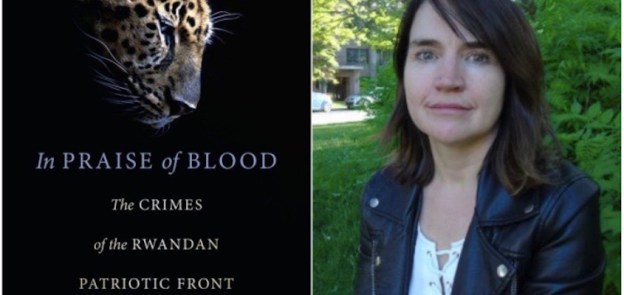
Like the Elie Wiesel Genocide and Atrocities Prevention Act passed in December 2018, the Menendez resolution bolsters the “humanitarian interventionist” argument that U.S. policymakers have deployed to justify bombing, special forces and/or sanctions in Libya, Syria and now Venezuela. It describes the 1994 Rwandan Genocide as the genocide of 800,000 Rwandan Tutsis by Hutu extremists, but Canadian investigative journalist Judi Rever’s “In Praise of Blood: Crimes of the Rwandan Patriotic Front” is just one of the latest books that upends that version of events.

Those previously published books include “Rwanda and the New Scramble for Africa: From Tragedy to Useful Imperial Fiction” by Robin Philpot, “Surviving the Slaughter: The Ordeal of a Rwandan Refugee in Zaire” by Marie Beatrice Umutesi, “Dying to Live: A Rwandan Family’s Five-Year Flight Across the Congo” by Pierre-Claver Ndacyayisenga, “How Paul Kagame Deliberately Sacrificed the Tutsi” by Jean-Marie Ngadimana, “Enduring Lies: Rwanda in the Propaganda System 20 Years On” by Ed Herman and David Peterson, and “The Accidental Genocide,” a compendium of primary-source documents compiled by former ICTR defense attorney Peter Erlinder.

Judi Rever was scheduled to speak about her book at Tarrant County College in Hurst, Texas, on April 1, but some Rwandans in the U.S. protested, calling her a genocide denier. Rwandan war and genocide survivor Claude Gatebuke published a counterargument headlined “Tarrant Community College: Why Author Judi Rever’s Scheduled Presentation Must Go Ahead” in the Black Star News, and the talk went ahead, despite a few protestors wearing t-shirts accusing her of genocide denial.

Kagame’s Rwanda has a longstanding alliance with Netanyahu’s Israel based on their constant equation of the Nazi Holocaust and the Rwandan Genocide, but these two tragedies were in fact not at all similar. The Jews did not invade Germany or any other European nation. They did not seize territory or wage a four-year war. They did not seize state power at the end of a war. The European Jews who perished in the Holocaust were a minority driven to concentration camps and murdered en masse by xenophobic white Christian supremacists.

The Tutsi Rwandan Patriotic Front (RPF) led by Gen. Paul Kagame was in fact a division of the Ugandan Army, and it did invade Rwanda on Oct. 1, 1990. It did wage a four-year war against the Rwandan Army and the civilian population, 85 percent of whom were Hutu. They massacred hundreds of thousands of Rwandan Hutus before seizing power in Kigali on July 4, 1994. So who’s denying genocide?

Hutu and Tutsi genocide

Judi Rever, in “In Praise of Blood: Crimes of the Rwandan Patriotic Front,” did not deny the Tutsi Genocide in which hundreds of thousands of Rwandan Tutsis died between April 6 and July 4, 1994. Nor do any of the other aforementioned authors. They instead add the history and documentation of the Hutu Genocide committed by the Tutsi army before, during and after the Tutsi Genocide in Rwanda.

Rever’s book implicates Gen. Paul Kagame and his Tutsi army in the massacres of both Hutu and Tutsi people. “Kagame did not stop the genocide,” she told the Canadian Broadcasting Corp., “because at the same time that ethnic Tutsis were being killed in Hutu-controlled zones, his Tutsi troops were killing with equal zeal and organization. And in every zone that Kagame’s army entered and controlled, they killed Hutus massively.”

Not only that, Rever writes, Kagame’s army also fueled the genocide against the Tutsi. They infiltrated the Hutu militias very successfully. This is not only well-documented by Rever but is also wholly credible because Hutus and Tutsis are Rwandans who speak the same language, share the same culture, and even marry one another, although the Hutu and Tutsi identity are patrilineal. The sons and daughters of a Tutsi father are Tutsi, the sons and daughters of a Hutu father are Hutu, regardless of their appearance.

According to Rever, the Tutsi infiltrators of Hutu militias baited the violence; they egged it on, and some of their commandos even participated in the slaughter of some Tutsis at roadblocks. Why? Because Kagame and his inner circle knew that the massacre of the Tutsi would later provide an excuse for the dictatorship by the Tutsi minority who would then be able to claim victim status.

That is why the Rwandan government and its supporters encourage the world to believe that the genocide was a Tutsi genocide only and that it occurred in 90 days, between April 6 and July 4, 1994. They would rather no one dwell on the four-year war during which the Tutsi army massacred Hutus, or the ensuing wars in the Democratic Republic of the Congo when Kagame’s army chased and massacred hundreds of thousands of Hutus fleeing across the Congo and caused the death of millions of Congolese as well.

Rever provides documentary evidence from testimony of defectors from Kagame’s Tutsi army, many of whom said that they fueled the genocide against the Tutsis and committed a genocide against the Hutu as well.

In an interview with the CBC, Rever said:

“At least 500,000 Hutus were killed by Kagame’s troops during the genocide and in the months after the genocide. Now, some people have said that figure could be as high as a million.

At least 500,000 Hutus were killed by Kagame’s troops during the genocide and in the months after the genocide. Now, some people have said that figure could be as high as a million.

“The killing in RPF controlled zones was not investigated. And I point out that Human Rights Watch was on the ground after the genocide and didn’t fully investigate the areas that Kagame controlled.

“So, number one, there’s a problem with the human rights organizations that were there.

“Number two, the journalists who were there during the genocide had a very hard time figuring out what was going on at first. And when they did go into RPF zones, they were under RPF escort.

“Number three, we had an incredible campaign of propaganda going on that started with an NGO called African Rights. And they basically primed world opinion and journalistic opinion on what happened during the genocide.

“And this was an organization that, we have learned, was a front organization for the RPF, for Kagame’s political party. This was an organization that received funding from the government, from Kagame’s government, afterwards. And so we’re able to look at how they did research, then how that research from African Rights was absorbed and regurgitated by even Human Rights Watch and by journalists worldwide.”

Western powers, including Canada, the U.K., and the U.S. have sustained that propaganda campaign for 25 years and made it a centerpiece of their “humanitarian” interventionist argument. Now the Senate resolution introduced by New Jersey Sen. Robert Menendez continues what Judi Rever calls their “praise of blood.”

Rever writes: “It seemed that the RPF could now commit crimes out in the open and still receive billions of dollars in aid. And Kagame could continue to receive human rights awards despite these murders, the Spanish indictment and Amnesty’s reports – buoyed by propaganda and protected by powerful friends in the West.

“What were these Western allies supporting? From the point of view of the RPF’s victims, it all seemed to be in praise of blood, an endorsement of mass murder.”

Ann Garrison is an independent journalist based in the San Francisco Bay Area. In 2014, she received the Victoire Ingabire Umuhoza Democracy and Peace Prize for her reporting on conflict in the African Great Lakes region. She can be reached at ann@kpfa.org http://www.therwandan.com/commemorating-the-rwandan-genocide-a-senate-resolution-in-praise-of-blood/

Open Letter To the Catholic Bishops of Rwanda

mukamurenzi

Jeanne MUKAMURENZI, ISHEMA PARTY

Your Excellencies,
I greet you in the name of our Lord Jesus Christ.

I’m writing this open letter to you, your Excellencies to bring to your attention the current deteriorating political, social and economical situation in Rwanda.

Your Excellencies, your role as church leaders does not end at the altar on Sundays after you have delivered the word of God. You are called shepherds and shepherds are supposed to look into the welfare of their sheep on a daily basis and courageously defend them whenever they are attacked by the wolves.

Your Excellencies you have failed to take the stance against the brutal regime of President Paul Kagame. At several occasions your Excellencies, some of you have been given a platform to speak before the presence of President Paul Kagame and his entire leadership, but you have never used the occasion to speak against the killings, the disappearances, the tortures and imprisonments of many Rwandans.

You have never spoken against social injustices and inequalities that the majority of Rwandans have been subjected to by the RPF regime.

Your Excellencies you have never spoken against the economic injustices, inequalities and favouritism that some section of Rwandans have been subjected to where the economy of the country is controlled by the clique of few individuals at the expenses of the rest of Rwandan population.

Your Excellencies you have failed to speak against political injustices where the political power is controlled by a few clique of individuals at the expenses of the majority Rwandese men and women who have been barred from taking part in the political dispensation of their country .

Your Excellencies, your prophetic voices have been missing in all these ills that your flock have been subjected to. The wolves in the political skins have taken advantages of your missing prophetic voices and they are inflicting all kind of miseries to your flock.

Your Excellencies, in a country where the political space is closed, the opposition voices are not allowed to provide checks and balances to the current government, in a country where civil society doesn’t speak and non-existent for the oppressed, in a country where the judicial system has collapsed and can’t provide justice to The persecuted, you as the church leaders remain the only voices for the marginalized in society.This you have failed to do for the last 25 years of Paul Kagame regime and Rwandans are like sheep without shepherds.

Your Excellencies, Rwanda’s relationship with its neighboring countries has completely collapsed due to President Paul Kagame’s bad diplomatic policies based on sending his militia groups to cause insecurity in neighboring countries.

Your Excellencies, what are you saying about the recent closure of the Gatuna border by Paul Kagame?

What are you saying about the harassment of Rwandans who are being brutalised by Kagame’s soldiers while trying to cross over to Uganda in search for food? What are you saying about the recent death of a pregnant woman Elizabeth Mukabagwiza who collapsed and died while she was being chased by Paul Kagame’s soldiers preventing her from entering into Uganda?

Your Excellencies, the closure of the Uganda and Burundi borders may have no negative bearing on Mr.Paul Kagame and his cliques whom he shares power with, but your Excellencies think about cross border traders whose livelihood depends on buying and selling small marchandises from Burundi and Uganda. Please think of Rwandans near those closed borders.

Your Excellencies, you are all aware of bad agricultural policies introduced by the RPF regime, where farmers are forced to grow certain crops against their wishes and needs. You never condemned this act which left many Rwandans poor, destitute and most opting to migrate to Uganda in search of agricultural land and labour work.Now that their last hope is gone, what is your stance your Excellencies?

Your Excellencies, it was about time you came out of your silent mode and spoke with clear voices against the atrocities being committed by Mr.Paul Kagame and his clique.It is time for you to come out of the silent mode and speak about accountability and good governance in Rwanda. Where capable honest men and women are included in the governance system of our country without being discriminated against on basis of one’s tribe or region he/she comes from.

Your Excellencies, I would love to conclude by urging you to play a unifying and reconciliation role by encouraging President Paul Kagame to seat with leaders of opposition political parties and resolve the current deteriorating political, social, security and economical situation that Rwandans are faced with.The dialogue is needed so that millions of Rwandans who have fled Rwanda can come back home and be able to participate in building of Rwanda where all the citizens shall enjoy the equal opportunities, unlike today where the opportunity is a preserve of the few elites group who are in power.

I thank you very much your Excellencies.
Yours sincerely,
Jeanne Mukamurenzi.

Copied to:
His Holiness Pope Francis.
Episcopal Conference of Rwanda.

Rwanda’s Ex Ambassador to the UN jumped ship.

Kagame’s Exiled UN Ambassador And Minister For International Cooperation, Eugene Gasana, Used Section 13 To Gain Permanent Residence In USA. Section 13 Grants Residence To Diplomats Fighting For Their Lives.

Ambassador Eugene-Richard Gasana was General Kagame’s, confidant and right-hand man. This is especially illustrated by the positions Kagame granted Gasana. For example, Gasana was the only person in the Kagame regime to simultaneously hold ambassadorship overseas and a cabinet post despite the fact that he was not living in Rwanda. Gasana was Rwanda’s Permanent Representative at the United Nations and State Minister in charge of International Cooperation.

When in August 2016, Kagame recalled Gasana to Rwanda, Gasana jumped ship. Gasana was all but forgotten until mentioned by Uganda’s President Yoweri Museveni, as one the Rwandan exiles who met him in February 2019.

We now know what happened since Gasana vanished after refusing to return to Rwanda. Gasana’s lawyers used what is known as “Section 13 of the Immigration and Nationality Act.” Under this Act, individuals who enter the United States under diplomatic status and meet certain criteria are eligible to obtain permanent residence status. To qualify for Section 13, one of the conditions to be met is as follows:

“There are compelling reasons why you or your immediate family member are unable to return to the country which accredited you as a diplomat.”

Gasana made a smart move. He went to a top lawyer specializing in Section 13, Michael Wildes. Wildes is also the author of Safe Haven in America: Battles to Open the Golden Door, July 2018. As Wildes describes in his work, his clients range from KGB agents, nuclear whistle-blowers, and “even accused terrorists fighting for their lives.”

To go to lawyers who represent individuals “fighting for their lives” Gasana must have known that he was in great danger. Gasana was right. Not only is Kagame widely known for sending hit squads overseas to kill people, he publicly celebrates their deaths.

Rwanda : Kagame’s most recent attempt to harm individual liberty.

Kagame Orders Collection Of DNA Samples From All 12 Million Rwandans. This Is The End Of The Already Tightly Squeezed Personal Liberties In Rwanda.

In 2017, Kuwait revoked the world’s first law requiring all citizens and visitors to submit samples of their DNA. Passed in 2015, the law was soundly defeated by the Kuwaiti lawyers. The country’s Constitutional Court ruled that the law violated the constitution’s guarantee of personal liberty. As the European Society of Human Genetics rightly observed:

“If the law had been brought into force, Kuwait would have been the first country in the world to require the compulsory collection of DNA samples from all citizens…“[We] hope that other countries considering going down the same road will take note of this decision.”

Enter General Paul Kagame, who is ready to make Rwanda the first country in the world to require the compulsory collection of DNA samples from all 12 million citizens. Kagame has, in other words, figured out how to make his Rwandan totalitarian state even more totalitarian in order to control all aspects of Rwandan lives. Kagame is following Kuwait’s failed scheme of creating a nationwide DNA database. The purpose of this exercise, according to the Kagame regime, is to crack down on crime. Interestingly, Rwanda is said to be “the second safest place in Africa.

Here is a problem. DNA data reveals a broad range of intimate medical and genetic details. Such data in the hands of a totalitarian dictatorship is catastrophic. Very simply, these large sets of data in Kagame’s hands will be used for repression . The DNA data on all 12 million Rwandans will allow the Kagame regime to identify and profile any individuals or groups in society that Kagame wants to control or harm.

Will Rwandan lawyers follow the example of their Kuwaiti counterparts and defeat Kagame’s DNA scheme? Very unlikely. Nobody opposes Kagame inside Rwanda and stay out of prison, exile, or even escape death.

Rwanda : le chemin de vérité, il faut l’emprunter

Nous assistons déjà et assisterons dans les prochains jours à une campagne de propagande macabre et retentissante sur les événements de 1994 au Rwanda. C’est le 25ème anniversaire de la stigmatisation politico-ethnique, du particularisme victimaire et de la discrimination volontaire des victimes dans un pays où Tutsi, Hutu et Twa ont été massacrés de façon atroce et inhumaine. Mais, depuis 25 ans, il n’est question et il n’y a d’attention que pour un seul groupe de victimes et pas pour toutes les victimes. Souvenez-vous au début, tous les médias occidentaux, membres d’ONG et chercheurs nous expliquaient que ce qui s’était produit au Rwanda était un “génocide visant les Tutsi et les Hutu modérés”.

Progressivement, cela a changé. Avez-vous remarqué qu’on ne parle plus des “Hutu modérés”? Que s’est-il donc passé? Pourquoi ont-ils disparu ? N’avaient-ils pas été victimes d’un génocide? Était-ce une erreur initiale de formulation? Même des chercheurs “respectables” les ont rayés d’un trait de plume. Ce n’est pas très humain ni très rigoureux de rétrograder ou d’exclure ainsi du registre des victimes sans préavis ni explication les “Hutu modérés”.

Autre curiosité dans ce dossier à multiples zones d’ombre. Avez-vous jamais entendu parler des Twa? C’est la première minorité au Rwanda. En 1994, ils étaient 1% de la population. Les Nations Unies reconnaissent qu’ils ont été massacrés en masse. N’y a t-il personne pour se préoccuper de leur sort ? Ne sont-ils pas des victimes des crimes contre l’Humanité commis en 1994? Ne sont-ils pas des êtres humains méritant le même traitement que celui réservé à d’autres? Voilà des trous d’air ou des trous noirs qui permettent de douter, sinon du sérieux et de la véracité de l’histoire officielle du “génocide” au Rwanda, du moins des intentions réelles et profondes de ceux qui imposent une version contraire à la réalité.

L’attentat contre deux chefs d’Etat africains le 6 avril 1994 est du même ordre. Il ne compte pas. Il n’existe pas. C’est le principal trou noir et le début de la falsification de l’histoire officielle du “génocide”. Toutes les victimes de cet attentat sont méprisées et ostensiblement ignorées depuis 25 ans. Ceci questionne tout de même ceux qui recherchent de la vérité.

A la différence de beaucoup de chercheurs et de journalistes, je m’intéresse à toutes les victimes de la tragédie rwandaise car je considère qu’elles méritent toutes respect et considération. Ne parler que d’une seule catégorie ou d’un seul groupe est un acte suspect et de discrimination volontaire ou involontaire envers les autres victimes. Parler de la mémoire d’un seul groupe et d’une seule catégorie, c’est instaurer et structurer le rejet et l’exclusion de la mémoire des autres victimes. Après la discrimination des ethnies est-ce désormais la discrimination des mémoires?

J’aimerais d’ailleurs que ceux qui penchent pour un seul groupe et une seule catégorie de victimes aient une petite pensée pour mon ami Déo Mushayidi, victime Tutsi de 1994 en prison actuellement à Kigali pour ses appels à la vérité et à la réconciliation.

La vérité et la réconciliation peinent à progresser au Rwanda tant que l’on refuse de raconter l’histoire des événements de 1994 de façon objective, honnête et impartiale.
Toutes les victimes doivent avoir une sépulture et méritent le recueillement, les Tutsi mais également les Twa et les Hutu. Tous les auteurs de massacres et de crimes contre l’Humanité doivent aussi être identifiés et désignés parmi les Hutu, les Tutsi ou les Twa. Ce n’est pas ce qui se passe depuis 25 ans au Rwanda. Si certains considèrent qu’il y a eu des massacres pour des raisons ethniques dans ce pays, pensent-ils aussi qu’il faut discriminer les victimes pour des raisons ethniques?

En cherchant à satisfaire, à mettre en valeur et à “apaiser” seulement un groupe, pense-t-on qu’on rend service à la paix et à la réconciliation au Rwanda? Quand et comment permettra-t-on l’apaisement des autres groupes et de tous les Rwandais ? Quand comprendra-t-on que l’on est tous égaux devant la souffrance, l’injustice et la mort ? Ma bataille intellectuelle et humaine depuis plus d’une décennie est de faire cesser l’apartheid ou la ségrégation officielle, médiatique et scientifique entre les victimes de la tragédie rwandaise mais aussi entre les bourreaux de celle-ci.

Je conçois parfaitement que cette lecture, apparemment minoritaire et dérangeante, rencontre l’hostilité des esprits réfractaires à la vérité et à la justice pour tous. Je conçois aussi que cette démarche qui ébranle le discours médiatique dominant et quelques certitudes provoque différentes réactions plus ou moins rationnelles.

Elle fait néanmoins son chemin et irrigue malgré tout une partie non encore totalement intoxiquée de l’opinion. Elle finira par s’imposer comme une donnée essentielle et incontournable dans la recherche de la vérité. Il est totalement inutile de vouloir la combattre car les victimes “oubliées” et discriminées du Congo-Zaïre frappent, elles-aussi, vigoureusement à la porte hermétiquement fermée de la vérité.

Il faudra ouvrir cette porte pour expliquer aux Congolais, qui n’ont jamais participé aux massacres de 1994 au Rwanda, l’origine et les raisons de leurs millions de morts et de femmes violées… Dans la vidéo qui suit, j’essaye modestement de contribuer à une relecture objective de l’histoire de la tragédie rwandaise en puisant dans toutes les sources disponibles et en évitant de me réfugier dans le manichéisme, posture apparemment confortable que beaucoup adoptent depuis 25. C’est une démarche très difficile dans un environnement où tous les médias disent la même chose et où le mensonge est tellement répété, construit et distillé, qu’il semble indestructible.

Pour ceux qui ont la mémoire des vérités apparentes, souvenez-vous lorsque le gouvernement des Etats-Unis prétendait avoir des preuves que Saddam Hussein avait les armes de destruction massive, c’était très compliqué voire impossible de dire le contraire sans être attaqué, ridiculisé, marginalisé,… Ce fut encore le cas dans le dossier de crise ivoirienne.

En 2011, lorsque j’ai publié, dans une atmosphère d’hostilité et de conditionnement médiatique des esprits, Côte d’Ivoire le coup d’Etat, il était impossible de faire entendre autre chose que les discours incendiaires sur Laurent Gbagbo et Charles Blé Goudé. Il a fallu 8 ans pour que la Cour Pénale Internationale (CPI), démunie et dépitée, accepte de remettre le chef de l’Etat ivoirien et son ministre en liberté; poussant par ce fait certains à reconsidérer les accusations portées contre l’un et l’autre. La vérité, petit à petit, a pris le dessus malgré la propagande colossale déployée en 2011 et après.

Le dossier du “génocide” de 1994 au Rwanda subira le même sort… Le chemin de la vérité est long mais il est définitivement ouvert et il faudra l’emprunter. C’est une question de temps et ceux qui prendront le temps d’écouter l’émission ci-après ne seront plus des marionnettes de la propagande ambiante sur le “génocide”.

Ils réfléchiront par eux-mêmes pour se faire leur opinion librement. Je ne saurais clore mon propos sans adresser tous mes encouragements à toutes les victimes de la tragédie rwandaise en ce sombre 25ème anniversaire, particulièrement à ma chère Victoire Ingabire (Hutu) et à mon très cher ami Déo Mushayidi (Tutsi) ainsi qu’à tous les Twa que je n’ai pas eu l’occasion de connaître.

Charles ONANA
Politologue

Ishema Party ryihanganishije FDU -Inkingi ku rupfu rwa MUTUYIMANA

Banyarwanda, banyarwandakazi,

Nyuma y’inkuru y’incamugongo y’iyicwa ry’umurwanashyaka wa FDU Inkingi Anselme MUTUYIMANA, ishyaka Ishema ry’u Rwanda, ryihanganishije abanyarwanda bose bakunda igihugu cyabo kandi bagishakira ineza. Cyane cyane ariko, abataripfana, twihanganishje abarwanashyaka b’ishyaka FDU Inkingi, by’umwihariko umuryango wa nyakwigendera, intwari Anselme MUTUYIMANA.

  1. Abanyarwanda benshi bakomeje guhohoterwa no gucuzwa ubuzima n’inzego z’iterabwoba za FPR Inkotanyi ziyitirira inzego z’umutekano kandi mu by’ukuri arizo zihungabanya umutekano w’abanyagihugu.
  2. Nk’uko bimaze kugaragarira abanyarwanda ndetse n’abanyamahanga ba hafi n’aba kure, FPR Inkotanyi ikomeje gukoresha iterabwoba rishingiye ku ntwaro n’iyicarubozo nk’uburyo bwo gucuza abenegihugu uburenganzira bwabo no kwikubira ibyiza byose by’igihugu.
  3. Mu myaka 25 y’akarengane, iyicwarubozo n’iterabwoba bidashira, abanyarwanda bakomeje kugaragariza FPR ko n’ubwo bwose ibakandagiye ku gakanu, batazigera bahwema guharanira uburenganzira bwabo mu buryo bwose bushoboka kugeza bivunnye umubisha.
  4. Ishyaka ishema ry’u Rwanda riboneyeho gushimangira ko inzira y’amahoro ariyo yonyine ishobora, icyarimwe, gutsinsura inkoramaraso za FPR Inkotanyi, ikanagarura ituze n’ubwunvikane hagati y’abana b’u Rwanda. Tukaba tuboneyeho kandi gushimangira ko abishe Anselme MUTUYIMANA batishe ingufu n’ubushake bye byo kurwanya karengane no guharanira ineza rusange, ko ahubwo bashimangiye ingufu nke zabo imbere y’umwenegihugu uharanira uburenganzira bwe mugihugu cye.
  5. Banyarwanda banyarwandakazi dukunda igihugu cyacu kandi tukifuriza amahoro n’ituze hagati y’abana bacyo, nimucyo duhagarare twemye turwanye akarengane twivuye inyuma bitubere intambwe y’ibanze yo guharura ikibanza cyo kubakiraho ejo hazaza h’u Rwanda abanyarwanda twese twiyumvamo.
  6. Turasaba FPR Inkotanyi kwakira ibitekerezo bijyanye n’igihe tugezemo ikareka gukomeza gutsimbarara ku mitekerereze ishaje yo kumva ko ishobora kumara inyota abanyagihugu bafite yo guharanira uburengazira bwabo ikoresheje iterabwoba. Tukaba twibusta FPR ko ababigerageje bose mu mateka ya muntu barangiye nabi kandi batsinzwe.
  7. Turibusta kandi FPR inkotanyi ko twese turi abana b’u Rwanda, bityo ko kumva ko bashobora gukemura ibibazo bamenamena amaraso y’abavandimwe babo ari ukwibeshya, ahubwo bari kwandika amateka mabi y’inyongera azakurikirana ejo hazaza h’abanyagihugu.
  8. Twifurije iruhuko ridashira Anselme MUTUYIMANA; ingufu z’ubushake bwe zisigare nk’inyenyeyeri imurika mu kirere cy’icuraburindi n’amacakubiri by’amateka y’u Rwanda.

Bikorewe Montreal, tariki ya 11/03/2019

Nadine Claire KASINGE

Présidente

Ishyaka Ishema ry’u Rwanda

logo ishema


Rwanda destroys temporary bridges at border

A temporary crossing inside Rwanda. Several similar temporary bridges at the border have been destroyed to stop people crossing to Uganda

Kabale, Uganda

It has now become harder for Rwandan citizens attempting to sneak into Uganda against their government’s advice, to cross the border as several unofficial crossings have been blocked.

Rwandan Security Officers have reportedly destroyed all temporary bridges erected along Katuna, Gatuna and Mukensiyoona in Katuna Town Council to block Rwandan citizens from crossing to Uganda.

The development comes amid increased tension between Uganda and Rwanda.  For the last one week, the Rwandan border at Gatuna in Kabale, and Chanika, in Kisoro has been closed, blocking entry of hundreds of cargo trucks transiting through the busiest crossing point, to Kigali, and several other destinations.

Rwanda government instead advised cargo trucks to turn-back and use Mirama Hill border in Ntungamo district a distance of 100 kilometres away.

Amid the chaos, Rwanda, through its Minister of Foreign Affairs and International Cooperation, Richard Sezibera barred Rwandans from crossing into Uganda and accused Uganda of harbouring dissidents planning to topple the Kagame administration.

Despite the directive, Rwandan nationals neighbouring Ugandan borders continued to silently cross to Uganda especially to Katuna and the neighbouring areas through porous borders. Many of them were coming to Uganda to buy food for their survival, crossing through Gatuna and Mukensiyoona streams.

But Rwandan soldiers and police officers have now destroyed all the temporary bridges that were constructed along the streams.  Our area reporter says that there are police officers deployed at every footpath connecting the two countries, who are often replaced with heavily armed soldiers specifically to block Rwandan nationals from crossing to Uganda.

John Dushinzimana, a national found at Mukensiyoona market after escaping from Byumba in Northern Province, Rwanda to buy food says that all the temporary bridges at the streams separating the two countries have been destroyed and that the security personnel were whipping whoever attempted to cross through the porous borders.

Dushinzimana says that the blockage has left Rwandans stuck without food to eat and that most Rwandans are totally unhappy about the current situation.

Deus Ntahobari, another Rwandan national says that he crossed to Katuna on Tuesday to work for food to feed his family, but on returning back, he found all bridges destroyed. Ntahobari says that he decided to remain in Katuna in fear of being reprimanded for crossing into Uganda.

Jean Claude Afazari, another resident of Byumba in Rwanda says that the situation has forced him to cross back to Rwanda after witnessing from a distance how those who were caught crossing with food from Uganda were whipped. He adds that security officers poured paraffin in some of the food that had been bought by some of the residents.

Solange Mujawimana, a businesswoman dealing in agricultural produce is also stuck on the Ugandan side of the border. She says that although she used to buy foodstuffs from Uganda and sell them in Rwanda, her movement has now been curtailed.

Katuna Town Council Mayor Nelson Nshangabasheija says that tension is still mounting across the region. He adds that business at the border post has completely collapsed.

Speaking before parliament on Thursday, Prime Minister Dr Ruhakana Rugunda explained that Uganda is optimistic that the matter will be soon resolved.

Source : The Independent

Kagame’s worst case of insanity

Kagame Seized Ayabatwa’s Businesses And Says Uganda Must Do Same

General Paul Kagame extending his power beyond Rwanda’s borders.

Here comes the mother of surprises. According to the Observer newspaper, Kagame is demanding that Uganda closes Tribert Rujugiro Ayabatwa’s companies and kicks him out. Kagame apparently believes that Uganda’s President Yoweri Museveni and Ayabatwa are co-sponsors of Rwandan rebels seeking to remove him from power.

Somebody should inform Kagame of Albert Einstein’s definition of insanity. Einstein defined insanity as ”doing the same thing over and over again, but expecting different results.” Or, the English idiom ”The Boy Who Cried Wolf,” which describes someone unable to stop giving false alarm.

Kagame’s irrational and chronic hatred has driven him to decimate Rwanda’s business people using all manner of manipulative schemes. Case in point is Assinapol Rwigara. After his mysterious death, destruction of his hotel, and the auctioning of his factory in 2018, few genuine entrepreneurs remain in Kagame’s Rwanda.

Now we see a new phenomenon — Kagame is peeping outside Rwandan borders to finish the last business leader still standing. Uganda and other countries that host Ayabatwa’s businesses will not fall for the Boy Wolf noise. Ayabatwa has been doing business since 1970s when Kagame who struggling in secondary school. Ayabatwa built successful businesses in the East African Community (EAC), Southern African Development Community (SADC), The Economic Community of West African States (ECOWAS), Economic Community of Central African States (ECCAS), and the United Arab Emirates. This is a track record that any national leader would be proud of. But not General Kagame.

In fact, the only country in which Ayabatwa does not manufacture or trade his products is his homeland, the Republic of Rwanda. That is because Kagame grabbed Ayabatwa’s businesses and residences, including the flagship, the US$20 million Union Trade Center (UTC) shopping mall. Not only that — Kagame then revoked Ayabatwa’s citizenship, despite Article 25 of the Rwandan Constitution which reads in part: ”No one can be deprived of Rwandan nationality of origin.”

When Kagame was conducting this witch hunt, he claimed that Ayabatwa’s businesses were ”abandoned.” And now, Kagame is demanding that Uganda kicks Ayabatwa out, too, for a different reason — co-sponsorship of rebels with President Museveni. This is the worst case of insanity.