Category Archives: Paul Kagame

Imyigaragambyo yamagana Paul Kagame i Buruseli mu Bubiligi.

Paul Kagame akomeje iterabwoba ku banyarwanda bamuhunze !

Kuri uyu wa 18 kamena 2019, abanyarwanda batagira ingano bahuriye i Bruxelles mu Bubiligi
Kwamagana umunyagitugu Paul Kagame wari witabiriye inama ya EUROPEAN DEVELOPMENT DAYS(EDD) yateranye ku nshuro yayo ya 13.
Insanganyamatsiko y’iyi nama iragira iti “Addressing inequalities, building a world which leaves no one behind” ngenekereje mu Kinyarwanda “kurwanya ubusumbane, kubaka isi itagira uwo isiga inyuma”
Iyi nsanganyamatsiko yatumye nibaza icyo Umunyagitugu Paul Kagame aba aje gusangiza abandi mu gihe mu Rwanda harangwa ubusumbane mu mfuruka zose z’igihugu; muri serivise no mu buzima bwa buri munsi ! si icyo gusa kandi PAUL KAGAME icyo Arusha abandi nuko agerekaho gukenesha rubanda; kuburabuza; kwica umuntu wese ugerageje kugaragaza ko mu Rwanda ubusumbane bwahawe intebe!
Ni muri urwo rwego abanyarwanda baturutse imihanda yose y’isi, bakitabira imyigaragambyo bamaganira kure kandi bagaragariza amahanga uburyo umunyagitugu Paul Kagame adasiba kugarika ingogo haba mu Rwanda ndetse no hanze yarwo.
Intero y’abitabiriye imyigaragambyo yagiraga iti:”Paul Kagame umwicanyi, yishe Rwisereka, yica Anselme Mutuyimana, yica abanyarwanda, yica abanyekongo, yica abanyamulenge, yica abafaransa, yica ababiligi,……….Paul Kagame agomba gufatwa akajyanwa i La Haye” ayo niyo mashyi n’impundu yakirijwe umukuru w’igihugu cy’u Rwanda.
Igihe imyigaragambyo yari irimbanyije, intore za Kagame zibasiye imodoka za bamwe mu bari bitabiriye imyigaragambyo zizimena ibirahure! Izi modoka zari ziparitse kure gato y’ahaberaga imyigaragambyo.

Abigaragambya bakimara kubona ibyabaye bitabaje Police dore ko yari ibacungiye umutekano! Police yahise itangira iperereza kuko izo ntore zitahise zifatwa.
Abanyapolitike ndetse n’abahagarariye imiryango ya société civile bari aho, bavuzeko bagiyegukora rapport y’ibyabaye maze bagahamagarira abanyarwanda n’abanyamahanga cyane cyane abatuye i Bulayi mu myigaragambyo karundura yamagana iterabwoba umunyagitugu Paul Kagame akomeje gukorera abanyarwanda, haba mu Rwanda ndetse no hanze yarwo.
Mu ijambo ryo gusoza imyigaragambyo , umuhuzabikorwa wa société civile (CLIIR) Joseph Matata, yabwiye abitabiriye imyigaragambyo ati:”Kagame mwaramuhagurukiye, ntabwo ari igiparu aravaho! Indi nkuru nziza nuko intore ze yazitoje kwicana, twebwe twabatoje kuba libre no kwerekena uburenganzira bwanyu no gutinyuka. Muri abagabo!” Akomeza agira ati “umudigitateri yigiza nkana kuberako aba abona abantu bamwihoreye, ariko iyo bamuhagurukiye!!! Umudigitateri afite utuboko tubiri, akagira utuguru tubiri, akagira agatwe kamwe, akagira amatwi abiri, akagira umunwa umwe, akagira amaso abiri, ni nk’umuturage uwo ariwe wese! Ni ukuvuga ko imbaraga umudigitateri afite nimwe muzimutiza, muzimwambuye yakwirukanka akamera nk’inkoko ikwamiye mu nkike! Ubwo rero murabyumva ni ahanyu, mumwambure amaboko ahasigaye ak’umwicanyi kazaba gashobotse!”
“Kurwanya ubusumbane, kubaka isi itagira uwo isiga inyuma” bigomba guhera mu Rwanda , umunyagitugu Paul Kagame nta mwanya akwiye mu ruhando mpuzamahanga!

Ijisho ry’umutaripfana
Rugaravu Protais

Kagame regime’s false claims on financial self-reliance.

General Paul Kagame and his regime live in fantasy land. They tirelessly seek to impress the world that Rwanda is an African success story and development model. The latest big lie is that Rwanda is weaning itself off from foreign aid. This fantasy was floated by the minister of finance who spectacularly claimed in his budget speech that Rwanda is moving towards financial self-reliance:

”Total domestic resources and loans combined account for 85.8 percent of the entire budget of 2019/2020 fiscal year, which is a good indication towards our objective of self-reliance.”

A closer look at the 2019/20 budget shows the reverse. Kagame’s Rwanda remains a Banana Republic heavily dependent on foreign aid.

The 2019/2020 budget demonstrates the reverse of the regime’s claim that it is moving towards self-reliance.

According to Rwanda finance minister, the total budget for 2019/20 is RWF2.87 trillion or US$3.2 billion. He then says that RWF1,963.8 or US$2.1 billion will come from ”domestic resources.” Here, the minister’s story begins to fall apart. The US$2.1 billion to be raised from within Rwanda, in the minister’s own words ”include domestic borrowing.” Even though the minister does not reveal the amount of money that will come from domestic borrowing, he nonetheless indicates what will be generated from government via taxes. In the minister’s own words, ”tax revenue collections are estimated at Frw 1,535.8 billion which accounts for 53.4% of the total budget.” Put in another way, the regime’s own contribution to the 2019/20 is US$1.7 billion representing 53.4%.

This is embarrassing in a double sense. First, here is a regime that can mobilize only 53.4% of its budget from its own tax revenue but keeps boasting that it is an African success story. Second, here is a regime that thinks everyone else is stupid and will swallow its falsehoods.

Where will the rest of budget financing come from?

Government briefing donors during budget formulation, 2019

The rest of budget financing for 2019/20 will come from donor grants and loans — and of course, domestic borrowing. The ministry of finance describes donor financing of the budget as follows:

”The remainder of the budget will be funded through external sources worth Frw906.7 billion which accounts for 31.5% of the total budget. These include grants worth Frw409.8 billion (14.2%) and loans worth 497.0 billion (17.3%).

There goes Kagame’s financial self-reliance. As indicated in the ministry of finance’s statement, the external grant and external loan components of the 2019/20 budget amount to RWF9 billion or US$1 billion representing 31.5%.

Enormous amounts of foreign grants and loans go into Rwanda’s development budget.

According to the World Bank, 58.6% of capital formation in Rwanda comes from foreign aid.

There is worse news than foreign grants and loans that amount to 31.5% of Kagame’s budget. This is shown by the financing of the development budget as opposed to the recurrent budget. In 2019/20 Rwandan budget, 49.5% of the total budget is earmarked for the recurrent budget, while 40% will finance development budget.

The development budget amounting to RWF1.15 trillion or US$1.2 billion reveals an additional form of donor dependence by the Kagame regime. Donors will pump into the development budget some RWF458.2 billion or US$511 million versus the regime’s own funding of RWF694 billion or US$775 million. In other words, the difference between what Kagame and the donors will spend in capital formation is a mere US$264 million. And if 2017/18 is any indication, the Kagame regime may not fulfill its promises and donors may once again step in to supplement the development budget. Here is how the Ministry of Finance explains what happened in 2017/18:

”During the FY 2017/18, total actual capital expenditure amounted to 850 billion FRW…The increased performance under this category was driven by foreign financed expenditure and offset the shortfall in domestic capital financed. Regarding the domestically financed portion, the amount of 463 billion FRW spent was 23.4 billion FRW lower…This lower spending was due to some delays in completing all spending documents including those of tendering on time. While the excess in foreign capital expenditure was due to accelerated implementation of several on-going infrastructural projects especially in the roads sector.”

Wonders never cease in Kagame’s Rwanda

The Kagame regime claimed that it is moving towards financial self-reliance. Stripped of domestic borrowing, foreign grants, and foreign loans, the regime’s own contribution to the 2019/20 is US$1.7 billion representing 53.4%. This is not an indication that Rwanda is achieving self-reliance. Far from it. This is further evidence that in Rwanda, wonders never cease.

Source :Himbara

Kagame lies on corruption issues

Kagame Fed Nigerians A Flattery And A Big Lie In His Speech On Corruption
Open Letter To General Paul Kagame

Dear General, you accomplished two objectives in your speech on corruption delivered at Abuja, Nigeria, on June 11, 2019. First, you flattered Nigerian leaders that they lead a model African nation — wealth side by side with mass poverty notwithstanding. Second, you shamelessly lied to your Nigerian hosts that in Rwanda that you are Mr. Clean while your opponents fled Rwanda because they were corrupt. General Kagame, it’s a truism that politicians bend the truth. But in your case, the question is whether there is an element of truth in what you utter. Case in point is your Abuja speech on corruption.

Kagame flattered his hosts that Nigeria is a great achiever that makes Africa proud

Dear General, here is your flattery to your Nigerian hosts in your own words:

”I wish to start by calling to mind the greatness of this nation. The diversity, creativity, and ambition of Nigerians represent Africa. The achievements of Nigeria’s sons and daughters, here at home and in your global diaspora, make our continent proud. Nigeria has always shown common cause with Africa’s progress and prosperity, and this does not go unnoticed. This country is truly the engine of Africa’s potential. This is how we see Nigeria. I hope you know that.”

General Kagame, if you had said that Nigeria has the potential to be great, that would have been truthful. Your words are above are ill-informed, embarrassing, and clearly opportunistic designed to impress your hosts.

Despite its enormous wealth over half the population of Nigeria lives in poverty.
According to the World Bank, 53.5% of Nigerians are poor — defined as the population living on less than US$1.90 a day. With a population of 200 million, therefore, 107 million Nigerians are poor. Yet, Nigeria is Africa’s largest economy and the largest oil and gas producer on the continent .
The reason for enormous wealth side by side with mass poverty, as the eminent son of Nigeria, Chinua Achebe used to explain, is failure of leadership, social injustice, and corruption. Add to this mix the rise of Boko Haram, a jihadist terrorist organization that has caused havoc in northeastern Nigeria and beyond.

General Kagame, instead of uttering sycophantic phrases to your Nigerian hosts, a real African statesman would have encouraged them to lead Africa in fighting corruption since this was the topic being discussed. You could have also congratulated Nigerians in their current efforts to repatriate from foreign banks billions of dollars stolen by previous dictators. Nigeria has recently begun to recover some of the stolen assets — which is highly commendable.

Kagame’s description of corruption in Rwanda was a big lie

General Kagame, this is how you described corruption in Rwanda:

”We tend to focus on the petty corruption of everyday life while turning a blind eye to the more consequential forms, that people only whisper about because the rich and powerful are the main beneficiaries…Corruption does not take decades to eradicate. Huge gains can be made relatively quickly, once we decide to break the habit…Officials who did not live up to the agreed standards were dismissed or brought to justice. Others fled into exile and pretended to be so-called “opposition” or “pro-democracy” groups…Between fighting corruption and being authoritarian, I prefer being authoritarian. Some thought we could not afford to take this zero-tolerance approach, given the fragility of our environment. The truth, however, is that we couldn’t afford not to do it. It is the foundation of the modest progress for which Rwandans continue to work.”

General Kagame, these are pure lies. The people of Rwanda do not turn a blind eye to the more consequential forms of corruption. Rwandans know you are the kingpin of corruption but they dare not say so because you will wipe them out. Rwandans know you are the Chairman of the ruling party, the Rwandan Patriotic Front (RPF), which owns the business empire known as Crystal Ventures Ltd (CVL). This is how The Economist described the Rwandan situation:

“The dominant political party, the Rwandan Patriotic Front (RPF), does more than help business: it runs its very own conglomerate. Crystal Ventures, the RPF’s holding company, has investments in everything from furniture to finance. It owns the country’s biggest milk processor, its finest coffee shops and some of its priciest real estate. Its contractors are building Kigali’s roads. There are several firms offering security services in Rwanda but the guards from ISCO, part of Crystal Ventures, are the only ones who tote guns. The company is reckoned to have some $500m of assets.”

General Kagame, very simply, you have entrenched corruption and cronyism that would not be tolerated anywhere on the African continent.

Kagame and the history of the big lie

General Kagame, you are a perfect example of politicians who pretty much bend the truth as they please. In your case, the issue is not bending the truth — rather, the question is whether you have ever uttered an element of truth. You belong to the thinking pioneered and mastered by Joseph Goebbels who infamously said that ”if you tell a lie big enough and keep repeating it, people will eventually come to believe it.” Goebbels added:

”The lie can be maintained only for such time as the State can shield the people from the political, economic and/or military consequences of the lie It thus becomes vitally important for the State to use all of its powers to repress dissent, for the truth is the mortal enemy of the lie, and thus by extension, the truth is the greatest enemy of the State.”

General Kagame, you are the best pupil of Joseph Goebbels. You get away with the big lie because your regime has used all its might to smash dissent at home and abroad. Because you are fully aware that the truth is the mortal enemy of your big lie, you hounded out of Rwanda anyone who stood in your way. As the cliché goes, “history is written by the victors” — that is how you are able to call your victims who fled Rwanda the corrupt ones instead of you.

Best Regards,
David Himbara

Kagame signed US$100M to develop special economic zones. What will he do ?

Kagame Signed US$100 Million Indian Loan To Build Special Economic Zones

General Paul Kagame is into large loans to build large projects in the capital city, Kigali. Kagame just acquired another mega loan as indicated by his Presidential Order No 51/01 of May 20, 2019. Kagame’s decree ratified the loan agreement between his regime and the government of India via the Export-Import Bank of India. The loan amount is US$100 million. The purpose of the loan is to develop ”two special economic zones and the expansion of the Kigali Special Economic Zone”. The loan period is 25 years; repayment begins in 5 years from now.

Contractors restricted to Indian companies

According to the loan agreement, ”the bidding should be restricted to Indian companies registered in India and or incorporated under any law in force in India.”

What kind of economic zones are built by US$100 million?

Kigali Special Economic Zone

Special economic zones (SEZs) are typically packages of strong incentives aimed at attracting foreign direct investments. SEZs provide infrastructure, such as land and access to utilities including water and electricity. Other facilities provided in SEZs may include prefabricated factory units and warehouses.

My question is — what kind of infrastructure is Kagame building in his SEZs to warrant a US$100 million loan?

Will the Indian companies, perhaps, build a power plant to supply the badly needed electricity? Otherwise, it is hard to imagine how prefabricated factory units and warehouses can cost that much money. And, has the existing Kigali’s SEZ attracted any serious foreign direct investment before blindly sinking in US$100 million?As always, Kagame’s Rwanda is unfathomable.

Source : Himbara

Rick Warren’s Saddleback Church hosts Rwandan President, Spurring Outcry

By ANH DO

Rick Warren’s Saddleback Church hosts Rwandan president, spurring outcry
Rick Warren is pastor at Saddleback Church. (Stan Hope / AFP/Getty Images)

Activists are upset that Pastor Rick Warren’s Saddleback Church in Orange County is hosting Rwandan President Paul Kagame at Sunday’s service in remembrance of the 1994 genocide in the east African country, blaming the country’s leader for brutally suppressing his opponents “to save his dictatorship.”


Warren invited Kagame to speak “as we join our Rwandan brothers and sisters in remembering the 1994 genocide against the Tutsi and thank God together for the renewal the country has experienced over the last 25 years,” according to an announcement of the event. The president was scheduled to speak at morning services and then a reception afterward.


Warren, bestselling author of “The Purpose Driven Life” who has hosted presidents at his Christian megachurch in Lake Forest, was scheduled to interview Kagame on stage.

“Why would he give attention to someone who has closed thousands of churches and who has consistently denied human rights to his own people?” questioned Aristide Rwigara, the younger brother of Diane Rwigara, who ran against Kagame for president and whom he imprisoned along with her mother and sister after he came to power, according to her family.


“This cannot go unchallenged. Warren is a global figure, and if you want to wear the mantle of spiritual leadership, why would you do this? I used to think he was the real deal, and then I found out that he backed the government — a government that stifles all manner of opposition, that has no humanity,” said Rwigara, who lives in Los Angeles where he works as a translator.

A spokesperson for the church could not be reached for comment.


Kagame has ruled Rwanda since 2000. He led the Rwandan Patriotic Front, a rebel force that took control of the capital, Kigali, during the 1994 genocide and ended the massacre in which 800,000 people were killed by dominant Hutu forces over a three-month period.

Kagame has been credited with revitalizing his country’s economy, boosting access to healthcare and education and pushing for more women to get involved in politics — 64% of Rwandan legislators are women, the highest around the world.


But critics say he is also the driver of an authoritarian regime where opponents are routinely jailed or killed under mysterious circumstances. In 2016, Kagame announced to the nation that he would seek a third presidential term after Rwanda’s parliament voted in favor of changes to the constitution that could allow him to seek additional terms and stay in power until 2034.

Critics say Warren serves as a personal advisor to Kagame, noting that his own son lived and was educated in Rwanda.

“They think this guy is a savior, but they’re wrong. To invite him is like inviting Hitler to a Holocaust remembrance event,” said Christine Coleman, a pastor and human rights activist from Rwanda who now leads the Blazing Holy Fire Church in suburban Denver.


Coleman had been organizing opposition against the Saddleback gathering and said she didn’t believe “a pastor should invite such a wicked person into his church. Why should people listen to a man who does not even allow his own citizens to dissent freely?”


Rwanda : Kagame’s most recent attempt to harm individual liberty.

Kagame Orders Collection Of DNA Samples From All 12 Million Rwandans. This Is The End Of The Already Tightly Squeezed Personal Liberties In Rwanda.

In 2017, Kuwait revoked the world’s first law requiring all citizens and visitors to submit samples of their DNA. Passed in 2015, the law was soundly defeated by the Kuwaiti lawyers. The country’s Constitutional Court ruled that the law violated the constitution’s guarantee of personal liberty. As the European Society of Human Genetics rightly observed:

“If the law had been brought into force, Kuwait would have been the first country in the world to require the compulsory collection of DNA samples from all citizens…“[We] hope that other countries considering going down the same road will take note of this decision.”

Enter General Paul Kagame, who is ready to make Rwanda the first country in the world to require the compulsory collection of DNA samples from all 12 million citizens. Kagame has, in other words, figured out how to make his Rwandan totalitarian state even more totalitarian in order to control all aspects of Rwandan lives. Kagame is following Kuwait’s failed scheme of creating a nationwide DNA database. The purpose of this exercise, according to the Kagame regime, is to crack down on crime. Interestingly, Rwanda is said to be “the second safest place in Africa.

Here is a problem. DNA data reveals a broad range of intimate medical and genetic details. Such data in the hands of a totalitarian dictatorship is catastrophic. Very simply, these large sets of data in Kagame’s hands will be used for repression . The DNA data on all 12 million Rwandans will allow the Kagame regime to identify and profile any individuals or groups in society that Kagame wants to control or harm.

Will Rwandan lawyers follow the example of their Kuwaiti counterparts and defeat Kagame’s DNA scheme? Very unlikely. Nobody opposes Kagame inside Rwanda and stay out of prison, exile, or even escape death.

Kagame’s worst case of insanity

Kagame Seized Ayabatwa’s Businesses And Says Uganda Must Do Same

General Paul Kagame extending his power beyond Rwanda’s borders.

Here comes the mother of surprises. According to the Observer newspaper, Kagame is demanding that Uganda closes Tribert Rujugiro Ayabatwa’s companies and kicks him out. Kagame apparently believes that Uganda’s President Yoweri Museveni and Ayabatwa are co-sponsors of Rwandan rebels seeking to remove him from power.

Somebody should inform Kagame of Albert Einstein’s definition of insanity. Einstein defined insanity as ”doing the same thing over and over again, but expecting different results.” Or, the English idiom ”The Boy Who Cried Wolf,” which describes someone unable to stop giving false alarm.

Kagame’s irrational and chronic hatred has driven him to decimate Rwanda’s business people using all manner of manipulative schemes. Case in point is Assinapol Rwigara. After his mysterious death, destruction of his hotel, and the auctioning of his factory in 2018, few genuine entrepreneurs remain in Kagame’s Rwanda.

Now we see a new phenomenon — Kagame is peeping outside Rwandan borders to finish the last business leader still standing. Uganda and other countries that host Ayabatwa’s businesses will not fall for the Boy Wolf noise. Ayabatwa has been doing business since 1970s when Kagame who struggling in secondary school. Ayabatwa built successful businesses in the East African Community (EAC), Southern African Development Community (SADC), The Economic Community of West African States (ECOWAS), Economic Community of Central African States (ECCAS), and the United Arab Emirates. This is a track record that any national leader would be proud of. But not General Kagame.

In fact, the only country in which Ayabatwa does not manufacture or trade his products is his homeland, the Republic of Rwanda. That is because Kagame grabbed Ayabatwa’s businesses and residences, including the flagship, the US$20 million Union Trade Center (UTC) shopping mall. Not only that — Kagame then revoked Ayabatwa’s citizenship, despite Article 25 of the Rwandan Constitution which reads in part: ”No one can be deprived of Rwandan nationality of origin.”

When Kagame was conducting this witch hunt, he claimed that Ayabatwa’s businesses were ”abandoned.” And now, Kagame is demanding that Uganda kicks Ayabatwa out, too, for a different reason — co-sponsorship of rebels with President Museveni. This is the worst case of insanity.

Général Emmanuel Habyarimana, l’homme qui fait peur à Paul Kagame au Rwanda.

Le Général Emmanuel Habyarimana en Suisse

Né au Katanga, en République démocratique du Congo, il est rentré au Rwanda avec ses parents alors qu’il n’avait que 11 ans. Il aime le Congo, jamais il ne se présente comme Congolais. Il est Rwandais. Hitler africain, Paul Kagamé le dictateur rwandais, qui élimine ses opposants y compris à l’étranger, tremble à la simple prononciation du nom du Général Emmanuel Habyarimamana. Au Rwanda, les Hutu sont bien plus nombreux que les Tutsi. Hutu modéré, a lui tout seul il représente ce que répugne le soudard Kagamé : l’intelligence et la connaissance des armes. L’exilé en Suisse est dangereux pour l’unité nationale rwandaise d’après Paul Kagamé, l’autocrate du pays des mille collines. Brillantissime, homme d’une grande acuité intellectuelle, le Général Emmanuel Habyarimana est victime comme la majorité des Hutus de la campagne de diabolisation orchestrée par l’ogre de Kigali, ami de Bill Clinton et qui a pour conseiller diplomatique: Tonny Blair, l’ancien Premier ministre Britannique. Tout Hutu est génocidaire, divisionniste et négationniste. Les Twa-pygmées-2% de la population-ont disparu du Rwanda dans l’indifférence totale de l’opinion internationale. Même si un nourrisson Hutu vient de naître pendant nous couchons ces lignes, alors qu’il n’a jamais connu le génocide rwandais de 1994, il est considéré comme un génocidaire, quelle aberration. “Je suis rentré à Kigali le 29 juillet 1994. Après trois mois de camp de réadaptation, j’ai été réintégré dans les rangs de l’Armée patriotique rwandaise, la branche armée du FPR. J’ai représenté l’armée à l’Assemblée nationale et réorganisé la justice et l’administration militaire. J’ai travaillé directement avec Kagame. Il m’exploitait mais je n’en souffrais pas car j’avais l’impression de participer à la stabilisation du pays. Secrétaire général, puis secrétaire d’Etat, je suis devenu ministre de la Défense lorsque Kagame a quitté ce poste pour devenir président. J’ai réorganisé le statut des militaires et me suis opposé à l’avancement que Kagame voulait donner à des Tutsi ougandais, des officiers de sa famille ou des proches qui avaient du sang sur les mains, comme Fred Ibingira nommé général de la Division Kiga-Kitarama alors qu’il a été condamné pour les massacres de Kibeho. C’est aujourd’hui le bras droit du président. Je me suis aussi opposé à la poursuite des tueries au Congo et me suis battu pour le respect des droits de l’homme, de l’Etat de droit et de la justice. Une loi qui introduisait le Forum des partis stipulait qu’un parti politique ne pouvait se réunir que sous les auspices du FPR. J’ai dit ouvertement que c’était le début du totalitarisme. Je me suis aussi opposé à la privatisation et à la vente à des proches de Kagame de plantations de thé”.

Le Général Emmanuel Habyarimana en Suisse

Il faut aller en Suisse, pour rencontrer le Général Emmanuel Habyarimana, qui n’est pas de la famille de Juvénal Habyarimana, l’ancien président de la République rwandaise de 1973 jusqu’à son décès dans un attentat en 1994, événement déclencheur du génocide des Rwandais-Tutsis et Hutus. “Lorsque j’étais réfugié à Kampala, ils m’ont même traité de génocidaire. Durant l’ancien régime du président Juvénal Habyarimana, avec lequel je n’ai aucun lien de parenté, j’ai été jeté en prison, le 27 octobre 1990. J’y suis resté une année pour intelligence avec l’ennemi, c’est-à-dire avec le FPR de Paul Kagame, actuel président du Rwanda, avant de passer devant un conseil de guerre qui m’a blanchi. Bien que je sois diplômé de l’Ecole royale militaire de Belgique, ils n’ont pas voulu me réintégrer dans l’armée. De fin 1991 à 1994, j’ai été directeur des sports. Quand la guerre génocidaire a éclaté en 1994, j’étais au nord-est du Rwanda, à Nyagatare, où plus de 20 000 fugitifs tutsi étaient regroupés. J’ai été réintégré dans l’armée alors même que Kigali envoyait des autobus de militants chargés de massacrer ces Tutsi. J’ai refoulé les tueurs et sauvé ces réfugiés, leur permettant de s’enfuir vers l’Ouganda voisin. Après diverses mésaventures, je me suis retrouvé à Kigeme où les massacres avaient déjà commencé. On a arrêté les tueries et protégé les fugitifs. Avec d’autres officiers, nous avons publié la Déclaration de Kigeme contre le génocide, mais aussi contre les massacres du FPR qui tuait depuis 1990 chaque fois qu’il passait quelque part. En juillet 1994, le gouvernement hutu a levé contre nous une expédition punitive. Nous avons été attaqués par la garde présidentielle et sauvés de justesse par les Français de l’opération «Turquoise».” Le 10 octobre 2018, le Procureur de la République près le Tribunal de Grande Instance de Paris a requis un non-lieu pour les suspects mis en examen dans l’affaire de l’attentat, le 6 avril 1994, contre l’avion du Président rwandais Juvénal Habyarimana. L’attentat fut non pas la cause, mais l’élément déclencheur du génocide et d’autres crimes de masse. Suite à une plainte avec constitution de partie civile, une information judiciaire avait été ouverte le 27 mars 1998 contre X du chef d’assassinat en relation avec une entreprise terroriste. Durant les vingt ans qu’elle a duré, cette instruction a connu de nombreux rebondissements et, surtout, provoqué une grande hostilité de la part du régime rwandais envers la France. Le Rwanda est l’un des neuf pays voisins de la République démocratique du Congo. Le Rwanda de Paul Kagamé a commis des massacres de populations civiles et contribué au pillage des ressources de la RDC. “Un pays ne change d’adresse tous les quatre matins”. Le destin de la RDC est intrinsèquement lié avec ses neuf voisins, dont le Rwanda.

Doctorat de l’université de Lyon du Général Emmanuel Habyarimana

DEA de l’université de Genève du Général Emmanuel Habyarimana

Le Général Emmanuel Habyarimana est mentalement fort. Son passé vaut un roman. La fourberie du régime criminel de Paul Kagame n’est pas un petit détail de l’histoire. Les Hutus modérés se sont fait avoir par Kagamé : “Après s’être engagés dans la réconciliation nationale, les Hutus modérés disent avoir ouvert les yeux face aux coups portés contre de nombreux d’entre eux qui avaient opté pour le nouveau régime de Paul Kagame. Le premier ministre Twagiramungu a été écarté. Puis il y a eu l’assassinat à Nairobi de Seth Sendashonga, un Hutu également, l’un des fondateurs du FPR (l’organisation militaire de Kagame). Depuis, le général Habyarimana est réfugié en Suisse et, au Rwanda, la vengeance du régime est retombée sur ses proches. Le 1er avril 2003, un de ses amis, le général Augustin Ngirabatware, avait été arrêté et mis au secret. Damien Musayidizi, son secrétaire lorsqu’il était ministre de la Défense, a «disparu» le 3 avril. Augustin Cyiza, conseiller d’Habyarimana lorsqu’il était ministre de la Défense, militant des droits de l’homme reconnu au niveau international et vice-président de la Cour suprême, a été enlevé à Kigali le 23 avril 2003 et vraisemblablement assassiné. lutte depuis toujours pour la réconciliation. Sous Habyarimana, j’ai obtenu que des Tutsi soient réintégrés dans l’armée. J’ai fait de même pour des militaires hutu sous Kagame.”

Emmanuel Habyarimana “Des métamorphoses géopolitiques de l’Europe pour la paix perpétuelle

La complexité des relations entre les pays des Grands Lacs africains a toujours donné le tournis à plus d’un spécialiste. Avec ses 80 millions d’hectares de terres arables et son sous-sol riche en minerais et métaux précieux, la République démocratique du Congo a le potentiel pour devenir un acteur incontournable en Afrique subsaharienne. Malheureusement, notre pays ne s’est pas encore remis des deux guerres entre 1996 et 2002 qui ont généré un marasme politique, social, économique et humanitaire prolongé. Pour mieux piller ses ressources, des fausses rébellions soutenues par la soldatesque rwandaise et ougandaise font des incursions à l’Est de la République démocratique du Congo: elle massacre des populations civiles sans défense, pille, viol, vol…

Le Rwanda de Paul Kagamé est déclaré premier pays producteur du Coltan qui ne se trouve pas dans son sous sol. La communauté internationale regarde ailleurs. Un génocide non reconnu se vit au Congo: plus de 12 millions des morts, des déplacés et réfugiés dans leur propre pays, des viols des femmes utilisés comme arme de guerre-le Dr. Denis Mukwege, l’homme qui répare des femmes a obtenu le prix Nobel de la paix le 10 décembre 2018 à Oslo. Catapulté sur le trône du Congo pour mieux piller ses ressources, Hippolyte Kanambe Kazembere Mtwale Alias Joseph Kabila, proconsul de Paul Kagame au Congo-Kinshasa a régné 18 ans, sans que la justice n’ait rendu un arrêt sur Eddy Kapend et les présumés assassins de son père adoptif: M’zée Laurent-Désiré Kabila. L’élection du 30 décembre 2018 est gagnée par Martin Fayulu avec 62%. Le Président élu n’a pas l’imperium du pouvoir. Félix Tshilombo Bizimungu wa Kanambe, monsieur 16% a été proclamé président à l’issue d’un odieux deal avec Alias Kabila. Tshilombo est un pantin,marionnette, valet et vassal qui a signé un accord FCC-UDPS-CACH. Ce petit pseudo-président nommé qui est illégitime, cherche sa légitimité à l’extérieur du Congo. Et Alias Kabila qui a la majorité au parlement est encore le vrai président de la RDC. Nous avons une crise de légitimité post-électoral: la RDC a trois présidents de la République, Martin Fayulu le légitime, Félix Tshilombo le nommé et Alias Kabila, le président sortant non parti !

Le Rwanda voisin a aussi ses réalités. Les Rwandais ont approuvé à 98,13 % la révision de la constitution qui permettrait au dictateur Paul Kagamé de rester au pouvoir jusqu’en 2034. Comme dans d’autres systèmes « développementalistes », le régime dictatorial justifie les restrictions des libertés politiques et des médias par l’amélioration des conditions de vie. Le pays reste marqué par le génocide et les violences passées. Le Rwanda de Kagamé fait du recel des ressources de la République démocratique du Congo, sans que cela n’offusque la conscience de nombreux citoyens.

La région des Grands Lacs est à la croisée des chemins. Les récents processus électoraux ont fragilisé davantage les États et les sociétés. Les crises politiques nationales risquent d’ouvrir une nouvelle phase d’instabilité régionale, ce d’autant plus que les causes profondes des conflits armés et violences passés ne sont pas résolues. A cela s’ajoutent des problèmes majeurs, tels que la pauvreté, le manque de perspectives d’avenir pour la jeunesse, des services de base défaillants, le manque d’inclusion politique, couplé à des violations des droits de l’homme…

Malgré des soubresauts nos peuples dans les pays des Grands Lacs doivent entrevoir le vivre ensemble dans la paix, la démocratie et le respect des droits humains, cela nécessitera forcément de l’audace, de l’innovation, de l’inventivité, du pragmatisme et une réelle volonté politique de chaque pays.
Source : Réveil FM

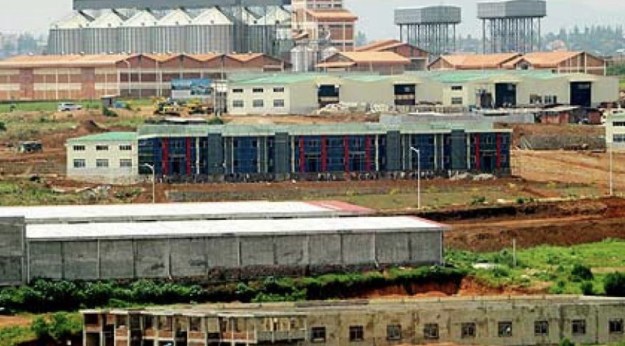
Kagame’s Vision City 2020 Became A Ghost Town

General Paul Kagame had a dream — build an ultra-modern city-within-a-city to showcase Rwanda’s socioeconomic transformation. The ultra-modern city-within-a-city would comprise of a variety of housing units, shopping malls, recreational and leisure facilities, restaurants, sports facilities, a three-star hotel, and a conference center. Kagame named his city-within-a-city Vision City 2020 which would be Africa’s housing wonderland with 4,500 units, including luxury villas and apartments with a capacity to accommodate over 22,000 people.

Construction began in 2013, and was completed in 2017-2018. By 2019, however, Kagame’s Vision City 2020 remained mostly empty — a ghost town. There were no buyers. The original prices of the housing units that ranged from US$179,000 to US$560,000 were sharply reduced but to no avail. General Kagame forgot one thing. In a country where most people earn less than US$1.90 a day, few can afford houses in his now ghost town.

The biggest losers in this fiasco are Rwandan workers. The money that built Kagame’s ghost town came from Rwandan workers’ pension fund — no less than US$150 million.

Source : David Himbara

Portrait of Paul Kagame – President of the Republic of Rwanda

Portrait KP

Paul Kagame is not just any other African dictator. He seems to hold the keys to modernity. He enjoys, or at least has long enjoyed, a positive aura on the international scene. He governs Rwanda, which was home to one of the most horrible nightmares known by Humanity in recent decades. Too equanimous a writer would not have been suitable to discuss such a personality, particularly in such a context. Gérard Prunier’s portrait reflects both the passion of a man who is sensitive to the dramas occurring in the area and the science of a great historian of Africa’s Great Lakes region.

Michel Duclos, Geopolitical Special Advisor, editor of this series

In the twilight of the 20th century, the Rwandan genocide of 1994 appears as the worrying token of a world that we hoped would end with the opening of another, one that would bring hope. The last century had been one of horror, but the recent fall of the “Evil Empire” seemed to symbolically close it. Yet Rwanda suddenly cast a gloomy light on this brand new optimism, which we tried to conceal with a poorly constructed historical parallel. In this small, obscure country, of which almost no one had ever heard, there had been an outbreak of “tropical Nazism”. Yet, among the two great terrors of the 20th century (Westerners never succeeded in conceiving universal history as anything other than exotic declinations of their own history, the only one that counts and marks the world’s true scansions), the two worst horrors had been Nazism and Stalinism. And here came the “filthy beast”, resurfacing in Africa and rekindling our worst memories.

The problem is that this historical parallel was not adequate. President Habyarimana was not very Hitlerian (and he had died at the time of the genocide). France was jumping up and down frantically to explain that no, this was not something it had ever wanted, and that, in any case, it hadn’t done anything. The United Nations, symbol of the post-1945 mantra “never again”, were indeed present in Rwanda, but hadn’t done anything either. Meanwhile, the African Union, i.e. the continent’s self-proclaimed conscience, was entrenched in a deafening silence. But fortunately, there was the Rwandan Patriotic Front (RPF) – the good guys! – and their leader, who vaguely looked like some kind of warrior monk, Major Paul Kagame. What a relief. The tragedy had a hero, and the global public opinion welcomed him, finally relieved to find a savior in the midst of all this horror. But who was he really? Nobody knew. Not to mention that the general ignorance towards pre-genocide Rwanda was abyssal. The result was an unknown hero against a backdrop of African clichés.

Kagame very unconventional “military career” lasted 16 years and got him involved in some of the most extraordinary events of the century.

Paul Kagame was 36 years old at the time, and he was not really Rwandan. Having grown up in Uganda as the son of refugees since the age of four, he was a Major in the Ugandan army and a citizen of his host country. His trajectory was quite atypical for a refugee. Shortly after graduating from high school, he had joined the uprising guerrilla war in Uganda at the age of 20, as the Tanzanian army entered the country in 1978 to overthrow dictator Idi Amin Dada. His very unconventional “military career” lasted 16 years and got him involved in some of the most extraordinary events of the century.

He was profoundly shaped by this period of his life – his “Ugandan” life. Uganda in the 1970s and 1980s was a jungle dotted with corpses, where everyone betrayed everyone. The international community, which had rightly vilified Idi Amin, was walking away now that he had disappeared. It didn’t matter that dictator Milton Obote, elected in a rigged election approved by the British and Commonwealth authorities, killed more people than Idi Amin (more than 300,000 deaths between 1981 and 1986). What mattered was that, in the context of the Cold War, Obote was “a friend of the West”, even if he used North Korean artillery. In fact, this allowed Western powers to avoid getting their hands dirty in trying to keep the country together by their own means.

The West helped survivors to survive through international aid, and a division of labor that Kagame would later reproduce, first in Rwanda, and then in Congo. His contempt for the “international community”, his diplomatic cynicism and his humanitarian hypocrisy can be explained by his experience of the Ugandan civil wars between 1978 and 1986. So can his vision of the “hero”. Indeed, in January 1986, Kagame entered Kampala as a winner, alongside his leader Yoweri Museveni.That was before he saw this advocate of the extreme anti-colonialist left become, through a series of opportunist shifts, the perfect duplicate of what he had fought all his youth.

In 32 years, Museveni’s reformist power mutated into an authoritarian and corrupt State, and the former main opponent of the regime was the former head of the guerrilla’s medical services. Kagame reproduced exactly the same pattern, to the point that he now finds himself in conflict with an opposition composed by 80% of his former comrades in arms during the struggle of the 1990s (and not of ex-genocidaires as he suggests). First, of course, he served in the Ugandan regular army after the victory. Kagame, the chief’s loyal follower, became head of the army’s secret service. His profile was interesting to Museveni: Kagame was basically a foreigner, even after his years of war in Uganda. Some groups such as the Baganda or his own ethnic group, the Banyankole, constantly reminded him of this.

His contempt for the “international community”, his diplomatic cynicism and his humanitarian hypocrisy can be explained by his experience of the Ugandan civil wars between 1978 and 1986. So can his vision of the “hero”.

After all, there were only two “Rwandans” among the first 17 insurgents of 1981, the other being Fred Rwigyema, who became Chief of Staff of the Ugandan army. Two “foreigners” at the head of the country’s military establishment: what better way to prevent a coup? Kagame kept quiet, observed, learned. And he noticed the pursuit of the same humanitarian ambiguity that served Obote so well in his time. Amnesty International sent a mission to Uganda in order to criticize Museveni for his brutal treatment of imprisoned insurgents from northern ethnic groups, who supported Obote during the civil war and who continued to fight sporadically. The NGO called for the creation of a justice system able to deal with cases of detention of captives from the guerrillas. The President passed the problem on to Kagame, who was appointed President of the Armed Forces Itinerant Tribunal. He was perfect at the job, and the corpses resulting from the Tribunal’s convictions, which he brought back to Kampala, were always in excellent condition and showed no signs of abuse. The man is cold and merciless, but he is efficient and knows how to respect procedures.

In 1987, he began to extend his contacts within the Rwandan diaspora, who took advantage of his position in Uganda to set up a political military structure aiming to overthrow the Hutu regime in Kigali. However, anti-Rwandan pressure escalated in Uganda, where Museveni was forced to slowly marginalize an entire generation of refugees and their children who had supported his rise to power. After a brief hesitation, General Rwigyema, who, as a Ugandan, felt bitter and betrayed, switched sides and decided to join the RPF. For Kagame, this was a disaster: Rwigyema was very popular in the diaspora, while Kagame was not. Moreover, their two Rwandan affiliations were entirely antinomic: Rwigyema was the heir to the Banyingina royal family, while Kagame came from the Ababega clan, which overthrew and killed the King during the German colonial conquest in 1896.

The man is cold and merciless, but he is efficient and knows how to respect procedures.

A warm and friendly heir to the royal family versus the austere descendant of an usurping clan. The invasion of Rwanda that they were planning together was marked from the outset by personal and political ambiguity. Rwigyema was aware of the difficulty of having the Hutu majority accept a “liberation” led by the Tutsi minority. Even if the Habyarimana regime was a dictatorship, and even if its Hutu opponents were many. He relied on his charisma and his openness to the Hutus of the opposition to overcome the “feudal restoration” of which Habyarimana later spoke.

The RPF attacked Rwanda on 1 October 1990, and on 2 October, Fred Rwigyema, who had commanded the invasion forces, was killed by one of his own officers. The RPF will always deny the circumstances of this death, attributing it “to the fighting”. But apart from the fact that there was only one killed that day – the Commander-in-Chief – and that the given details of his death are contradictory, a worrying shadow hangs over the murder of the RPF leader. In fact, Museveni, who discreetly supported the invasion, also had Rwigyema’s two adjutants arrested and executed. Like many other episodes paving Paul Kagame’s road to power, this one will never be clarified. The war lasted four years, and burst into a genocide triggered by the assassination of President Habyarimana. The genocide was obviously planned by the most radical circles of Hutu power, but many accused Kagame of being the perpetrator of the attack. The most specific accusations came from former Tutsi members of the RPF, some of whom became active opponents of the Kagame regime. But the global impact of the genocide somewhat mesmerized the international community, which refused to think the unthinkable about the genocide’s liberator being an element of that same genocide. Yet, as Canadian General Dallaire, commander of the UN’s inactive forces, pointed out, the RPF leader did not seem overly moved by the passivity of the international community. Nor by the genocide itself. Dallaire, who was struggling with New York to get an order for intervention, felt more committed than the Rwandan. It actually seems like Kagame has never been too concerned about his fellow citizens. Among them, there were 80,000 Hutus, who were later “forgotten” in the commemorations of the genocide – which became known as “the genocide of the Tutsi”. As for the Tutsi deaths – between 700 and 800,000 – they seem to have been considered more as the “collateral damage” of the modernization process implemented later by the new post-genocidal power in Rwanda.

To realize this, one should have a conversation with members of Tutsi survivor associations, who are under no illusions regarding this issue. For Kagame, the genocide was a huge political opportunity, of which he managed to skillfully take advantage. He succeeded in exchanging a population of “indigenous” Tutsis, rooted in the complex and ambiguous Rwandan reality, for another population of diaspora Tutsi, much more educated, militarized and disciplined, who ended up being the ideal people for the RPF project.

Kagame had a plan for Rwanda. A plan similar to him: cold, efficient, entirely focused on technical success, not particular about the means employed. He managed to sell it to a relieved international public to whom he promised fundamental changes – an honest administration, security, urban cleanliness, improved transport and public health – as well as a few gadgets that always please Westerners, such as Internet access on buses or a ban on plastic bags.

Kagame, shrouded in the aura granted by his status as anti-genocidal hero, led the offensive and overthrew the old tyrant.

Protected by the genocidal shield, he knew he could practically do whatever he wanted. Moreover, he had always won in the past: escaping the fate of a stateless refugee to gain access to the highest levels of power in Uganda, taking control of the RPF, winning a second civil war in Rwanda by concealing his own violence thanks to the genocidal apocalypse, creating a government of “national unity” after the genocide, then abolishing it during a massacre committed by his own troops (Kibeho, 1995), and, finally, consolidating his absolute power thanks to election scores worthy of Stalin’s (95% in 2003, 93% in 2010 and 99% in 2017). He didn’t even need to cheat, everyone did actually vote for him. Fear was such that obedience became real. And the international community, trapped in its remorse and seduced by the progress he introduced, nodded along. He nonetheless did make a big mistake: invading Congo. It had all started so well: the surviving genocidaires, who had taken refuge just a few kilometres from the border, were constantly launching harassment raids on Rwanda, which were both unnecessary and deadly.

After two years of preparation, Kagame succeeded in gathering a coalition of African States, supported by the United States, which wanted to get rid of its old accomplice from the Cold War, Mobutu Sese Seko. Kagame, shrouded in the aura granted by his status as anti-genocidal hero, led the offensive and overthrew the old tyrant. This event was followed by President Clinton’s visit to Kigali, where the latter apologized for his country’s passive attitude during the genocide. The apology was justified, but the timing was not right. Kagame is steady-handed, but he is also extremely self-confident.

Encouraged by what he already saw as yet another success, a few months later, he took an unnecessary risk by attacking both some of his allies and the regime he had just succeeded to set up in Kinshasa. The war that ensued (1998-2002) shook the entire African continent and killed nearly three million people. At that moment, the “hero” had gone a little beyond his diplomatic comfort zone and had to leave the field. His failure even had unexpected side effects, as the international community finally dared to take a closer look at what the RPF had done since coming to power.

Kagame became President of the African Union in January 2018, which has allowed him to lecture his peers, for whom he only has limited respect.

When the International Criminal Tribunal for Rwanda was created, public opinion tried to do so but the Attorney General, the Canadian Louise Arbour, prohibited any investigation. It is only in June 2009 that the UN Mapping Report was published…on the Congo war! It did mention the “Rwandan army”, but only in a foreign perspective. Not a word about Rwanda itself, and thus of course nothing about its leader Paul Kagame.

Fascinated by Kagame’s heroic image, it seems like the international community hasn’t read this report, which is 500 pages long and highly documented, and continues to be indulgent towards the one Professor Filip Reyntjens from the University of Antwerp calls “the greatest war criminal in power today“. Kagame’s self-confidence was boosted by the disdain the international community displayed for the truth when, for example, the Paris Public Prosecutor requested a dismissal (13 October 2018) of the case against his associates who had been involved in the attack that cost Habyarimana his life.

Kagame became President of the African Union in January 2018, which has allowed him to lecture his peers, for whom he only has limited respect. The opposition had long been disciplined through robust methods. MP Léonard Hitimana and former President of the Court of Cassation Augustin Cyiza disappeared without trace. The Vice President of the Green Party (opposition) was found dead after being tortured. The journalist Jean-Léonard Rugambage, who was investigating the case of General Kayumba Nyamwasa, who had switched to the opposition, was killed in 2010 after Kayumba himself had been the target of two assassination attempts. Former Security Chief Patrick Karegeya was found strangled in a South African hotel room on 1 January 2014. Opposition journalist Charles Ingabire, a genocide survivor, was shot dead in the street in Kampala in November 2011. And so on and so forth.

Violence has even become “democratized” since 2016, with the summary executions of dozens of petty criminals (cow thieves, smugglers, fishermen using illegal nets…) killed by the army for no other reason than to frighten people in order to “keep order”. On her recent release, Victoire Ingabire, who had been sentenced to life imprisonment for daring to run in the elections against Kagame, said: “I hope this is the beginning of the opening of the Rwandan political sphere”. Unfortunately, this seems highly unlikely.

Kagame is an iron man. Yet even iron eventually rusts away. A few years ago, he faced all the challenges with a cool temper we could qualify as “British”, but that we call “itonde” in Kinyarwanda. When Colonel Tauzin declared, while defending Gikongoro, “that he would “give no quarter” if the RPF attacked and that an officer translated (Kagame did not understand the French expression “faire de quartier”) by saying: “it means that he will kill all the wounded”, he simply observed: “It is a little hostile, isn’t it?” Today, the same man is seen shouting at his bodyguards, slapping a secretary or trampling underfoot a Minister who crossed him. Many of his former comrades from 30 years ago have joined the opposition and live in exile. He and Museveni have hated each other since the Ugandan President investigated Rwigyema’s death and today, he helps a guerrilla group that has infiltrated the Nyungwe forest and entrenched itself there. Today, Paul Kagame is the master of Rwanda, the only African head of State who can speak as an equal with the world’s great leaders, and who can influence the decisions of most international tribunals. This involves a massive and solitary power, and absolute power is absolutely solitary.

gerard-prunier

By Gérard Prunier, Historian Horn of Africa specialist

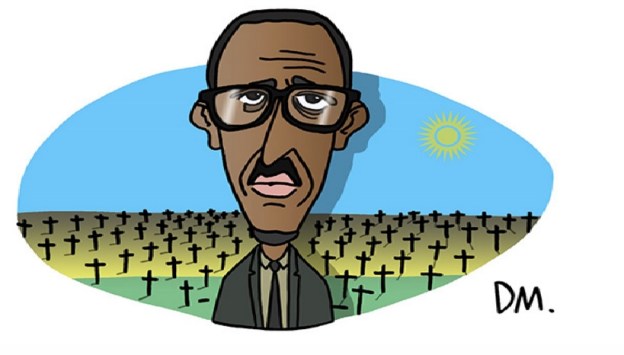
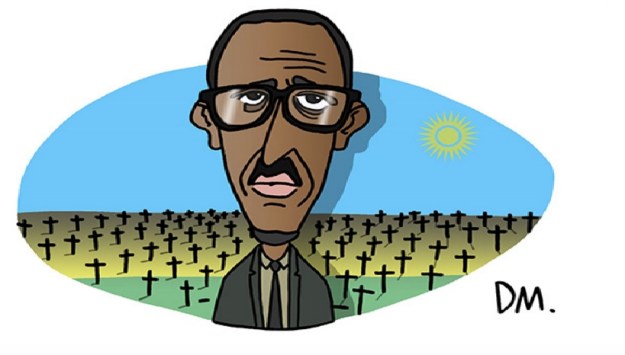
Illustration : David MARTIN for Institut Montaigne

Source: Institut Montaigne