Category Archives: Rwanda

Revolution: “Banyarwanda banyarwandakazi,ubushobozi bwanyu bwose mwabuhaye ingirwa ntare muyihindura intare”

senaa-bba02RTEmagicC_sena-2-6fb78.jpg

Kagame baramusurira urupfu: Irebere ayo makarito batwaye nk’imirambo bajyanye mu mva!

Banyarwanda, Banyarwandakazi,
Maze iminsi mvugana n’abaturage ku bijyanye n’amabaruwa bitirirwa ko bandika basaba ko uriya mwicanyi Kagame yakomeza kuyobora u Rwanda.Mu baturage twaganiriye bambwiye ko rwose ariya mabaruwa bayahatirwa kuyandika,bati “ariko ikindi dutinya,dutinya ko iriya nyeshyamba yamenyereye kuba mu mwobo ejo niva ku buperezida izasubira mu mwobo ikaza iturimbura?”

Bati; “ubu n’ubwo yicana, yica irobanura igenda ifata umwe uno munsi ejo igafata undi, abasigaye tugasenga Imana tukabona burije burakeye”. Bati “twe tubona kuba ari perezida hari abantu atinya bigatuma atatumena mo amasasu nk’ayo yatumenagamo akiba mu ishyamba. Bati: “ese mwana ni gute wavana intare mu ishyamba ukajya kuyirerera mu nzu? N’ubwo hariya bayikuye mu ishyamba bayizanye mu Rugwiro, urabona ko n’ubu yibereyeho nk’uko yari ibayeho mu ishyamba”. Bongeraho bati: “Rero kuyikura hariya ni ukuyisubiza aho bayikuye, aho bayikuye mu ndake isubiye yo yatumara noneho”.

Dasso

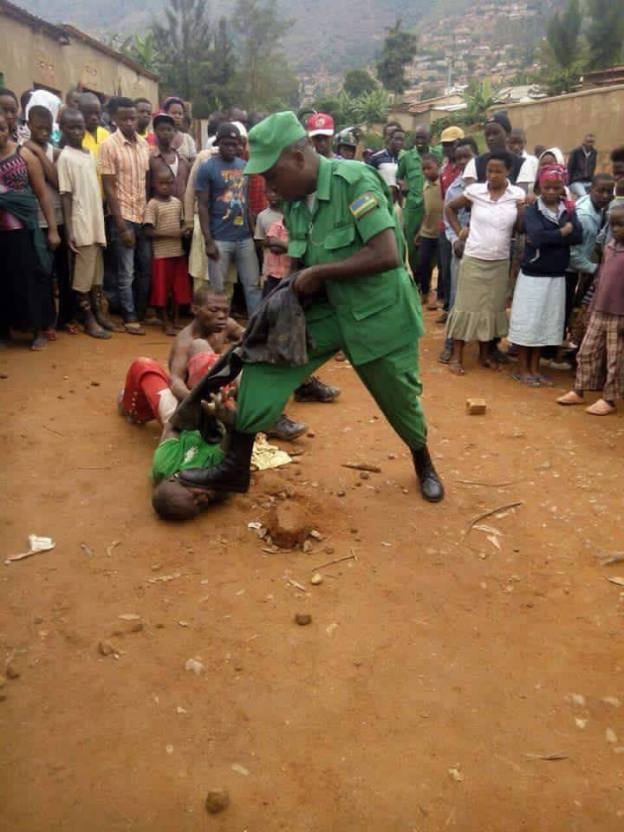
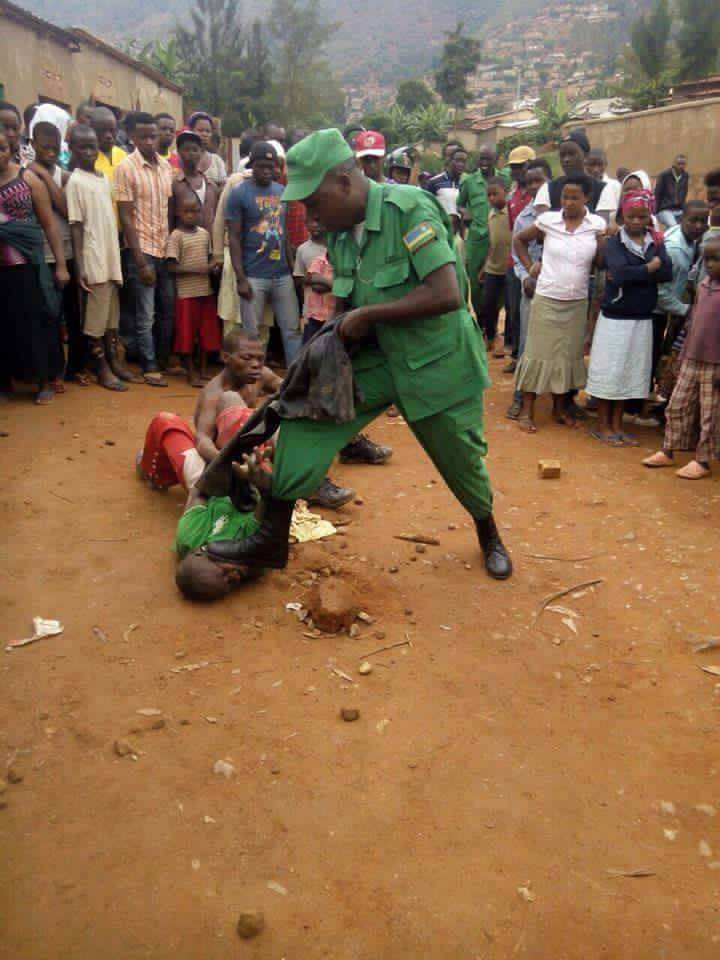
Umu DASSO umwe aniga umuntu abandi barebera koko?

Muri rusange abaturage bafite impungenge z’ubuzima bw’iriya ntare nyuma y’umwaka wa 2017! Akaba ariyo mpamvu bemera gusinyishwa ku gahato kugira ngo ejo intare itazasubira mu mwobo ikazaza ari kirimbuzi.
Nabateze amatwi numva impungenge zabo. Icyo nakuyemo ni uko iriya ngirwa ntare yahahamuye abaturage ku buryo batifuza ko yasubira mu ishyamba.
Impungenge zabo zifite ishingiro ariko haricyo biyibagije ko kuba iriya ngirwa ntare ikomeza kubahahamura babifitemo uruhare. Bati : “ese gute wa mwana we?

Nanjye nti: “mufite imbaraga n’ubushobozi. Ubushobozi bwanyu bwose mwabuhaye ingirwa ntare muyihindura intare nya ntare”. Baratangaye.

image_abbé-300x300

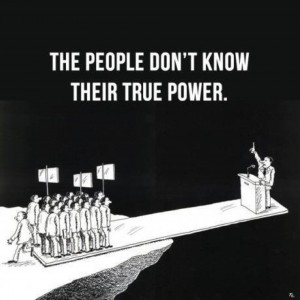
Ni koko abaturage bafite imbaraga batazi.

Dore uko ibintu bimeze:.Amabaruwa muhatirwa gusinya mwanze kuyasinya ku mugaragaro mukamagana n’abo baza kubahatira gusinya, ingirwantare ihinduka injangwe. Ubwo muba muyambuye bwa bushobozi ntizongera kuza aho muri, yemwe n’iyo yabakangisha kujya mu mwobo muyibwire ko niyibeshya uwo mwobo muzawusibanganya iwurimo, nk’uko yasibanganyirije abacu mu buvumo..
Nabahaye urugero rw’imbwa. Imbwa iyo ikumokeye ukayereka ko watinye ukiruka ikwirukaho ku buryo ushobora no kuvunika. Ariko iyo imotse wihagararaho wabona n’ibuye hafi ukaritora ukariyitera, icyo gihe izinga umurizo ikagenda nawe ukikomereza.

Mwitinya Kagame, mwituma akomeza kubahonyora mwimwimika nk’ umwami. Mwarabyaye n’ubwo bamwe yabamaze ho urubyaro ariko na kamwe yabasigiye na ko gafite ububasha bwo kuyobora. Kagame ntiyavukanye imbuto. Ababeshya ko navaho mutazabaho arabeshya, Kagame si Imana, ndetse kubwe muba mwararimbutse mwese kuko ni cyo yaje ashaka kandi yarabyivugiye ko ikimubabaza  ari uko atabonye umwanya wo kubica mwese ngo abamare. Ubu rero aya mabaruwa muri kwemera ko babasinyisha, murimo mumuha wa mwanya wo kubamara mwese.

Batangiye kumva ingero nabahaye, bati: “wa mugani, twishyize hamwe ntacyatunanira. Bati: “ese ko ari twe tunamutora n’ubwo tutamutoye ku bushake!!” Nti “ntimwumva se”, nti: “noneho muzanamwangire ku bushake”.

Bati: “rero baradusinyishije kandi amabaruwa barangije kuyapfunyika.

Nabasubijeko ntarirarenga.

Buriya bazagaruka muri kamarampaka baje kubasaba gutora.“Yego” bizaba bisobanura ko mwemeye ko Kagame akomeza kuyobora ubuziraherezo, “oya” izaba isobanura ko mubyanze. Abaturage barasetse bose, bati “aho ni ho tumutegeye noneho ntazaducika, reka tubike ibanga ryacu ku mutima”.

Ubutumwa nabahaye ni uko bagomba gushirika ubwoba ntihazongere kuza umuntu ubereka aho batora. Muri demokarasi uwo muntu yatoye ni ibanga. Abaturage rero biteguye kwereka ingirwa ntare Kagame ko kuba yibona nk’intare ari ukubera abaturage,ubu bagiye kumugira injangwe babinyujije muri kamarampaka, abibwira ko ariya mabaruwa bari kwirirwa basinyisha abaturage byarangiye, muribeshya cyane., you will be embarrassed in broad daylight!!!

imagesihene7

Byose biragenda nk’uko byahanuwe: Isekurume izabyara isekurume ndwi (manda y’imyaka 7) zose zanjye konka. Iyo ihene yavutse ntiyonke irapfa.

Kagame rero, abaturage uyobora bagufata nk’inyeshyamba n’ubwo wavuye mu ishyamba, ishyamba ryo riracyakurimo, ni akamaramaza mugani w’Abarundi.
Niba wifuza gufata iy’ishyamba na bwo, rwose Kagame ntizakorohera kuko ishyamba ntirikiri ryeru nk’uko byahoze cya gihe utera u Rwanda rwatembaga amata n’ubuki ukarugira urutemba amaraso n’imiborogo

.
Dore aho mpera mbivuga ko bitazakorohera ni aha:

Ubwoba bwawe burazwi, ukangwa n’ubusa. Ba Nyamwasa bagufashije kuguma mu mwobo utuje yewe ndetse bakanakurokora inshuro nyinshi, ubahejeje ishyanga abandi wabanigishije ibiziriko, abandi barimo baborera muri 1930. Niba wizeye uriya Kabarebe utwite inda y’imvutsi,uragowe kuko umunsi yumvise ko byagukomeranye azahera ko ajya ku bise bitunguranye urebe kariya kadigi kameze nk’agatwite bane ehhhe, dore aho nibereye!

None se uriya mufumbira wakuye i Bugande ni we uzakurwanirira? Umunsi yumvise byakomeye azasubira iwabo i Bufumbira nazaba atarafumbira imirima y’iwabo, dore ko numva ko ari hafi gutanga ifumbire mu murima wa nyina. Na twa tuzi yirirwa yicisha abanyarwanda ntatwo azaguhaho ngo tukuruhure.

Rwarakabije se? Ko utizera umuhutu ubwo se uwo mwobo uzawubana mo na nde? Wibuke ko iyo byakomeye buri wese akiza amagara ye. Uriya mushikiwanyu se azaba akibona aho avugira ko ntawe uzaba ukimutega amatwi? Uwo munsi na Cliton/Blair bazavuga ko nta ho bakuzi. Uzaba ubaye uwa nde??

Icyiza ni ukwishyira mu maboko ya rubanda, icyo gihe nta cyo tuzagutwara tuzagushyikiriza ababishinzwe, n’ubwo watubabaje ukaduhekura, ukatugira imfubyi,tuzagufata tugushyiirize inzego zishwizwe kurinda umutekano wawe, ariko niwiha kujya mu mwobo, tuzawusibanganya nta kundi bizagenda.
Kagame emera wivireho ejo bundi manda yawe nirangira.Kuba waraje ku butegetsi nabi ukabuvaho nabi ntacyo bizakumarira, nyamara ubuvuyeho neza, hari akantu byahindura ku isura abanyarwanda baguha. ibyaha wakoze byo, abanyarwanda ubwabo bazamenya uko bakugenza, si abana babi n’ubwo wabatoje ububi, ariko abeza turacyari benshi.Tangira wirukane ayo mabandi wavanye Uganda, kontara mwari mwarasinyanye na yo yo kurimbura abanyarwanda no gusahura u Rwanda uyisese. Tangira witegure ko uzabazwa byinshi ku mahano yagwiriye u Rwanda azanywe nawe n’ayo mabandi yawe.Tangira witegure gusubiza iby’abandi wasahuye, umutungo wa rubanda. Ibyo byose ni byo wakagombye kuba utekerezaho kurusha uko utekereza mu guhindura itegeko nshinga, nzi neza ko utazabigeraho n’ubwo wowe n’ayo mabandi yawe mwibwira ko muri kubikozaho imitwe y’intoki, ariko murebye nabi mwasanga murimo mukora kuri bombe izabaturikana mwese hamwe!
Nyamwanga kumva ntiyanze no kubona, utazi ubwenge ashima ubwe.
Ngibyo ibya ya  ngirwantare y’u Rwanda.

Umutaripfana,

Jeanne Mukamurenzi.

REVOLUTION: AGATSIKO KA FPR GASIGARANYE INZIRA IMWE RUKUMBI ISHOBORA KUKARENGERA.

May 27, 2015

VENANT NKURUNZIZA

Nk’uko tumaze iminsi tubyumva mu Rwanda, ubu agatsiko ka FPR kabujije amahwemo rubanda ku nzego zose kugira ngo gakunde kabone impamvu yatuma gahindura itegekonshinga. N’ubwo rubanda idakozwa ibyo byo guhindura itegeko nshinga kugira ngo umuntu umwe akunde agaragare neza mu mahanga dore ko mu Rwanda azwi neza bihagije uwo ariwe, ariko agatsiko kifashishije iterabwoba gategeka abanyarwanda batari bacye gusinyira ko itegeko nshinga rigomba guhinduka uboshye ko haraho itegekonshinga ribisaba. Ubu ni ubwoba bw’abagize agatsiko bibwira ko kubitegeka rubanda ahari byazayibuza kubavudukana igihe kigeze.

Ibi rero ni ukwibeshya nk’uko abanyarwanda bakomeje kubigaragaza bo mu nzego zose zinyuranye. cyane cyane abajijutse. Agatsiko nigakomeza kwitwara gutya ahubwo njye ndabona n’ayo MATORA kadashobora kuyagezaho. Kubera ko abanyarwanda ntabwo ari bwa bwoko bwa ‘tereriyo’, iherezo umujinya bafitiye ubu butegetsi bw’agatsiko bazawukitura igihe kigeze. Kandi ibyo bizaba bitari kera kandi bizaba nabi cyane.

Kurikira uko abarwanashyaka ba PSD bagaragaje uko barambiwe itekinika rya FPR.

The United States will continue to urge Rwanda to respect the rights of all its citizens.

usdos-logo-seal

Rwandan Human Rights and U.S. Relations With Rwanda

Testimony

Steven Feldstein
Deputy Assistant Secretary, Bureau of Democracy, Human Rights, and Labor
House Foreign Affairs Committee, Subcommittee on Africa, Global Health, Global Human Rights, and International Organizations
Washington, DC
May 20, 2015

As Prepared

Chairman Smith, Ranking Member Bass and Members of the House Subcommittee on Africa, Global Health, Global Human Rights and International Organizations. Thank you for holding this important hearing on Rwanda and for the opportunity to speak today.

Rwanda holds a very personal connection for me. Fifteen years ago I first went to Rwanda as a fellow with the International Rescue Committee. I spent a year in the country supporting its efforts to recover from war and genocide – helping unaccompanied children and youth reintegrate back into their communities, working with villages to provide access to clean water, and traveling throughout the country to try to better understand what gives people the capacity to pick up their feet and move forward after such a shattering experience. Living in Rwanda had a profound impact on me and has been a key inspiration for my decision to pursue a career in foreign policy and human rights.

Indeed, Rwanda’s progress since the 1994 genocide has been remarkable. Rwanda’s GDP has grown at an estimated annual rate of 7 percent, youth literacy rates have improved from 65 percent in 2000 to 77 percent in 2010, and child and infant death rates have plummeted, going from an under-5 mortality rate of 152 children out of every 1,000 in 1990 to just 52 out of 1,000 in 2013. Rwanda also plays a crucial role in international peacekeeping operations, and has made great strides in its inclusion of women at all levels of government. Several years ago I paid a return visit to Kigali, and I found a city profoundly changed. Modern office towers have replaced dilapidated buildings. The streets were spotless – thanks in part to a widely acclaimed ban on plastic bags. New businesses seemed to be springing up daily, such as coffee ventures supplying top quality beans to U.S. brands like Starbucks and Peet’s.

But this is only part of the story. Alongside Rwanda’s remarkable development progress, there have been equally consistent efforts to reduce space for independent voices and to diminish the ability of the media, opposition groups, and civil society to operate. This space matters. It is essential not only for democratic progress, but for cementing Rwanda’s impressive economic and development gains.

When it comes to the human rights situation in Rwanda, we see three trends of note. First, political space in Rwanda and the overall human rights environment continues to shrink. There are reports of targeted killings, and an increasing number of reports of disappearances and harassment of civil society groups and opposition parties. Second, this trend is reinforcing the wrong lessons for Rwanda– particularly that a country can continue to experience robust economic growth and foreign investment even while repressing its citizens further and reducing democratic space. This is not a sustainable path. At some point – if unchecked – human rights violations will begin to affect Rwanda’s economic performance, stability and the willingness of foreign investors to pump in outside capital and do business. Third, Rwanda’s human rights records is setting a disturbing precedent for the region and continent. Other countries are carefully watching Rwanda’s model of economic liberalization and political repression. In my discussions, counterparts frequently point to Rwanda and question whether protecting the rights of their citizens matters if they can achieve substantial economic development.

The answer, of course, is that protecting the rights of all of Rwanda’s citizens and residents matters immensely to Rwanda’s long term stability and prosperity, to its continued positive economic trajectory, and to whether other countries recognize they can follow a similar path to greater prosperity. When governments repress fundamental freedoms and universal human rights, international investment can falter because this repression is a sign of societal fissures that can lead to instability and violence. This is also true when governments stifle civil society organizations that provide checks and balances on corruption and increase government accountability. Rwanda can be a model for the region, or it can slip backwards over time, never truly fulfilling its potential.

We have articulated our concerns about Rwanda’s human rights record for years directly to Rwanda’s senior leaders, including President Kagame, and we have highlighted the deteriorating situation in Rwanda, through the State Department’s annual human rights report. The Department’s 2013 human rights report for Rwanda noted that the government targeted political opponents and human rights advocates for harassment, arrest, and abuse. It reported that the government disregarded the rule of law and placed significant restrictions on the enjoyment of freedoms of expression, peaceful assembly and association, as well as restrictions on press freedoms. It observed that the government harassed and placed substantial limitations on local and international NGOs, particularly organizations that monitored and reported on human rights. And it highlighted reports that arbitrary or unlawful killings took place both inside and outside Rwanda.

The credibility of elections provides an important indication of the level of space for independent voices and views. Unfortunately, Presidential elections in 2010 and parliamentary elections in 2013 were beset by irregularities both in the pre-electoral period and on Election Day. Part of this is due to the passing in 2008 of the “genocide ideology” law, which was intended to restrict any actions that could lead to genocide. In practice, the government has used this law to impede the activities of opposition parties, opposition candidates, and civil society organizations. In the 2010 elections, in which President Kagame was reelected with 93 percent of the vote, there was a lack of critical opposition voices in the pre-election period, opposition political parties were unable to register, and two opposition party leaders were arrested on what appear to be spurious charges. Two unregistered political parties were unable to field presidential candidates due to legal or administrative issues.

International observers reported that Rwanda’s 2013 parliamentary elections also failed to meet standards for free and fair elections. While the elections were calm and well organized, there were numerous irregularities, including the presence of security officials in polling rooms, multiple voting, and local election officials filling out ballots in the absence of voters. Rwandan electoral officials also denied U.S. Embassy observers access to polling stations and vote tabulation centers, thereby making it impossible to verify the accuracy of the final vote count and official participation rate. Rwanda’s next presidential election is in 2017, and we are cautiously hopeful that this election will mark an improvement upon previous contests.

Our concerns about restrictions on press freedom, freedom of assembly, expression, and association extend beyond electoral processes. Most Rwandan news outlets follow party lines. Rwandan journalists self-censor their work, and some have fled the country out of fear of government harassment. The Rwandan government has also stepped up its use of a law amended in 2012 that allows security officials to monitor online communications. During the period surrounding the 20-year genocide commemoration in spring 2014, the country’s few remaining independent journalists were increasingly targeted for harassment and arrest. This led the United States to issue a statement in June 2014 expressing deep concern about the arrest and disappearance of dozens of Rwandan citizens and credible reports that individual journalists were being threatened, and in some cases directly censored.

We are also deeply troubled by the succession of what appear to be politically motivated murders of prominent Rwandan exiles. This includes the December 2013 killing of former Rwandan government official Colonel Patrick Karegeya, who was found dead in a hotel room in South Africa. Months later, armed men raided the South African home of former Rwandan Army Chief of Staff Kayumba Nyamwasa, who had previously been targeted for assassination attempts. President Kagame’s 2014 statements about “consequences” for those who betray Rwanda has further heightened these concerns.

Also of deep concern are corpses that appeared in Lake Rweru, along the border between Rwanda and Burundi, between July and October in 2014. Fishermen reported seeing dozens of floating bodies, some bound and wrapped in sacks. Four bodies were recovered and buried near a village in Burundi’s Muyinga Province. Fishermen reported that on the nights of September 21 and 22, Rwandan marines attempted to exhume the bodies, allegedly to return them to Rwanda. Both Rwanda and Burundi called for a joint investigation into the identity and origin of the bodies. In December, Burundi’s minister of foreign affairs accepted an offer of forensic assistance funded by the United States and several other donor governments for an investigation led by the African Union. Rwandan officials stated that the government also supported a joint investigation, but no investigation has been conducted. The United States continues to press the African Union to move forward with an investigation into these killings and accountability for those responsible.

As a close partner with Rwanda on many global and regional issues, we have and will continue to maintain a close dialogue with the government on these concerns, while recognizing their strong policies and actions with respect to issues of concern, such as women’s rights, the rights of LGBTI persons, and access to health and education.

In closing, Rwanda is an important ally. It is a respected contributor to peacekeeping missions throughout the region, it has rebuilt itself from genocide, and it has achieved impressive development and economic gains. I have seen with my own eyes the remarkable progress that Rwanda has made. I believe there is a bright future ahead for its people, which is why Rwanda’s current human rights situation is so personally disappointing to me. Ensuring respect for freedoms of expression, association, and peaceful assembly, and respect for the rule of law is essential for cementing, and building from these gains. The United States will continue to urge Rwanda to respect the rights of all its citizens.

Thank you very much and I welcome your questions.

Le Parti ISHEMA se dit prêt à forcer l’ouverture de l’espace politique au Rwanda:

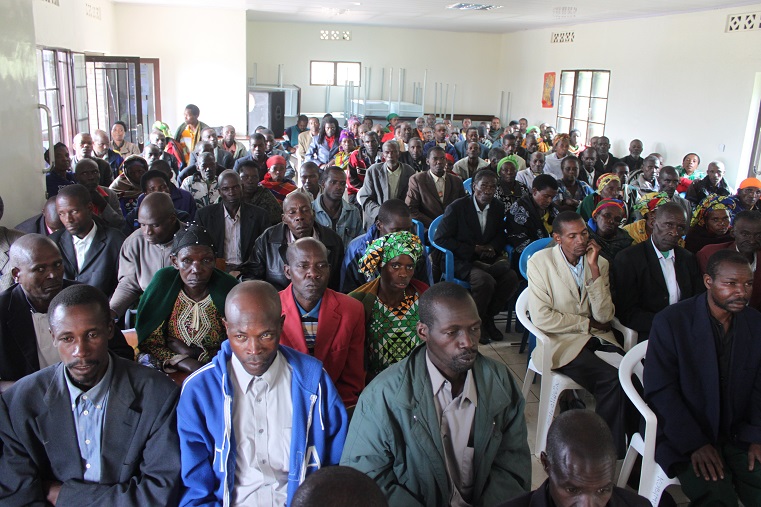
Ishema congres men

INVITATION À LA CONFÉRENCE DE PRESSE du  JEUDI  04 JUIN 2015  à BRUXELLES, BELGIQUE : 

«  OFFRONS UNE ALTERNATIVE DEMOCRATIQUE AU PEUPLE RWANDAIS ».

  1. Le Parti ISHEMA, parti politique  d’opposition au gouvernement rwandais de Paul Kagame, vous convie cordialement à la Conférence de presse prévue le jeudi 04 juin 2015, de 11h à 12h, à la MAISON DE LA PRESSE, RUE FOISSART 15, B- 1040 Bruxelles.
  2. Cette conférence intervient alors que le Président Paul Kagame en fin de deuxième mandatse  lance dans une campagne de grande envergure dans le but de  « terroriser » au maximum le peuple rwandais en vue d’ « extorquer » par des voies illégitimes,  un troisième mandat présidentiel pourtant strictement  interdit  par l’article 101de la Constitution de 2003 stipulant : « Le Président de la République est élu pour un mandat de sept ans renouvelable une seule fois. En aucun cas, nul ne peut exercer plus de deux mandats présidentiels».

3.Aussi les Leaders du  Parti Ishema et leurs alliés de la Nouvelle Génération, soutenus par divers conseillers et amis du Rwanda,  ont-ils décidé, non seulement de s’engager corps et âme  pour réclamer l’ouverture d’un espace démocratique au Rwanda, mais aussi et surtout de rentrer sans délai au pays pour offrir, lors de prochains scrutins,  une alternative au peuple rwandais croupissant, depuis juillet  1994, sous le joug d’une dictature militaire qui n’a cessé de maltraiter, emprisonner voire assassiner opposants, journalistes et  militants des droits de l’homme.

  1. Rappelons que le Parti Ishema lors de son Congrès tenu à Paris,  du 7 au 9 février 2014, a déjà désigné son candidat aux élections présidentielles de 2017, en la personne de l’abbé Thomas NAHIMANA qui entend fouler le sol rwandais avec son équipe dès le 28 janvier 2016.
  2. A l’occasion de cette Conférence de presse, le Révérend Thomas NAHIMANA fera le point sur  la violation massive des libertés publiques et droits fondamentaux au Rwanda  et ses implications sur la Région des Grands Lacs (I); il pointera du doigt les vrais défis et enjeux du « mal-être national »souvent dissimulés par  une propagande triomphaliste savamment orchestrée par les hérauts du FPR-INKOTANYI, parti au pouvoir depuis 1994 (II) ;   il esquissera  enfin l’orientation et les grandes lignes des réformes essentielles dont le peuple rwandais a actuellement le plus  besoin pour jouir d’un développement stable et plus harmonieux (III).
  3. Nous espérons avoir le plaisir de vous rencontrer à ladite conférence et vous prions d’agréer, Madame/Monsieur, nos salutations les meilleures.

Fait à Paris, le 20/05/2015

Mr Chaste GAHUNDE,

Secrétaire Exécutif et Chargé de la communication au Parti ISHEMA.

Abbé Thomas NAHIMANA,

Secrétaire Général du Parti ISHEMA et Candidat aux présidentielles rwandaises de 2017

Contacts:

Téléphone :

*00 33 65 21 10 445 (Thomas)

*00 33 78 34 34 672 (Chaste)

Email: ishema_party@yahoo.fr

nahimanathom@yahoo.fr

chaste.gahunde@gmail.com

Bazumva ryari? Ngo kutemera ko Kagame afata manda ya gatatu ni ugusebya u Rwanda!?

Dasso

Ngiryo iterambere Kagame yazaniye rubanda. Arasaba indi manda kugira ngo rikomeze! Ngiyi BILAN ya Kagame.

Ubwo itangazamakuru rikorera agatsiko ryikomye Kaminuza ya Gisenyi na INES Ruhengeri, ubwo ishyari rya FPR ryatangiye kubira nk’ikirunga cyenda kuruka ! Mu kanya gato ayo mashuri makuru yigenga araba afunzwe, abana bayigagamo bajye mu gihirahiro, bahindurwe Mayibobo.  Ariko hagati aho ntihabura  ba Nyirurutwerunini bafatwa bagasiribangwa nk’uko uyu mu DASSO uri ku ifoto ariho agaraguza agati abaturage b’inzirakarengane. Iryo niryo terambere Paul Kagame yatugejejeho muri iyi myaka isaga 20 amaze ku butegetsi, none akaba asaba indi manda ngo akomeze acure rubanda bufuni na buhoro. Ubu koko igihe ntikigeze ngo ibintu bihinduke ? Abanyarwanda twese dukwiye guhaguruka tukamagana twivuye inyuma ingoma y’igitugu y’Agatsiko-Sajya kibwira ko u Rwanda ari akarima kako bwite. Rubyiruko mukwiye gufata iyambere mugashaka inzira zose zishoboka zo gutera hejuru muti U Rwanda si umunani Paul Kagame yasigiwe na se “!

Muri kaminuza za ULK Gisenyi na INES Ruhengeri hatoraguwe inyandiko zamagana manda ya 3 ya Kagame

Mu mugoroba wo kuri uyu wa Gatatu tariki ya 06 Gicurasi 2015, mu ishuri rikuru ry’Ubumenyingiro, INES-Ruhengeri (Institute of Applied Sciences) no muri kaminuza yigenga ya Kigali ULK, hatoraguwe inyandiko zamagana manda ya gatatu ya Perezida Paul Kagame.

Ubuyobozi bwa INES-Ruhengeri bumaze kwemeza amakuru y’inyandiko idasinyeho (Tract) ko yatoraguwe n’abanyeshuri ikaza gufatwa na Bienvenu umunyeshuri uhagarariye abandi, na we akayishyikiriza ubuyobozi bw’ishuri.

Prosper Ziganibuga, umuyobozi wungirije ushinzwe ubutegetsi n’imari muri INES-Ruhengeri yagize ati “Mu kanya saa moya na 45 abanyeshuri batoraguye inyandiko izwi nka tract, ihita ifatwa n’uhagarariye abanyeshuri itaragera mu kigo hose.”

Twamubajije amagambo yari yanditse muri iyo tract atubwira ko atabashije kuyamenya kuko inzego zishinzwe umutekano zahise ziyijyana ariko zikavuga ko iyo nyandiko ngo yanditswe n’abasanzwe basebya u Rwanda.

Si aha gusa hatoraguwe tract, kuko no muri kaminuza yigenga ya Kigali ULK ishami rya Gisenyi hatoraguwe tract mu gihe cya saa kumi z’umugoroba.

Umuyobozi wa ULK ishami rya Gisenyi Dr Cyeye, yahamije ko inyandiko itariho umukono yatoraguwe n’abanyeshuri ariko ngo nta mwanya wo gutanga amakuru afite kuko twamuvugishije arimo kwigisha. Nyuma twagerageje kumuvugisha telefoni ye ntiyacamo.

Umwe mu banyeshuri twaganiriye yavuze ko iyo tract yatoraguwe muri ULK, yarimo ubutumwa bugenewe urubyiruko n’abanyeshuri.

Yagize ati “Iyo nyandiko yatangiraga yerekana ko perezida Kagame yayoboye imyaka 5 RPF-Inkotanyi igifata ubutegetsi, akaza kuyobora imyaka 4 nyuma ya Bizimungu, mu myaka 23 amaze ku butegetsi akaba ntacyo yagejeje ku rubyiruko.”

Undi munyeshuri wavuze ko yisomeye iyo nyandiko yavuze ko ngo abanyamuryango ba RFP-Inkotanyi ko nta mwisanzure bahabwa, ikindi kandi gahunda z’ubudehe n’ingando bikorwa ngo nta mumaro bifitiye abanyarwanda.

Iyo nyandiko kandi ngo yagaragazaga ko ishyaka riri ku butegetsi mu Rwanda ntaho ritandukaniye n’ayandi nka MRND na CDR yayoboraga mbere ya jenoside yakorewe abatutsi nk’uko iyi nkuru dukesha mugenzi wacu ukorera ikinyamakuru Rushyashya ikomeza ivuga.

Umwe mu bayobozi ba kaminuza yigenga ya Kigali ULK, batubwiye ko ngo iyo nyandiko yasabaga amadini n’amashyaka guhagurukira hamwe bakamagana manda ya 3 kuko ngo nta cyiza RPF yakoze kuva yagera ku butegetsi.

Izi nyandiko zishishikariza urubyiruko, abanyeshuri, amadini n’amatorero kwamagana manda ya gatatu ya perezida Kagame, zigaragaye nyuma yaho kuri uyu wa Gatatu tariki ya 6 Gicurasi 2015, perezida w’ Inteko Ishinga Amategeko, Umutwe w’Abadepite, Donatila Mukabalisa yakiriye amabaruwa y’abasaba ivugurwa ry’Itegeko Nshinga mu ngingo yaryo y’101, barenga miliyoni ebyiri.

Emmanuel Nsabimana – imirasire.com

Rwanda: Abaturage bakomeje gutera utwatsi igitekerezo cyo guhindura itegekonshinga hagamijwe ko Kagame yongera kuba perezida.

abaturage-17

Batewe umujinya n’ubutegetsi bubahimbira ngo barashaka Kagame.

Kuva aho bimwe mu bihugu by’ibihangange bigaragarije ko bidashyigikiye aba perezida bashaka guhindura itegekonshinga bagamije kwizirika ku butegetsi, abenshi mu ba perezida barebwa n’ibi baratitiye karahava. Muri bo hari Bwana Pahulo Kagame uyobora u Rwanda kuva mu mwaka wa 2000. Ukurikije itegekonshinga u Rwanda rugenderaho uyu munsi, Pahulo nta bundi bushobozi afite bwo kwiyamamaza kuko manda ebyiri ateganyirizwa zizarangira mu minsi 852 uhereye uyu munsi.

Abandi  nka perezida Kabila wa Congo bagerageje guhindura itegekonshinga abaturage babamerera nabi. I Burundi naho uko byifashe si shyashya nyuma y’aho Nkurunziza ageragereje gushaka kwiyamamaza igihugu cyacuze imiborogo. Hasihaye Pahulo urmo kubikurikiranira hafi ubutaruhuka ari nako afata ingamba kuko azi neza ko inkoni ikubise mukeba bayirenza urugo.

Binyujijwe mu itekinika risanzwe riranga FPR, abaturage bo hirya no hino barasabwa gusinya impapuro zemeza ko basanga itegekonshinga rikwiye guhindurwa Kagame akongera kuba umukandida. Amakuru atugeraho aturutse mu mirenge yemeza ko abaturage benshi bamaganye iki gitekerezo hanyuma abakada ba FPR bahitamo kubinyuza mu dukipe tw’abantu bakeya bafite icyo bahuriyeho. Ng’ayo amashyirahamwe y’ubuhinzi bw’icyayi, abacukuzi ba gasegereti, abiyita aba pasiteri b’amadini y’inzaduka n’abandi.

Kugira ngo itekinika ryihute, inkuru z’urudaca ziracicikana ku mbuga zisanzwe zinyuzwamo ibitekerezo bya FPR. Muri iz nkuru haba havugwamo ko Kagame ariwe muntu wenyine ukwiye kuyobora, ngo ibi bikaba byemezwa n’amabaruwa yasinywe n’abaturage bose. Nyamara birazwi neza ko ari abantu bakeya basinya mu mazina ya rubanda barangiza bagashyiraho nimero y’amarangamuntu ngo kugira ngo ikinyoma gifate.

Abaturage bakomeje guhangayikishwa n’ibyo babona byitirirwa mu izina ryabo, umujinya urushaho kubasya iyo bumvise ko Kagame ashaka kongera gutegeka, kandi  ni mu gihe bafite impamvu ifatika yo kurakara:

  • babonye Kagame n’ingabo ze bamara abantu,
  • bagendana amasasu mu mubiri n’ibikomere by’ingoyi ku maboko,
  • babonye amasambu yabo afatirwa atezwa cyamunara kandi nta cyaha bakoze,
  • babonye bahatirwa kwishyura imitungo itarigeze ibaho cyangwa bakoherezwa mu mirimo y’uburetwa,
  • babonye ababyeyi babo bafungirwa ubusa bahinduka inzererezi bava mu ishuri
  • babonye imirambo y’abana n’ababyeyi babo itabururwa ijya kwanikwa ku gasozi kandi nyama umubyeyi wa Kagame we yarashinguwe mu butaka,
  • bambuwe uburenganzira ku mfashanyo za bourse,
  • n’ibindi byinshi cyane.

Gusa rero iyo Kagame abonye bicecekeye agira ngo ni ibicucu! Niyo mpamvu bakomeje kwitegura kuko uwo ari we wese uzibeshya agakora ku itegekonshinga azaba yisinyiye. Azaba avugije ifirimbi ya revolisiyo izamuhitana, kandi ntakagire ngo ntiyabibwiwe.

France: Abanyarwanda bifatanyije n’Abarundi mu kwamagana manda ya gatatu

img-20150505-wa0046

Nyuma y’imyigaragambyo yabereye mu Bubiligi mu cyumweru gishize, ejo kuwa mbere tariki ya 4 Gicurasi 2015, Abanyarwanda bifatanyije n’Abarundi mu myigaragambyo yo kwamagana manda ya gatatu  ya Perezida Petero Nkurunziza.

Ubusanzwe bizwi ko u Rwanda n’u Burundi ari ibihugu biva inda imwe, bisangiye amateka ndetse byagiye bigira ingorane zimwe kuva kera kugeza n’ubu. Ibibazo by’ibi bihugu akenshi usanga bishingiye ku miyoborere n’ubuyobozi bubi kandi akenshi iyo hamwe hatse umuriro bucya wageze n’ahandi.

Gusa rero u Burundi bwari bugiye gutera intambwe igaragara muri demokarasi nyuma y’aho amasezerano yasinyiwe Arusha ashyiriwe mu bikorwa agakurikirwa no kuvanga ingabo za Leta zari ziganjemo abatutsi n’inyeshyamba zari zigizwe n’abahutu.

Muri ayo masezerano hari hemejwe ko nta mu perezida uzajya ayobora manda zirenze ebyiri. Itegekonshinga ubu rigenderwaho naryo rivuga ko umu perezida atorwa n’abaturage bose bageze mu gihe cyo gutora kandi ko nta muperezida urenza manda ebyiri. Nta wabura kwibutsa ko amaseerano y’amahoro yasinywe n’abanyarwanda yo atigeze ashyirwa mu bikorwa ahubwo yaherekejwe n’ihanurwa ry’indege yari itwaye perezida w’u Rwanda Habyarimana Yuvenali n’ uw’u Burundi Sipiriyani Ntaryamira!

Muri iki gihe Perezida Nkurunziza ashaka kwirengagiza amasezerano ya Arusha yitwaje ko manda ye ya mbere atatowe n’abaturage bose kuko yatowe n’abadepite gusa. Ibi rero Abarundi bo bakabona atari byo kuko mu by’ukuri icyari kigamijwe ari uguca umuco mubi wo kwizirika ku butegetsi.

Abanyarwanda nabo basanga ibiri kubera mu Burundi bishobora kugera mu Rwanda dore Ko Pahulo Kagame akomeje amanyanga yo gushaka kwizirika ku butegetsi ategeka abantu ngo nibsanye ko nta wundi washobora kuyobora u Rwanda. Niyo mpamvu Abanyarwanda ubu bakurikiranira hafi ibibera mu Burundi kuko byanze bikunze bizagira ingaruka ku Rwanda. img-20150505-wa00201

Mu bitabiriye iyi myigaragambyo yabereye mu majyaruguru y’u Bufaransa mu mujyi wa Lille, hagaragayemo umushingantahe Jean Leonard Nyangoma wamenyekanye cyane ubwo yashinga umutwe wa CNDD-FDD warwanyije ubutegetsi bwa Buyoya ndetse bigatuma Buyoya yemera gushyikirana. Nyuma CNDD-FDD yageze ku butegetsi cyakora Nyangoma aza kongera gusohoka mu Burundi yinubira uburyo Nkurunziza n’agatsiko ke bayoboye igihugu. Ubu Nyangoma ni umukandida mu matora azaba uyu mwaka, akazahagarariora impuzamashyaka ADC Ikibiri.

img-20150505-wa00151

J. Leonard Nyangoma (hagati).

Byakomeje kuvugwa kenshi ko nta warwana na rubanda ngo ayitsinde ariko birasa n’aho Nkurunziza we atabyumva. Gusa rero baciye umugani ngo “nyamwanga kumva ntiyanze no kubona”. Umuhanzi na we yongeyeho ati Bwarakeye biraba da! Urabe wumva mutima muke wo murutiba.

Ubwanditsi.

​Le modèle rwandais en question.

​Le modèle rwandais en question
De l’image du génocide à celle du Rwanda que nous connaissons aujourd’hui, il y a eu un travail admirable qui s’est effectué. Bien que 40% des rwandais vivent en dessous du seuil de pauvreté et que le pays est confronté à un sérieux problème de surpopulation, il enregistre cependant ces dernières années, des taux de croissance remarquables de l’ordre de 7 à 8% et connait une ruée impressionnante vers ses universités qui est passée de 3.000 avant le génocide à 80.000 étudiants de nos jours. Le Rwanda aujourd’hui, c’est aussi une vision économique et politique claire et des actions efficaces effectuées dans une dynamique sociale et holistique qui prend une forme que la communauté Africaine lui envie de plus en plus.
Apprendre du passé et s’ouvrir au monde  des affaires
L’une des pages notoires qu’écrit actuellement le pays se trouve être l’impressionnante décision de tourner la page française de son histoire pour en ouvrir une nouvelle tournée vers la renaissance socioculturelle et politico-économique à travers une langue officielle totalement différente : celle de Shakespeare.
Le Français fut introduit en tant que langue officielle par la Belgique en 1890. Deux ans après la fin du génocide au Rwanda, le Front Patriotique Rwandais prit le pouvoir et déclara l’anglais comme langue officielle avec  le kinyarwanda et le français. Ainsi, entre 1996 et 2008, les écoliers de cours moyens et ceux du secondaire étaient supposés être en mesure d’utiliser l’anglais ou le français comme langue d’instruction et utiliser le kinyarwanda et les autres langues comme matières. Les étudiants de niveau universitaire étaient supposés étudier en anglais aussi bien qu’en français. En 2009, une réforme considérée soudaine par la plupart des observateurs, fut adoptée sous le leadership du président Paul Kagamé. Cette réforme prôna que l’instruction dans les écoles serait dorénavant faite exclusivement en langue anglaise. Toute autre langue enseignée devenait donc une matière comme les autres.
L’anglais est considérée aujourd’hui comme la langue du progrès, celle des affaires, de la technologie mais surtout celle qui est perçue par les rwandais comme étant la langue qui leur permet de se départir du colonialisme de la Belgique et de la France ; celle qui leur permet de faciliter le négoce avec l’Afrique du Sud, la Tanzanie, l’Ouganda, le Burundi, le Kenya mais aussi les Etats-Unis et la Grande Bretagne. En réalité, le Rwanda a souvent accusé ses anciens colons d’avoir participé au génocide entre les Tutsi et les Hutus qui a emporté plus de 800.000 rwandais en 1994.
L’adoption de l’anglais leur permet de reconstruire une identité politique et culturelle qui élude l’ethnicité et transcende les valeurs d’unité nationale. La ferme résolution du président Rwandais à atteindre cet objectif fut clairement démontrée lorsqu’il répondit à des accusations de terrorisme, de part sa présumée implication dans l’abattement de l’avion de l’ancien président Habyarimana, en fermant le centre culturel français, l’ambassade de France et en enlevant la Radio France Internationale (RFI) des ondes Rwandaises.
Grâce à la ferme volonté politique et l’efficacité des systèmes supports mis en place, le Rwanda se trouve aujourd’hui classé deuxième en terme de facilité de faire des affaires sur le continent après les îles Maurices; Transparency International considère le pays comme le moins corrompu de sa région (49ème  mondialement).Langue et développement
L’une des pages notoires qu’écrit actuellement le Rwanda se trouve donc être l’impressionnante décision de tourner la page française de son histoire pour en ouvrir une nouvelle tournée vers la renaissance socioculturelle et politico-économique à travers l’adoption de l’anglais en plus de la langue nationale qu’est le Kinyarwanda. Bien que le one-size-fits-all soit de moins en moins réaliste à l’heure actuelle, il y des leçons qui peuvent être tirées du modèle rwandais.
Par la promotion du Kinyarwanda qui est une langue découlant du kiswahili, le Rwanda se positionne clairement comme un Etat qui promeut son identité nationale. Cette langue nationale permet également de rendre moins pénible l’alphabétisation des couches sociales analphabètes qui, en tant qu’agents économiques s’évertuent à améliorer leur niveau d’instruction et ainsi faciliter leur intégration dans un siècle dominé par les nouvelles technologies d’information et de communication, ne serait-ce que par la maîtrise de la langue nationale dans laquelle ils savent déjà très bien articuler leurs idées. De 6% en 2006, Il est estimé aujourd’hui qu’environ 60% des rwandais ont désormais accès aux téléphones portables et des efforts sont faits pour intégrer le Kinyarwanda dans la politique ICT mise en place à l’horizon 2020.
Le président américain Bill Clinton a certainement remporté les élections présidentielles en 1992 grâce à sa phrase culte ‘’It’s economics, stupid !’’. Pourtant, nombre d’observateurs de l’Afrique aujourd’hui s’accordent à dire que le développement du continent n’est pas forcément qu’une question d’économie. Les pays africains ne se développeront pas en réussissant des prouesses économiques mais en se transformant plutôt en entités politiques ayant des Etats fonctionnels. Le capital social et le capital humain auront un rôle essentiel à jouer dans un système où les Africains devront s’engager à contribuer effectivement au bien-être de leurs voisins.
Bien qu’il n’y ait aucun lien direct de causalité entre la langue d’instruction et le développement d’un pays, de nombreuses recherches suggèrent que l’apprentissage en langue maternelle au cours primaire pèse suffisamment lourd dans la balance en ce qui concerne le niveau d’instruction futur qu’une personne peut espérer atteindre. Une instruction réussie en retour peut contribuer à la réduction de la pauvreté lorsque les mesures et systèmes adéquats d’accompagnement sont mis en place. En adoptant le kinyarwanda comme langue nationale d’enseignement depuis le primaire entre 1996 et 2008, le Rwanda avait défié temporairement la règle selon laquelle l’Afrique est le seul continent au monde où la plupart des écoliers débutaient leur instruction dans une langue qu’ils ne comprennent pas bien et qui n’est pas la leur. L’héritage vernaculaire du Rwanda le place dans une position unique. En effet, le Kinyarwanda qui est la seule langue vernaculaire rwandaise, est parlé par environ 90% de la population.* Membre d’IMANI Francophone dont il coordonne les activités du programme béninois
Article publié en collaboration avec le think tank
Ghanéen IMANI
Par Alan Akakpo
Mercredi 25 Mars 2015

Rwandan Genocide: What really happened in 1994?

téléchargement

In 1998 and 1999, we went to Rwanda and returned several times in subsequent years for a simple reason: We wanted to discover what had happened there during the 100 days in 1994 when civil war and genocide killed an estimated 1 million individuals. What was the source of our curiosity? Well, our motivations were complex. In part, we felt guilty about ignoring the events when they took place and were largely overshadowed in the U.S. by such “news” as the O.J. Simpson murder case. We felt that at least we could do something to clarify what had occurred in an effort to respect the dead and assist in preventing this kind of mass atrocity in the future. We were both also in need of something new, professionally speaking. Although tenured, our research agendas felt staid. Rwanda was a way out of the rut and into something significant.

Although well-intentioned, we were not at all ready for what we would encounter. Retrospectively, it was naïve of us to think that we would be. As we end the project 10 years later, our views are completely at odds with what we believed at the outset, as well as what passes for conventional wisdom about what took place.

We worked for both the prosecution and the defense at the International Criminal Tribunal for Rwanda, trying to perform the same task — that is, to find data that demonstrate what actually happened during the 100 days of killing. Because of our findings, we have been threatened by members of the Rwandan government and individuals around the world. And we have been labeled “genocide deniers” in both the popular press as well as the Tutsi expatriate community because we refused to say that the only form of political violence that took place in 1994 was genocide. It was not, and understanding what happened is crucial if the international community is to respond properly the next time it becomes aware of such a horrific spasm of mass violence.

Like most people with an unsophisticated understanding of Rwandan history and politics, we began our research believing that what we were dealing with was one of the most straightforward cases of political violence in recent times, and it came in two forms: On the one hand was the much-highlighted genocide, in which the dominant, ruling ethnic group — the Hutu — targeted the minority ethnic group known as the Tutsi. The behavior toward the minority group was extremely violent — taking place all over Rwanda — and the objective of the government’s effort appeared to be the eradication of the Tutsi, so the genocide label was easy to apply. On the other hand, there was the much-neglected international or civil war, which had rebels (the Rwandan Patriotic Front or RPF) invading from Uganda on one side and the Rwandan government (the Armed Forces of Rwanda or FAR) on the other. They fought this war for four years, until the RPF took control of the country.

We also went in believing that the Western community — especially the United States — had dropped the ball in failing to intervene, in large part because the West had failed to classify expeditiously the relevant events as genocide.

Finally, we went in believing that the Rwandan Patriotic Front, then rebels but now the ruling party in Rwanda, had stopped the genocide by ending the civil war and taking control of the country.

At the time, the points identified above stood as the conventional wisdom about the 100 days of slaughter. But the conventional wisdom was only partly correct.

The violence did seem to begin with Hutu extremists, including militia groups such as the Interahamwe, who focused their efforts against the Tutsi. But as our data came to reveal, from there violence spread quickly, with Hutu and Tutsi playing the roles of both attackers and victims, and many people of both ethnic backgrounds systematically using the mass killing to settle political, economic and personal scores.

Against conventional wisdom, we came to believe that the victims of this violence were fairly evenly distributed between Tutsi and Hutu; among other things, it appears that there simply weren’t enough Tutsi in Rwanda at the time to account for all the reported deaths.

We also came to understand just how uncomfortable it can be to question conventional wisdom.

We began our research while working on a U.S. Agency for International Development project that had proposed to deliver some methodological training to Rwandan students completing their graduate theses in the social sciences. While engaged in this effort, we came across a wide variety of nongovernmental organizations that had compiled information about the 100 days. Many of these organizations had records that were detailed, identifying precisely who died where and under what circumstances; the records included information about who had been attacked by whom. The harder we pushed the question of what had happened and who was responsible, the more access we gained to information and data.

There were a number of reasons that we were given wide-ranging access to groups that had data on the 100 days of killing. First, for their part of the USAID program, our hosts at the National University of Rwanda in Butare arranged many public talks, one of which took place at the U.S. embassy in Kigali. Presumably put together to assist Rwandan NGOs with “state-of-the-art” measurement of human rights violations, these talks — the embassy talk, in particular — turned the situation on its head. The Rwandans at the embassy ended up doing the teaching, bringing up any number of events and publications that dealt with the violence. We met with representatives of several of the institutions involved, whose members discussed with us in greater detail the data they had compiled.

Second, the U.S. ambassador at the time, George McDade Staples, helped us gain access to Rwanda government elites —directly and indirectly through staff members.

Third, the Rwandan assigned to assist the USAID project was extremely helpful in identifying potential sources of information. That she was closely related to a member of the former Tutsi royal family was a welcome plus.

Once we returned to the U.S., we began to code events during the 100 days by times, places, perpetrators, victims, weapon type and actions. Essentially, we compiled a listing of who did what to whom, and when and where they did it — what Charles Tilly, the late political sociologist, called an “event catalog.” This catalog would allow us to identify patterns and conduct more rigorous statistical investigations.

Looking at the material across space and time, it became apparent that not all of Rwanda was engulfed in violence at the same time. Rather, the violence spread from one locale to another, and there seemed to be a definite sequence to the spread. But we didn’t understand the sequence.

At National University of Rwanda, we spent a week preparing students to conduct a household survey of the province. As we taught the students how to design a survey instrument, a common question came up repeatedly: “What actually happened in Butare during the summer of 1994?” No one seemed to know; we found this lack of awareness puzzling and guided the students in building a set of questions for their survey, which eventually revealed several interesting pieces of information.

First, and perhaps most important, was confirmation that the vast majority of the population in the Butare province had been on the move between 1993 and 1995, particularly during early 1994. Almost no one stayed put. We also found that the RPF rebels had blocked the border leading south out of the province to Burundi. The numbers of households that provided information consistent with these facts raised significant questions in our minds regarding the culpability of the RPF relative to the FAR for killing in the area.

During this period, we confirmed Human Rights Watch findings that many killings were organized by the Hutu-led FAR, but we also found that many of the killings were spontaneous, the type of violence that we would expect with a complete breakdown of civil order. Our work further revealed that, some nine years later, a great deal of hostility remained. There was little communication between the two ethnic groups. The Tutsi, now under RPF leadership and President Paul Kagame, dominated all aspects of the political, economic and social systems.

Lastly, it became apparent to us that members of the Tutsi diaspora who returned to Rwanda after the conflict were woefully out of touch with the country that they had returned to. Indeed, one Tutsi woman with whom we spent a day in the hills around Butare broke down in tears in our car as we drove back to the university. When asked why, she replied, “I have never seen such poverty and destitution.” We were quite surprised at the degree of disconnect between the elite students drawn from the wealthy strata of the Tutsi diaspora, who were largely English-speaking, and the poorer Rwandans, who spoke Kinyarwanda and perhaps a bit of French. It was not surprising that the poor and the wealthy in the country did not mix; what struck both of us as surprising was the utter lack of empathy and knowledge about each other’s condition. After all, the Tutsi outside the country claimed to have invaded Rwanda from Uganda on behalf of the Tutsi inside — a group that the former seemed to have little awareness of or interest in. Our work has led us to conclude that the invading force had a primary goal of conquest and little regard for the lives of resident Tutsis.

As the students proceeded with the survey, asking questions that were politically awkward for the RPF-led government, we found our position in the country increasingly untenable. One member of our team was detained and held for the better part of a day while being interrogated by a district police chief. The putative reason was a lack of permissions from the local authorities; permissions were required for everything in Rwanda, and we generally had few problems obtaining them in the beginning. The real reason for the interrogation, however, seemed to be that we were asking uncomfortable questions about who the killers were.

A couple of weeks later, two members of our team were on a tourist trip in the northern part of the country when they were again detained and questioned for the better part of a day at an RPF military facility. There the questioners wanted to know why we were asking difficult questions, what we were doing in the country, whether we were working for the American CIA, if we were guests of the Europeans and, in general, why we were trying to cause trouble.

On one of our trips to Rwanda, Alison Des Forges, the pre-eminent scholar of Rwandan politics who has since died in an airplane crash, suggested that we go to the International Criminal Tribunal for Rwanda in Tanzania to seek answers to the questions we were raising. Des Forges even called on our behalf.

With appointments set and with Mount Kilimanjaro in the distance, we arrived in Arusha, Tanzania, for our meeting with Donald Webster, the lead prosecutor for the political trials, Barbara Mulvaney, the lead prosecutor for the military trial, and others from their respective teams. As we began to talk, we initially found that the prosecutors in the two sets of cases — one set of defendants were former members of the FAR military, the other set of trials focused on the members of the Hutu political machine — had great interest in our project.

Eventually, Webster and Mulvaney asked us to help them contextualize the cases that they were investigating. Needless to say, we were thrilled with the possibility. Now, we were working directly with those trying to bring about justice.

The prosecutors showed us a preliminary database that they had compiled from thousands of eyewitness statements associated with the 1994 violence. They did not have the resources to code all of the statements for computer analysis; they wanted us to do the coding and compare the statements against the data we had already compiled. We returned to the U.S. with real enthusiasm; we had access to data that no one else had seen and direct interaction with one of the most important legal bodies of the era.

Interest by and cooperation with the ICTR did not last as long as we thought it would, in no small part because it quickly became clear that our research was going to uncover killings committed not just by the Hutu-led former government, or FAR, but by the Tutsi-led rebel force, the RPF, as well. Until then, we had been trying to identify all deaths that had taken place; beyond confidentiality issues, it did not occur to us that the identity of perpetrators would be problematic (in part because we thought that all or almost all of them would be associated with the Hutu government). But then we tried to obtain detailed maps that contained information on the location of FAR military bases at the beginning of the civil war. We had seen copies of these maps pinned to the wall in Mulvaney’s office. In fact, during our interview with Mulvaney, the prosecutor explained how her office had used these maps. We took detailed notes, even going so far as to write down map grid coordinates and important map grid sheet identifiers.

After the prosecution indicated it was no longer interested in reconstructing a broad conception of what had taken place —prosecutors said they’d changed their legal strategy to focus exclusively on information directly related to people charged with crimes — we asked the court for a copy of the maps. To our great dismay, the prosecution claimed that the maps did not exist. Unfortunately for the prosecutors, we had our notes. After two years of negotiations, a sympathetic Canadian colonel in a Canadian mapping agency produced the maps we requested.

As part of the process of trying to work out the culpability of the various defendants charged with planning to carry out genocidal policies, the ICTR conducted interviews with witnesses to the violence over some five years, beginning in 1996. Ultimately, the court deposed some 12,000 different people. The witness statements represent a highly biased sample; the Kagame administration prevented ICTR investigators from interviewing many who might provide information implicating members of the RPF or who were otherwise deemed by the government to be either unimportant or a threat to the regime.

All the same, the witness statements were important to our project; they could help corroborate information found in CIA documents, other witness statements, academic studies of the violence and other authoritative sources.

As with the maps, however, when we asked for the statements, we were told they did not exist. Eventually, defense attorneys —who were surprised by the statements’ existence, there being no formal discovery process in the ICTR — requested them. After a year or so, we obtained the witness statements, in the form of computer image files that we converted into optically readable computer documents. We then wrote software to search through these 12,000 statements in our attempts to locate violence and killing throughout Rwanda.

The first significant negative publicity associated with our project occurred in November 2003 at an academic conference in Kigali. The National University of Rwanda had invited a select group of academics, including our team, to present the results of research into the 1994 murders. We had been led to believe that the conference would be a private affair, with an audience composed of academics and a small number of policymakers.

As it turned out, the conference was anything but small or private. It was held at a municipal facility in downtown Kigali, and our remarks would be simultaneously translated from English into French and the Rwandan language, Kinyarwanda. There were hundreds of people present, including not just academics but members of the military, the cabinet and other members of the business and political elite.

We presented two main findings, the first derived from spatial and temporal maps of data obtained from the different sources already mentioned. The maps showed that, while killing took place in different parts of the country, it did so at different rates and magnitudes — begging for an explanation we did not yet have. The second finding came out of a comparison of official census data from 1991 to the violence data we had collected. According to the census, there were approximately 600,000 Tutsi in the country in 1991; according to the survival organization Ibuka, about 300,000 survived the 1994 slaughter. This suggested that out of the 800,000 to 1 million believed to have been killed then, more than half were Hutu. The finding was significant; it suggested that the majority of the victims of 1994 were of the same ethnicity as the government in power. It also suggested that genocide — that is, a government’s attempts to exterminate an ethnic group — was hardly the only motive for some, and perhaps most, of the killing that occurred in the 100 days of 1994.

Halfway into our presentation, a military man in a green uniform stood up and interrupted. The Minister of Internal Affairs, he announced, took great exception to our findings. We were told that our passport numbers had been documented, that we were expected to leave the country the next day and that we would not be welcomed back into Rwanda — ever. Abruptly, our presentation was over, as was, it seemed, our fieldwork in Rwanda.

The results of our initial paper and media interviews became widely known throughout the community of those who study genocides in general and the Rwandan genocide in particular. The main offshoot was that we became labeled, paradoxically, as genocide “deniers,” even though our research documents that genocide had occurred. Both of us have received significant quantities of hate mail and hostile e-mail. In the Tutsi community and diaspora, our work is anathema. Over the past several years, as we have refined our results, becoming more confident about our findings, our critics’ voices have become louder and increasingly strident.

Of course, we have never denied that a genocide took place; we just noted that genocide was only one among several forms of violence that occured at the time. In the context of post-genocide Rwandan politics, however, the divergence from common wisdom was considered political heresy.

Following the debacle at the Kigali conference, the ICTR prosecution teams of Webster and Mulvaney let us know in no uncertain terms that they had no further use of our services. The reasons for our dismissal struck us as somewhat outrageous. From the outset, the prosecution claimed it was not interested in anything that would prove or disprove the culpability of any individuals in the mass killings. Now, they said, the findings we’d announced in the Kigali conference made our future efforts superfluous.

Shortly after our dismissal, however, Peter Erlinder, a defense attorney for former members of the FAR military who were to be tried, contacted us. This was after several others from the defense had also attempted to contact us, with no success.

We had misgivings about cooperating or working with the defense, the gravest being that such work might be seen as supporting the claim we were genocide deniers. After months of negotiating, we finally met Erlinder at a Starbucks in Philadelphia, Pa. The defense could have made a better choice for roping us in. Erlinder, a professor at the William Mitchell College of Law, was an academic turned defender for the least likable suspects.

After we obtained lattes and quiet seats in the back of the coffee shop, Erlinder came straight to the point: He was, of course, interested in establishing his client’s innocence, but he felt it would help the defense to establish a baseline history of what had taken place in the war in 1994. As he explained, “My client may be guilty of some things, but he is not guilty of all the things that any in the Rwandan government and military during 1994 is accused of. They have all been made out to be devils.”

What he asked was reasonable. In fact, he made the same essential offer the prosecution had: In exchange for our efforts at contextualizing the events of 1994, Erlinder would do the best he could to assist us in getting data on what took place. With Erlinder’s assistance, we were able to obtain the maps we’d seen in Mulvaney’s office and the 12,000 witness statements. With this information, we were able to better establish the true positions of both the FAR and RPF during the civil war. This greater confidence of the location of the two sides’ militaries made — and makes — us more certain about the culpability of the FAR for the majority of the killings during the 100 days of 1994. At the same time, however, we also began to develop a stronger understanding of the not insignificant role played by the RPF in the mass murders.

About this time, we were approached by an individual associated with Arcview-GIS, a spatial mapping software firm that wanted to take the rather simplistic maps that we had developed and improve them, thereby showing what the company’s program was capable of. Our consultant at Arcview-GIS said the software could layer information on the map, providing, among other things, a line that showed, day by day, where the battlefront of the civil war was located, relative to the killings we had already documented.

This was a major step. In line with the conventional wisdom, we had assumed that the government was responsible for most all of the people killed in Rwanda during 1994; we initially paid no attention to where RPF forces were located. But it soon became clear that the killings occurred not just in territory controlled by the government’s FAR but also in RPF-captured territory, as well as along the front between the two forces. It seemed possible to us that the three zones of engagement (the FAR-controlled area, the RPF-controlled area and the battlefront between the two) somehow influenced one another.

In his book, The Limits of Humanitarian Intervention, Alan Kuperman argued that given the logistical challenges of mounting a military operation in deep central Africa, there was little the U.S. or Europe could have done to limit the 1994 killings. To support his position, Kuperman used U.S. Defense Intelligence Agency information to document approximate positions of the RPF units over the course of the war. We updated this information on troop locations with data from CIA national intelligence estimates that others had obtained through the Freedom of Information Act and then updated it again, incorporating interviews with former RPF members, whose recollections we corroborated with information from the FAR.

Our research showed the vast majority of the 1994 killing had been conducted by the FAR, the Interahamwe and their associates. Another significant proportion of the killing was committed not by government forces but by citizens engaged in opportunistic killing as part of the breakdown of civil order associated with the civil war. But the RPF was clearly responsible for another significant portion of the killings.

In some instances, the RPF killings were, very likely, spontaneous retribution. In other cases, though, the RPF has been directly implicated in large-scale killings associated with refugee camps, as well as individual households. Large numbers of individuals died at roadblocks and in municipal centers, households, swamps and fields, many of them trying to make their way to borders.

Perhaps the most shocking result of our combination of information on troop locations involved the invasion itself: The killings in the zone controlled by the FAR seemed to escalate as the RPF moved into the country and acquired more territory. When the RPF advanced, large-scale killings escalated. When the RPF stopped, large-scale killings largely decreased. The data revealed in our maps was consistent with FAR claims that it would have stopped much of the killing if the RPF had simply called a halt to its invasion. This conclusion runs counter to the Kagame administration’s claims that the RPF continued its invasion to bring a halt to the killings.

In terms of ethnicity, the short answer to the question, “Who died?” is, “We’ll probably never know.” By and large, the Hutu and the Tutsi are physically indistinct from one another. They share a common language. They have no identifiable accent. They have had significant levels of intermarriage through their histories, and they have lived in similar locations for the past several hundred years. In the 1920s and 1930s, the Belgians, in their role as occupying power, put together a national program to try to identify individuals’ ethnic identity through phrenology, an abortive attempt to create an ethnicity scale based on measurable physical features such as height, nose width and weight, with the hope that colonial administrators would not have to rely on identity cards.

One result of the Belgian efforts was to show — convincingly — that there is no observable difference on average between the typical Hutu Rwandan and the typical Tutsi Rwandan. Some clans — such as those of the current president, Paul Kagame, or the earlier Hutu president,Juvenal Habyarimana — do share distinctive physical traits. But the typical Rwandan shares a mix of such archetypal traits, making ethnic identity outside of local knowledge about an individual household’s identity difficult if not impossible to ascertain — especially in mass graves containing no identifying information. (For example, Physicians for Human Rights exhumed a mass grave in western Rwanda and found the remains of more than 450 people, but only six identity cards.)
In court transcripts for multiple trials at the ICTR, witnesses described surviving the killings that took place around them by simply hiding among members of the opposite ethnic group. It is clear that in 1994, killers would have had a difficult time ascertaining the ethnic identity of their putative victims, unless they were targeting neighbors.

Complicating matters is the displacement that accompanied the RPF invasion. During 1994, some 2 million Rwandan citizens became external refugees, 1 million to 2 million became internal refugees, and about 1 million eventually became victims of civil war and genocide.

Ethnic identity in Rwanda is local knowledge, in much the same way that caste is local knowledge in India. With the majority of the population on the move, local knowledge and ethnic identity disappeared. This is not to say that the indigenous Tutsi were not sought out deliberately for extermination. But in their killing rampages, FAR, the Interahamwe and private citizens engaged in killing victims of both ethnic groups. And people from both ethnic groups were on the move, trying to stay out in front of the fighting as the RPF advanced.

In the end, our best estimate of who died during the 1994 massacre was, really, an educated guess based on an estimate of the number of Tutsi in the country at the outset of the war and the number who survived the war. Using a simple method —subtracting the survivors from the number of Tutsi residents at the outset of the violence — we arrived at an estimated total of somewhere between 300,000 and 500,000 Tutsi victims. If we believe the estimate of close to 1 million total civilian deaths in the war and genocide, we are then left with between 500,000 and 700,000 Hutu deaths, and a best guess that the majority of victims were in fact Hutu, not Tutsi.

This conclusion — which has drawn criticism from the Kagame regime and its supporters — is buttressed by the maps that we painstakingly constructed from the best available data and that show significant numbers of people killed in areas under control of the Tutsi-led RPF.

One fact is now becoming increasingly well understood: During the genocide and civil war that took place in Rwanda in 1994, multiple processes of violence took place simultaneously. Clearly there was a genocidal campaign, directed to some degree by the Hutu government, resulting directly in the deaths of some 100,000 or more Tutsi. At the same time, a civil war raged — a war that began in 1990, if the focus is on only the most recent and intense violence, but had roots that extend all the way back to the 1950s. Clearly, there was also random, wanton violence associated with the breakdown of order during the civil war. There’s also no question that large-scale retribution killings took place throughout the country — retribution killings by Hutu of Tutsi, and vice versa.

From the beginning, the ICTR’s investigation into the mass killings and crimes against humanity in Rwanda in 1994 has focused myopically on the culpability of Hutu leaders and other presumed participants. The Kagame administration has worked assiduously to prevent any investigation into RPF culpability for either mass killings or the random violence associated with the civil war. By raising the possibility that in addition to Hutu/FAR wrongdoing, the RPF was involved, either directly or indirectly, in many deaths, we became in effect persona non grata in Rwanda and at the ICTR.

The most commonly invoked metaphor for the 1994 Rwandan violence is the Holocaust. Elsewhere, we have suggested that perhaps the English civil war, the Greek civil war, the Chinese civil war or the Russian civil war might be more apt comparisons because they all involved some combination of ethnic-based violence and the random slaughter and retribution that can occur when civil society breaks down altogether.

Actually, though, it is difficult to make authoritative comparisons when it remains unclear exactly what happened in the Rwandan civil war and genocide.

Contemporary observers — including Romeo Dallaire, the commander of the ineffective U.N. peacekeeping force for Rwanda in 1993 and 1994 — claim that much of the genocidal killing had been planned by the Hutu government as early as two years in advance of the actual RPF invasion. Unfortunately, we have not been able to gain access to the individuals who have information on that score to either corroborate or to refute the hypothesis. The reason? Convicted genocidaires who have been implicated in the planning of the slaughter now reside out of contact with potential interviewers in a U.N.-sponsored prison in Mali.

We wanted to put questions to these planners, specifically to ask them what their goals were. Was the genocide plan an attempt at deterrence, an effort that the FAR leadership thought might keep the RPF at bay in Uganda and elsewhere? Did the FAR government actually hope for war, believing — incorrectly as it turned out — that it would win? Was the scale of the killing beyond its expectations? If so, why do FAR leaders believe events spun so badly out of control, compared to previous spasms of violence in the 1960s, ’70s and ’80s?

Unfortunately, the U.N. prosecutors in Tanzania told us they could not arrange a meeting with the convicted planners and killers, but we were free to go to Mali on our own. We were told we would probably get in to see the prisoners, but the prison is in the middle of nowhere, in a country where we had no contacts. We had to let go.

Even without access to convicted genocidaires, we continued to piece together what had happened in 1994 with the help of a grant from the National Science Foundation. The grant allowed us to be more ambitious in our pursuit of diverse informants who started popping up all over the globe, to refine our mapping and to explore alternative ways of generating estimates about what had taken place. While our understanding has advanced a great deal since our first days in Kigali, it is hard not to see irony in a current reality: Some of the most important information about what occurred in Rwanda in 1994 has been sent — by the very authorities responsible for investigating the violence and preventing its recurrence, in Rwanda and elsewhere — to an isolated prison, where it sits unexamined, like some artifact in the final scene of an Indiana Jones movie.


Published first on October 6, 2009 .

BBC rejects complaint over controversial Rwanda genocide documentary

The BBC’s editorial complaints unit has rejected a complaint about a controversial documentary on Rwanda that questioned official accounts of the 1994 genocide.

The group of scholars, scientists, researchers, journalists and historians who made the complaint now plan to appeal to the BBC Trust over the decision.

Rwanda’s Untold Story, broadcast on 1 October 2014, sparked controversy by suggesting President Paul Kagame may have had a hand in the shooting-down of his predecessor’s plane, which triggered the mass killings.

It also quoted US researchers who suggested that many of the more than 800,000 Rwandans who died in the 1994 genocide may have been ethnic Hutus, and not Tutsis as the government maintains.

Kagame accused the BBC of “genocide denial” in the documentary, which he said had chosen to “tarnish Rwandans, dehumanise them”. The corporation emphatically rejected the claims.

UK urges Rwanda to lift BBC broadcasting ban

Last November, a group of 48 people, including former president of the International Committee of the Red Cross Cornelio Sommaruga, Bishop Ken Barham and investigative journalist and author Professor Linda Melvern, wrote to BBC director general Tony Hall to express concern over the documentary.

Their letter claimed the BBC had been “recklessly irresponsible” in airing the film, said it contained serious inaccuracies, and claimed part of its content promoted genocide denial.

The criticisms were rejected by Jim Gray, deputy head of current affairs, so last month they took their case to the BBC’s editorial complaints unit.

Their complaint claimed the documentary was in breach of BBC editorial guidelines, including its commitment to truth and accuracy, impartiality, serving the public interest and distinguishing opinion from fact.

It was backed by a 15-page document claiming the programme promoted denial of the genocide of the Tutsi, changed the meaning of events, and tried to reinterpret the facts and change reality.

The complainants accused the film of being misleading and biased, saying it had promised “evidence that challenges the accepted story of the Rwandan genocide” but had instead used discredited material produced by defence lawyers in the trials at the International Criminal Tribunal for Rwanda. They also criticised the BBC journalists for relying on unverified witness testimony in the programme.

Finally, they claimed there had been concerns among BBC staff about the film, and questioned whether, given its sensitivity, it should have been considered at a high level within the corporation.

The editorial complaints unit produced a detailed response to the allegations, but found the film had not breached BBC guidelines.

A BBC spokesperson confirmed: “The BBC’s editorial complaints unit has concluded that the documentary Rwanda’s Untold Story was not in breach of the BBC’s editorial standards.”

One of the complainants, Melvern, said in response: “The ECU determined no breaches in editorial guidelines took place and declared the programme justified for ‘good editorial reasons’, produced in a spirit of ‘journalistic inquiry’.

“None of our concerns was addressed. The ruling failed to provide answers to our questions. No evidence was forthcoming. The ECU wrote that judgments handed down at the ICTR had ‘little relevance’ when considering ‘other accounts’ of the genocide. The programme was simply presenting ‘dissenting views’, ‘alternative perspectives’, and ‘controversial theories’ about the genocide of the Tutsi claiming all the while that this would not mislead viewers.

“The BBC claims that the documentary did not damage the history of the genocide of the Tutsi – we maintain it did just that.”

Melvern said an appeal will be lodged with the BBC Trust next week.

A spokesperson for BBC News said: “Throughout the making of this programme, which we acknowledge raised extremely painful issues, our guiding principle was to respect the immense suffering of the Rwandan people and cover an immensely difficult subject in a measured way, not to downplay nor conceal events.”

Last month, the UK called on the Rwandan government to lift its ban on BBC radio broadcasts in the country’s most common language, which was imposed in the wake of the documentary.

A Foreign office spokesperson said the UK government “recognises the hurt caused in Rwanda by some parts of the documentary”, but it was “concerned” by the move to suspend the BBC’s FM broadcasts and hold an official investigation.

The inquiry, set up by the government-appointed Rwanda Utilities Regulatory Agency, urged its government to take criminal action against the BBC.

Its report said: “The documentary made a litany of claims and assertions that are problematic in a number of ways and which we consider to violate Rwandan law, the BBC’s own ethical guidelines and limitations to press freedom.

“We also find the documentary to be minimising and denying genocide, contravening domestic and international laws.”

A BBC spokesperson said: “We are extremely disappointed by the findings of this commission. While we do not yet know the full implications for the BBC in Rwanda, we stand by our right to produce the independent journalism which has made us the world’s most trusted news source … We strongly reject any suggestion that any part of this documentary constitutes genocide denial.”

Source: The Guardian