Tariki ya 28 Mutarama 2013 Abataripfana 12 bahuriye mu mujyi wa Paris mu gihugu cy’u Bufaransa batangiza ISHEMA ry’u Rwanda nk’umutwe wa politiki utavuga rumwe n’ubutegetsi bw’ishyaka rya FPR- Inkotanyi.
Intego Ishyaka ISHEMA ryiyemeje ni ukugeza kuri rubanda imiyoborere inogeye abenegihugu bose binyujijwe mu ndangagaciro z’Ukuri, Ubutwari no Gusaranganya ibyiza by’igihugu.
Kuva mu ntangiriro INZIRA ishyaka ISHEMA rikomeje gushyira imbere ni INZIRA Y’AMAHORO ishingiye ku muco mwiza wo kuganira hagamijwe kumvikana kuri gahunda zubaka igihugu, zigashyirwa mu bikorwa mu buryo butabangamira inyungu za rubanda.
Muri Kongere yaryo yateraniye i Paris muri Mutarama 2014, Ishyaka ISHEMA ry’u Rwanda ryatoye Padiri Thomas Nahimana ngo azarihagararire mu matora y’umukuru w’igihugu ateganyijwe mu mwaka wa 2017. Icyi cyemezo cyongeye gushimangirwa na Kongere idasanzwe yateraniye Le Havre mu mwaka wa 2015 ndetse inashyiraho ikipe ya mbere izaherekeza umukandida mu Rwanda muri gahunda yo kwandikisha ishyaka no kwiyamamaza.
Naho Kongere yateraniye i Buruseli muri Mutarama 2016 yagennye intambwe zagombaga kubanza guterwa kugira ngo Ishyaka rifate urugendo rwo kujya kwiyandikisha mu Rwanda, gukorerayo politiki no kwitabira amatora ateganyijwe.
Niyo mpamvu, nyuma yo kubona ko imyiteguro yose ya ngombwa yarangiye, dutangarije Abanyamakuru, abayobozi b’igihugu cyacu, abanyarwanda muri rusange ndetse n’abakunda u Rwanda bose ibi bikurikira :
Gahunda yo kujya gukorera politiki mu Rwanda ntikuka kandi irasaba inkunga ya buri wese ushyigikiye impinduka nziza.
Padiri Nahimana Thomas n’ikipe bajyanye bazasesekara mu Rwanda kuwa gatatu tariki ya 23 Ugushyingo 2016.
Dushimiye abanyarwanda n’imiryango mpuzamahanga ifitanye umubano n’u Rwanda bakomeje kudutera inkunga mu buryo bunyuranye kandi bakaba batazahwema kudutera ingabo mu bitugu tugeze no mu Rwanda.
Mbere yo gufata urugendo turateganya ikiganiro mbwirwaruhame kigenewe itangazamakuru mpuzamahanga kizabera mu mujyi wa Buruseli. Turarikiye ababyifuza bose kuzacyitabira. Mu minsi itarambiranye, tuzabagezaho ku buryo burambuye amakuru yose yerekeye icyo kiganiro hamwe na gahunda yo kuza kuduherekeza ku kibuga cy’indege tuzahagurukiraho.
Imana irinde Abanyarwanda batuye mu Rwanda biteguye kuzatwakirana urugwiro.
Harakabaho abenegihugu batewe ishema no guharanira ko abana bose b’u Rwanda bahabwa amahirwe angana.
Bikorewe i Buruseli mu Bubiligi tariki ya 01 Ugushyingo 2016
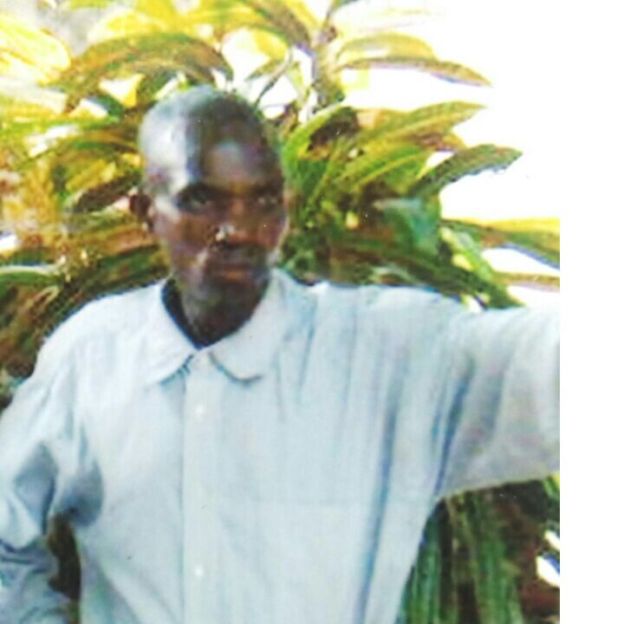
TWIZEYIMANA Aroni yavutse mu mwaka w’1973 .Yakoraga umurimo w’Ubumotari(gutwara abagenzi kuri moto) . Yari atuye ahitwa ZINDIRO, hafi yo kwa nyakwigendera Nayinzira Nepomuseni; ni mu Mudugudu wa MATWARI, Akagari ka MASORO, Umurenge wa NDERA, Akarere ka GASABO. Se umubyara yitwa GASHUGI, nyina akitwa NYIRANDONDOGOZI.
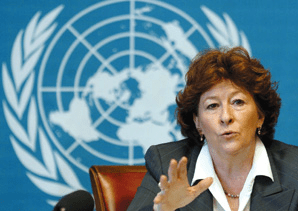
Louise Arbour, the tribunal’s former chief prosecutor at ICTR
A United Nations criminal tribunal was so hobbled by the hostility of the Rwandan government that it was unable to investigate “very credible allegations” of crimes by the forces of President Paul Kagame, says Louise Arbour, the tribunal’s former chief prosecutor.
Ms. Arbour, a retired Supreme Court of Canada justice, revealed details in an interview with The Globe and Mail of how the Kagame government and its supporters made it difficult for the International Criminal Tribunal for Rwanda to investigate many serious crimes, including the assassination of two presidents – the event that ignited the genocide in which 800,000 Tutsis and moderate Hutus were killed.
The attack on the presidential plane in 1994 was just one of many unsolved crimes in Rwanda before and after the genocide, she said, adding: “I think that remains a very serious failing of international criminal justice.”
Ms. Arbour’s revelations about her three-year stint as the tribunal’s chief prosecutor came after The Globe obtained two documents – a deposition by one of Mr. Kagame’s former top aides and an earlier report by investigators at the UN Rwanda tribunal – pointing to the involvement of Mr. Kagame’s forces in the death of Rwandan president Juvénal Habyarimana.
The missile strike on the night of April 6, 1994, that killed Mr. Habyarimana and Burundian president Cyprien Ntaryamira remains a mystery, but investigating magistrates in France have now reopened their probe to consider the new deposition by the former Kagame aide, who says he heard Mr. Kagame and two other aides admitting that they orchestrated the attack.
The French investigation was precipitated by a case filed by the families of the French crew of the plane carrying the two presidents, but later went into limbo because of a lack of witnesses.
Mr. Habyarimana’s daughter Marie-Rose, now a Canadian citizen, has criticized the UN tribunal for failing to pursue charges in connection with the assassination. “People have closed their eyes,” she told The Globe in an interview this month.
But Ms. Arbour said in her interview that Mr. Kagame’s government “could turn on and off the co-operative tap at will, depending whether they were pleased or not with the work that was being done.”
The tribunal, which closed last December after more than two decades of work, indicted 95 suspects and convicted 61 of them, but all were linked to the former Hutu regime of Mr. Habyarimana, which was driven out of power by Mr. Kagame’s forces after the genocide. Critics have said the tribunal became a form of “victor’s justice.”
The tribunal had the power to investigate crimes during the entire year of 1994, including the period before and after the genocide, but it did not indict anyone linked to Mr. Kagame and his Tutsi-led forces, despite many allegations against them.
“These kinds of very credible allegations have been made time and again,” Ms. Arbour said. “And in the 22 years of its history, the tribunal has never been able to take that on.”
The concerns about the imbalance in the tribunal’s prosecutions are valid, she said.
Ms. Arbour disclosed that she had told her successor, Carla Del Ponte, that the tribunal “had to make some efforts” to investigate “serious allegations of crimes” by “elements or sympathizers” of Mr. Kagame’s forces.
Those investigations “could only be done from outside the country” because of the dangers and difficulties of working inside Rwanda, she told Ms. Del Ponte in 1999, when she left the tribunal to become a Supreme Court justice.
“The office of the prosecutor was sitting right in the middle of the country, where allegedly some of the leadership elements had to be investigated,” Ms. Arbour told The Globe. “That’s not, frankly, very doable.”
Asked whether the tribunal could have investigated the assassination of the two presidents in 1994, she said: “We worked in a very fragile environment. I had a lot of concerns about the safety, the security of our witnesses. I don’t think we had anywhere near the kind of human resources, capacity, know-how, to do that work while we were sitting in that country.”
She drew a comparison to the criminal tribunal for the former Yugoslavia, where she was also the chief prosecutor and where she indicted former Yugoslav president Slobodan Milosevic for war crimes.
“I don’t think we would have managed to do leadership investigations in Yugoslavia had we been, in a sense, hostage to the government of Croatia, Bosnia or Serbia,” she said.
“Without being able to operate safely from the outside [of Rwanda] with a lot of credible, independent, outside investigative support – it’s not an excuse, but it’s in part an explanation as to why maybe this has never been done. It certainly would not have been doable in the first few years of the tribunal.”
The tribunal was “constantly in a conflictual position vis-à-vis President Kagame,” she said. For example, his government insisted that some genocide suspects should be put on trial domestically in Rwanda, rather than sent to the tribunal’s court in neighbouring Tanzania, she said.
“So even in the genocide prosecutions, we were very often – regularly – in conflict with the government, whom we would have thought would have been supportive of our work. So you can imagine what kind of situation we would have been in, sitting in the country needing visas to come in and out. … None of that was feasible without the full co-operation of the government.”
In a forthcoming book by freelance writer Judi Rever, a former senior official at the Rwanda tribunal says it was difficult to ensure the safety of witnesses who had information incriminating Mr. Kagame.
“The problem was that witnesses kept disappearing,” says Douglas Marks Moore, now a judge in Britain who was senior counsel to a team of investigators at the tribunal.
Many witnesses against Mr. Kagame fled to neighbouring countries such as Kenya and Uganda, but were then “extracted, tortured and killed,” he says.
This led to a serious depletion of the witness pool, he says in Ms. Rever’s book, In Praise of Blood, to be published by Random House Canada.
Mr. Marks Moore says it was “unwise” for the tribunal to have prosecuted only “one side” of the crimes in Rwanda.
Another senior investigator at the tribunal, former U.S. Federal Bureau of Investigation agent Jim Lyons, told Ms. Rever that in 1997 the investigators heard detailed evidence from three witnesses who said Mr. Kagame was involved in planning the missile attack that killed the two presidents.
In the forthcoming book, Mr. Lyons says one of the tribunal investigators, Michael Hourigan, took the information to Ms. Arbour in 1997. “Arbour told him to shut down the investigation, that the ICTR had no mandate to investigate the plane crash – it had no jurisdiction,” he says.
Ms. Arbour said she met Mr. Hourigan only once. The information that he brought her about the plane crash “didn’t fall, in my view, within our prosecutorial agenda,” she told The Globe. “I don’t think we had the capacity or the resources, even if I had otherwise felt that we should collect information.”
L’enquête française sur l’attentat en 1994 contre l’avion du président rwandais Habyarimana est relancée. Selon l’AFP, qui a eu accès au dossier, les juges français ont lancé une nouvelle commission rogatoire internationale pour entendre le général Kaymba Nyamwasa, ex-chef d’état-major rwandais. Cet ancien proche du président Kagame, entré en dissidence et exilé en Afrique du Sud, accuse depuis plusieurs années Paul Kagame d’être responsable de l’attaque qui a coûté la vie à Juvénal Habyarimana et constitué un épisode déclencheur du génocide. L’enquête française sur l’attentat contre l’avion du président Habyarimana, une première fois close à l’été 2014, puis rouverte 3 mois plus tard, avait été une nouvelle fois clôturée sans avancées majeures en janvier dernier.
Selon les informations de l’AFP, c’est une démarche du général Nyamwasa lui-même qui vient relancer la procédure. En septembre 2013, l’ancien chef d’état-major rwandais, entré en dissidence, avait déclaré à RFI avoir des preuves de la responsabilité de Paul Kagame dans l’attentat et s’était dit prêt à témoigner. Une audition qui n’avait jamais eu lieu.
Pourtant, le général Nyamwasa faisait lui-même partie de 9 proches de Paul Kagame poursuivis dans cette même affaire depuis 2006, suite au rapport du juge Bruguière. Mais le mandat d’arrêt lancé contre lui, puis la commission rogatoire envoyée à l’Afrique du Sud pour son audition, n’avaient jamais abouti.
La nouvelle commission rogatoire qui vient d’être lancée par les juges Nathalie Poux et Jean-Marc Herbaut fait suite, selon l’AFP, a une nouvelle demande de Kayumba Nyamwasa pour être interrogé. Une demande qu’il a assortie cette fois d’une déposition devant notaire faite le 23 juin dernier à Pretoria, dans laquelle il met à nouveau directement en cause le président Kagame, indique l’AFP.
Nyamwasa affirme, dans cette déclaration, qu’au soir du 6 avril 94, il aurait appris de la bouche de Paul Kagame lui-même que « l’avion du président Habyarimana avait été abattu pas nos propres troupes ». Il nomme également deux autres responsables et deux exécutants présumés.
Je dirais que la situation est liée à la volonté entre la France et l’Afrique du Sud…
Réaction de maître Meilhac, avocat de la veuve du président Habyarimana
Three U.S. presidents – Clinton, Bush and Obama – have honored their alliance with Paul Kagame, one of the world’s premier war criminals, by dutifully deporting his critics to imprisonment, or worse, in Rwanda. Dr. Léopold Munyakaz awaits this same fate for describing the Rwandan conflict as a class struggle, not a genocide, thus undermining the “ideological foundation of U.S. ‘humanitarian’ war ideology.”
by Ann Garrison
“The war and massacres were fundamentally a conflict between the historically privileged Tutsi and the historically oppressed Hutu.”
I answered some heartbreaking calls from Dr. Léopold Munyakazi phoning from Alabama jail this week. Dr. Munyakazi is a gentle Rwandan born scholar, with a PhD in linguistics and further advanced degrees French and African linguistics. He has lost his immigration case in the Fourth Circuit Court of Appeals and will all but certainly be deported to Rwanda to face prison or worse. The Rwandan government accuses him of genocide crime committed in 1994, but they made no such accusations until after he gave several talks on northeastern college and university campuses in which he said that the Rwandan war and massacres of the 1990s were a class conflict, not an ethnic conflict, and therefore not genocide. These talks constituted a threat to President Paul Kagame’s totalitarian Rwandan regime, to the Clinton dynasty, and to “humanitarian” war ideology.
On the phone Dr. Munyakazi protested his innocence. He spoke of witnesses who had testified that he was not where his accusers said he was and therefore could not have done what he was accused of doing there. I told him that he didn’t have to convince me because I have been following and reporting on cases like his for years. A Rwandan exile speaks out against Rwandan totalitarianism, disagrees with Rwanda’s constitutionally codified description of the 1994 massacres as “genocide against the Tutsi,” or testifies in defense of another Rwandan, and soon a gaggle of anonymous witnesses say that he or she too was guilty of genocide in 1994 and the Rwandan government demands his or her return to Rwanda.
“If a million Rwandans died, and 200,000 of them were Tutsi, that means 800,000 of them were Hutu.”
The Rwandan government has even accused Lin Muyizere, the husband of celebrated Rwandan political prisoner Victoire Ingabire of genocide crime, and tried to have him extradited from the Netherlands. Ingabire herself is now in the sixth year of a 15-year sentence in Rwanda for daring to run for president against Paul Kagame in 2010 and for “genocide denial.” She did not say, like Dr. Munyakazi, that the Rwandan conflict was about class rather than ethnicity, but she did say, in an equally challenging statement, that there were extremists on both sides, Hutu and Tutsi, that there were victims on both sides, and that all the victims must be remembered. I had the honor of speaking to Victoire many times in 2010, and putting her voice on the air on Pacifica Radio’s KPFA-Berkeley and WBAI-NYC. Yet another challenge to the Wikipedia/Hotel Rwanda story has come from Professors Allan Stam and Christian Davenport, after 10 years of research in Rwanda. In the 2015 BBC documentary Rwanda’s Untold Story, Allan Stam had this exchange with the BBC’s Jane Corbin:
Allan Stam: If a million people died in Rwanda in 1994 — and that’s certainly possible — there is no way that the majority of them could be Tutsi.
Jane Corbin: How do you know that?
Allan Stam: Because there weren’t enough Tutsi in the country.
Jane Corbin: The academics calculated there had been 500,000 Tutsis before the conflict in Rwanda; 300,000 survived. This led them to their final controversial conclusion.
Allan Stam: If a million Rwandans died, and 200,000 of them were Tutsi, that means 800,000 of them were Hutu.
Jane Corbin: That’s completely the opposite of what the world believes happened in the Rwandan genocide.
Allan Stam: What the world believes, and what actually happened, are quite different.
The Rwandan – and Burundian – Hutu and Tutsi divide
Dr. Munyakazi stated what seemed obvious to many who have studied the history of Rwanda and Burundi. He said that Hutu and Tutsi speak the same language, share the same culture, eat the same food, and even marry each other, with membership in one group or the other determined patrilineally. Ninety-three percent of Rwandans are Christian. They are distinguished instead, by historical class privilege. Prior to colonization, the Tutsi were a cattle owning, feudal ruling class, the Hutu a subservient peasant class. Belgian colonists reified this divide by issuing ID cards that labeled Rwandans and Burundians as Hutu, Tutsi, or Twa.
Rwanda’s third population, the Twa, are traditionally forest people, hunter gatherers, but the Twa are only one percent of Rwanda’s population. They also suffered in the Rwandan war and massacres of the 1990s, but the war and massacres were fundamentally a conflict between the historically privileged Tutsi and the historically oppressed Hutu.
“Prior to colonization, the Tutsi were a cattle owning, feudal ruling class, the Hutu a subservient peasant class.”
There is nothing like the UN Convention on the Prevention and Punishment of Genocide to prevent and punish class war. Article II of the Convention says that “genocide means any of the following acts committed with intent to destroy, in whole or in part, a national, ethnical, racial or religious group.” It says nothing about preventing or punishing the murder of masses of people in order to claim, reclaim or defend wealth and privilege. Nor does it say anything about the murder of masses of people in order to steal what they have, such as oil, land, water or mineral riches.
Dr. Munyakazi told me he believed the U.S. State Department had intervened in his case behind the scenes to make sure that he was sent back to Rwanda, and I told him that wouldn’t surprise me. President Bill Clinton’s Secretary ofState, Madeline Albright, openly intervened as a litigant to make sure that Pastor Elizaphan Ntakirutimana was extradited to stand trial at the International Criminal Tribunal on Rwanda in 1999. Former U.S. Attorney General Ramsey Clark defended Pastor Ntakirutimana in the U.S. and at the ICTR and called his conviction “a tragic miscarriage of justice.”
Dr. Munyakazi threatens President Paul Kagame, Samantha Power and the humanitarian warriors
Since a class conflict is not a genocide, Dr. Munyakazi is dangerous to Rwandan President Paul Kagame, who justifies his ruthless totalitarian regime by claiming to be the savior who stopped a genocide. He is also dangerous to the Holocaust and genocide industries, whose false equation of the Holocaust and the Rwandan massacres is at the ideological foundation of “humanitarian” war ideology, as codified in Obama’s Executive Order — Comprehensive Approach to Atrocity Prevention and Response and in Mass Atrocities Prevention Operations, a Military Handbook, a collaboration between the Pentagon and Harvard’s Carr Center for Human Rights. He is dangerous to UN Ambassador Samantha Power, who has built her entire career on a historically inaccurate, decontextualized, and grossly oversimplified account of the 1994 Rwandan massacres, during which U.S. officials “stood by.” What would come of all their moral urgencies about “stopping the next Rwanda” in Libya, Syria, etc., if “Rwanda” were not the story we were all told?
And the Clinton dynasty
As if that weren’t enough, Dr. Munyakazi is dangerous to the Clinton dynasty, which is so wedded to the lies about the Rwanda war and massacres that Bill Clinton presented one of his Global Citizen Awards to President Paul Kagame in 2009. For the past 22 years, Clinton has shed crocodile tears and called his “failure to intervene” in Rwanda the greatest mistake of his presidency. This year, in support of his wife’s campaign, Bill Clinton claimed that she urged him to intervene in Rwanda. She affirmed that claim as evidence of her commitment to humanitarian “intervention.”
“Clinton has tirelessly extolled the achievements of Rwandan President Paul Kagame, ‘the most important war criminal in office today.’”
Everything went according to the US/UK plan except that the loss of life in Rwanda was far greater than President Clinton or anyone at the Pentagon had anticipated. A massive cover-up was mounted at the International Criminal Tribunal of Rwanda, which indicted and prosecuted only Rwandan Hutus, and in the heroization of Rwandan President Paul Kagame. Like Tony Blair, Clinton has tirelessly extolled the achievements of Rwandan President Paul Kagame, as the BBC reported in Rwanda’s Untold Story. Belgian scholar Filip Reyntjens, in the same BBC doc, says that “their closeness is a closeness with what I call the most important war criminal in office today.”
On July 28, 1994, after General Paul Kagame had won the war and seized power in Rwanda, the New York Times reported that “the United States is preparing to send troops to help establish a large base in Rwanda to bolster the relief effort in the devastated African nation.” Just over two years later, U.S. proxies Rwanda and Uganda invaded Zaire – what is now the Democratic Republic of the Congo – in 1996 and then again in 1998, overthrowing first Mobutu, then Laurent Kabila, establishing the U.S. as the dominant power in the region, and leaving millions more dead in the wars and ongoing conflict over eastern Congo’s vast mineral wealth. “The United States has been the superpower that has dominated what has happened in this area in the Congo and in Rwanda,” says Professor Edward S. Herman. “The American people know almost nothing about the area, and since the United States has had a strong position of support for Kagame and for the invasion of the Congo, that dominated all the institutions that were associated with it.” Bill Clinton’s so-called “failure to intervene” was in fact a proxy intervention causing massive loss of life.
“The International Criminal Tribunal of Rwanda indicted and prosecuted only Rwandan Hutus.”
And what was the justification of Rwanda’s repeated invasion of Zaire and its plunder and occupation of the eastern Democratic Republic of the Congo? Kagame said he was going to hunt down the Hutus guilty of genocide, which the international community had been quick to equate with the Holocaust.
I asked myself what else to say to Dr. Munyakazi, on the other end of a cell phone connection between Oakland and Alabama, except that I know he is innocent? I could barely hear him because the connection kept breaking up, but I was able to understand that he wants to appeal to the Supreme Court. I said I would speak to his lawyer and some other lawyers, doubtful as I am that the Court would hear his case. I said I would try to produce some radio coverage, but that it would be difficult to garner any attention for his story right now without tying it to Bill and Hillary Clinton’s decades of involvement in the events leading up to his pending “removal” to Rwanda, and that that would do nothing to help his case. He said that he was committed to telling the truth about what really happened in his country, regardless of the consequences.
Ishyaka Ishema ry’ u Rwanda rikomeje imyiteguro yo kujya gukorera politiki mu Rwanda . Mu gihe hasigaye iminsi ikababakaba 40 gusa Itsinda rya mbere riyobowe na Padiri Thomas NAHIMANA rigasesekara mu Rwatubyaye, Abataripfana bose barakataje mu kwegera no gusobanurira Abanyarwanda bakunda igihugu cyabo ko inkunga yabo ikenewe kandi bwangu.
1.Nkwandikiye iyi baruwa kuko ndashidikanya ko ubona kandi wumva neza ibibazo bikomeye bikomeje gusenya igihugu cyacu bikaba ahanini bikomoka ku mikorere mibi y’ubutegetsi bwa FPR-Inkotanyi bwubakiye ku kinyoma, iterabwoba n’ukwikubira ibyiza byose by’igihugu hashingiwe ku irondakoko n’irondankomoko.
2.Kwemera ko abenegihugu twese tudakwiye gukomeza kwibera indorerezi ahubwo tugomba kugira icyo dukora ngo dufashe igihugu cyacu kubona inzira yo kwikura muri biriya bibazo, nicyo cyanteye guhaguruka nifatanya na bagenzi banjye tubyumva kimwe maze taliki ya 28 Mutarama(1) 2013 duhurira i Paris ho mu Bufaransa dushinga Ishyaka ISHEMA ry’u Rwanda .
3.Muri iyi myaka itatu ishize twarihuguye bihagije, twakoze inama nyinshi, twakoze ingendo mu bihugu binyuranye, twasesenguye amateka y’igihugu cyacu, twashyize ahabona ibitekerezo byacu, twagerageje kwifatanya n’abandi banyapolitiki tureba mu cyerekezo kimwe. Ikiruta byose ariko twateguye umushinga witwa « Kunga Abenegihugu kugira ngo dufatanye kwiyubakira u Rwanda moderne » (Together to modernize Rwanda) ugaragaza u Rwanda rubereye bose twifuza kuraga abadukomokaho.
4.Ubu rero igihe kirageze ngo duhaguruke tuve mu mahanga, dusange Abanyarwanda bari mu gihugu, dufatanye n’urubyiruko kubaka imishinga ishyigikira amizero mashya y’ejo hazaza.
5.Ibibazo bya politiki bikomeye cyane biri mu Rwanda muri iki gihe ntitubiyobewe. Ariko kandi tuzi neza ko ibyo bibazo bitazakemuka hatabonetse bamwe mu benegihugu bemera kwitanga. Aha ntuye mu gihugu cya CANADA, mfite urugo, mfite umugabo, mfite n’abana babiri bakiri bato. Baracyankeneye. Ariko nanone mu Rwanda hari abavandimwe bacu, hari imiryango, hari abaturage bakabaka miliyoni 12 nabo bakeneye « Abalideri » babafasha kwisuganya kugira ngo buhindure ibintu, bubake ubuyobozi bwiza binyuze mu nzira y’amahoro ishingiye ku bwitonzi n’ubushishozi.
6.Hasigaye amezi atagera kuri abiri tukaba dusesekaye mu Rwanda. Ntabwo nzagenda njyenyine. Mu Ikipe ya mbere tuzaba turi« Abataripfana batagendera kuri baranyica »bagera kuri batandatu (6), barangajwe imbere na Padiri Thomas NAHIMANA, Umukandida wacu ku mwanya wa Perezida wa Repubulika. Hari abandi bazaza nyuma. Mu gihugu tuzahasanga kandi n’abandi basore n’inkumi b’intwari cyane badutegereje tuzafatanya.
7.N’ubwo ariko dufite ubushake buhambaye n’ukwiyemeza kutajegajega tuzi neza ko ibikenewe ari byinshi kandi bisaba amafaranga atari make:
Muri iyi minsi abakunzi b’Ishyaka ISHEMA ry’u Rwanda cyane cyane urubyiruko bakomeje kutugaragariza ko bashishikajwe no kumenya impumeko dufite mu gihe hasigaye igihe kitagera ku mezi abiri ngo tube twasesekaye mu Rwatubyaye.
Kubera iyo mpamvu twiyemeje gutangiza uyu muyoboro witwa AMAKURU Y’ISHYAKA ISHEMA bityo tukajya tubagezaho uko duhagaze, umunsi ku wundi . Ni muri urwo rwego rero dutangiye uyu munsi:
Kuwa Gatatu taliki ya 14/9/2016
1.Ese mu Ishyaka ISHEMA hari ikibazo cyo kwicamo ibice bibiri gihari ?
Nta kibazo gisa gityo dufite. Ishyaka ISHEMA ryunze ubumwe 100%. Ubu icyo duhugiyeho ni ibikorwa bijyanye no kwisuganya neza :
*Ikipe ya mbere izajya mu Rwanda yatangiye imyitozo yihariye
*Turacyarimo kunononsora uko inzego z’abayoboke baba mu mahanga zizasigara ziteye
*Dushishikariye kwegera bwangu Abanyarwanda bose bafite ubushake bwo kudutera inkunga (campagne de proximité) kugira ngo gahunda yo kujyana Ishyaka mu Rwanda igende neza. Ni muri urwo rwego, kuri uyu wagatandatu ushize( le 10/9/2016) abayobozi b’Ishyaka Ishema ry’u Rwanda ndetse na Nouvelle Génération basuye abatuye mu mujyi wa Lille mu Bufaransa kugira ngo barusheho gusobanura umushinga wo kujya gukorera politiki mu Rwanda.
2. Ni gute umuntu yinjira cyangwa agasezera mu Ishyaka ry’ Abataripfana?
Umuntu wese ubishaka akaba akunda gahunda zo guhindura imiyoborere y’igihugu cyacu binyuze mu nzira zitamena amaraso, ashobora kwegera abayobozi b’Ishyaka ISHEMA ry’u Rwanda bakamusobanurira uko yabigenza.
Irindi hame tugenderaho ni uko umuntu yinjira mu Ishyaka Ishema ku bwende bwe kandi akaba yarisohokamo igihe ashakiye.
None rero Banyarwanda, Banyarwandakazi, mwese ndabararitse, ntimucikanwe. Muri uku kwezi kwa Nzeri (9) 2016, tanga inkunga yawe kugirango bitarenze taliki ya 2 Ugushyingo 2016 Ishyaka ISHEMA rizasesekare mu Rwanda ryitwaje umushinga utagira uko usa witwa « Kunga abenegihugu kugirango bashobore kwiyubakira u Rwanda Moderne »;« Together to modernize Rwanda »;« Rassembler pour moderniser le Rwanda ».
Uyu mushinga ni uwa twese : uruhare rwa buri wese nirugaragare bityo ntihazagire uhezwa ku buryohe bw’amatunda yawo.
Politiki ya « Mutuwele yo kwivuza » cyari igitekerezo cyiza. Ariko cyaje guhinduka icyanzu cyo gusahura rubanda no kubabeshya ngo baravurwa kandi mu by’ukuri batavurwa. Ntibikiri ibanga amafaranga yose batanze nka « Cotisation ya mutuelle »yaranyerejwe . Leta ubwayo yabyemeye mu kwirukana nabi Ministri w’ubuzima Agnes BINANGWAHO ndetse na ba Meya benshi baherutse kwirukanwa bashinjwa kunyereza amafaranga ya Mituweli. Hagati aho abari bayatanze bahitanywe n’icyorezo cya Malariya ku bwinshi, ababyeyi batagira ingano bo bagafungirwa mu bitaro babuze ubwishyu !
(4) Abana bashobora kwiga nta nkomyi ? 3/10
Raporo zinyuranye zikozwe n’inzego z’ubuyobozi bukuru bw’igihugu (Inteko Ishingamategeko …) zakomeje kwemeza ko uburezi buhabwa abana ba rubanda guhera mu mwaka w’1994, mu mashuri abanza, ayisumbuye na kaminuza, nta REME bufite.
Ku ruhande rumwe, igitekerezo cyo gushuka abaturage ko abana bose baziga bagatunga dipolome ariko zitagize icyo zibamariye kiragayitse cyane kandi kizagira ingaruka zikomeye kuri ejo hazaza h’igihugu.
Ku rundi ruhande, bigaragara ko abana b’abategetsi aribo batangwaho umutungo w’igihugu kugira ngo bige mu mashuri y’akataraboneka yo muri Kigali , ndetse bigasozwa no kubohereza mu Bulayi na America . Uku kwikubira ibyiza by’igihugu kurakabije kandi kugomba guhagarara.
Nanone kandi hari ivangura rikaze rikomeje kugaragarira mu gukoresha umutungo w’igihugu hagafashwa abana bamwe barihirwa amashuri , abandi ndetse b’abahanga bakabura ubufasha. Ninde utabona ko iri vangura rishingiye ku irondakoko niridakosorwa amaherezo rizadusenyera igihugu bikomeye !
Uku gusumbanya abana b’igihugu bisa n’ibyimitse politiki ya « apartheid » hagati y’abana b’u Rwanda, FPR yarishyizeho igamije kwimika ubusumbane bukomeye mu gihe kizaza. Ninde wabishima uretse uwanzi w’igihugu ?
(5)Abaturage bafite amazi meza ? 0.5/10
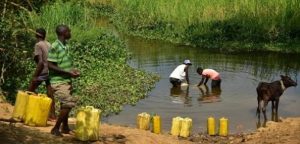
Abaturage badafite amazi meza nta buzima buzira umuze bashobora kugira. Bagira umwanda, bakazongwa n’indwara z’ibyorezo zinyuranye. Ihere amaso iyi videwo ikurikira urebe uko iki kibazo cyazahaje abaturage kandi Leta ya Kagame ikaba idashaka kugikemura!
Yewe ngo n’ahubatswe amariba ya kijyambere , abaturage babanje gutanga imisanzu, nta mazi yigeze ageramo ! Ngiyo rero politiki y’igipindi ye !
(6) Abaturage bafite amashanyarazi mu ngo zabo ? 2.5/10
Reka twibutse ko amashyanyarazi afite uruhare rukomeye mu iterambere ry’igihugu n’abaturage bacyo .
(7) Abaturage bambara ku buryo buboneye ? 2/10
Politiki yo guca « Caguwa » mu Rwanda yagaragaje ko Leta ya Kagame ihora ifata ibyemezo bibangamiye cyane inyungu za rubanda . Bizwi ko U Rwanda rudafite inganda zakora imyenda mishya ihagije. Ikindi kandi abaturage bose ntibaragira ubushobozi bwo kugura imyenda mishya gusa. Iki cyemezo cyo guca caguwa cyagaragaye nko kwishongora bikabije kandi bitarimo ubwenge. Yewe n’ibihugu by’i Bulayi byakataje mu majyambere biracyacuruza imyenda ya caguwa !
Aha urubyiruko rurannyega icyemezo cya Leta cyo guca caguwa.
Aho Leta ya Nyakubahwa Paul Kagame ntiyibwira ko u Rwanda rutuwe n’abaministri n’abaherwe batuye Kigali gusa ? Ndetse twumva ko n’abagizwe abamisitiri bagurizwa amafaranga yo kugura iyo myenda mishya ! Abaturage basanzwe se bo bazagurizwa nande ?
(8)Abaturage barindiwe umutekano : 1/10
Mu Rwanda imbere nta ntambara y’amasasu ihari nyamara inzego zishinzwe gucunga umutekano(Polisi, igisirikari, Inkeragutabara…) ntizisiba kurasa abaturage b’inzirakarengane ku manywa y’ihangu no kubahoza mu iterabwoba ridahuga.
Intambara z’urudaca Leta ihozamo ibihugu duturanye nazo amaherezo zizabyarira Abanyarwanda akarambaraye niba iyi politiki yo kwigira gashozantambara mu karere idahagaritswe .
Urubyiruko nirwo maboko y’igihugu rukaba n’amizero y’iterambere rizaramba. Iyo urubyiruko rwihebye ntiwavuga ko uri kubaka igihugu.
Mu Rwanda urubyiruko ruremerewe cyane n’iterabwoba, ubushomeri n’ubukene. Umugabane ungana na 85 % w’urubyiruko ntacyo Leta ya Kagame ikora ngo irufashe kwikura mu bukene no kwizera ejo hazaza hazima. Icyo Leta ya Kagame imariye urubyiruko ruyikeneyeho ibisubizo ni ukujya kubafungira ku karwa ka IWAWA ; kubashora mu ntambara zo mu bihugu duturanye zibatikiza umusubizo n’uzirokotse agasigara ari igisenzegeri kitazagira icyo cyimarira.
Umwanzuro
Leta ya Paul Kagame abaturage baramutse bayigiriye ubuntu bayiha amanota angana na 15 /100 , ubundi bakayisezerera bwangu . Leta nk’iyi ntabwo ikwiye guhabwa amahirwe yo gukomeza kugaraguza abaturage agati no kwivuga ibigwi itagira . Politiki z’ibipindi Abanyarwanda barazirambiwe. Niyo mpamvu hakenewe IMPINDUKA.
By’umwihariko Urubyiruko rw’u Rwanda rukwiye kwishakamo ubutwari, rugahagurukana impirita maze mu matora ataha ya Perezida wa Repubulika yo mu 2017 n’ay’Intumwa za rubanda yo mu 2018, rukihitiramo abayobozi bashya . Njyewe ndetse ndashishikariza abasore n’inkumi kuzitabira amatora ari benshi kandi bakitorera abakandida ba « Nouvelle Génération » kuko umushinga wacu « Kunga abenegihugu ngo dufatanye kwiyubakira u Rwanda moderne(Together to modernize Rwanda) », ukubiyemo ibisubizo bifatika kuri ziriya ngingo 10 zagaragajwe hejuru, ari nazo zubakirwaho iterambere rirambye ry’igihugu .
Mbifurije mwese guhorana ishema.
Padiri Thomas NAHIMANA,
Umukandida wa Opozisiyo mu matora ya Perezida wa Repubulika yo mu 2017.





 Louise Arbour, the tribunal’s former chief prosecutor at ICTR

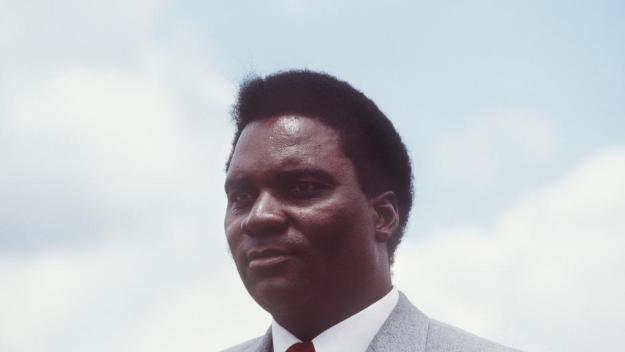 L’enquête française sur l’attentat en 1994 contre l’avion du président rwandais Habyarimana est relancée. Selon l’AFP, qui a eu accès au dossier, les juges français ont lancé une nouvelle commission rogatoire internationale pour entendre le général Kaymba Nyamwasa, ex-chef d’état-major rwandais. Cet ancien proche du président Kagame, entré en dissidence et exilé en Afrique du Sud, accuse depuis plusieurs années Paul Kagame d’être responsable de l’attaque qui a coûté la vie à Juvénal Habyarimana et constitué un épisode déclencheur du génocide. L’enquête française sur l’attentat contre l’avion du président Habyarimana, une première fois close à l’été 2014, puis rouverte 3 mois plus tard, avait été une nouvelle fois clôturée sans avancées majeures en janvier dernier.



 GAHUNDE