Rwandan Poverty Statistics: Exposing the ‘Donor Darling’

In his book entitled Poor Numbers, Morten Jerven cautioned against taking African development statics at face value, given the high political and financial stakes attached to these numbers, as well as the lack of institutional mechanisms to prevent political interference in many countries. Few countries illustrate his case more starkly than Rwanda. As An Ansoms et al pointed out in an article in the print issue of ROAPE earlier this year, ‘Statistics versus livelihoods: questioning Rwanda’s pathway out of poverty, the Rwandan government has used its record on poverty reduction and economic growth to legitimize its authoritarian rule and to deflect criticism of its human rights record, just as the previous regime had done up until 1990. Furthermore, Rwanda’s spectacular recovery after the genocide has made it somewhat of a “donor darling”, and has enabled the government to attract significant foreign resources in the form of aid from donors desperate to claim a share in this African success story.

Yet, questions have been mounting in recent years about the reality and sustainability of the “Rwandan miracle”, given the heavy-handed nature of the state-led agricultural transformation project (Dawson et al. 2016), and the government’s propensity for debt-financed investments in unproductive prestige projects, such as the Kigali Convention Centre. These questions came to a head in September 2015, when the National Institute of Statistics of Rwanda (NISR) published a poverty profile (NISR, 2015) based on the most recent household budget survey (EICV4 by its French acronym). The report claimed that the proportion of Rwandans living below the poverty line had fallen from 45% in 2010 to 39% in 2014, after a string of similarly successful decreases in the previous surveys. Two months later, Filip Reyntjens published a critique, claiming that the “decrease” in poverty had been artificially engineered by NISR by changing the type of poverty line used, from an “average” consumption basket based on actual consumption patterns of poor Rwandan households, to a “minimum” or “optimal” consumption basket, containing mostly highly caloric and inexpensive food types.

The change is not in itself problematic, as the choice of a poverty line is always, to some extent, arbitrary and there are many different acceptable ways to define a poverty line. The normative minimum consumption basket adopted by NISR is one such way. However, to make trend comparisons, all experts agree that it is crucial to use consistent methodologies, assumptions and definitions across time. Reyntjens claimed that had they done that, they would have found the proportion of people living below the minimum poverty line to have increased by 6 percentage points between 2010 and 2014. Unfortunately, Reyntjens never published the syntax files he used to compute his estimate. Neither did NISR accept to publish its own syntax files. Without this key piece of evidence, the debate has never been closed from a technical point of view, as it is impossible to show convincingly whether poverty has actually increased or decreased in Rwanda between 2010 and 2014.

We hope to contribute to settling this issue by publishing open, transparent and verifiable syntax files built using a publicly available dataset, which can be downloaded from NISR’s own microdata catalogue on its website (the two syntax files can be opened with .txt notepad or STATA software here). There are many ways to compute these things and there are innumerable adjustments and assumptions that must be made to arrive at an aggregate number. Consequently, it is difficult to replicate exactly the official estimates without access to the original syntax files. However, we hope that by submitting these to public scrutiny, such differences can be ironed out in an open and transparent manner, and any mistakes can be corrected to arrive at an estimate that all parties can accept. In constructing these estimates, our main priority has been to ensure consistency between the two surveys. We therefore try to use exactly the same code and assumptions in both years wherever possible. Below, we provide an overview of the key parameters and assumptions that entered the construction of these indices. Since there are several different poverty lines that have been generated by now, we decided to compute trends for all of them, namely:

  • Average consumption basket: representing the minimum amount required to consume 2,500 kcal per day (adjusted for age and gender), using prevailing culinary habits of poor Rwandan households in 2001. This was the official poverty line used in 2001, 2005, 2010.
  • Updated average basket: representing the minimum amount required to consume 2,500 kcal per day (adjusted for age and gender), using prevailing culinary habits of poor Rwandan households in 2014. This was the new poverty line computed by NISR in 2014, which should have been used in EICV4, but was never used because it was deemed too high.
  • Minimum consumption basket: representing the minimum amount required to consume 2,500 kcal per day (adjusted for age and gender), using optimal (i.e. cheap and highly caloric) food types. This was the official poverty line used in 2014 (EICV4).
  • Reyntjen’s poverty line: Reyntjens argued that since the minimum consumption basket was 19% lower than the updated average basket, trend comparisons with 2010 should have been made using a poverty line that was 19% lower than the one used in 2010.[1] For this poverty line, we did not construct a food basket, but simply calculated 81% of the figure from the total poverty line computed from the average consumption basket.


In all consumption baskets, the quantities and caloric values are kept constant across surveys. Prices for each item are given as the national median price across regions and across months, as reported in the auto-consumption module of the EICV survey (see table 3 below). Consumption aggregates have been adjusted for spatial and temporal price differences using a Laspeyres index (see table 2 below). The Laspeyres index was chosen because it yielded estimates that were closest to official poverty estimates in EICV3 for the average basket. The choice of price index does not affect the conclusions of this blogpost.

The results are reported in table 1 below. All poverty lines yield similar trends when used consistently over time, indicating that poverty increased between 5% and 7% points between 2010 and 2014. All changes are statistically significant at the 5% level.

It should be noted that our results differ from those obtained by simply updating the poverty line for inflation using CPI data, as was done by NISR in their 2016 trend report (NISR, 2016). In principle, if the data are of good quality and sufficiently disaggregated, both methods should be equivalent and should not yield significantly different results. This therefore raises questions about the quality / reliability of official CPI data, and/or the quality of price data collected by the EICV. In either case, this would undermine our ability to correctly estimate poverty levels in Rwanda. The discrepancies found here should invite us to more closely scrutinize official statistics coming out of the Rwandan statistical office. GDP growth figures appear to be incompatible with the findings of the EICV survey, given than agriculture still accounts for about one third of GDP and two thirds of the labour force.

Tables

Table 1: Summary of poverty lines and poverty rates

Average basket Updated basket Minimum basket Reyntjen’s poverty line
2010 2014 2010 2014 2010 2014 2010 2014
Share of non-food[2](% of total cons.) 31 34.8
Total caloric intake (kcal/ adult/ day) 1346 1215 1212
Total food cost per pers./year (Rwf) 96,797 121,795 98,069 125,504 77,559 101,116
Non-food component (Rwf/ pers/year) 43,489 54,720 52,344 66,987 41,397 53,899
Total poverty line (Rwf/ pers/ year) 140,286 176,515 150,413 192,491 118,956 155,015 113,632 142,977
Poverty rate (% of pop< tot. pov. Line) 45.2 50.2 49.2 55.8 35.2 42.2 32.5 37.1
Change in poverty rate +5* +6.6* +7* +4.6*
*Change is statistically significant at 5% level


Table 2: Laspeyres price index by quarter and province (computed from price data in auto-consumption file)

2010 Kigali City Southern Western Northern Eastern
First quarter 1.47 0.98 0.89 0.98 1.14
Second quarter 1.31 0.98 0.92 0.96 1.05
Third quarter 1.38 0.98 0.92 0.98 1.13
Fourth quarter 1.31 0.98 0.92 1.00 1.14
2014 Kigali City Southern Western Northern Eastern
First quarter 1.22 0.93 1.01 0.96 1.09
Second quarter 1.20 0.95 0.96 0.91 1.08
Third quarter 1.27 0.98 1.06 1.05 1.04
Fourth quarter 1.14 0.92 1.07 0.99 1.02


Table 3: Food baskets used to compute poverty lines

PRODUCE NAME KCAL/ 100G PRICE[3] QUANTITY CONSUMED (KG/ ADULT EQUIVALENT PER DAY)
AVERAGE BASKET UPDATED BASKET MINIMUM BASKET
both years 2010 2014 both years both years both years
Sweet potato 92 80 100 0.4033 0.3114 0.0915
Irish Potato 67 120 150 0.1763 0.1257 0.0242
Banana – cooking (Inyamunyo) 75 120 150 0.0573 0.0783 0.0227
Dry beans 341 300 400 0.1130 0.0758 0.0758
Cassava (root) 109 100 150 0.0410 0.0694 0.0694
Cassava (flour) 338 200 300 0.0134 0.0391 0.0063
Sorghum juice(Ubushera) 173 150 180 0.0000 0.0000 0.0000
Tomato 17 200 200 0.0106 0.0146 0.0146
Corn (flour) 363 300 350 0.0100 0.0184 0.0012
Cabbages 19 100 100 0.0207 0.0172 0.0172
Local Banana beer 48 300 300 0.0096 0.0000 0.0000
Avocado 119 90 100 0.0036 0.0143 0.0494
Amarante (small leafed green) 22 100 150 0.0124 0.0150 0.0150
Local sorghum beer(ikigage) 173 150 180 0.0150 0.0000 0.0000
Cassava (fermented) 362 150 200 0.0056 0.0113 0.1097
Dry maize (grain) 356 180 240 0.0103 0.0138 0.0225
Eggplant 21 150 200 0.0070 0.0082 0.0082
Cassava leaves 53 150 200 0.0068 0.0093 0.0093
Local rice 280 500 600 0.0027 0.0092 0.0035
Tarot/amateke 86 100 150 0.0098 0.0189 0.0476
Maize (fresh) 36 100 150 0.0065 0.0000 0.0000
Fresh milk 61 150 200 0.0010 0.0062 0.0062
Fresh bean 53 200 250 0.0002 0.0000 0.0000
Banana fruit (Imineke) 60 150 200 0.0038 0.0056 0.0028
Sorghum (flour) 343 300 350 0.0031 0.0051 0.0075
Onion 24 250 325 0.0017 0.0024 0.0024
Curdled Milk 75 200 200 0.0007 0.0053 0.0053
Local banana juice 48 200 200 0.0000 0.0035 0.0020
Groundnut flour 387 900 1000 0.0004 0.0000 0.0000
Sorghum 343 250 250 0.0253 0.0028 0.0143
Amarante (large leafed green) 22 100 170 0.0039 0.0028 0.0028
Pumpkin 19 100 100 0.0068 0.0058 0.0058
Pineapple 26 100 125 0.0002 0.0013 0.0013
Carrot 38 200 250 0.0003 0.0011 0.0011
Papayas 26 100 150 0.0006 0.0014 0.0014
Mangos 45 100 125 0.0000 0.0022 0.0074
Beef meat 150 1400 1400 0.0006 0.0016 0.0000
Green pea (fresh) 37 400 500 0.0006 0.0000 0.0000
Fish (fresh / frozen) 49 1000 1020 0.0005 0.0000 0.0000
Eggs 139 70 240 0.0007 0.0009 0.0009
Guava 17 70 100 0.0002 0.0000 0.0000
Soya (dry) 335 300 400 0.0000 0.0004 0.0004
Yams/Ibikoro 109 130 160 0.0000 0.0104 0.0104
Pepper 17 250 300 0.0002 0.0000 0.0000
Plums 24 425 600 0.0001 0.0000 0.0000
Pork meat 220 1150 1400 0.0000 0.0003 0.0000
Wheat (flour) 364 350 450 0.0001 0.0000 0.0000
Goat meat 164 1500 1800 0.0002 0.0000 0.0000
Orange (local) 34 200 200 0.0000 0.0002 0.0002
String bean 32 200 200 0.0068 0.0000 0.0000
Soya (fresh) 405 200 250 0.0023 0.0000 0.0000
Green pea (dry) 339 500 700 0.0010 0.0000 0.0000
Ground nuts (peanuts) 567 800 1000 0.0009 0.0001 0.0001
Fish (dry / smoked) 199 500 500 0.0000 0.0127 0.0127
Other Meats 126 550 800 0.0000 0.0000 0.0005
Bread 261 239 303 0.0011 0.0000 0.0000
Imported rice 363 460 583 0.0014 0.0000 0.0000
Palm oil 884 668 846 0.0036 0.0000 0.0000
Sugar (local) 380 500 634 0.0027 0.0000 0.0000

The authors of this article have asked for anonymity.  

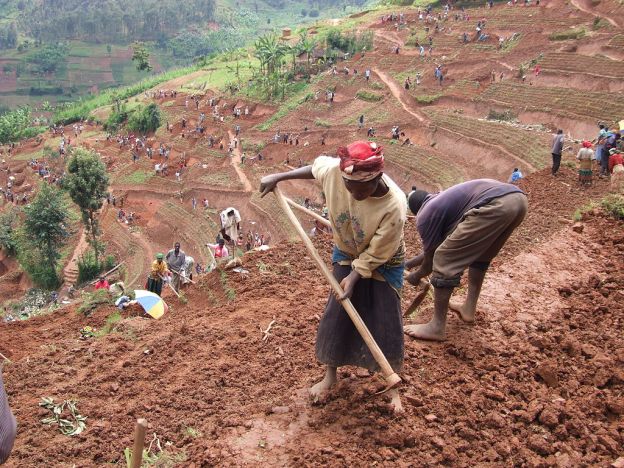
Featured Photograph: Parc National des Volcans, Rwanda. August 4, 2005

References

Reyntjens, F. 2015. “Lies, Damned Lies and Statistics: Poverty Reduction Rwandan-style and How the Aid Community Loves It.” Blog of 3 November 2015 posted on http://www.africanarguments.org.

NISR. 2015. Rwanda Poverty Profile Report 2013/2014: Results of Integrated Household Living Conditions Survey. Kigali: NISR.

An Ansoms, Esther Marijnen, Giuseppe Cioffo, and Jude Murison, “Statistics versus livelihoods: questioning Rwanda’s pathway out of poverty”, Review Of African Political EconomyVol. 44 , Iss. 151, 2017.

National Institute of Statistics of Rwanda (NISR), Poverty Trend Analysis Report, June 2016.

Jerven, Morten. Poor numbers: how we are misled by African development statistics and what to do about it. Cornell University Press, 2013.

Dawson, Neil, Adrian Martin, and Thomas Sikor. ‘Green revolution in sub-saharan Africa: Implications of imposed innovation for the wellbeing of rural smallholders.’ World Development 78 (2016): 204-218.

Notes

[1] Note that Reyntjens argument is not strictly speaking correct, since it would still require us to compare two different consumption baskets. To be methodologically sound, the 19% reduction would thus need to be applied to the same basket in both years, as we are doing here.

[2] In the average consumption basket, the non-food component is computed based on the average food share for households in the 7th decile in 2001. In the updated and minimum baskets, the non-food components are computed based on the average food share for households in the 5th decile in 2014.

[3] National median price of product as reported in the auto-consumption module.

Source: A Review of African Political Economy (ROAPE)

Revealed: Despot Rwanda dictator labelled a ‘visionary’ by Tony Blair falsifies poverty numbers to get more foreign aid and ‘even sent hitmen to Britain to take out rivals’


Priti Patel

Duped: The Department for International Development, overseen by Priti Patel, issued a report boasting of ‘investing’ £64 million aid this year in Rwanda.

president-paul-kagame-7

  • Paul Kagame is the President of Rwanda and commanded a rebel force before
  • Britain is the second biggest bilateral donor to Rwanda, giving £64 million a year
  • The Mail on Sunday found that the regime twists records, lying about poverty 
  • Human Rights activist Rene Mugenzi was warned by police that a hit squad from Rwanda had come to the UK to kill him

Emmanuel Gasakure could have enjoyed a comfortable life as a cardiologist in France. But when his native Rwanda was ripped apart by genocide in 1994, he returned to the country.

He helped revive the health service as the nation recovered from terrible trauma and served as President Paul Kagame’s adviser and personal physician for 14 years.

But Gasakure grew disturbed by dark forces wrecking his lifetime’s work. So he confronted the country’s health minister, a friend of Kagame’s wife, over missing funds, stray medical supplies and a mismanaged human resources project. Days later, this patriotic physician was arrested, tortured and then shot dead – by a police officer, reportedly in self-defence, inside a Kigali police station. One more dissident wiped out by a despotic regime. ‘He was executed because he was denouncing corruption in the health sector,’ said a friend. ‘Kagame is a killer.’

Few would now dispute this claim, given Kagame’s lethal interventions in neighbouring nations and the constant stream of critics who have died or disappeared after falling out with his regime.

His foes are not even safe abroad: one was strangled in South Africa, others have been eliminated in East Africa, while British and US authorities have issued warnings over Rwandan death squads.

Yet this bloodstained dictator at the helm of a ruthless one-party state is hailed a hero by Western leaders lavishing torrents of foreign aid on his tiny nation as he prepares for his latest electoral coronation next month.

Tony Blair says Kagame is a ‘visionary’. Bill Clinton called him one of the ‘greatest leaders of our time’. David Cameron proclaimed Rwanda ‘a success story’ that offers ‘a role model for development’.

The United Nations tells other African nations to ‘emulate’ Rwanda. The billionaire philanthropist Bill Gates works with him, the Davos elite fall at his feet and leading universities provide prestigious platforms for him to speak.

Britain is among the biggest cheerleaders, handing over huge sums from taxpayers and ushering Rwanda into the Commonwealth eight years ago.

Rwanda is the ultimate ‘donor darling’, where the barbarity of its vicious regime is brushed aside in a desperate search for an aid success story. And Britain backed the regime even after Kagame overturned the constitution to retain power for another 17 years.

Now, The Mail on Sunday can reveal devastating evidence that Rwanda may have distorted data, exaggerated claims of rapid development and lied about levels of poverty in its bid to shore up its credentials for foreign aid.

Our investigation reveals:

  1. Deaths of mothers and infants have been deliberately ‘unlogged’ to boost mortality statistics, exaggerating health improvements;
  2. Britain boasts its aid helped fund near-universal use of mosquito bed nets, yet corruption and mismanagement by health officials led to a massive malaria outbreak;
  3. Experts allege statistics on poverty are being manipulated to show improvements when it is actually growing worse, not better;
  4. A British firm has withdrawn from helping analyse a key national study used to measure poverty, reportedly due to concerns over data manipulation;
  5. Multilateral partners have confronted Rwanda after discovering its health data is ‘not credible’;
  6. World Bank sources say a famine caused by drought and failed agricultural policies is being covered up by the state;
  7. Dissidents claim Western donors are being duped. ‘Britain ignores reality and chooses to play an openly propagandistic role for the regime,’ said David Himbara, a former Kagame aide.

Some of the most shocking evidence uncovered by this newspaper comes from senior regime insiders who have fled the country. One said he saw the president personally beat a colleague with sticks for buying curtains from a store not owned by the ruling party, which has vast assets and is controlled by Kagame. The victim remains behind bars nine years later.

The MoS investigation was aided by a whistleblowing senior official at a global multilateral agency. ‘I feel like an accomplice to murder,’ said the source.

‘I thought I was working with God but it turned out I was working with the Devil. This kind of regime is pure evil.’

President Kagame sells himself as saviour of Rwanda after ousting Hutu militia accused of slaughtering about 800,000 mainly Tutsi citizens in the genocide, then salvaging a shattered nation. He skilfully exploited Western guilt over the genocide, despite sparking war in the Democratic Republic of Congo that led to possibly five million deaths. His forces carried out terrible atrocities, even on refugees, women and children.

He was due to stand down this year. But Kagame held a referendum to overturn limits on how long he could serve, claiming to be reacting to public opinion and winning almost all the votes. He could now stay in power until 2034.

His last election in 2010 was a sham, with rivals jailed and newspapers closed using state bodies backed by British aid.

One opponent was beheaded – yet Tony Blair, who has borrowed Kagame’s private jet, sent the dictator effusive congratulations. In May this year, an activist called Diane Rwigara declared she would stand against Kagame, bravely arguing ‘people are tired, people are angry’. Her industrialist father died two years ago in a car crash the family fear was a politically-linked murder. Two days later, nude photographs of the 35-year-old were leaked to a newspaper and circulated on social media. Then the electoral commission rejected her bid.

‘Since the ruling Rwandan Patriotic Front took power 23 years ago, Rwandans have faced huge – and often deadly – obstacles to participating in public life and voicing criticism of government policy,’ said Amnesty International regional director Muthoni Wanyeki.

The roll call of dead critics includes an opposition figure who was ordered to meet his village security official in May. A few days later his family were called to collect his corpse from a hospital.

Human Rights Watch also revealed why visitors admire capital Kigali’s neat streets: the police execute petty criminals while ‘undesirables’ such as hawkers and the homeless are held in camps. The group says there is official strategy to spread fear. Yet on Thursday, the Department for International Development, overseen by Priti Patel, issued a report boasting of ‘investing’ £64 million aid this year in Rwanda to ‘build effective government institutions’ and support ‘development of an open and inclusive society’.

It praised Kagame’s ‘strong record of using aid effectively to… produce impressive results’ and insisted his regime ‘plays a progressive role on the world stage’.

Britain is the second biggest bilateral donor to Rwanda. The nation of nearly 12 million people receives the highest levels of aid support per capita in its region – about twice as much per head as Burundi, Kenya or Uganda.

Kagame and his fans love to reel off figures highlighting how he has transformed his country in areas such as healthcare, with life expectancy soaring and sharp falls in child and maternal mortality. But according to former insiders such as Himbara, who served as Kagame’s principal private secretary and then his head of policy and strategy, ‘statistical manipulation is so widespread that hardly anyone knows what the reality is’.

Another well-placed source explained how Rwanda twists child mortality figures. ‘If a researcher goes to a household and finds a child has died, they just go to the next one. This is easy in such a tightly controlled society since no one can complain.’

Vincent DeGennaro, an American doctor, spent 18 months working in Rwanda with a charity and saw how neonatal and maternal deaths went unrecorded. ‘When I first got there, I bought into the narrative,’ he said. But he soon realised there was deliberate miscollection of data.

‘I was seeing babies dying in a hospital that did not get recorded and mothers in health centres whose deaths were not recorded. That was enough to show they were lying.’

Himbara claims Rwanda has only 684 doctors and 99 pharmacists, far lower than both official figures and rates per capita across Africa.

Britain boasts of aiding Rwanda’s health sector and funding distribution of bed nets. But a malaria epidemic with two million cases exposed corruption and purchase of shoddy nets, leading to the dismissal of the health minister and charging of officials.

‘This is proof that whatever statistics they provided were fake,’ said a senior World Bank official. ‘It is impossible to have this size of malaria outbreak if 95 per cent of the population are sleeping under proper bed nets as claimed.

‘Then they covered this up by blaming climate change but there was no other epidemic then in neighbouring countries. We are sure the statistics are false.’

This newspaper understands World Health Organisation officials have also disputed Rwandan statistics. ‘They challenged the data because it was not credible,’ said a source. Filip Reyntjens, a renowned Belgian expert on Rwanda, also raised questions over abuse of statistics. He argued the regime deliberated engineered a decline in poverty figures by changing goods used in a household budget survey.

Oxford Policy Management, a British firm of consultants, withdrew from helping analyse the study reportedly due to ‘a disagreement’ over data manipulation.

Reyntjens said results would otherwise have revealed a significant rise in the proportion of people living below the minimum poverty line between 2010 and 2014.

‘It is surprising the international aid community does not seem to be bothered by major flaws in the evidence on Rwanda’s achievements in two major pet areas of donors: poverty and inequality,’ he wrote on the African Arguments website.

‘This makes clear again that donors and recipients need each other. Donors need success stories, recipients need money and neither wants to rock the boat.’

Reyntjens told me he fears the repression is building dangerous resentments. ‘My concern is Rwanda will explode again.’

His claims were endorsed last month in the Review of African Political Economy.

The fact that two researchers arrive – independently from each other – at the same conclusion, strengthens my belief that… poverty in Rwanda has increased,’ wrote economist Sam Desiere.

There have also been reports of severe hunger in parts of the country, partly blamed on centralised agricultural policies promoting crops such as coffee, tea and flowers to sell abroad. ‘It is a typical famine of a totalitarian state,’ said the World Bank source.

‘They try to hide it but the situation is very serious.’

The author Anjan Sundaram spent almost five years in Rwanda on a journalism training project funded by British and European aid. In Bad News, his devastating exposé of dictatorship, he quotes a diplomat ‘proud’ to be giving money to Kagame.

Yet Sundaram told me donors should have no doubt their cash fuels repression and diminishes hopes of democracy. ‘Rwandans benefit from aid on condition that they do not criticise the Rwandan government,’ he said. ‘Critics are routinely denied benefits of aid-financed healthcare.

‘Worse, they often find themselves imprisoned, tortured, forced to flee the country or dead. Aid money strengthens the government’s repressive machinery.’

Kagame has officials with his Tutsi-dominated party monitoring every household and every village. This can be a force for good – seen with the elimination of plastic bags – but also creates a climate of compliant fear.

The president is thought to control $500 million of assets in Rwanda, from property to milk processing, through Crystal Ventures, the ruling party’s company. Confidants of Kagame were named in the Panama Papers leak of secretive offshore holdings.

Dissidents are dismayed by Western support for a savage and duplicitous regime. ‘Britain knows exactly what is going on,’ said Robert Higiro, a former army major who was asked to kill two of the president’s most hated enemies – one of whom was later murdered. ‘I have friends at DFID. They know the truth.’

Rene Mugenzi, a father of three and human rights activist, was warned six years ago by Scotland Yard that a Kigali hit squad had been sent after him.

‘British support to Rwanda is sustaining an oppressive government, totally contrary to development and aid principles,’ he said. ‘I am a British taxpayer but my government is funding a totalitarian regime that wants my assassination.’

DFID insists that Rwanda uses aid effectively and says it is funding work in the country to improve collection of statistics and reduce poverty. It argues that Britain’s ability to effect change is boosted by engagement.

‘All UK financial support in Rwanda is earmarked for specific programmes only, such as education,’ said a spokesman.

‘In all its dealing with the government of Rwanda, the British Government holds them to account on governance, human rights and development issues.’

Source: Mail Online


IS RWANDA’S ATTORNEY GENERAL AN IMPOSTOR IN LEGAL PRACTICE?

Busingye

Rwanda’s Attorney General and Minister of Justice – Johnson Busingye – did not complete his legal education and never practiced law anywhere.

Kagame’s Attorney General studied his first law degree in Uganda. While a student in Makerere University, Rwanda’s ” Attorney General” was a resident of Livingstone.

A person is said to have completed legal education in Uganda if he/she: ( a) did his law degree from an accredited law school and ( b) successfully completed a legal practice diploma from Law Development Center, ( LDC). People with ” C” degree or PASS are considered failures; they do not qualify for the legal practice diploma in LDC. Rwanda’s Attorney General did not do a higher degree to make up for his ” C” /Pass/” gentleman’s degree”!

Although Rwanda’s Attorney General did his law degree from an accredited law school, Makerere University, Johnson Busingye got a ” C” /PASS degree. Therefore, he did not qualify for LDC legal practice course. Consequently, he did not complete his legal education.

After the 1994 war in Rwanda, Johnston Busingye crossed over to Rwanda where he presented himself as a legal expert. A combination of nepotism and lack of qualified personnel to work for the government of Rwanda contributed to Johnson Busingye’s ” success” as an impostor in Rwanda’s public service.

As an impostor “legal expert”, Johnson Busingye occupied different positions in Kagame’s junta; he later became a “Judge”. Johnson Busing he was promoted to Attorney General and Minister of Justice. A person who got a PASS degree and never completed legal education, became the model and/or symbol of legal education and practice in Rwanda.

Upon his appointment as Attorney General, Mr.Johnson Busingye allegedly ordered Rwanda’s Bar Association to prepare for his swearing in as an advocate by right; because he had to lead a group of lawyers to argue government cases at the East African Court in Arusha.

Dr Charles KAMBANDA

ITANGAZO RIGENEWE ITANGAZAMAKURU N° 002/07/2017 : MUSHIKIWABO NAREKE GUKOMEZA GUSETSA IMIKARA

Banyarwanda, Banyarwandakazi namwe nshuti z’u Rwanda ;

Tariki ya 11/07/2017 mwabashije gusoma mu kinyamakuru IGIHE.COM gikorera mu kwaha kw’agatsiko ka FPR-Inkotanyi inyandiko http://igihe.com/amakuru/u-rwanda/article/minisitiri-mushikiwabo-yagaragaje-ihurizo-ryatumye-padiri-nahimana-atabasha . Muri iyi nyandiko MUSHIKIWABO yaba yarashatse gutanga ibisobanuro bidafashije, asisibiranya, abeshya Abanyarwanda ndetse n’Abanyamahanga ku mpamvu zaba zarateye   Leta y’agatsiko ka FPR-Inkotanyi guheza Nyakubahwa Padiri Thomas NAHIMANA mu mahanga, akabuzwa atyo uburenganzira bwe bw’ibanze bwo gutahuka mu gihugu cyamwibarutse n’ubwo kwiyamamariza kuba Perezida wa Repubulika nk’uko yari yabitumwe n’ishyaka rye ISHEMA Party.

Muri aka kanya nifuje kongera kubagezaho inkuru y’impamo yerekeye uko FPR yakoze ibishoboka byose ngo ikumire Padiri Thomas NAHIMANA n’ikipe ye ngo batajya mu Rwanda gutangiza ku mugaragaro ishyaka ISHEMA Party no guharanira impinduka inyuze mu nzira z’amahoro na revolisiyo itamena amaraso.

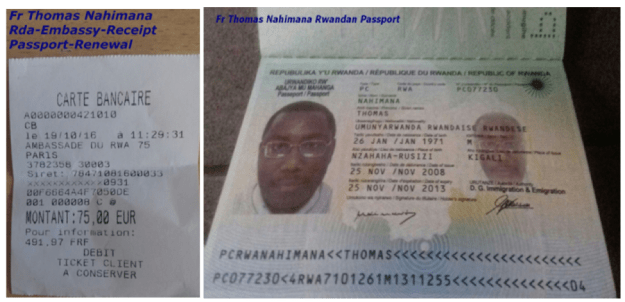
1.Mu kwitegura uru rugendo rwerekeza i Kigali rwo ku itariki ya 23/11/2016, Leta y’u Rwanda yanze guha padiri Thomas Pasiporo nshya y’ u Rwanda yari yarasabye, dore ko iyo yari asanganywe yari yararangiye mu mwaka wa 2013.

  1. Iyo pasiporo nshya Padiri Thomas Nahimana yayisabye muri Ambasade y’u Rwanda i Paris taliki ya 19/10/2016. Aho kumubwira igihe bazayimuhera, Ambasade yamubwiye ko iyo pasiporo nshya azayisanga mu Rwanda!Picture1

3.Ni muri urwo rwego Padiri Thomas Nahimana yafashe icyemezo cyo gusaba visa yo kugenderaho nk’umwenegihugu w’umufaransa. Aha twakwibutsa ko amategeko y u Rwanda atabuza umunyarwanda kuba yagira n’ubundi bwenegihugu(double nationalite), mbese nk’uko Paul Kagame afite n’ubwenegihugu bwa Uganda !Picture2

  1. Leta y’u Rwanda yatinze guha Padiri Thomas NAHIMANA igisubizo kuri iyi visa yasabye u Rwanda. Yewe n’uyu munsi akaba ari ntayo baramuha,kandi bakaba bataranamuhakanira ngo bamubwire ko bayimwimye! Nyamara nk’uko bigaragara ku cyemezo ambassade yamuhaye yagombaga guhabwa iyi visa tariki ya 28/10/2016. Ibi bikaba bigaragaza ubushake bwa Paul Kagame bwo gukomeza kurerega Padiri Thomas NAHIMANA ngo azabure uko agera mu Rwanda mbere y’amatora.                                    Picture3
  2. Ngiyo impamvu yateye Padiri Thomas Nahimana, kwerekeza muri Ambasade ya Kenya iri i Paris, agasaba visa ya East Africa Community yemerera uyifite wese gutembera mu bihugu by’u Rwanda, Uganda na Kenya. Iyo visa nayo yemewe n’amategeko y’u Rwanda niyo yagendeyeho mu ngendo zombi.Picture4

6.Ubwambere Padiri Thomas NAHIMANA n’Ikipe imuherekeje bafashe indege taliki ya 23/11/2016 ariko Leta y’u Rwanda ibatangirira i Nayirobi ishingiye ku masezerano ibihugu bigirana n’amasosiyeti y’indege ibabuza kwinjira mu ndege yagombaga kubageza i Kigali ku isaha ya saa munani n’iminota 55.

  1. Icyo cyemezo cyo kubuza abenegihugu Padiri Thomas Nahimana, Madame Nadine Claire Kasinge, Mahirwe Kejo Skyler na Venant Nkurunziza cyafashwe nk’amahano (scandale) kirasakuza cyane mu bitangazamakuru mpuzamahanga ndetse n’imwe mu miryango mpuzamahanga irakigaya cyane. Byateye Perezida Paul Kagame kugira ikimwaro n’ipfunwe bityo mu buryo bwo kwikura mu isoni atangaza mu ruhame ko atumva neza « ukuntu umwenegihugu nka padiri Thomas Nahimana yabuzwa kwinjira mu gihugu cye ». Benshi baketse ko ari uburyo bwo gufungura amarembo, ko noneho Padiri Thomas n’Ikipe ye baramutse bongeye gufata urugendo bakwakirwa mu Rwanda nta nkomyi.

8.Taliki ya 23 /1/2017 nanone Ishyaka ISHEMA ryongeye kohereza Padiri Thomas Nahimana na Madame Claire Kasinge mu Rwanda kugira ngo bajye kwandikisha ishyaka kugira ngo rizabone uko rigira uruhare mu matora ateganyijwe mu kwezi Kanama 2017.

9.Kubera ko guhera tariki ya 23/11/2016 Leta y’u Rwanda yakomeje kwanga guha padiri Thomas Nahimana Pasiporo nshya y’ u Rwanda, Padiri  yakomeje kwibutsa Ambasade y’u Rwanda i Paris ko yamuha igisubizo kuri visa y’u Rwanda yari yarasabye taliki ya 19/10/2016 kugirango azafate urugendo akoresheje pasiporo ye y’umufaransa kuko yizeraga ko nakandagiza ibirenge mu gihugu azasubirana uburenganzira bwe bwose nk’umwenegihugu w’umunyarwanda. Ambasade igendeye ku mategeko ya Kigali yakomeje kumurerega.

10.Ku wa kane taliki ya 19/1/2017 Padiri Thomas Nahimana yahamagaye muri Ambasade abibutsa ko italiki y’urugendo rwa kabiri yegereje, ko akeneye igisubizo kuri visa yasabye. Ambasade yamusabye ko ayoherereza « réservation » y’indege noneho ngo bakamuha igisubizo muri uwo mugoroba. Nyamara siko byagenze. Ku wa gatanu taliki ya 20/1/2017 ari nawo munsi wa nyuma w’akazi mbere y’italiki y’urugendo, Padiri Thomas Nahimana yongeye kubaza ambasade, imubwira ko Kigali itaratanga uruhushya rwo kumuha visa yasabye.

11.Aha reka twibutse ko Louise MUSHIKIWABO nka Minisitiri w’ububanyi n’amahanga ari we ushinzwe guha amabwiriza za ambasade, bityo izi ntambwe zose zatewe akaba azizi neza. Byongeye kandi, ku mabaruwa yose Ubuyobozi bw’ishyaka ISHEMA bwandikiye abahagarariye ibihugu byabo mu Rwanda kuri iki kibazo, Louise MUSHIKIWABO yahabwaga Kopi.

12.Claire Nadine Kasinge nawe yasabiye visa y’u Rwanda muri Canada aho atuye akoresheje pasiporo ye y’abataliyani ariko banze ku musubiza kandi ubundi abasabiye visa online (Canada) bagomba gusubizwa mu masaha atarenze 72.

13.Hari abandi Bataripfana basabye ibyangombwa byo gutaha mu Rwanda ambasade z’aho batuye zirabibima. By’umwihariko twabamenyesha ko Bwana Vénant Nkurunziza we yari yagombye kubanza gusubiza ibyangombwa bye by’impunzi kugira ngo atahe mu Rwanda.

14.Niyo mpamvu Padiri Thomas Nahimana na Nadine Claire Kasinge nta yandi mahitamo bari bagifite uretse gukomeza urugendo rwabo bagendeye kuri East African tourist visa bari barahawe na Kenya ikaba ibemerera kwinjira mu Rwanda, Uganda na Kenya.

15.Tariki ya 23/01/2017 nanone bahagarikiwe ku kibuga cy’indege i Buruseli mu Bubiligi, ku itegeko ryatanzwe na « Direction Générale de l’immigration » y’u Rwanda mu rwandiko rwanditse mu rurimi rw’icyongereza, rukerekana pasiporo y’infaransa Padiri Thomas NAHIMANA yitwaje na nimero yayo, bakavugamo Pasiporo ya Padiri y’inyarwanda na nimero yayo ; bakavuga ko afite « East african tourist visa », … bagatanga itegeko ko « ibyangombwa byose yaba yitwaje , atagomba kwemererwa kurira indege igana i Kigali ». Hari kandi n’urwandiko nk’urwo rukumira Madame Nadine Claire KASINGE.

Banyarwanda, Banyarwandakazi namwe nshuti z’u Rwanda,

Twibutse ko :

  1. Mu mwaka wa 1990 FPR yo yafashe intwaro igatangiza urugamba rwamennye amaraso y’abanyarwanda batagira ingano ivuga ko irwanya ubutegetsi bwahejeje Abanyarwanda bo mu bwoko bw’abatutsi mu buhungiro.
  2. Agasuzuguro nk’aka FPR-Inkotanyi igaragaza mu kubuza Abanyarwanda gusubira mu gihugu cyababyaye no kubabuza kwiyamamaza mu matora ya perezida wa repubulika gashingiye kuri ya ngengabitekerezo ya kera ngo «hari abavukiye gutegeka abasigaye bakavukira kuba abagaragu n’abagererwa mu gihugu cyabo ».
  3. Gucira abenegihugu ishyanga ni imwe mu mpamvu 20 z’ingenzi zatumye hajyaho Guverinoma y’u Rwanda ikorera mu buhungiro kubera ko Leta ya FPR-Inkotanyi yataye agaciro mu gihe itacyubahiriza uburenganzira bw’umwenegihugu, ikica nkana itegekonshinga ubundi rifatwa nka « contrat » hagati y’abayobozi n’abayoborwa.

Bityo rero, ubwo Kagame Paul atagira abajyanama bazima ahubwo akiringira  abamotsi nka MUSHIKIWABO na bamwe mu basirikare badashyira mu gaciro bakomeza kumufasha mu mugambi mubisha wo kwihambira ku butegetsi ubuziraherezo no kwimakaza akarengane, nibyumvikane neza ko ubutegetsi bwe bwarangije guhinduka « Un régime d’occupation militaire » bityo bukaba bugomba  kurwanywa kugeza buvuyeho. Louise MUSHIKIWABO nareke gukomeza guteza ubwega no kwiyerurutsa, amahano bakorera rubanda isi yose yarangije kuyamenya.

Bikorewe i Paris mu Bufaransa

Tariki ya 12/07/2017

Chaste GAHUNDE

Ministre de l’Information,

GUVERINOMA y’u Rwanda ikorera mu Buhungiro

World is plundering Africa’s wealth of ‘billions of dollars a year’

More wealth leaves Africa every year than enters it – by more than $40bn (£31bn) – according to research that challenges “misleading” perceptions of foreign aid.

By 

Analysis by a coalition of UK and African equality and development campaigners including Global Justice Now, published on Wednesday (May 24th, 2017 ndlr ), claims the rest of the world is profiting more than most African citizens from the continent’s wealth.

It said African countries received $162bn in 2015, mainly in loans, aid and personal remittances. But in the same year, $203bn was taken from the continent, either directly through multinationals repatriating profits and illegally moving money into tax havens, or by costs imposed by the rest of the world through climate change adaptation and mitigation.

This led to an annual financial deficit of $41.3bn from the 47 African countries where many people remain trapped in poverty, according to the report, Honest Accounts 2017.

The campaigners said illicit financial flows, defined as the illegal movement of cash between countries, account for $68bn a year, three times as much as the $19bn Africa receives in aid.

Tim Jones, an economist from the Jubilee Debt Campaign, said: “The key message we want to get across is that more money flows out of Africa than goes in, and if we are to address poverty and income inequality we have to help to get it back.”

The key factors contributing to this inequality include unjust debt payments and multinational companies hiding proceeds through tax avoidance and corruption, he said.

African governments received $32bn in loans in 2015, but paid more than half of that – $18bn – in debt interest, with the level of debt rising rapidly.

The prevailing narrative, where rich country governments say their foreign aid is helping Africa, is “a distraction and misleading”, the campaigners said.

Aisha Dodwell, a campaigner for Global Justice Now, said: “There’s such a powerful narrative in western societies that Africa is poor and that it needs our help. This research shows that what African countries really need is for the rest of the world to stop systematically looting them. While the form of colonial plunder may have changed over time, its basic nature remains unchanged.”

The report points out that Africa has considerable riches. South Africa’s potential mineral wealth is estimated to be around $2.5tn, while the mineral reserves of the Democratic Republic of the Congo are thought to be worth $24tn.

However, the continent’s natural resources are owned and exploited by foreign, private corporations, the report said.

Bernard Adaba, policy analyst with Isodec (Integrated Social Development Centre) in Ghana said: “Development is a lost cause in Africa while we are haemorrhaging billions every year to extractive industries, western tax havens and illegal logging and fishing. Some serious structural changes need to be made to promote economic policies that enable African countries to best serve the needs of their people, rather than simply being cash cows for western corporations and governments. The bleeding of Africa must stop!”

However, Maya Forstater, a visiting fellow for the Centre for Global Development, a development thinktank, said the report did not provide a meaningful look at the issues.

Forstater said: “There are 1.2 billion people in Africa. This report seems to view these people and their institutions as an inert bucket into which money is poured or stolen away, rather than as part of dynamic and growing economies. The $41bn headline they come up with needs to be put into context that the overall GDP of Africa is some $7.7tn. Economies do not grow by stockpiling inflows and preventing outflows but by enabling people to invest and learn, adapt technologies and access markets.

“Some of the issues that the report raises – such as illegal logging, fishing and the cost of adapting to climate change – are important, but adding together all apparent inflows and outflows is meaningless.”

Forstater also questioned some of the report’s methodology.

The coalition of campaigners, including Jubilee Debt Campaign, Health Poverty Action, and Uganda Debt Network, said those claiming to help Africa “need to rethink their role”, and singled out the British government as bearing special responsibility because of its position as the head of a network of overseas tax havens.

Dr Jason Hickel, an economic anthropologist at the London School of Economics, commenting on the report, agreed that the prevailing view of foreign aid was skewed. Hickel said: “One of the many problems with the aid narrative is it leads the public to believe that rich countries are helping developing countries, but that narrative skews the often extractive relationship that exists between rich and poor countries.”

A key issue, he said, was illicit financial flows, via multinational corporations, to overseas tax havens. “Britain has a direct responsibility to fix the problem if they want to claim to care about international poverty at all,” he said.

The report makes a series of recommendations, including preventing companies with subsidiaries based in tax havens from operations in African countries, transforming aid into a process that genuinely benefits the continent, and reconfiguring aid from a system of voluntary donations to one of repatriation for damage caused.

Source: https://www.theguardian.com/global-development/2017/may/24/world-is-plundering-africa-wealth-billions-of-dollars-a-year

Les “révélations” de la revue XXI sur la France au Rwanda font pschitt Une tribune du colonel Jacques Hogard

Le microcosme médiatique parisien est très agité depuis quelques jours : en effet, la revueXXI, dont les actionnaires sont l’éditeur Laurent Beccaria et Patrick de Saint-Exupéry, annonçait de fracassantes révélations sur la supposée implication française dans le génocide rwandais de 1994. Le tout sous un titre racoleur, « réarmez-les ».

En réalité, l’article de quelques pages, richement orné d’artistiques dessins – auxquels on fait bien entendu dire ce que l’on veut -, ne ressemble en rien, contrairement aux appréciations admiratives de certains journalistes du Figaro, à une « longue enquête » et encore moins à une « enquête fouillée » !

Le Monde ne fait pas vraiment mieux ! Son journaliste écrit : « Intitulé « Réarmez-les », l’article de Patrick de Saint-Exupéry, cofondateur de la revue, s’appuie sur le témoignage d’un haut fonctionnaire qui a pu consulter les archives sur le conflit rwandais. Lorsquel’Elysée annonça en 2015 l’ouverture de ces archives, deux hauts fonctionnaires furent en effet chargés de vérifier leur contenu. L’ancien officier de l’armée de terre Guillaume Ancel est l’un d’eux. Il décrit dans l’article le document officiel donnant l’ordre de réarmer ceux qui viennent de commettre le génocide, pendant l’opération militaire « Turquoise », officiellement organisée par la France pour« mettre fin aux massacres ».

Une drôle de source

Lorsqu’on sait qui est Guillaume Ancel, auquel j’ai consacré quelques pages dans la très récente réédition de mon témoignage sur le Rwanda1, il y a presque de quoi mourir de rire ! Guillaume Ancel, jeune capitaine d’artillerie à l’époque de l’opération Turquoise en 1994, a servi sous mes ordres du 29 juin au 6 août 1994, date de son retour anticipé en France. Il a pris définitivement sa retraite au tout début de 2014, après avoir demandé, sans succès, sa réintégration dans l’armée de terre au terme d’une période de disponibilité de près de 10 ans dans le civil, à la SNCF. C’est alors que, récupéré par les réseaux qui attaquent sans relâche la France et l’armée française pour son rôle au Rwanda depuis l’été 1994, il se découvre une nouvelle carrière de communicant, après 20 ans d’un silence scrupuleusement respecté et qu’il se lance à son tour dans le sillage de son nouveau maître à penser, Patrick de Saint-Exupéry.

Il est par conséquent amusant et particulièrement intéressant de noter ce lapsus du Monde, très vite corrigé par la rédaction dès lors qu’elle se sera aperçue de sa bévue : il est tout de même drôle de penser qu’un média aussi professionnel puisse ainsi citer le nom de Guillaume Ancel et reconvertir ainsi un officier subalterne à l’époque des faits, aujourd’hui dans le privé, en un très hypothétique « haut fonctionnaire » chargé par l’Elysée, rien de moins, de vérifier les archives de l’Etat, et plus étonnant encore, de laisser entendre qu’il puisse ainsi être l’homme qui « décrit » ce fameux « document officiel donnant l’ordre de réarmer ceux qui viennent de commettre le génocide » sans toutefois pouvoir le produire !

Car, ce qu’il faut noter dans cet « insignifiant article de M. Patrick de Saint-Exupéry », ainsi que le qualifie avec pertinence le professeur Bernard Lugan, c’est qu’il ne donne évidemment aucun nom, et en tout cas pas celui du fameux « haut-fonctionnaire » qui se serait confié à Patrick de Saint-Exupéry ! Aucun fac-similé de cet « ordre », (dont aucun des officiers supérieurs de l’opération Turquoise n’a jamais vu la couleur !), aucun fait, aucune date, aucun élément précis à l’appui de ses dires.

Et pour cause : c’est là la manière habituelle de procéder de M. de Saint Exupéry, comme il nous l’a montré en 2004 lors de la parution de son pamphlet  « l’inavouable », réédité en 2009 sous le titre de « complices de l’inavouable ». Ce qui lui vaudra d’ailleurs quelques ennuis avec la justice.

Ladite “responsabilité” de la France sert les intérêts de Kagame

Comme l’explique le professeur Lugan, Patrick de Saint-Exupéry accuse toujours, mais « sans la moindre preuve, sans la publication du moindre document nouveau, et uniquement sur la base de sous-entendus orientés ».

C’est donc un coup médiatique, et rien d’autre qu’un coup médiatique que cet article creux et insipide que M. de Saint Exupéry vient de produire dans sa revue XXI.

Il faut dire que la période s’y prête bien. En France, le président Macron et son Assemblée introuvable viennent d’être élus. Il faut donc bien qu’à Kigali le général-président Paul Kagame teste ce nouveau pouvoir dont la politique étrangère, et notamment africaine n’est pas encore connue. Pour ce faire, le sanglant dictateur a impérativement besoin de ses amis et relais d’influence en France.

Et puis à Kigali précisément, c’est ce même général-président, au pouvoir depuis 1994, mais officiellement élu depuis 2003 et candidat en août à un nouveau mandat de 7 ans, qui a besoin de desserrer l’étau qui se referme inexorablement sur lui. La relance récente par la justice française de la procédure relative aux circonstances de l’assassinat de son prédécesseur le 6 avril 1994 et de son rôle plus que présumé dans cet évènement déclencheur du génocide, est un souci constant pour lui et la vraie raison de son ire contre la France. Cette offensive médiatique organisée dans l’Hexagone autour de la revue XXI arrive à point nommé pour tenter d’étouffer une nouvelle fois l’enquête sur l’attentat contre le Falcon 50 du président Habyarimana qui déclencha le génocide.

Il est surprenant que cette campagne médiatique sans fondement ni éléments nouveaux, soit quasiment alignée sur celle qui se déroule à Kigali, au terme de cette période de l’« Icyunamo », deuil national de 3 mois chaque année, pendant laquelle est inlassablement rappelée la prétendue « responsabilité de la France dans le génocide rwandais ». « Responsabilité » essentielle car elle constitue la seule et dernière légitimité possible pour le régime totalitaire du général-président Kagame.

On comprend mieux les possibles motivations de Patrick de Saint-Exupéry et de ses fidèles : « il faut sauver le soldat Kagame » ! Il faut sauver coûte que coûte le régime totalitaire moribond de Kigali !

Source: https://www.causeur.fr/rwanda-france-revue-xxi-turquoise-45275.html

RWANDA : M. DE SAINT-EXUPÉRY ACCUSE T-IL LA FRANCE AFIN DE PROTÉGER LE GÉNÉRAL KAGAMÉ ?

Communiqué de Bernard Lugan [1]

Fidèle caisse de résonance du régime de Kigali, la presse française donne actuellement une énorme publicité à un insignifiant article de M. Patrick de Saint-Exupéry dans lequel, sans la moindre preuve, sans la publication du moindre document nouveau, et uniquement sur la base de sous-entendus orientés, il accuse la France d’avoir voulu « réarmer » les génocidaires rwandais durant l’été 1994. Plus encore, voilà maintenant la BNP qui est désormais soupçonnée d’être partie prenante dans cette rocambolesque affaire.

L’explication d’une telle campagne orchestrée depuis le Rwanda est pourtant limpide : l’étau se refermant peu à peu sur le régime Kagamé, dans le cadre de l’enquête sur l’attentat contre l’avion du président Habyarimana, ses amis français sont actuellement à la manœuvre afin d’intimider Emmanuel Macron, comme ils avaient si bien réussi à le faire avec Nicolas Sarkozy et François Hollande.

À une différence près : depuis quelques mois, les éléments qui s’accumulent sur le bureau des magistrats français et qui mettent directement en cause le régime de Kigali dans le déroulé des événements de l’année 1994 sont tels qu’il est désormais impossible d’étouffer l’affaire…

Deux points sont établis :

  1. L’attentat du 6 avril 1994 qui provoqua la mort du président hutu Habyarimana fut le déclencheur du génocide.
  2. La thèse du régime de Kigali, à savoir celle du génocide « programmé » et « planifié » par les « extrémistes » hutu, a volé en éclats devant le TPIR (Tribunal pénal international pour le Rwanda). Ce tribunal, créé par le Conseil de sécurité de l’ONU et siégeant à Arusha de 1995 à 2016, a en effet, dans ses jugements concernant les « principaux responsables du génocide » – dont celui du colonel Bagosora présenté comme l’architecte du génocide –, que ce soit en première instance ou en appel, clairement établi qu’il n’y avait pas eu « entente » pour le commettre [2]. Si ce génocide n’était pas programmé, c’est donc qu’il fut spontané, et ce qui le provoqua fut l’assassinat du président Habyarimana.

Voilà pourquoi la question de savoir qui a ourdi cet attentat est primordiale. Or, il n’y a jamais eu d’enquête internationale menée sur ce crime qui coûta la vie à deux présidents en exercice élus, celui du Rwanda et celui du Burundi, qui avaient pris place dans le même avion.

Par les énormes pressions qu’ils exercèrent sur le Conseil de sécurité de l’ONU, les États-Unis et la Grande-Bretagne, alliés indéfectibles du régime de Kigali, réussirent en effet à interdire au TPIR de mener cette enquête.

Au mois de janvier 1997, Madame Louise Arbour, Procureur du TPIR de septembre 1996 à septembre 1999, ordonna ainsi à Michael Hourigan de cesser ses investigations. Ce fonctionnaire de l’ONU avait pourtant été personnellement chargé par elle, d’identifier les commanditaires et les auteurs de l’attentat du 6 avril 1994. Madame Arbour voulait alors étayer l’acte d’accusation rachitique qu’elle était occupée à dresser contre les anciens dirigeants du régime Habyarimana, en montrant que cet attentat avait été commis par des « extrémistes hutu », et qu’en le commettant, ces derniers avaient donné le signal du génocide qu’ils avaient programmé.

Or, sur place, à Kigali, menant son enquête, Michael Hourigan découvrit tout au contraire que les auteurs de l’attentat n’étaient pas des « Hutu extrémistes », mais des Tutsi du FPR… et il obtint même les noms de ceux qui, selon lui, auraient abattu l’avion du président Habyarimana. Il rédigea un rapport qu’il remit personnellement à Madame Arbour qui le somma alors de mettre un terme à ses recherches, exigeant la confidentialité absolue sur ses découvertes. Le contrat de Michael Hourigan avec l’ONU ne fut pas renouvelé.

Saisie par les familles de l’équipage français de l’avion présidentiel abattu, la justice française s’est ensuite risquée sur cette affaire qui fut confiée au juge Bruguière. Bien que le TPIR ait refusé de le lui communiquer, et cela au prétexte qu’il n’existait pas (!), le juge Bruguière obtint malgré tout une copie du « Rapport Hourigan ». Puis, devant le juge, Michael Hourigan authentifia son texte dont il confirma la teneur. Poussant plus loin ses investigations, le juge Bruguière interrogea le capitaine sénégalais Amadou Deme, adjoint de Michael Hourigan et ancien numéro 2 du renseignement de l’ONU au Rwanda. Cet officier lui confirma à la fois les résultats de l’enquête à laquelle il avait personnellement participé, et l’insolite changement d’attitude de madame Arbour à partir du moment où le FPR fut suspecté d’avoir assassiné le président Habyarimana.

Le 16 novembre 2006, au terme de son enquête, le juge Bruguière accusa à son tour le général Kagamé et il lança neuf mandats d’arrêt contre des membres importants de son premier cercle. Après le départ à la retraite de ce magistrat, l’enquête fut reprise par le juge Trévidic, puis par les juges Herbaut et Poux.

Au mois de juillet 2013 puis en janvier 2014, le juge Trévidic interrogea Jean-Marie Micombero, ancien secrétaire général au ministère rwandais de la Défense et qui, le 6 avril 1994, était affecté à une section chargée du renseignement dépendant directement de Paul Kagamé. Le témoin lui confirma les noms des deux membres de l’armée de Paul Kagamé qui, le 6 avril 1994, auraient tiré les deux missiles qui abattirent l’avion présidentiel. Il livra également au juge nombre de détails sur les préparatifs et sur le déroulement de l’attentat [3]. Ces déclarations recoupaient en les confirmant celles recueillies en leur temps par le juge Bruguière auprès d’autres témoins.

La contre-attaque du général Kagamé se fit à travers ses puissants réseaux d’influence français et par le biais d’une presse qui ne cessa jamais de lui servir de porte-voix, notamment Libération, Le Monde et Le Figaro.
Appuyé sur les uns et sur les autres, il tenta de répétitives manœuvres dilatoires destinées à discréditer le travail du juge Bruguière. Mais, au moment où, de guerre lasse, le juge Trévidic s’apprêtait à clôturer son instruction, trois témoins de la plus haute importance se manifestèrent.

Il s’agissait du général Faustin Kayumba Nyamwaza, ancien chef d’état-major de l’APR (Armée patriotique rwandaise, l’armée tutsi), à l’époque responsable du renseignement militaire, du colonel Patrick Karegeya, ancien chef des renseignements du Rwanda, tous deux réfugiés en Afrique du Sud d’où ils accusaient de la façon la plus claire le président Kagamé d’être le responsable de l’attentat du 6 avril 1994 qui coûta la vie au président hutu Habyarimana, et d’Émile Gafarita qui prétendait être l’un des trois membres du FPR qui transportèrent depuis l’Ouganda jusqu’à Kigali les missiles qui abattirent l’avion du président Habyarimana.

Au mois de juin 2010, le général Kayumba survécut par miracle à une tentative d’assassinat dont les auteurs, des Rwandais, furent arrêtés et jugés en Afrique du Sud. Le colonel Patrick Karegeya fut étranglé le 31 décembre 2013 dans sa chambre d’hôtel de Johannesburg.

Émile Gafarita fut quant à lui enlevé à Nairobi le 13 novembre 2014 à la veille de son départ pour la France où il devait être interrogé par le juge Trévidic. Dans la procédure de réouverture d’instruction qui était alors en cours, la teneur de ce que le témoin-acteur allait dire aux juges était accessible à la Défense. Cette dernière informa ses clients de l’existence d’Émile Gafirita et de son prochain témoignage. Avocat de l’État rwandais (Afrikarabia, 19 octobre 2016) et de 6 des 7 mis en examen, Me Léon-Lef Forster, dans un entretien avec la journaliste canadienne Judi Rever [4] l’a reconnu : « J’ai informé les mis en examen, un avocat a l’obligation d’indiquer à ses clients où en est la procédure…il est parfaitement légitime que les clients soient informés des raisons pour lesquelles le dossier est ré-ouvert. »

À partir de ce moment, Émile Gafirita fut en danger de mort [5]. Dans ces conditions, il est pour le moins « insolite » que les juges français qui allaient l’interroger n’aient pas pris la précaution de le mettre sous protection. D’autant plus qu’Émile Gafirita se savait menacé et que, dans l’attente de sa convocation qui arriva le jour de sa disparition, il avait écrit par mail à son avocat, Me Cantier, qu’il souhaitait être entendu : « Le plus vite serait le mieux avant qu’ils ne me fassent taire à jamais. »

Émile Gafirita avait demandé à être entendu sous X avec le statut de « témoin protégé », ce qui ne lui fut pas accordé par le juge Trévidic. Et pourtant, comme l’a révélé plus tard Emmanuel Fansten dans Libération du 4 mars 2015, à la même époque, le juge Trévidic qui enquêtait sur l’attentat de la rue Copernic entendit sous X un ancien membre du groupe Abou Nidal.

Pourquoi une telle différence de traitement ? Le juge Trévidic justifia son refus d’entendre anonymement Émile Gafarita « par le nombre conséquent de manipulations constatées dans l’instruction » (Jeune Afrique, 9 décembre 2014). Cette explication laisse pour le moins perplexe car le juge d’instruction a précisément parmi ses missions celle de faire le tri entre les éléments qu’il recueille. Dans tous les cas, ceux qui enlevèrent Émile Gafirita ne partageaient pas ses doutes…

La justice française a donc été incapable de protéger ce témoin essentiel puisque ses ravisseurs ont été prévenus qu’il était depuis quelques semaines à Nairobi, où il vivait clandestinement sous un nom d’emprunt dans l’attente de son départ pour la France.

Dans son livre La France dans la terreur rwandaise (Editions Duboiris, 2014, page 302), le journaliste Onana rapporte de graves propos tenus par le colonel Karegeya peu avant son assassinat : « (…) tout ce que fait votre juge (Trévidic) se trouve dans les médias, même les noms des témoins qui peuvent ainsi être retournés par Kigali ou assassinés ».

Allons plus loin : certaines sources sud-africaines laisseraient entendre que des fonctionnaires de l’ambassade de France à Pretoria auraient oralement tenté de dissuader, fin novembre 2016, les autorités judiciaires sud-africaines d’accorder aux magistrats français les possibilités d’entraide judiciaire leur permettant d’interroger le général Nyamwasa.

Le 30 novembre 2016, interloquées par cette demande orale insolite, les autorités sud-africaines auraient alors demandé que cette requête soit formulée par écrit… ce qui aurait mis un terme à cette tentative d’entrave à la justice… et, les quatre « visas » des autorités judiciaires sud-africaines nécessaires à l’exécution de l’entraide judiciaire internationale furent accordés aux juges français mi-février 2017. Avant d’être bloqués à la fin du mois à la suite de la visite exceptionnelle faite en Afrique du Sud par le général Joseph Nzabamwita, Responsable des services nationaux de renseignement et de sécurité (NISS), envoyé du général Kagamé.

Dans une enquête très documentée parue dans le « UN », n°140 du 1° février 2017 sous le titre « Récit d’une manipulation », Pierre Péan explique comment, à partir de l’arrivée au pouvoir de Nicolas Sarkozy et jusqu’au départ du juge Trévidic, un groupe comprenant diplomates, magistrats, politiques et hommes de l’ombre, groupe relayé par les réseaux pro-Kagamé français se serait ingénié à saboter l’enquête du juge Bruguière. Cet article n’a été relayé par aucun média français bien qu’il détaille de nombreux et très graves faits d’entrave à la justice.

Quoi qu’il en soit, loin des tumultes et des manipulations médiatiques, un dossier existe et, pour le régime de Kigali, ses avancées pourraient être dévastatrices. Voilà pourquoi ses amis ont reçu l’ordre d’allumer des contre-feux et voilà pourquoi la presse française est actuellement et une nouvelle fois à la manœuvre.

Que contient en effet le dossier des juges Herbaut et Poux ? Les éléments qui figurent dans le dossier d’instruction pèsent plus lourd que les sous-entendus de M. de Saint-Exupéry :

  1. Le dossier donne, entre autres, le lieu du tir des missiles, les noms des deux tireurs et des membres de leur escorte, la marque et la couleur des véhicules utilisés pour transporter les missiles depuis l’Ouganda jusqu’au casernement de l’APR situé au centre de Kigali et de là, jusqu’au lieu de tir à travers les lignes de l’armée rwandaise, ainsi que le déroulé de l’action.
  2. Le dossier contient la preuve que l’avion présidentiel rwandais a été engagé par deux missiles dont la traçabilité a été établie. Grâce à la coopération judiciaire de la Russie, la justice française sait en effet que ces deux missiles dont les numéros de série étaient respectivement 04-87-04814 et 04-87-04835 faisaient partie d’un lot de 40 missiles SA-16 IGLA livrés à l’armée ougandaise quelques années auparavant. Or, Paul Kagamé et ses principaux adjoints furent officiers supérieurs dans l’armée ougandaise avant la guerre civile rwandaise et, de 1990 à 1994, l’Ouganda fut la base arrière, mais aussi l’arsenal du FPR. De plus, devant le TPIR, il fut amplement démontré que l’armée rwandaise ne disposait pas de tels missiles et que l’arme du crime était bien entre les mains du FPR.

D’autant plus qu’au mois d’août 2016, la MONUSCO a saisi en RDC un missile de type SA-16 de la même série que ceux qui furent tirés contre l’avion du président Habyarimana le 6 avril 1994. Or, ce missile avait appartenu à une milice soutenue par le Rwanda. Un rapport officiel de la MONUSCO a été transmis au siège de l’ONU à New-York qui visiblement tarde à le transmettre au juge français malgré les recommandations du rédacteur du rapport en question (Référence : Strictly Confidential, Goma, 20 septembre 2016).

En dépit de toutes les pressions qu’ils subissent et qui vont aller croissant, il faudra bien que, tôt ou tard, les juges fassent la balance entre les éléments que contient le dossier de l’assassinat du président Habyarimana. Or, comme les magistrats instructeurs auraient entre les mains suffisamment d’éléments pour étayer la thèse de la responsabilité du général Kagamé dans l’attentat du 6 avril 1994 qui coûta vie au président Habyarimana, attentat qui fut l’élément déclencheur du génocide, tout va in fine dépendre du Parquet chargé de porter l’accusation à l’audience.

Nous voilà donc revenus à la politique, donc aux réseaux d’influence que Kigali entretient en France et dont la mission est de tenter d’influencer la Justice pour que soit étouffé le dossier car, comme l’a dit Madame Carla Del Ponte qui succéda à Louise Arbour au poste de Procureur du TPIR : « S’il était avéré que c’est le FPR qui a abattu l’avion du président Habyarimana, c’est toute l’histoire du génocide du Rwanda qu’il faudrait re-écrire. » Et de cela, les alliés, les soutiens et les obligés du général Kagamé ne veulent évidemment pas entendre parler.

Notes

[1] Expert assermenté devant le TPIR (Tribunal pénal international pour le Rwanda) dans les affaires Emmanuel Ndindabahizi (TPIR-2001-71-T), Théoneste Bagosora ( TPIR-98-41-T), Tharcisse Renzaho (TPIR-97-31-I), Protais Zigiranyirazo. (TPIR-2001-73-T), Innocent Sagahutu (TPIR-2000-56-T), Augustin Bizimungu (TPIR- 2000-56-T) et commissionné dans les affaires Edouard Karemera (TPIR-98-44 I) et J.C Bicamumpaka (TPIR-99-50-T).

[2] À l’exception du jugement de Jean Kambanda, ancien Premier ministre condamné en 1998, après qu’il eut plaidé coupable contre la promesse d’une peine réduite, procédure qui de facto lui avait fait accepter l’acte d’accusation du procureur. Depuis, il est revenu sur cette reconnaissance.
[3] Voir à ce sujet l’interview recueillie par Pierre Péan intitulée « J’ai assisté à la préparation de l’attentat qui a déclenché le génocide » (Marianne numéro du 28 mars au 3 avril 2014).
[4] Judi Rever « Witness in French inquiry into 1994 Rwanda plane crash disappears », 20 novembre 2014, en ligne.
[5] Le 18 novembre 2014, le professeur belge Filip Reyntjens, juriste spécialiste du Rwanda et expert devant le TPIR, écrivit à M° Bernard Maingain, avocat belge des mêmes officiels rwandais mis en examen par le juge Bruguière : « Si vous avez communiqué le nom de M. Gafirita, qu’on ne verra probablement plus, à vos clients rwandais, vous devriez avoir honte et votre conscience devrait être lourde » (cité par Jeune Afrique, 9 décembre 2014).

1/7/1962 : TWIZIHIZE ISABUKURU Y’UBWIGENGE TUZIBUKIRA POLITIKI YA « SHINJAGIRA USHIRA » YAZANYWE NA POLO KAGAME.

Ijambo rya Perezida wa Guverinoma y’u Rwanda ikorera mu buhungiro

Banyarwandakazi,
Banyarwanda,
Baturanyi namwe ncuti z’Abanyarwanda,

Imyaka 55 irashize u Rwanda rwinjiye mu ruhando rw’amahanga nk’igihugu cyigenga.

  1. Hari taliki ya mbere Nyakanga 1962 ubwo ibendera rya Repubulika y’u Rwanda ryatumbagizwaga mu bicu bwa mbere ari nako ibendera ry’ubwami bw’Ababiligi ryururutswa bwa nyuma ku butaka bw’u Rwanda. Uwo munsi kandi haririmbwe indirimbo nshya, indirimbo yubahiriza igihugu igira iti :

    « Impundu nizivuge mu Rwanda hose
    Repubulika yakuye ubuhake
    ubukolonize bwagiye nk’ifuni iheze
    Shinga umuzi demokarasi waduhaye kwitorera abategetsi
    Banyarwanda : abakuru namwe bato mwizihiye u Rwanda
    Turubumbatire mu mahoro mu kuri, mu bwigenge no mu bwumvikane »

  2. Ibyabaye byose kuri uwo munsi bifite igisobanuro gihanitse kandi gifite ingaruka zikomeye zari zigiye kugaragara mu mikorere y’igihugu no mu buzima bw’abenegihugu.
  3. Kuva uwo munsi igihugu cyari cyihaye inshingano yo gukora ibishoboka byose kugirango buri mwenegihugu yishyire yizane, abeho mu mahoro kandi afashwe kugera ku munezero yifuza, we n’abe.
  4. Taliki ya mbere Nyakanga yasinye iherezo rya politiki ya gihake, isezerera na mpatsibihugu yahatiraga umunyarwanda kwiyibagirwa ari nako aruhira guteza imbere inyungu z’abanyamahanga.
  5. Taliki ya mbere Nyakanga yari ije guca burundi ipfunwe ryo kwitwa umuja mu gihugu cyawe.
  6. Taliki ya mbere Nyakanga ni ishingiro ry’Ishema buri munyarwanda wese agomba kwiyumvamo, ryahungabana agafata umuheto akarirwanirira byaba ngombwa akaripfira . Nka Habarurema JD abaturage baricwa urubozo buri munsiBanyarwandakazi, Banyarwanda,
    Baturanyi namwe ncuti z’Abanyarwanda,
  7. Mu gihe twizihiza ku ncuro ya 55 isabukuru y’ubwigenge bw’u Rwanda, biteye umujinya n’agahinda kubona abitwa abategetsi b’u Rwanda muri iki gihe nta gaciro bagiha iyo taliki nziza. Icyo ni ikimenyetso cya mbere simusiga kigaragaza ko u Rwanda rwasubijwe mu icuraburindi ritambukije ubukana iryo mu gihe cy’ingoma ya gihake na gikolonize.
  8. Ku ngoma ya FPR-Inkotanyi, ikiboko cyaragarutse, abenegihugu barakubitwa buri munsi ndetse bakandagiwe ku gakanu
  9. Ku ngoma ya Paul Kagame, abenegihugu nta gaciro bakigira, bararaswa ku manywa y’ihangu nk’ibisimba bitagira kirengera ; uwiciwe ntiyemerewe kunama no kuyagirwa.
  10. Ku ngoma ya Paul Kagame nta munyarwanda ukigira umutungo we bwite ntavogerwa, « umuco wo kunyaga » waragarutse, abambuzi ba FPR bagutwara ibyawe izuba riva, kandi uwarenganyijwe ntagire aho aregera.
  11. Kugoma ya Paul Kagame amazu y’abaturage arasenywa ; bakamburwa amasambu yabo ; bagacibwa imisoro, amakoro n’amahoro by’urudaca ; bakarandurirwa imyaka ; bagatindahazwa nkana, bakicishwa inzara…
  12. Muri iki gihe urubyiruko nta mirimo rubona, rurakennye, rurashonje, kandi ntirugira kirengera.Banyarwakazi, Banyarwanda
    Baturanyi namwe ncuti z’Abanyarwanda
  13. Hejuru y’ayo mahano akorerwa Abanyarwanda, Paul Kagame n’Agatsiko ke ntibaterwa isoni no kongera umurego mu gucengeza poliki yabo ruvumwa ya « Shinjagira ushira ».
  14. Paul Kagame arasaba abanyarwanda bahinduwe abatindi nyakujya ngo nibarenzeho birarire, bereke amahanga ko ariwe wabakuye mu bukene bidasubirwaho.
  15. Paul Kagame arahatira urubyiruko rwihebye kubera ubushomeri, ivangura n’ubukene, « kwishongora » ngo u Rwanda ruyobowe na « Visionary Leader » kandi ahubwo rwaragushije ishyano ryo kwigarurirwa n’umurwayi urembye kurusha « Yuhi Mazimapaka » !
  16. Paul Kagame arirukana abandi bakandida rubanda ishaka kwitoreramo abategetsi hanyuma agahatira abaturage kwikiriza intero y’abanyamurengwe ngo u « Rwanda rwahindutse icyitegererezo mu miyoborere myiza », ngo Kagame ni « Umudemokarate » wavukanye imbuto, akaba ariwe wenyine ushoboye kuyobora, abandi banyarwanda bose bakaba ari ibibwa gusa .
  17. Paul Kagame aracira abenegihugu ishyanga akababuza gusubira mu gihugu cyabo, ariko agategereza ko birirwa bamusingiza bamuvuga ibigwi ngo ataraba umutegetsi u Rwanda ntirwari ruriho !
  18. Paul Kagame aratwicira abantu buri munsi agashaka ko tumushimira ndetse tukamutura n’amayoga !


Banyarwandakazi,
Banyarwanda,
Baturanyi namwe ncuti z’Abanyarwanda,

  1. Ninde utabona neza ko uyu Paul Kagame n’Agatsiko ke na politiki yabo ya « Shinjagira ushira » bitakijyanye n’ibihe tugezemo ? Ninde wahakana ko imikorere mibisha y’uyu munyagitugu imaze kurambira Abanyarwanda ku buryo budasubirwaho ? Ninde wahamya ko Abanyarwanda bazongera kumwihanganira indi myaka irindwi…. Ninde wakwifuza kuguma muri ubu bucakara kuzageza mu mwaka 2034 ?
  2. Niyo mpamvu nsanga abenegihugu tubyumva kimwe twari dukwiye kwihutira guhindura imyumvire n’imikorere bityo tugafata umwanzuro wa kigabo.
  3. Muri iki gihe, U Rwanda rukeneye Abarwanashyaka banganya ubutwari n’abarukuye mu minwe ya gihake na gikolonize.
  4. Muri iki gihe, U Rwanda rukeneye ko haboneka abarwitangira bakarema urugamba rwo kurugarurira ubwigenge.
  5. Muri iki gihe, u Rwanda rukeneye impinduramitegekere yihuse kugira ngo igihugu gisubizwe mu nzira nzima amazi atararenga inkombe.
  6. Hakenewe abenegihugu bahaguruka bakanga agasuzuguro, bagakora Revolisiyo
  7. Hakenewe abenegihugu babangukira guhagarika abakoresha intwaro zica abenegihu kandi zari zaraguriwe kubarinda
  8. Kuko u Rwanda ruri mu kaga, abenegihugu bakaba batsikamiwe n’ubutegetsi budashoboye kandi budashobotse, hakenewe ko wowe nanjye duhaguruka tukitangira u Rwanda, buri wese mu nzira imubangukiye.
  9. Biturutse ku bwitange bwawe nanjye,Impundu zizongera zivuge mu Rwanda hoseAbanyarwanda bazasubiza umutima mugitereko,Basubirane icyizere cyo kubaho,mu bwingenge no mu bwumvikane.
  10. Mbifurije mwese isabukuru nziza y’ubwigenge
  11. Twifurije kandi isabukuru nziza abavukanyi bo mu Burundi nabo bariho bahimbaza iyi taliki . Imana ihe umugisha igihugu cyabo , ibagwirize ubutunzi, amahoro n’umutekano.

Harakavumwa politiki ya « shinjagira ushira »
Harakabaho u Rwanda rwigenga
Harakabaho Abenegihugu bishyira bakizana mu gihugu cyabo.

Uwanyu Padiri Thomas Nahimana,


Perezida wa Guverinoma ya rubanda ikorera mu buhungiro

This is how Gacaca Courts were used to build an authoritarian regime in Rwanda!

inkiko-gacaca

Often lauded by international observers, Rwanda’s gacaca courts have long been held up by their proponents as a model for successful, post-conflict reconciliation efforts. Confronted with the nearly impossible challenge of rebuilding a country after genocide, Rwanda needed a mechanism to hold those who committed genocide accountable in an efficient and effective manner. The solution was gacaca: a system of 12,000 community-based courts that sought to try genocide criminals while promoting forgiveness by victims, ownership of guilt by criminals, and reconciliation in communities as a way to move forward. While the organizers and leaders of the genocide were mostly sent for trial at the International Criminal Tribunal for Rwanda in Arusha, Tanzania, gacaca courts tried more than  1 million ordinary people who served as the foot soldiers of the genocide.

Relying on dozens of interviews, quantitative analysis of data on genocide crime prisoners, and firsthand observations of gacaca court proceedings in four regions of Rwanda, Anuradha Chakravarty’s new book suggests that the reality of gacaca is much more complicated. In “Investing in Authoritarian Rule: Punishment and Patronage in Rwanda’s Gacaca Courts for Genocide Crimes,” Chakravarty offers a detailed and nuanced look at the ways that Rwanda’s ruling party used the courts to build its own legitimacy, as well as the ways that participants in the courts viewed their role in punishing the guilty through the gacaca process.

Her findings are unsettling and suggest that the gacaca process was far more political and much less conciliatory than the casual observer might want to believe. Chakravarty’s central argument is that Rwanda’s ruling party, the Tutsi-dominated Rwandan Patriotic Front (RPF), used gacaca courts as a tool of patronage to build the new, post-genocide government’s legitimacy, which in turn allowed the RPF to entrench its rule into the virtually unchallenged authoritarian system in Rwanda today.

Chakravarty convincingly demonstrates that the RPF’s post-genocide consolidation of power in Rwanda evolved based on the cooperation of individual Hutus, who constitute the vast majority of Rwanda’s population and many of whom had committed genocide crimes. While the early RPF consolidation of power “depended on the use of blatant force through killings and arbitrary arrests,” as time passed a system of mutual benefit developed between the RPF and the majority Hutu population it sought to rule. Writes Chakravarty:

In denouncing others, submitting self-incriminating confessions, and judging their friends and co-ethnics, thousands upon thousands of individual Hutu acted upon and enforced RPF rules, reinforcing the regime with their cooperation in exchange for reduced sentences, security guarantees, the possibility of private gains in the form of personal vengeance or economic windfalls, and opportunities to access public power and social prestige. The RPF unleashed a stream of individualized benefits and sanctions that made “opportunistic investors” of ordinary Hutu who backed RPF rule in their own interests.

Thus it was that through the strengthening of a form of patronage that provided Hutus with protection from problems and access to opportunities, it was Hutus themselves who built and reinforced the RPF’s authoritarian rule, particularly through participation in and performance at the gacaca courts.

This incentive-based relationship, though, was not without risks. Because the RPF was the only option for any Hutu seeking to gain better status or avoid worse punishment for crimes, those Hutus had no choice but to work within the RPF’s system of patronage, but this did not mean that most Hutus accepted “that the RPF were legitimate rulers with the requisite clean hands.”

Importantly, Chakravarty does not argue that the RPF intended this outcome from the gacaca process; rather, the social processes of clientelism and increasing authoritarian control evolved over time in response to the incentives that  gacaca  and other post-conflict rebuilding processes set in place. She grounds her findings in a deep understanding of the role patronage relationships have played in Rwandan history and argues that clientelism has always driven relationships between powerful and ordinary actors in Rwanda. Thus, the decision to go along with the gacaca proceedings was a case in which “vulnerable individuals implicitly understood that they needed to solicit the protection and good will of this unrivaled patron.”

Unfortunately, these incentives led to negative outcomes for many Rwandans, particularly those who were falsely accused of participation in genocide. Chakravarty shows how Rwandans, faced with competing loyalties to different family and clan members alongside the need to demonstrate commitment to the gacaca courts, made decisions about whom to denounce and at what times to do so. Fortunately, she finds that “gacaca courts had secured some local peace,” preventing further violence and limiting the space for disputes to escalate into more dangerous situations. That limited space is a double-edged sword, however, as authoritarian control is essential to maintaining it.

Chakravarty’s findings suggest the need for much more scholarly work on the “tacit bargains” that govern relations between elites and mass publics in the aftermath of atrocity crimes; as she notes, the bargain expressed in and built through the gacaca process is not an inter-elite legislative or ruling party bargain, but rather “an informal elite-mass social contract that consolidated the new order by tying the new elites to their social constituents, and demonstrating to them (‘clients’) the benefits of cooperating with and advancing within the system.” Of particular interest is a question Chakravarty raises in the context of comparison with Nazi Germany’s postwar accountability and justice processes: the ways that individual citizens having a choice of patrons rather than being forced to rely on a sole patron (as in Rwandan) influences outcomes in modern transitional justice processes.

Chakravarty’s work is an indispensable read for anyone interested in transitional justice, post-conflict reconciliation or Africa’s Great Lakes region. Comments from her subjects on topics ranging from how Hutus and Tutsis perceive the RPF’s dominance to whether the gacaca courts actually provided justice offer invaluable insight into how ordinary Rwandans think about their relationship to their government and whether reconciliation has really happened since the genocide ended. Chakravarty does not evaluate whethergacaca was a success, nor does she claim that gacaca was Rwanda’s only potential path to authoritarian rule, but her findings should compel more scholars to explore comparative cases in which vulnerable populations might respond to incentives that lead to the consolidation of authoritarian rule in the wake of mass atrocities.


Laura Seay is an Assistant Professor of Government at Colby College. She studies African politics, conflict, and development, with a focus on central Africa. She has also written for Foreign Policy, The Atlantic, Guernica, and Al Jazeera English

Source: https://www.washingtonpost.com/news/monkey-cage/wp/2017/06/02/59162/?utm_term=.e3db11738e7b

The Rwandan People Government in exile on an official visit in Australia.

GREX Australie

Press release no: 001/5/2017

  1. The Rwandan People Government in Exile official visit in Australia
    Considering the planning and the priorities set by the Rwandan People Government in Exile;
  2. After important consultations with some US Government Officials in March, 2017;
  3. From the date of 19th May, 2017, the delegation of the Rwandan People Government in exile, led by H.E Father Thomas NAHIMANA, the President , is in official visit in Australia;
  4. This visit aims at alerting the international community and nations friends of Rwanda the following:

a) Paul Kagame is leading a military dictatorship and oppressive regime that ultimately gives him the power to kill democracy and human rights in Rwanda. He has also maneuvered 2015 Referendum results as a false excuse for him to cling to power,

b) Since Paul Kagame is not confident of winning the elections by universal suffrage and feeling the political pressure the opposition is exerting on him, he has closed political space and as a proof, he has refused entry to Rwanda to Father Thomas NAHIMANA (Leader of Ishema Party and the New Generation Movement) and his delegation on November 23, 2016, and January 23, 2017, respectively. Father Thomas NAHIMANA had a plan to register ISHEMA political party and participate in the upcoming presidential elections taking place on 3-4th August, 2017. This decision confirms Kagame’s intention to refuse the rights of Rwandan people to repatriate and contribute to the development of their home country.

c) Kigali dictatorial and discriminatory regime is wasting lots of money trying to force african countries harboring Rwandan refugees to forcibly repatriate them when their leaders cannot be given access to Rwandan soil.
d) The government of Rwanda in exile ask the international community and the donor partners of Rwanda to exert pressure on Kagame’s regime for some specific reasons:

1. Opening talks with the Rwandan People Goverovernment in exile.
2. Unconditional release of all political prisoners including madam Victoire INGABIRE and Mr. Deogratias MUSHAYIDI.
3. Postponing the presidential elections.
4. Forming a transition government including opposition parties that will prepare free and fair elections.
5. When Kagame refuses to listen to the voice of rwandan people and intentionally rejects the political inclusion in Rwanda, he should be held responsible for any consequences this can cause.

Conclusion
5. The delegation of the Rwandan People Government in exile led by H.E Father Thomas NAHIMANA has great pleasure to thank various officials of Australian Government including members of parliament, senators, cabinet members, members of Senate’s Joint Standing Committee on Foreign Affairs, Défense and Trade, respectively, for their warm welcome and strong support to the Rwandan People Government in exile in achieving its main goal to bring all citizens « Together to Modernize Rwanda ».
6. The Rwandan People Government in exile will also meet religious leaders, investors, civil society and some Australian peace-keeper soldiers who were in Kibeho in 1995 when RPF army massacred more than 8,000 innocent people in a camp of internally displaced people.
7. The Rwandan People Government in exile is also planning to meet Rwandans, Burundians and Congolese people living in Australia on 27-28th May 2017, in Adelaide. We, the Rwandan People Government in exile, invite all of you to come and share the experience with us; together we can find a way to promote peace and security in the Great Lakes Region.

Done in Canberra, Australia
On May 24, 2017
Madam Marine UWIMANA
Minister of Finance and Commerce