As with Dr. Faustus, who sold his soul to Satan, Kagame’s admirers will be bitterly disappointed.

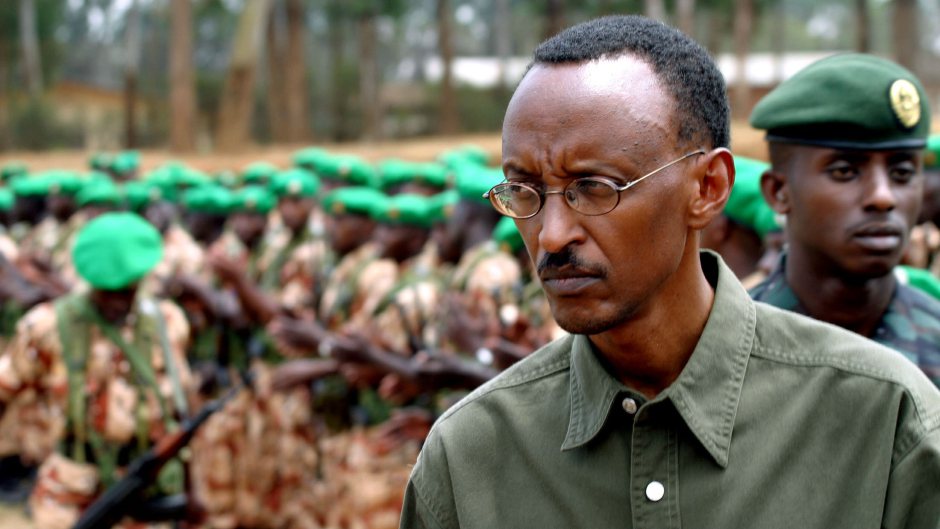
kagame-and-troops

For Western governments, financiers and opinion leaders, Rwandan president Paul Kagame offers a Faustian bargain: Overlook my brutal behavior, and I will offer you a model for economic growth in an African nation.

As with Dr. Faustus, who sold his soul to Satan, Kagame’s admirers will be bitterly disappointed.

While sacrificing human rights on the altar of economic growth, Kagame is delivering neither democracy nor prosperity.

Kagame’s descent into despotism has been documented by respected sources, ranging from Human Rights Watch to the US State Department. In recent years, a growing number of Kagame’s critics have died under mysterious circumstances, even in exile. Opposition political parties and independent newspapers have been suppressed. Many Rwandans have fled the country, while many more have been scared into silence.

All the while, Rwanda receives almost a billion dollars annually in foreign aid from the United States, the United Kingdom and their allies, and Kagame continues to receive invitations to prestigious conferences from Davos to the White House.
While Kagame’s apologists boast that he has achieved an “economic miracle,” Rwanda’s performance remains mired in mediocrity. Having served as Kagame’s head of policy and strategy, I resigned not only because he was tyrannizing the nation, but also because he asked me to tamper with the truth about the economy.
Here are the facts that Kagame can’t falsify: After 14 years of Kagame’s leadership, Rwanda remains one of the smallest economies in East Africa. While Kenya’s annual per capita income is $1,200 and Tanzania’s is $695, Rwanda’s is only $630.
Far from moving forward, Rwanda’s economy remains largely informal, with most of the economically active population of 5.5 million still struggling to survive on subsistence agriculture, just like their parents and grandparents before them. Employment in the formal economy is only a little more than 300,000. Rwanda’s private sector is tiny, with tax-paying firms hovering around 113,200, of which only 354 (or 0.3%) are ”large taxpayers” with an annual turnover of $1.4 million.

Meanwhile, crony capitalism is on the rise. Crystal Ventures Ltd. (CVL), controlled by the investment arm of Kagame’s ruling party, has become, in its own words, “the biggest investment company in the country.” Its holdings include concrete products, construction, real estate development, telecommunications, agriculture, aviation, security services, printing and publishing, furniture trading, manufacturing, property management and engineering.

How does this disappointing economic performance translate into Rwandans’ living standards? On two crucial social indicators—education and health—Rwanda falls short. 

Because of its small tax base, Rwanda is dependent on foreign assistance. Of the national government’s $2.4 billion budget for 2014/2015, $777 million will come from development aid from overseas. Rwanda has the highest foreign aid per capita in east Africa—$77 per person, compared to Burundi’s $53, Kenya’s $61, Tanzania’s $59 and Uganda’s $46.

While foreign governments contribute almost 40% of Rwanda’s budget, foreign direct investment from private sources is small. In 2013, Rwanda received only $110 million in foreign direct investment, compared to $1.8 billion for Tanzania, $1.1 billion for Uganda and $514 million for Kenya.
Far from being a powerhouse in the global economy, Rwanda’s trade deficit is growing, having reached $443.1 million during the last quarter of 2013 alone, while its exports are declining. From January through September 2014, exports were valued at $247 million—a 10.5% decline from the same period in 2013.
How does this disappointing economic performance translate into Rwandans’ living standards? On two crucial social indicators—education and health—Rwanda falls short.

In education, Rwanda may be pursing the quantity of enrollment over the quality of learning. According to the United Kingdom’s Department for International Development (DFID), which has put considerable resources into Rwanda’s education: “To achieve near-universal primary enrollment but with a large majority of pupils failing to attain basic levels of literacy or numeracy is not, in our view, a successful development result. It represents poor value for money…”

Meanwhile, according to the World Health Organization, the ratio of health workers per 10,000 people in Rwanda is 0.6 for physicians, 6.9 for nurses/midwives, and 0.1 for dentists. This is far below the African average: 2.6 physicians, 12 nurses/midwives and 0.5 dentists per 10,000 people.
The failure of Rwanda’s Faustian bargain—trading democracy for development and ending up with neither—should come as no surprise to students of history and human nature.

A dictator who can’t be questioned; an elite that dominates the economy; and an atmosphere of anxiety—these are not the formula for economic growth. In Africa as elsewhere, people do their best work in an environment of freedom, not fear.

By David Himbara, Ph D

World Refugee Day:”We have a duty to the millions stranded away from home, not just to preserve life, but to safeguard hope” John Kerry.

Press Statement

John Kerry
Secretary of State

Washington, DC

June 18, 2015

World Refugee Day, marked on June 20, is a time to honor those who flee violence and persecution and those who help them on their journey.

It’s almost unfathomable that nearly 60 million men, women and children are now displaced inside and outside of their countries. That is the largest number the United Nations High Commissioner for Refugees has ever counted and 8 million more than the record set just one year ago. We’ve seen haunting images of Syrian families fleeing indiscriminate barrel bombings and young children rescued at sea after days without food. Escaping from bullets, bombs, or machetes is often just the beginning of the ordeal. Refugees remain in exile for an average of 17 years. Some are born and grow up in camps and never get to leave them.

I’ll never forget meeting with refugee leaders on my recent trip to Kenya, where 350,000 mainly Somali refugees live in a remote, dusty camp complex called Dadaab. By video link to Nairobi, I spoke to a group Dadaab’s best students. They told me how they dream of attending university and pursuing careers in medicine, politics and human rights. But they also shared their fears that they would end up trapped and jobless, and that all their striving would be in vain. We cannot let that happen.

For those scattered by violence and oppression, the United States is and will remain their most fervent defender. I am proud that U.S. humanitarian assistance exceeded $6 billion dollars last year. The United States is the world’s leading donor of humanitarian aid, and resettles more refugees than any other nation. The resilience, determination, and achievements of the millions resettled here in the United States prove the value and importance of our work. People who have been uprooted deserve more than food, shelter, and medical care. They deserve dignity and respect and the opportunity to build a better future.

We have a duty to the millions stranded away from home, not just to preserve life, but to safeguard hope.

Petition: Article # 101 of the constitution is untouchable, Thou shall not amend it.

FB_IMG_1427279188297

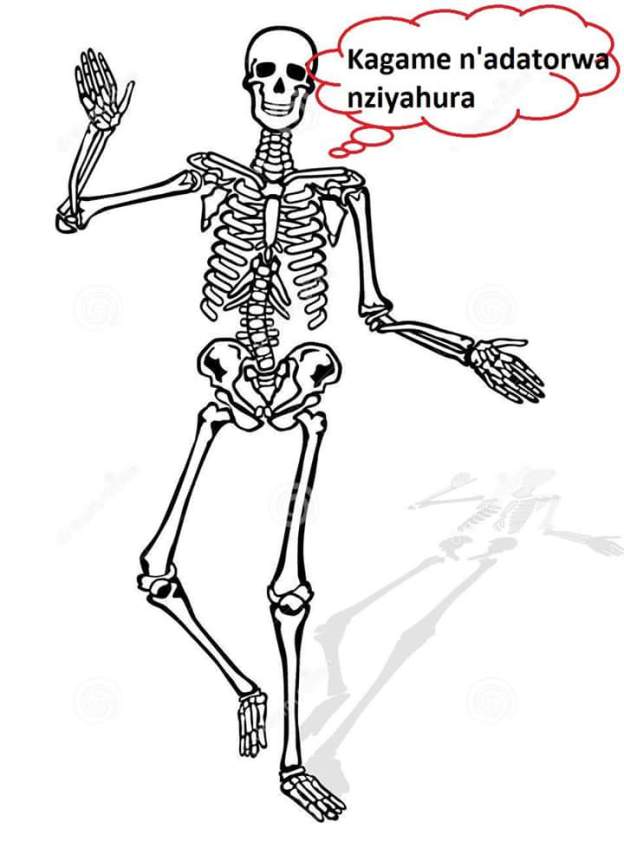
“I will commit suicide if Kagame is not allowed to run for president” pledges a skeleton

President Paul Kagame, after unjustly garnering numerous praises for a so called economic growth, is trying to tamper with the constitution so that a third term is allowed for him to run for president coming 2017 campaign. Maybe to keep accumulating praises! The current constitution states that under no circumstances nobody shall be allowed to run for presidency after two mandates. Note that one presidential term in Rwanda is 7 years, meaning that two terms equal 14 years. Brief, after two terms, a Rwandan president will have been in power six more years than a US president who finishes his two terms.

With Paul Kagame, it has been even more. This man, who took power via armed struggle and after bloodshed of four years between 1990 and 1994, gave himself a post of vice president in order to fool the world that his ambitions were not to be in control. However everybody knows that Bizimungu Pateur also nicknamed a “Hutu of service” didn’t have any power since he had to be dictated what to do or say. It is in 2000 that Bizimungu had it enough to be used like a robot and resigned. Kagame sent him in jail few after.

Kagame took over since 2000, elected President of Rwanda by the national assembly. It is under him that the current constitution was prepared by his close acolytes and inner circle. They thought that by fixing a seven year presidential term renewable once would be enough. It was visible that 7 years was too much while in neighboring countries this term does not go beyond 5 years.

Coming 2017, Kagame will have been in power for 23 years (18 years officially). His thirst is however unquenched still. He needs more terms! He cannot find any reason to advance. This time he can no longer hide his love of being in power. He doesn’t care about  the “stupid” praises he got in the past. He can no longer hide who he really is. He is calculated a better way to initiate the amendment project. So he is sending his secret and armed services in all villages to force the poor people to sign a pre-conceived form to petition the parliament for a constitutional reform so that Kagame can lead until his death. All the public servants are ordered to sign and threatened to be fired if they refuse to do so. All project managers and workers, be it public or private, all business people, all students, and funny enough all prisoners, etc are ordered to sign this petition. A few who have resisted, either disappeared or were found dead, and investigation was ever pushed for. The only group of people still to sign the petition and whose view is likely to make Kagame run for the next term comprises the psychiatric patients, and the dead!

We are simply saying that Kagame should stop this nonsense. While he is claiming that the people has said, we are telling him, that the people chose for him (if they ever did) to be the leader and not the other way round. The role of a leader, especially in a country where the illiteracy rate is about 40%, is to assist the people to build strong institutions and set path for sustainability of whatever achievement is in place. Based on information at hand, the leader is in a better position to even refute popular demands once they are not in the national interest. Instead of garnering a big number of signatures from uneducated people or from traumatized servants, a leader should listen to the elite especially who are not in the government. As for those who are serving in the government, they are in a conflict of interest situation, and so their input can be biased.

Ms Aurore S. has just initiated a petition to ask the United Nations to use its influence on Kagame so that the Rwandan national assembly led by an RPF member, does not amend the constitution. She is calling on everybody who wishes well to Rwanda, to Rwandans and to the whole region of great lakes of Africa to sign this petition. By signing this http://https://secure.avaaz.org/fr/petition/Organisation_de_Nations_Unies_Pas_de_modification_de_la_constitution_Rwandaise_surtout_larticle_101_1/?tPENWgb,  you are saying that:

  1. Rwanda is a republic and not a monarchy
  2. A peaceful political changeover is the pillar to democratic institutions
  3. Rwanda needs strong institutions and not strong men.
  4. Rwanda needs a new president in 2017.
  5. Stop RPF from torturing the people in attempt to have them sign for the third term for Paul Kagame.
  6. Article # 101 of the constitution is untouchable.

Thank you for signing.

“Do Block the parliament from changing the constitution” The DGPR says to Supreme Court

Dr.Frank Habineza, with the Press at the Rwandan Parliament

The Democratic Green Party of Rwanda has today, the 3rd of June 2015, filed a lawsuit to the Supreme Court, demanding the Court to Block Parliament from any future plans of changing the constitution, specifically, regarding the lifting of presidential term limits from the Constitution.

Article 101 of the constitution stipulates that:

‘The President of the Republic is elected for a term of seven years renewable only once.

Under no circumstances shall a person hold the office of President of Republic for more than two terms’.

DGPR strongly believes that Article 193, concerning amendments to the Constitution, does not allow the change of term limits from the stated two (2) to any other number.

The Article only allows a reduction or an increase on the lengths of the term of office, which in this case is seven (7) years. This can be reduced to either five or be increased from seven to any other number for example eight (8).

Article, 193, clearly states that, ‘ …if the constitutional amendment concerns the term of the President of the Republic…., the amendment must be passed by referendum….’ This article, clarifies that, the concerned term of office for the President, is the one ofseven years and not any other thing else.

The Democratic Green Party of Rwanda demands the Supreme Court:

  1. To order the Rwandan Parliament not to change Article 101 of the Constitution;
  2. To confirm that no referendum is required for those wishing to remove term limits from the Constitution;
  3. To confirm that Article 193 does not allow the amendment of Article 101 regarding the number of terms of office of the President of the Republic of Rwanda;
  4. To confirm that Article 101 is Intangible (ntayegayezwa) and cannot be changed by a referendum;
  5. To confirm that, the term of office of the President, mentioned in Article 193, does not concern the number of times, a President can be elected for but the lengths of the term of office of the President, which is currently 7 years and can be reduced to five years or increased to 8 years;
  6. To provide in-depths interpretation of Article 101 and 193 of the Constitution of the Republic of Rwanda.

The Democratic Green Party of Rwanda was officially launched on 14th August 2009 as an opposition party. It got official registration on 9th August 2013 and accepted as a member of the National Consultative Forum of Political Organisations in Rwanda on 3rd April 2014.

DGPR’s Status were published in the official gazette of the Republic of Rwanda on 4th August 2014.

Done at Kigali on 3rd June 2015

Dr.Frank Habineza

President, Democratic Green Party of Rwanda

Rwanda: Non au coup d’Etat Constitutionnel en cours.

senaa-bba02

Ils enterrent l’espoir de la démocratie.

COMMUNIQUÉ DE PRESSE  No ISHEMA2015/05/01

RWANDA : Un coup d’Etat Constitutionnel en cours

  1. Compte tenu de l’atmosphère délétère qui accompagne les magouilles éhontées mises en œuvre par le parti au pouvoir  à Kigali pour permettre au Président Paul Kagame  de concourir pour un troisième septennat, lors du scrutin de 2017,
  2. Le Parti ISHEMA (parti d’opposition) et ses alliés de la «Nouvelle Génération»  condamnent avec la plus grande énergie la mascarade politique et les entorses à la procédure légale qui risquent d’entériner une révision anticonstitutionnelle, inopportune et indésirable de l’article 101 de la Constitution rwandaise.
  3. En effet, aujourd’hui plus qu’hier, tout rwandais, du plus vieux au plus jeune, a pu retenir par cœur les mots de cet article si sacré : « Le Président de la République est élu pour un mandat de sept ans renouvelable une seule fois. En aucun cas, nul ne peut exercer plus de deux mandats présidentiels ».
  4. Or, selon les informations en notre possession, le régime de Paul Kagamé investit actuellement tous les villages , établissements scolaires,  associations, organismes étatiques et sociétés privées,  pour terroriser la population en vue d’obtenir d’elle,  sous la menace, des signatures individuelles d’un formulaire pré-rempli sous forme de pétition,  demandant au parlement rwandais de réviser sans délai cet article 101 de la Constitution de 2003  qui limite irrévocablement à deux le nombre de mandats présidentiels.
  5. Pire encore, comme le formulaire en question le laisse constater, cette révision n’est motivée ni par le souci de promouvoir l’État de droit, ni par la sauvegarde de l’intérêt général, mais plutôt par le maintien du prestige personnel de Paul Kagame qui rêve de se voir offrir la possibilité de devenir légalement le Président  à vie de la république du Rwanda.
  6. Nous nous inscrivons donc en faux contre ce « Coup d’État Constitutionnel » en cours qui risque de replonger le Rwanda, à peine reconstruit, dans la violence et l’instabilité.
  7. Nous en appelons à la condamnation rapide et à la pression ferme de la part de la Communauté Internationale en vue de contenir à temps les débordements qu’une initiative aussi injuste ne manquera pas de provoquer.
  8. Nous mettons en garde les « soutiens inconditionnels » de Paul Kagame et leur rappelons que leur responsabilité serait considérée comme engagée s’ils n’arrivaient pas, cette fois-ci, à se désolidariser de leur protégé alors que son goût démesuré du pouvoir et son mépris de la Constitution venait à pousser dans la révolte et le chaos ce peuple rwandais épuisé par 21 années de dictature militaire féroce.
  9. Nous exhortons les citoyens rwandais à se lever comme un seul homme et manifester, partout et par tous les moyens, leur réprobation envers cette « monarchie républicaine » que Paul Kagame est en train d’instaurer dans notre pays.
  10. Le peuple rwandais veut des élections libres et démocratiques pour 2017, seul l’ennemi de la nation pourrait l’en priver.

Fait à Paris, ce 29 mai 2015.

Pour le parti ISHEMA,

Abbé Thomas Nahimana, Secrétaire Général,

Candidat aux élections présidentielles de 2017.

Email : nahimanathom@yahoo.fr

Tél : 00 33 6 52 11 04 45

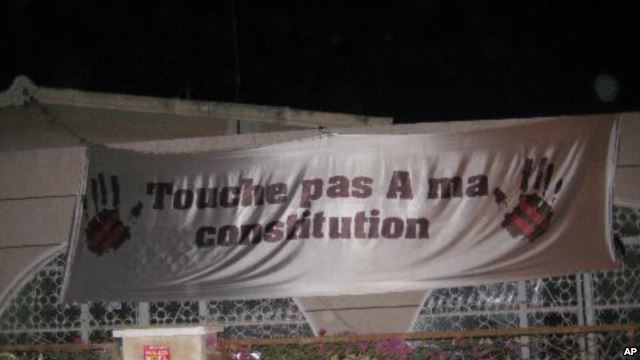
Rwanda: Don’t touch my constitution

2017: The Famous Article #101 of Rwandan Constitution, Touch it at Your Own Peril

7BBBCA0D-80AB-422E-87DD-FD3F3D83CFCA_w640_r1_s

In his attempt to condone a wicked intention to sell the idea of a third term in favor of Paul Kagame at expense of democracy, Joseph Rwagatare wrote in the pro- government newspaper The New Times that not the term limits, rather the track record counts whilst determining who should and should not be elected or reelected. Rwagatare misses the point and, purposely or not, misleads the readers to make us believe that a political party means exclusively its leader. Far from the truth!

It is true that a particular political party could get reelected in subsequent campaigns. The leaders as individuals, however, must have limitations on electability because of main reasons that vary from one society to another.  I intend to explain below to underline once for all that in a society like ours, given our far and recent historical experience, the culture of peaceful political changeover must be privileged. It is imperative unless we forgot where we come from.

  1. The Law and its intention

Although the law is one thing necessary in a society, its applicability and implementation should remain in accord with its intention. For instance, here we are talking about the presidential term limit. All anyone can read in the constitution is that famous article #101 which states that

“The President of the Republic is elected for a term of seven years renewable only once. Under no circumstances shall a person hold the office of President of Republic for more than two terms”.

This is what the law says. It is the law. Much more however, is hidden behind that piece of information: the intention. Why did the people vote for the president to have no more than two terms? This is what Mr Rwagatare, the RPF, President Paul Kagame and his acolytes should be reminding the folks who ignorantly or forcedly are tirelessly calling for tampering with the constitution in order to reinstitute Kagame once or more times again.

To answer, let us remember: Going back into our history from the kingdom time via the first and second republics to the RPF’s regime, we were unlucky to experience leaders who wanted or were forced either by beliefs, entourage or greed, to be in charge until they die. Let me remind Rwagatare that no King could be enthroned in presence of his predecessor. The elder had to die either naturally or killed. The same tradition passed over into republican regimes. Habyarimana felt insecure in presence of Kayibanda. Kagame could not be in power in presence of Habyarimana. In fact, the RPF took up arms alleging Habyarimana amongst other things that he had remained in power for so long, although he was repetitively elected at 99%! Had we respected the Arusha peace accords, Habyarimana would have gained other good two terms. Trust me!

With that in mind, the 2003 constitution intended to avoid similar scenarios. It was considered that an individual is born and dead but a nation remains. Thus the nation can live, prosper and develop tremendously even without that particular individual.  That is why the article 101 intended to encourage leaders to respect the fact that no one is irreplaceable and to dissuade them to hold on power indefinitely because this could generate conflicts, wars and possibly genocides. Another important dream was that from that time on, Rwanda would have an ex president deservedly able to serve as a councilor owed to experience and with the hope to retire peacefully thereafter.

It is now I realize clearly that Kagame never dreamt of initiating good changes to set antecedence that further generations would follow. In fact the same Kagame who was there in 2003 when the constitution was in the making, the same Kagame who claimed that he will not be there as president come 2017, is the same one who thinks a third term is not a bad thing. Somebody say, “Shame on you Mr President”!

For some naïve observers and commentators, I hope Rwagatare is not among, “Kagame does not want it but the people want him”. Democracy is defined as a power of the people, by the people  and for the people. Hence, the people have a powerful capacity which is bestowed upon them especially on the day of elections: the capacity to choose a leader of their interests.  Everyone knows that in a police state like Rwanda the democracy does not exist, and so that capacity is banned not only via elections but also even during brainstorming of ideas to make policies that run the affairs of the nation. We have seen it every day; we saw it in reports that shouted out the RPF-led assassination of freedom of speech, strangulation of independent media and impediment to rights of association.

The capacity to choose leaders is also threatened by the dictatorial micro management groups, armed or not, whose role is to force the people to vote against their will and to rig elections using any form of strategy in favor of the incumbent. But now the RPF wants to show us that last night the people dreamt “well”, woke up and coincidently the government allowed them to speak out: “we want Kagame back”. Funny enough! That kind of games is known to us, thou shall not lie. If Kagame does not step down, the RPF will have wasted a golden opportunity to show that it can do at least one good thing during its lifetime.

  1. The human nature

If Rwagatare were promised a very beautiful gift on a condition that he reaches 200 years alive, he clearly would realize that the promise is untenable. Why? Because we know that in our days, no one lives for two centuries. It is the same for political parties and their leaders.

A political party is born, grows up and dies. When it is born it is too young to deliver, when it grows up it matures and performs well but after some time it gets too old to run the country. At that time, the party cannot offer anything. It starts deteriorating and fails its early and own principles which eventually attracted the people to trust it. Even when it claims to rejuvenate itself, the young minds are overshadowed by old folks who think they have experience, thus they should take the lead indefinitely.

A leader gets too old as well and too tired to keep doing a good job (if he ever did any). That is a natural reality we are faced with. Accepting it does not mean you are not the hero you claim to be or that you are not loved by the people. By the way, it is not a matter of love given the tough and quasi impossible tasks assigned to the leader. If they loved him, they would let him retire and if he loved Rwanda, he would refuse to take an extra term.

In conclusion

The people of Rwanda should revisit the reasons that made them vote the constitution that included the article 101 (assuming they really voted for it). If Kagame does not step down, he will have satisfied his ego but at expense of all economic growth and other things he has been praised for. What if the people stepped in to say “no” to this man? As a matter of fact, they are ready, willing and able to take their destiny in hands. Friends of Rwanda (not of Kagame alone) have already demonstrated their undoubted support to the blowing wind of change.  A bon entendeur, salut!

Chaste Gahunde, BA, Dip Commonwealth of Learning (COL) London, UK

Revolution: “Banyarwanda banyarwandakazi,ubushobozi bwanyu bwose mwabuhaye ingirwa ntare muyihindura intare”

senaa-bba02RTEmagicC_sena-2-6fb78.jpg

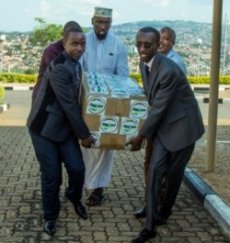
Kagame baramusurira urupfu: Irebere ayo makarito batwaye nk’imirambo bajyanye mu mva!

Banyarwanda, Banyarwandakazi,
Maze iminsi mvugana n’abaturage ku bijyanye n’amabaruwa bitirirwa ko bandika basaba ko uriya mwicanyi Kagame yakomeza kuyobora u Rwanda.Mu baturage twaganiriye bambwiye ko rwose ariya mabaruwa bayahatirwa kuyandika,bati “ariko ikindi dutinya,dutinya ko iriya nyeshyamba yamenyereye kuba mu mwobo ejo niva ku buperezida izasubira mu mwobo ikaza iturimbura?”

Bati; “ubu n’ubwo yicana, yica irobanura igenda ifata umwe uno munsi ejo igafata undi, abasigaye tugasenga Imana tukabona burije burakeye”. Bati “twe tubona kuba ari perezida hari abantu atinya bigatuma atatumena mo amasasu nk’ayo yatumenagamo akiba mu ishyamba. Bati: “ese mwana ni gute wavana intare mu ishyamba ukajya kuyirerera mu nzu? N’ubwo hariya bayikuye mu ishyamba bayizanye mu Rugwiro, urabona ko n’ubu yibereyeho nk’uko yari ibayeho mu ishyamba”. Bongeraho bati: “Rero kuyikura hariya ni ukuyisubiza aho bayikuye, aho bayikuye mu ndake isubiye yo yatumara noneho”.
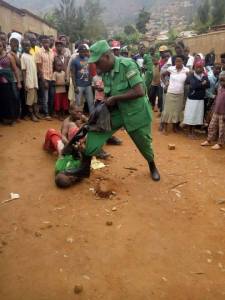
Dasso

Umu DASSO umwe aniga umuntu abandi barebera koko?

Muri rusange abaturage bafite impungenge z’ubuzima bw’iriya ntare nyuma y’umwaka wa 2017! Akaba ariyo mpamvu bemera gusinyishwa ku gahato kugira ngo ejo intare itazasubira mu mwobo ikazaza ari kirimbuzi.
Nabateze amatwi numva impungenge zabo. Icyo nakuyemo ni uko iriya ngirwa ntare yahahamuye abaturage ku buryo batifuza ko yasubira mu ishyamba.
Impungenge zabo zifite ishingiro ariko haricyo biyibagije ko kuba iriya ngirwa ntare ikomeza kubahahamura babifitemo uruhare. Bati : “ese gute wa mwana we?

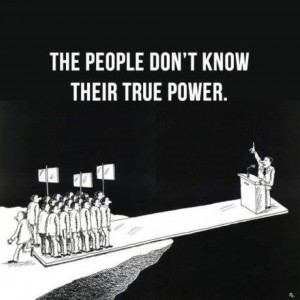
Nanjye nti: “mufite imbaraga n’ubushobozi. Ubushobozi bwanyu bwose mwabuhaye ingirwa ntare muyihindura intare nya ntare”. Baratangaye.
image_abbé-300x300

Ni koko abaturage bafite imbaraga batazi.

Dore uko ibintu bimeze:.Amabaruwa muhatirwa gusinya mwanze kuyasinya ku mugaragaro mukamagana n’abo baza kubahatira gusinya, ingirwantare ihinduka injangwe. Ubwo muba muyambuye bwa bushobozi ntizongera kuza aho muri, yemwe n’iyo yabakangisha kujya mu mwobo muyibwire ko niyibeshya uwo mwobo muzawusibanganya iwurimo, nk’uko yasibanganyirije abacu mu buvumo..
Nabahaye urugero rw’imbwa. Imbwa iyo ikumokeye ukayereka ko watinye ukiruka ikwirukaho ku buryo ushobora no kuvunika. Ariko iyo imotse wihagararaho wabona n’ibuye hafi ukaritora ukariyitera, icyo gihe izinga umurizo ikagenda nawe ukikomereza.

Mwitinya Kagame, mwituma akomeza kubahonyora mwimwimika nk’ umwami. Mwarabyaye n’ubwo bamwe yabamaze ho urubyaro ariko na kamwe yabasigiye na ko gafite ububasha bwo kuyobora. Kagame ntiyavukanye imbuto. Ababeshya ko navaho mutazabaho arabeshya, Kagame si Imana, ndetse kubwe muba mwararimbutse mwese kuko ni cyo yaje ashaka kandi yarabyivugiye ko ikimubabaza  ari uko atabonye umwanya wo kubica mwese ngo abamare. Ubu rero aya mabaruwa muri kwemera ko babasinyisha, murimo mumuha wa mwanya wo kubamara mwese.

Batangiye kumva ingero nabahaye, bati: “wa mugani, twishyize hamwe ntacyatunanira. Bati: “ese ko ari twe tunamutora n’ubwo tutamutoye ku bushake!!” Nti “ntimwumva se”, nti: “noneho muzanamwangire ku bushake”.

Bati: “rero baradusinyishije kandi amabaruwa barangije kuyapfunyika.

Nabasubijeko ntarirarenga.

Buriya bazagaruka muri kamarampaka baje kubasaba gutora.“Yego” bizaba bisobanura ko mwemeye ko Kagame akomeza kuyobora ubuziraherezo, “oya” izaba isobanura ko mubyanze. Abaturage barasetse bose, bati “aho ni ho tumutegeye noneho ntazaducika, reka tubike ibanga ryacu ku mutima”.

Ubutumwa nabahaye ni uko bagomba gushirika ubwoba ntihazongere kuza umuntu ubereka aho batora. Muri demokarasi uwo muntu yatoye ni ibanga. Abaturage rero biteguye kwereka ingirwa ntare Kagame ko kuba yibona nk’intare ari ukubera abaturage,ubu bagiye kumugira injangwe babinyujije muri kamarampaka, abibwira ko ariya mabaruwa bari kwirirwa basinyisha abaturage byarangiye, muribeshya cyane., you will be embarrassed in broad daylight!!!
imagesihene7

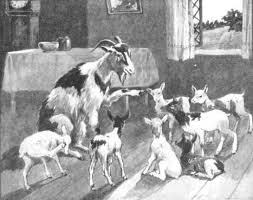
Byose biragenda nk’uko byahanuwe: Isekurume izabyara isekurume ndwi (manda y’imyaka 7) zose zanjye konka. Iyo ihene yavutse ntiyonke irapfa.

Kagame rero, abaturage uyobora bagufata nk’inyeshyamba n’ubwo wavuye mu ishyamba, ishyamba ryo riracyakurimo, ni akamaramaza mugani w’Abarundi.
Niba wifuza gufata iy’ishyamba na bwo, rwose Kagame ntizakorohera kuko ishyamba ntirikiri ryeru nk’uko byahoze cya gihe utera u Rwanda rwatembaga amata n’ubuki ukarugira urutemba amaraso n’imiborogo

.
Dore aho mpera mbivuga ko bitazakorohera ni aha:

Ubwoba bwawe burazwi, ukangwa n’ubusa. Ba Nyamwasa bagufashije kuguma mu mwobo utuje yewe ndetse bakanakurokora inshuro nyinshi, ubahejeje ishyanga abandi wabanigishije ibiziriko, abandi barimo baborera muri 1930. Niba wizeye uriya Kabarebe utwite inda y’imvutsi,uragowe kuko umunsi yumvise ko byagukomeranye azahera ko ajya ku bise bitunguranye urebe kariya kadigi kameze nk’agatwite bane ehhhe, dore aho nibereye!

None se uriya mufumbira wakuye i Bugande ni we uzakurwanirira? Umunsi yumvise byakomeye azasubira iwabo i Bufumbira nazaba atarafumbira imirima y’iwabo, dore ko numva ko ari hafi gutanga ifumbire mu murima wa nyina. Na twa tuzi yirirwa yicisha abanyarwanda ntatwo azaguhaho ngo tukuruhure.

Rwarakabije se? Ko utizera umuhutu ubwo se uwo mwobo uzawubana mo na nde? Wibuke ko iyo byakomeye buri wese akiza amagara ye. Uriya mushikiwanyu se azaba akibona aho avugira ko ntawe uzaba ukimutega amatwi? Uwo munsi na Cliton/Blair bazavuga ko nta ho bakuzi. Uzaba ubaye uwa nde??

Icyiza ni ukwishyira mu maboko ya rubanda, icyo gihe nta cyo tuzagutwara tuzagushyikiriza ababishinzwe, n’ubwo watubabaje ukaduhekura, ukatugira imfubyi,tuzagufata tugushyiirize inzego zishwizwe kurinda umutekano wawe, ariko niwiha kujya mu mwobo, tuzawusibanganya nta kundi bizagenda.
Kagame emera wivireho ejo bundi manda yawe nirangira.Kuba waraje ku butegetsi nabi ukabuvaho nabi ntacyo bizakumarira, nyamara ubuvuyeho neza, hari akantu byahindura ku isura abanyarwanda baguha. ibyaha wakoze byo, abanyarwanda ubwabo bazamenya uko bakugenza, si abana babi n’ubwo wabatoje ububi, ariko abeza turacyari benshi.Tangira wirukane ayo mabandi wavanye Uganda, kontara mwari mwarasinyanye na yo yo kurimbura abanyarwanda no gusahura u Rwanda uyisese. Tangira witegure ko uzabazwa byinshi ku mahano yagwiriye u Rwanda azanywe nawe n’ayo mabandi yawe.Tangira witegure gusubiza iby’abandi wasahuye, umutungo wa rubanda. Ibyo byose ni byo wakagombye kuba utekerezaho kurusha uko utekereza mu guhindura itegeko nshinga, nzi neza ko utazabigeraho n’ubwo wowe n’ayo mabandi yawe mwibwira ko muri kubikozaho imitwe y’intoki, ariko murebye nabi mwasanga murimo mukora kuri bombe izabaturikana mwese hamwe!
Nyamwanga kumva ntiyanze no kubona, utazi ubwenge ashima ubwe.
Ngibyo ibya ya  ngirwantare y’u Rwanda.

Umutaripfana,

Jeanne Mukamurenzi.

REVOLUTION: AGATSIKO KA FPR GASIGARANYE INZIRA IMWE RUKUMBI ISHOBORA KUKARENGERA.

May 27, 2015

VENANT NKURUNZIZA

Nk’uko tumaze iminsi tubyumva mu Rwanda, ubu agatsiko ka FPR kabujije amahwemo rubanda ku nzego zose kugira ngo gakunde kabone impamvu yatuma gahindura itegekonshinga. N’ubwo rubanda idakozwa ibyo byo guhindura itegeko nshinga kugira ngo umuntu umwe akunde agaragare neza mu mahanga dore ko mu Rwanda azwi neza bihagije uwo ariwe, ariko agatsiko kifashishije iterabwoba gategeka abanyarwanda batari bacye gusinyira ko itegeko nshinga rigomba guhinduka uboshye ko haraho itegekonshinga ribisaba. Ubu ni ubwoba bw’abagize agatsiko bibwira ko kubitegeka rubanda ahari byazayibuza kubavudukana igihe kigeze.

Ibi rero ni ukwibeshya nk’uko abanyarwanda bakomeje kubigaragaza bo mu nzego zose zinyuranye. cyane cyane abajijutse. Agatsiko nigakomeza kwitwara gutya ahubwo njye ndabona n’ayo MATORA kadashobora kuyagezaho. Kubera ko abanyarwanda ntabwo ari bwa bwoko bwa ‘tereriyo’, iherezo umujinya bafitiye ubu butegetsi bw’agatsiko bazawukitura igihe kigeze. Kandi ibyo bizaba bitari kera kandi bizaba nabi cyane.

Kurikira uko abarwanashyaka ba PSD bagaragaje uko barambiwe itekinika rya FPR.

The United States will continue to urge Rwanda to respect the rights of all its citizens.

usdos-logo-seal

Rwandan Human Rights and U.S. Relations With Rwanda

Testimony

Steven Feldstein
Deputy Assistant Secretary, Bureau of Democracy, Human Rights, and Labor
House Foreign Affairs Committee, Subcommittee on Africa, Global Health, Global Human Rights, and International Organizations
Washington, DC
May 20, 2015

As Prepared

Chairman Smith, Ranking Member Bass and Members of the House Subcommittee on Africa, Global Health, Global Human Rights and International Organizations. Thank you for holding this important hearing on Rwanda and for the opportunity to speak today.

Rwanda holds a very personal connection for me. Fifteen years ago I first went to Rwanda as a fellow with the International Rescue Committee. I spent a year in the country supporting its efforts to recover from war and genocide – helping unaccompanied children and youth reintegrate back into their communities, working with villages to provide access to clean water, and traveling throughout the country to try to better understand what gives people the capacity to pick up their feet and move forward after such a shattering experience. Living in Rwanda had a profound impact on me and has been a key inspiration for my decision to pursue a career in foreign policy and human rights.

Indeed, Rwanda’s progress since the 1994 genocide has been remarkable. Rwanda’s GDP has grown at an estimated annual rate of 7 percent, youth literacy rates have improved from 65 percent in 2000 to 77 percent in 2010, and child and infant death rates have plummeted, going from an under-5 mortality rate of 152 children out of every 1,000 in 1990 to just 52 out of 1,000 in 2013. Rwanda also plays a crucial role in international peacekeeping operations, and has made great strides in its inclusion of women at all levels of government. Several years ago I paid a return visit to Kigali, and I found a city profoundly changed. Modern office towers have replaced dilapidated buildings. The streets were spotless – thanks in part to a widely acclaimed ban on plastic bags. New businesses seemed to be springing up daily, such as coffee ventures supplying top quality beans to U.S. brands like Starbucks and Peet’s.

But this is only part of the story. Alongside Rwanda’s remarkable development progress, there have been equally consistent efforts to reduce space for independent voices and to diminish the ability of the media, opposition groups, and civil society to operate. This space matters. It is essential not only for democratic progress, but for cementing Rwanda’s impressive economic and development gains.

When it comes to the human rights situation in Rwanda, we see three trends of note. First, political space in Rwanda and the overall human rights environment continues to shrink. There are reports of targeted killings, and an increasing number of reports of disappearances and harassment of civil society groups and opposition parties. Second, this trend is reinforcing the wrong lessons for Rwanda– particularly that a country can continue to experience robust economic growth and foreign investment even while repressing its citizens further and reducing democratic space. This is not a sustainable path. At some point – if unchecked – human rights violations will begin to affect Rwanda’s economic performance, stability and the willingness of foreign investors to pump in outside capital and do business. Third, Rwanda’s human rights records is setting a disturbing precedent for the region and continent. Other countries are carefully watching Rwanda’s model of economic liberalization and political repression. In my discussions, counterparts frequently point to Rwanda and question whether protecting the rights of their citizens matters if they can achieve substantial economic development.

The answer, of course, is that protecting the rights of all of Rwanda’s citizens and residents matters immensely to Rwanda’s long term stability and prosperity, to its continued positive economic trajectory, and to whether other countries recognize they can follow a similar path to greater prosperity. When governments repress fundamental freedoms and universal human rights, international investment can falter because this repression is a sign of societal fissures that can lead to instability and violence. This is also true when governments stifle civil society organizations that provide checks and balances on corruption and increase government accountability. Rwanda can be a model for the region, or it can slip backwards over time, never truly fulfilling its potential.

We have articulated our concerns about Rwanda’s human rights record for years directly to Rwanda’s senior leaders, including President Kagame, and we have highlighted the deteriorating situation in Rwanda, through the State Department’s annual human rights report. The Department’s 2013 human rights report for Rwanda noted that the government targeted political opponents and human rights advocates for harassment, arrest, and abuse. It reported that the government disregarded the rule of law and placed significant restrictions on the enjoyment of freedoms of expression, peaceful assembly and association, as well as restrictions on press freedoms. It observed that the government harassed and placed substantial limitations on local and international NGOs, particularly organizations that monitored and reported on human rights. And it highlighted reports that arbitrary or unlawful killings took place both inside and outside Rwanda.

The credibility of elections provides an important indication of the level of space for independent voices and views. Unfortunately, Presidential elections in 2010 and parliamentary elections in 2013 were beset by irregularities both in the pre-electoral period and on Election Day. Part of this is due to the passing in 2008 of the “genocide ideology” law, which was intended to restrict any actions that could lead to genocide. In practice, the government has used this law to impede the activities of opposition parties, opposition candidates, and civil society organizations. In the 2010 elections, in which President Kagame was reelected with 93 percent of the vote, there was a lack of critical opposition voices in the pre-election period, opposition political parties were unable to register, and two opposition party leaders were arrested on what appear to be spurious charges. Two unregistered political parties were unable to field presidential candidates due to legal or administrative issues.

International observers reported that Rwanda’s 2013 parliamentary elections also failed to meet standards for free and fair elections. While the elections were calm and well organized, there were numerous irregularities, including the presence of security officials in polling rooms, multiple voting, and local election officials filling out ballots in the absence of voters. Rwandan electoral officials also denied U.S. Embassy observers access to polling stations and vote tabulation centers, thereby making it impossible to verify the accuracy of the final vote count and official participation rate. Rwanda’s next presidential election is in 2017, and we are cautiously hopeful that this election will mark an improvement upon previous contests.

Our concerns about restrictions on press freedom, freedom of assembly, expression, and association extend beyond electoral processes. Most Rwandan news outlets follow party lines. Rwandan journalists self-censor their work, and some have fled the country out of fear of government harassment. The Rwandan government has also stepped up its use of a law amended in 2012 that allows security officials to monitor online communications. During the period surrounding the 20-year genocide commemoration in spring 2014, the country’s few remaining independent journalists were increasingly targeted for harassment and arrest. This led the United States to issue a statement in June 2014 expressing deep concern about the arrest and disappearance of dozens of Rwandan citizens and credible reports that individual journalists were being threatened, and in some cases directly censored.

We are also deeply troubled by the succession of what appear to be politically motivated murders of prominent Rwandan exiles. This includes the December 2013 killing of former Rwandan government official Colonel Patrick Karegeya, who was found dead in a hotel room in South Africa. Months later, armed men raided the South African home of former Rwandan Army Chief of Staff Kayumba Nyamwasa, who had previously been targeted for assassination attempts. President Kagame’s 2014 statements about “consequences” for those who betray Rwanda has further heightened these concerns.

Also of deep concern are corpses that appeared in Lake Rweru, along the border between Rwanda and Burundi, between July and October in 2014. Fishermen reported seeing dozens of floating bodies, some bound and wrapped in sacks. Four bodies were recovered and buried near a village in Burundi’s Muyinga Province. Fishermen reported that on the nights of September 21 and 22, Rwandan marines attempted to exhume the bodies, allegedly to return them to Rwanda. Both Rwanda and Burundi called for a joint investigation into the identity and origin of the bodies. In December, Burundi’s minister of foreign affairs accepted an offer of forensic assistance funded by the United States and several other donor governments for an investigation led by the African Union. Rwandan officials stated that the government also supported a joint investigation, but no investigation has been conducted. The United States continues to press the African Union to move forward with an investigation into these killings and accountability for those responsible.

As a close partner with Rwanda on many global and regional issues, we have and will continue to maintain a close dialogue with the government on these concerns, while recognizing their strong policies and actions with respect to issues of concern, such as women’s rights, the rights of LGBTI persons, and access to health and education.

In closing, Rwanda is an important ally. It is a respected contributor to peacekeeping missions throughout the region, it has rebuilt itself from genocide, and it has achieved impressive development and economic gains. I have seen with my own eyes the remarkable progress that Rwanda has made. I believe there is a bright future ahead for its people, which is why Rwanda’s current human rights situation is so personally disappointing to me. Ensuring respect for freedoms of expression, association, and peaceful assembly, and respect for the rule of law is essential for cementing, and building from these gains. The United States will continue to urge Rwanda to respect the rights of all its citizens.

Thank you very much and I welcome your questions.

Le Parti ISHEMA se dit prêt à forcer l’ouverture de l’espace politique au Rwanda:

Ishema congres men

INVITATION À LA CONFÉRENCE DE PRESSE du  JEUDI  04 JUIN 2015  à BRUXELLES, BELGIQUE : 

«  OFFRONS UNE ALTERNATIVE DEMOCRATIQUE AU PEUPLE RWANDAIS ».

  1. Le Parti ISHEMA, parti politique  d’opposition au gouvernement rwandais de Paul Kagame, vous convie cordialement à la Conférence de presse prévue le jeudi 04 juin 2015, de 11h à 12h, à la MAISON DE LA PRESSE, RUE FOISSART 15, B- 1040 Bruxelles.
  2. Cette conférence intervient alors que le Président Paul Kagame en fin de deuxième mandatse  lance dans une campagne de grande envergure dans le but de  « terroriser » au maximum le peuple rwandais en vue d’ « extorquer » par des voies illégitimes,  un troisième mandat présidentiel pourtant strictement  interdit  par l’article 101de la Constitution de 2003 stipulant : « Le Président de la République est élu pour un mandat de sept ans renouvelable une seule fois. En aucun cas, nul ne peut exercer plus de deux mandats présidentiels».

3.Aussi les Leaders du  Parti Ishema et leurs alliés de la Nouvelle Génération, soutenus par divers conseillers et amis du Rwanda,  ont-ils décidé, non seulement de s’engager corps et âme  pour réclamer l’ouverture d’un espace démocratique au Rwanda, mais aussi et surtout de rentrer sans délai au pays pour offrir, lors de prochains scrutins,  une alternative au peuple rwandais croupissant, depuis juillet  1994, sous le joug d’une dictature militaire qui n’a cessé de maltraiter, emprisonner voire assassiner opposants, journalistes et  militants des droits de l’homme.

  1. Rappelons que le Parti Ishema lors de son Congrès tenu à Paris,  du 7 au 9 février 2014, a déjà désigné son candidat aux élections présidentielles de 2017, en la personne de l’abbé Thomas NAHIMANA qui entend fouler le sol rwandais avec son équipe dès le 28 janvier 2016.
  2. A l’occasion de cette Conférence de presse, le Révérend Thomas NAHIMANA fera le point sur  la violation massive des libertés publiques et droits fondamentaux au Rwanda  et ses implications sur la Région des Grands Lacs (I); il pointera du doigt les vrais défis et enjeux du « mal-être national »souvent dissimulés par  une propagande triomphaliste savamment orchestrée par les hérauts du FPR-INKOTANYI, parti au pouvoir depuis 1994 (II) ;   il esquissera  enfin l’orientation et les grandes lignes des réformes essentielles dont le peuple rwandais a actuellement le plus  besoin pour jouir d’un développement stable et plus harmonieux (III).
  3. Nous espérons avoir le plaisir de vous rencontrer à ladite conférence et vous prions d’agréer, Madame/Monsieur, nos salutations les meilleures.

Fait à Paris, le 20/05/2015

Mr Chaste GAHUNDE,

Secrétaire Exécutif et Chargé de la communication au Parti ISHEMA.

Abbé Thomas NAHIMANA,

Secrétaire Général du Parti ISHEMA et Candidat aux présidentielles rwandaises de 2017

Contacts:

Téléphone :

*00 33 65 21 10 445 (Thomas)

*00 33 78 34 34 672 (Chaste)

Email: ishema_party@yahoo.fr

nahimanathom@yahoo.fr

chaste.gahunde@gmail.com