Category Archives: International

Top Secret: Rwanda War Crimes Cover-Up

The United States and its allies are experts at covering their crimes and finding scapegoats to take the blame for them. They are doing it now with their disinformation campaigns against Russia, China, Iran, Venezuela, North Korea, and Syria. The show trials at the UN’s Yugoslav tribunal, the ICTY, were all about covering-up NATO’s war crimes and spinning lies to blame everything on the Serbs who resisted NATO’s aggression. They use their influence at the International Criminal Court for the same purposes. And now a document has come to light, leaked from the UN’s Rwanda war crimes tribunal, the ICTR, that contains a report on the war crimes of the US supported Rwanda Patriotic Front that invaded Rwanda from Uganda in 1990, conducted four years of terrorist operations against the Rwanda people and government, then in 1994 launched their final offensive and slaughtered their way to power. To discuss this document, marked “Top Secret” I have to burden the reader with a brief history of events from the evidence available in order to give it some context.

The night of April 6, 1994 the Hutu presidents of Rwanda and Burundi, Juvenal Habyarimana andCyprien Ntaryamira, and General Nsabimana, the Rwandan Army Chief of Staff, as well as several other dignitaries and a French flight crew were murdered when the plane they were on was shot down over Kigali airport by anti-aircraft missiles fired by members of the Tutsi-led Rwanda Patriotic Front, or RPF, with the assistance of the governments of several countries. Paul Kagame, the leader of the RPF junta now in control of Rwanda, and who was seen with US Army soldiers at his headquarters two days before the event, gave the final order for the shoot down but he did so with the assistance or complicity of the governments of the United States of America, Britain, Belgium, Canada, and Uganda. It was the United States and its allies, hoping to gain total control of the resources of Central Africa through their proxies in the Tutsi RPF, that provided the military support for the RPF invasion of Rwanda from Uganda beginning in 1990, flowing that support through Uganda.

It is known that the missiles used to shoot down the aircraft came from stockpiles the Americans had seized in their first war against Iraq, passed to Uganda, and it was in a warehouse at Kigali airport, rented by a CIA Swiss front company, that the missiles were assembled. In fact, the French anti-terrorist judgeJean-Louis Bruguiere, who spent several years investigating the shoot down on behalf of the families of the French flight-crew, told Boutros-Boutros Ghali, the Secretary-General of the UN in 1994, that the CIA was involved in the shoot down, adding strength to Boutros-Ghali’s statement to a Canadian journalist that the Americans are 100% responsible for what happened in Rwanda.

There is strong direct and circumstantial evidence that the Belgian and Canadian contingents of the UN peacekeeping force in Rwanda in 1993-94, known as UNAMIR, were also involved in the shoot down and assisted the RPF in their final offensive that was launched with the decapitation strike on the plane. It was the Canadian General Romeo Dallaire, Force Commander of UNAMIR, who arranged for one axis of the runway at the airport to be closed at the request of the RPF, making it easier to shoot down the plane as it tried to land.

ICTR3434323

Source: NEO

Dallaire consistently sided with the RPF during his mandate, gave continuous military intelligence to the RPF about government army positions, took his orders from the American and Belgian ambassadors and another Canadian general, Maurice Baril, in the Department of Peace-Keeping Operations in New York, then headed by Kofi Annan, lied to his boss, Jacques Roger Booh-Booh, about his knowledge of a build-up for a final Ugandan Army-RPF offensive, and turned a blind eye to the infiltration into Kigali of possibly 13,000 RPF combatants when they were permitted only 600 under the Arusha Peace Accords signed in October 1993. It was another Canadian, General Guy Tousignant, who took over from Dallaire after the RPF took power when UNAMIR II helped the RPF consolidate the rewards of its aggression.

Burundi was involved both by permitting 600 US Army Rangers to be situated in Burundi in case they were needed by the RPF and by invading Rwanda from the south in May, 1994 to link up with the RPF forces. Tanzania was involved in both the planning of the shoot down and, itself invaded Rwanda from the east and south blocking escape routes for the Hutu refugees fleeing the atrocities of the RPF in their sweep towards Kigali.

Finally, evidence indicates that Belgian UN soldiers were in the immediate area of the missile launch site at the time of the shoot down and were also involved.

The report into the shoot down of the plane by the French investigative judge Jean-Louis Bruguière was leaked to the French newspaper Le Monde in 2004 and states that the RPF was responsible with the help of the CIA. But before the French judge began his investigation The Chief Prosecutor for the Rwanda tribunal, Canadian judge Louise Arbour, the same woman that framed up President Milosevic on behalf of the USA at the Yugoslav tribunal, was told in 1997 by her lead investigator, Australian lawyer Michael Hourigan, that it was the RPF commando group known as the “Network”, with the assistance of a foreign power, implicating the CIA, that was responsible for the shoot down.

At that point Arbour, instead of prosecuting everyone involved, as she should have done, on American instruction, ordered the investigation closed and kept secret thereby making her an accessory to a war crime. The facts relating to Arbour’s action is detailed in Michael Hourigan’s affidavit, still available on the internet and his report to the Office of Internal Oversight of the UN.

During the war crimes trials at the Rwanda tribunal defence lawyers, representing the only group targeted for prosecution, the side that tried to resist aggression, members of the Rwandan government, its armed forces and officials as well as Hutu intellectuals, demanded full disclosure of all the evidence the prosecution had relevant to what happened in the war and the allegations of war crimes made against our clients. In the trial of my client, General Ndindilyimana, Chief of Staff of the Gendarmerie, who after a long struggle was finally acquitted, made repeated requests for disclosure of that evidence but we never received the complete disclosure we demanded because over time we became aware that the prosecution had much more material than they were willing to show us.

One famous example of this is the Gersony Report made by Robert Gersony, a USAID, official seconded to the UN, who filed a report to the High Commissioner For Refugees in October 1994 setting out his findings that the RPF forces engaged in the systematic massacres of Hutus across Rwanda during their offensive, which he characterized as genocide. This report too was kept secret by the UNHCR and by the prosecution lawyers in our trial who even denied that it existed. But in 2008 my team found it by chance, and in the prosecution files, and I was able to produce it into evidence in the trial, along with a letter from Paul Kagame dated August of 1994 in which he refers to a meeting with Ugandan president Museveni in which the “plan for Zaire” was discussed. Those two agreed that the Hutus were in the way of the “plan” but Kagame stated that they were working with the Belgian, American and British intelligence services to execute the “plan” and the problem would be solved, The world has since seen what this ‘plan” involved; the invasions of Zaire, the extermination of hundreds of thousands of Hutu refugees, the killings of millions of Congolese in the wars that followed, as detailed in the leaked UN Mapping Report of 2010, and the shattering of Congo into fragments to be easily exploited by western mining companies.

Yet, little did we know as our trial proceeded that the prosecution had in their hands another document, an internal report dated October 1, 2003 in which their own investigators list and describe in 31 pages the crimes of the RPF forces they had investigated. This report, designated Top Secret, has recently been leaked and a copy was sent to me, among others, to examine and it is as damning of the RPF, and therefore their western allies, as the others.

The document, with the subject reference General Report on the Special Investigations concerning the crimes committed by the Rwanda Patriotic Army (RPA) during 1994’ was sent to the then Prosecutor Hassan Jallow by three members of the Prosecution Special Investigations Unit. It provides to the Prosecutor the evidence they had gathered that the RPA had committed massacres of thousands of Hutus in various places across Rwanda, for example, Byumba, Kabgayi, Rambara, Gitarama, and Butare, as well as the murder of three Catholic bishops and nine other priests at a church. The circumstances set out in the report confirm Gersony’s Report of similar massacres and also confirms witness testimony we heard during the trials that the RPA forces had infiltrated men into civilian barricades to kill people in order to pin the crimes on the Rwandan government forces and the youth group known as the interahamwe.

Finally they provide, once again, further evidence that the RPA did shoot down the presidential plane, confirming the findings of Michael Hourigan in 1997 detailed above and which Louise Arbour had ordered kept secret, confirming the findings of the French report and confirming the evidence we filed at trial to the same effect, including a radio intercept from Kagame to his forces, the day after the plane was hit, celebrating the downing of the plane as a successful operation. It is a very important and damning report. Kept secret. One wonders how many more secret reports they have.

There is not space here to detail the horrific crimes set out in the document, or to relate to you the evidence we heard at the trials-what one Hutu refugee, speaking of the hunting down of Hutu refugees in the Congo by the RPF forces, assisted by spotter planes with US Air Force markings, called the “genocide with no name,” so I provide just a few examples from this document to give readers the picture. On page 28, in reference to the capital city of Rwanda, Kigali, it states:

Camp Kanombe (a government military base) at the end of May 1994. When the RPA captured Kanombe, approximately 1500 civilians had taken refuge in the camp. They were all massacred by the RPA.’

Kanombe Airport, at the end of May 1994, approximately 200 to 300 civilians of all ages were brought …and executed.”

Masaka, Kanombe commune, end of July 1994, – in 5 days approximately 6,000 women children and men were executed with their arms tied behind their back at the elbow.

Camp Kami, during the capture of the camp by the RPA thousands of civilians who had taken refuge there were executed”

The picture is clear. Yet, to this date not a single member of the RPF or their western allies has been charged for their responsibility for these crimes and Paul Kagame, who ordered these killings, is hosted with smiles by leaders from Canada to France to China. The prosecutors who decided to protect these war criminals, and who, by withholding evidence of what really happened, obstructed justice, conspired to frame up those standing accused before the tribunal, turned international justice into a travesty, and gave these criminals immunity from prosecution and encouragement to commit more crimes have moved on to lucrative positions. Fatima Bensouda, one of those former ICTR prosecutors, is now the prosecutor of the International Criminal Court.

Where is the justice for the 6,000 men, women and children murdered at Masaka? Where is the hue and cry for the head of Paul Kagame as there was for the head of President Milosevic and the allegations he faced or as President Aassad of Syria faces? Where is the hue and cry for the head of General Dallaire, or for Louise Arbour, who condoned these crimes, as there was for General Mladic regarding the allegations about Srebrenica? There is none. Instead they are made celebrities, for we live a world in which criminals have seized hold of morality and justice and hanged them from a tree.

*

Note to readers: please click the share buttons above. Forward this article to your email lists. Crosspost on your blog site, internet forums. etc.

Christopher Black is an international criminal lawyer based in Toronto. He is known for a number of high-profile war crimes cases and recently published his novel “Beneath the Clouds. He writes essays on international law, politics and world events, especially for the online magazine “New Eastern Outlook.” He is a frequent contributor to Global Research.

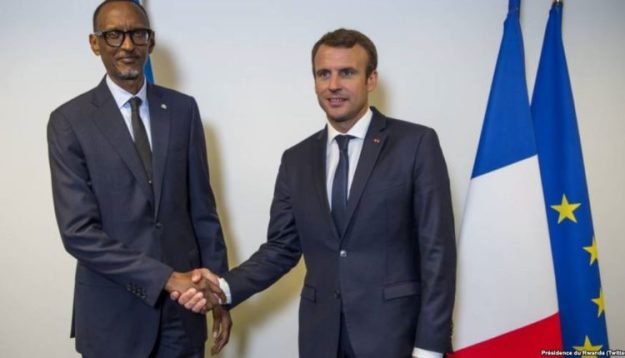
Kagame, le nouvel ami encombrant du Président Macron

KAGAME-MACRON

La vérité d’un homme ne se montre parfois qu’aux initiés qui connaissent la portée de certains gestes. L’engouement récent d’Emmanuel Macron pour un personnage aussi trouble que le président du Rwanda, Paul Kagame, détonne singulièrement par rapport à l’image de modéré, libéral, défenseur des droits de l’homme qu’il se donne par ailleurs. Les évènements qui se sont produits au Rwanda depuis 1990 sont mal connus des Français lesquels, non sans un zeste de racisme, trouvent normal que les Africains se massacrent entre eux et ne se préoccupent pas de rechercher qui est responsable de quoi.

Qui est Kagame ?

La meilleure manière d’appréhender en termes simples les évènements du Rwanda est de se référer à Aristote :

« Dans les oligarchies, c’est la masse des citoyens qui se soulève, comme étant victimes d’une injustice du fait que leur part n’est pas égale à celle des  autres, dont ils se considèrent pourtant les égaux, alors que dans les démocraties, au contraire, ce sont les notables qui se révoltent, parce que leur part est seulement égale aux autres alors qu’ils ne se considèrent pas comme leurs égaux. » (Politique V,3).  

La révolte de la masse, c’est ce qui s’est passé au Rwanda en 1961, celle des notables, ce qui s’y est passé à partir de 1990. Très ancien royaume africain où, depuis des siècles, une minorité d’éleveurs-guerriers, les Tutsis (environ 10 % de la population en 1990, moins aujourd’hui), dominait une majorité de cultivateurs bantous (houtous[1]), le Rwanda a vu à l’indépendance en 1961, la majorité prendre le pouvoir, par application de la règle démocratique, le tiers  environ des anciens maîtres tutsis s’exilant en Ouganda ou en Europe (où ils constituent un lobby puissant). A partir de 1990, l’un de ces exilés, Paul Kagame a entrepris, à partir de l’Ouganda voisin, de restaurer le pouvoir de la minorité tutsie avec une armée d’exilés (Front patriotique rwandais) bien équipée par les Anglo-Saxons. Le 6 avril 1994, l’avion transportant les deux présidents houtous du Rwanda et du Bouroundi était abattu sur ordre de Kagame, selon des témoignages aujourd’hui irrécusables[2]  :  affolés, les Houtous en déroute se mirent à massacrer la minorité tutsie restée dans le pays, ce qui n’empêcha pas la victoire totale de Kagame. Ces massacres du Rwanda du printemps et de l’été 1994 ont fait entre 500 000 et 800 000 morts, probablement en majorité tutsis bien que l’armée de Kagame ait aussi massacré beaucoup de houtous au fur et à mesure qu’elle avançait dans le pays.

Une fois la capitale Kigali prise, cette armée partit très vite au Congo voisin à la poursuite des houtous en fuite, qualifiés, de « génocidaires » – même les enfants pas encore nés au moment des faits !  Selon le Haut-commissariat aux réfugiés des Nations-Unies[3], ces opérations de représailles ont entrainé la mort  de 4 millions de personnes, rwandais houtous réfugiés ou congolais, non seulement dans la province frontalière du Kivu mais dans tout le Congo ex-belge.  Les troubles qui se produisent aujourd’hui au Kasaï en sont la suite.

Kagame a certes sauvé du massacre une petite partie ses congénères tutsis encore en vie à l’intérieur du Rwanda, la seule chose que retient la communauté internationale dûment désinformée. Il n’en porte pas moins une   responsabilité écrasante pour l’ensemble de la tragédie : en envahissant le pays sans aucune légitimité autre que d’appartenir à l’ancienne élite, ce qui est la cause première de tous les évènements, en massacrant les houtous au fur et à mesure de son avancée dans le pays, en abattant l’avion des deux présidents, attentat qui a déclenché les premiers massacres et en opérant des massacres de représailles bien plus graves encore au Congo.

On peut dire que Paul Kagame est au total le responsable direct ou indirect de la mort de près de 5 millions de personnes.

Il faut ajouter que depuis vingt-cinq ans qu’il est au pouvoir, Kagame a pris la France pour cible : sa prise de pouvoir avait déjà signifié pour notre pays la perte de toute influence dans la région des Grands lacs et même au Congo-Kinshasa (ex-Zaïre) ; il n’a cessé d’accuser de complicité de crime les soldats français de l’opération Turquoise arrivée au Rwanda en juillet 1994 sur mandat de l’ONU pour tenter de limiter les dégâts, accusation sans aucun fondement.  Il a remplacé le français par l’anglais comme langue officielle et adhéré au Commonwealth.

« Poignez vilain, il vous oindra »

Voilà le sinistre personnage auquel le président Macron a déroulé le tapis rouge à l’Elysée le 23 mai 2018.  Il est allé plus loin :  la France soutient officiellement la candidature au secrétariat général de l’Association des pays francophones d’une proche de Kagame, Louise Mushikiwabo, ministre des affaires étrangères du Rwanda, ce dont seul Mélenchon s’est ému, en termes d’ailleurs très modérés si l’on considère l’énormité de la chose.  Il est clair que pour ceux qui connaissent les dessous de l’affaire, soit tous les Africains, Macron met la France dans la position humiliante du vilain : « poignez vilain, il vous oindra. »

Comment ne pas être confondu devant tant de servilité vis-à-vis d’un roitelet africain qui aurait dû depuis longtemps être traduit devant la Cour pénale internationale ?

Il est vrai que, dès  le début de son opération de reconquête, Kagame a reçu le soutien des principales puissances occidentales (à l‘exception de la France de Mitterrand) : les Etats-Unis, le Royaume-Uni, la Belgique, l’ancienne puissance coloniale, l’Afrique du Sud.

Il est vrai aussi que Kagame est un grand corrupteur connaissant les moyens de s’acheter les soutiens inattendus : si le Rwanda, surpeuplé, n’a guère de ressources, il contrôle désormais le Kivu, province voisine du Congo d’une fabuleuse richesse en métaux rares.

Nicolas Sarkozy était allé jusqu’ à visiter le Rwanda de Kagame, y compris le musée dénonçant les prétendus crimes de la France[4]. Mais son ignorance des questions africaines, dont avait témoigné son ridicule discours de Dakar, pouvait passer pour une excuse.

Hollande, seul, n’est pas tombé dans le piège : bien informé, lui, il a ignoré Kagame pendant cinq ans.

Mais aucun de ces trois présidents n’a daigné prendre la défense de l’armée française injustement accusée comme ils en avaient le devoir.

Qu’est-ce qui motive Macron dans cette affaire scabreuse ? L’ignorance ? On a du mal à le croire. L’obéissance aveugle à l’ordre occidental dont Kagame est, depuis le début (comme lui), le poulain et dont il adopte les yeux fermés la version tronquée des faits ? Le souci de flatter un personnage désormais influent en Afrique ? Ou bien quelque fascination plus secrète qui témoignerait du côté sombre du président français ?

Kagame, grâce au soutien des puissants de ce monde, est aujourd’hui à son zénith. Il n’est pas sûr qu’il gagne à se trouver ainsi exposé, ses soutiens non plus.


Roland HUREAUX

[1] Nous avons volontairement francisé l’écriture de ces noms.

[2] Notamment ses proches d’alors  devenus  dissidents , du moins ceux qui n’ont pas été assassinés pour les empêcher de témoigner.

[3] http://cec.rwanda.free.fr/documents/doc/rapportONU/DRC_MAPPING_REPORT_FINAL_FR.pdf 

[4] Il est possible que cette visite humiliante, qui lui avait  fait perdre le soutien de l’armée, ait contribué à lui coûter sa réélection.

Source: Libertepolitique.com

Inquiétudes autour de la candidature rwandaise à la tête de l’OIF

louise_mushikiwabo_0
Louise MUSHIKIWABO, la ministre rwandaise des affaires étrangères 
Après avoir reçu d’importants soutiens et en l’absence d’autres concurrents déclarés, Louise Mushikiwabo, la ministre des Affaires étrangères du Rwanda, a toutes les chances de devenir la prochaine secrétaire générale de l’Organisation internationale de la francophonie (OIF). Reporters sans frontières (RSF) s’inquiète de cette candidature issue de l’un des pires régimes en matière de liberté de la presse.

Louise Mushikiwabo est à ce jour la seule candidate en lice pour contester un deuxième mandat à Michaëlle Jean à la tête de l’Organisation internationale de la francophonie. L’actuelle ministre des Affaires étrangères et porte-parole du gouvernement rwandais a déjà reçu le soutien public du président français Emmanuel Macron et de l’Union africaine. Le prochain secrétaire général de l’organisation sera désigné lors d’un sommet à Erevan en Arménie prévu les 11 et 12 octobre prochains.

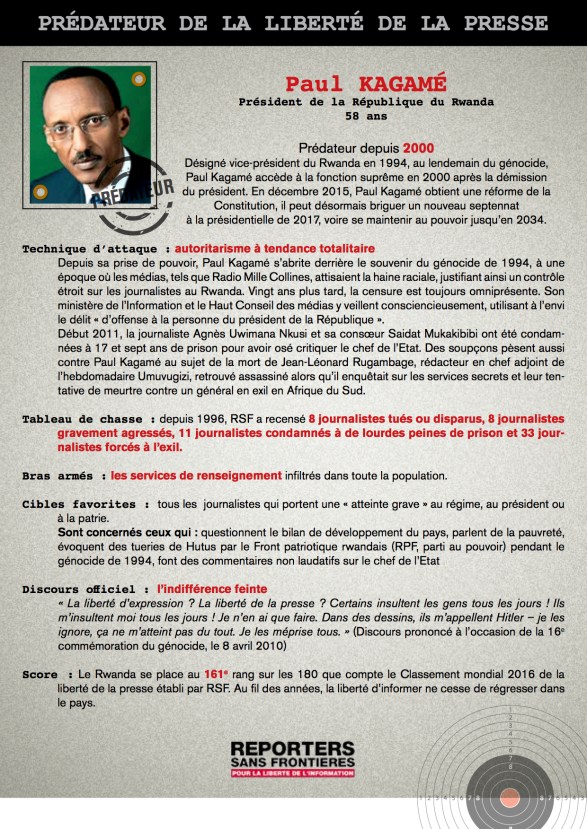
Au Classement mondial de la liberté de la presse établi par RSF en 2018, le Rwanda est 154e. Parmi les 58 Etats membres de l’OIF, seuls cinq pays ont un bilan pire que le Rwanda en matière de liberté d’information. Censure, menaces, arrestations, violences, assassinats… Le régime dirigé d’une main de fer par Paul Kagamé depuis 2000, et dont Louise Mushikiwabo est ministre depuis près de 10 ans, dispose de l’un des pires systèmes de répression à l’égard des médias et des journalistes. Son président occupe une place de choix dans la galerie des prédateurs de la presse constituée par RSF.

Kagame Prédateur

“Comment l’Organisation internationale de la francophonie (OIF) va-t-elle pouvoir favoriser le pluralisme des médias et la liberté de la presse conformément à ses objectifs en matière de droits de l’Homme, si elle est dirigée par l’une des principales dirigeantes d’un Etat qui piétine le droit à l’information et réprime les journalistes depuis 18 ans, s’inquiète Christophe Deloire, secrétaire général de RSF. C’est la capacité de l’OIF à défendre les médias et les journalistes libres comme acteurs incontournables du développement dans l’espace francophone qui est en jeu”.

Depuis 1996, huit journalistes ont été tués ou sont portés disparus et 35 ont été contraints à l’exil. Ces dernières années, le nombre d’exactions enregistrées par notre organisation a baissé mais la censure reste omniprésente et l’autocensure la règle pour éviter de faire partie du tableau de chasse du régime. Les programmes très écoutés de la BBC en Kinyarwanda sont suspendus depuis 2015, après que la chaîne a diffusé un documentaire évoquant des massacres provoqués par le Front patriotique rwandais (FPR) au moment du génocide des Tutsis de 1994.

Lors du XVIe sommet de la Francophonie à Antananarivo en novembre 2016, les chefs d’Etat et de gouvernement avaient rappelé leur engagement à “garantir la protection effective des journalistes et la liberté de la presse”.

Chaque année, l’OIF décerne le Prix francophone de l’innovation dans les médias avec RSF et RFI.

Source: Reporters Sans Frontières

Visite du ministre de la Défense du Rwanda au Canada: une rencontre qui dérange

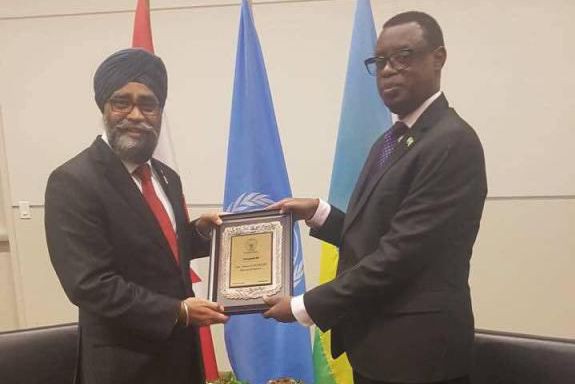
Le ministre canadien de la Défense Harjit Sajjan a-t-il erré en rencontrant son controversé homologue rwandais James Kabarebe, en novembre dernier à Vancouver ? C’est ce que croit un spécialiste du droit international, qui parle d’une « erreur diplomatique ». Roméo Dallaire croit au contraire que c’était approprié.

L’homme suscite la controverse.

ministre-defense-canada-harjit-sajjan

Ministre rwandais de la Défense, James Kabarebe est montré du doigt par les détracteurs du régime de Paul Kagame, qui l’accusent d’avoir joué un rôle important dans des exactions commises au Rwanda avant, pendant et après le génocide, ainsi qu’en République démocratique du Congo voisine, agitée par des troubles depuis trois décennies.

Cela ne l’a toutefois pas empêché de venir au Canada, en novembre dernier, pour assister à la Conférence des ministres de la Défense sur les opérations de maintien de la paix des Nations unies, qui s’est tenue à Vancouver.

En marge de cette conférence, une « rencontre bilatérale » a notamment permis aux deux ministres de discuter de coopération militaire entre le Canada et le Rwanda, rapportait alors le site internet d’information rwandais Igihe.

C’est « à titre d’hôte de cette Conférence [que] le ministre Sajjan a rencontré son homologue rwandais », a expliqué dans un courriel à La Presse la directrice des communications du ministre Sajjan, Renée Filiatrault.

Malgré les demandes répétées de La Presse depuis deux mois, le cabinet du ministre Sajjan n’a toutefois pas précisé si le passé du ministre rwandais avait été pris en considération lors de l’organisation de la rencontre entre les deux hommes.

VISÉ PAR LA JUSTICE FRANÇAISE ET ESPAGNOLE

Ancien compagnon d’armes de Paul Kagame, James Kabarebe était son aide de camp lorsque le Front patriotique rwandais (FPR) a pris le pouvoir à Kigali, en 1994.

Il a aidé ensuite le chef rebelle congolais Laurent-Désiré Kabila à renverser le dictateur Mobutu, en 1997 ; Kabila l’a nommé ensuite chef d’état-major des forces armées congolaises.

Il est cependant revenu rapidement au Rwanda, où le président Kagame l’a nommé à la tête de l’armée, en 2002, puis ministre de la Défense, en 2010.

Lors de son passage à Vancouver, en novembre, James Kabarebe était sous le coup d’une convocation par la justice française, qui désirait le confronter à un témoin accusant les anciens rebelles du FPR d’avoir abattu l’avion du président rwandais de l’époque, Juvénal Habyarimana.

Paul Kagame a toujours nié toute implication du FPR dans cet événement qui a marqué le début du génocide de 1994, l’imputant plutôt à des extrémistes hutus.

En 2006, à l’instar de huit autres proches de Paul Kagame, James Kabarebe avait fait l’objet d’un mandat d’arrêt dans le cadre de cette enquête, que la justice française a finalement close le 21 décembre dernier, après plus de 20 ans.

En 2008, James Kabarebe avait aussi fait l’objet d’un mandat d’arrêt de la justice espagnole, qui enquêtait sur des crimes commis entre 1990 et 2002 au Rwanda, notamment le meurtre de deux prêtres québécois.

Le père Claude Simard et le père Guy Pinard ont été assassinés respectivement en octobre 1994 et en février 1997 ; dans les deux cas, les soupçons ont été portés vers de hauts responsables militaires rwandais.

Les autorités rwandaises n’ont jamais élucidé ces deux assassinats.

Les mandats d’arrêt français et espagnol n’étaient plus en vigueur en novembre dernier, lors de la rencontre entre Harjit Sajjan et James Kabarebe.

Plus récemment, James Kabarebe aurait également été impliqué dans la violente rébellion qui a enflammé l’est de la République démocratique du Congo de 2009 à 2012.

Dans un rapport publié en 2012, les Nations unies affirmaient que le Rwanda armait et dirigeait les rebelles du Mouvement du 23 mars (M23), un groupe soupçonné de recruter des enfants soldats et de se livrer à des exactions contre la population civile.

Le rapport identifie James Kabarebe comme « un acteur central du recrutement pour le compte du M23 » et ajoute qu’il « a souvent été en contact direct avec des membres du M23 sur le terrain pour coordonner les activités militaires ».

Le rôle du Rwanda au Congo a d’ailleurs contribué au refroidissement des relations entre Kigali et Washington.

« ERREUR DIPLOMATIQUE »

« C’est une erreur diplomatique de la part du ministre [Sajjan] de l’avoir rencontré », tranche David Pavot, directeur du Bureau d’assistance juridique internationale de l’Université de Sherbrooke.

Même si James Kabarebe « a droit à la présomption d’innocence », il est visé par des allégations « assez sérieuses », poursuit le chercheur.

Ottawa avait adopté un décret accordant l’immunité aux ministres de la Défense et militaires de haut rang étrangers assistant à la conférence de Vancouver.

La pratique est usuelle à l’échelle internationale lors de tels événements, mais David Pavot « doute que [James Kabarebe] serait venu s’il n’avait pas obtenu les garanties offertes par le décret ». M. Pavot reproche à Ottawa d’être trop tolérant face au régime de Paul Kagame.

« Il y a une série de problèmes au Rwanda pour lesquels le gouvernement [canadien] met des oeillères », dit David Pavot, directeur du Bureau d’assistance juridique internationale de l’Université de Sherbrooke.

M. Pavot déplore que le discours progressiste du Canada ne se traduise pas par des actions.

Le professeur estime qu’Ottawa aurait pu « montrer l’exemple » en refusant l’entrée sur le territoire canadien au ministre rwandais de la Défense.

Le lieutenant-général à la retraite Roméo Dallaire, qui a également rencontré James Kabarebe à Vancouver, défend pour sa part la décision du ministre Sajjan de recevoir son homologue rwandais.

Selon lui, l’engagement du Rwanda dans les opérations de maintien de la paix des Nations unies – Kigali est le quatrième contributeur en importance – et dans la cause des enfants soldats « pèse plus dans la balance que des allégations du passé », a-t-il affirmé à La Presse.

« Je suis prêt à discuter avec un individu comme ça plus qu’avec bien d’autres », dit Roméo Dallaire, qui dirigeait le contingent onusien au Rwanda lors du génocide.

Roméo Dallaire confie avoir lui-même rencontré plusieurs fois James Kabarebe afin de former les militaires rwandais à la réalité des enfants soldats, même s’il reconnaît avoir eu avec lui d’importantes « divergences d’opinions ».

JEAN-THOMAS LÉVEILLÉMARC THIBODEAU
La Presse

America’s secret role in the rwandan genocide

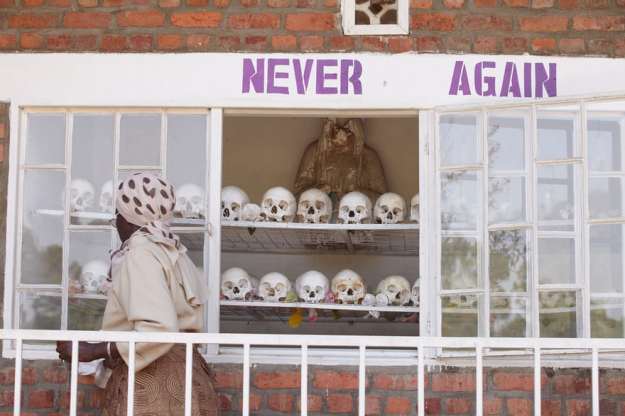
never againBetween April and July 1994, hundreds of thousands of Rwandans were murdered in the most rapid genocide ever recorded. The killers used simple tools – machetes, clubs and other blunt objects, or herded people into buildings and set them aflame with kerosene. Most of the victims were of minority Tutsi ethnicity; most of the killers belonged to the majority Hutus.

The Rwanda genocide has been compared to the Nazi Holocaust in its surreal brutality. But there is a fundamental difference between these two atrocities. No Jewish army posed a threat to Germany. Hitler targeted the Jews and other weak groups solely because of his own demented beliefs and the prevailing prejudices of the time. The Rwandan Hutu génocidaires, as the people who killed during the genocide were known, were also motivated by irrational beliefs and prejudices, but the powder keg contained another important ingredient: terror. Three and a half years before the genocide, a rebel army of mainly Rwandan Tutsi exiles known as the Rwandan Patriotic Front, or RPF, had invaded Rwanda and set up camps in the northern mountains. They had been armed and trained by neighbouring Uganda, which continued to supply them throughout the ensuing civil war, in violation of the UN charter, Organisation of African Unity rules, various Rwandan ceasefire and peace agreements, and the repeated promises of the Ugandan president, Yoweri Museveni.

During this period, officials at the US embassy in Kampala knew that weapons were crossing the border, and the CIA knew that the rebels’ growing military strength was escalating ethnic tensions within Rwanda to such a degree that hundreds of thousands of Rwandans might die in widespread ethnic violence. However, Washington not only ignored Uganda’s assistance to the Rwandan rebels, it also ramped up military and development aid to Museveni and then hailed him as a peacemaker once the genocide was underway.

The hatred the Hutu génocidaires unleashed represents the worst that human beings are capable of, but in considering what led to this disaster, it is important to bear in mind that the violence was not spontaneous. It emerged from a century or more of injustice and brutality on both sides, and although the génocidaires struck back against innocents, they were provoked by heavily armed rebels supplied by Uganda, while the US looked on.

The RPF rebel army represented Tutsi refugees who had fled their country in the early 1960s. For centuries before that, they had formed an elite minority caste in Rwanda. In a system continued under Belgian colonialism, they treated the Hutu peasants like serfs, forcing them to work on their land and sometimes beating them like donkeys. Hutu anger simmered until shortly before independence in 1962, then exploded in brutal pogroms against the Tutsi, hundreds of thousands of whom fled to neighbouring countries.

In Uganda, a new generation of Tutsi refugees grew up, but they soon became embroiled in the lethal politics of their adoptive country. Some formed alliances with Ugandan Tutsis and the closely related Hima – Museveni’s tribe – many of whom were opposition supporters and therefore seen as enemies by then-president Milton Obote, who ruled Uganda in the 1960s and again in the early 1980s.

After Idi Amin overthrew Obote in 1971, many Rwandan Tutsis moved out of the border refugee camps. Some tended the cattle of wealthy Ugandans; others acquired property and began farming; some married into Ugandan families; and a small number joined the State Research Bureau, Amin’s dreaded security apparatus, which inflicted terror on Ugandans. When Obote returned to power in the 1980s, he stripped the Rwandan Tutsis of their civil rights and ordered them into the refugee camps or back over the border into Rwanda, where they were not welcomed by the Hutu-dominated government. Those who refused to go were assaulted, raped and killed and their houses were destroyed.

In response to Obote’s abuses, more and more Rwandan refugees joined the National Resistance Army, an anti-Obote rebel group founded by Museveni in 1981. When Museveni’s rebels took power in 1986, a quarter of them were Rwandan Tutsi refugees, and Museveni granted them high ranks in Uganda’s new army.

Museveni’s promotion of the Rwandan refugees within the army generated not only resentment within Uganda, but terror within Rwanda where the majority Hutus had long feared an onslaught from Tutsi refugees. In 1972, some 75,000 educated Hutus – just about anyone who could read – had been massacred in Tutsi-ruled Burundi, a small country neighbouring Rwanda with a similar ethnic makeup. During the 1960s, Uganda’s Tutsi refugees had launched occasional armed strikes across the border, but Rwanda’s army easily fought them off. Each attack sparked reprisals against those Tutsis who remained inside Rwanda – many of whom were rounded up, tortured and killed – on mere suspicion of being supporters of the refugee fighters. By the late 1980s, a new generation of refugees, with training and weapons supplied by Museveni’s Uganda, represented a potentially far greater threat. According to the historian André Guichaoua, anger and fear hung over every bar-room altercation, every office dispute and every church sermon.

By the time Museveni took power, the plight of the Tutsi refugees had come to the attention of the west, which began pressuring Rwanda’s government to allow them to return. At first, Rwanda’s president, Juvénal Habyarimana, refused, protesting that Rwanda was among the most densely populated countries in the world, and its people, dependent upon peasant agriculture, needed land to survive. The population had grown since the refugees left, and Rwanda was now full, Habyarimana claimed.

Although he did not say so publicly, overpopulation almost certainly was not Habyarimana’s major concern. He knew the refugees’ leaders were not just interested in a few plots of land and some hoes. The RPF’s professed aim was refugee rights, but its true aim was an open secret throughout the Great Lakes region of Africa: to overthrow Habyarimana’s government and take over Rwanda by force. Museveni had even informed the Rwandan president that the Tutsi exiles might invade, and Habyarimana had also told US state department officials that he feared an invasion from Uganda.

One afternoon in early 1988 when the news was slow, Kiwanuka Lawrence Nsereko, a journalist with the Citizen, an independent Ugandan newspaper, stopped by to see an old friend at the ministry of transport in downtown Kampala. Two senior army officers, whom Lawrence knew, happened to be in the waiting room when he arrived. Like many of Museveni’s officers, they were Rwandan Tutsi refugees. After some polite preliminaries, Lawrence asked the men what they were doing there.

“We want some of our people to be in Rwanda,” one of them replied. Lawrence shuddered. He had grown up among Hutus who had fled Tutsi oppression in Rwanda before independence in 1962, as well as Tutsis who had fled the Hutu-led pogroms that followed it. Lawrence’s childhood catechist had been a Tutsi; the Hutus who worked in his family’s gardens wouldn’t attend his lessons. Instead, they swapped fantastic tales about how Tutsis once used their Hutu slaves as spittoons, expectorating into their mouths, instead of on the ground.

The officers went in to speak to the transport official first, and when Lawrence’s turn came, he asked his friend what had transpired. The official was elated. The Rwandans had come to express their support for a new open borders programme, he said. Soon Rwandans living in Uganda would be allowed to cross over and visit their relatives without a visa. This would help solve the vexing refugee issue, he explained.

Lawrence was less sanguine. He suspected the Rwandans might use the open borders programme to conduct surveillance for an invasion, or even carry out attacks inside Rwanda. A few days later, he dropped in on a Rwandan Tutsi colonel in Uganda’s army, named Stephen Ndugute.

“We are going back to Rwanda,” the colonel said. (When the RPF eventually took over Rwanda in 1994, Ndugute would be second in command.)

Many Ugandans were eager to see Museveni’s Rwandan officers depart. They were not only occupying senior army positions many Ugandans felt should be held by Ugandans, but some were also notorious for their brutality. Paul Kagame, who went on to lead the RPF takeover of Rwanda and has ruled Rwanda since the genocide, was acting chief of military intelligence, in whose headquarters Lawrence himself had been tortured. In northern and eastern Uganda, where a harsh counterinsurgency campaign was underway, some of the army’s worst abuses had been committed by Rwandan Tutsi officers. In 1989, for example, soldiers under the command of Chris Bunyenyezi, also an RPF leader, herded scores of suspected rebels in the village of Mukura into an empty railway wagon with no ventilation, locked the doors and allowed them to die of suffocation.

Lawrence had little doubt that if war broke out in Rwanda, it was going to be “very, very bloody”, he told me. He decided to alert Rwanda’s president. Habyarimana agreed to meet him during a state visit to Tanzania. At a hotel in Dar es Salaam, the 20-year-old journalist warned the Rwandan leader about the dangers of the open border programme. “Don’t worry,” Lawrence says Habyarimana told him. “Museveni is my friend and would never allow the RPF to invade.”

Habyarimana was bluffing. The open border programme was actually part of his own ruthless counter-strategy. Every person inside Rwanda visited by a Tutsi refugee would be followed by state agents and automatically branded an RPF sympathiser; many were arrested, tortured, and killed by Rwandan government operatives. The Tutsis inside Rwanda thus became pawns in a power struggle between the RPF exiles and Habyarimana’s government. Five years later, they would be crushed altogether in one of the worst genocides ever recorded.

On the morning of 1 October 1990, thousands of RPF fighters gathered in a football stadium in western Uganda about 20 miles from the Rwandan border. Some were Rwandan Tutsi deserters from Uganda’s army; others were volunteers from the refugee camps. Two nearby hospitals were readied for casualties. When locals asked what was going on, Fred Rwigyema, who was both a Ugandan army commander and the leader of the RPF, said they were preparing for Uganda’s upcoming Independence Day celebrations, but some excited rebels let the true purpose of their mission leak out. They crossed into Rwanda that afternoon. The Rwandan army, with help from French and Zairean commandos, stopped their advance and the rebels retreated back into Uganda. A short time later, they invaded again and eventually established bases in northern Rwanda’s Virunga mountains.

Presidents Museveni and Habyarimana were attending a Unicef conference in New York at the time. They were staying in the same hotel and Museveni rang Habyarimana’s room at 5am to say he had just learned that 14 of his Rwandan Tutsi officers had deserted and crossed into Rwanda. “I would like to make it very clear,” the Ugandan president reportedly said, “that we did not know about the desertion of these boys” – meaning the Rwandans, not 14, but thousands of whom had just invaded Habyarimana’s country – “nor do we support it.”

In Washington a few days later, Museveni told the State Department’s Africa chief, Herman Cohen, that he would court martial the Rwandan deserters if they attempted to cross back into Uganda. But a few days after that, he quietly requested France and Belgium not to assist the Rwandan government in repelling the invasion. Cohen writes that he now believes that Museveni must have been feigning shock, when he knew what was going on all along.

When Museveni returned to Uganda, Robert Gribbin, then deputy chief of mission at the US embassy in Kampala, had some “stiff talking points” for him. Stop the invasion at once, the American said, and ensure no support flowed to the RPF from Uganda.

Museveni had already issued a statement promising to seal all Uganda–Rwanda border crossings, provide no assistance to the RPF and arrest any rebels who tried to return to Uganda. But he proceeded to do none of those things and the Americans appear to have made no objection.

When the RPF launched its invasion, Kagame, then a senior officer in both the Ugandan army and the RPF, was in Kansas at the United States Army Command and General Staff College at Fort Leavenworth, studying field tactics and psyops, propaganda techniques to win hearts and minds. But after four RPF commanders were killed, he told his American instructors that he was dropping out to join the Rwandan invasion. The Americans apparently supported this decision and Kagame flew into Entebbe airport, travelled to the Rwandan border by road, and crossed over to take command of the rebels.

For the next three and a half years, the Ugandan army continued to supply Kagame’s fighters with provisions and weapons, and allow his soldiers free passage back and forth across the border. In 1991, Habyarimana accused Museveni of allowing the RPF to attack Rwanda from protected bases on Ugandan territory. When a Ugandan journalist published an article in the government-owned New Vision newspaper revealing the existence of these bases, Museveni threatened to charge the journalist and his editor with sedition. The entire border area was cordoned off. Even a French and Italian military inspection team was denied access.

In October 1993, the UN security council authorised a peacekeeping force to ensure no weapons crossed the border. The peacekeepers’ commander, Canadian Lt-Gen Roméo Dallaire, spent most of his time inside Rwanda, but he also visited the Ugandan border town of Kabale, where an officer told him that his inspectors would have to provide the Ugandan army with 12 hours’ notice so that escorts could be arranged to accompany them on their border patrols. Dallaire protested: the element of surprise is crucial for such monitoring missions. But the Ugandans insisted and eventually, Dallaire, who was much more concerned about developments inside Rwanda, gave up.

The border was a sieve anyway, as Dallaire later wrote. There were five official crossing sites and countless unmapped mountain trails. It was impossible to monitor. Dallaire had also heard that an arsenal in Mbarara, a Ugandan town about 80 miles from the Rwanda border, was being used to supply the RPF. The Ugandans refused to allow Dallaire’s peacekeepers to inspect that. In 2004, Dallaire told a US congressional hearing that Museveni had laughed in his face when they met at a gathering to commemorate the 10th anniversary of the genocide. “I remember that UN mission on the border,” Museveni reportedly told him. “We manoeuvred ways to get around it, and of course we did support the [RPF].”

US officials knew that Museveni was not honouring his promise to court martial RPF leaders. The US was monitoring Ugandan weapons shipments to the RPF in 1992, but instead of punishing Museveni, western donors including the US doubled aid to his government and allowed his defence spending to balloon to 48% of Uganda’s budget, compared with 13% for education and 5% for health, even as Aids was ravaging the country. In 1991, Uganda purchased 10 times more US weapons than in the preceding 40 years combined.

The 1990 Rwanda invasion, and the US’s tacit support for it, is all the more disturbing because in the months before it occurred, Habyarimana had acceded to many of the international community’s demands, including for the return of refugees and a multiparty democratic system. So it wasn’t clear what the RPF was fighting for. Certainly, negotiations over refugee repatriation would have dragged on and might not have been resolved to the RPF’s satisfaction, or at all. But negotiations appear to have been abandoned abruptly in favour of war.

At least one American was concerned about this. The US ambassador to Rwanda, Robert Flaten, saw with his own eyes that the RPF invasion had caused terror in Rwanda. After the invasion, hundreds of thousands of mostly Hutu villagers fled RPF-held areas, saying they had seen abductions and killings. Flaten urged the George HW Bush’s administration to impose sanctions on Uganda, as it had on Iraq after the Kuwait invasion earlier that year. But unlike Saddam Hussein, who was routed from Kuwait, Museveni received only Gribbin’s “stiff questions” about the RPF’s invasion of Rwanda.

“In short,” Gribbin writes, “we said that the cat was out of the bag, and neither the United States nor Uganda was going to rebag it.” Sanctioning Museveni might have harmed US interests in Uganda, he explains. “We sought a stable nation after years of violence and uncertainty. We encouraged nascent democratic initiatives. We supported a full range of economic reforms.” But the US was not fostering nascent democratic initiatives inside Uganda. While pressuring other countries, including Rwanda, to open up political space, Uganda’s donors were allowing Museveni to ban political party activity, arrest journalists and editors, and conduct brutal counterinsurgency operations in which civilians were tortured and killed. And far from seeking stability, the US, by allowing Uganda to arm the RPF, was setting the stage for what would turn out to be the worst outbreak of violence ever recorded on the African continent. Years later, Cohen expressed regret for failing to pressure Uganda to stop supporting the RPF, but by then it was far too late.

For Habyarimana and his circle of Hutu elites, the RPF invasion seemed to have a silver lining, at least at first. At the time, Hutu/Tutsi relations inside Rwanda had improved. Habyarimana had sought reconciliation with the Tutsis still living in Rwanda by reserving civil service jobs and university places for them in proportion to their share of the population. This programme was modestly successful, and the greatest tensions in the country now lay along class, not ethnic, lines. A tiny educated Hutu clique linked to Habyarimana’s family who called themselves évolués –the evolved ones – was living off the labour of millions of impoverished rural Hutus, whom they exploited just as brutally as the Tutsi overlords of bygone days.

The évolués subjected the peasants to forced labour and fattened themselves on World Bank “anti-poverty” projects that provided jobs and other perks for their own group, but did little to alleviate poverty. International aid donors had pressured Habyarimana to allow opposition political parties to operate, and many new ones had sprung up. Hutus and Tutsis were increasingly united in criticising Habyarimana’s autocratic behaviour and nepotism, and the vast economic inequalities in the country.

When Rwanda’s ethnic bonfires roared back to life in the days after the RPF invasion, Habyarimana and his circle seem to have sensed a political opportunity: now they could distract the disaffected Hutu masses from their own abuses by reawakening fears of the “demon Tutsis”, who would soon become convenient scapegoats to divert attention from profound socioeconomic injustices.

Shortly after the invasion, all Tutsis – whether RPF supporters or not – became targets of a vicious propaganda campaign that would bear hideous fruit in April 1994. Chauvinist Hutu newspapers, magazines and radio programmes began reminding Hutu audiences that they were the original occupants of the Great Lakes region and that Tutsis were Nilotics – supposedly warlike pastoralists from Ethiopia who had conquered and enslaved them in the 17th century. The RPF invasion was nothing more than a plot by Museveni, Kagame and their Tutsi co-conspirators to re-establish this evil Nilotic empire. Cartoons of Tutsis killing Hutus began appearing in magazines, along with warnings that all Tutsis were RPF spies bent on dragging the country back to the days when the Tutsi queen supposedly rose from her seat supported by swords driven between the shoulders of Hutu children. In December 1993, a picture of a machete appeared on the front page of a Hutu publication under the headline “What to do about the Tutsis?”

Habyarimana knew that the RPF, thanks to Ugandan backing, was better armed, trained and disciplined than his own army. Under immense international pressure, he had agreed in August 1993 to grant the RPF seats in a transitional government and nearly half of all posts in the army. Even Tutsis inside Rwanda were against giving the RPF so much power because they knew it could provoke the angry, fearful Hutus even more, and they were right. As Habyarimana’s increasingly weak government reluctantly acceded to the RPF’s demands for power, Hutu extremist mayors and other local officials began stockpiling rifles, and government-linked anti-Tutsi militia groups began distributing machetes and kerosene to prospective génocidaires. In January 1994, four months before the genocide, the CIA predicted that if tensions were not somehow defused, hundreds of thousands of people would die in ethnic violence. The powder keg awaited a spark to set it off.

That spark arrived at about 8pm on 6 April 1994, when rockets fired from positions close to Kigali airport shot down Habyarimana’s plane as it was preparing to land. The next morning, frantic Hutu militia groups, convinced that the Nilotic apocalypse was at hand, launched a ferocious attack against their Tutsi neighbours.

Few subjects are more polarising than the modern history of Rwanda. Questions such as “Has the RPF committed human rights abuses?” or “Who shot down President Habyarimana’s plane?” have been known to trigger riots at academic conferences. The Rwandan government bans and expels critical scholars from the country, labelling them “enemies of Rwanda” and “genocide deniers”, and Kagame has stated that he doesn’t think that “anyone in the media, UN [or] human rights organisations has any moral right whatsoever to level any accusations against me or Rwanda”.

Be that as it may, several lines of evidence suggest that the RPF was responsible for the downing of Habyarimana’s plane. The missiles used were Russian-made SA-16s. The Rwandan army was not known to possess these weapons, but the RPF had them at least since May 1991. Two SA-16 single-use launchers were also found in a valley near Masaka Hill, an area within range of the airport that was accessible to the RPF. According to the Russian military prosecutor’s office, the launchers had been sold to Uganda by the USSR in 1987.

Since 1997, five additional investigations of the crash have been carried out, including one by a UN-appointed team, and one each by French and Spanish judges working independently. These three concluded that the RPF was probably responsible. Two Rwandan government investigations conversely concluded that Hutu elites and members of Habyarimana’s own army were responsible.

2012 report on the crash commissioned by two French judges supposedly exonerated the RPF. But this report, although widely publicised as definitive, actually was not. The authors used ballistic and acoustic evidence to argue that the missiles were probably fired by the Rwandan army from Kanombe military barracks. But they admit that their technical findings could not exclude the possibility that the missiles were fired from Masaka Hill, where the launchers were found. The report also fails to explain how the Rwandan army, which was not known to possess SA-16s, could have shot down the plane using them.

Soon after the plane crash, the génocidaires began their attack against the Tutsis, and the RPF began advancing. But the rebels’ troop movements suggested that their primary priority was conquering the country, not saving Tutsi civilians. Rather than heading south, where most of the killings were taking place, the RPF circled around Kigali. By the time it reached the capital weeks later, most of the Tutsis there were dead.

When the UN peacekeeper Dallaire met RPF commander Kagame during the genocide, he asked about the delay. “He knew full well that every day of fighting on the periphery meant certain death for Tutsis still behind [Rwanda government forces] lines,” Dallaire wrote in Shake Hands With the Devil. “[Kagame] ignored the implications of my question.”

In the years that followed, Bill Clinton apologised numerous times for the US’s inaction during the genocide. “If we’d gone in sooner, I believe we could have saved at least a third of the lives that were lost,” he told journalist Tania Bryer in 2013. Instead, Europeans and Americans extracted their own citizens and the UN peacekeepers quietly withdrew. But Dallaire indicates that Kagame would have rejected Clinton’s help in any case. “The international community is looking at sending an intervention force on humanitarian grounds,” Kagame told Dallaire. “But for what reason? If an intervention force is sent to Rwanda, we,” – meaning the RPF – “will fight it.”


As the RPF advanced, Hutu refugees fled into neighbouring countries. In late April, television stations around the world broadcast images of thousands upon thousands of them crossing the Rusumo Bridge from Rwanda into Tanzania, as the bloated corpses of Rwandans floated down the Kagera river beneath them. Most viewers assumed that all the corpses were Tutsis killed by Hutu génocidaires. But the river drains mainly from areas then held by the RPF, and Mark Prutsalis, a UN official working in the Tanzanian refugee camps, maintains that at least some of the bodies were probably Hutu victims of reprisal killings by the RPF. One refugee after another told him that RPF soldiers had gone house to house in Hutu areas, dragging people out, tying them up and throwing them in the river. The UN estimated later that the RPF killed some 10,000 civilians each month during the genocide.

Lawrence Nsereko was among the journalists on the Rusumo Bridge that day and as the bodies floated by, he noticed something strange. The upper arms of some of them had been tied with ropes behind their backs. In Uganda, this method of restraint is known as the “three-piece tie”; it puts extreme pressure on the breastbone, causing searing pain, and may result in gangrene. Amnesty International had recently highlighted it as a signature torture method of Museveni’s army, and Lawrence wondered whether the RPF had learned this technique from their Ugandan patrons.

In June 1994, while the slaughter in Rwanda was still underway, Museveni travelled to Minneapolis, where he received a Hubert H Humphrey public service medal and honorary doctorate from the University of Minnesota. The dean, a former World Bank official, praised Museveni for ending human rights abuses in Uganda and preparing his country for multiparty democracy. Western journalists and academics showered Museveni with praise. “Uganda [is] one of the few flickers of hope for the future of black Africa,” wrote one. The New York Times compared the Ugandan leader to Nelson Mandela, and Time magazine hailed him as a “herdsman and philosopher” and “central Africa’s intellectual compass.”

Museveni also visited Washington on that trip, where he met with Clinton and his national security adviser, Anthony Lake. I could find no record of what the men discussed, but I can imagine the Americans lamenting the tragedy in Rwanda, and the Ugandan explaining that this disaster only confirmed his long-held theory that Africans were too attached to clan loyalties for multiparty democracy. The continent’s ignorant peasants belonged under the control of autocrats like himself.

Helen C Epstein

This is an adapted extract from Another Fine Mess: America, Uganda and the War on Terror, published by Columbia Global Reports. To order a copy for £9.34, go to guardianbookshop.com or call 0330 333 6846. Free UK p&p over £10, online orders only. Phone orders min. p&p of £1.99.


EU supports multilateral global governance, based on international law, human rights and strong international institutions

Mogherini

EU High representative Federica MOGHERINI

Declaration by the High Representative, Federica Mogherini, on behalf of the European Union on the occasion of the Day of International Criminal Justice, 17 July 2017

The 17th of July marks the date of the adoption of the Rome Statute of the International Criminal Court in 1998. This day is dedicated to celebrating the developments and achievements of international criminal justice institutions and to remind us that we need to continue working, at both national and international levels, to ensure that the perpetrators of the most serious crimes are brought to justice and held to account.

On this occasion, the European Union and its Member States reaffirm their full support to the International Criminal Court and to the strengthening of an international criminal justice system committed to deter the commission of crimes, to fight impunity and to ensure the protection of the victims’ rights.

Justice is one of the core elements towards reconciliation and sustainable peace. Without justice, the most heinous crimes go unpunished, victims are unable to obtain redress and peace remains an elusive goal, since impunity generates more hatred, leading to acts of revenge and more suffering.

The European Union is one of the main donors in support of justice sector reform worldwide, strengthening law enforcement and justice institutions, promoting independent and impartial justice, and supporting access to justice for all. Since 2000, we have committed €37 million in direct support of the International Criminal Court.

The European Union has been also supporting transitional justice initiatives and international justice mechanisms related to specific countries. In the case of Syria, the EU has recently allocated funding amounting to €1,5 million to the International, Impartial and Independent Mechanism to Assist in the Investigation and Prosecution of Persons Responsible for the Most Serious Crimes under International Law Committed in Syria. The EU calls on the international community to support to the Mechanism, including through adequate financial means, to ensure that it would be able to start work as soon as possible and fulfil its mandate, in line with the principles of universality and at the highest level of professionalism.

The European Union will continue to fully support multilateral global governance, based on international law, human rights and strong international institutions. In this regard, we remain committed to advance our fight against impunity, and to promote the universal ratification of the Rome Statute.

Source: European Union

Kagame i Vatikani: Iyo umugabo yasumbirijwe asubira ku cyo yangana !

IMG-20170320-WA0088

UMUNYAGITUGU PAUL KAGAME YAHAWE UMUKORO WO GUSUBIZA UBUSITANI AHO YAHINDUYE UBUTAYU !

1.Mu gihe abanyamahanga benshi mu bamufashije kugera ku butegetsi bamaze kumutahura bakaba bakomeje kumutera utwatsi kubera inyota ye ikabije y’ubutegetsi, Umunyagitugu Paul Kagame ahisemo kugarukira Kiliziya Gatolika yari yarateye umugongo  n’imijugujugu mu gihe cy’imyaka isaga 23 amaze ku butegetsi.

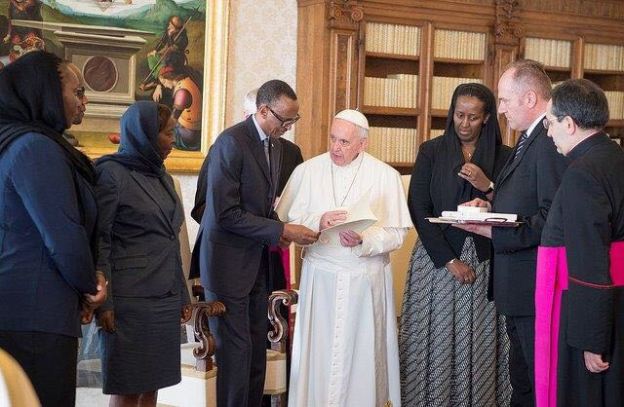
2.Koko rero guhera taliki ya 19 kugera kuya 20 /3/2017 Umunyagitugu Paul Kagame ari mu ruzinduko i Vatikani.  Uru ruzinduko yari yararwifuje cyane muri iyi minsi ye ya nyuma: ni ubwambere yicishije bugufi akagaragaza ko akeneye cyane  kuvugana n’umushumba wa Kiliziya gatolika.

3.Nk’uko twese tubyibuka, guhera mu mwaka w’1994 Umunyagitugu Paul Kagame  yaranzwe no gutinya Kiliziya Gatolika, kuyiharabika, kuyitoteza bya hato na hato no kuyigirira nabi mu buryo bwinshi bunyuranye. Ntacyo atakoze ngo ayicengere, bimunaniye ashakisha uko yayibabaza bikomeye, byamushobokera akayisenya ikavaho . Yagerageje kuyica umutwe mu kwica  Abepiskopi bane, afunga Musenyeri Misago , abapadiri , ababikira n’Abafurere batagira ingano  kandi atorongeza abandi Bihayimana benshi.

4.N’ubwo bivugwa ko Umunyagitugu Paul Kagame yaba yarabatijwe ndetse akaba ari umuyoboke wa Kiliziya Gatolika, yakunze kwigaragaza nk’umuntu w’indakoreka, udaha agaciro na gake iyobokamana, haba mu magambo ye ndetse no mu bikorwa.

5.Ubwo rero yisubiyeho agafata icyemezo cyo kujya i Vatikani kwivuganira na Nyirubutungane Papa Francis, maze Papa nawe akamwakira nk’umubyeyi udahutaza umwana w’ikirara, turasanga iyi ntambwe itewe ikwiye gushimwa kuko ishobora kugirira Abanyarwanda bose akamaro.

6.Ibyo Paul Kagame yaganiriye n’abayobozi bakuru ba Kiliziya gatolika ni byinshi kandi ntabwo byose byavugwa mu itangazo risoza uru ruzinduko. Ikitashyizwe mu itangazamakuru ni uko yabwijwe ukuri ku byerekeye ibibazo bikomereye igihugu cyacu ndetse n’akarere k’Ibiyaga bigari, n’uruhare rukomeye abifitemo .

7.Mu mpano Umunyagitugu Paul Kagame yahawe uretse ibitabo bitatu byanditswe na Papa Francis, yashyikirijwe kandi  n’UMUDARI ushushanyijeho UBUTAYU, Papa akaba yahaye Paul Kagame umukoro wo gukora ibishoboka byose akagarura  UBUSITANI aho yahinduye .

8.Twese tuzi ukuntu u Rwanda ndetse n’Akarere k’Ibiyaga bigari Umunyagitugu Paul Kagame yahahinduye ubutayu. Abaturage b’u Rwanda bageze igihe  “barya imbwa” kubera kwicishwa inzara, akarengane kahawe intebe, urubuga rwa politiki rufunze, ivangura mu itangwa ry’imirimo n’amashuri ryarenze igipimo…. Paul Kagame ageze n’ubwo afunga Kaminuza ya Gitwe kuko ariyo yonyine yahaga abana bose itavanguye amahirwe yo kwiga iby’ubuvuzi !

  1. Kuba Papa atangaza ko “asaba Imana imbabazi” ku byaha bikomeye byakozwe n’abakirisitu gatolika harimo na Jenoside ntakwiye kubigayirwa kuko ari inshingano ye nk’umushumba. Umunyagitugu Paul Kagame nawe ubwe yabitangariye atangaza ku rubuga rwe rwa Twitter ko abibonamo igikorwa cy’ubutwari n’ubweramutima bukomeye .
  2. Icyo Nyirubutungane Papa Francis yashatse kwigisha Umunyagitugu Paul Kagame ni uko umunyabyaha ukwiye gusaba imbabazi kurusha abandi ari Paul KAGAME ubwe kuko ariwe wikoreye ku mutwe we ibyaha bikomeye cyane byahemukiye benshi. Abo yapfakaje, abo yagize impfubyi,abo yagize incike ….bamutezeho guhinduka mu mutima akabasaba imbabazi ku mugaragaro. Bitabaye ibyo urugendo avuyemo i Vatikani ruzamuviramo urubanza rukarishye mu minsi itarambiranye.

Umwanzuro

Twizeye ko uruzinduko rw’Umunyagitugu Paul Kagame i Vatikani rutaje nka ya mvugo ngo: “Iyo umugabo yasumbirijwe asubira ku cyo yangaga”.

Ubwo Paul Kagame yiviriye i Vatikani twizeye ko :

1.Yemera ko Abasenyeri  Visenti Nsengiyumva na Yozefu Ruzindana yishe bakaba bagicumbikiwe by’agateganyo mu gituro kimwe i Kabwayi bajya gushyingurwa mu cyubahiro muri Katedalari zabo I Kigali n’i Byumba

2.Agiye guha abasenyeri ba Kiliziya Gatolika amahoro ntazongere kubabuza uburyo abahatira gukora ibitari mu nshingano zabo

  1. Afungura imfungwa zose zifungiye ubusa zirimo Victoire Ingabire na Deogratias Mushayidi
  2. Akingura urubuga rwa politiki , amashyaka ya politiki akiyandikisha mu mutuzo kandi akazagira uruhare mu matora yegereje
  3. Yihutira kuganira na Guverinoma y’u Rwanda ikorera mu buhungiro nayo iremo yitegura kujya kuganira na Nyirubutungane Papa Francis.

Harakabaho Repubulika y’u Rwanda

Harakabaho umubano mwiza hagati ya Vatikani  n’u Rwanda

Padiri Thomas Nahimana,

Perezida wa Guverinoma y’u Rwanda ikorera mu buhungiro

Umukandida mu matora ya Perezida wa Repubulika yo mu 2017.

Will UK Aid to Rwanda be reviewed after General Karake Karenzi arrest?

There is no guarantee for such outcome.

The case of Rwanda in UK foreign policy seems entrenched within national/ internal priorities in terms of justification of AID to development.

Rwanda is wrongly perceived as a model of success of aid to development throughout the UK political circles, from Labour to Conservatives, the two main political parties.

UK has fallen victim of the Rwandan “economic miracle” promoted by specialist PR companies that Kigali has over the years hired at the cost of millions of $ to portray a fake development of the country where 82% of Rwandans still live under $2 a day.

The Podcast RWANDA: Has Britain been beguiled, which was aired by BBC Radio 4 on Thursday 16/07/15, broadcasts (starting from minute 00.02.23) the context of the arrest of Karake Karenzi.

It emerges from the programme that Britain might not change necessarily its AID policy towards Rwanda because of UK internal political vested interests and despite serious allegations against Karake Karenzi and his RPF colleagues.

Former conservative minister Andrew Mitchell and Cherie Blair leading Karake Karenzi defense team appear convinced that the case in contention should not change the nature of existing relations between the two countries.

Though there are other voices in UK calling for making more conditional to improvement of human rights any aid to development given to Rwanda.

The risingcontinent

BRICS Bank open for business

BricsParticipants in the BRICS Finance Ministers and Central Bank Governors’ Meeting, Meeting of the Board of Governors of the BRICS New Development Bank on 7 July 2015 in Moscow, Russia

The long-heralded New Development Bank (NDB) or the BRICS Bank officially commenced business on Tuesday with the first meeting of its board of governors in Moscow.

The NDB with about $50 billion in capital to invest in public infrastructure will compete with institutions where the US has considerably more influence—organizations such as the World Bank and the International Monetary Fund.

The agreement was signed by the bloc’s five members — Brazil, Russia, India, China and South Africa — on July 15 last year during the sixth BRICS summit.

The board of governors appointed members of the BRICS board of directors and the management led by the president, Kundapur Vaman Kamath.

The board meet on Tuesday in Moscow also discussed rules regarding procedures and the bank’s five-year development strategy.

The bank will aim to “promote reform of global economic governance” China’s Finance Minister Lou Jiwei had said earlier.

The inaugural management team will take their posts in Shanghai in mid-July.

The NDB is expected to launch late this year or early next year.

The bank has an initial authorized capital of $100 billion.

Its initial subscribed capital of $50 billion will be equally shared among the founding members.

It will have a three-tier governance structure — a board of governors, a board of directors, a president and vice presidents.

As agreed by the five countries, the first chair of the board of governors has been nominated by Russia, the first chair of the board of directors by Brazil, and the first president by India.

An African regional center of the bank will be based in Johannesburg, South Africa.

“The bank’s establishment will be an important achievement for financial cooperation among BRICS members,” said China’s Finance Minister Lou Jiwei.

The Chinese government is providing $10 billion as prescribed for the initial subscribed capital.

The BRICS central bank governors on Tuesday also signed an operating agreement on the $100 billion monetary fund.

The BRICS Contingent Reserve Arrangement (CRA) will come into force on 30 July, Head of the Russian Central Bank Elvira Nabiullina said after the meet on Tuesday in Moscow.

“Several other documents will be adopted to regulate the operation of governing bodies – the Governing Council and the Standing Committee,” said Nabiullina.

TBP

Source: BRICSPOST

United States has suspended upcoming training for the Burundian military

usdos-logo-sealPress Statement

John Kirby
Department Spokesperson
Washington, DC
July 2, 2015

Burundian President Pierre Nkurunziza’s continued disregard for the Arusha Agreement has resulted in dozens of deaths, the exodus of over 144,000 Burundians to neighboring countries, and a freefall in the Burundian economy causing suffering to millions of Burundians. The Burundian Government’s decision to push forward with the June 29 parliamentary elections despite the complete absence of the necessary conditions for credible elections and widespread calls, including from the African Union and United Nations, to delay the voting further exacerbated an already dire situation.

With presidential elections now scheduled for July 15, the United States joins with the African Union, the United Nations, the European Union, and other regional bodies and leaders in urging President Nkurunziza to place the welfare of Burundi’s citizens above his own political ambitions and participate in dialogue with the opposition and civil society to identify a peaceful solution to this deepening crisis. This solution should include the delay of the July 15 presidential elections until conditions are in place for free, fair, and peaceful elections.

Due to the precarious political and security situation in Burundi and the Government of Burundi’s unwillingness to engage in good faith efforts to negotiate a solution, the United States has today suspended several security assistance programs on which it has cooperated with Burundi. In response to the abuses committed by members of the police during political protests, we are suspending all International Law Enforcement Academy and Anti-Terrorism Assistance training that we provide to Burundian law enforcement agencies.

Recognizing that Burundi’s National Defense Force has generally acted professionally in protecting civilians during protests, the United States continues to value our partnership with the Burundian military and urges them to maintain professionalism and respect for the rule of law. However, due to the instability caused by the Burundian Government’s disregard for the Arusha Agreement and its decision to proceed with flawed parliamentary elections, the United States is unable to conduct peacekeeping and other training in Burundi. As a result, the United States has suspended upcoming training for the Burundian military under the Department of Defense’s Section 1206 Train and Equip program, as well as training and assistance under the Africa Military Education Program. We remain deeply concerned that the current crisis will further hamper our ability to support the important contribution of the Burundian military to international peacekeeping.

Finally, during our upcoming review of Burundi’s eligibility for the trade preferences available to it under the African Growth and Opportunity Act, we will be taking into consideration ongoing violence and instability and the Government of Burundi’s lack of respect for the rule of law in determining their eligibility for these trade preferences moving forward.