Category Archives: Views

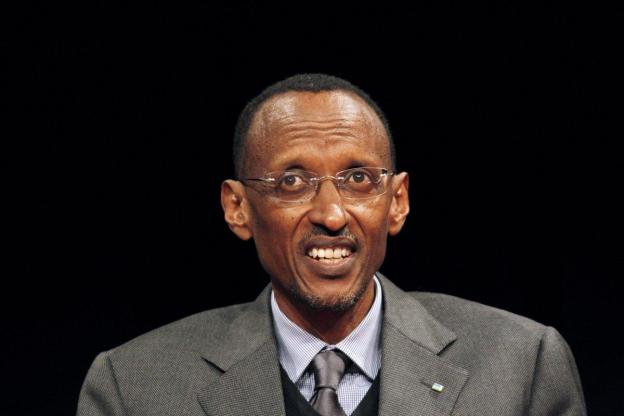
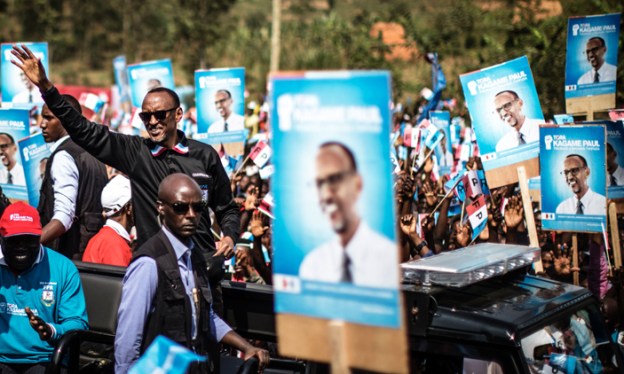
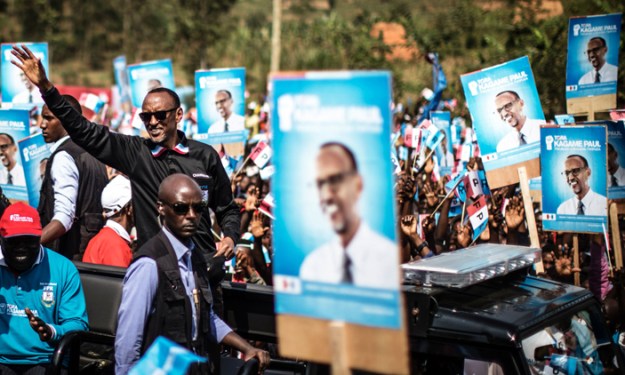
The danger of unchallenged myth: The lie that is Rwandan President Paul Kagame.


1*9mch3Fn5a2fXGPQ7M-Byng@2xThe danger of an unchallenged myth: The lie that is Rwandan President Paul Kagame

When I set about writing this, two poignant quotes kept bouncing around in my head, which describe everything I want to express in this column. The first, by Martin Luther King goes thus: “Nothing in all the world is more dangerous than sincere ignorance and conscientious stupidity.” The second quote, from a speech by US President John F. Kennedy at Yale University goes thus: “For the great enemy of truth is very often not the lie — deliberate, contrived and dishonest — but the myth — persistent, persuasive, and unrealistic.”

These two quotes perfectly sum up my views on the sudden appearance of Paul Kagame as a kite being flown within Nigerian political and policy circles. Regardless of who is behind the sudden emergence of an East African strongman as a purported example for Nigerian or African leadership, it is very important to question and challenge this dangerous narrative before it takes root and begins to infect national decision making, as is so often the case. The case for Kagame-style leadership as a panacea to African development issues hinges on two major beliefs: that Kagame is a “benevolent dictator” who leads with his country’s interests in mind, and that he is a “competent dictator” who knows how to get things done and achieve results.

Let us briefly interrogate these two notions.

The ‘benevolent dictator’ is fictional

What is most commonly used to sell the myth of Paul Kagame is the idea that he is some sort of patriotic strongman – the father of the modern Rwandan nation who came in like a hero at the country’s darkest hour to steer it away from genocidal division toward the cusp of a 21st century economic breakout. His “example” is typically cited by non-Rwandan Africans as a stark contrast to their incompetent and corrupt (elected) governments. “If only Kagame’s peers across Africa could be like him! Africa would be so developed by now!”

This myth conveniently ignores some very inconvenient facts that tell a completely different story about who Kagame is and what the modern state of Rwanda is actually built on. First of all, Kagame’s portrayal as a hero in the context of the events of 1994 could not be wider of the mark. It often comes as a shock to many who discover upon some cursory reading, that there was a second genocide happening almost concurrently in Rwanda as well as in neighbouring Burundi and Eastern DRC in 1994. This genocide, which was characterised by massacres and rapes of hundreds of thousands of Hutu civilians and refugees between 1990 and 1996, was twice recognised the UN in 1997 and 1998 as a genocide under Article 2 of the 1948 Genocide Convention.

Paul Kagame’s Rwandan Patriotic Front (RPF), and later on his Rwandan-backed Alliance of Democratic Forces for the Liberation of Congo-Zaire (AFDL), were repeatedly implicated in these sordid events, but the sheer ferocity of the 1994 Tutsi genocide perhaps allowed him to fly under the radar as the lesser of two evils. By invoking the memory of April 1994 at every opportunity, Kagame has successfully convinced the world to forget that he was in fact, a tribal warlord fighting an illegitimate war against an elected government, before a series of “convenient” events led him into power in Kigali.

What Kagame really is more than anything else, is an opportunist – the ruthless winner who got to write history and cynically exploit the world’s emotions by presenting a complicated – and by no means concluded – conflict as a 3-month spurt of madness that he heroically ended. Rather than contextualise the Rwandan genocide as part of a wider African Great Lakes regional crisis, and acknowledge the ongoing role of the Kagame regime in destabilising and plundering the Eastern DRC, Africa and the world have falled for his contrived and carefully cultivated leadership myth, allowing him to repeatedly escape difficult questions.

Difficult questions like: “Why do Rwandan opposition members keep going missing?” “How did he get 99 percent of the votes cast in the 2017 Rwandan election?” “Why is Diane Rwigara in prison?” “Why does his government regularly seize, expropriate and auction homes, property and businesses belonging to government critics?” “How come Rwanda has barely any coltan deposits, but is one of the world’s largest coltan exporters, while coincidentally sharing a border with the Eastern DRC which has extensive coltan deposits and an everlasting civil war fueled by armed groups linked to Kigali?” “How many civilian massacres and mass rapes did the RPF under his leadership carry out between 1990 and 1996?”  “Why did he respond to a 2006 report by French magistrate Jean-Louis Bruguière, linking him to the assassination of former Rwandan president Juvenal Habyarimana by breaking off Rwanda’s diplomatic relationship with France?”

In an alternate universe, Paul Kagame would be answering questions about RPF war crimes and his role in the events of 1994 at the United Nations International Criminal Tribunal for Rwanda (ICTR) in Arusha, Tanzania. Instead, because of the power of the “benevolent dictator” myth, this charming, narcissistic Mobutu Sese Seko regen with a nice smile and good PR is currently the toast of many within Africa’s ironically-termed intelligentsia.

The ‘competent dictator’ is another myth

When Customs Controller General, Col. Hamid Ali recently made a comment comparing Nigeria’s nonsensical border closure to China’s alleged border closure in the 20th century, it was a sign that Nigeria’s government has moved on from selling myths and inaccurate information to Nigerians, and started formulating real policies with long term consequences based on false information. Why this worried me was that it presented the possibility of a scenario where the Kagame myth will be used as a basis for policy and political moves that will destroy our hard-won democratic freedoms and wreck our economy for nothing.

If an MDA head and his boss in Aso Rock are making policy decisions based on Chinese ‘historical events’ that simply did not happen, they can also make decisions based on a Rwandan success story that is entirely fictional. As of today, for example, Rwanda has roughly one doctor per 15,600 people. To put that in perspective, Nigeria has roughly one doctor per 2,500 people, and it is widely accepted that this figure represents a healthcare emergency. Rwanda’s per capita GDP is also a miserable $850, putting it behind Chad and war-torn Yemen, and just ahead of economic powerhouses like Haiti, Afghanistan and South Sudan. In 25 years since seizing power, Paul Kagame’s regime has managed to pave just 1,000km of the country’s 12,000km of roads – about 8.3 percent of the total road network.

Even in the famously clean and shiny capital city Kigali, only the most important roads are paved, with the majority of streets still brown earthroads. Most tellingly, anything from 30 to 50 percent of Rwanda’s national budget is still funded by foreign aid every year, more than a quarter of a century after Paul Kagame seized power. Behind the shiny, clean streets of Kigali and the PR-savviness of Kagame’s regime, complete with poverty statistics manipulated to look good as discovered recently by the Financial Times, Rwanda remains a dirt poor banana republic populated by impoverished and terrified people.

If there is such a thing as a “competent dictatorship,” Rwanda is not it, and I cannot stress this point enough. The economically illiterate decision to self harm by closing the borders without sorting out any of the underlying issues that make imported goods more competitive, is an example of ruinous national decision decision-making based on myths like “the Chinese closed their borders.”

Hopefully, we won’t have to learn the hard way that the myth of Paul Kagame – no matter how much we want to believe in it – is just a myth.

David HUNDEYIN

Businessday.ng

Rwanda : Comment Jean Damascène BIZIMANA a pu être corrompu ?!

Comment un dictateur peut- il corrompre l’intelligence à ce point ?

Paris, le 31 avril 2019

Cher confrère Jean Damascène Bizimana, Secrétaire Exécutif de la CNLG.

Reçois tout d’abord mes sincères salutations.

J’ai  attendu en vain la réponse à ma lettre que je t’ai adressée à la veille de la commémoration 25ème  anniversaire du génocide. Ton silence m’a inquiété, mais pas du tout surpris. J’ai appris à connaître l’environnement dans lequel tu baignes actuellement. Si tu étais en France, je suis sûr que tu serais resté la même personne, que je connaissais sur les bancs de la Fac à Toulouse.  J’ai hésité, je me suis posé des questions, beaucoup de questions. J’ai pesé le pour et le contre,  in fine, j’ai franchi le pas, pour t’exprimer mon (notre) incompréhension.

Toi l’intellectuel avec qui nous avons partagé les connaissances, l’esprit critique, l’analyse, l’objectivité, toi le rwandais, meurtri par la perte des proches, tes amis tutsis et surtout les membres ta famille hutue, comment en es-tu arrivé au point où tu oublies les fondamentaux du droit ?

Je connais quelques fragments de l’histoire du Rwanda grâce à toi. Tu nous as plongés dans la tragédie, lors de tes recherches en vue de ta thèse de  doctorat en droit international, sous la supervision du professeur Jean Marie Crouzatier.

Te souviens-tu  cher ami, quand tu écrivais dans ta thèse (2004), ces mots précieux et pleins de bon sens : « En outre, par ses décisions et jugements, le TPIR accomplit une fonction dissuasive indispensable à la paix et à la sécurité internationales. Ce tribunal a cependant vécu une profonde crise institutionnelle accompagnéede nombreux abus contraires à l’intérêt de la justice » 

Des abus, tu nous en as cités, lorsque tu t’indignais, à juste titre, que ce Tribunal n’avait pas jugé les tutsi du FPR qui avaient massacré les hutu, et qu’en même temps, ce même Tribunal ne voulait pas évoquer l’attentat contre l’avion du Président hutu, commandité par l’actuel chef d’état rwandais Paul Kagame.

Entre temps, que c’est-il passé dans ta tête ? 

Hier, tu critiquais les étudiants intellectuels africains, qui après leurs études en Occident, étaient incapables d’utiliser leurs connaissances et compétences pour développer votre continent. Aujourd’hui, tu fais comme eux, voire pire, parce que toi, tu contribues à la négation du droit !

Revenons un peu sur ton histoire personnelle.

Tu as été orphelin en  très bas âge. Lorsque tu nous en parlais, en toute sincérité et beaucoup de tristesse, on était tous très touchés, quelques fois émus aux larmes. Je ne sais plus si tu étais  hutu ou tutsi, mais je me souviens que  tu as été adopté par une famille hutue. Cette précision s’impose. Tu as été nourri à la mamelle d’une femme hutue. Cette famille formidable t’a élevé, elle t’a éduqué, elle t’a construit pour te faire ce que tu es aujourd’hui. J’espère que tu l’as protégée de la haine des tutsis extrémistes.

Ensuite, tu as évolué avec tes amis hutus. Tu nous parlais d’un certain  Alexis Twagirayezu, à l’époque  Directeur général au Ministère du Plan et militant du parti de Habyraimana. En plus d’être ton meilleur ami, Alexis Twagirayiezu est devenu ton beau-frère. Tu as épousé sa sœur hutue. Ton beau-père Twagirayezu, était un membre éminent du parti MDR Parmehutu, qui a chassé les tutsis du trône. Pour toi, à l’époque c’était normal que les hutus se libèrent de l’oppression de la monarchie tutsie.  Je me rappelle de ta souffrance, lorsque tu as appris qu’Alexis Twagirayezu avait été tué le soir du  6 avril 1994, juste après l’attentat contre l’avion du Président. Plus tard tu nous as confié que tu connaissais l’auteur de cet assassinat, un certain Karenzi Karaké , chef du bataillon du FPR qui avait son QG à l’hôtel Méridien ! Tu promettais à qui voulait t’entendre que tu lui rendras justice. Où en es-tu ?

Quand tu nous parlais de la guerre dans ton pays, tu nous disais qu’il y avait  des bons hutus mais aussi des criminels hutus dont certains étaient jugés. Tu ne comprenais pas pourquoi la justice internationale devenait aveugle à l’égard des criminels tutsis. D’ailleurs sur ce point on citait l’exemple de la Serbie, mon pays d’origine.  Aujourd’hui, j’apprends avec stupeur que ces criminels présumés t’ont adopté,  que tu es à leur service! N’est-ce pas cela une aliénation intellectuelle?Comment un intellectuel comme toi peut-il succomber aux sirènes de l’argent et d’un pouvoir que tu qualifiais jadis de criminel, et  dont tu dénonçais la radicalisation des esprits. Tu sais bien comme moi que le temps n’efface pas un crime, de surcroît un crime contre l’humanité !

Chers amis, on n’oubliera pas l’admiration que tu portais à l’égard de votre président hutu le Pasteur Bizimungu, son courage, son combat pour faire cohabiter les deux ethnies. En même temps tu fustigeais Paul Kagame et son idéologie  victimaire et revanchard qui s’en prenait aux hutus qu’il réduisait au rang de citoyens de seconde zone! Il semble que Paul Kagame n’a pas bougé d’un iota sur sa politique. Mais toi, tu as renié tes convictions !

Aujourd’hui, j’apprends que ton président préféré le Pasteur Bizimungu est aux arrêts ou mis à l’écart par Paul Kagame. Qu’as-tu fait ? Tu nous parlais souvent des gens de chez toi, à Gikongoro, de tes amis, dont un certain Bernard Makuza dont tu doutais de ses capacités intellectuelles, mais qui était haut placé politiquement. Sa seule qualité était, disais-tu, d’être le cousin du Président. N’est-ce pas cela le despotisme que tu dénonçais avec hargne sur les bancs de la Fac ? Qu’as-tu fait de ton intelligence ?

Qu’est ce qu’il est devenu ton beau-frère Norbert Muhaturukundo ? Un ancien sous préfet du régime hutu. J’espère que tu n’as pas coupé les ponts avec lui. Et tes neveux hutu, ils sont nombreux, tu nous l’as dit. Que sont-ils devenus ? Que pensent-ils de toi et de ta métamorphose politique?

Enfin, j’en termine avec les chiffres. J’ai appris que tu faisais le marketing des chiffres, pour justifier le génocide des tutsis. En tant que juriste, ce génocide n’est pas discutable. Il a été commis, c’est un fait.

Est-ce que ton action n’est-elle pas plutôt une banalisation de ce génocide ? Tout ce qui est excessive est insignifiant disait Charles Maurice. Vous vous fourvoyez dans des chiffres, mais vous oubliez que la réalité est immuable !

J’ai appris que dans ton pays en 1991, la répartition de la population était la suivante, hutus : 6 467 958 (91.1%), Tutsi: 596 387 (8.4%), Twa 35 499 (0,5%).

J’ai découvert également que IBUKA et le CNLG (commission National de lutte contre le génocide) dont tu es le Secrétaire Exécutif National, a recensé sur le territoire national, un total de 1 685 784 tutsis tués, alors que les tutsis étaient en 1991 estimés à  596 387d’après l’ONG américaine USAID. Peut-on tuer plus qu’il y en a ? Dis-moi cher collègue ?

  Population recensée en 1991 Population tuée en 1994 (source officielle du gouvernement) Population rescapée Nombre personnes massacrées recensées sur les sites Mémoriaux (CNLG et IBUKA)
Tutsis 596 387 800 000 400 000  

1 685 784

Hutus 6 467 958 0 0
Twas 35 499 0 0

Deux questions simples aux quelles je souhaite t’entendre.

1° Comment peux-tu expliquer la justesse de cette opération : 596 387 – 800 000 =400 000

2° Ton organisme CNLG, l’Association IBUKA et le Gouvernement ont recensé 1 685 784 personnes massacrées. Qui sont ces victimes sachant que d’après- toi (contrairement à ce que tu disais avant), les hutu et le twa ne sont pas morts ?

Pierre DAC disait que : « Le Droit criminel ne signifie nullement qu’on ait le droit de commettre un crime »

Inutile de te rappeler cher collègue, que dans les affaires de crimes contre l’humanité,  où la compassion victimaire atteint son paroxysme, il suffit d’accuser pour que la vérité de l’accusateur triomphe, mais pour un temps certain !

Cher Jean Damascène,  je te souhaite bon vent, fais attention à la tempête et reviens vite aux fondamentaux du droit.


Par Dimitri LUKIC-GONFRIER/ veritasinfo 

Rwanda : le chemin de vérité, il faut l’emprunter

Nous assistons déjà et assisterons dans les prochains jours à une campagne de propagande macabre et retentissante sur les événements de 1994 au Rwanda. C’est le 25ème anniversaire de la stigmatisation politico-ethnique, du particularisme victimaire et de la discrimination volontaire des victimes dans un pays où Tutsi, Hutu et Twa ont été massacrés de façon atroce et inhumaine. Mais, depuis 25 ans, il n’est question et il n’y a d’attention que pour un seul groupe de victimes et pas pour toutes les victimes. Souvenez-vous au début, tous les médias occidentaux, membres d’ONG et chercheurs nous expliquaient que ce qui s’était produit au Rwanda était un “génocide visant les Tutsi et les Hutu modérés”.

Progressivement, cela a changé. Avez-vous remarqué qu’on ne parle plus des “Hutu modérés”? Que s’est-il donc passé? Pourquoi ont-ils disparu ? N’avaient-ils pas été victimes d’un génocide? Était-ce une erreur initiale de formulation? Même des chercheurs “respectables” les ont rayés d’un trait de plume. Ce n’est pas très humain ni très rigoureux de rétrograder ou d’exclure ainsi du registre des victimes sans préavis ni explication les “Hutu modérés”.

Autre curiosité dans ce dossier à multiples zones d’ombre. Avez-vous jamais entendu parler des Twa? C’est la première minorité au Rwanda. En 1994, ils étaient 1% de la population. Les Nations Unies reconnaissent qu’ils ont été massacrés en masse. N’y a t-il personne pour se préoccuper de leur sort ? Ne sont-ils pas des victimes des crimes contre l’Humanité commis en 1994? Ne sont-ils pas des êtres humains méritant le même traitement que celui réservé à d’autres? Voilà des trous d’air ou des trous noirs qui permettent de douter, sinon du sérieux et de la véracité de l’histoire officielle du “génocide” au Rwanda, du moins des intentions réelles et profondes de ceux qui imposent une version contraire à la réalité.

L’attentat contre deux chefs d’Etat africains le 6 avril 1994 est du même ordre. Il ne compte pas. Il n’existe pas. C’est le principal trou noir et le début de la falsification de l’histoire officielle du “génocide”. Toutes les victimes de cet attentat sont méprisées et ostensiblement ignorées depuis 25 ans. Ceci questionne tout de même ceux qui recherchent de la vérité.

A la différence de beaucoup de chercheurs et de journalistes, je m’intéresse à toutes les victimes de la tragédie rwandaise car je considère qu’elles méritent toutes respect et considération. Ne parler que d’une seule catégorie ou d’un seul groupe est un acte suspect et de discrimination volontaire ou involontaire envers les autres victimes. Parler de la mémoire d’un seul groupe et d’une seule catégorie, c’est instaurer et structurer le rejet et l’exclusion de la mémoire des autres victimes. Après la discrimination des ethnies est-ce désormais la discrimination des mémoires?

J’aimerais d’ailleurs que ceux qui penchent pour un seul groupe et une seule catégorie de victimes aient une petite pensée pour mon ami Déo Mushayidi, victime Tutsi de 1994 en prison actuellement à Kigali pour ses appels à la vérité et à la réconciliation.

La vérité et la réconciliation peinent à progresser au Rwanda tant que l’on refuse de raconter l’histoire des événements de 1994 de façon objective, honnête et impartiale.
Toutes les victimes doivent avoir une sépulture et méritent le recueillement, les Tutsi mais également les Twa et les Hutu. Tous les auteurs de massacres et de crimes contre l’Humanité doivent aussi être identifiés et désignés parmi les Hutu, les Tutsi ou les Twa. Ce n’est pas ce qui se passe depuis 25 ans au Rwanda. Si certains considèrent qu’il y a eu des massacres pour des raisons ethniques dans ce pays, pensent-ils aussi qu’il faut discriminer les victimes pour des raisons ethniques?

En cherchant à satisfaire, à mettre en valeur et à “apaiser” seulement un groupe, pense-t-on qu’on rend service à la paix et à la réconciliation au Rwanda? Quand et comment permettra-t-on l’apaisement des autres groupes et de tous les Rwandais ? Quand comprendra-t-on que l’on est tous égaux devant la souffrance, l’injustice et la mort ? Ma bataille intellectuelle et humaine depuis plus d’une décennie est de faire cesser l’apartheid ou la ségrégation officielle, médiatique et scientifique entre les victimes de la tragédie rwandaise mais aussi entre les bourreaux de celle-ci.

Je conçois parfaitement que cette lecture, apparemment minoritaire et dérangeante, rencontre l’hostilité des esprits réfractaires à la vérité et à la justice pour tous. Je conçois aussi que cette démarche qui ébranle le discours médiatique dominant et quelques certitudes provoque différentes réactions plus ou moins rationnelles.

Elle fait néanmoins son chemin et irrigue malgré tout une partie non encore totalement intoxiquée de l’opinion. Elle finira par s’imposer comme une donnée essentielle et incontournable dans la recherche de la vérité. Il est totalement inutile de vouloir la combattre car les victimes “oubliées” et discriminées du Congo-Zaïre frappent, elles-aussi, vigoureusement à la porte hermétiquement fermée de la vérité.

Il faudra ouvrir cette porte pour expliquer aux Congolais, qui n’ont jamais participé aux massacres de 1994 au Rwanda, l’origine et les raisons de leurs millions de morts et de femmes violées… Dans la vidéo qui suit, j’essaye modestement de contribuer à une relecture objective de l’histoire de la tragédie rwandaise en puisant dans toutes les sources disponibles et en évitant de me réfugier dans le manichéisme, posture apparemment confortable que beaucoup adoptent depuis 25. C’est une démarche très difficile dans un environnement où tous les médias disent la même chose et où le mensonge est tellement répété, construit et distillé, qu’il semble indestructible.

Pour ceux qui ont la mémoire des vérités apparentes, souvenez-vous lorsque le gouvernement des Etats-Unis prétendait avoir des preuves que Saddam Hussein avait les armes de destruction massive, c’était très compliqué voire impossible de dire le contraire sans être attaqué, ridiculisé, marginalisé,… Ce fut encore le cas dans le dossier de crise ivoirienne.

En 2011, lorsque j’ai publié, dans une atmosphère d’hostilité et de conditionnement médiatique des esprits, Côte d’Ivoire le coup d’Etat, il était impossible de faire entendre autre chose que les discours incendiaires sur Laurent Gbagbo et Charles Blé Goudé. Il a fallu 8 ans pour que la Cour Pénale Internationale (CPI), démunie et dépitée, accepte de remettre le chef de l’Etat ivoirien et son ministre en liberté; poussant par ce fait certains à reconsidérer les accusations portées contre l’un et l’autre. La vérité, petit à petit, a pris le dessus malgré la propagande colossale déployée en 2011 et après.

Le dossier du “génocide” de 1994 au Rwanda subira le même sort… Le chemin de la vérité est long mais il est définitivement ouvert et il faudra l’emprunter. C’est une question de temps et ceux qui prendront le temps d’écouter l’émission ci-après ne seront plus des marionnettes de la propagande ambiante sur le “génocide”.

Ils réfléchiront par eux-mêmes pour se faire leur opinion librement. Je ne saurais clore mon propos sans adresser tous mes encouragements à toutes les victimes de la tragédie rwandaise en ce sombre 25ème anniversaire, particulièrement à ma chère Victoire Ingabire (Hutu) et à mon très cher ami Déo Mushayidi (Tutsi) ainsi qu’à tous les Twa que je n’ai pas eu l’occasion de connaître.

Charles ONANA
Politologue

Portrait of Paul Kagame – President of the Republic of Rwanda

Portrait KP

Paul Kagame is not just any other African dictator. He seems to hold the keys to modernity. He enjoys, or at least has long enjoyed, a positive aura on the international scene. He governs Rwanda, which was home to one of the most horrible nightmares known by Humanity in recent decades. Too equanimous a writer would not have been suitable to discuss such a personality, particularly in such a context. Gérard Prunier’s portrait reflects both the passion of a man who is sensitive to the dramas occurring in the area and the science of a great historian of Africa’s Great Lakes region.

Michel Duclos, Geopolitical Special Advisor, editor of this series

In the twilight of the 20th century, the Rwandan genocide of 1994 appears as the worrying token of a world that we hoped would end with the opening of another, one that would bring hope. The last century had been one of horror, but the recent fall of the “Evil Empire” seemed to symbolically close it. Yet Rwanda suddenly cast a gloomy light on this brand new optimism, which we tried to conceal with a poorly constructed historical parallel. In this small, obscure country, of which almost no one had ever heard, there had been an outbreak of “tropical Nazism”. Yet, among the two great terrors of the 20th century (Westerners never succeeded in conceiving universal history as anything other than exotic declinations of their own history, the only one that counts and marks the world’s true scansions), the two worst horrors had been Nazism and Stalinism. And here came the “filthy beast”, resurfacing in Africa and rekindling our worst memories.

The problem is that this historical parallel was not adequate. President Habyarimana was not very Hitlerian (and he had died at the time of the genocide). France was jumping up and down frantically to explain that no, this was not something it had ever wanted, and that, in any case, it hadn’t done anything. The United Nations, symbol of the post-1945 mantra “never again”, were indeed present in Rwanda, but hadn’t done anything either. Meanwhile, the African Union, i.e. the continent’s self-proclaimed conscience, was entrenched in a deafening silence. But fortunately, there was the Rwandan Patriotic Front (RPF) – the good guys! – and their leader, who vaguely looked like some kind of warrior monk, Major Paul Kagame. What a relief. The tragedy had a hero, and the global public opinion welcomed him, finally relieved to find a savior in the midst of all this horror. But who was he really? Nobody knew. Not to mention that the general ignorance towards pre-genocide Rwanda was abyssal. The result was an unknown hero against a backdrop of African clichés.

Kagame very unconventional “military career” lasted 16 years and got him involved in some of the most extraordinary events of the century.

Paul Kagame was 36 years old at the time, and he was not really Rwandan. Having grown up in Uganda as the son of refugees since the age of four, he was a Major in the Ugandan army and a citizen of his host country. His trajectory was quite atypical for a refugee. Shortly after graduating from high school, he had joined the uprising guerrilla war in Uganda at the age of 20, as the Tanzanian army entered the country in 1978 to overthrow dictator Idi Amin Dada. His very unconventional “military career” lasted 16 years and got him involved in some of the most extraordinary events of the century.

He was profoundly shaped by this period of his life – his “Ugandan” life. Uganda in the 1970s and 1980s was a jungle dotted with corpses, where everyone betrayed everyone. The international community, which had rightly vilified Idi Amin, was walking away now that he had disappeared. It didn’t matter that dictator Milton Obote, elected in a rigged election approved by the British and Commonwealth authorities, killed more people than Idi Amin (more than 300,000 deaths between 1981 and 1986). What mattered was that, in the context of the Cold War, Obote was “a friend of the West”, even if he used North Korean artillery. In fact, this allowed Western powers to avoid getting their hands dirty in trying to keep the country together by their own means.

The West helped survivors to survive through international aid, and a division of labor that Kagame would later reproduce, first in Rwanda, and then in Congo. His contempt for the “international community”, his diplomatic cynicism and his humanitarian hypocrisy can be explained by his experience of the Ugandan civil wars between 1978 and 1986. So can his vision of the “hero”. Indeed, in January 1986, Kagame entered Kampala as a winner, alongside his leader Yoweri Museveni.That was before he saw this advocate of the extreme anti-colonialist left become, through a series of opportunist shifts, the perfect duplicate of what he had fought all his youth.

In 32 years, Museveni’s reformist power mutated into an authoritarian and corrupt State, and the former main opponent of the regime was the former head of the guerrilla’s medical services. Kagame reproduced exactly the same pattern, to the point that he now finds himself in conflict with an opposition composed by 80% of his former comrades in arms during the struggle of the 1990s (and not of ex-genocidaires as he suggests). First, of course, he served in the Ugandan regular army after the victory. Kagame, the chief’s loyal follower, became head of the army’s secret service. His profile was interesting to Museveni: Kagame was basically a foreigner, even after his years of war in Uganda. Some groups such as the Baganda or his own ethnic group, the Banyankole, constantly reminded him of this.

His contempt for the “international community”, his diplomatic cynicism and his humanitarian hypocrisy can be explained by his experience of the Ugandan civil wars between 1978 and 1986. So can his vision of the “hero”.

After all, there were only two “Rwandans” among the first 17 insurgents of 1981, the other being Fred Rwigyema, who became Chief of Staff of the Ugandan army. Two “foreigners” at the head of the country’s military establishment: what better way to prevent a coup? Kagame kept quiet, observed, learned. And he noticed the pursuit of the same humanitarian ambiguity that served Obote so well in his time. Amnesty International sent a mission to Uganda in order to criticize Museveni for his brutal treatment of imprisoned insurgents from northern ethnic groups, who supported Obote during the civil war and who continued to fight sporadically. The NGO called for the creation of a justice system able to deal with cases of detention of captives from the guerrillas. The President passed the problem on to Kagame, who was appointed President of the Armed Forces Itinerant Tribunal. He was perfect at the job, and the corpses resulting from the Tribunal’s convictions, which he brought back to Kampala, were always in excellent condition and showed no signs of abuse. The man is cold and merciless, but he is efficient and knows how to respect procedures.

In 1987, he began to extend his contacts within the Rwandan diaspora, who took advantage of his position in Uganda to set up a political military structure aiming to overthrow the Hutu regime in Kigali. However, anti-Rwandan pressure escalated in Uganda, where Museveni was forced to slowly marginalize an entire generation of refugees and their children who had supported his rise to power. After a brief hesitation, General Rwigyema, who, as a Ugandan, felt bitter and betrayed, switched sides and decided to join the RPF. For Kagame, this was a disaster: Rwigyema was very popular in the diaspora, while Kagame was not. Moreover, their two Rwandan affiliations were entirely antinomic: Rwigyema was the heir to the Banyingina royal family, while Kagame came from the Ababega clan, which overthrew and killed the King during the German colonial conquest in 1896.

The man is cold and merciless, but he is efficient and knows how to respect procedures.

A warm and friendly heir to the royal family versus the austere descendant of an usurping clan. The invasion of Rwanda that they were planning together was marked from the outset by personal and political ambiguity. Rwigyema was aware of the difficulty of having the Hutu majority accept a “liberation” led by the Tutsi minority. Even if the Habyarimana regime was a dictatorship, and even if its Hutu opponents were many. He relied on his charisma and his openness to the Hutus of the opposition to overcome the “feudal restoration” of which Habyarimana later spoke.

The RPF attacked Rwanda on 1 October 1990, and on 2 October, Fred Rwigyema, who had commanded the invasion forces, was killed by one of his own officers. The RPF will always deny the circumstances of this death, attributing it “to the fighting”. But apart from the fact that there was only one killed that day – the Commander-in-Chief – and that the given details of his death are contradictory, a worrying shadow hangs over the murder of the RPF leader. In fact, Museveni, who discreetly supported the invasion, also had Rwigyema’s two adjutants arrested and executed. Like many other episodes paving Paul Kagame’s road to power, this one will never be clarified. The war lasted four years, and burst into a genocide triggered by the assassination of President Habyarimana. The genocide was obviously planned by the most radical circles of Hutu power, but many accused Kagame of being the perpetrator of the attack. The most specific accusations came from former Tutsi members of the RPF, some of whom became active opponents of the Kagame regime. But the global impact of the genocide somewhat mesmerized the international community, which refused to think the unthinkable about the genocide’s liberator being an element of that same genocide. Yet, as Canadian General Dallaire, commander of the UN’s inactive forces, pointed out, the RPF leader did not seem overly moved by the passivity of the international community. Nor by the genocide itself. Dallaire, who was struggling with New York to get an order for intervention, felt more committed than the Rwandan. It actually seems like Kagame has never been too concerned about his fellow citizens. Among them, there were 80,000 Hutus, who were later “forgotten” in the commemorations of the genocide – which became known as “the genocide of the Tutsi”. As for the Tutsi deaths – between 700 and 800,000 – they seem to have been considered more as the “collateral damage” of the modernization process implemented later by the new post-genocidal power in Rwanda.

To realize this, one should have a conversation with members of Tutsi survivor associations, who are under no illusions regarding this issue. For Kagame, the genocide was a huge political opportunity, of which he managed to skillfully take advantage. He succeeded in exchanging a population of “indigenous” Tutsis, rooted in the complex and ambiguous Rwandan reality, for another population of diaspora Tutsi, much more educated, militarized and disciplined, who ended up being the ideal people for the RPF project.

Kagame had a plan for Rwanda. A plan similar to him: cold, efficient, entirely focused on technical success, not particular about the means employed. He managed to sell it to a relieved international public to whom he promised fundamental changes – an honest administration, security, urban cleanliness, improved transport and public health – as well as a few gadgets that always please Westerners, such as Internet access on buses or a ban on plastic bags.

Kagame, shrouded in the aura granted by his status as anti-genocidal hero, led the offensive and overthrew the old tyrant.

Protected by the genocidal shield, he knew he could practically do whatever he wanted. Moreover, he had always won in the past: escaping the fate of a stateless refugee to gain access to the highest levels of power in Uganda, taking control of the RPF, winning a second civil war in Rwanda by concealing his own violence thanks to the genocidal apocalypse, creating a government of “national unity” after the genocide, then abolishing it during a massacre committed by his own troops (Kibeho, 1995), and, finally, consolidating his absolute power thanks to election scores worthy of Stalin’s (95% in 2003, 93% in 2010 and 99% in 2017). He didn’t even need to cheat, everyone did actually vote for him. Fear was such that obedience became real. And the international community, trapped in its remorse and seduced by the progress he introduced, nodded along. He nonetheless did make a big mistake: invading Congo. It had all started so well: the surviving genocidaires, who had taken refuge just a few kilometres from the border, were constantly launching harassment raids on Rwanda, which were both unnecessary and deadly.

After two years of preparation, Kagame succeeded in gathering a coalition of African States, supported by the United States, which wanted to get rid of its old accomplice from the Cold War, Mobutu Sese Seko. Kagame, shrouded in the aura granted by his status as anti-genocidal hero, led the offensive and overthrew the old tyrant. This event was followed by President Clinton’s visit to Kigali, where the latter apologized for his country’s passive attitude during the genocide. The apology was justified, but the timing was not right. Kagame is steady-handed, but he is also extremely self-confident.

Encouraged by what he already saw as yet another success, a few months later, he took an unnecessary risk by attacking both some of his allies and the regime he had just succeeded to set up in Kinshasa. The war that ensued (1998-2002) shook the entire African continent and killed nearly three million people. At that moment, the “hero” had gone a little beyond his diplomatic comfort zone and had to leave the field. His failure even had unexpected side effects, as the international community finally dared to take a closer look at what the RPF had done since coming to power.

Kagame became President of the African Union in January 2018, which has allowed him to lecture his peers, for whom he only has limited respect.

When the International Criminal Tribunal for Rwanda was created, public opinion tried to do so but the Attorney General, the Canadian Louise Arbour, prohibited any investigation. It is only in June 2009 that the UN Mapping Report was published…on the Congo war! It did mention the “Rwandan army”, but only in a foreign perspective. Not a word about Rwanda itself, and thus of course nothing about its leader Paul Kagame.

Fascinated by Kagame’s heroic image, it seems like the international community hasn’t read this report, which is 500 pages long and highly documented, and continues to be indulgent towards the one Professor Filip Reyntjens from the University of Antwerp calls “the greatest war criminal in power today“. Kagame’s self-confidence was boosted by the disdain the international community displayed for the truth when, for example, the Paris Public Prosecutor requested a dismissal (13 October 2018) of the case against his associates who had been involved in the attack that cost Habyarimana his life.

Kagame became President of the African Union in January 2018, which has allowed him to lecture his peers, for whom he only has limited respect. The opposition had long been disciplined through robust methods. MP Léonard Hitimana and former President of the Court of Cassation Augustin Cyiza disappeared without trace. The Vice President of the Green Party (opposition) was found dead after being tortured. The journalist Jean-Léonard Rugambage, who was investigating the case of General Kayumba Nyamwasa, who had switched to the opposition, was killed in 2010 after Kayumba himself had been the target of two assassination attempts. Former Security Chief Patrick Karegeya was found strangled in a South African hotel room on 1 January 2014. Opposition journalist Charles Ingabire, a genocide survivor, was shot dead in the street in Kampala in November 2011. And so on and so forth.

Violence has even become “democratized” since 2016, with the summary executions of dozens of petty criminals (cow thieves, smugglers, fishermen using illegal nets…) killed by the army for no other reason than to frighten people in order to “keep order”. On her recent release, Victoire Ingabire, who had been sentenced to life imprisonment for daring to run in the elections against Kagame, said: “I hope this is the beginning of the opening of the Rwandan political sphere”. Unfortunately, this seems highly unlikely.

Kagame is an iron man. Yet even iron eventually rusts away. A few years ago, he faced all the challenges with a cool temper we could qualify as “British”, but that we call “itonde” in Kinyarwanda. When Colonel Tauzin declared, while defending Gikongoro, “that he would “give no quarter” if the RPF attacked and that an officer translated (Kagame did not understand the French expression “faire de quartier”) by saying: “it means that he will kill all the wounded”, he simply observed: “It is a little hostile, isn’t it?” Today, the same man is seen shouting at his bodyguards, slapping a secretary or trampling underfoot a Minister who crossed him. Many of his former comrades from 30 years ago have joined the opposition and live in exile. He and Museveni have hated each other since the Ugandan President investigated Rwigyema’s death and today, he helps a guerrilla group that has infiltrated the Nyungwe forest and entrenched itself there. Today, Paul Kagame is the master of Rwanda, the only African head of State who can speak as an equal with the world’s great leaders, and who can influence the decisions of most international tribunals. This involves a massive and solitary power, and absolute power is absolutely solitary.

gerard-prunier

By Gérard Prunier, Historian Horn of Africa specialist

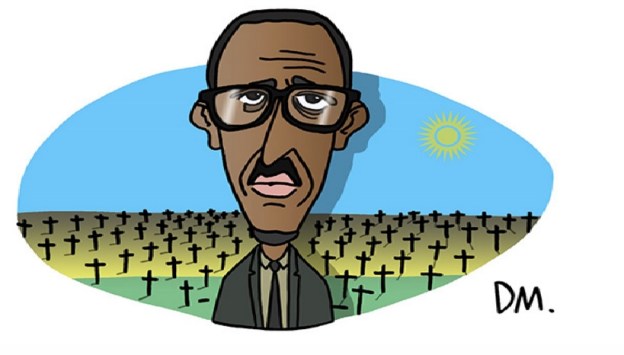
Illustration : David MARTIN for Institut Montaigne

Source: Institut Montaigne

America’s secret role in the rwandan genocide

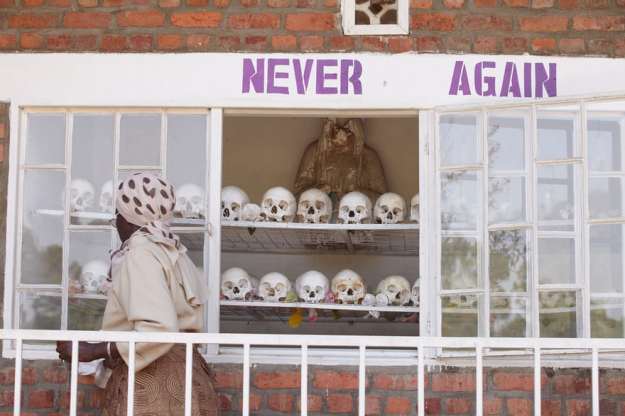
never againBetween April and July 1994, hundreds of thousands of Rwandans were murdered in the most rapid genocide ever recorded. The killers used simple tools – machetes, clubs and other blunt objects, or herded people into buildings and set them aflame with kerosene. Most of the victims were of minority Tutsi ethnicity; most of the killers belonged to the majority Hutus.

The Rwanda genocide has been compared to the Nazi Holocaust in its surreal brutality. But there is a fundamental difference between these two atrocities. No Jewish army posed a threat to Germany. Hitler targeted the Jews and other weak groups solely because of his own demented beliefs and the prevailing prejudices of the time. The Rwandan Hutu génocidaires, as the people who killed during the genocide were known, were also motivated by irrational beliefs and prejudices, but the powder keg contained another important ingredient: terror. Three and a half years before the genocide, a rebel army of mainly Rwandan Tutsi exiles known as the Rwandan Patriotic Front, or RPF, had invaded Rwanda and set up camps in the northern mountains. They had been armed and trained by neighbouring Uganda, which continued to supply them throughout the ensuing civil war, in violation of the UN charter, Organisation of African Unity rules, various Rwandan ceasefire and peace agreements, and the repeated promises of the Ugandan president, Yoweri Museveni.

During this period, officials at the US embassy in Kampala knew that weapons were crossing the border, and the CIA knew that the rebels’ growing military strength was escalating ethnic tensions within Rwanda to such a degree that hundreds of thousands of Rwandans might die in widespread ethnic violence. However, Washington not only ignored Uganda’s assistance to the Rwandan rebels, it also ramped up military and development aid to Museveni and then hailed him as a peacemaker once the genocide was underway.

The hatred the Hutu génocidaires unleashed represents the worst that human beings are capable of, but in considering what led to this disaster, it is important to bear in mind that the violence was not spontaneous. It emerged from a century or more of injustice and brutality on both sides, and although the génocidaires struck back against innocents, they were provoked by heavily armed rebels supplied by Uganda, while the US looked on.

The RPF rebel army represented Tutsi refugees who had fled their country in the early 1960s. For centuries before that, they had formed an elite minority caste in Rwanda. In a system continued under Belgian colonialism, they treated the Hutu peasants like serfs, forcing them to work on their land and sometimes beating them like donkeys. Hutu anger simmered until shortly before independence in 1962, then exploded in brutal pogroms against the Tutsi, hundreds of thousands of whom fled to neighbouring countries.

In Uganda, a new generation of Tutsi refugees grew up, but they soon became embroiled in the lethal politics of their adoptive country. Some formed alliances with Ugandan Tutsis and the closely related Hima – Museveni’s tribe – many of whom were opposition supporters and therefore seen as enemies by then-president Milton Obote, who ruled Uganda in the 1960s and again in the early 1980s.

After Idi Amin overthrew Obote in 1971, many Rwandan Tutsis moved out of the border refugee camps. Some tended the cattle of wealthy Ugandans; others acquired property and began farming; some married into Ugandan families; and a small number joined the State Research Bureau, Amin’s dreaded security apparatus, which inflicted terror on Ugandans. When Obote returned to power in the 1980s, he stripped the Rwandan Tutsis of their civil rights and ordered them into the refugee camps or back over the border into Rwanda, where they were not welcomed by the Hutu-dominated government. Those who refused to go were assaulted, raped and killed and their houses were destroyed.

In response to Obote’s abuses, more and more Rwandan refugees joined the National Resistance Army, an anti-Obote rebel group founded by Museveni in 1981. When Museveni’s rebels took power in 1986, a quarter of them were Rwandan Tutsi refugees, and Museveni granted them high ranks in Uganda’s new army.

Museveni’s promotion of the Rwandan refugees within the army generated not only resentment within Uganda, but terror within Rwanda where the majority Hutus had long feared an onslaught from Tutsi refugees. In 1972, some 75,000 educated Hutus – just about anyone who could read – had been massacred in Tutsi-ruled Burundi, a small country neighbouring Rwanda with a similar ethnic makeup. During the 1960s, Uganda’s Tutsi refugees had launched occasional armed strikes across the border, but Rwanda’s army easily fought them off. Each attack sparked reprisals against those Tutsis who remained inside Rwanda – many of whom were rounded up, tortured and killed – on mere suspicion of being supporters of the refugee fighters. By the late 1980s, a new generation of refugees, with training and weapons supplied by Museveni’s Uganda, represented a potentially far greater threat. According to the historian André Guichaoua, anger and fear hung over every bar-room altercation, every office dispute and every church sermon.

By the time Museveni took power, the plight of the Tutsi refugees had come to the attention of the west, which began pressuring Rwanda’s government to allow them to return. At first, Rwanda’s president, Juvénal Habyarimana, refused, protesting that Rwanda was among the most densely populated countries in the world, and its people, dependent upon peasant agriculture, needed land to survive. The population had grown since the refugees left, and Rwanda was now full, Habyarimana claimed.

Although he did not say so publicly, overpopulation almost certainly was not Habyarimana’s major concern. He knew the refugees’ leaders were not just interested in a few plots of land and some hoes. The RPF’s professed aim was refugee rights, but its true aim was an open secret throughout the Great Lakes region of Africa: to overthrow Habyarimana’s government and take over Rwanda by force. Museveni had even informed the Rwandan president that the Tutsi exiles might invade, and Habyarimana had also told US state department officials that he feared an invasion from Uganda.

One afternoon in early 1988 when the news was slow, Kiwanuka Lawrence Nsereko, a journalist with the Citizen, an independent Ugandan newspaper, stopped by to see an old friend at the ministry of transport in downtown Kampala. Two senior army officers, whom Lawrence knew, happened to be in the waiting room when he arrived. Like many of Museveni’s officers, they were Rwandan Tutsi refugees. After some polite preliminaries, Lawrence asked the men what they were doing there.

“We want some of our people to be in Rwanda,” one of them replied. Lawrence shuddered. He had grown up among Hutus who had fled Tutsi oppression in Rwanda before independence in 1962, as well as Tutsis who had fled the Hutu-led pogroms that followed it. Lawrence’s childhood catechist had been a Tutsi; the Hutus who worked in his family’s gardens wouldn’t attend his lessons. Instead, they swapped fantastic tales about how Tutsis once used their Hutu slaves as spittoons, expectorating into their mouths, instead of on the ground.

The officers went in to speak to the transport official first, and when Lawrence’s turn came, he asked his friend what had transpired. The official was elated. The Rwandans had come to express their support for a new open borders programme, he said. Soon Rwandans living in Uganda would be allowed to cross over and visit their relatives without a visa. This would help solve the vexing refugee issue, he explained.

Lawrence was less sanguine. He suspected the Rwandans might use the open borders programme to conduct surveillance for an invasion, or even carry out attacks inside Rwanda. A few days later, he dropped in on a Rwandan Tutsi colonel in Uganda’s army, named Stephen Ndugute.

“We are going back to Rwanda,” the colonel said. (When the RPF eventually took over Rwanda in 1994, Ndugute would be second in command.)

Many Ugandans were eager to see Museveni’s Rwandan officers depart. They were not only occupying senior army positions many Ugandans felt should be held by Ugandans, but some were also notorious for their brutality. Paul Kagame, who went on to lead the RPF takeover of Rwanda and has ruled Rwanda since the genocide, was acting chief of military intelligence, in whose headquarters Lawrence himself had been tortured. In northern and eastern Uganda, where a harsh counterinsurgency campaign was underway, some of the army’s worst abuses had been committed by Rwandan Tutsi officers. In 1989, for example, soldiers under the command of Chris Bunyenyezi, also an RPF leader, herded scores of suspected rebels in the village of Mukura into an empty railway wagon with no ventilation, locked the doors and allowed them to die of suffocation.

Lawrence had little doubt that if war broke out in Rwanda, it was going to be “very, very bloody”, he told me. He decided to alert Rwanda’s president. Habyarimana agreed to meet him during a state visit to Tanzania. At a hotel in Dar es Salaam, the 20-year-old journalist warned the Rwandan leader about the dangers of the open border programme. “Don’t worry,” Lawrence says Habyarimana told him. “Museveni is my friend and would never allow the RPF to invade.”

Habyarimana was bluffing. The open border programme was actually part of his own ruthless counter-strategy. Every person inside Rwanda visited by a Tutsi refugee would be followed by state agents and automatically branded an RPF sympathiser; many were arrested, tortured, and killed by Rwandan government operatives. The Tutsis inside Rwanda thus became pawns in a power struggle between the RPF exiles and Habyarimana’s government. Five years later, they would be crushed altogether in one of the worst genocides ever recorded.

On the morning of 1 October 1990, thousands of RPF fighters gathered in a football stadium in western Uganda about 20 miles from the Rwandan border. Some were Rwandan Tutsi deserters from Uganda’s army; others were volunteers from the refugee camps. Two nearby hospitals were readied for casualties. When locals asked what was going on, Fred Rwigyema, who was both a Ugandan army commander and the leader of the RPF, said they were preparing for Uganda’s upcoming Independence Day celebrations, but some excited rebels let the true purpose of their mission leak out. They crossed into Rwanda that afternoon. The Rwandan army, with help from French and Zairean commandos, stopped their advance and the rebels retreated back into Uganda. A short time later, they invaded again and eventually established bases in northern Rwanda’s Virunga mountains.

Presidents Museveni and Habyarimana were attending a Unicef conference in New York at the time. They were staying in the same hotel and Museveni rang Habyarimana’s room at 5am to say he had just learned that 14 of his Rwandan Tutsi officers had deserted and crossed into Rwanda. “I would like to make it very clear,” the Ugandan president reportedly said, “that we did not know about the desertion of these boys” – meaning the Rwandans, not 14, but thousands of whom had just invaded Habyarimana’s country – “nor do we support it.”

In Washington a few days later, Museveni told the State Department’s Africa chief, Herman Cohen, that he would court martial the Rwandan deserters if they attempted to cross back into Uganda. But a few days after that, he quietly requested France and Belgium not to assist the Rwandan government in repelling the invasion. Cohen writes that he now believes that Museveni must have been feigning shock, when he knew what was going on all along.

When Museveni returned to Uganda, Robert Gribbin, then deputy chief of mission at the US embassy in Kampala, had some “stiff talking points” for him. Stop the invasion at once, the American said, and ensure no support flowed to the RPF from Uganda.

Museveni had already issued a statement promising to seal all Uganda–Rwanda border crossings, provide no assistance to the RPF and arrest any rebels who tried to return to Uganda. But he proceeded to do none of those things and the Americans appear to have made no objection.

When the RPF launched its invasion, Kagame, then a senior officer in both the Ugandan army and the RPF, was in Kansas at the United States Army Command and General Staff College at Fort Leavenworth, studying field tactics and psyops, propaganda techniques to win hearts and minds. But after four RPF commanders were killed, he told his American instructors that he was dropping out to join the Rwandan invasion. The Americans apparently supported this decision and Kagame flew into Entebbe airport, travelled to the Rwandan border by road, and crossed over to take command of the rebels.

For the next three and a half years, the Ugandan army continued to supply Kagame’s fighters with provisions and weapons, and allow his soldiers free passage back and forth across the border. In 1991, Habyarimana accused Museveni of allowing the RPF to attack Rwanda from protected bases on Ugandan territory. When a Ugandan journalist published an article in the government-owned New Vision newspaper revealing the existence of these bases, Museveni threatened to charge the journalist and his editor with sedition. The entire border area was cordoned off. Even a French and Italian military inspection team was denied access.

In October 1993, the UN security council authorised a peacekeeping force to ensure no weapons crossed the border. The peacekeepers’ commander, Canadian Lt-Gen Roméo Dallaire, spent most of his time inside Rwanda, but he also visited the Ugandan border town of Kabale, where an officer told him that his inspectors would have to provide the Ugandan army with 12 hours’ notice so that escorts could be arranged to accompany them on their border patrols. Dallaire protested: the element of surprise is crucial for such monitoring missions. But the Ugandans insisted and eventually, Dallaire, who was much more concerned about developments inside Rwanda, gave up.

The border was a sieve anyway, as Dallaire later wrote. There were five official crossing sites and countless unmapped mountain trails. It was impossible to monitor. Dallaire had also heard that an arsenal in Mbarara, a Ugandan town about 80 miles from the Rwanda border, was being used to supply the RPF. The Ugandans refused to allow Dallaire’s peacekeepers to inspect that. In 2004, Dallaire told a US congressional hearing that Museveni had laughed in his face when they met at a gathering to commemorate the 10th anniversary of the genocide. “I remember that UN mission on the border,” Museveni reportedly told him. “We manoeuvred ways to get around it, and of course we did support the [RPF].”

US officials knew that Museveni was not honouring his promise to court martial RPF leaders. The US was monitoring Ugandan weapons shipments to the RPF in 1992, but instead of punishing Museveni, western donors including the US doubled aid to his government and allowed his defence spending to balloon to 48% of Uganda’s budget, compared with 13% for education and 5% for health, even as Aids was ravaging the country. In 1991, Uganda purchased 10 times more US weapons than in the preceding 40 years combined.

The 1990 Rwanda invasion, and the US’s tacit support for it, is all the more disturbing because in the months before it occurred, Habyarimana had acceded to many of the international community’s demands, including for the return of refugees and a multiparty democratic system. So it wasn’t clear what the RPF was fighting for. Certainly, negotiations over refugee repatriation would have dragged on and might not have been resolved to the RPF’s satisfaction, or at all. But negotiations appear to have been abandoned abruptly in favour of war.

At least one American was concerned about this. The US ambassador to Rwanda, Robert Flaten, saw with his own eyes that the RPF invasion had caused terror in Rwanda. After the invasion, hundreds of thousands of mostly Hutu villagers fled RPF-held areas, saying they had seen abductions and killings. Flaten urged the George HW Bush’s administration to impose sanctions on Uganda, as it had on Iraq after the Kuwait invasion earlier that year. But unlike Saddam Hussein, who was routed from Kuwait, Museveni received only Gribbin’s “stiff questions” about the RPF’s invasion of Rwanda.

“In short,” Gribbin writes, “we said that the cat was out of the bag, and neither the United States nor Uganda was going to rebag it.” Sanctioning Museveni might have harmed US interests in Uganda, he explains. “We sought a stable nation after years of violence and uncertainty. We encouraged nascent democratic initiatives. We supported a full range of economic reforms.” But the US was not fostering nascent democratic initiatives inside Uganda. While pressuring other countries, including Rwanda, to open up political space, Uganda’s donors were allowing Museveni to ban political party activity, arrest journalists and editors, and conduct brutal counterinsurgency operations in which civilians were tortured and killed. And far from seeking stability, the US, by allowing Uganda to arm the RPF, was setting the stage for what would turn out to be the worst outbreak of violence ever recorded on the African continent. Years later, Cohen expressed regret for failing to pressure Uganda to stop supporting the RPF, but by then it was far too late.

For Habyarimana and his circle of Hutu elites, the RPF invasion seemed to have a silver lining, at least at first. At the time, Hutu/Tutsi relations inside Rwanda had improved. Habyarimana had sought reconciliation with the Tutsis still living in Rwanda by reserving civil service jobs and university places for them in proportion to their share of the population. This programme was modestly successful, and the greatest tensions in the country now lay along class, not ethnic, lines. A tiny educated Hutu clique linked to Habyarimana’s family who called themselves évolués –the evolved ones – was living off the labour of millions of impoverished rural Hutus, whom they exploited just as brutally as the Tutsi overlords of bygone days.

The évolués subjected the peasants to forced labour and fattened themselves on World Bank “anti-poverty” projects that provided jobs and other perks for their own group, but did little to alleviate poverty. International aid donors had pressured Habyarimana to allow opposition political parties to operate, and many new ones had sprung up. Hutus and Tutsis were increasingly united in criticising Habyarimana’s autocratic behaviour and nepotism, and the vast economic inequalities in the country.

When Rwanda’s ethnic bonfires roared back to life in the days after the RPF invasion, Habyarimana and his circle seem to have sensed a political opportunity: now they could distract the disaffected Hutu masses from their own abuses by reawakening fears of the “demon Tutsis”, who would soon become convenient scapegoats to divert attention from profound socioeconomic injustices.

Shortly after the invasion, all Tutsis – whether RPF supporters or not – became targets of a vicious propaganda campaign that would bear hideous fruit in April 1994. Chauvinist Hutu newspapers, magazines and radio programmes began reminding Hutu audiences that they were the original occupants of the Great Lakes region and that Tutsis were Nilotics – supposedly warlike pastoralists from Ethiopia who had conquered and enslaved them in the 17th century. The RPF invasion was nothing more than a plot by Museveni, Kagame and their Tutsi co-conspirators to re-establish this evil Nilotic empire. Cartoons of Tutsis killing Hutus began appearing in magazines, along with warnings that all Tutsis were RPF spies bent on dragging the country back to the days when the Tutsi queen supposedly rose from her seat supported by swords driven between the shoulders of Hutu children. In December 1993, a picture of a machete appeared on the front page of a Hutu publication under the headline “What to do about the Tutsis?”

Habyarimana knew that the RPF, thanks to Ugandan backing, was better armed, trained and disciplined than his own army. Under immense international pressure, he had agreed in August 1993 to grant the RPF seats in a transitional government and nearly half of all posts in the army. Even Tutsis inside Rwanda were against giving the RPF so much power because they knew it could provoke the angry, fearful Hutus even more, and they were right. As Habyarimana’s increasingly weak government reluctantly acceded to the RPF’s demands for power, Hutu extremist mayors and other local officials began stockpiling rifles, and government-linked anti-Tutsi militia groups began distributing machetes and kerosene to prospective génocidaires. In January 1994, four months before the genocide, the CIA predicted that if tensions were not somehow defused, hundreds of thousands of people would die in ethnic violence. The powder keg awaited a spark to set it off.

That spark arrived at about 8pm on 6 April 1994, when rockets fired from positions close to Kigali airport shot down Habyarimana’s plane as it was preparing to land. The next morning, frantic Hutu militia groups, convinced that the Nilotic apocalypse was at hand, launched a ferocious attack against their Tutsi neighbours.

Few subjects are more polarising than the modern history of Rwanda. Questions such as “Has the RPF committed human rights abuses?” or “Who shot down President Habyarimana’s plane?” have been known to trigger riots at academic conferences. The Rwandan government bans and expels critical scholars from the country, labelling them “enemies of Rwanda” and “genocide deniers”, and Kagame has stated that he doesn’t think that “anyone in the media, UN [or] human rights organisations has any moral right whatsoever to level any accusations against me or Rwanda”.

Be that as it may, several lines of evidence suggest that the RPF was responsible for the downing of Habyarimana’s plane. The missiles used were Russian-made SA-16s. The Rwandan army was not known to possess these weapons, but the RPF had them at least since May 1991. Two SA-16 single-use launchers were also found in a valley near Masaka Hill, an area within range of the airport that was accessible to the RPF. According to the Russian military prosecutor’s office, the launchers had been sold to Uganda by the USSR in 1987.

Since 1997, five additional investigations of the crash have been carried out, including one by a UN-appointed team, and one each by French and Spanish judges working independently. These three concluded that the RPF was probably responsible. Two Rwandan government investigations conversely concluded that Hutu elites and members of Habyarimana’s own army were responsible.

2012 report on the crash commissioned by two French judges supposedly exonerated the RPF. But this report, although widely publicised as definitive, actually was not. The authors used ballistic and acoustic evidence to argue that the missiles were probably fired by the Rwandan army from Kanombe military barracks. But they admit that their technical findings could not exclude the possibility that the missiles were fired from Masaka Hill, where the launchers were found. The report also fails to explain how the Rwandan army, which was not known to possess SA-16s, could have shot down the plane using them.

Soon after the plane crash, the génocidaires began their attack against the Tutsis, and the RPF began advancing. But the rebels’ troop movements suggested that their primary priority was conquering the country, not saving Tutsi civilians. Rather than heading south, where most of the killings were taking place, the RPF circled around Kigali. By the time it reached the capital weeks later, most of the Tutsis there were dead.

When the UN peacekeeper Dallaire met RPF commander Kagame during the genocide, he asked about the delay. “He knew full well that every day of fighting on the periphery meant certain death for Tutsis still behind [Rwanda government forces] lines,” Dallaire wrote in Shake Hands With the Devil. “[Kagame] ignored the implications of my question.”

In the years that followed, Bill Clinton apologised numerous times for the US’s inaction during the genocide. “If we’d gone in sooner, I believe we could have saved at least a third of the lives that were lost,” he told journalist Tania Bryer in 2013. Instead, Europeans and Americans extracted their own citizens and the UN peacekeepers quietly withdrew. But Dallaire indicates that Kagame would have rejected Clinton’s help in any case. “The international community is looking at sending an intervention force on humanitarian grounds,” Kagame told Dallaire. “But for what reason? If an intervention force is sent to Rwanda, we,” – meaning the RPF – “will fight it.”


As the RPF advanced, Hutu refugees fled into neighbouring countries. In late April, television stations around the world broadcast images of thousands upon thousands of them crossing the Rusumo Bridge from Rwanda into Tanzania, as the bloated corpses of Rwandans floated down the Kagera river beneath them. Most viewers assumed that all the corpses were Tutsis killed by Hutu génocidaires. But the river drains mainly from areas then held by the RPF, and Mark Prutsalis, a UN official working in the Tanzanian refugee camps, maintains that at least some of the bodies were probably Hutu victims of reprisal killings by the RPF. One refugee after another told him that RPF soldiers had gone house to house in Hutu areas, dragging people out, tying them up and throwing them in the river. The UN estimated later that the RPF killed some 10,000 civilians each month during the genocide.

Lawrence Nsereko was among the journalists on the Rusumo Bridge that day and as the bodies floated by, he noticed something strange. The upper arms of some of them had been tied with ropes behind their backs. In Uganda, this method of restraint is known as the “three-piece tie”; it puts extreme pressure on the breastbone, causing searing pain, and may result in gangrene. Amnesty International had recently highlighted it as a signature torture method of Museveni’s army, and Lawrence wondered whether the RPF had learned this technique from their Ugandan patrons.

In June 1994, while the slaughter in Rwanda was still underway, Museveni travelled to Minneapolis, where he received a Hubert H Humphrey public service medal and honorary doctorate from the University of Minnesota. The dean, a former World Bank official, praised Museveni for ending human rights abuses in Uganda and preparing his country for multiparty democracy. Western journalists and academics showered Museveni with praise. “Uganda [is] one of the few flickers of hope for the future of black Africa,” wrote one. The New York Times compared the Ugandan leader to Nelson Mandela, and Time magazine hailed him as a “herdsman and philosopher” and “central Africa’s intellectual compass.”

Museveni also visited Washington on that trip, where he met with Clinton and his national security adviser, Anthony Lake. I could find no record of what the men discussed, but I can imagine the Americans lamenting the tragedy in Rwanda, and the Ugandan explaining that this disaster only confirmed his long-held theory that Africans were too attached to clan loyalties for multiparty democracy. The continent’s ignorant peasants belonged under the control of autocrats like himself.

Helen C Epstein

This is an adapted extract from Another Fine Mess: America, Uganda and the War on Terror, published by Columbia Global Reports. To order a copy for £9.34, go to guardianbookshop.com or call 0330 333 6846. Free UK p&p over £10, online orders only. Phone orders min. p&p of £1.99.


GUSENYA UMURYANGO WA RWIGARA : IGITERO CYA NYUMA UMUNYAGITUGU PAUL KAGAME AGABYE KU BANYARWANDA!

DianneRwigaraSisterAnneMotherPoliceArrest_Sep4_2017

GUSENYA UMURYANGO WA RWIGARA : Igitero cya nyuma Umunyagitugu Paul KAGAME agabye ku Banyarwanda ! Tariki ya 05/09/2017

Amakuru y’u Rwanda muri iyi minsi ishize yaranzwe ahanini n’akarengane gakabije umunyagitugu Paul KAGAME akomeje gukorera umuryango wa nyakwigendera RWIGARA Assinapol.

Twibutse ko Bwana RWIGARA Assinapol yari umucuruzi ukomoka mu bwoko bw’abatutsi wazamutse cyane mbere y’intambara yo mu Ukwakira 1990 . RWIGARA ni umuntu wakunzwe kandi wubashywe  cyane na Perezida HABYARIMANA Yuvenali w’umuhutu waje kwicwa na KAGAME n’agatsiko ke ka FPR INKOTANYI mu ijoro ryo ku itariki ya 6 Mata 1994. Gusa bigeze ahagana mu mwaka wa 1989, Bwana RWIGARA yafashe icyemezo cyo gutera inkunga ku buryo bugaragara inyeshyamba z ‘umutwe wa FPR-INKOTANYI kuko bamwe mu bayoboke bayo bari bashoboye kumwumvisha ko icyari kigamijwe ari ukurenganura no gucyura impunzi z’abatutsi zari zarasohotse mu Rwanda guhera mu mwaka wa 1959. Gufata ubutegetsi bwose byaje kugerwaho na FPR  mu mwaka w’1994 habanje kuba intambara ikaze na jenoside bigahitana ubuzima bw’abantu barenga miliyoni ndetse hagasenyuka byinshi.

Twifuje kumenya icyo Nyakubahwa Padiri Thomas NAHIMANA,  Perezida wa Guverinoma y’u Rwanda ikorera mu buhungiro atekereza kuri iki kibazo cy’umuryango wa RWIGARA, adutangariza ibi bikurikira. Ni mu kiganiro yagiranye na Radiyo The Voice of Rwanda kuri micro ya Angela DANA.

THE VOICE OF RWANDA

  1. Nyakubahwa Perezida, ndakeka mukurikirana amakuru agezweho ku bijyanye n’umwari Diane RWIGARA n’umuryango akomokamo. We n’abo muri uwo muryango bafashwe na Polisi baregwa ibyaha bibiri aribyo (1) kudatanga imisoro no (2) gukoresha impapuro z’impimbano. Mubitekerezaho iki ?

Padiri THOMAS NAHIMANA :

Bizwi na bose ko igipolisi cy’umunyagitugu Paul Kagame cyakataje mu gutekinika amadosiye kugira ngo gishinje ibinyoma umuntu wese wamaze gutangwa na Kagame ngo afungwe cyangwa yicwe. Ubu rero ikigaragara muri iyi minsi ni ibikorwa biteye agahinda birimo gukorerwa umuryango wa RWIGARA bitegetswe na Paul KAGAME. Uyu munyagitugu Paul KAGAME kandi ni nawe wishe RWIGARA Assinapol kandi nyamara uyu mucuruzi yari yaramufashije bitagira ingano mu gihe yari ku rugamba. Nanone ariko ntitwabura kuvuga ko inzira yakoreshejwe mu gucura ibyaha bigerekwa ku muryango wa RWIGARA igaragaramo ubuswa bukabije. Nawe se, reba nka kiriya cyaha ngo cyo gukoresha impapuro z’impimbano, ntawe kitasetsa ! Ninde se uyobewe  ko cyari cyahimbwe hagenderewe gusa kubuza Diane RWIGARA kwiyamamariza umwanya w’umukuru w’igihugu ! Ayo manyanga yakozwe twese tubireba. Ariko noneho kubona Paul KAGAME yitera ijeki ngo arashaka gukurikirana Diane RWIGARA mu nkiko hashingiwe kuri icyo cyaha gihimbano  nibyo byitwa « kwenderanya » mu kinyarwanda. Twese ntawe utabibona.

Naho ku cyaha ngo cyo « kunyereza imisoro » kinagaragara ko aricyo cyaba nyamukuru, umuntu wese ukurikirana iby’u Rwanda ntiyabura kwibaza ati : ni kuki kandi ni gute inzego zishinzwe kwakira imisoro mu Rwanda zizwiho kutajenjeka zitabonye ubwo buriganya mbere hose,  kugeza aho miliyari eshanu zose zigeramo ? Ndetse wakongeraho uti: ni iyihe mpamvu iki kirego kivumbutse muri iki gihe ?

THE VOICE OF RWANDA

  1. Nyakubahwa Perezida, murashaka gusa n’abemeza ko ubuyobozi bw’ikigo gishinzwe imisoro mu Rwanda bwaba bufite uruhare mu guhishira iki cyaha cyo kudatanga imisoro kiregwa umuryango wa RWIGARA ?

Padiri. THOMAS NAHIMANA

Si ugushaka kubyemeza gusa, ahubwo ndabihamya mpagaze ku maguru yombi.  Rwose nibyumvikane neza ko haramutse harabayeho koko icyo cyaha cyo kunyereza imisoro byaba ari ikosa ry’inzego zibishinzwe. RWIGARA siwe bikwiye kubarwaho. Ariko koko Abanyarwanda bazabeshywa kugeza ryari ! Abantu bakwiye gusobanukirwa kandi bakamenya intangiriro y’ibi bintu. Reka nze mbabwire neza uko iki kibazo cyifashe. RWIGARA Assinapol yasinye AMASEZERANO yo gutera inkunga urugamba rwa FPR Inkotanyi mu gihe uyu mutwe witwara nk’uw’iterabwoba wari ukiri mu ishyamba. RWIGARA yatanze inkunga ibarirwa mu ma miliyoni menshi y’amadolari kandi ishyikirizwa Paul KAGAME wari umuyobozi ya FPR-Inkotanyi. Muri ayo masezerano, FPR nayo yemereraga RWIGARA ko nibaramuka bafashe ubutegetsi, nta kindi bazamwitura uretse kuzamuha ubwisanzure agakora ibikorwa bye by’ubucuruzi ariko « adatanga imisoro nk’abandi » mu gihe cy’imyaka nibura 30. Babyita mu gifaransa “régime fiscal aménagé”. Ndetse si RWIGARA wenyine wemerewe iyo « régime fiscal amenagé ». N’abandi bacuruzi batanze inkunga ifatika y’amafaranga kimwe na bariya basirikare bakuru bose b’Inkoramutima za Kagame, bacuruza badatanga imisoro nk’abandi banyarwanda kugeza n’uyu munsi ! Iyi mikorere iteye itya ikaba rwose ikomeje gutera icyuho gikomeye mu isanduku ya Leta kubera ko « uko imisoro itangwa » bigaragaramo ivangura rikabije kandi rigamije guhombya « entreprise » yose Paul KAGAME adashaka. Ni na yo mpamvu mubona ubukungu, ubucuruzi n’imari byose by’igihugu byikubiwe n’Agatsiko gato cyane k’abantu bazi « gusangira » n’umunyagitugu Paul KAGAME no kumukomera amashyi amanywa n’ijoro.

THE VOICE OF RWANDA :

  1. None se murakeka ko Polisi yatewe n’iki kujya gusaka ndetse no gufatira ibintu bitandukanye mu rugo rw’umuryango wa RWIGARA ?

Padiri THOMAS NAHIMANA

Aha nanone hari ibikwiye kubanza gusobanurwa. Kiriya gipolisi cya Kagame, si urwego ruzwiho kubahiriza amategeko n’uburenganzira bw’ikiremwa muntu nk’uko mubibona mu bihugu nk’u Bufaransa cyangwa ibindi bihugu byateye imbere by’Uburayi. Polisi y’u Rwanda ni “umutwe witwaje intwaro” uri mu biganza by’umunyagitugu Kagame, akaba yarawuhinduye igikoresho yifashisha uko abyifuje mu kurengera inyungu ze bwite zonyine. Umutekano w’abaturage si wo ubashishikaje kandi Abanyarwanda bose barabizi neza!

Reka rero tugaruke kuri ririya saka rya hato na hato , rikorwa amanywa n’ijoro mu rugo rwa RWIGARA. Icyo rigamije namwe mwakibwira! Icya mbere ni uko Kagame arimo gushakisha ahaba haherereye amasezerano RWIGARA yasinyanye na FPR kugira ngo umuryango we utazayashingiraho wiregura mu gihe haba habayeho urubanza. Icya kabiri, ni ugufatira amafaranga yose uyu muryango waba warabashije gushyira ku ruhande mbere y’uko Leta ifatira amakonti yabo mu mabanki. Nanone kandi kuba muri iyi minsi haragaragaye Abajepe bashinzwe kurinda Paul KAGAME birirwa bakanarara ku nzu ya RWIGARA, ni ikimenyetso kitabeshya cyerekana ko umunyagitugu yakuye agahu ku nnyo akaba yariyemeje, we ku giti cye, kurandurana n’imizi umuryango wa RWIGARA.

RWIGARAS

THE VOICE OF RWANDA

4. Nyakubahwa Perezida, aha umuntu yakumva ko KAGAME mumukabirije ! None se muratekereza ko KAGAME yaba afite iyihe nyungu mu gukorera ubu bugome umuryango wa RWIGARA ?

Padiri THOMAS NAHIMANA

Ugize neza kumbaza icyo kibazo kidufasha kugaragaza « ipfundo » ry’inkomoko y’akarengane umuryango wa RWIGARA uriho ukorerwa muri iki gihe, iyi mu by’ukuri ikaba ari nayo ntandaro y’uruvagusenya Abanyarwanda benshi bakomeje guhura narwo mu mibereho yabo ya buri munsi.

Reka rero twibutse ko nyuma y’umwaka w’1994, RWIGARA yongeye gukora ibikorwa bye by’ubucuruzi mu RWANDA,  biramuhira, asubira gutunga amafaranga abarirwa mu mamiliyoni menshi. Ibibazo bikomeye byatangiye Paul KAGAME akimara kuba Perezida wa Repubulika, asimbuye BIZIMUNGU wananijwe, akeguzwa mu mwaka wa 2000. Icyo gihe rero Paul KAGAME yashatse guhabwa imigabane myinshi mu bikorwa bya RWIGARA wari umenyereye kwikorera  ku giti cye. RWIGARA wari waragize igihe gihagije cyo kurunguruka imikorere ya Kagame na FPR, yaricaye, aribaza ,asanga kwemera gufatanya na Kagame mu bucuruzi bidatandukanye no kunywana na Lusufero !  Byamuteye ubwoba afata icyemezo cyo guhakanira KAGAME. Sibwo KAGAME arakaye umuranduranzuzi agatangira gukubita agatoki ku kandi ko azashirwa arimbuye RWIGARA n’ibye byose ! Kuba RWIGARA yarakomezaga gutera imbere mu bucuruzi bwe kandi agatinyuka kwanga « gusangira na KAGAME wiyumva nk’umwami w’u Rwanda », ngicyo icyaha gikabije cyatumye RWIGARA yamburwa ubuzima bwe. Mu by’ukuri nta kindi KAGAME yahoraga RWIGARA kitari icyo, akaba yaratangiye rero kumwenderanyaho ku buryo bugaragara mu myaka ya 2001-2002.

Icyo gihe RWIGARA yahise abona ko ibintu bitoroshye, ko ndetse ashobora gufungwa cyangwa akwicwa, nibwo yiyemeje guhungira mu gihugu cy’uBubiligi. Iyi nkuru y’uko RWIGARA yatotejwe cyane na FPR yagizwe ibanga, ntiyamenywe na benshi. Gusa rero FPR yaje gukoresha bwa buhendanyi isanganywe, iramushukashuka, irongera imwizeza ibitangaza, yemera kuva mu Bubiligi atahuka mu Rwanda maze bamwivugana ku itariki ya 4/2/2015.

THE VOICE OF RWANDA :

5. Ariko rero igipolisi cy’u Rwanda cyemeje ko RWIGARA yazize impanuka y’imodoka !

Padiri THOMAS NAHIMANA

Ikinamico ryo kubyita impanuka ntiryafashe kuko Diane RWIGARA wahise agera aho iryo shyano ryabereye yatanze ubuhamya bw’ibyo yabonye. Yasanze se akiri muzima, yibonera n’amaso ye uko abapolisi bashishikariye kumutsindagira mu mufuka w’abapfuye kandi agihumeka, nyuma aza kubona n’uko bamuhwanyije bamuteraguye ibyuma, bamukubise n’inyundo mu mutwe, kandi ibyo byose byakorwaga na ba bapolisi ba Kagame mwebwe muvuga ngo barinda umutekano w’abaturage muri disipulini ihambaye!

Iyo witegereje ibyakurikiye urupfu rwa RWIGARA uhita usobanukirwa, ntiwongera gushakisha uwari ufite inyungu muri ubwo bwicanyi(A qui profite le crime !). Ibuka ko tariki ya 12 /9/2015, ubuyobozi bw’umujyi wa Kigali bwahise butangira gukubita hasi igorofa rizwi cyane rya RWIGARA ngo kubera ko ritubatswe rikurikije amategeko.  Nyamara iyo nzu yubatswe mu buryo bukurikije amategeko, ikaba imaze imyaka irenga 25 !

Muri make, ibi byagaragaje ko KAGAME atanyuzwe n’amaraso ya RWIGARA yonyine ahubwo ko yari afite umugambi wo « kurimbura » umutungo we hagamijwe gutindahaza n’umuryango we wose.

THE VOICE OF RWANDA :

6. Aho icyemezo Diane RWIGARA yafashe cyo kwiyamamariza kuba Perezida wa Repubulika mu mwaka wa 2017 nticyaba cyarabaye nyirabayazana yaje kongera ibibazo byari bisanzwe bitoroshye ?

PADIRI THOMAS NAHIMANA :

Nibyo rwose ntiwibeshye. Akarengane uyu muryango wahuye nako niko katumye Diane RWIGARA afungura amaso amenya neza kamere nyakuri y’ubutegetsi kirimbuzi bwa FPR bwahohoteye Abanyarwanda batagira ingano guhera muri Nyakanga 1994.  Yahise afata icyemezo cyo gutsinda ubwoba akamagana ku mugaragaro akarengane gakorwa na FPR.  Si ibyo gusa ahubwo yiyemeje no gufatanya n’abaturage mu rugamba rwo guharanira impinduka za politiki hagamijwe kwimakaza imibereho myiza y’abaturage. Nyamara mu mutwe wa KAGAME n’abicanyi be, kuba umwari RWIGARA Diane w’imyaka 35 yarafashe kiriya cyemezo cyo gushaka kwiyamamaza, byafashwe nk’ icyaha  ndengakamere cyo kwibagirwa uwo ariwe : umututsikazi w’umunyiginya, wacitse ku icumu rya jenoside bityo akaba yaragombaga guhora asenga kandi asingiza Umucunguzi we rukumbi, Nyagasani Paul KAGAME, umututsi w’umwega ! Ukurikije imitekerereze ya KAGAME, Diane RWIGARA ntiyagombaga, yewe habe no mu nzozi, kumva ko afite uburenganzira bwo guhangana n’ « Umwami » w’u Rwanda mu matora ya 2017!  Ibi nibyo KAGAME yashingiyeho afata icyemezo ko Diane RWIGARA agomba gutotezwa, gufungwa ndetse akazanicwa mu minsi mike iri imbere aha! Niba ntacyo rubanda ikoze hagati aho, kwizera ko hari ukundi bizagenda kwaba ari ukwishuka!

THE VOICE OF RWANDA :

7. Ni ryo jambo  ryanyu ry’umusozo ? 

PADIRI THOMAS NAHIMANA :

Ndareba ngasanga ari ikimwaro ku Banyarwanda bose  bakomeza kuzarira mu gihe ubuzima bwabo n’imibereho yabo biri mu biganza by’Umugabo utaranganwa umutima w’impuhwe, utagira ukuri muri we, utagira indangagaciro n’imwe yubaha, unezezwa no guhemukira abamufashije bakanamugirira neza agamije kuburagiza abapfakazi no gutindahaza impfubyi!

Nka Perezida wa Guverinoma y’u Rwanda ikorera mu buhungiro, ndahamagarira urubyiruko rw’u Rwanda guhaguruka nk’abitsamuye, bagaharanira uburenganzira bwabo, bakarwanira ko Diane Shima RWIGARA arenganurwa kimwe n’izindi mfungwa za politiki nka Victoire INGABIRE UMUHOZA, Déogratias MUSHAYIDI, Kizito MIHIGO, n’abandi.

Mboneyeho kandi akanya ko kubwira umunyagitugu Paul KAGAME ko « Guverinoma ye idashakwa n’abanyarwanda » igiye kumushwanyagurikiraho kuko itazashobora guhangana n’ubushake bwa revolisiyo buri guhinda mu mitima y’abenegihugu benshi bakunda ukuri n’ubutabera. Nabimenye neza, kandi abyitegure : nyuma y’aka karengane gakabije kagiriwe Diane RWIGARA n’umuryango we, Abanyarwanda biteguye kumubwira ngo « BURYA SI BUNO ». A très bientôt.

DANA

Ikiganiro cyateguwe na Angela DANA,

Umunyamakuru wa Radio The Voice of Rwanda

https://voiceofrwanda.airtime.pro/

Our african friend, the mass murderer

mass muderer

A bad man (THOMAS SAMSON/AFP/GETTY IMAGES

“It is high time for a fundamental rethinking of U.S. relations with Rwanda’s leader. Military and diplomatic collaboration should halt. Kagame should be banned from entering the United States or participating in international fora. Humanitarian aid should continue, but other assistance should be curtailed now until he leaves office”.

Maybe we shouldn’t care that Rwanda’s recently reelected president is a mass murderer.

After all, he has become a reliable partner, who welcomes U.S. investors, improves public health, and sends peacekeeping forces to hellholes where we won’t, like Darfur.

Admittedly, he jails or kills his political opponents, but that eliminates the destabilizing uncertainty of elections.

Yes, he modified his country’s constitution to allow him to rule for up to 40 years, until 2034, but who expects true democracy in that part of the world anyway?

Of course, it’s unfortunate that his ethnic Tutsi minority holds all key positions in Rwanda, repressing the overwhelming majority ethnic Hutu in a black-on-black version of apartheid, but some Hutu committed genocide in 1994, and so their children and grandchildren must be denied basic rights.

Call me a grudge-holder, but I just can’t forgive and forget that Paul Kagame ordered the killing of approximately 350,000 ethnic Hutu, in Rwanda and Congo, in the 1990s. This puts him in the pantheon of post-WWII murderers, alongside Pol Pot and Idi Amin.

Is there a statute of limitation for genocide? Should subsequent good deeds be exculpatory? By treating him as a valued ally, do we dishonor his victims? Do we violate the Genocide Convention? Do we encourage repetition of such crimes?

For the uninitiated, here’s Kagame’s abridged rap sheet. Starting in 1990, he led a Tutsi invasion of Rwanda that displaced a million civilians and knowingly provoked the retaliatory carnage for which Rwanda is most famous.

In 1994, as his forces seized control of Rwanda, they slaughtered an estimated 100,000 Hutu civilians. After many surviving Hutu fled to Congo, he pursued them in 1996, murdering another 200,000. When remaining domestic Hutu resisted his ethnic dictatorship in 1998, he ordered a brutal counterinsurgency that killed 50,000 more.

The only thing more despicable than the magnitude of this killing was its tactics. Kagame typically started by chasing Hutu civilians into harsh territory. As his victims confronted starvation and hunger, his officials would come forward with offers of humanitarian aid.

Gradually, the displaced would trickle in for food and water. When the desperate Hutu had fully assembled, his troops opened fire and killed them all. For more gruesome details, see authoritative reports by the United Nations and Human Rights Watch.

Why do we treat war criminals so disparately? In Libya, Muammar Khaddafy’s forces killed barely 1,000 people in February 2011, including armed opponents, according to judicial investigations. This equates to approximately one-third of one percent of Kagame’s victims.

Yet in response, the International Criminal Court indicted Khaddafy for war crimes, and NATO led an intervention that bombed his forces and assisted his rebel opponents until they captured, sodomized, and executed him. By contrast, Kagame is rewarded with honorary degrees and hundreds of millions in annual foreign aid.

I am not a naïf. I accept that world politics sometimes requires deals with the devil as the lesser evil. Perhaps it is understandable that Washington embraced Kagame in 1994 despite his crimes, in hopes of stabilizing a post-genocide situation.

But such exigency disappeared long ago. Kagame has proved anything but a force for stability. He invaded Congo twice, spurring wars that resulted in an estimated 5 million fatalities. He continues to undermine democracy by hunting opponents and overriding term limits. Most perilously, he marginalizes Rwanda’s Hutu majority, brewing the next eruption of ethnic violence.

It is high time for a fundamental rethinking of U.S. relations with Rwanda’s leader. Military and diplomatic collaboration should halt. Kagame should be banned from entering the United States or participating in international fora. Humanitarian aid should continue, but other assistance should be curtailed now until he leaves office.

A hardline stance would also send a salutary message to the region’s other aspiring presidents-for-life: Our indulgence has limits.

Isolating Kagame will not by itself resolve the problems of Rwanda or its neighbors. But there can be little hope for peace or justice in central Africa so long as we embrace its worst war criminal.

Kuperman is associate professor at the LBJ School of Public Affairs, University of Texas at Austin.

Source: New York Daily News

Rwanda : meurtres, répression… le système Kagamé

Paul-Kagame-

Les Rwandais sont appelés aux urnes pour élire leur président… ou plutôt réélire Paul Kagamé, en place depuis 2000.

Les bureaux de vote ouvrent, vendredi 4 août, à Kigali au Rwanda et dans tout le pays. Ils vont attendre patiemment que les électeurs s’y pressent pour réélire le président sortant Paul Kagamé, pour un troisième mandat, qu’il a annoncé comme son dernier en mai. Le suspense n’est, en effet, pas de mise. Seuls deux opposants politiques ont été reconnus candidats officiels : Frank Habineza pour le Parti démocratique vert (PVD) et Philippe Mpayimana, candidat indépendant.

Pour les autres, la Commission électorale nationale les a écartés ou alors ils ont été victimes de campagnes de diffamation et de menaces. Mais finalement peu importe les opposants et leur nombre pour Paul Kagamé, qui répète à l’envi que l’élection est jouée depuis le référendum du 15 décembre 2015. Celui-ci l’a autorisé à se représenter jusqu’en 2034, avec 98,3% des voix. Un score impressionnant dans un pays connu pour sa répression politique.

Campagnes d’intimidation et menaces

Seuls deux opposants politiques ont donc réussi à braver les obstacles et à se faire reconnaître comme candidats officiels pour cette élection présidentielle. D’autres candidats en ont été empêchés. Le 3 mai dernier, Diane Rwigara par exemple a annoncé qu’elle se présenterait en tant que candidate indépendante. Dans les mois précédents, elle avait dénoncé publiquement la pauvreté, l’injustice, l’insécurité et l’absence de liberté d’expression au Rwanda. Une attaque directe envers le pouvoir. Quelques jours seulement après l’annonce de sa candidature, cette fille d’un financier du Front patriotique rwandais (FPR), parti de Paul Kagamé, mort dans des circonstances troubles, a fait l’objet d’une campagne de diffamation. Des photos où elle apparaissait dénudée ont circulé sur les réseaux sociaux. Elle et Philippe Mpayimana se sont également plaints que leurs représentants avaient été victimes de harcèlement et de manœuvres d’intimidation pendant qu’ils recueillaient les signatures nécessaires à la validation des candidatures.

Pour contrer cette répression, certains opposants vivent à l’étranger, comme l’abbé Thomas Nahimana. Ce candidat déclaré s’est pourtant vu plusieurs fois empêché de revenir d’exil. Même à l’étranger, il est donc difficile d’échapper à Kagamé. L’ancien chef des services de renseignements, Patrick KAREGEYA, a ainsi été retrouvé étranglé dans une chambre d’hôtel d’Afrique du Sud en 2014.

Deux décennies de répression politique

Deux décennies d’attaques contre les opposants politiques, les médias indépendants et les défenseurs des droits humains ont créé un climat de peur au Rwanda. C’est ce que dénonce Amnesty International, dans un rapport publié vendredi 7 juillet. L’ONG a donc décidé d’alerter sur le manque évident d’opposition politique et sur les dérives répressives du pouvoir.

Parmi les cas cités par le rapport, on trouve l’assassinat en mai de Jean Damascene Habarugira, un membre du parti non reconnu des Forces démocratiques unifiées (FDU), présidé par l’opposante Victoire Ingabire. Cette dernière a été condamnée en 2010 à quinze ans de détention pour “minimisation du génocide”.

“Depuis que le FPR est arrivé au pouvoir, il y a vingt-trois ans, il est difficile pour les Rwandais de participer à la vie publique et de critiquer ouvertement les politiques gouvernementales ; certains le paient même de leur vie”, a déclaré Muthoni Wanyeki, directrice du programme Afrique de l’Est, Corne de l’Afrique et Grands Lacs à Amnesty International.

Dans son rapport, Amnesty international exhorte donc l’Etat rwandais à entreprendre des réformes ambitieuses qui élargiront l’espace politique avant l’élection de 2024. Ce qui permettrait un débat véritable et l’expression d’opinions politiques diverses. Un travail de fond sur la liberté d’expression doit notamment être entrepris.

Répression médiatique

La liberté d’expression, c’est justement ce dont manquent les médias, fortement réprimés. Depuis des années, des journalistes sont emprisonnés, harcelés, parfois tués, et beaucoup ont été contraints à l’exil. En 2010, les journaux indépendants “Umuvugizi” et “Umuseso” ont été suspendus de parution pour avoir critiqué le régime, en pleine campagne électorale de réélection. Jean-Léonard Rugambage, alors rédacteur en chef adjoint del “Umuvugizi”, a été tué par balle à Kigali en 2010, alors qu’il enquêtait sur une tentative d’assassinat contre le général Kayumba Nyamwasa, passé dans l’opposition. En 2015, c’est le service rwandais de la BBC qui a été bloqué, l’un des seuls médias à délivrer une information indépendante. En 2016, au moins trois journalistes ont été arrêtés après avoir enquêté sur des sujets sensibles, comme la corruption et les morts suspectes.

Dans son rapport, Amnesty International invite le gouvernement à créer un mécanisme juridique pour enquêter sur les violations des droits de l’homme. Un défi, tant que Paul Kagamé reste au pouvoir.

Un bilan contrasté

Malgré l’utilisation d’un régime répressif toujours plus violent pour se maintenir en place, Paul Kagamé possède un bilan jugé positif sur le plan économique : croissance de 7 %, population couverte à 91 % par l’assurance-maladie, politiques efficaces de lutte contre la corruption. Ce qui corroborerait pour certains la popularité “indéniable” du président. Paul Kagamé, à la tête du Front patriotique rwandais, a contribué à mettre fin au génocide qui a fait plus de 800.000 morts 1994. “The Boss” comme on l’appelle à Kigali, a toujours été élu avec plus de 90 % des voix, dans ce pays de 11,5 millions d’habitants.

Mais la répression en vigueur va une fois encore empêcher de connaître la vraie valeur de ce vote : vote d’adhésion, de peur ou de dépit ?

Justine Benoit

Source: L’OBS

‘Rwanda is like a pretty girl with a lot of makeup, but the inside is dark and dirty’

Diane Rwigara

Diane Rwigara asks to postpone the interview. “My personal adviser is missing,” explains the text message. This is the new normal for Rwigara, who was until recently a loyal scion of Rwanda’s ruling elite.

Since the death of her father in 2015, the 35-year-old businesswoman has become a fierce critic of Paul Kagame, the country’s all-powerful president, and the ruling Rwandan Patriotic Front (RPF).

In May she announced her intention to run against him in the country’s electionon 4 August. For this, she has paid a heavy price.

In her grand, heavily fortified home in the heart of Kigali, the Rwandan capital, the interview goes ahead after her adviser – a close friend – turns up safe.

“He didn’t come home last night,” she explains. A stranger had called the night before and asked him to come for a drink. “He said he could give him some publicity for his newspaper. And you know how it is here: if you’re not part of the government, it’s hard to get publicity.”

He woke up the next day in a hotel room, his phone missing, remembering nothing from the previous night. “I’m used to it,” Rwigara says. Her best friend disappeared last December after she started speaking out against Kagame and the RPF. He has still not reappeared. “That’s life here. I’m just happy this one came back.”

Rwigara’s presidential bid was stillborn. On 7 July the National Electoral Commission barred her from standing on technical grounds, a move that came as little surprise to most. Kagame has ruled the country with an iron fist since sweeping to power after the genocide against Rwanda’s Tutsi minority in 1994. Criticism is barely tolerated, and the history of the past 15 or so years is littered with the names of opponents silenced and dissenters muzzled. To that list Rwigara adds her father, a prominent Tutsi businessman known to have been close to the RPF, at least early on.

“He was targeted because he did not want to continue to do business as usual,” she says. “If you have successful business, the RPF has to be part of it – and eventually get you out. But he did not want to let them in; he did not want to end up working for them. And he did not want to flee the country, though they did all they could to make him. So they had no choice.”

The US-educated Rwigara publicly accused the government of foul play after her father died in a road accident, contacting foreign embassies in Kigali and international human rights organisations, as well as petitioning the president. Many question the allegation, but there has been no official investigation. It is the family’s word against that of the police.

Rwigara’s thwarted candidacy was a brief flash of colour in the otherwise drab landscape of contemporary Rwandan politics. Kagame’s re-election is so certain that he himself claimed victory on the first day of campaigning, citing the overwhelming verdict of a controversial constitutional referendum in 2015 that permitted him to stand for a third term.

The proposed changes passed with a thumping 98% majority. “Pretending not to know the will expressed by the people during the referendum would be a lie, not democracy,” he told cheering crowds at a rally.

But Rwigara exposed cracks in the RPF’s confident facade. Most doubt that she would have been a significant electoral threat, but the lengths to which the authorities went to frustrate her – she claims her supporters were repeatedly threatened, beaten and jailed as they toured the country drumming up support – suggested a nervousness that belied Kagame’s breezy rhetoric.

“The RPF are scared,” Rwigara says. “If they are loved by the people, as they claim, why is that when someone like me announces an intention to run they resort to all these dirty tricks to try to discourage me and silence me? If they were really popular, then they would have let me compete.”

Many in Kigali agree. “Every week that she is not in trouble is progress,” confides one foreign diplomat. “She, not the official opposition, is the ultimate test for them.”

Rwigara represents young, prosperous urbanites who grew up under the RPF and whom it sees as essential to the country’s future. The busloads of young Rwandans who arrived to watch her announce her candidacy, and her packed press conferences, unnerved Kagame and his allies, according to insiders. Nude photos, apparently of her, soon flooded the internet – assumed to be a well-orchestrated smear.

She believes her fearlessness in speaking out is a headache for the RPF, which fastidiously cultivates a rosy image of Rwanda for the outside world. “Rwanda is like a very pretty girl with a lot of makeup,” she says. “Perfect teeth, perfect hair, perfect everything. They spend so much time on the image because they know the inside is dark and dirty.”

Since her candidacy failed, Rwigara has launched what she calls a “movement” to challenge the regime on its human rights record. While her political awakening could be attributed to her father’s death, she makes allegations that go beyond personal grievance. Nobody else inside Rwanda has spoken more frankly about the extrajudicial assassinations that exiled critics and international organisations such as Human Rights Watch claim the government frequently carries out against its enemies.

“Everybody knows somebody who has disappeared, who has been killed,” Rwigara says. “The personal doctor of the president and an army major both died in the same week as my father. And those are the well-known people. You don’t hear about the other people.”

Yet she is also a former insider, and her candidacy could be seen as evidence of emerging fractures within the Tutsi elite who dominate politics and business. The government has made enemies of some of its natural supporters, such as the Rwigara family. After her father’s death, the family’s properties in central Kigali were seized and their hotel demolished.

Diane Rwigara gives a press conference after announcing her plans to run for president
Pinterest
Diane Rwigara gives a press conference in May after announcing her plans to run for president. She was later barred on a technicality. Photograph: Cyril Ndegeya/AFP/Getty Images

If she makes an unlikely spokesperson for the poor farmers who make up the majority of Rwandans, she may be more persuasive as an advocate for women. Kagame is something of a “donor darling” for his commitment to gender equality – half of the supreme court judges are women, and the country’s parliament is 61% female, the highest proportion in the world – but Rwigara dismisses such headline achievements as window-dressing.

“So what if Rwanda has the highest percentage of women in parliament? It’s really just part of the image. Because what do these women do?” she asks.

She says the parliament is little more than a rubber-stamp. There are women in senior positions in government, but none wield real power. And despite its impressive strides, academics have questioned the substance of Rwanda’s gender-equality drive, especially for unmarried women.

“Diane took big risks just being a woman in Rwandan politics – Rwanda is just not ready for that,” says Susan Thomson, assistant professor of peace and conflict studies at Colgate University in the US, adding that the “the way the government sexualised her with those nude photos was frankly disgusting”. But she and others have also noted that it is precisely women like Rwigara – wealthy, predominantly Tutsi, often English-speaking – who have benefited most from the RPF’s empowerment measures.

Rwigara doesn’t see her gender as a hindrance. “They used my being a woman to get to me,” she says. “But even if I’d been a man they’d have found other ways.” In fact, it was her family that had the problem with the idea of women in politics. “Growing up I remember my family members – my mum and my aunt – saying that a girl should not have a political opinion; that a girl should not be politically active. It took me a while to make peace with being a girl who likes politics.”

Is Rwanda ready for a female president? “I think Rwandans themselves are,” she answers. “Because if the regime thought the people would not listen to me because I’m a woman, then they would not have tried to find all these ways to stop me.”

She says she doesn’t fear for her life. “Not for the moment. They know killing me will make too much noise. It’s harder to kill you once you are known, once you’ve been seen.”

Source: The Guardian

Don’t be fooled by those happy campaign rallies. Rwandans live in fear.

Kagame rally Gakenke

Rwandan President Paul Kagame, left, greets a crowd of supporters as he arrives for a campaign rally on Monday in Gakenke. (Marco Longari/AFP via Getty Images)

By Fred MUVUNYI

Fred Muvunyi, a former chairman of the Rwanda Media Commission, is an editor at Deutsche Welle, Germany’s international broadcaster.

On Friday, Rwandan voters will go to the polls and overwhelmingly reelect Paul Kagame as their president. Kagame himself has said that the result is a foregone conclusion. So where does he get his remarkable self-confidence?

One important clue comes from campaign rallies. Thousands of people, joyously singing and dancing, routinely flock to events staged for the incumbent president by the ruling party. There are two other officially allowed candidates, but almost no one shows up to see them speak.

The stark difference is easily explained. Show up at an opposition rally and you can bet that the authorities will note your presence. Attendance at Kagame’s events, by contrast, is expected — since the president has given orders to all local officials to ensure turnout. The key, in both cases, is one simple word: fear. Anyone who doesn’t show loyalty to Kagame is considered to be “an enemy of the state.”

The supporters of the regime sneer at those who claim that Kagame’s popular support is buttressed by intimidation. The president, they say, is genuinely loved by Rwandans for his success in bringing economic growth, reliable health care and a relatively fair court system, all while reducing corruption to levels many other countries would envy. Plus, through sheer force of personality, he has managed to unite the country after the horrific genocide of 1994, in which close to a million Rwandans — overwhelmingly members of the Tutsi minority — were slaughtered in just 100 days.

Kagame’s positive achievements are genuine. But they can also be seen as the more palatable side of an all-encompassing system of social control that knows few equals in the world. Rwanda’s government, led by Kagame’s ruling Rwandan Patriotic Front (RPF), is a finely meshed organization that reaches down into the smallest villages. Local government officials maintain detailed files on every household, and a dense network of informers keeps track of citizens’ behavior and thinking. Visiting foreigners are rarely aware of this reality, but Rwandans know it well. People from my country often use an idiom in our native language of Kinyarwanda that captures it well: “Even the trees are listening,” they say.

Rwanda has a long history of intrusive government, but it is the experience of genocide — which was finally brought to an end by the invading RPF, then an insurgent group based in neighboring countries — that has given birth to what can only be described as a form of institutionalized paranoia. Kagame and his comrades in the Tutsi-dominated RPF are only too aware that many members of the majority Hutus were once active participants in mass murder. As a result, the current government tends to view any attempt to question the existing system as subversion at best, and often as a first step to a new genocidal conspiracy at worst.

This mentality is reinforced by Kagame’s own background as a former military intelligence officer and rebel leader. During his long years in Ugandan exile, he knew that he and his party would never be able to come to power by peaceful means, and events bore that prediction out. For him, “constructive opposition” is a contradiction in terms. To Kagame and his entourage, criticism always entails a security threat.

Kagame has correspondingly tightened his control of the armed forces. Today, the most respected and outspoken military officers are in prison, exile or dead. To name but one of the most recent examples, Patrick Karegeya, Rwanda’s former intelligence chief, was killed in South African exile on Jan. 1, 2014.

But this grim fate is not restricted to former military men. Journalists, independent businessmen and members of the opposition have all faced various degrees of state-sponsored terror. They range from Charles Ingabire, a reporter who was shot to death in Uganda in 2011, to Pasteur Bizimungu, Kagame’s predecessor as president, who stepped down in 2000, and was later arrested and sentenced to 15 years in prison on charges of embezzlement, inciting ethnic hatred and attempting to form a militia. His defenders say that his real crime was attempting to form his own opposition party. When Rwandans see what can happen to people who once enjoyed power and prestige, they rightly conclude that they are better off keeping their mouths shut.

In 2012, three years before I was forced to leave for an exile of my own, I had the privilege to pay a visit in prison to Victoire Ingabire Umuhoza. In 2010, Ingabire, an outspoken and eloquent woman, had returned to Rwanda from the Netherlands, where she had lived for the previous 17 years, to challenge Kagame. But, as she told me in a voice strikingly subdued, she had failed to reckon with the nature of the Rwandan regime. After four months in Kigali, she was thrown in jail, where she remains today.

Kagame is smart. He knows how to turn his country’s dark history to his own advantage. When westerners try to criticize him for his failure to uphold human rights, Kagame points out that their countries either failed to prevent the genocide or actively abetted it, skillfully using their own feelings of guilt to silence them. So far it’s been a highly effective strategy. But that doesn’t change the reality that Rwanda is a country where fear reigns supreme.

Source: Washington Post