Imicungire mibi n’ubujura mu bigo bya Leta bitumye Leta igabanya abakozi.
Nyuma y’uko mu minsi ishize abakozi 126 ba Banki nkuru y’igiuhugu basezerewe ku kazi mu buryo budasobanutse, noneho Leta ya FPR iremera ko igiye gukomeza guhagarika abakozi. Dore inkuru dukesha Igihe.com
Mu rwego rwo gutunganya imikorere ya guverinoma no kugabanya umutwaro w’ingengo y’imari ishyirwa mu mishahara y’abakozi ba Leta bitari ngombwa, hitezwe impinduka zigabanya bamwe mu bakozi baba basa nk’aho bakora akazi kamwe cyangwa inshingano bafite zitari ngombwa.
Nk’uko tubikesha The New Times, inyandiko ya Minisiteri y’Abakozi n’Umurimo igaragaza ko izi mpinduka zitezwe muri uyu mwaka imari wa 2014-2015 zikurikiye ubushakashati bwakozwe ku bigo bya Leta hagati ya Kamena 2013 na Gashyantare 2014.
The New Times ivuga ko nta gushidikanya ko impinduka zizakora ku bakozi bamwe na bamwe, cyane cyane aho usanga hari abakora inshingano zijya gusa mu bakozi ba Leta, aho kuri ubu babarirwa ku bihumbi 94 mu gihugu hose.
Guverinoma y’u Rwanda yateganyaga gutanga miliyari 207 z’amafaranga y’u Rwanda ku mishahara y’uyu mwaka w’imari wa 2014-2015 mu gihe umwaka ushize bagenzeho zisaga miliyari 195.
Ubugenzuzi bwakorewe ibigo byose bya Leta bwagaragaje icyuho gihambaye mu miterere y’inzego za Leta, hakaba harafashwe umwanzuro wo kuzisubiramo.
Itangazo rya Minisiteri y’Abakozi ba Leta n’Umurimo rigaragaza ko hari ugukorana guke mu biro bitangukanye n’imyanya y’abakozi igenda yisubiramo cyangwa itari ngombwa.
Amakuru aturuka mu bakozi ubwabo, yagaragaje ko hari abakozi badakoreshwa cyane, ugasanga bahabwa inshingano nke cyane n’abakoresha babo, bituma akenshi bahemberwa ibyo baba batakoze mu mutungo wa Leta.
Gusa na none kandi birumvikana ko ibi ari byo byatumye Guverinoma ishaka impuguke ziturutse hanze zo gusuzuma imikorere y’abakozi ba Leta. Ikigo cyatoranyijwe gukora uyu murimo ni icyo muri Singapore (Singapore Cooperation Enterprise/SCE).
Itangazo riragira riti “ Impinduka ziri mu buryo bwo guhangana n’icyuho cyagaragajwe mu miterere y’umurimo mu bigo bya Leta no kubifasha kugera ku nshingano zabyo”.
Itangazo na none kandi rigaragaza ko abayobozi bakuru bungirije bashobora gukurwaho mu bigo bimwe na bimwe.
Rikomeza rigira riti “ Nk’igisubizo, guverinoma izagabanya ingengo yatakazwaga ku mishahara n’izindi nyungu bizazamura umusaruro. Impinduka zizafasha kongera ubushobozi n’intsinzi ku bigo bya Leta”.
Abazagerwaho n’ingaruka z’impinduka bazahabwa igihe cyo kwitegura gusezera bahabwe ibyo bagombwa n’amategeko byose.
Na none kandi impinduka zitezweho guhuza abakozi ku buryo bufatika binoroshye igenzura iryo ari ryo ryose ryakorwa ku bakozi no ku bushobozi bwabo.
Umujyanama wa Minisitiri w’Abakozi ba Leta n’Umurimo, Edmond Tubanambazi, yemeje ko impinduka zitegerejwe mu gihe gito cyane.
Yasobanuye ko impinduka zizafasha guverinoma kwegereza zimwe mu nshingano abaturage bijyanye na gahunda ya Leta isanzweho yo kwegereza ubuyobozi abaturage.
Gaspard Mupiganyi, unuyobozi wa gahunda mu impuzamahuriro y’abakozi mu Rwanda (CESTRAR) yavuze ko kuba hagiye kuba impinduka zemewe n’itegeko nta kibazo gishobora kuvukamo.
Yagize ati “Umukoresha afite uburenganzira bwo kwirukana abakozi ariko bigomba gukorwa hagendewe ku itegeko. Hari amategeko yashyiriweho kurinda abakozi ba Leta n’inyungu bakwiriye kubona ku murimo bakoraga iyo birukanwe ; iyo ibi byose byubahirijwe, twe nta mpungenge tuba dufite”.
Africa urged to shun wholesale imports of Western democracy models
By Costantine Sebastian ,The Citizen Reporter
They want Africans and their leaders to quickly shun the trend that has led to failed states and stuck most people in the quagmire of abject poverty. The strategists and activists warn that without changing the status quo, the future and prosperity of Africa will always remain compromised.
Speaking at the 2nd International Conference on Democratic Governance in Africa, Asia and the Middle East, held in Kigali early this week, participants called for a new internal development order. Many wondered why most African countries were still so poor, unashamed of their status as economic beggars and recipients of development aid when the continent was blessed with abundant resources.
“The time for change is now,” noted Dr John Samuel, President of the Institute for Sustainable Development and Governance in India. “Our countries should immediately adopt democratic models that suit their circumstances and address their individual needs.”
They suggested that the models that can propel the poor nations to prosperity are those which take into account the culture and historical background of the people.
The scholars, practitioners, decision makers and other development stakeholders at the three-day conference emphasized the need for home grown initiatives on problems affecting the developing world.
Under the theme, “Accountability and Youth Engagement for Sustainable Development,” they maintained that unity was a must especially among African countries if they are to have a voice on world matters.
“Direct implementation of models imposed or suggested by Western powers will never bring real change and make a significant difference in our lives,” Gabonese journalist Yves Laurent Goma told The Citizen on Sunday on the sidelines of the summit meeting held as part of Rwanda’s Commemoration of 20 Years of Liberation.
Organised by the Rwanda Governance Board (RGB), the UN and Cheyney University of the United States, the conference sought among other things to explore constraints to good governance. It also explored emerging opportunities of democratic governance and has been one of the highlights of events to mark 20 Years of Rwanda’s Liberation that climaxed on Friday.
The conference is a biannual event which was first held in Philadelphia, US in 2012.
“With 54 countries, Africa can have a voice but the problem is African countries are so easily manipulated and divided,” said Dr Jendayi Fraser, the former US under Secretary of State for Africa Affairs.
Emphasis was also put on the need for increased cooperation over competition among African countries. Dr Sumbye Kapena from the School of Business at the Copperbelt University of Zambia noted that “Africa can have one voice if we all stop competing and put our voices together.”
Some participants said African leaders too, have a hand in the continent’s woes, with a Tanzanian delegate suggesting that good leadership was most important for the future of Africa, but that this was currently wanting in many of these countries.
He described the current generation of leaders as mostly a total failure and let-down. He called on the old leaders still in power to exit the political arena and let a new breed of leaders take charge.
“Consider our case (Tanzania)…we shouldn’t be poor with all the natural resources and human capital around,” he pleaded anonymity lest his views hurt some people in high places.
“We have been mostly let down by poor leadership and bad policies…full stop. Just look at Rwanda and you will see what I mean,” he added noting that discipline and seriousness at all levels was lacking in his country.
Meanwhile, Mr Bulent Akarcali, a Turkish entrepreneur and a panellist at the conference, criticised Western donors for imposing policies on developing nations, arguing that directly copying democratic models from the West tended to disrupt governance and undermined prospects for long-term development.
“Countries in sub-Saharan Africa and Asia were targeted by Western powers because of their wealth in natural resources. All that the big powers want is to disrupt governance and get what they want, so they forced developing nations to implement systems of democracy that undermine the history and cultures of people,” Akarcali said.
“Real democracy must not be complicated and must put into context the cultural systems of countries. Europe and America are not a monopoly of democracy and they should not dictate models to Africa and Asia.”
Rwanda Management Institute Director-General Wellars Gasamagera echoed the views of Akarcali saying “there is no rule book for governance” and that every country is involved in a unique process based on its own internal challenges.
“Citizen participation is the key at all stages of democracy, yet levels of participation vary according to contexts and situations,” Gasamagera said.
Rwandan Local Government Minister James Musoni urged that all countries still on the path of development should seek home-grown initiatives in order to bring about meaningful transformation to their societies.
“It is generally accepted that ‘democratic governance’ comes as a pre-requisite to the broad socio-economic development of society. However, in order to translate a principle into tangible results, … strong political will for good, inclusive and accountable governance stemming from the very top, is key in the establishment of effective and citizen-responsive institutions,” he said.
Manzi Jean Baptiste abona icyo résolution ya ONU yita “génocide au Rwanda”, gitandukanye na “génocide” uko abanyamategeko bayisobanura mu mategeko mpuzamahanga
Mwirirwe, mwaramutse.
Nakurikiye ibiganiro bimwe na bimwe byerekeye inyito génocide ku byabaye mu Rwanda, n’urukiko rwa Arusha.
Ibyo uyu Pr Ch. Kambanda avuga hari icyo adasobanura neza.
Résolution ya ONU: S/RES/955 (1994) – 08 novembre 1994 – RÉSOLUTION 955 (1994) ariyo ishyiraho TPIR (Arusha), itanga ibisobanuro bihagije kuri iki kibazo cy’inyito Génocide mu Rwanda.
Muri les points “considérant”, résolution ivuga actes de génocide. Plus loin muri statut ya TPIR, résolution yerekana ibyo résolution yita génocide (art 2, al.1) itandukanya na actes de génocide (art 2, al. 3). Ubyitegereje neza usanga izo nyito Génocide na actes de génocide” bitagaruka kuri le caractère planifié du génocide ou des actes de génocides. Ni ukuvuga ngo, icyo résolution ya ONU yita génocide au Rwanda, gitandukanye na génocide uko abanyamategeko bayisobanura mu mategeko mpuzamahanga.
“Au niveau national, un Etat peut décider de juger d’un génocide au regard de son droit propre. Mais c’est aussi la compétence de tribunaux supra-étatiques, qui, en prenant le génocide comme chef d’inculpation, entérinent de facto sa reconnaissance“.
Aha ni ukuvuga ko u Rwanda “régime FPR”, ariyo yasabye ko ibyabaye i Rwanda byitwa génocide isaba ONU gushyiraho urukiko. Ibyo biri muri préambule ya résolution: « Décide par la présente résolution, comme suite à la demande qu’il a reçue du Gouvernement rwandais (S/1994/1115), de créer un tribunal international chargé uniquement de juger les personnes présumées responsables d’actes de génocide ou d’autres violations graves du droit international humanitaire commis sur le territoire du Rwanda et les citoyens rwandais présumés responsables de tels actes ou violations commis sur le territoire d’États voisins (…)»
Noneho rero ibyo Pr Karoli Kambanda adasobanura neza ni icyo kintu cy’uko ari abategetsi b’u Rwanda, ari ONU, babihaye inyito génocide. Biba bibaye reconnaissance de fait de ce génocide sans donner la possibilité au tribunal de qualifier ces actes.
En fait le procureur charge et ne demande pas à prouver. Ni ukuvuga rero ko iyo tribunal TPIR yashyizweho non pas pour examiner niba génocide yarabayeho et juger les responsables. Ahubwo le tribunal est justifié par la reconnaissance de fait du génocide avec une définition propre. kubishyira en doute byari ukuba ari “scier la branche sur laquelle tu es assis”. Ari byo certains avocats camerounais guidés par l’appât du gain et non pas du droit, batsindagira ko examiner le caractère planifié nta kamaro.
Débat ni aho yagombye gusobanura, no kwerekana ko “umwana yapfuye mu iterura”.
Aliko nk’uko benshi babivuze, ikibazo si aho kiri. Kuko la volonté politique yari ifite indi ntera n’ibyo igamije avec la complicité y’abari bafite inyungu muri ibyo byose. Ni ukuvuga ngo rero le débat sur ce thème, yagombye no guha uruhare runini icyo kintu cyo kugaruka ku nyito génocide, impamvu byagenze gutyo.
Ingero ni nyinshi:
I La Haye, izo préalables zo gushaka kubanza gukora définition “qualifier, les crimes commis dans l’ex-Yougoslavie” zabayeho. Kuki mu Rwanda bitabaye ?
None se niba abategetsi b’u Rwanda aribo basabye ishyirwaho ry’urukiko, bakaruha inyito y’ibyo izaburanisha, murumva ikibazo atari aho kiri ?
Pr Kambanda rero n’abandi bakora ibiganiro mpaka, bagombye kugaruka kuri iki kintu cy’uko inyito yatanzwe atariyo. Ni ukuvuga ngo urebye génocide yerekeye abayahudi (les juifs), habaye définition ya génocide ari naho tribunal de Nuremberg yakoze definition ya génocide au sens de ces crimes. . iyo nyito niyo yashyizwe mur mategeko mpuzamahanga.
Mu Rwanda rero, ntago iyo nyito ari yo bafashe. ONU n’u Rwanda bakoze indi nyito nshya, surtout itandukanye na génocide au sens de la shoah. Ni aho rero abenshi batavuga rumwe, kuko “le caractère planification”, qui implique kwerekana abakoze planification, les exécutants etc.. bayikuyemo bazi neza ibyo bakora.
Nyabuna mwongere musome résolution, murasanga ikibazo cyo kwibaza no kuganiraho ahubwo ni ukumenya impamvu définition ya génocide muri Rwanda itandukanye n’inyito mpuzamahanga isanzwe. Igisubizo cyo kiragaragara, ni intention ya FPR n’abo bari batafanije icyo gihe. Ni ukuvuga rero ko “la reconnaissance de fait du génocide au Rwanda”, bakanayiha une definition propre, ibintu byari bifite icyo bigamije. Kandi ibigaragara ni uko imanza za Arusha, igihe les avocats bagarutse kuri iki kibazo, aucun prévenu, je dis bien aucun n’a été reconnu coupable du chef d’accusation de planification du génocide au Rwanda. Kandi nibyo ni uko ntabyabaye. Akaba ari yo mpamvu abanyamategeko mpuzamahanga basanga ibyabaye mu Rwanda atari génocide kuko habuzemo élément fondamental, «le caractère fondamental; planification en vue d’exterminer un groupe”. Or, nongere mbigarukeho, muri résolution ya TPIR, art 2, al 2. iravuga ngo “Le génocide s’entend de l’un quelconque des actes ci-après, commis dans l’intention de détruire, en tout ou en partie, un groupe national, ethnique, racial ou religieux, comme tel”. Aha murabona neza ko, bashyira accent kuri intention de détruire. Ni ukuvuga ngo bahunga la planification.
Abatutsi barisha génocide ni ibi basubiramo. Ni ukuvuga ngo abo bavuga ko abahutu bishe abatutsi avec l’intention de les exterminer. Niyo definition bagenderaho kandi les idéologues bari inyuma y’iyi résolution barabizi.
Ngaho abazi amategeko munyereke aho wahera uhakana génocide au Rwanda, je dis bien dans l’esprit de cette résolution, et non pas selon la définition qui relève du droit international public.
Ntabwo rero ma contribution ari uguhakana cg kwemera génocide ku byabaye mu Rwanda, ni ugutanga umuganda mu buryo bwo gusobanura un aspect ntumvise mu biganiro mpaka byabaye kuri iyi radio. Ubwo nzakomeza gukurikira numve ibyo biganiro.
Mukomere kandi mukomeze kugira ibiganiro byiza.
Manzi JB.
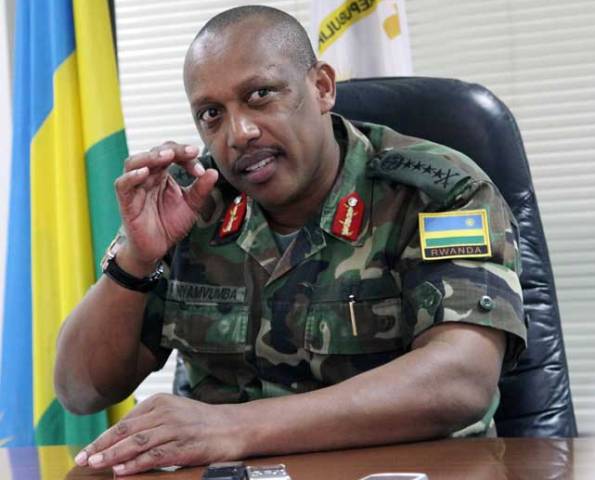
General Nyamvumba avuga rumwe na opposition y’u Rwanda
Gen Patrick Nyamvumba
Mu kiganiro umugaba w’ingabo z’u Rwanda General Patrick Nyamvumba yagiranye n’ikinyamakuru igihe.com (http://www.igihe.com/interviews/ ) yagaragaje ko avuga rumwe na opposition y’u Rwanda. Bimwe mu byo opposition isaba FPR gukosora cyangwa ikava mu nzira abandi bakabikora, harimo kubaka igihugu buri wese yibonamo. Mu gihe abenshi mu bavugizi b’agatsiko bakunze kuvuga ko nta kibazo gihari, general Nyamvumba we yagize ati: “ ugiye kubireba phase [igihe] y’intambara yararangiye ariko hasigaye kugira u Rwanda rw’Abanyarwanda, abantu bose bibonamo.” Nyamvumba rwose na we azi ko u Rwanda rwamunzwe n’ivangura kugeza havangurwa abapfuye, ivangura mu mfungwa n’imfubyi, n’ibindi bituma hatabaho igihugu Abanyarwanda bose bibonamo. Ikimenyetso gifatika kigaragara mu ngabo Nyamvumba abereye umugaba aho usanga abayobozi bose ari abo mu bwoko bw’abatutsi.
Kuva ku bayobozi b’ama brigades kugera ku ma sections, haba ministre n’aba chefs ba za directions za Etat Major bose ni Abatutsi. Ni byo koko Abanyarwanda bose ntibibona muri izi ngabo.
Avuga ku kibazo kijyana n’umutekano , Nyamvumba aragira ati “nkanjye ushinzwe ingabo nakwibanda ku kibazo cy’umutekano kuko ariwo musingi, tukareba ko igihugu n’abagituye bafite umutekano dufatanyije n’izindi nzego z’umutekano n’abasivili, sinavuga ko twabigezeho,…”
N’ubwo FPR ihora ihinduranya imvugo hari ikindi kimwe idashobora kubeshya ngo cyemerwe: kumva ko byose yabigeraho iheza abandi banyarwanda bashaka gutanga umusanzu wabo banyujije mu mashyaka ya politiki. Ntibizashoboka ahubwo Kagame ashatse yakwibuka wa mugani ugira uti “uwo uzaheka ntumwisha urume” maze hakabaho ibiganiro bizatuma twubaka igihugu twese twibonamo.
Ubwanditsi
The new wind of African independence
On July 1st, three African countries, namely Rwanda, Burundi and Somalia, gained their political independence. Anniversaries make us reflect on past events. More than half of a century since the 60s, it does not appear difficult to realize that a number of things did not work out as expected for these countries. Unfortunately the picture is almost the same across the continent. It’s a fact that the majority of African countries got their independence around that period.
Some years back, after analyzing the early period prior to African independence, I found that many years passed since the Manchester Conference of 1945 held by the pan African movement had some impact. It took some good years to the Nkrumah, Kenyatta and others alike who those days were prying for changes then necessary in Africa to make a breakthrough. It took particularly to Ghana twelve years. Others demanded even more time.
History books or elders don’t miss any opportunity to tell how the forefathers of African independence fought both internal and external oppressions of the masses. It was not easy at all. It was even harder to sustain whatever gain had been achieved.
The oppressors tried to hijack the outcomes of years of sacrifices. They often succeeded to regain the lost ground. They changed strategies to impose themselves and continue their exploitation. As in the previous periods, they counted on unscrupulous and selfish African leaders ready to sell out interests of their people. It took decades to the victims of yesterday to realize their mistakes.
As in old times, it was going to be around a limited number of enlightened sons and daughters of Africa that the continent’s destiny would depend on. They understood the issues involved, particularly the double speak and hypocrisy of the corrupt leaders always plotting their indefinite stay in power they had stolen from the people.
The new generation of enlightened true sons and daughters of Africa could deconstruct the plans of the internal masses’ enemy and external forces. They had learned the hard way, being themselves victims of the forces they were ready to stand against. They had role models among the forefathers. They had seen how their elders, namely Sankara, Kaddafi or Mugabe had been crashed down or weakened by the imperialist forces.
The 21st century had however brought a seemingly renewal even among the usually complacent and African elite in governments that serves the West. These were talking of Renaissance. But it was a mere caricature of what was needed to fundamentally change the oppressive and sometime tragic situation of African masses.
It was under that period that the continent experienced the most of its deadly tragedies in many parts of its regions: from Sierra Leone, Ivory Coast to Somalia passing through Rwanda, Burundi and the Democratic Republic of Congo. As a paradox, it was at the same period that the continent is portrayed as the future of humanity because of its immense resources. And the multiple wars fought on its land being seen as a necessity for the salvation of some global powers in declining influence.
2011 saw the northern African youth claiming more of its share of dignity from the corrupt elite in office. As time passed, there were again severe disappointments. They realized they had been used and betrayed. The experience added to the fact that the awakening of the necessary minority in the forefront is there. Strategizing is the key, but at the same time avoiding mistakes committed by those who came before them.
The new wind of African independence hangs on the shoulders of that enlightened minority of individuals on the continent and in the Diaspora, finding each other, developing synergies, protecting each others’ back, and coming together for action, not necessarily as one, but moving in the same direction. All these will be the ingredients of their success.
There are battles against imperialist forces that are being won in South America. It took these countries years of educating masses and organizing. They are getting there. The same way the forefathers of African independence learnt from their participation to western fronts against Hitler fascism, the new generation of aspirant African political leadership must get involved in the Latin American wars against global imperialism led by US, Canada, UK, EU and their multinationals. At the end, everything comes down to economy or war of resources. Those who can control them can impose their views onto the rest.
“In the past, we were colonized and enslaved. Our stolen labour built empires in the North. Today, with every step we take for our liberation, the empires grow decadent and begin to crumble. However, our liberation is not only the emancipation of the peoples of the South. Our liberation is also for the whole of humanity. We are not fighting to dominate anyone. We are fighting to ensure that no one becomes dominated,” Evo Morales, President of Bolivia. http://climateandcapitalism.com/2014/06/20/evo-morales-liberation-whole-humanity/
Source: http://therisingcontinent.wordpress.com/2014/07/02/the-new-wind-of-african-independence/#more-5845
CNR-INTWARI YAHAGARITSE GUKORERA MU MPUZAMASHYAKA YA CNCD.
Guhera ku itariki ya 2 Werurwe 2013, CNR-Intwari ibisabwe kandi ibifashijwemo n’imiryango nyarwanda idaharanira inyungu za politiki yiyemeje gufatanya n’andi mashyaka atavuga rumwe n’ubutegetsi bw’igitugu buriho mu Rwanda. Icyo gikorwa cyari kigamije kugirango haboneke bwangu, ibisubizo bikwiye kandi byihuse, ku bibazo bibangamiye abanyarwanda.
Ni muri urwo rwego yiyemeje kwinjira mu Nama y’Igihugu iharanira Impinduka ya Demokrasi CNCD mu magambo ahinnye y’igifaransa, kugira ngo ishobore kurangiza inshingano yari yihaye. Mu ntango hakozwe ibikorwa byiza bikwiye gushimwa muri urwo rwego. Ariko uko iminsi yagiye yicuma habayeho kwibagirwa nkana ko turi mu bihe bidasanzwe kandi bikomeye,bisaba ubwitange, gushyira mu gaciro, kureba kure n’imikorere idasanzwe kugira ngo intego nyamukuru igerweho.
Igihe kinini cyakomeje gutakazwa mu nyandiko gusa aho gufata ibyemezo bikwiye no mu gihe gikwiye. By’umwihaliko iyo mikorere ntiyatumye CNR-Intwari ibona uko yitangira gahunda yari ifite yo gutabara abanyarwanda mu maguru mashya, ishingiye ku bikorwa yabatangarije mu nyandiko “ Programu ya Guverinoma ya Repubulika ya 3 ” yasohoye kuwa 4 Kanama 2011. (http://cnr -intwari.com/index.php/programme-politique)
Nta narimwe CNR-Intwari itagaragaje ubushake bwo gufatanya n’abandi banyarwanda mu gushakira hamwe ibisubizo bikwiye ku bibazo bikomereye u Rwanda, mu bwubahane, mu bwumvikane n’ubwuzuzanye ariko ntishobora kwemera ko ubufatanye ubwo aribwo bwose bwahinduka inzitizi yo kuyibuza kurangiza inshingano zayo z’ibanze. Kubera iyo mpamvu CNR-Intwari, isanze ari ngombwa kuba ihagaritse imikoranire yayo na CNCD kugirango isubirane ubwigenge bwayo busesuye butuma ishobora kurangizaneza inshingano zayo mu bihe bitarambiranye.
CNR-Intwari izakomeza gufatanya mu bwisanzure n’andi mashyaka yose arwanya ubutegetsi bw’igitugu bwimitswe mu Rwanda, mu gihe cyose ubwo bufatanye buzaba bugamije ibikorwa bifatika bitayibangamiye. Izafatanya mu bikorwa byose bishoboka kugirango amahoro arambye agaruke vuba mu Rwanda no mu karere kose k’Afurika y’ibiyaga bigari.
Bikorewe Manchester kuwa 2 Nyakanga 2014
Gakwaya Rwaka Théobald
Visi-Perezida akaba n’umuvugizi wa
CNR-Intwari
Rwanda: Kagame’s timing for his wars
By Emmanuel Neretse
The difference between two individuals sometimes resides in their opposing ways of addressing their thoughts or even their realities. There are those who are passive to make effective sense of what is happening; there are those prone to action once a seemingly clear picture of their environment has formed in their mind. This can be true on individual or country levels.
Emmanuel Neretse, author of the following article I translated from French, explains a particular reality from someone who has closely analyzed the timing of the Rwandan president Paul Kagame’s wars. As the writer highlights, there is an apparent pattern. For example, the attack that the Rwandan funded CNDP of Nkundabatware which was stopped at the outskirts of Goma in November 2008 when Barack Obama was being first elected, was not a military offensive not planned in consideration of regional and international events of the time.
The occupation of Goma in November 2012 by the again Rwandan funded M23 occurred at the time when and following a military offensive organized during US elections where Barack Obama was seeking his second term in office. What Emmanuel Neretse points out refers to other war ventures of Paul Kagame that were initiated at different periods of the recent history of the region, not by hazard, but according to particularly selected moments of world’s affairs.
It’s always when the global general public is focused elsewhere that RPF of Paul Kagame strikes.
On June 11, 2014, serious armed incidents occurred on the Rwandan-Congolese border, 25 km from the provincial capital of North Kivu. The Rwandan government announced that it had pushed back Congolese soldiers who had entered its territory and killed five of them. DRC government, meanwhile, speaks of one Congolese soldier captured by the Rwandan army on Congolese territory and was subsequently executed. This had been then followed by an exchange of gunfire and artillery shelling between the two sides continued the next day on June 12.
Here is the hic: the Football World Cup begins in Brazil on June 12 and for weeks, the world will have its eyes and ears fixed on Latin America. This World event will then overshadow all others, even more dramatic as the war that troublemakers will lead quietly and almost without camera and in private. So if Paul Kagame harbored intentions to conduct an nth war in Congo, the timing is perfect because it would not be the first time he sees the football World Cup as an opportunity to launch his wars away from international media presently focused on another major event, as we shall see.
1990
In August 1990, Iraq invaded Kuwait and conquered it in a few days. At the time, the international community and the world will be preoccupied by this event that it looked like the world had stopped everywhere and nothing was happening, especially in Africa. Well, this is the moment Tutsi elements of the Ugandan army and operating under the rebel grouping of the Rwandan Patriotic Front (RPF) army to invade Rwanda. At the regional level, the timing attack of the attack corresponds to the period when the leaders of the concerned States (Museveni and Habyarimana) are in New York during the General Assembly of the United Nations and the World Summit for Childhood.
[US are at the time led by the Republican George Bush father. We are at the end of the Cold War. Communism as a political and economic system has been overtaken by Capitalism. US see itself as the remaining and unique global power around. And because of that new configuration, a remodeling of zones of influence of the past enters in full swing, particularly in Africa – editor’s emphasis].
1991
January 17, 1991, after months of consultation and communication in all directions, the United States launched the “Desert Storm” operation to remove Saddam Hussein from Kuwait. The eyes of the world were focused on the impressive “air strikes” and the world will hold its breath until February 1991. This is the moment chosen by the astute Paul Kagame, who in the meantime has become commander in chief of the “Tutsi rebellion” to undertake a spectacular raid on the town of Ruhengeri. The tactical impact of the raid would remain insignificant because the city was not even occupied. The attackers who had just had enough time to open the (regional) jail, to make targeted killings in the city, emptying bank vaults and take some hostages to the Virunga National Park where they had come from. On the contrary, this action allowed Paul Kagame perk up the morale of his fighters who, after the debacle of Mutara in October 1990 had began to doubt the strategic vision of their leaders who had led this adventure setting them for nowhere, and some had started deserting the front materialized by forests along the Rwandan-Ugandan border. At the same time, the RPF Kagame put its hands on some Hutu political prisoners serving their sentences in the Ruhengeri prison and they would now serve as evidence that the rebellion was not exclusively Tutsi.
1992
In that year, the world’s attention is drawn to the situation in Somalia, where chaos and famine are prevailing and the United States have just been humiliated by insurgents who have exhibited to the world GI’s bodies trailed behind pick-up vehicles in the streets of Mogadishu. The United States itself, the presidential campaign that will culminate in the election of Democrat Bill Clinton in November is in full swing. This is the time that Paul Kagame chose to try to occupy a portion of the territory in Rwanda; in the process he displaces thousands of farmers and causes death for other hundreds among them. The offensive will be successful, and the RPF was able to show to the world that this time it had its headquarters in Rwanda [Mulindi] and therefore, one should not link it to Uganda, its historical background base. But the international community will never know that the rebel group managed to move to Mulindi by committing the worst crimes of war and against humanity. The world was distracted by something else.
1993
In early 1993, a bomb exploded at the World Trade Center in New York. Sadness and anger are at their high height and security services are on alert mode. International news is dominated by the end of Czechoslovakia and the birth of two separate states: Czech Republic and Slovakia. This is the time that Paul Kagame chose to leave the negotiating table in Arusha, breaking the cease-fire and launching a major offensive that has allowed it to establish a buffer zone in Byumba and Ruhengeri. It was after this flagrant violation of the cease-fire that nearly one million people are displaced driven from their property by the same RPF; they came to live at the outskirts of Kigali in makeshift shelters ironically baptized then the “armored”. This humanitarian catastrophe seemed to have surprised NGOs and the international community as if they suddenly discovered that Kagame was not leading a clean war as his effective propaganda machine has made everyone around the world to believe. But it was too late!
1994
In 1994, the world celebrates the end of apartheid in South Africa and the victory of the ANC of Nelson Mandela now president of a democratic and multiracial South Africa. In the international media Africa is at that time perceived through that idyllic image of a new dancing, tolerant and promising South Africa. Another significant international event: US organize the football World Cup and the press worldwide is mobilized to meet this global event organized, moreover, by the only super power of the ending 20th century. This is the time that Paul Kagame chooses to lead the final assault in his conquest of Rwanda, adventure he started four years before. On the evening of April 6, 1994, he assassinates President Habyarimana; he orders out his troops from their quarters at the Rwandan parliament building; he orders his commandos infiltrated in Kigali for months to carry on their mission and he launches a military offensive along the whole front of the entire border with Uganda where columns of heavily armed battalions starting from Ugandan army barracks converge towards Kigali. Within three months, Paul Kagame becomes the master of the whole Rwanda emptied of more than half of its population, but that does not bother him! On 17 July 1994, he proclaims a government in which he is the strong man. The world will only discover a posteriori the slaughter that will have been the incisive war of Paul Kagame to conquer the country away from the camera of the world media.
2014 …
The kickoff of the football World Cup is given on 12 June 2014 in Brazil with the opening game between Brazil and Croatia. The whole world will now be watching this global festival of football for at least a month. But at the same time, since June 11, Rwanda has launched hostilities against the DRC in attacking the Armed Forces of this country and the Rwandan army says proudly having killed a half-dozen on the first day! This incident occurring in the publicized process of demobilization of the Hutu rebels of the FDLR who announced their abandonment of armed struggle can only cause concerns. Indeed, the regime of Paul Kagame has always used the pretext of the existence of the FDLR to justify its recurrent occupations of DRC, creation and support for multiple rebellions that have destabilized Eastern DRC, as well as to enjoy impunity for crimes committed in Rwanda and the DRC by the Tutsi army of Paul Kagame. It is feared that, as usual, Paul Kagame might have initiated on this 11 June 2014, on the eve of the football World Cup football, an event that will hold the attention of the world and have eclipsed all others for weeks: a new war against the DRC and of which the objective assessment of its consequences will only be known far into the future.
Last but not least! Paul Kagame has organized the assassination of General Kayumba Nyamwasa in South Africa when the country organizing the football World Cup football in 2010. And the assassination of Colonel Patrick Karegeya was operated in the same country during the end of year 2013 holiday season. In both cases, the world was preoccupied with something else.
The Congolese government should know that the austere Paul Kagame, far from being distracted by the World Cup, taking advantage of this period of media blackout on the rest of the events around the world to launch his wars or acts of aggression. Rwanda, of which he is ruler for 20 years, didn’t he conquer it during the football World Cup held in US in 1994 when the world was distracted as this is the case this month of June 2014? Rwandans have learned it at their own expense. You have been warned!
Source: Site de documentation et d’informations socio-politiques sur le Rwanda – http://www.musabyimana.net/lire/article/rwanda-le-choix-du-moment-par-le-fpr-pour-lancer-ses-guerres/index.html
The pending critical question that pops up in mind is this one: Knowing the timing of these world’s events, what can be done by concerned authorities to prevent Paul Kagame from striking during those moments? How can he be stopped from for example assassinating Etienne Tshisekedi, around the end of the football World Cup, meaning early July, to cause chaos and mayhem in DRC, if APARECO’s intelligence allegations came to be true about the presence of Rwandan special forces already stationed in Kinshasa? As they say, the best defense is the attack. It is never late to learn. Even from one’s enemies.
Twizihize isabukuru y’Ubwigenge bw’u Rwanda twiyemeza gusezerera GIHAKE nshya y’Agatsiko ka Paul Kagame
“Bavandimwe b’uru Rwanda rwacu twese nimuhaguruke, turubumbatire mu mahoro, mu kuli, mu bwigenge no mu bwumvikane”.
Imyaka 52 irashize u Rwanda rubaye igihugu cyigenga. Burya koko ngo ibijya gushya birabanza bigashyuha. Ab’Impirimbanyi cyane muri rubanda babanje guhangara ingoma ya Cyami yari ishingiye ku mavuko no kuri gihake, bashirwa bayihangamuye taliki ya 28 Mutarama 1961, i Gitarama. Nyuma yaho gato Rubanda ntiyazuyaje, yerekanye ko yifitemo icyifuzo n’ubushobozi bwo kwitegekera igihugu mu murongo ubereye inyungu za benshi ubwo yacaga impaka bidasubirwaho mu matora yiswe Kamarampaka, taliki ya 25 Nzeri 1961, ayo matora adafifise akaba yari ahagarariwe na LONI! Ishyaka PARMEHUTU ryatsinze ayo matora rifatanyije n’abo barebaga mu cyerekezo kimwe bazanye impinduka itazibagirana, kuva icyo gihe hatangazwa ko Gatwa, Gahutu, Gatutsi bareshya imbere y’amategeko, ko nta mwenegihugu wavukiye gutegeka, ngo undi avukire kumubera umugaragu. Kugira ngo ibyo bigerweho ku buryo bwuzuye, ubutegetsi bw’umuzungu bwagombaga guhabwa iherezo mu Rwanda. Uwo munsi w’akataraboneka niwo nyine twizihiza uyu munsi.
Hari taliki ya 1 Nyakanga 1962 rero, ubwo ibendera ry’u Rwanda rwigenga ryazamurwaga, iry’Ububiligi rikamanurwa bidasubirwaho, naho Kalinga n’izayo zose ikagirwa umuziro mu Rwatubyaye. Uwo munsi haririmbwe indirimbo nshya twiteguye kongera kuririmba ku manywa y’ihangu, ubwo Revolisiyo idasesa amaraso turiho dutegura izaba imaze gushyira mu mwanya waryo Ibendera rya Ntare School n’indirimbo bijyana, ya yindi Abanyarwanda twese dukomeje guhatirwa kuririmba ariko mu by’ukuri tutazi neza iyo yaturutse n’impamvu zayo. Reka tujye twibaza kandi twisubize: ko umunsi w’ubwigenge bw’u Rwanda wabaye umwe rukumbi, ni ukuvuga taliki ya 1 Nyakanga 1962, ibyabaye uwo munsi tukaba tubizi n’ibirango byahawe Repubulika y’u Rwanda rwigenga tukaba tutabiyobewe, kuki Paul Kagame na FPR ye bashishikajwe no gukomeza kudutobera amateka ?
1. Byagenze bite uwo munsi?

Imihango y’umunsi w’ubwigenge le 01/07/1962 i Kigali yabimburiwe n’igitambo cya Misa yabereye muri kiliziya y’Umuryango Mutagatifu (Sainte Famille). Misa yashojwe n’indirimbo yo gushimira Imana yitwa mu kilatini “Te Deum”.
Hakurikiyeho ibirori byabereye ku rubuga rwitiriwe Repubulika (Place de la République). Aho rero ku rubuga rwa repubulika hari hubatswe ikiraramizi (igisharagati, tribune) cya kijyambere, perezida wa Repubulika Nyakubahwa Geregori Kayibanda yicayemo, akikijwe n’abafasha be ba hafi n’abashyitsi b’imena bari baturutse hirya no hino ku isi.
Ijuru ryari rikeye cyane. Habanje akarasisi (défilé) k’ingabo z’igihugu, hanyuma i saa yine zuzuye (10h00), haba umuhango nyamukuru wo kuzamura IBENDERA rya Repubulika y’Urwanda ari nako iry’Ububiligi ryamanurwaga, haririmbwa kandi indirimbo yubahiriza igihugu ariyo “Rwanda rwacu, Rwanda gihugu cyambyaye”.
Ibyishimo byari byuzuye imitima, bamwe mu bantu bakuru ntibashoboye kwifata. Bararize bibuka ibibi bari barakorewe n’ingoma ya gihake, cyami na gikolonize byari bigendeye rimwe nk’ifuni iheze. Abakiri bato bari bizihiwe, abana babishoboye bari buriye mu biti kugirango bashobore kureba neza ibirori no kubona abategetsi bashya b’Urwanda n’abashyitsi b’imena bari aho. Hakurikiyeho ijambo rya Nyiricyubahiro perezida wa Repubulika, Bwana Geregori Kayibanda.
Ibirori byarakomeje, birangiye habaho akanya ko kwakira abashyitsi. Igitekerezo cyari mu mitwe no mu mitima ya bose ni ikivi gikomeye Abanyarwanda bari batangiye cyo guteza igihugu cyabo imbere mu ngeri zose.
2.Ubutumwa bukomeye bw’uwo munsi bwahitishijwe mu ndirimbo yubahiriza igihugu yaririmbwe taliki ya 01 Nyakanga 1962
Twibuke ko indirimbo yubahiriza igihugu cy’u Rwanda yahimbwe na Bwana Michel Habarurema wayoboraga korali Abanyuramatwi. Ubutumwa bwayo bukomeye bugaragarira ahanini mu mpakanizi yayo ( interuro zigaruka muri nuri gitero) no mu magambo yose ayigize ariyo aya akurikira:
1.Rwanda rwacu, Rwanda gihugu cyambyaye,
Ndakuratana ishyaka n’ubutwali.
Iyo nibutse ibigwi wagize kugeza ubu,
nshimira Abarwanashyaka bazanye Repubulika idahinyuka.
Bavandimwe b’uru Rwanda rwacu twese, nimuhaguruke,
Turubumbatire mu mahoro, mu kuli,
mu bwigenge no mu bwumvikane.
2. Impundu nizivuge mu Rwanda hose,
Repubulika yakuye ubuhake,
Ubukolonize bwagiye nk’ifuni iheze.
Shinga umuzi Demokarasi
Waduhaye kwitorera abategetsi.
Banyarwanda: abakuru,
Namwe abato mwizihiye u Rwanda
Turubumbatire mu mahoro, mu kuli,
Mu bwigenge no mu bwumvikane.
3.Bavukarwanda mwese muvuze impundu,
Demokarasi yarwo iraganje.
Twayiharaniye rwose twese uko tungana.
Gatutsi, Gatwa na gahutu
Namwe banyarwanda bandi mwabyiyemeje,
Indepandansi twatsindiye
Twese hamwe tuyishyigikire,
Turubumbatire mu mahoro, mu kuli,
Mu bwigenge no mu bwumvikane.
4. Nimuze dusingize Ibendera ryacu.
Arakabaho na Prezida wacu.
Barakabaho abaturage b’iki Gihugu.
Intego yacu Banyarwanda
Twishyime kandi twizane mu Rwanda rwacu.
Twese hamwe, twunge ubumwe
Nta mususu dutere imbere ko,
Turubumbatire mu mahoro, mu kuli,
Mu bwigenge no mu bwumvikane.
Umwanzuro
Mu gihe duhimbaza umunsi ngarukamwaka w’Ubwingenge bw’U Rwanda ku nshuro ya 52 , abenegihugu benshi bari mu kababaro gakomeye baterwa n’uko igihugu cyacu kiri mu icuraburindi rikomeye cyaroshywemo na Paul Kagame n’Ishyaka rye ryitwa FPR Inkotanyi. Koko rero ubutegetsi bw’igitugu bwa Paul Kagame n’Agatsiko ke ntibuhwema gusiribanga ibyiza byose rubanda yari itegereje kuri Republika ishingiye ku mahame ya demokarasi. Paul kagame n’Agatsiko ke bagaruye GIHAKE nshya ishingiye ku iterabwoba rya gisilikari,irondakoko, ikinyoma n’ukwikubira ibyiza byose by’igihugu hagamijwe kongera guhindura Abenegihugu ABAGEREERWA n’INKOMAMASHYI ku buryo burushije ubukana ibyariho ku ngoma ya cyami na gikolonize.
Mu gihe duhimbaza isabukuru y’ukwishyira ukizana kwa buri mu nyarwanda, Perezida Paul Kagame we ahugiye mu manyanga yo guhindura Itegekonshinga ryo mu 2003 nk’uko ryahinduwe kugeza ubu, cyane cyane mu ngingo yaryo y’101 igena ku buryo budasubirwaho ko Umukuru w’igihugu atemerewe kurenza Manda ebyiri “Nta na rimwe umuntu yemererwa gutorerwa manda zirenze ebyiri ku mwanya wa Perezida wa Repubulika”.
Guhindura Itegekonshinga kugira gusa ngo Paul Kagame yongere yibe ubutegetsi, ntabwo biri mu nyungu z’u Rwanda n’Abanyarwanda ahubwo ni uburyo bwo gushaka guhembera umwiryane no gushoza indi ntambara isesa amaraso mu bana b’u Rwanda. Niba Kagame akomeje gahunda ye mbisha yo guhindura Itagekonshinga agamije kongera kwitoresha ku kingufu, azaba ateye intambwe ya nyuma igomba kwereka rubanda ko Inkotanyi zashubije Abanyarwanda mu buja, mu mikorere n’imigenzereze by’ingoma ya cyami na gihake, bigaragazwa no kutwambura uburengazira ku butaka , ku mitungo bwite y’abaturage. Ubuja bugaragarira na none mu gufungira igice kimwe cy’abenegihugu urubuga rwa politiki no kutwambura uburenganzira shingiro bwo kwitorera abategetsi twibonamo. Imbere y’agasuzuguro nk’ako, icyo dukwiye gukora ni iki, nka rubanda ? Nta kindi kitari icyo iyi ndirimbo ubahiriza igihugu itubwira: “Bavandimwe b’uru Rwanda rwacu twese, nimuhaguruke”, turubumbatire, hato ejo rutongera kuduhombokeraho twituramiye.
Si ubwa mbere dutsinda ingoma ya cyami!Iyi GIHAKE ya Paul Kagame nayo mubyiyemeje twayitumura nk’uko Abarwanashyaka b’ikubitiro ari nabo bakurambere bacu basezereye ingoma ya Kigeli wa V Ndahindurwa, ikagenda nk’ifuni iheze.
Nifurije Abanyarwanda bose umunsi mwiza w’ubwigenge,
nkanabibutsa ariko iri jambo ritoroshye : “Ubwigenge buraharanirwa”
“Bavandimwe b’uru Rwanda rwacu twese, nimuhaguruke , turubumbatire mu mahoro, mu kuli, mu bwigenge no mu bwumvikane”.
Padiri Thomas Nahimana
Umukandida w’ Ishema Party
Mu matora y’umukuru w’igihugu yo mu 2017.
Rwanda: Spate of Enforced Disappearances
Top row, from left to right: Anne-Marie Murekatete (Disappeared on March 18, 2014); Elie Semajeri (Disappeared on April 16, 2014); Shamusi Umubyeyi (Disappeared on April 16, 2014) Middle row, from left to right: Hassani Bizimana (Disappeared on April 16, 2014); Jean-Bosco Bizimungu (Disappeared on April 16, 2014) Bottom row, from left to right: Alphonse Butsitsi (Disappeared on April 22, 2014); Virginie Uwamahoro (Disappeared on April 23, 2014); Selemane Harerimana (Disappeared on April 30, 2014).
(Nairobi) – An increasing number of people have been forcibly disappeared or have been reported missing inRwanda since March 2014. Many of the cases occurred in Rubavu district, in Western Province.
In some cases, the whereabouts of the people involved are still unknown several weeks later. Human Rights Watch has received information that some of the people who were forcibly disappeared were detained by Rwanda Defence Force (RDF) soldiers and believes they may be in military custody.
“Enforced disappearances are a heinous crime, not least because of the anguish and suffering they cause to family and friends,” said Daniel Bekele, Africa director at Human Rights Watch. “Rwandan police and judicial authorities have strict and absolute obligations to thoroughly investigate any case of enforced disappearance.”
If the people who have been forcibly disappeared have been arrested, the authorities should immediately acknowledge their detention, reveal their whereabouts, and allow them access to their families and to a lawyer, Human Rights Watch said. The authorities should either release those being held or inform them of the charges against them and bring them before a court.
Human Rights Watch collected detailed accounts of 14 people who have been forcibly disappeared or who have been reported missing in Rubavu since March and has received credible accounts of several more cases in Rubavu and Musanze districts, as well as in the capital, Kigali. In at least eight of the Rubavu cases, there were indications of involvement of state agents in the disappearances. Several witnesses said they saw the executive secretary of Gisenyi sector, Honoré Mugisha, taking part in arrests of people who were forcibly disappeared.
Rwandan officials told Human Rights Watch that they were investigating the cases, but have not provided any information on the progress or results of their investigations.
The families of many of those who have been forcibly disappeared or gone missing have written to local and national authorities, asking that their loved ones’ location be made public so that they can visit them. One received a response from the office of the mayor of Rubavu, acknowledging receipt of the letter and saying they were looking into the case. The other family members who spoke to Human Rights Watch have not received any response. One woman said she had searched for her husband in vain and was giving up hope. “I have no idea where he is, I really don’t,” she told Human Rights Watch. “He is gone without a trace.”
Information gathered by Human Rights Watch indicates that some of the people who have been forcibly disappeared may have been detained on suspicion of being members of, or working with, the Democratic Forces for the Liberation of Rwanda (Forces démocratiques pour la libération du Rwanda,FDLR). The predominantly Rwandan armed opposition group, based in eastern Democratic Republic of Congo, consists in part of people who participated in the 1994 genocide in Rwanda. Several of those who have been forcibly disappeared used to visit relatives or conduct business in Congo, and these movements appear to have attracted the suspicion of Rwandan authorities.
Rubavu’s proximity to the Congolese town of Goma, just across the border, means that many Rwandans frequently cross the border for commercial activities. Others have relatives living in Congo.
Since 2010, Human Rights Watch has documented a number of cases of people accused of being FDLR members or collaborators, or charged with state security offenses, and who were detained incommunicado by the military and forced to confess to crimes, or implicate others, sometimes under torture. When they were eventually brought to trial, some of the defendants told the judges that their confessions had been extracted under torture. However, in many cases, the judges disregarded their claims and proceeded to convict them in the absence of any other evidence.
In view of the sensitivity of being associated with people suspected of links with the FDLR, the Rwandan government and police should ensure that relatives of the disappeared are not threatened or harmed for inquiring about their cases, Human Rights Watch said.
Civilians should not be detained in military custody, and all victims of enforced disappearances have a right to a remedy, Human Rights Watch said.
An enforced disappearance occurs when someone is deprived of their liberty by agents of the state or those acting with its acquiescence, followed by a refusal to acknowledge the deprivation of liberty or by concealment of the fate or whereabouts of the disappeared person.
“We are concerned that some of the people who have disappeared could face a similar fate to those accused of FDLR involvement or state security offenses in the past,” Bekele said. “The Rwandan authorities should make every effort to locate these people.”
For details about the circumstances of the disappearances, recommendations, and a summary of some of the cases Human Rights Watch investigated, please see below.
Involvement of Military and Local Government Officials
Several witnesses told Human Rights Watch that they saw a local government official and RDF soldiers detaining some of those who have disappeared.
On April 16, two village chiefs, Elie Semajeri and Shamusi Umubyeyi, and a traditional doctor, Jean-Bosco Bizimungu, were detained in the Kabuga, Majengo, and Ihuriro neighborhoods of Gisenyi sector. Local residents said that soldiers, together with the executive secretary of Gisenyi sector, Honoré Mugisha, detained these people near their homes. Witnesses also cited Mugisha in connection with other disappearances.
Mugisha told Human Rights Watch on May 8 that he had heard rumors of these accusations against him but said he did not understand them. He maintained that on April 16, he was in Ruhengeri, a town more than an hour away, visiting his sick mother, and said he did not learn that the two village chiefs had disappeared until April 18.
Yet six witnesses separately confirmed to Human Rights Watch that Mugisha was personally involved in the detentions on April 16. Witnesses told Human Rights Watch that when local residents questioned the detention of Umubyeyi, Mugisha said he took responsibility for it and said: “We are going to ask her some questions and then we will release her.” Similarly, Mugisha told a person close to Semajeri: “He has questions to answer and then we will release him.”
The Rwandan Penal Code prohibits kidnapping and unlawful detention and specifies that it is an offense for public servants to be involved in acts violating individual liberty. Failure by public servants who are aware of an illegal deprivation of an individual’s liberty to assist or to seek assistance from a competent authority to end it also constitutes an offense.
The Rwandan Penal Code states that any civil servant who puts or retains a person in detention without a legal order shall be liable to a term of imprisonment equivalent to the term incurred by the illegally detained person. An act of enforced disappearance is not yet defined as a crime under national law, although the Penal Code recognizes enforced disappearances as one of the acts that can constitute a crime against humanity.
Official Response
Human Rights Watch met with the District Police Commander of Rubavu District, Karangwa Murenge, on May 8. Murenge agreed that the number of reported cases of missing people had increased. He told Human Rights Watch: “I have seen the letters that have been dropped off here in which people say that they have loved ones missing. We are doing investigations. Just until now we can’t say how this is happening. We are trying to figure out what is going on.”
He disputed a list of 14 names presented by Human Rights Watch saying, “I really don’t think this can be right. This is too many people.” He said: “We are next to the DRC [Democratic Republic of Congo]. Some people can leave for the DRC for days or weeks or even months and not tell others.”
“If a soldier arrests a civilian, then he [the civilian] should immediately be sent to me,” he said. “The military can never arrest a civilian.”
On May 9, local and provincial officials held a public meeting at the football stadium in Gisenyi sector. Before this meeting, a rumor was circulating that the people who had been subject to enforced disappearance or were missing would be presented to the crowd.
This did not happen, but officials, including the governor of Western Province and the mayor of Rubavu, urged the population to reinforce local security efforts. A senior military official, Major General Mubarak Muganga, reportedly told the crowd that the RDF was detaining people who would later be presented to the public. He said these people had been detained because they collaborated with the FDLR and had confessed to this voluntarily.
Human Rights Watch raised cases of the disappeared and missing people with Brigadier General Joseph Nzabamwita, the spokesman for the RDF, on May 13. Responding to concerns that RDF soldiers may have been involved in unlawful detention, Nzabamwita said, “The RDF does not engage in such.” He questioned the relevance of Major General Muganga’s statement that the RDF was detaining people to reports of people subject to enforced disappearance.
Human Rights Watch also raised these cases with Justice Minister Johnston Busingye in an email on May 12. On May 13 Human Rights Watch met with Busingye, who said he would look into them.
The Law on Disappearances and Recommendations
The absolute prohibition on enforced disappearances is part of customary international law and is included as a crime in the Statute of the International Criminal Court (ICC). Multiple human rights instruments also address enforced disappearances. Rwanda has yet to ratify the International Convention for the Protection of All Persons from Enforced Disappearance.
Although a discrete crime in and of itself, the act of enforced disappearance has also long been recognized as simultaneously violating multiple human rights protections, including the prohibition of torture and freedom from arbitrary arrest and detention. An enforced disappearance is also a “continuing crime:” it continues to take place so long as the disappeared person remains missing, and information about his or her fate or whereabouts has not been provided.
An enforced disappearance has multiple victims. Those close to a disappeared person suffer anguish from not knowing the fate of the disappeared person, which amounts to inhuman and degrading treatment. They may also be further treated in an inhuman and degrading manner by authorities who fail to investigate or provide information on the whereabouts and fate of the disappeared person. These aspects make disappearances a particularly pernicious form of violation, and highlight the seriousness with which the authorities should take their obligations to prevent and remedy the crime.
The Rwandan government should ensure that:
– All authorities who have received inquiries from families of people who have disappeared or are missing reply promptly, providing all known information on the whereabouts and fate of these people and on steps being taken to acquire such information if not readily available;
– District and national authorities investigate all reported cases of enforced disappearances;
– All those forcibly disappeared are immediately released or brought before a judge and any further custody is conducted in strict compliance with Rwandan and international law. Such custody should only be possible on the basis that the individual has been charged with a criminal offense, for which they will be promptly given a fair trial, with guarantees for absolute respect for their due process rights;
– No information collected during the time the person was disappeared or that may have been acquired through torture or any other prohibited ill-treatment is allowed to be used as evidence in criminal proceedings, other than against those who engaged in any torture, ill-treatment or the act of enforced disappearance; and
– All those involved in the acts of enforced disappearance are investigated and prosecuted under Rwandan law.
Selection of cases of disappearances in Rubavu district March to May 2014
Anne-Marie Murekatete – Disappeared on March 18, 2014
Anne-Marie Murekatete, 27, is an intern at the health clinic in Gatyazo, in Nyamyumba sector. She studied nursing in Congo. On March 18, she was taken by men in a vehicle just outside the clinic where she worked.
A witness told Human Rights Watch:
It was between 8:30 and 9 a.m. [and she was] dressed in her work clothes. She got a call from a girl she had studied with in Congo. I could hear the conversation. The caller said that Anne-Marie had to go outside. There was a vehicle parked there [and] two people were on the road. The men were in civilian clothes. The vehicle was a white pickup truck with tinted windows … As she was walking toward the truck, she was talking on the phone … One of the men said to her, ‘Is it you [the caller] is looking for? She is in the vehicle, you can find her there.’ As she got near the vehicle, the two men pushed her inside. They were walking behind her as she walked toward it and forced her inside. Then they sped off.
On April 14, a relative of Murekatete wrote letters to local government officials explaining what had happened and asking for help in finding her.
A relative inquired about her case in April at a regular district security meeting at which a member of the RDF addressed the local population. The RDF official responded: “If it is the enemy who took her, we will look for her. If she is with us, it is because there are things we need to ask her. We need to ask her questions and then we will release her.”
Although the men described as detaining Murekatete were dressed as civilians, the white vehicle into which she was forced matches the description of other vehicles allegedly used by government forces and civilians to detain other disappeared people.
Elie Semajeri – Disappeared on April 16, 2014
Elie Semajeri, 50, is the village chief of the Majengo neighborhood in Gisenyi sector. On April 16 uniformed armed soldiers arrived at his home around 11:30 p.m., accompanied by men in civilian clothes. They told one of his children, “Go tell [Semajeri] we need him now.”
An individual close to Semajeri who was near his home told Human Rights Watch:
Elie thought it had something to do with the neighborhood, so he got up and put on a jacket … [Another person] went outside and saw the soldiers walking Elie out of the compound. She then saw him try to resist and they [the soldiers] pushed him. She yelled, ‘[Semajeri] is being arrested!’ [Others] ran outside and threw stones at neighbors’ houses to tell everyone what was happening and to tell people to come outside…
I saw Honoré, the executive secretary, with the soldiers. The soldiers had their guns out and were pointing them up and down the street. Elie was being put into a vehicle and he yelled, ‘Look! They are arresting me! They are taking me and I will die!’ He was also crying. He yelled, ‘All the neighbors must see this!’ At this moment, they forced him into a vehicle. It was a white pickup truck.
Another witness told Human Rights Watch:
It was around 11 p.m. in the evening … I was in bed and all of a sudden, I heard a child crying, ‘Get up! They are taking [him]!’ I got up and opened the door. I saw soldiers… and men in civilian clothes. As I went outside, I saw Elie being taken by three men in civilian clothes. They told him to sit down and a soldier guarded him. There were many soldiers around. We all started to cry, ‘No! You can’t take him at night! He should stay here.’ There were many people around. Elie was yelling, ‘No! Don’t arrest me! … Leave me alone, I don’t want to go!’ We started to resist and the soldiers started to threaten us … A soldier pushed me to the ground. The soldiers scared the people back and they took Elie away in a white vehicle.
An individual close to Semajeri phoned Mugisha, the executive secretary of Gisenyi sector, who said, “He [Semajeri] has questions to answer and then we will release him.”
The next day, a relative of Semajeri went to Gisenyi police station to look for him. The police told her he was not there, and advised her that if he had been arrested by the military, she should check at the military camp.
On May 2 Semajeri’s relatives dropped letters at local government offices explaining how he was arrested by soldiers in the presence of Mugisha. They have not received a response.
Shamusi Umubyeyi – Disappeared on April 16, 2014
Shamusi Umubyeyi, approximately 45, is the village chief of the Ihuriro neighborhood in Gisenyi sector. On April 16, when soldiers arrived near Semajeri’s home (see above), one of Semajeri’s relatives ran to Umubyeyi’s home to inform her. As Umubyeyi was leaving, soldiers, accompanied by Mugisha, arrested her. Umubyeyi was last seen at a parking lot near the football stadium, where Mugisha and the soldiers had escorted her.
A local resident told Human Rights Watch:
We heard all the cries and we got up and went to look outside. People were running around yelling, ‘Come! Come! [Elie Semajeri] is being arrested!’ Shamusi got up in her night clothes and left her house. Near my house she stopped to talk to some local demobilized soldiers … At this moment the vehicle that took Elie came back. It was a white pickup truck. The executive secretary got out and approached me and asked where Shamusi was. His name is Honoré Mugisha.
He called Shamusi’s phone and I heard him say, ‘Come back, we need to see you.’ She came [and] they greeted each other. Honoré said to her, ‘You too. We are looking for you. If your conscience is clean, then come and explain yourself.’ Shamusi said, ‘I have no problems. I am here to see what has happened. I see you are a leader, so I will come.’ Honoré was with three men in civilian clothes … and three soldiers who were armed. [As she was walked off, some people asked] Honoré, ‘Who is arresting our neighbor?’ He said, ‘I am responsible. Go back to bed.’
Another local resident told Human Rights Watch, “When the military was taking Shamusi away, the population was crying out. Honoré got out of his truck and said to the population, ‘No, stay calm, we are going to ask her some questions and then we will release her.’”
On April 25 relatives of Umubyeyi dropped off letters at local government offices explaining how she was arrested and requesting help in finding her. They have not received a response. When a person close to Umubyeyi inquired about her at the Division III military headquarters in Gisenyi, commonly known as “CEPGL,” a military official told him, “If you continue to insist on following this case, you too could become a victim.”
Hassani Bizimana – Disappeared on April 16, 2014
On April 16, a soldier arrested Hassani Bizimana, 44, in the Ubutabazi neighborhood in Gisenyi sector, as he was closing his shop. A witness told Human Rights Watch:
It was around 6 p.m. and he was closing the shop. All of a sudden, a soldier was there … I turned around and I saw Bizimana … He said, ‘This soldier is saying they are going to take me somewhere.’ He yelled, ‘People! Look, the military are taking me somewhere! If you can’t find me, know that it was them who took me!’ I approached the soldier and tried to see his name, but the tag on his uniform had been removed. People started to approach, so the soldier said to Hassani, ‘Ok, let’s go.’ Someone yelled, ‘What has he done?’ The soldier said, ‘The people in charge of intelligence told me to take him.’
Another witness confirmed this, telling Human Rights Watch that he saw a soldier with a gun walking away with Bizimana and heard Bizimana shout out that he was being arrested.
An individual close to Bizimana went to the police station the same night to look for him, but the police told him that those arrested by the military were taken to a military base commonly known as the “gendarmerie,” near the border with Congo.
The next morning he went to the “gendarmerie.” Soldiers there asked him, “Who said he was arrested by the military? Is everyone in a uniform a soldier?”
On May 2 a relative of Bizimana dropped off letters to local government and police offices reporting Bizimana’s detention by a soldier and requesting that his location be revealed. There has been no response.
Jean-Bosco Bizimungu – Disappeared on April 16, 2014
Jean-Bosco Bizimungu, 51, is a traditional doctor who lives in the Kabuga neighborhood in Gisenyi sector. He often visited Congo as he had family there. Witnesses said that the executive secretary of the sector, accompanied by soldiers, detained him on April 16. One of them told Human Rights Watch:
It was around 1:30 a.m. when the executive secretary accompanied by the military went to his house. The executive secretary is named Honoré Mugisha. They knocked on the door and yelled, ‘Get up and open this door!’ Bizimungu opened the door and they said, ‘We have a man with a sick stomach. We want you to care for him.’ Bizimungu asked, ‘Where is he?’ They said, ‘You must come’ and they wanted to take him. Bizimungu said, ‘I am not leaving my house. Bring him here.’ Then the soldiers entered by force and they took him … There were six soldiers in uniform. They walked Bizimungu to the stadium where they had vehicles waiting.
Other witnesses also told Human Rights Watch they saw soldiers walking Bizimungu to the stadium.
The next morning a relative of Bizimungu’s went to the village chief to explain what had happened. The chief said, “You were not the only one with this problem last night. You should go look at the police.” The relative was not able to find Bizimungu at the police station.
Alphonse Butsitsi – Disappeared on April 22, 2014
Alphonse Butsitsi, 78, is well known locally, due to his age and outgoing personality. He lives in the Majengo neighborhood in Gisenyi sector. He was detained in town on April 22.
A witness told Human Rights Watch:
I was walking home with other people. A vehicle with Congo plates, a white pickup truck with tinted windows, passed me and parked in front of the Baptist church. Some men got out onto the road. There were three men in civilian clothes and one in a soldier’s uniform. The soldier was not armed. Butsitsi was on his bike. One of them called him. He went to them and they told him to get into the car. He agreed and they put the bike in the back of the truck.
The vehicle then sped off. Butsitsi has not been seen since.
The day he disappeared, Butsitsi’s relatives checked the local police cells but he was not there. On April 23 and 25, his relatives dropped letters at local government offices explaining how Butsitsi was detained and requesting assistance in finding him. They later received a letter from the office of the mayor of Rubavu, acknowledging receipt of their letter and saying they were looking into the case.
Individuals close to Butsitsi also inquired about him at the Division III military headquarters. They were not able to make direct inquiries to officers, but soldiers at the base asked them, “Does [Butsitsi] go to the DRC often?”
Virginie Uwamahoro – Disappeared on April 23, 2014
Virginie Uwamahoro, 38, is the director of a primary school in Gisenyi sector. She studied in Goma (eastern Congo), completing her degree in 2013.
On April 23 Uwamahoro was returning from a meeting in Kigali. Before arriving in Gisenyi, she called an individual close to her and said that Mugisha was looking for her, so she had to see him first. She never returned home.
An individual close to Uwamahoro asked Mugisha where she was. He said: “I asked [Mugisha] ‘Where is she and how can I see her?’ He said, ‘No, stay calm.’ But I insisted. I wanted to know where she was and he said, ‘I can’t tell you because if I reveal secrets, I risk consequences.’ He did tell me, though, that she had been arrested at the bus station in Gisenyi.” The person inquired at the police but the police simply told him to wait.
On April 25, April 29, and May 2, a relative of Uwamahoro wrote letters explaining to local officials that she was missing and asking them to reveal her location. There has been no response.
Selemane Harerimana – Disappeared on April 30, 2014
Selemane Harerimana, 38, works as a mason in Rubavu district and in the town of Goma, eastern Congo. He lives in the Amahoro neighborhood in Gisenyi sector.
On April 30 Harerimana left his home in the morning as usual. Later that morning he called a friend and told him he was being detained. He said he was going to be taken to the “gendarmerie” in the vehicle of the executive secretary. His friend went directly to the “gendarmerie” to look for him. He told Human Rights Watch:
They would not let me in, but I saw the vehicle of the executive secretary there. I stayed outside and watched as Selemane was put into a white pickup truck … I followed the truck to “CEPGL” but I could not get in. After seeing the truck go into “CEPGL”, I decided to ask the people there. [They said] ‘He was in the DRC a lot, so we arrested him to see what he does and to see if he collaborates with the FDLR.’
Source: http://www.hrw.org/


Communiqué de Presse