Kagame Should not host Queen Elizabeth II and Commonwealth Leaders in 2020

Kagame Should Not Host Queen Elizabeth II And Commonwealth Leaders In 2020
Open Letter to The Right Honourable Theresa May, British Prime Minister

Dear Right Honourable Theresa May, as you are of course well aware, the 2020 Commonwealth Heads of States and Government Meeting (CHOGM) will be held in Rwanda. This means Rwanda’s President, General Paul Kagame will hold the position of Commonwealth Chair-in-Office from 2020 to 2022 as leader of CHOGM host country. With all due respect, Kagame hosting CHOGM and subsequently holding the position of Commonwealth Chair-in-Office for two years is most appalling.

Madam Prime Minister, how you and fellow Commonwealth leaders determined that General Kagame would be a suitable host for CHOGM remains a mystery. You were fully aware that Mr. Kagame practices politics that does not remotely resemble the Commonwealth’s democratic principles and norms. You knew, for example, that in 2017 Kagame “won” a presidential majority of over 99%, after “winning” a referendum to end term limits that could see him remain president until 2034 when he will be 77 years old. This puts General Kagame in the league of the North Korean Supreme Leader Kim Jong-un.

Be that as it may, what is currently taking place inside Rwanda and in its neighborhood leaves no doubt about what Mr. Kagame stands for. In the past four days, General Kagame literally shut down Rwanda’s common border with Uganda. The two countries are members of the East African Community (EAC) and the Commonwealth. Nobody knows for sure why the Rwandan ruler has taken this extraordinary measure and its impact, but one thing is for sure. This outrageous action will adversely affect Rwandans, not least because more than half of the country’s annual international trade of about US$3.3 billion transits through Uganda onto the seaport of Mombasa, Kenya for overseas markets. For a poor country with a per capita income of US$748, shutting the gateway to international trade is a case of shooting oneself in the foot. This is a country heavily dependent on foreign aid of which UK’s contribution was £55.8 million for 2018/2019.

Madam Prime Minister, Kagame is also involved in conflicts with Burundi and South Africa. In the South African case, the national prosecutor has stated in court that the four Rwandan nationals who murdered the former Rwandan intelligence chief, Patrick Karegeya, in Johannesburg in 2013 are closely associated with the Kagame government. Because of the Karegeya case and past illegal activities by Rwandan officials in South Africa, relations between the two countries, remain poor. For example, South Africa no longer provides consular services in Rwanda, despite the fact that hundreds of Rwandans do business, study, and seek medical attention in that country. To travel to South Africa, Rwandans must apply for visas in other countries, especially in neighboring Uganda, whose country Mr. Kagame has now locked up.

Meanwhile, inside Rwanda itself, fear, tension, and uncertainties which the people of Rwanda experience every day have intensified in the past two days. Reports indicate that Mr. Kagame has placed three top military generals under house arrest including General Joseph Nzabamwita who is the chief of the National Intelligence and Security Services (NISS).

Right Honourable Prime Minister May, I put it to you that Mr. Kagame should not host Queen Elizabeth II and the Commonwealth Leaders in 2020. None of the unfolding conflicts involving him and his counterparts in neighboring states can be fixed in the near term. This being the case, the Commonwealth should instead urgently mediate between Rwanda and Uganda to avert the worst case scenario of a war breaking out between two members of the Commonwealth.

Yours Respectfully,

David Himbara

Kagame’s Costly Fights In 2018 – 2019

General Paul Kagame loves and lives by fighting. In 2018–2019, he fought with four countries.

First, he fought with the United States over used apparels with the Trump Administration. Rwanda was subsequently suspended from free access to the American market via the African Growth and Opportunity Act (AGOA).

Second, Kagame fought with Burundi, leading the latter to term Kagame’s Rwanda ”an enemy state”.

Third, Kagame fought with South Africa after the latter would not normalize relations, which means that thousands of Rwandans traveling to South Africa must still apply for via outside Rwanda. Instead, South Africa opened an inquest to the death of Patrick Karegeya, the former Rwandan intelligence chief murdered in Johannesburg in 2013.

Fourth, Kagame is now fighting with Uganda for what Rwanda describes as harassment and torture of Rwandans in Uganda. This, after years of kidnappings and killings of Rwandans inside Uganda. Kagame has now closed the Rwanda-Uganda border through which over half of Rwanda’s annual US$3.3 billion international trade passes onto the Kenyan seaport of Mombasa. For Kagame, winning is not a required outcome for engaging in a fight — as long as he gets to fight.

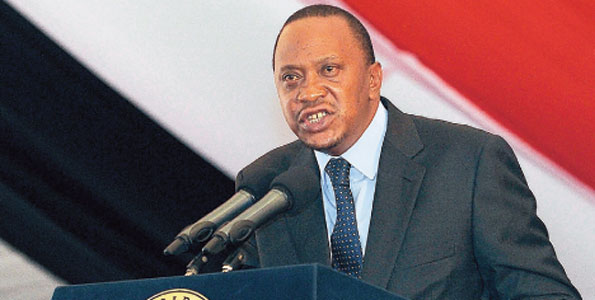
Uhuru Kenyatta calls upon African governments for free movement of people

Kenyan President Uhuru Kenyatta has called upon African governments to allow free movement of Africans all across the continent.

President Kenyatta made the remark during an official visit to Addis Ababa, where he met with Prime Minister Abiy Ahmed and President Sahle-Work Zewde.

“There is need for our people to be allowed to travel throughout the African continent freely without any hindrances, since we are all brothers and sisters with a common heritage as Africans,” Kenyatta said.

View image on Twitter

Uhuru Kenyatta

@UKenyatta

There is need for our people to be allowed to travel throughout the African continent freely without any hindrances, since we are all brothers and sisters with a common

African governments are still deliberating on how best to implement a proposed roll-out of an African passport, which would allow Africans to move across the continent without any hindrances.

The Pan-African passport was launched in July 2016, at the opening ceremony of the 27th Ordinary Session of the Assembly of the AU, in Kigali. Chadian President and then Chairperson of the AU, Idriss Deby, and his Rwandan counterpart Paul Kagame received the first passports from the then Chairperson of the AU Commission, Dr. Nkosazana Dlamini Zuma.

Earlier this year, the AU said it would provide details of the production and issuance of the African passport, which would be used by the continent’s over 1.2 billion people.

Other than supporting the removal of boundaries across Africa, President Kenyatta has also in the past called for the removal of passport requirements for travel by East Africans across the region, saying it would open up the region economically.

The Kenyan leader’s visit to Ethiopia is his second this year, having attended the 32nd AU Heads of State and Governments in Addis Abbaba in early February.

Source :CGTN

Général Emmanuel Habyarimana, l’homme qui fait peur à Paul Kagame au Rwanda.

Le Général Emmanuel Habyarimana en Suisse

Né au Katanga, en République démocratique du Congo, il est rentré au Rwanda avec ses parents alors qu’il n’avait que 11 ans. Il aime le Congo, jamais il ne se présente comme Congolais. Il est Rwandais. Hitler africain, Paul Kagamé le dictateur rwandais, qui élimine ses opposants y compris à l’étranger, tremble à la simple prononciation du nom du Général Emmanuel Habyarimamana. Au Rwanda, les Hutu sont bien plus nombreux que les Tutsi. Hutu modéré, a lui tout seul il représente ce que répugne le soudard Kagamé : l’intelligence et la connaissance des armes. L’exilé en Suisse est dangereux pour l’unité nationale rwandaise d’après Paul Kagamé, l’autocrate du pays des mille collines. Brillantissime, homme d’une grande acuité intellectuelle, le Général Emmanuel Habyarimana est victime comme la majorité des Hutus de la campagne de diabolisation orchestrée par l’ogre de Kigali, ami de Bill Clinton et qui a pour conseiller diplomatique: Tonny Blair, l’ancien Premier ministre Britannique. Tout Hutu est génocidaire, divisionniste et négationniste. Les Twa-pygmées-2% de la population-ont disparu du Rwanda dans l’indifférence totale de l’opinion internationale. Même si un nourrisson Hutu vient de naître pendant nous couchons ces lignes, alors qu’il n’a jamais connu le génocide rwandais de 1994, il est considéré comme un génocidaire, quelle aberration. “Je suis rentré à Kigali le 29 juillet 1994. Après trois mois de camp de réadaptation, j’ai été réintégré dans les rangs de l’Armée patriotique rwandaise, la branche armée du FPR. J’ai représenté l’armée à l’Assemblée nationale et réorganisé la justice et l’administration militaire. J’ai travaillé directement avec Kagame. Il m’exploitait mais je n’en souffrais pas car j’avais l’impression de participer à la stabilisation du pays. Secrétaire général, puis secrétaire d’Etat, je suis devenu ministre de la Défense lorsque Kagame a quitté ce poste pour devenir président. J’ai réorganisé le statut des militaires et me suis opposé à l’avancement que Kagame voulait donner à des Tutsi ougandais, des officiers de sa famille ou des proches qui avaient du sang sur les mains, comme Fred Ibingira nommé général de la Division Kiga-Kitarama alors qu’il a été condamné pour les massacres de Kibeho. C’est aujourd’hui le bras droit du président. Je me suis aussi opposé à la poursuite des tueries au Congo et me suis battu pour le respect des droits de l’homme, de l’Etat de droit et de la justice. Une loi qui introduisait le Forum des partis stipulait qu’un parti politique ne pouvait se réunir que sous les auspices du FPR. J’ai dit ouvertement que c’était le début du totalitarisme. Je me suis aussi opposé à la privatisation et à la vente à des proches de Kagame de plantations de thé”.

Le Général Emmanuel Habyarimana en Suisse

Il faut aller en Suisse, pour rencontrer le Général Emmanuel Habyarimana, qui n’est pas de la famille de Juvénal Habyarimana, l’ancien président de la République rwandaise de 1973 jusqu’à son décès dans un attentat en 1994, événement déclencheur du génocide des Rwandais-Tutsis et Hutus. “Lorsque j’étais réfugié à Kampala, ils m’ont même traité de génocidaire. Durant l’ancien régime du président Juvénal Habyarimana, avec lequel je n’ai aucun lien de parenté, j’ai été jeté en prison, le 27 octobre 1990. J’y suis resté une année pour intelligence avec l’ennemi, c’est-à-dire avec le FPR de Paul Kagame, actuel président du Rwanda, avant de passer devant un conseil de guerre qui m’a blanchi. Bien que je sois diplômé de l’Ecole royale militaire de Belgique, ils n’ont pas voulu me réintégrer dans l’armée. De fin 1991 à 1994, j’ai été directeur des sports. Quand la guerre génocidaire a éclaté en 1994, j’étais au nord-est du Rwanda, à Nyagatare, où plus de 20 000 fugitifs tutsi étaient regroupés. J’ai été réintégré dans l’armée alors même que Kigali envoyait des autobus de militants chargés de massacrer ces Tutsi. J’ai refoulé les tueurs et sauvé ces réfugiés, leur permettant de s’enfuir vers l’Ouganda voisin. Après diverses mésaventures, je me suis retrouvé à Kigeme où les massacres avaient déjà commencé. On a arrêté les tueries et protégé les fugitifs. Avec d’autres officiers, nous avons publié la Déclaration de Kigeme contre le génocide, mais aussi contre les massacres du FPR qui tuait depuis 1990 chaque fois qu’il passait quelque part. En juillet 1994, le gouvernement hutu a levé contre nous une expédition punitive. Nous avons été attaqués par la garde présidentielle et sauvés de justesse par les Français de l’opération «Turquoise».” Le 10 octobre 2018, le Procureur de la République près le Tribunal de Grande Instance de Paris a requis un non-lieu pour les suspects mis en examen dans l’affaire de l’attentat, le 6 avril 1994, contre l’avion du Président rwandais Juvénal Habyarimana. L’attentat fut non pas la cause, mais l’élément déclencheur du génocide et d’autres crimes de masse. Suite à une plainte avec constitution de partie civile, une information judiciaire avait été ouverte le 27 mars 1998 contre X du chef d’assassinat en relation avec une entreprise terroriste. Durant les vingt ans qu’elle a duré, cette instruction a connu de nombreux rebondissements et, surtout, provoqué une grande hostilité de la part du régime rwandais envers la France. Le Rwanda est l’un des neuf pays voisins de la République démocratique du Congo. Le Rwanda de Paul Kagamé a commis des massacres de populations civiles et contribué au pillage des ressources de la RDC. “Un pays ne change d’adresse tous les quatre matins”. Le destin de la RDC est intrinsèquement lié avec ses neuf voisins, dont le Rwanda.

Doctorat de l’université de Lyon du Général Emmanuel Habyarimana

DEA de l’université de Genève du Général Emmanuel Habyarimana

Le Général Emmanuel Habyarimana est mentalement fort. Son passé vaut un roman. La fourberie du régime criminel de Paul Kagame n’est pas un petit détail de l’histoire. Les Hutus modérés se sont fait avoir par Kagamé : “Après s’être engagés dans la réconciliation nationale, les Hutus modérés disent avoir ouvert les yeux face aux coups portés contre de nombreux d’entre eux qui avaient opté pour le nouveau régime de Paul Kagame. Le premier ministre Twagiramungu a été écarté. Puis il y a eu l’assassinat à Nairobi de Seth Sendashonga, un Hutu également, l’un des fondateurs du FPR (l’organisation militaire de Kagame). Depuis, le général Habyarimana est réfugié en Suisse et, au Rwanda, la vengeance du régime est retombée sur ses proches. Le 1er avril 2003, un de ses amis, le général Augustin Ngirabatware, avait été arrêté et mis au secret. Damien Musayidizi, son secrétaire lorsqu’il était ministre de la Défense, a «disparu» le 3 avril. Augustin Cyiza, conseiller d’Habyarimana lorsqu’il était ministre de la Défense, militant des droits de l’homme reconnu au niveau international et vice-président de la Cour suprême, a été enlevé à Kigali le 23 avril 2003 et vraisemblablement assassiné. lutte depuis toujours pour la réconciliation. Sous Habyarimana, j’ai obtenu que des Tutsi soient réintégrés dans l’armée. J’ai fait de même pour des militaires hutu sous Kagame.”

Emmanuel Habyarimana “Des métamorphoses géopolitiques de l’Europe pour la paix perpétuelle

La complexité des relations entre les pays des Grands Lacs africains a toujours donné le tournis à plus d’un spécialiste. Avec ses 80 millions d’hectares de terres arables et son sous-sol riche en minerais et métaux précieux, la République démocratique du Congo a le potentiel pour devenir un acteur incontournable en Afrique subsaharienne. Malheureusement, notre pays ne s’est pas encore remis des deux guerres entre 1996 et 2002 qui ont généré un marasme politique, social, économique et humanitaire prolongé. Pour mieux piller ses ressources, des fausses rébellions soutenues par la soldatesque rwandaise et ougandaise font des incursions à l’Est de la République démocratique du Congo: elle massacre des populations civiles sans défense, pille, viol, vol…

Le Rwanda de Paul Kagamé est déclaré premier pays producteur du Coltan qui ne se trouve pas dans son sous sol. La communauté internationale regarde ailleurs. Un génocide non reconnu se vit au Congo: plus de 12 millions des morts, des déplacés et réfugiés dans leur propre pays, des viols des femmes utilisés comme arme de guerre-le Dr. Denis Mukwege, l’homme qui répare des femmes a obtenu le prix Nobel de la paix le 10 décembre 2018 à Oslo. Catapulté sur le trône du Congo pour mieux piller ses ressources, Hippolyte Kanambe Kazembere Mtwale Alias Joseph Kabila, proconsul de Paul Kagame au Congo-Kinshasa a régné 18 ans, sans que la justice n’ait rendu un arrêt sur Eddy Kapend et les présumés assassins de son père adoptif: M’zée Laurent-Désiré Kabila. L’élection du 30 décembre 2018 est gagnée par Martin Fayulu avec 62%. Le Président élu n’a pas l’imperium du pouvoir. Félix Tshilombo Bizimungu wa Kanambe, monsieur 16% a été proclamé président à l’issue d’un odieux deal avec Alias Kabila. Tshilombo est un pantin,marionnette, valet et vassal qui a signé un accord FCC-UDPS-CACH. Ce petit pseudo-président nommé qui est illégitime, cherche sa légitimité à l’extérieur du Congo. Et Alias Kabila qui a la majorité au parlement est encore le vrai président de la RDC. Nous avons une crise de légitimité post-électoral: la RDC a trois présidents de la République, Martin Fayulu le légitime, Félix Tshilombo le nommé et Alias Kabila, le président sortant non parti !

Le Rwanda voisin a aussi ses réalités. Les Rwandais ont approuvé à 98,13 % la révision de la constitution qui permettrait au dictateur Paul Kagamé de rester au pouvoir jusqu’en 2034. Comme dans d’autres systèmes « développementalistes », le régime dictatorial justifie les restrictions des libertés politiques et des médias par l’amélioration des conditions de vie. Le pays reste marqué par le génocide et les violences passées. Le Rwanda de Kagamé fait du recel des ressources de la République démocratique du Congo, sans que cela n’offusque la conscience de nombreux citoyens.

La région des Grands Lacs est à la croisée des chemins. Les récents processus électoraux ont fragilisé davantage les États et les sociétés. Les crises politiques nationales risquent d’ouvrir une nouvelle phase d’instabilité régionale, ce d’autant plus que les causes profondes des conflits armés et violences passés ne sont pas résolues. A cela s’ajoutent des problèmes majeurs, tels que la pauvreté, le manque de perspectives d’avenir pour la jeunesse, des services de base défaillants, le manque d’inclusion politique, couplé à des violations des droits de l’homme…

Malgré des soubresauts nos peuples dans les pays des Grands Lacs doivent entrevoir le vivre ensemble dans la paix, la démocratie et le respect des droits humains, cela nécessitera forcément de l’audace, de l’innovation, de l’inventivité, du pragmatisme et une réelle volonté politique de chaque pays.
Source : Réveil FM

World Bank to be sued for financing criminal activities

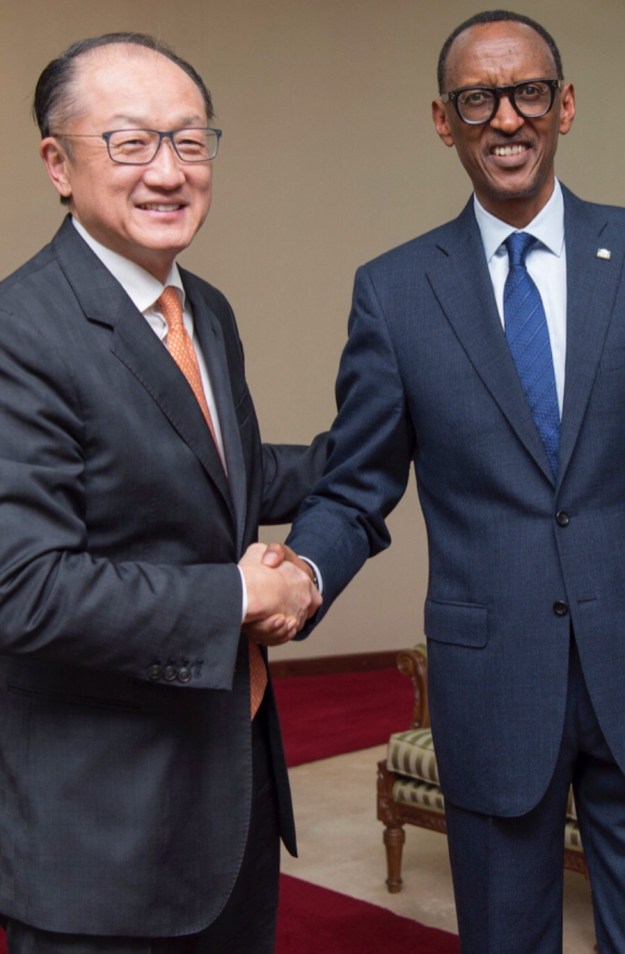
Former World Bank president Jim Yong Kim and General Paul Kagame

The most determined defender and financier of General Paul Kagame’s crooked development record is the World Bank. The two — the autocrat Kagame and the arrogant World Bank — are not accountable to the people of Rwanda. Whatever they decide goes unchallenged. The good news is that on February 27, 2019, the World Bank was stripped of its legal immunity. The Supreme Court of the United States rejected the World Bank’s claims of legal immunity. The Court ruled that the Bank can be sued in relation to lending activities. The ruling means that the World Bank now has to defend against suits by communities around the world whose livelihoods are damaged by its actions. The Bank’s argument that loss of immunity would make it a target for lawsuits that could cripple its ability to fight poverty was rejected. We in Rwanda should think of ways for holding the World Bank accountable for its actions. Here is an organization that shamelessly sustain Kagame’s developmental lies without a care about the price the people of Rwanda have to pay. The same World Bank worshipped Kagame’s predecessor, dictator General Juvénal Habyarimana. The World Bank is addicted to Rwandan autocrats. We now have an opportunity window to challenge the Bank  and the dictators.

Source : Medium

Une soixantaine d’ex-combattants du M23 rapatriés d’Ouganda

Une soixantaine d’ex-combattants du M23 ont été rapatriés mardi 26 février en République démocratique du Congo (RDC), en provenance d’Ouganda, selon les autorités des deux pays.

Ils sont arrivés à Goma en fin de matinée mardi 26 février. Au total, cinquante-sept ex-combattants accompagnés de dix femmes et enfants. Ces anciens rebelles étaient jusqu’à présent cantonnés dans le camp de Bihanga, à 300 km de Kampala, la capitale ougandaise.

Accueillis officiellement par le commandant de la zone militaire du Nord-Kivu, ils ont été conduits dans un centre de transit pour un séjour « bref », explique Patrick Mutombo Kambila, conseiller au Mécanisme national de suivi de l’accord-cadre d’Addis-Abeba. C’est là qu’ils devront, selon lui, choisir « librement » entre être démobilisés pour rentrer dans la vie civile ou intégrer l’armée congolaise, comme l’ont fait certains de leurs ex-compagnons d’armes rentrés en juillet dernier.

En 2013, un accord avait été signé à Nairobi qui devait permettre de régler la situation de ces centaines d’anciens combattants réfugiés dans les pays voisins – Ouganda, Rwanda – au moment de la chute de leur mouvement fin 2012. Mais ils rentrent au compte-gouttes. En Ouganda, ils seraient encore 200 selon Kinshasa, plus d’un millier selon Kampala. A leur retour, ils ont le choix entre retourner à la vie civile ou intégrer l’armée congolaise.

Rapatriements « volontaires » et « sans conditions »

Ces rapatriements, assure Patrick Mutombo Kambila, sont le résultat d’un accord passé en 2017 à Brazzaville entre les 3 chefs d’Etat concernés – Rwanda, Ouganda et RDC – dans lequel ils se sont mis d’accord sur le rapatriement « sans conditions » des ex-combattants disséminés dans la région, pour « mettre fin à la récurrence de la belligérance ».

Des rapatriements « volontaires », insiste le conseiller, même si jeudi dernier dans un communiqué, alors que ces retours se préparaient, Benjamin Mbonimpa, secrétaire exécutif du M23, a dénoncé des « manoeuvres » autour de cette question du rapatriement et assuré que des « personnes n’appartenant pas au M23 se feraient recruter en dehors du camp de cantonnement » en Ouganda, en échange de la « promesse » d’intégrer l’armée congolaise.

Ce que conteste Patrick Mutombo Kambila pour qui certains leaders du M23 chercheraient seulement à manipuler l’opinion et « prendre en otage les jeunes ex-combattants ». C’est déjà en application de cet accord, assure Kinshasa, que, fin novembre, plusieurs centaines d’ex-combattants FDLR, des Rwandais cette fois, ont été rapatriés dans leur pays, et leurs camps fermés par les autorités congolaises.

Source :RFI

Kagame propaganda papers claim Rwanda is launching satellite and is set to build space industry

Kagame propaganda newspapers have gone mad. The headline in one of them, KT Press, shouts that ”Rwanda launches a satellite.” The other Kagame propaganda paper, the New Times, says that Rwanda’s launch of the satellite ”is a symbol of the country’s commitment to build the local space industry.” Exaggerations from Rwanda are getting out of hand. Today, you hear that the country attracted over US$2 billion of foreign investments in one year. Then you hear that Rwanda is about to build nuclear power plants. And now, Rwanda is going into space. Rwanda can’t even build a railway let alone go into space. What these Kagame propagandists are lying about is a project called OneWeb ironically founded by Greg Wyler whom Kagame drove out of Rwanda in 2007. Wyler had bought Rwandatel which Kagame grabbed from him— Rwandatel later collapsed. Wyler then founded OneWeb. The purpose of OneWeb is to send hundreds of satellites into the lower space to provide internet broadband services to the world’s unconnected. Today, on February 27, 2019, at 16:37, US Eastern time, OneWeb is launching its first bunch of satellites on board an Arianespace Soyuz rocket from French Guiana. This is the OneWeb’s first big step toward achieving its goal of connecting the unconnected. Rwanda as one of the poorest unconnected countries in the world hopes to benefit from OneWeb venture if it succeeds. After dumping Wyler, the founder of OneWeb, Kagame sweet-talked him into letting Rwanda become a beneficiary of the project. Wyler had the last laugh. Kagame even invited him to the so-called Smart Africa Summit in Kigali in May 2018. Wonders never cease in Kagame’s Rwanda.

Kagame’s White elephant civilian applications satellite project: siphoning public funds.

Kagame, the President of Rwanda, has finalized a white elephant civilian applications satellwite project ” deal” with Kagame, the businessman.

In the insane “deal”, Kagame will ” partner” with One-Web to purchase a civilian applications satellite. WorldVu will manufacture the satillite for Rwanda. Rwanda is expected to launch the civilan applications satellite soon; it’s NOT a military or dual use satillite.

Kagame is a shareholder in WorldVu. World Vu is the manufacturer of the satellite Rwanda is to launch. Kagame invested about $50 million for 1.2% shares in WorldVu. Other shareholders in WorldVu are: Qualcom, Virgin, Airbus, 1110 Ventures, Wyler Trust, Bharti, Huges, Coca-Cola, Group Salinas, Intersat, F&F and Softbank.

WorldVu is a subsidiary of One-Web. Kagame is one of the shareholders in One-Web. Softbank is a majority shareholder in One Web. Tony Blair is associated with One Web and Softbank.

Since its creation, in 2016, WorldVu operates at $234 million loss annually. Trump administration does not do business with specific satellite manufacturers, including WorldVu. WorldVu expected to secure contracts from the US government given WorldVu’s alleged connection with President Bill Clinton.

In a bid to create market for WorldVu satellites, Kagame has committed Rwanda to a contract with WorkdVu to manufacture and maintain a civilian applications satellite. The satellite will cost Rwanda about $250 million plus about $15,000 monthly ( $150,000 annually) maintainance fee. It’s not known how much the technical staff to run the satellites project will cost annually. The money for this white elephant project will come from a loan, to be provided by One-Web and Softbank.

1. What are the expected advantages of the Satellite project compared to costs?

2. Which pressing problem is launching a satillite meant to solve for Rwanda?

3. Who did due diligence for Rwanda to contract WorldVu, a company that operates at such terrible loss annually?

4. What about Kagame’s stinking conflict of interest?

5. Did any public institution vet this project or it’s Kagane’s scam to siphon public funds?

6. In the likely event that WorldVu goes bankrupt, after launching the Satellite, won’t Rwanda get stuck with that satellite?

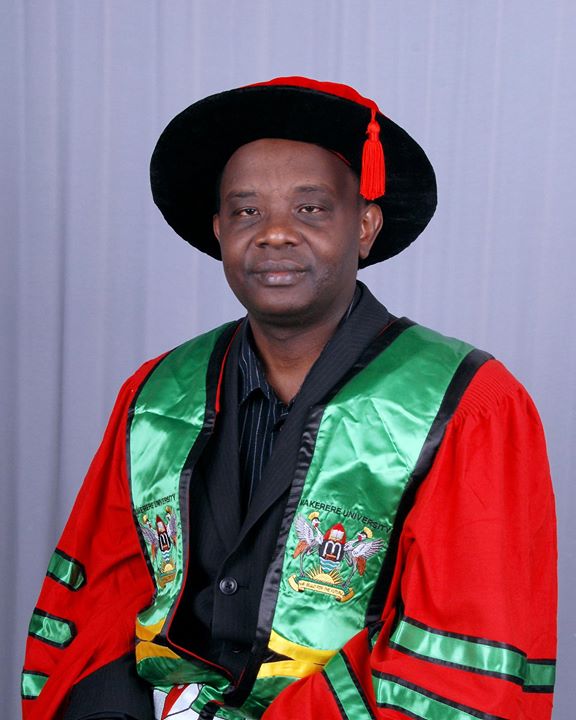
Dr Charles KAMBANDA PhD

BUGESERA: Umuturage yari yirengeje umuyobozi w’umurenge bapfa amafaranga y’irondo!

Abanyarwanda bamaze kuzinukwa imisanzu ya hato nahato bakwa n’ubutegetsi bwa FPR-Inkotanyi kuburyo hari n’abatangiye kwihebera ku bayobozi baza kubishyuza iyo misanzu ubusanzwe babona ko ari nko kubakoresha uburetwa kandi ubukene bubageze kure.

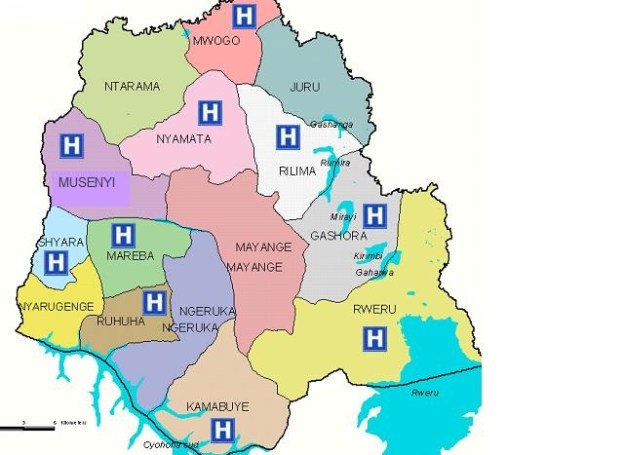
Mu gitondo cyo kuri uyu wa Kabiri taliki ya 26 Gashyantare 2019 Umuturage witwa Daniel BAGARAGAZA yakubise isuka Bwana NIYONZIMA Eliab Umuyobozi w’Umudugudu wa Kibirizi  uri mu Kagari ka Kibirizi ho mu Murenge wa Mayange mu Karere ka Bugesera,Intara y’Uburasirazuba.

Bagaragaza yazindutse ajya guhinga nk’uko bisanzwe, mu gihe umuyobozi w’Umudugudu Niyonzima we yazindutse azenguruka mu bantu yishyuza amafaranga y’irondo ry’Umwuga dore ko n’ukwezi gusigaje iminsi mike kukarangira, ageze kwa Bagaragaza yasanze yagiye guhinga maze yigira inama yo ku musangayo.

Amakuru Ijisho ry’Abaryankuna mu Karere ka Bugesera ryamenye ni uko Bagaragaza yamubwiye ko ntayo afite umuyobozi w’Umudugudu akamubwira ko uyu munsi ari Nyirantarengwa ko niba atayafite agomba kujya kureba icyo agurisha cyangwa bakamujyana kuri polisi. Yakomeje kumuhatiriza amubwira ko atamusiga,nibwo undi gufatwa n’ubushungu,bashungurana ubwo isuka aba arayimwashije!

Abaturage batabaye bahamagara n’abashinzwe umutekano Bagaragaza bamujyana ku biro by’Umurenge wa Mayange naho Niyonzima we yihutanywe ku Kigoderabuzima cya Mayange.

Abaturage bo mu Murenge wa Mayange usibye abo mu kiciro cya mbere, batanga amafaranga 1,000 kuri buri rygo, y’irondo ry’umwuga ( mu gihugu gifite umutekano kurusha ibindi muri Afurika ndetse kikaba kiri no mu byambere ku isi!)

Ayo mafaranga aza yiyongera ku mafaranga 3,000 ya mutuelle kuri buri muntu kubari mu kiciro cya kabiri n’icya gatatu ni mugihe abari mu cya 4 ari 7,000 ku muntu. Si ayo gusa kuko hiyongeraho n’indi misanzu inyuranye nk’ayitwa ay “Umuryango” (FPR-Inkotanyi) n’andi bakwa igihe habayeho igikorwa runaka nk’amatora n’ibindi.

Kuba uyu mugabo yakubise isuka umuyobozi w’umudugudu si urugomo cyangwa kunanirana kundi kuko  yari mu Nyangamugayo mu Kagari akaba yari “Umurokore” ndetse atari n’umurokore usanzwe kuko yari Mwalimu mu Itorero rya ADEPR Karambo,ahubwo abaturage barambiwe ubuzima bwo kuba mu gihugu bagitangamo imisanzu y’umurengera nk’aho ari ingaruzwamuheto.

Ibyabaye none bishobora kuzarushaho kuba niba nta  gikozwe ngo ubu butegetsi buhindurwe kuko kunanirwa ko bwananiwe kera kandi abaturage baraburambiwe kuburyo budasubirwaho!

UWAMWEZI Cécile

Source :Abaryankuna

Kagame’s Vision City 2020 Became A Ghost Town

General Paul Kagame had a dream — build an ultra-modern city-within-a-city to showcase Rwanda’s socioeconomic transformation. The ultra-modern city-within-a-city would comprise of a variety of housing units, shopping malls, recreational and leisure facilities, restaurants, sports facilities, a three-star hotel, and a conference center. Kagame named his city-within-a-city Vision City 2020 which would be Africa’s housing wonderland with 4,500 units, including luxury villas and apartments with a capacity to accommodate over 22,000 people.

Construction began in 2013, and was completed in 2017-2018. By 2019, however, Kagame’s Vision City 2020 remained mostly empty — a ghost town. There were no buyers. The original prices of the housing units that ranged from US$179,000 to US$560,000 were sharply reduced but to no avail. General Kagame forgot one thing. In a country where most people earn less than US$1.90 a day, few can afford houses in his now ghost town.

The biggest losers in this fiasco are Rwandan workers. The money that built Kagame’s ghost town came from Rwandan workers’ pension fund — no less than US$150 million.

Source : David Himbara