Author Archives: Chaste Gahunde

America’s secret role in the rwandan genocide

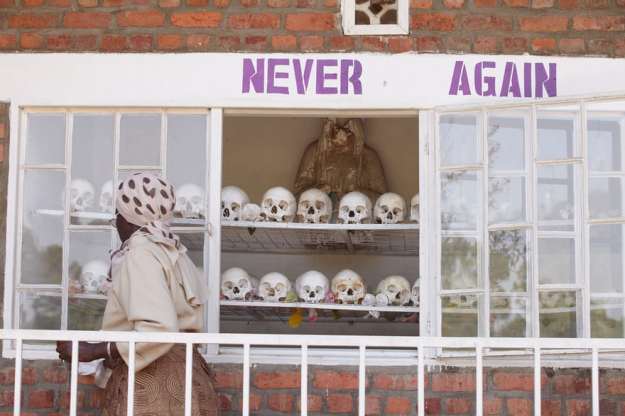
never againBetween April and July 1994, hundreds of thousands of Rwandans were murdered in the most rapid genocide ever recorded. The killers used simple tools – machetes, clubs and other blunt objects, or herded people into buildings and set them aflame with kerosene. Most of the victims were of minority Tutsi ethnicity; most of the killers belonged to the majority Hutus.

The Rwanda genocide has been compared to the Nazi Holocaust in its surreal brutality. But there is a fundamental difference between these two atrocities. No Jewish army posed a threat to Germany. Hitler targeted the Jews and other weak groups solely because of his own demented beliefs and the prevailing prejudices of the time. The Rwandan Hutu génocidaires, as the people who killed during the genocide were known, were also motivated by irrational beliefs and prejudices, but the powder keg contained another important ingredient: terror. Three and a half years before the genocide, a rebel army of mainly Rwandan Tutsi exiles known as the Rwandan Patriotic Front, or RPF, had invaded Rwanda and set up camps in the northern mountains. They had been armed and trained by neighbouring Uganda, which continued to supply them throughout the ensuing civil war, in violation of the UN charter, Organisation of African Unity rules, various Rwandan ceasefire and peace agreements, and the repeated promises of the Ugandan president, Yoweri Museveni.

During this period, officials at the US embassy in Kampala knew that weapons were crossing the border, and the CIA knew that the rebels’ growing military strength was escalating ethnic tensions within Rwanda to such a degree that hundreds of thousands of Rwandans might die in widespread ethnic violence. However, Washington not only ignored Uganda’s assistance to the Rwandan rebels, it also ramped up military and development aid to Museveni and then hailed him as a peacemaker once the genocide was underway.

The hatred the Hutu génocidaires unleashed represents the worst that human beings are capable of, but in considering what led to this disaster, it is important to bear in mind that the violence was not spontaneous. It emerged from a century or more of injustice and brutality on both sides, and although the génocidaires struck back against innocents, they were provoked by heavily armed rebels supplied by Uganda, while the US looked on.

The RPF rebel army represented Tutsi refugees who had fled their country in the early 1960s. For centuries before that, they had formed an elite minority caste in Rwanda. In a system continued under Belgian colonialism, they treated the Hutu peasants like serfs, forcing them to work on their land and sometimes beating them like donkeys. Hutu anger simmered until shortly before independence in 1962, then exploded in brutal pogroms against the Tutsi, hundreds of thousands of whom fled to neighbouring countries.

In Uganda, a new generation of Tutsi refugees grew up, but they soon became embroiled in the lethal politics of their adoptive country. Some formed alliances with Ugandan Tutsis and the closely related Hima – Museveni’s tribe – many of whom were opposition supporters and therefore seen as enemies by then-president Milton Obote, who ruled Uganda in the 1960s and again in the early 1980s.

After Idi Amin overthrew Obote in 1971, many Rwandan Tutsis moved out of the border refugee camps. Some tended the cattle of wealthy Ugandans; others acquired property and began farming; some married into Ugandan families; and a small number joined the State Research Bureau, Amin’s dreaded security apparatus, which inflicted terror on Ugandans. When Obote returned to power in the 1980s, he stripped the Rwandan Tutsis of their civil rights and ordered them into the refugee camps or back over the border into Rwanda, where they were not welcomed by the Hutu-dominated government. Those who refused to go were assaulted, raped and killed and their houses were destroyed.

In response to Obote’s abuses, more and more Rwandan refugees joined the National Resistance Army, an anti-Obote rebel group founded by Museveni in 1981. When Museveni’s rebels took power in 1986, a quarter of them were Rwandan Tutsi refugees, and Museveni granted them high ranks in Uganda’s new army.

Museveni’s promotion of the Rwandan refugees within the army generated not only resentment within Uganda, but terror within Rwanda where the majority Hutus had long feared an onslaught from Tutsi refugees. In 1972, some 75,000 educated Hutus – just about anyone who could read – had been massacred in Tutsi-ruled Burundi, a small country neighbouring Rwanda with a similar ethnic makeup. During the 1960s, Uganda’s Tutsi refugees had launched occasional armed strikes across the border, but Rwanda’s army easily fought them off. Each attack sparked reprisals against those Tutsis who remained inside Rwanda – many of whom were rounded up, tortured and killed – on mere suspicion of being supporters of the refugee fighters. By the late 1980s, a new generation of refugees, with training and weapons supplied by Museveni’s Uganda, represented a potentially far greater threat. According to the historian André Guichaoua, anger and fear hung over every bar-room altercation, every office dispute and every church sermon.

By the time Museveni took power, the plight of the Tutsi refugees had come to the attention of the west, which began pressuring Rwanda’s government to allow them to return. At first, Rwanda’s president, Juvénal Habyarimana, refused, protesting that Rwanda was among the most densely populated countries in the world, and its people, dependent upon peasant agriculture, needed land to survive. The population had grown since the refugees left, and Rwanda was now full, Habyarimana claimed.

Although he did not say so publicly, overpopulation almost certainly was not Habyarimana’s major concern. He knew the refugees’ leaders were not just interested in a few plots of land and some hoes. The RPF’s professed aim was refugee rights, but its true aim was an open secret throughout the Great Lakes region of Africa: to overthrow Habyarimana’s government and take over Rwanda by force. Museveni had even informed the Rwandan president that the Tutsi exiles might invade, and Habyarimana had also told US state department officials that he feared an invasion from Uganda.

One afternoon in early 1988 when the news was slow, Kiwanuka Lawrence Nsereko, a journalist with the Citizen, an independent Ugandan newspaper, stopped by to see an old friend at the ministry of transport in downtown Kampala. Two senior army officers, whom Lawrence knew, happened to be in the waiting room when he arrived. Like many of Museveni’s officers, they were Rwandan Tutsi refugees. After some polite preliminaries, Lawrence asked the men what they were doing there.

“We want some of our people to be in Rwanda,” one of them replied. Lawrence shuddered. He had grown up among Hutus who had fled Tutsi oppression in Rwanda before independence in 1962, as well as Tutsis who had fled the Hutu-led pogroms that followed it. Lawrence’s childhood catechist had been a Tutsi; the Hutus who worked in his family’s gardens wouldn’t attend his lessons. Instead, they swapped fantastic tales about how Tutsis once used their Hutu slaves as spittoons, expectorating into their mouths, instead of on the ground.

The officers went in to speak to the transport official first, and when Lawrence’s turn came, he asked his friend what had transpired. The official was elated. The Rwandans had come to express their support for a new open borders programme, he said. Soon Rwandans living in Uganda would be allowed to cross over and visit their relatives without a visa. This would help solve the vexing refugee issue, he explained.

Lawrence was less sanguine. He suspected the Rwandans might use the open borders programme to conduct surveillance for an invasion, or even carry out attacks inside Rwanda. A few days later, he dropped in on a Rwandan Tutsi colonel in Uganda’s army, named Stephen Ndugute.

“We are going back to Rwanda,” the colonel said. (When the RPF eventually took over Rwanda in 1994, Ndugute would be second in command.)

Many Ugandans were eager to see Museveni’s Rwandan officers depart. They were not only occupying senior army positions many Ugandans felt should be held by Ugandans, but some were also notorious for their brutality. Paul Kagame, who went on to lead the RPF takeover of Rwanda and has ruled Rwanda since the genocide, was acting chief of military intelligence, in whose headquarters Lawrence himself had been tortured. In northern and eastern Uganda, where a harsh counterinsurgency campaign was underway, some of the army’s worst abuses had been committed by Rwandan Tutsi officers. In 1989, for example, soldiers under the command of Chris Bunyenyezi, also an RPF leader, herded scores of suspected rebels in the village of Mukura into an empty railway wagon with no ventilation, locked the doors and allowed them to die of suffocation.

Lawrence had little doubt that if war broke out in Rwanda, it was going to be “very, very bloody”, he told me. He decided to alert Rwanda’s president. Habyarimana agreed to meet him during a state visit to Tanzania. At a hotel in Dar es Salaam, the 20-year-old journalist warned the Rwandan leader about the dangers of the open border programme. “Don’t worry,” Lawrence says Habyarimana told him. “Museveni is my friend and would never allow the RPF to invade.”

Habyarimana was bluffing. The open border programme was actually part of his own ruthless counter-strategy. Every person inside Rwanda visited by a Tutsi refugee would be followed by state agents and automatically branded an RPF sympathiser; many were arrested, tortured, and killed by Rwandan government operatives. The Tutsis inside Rwanda thus became pawns in a power struggle between the RPF exiles and Habyarimana’s government. Five years later, they would be crushed altogether in one of the worst genocides ever recorded.

On the morning of 1 October 1990, thousands of RPF fighters gathered in a football stadium in western Uganda about 20 miles from the Rwandan border. Some were Rwandan Tutsi deserters from Uganda’s army; others were volunteers from the refugee camps. Two nearby hospitals were readied for casualties. When locals asked what was going on, Fred Rwigyema, who was both a Ugandan army commander and the leader of the RPF, said they were preparing for Uganda’s upcoming Independence Day celebrations, but some excited rebels let the true purpose of their mission leak out. They crossed into Rwanda that afternoon. The Rwandan army, with help from French and Zairean commandos, stopped their advance and the rebels retreated back into Uganda. A short time later, they invaded again and eventually established bases in northern Rwanda’s Virunga mountains.

Presidents Museveni and Habyarimana were attending a Unicef conference in New York at the time. They were staying in the same hotel and Museveni rang Habyarimana’s room at 5am to say he had just learned that 14 of his Rwandan Tutsi officers had deserted and crossed into Rwanda. “I would like to make it very clear,” the Ugandan president reportedly said, “that we did not know about the desertion of these boys” – meaning the Rwandans, not 14, but thousands of whom had just invaded Habyarimana’s country – “nor do we support it.”

In Washington a few days later, Museveni told the State Department’s Africa chief, Herman Cohen, that he would court martial the Rwandan deserters if they attempted to cross back into Uganda. But a few days after that, he quietly requested France and Belgium not to assist the Rwandan government in repelling the invasion. Cohen writes that he now believes that Museveni must have been feigning shock, when he knew what was going on all along.

When Museveni returned to Uganda, Robert Gribbin, then deputy chief of mission at the US embassy in Kampala, had some “stiff talking points” for him. Stop the invasion at once, the American said, and ensure no support flowed to the RPF from Uganda.

Museveni had already issued a statement promising to seal all Uganda–Rwanda border crossings, provide no assistance to the RPF and arrest any rebels who tried to return to Uganda. But he proceeded to do none of those things and the Americans appear to have made no objection.

When the RPF launched its invasion, Kagame, then a senior officer in both the Ugandan army and the RPF, was in Kansas at the United States Army Command and General Staff College at Fort Leavenworth, studying field tactics and psyops, propaganda techniques to win hearts and minds. But after four RPF commanders were killed, he told his American instructors that he was dropping out to join the Rwandan invasion. The Americans apparently supported this decision and Kagame flew into Entebbe airport, travelled to the Rwandan border by road, and crossed over to take command of the rebels.

For the next three and a half years, the Ugandan army continued to supply Kagame’s fighters with provisions and weapons, and allow his soldiers free passage back and forth across the border. In 1991, Habyarimana accused Museveni of allowing the RPF to attack Rwanda from protected bases on Ugandan territory. When a Ugandan journalist published an article in the government-owned New Vision newspaper revealing the existence of these bases, Museveni threatened to charge the journalist and his editor with sedition. The entire border area was cordoned off. Even a French and Italian military inspection team was denied access.

In October 1993, the UN security council authorised a peacekeeping force to ensure no weapons crossed the border. The peacekeepers’ commander, Canadian Lt-Gen Roméo Dallaire, spent most of his time inside Rwanda, but he also visited the Ugandan border town of Kabale, where an officer told him that his inspectors would have to provide the Ugandan army with 12 hours’ notice so that escorts could be arranged to accompany them on their border patrols. Dallaire protested: the element of surprise is crucial for such monitoring missions. But the Ugandans insisted and eventually, Dallaire, who was much more concerned about developments inside Rwanda, gave up.

The border was a sieve anyway, as Dallaire later wrote. There were five official crossing sites and countless unmapped mountain trails. It was impossible to monitor. Dallaire had also heard that an arsenal in Mbarara, a Ugandan town about 80 miles from the Rwanda border, was being used to supply the RPF. The Ugandans refused to allow Dallaire’s peacekeepers to inspect that. In 2004, Dallaire told a US congressional hearing that Museveni had laughed in his face when they met at a gathering to commemorate the 10th anniversary of the genocide. “I remember that UN mission on the border,” Museveni reportedly told him. “We manoeuvred ways to get around it, and of course we did support the [RPF].”

US officials knew that Museveni was not honouring his promise to court martial RPF leaders. The US was monitoring Ugandan weapons shipments to the RPF in 1992, but instead of punishing Museveni, western donors including the US doubled aid to his government and allowed his defence spending to balloon to 48% of Uganda’s budget, compared with 13% for education and 5% for health, even as Aids was ravaging the country. In 1991, Uganda purchased 10 times more US weapons than in the preceding 40 years combined.

The 1990 Rwanda invasion, and the US’s tacit support for it, is all the more disturbing because in the months before it occurred, Habyarimana had acceded to many of the international community’s demands, including for the return of refugees and a multiparty democratic system. So it wasn’t clear what the RPF was fighting for. Certainly, negotiations over refugee repatriation would have dragged on and might not have been resolved to the RPF’s satisfaction, or at all. But negotiations appear to have been abandoned abruptly in favour of war.

At least one American was concerned about this. The US ambassador to Rwanda, Robert Flaten, saw with his own eyes that the RPF invasion had caused terror in Rwanda. After the invasion, hundreds of thousands of mostly Hutu villagers fled RPF-held areas, saying they had seen abductions and killings. Flaten urged the George HW Bush’s administration to impose sanctions on Uganda, as it had on Iraq after the Kuwait invasion earlier that year. But unlike Saddam Hussein, who was routed from Kuwait, Museveni received only Gribbin’s “stiff questions” about the RPF’s invasion of Rwanda.

“In short,” Gribbin writes, “we said that the cat was out of the bag, and neither the United States nor Uganda was going to rebag it.” Sanctioning Museveni might have harmed US interests in Uganda, he explains. “We sought a stable nation after years of violence and uncertainty. We encouraged nascent democratic initiatives. We supported a full range of economic reforms.” But the US was not fostering nascent democratic initiatives inside Uganda. While pressuring other countries, including Rwanda, to open up political space, Uganda’s donors were allowing Museveni to ban political party activity, arrest journalists and editors, and conduct brutal counterinsurgency operations in which civilians were tortured and killed. And far from seeking stability, the US, by allowing Uganda to arm the RPF, was setting the stage for what would turn out to be the worst outbreak of violence ever recorded on the African continent. Years later, Cohen expressed regret for failing to pressure Uganda to stop supporting the RPF, but by then it was far too late.

For Habyarimana and his circle of Hutu elites, the RPF invasion seemed to have a silver lining, at least at first. At the time, Hutu/Tutsi relations inside Rwanda had improved. Habyarimana had sought reconciliation with the Tutsis still living in Rwanda by reserving civil service jobs and university places for them in proportion to their share of the population. This programme was modestly successful, and the greatest tensions in the country now lay along class, not ethnic, lines. A tiny educated Hutu clique linked to Habyarimana’s family who called themselves évolués –the evolved ones – was living off the labour of millions of impoverished rural Hutus, whom they exploited just as brutally as the Tutsi overlords of bygone days.

The évolués subjected the peasants to forced labour and fattened themselves on World Bank “anti-poverty” projects that provided jobs and other perks for their own group, but did little to alleviate poverty. International aid donors had pressured Habyarimana to allow opposition political parties to operate, and many new ones had sprung up. Hutus and Tutsis were increasingly united in criticising Habyarimana’s autocratic behaviour and nepotism, and the vast economic inequalities in the country.

When Rwanda’s ethnic bonfires roared back to life in the days after the RPF invasion, Habyarimana and his circle seem to have sensed a political opportunity: now they could distract the disaffected Hutu masses from their own abuses by reawakening fears of the “demon Tutsis”, who would soon become convenient scapegoats to divert attention from profound socioeconomic injustices.

Shortly after the invasion, all Tutsis – whether RPF supporters or not – became targets of a vicious propaganda campaign that would bear hideous fruit in April 1994. Chauvinist Hutu newspapers, magazines and radio programmes began reminding Hutu audiences that they were the original occupants of the Great Lakes region and that Tutsis were Nilotics – supposedly warlike pastoralists from Ethiopia who had conquered and enslaved them in the 17th century. The RPF invasion was nothing more than a plot by Museveni, Kagame and their Tutsi co-conspirators to re-establish this evil Nilotic empire. Cartoons of Tutsis killing Hutus began appearing in magazines, along with warnings that all Tutsis were RPF spies bent on dragging the country back to the days when the Tutsi queen supposedly rose from her seat supported by swords driven between the shoulders of Hutu children. In December 1993, a picture of a machete appeared on the front page of a Hutu publication under the headline “What to do about the Tutsis?”

Habyarimana knew that the RPF, thanks to Ugandan backing, was better armed, trained and disciplined than his own army. Under immense international pressure, he had agreed in August 1993 to grant the RPF seats in a transitional government and nearly half of all posts in the army. Even Tutsis inside Rwanda were against giving the RPF so much power because they knew it could provoke the angry, fearful Hutus even more, and they were right. As Habyarimana’s increasingly weak government reluctantly acceded to the RPF’s demands for power, Hutu extremist mayors and other local officials began stockpiling rifles, and government-linked anti-Tutsi militia groups began distributing machetes and kerosene to prospective génocidaires. In January 1994, four months before the genocide, the CIA predicted that if tensions were not somehow defused, hundreds of thousands of people would die in ethnic violence. The powder keg awaited a spark to set it off.

That spark arrived at about 8pm on 6 April 1994, when rockets fired from positions close to Kigali airport shot down Habyarimana’s plane as it was preparing to land. The next morning, frantic Hutu militia groups, convinced that the Nilotic apocalypse was at hand, launched a ferocious attack against their Tutsi neighbours.

Few subjects are more polarising than the modern history of Rwanda. Questions such as “Has the RPF committed human rights abuses?” or “Who shot down President Habyarimana’s plane?” have been known to trigger riots at academic conferences. The Rwandan government bans and expels critical scholars from the country, labelling them “enemies of Rwanda” and “genocide deniers”, and Kagame has stated that he doesn’t think that “anyone in the media, UN [or] human rights organisations has any moral right whatsoever to level any accusations against me or Rwanda”.

Be that as it may, several lines of evidence suggest that the RPF was responsible for the downing of Habyarimana’s plane. The missiles used were Russian-made SA-16s. The Rwandan army was not known to possess these weapons, but the RPF had them at least since May 1991. Two SA-16 single-use launchers were also found in a valley near Masaka Hill, an area within range of the airport that was accessible to the RPF. According to the Russian military prosecutor’s office, the launchers had been sold to Uganda by the USSR in 1987.

Since 1997, five additional investigations of the crash have been carried out, including one by a UN-appointed team, and one each by French and Spanish judges working independently. These three concluded that the RPF was probably responsible. Two Rwandan government investigations conversely concluded that Hutu elites and members of Habyarimana’s own army were responsible.

2012 report on the crash commissioned by two French judges supposedly exonerated the RPF. But this report, although widely publicised as definitive, actually was not. The authors used ballistic and acoustic evidence to argue that the missiles were probably fired by the Rwandan army from Kanombe military barracks. But they admit that their technical findings could not exclude the possibility that the missiles were fired from Masaka Hill, where the launchers were found. The report also fails to explain how the Rwandan army, which was not known to possess SA-16s, could have shot down the plane using them.

Soon after the plane crash, the génocidaires began their attack against the Tutsis, and the RPF began advancing. But the rebels’ troop movements suggested that their primary priority was conquering the country, not saving Tutsi civilians. Rather than heading south, where most of the killings were taking place, the RPF circled around Kigali. By the time it reached the capital weeks later, most of the Tutsis there were dead.

When the UN peacekeeper Dallaire met RPF commander Kagame during the genocide, he asked about the delay. “He knew full well that every day of fighting on the periphery meant certain death for Tutsis still behind [Rwanda government forces] lines,” Dallaire wrote in Shake Hands With the Devil. “[Kagame] ignored the implications of my question.”

In the years that followed, Bill Clinton apologised numerous times for the US’s inaction during the genocide. “If we’d gone in sooner, I believe we could have saved at least a third of the lives that were lost,” he told journalist Tania Bryer in 2013. Instead, Europeans and Americans extracted their own citizens and the UN peacekeepers quietly withdrew. But Dallaire indicates that Kagame would have rejected Clinton’s help in any case. “The international community is looking at sending an intervention force on humanitarian grounds,” Kagame told Dallaire. “But for what reason? If an intervention force is sent to Rwanda, we,” – meaning the RPF – “will fight it.”


As the RPF advanced, Hutu refugees fled into neighbouring countries. In late April, television stations around the world broadcast images of thousands upon thousands of them crossing the Rusumo Bridge from Rwanda into Tanzania, as the bloated corpses of Rwandans floated down the Kagera river beneath them. Most viewers assumed that all the corpses were Tutsis killed by Hutu génocidaires. But the river drains mainly from areas then held by the RPF, and Mark Prutsalis, a UN official working in the Tanzanian refugee camps, maintains that at least some of the bodies were probably Hutu victims of reprisal killings by the RPF. One refugee after another told him that RPF soldiers had gone house to house in Hutu areas, dragging people out, tying them up and throwing them in the river. The UN estimated later that the RPF killed some 10,000 civilians each month during the genocide.

Lawrence Nsereko was among the journalists on the Rusumo Bridge that day and as the bodies floated by, he noticed something strange. The upper arms of some of them had been tied with ropes behind their backs. In Uganda, this method of restraint is known as the “three-piece tie”; it puts extreme pressure on the breastbone, causing searing pain, and may result in gangrene. Amnesty International had recently highlighted it as a signature torture method of Museveni’s army, and Lawrence wondered whether the RPF had learned this technique from their Ugandan patrons.

In June 1994, while the slaughter in Rwanda was still underway, Museveni travelled to Minneapolis, where he received a Hubert H Humphrey public service medal and honorary doctorate from the University of Minnesota. The dean, a former World Bank official, praised Museveni for ending human rights abuses in Uganda and preparing his country for multiparty democracy. Western journalists and academics showered Museveni with praise. “Uganda [is] one of the few flickers of hope for the future of black Africa,” wrote one. The New York Times compared the Ugandan leader to Nelson Mandela, and Time magazine hailed him as a “herdsman and philosopher” and “central Africa’s intellectual compass.”

Museveni also visited Washington on that trip, where he met with Clinton and his national security adviser, Anthony Lake. I could find no record of what the men discussed, but I can imagine the Americans lamenting the tragedy in Rwanda, and the Ugandan explaining that this disaster only confirmed his long-held theory that Africans were too attached to clan loyalties for multiparty democracy. The continent’s ignorant peasants belonged under the control of autocrats like himself.

Helen C Epstein

This is an adapted extract from Another Fine Mess: America, Uganda and the War on Terror, published by Columbia Global Reports. To order a copy for £9.34, go to guardianbookshop.com or call 0330 333 6846. Free UK p&p over £10, online orders only. Phone orders min. p&p of £1.99.
 

PAUL KAGAME 2017: N’UBWO AFITE UBURAMBE MU KOGA MU MARASO Y’ABAHUTU N’AY’ABATUTSI, NONEHO UBANZA YARANGIJE GUSOMA NKERI!

Kagame final

Nkunda kureba sinema zerekana uko inyamaswa zihiga. By’umwihariko ariko njya nitegereza cyane uko Intare zitwara iyo zirimo guhiga izindi nyamaswa. Sinibuza guseka cyane iyo mbonye intare isimbukiye imbogo ariko byagera aho izindi mbogo zirukaga zihunga zigasa n’iziyunguye agatekerezo, zigahagarara, zikisuganya, zigasubira inyuma gutabara iyazo yasigaye mu nzara z’intare! Nta gishimisha nko kureba ukuntu intare Umwami ishyamba yiruka ibebera, ikimwaro cyayibanye cyinshi!

Muri iyi minsi mwaba muri kwitegereza Paul KAGAME ngo murebe uko asa kandi agenza nk’intare yamwaye ??!!

I.IKIMWARO CYA PAUL KAGAME

Uyu munyagitugu yarabanje avuza iyabahanda, abeshya Abanyarwanda n’ isi yose ngo nibamurebe mu maso ngo ni umudemokarate w’akataraboneka. Ngo nta nyota y’ubutegetsi afite nk’abahutu bamubanjirije. Ngo manda ebyiri yemererwa n’Itegekonshinga nizirangira mu mwaka wa 2017 ntazakenera kurihindura  ngo yihambire ku butegetsi!

Ntibukeye kabiri, yadukana agashya ko kwikoreza abaturage bagowe ibiseke ku ngufu ngo babijyane mu Ntekonshingamategeko kwerekana ko bamukunda byarenze igipimo; akomereza ku kwinginga abakecuru ngo nibaririmbe kandi babyine ko rwose KAGAME ari murumuna wa Yezu Kristu; naho “Abacukuzibimisarani” bo bahindurirwa akazi, bahabwa “mikoro” ngo bazenguruke igihugu cyose bomongana ngo” KAGAME atariho u Rwanda ntirwabaho! Ngo niwe wenyine wavukiye gutegeka, abandi benegihugu bose bakaba bagomba kwiheshereza agaciro mu kumubera abagereerwa n’inkomamashyi”! Ibyo twese twarabibonye turumirwa, Abazungu bari barizeye KAGAME bo baranyonyomba, bikuriramo akabo karenge, umwe umwe nta nduru!

Ingaruka zo gutegekwa n’”Umunyakinyoma utagira indangagaciro n’imwe yubaha”, ubu nizo rero zikomeje kujya ku kabonabose. Kwihishira byarangiye! Reka twibutse bine mu bimenyetso simusiga byagaragaje ko twinjiye mu bihe bidasanzwe:

(1) Mu Ukuboza 2015 KAGAME yategetse ko Itegekonshinga risuzugurwa burundu,kugirango rimwemerere kuzaba umwami w’u Rwanda ubuziraherezo.

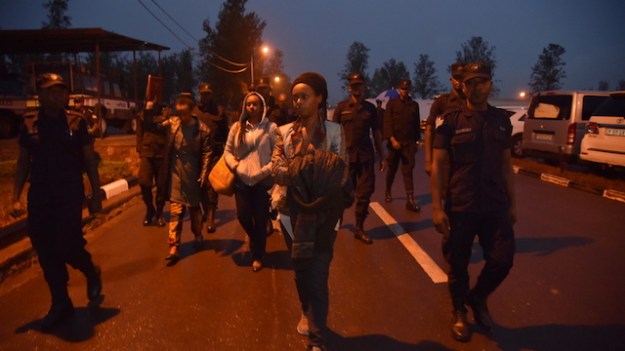
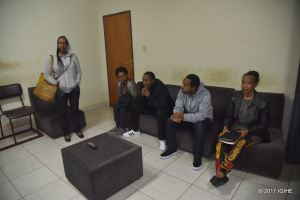
(2) Ingingo ya 25 y’Itegekonshinga  igena ko nta mwenegihugu ugomba kubuzwa gutahuka mu gihugu cye, Paul KAGAME yategetse ko itazongera gukurikizwa ukundi. Byagaragaye cyane taliki ya 23/11/2016 ubwo yafataga icyemezo kigayitse cyane cyo gucira ishyanga Padiri Thomas NAHIMANA, Nadine Claire KASINGE,Venant NKURUNZIZA na KEJO MAHIRWE Skyler bari biyemeje gutahuka mu Urwababyaye bagiye gufasha Abanyarwanda guharanira uburenganzira bwabo. Ubwo KAGAME yaduhezaga ishyanga yishuka ko abatuye mu gihugu imbere bose yarangije kubatera ubwoba bidasubirwaho,ko ntawe uzatinyuka kumuhangara mu matora y’umukuru w’igihugu yo mu 2017.

Icyo atamenye ni uko ubushake y’impinduka bwarangije kuzura mu mitima y’abanyarwanda batagira ingano.

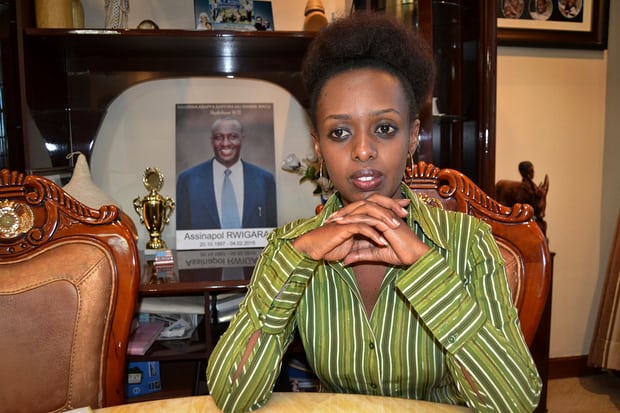
Ntiyamenye aho Diane RWIGARA ateye aturuka, ntiyigeze anamenya uko uwo mwari yatojwe ibya politiki n’amarira y’akarengane yahogoje Abanyarwanda benshi! Kuko batari bamwiteguye, kumucecekesha byakomeje kubera  KAGAME n’Agatsiko ke  ingorabahizi.

diane

  1. AYA MARIRA YATEWE  N’UMUGAMBI MUBISHA WA KAGAME YO KURIMBURA UMURYANGO WA RWIGARA, HARI AHO AHURIYE N’UYU MUKWABU WO GUFUNGA ABAYOBOZI BA FDU BARI I KIGALI?

Gutoteza umuryango wa RWIGARA hagamijwe kuwutindahaza no kuwurimbura bifitanye isano n’umukwabu wo gufata no gufunga abayobozi ba Opozisiyo y’imbere mu gihugu bo mu bwoko bw’Abahutu. Ntiriwe ndondogora reka mbabwire uko tubibona mu tugingo 5 gusa dukurikira.

1.Mu gihe abaturage bari bataribagirwa uko KAGAME yagaraguye mu biziba kandi amurenganya umusore Abanyarwanda twese twakundaga witwa Kizito MIHIGO, yadukiriye Diane RWIGARA n’umuryango we . Mu gutoteza Nyakubahwa Kandida Perezida Diane RWIGARA n’umuryango we ku mugaragaro kandi mu buryo bugayitse cyane, buteye agahinda, ubwoba n’umujinya, Paul KAGAME yivuyemo bidasubirwaho. Yashyize umukono ku bisanzwe bizwi! Yeretse abenegihugu bo mu bwoko bw’Abatutsi, ko amaraso yabo ntacyo amubwiye, ko abatanze utwabo bagatera inkunga umutwe w’Inkotanyi mu ntambara yatangiye ku ya 1/10/1990 nta kandi gaciro bafite mu maso ye, uretse kumubera ibitambo akeneye! Mu yandi magambo KAGAME yahumuye amaso ya ba Batutsi bake cyane bari batarasobanukirwa, bakaba bacyishuka ko KAGAME aribo yarwaniye, ko ari Umukiza wabo! Mu kugaraguza agati umuryango wa RWIGARA ku kabonabose KAGAME noneho yerekanye uwo yariwe kuva mu ntangiriro: icyo yishakiraga ni UBUTEGETSI kugira ngo abwifashishe maze asahure igihugu, yibere umuherwe ndetse w’umunyamurengwe, we n’umuryango we gusa basezere ku bukene, buri mwana we ajye agenda muri LANDCRUISER y’akataraboneka, mu gihe abana ba rubanda itanga imisoro baribwa n’ingona bagiye kuvoma ibiziba byo kunywa!

Umuhanzi-Kizito-Mihigo-yitangiriye-itama-akimara-kumva-imyanzuro-yurukiko

2.Icyatunguye KAGAME, ni ugutahura ko Abanyarwanda bamuzi neza, ko biteguye no kumubwiza inaninarimwe (Résistance à  l’oppression).  Ngira ngo yaguye igihumura abonye neza ko babandi yari yarabeshye ko yakijije bamuzi nk’AKAMASA KAZACA INKA kugeza n’igihe amarira y’umubyeyi uri mu kaga ashyize ahagaragara kwa kuri abanyarwanda bose bazi ariko batinyaga kuvuga kwerekeye Kagame n’Agatsiko ke kitwaje intwaro“MURI INTERAHAWE Z’UBUNDI BWOKO”Mambo kwisha!

3.Dore icyo gufata abayobozi ba Opozisiyo bo mu bwoko bw’Abahutu bisobanuye:

Kagame ni umugome ariko si impumyi, si n’igipfamatwi! Yamaze kubona ko ubutindi bwinshi yashyize muri gahunda yo kurimbura umuryango wa RWIGARA bugiye kumubyarira amazi nk’ibisusa ku buryo budasubirwaho aherako atangira ya “makinamico asanganywe” bo bita “AMAKATA”, mu rwego rwo kuyobya uburari no kurangaza abanyarwanda:

Boniface-TWAGILIMANA

(1)   Mu gufunga abanyapolitiki bo mu bwoko bw’Abahutu, KAGAME agamije kugerageza guhumuriza no kongera guhuma amaso Abatutsi barangije kumubona nk’ “INTERAHAMWE Y’UBUNDI BWOKO”. Arashaka kubabwira ko “atari we mwanzi w’Abatutsi”. Ko umwanzi wabo ari umuhutu wese, wa wundi wabishe kandi n’ubu akaba agifite umugambi wo kubatsemba! Mwibuke “IKIBAZO-NCENGEZAMATWARA” cyuje urwango Paul KAGAME aherutse kwandikisha ku kinyamakuru cye gishya cyitwa INKOTANYI: “Quelle ethnie est considérée comme responsable du génocide des Tutsi en 1994 au Rwanda? « (« Ni ubuhe bwoko buzwiho kuba bwaratsembye Abatutsi mu mwaka w’1994?” Biragaragara neza ko Kagame ari muri « stratégie » y’amacakubiri, agendereye guteranya Abahutu n’Abatutsi kugira ngo hatagira utabara undi mu gihe abagabyeho igitero.

(2)  Gushinja Abayobozi ba FDU ko bari gukorana n’imitwe y’abahutu ishaka gutera u Rwanda iturutse mu gihugu “kitazwi”(!) ni ugushaka kuvumbura ubwoba n’umujinya w’Abatutsi abashyira imbere igikangisho cy’uko Abahutu bashobora kugaruka ku butegetsi. Icyo agamije ni ukugira ngo Abatutsi bamutereye icyizere muri iyi minsi bamugarukire, hato badatera intambwe yo kwiyemeza gufatanya n’Abahutu bo muri Opozisiyo bashaka guhirika ubutegetsi bwe bw’igitugu gikabije.

(3)  Gufungwa kwa bariya Bahutu bo mu ishyaka rya Victoire INGABIRE UMUHOZA uheze muri gereza arengana, ntihagire ubikinisha, kuko mu kandi kanya amaraso yabo araba ashobora kumenwa kuko KAGAME ayakeneye kugira ngo yongere yerekane nyine ko abereyeho kuba Umukiza na Nyagasani urinda umutekano w’Abatutsi. Mu mutwe wa KAGAME ufite uburambe mu kwiyuhagiza amaraso, nta kundi yakoozwa amaraso ya RWIGARA adakarabye aya Bonifasi Twagirimana na bagenzi be!

(4)  Hagati aho birashoboka ko umuryango wa RWIGARA wahabwa agahenge by’akanya gato ariko baritonde…ntabwo KAGAME wacuje RWIGARA ubuzima, agasenya amagorofa n’amazu bye, agafunga inganda, agafatira amakonti, agashyira umupfakazi n’impfubyi mu mapingu agamije kubivugana rwihishwa…ntabwo azabareka gutyo gusa kuko mu by’ukuri bamukojeje isoni!  Intare yamwaye…muyitege!

(5)  Gusa ubwo abanyarwanda bamaze kumenya ufite uburambe mu koga mu maraso yabo, baramutse bagize ubwenge burenze ubw’imbogo ho gato bamuviraho inda imwe, agasoma nkeri cyangwa akibira ubutazuburuka. None se ngo iyo ukomeje guhishiira umurozi ntakumaraho urubyaro?

 UMWANZURO

Ibihe bya politiki iyi ntindi ngo ni “Manda ya gatatu itemewe” yinjijemo Abanyarwanda birakomeye cyane kandi ntibisanzwe. Birasaba ko abanyarwanda barekera aho kuzarira ahubwo bakihutira kugira imyitwarire mishya: bagakanguka, bagahaguruka, bakagira icyo bakora KIDASANZWE.

Mu bihe bisa nk’icyo tugezemo, na YEZU KRISTU ubwe yageze aho abwira Intumwa ze ati: “Ubu noneho… n’udafite inkota nagurishe igishura cye, maze ayigure” Luka 22,36.

Banyarwanda, Banyarwandakazi, iyaba uyumunsi mwakundaga mukumva ijwi rye, ntimunangire imitima yanyu!

 Murakarama.

Padiri Thomas Nahimana.

Perezida wa Guverinoma y’u Rwanda ikorera mu buhungiro.


GUSENYA UMURYANGO WA RWIGARA : IGITERO CYA NYUMA UMUNYAGITUGU PAUL KAGAME AGABYE KU BANYARWANDA!

DianneRwigaraSisterAnneMotherPoliceArrest_Sep4_2017

GUSENYA UMURYANGO WA RWIGARA : Igitero cya nyuma Umunyagitugu Paul KAGAME agabye ku Banyarwanda ! Tariki ya 05/09/2017

Amakuru y’u Rwanda muri iyi minsi ishize yaranzwe ahanini n’akarengane gakabije umunyagitugu Paul KAGAME akomeje gukorera umuryango wa nyakwigendera RWIGARA Assinapol.

Twibutse ko Bwana RWIGARA Assinapol yari umucuruzi ukomoka mu bwoko bw’abatutsi wazamutse cyane mbere y’intambara yo mu Ukwakira 1990 . RWIGARA ni umuntu wakunzwe kandi wubashywe  cyane na Perezida HABYARIMANA Yuvenali w’umuhutu waje kwicwa na KAGAME n’agatsiko ke ka FPR INKOTANYI mu ijoro ryo ku itariki ya 6 Mata 1994. Gusa bigeze ahagana mu mwaka wa 1989, Bwana RWIGARA yafashe icyemezo cyo gutera inkunga ku buryo bugaragara inyeshyamba z ‘umutwe wa FPR-INKOTANYI kuko bamwe mu bayoboke bayo bari bashoboye kumwumvisha ko icyari kigamijwe ari ukurenganura no gucyura impunzi z’abatutsi zari zarasohotse mu Rwanda guhera mu mwaka wa 1959. Gufata ubutegetsi bwose byaje kugerwaho na FPR  mu mwaka w’1994 habanje kuba intambara ikaze na jenoside bigahitana ubuzima bw’abantu barenga miliyoni ndetse hagasenyuka byinshi.

Twifuje kumenya icyo Nyakubahwa Padiri Thomas NAHIMANA,  Perezida wa Guverinoma y’u Rwanda ikorera mu buhungiro atekereza kuri iki kibazo cy’umuryango wa RWIGARA, adutangariza ibi bikurikira. Ni mu kiganiro yagiranye na Radiyo The Voice of Rwanda kuri micro ya Angela DANA.

THE VOICE OF RWANDA

  1. Nyakubahwa Perezida, ndakeka mukurikirana amakuru agezweho ku bijyanye n’umwari Diane RWIGARA n’umuryango akomokamo. We n’abo muri uwo muryango bafashwe na Polisi baregwa ibyaha bibiri aribyo (1) kudatanga imisoro no (2) gukoresha impapuro z’impimbano. Mubitekerezaho iki ?

Padiri THOMAS NAHIMANA :

Bizwi na bose ko igipolisi cy’umunyagitugu Paul Kagame cyakataje mu gutekinika amadosiye kugira ngo gishinje ibinyoma umuntu wese wamaze gutangwa na Kagame ngo afungwe cyangwa yicwe. Ubu rero ikigaragara muri iyi minsi ni ibikorwa biteye agahinda birimo gukorerwa umuryango wa RWIGARA bitegetswe na Paul KAGAME. Uyu munyagitugu Paul KAGAME kandi ni nawe wishe RWIGARA Assinapol kandi nyamara uyu mucuruzi yari yaramufashije bitagira ingano mu gihe yari ku rugamba. Nanone ariko ntitwabura kuvuga ko inzira yakoreshejwe mu gucura ibyaha bigerekwa ku muryango wa RWIGARA igaragaramo ubuswa bukabije. Nawe se, reba nka kiriya cyaha ngo cyo gukoresha impapuro z’impimbano, ntawe kitasetsa ! Ninde se uyobewe  ko cyari cyahimbwe hagenderewe gusa kubuza Diane RWIGARA kwiyamamariza umwanya w’umukuru w’igihugu ! Ayo manyanga yakozwe twese tubireba. Ariko noneho kubona Paul KAGAME yitera ijeki ngo arashaka gukurikirana Diane RWIGARA mu nkiko hashingiwe kuri icyo cyaha gihimbano  nibyo byitwa « kwenderanya » mu kinyarwanda. Twese ntawe utabibona.

Naho ku cyaha ngo cyo « kunyereza imisoro » kinagaragara ko aricyo cyaba nyamukuru, umuntu wese ukurikirana iby’u Rwanda ntiyabura kwibaza ati : ni kuki kandi ni gute inzego zishinzwe kwakira imisoro mu Rwanda zizwiho kutajenjeka zitabonye ubwo buriganya mbere hose,  kugeza aho miliyari eshanu zose zigeramo ? Ndetse wakongeraho uti: ni iyihe mpamvu iki kirego kivumbutse muri iki gihe ?

THE VOICE OF RWANDA

  1. Nyakubahwa Perezida, murashaka gusa n’abemeza ko ubuyobozi bw’ikigo gishinzwe imisoro mu Rwanda bwaba bufite uruhare mu guhishira iki cyaha cyo kudatanga imisoro kiregwa umuryango wa RWIGARA ?

Padiri. THOMAS NAHIMANA

Si ugushaka kubyemeza gusa, ahubwo ndabihamya mpagaze ku maguru yombi.  Rwose nibyumvikane neza ko haramutse harabayeho koko icyo cyaha cyo kunyereza imisoro byaba ari ikosa ry’inzego zibishinzwe. RWIGARA siwe bikwiye kubarwaho. Ariko koko Abanyarwanda bazabeshywa kugeza ryari ! Abantu bakwiye gusobanukirwa kandi bakamenya intangiriro y’ibi bintu. Reka nze mbabwire neza uko iki kibazo cyifashe. RWIGARA Assinapol yasinye AMASEZERANO yo gutera inkunga urugamba rwa FPR Inkotanyi mu gihe uyu mutwe witwara nk’uw’iterabwoba wari ukiri mu ishyamba. RWIGARA yatanze inkunga ibarirwa mu ma miliyoni menshi y’amadolari kandi ishyikirizwa Paul KAGAME wari umuyobozi ya FPR-Inkotanyi. Muri ayo masezerano, FPR nayo yemereraga RWIGARA ko nibaramuka bafashe ubutegetsi, nta kindi bazamwitura uretse kuzamuha ubwisanzure agakora ibikorwa bye by’ubucuruzi ariko « adatanga imisoro nk’abandi » mu gihe cy’imyaka nibura 30. Babyita mu gifaransa “régime fiscal aménagé”. Ndetse si RWIGARA wenyine wemerewe iyo « régime fiscal amenagé ». N’abandi bacuruzi batanze inkunga ifatika y’amafaranga kimwe na bariya basirikare bakuru bose b’Inkoramutima za Kagame, bacuruza badatanga imisoro nk’abandi banyarwanda kugeza n’uyu munsi ! Iyi mikorere iteye itya ikaba rwose ikomeje gutera icyuho gikomeye mu isanduku ya Leta kubera ko « uko imisoro itangwa » bigaragaramo ivangura rikabije kandi rigamije guhombya « entreprise » yose Paul KAGAME adashaka. Ni na yo mpamvu mubona ubukungu, ubucuruzi n’imari byose by’igihugu byikubiwe n’Agatsiko gato cyane k’abantu bazi « gusangira » n’umunyagitugu Paul KAGAME no kumukomera amashyi amanywa n’ijoro.

THE VOICE OF RWANDA :

  1. None se murakeka ko Polisi yatewe n’iki kujya gusaka ndetse no gufatira ibintu bitandukanye mu rugo rw’umuryango wa RWIGARA ?

Padiri THOMAS NAHIMANA

Aha nanone hari ibikwiye kubanza gusobanurwa. Kiriya gipolisi cya Kagame, si urwego ruzwiho kubahiriza amategeko n’uburenganzira bw’ikiremwa muntu nk’uko mubibona mu bihugu nk’u Bufaransa cyangwa ibindi bihugu byateye imbere by’Uburayi. Polisi y’u Rwanda ni “umutwe witwaje intwaro” uri mu biganza by’umunyagitugu Kagame, akaba yarawuhinduye igikoresho yifashisha uko abyifuje mu kurengera inyungu ze bwite zonyine. Umutekano w’abaturage si wo ubashishikaje kandi Abanyarwanda bose barabizi neza!

Reka rero tugaruke kuri ririya saka rya hato na hato , rikorwa amanywa n’ijoro mu rugo rwa RWIGARA. Icyo rigamije namwe mwakibwira! Icya mbere ni uko Kagame arimo gushakisha ahaba haherereye amasezerano RWIGARA yasinyanye na FPR kugira ngo umuryango we utazayashingiraho wiregura mu gihe haba habayeho urubanza. Icya kabiri, ni ugufatira amafaranga yose uyu muryango waba warabashije gushyira ku ruhande mbere y’uko Leta ifatira amakonti yabo mu mabanki. Nanone kandi kuba muri iyi minsi haragaragaye Abajepe bashinzwe kurinda Paul KAGAME birirwa bakanarara ku nzu ya RWIGARA, ni ikimenyetso kitabeshya cyerekana ko umunyagitugu yakuye agahu ku nnyo akaba yariyemeje, we ku giti cye, kurandurana n’imizi umuryango wa RWIGARA.

RWIGARAS

THE VOICE OF RWANDA

4. Nyakubahwa Perezida, aha umuntu yakumva ko KAGAME mumukabirije ! None se muratekereza ko KAGAME yaba afite iyihe nyungu mu gukorera ubu bugome umuryango wa RWIGARA ?

Padiri THOMAS NAHIMANA

Ugize neza kumbaza icyo kibazo kidufasha kugaragaza « ipfundo » ry’inkomoko y’akarengane umuryango wa RWIGARA uriho ukorerwa muri iki gihe, iyi mu by’ukuri ikaba ari nayo ntandaro y’uruvagusenya Abanyarwanda benshi bakomeje guhura narwo mu mibereho yabo ya buri munsi.

Reka rero twibutse ko nyuma y’umwaka w’1994, RWIGARA yongeye gukora ibikorwa bye by’ubucuruzi mu RWANDA,  biramuhira, asubira gutunga amafaranga abarirwa mu mamiliyoni menshi. Ibibazo bikomeye byatangiye Paul KAGAME akimara kuba Perezida wa Repubulika, asimbuye BIZIMUNGU wananijwe, akeguzwa mu mwaka wa 2000. Icyo gihe rero Paul KAGAME yashatse guhabwa imigabane myinshi mu bikorwa bya RWIGARA wari umenyereye kwikorera  ku giti cye. RWIGARA wari waragize igihe gihagije cyo kurunguruka imikorere ya Kagame na FPR, yaricaye, aribaza ,asanga kwemera gufatanya na Kagame mu bucuruzi bidatandukanye no kunywana na Lusufero !  Byamuteye ubwoba afata icyemezo cyo guhakanira KAGAME. Sibwo KAGAME arakaye umuranduranzuzi agatangira gukubita agatoki ku kandi ko azashirwa arimbuye RWIGARA n’ibye byose ! Kuba RWIGARA yarakomezaga gutera imbere mu bucuruzi bwe kandi agatinyuka kwanga « gusangira na KAGAME wiyumva nk’umwami w’u Rwanda », ngicyo icyaha gikabije cyatumye RWIGARA yamburwa ubuzima bwe. Mu by’ukuri nta kindi KAGAME yahoraga RWIGARA kitari icyo, akaba yaratangiye rero kumwenderanyaho ku buryo bugaragara mu myaka ya 2001-2002.

Icyo gihe RWIGARA yahise abona ko ibintu bitoroshye, ko ndetse ashobora gufungwa cyangwa akwicwa, nibwo yiyemeje guhungira mu gihugu cy’uBubiligi. Iyi nkuru y’uko RWIGARA yatotejwe cyane na FPR yagizwe ibanga, ntiyamenywe na benshi. Gusa rero FPR yaje gukoresha bwa buhendanyi isanganywe, iramushukashuka, irongera imwizeza ibitangaza, yemera kuva mu Bubiligi atahuka mu Rwanda maze bamwivugana ku itariki ya 4/2/2015.

THE VOICE OF RWANDA :

5. Ariko rero igipolisi cy’u Rwanda cyemeje ko RWIGARA yazize impanuka y’imodoka !

Padiri THOMAS NAHIMANA

Ikinamico ryo kubyita impanuka ntiryafashe kuko Diane RWIGARA wahise agera aho iryo shyano ryabereye yatanze ubuhamya bw’ibyo yabonye. Yasanze se akiri muzima, yibonera n’amaso ye uko abapolisi bashishikariye kumutsindagira mu mufuka w’abapfuye kandi agihumeka, nyuma aza kubona n’uko bamuhwanyije bamuteraguye ibyuma, bamukubise n’inyundo mu mutwe, kandi ibyo byose byakorwaga na ba bapolisi ba Kagame mwebwe muvuga ngo barinda umutekano w’abaturage muri disipulini ihambaye!

Iyo witegereje ibyakurikiye urupfu rwa RWIGARA uhita usobanukirwa, ntiwongera gushakisha uwari ufite inyungu muri ubwo bwicanyi(A qui profite le crime !). Ibuka ko tariki ya 12 /9/2015, ubuyobozi bw’umujyi wa Kigali bwahise butangira gukubita hasi igorofa rizwi cyane rya RWIGARA ngo kubera ko ritubatswe rikurikije amategeko.  Nyamara iyo nzu yubatswe mu buryo bukurikije amategeko, ikaba imaze imyaka irenga 25 !

Muri make, ibi byagaragaje ko KAGAME atanyuzwe n’amaraso ya RWIGARA yonyine ahubwo ko yari afite umugambi wo « kurimbura » umutungo we hagamijwe gutindahaza n’umuryango we wose.

THE VOICE OF RWANDA :

6. Aho icyemezo Diane RWIGARA yafashe cyo kwiyamamariza kuba Perezida wa Repubulika mu mwaka wa 2017 nticyaba cyarabaye nyirabayazana yaje kongera ibibazo byari bisanzwe bitoroshye ?

PADIRI THOMAS NAHIMANA :

Nibyo rwose ntiwibeshye. Akarengane uyu muryango wahuye nako niko katumye Diane RWIGARA afungura amaso amenya neza kamere nyakuri y’ubutegetsi kirimbuzi bwa FPR bwahohoteye Abanyarwanda batagira ingano guhera muri Nyakanga 1994.  Yahise afata icyemezo cyo gutsinda ubwoba akamagana ku mugaragaro akarengane gakorwa na FPR.  Si ibyo gusa ahubwo yiyemeje no gufatanya n’abaturage mu rugamba rwo guharanira impinduka za politiki hagamijwe kwimakaza imibereho myiza y’abaturage. Nyamara mu mutwe wa KAGAME n’abicanyi be, kuba umwari RWIGARA Diane w’imyaka 35 yarafashe kiriya cyemezo cyo gushaka kwiyamamaza, byafashwe nk’ icyaha  ndengakamere cyo kwibagirwa uwo ariwe : umututsikazi w’umunyiginya, wacitse ku icumu rya jenoside bityo akaba yaragombaga guhora asenga kandi asingiza Umucunguzi we rukumbi, Nyagasani Paul KAGAME, umututsi w’umwega ! Ukurikije imitekerereze ya KAGAME, Diane RWIGARA ntiyagombaga, yewe habe no mu nzozi, kumva ko afite uburenganzira bwo guhangana n’ « Umwami » w’u Rwanda mu matora ya 2017!  Ibi nibyo KAGAME yashingiyeho afata icyemezo ko Diane RWIGARA agomba gutotezwa, gufungwa ndetse akazanicwa mu minsi mike iri imbere aha! Niba ntacyo rubanda ikoze hagati aho, kwizera ko hari ukundi bizagenda kwaba ari ukwishuka!

THE VOICE OF RWANDA :

7. Ni ryo jambo  ryanyu ry’umusozo ? 

PADIRI THOMAS NAHIMANA :

Ndareba ngasanga ari ikimwaro ku Banyarwanda bose  bakomeza kuzarira mu gihe ubuzima bwabo n’imibereho yabo biri mu biganza by’Umugabo utaranganwa umutima w’impuhwe, utagira ukuri muri we, utagira indangagaciro n’imwe yubaha, unezezwa no guhemukira abamufashije bakanamugirira neza agamije kuburagiza abapfakazi no gutindahaza impfubyi!

Nka Perezida wa Guverinoma y’u Rwanda ikorera mu buhungiro, ndahamagarira urubyiruko rw’u Rwanda guhaguruka nk’abitsamuye, bagaharanira uburenganzira bwabo, bakarwanira ko Diane Shima RWIGARA arenganurwa kimwe n’izindi mfungwa za politiki nka Victoire INGABIRE UMUHOZA, Déogratias MUSHAYIDI, Kizito MIHIGO, n’abandi.

Mboneyeho kandi akanya ko kubwira umunyagitugu Paul KAGAME ko « Guverinoma ye idashakwa n’abanyarwanda » igiye kumushwanyagurikiraho kuko itazashobora guhangana n’ubushake bwa revolisiyo buri guhinda mu mitima y’abenegihugu benshi bakunda ukuri n’ubutabera. Nabimenye neza, kandi abyitegure : nyuma y’aka karengane gakabije kagiriwe Diane RWIGARA n’umuryango we, Abanyarwanda biteguye kumubwira ngo « BURYA SI BUNO ». A très bientôt.

DANA

Ikiganiro cyateguwe na Angela DANA,

Umunyamakuru wa Radio The Voice of Rwanda

https://voiceofrwanda.airtime.pro/

Le cas RWIGARA : La dernière guerre du dictateur Paul KAGAME contre le peuple rwandais

DianneRwigaraSisterAnneMotherPoliceArrest_Sep4_2017L’actualité rwandaise de ces derniers jours a été dominée par le triste sort réservé par le dictateur Paul Kagame à la famille RWIGARA.

Rappelons tout de suite que Monsieur RWIGARA Assinapol fut un businessman tutsi qui avait fait fortune avant la guerre d’Octobre 1990. Il fut très respecté et protégé par feu Habyarimana Juvénal, le président hutu assassinné le 6 avril 1994 par Paul Kagame et son FPR-Inkotanyi. Mais voilà que, vers les années 1989, Mr RWIGARA décida de financer substantiellement la rébellion du FPR dont les membres influents avaient réussi à le convaincre du bien-fondé de la cause des réfugiés tutsi de 1959 qui voulaient rentrer au Rwanda en prônant la prise du pouvoir par les armes.  Ce qui fut accompli en juillet 1994, après une guerre civile atroce et un génocide qui aura emporté plus d’un million de vies humaines et détruit beaucoup de biens matériels.

Nous avons souhaité savoir la position de l’abbé Thomas NAHIMANA, Président du Gouvernement rwandais en exil, sur le “CAS RWIGARA “. Il n’a pas hésité à nous livrer ses profondes convictions. C’est l’objet de l’interview que la Radio Voice of Rwanda lui a accordée au micro d’Angela Dana .

VOICE OF RWANDA

1.Monsieur le Président, vous suivez sans doute l’évolution de l’actualité concernant Diane RWIGARA et sa famille. Elle et tous les membres sa famille sont aujourd’hui arrêtés, accusés de deux crimes à savoir (1) l’évasion fiscale, et (2) faux et usage de faux. Qu’en pensez-vous? 

L’ABBE THOMAS NAHIMANA:

Il est de notoriété publique que “la police du dictateur Paul Kagame “est extrêmement entreprenante quand il s’agit de fabriquer de toutes pièces des dossiers à charge contre des citoyens rwandais innocents que le dictateur a personnellement décidé d’anéantir ou de liquider. En l’occurrence, nous assistons actuellement à des actes successifs d’une tragédie insupportable où la famille RWIGARA est en train d’être “lynchée” voire “liquidée” en direct, par le dictateur Paul Kagame qui a les mains toujours dégoulinant du sang de son ancien allié et bienfaiteur qui s’appelait Assinapol RWIGARA!

Reconnaissons tout de même que l’étape de “fabrication de crimes” contre la famille RWIGARA est maladroitement imaginé !!!  Car, le pseudo-crime de faux et usage de faux ferait rigoler même de petits enfants! Il était destiné à servir de base au refus de la candidature de Diane RWIGARA. C’est fait. Hélas, chercher à poursuivre Diane RWIGARA en justice sur ce chef d’accusation mensongère se nomme “kwenderanya” en Kinyarwanda. Tout le monde l’a bien compris.

Quant au crime d’évasion fiscale”- qui semble être le crime principal-  toute personne avisée ne manquerait pas de se poser la seule question qui vaille la peine : pourquoi le très actif fisc rwandais a pu ignorer pendant si longtemps la fameuse fraude fiscale des RWIGARA, qui vaut plus de 5 milliards de francs rwandais ?  Pourquoi cette fameuse accusation survient-elle seulement aujourd’hui ?

VOICE OF RWANDA

2.Monsieur le Président, voulez-vous insinuer que le service rwandais des impôts était en quelque sorte complice de l’évasion fiscale dont est accusée aujourd’hui la Famille RWIGARA

A.THOMAS NAHIMANA

Je n’insinue pas, j’affirme plutôt haut et fort que si évasion fiscale il y avait, il faudrait en mettre toute la responsabilité sur le dos du système fiscal inique de Paul Kagame et son FPR-Inkotanyi. En tout cas, RWIGARA n’en est nullement responsable. Il faut que les gens soient informés de ce qui s’est en réalité passé. En voici la vraie histoire : RWIGARA Assinapol a signé un CONTRAT ECRIT de financement du Front Patriotique Rwandais quand cette Organisation  aux allures terroristes était encore dans le maquis. Ainsi, selon les termes même de ce CONTRAT, Mr RWIGARA s’engagea à donner plusieurs millions de dollars au chef de la rébellion qui n’était autre que Paul Kagame en personne. En retour, Kagame (et son FPR) s’est engagé, une fois le pouvoir pris, à laisser RWIGARA développer son business en toute liberté et en bénéficiant d’un “REGIME FISCAL AMENAGE” pendant au moins 30 ans.  D’ailleurs, Mr RWIGARA n’était pas le seul à profiter d’un tel traitement de faveur. D’autres financiers de cette rébellion et les hauts officiers de l’Armée Patriotique Rwandaise en profitent toujours jusqu’aujourd’hui. Cela fausse d’ailleurs tout le système fiscal rwandais qui est inéquitable et très injuste, conçu en réalité pour couler toute entreprise qui n’a pas les faveurs du dictateur Paul KAGAME! C’est ainsi que tous les pouvoirs économiques et financiers du Rwanda se retrouvent concentrés entre les mains d’une petite clique de personnes très fidèles au Dictateur Paul KAGAME.

VOICE OF RWANDA :

3.Qu’en est-il alors des perquisitions réalisées par la très disciplinée police nationale au domicile des RWIGARA?

A THOMAS NAHIMANA

Là aussi commençons par faire la part des choses. La police nationale rwandaise n’est pas une police respectueuse du droit comme vous en connaissez en France et dans les autres pays de l’union européenne, par exemple ! Il s’agit plutôt d’une“police-outil” entre les mains du dictateur Paul Kagame qui s’en sert avant tout pour protéger et promouvoir ses propres intérêts! La sécurité des citoyens est franchement la cadette de ses préoccupations ! Tous les citoyens rwandais en sont conscients !

Quant aux fameuses perquisitions opérées jours et nuits au DOMICILE des RWIGARA, vous pouvez vous-mêmes le deviner, elles sont destinées avant tout à mettre la main sur les preuves du fameux ACCORD signé entre RWIGARA et le FPR pour les détruire pour que les RWIGARA ne puissent pas s’en prévaloir devant la justice. Les dîtes perquisitions servent en suite à récupérer l’argent liquide que la famille a pu mettre de côté pour se nourrir, avant le gel de leurs avoirs en banques. La présence active d’éléments armés de la Garde présidentielle prouve à suffisance que Paul Kagame a voulu faire du « démantèlement » de la famille RWIGARA une affaire personnelle.

VOICE OF RWANDA

4.Monsieur le Président, vous semblez être assez dûrs envers le régime de Paul Kagame ! Quelle serait, d’après vous, la motivation profonde du président Paul Kagame pour orchestrer toute cette méchanceté envers la famille RWIGARA ?

A THOMAS NAHIMANA

Vous faites bien de poser la question qui touche au coeur du conflit qui a scellé le sort des RWIGARA, paradigme du mal dont souffre en réalité tout le peuple rwandais. En effet, après 1994, RWIGARA a repris ses activités commerciales au Rwanda et a de nouveau prospéré. Il est redevenu le plus grand millionnaire rwandais. Une fois Paul KAGAME devenu Président de la république, après l’éviction de Pasteur BIZIMUNGU en 2000, il a voulu prendre de force des actions consistantes dans les entreprises de Mr RWIGARA , jusque-là privées. Ce dernier qui savait pertinemment que s’allier avec Paul KAGAME et son FPR en matière de business équivalait à signer un pacte avec le Diable, a fini par dire un non catégorique à Paul KAGAME. Tel fut le péché mortel qui devait couter la vie à RWIGARA. Car Kagame n’a pas digéré la réussite personnelle de RWIGARA et son refus d’en faire profiter « le nouveau roi du Rwanda »! Le plan de vengeance de Kagame contre RWIGARA date de cette époque. C’était vers 2001-2002.

D’ailleurs, RWIGARA a vite senti qu’il risquait d’être assassiné et prit la décision de fuir le Rwanda et de s’exiler en Belgique. Peu de personnes savent cette épisode de sa vie ! Finalement, le FPR usant de ruse le convaincra de rentrer au Rwanda pour y être assassiné en date du 4/2/2015.

VOICE OF RWANDA :

5.La police a pourtant dit que la mort de RWIGARA résultait d’un banal accident de la circulation !

A THOMAS NAHIMANA

La mise en scène de la thèse d’un accident de la route n’a pas pu résister longtemps à l’évidence émanant du témoignage de Diane RWIGARA, la fille ainée du défunt, qui fut aussitôt présente sur la scène de crime ! Elle vit son père vivant après le fameux accident. Elle le vit achevé à coups de couteau dans les locaux de “la très disciplinée police nationale rwandaise”, comme vous aimez bien la qualifier !

Regardez vous-mêmes les faits et gestes qui ont suivi la mort de RWIGARA et vous comprendre tout de suite “à qui le crime devait profiter “ ! Rappelez-vous qu’en date du 12 /9/2015, la ville de Kigali débuta la démolition de l’immeuble symbolique des RWIGARA pour soi-disant “non-respect des normes cadastrales” de la ville de Kigali.  Pourtant, cet immeuble avait été construit en toute légalité depuis 25 ans !

Bref, avec ce nouveau forfait, le dictateur Paul KAGAME n’était pas seulement satisfait de la mort physique de RWIGARA,il entreprenait de RUINER complétement sa famille.

VOICE OF RWANDA :

6.La volonté de Diane RWIGARA de se présenter aux élections présidentielles de 2017 ne fut-elle pas, dans un contexte aussi tendu,  la goutte d’eau qui fait déborder le vase ?

A THOMAS NAHIMANA :

Bien évidemment.  C’est l’injustice que subissait sa famille qui a permis à Diane RWIGARA d’ouvrir grandement les yeux et de comprendre la vraie nature de Paul Kagame, du FPR et du système insupportable qui gouverne de Rwanda depuis juillet 1994! Elle a rapidement décidé, non seulement de braver la peur pour condamner publiquement toutes les injustices et violations massives des droits de l’homme par le parti-Etat mais également de s’engager auprès du peuple pour un vrai changement socio-politique. Mais en réagissant ainsi, Mademoiselle RWIGARA Diane, 35 ans, venait, aux yeux de Kagame et sa clique d’assassins professionnels, de commettre “le plus grave crime”, celui d’oublier son statut social : elle, tutsie de la maison des BANYIGINYA, rescapée du génocide devant allégeance “à son seul Seigneur et unique Sauveur”= Paul Kagame, de la lignée des BEGA! Elle ne devait, d’aucune manière, même pas en songes, croire un seul instant qu’elle avait le droit de défier le Monarque, en tentant de se présenter contre lui aux élections présidentielles de 2017 ! Cela lui vaudra non seulement l’emprisonnement aujourd’hui accompli mais surtout l’assassinat à venir ! Nous avons toutes les raisons de craindre pour sa sécurité et sa vie. Espérer le contraire releverait de l’illusion des sens !

VOICE OF RWANDA:

7.Est-ce cela votre dernier mot? 

A THOMAS NAHIMANA :

C’est une honte pour tous les citoyens rwandais de voir leurs destinées entre les mains d’un homme qui ne respecte jamais sa parole, qui savoure son plus grand plaisir en assassinant ses alliés et bienfaiteurs pour enfin réduire à la misère leurs veuves et orphelins!

Nous appelons la jeunesse rwandaise de se lever comme un seul homme et lutter vaillamment pour leur liberté, pour la libération de Diane Shima RWIGARA et pour celle des autres prisonniers politiques tels Victoire INGABIRE UMUHOZA, Déogratias MUSHAYIDI, Kizito MIHIGO, et d’autres.

J’en profite pour dire au dictateur Paul Kagame, que   son gouvernement illégitime ne saura plus résister à la volonté de changement qui gronde dans les coeurs de nombreux citoyens rwandais actuellement. Qu’il sache bien que, désormais, il y aura un AVANT et un APRES l’emprisonnement injuste de Diane SHIMA RWIGARA. A très bientôt.


Interview réalisé par Angela Dana,

Journaliste à la Radio Voice of Rwanda

https://voiceofrwanda.airtime.pro/

Kagame’s Rwanda Is A Serial Lying Nation

When a ruler of a nation lies, the rest of his regime follows – and soon lying becomes a way of life. That how Rwanda became a lying nation. President Paul Kagame routinely lies and doubles down when caught. Perhaps the most embarrassing moment for the Rwandan dictator was in Dubai two years ago when asked why Rwanda does not manufacture anything, despite being touted as Africa’s economic success story. Kagame was caught off guard – and stammered something about Rwanda manufacturing computers, and that even the boxes in which computers are packaged read

“Made in Rwanda.”

This culture of lying has cascaded downward into the whole system. And today I caught one such big lie from, of all places, Rwanda’s premiere knowledge centre – no less than the University of Rwanda (UR).

In an exclusive interview with The New Times, Deputy Vice Chancellor for Academic Affairs and Research, Prof Nelson Ijumba, made the following claims, regarding the UR’s international rankings:

Since UR started, our publications have gone up, volume is not high but impact is high, we are now second to Makerere University in the East African Region. Our position in ranking is not bad, top 10 in East Africa, we are among the top 7 per cent in universities in Africa, worldwide about top 30 per cent but we would like to do better.

Prof IJUMBA

Prof Nelson Ijumba: “University of Rwanda is second only to Makerere University; among the top 7% in Africa; and among 30% globally”

This is a disgrace – in a normal country, this senior official would be held accountable for such outrageous and deliberate deceitfulness.

The New Times, too, is not bothered to challenge such bogus claims because the newspaper is part of Kagame’s lying machine. In reality, UR’s ranks 106th in Africa, and 3,557th in the world. In the East African region, not only does UR not feature among the main national universities such as Makerere University, University of Nairobi, and University of Dar Es Salaam, it is not even competitive among second-tier institutions such as Moi University in Kenya, or Mbarara University of Science and Technology in Uganda.

Let us also not forget that the regime has financial difficulties to the extent that UR’s professors have not been receiving their salaries for the past five months. How can professors struggling to feed their families perform effectively – whether in researching and publishing, or teaching and supervising future scholars and subject experts? How can a university that does not fulfill its basic obligations achieve any significant ranking?

Kagame and Rwandan officials who lie about performance should know that there is no shortcut to success. Dictators world-over are in such a hurry to boast about achievements, and eagerly manipulate statistics or exaggerate the little they may have achieved. But there are no shortcuts to the development of a country or a university. The key to any long-term success is to take the necessary steps to steadily progress – as opposed to skipping any of the steps. In the case of UR, the Kagame regime must begin with paying teachers and staff their salaries. Lying about performance does not pay – sooner or later, the liar gets caught, as in this case with Prof Ijumba.

Democracy Is Rwanda’s Losing Candidate

merlin-to-scoop-125499506-423236-master768Supporters of Rwandan president Paul Kagame attend the closing rally for his campaign in Kigali, two days before he was reelected to office on August 4. CreditMarco Longari/Agence France-Presse — Getty Images

Paul Kagame has held the reins of power in Rwanda since 1994, when his forces ousted the Hutu-led government that oversaw the slaughter of 800,000 Tutsis and others.

Since that bloody beginning, Mr. Kagame’s notable success in turning Rwanda around has raised hopes among not only his supporters but Western governments that, beyond healing divisions at home, he could be a ray of hope in a continent long troubled by authoritarian rulers.

But his election to a third term last week with a ludicrous 99 percent of the vote, against two opponents, is further evidence that despite Mr. Kagame’s achievements, he has all the makings of yet another strongman going through the motions of democracy.

Rwanda’s political opposition is all but eliminated, its news media silenced. The United States State Department cited “irregularities observed during voting” on Aug. 4. Elections in Rwanda have become little more than rubber stamps for Mr. Kagame’s perpetual presidency. Mr. Kagame has done everything possible to make sure balloting “will just be a formality,” as he put it last month. And a 2015 constitutional amendment paves the way for Mr. Kagame to remain in office until 2034.

Unlike others in Africa who use similar tactics to stay in power, Mr. Kagame has delivered real progress — economic growth, reductions in poverty and maternal mortality, progress in education and a business-friendly environment with low corruption and low crime.

Some of those gains may be exaggerated, however, and lower crime levels have come at a terrible price.

Last month, Human Rights Watch published an alarming report on the summary executions of suspected petty thieves by the Rwandan military, police, security units and even civilians encouraged by local authorities. Rwanda knows too well what can happen when the rule of law breaks down and citizens take justice into their own hands.

Meanwhile, world leaders have also been lulled into willful amnesia concerning the mass killings of Hutus in Congo in which Mr. Kagame’s forces were implicated after he took power.

His supporters abroad do Rwanda’s people no good by remaining silent on Mr. Kagame’s authoritarian behavior, with citizens fearful to speak their minds, run for political office or go about their business. As well as the country is doing, the dark side of Mr. Kagame’s success story makes Rwanda no model for the developing world.

New York Times

AMATORA 2017: GUVERINOMA Y’U RWANDA IKORERA MU BUHUNGIRO IRAHUMURIZA RUBANDA

Itangazo rigenewe Itangazamakuru

MU GIHE KITARENZE AMEZI 6 GUVERINOMA YA RUBANDA IKORERA MU BUHUNGIRO IZABA IMAZE GUHANGA INZIRA YO GUSEZERERA « Ikigirwamana »CYIYICAJE KU NGOMA.

Nyuma yo kwitegereza neza no gusesengura bihagije uko u Rwanda rwayobowe guhera taliki ya 1/10/1990 kugeza uyu munsi n’ibyago bikomeye byarugwiririye biturutse ku byemezo n’ibikorwa by’abategetsi babi , by’umwihariko Paul Kagame udaterwa isoni no kugenda arushaho kwerekana koko ko ari « Umunyagitugu w’umwicanyi utaranganwa impuhwe,Umusazi utagifite igaruriro, Umunyamurengwe usonzeye gusengwa nk’ Ikigirwamana » ;

I. Reka tubanze twibutse urugendo twakoze kugeza ubu :

1. Taliki ya 28/1/2013, Abataripfana b’ikubitiro bateraniye i Paris bashinga Ishyaka ISHEMA ry’URWANDA ryihaye intego yo gufasha abanyarwanda kwisubiza « ishema » ry’abenegihugu, bakanga kugirwa inkomamashyi n’abagereerwa mu Rwatubyaye ;

2. Ntibyatinze andi mashyaka ya « Nouvelle Génération » afata icyemezo cyo gushyigikira umushinga w’ishyaka Ishema wo kujya gukorera politiki mu Rwanda hashyizwe imbere « Kunga Abenegihugu kugira ngo bafatanye kwiyubakira u Rwanda rujya mbere »;

3. Twafashe igihe gihagije cyo kuganira , kujya impaka no kungurana ibitekerezo n’Abanyarwanda b’ingeri zose ndetse dukora ingendo zo gusanga impunzi mu bihugu binyuranye;

4. Twagendereye abayoboyi b’ibihugu by incuti tubasobanurira umushinga dufite, barawushima kandi batwizeza kuzawutera inkunga tugeze mu Rwanda ;

5. Hagenwe Ikipe igomba kuva mu buhungiro ikajya mu Rwanda, ihabwa Padiri Thomas Nahimana nk’umukandida mu matora y’umukuru w’igihugu yagombaga kuba muri Kanama 2017;

6. Nyamara uwo mugambi mwiza kandi w’amahoro wakomwe mu nkokora n’Umunyagitugu Paul Kagame wahisemo gukumira Padiri Thomas Nahimana n’Ikipe ye hifashishwa inzira igayitse yo kubasohora mu ndege zabajyanaga mu Rwanda incuro ebyiri zose, ni ukuvuga taliki ya 23/11/2016 i Nayirobi muri Kenya na taliki ya 23/1/2017 i Buruseli ho mu Bubiligi;

7. Icyo gikorwa cy’urugomo cyo guheza Ishyanga abenegihugu batavuga rumwe n’Inkotanyi cyahaye Bwana Paul Kagame, icyanzu cyo « kwiyimika nk’umwami wa Repubulika y’u Rwanda » binyuze mu ikinamico yiswe amatora yo ku ya3-4/8/2017;

II. Kubera izo mpamvu zose n’izindi nyinshi tutiriwe turondora, turatangariza Abanyarwanda n’umuryango mpuzamahanga ibi bikurikira :

1. Guverinoma y’u Rwanda ikorera mu buhungiro yashyizweho taliki ya 20 /2/2017,ikaba ihuriweho n’amashyaka menshi na Sosiyete Sivile, ntiyemera kandi nta gaciro na busa iha « ingirwamatora y’umukuru w’igihugu » yo ku itariki 3-4/8/2017 yahejwemo mu buryo buteye isoni abandi benegihugu bifuzaga kuba abakandida aribo Diane Shima Rwigara na Mwenedata Gilbert;

2.Turamenyesha rubanda ko Paul Kagame atakiri Perezida w’u Rwanda kuko manda ye ya nyuma yemererwaga n’Itegekonshinga yarangiye taliki ya 3/8/2017 bityo akaba atagomba kumvirwa no kuyobokwa nk’umukuru w’igihugu cyacu;

3.Dutangaje ko « Igisanaguverinoma » Paul Kagame yitegura gushyiraho ntaho kizaba gitaniye n’ « Agatsiko k’Abagizibanabi bitwaje imbunda » kagambiriye guheza Abanyarwanda mu iterabwoba no mu bucakara hagamijwe gusa gukomeza kubarya imitsi;

4 . Kuko twakomeje gusaba Paul Kagame ko yafungura imfungwa za politiki zirimo Victoire Ingabire Umuhoza, Deogratias Mushayidi, Theoneste Niyitegega, Padiri Eduwari Ntuliye, Padiri Mategeko Amatus n’abandi….ariko akica amatwi, dutangaje ko tutagikeneye kugirana ibiganiro na we;

5.Guverinoma y’u Rwanda ikorera mu buhungiro irahumuriza abenegihugu bose kandi irabizeza ko igiye gukorera ibishoboka byose kugira ngo mu gihe kitarenze amezi atandatu (6) hazabe habonetse inzira ikwiye yo kugamburuza « Agatsiko k’Abagizibanabi bitwaje imbunda »kaduhinduye twese nk’ingaruzwamuheto;

6.Turasaba Abenegihugu bose muri rusange na buriwese ku giti cye kwihutira gushyigikira mu nzira zose mushoboye Guverinoma yanyu ikorera mu buhungiro kugira umugambi mwiza wo kwibohoza ingoyi y’iterabwoba ry’Agatsiko ugerweho mu buryo bwihuse;

7.Turashimira abategetsi b’ibihugu by’incuti batugaragarije ko bahangayikishijwe n’uburiganya bwa Paul Kagame, bakaba batakimubonamo umukuru w’igihugu ukwiye kwemerwa no kwizerwa, ndetse bakaba biteguye gutera rubanda inkunga mu rugamba rwo kwishyiriraho ubutegetsi bushingiye kuri demukarasi nyakuri;

8.Turasaba umuryango mpuzamahanga gutera intambwe yo guha akato aka « Gatsiko k’Abagizibanabi bitwaje imbunda » no kugafatira ibihano bikakaye byo mu rwego rw ‘ubukungu, urwa politiki ,urwagisilikari n’urw’ubutabera mpuzamahanga  kugira ngo karekure ubutegetsi kibye rubanda, bityo hategurwe amatora y’umukuru w’igihugu adafifitse .

Bikorewe i Paris, taliki ya 10 /8/2017
Padiri Thomas Nahimana,
Perezida wa Guverinoma y’u Rwanda ikorera mu buhungiro

From Victim to Victimizer, Kagame’s Becoming a Not-So-Benevolent Authoritarian

170806-kagame-election-hero_b2zhgd

MR. 99 PERCENT

Elections are a mere ‘formality’ for Paul Kagame. He brought stability in the wake of atrocity, but does that make him any more a democrat, or any less an authoritarian?

“When the elections were announced in Kagame’s favor this weekend, world leaders—including those Americans and Britons who often sing his praises—were expected to rush to congratulate him. But as the State Department statement about voting irregularities made clear, even Washington is having its doubts. Now who will actually confront him over the deaths of so many thousands? Who will call him out as the dictator that he is?”

CALABAR, Nigeria—For decades, he has been sliding towardauthoritarianism, and his name has been synonymous with Africa’s bloodiest wars. Having put an end to one genocide, he has since shared responsibility for the death of hundreds of thousands of people.

Yet this man who helped force leaders of Uganda, Rwanda, and Congo (which was then called Zaire) out of power, and now oppresses many of his own people, somehow manages to win the applause of the West.

Because Rwandans were the victims of horrendous massacres before he took over, he has sympathy; because his economy has prospered since, he has admiration. He has brought stability in the wake of atrocity, but does that make him any more a democrat, or any less a tyrant?

On Friday, in elections where the U.S. State Department said it was “disturbed by irregularities in the voting, Paul Kagame won a third seven-year term, this time with 99 percent of the suffrage. No wonder he said earlier that the polling was a “formality.”

One is hard pressed to think of any tyrants of recent vintage, from Fidel Castro to Saddam Hussein, who would claim such phenomenal numbers. (Close, yes, but not quite 99 percent.) Yet for years, Kagame has won effusive praise from the democratic West.

“I am clear, Rwanda has been, and continues to be, a success story of a country that has gone from genocide and disaster to being a role model for development and lifting people out of poverty in Africa,” said Britain’s then-Prime Minister David Cameron, speaking to the House of Commons in 2012. “I am proud of the fact that the last [British] Government, and this Government, have continued to invest in that success.” 

That’s the typical language Western leaders like to use to describe Rwanda under Kagame, especially when lavishing torrents of foreign aid on the tiny African nation. Yet Cameron’s comments came just after the United Nationsreleased a devastating report (PDF) that accused Rwanda of effectively masterminding a murderous rebellion in the neighboring Democratic Republic of the Congo (DRC) which forced half a million people from their homes. Despite being aware of Kagame’s human rights atrocities, Cameron said it was “right” to continue pouring aid into his regime. And he isn’t the only leader to think highly of Kagame.

Tony Blair, who has made Rwanda the focus of the work of his charity, Africa Governance Initiative (AGI), referred to Kagame as a “visionary leader” and a friend. Bill Clinton once said he is “one of the greatest leaders of our time.” Bill Gates, who works with Kagame on various projects, says “Rwanda is doing something right.” Gates’s wife, Melinda, believes the country has “figured things out.” Even the U.N. has asked African nations to “emulate what Rwanda is doing.”

It doesn’t just end in praise. An estimated $1 billion is spent annually on foreign aid to Kagame’s government. The United States provides close to a fifth, followed by the U.K. which has so far this year given £64 million (about $84 million) in aid. Germany and the Netherlands give substantial aid to Rwanda as well.

One can run down a checklist of the good that Kagame has done, and it is considerable. His investment in agriculture in the last two decades has yielded positive returns. The country has had an annual growth rate of 8 percent since 2000, becoming one of the fastest growing economies in the world. Tea and coffee exports are soaring, thanks to reforms in the agricultural sector. Life expectancy, literacy, primary school enrolment and spending on healthcare have all improved, partly due to foreign aid that often is used judiciously. Rwanda has succeeded in reducing poverty levels from 57 percent in 2005 to 45 percent in 2010, although 63 percent of the population still live in extreme poverty.

Rwanda has become, as well, the most female friendly nation in the world, especially in the area of politics. Close to 64 percent of parliamentarians are women compared to about 22 percent worldwide. Women are now able to own land and girls can inherit from their parents, which wasn’t the case some years back.

But the good that’s been done does not make the bad any less sinister. And often when things appear great in Rwanda, someone else is paying the price.

For instance, on the streets of the capital, Kigali, there are no beggars, no hawkers, and no prostitutes operating in the open. According to Human Rights Watch (HRW), Kagame’s men have rounded them up and put them in “transit centers” where they are held without charge and beaten with sticks.

A new HRW report shows that officials summarily executed “at least 37 suspected petty offenders” in Rwanda’s Western Province between July 2016 and March 2017, as part of an official strategy to “spread fear, enforce order, and deter any resistance to government orders or policies.”

Executions were carried out by soldiers who accused the victims of stealing items like bananas, a cow, or a motorcycle; smuggling marijuana; illegally crossing the border from the Democratic Republic of Congo into Rwanda, or of using illegal fishing nets. Witnesses who saw the bodies soon after the executions told HRW that they saw bullet wounds and injuries that seemed to have been caused by beatings or stabbings. One victim had been stabbed in the heart; another had a cord around his neck.

“Instead of investigating the executions and disappearances and providing information or assistance to the families, local authorities threatened some who dared to ask questions,” reports Daniel Bekele, senior director for Africa advocacy at Human Rights Watch. “The government should focus on investigating and prosecuting those responsible for the crimes, and not allow a cover-up.”

HRW also found that residents followed orders from authorities to kill suspected thieves, and many were beaten to death. In public meetings, authorities reportedly declared that they were following “new orders” which called for the killing of thieves and other criminals.

Some of these killings were carried out in front of multiple witnesses, but they are rarely discussed in public. No local media outlets have reported about them, and local human rights groups are too afraid to publish any information on such issues due to the the strict restrictions on independent media and civil society in Rwanda. Even HRW, which revealed the atrocities, can’t operate freely in the country.

“We have a Memorandum of Understanding with the government of Rwanda (through the Ministry of Justice), but we do not have an INGO (International Non-Governmental Organization) registration,” Lewis Mudge, HRW senior researcher focusing on Central Africa, told The Daily Beast. But he insists, “That has not affected our ability to enter the country to conduct research.”

Talk of extrajudicial killings in Rwanda should not come as a surprise to anyone, not even to liberal supporters of the regime. After all, President Kagame’s life has been full of wars, executions, oppression, and conspiracies.

When Paul Kagame was two years old, violence began in Rwanda between the Hutu and the Tutsi, two of the three major ethnic groups in the country. The conflict led to the Rwandan Revolution, which saw the country transition from a Belgian colony to an independent Hutu-dominated republic that was hostile to the Tutsi people, forcing more than 100,000 to seek refuge in neighboring countries. Kagame’s family fled to Uganda, where he spent the rest of his childhood.

At 24, Kagame joined a tiny group of Ugandan rebels led by Yoweri Museveni. Years later, he helped Museveni topple the government of Uganda. Museveni then became president (a position he has held now for 31 years), and Kagame was appointed his head of military intelligence. Kagame used that opportunity to build a network of Rwandan Tutsi refugees within the Ugandan military, with the eventual goal of invading Rwanda. Three years later, Museveni demoted Kagame after facing huge criticisms in Uganda over his appointment of Rwandan refugees to major positions in his government.

Kagame then joined forces with the rebel group Rwandan Patriotic Front (RPF) to oust President Juvénal Habyarimana, a Hutu, whose regime was hostile to the Tutsi. When the leader of the group, Fred Rwigyema, was killed three days after the RPF began its uprising, Kagame—who was in the U.S. attending a course at the Command and General Staff College in Fort Leavenworth—flew back to take charge.

Kagame’s RPF fought the government’s Hutu forces for three years until 1993 when a ceasefire was reached, but that didn’t last long as Hutu officers, plotted the extermination of every Tutsi in Rwanda. When a plane carrying Habyarimana, was shot down by unknown assassins in April 1994, a military committee that took immediate control of the country started right away murdering Tutsis and also Hutus who were opposed to the regime in what became the Rwandan Genocide. Within three months more than 800,000 Tutsi and politically moderate Hutu were killed in coordinated attacks.

A year later, the genocide ended. Kagame had successfully taken thegénocidaires out of power and pushed them into Congo (then known as Zaire). When they regrouped and began to carry out little raids in Rwanda with the support of long-time Zaire dictator President Mobutu Sese Seko, Kagame responded by invading—pitching his tent with the newly created rebel group, the Alliance of Democratic Forces for the Liberation of Congo (ADFL)—aiming to oust Mobutu and install Kagame’s ally, Laurent-Désiré Kabila, as his successor. At the end of what was known as the First Congo War, about 222,000 Rwandan Hutu refugees were either killed or missing. The atrocities were blamed on the Rwandan Defense Forces and the ADFL, which were determined to eliminate any military threat to the Kagame government.

But a short time after Kabila took power from Mobutu, the new Congo leader fell out with Kagame, and—like Mobutu—began to support the génocidaires. This time, Kagame responded by throwing his weight behind a new rebel group, the Rally for Congolese Democracy (RCD), and launching the Second Congo War in 1998. Within 12 days, the Rwandan-backed forces had made advances toward the Congolese capital, Kinshasa, and would probably have ousted Kabila but for the intervention of Angola and Zimbabwe.

Kabila eventually was killed in 2001 by a bodyguard, in what was reported in some quarters to be an assassination masterminded by Rwanda. Two years after his death, the conflict ended. At this time, between three million and 7.6 million people had lost their lives, mostly through starvation and disease,based on figures attributed to the International Rescue Committee (IRC).

Kagame has kept insisting he fought both wars in Congo to keep Rwanda safe, but he’s been accused in a number of reports of tapping the mineral resources of Congo and collecting taxes from companies licensed to mine minerals in the east of the country.

From the point of view of Rwandan security, Kagame’s strategy appears to have worked. He has not been involved in any foreign war since his country pulled out of Congo in 2009, but it’s hard to think that he doesn’t have a close eye on his neighbors, especially with elections at hand and external interference very likely.

Kagame was running for a third term as Rwandan president on Friday, August 4. He wouldn’t have been eligible, but a 2015 referendum that passed with 98.4 percent of the vote allows him to stay in power until 2034, if he keeps being elected—and so he was, with that implausible 99 percent. In the 2003 presidential elections, he racked up more than 95 percent of the vote. In 2010 he garnered 93 percent. No doubt he is very popular, still, among many Rwandans, but in virtually any other country in the world, such numbers would be considered risible measures of tyranny.

Despite not having a strong opposition, Kagame didn’t want to take chances. In May, the National Electoral Commission (NEC) published new regulations that required parties or individuals who wish to campaign on Facebook, Twitter, WhatsApp, Instagram, YouTube, or other websites to submit the content for approval to the electoral body two days in advance. But a month later, the decision was reversed after the U.S., the U.K., the Netherlands, Germany, and the E.U. issued strong statements against the restrictions on social media.

Elsewhere, it appears Kagame may have done far worse than trying to stop free speech. His opponents have a way of meeting untimely ends at home and even when they flee abroad.

As documented by Amnesty International, one—who served as intelligence chief—was strangled in South Africa. Another—who served as cabinet minister—was assassinated in Kenya. Rwandan death squads allegedly have tried to infiltrate Europe. Criticisms can easily be interpreted as insults to the lanky leader, and Kagame wouldn’t accept any of that.

“The climate in which the upcoming elections take place is the culmination of years of repression,” Muthoni Wanyeki, Amnesty International’s Regional Director for East Africa, the Horn and the Great Lakes, said in the report last month, before Friday’s elections. “Rwanda’s history of political repression, attacks on opposition figures and dissenting voices in the context of previous elections, stifles political debate and makes those who might speak out think twice before taking the risk.”

When the elections were announced in Kagame’s favor this weekend, world leaders—including those Americans and Britons who often sing his praises—were expected to rush to congratulate him. But as the State Department statement about voting irregularities made clear, even Washington is having its doubts. Now who will actually confront him over the deaths of so many thousands? Who will call him out as the dictator that he is?

Source: The Daily Beast

Our african friend, the mass murderer

mass muderer

A bad man (THOMAS SAMSON/AFP/GETTY IMAGES

“It is high time for a fundamental rethinking of U.S. relations with Rwanda’s leader. Military and diplomatic collaboration should halt. Kagame should be banned from entering the United States or participating in international fora. Humanitarian aid should continue, but other assistance should be curtailed now until he leaves office”.

Maybe we shouldn’t care that Rwanda’s recently reelected president is a mass murderer.

After all, he has become a reliable partner, who welcomes U.S. investors, improves public health, and sends peacekeeping forces to hellholes where we won’t, like Darfur.

Admittedly, he jails or kills his political opponents, but that eliminates the destabilizing uncertainty of elections.

Yes, he modified his country’s constitution to allow him to rule for up to 40 years, until 2034, but who expects true democracy in that part of the world anyway?

Of course, it’s unfortunate that his ethnic Tutsi minority holds all key positions in Rwanda, repressing the overwhelming majority ethnic Hutu in a black-on-black version of apartheid, but some Hutu committed genocide in 1994, and so their children and grandchildren must be denied basic rights.

Call me a grudge-holder, but I just can’t forgive and forget that Paul Kagame ordered the killing of approximately 350,000 ethnic Hutu, in Rwanda and Congo, in the 1990s. This puts him in the pantheon of post-WWII murderers, alongside Pol Pot and Idi Amin.

Is there a statute of limitation for genocide? Should subsequent good deeds be exculpatory? By treating him as a valued ally, do we dishonor his victims? Do we violate the Genocide Convention? Do we encourage repetition of such crimes?

For the uninitiated, here’s Kagame’s abridged rap sheet. Starting in 1990, he led a Tutsi invasion of Rwanda that displaced a million civilians and knowingly provoked the retaliatory carnage for which Rwanda is most famous.

In 1994, as his forces seized control of Rwanda, they slaughtered an estimated 100,000 Hutu civilians. After many surviving Hutu fled to Congo, he pursued them in 1996, murdering another 200,000. When remaining domestic Hutu resisted his ethnic dictatorship in 1998, he ordered a brutal counterinsurgency that killed 50,000 more.

The only thing more despicable than the magnitude of this killing was its tactics. Kagame typically started by chasing Hutu civilians into harsh territory. As his victims confronted starvation and hunger, his officials would come forward with offers of humanitarian aid.

Gradually, the displaced would trickle in for food and water. When the desperate Hutu had fully assembled, his troops opened fire and killed them all. For more gruesome details, see authoritative reports by the United Nations and Human Rights Watch.

Why do we treat war criminals so disparately? In Libya, Muammar Khaddafy’s forces killed barely 1,000 people in February 2011, including armed opponents, according to judicial investigations. This equates to approximately one-third of one percent of Kagame’s victims.

Yet in response, the International Criminal Court indicted Khaddafy for war crimes, and NATO led an intervention that bombed his forces and assisted his rebel opponents until they captured, sodomized, and executed him. By contrast, Kagame is rewarded with honorary degrees and hundreds of millions in annual foreign aid.

I am not a naïf. I accept that world politics sometimes requires deals with the devil as the lesser evil. Perhaps it is understandable that Washington embraced Kagame in 1994 despite his crimes, in hopes of stabilizing a post-genocide situation.

But such exigency disappeared long ago. Kagame has proved anything but a force for stability. He invaded Congo twice, spurring wars that resulted in an estimated 5 million fatalities. He continues to undermine democracy by hunting opponents and overriding term limits. Most perilously, he marginalizes Rwanda’s Hutu majority, brewing the next eruption of ethnic violence.

It is high time for a fundamental rethinking of U.S. relations with Rwanda’s leader. Military and diplomatic collaboration should halt. Kagame should be banned from entering the United States or participating in international fora. Humanitarian aid should continue, but other assistance should be curtailed now until he leaves office.

A hardline stance would also send a salutary message to the region’s other aspiring presidents-for-life: Our indulgence has limits.

Isolating Kagame will not by itself resolve the problems of Rwanda or its neighbors. But there can be little hope for peace or justice in central Africa so long as we embrace its worst war criminal.

Kuperman is associate professor at the LBJ School of Public Affairs, University of Texas at Austin.

Source: New York Daily News

Rwanda : meurtres, répression… le système Kagamé

Paul-Kagame-

Les Rwandais sont appelés aux urnes pour élire leur président… ou plutôt réélire Paul Kagamé, en place depuis 2000.

Les bureaux de vote ouvrent, vendredi 4 août, à Kigali au Rwanda et dans tout le pays. Ils vont attendre patiemment que les électeurs s’y pressent pour réélire le président sortant Paul Kagamé, pour un troisième mandat, qu’il a annoncé comme son dernier en mai. Le suspense n’est, en effet, pas de mise. Seuls deux opposants politiques ont été reconnus candidats officiels : Frank Habineza pour le Parti démocratique vert (PVD) et Philippe Mpayimana, candidat indépendant.

Pour les autres, la Commission électorale nationale les a écartés ou alors ils ont été victimes de campagnes de diffamation et de menaces. Mais finalement peu importe les opposants et leur nombre pour Paul Kagamé, qui répète à l’envi que l’élection est jouée depuis le référendum du 15 décembre 2015. Celui-ci l’a autorisé à se représenter jusqu’en 2034, avec 98,3% des voix. Un score impressionnant dans un pays connu pour sa répression politique.

Campagnes d’intimidation et menaces

Seuls deux opposants politiques ont donc réussi à braver les obstacles et à se faire reconnaître comme candidats officiels pour cette élection présidentielle. D’autres candidats en ont été empêchés. Le 3 mai dernier, Diane Rwigara par exemple a annoncé qu’elle se présenterait en tant que candidate indépendante. Dans les mois précédents, elle avait dénoncé publiquement la pauvreté, l’injustice, l’insécurité et l’absence de liberté d’expression au Rwanda. Une attaque directe envers le pouvoir. Quelques jours seulement après l’annonce de sa candidature, cette fille d’un financier du Front patriotique rwandais (FPR), parti de Paul Kagamé, mort dans des circonstances troubles, a fait l’objet d’une campagne de diffamation. Des photos où elle apparaissait dénudée ont circulé sur les réseaux sociaux. Elle et Philippe Mpayimana se sont également plaints que leurs représentants avaient été victimes de harcèlement et de manœuvres d’intimidation pendant qu’ils recueillaient les signatures nécessaires à la validation des candidatures.

Pour contrer cette répression, certains opposants vivent à l’étranger, comme l’abbé Thomas Nahimana. Ce candidat déclaré s’est pourtant vu plusieurs fois empêché de revenir d’exil. Même à l’étranger, il est donc difficile d’échapper à Kagamé. L’ancien chef des services de renseignements, Patrick KAREGEYA, a ainsi été retrouvé étranglé dans une chambre d’hôtel d’Afrique du Sud en 2014.

Deux décennies de répression politique

Deux décennies d’attaques contre les opposants politiques, les médias indépendants et les défenseurs des droits humains ont créé un climat de peur au Rwanda. C’est ce que dénonce Amnesty International, dans un rapport publié vendredi 7 juillet. L’ONG a donc décidé d’alerter sur le manque évident d’opposition politique et sur les dérives répressives du pouvoir.

Parmi les cas cités par le rapport, on trouve l’assassinat en mai de Jean Damascene Habarugira, un membre du parti non reconnu des Forces démocratiques unifiées (FDU), présidé par l’opposante Victoire Ingabire. Cette dernière a été condamnée en 2010 à quinze ans de détention pour “minimisation du génocide”.

“Depuis que le FPR est arrivé au pouvoir, il y a vingt-trois ans, il est difficile pour les Rwandais de participer à la vie publique et de critiquer ouvertement les politiques gouvernementales ; certains le paient même de leur vie”, a déclaré Muthoni Wanyeki, directrice du programme Afrique de l’Est, Corne de l’Afrique et Grands Lacs à Amnesty International.

Dans son rapport, Amnesty international exhorte donc l’Etat rwandais à entreprendre des réformes ambitieuses qui élargiront l’espace politique avant l’élection de 2024. Ce qui permettrait un débat véritable et l’expression d’opinions politiques diverses. Un travail de fond sur la liberté d’expression doit notamment être entrepris.

Répression médiatique

La liberté d’expression, c’est justement ce dont manquent les médias, fortement réprimés. Depuis des années, des journalistes sont emprisonnés, harcelés, parfois tués, et beaucoup ont été contraints à l’exil. En 2010, les journaux indépendants “Umuvugizi” et “Umuseso” ont été suspendus de parution pour avoir critiqué le régime, en pleine campagne électorale de réélection. Jean-Léonard Rugambage, alors rédacteur en chef adjoint del “Umuvugizi”, a été tué par balle à Kigali en 2010, alors qu’il enquêtait sur une tentative d’assassinat contre le général Kayumba Nyamwasa, passé dans l’opposition. En 2015, c’est le service rwandais de la BBC qui a été bloqué, l’un des seuls médias à délivrer une information indépendante. En 2016, au moins trois journalistes ont été arrêtés après avoir enquêté sur des sujets sensibles, comme la corruption et les morts suspectes.

Dans son rapport, Amnesty International invite le gouvernement à créer un mécanisme juridique pour enquêter sur les violations des droits de l’homme. Un défi, tant que Paul Kagamé reste au pouvoir.

Un bilan contrasté

Malgré l’utilisation d’un régime répressif toujours plus violent pour se maintenir en place, Paul Kagamé possède un bilan jugé positif sur le plan économique : croissance de 7 %, population couverte à 91 % par l’assurance-maladie, politiques efficaces de lutte contre la corruption. Ce qui corroborerait pour certains la popularité “indéniable” du président. Paul Kagamé, à la tête du Front patriotique rwandais, a contribué à mettre fin au génocide qui a fait plus de 800.000 morts 1994. “The Boss” comme on l’appelle à Kigali, a toujours été élu avec plus de 90 % des voix, dans ce pays de 11,5 millions d’habitants.

Mais la répression en vigueur va une fois encore empêcher de connaître la vraie valeur de ce vote : vote d’adhésion, de peur ou de dépit ?

Justine Benoit

Source: L’OBS