Category Archives: Genocide

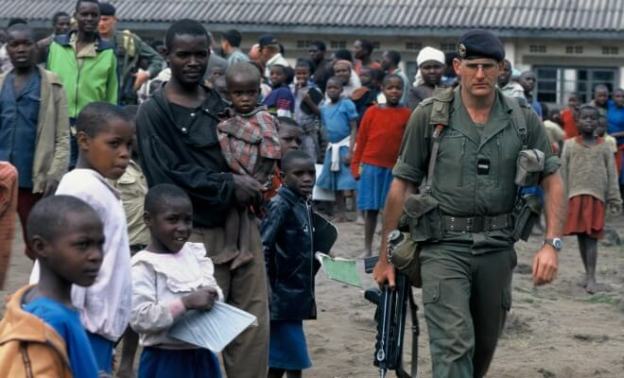
OPEX Turquoise (Rwanda ): Communiqué of Général Jean Claude LAFOURCADE, former Commander

A requirement of truth

The Turquoise Force is regularly accused of having protected the Rwandan government by acting and of facilitating its escape in July 1994, a charge that is systematically repeated by the media. I denounce an amalgam and a counter truth.

While this government was composed of 21 people, only two members passed through the Turquoise zone from 16 to 17 July before moving to Zaire. These are:

Dr. Theodore Sindikuwabo, Speaker of the National Assembly and Acting President of the Rwandese Republic from 9 April to 19 July 1994 (died in 1998 in Bukavu).
Jerome Bicamumpaka Minister of Foreign Affairs (arrested in 1999, transferred to the ICTR, acquitted of all charges on 30 September 2011 and released.
Two out of twenty-one people do not constitute a “government” but they are mere isolated and uninfluenced individuals, one of whom has been laundered by the ICTR. It is therefore wrong to say that the Rwandan interim government passed through the Turquoise zone.

In addition, the Turquoise Force could not arrest prominent foreign government officials who were still members of the UN Security Council at the time. She had neither the mandate nor the legal capacity.

As the anniversary of the genocide begins, It is important that French journalists, in accordance with their professional ethics charter, implement the principles of this charter by checking the information provided by pressure groups before relay without discernment or hindsight. Otherwise, they participate in a misinformation company.

General Jean Claude LAFOURCADE
Former Commander of Operation Turquoise (Rwanda)

The ASAF expresses its unwavering support to the French soldiers who were engaged in Operation Turquoise in 1994.
It denounces the lies and manipulations of Paul Kagame, tyrant and genocidal, president of Rwanda for a quarter of a century, which unfortunately enjoys the complicity of some French media.

Reissued on the ASAF website: http://www.asafrance.fr
https://www.asafrance.fr/item/opex-turquoise-rwanda-communique-du-general-jean-claude-lafourcade-ancien-commandant.html

Cour de cassation: Pierre PEAN gagbe le procès contre SOS Racisme. (Publié en 2011)

pean-pierre.jpg

Vendredi 11 Novembre 2011 13h32

Le 8 novembre dernier, après cinq années de coûteuses procédures, la Cour de Cassation a rejeté le pourvoi formé par l’association SOS racisme qui poursuivait Pierre Péan, auteur d’un livre intitulé « Noires fureurs, Blancs menteurs » et dans lequel il prend le contre-pied de l’histoire officielle concernant le génocide du Rwanda[1] . Pierre Péan ayant gagné ses procès en première instance et en appel, SOS Racisme subit donc une troisième grave défaite, ce qui devrait faire réfléchir ses généreux donateurs.

A travers ce procès emblématique, SOS Racisme a montré son vrai visage, celui d’une organisation militante dont l’acharnement contre Pierre Péan avait pour but de décourager ceux qui oseraient à l’avenir mettre en doute la thèse de Kigali concernant le génocide du Rwanda.

Or, l’histoire « officielle » de ce génocide a été totalement bouleversée à travers quatre jugements rendus par le TPIR (Tribunal pénal international sur le Rwanda)[2]. Expert assermenté dans trois de ces quatre procès, je suis bien placé pour décrypter la portée des jugements rendus et cela, au-delà du véritable « enfumage » auquel se sont livrés les média ayant une fois de plus agi en simples porte-voix du régime de Kigali et de la vision de l’histoire qu’il prétend imposer.

1) Le 28 novembre 2007, la Chambre d’Appel du TPIR a acquitté Ferdinand Nahimana, un des fondateurs de la Radio Télévision des Mille Collines (RTLM) de l’accusation « de commettre le génocide, d’incitation directe et publique à commettre le génocide, de persécution et d’extermination », considérant que la création de RTLM n’entrait en rien dans le plan génocidaire. Or, jusque là, la thèse officielle était que le génocide avait été programmé puisque les « extrémistes hutu » avaient fondé la RTLM pour le préparer.

2) Le 18 décembre 2008 le TPIR a déclaré le colonel Bagosora non coupable « d’entente en vue de commettre un génocide », faisant ainsi voler en éclats les bases mêmes de l’histoire officielle du génocide du Rwanda car le colonel Bagosora fut constamment présenté comme le « cerveau » de ce génocide.

3) Selon le régime de Kigali, le génocide fut planifié par l’Akazu (ou petite maison, ou petite hutte), cercle nébuleux et criminel constitué autour de la belle famille du Président Habyarimana et dont Protais Zigiranyirazo, frère d’Agathe Habyarimana, épouse du président, était le chef. Ce petit groupe aurait comploté et planifié l’extermination des Tutsi dans le but de préserver son pouvoir et son influence. Le procès de M. Zigiranyirazo était donc lui aussi emblématique puisqu’il était censé mettre en évidence le cœur même de la préparation du génocide.

Or, le 18 décembre 2008 en première instance le TPIR a écarté la thèse du complot ourdi par M. Zigiranyirazo et sa belle famille et l’a acquitté du principal chef d’accusation, à savoir d’avoir prémédité le génocide et d’avoir comploté en ce sens avec le colonel Bagosora et Agathe Kanziga épouse du président Habyarimana pour exterminer les Tutsi du Rwanda. Le mythe de l’Akazu s’envolait donc. Le 16 novembre 2009, en appel, M. Zigiranyirazo a été acquitté des dernières accusations pendantes et immédiatement libéré.

4) Dans l’affaire dite Militaires I étaient notamment jugés les anciens chefs d’état-major de l’armée et de la gendarmerie, les généraux Augustin Bizimungu et Augustin Ndindiliyimana. Le 19 mai 2011, ils ont été acquittés du chef principal qui était celui de l’entente en vue de commettre le génocide. Ainsi donc, pour le TPIR, la hiérarchie militaire n’a ni prémédité, ni programmé le génocide.

A travers ces quatre jugements[3], c’est donc l’histoire « officielle » du génocide du Rwanda qui est réduite à néant. En effet, si ce génocide ne fut ni prémédité, ni programmé, c’est donc qu’il fut « spontané ».

Or, l’évènement majeur et déclencheur qui provoqua la folie meurtrière fut l’assassinat du président Habyarimana dans la soirée du 6 avril 1994, puisque les massacres commencèrent dès la nouvelle de l’attentat connue, quand les partisans du président assassiné attribuèrent ce crime au FPR, donc à leurs yeux aux Tutsi et à leurs alliés hutu, les « Hutu modérés » des journalistes.

Ceux qui ont abattu l’avion du président Juvenal Habyarimana portent donc l’immense responsabilité d’avoir directement ou indirectement provoqué le drame du Rwanda. Or encore, selon le juge français Bruguière et le juge espagnol Merelles, le président Kagamé aurait ordonné cet attentat et ils donnent même les noms de ceux qui auraient tiré les deux missiles ayant abattu l’avion présidentiel.

Voilà ce qui dérange les « amis » de Kigali, dont SOS Racisme. D’autant plus que Théogène Rudasindwa, ancien directeur de cabinet de Paul Kagamé, exige d’être entendu par le TPIR et par un juge français afin, selon ses propres termes, de pouvoir « divulguer tous les détails sur l’attentat du 6 avril 1994 » dont il impute la responsabilité à l’actuel chef de l’Etat rwandais. L’heure de vérité approche donc, et inexorablement.

Bernard Lugan

11/11/11


[1] Pour la déconstruction de cette histoire officielle, on se reportera à mon livre Rwanda : contre-enquête sur le génocide. Privat, 2007.

[2] Pour les détails, explications et développements concernant ces procès, l’on se reportera à l’Afrique réelle n°4

[3] Les prévenus ont été condamnés pour d’autres motifs que celui de préméditation du génocide. Voir à ce sujet les commentaires de ces jugements dans l’Afrique réelle.

Nyakimana : après Kibeho, un autre « Srebrenica » au Rwanda

Entre le 23 et  le  28 octobre 1997, les soldats de l’Armée Patriotique Rwandaise (APR) ont tué entre 5000 et 8000 civils qui s’étaient réfugiés dans la grotte de Nyakimana pour fuir les représailles exercées par les soldats du Général Kagame dans le cadre de la guerre qui faisait rage entre ces derniers et les « abacengezi » au nord du Rwanda. Malgré que le nombre de victimes rappelle le massacre de Kibeho perpétré le 22 avril 1995[1]sous les yeux de la communauté internationale, dont des casques bleus de l’ONU, ainsi que celui de Srebrenica,  considéré comme étant « pire massacre commis en Europe depuis la fin de la Seconde Guerre mondiale », le massacre de Nyakimana reste fortement méconnu du grand public et notamment des Rwandais eux-mêmes.

Dans cet article Jambonews revient sur ce massacre qui est notamment documenté par Amnesty International dans son rapport  « Rwanda – Les civils pris au piège dans le conflit armé « On ne peut plus compter les morts ».

Entre le 23 et le 28 octobre 1997 : journées noires à Nyakimana

De nombreux civils non armés furent tués au Rwanda au cours de l’année 1997. La plupart des tueries étaient commises dans les préfectures de Gisenyi et de Ruhengeri, sur fond de guerre sanglante entre l’APR et les Infiltrés « Abacengezi ».

L’épisode de la grotte avait été précédé par des affrontements entre l’APR et des groupes d’opposition armés sur un marché de Mahoko situé dans la commune de Kanama, préfecture Gisenyi, entre le 8 et le 10 août 1997. Ces affrontements avaient emmené plusieurs milliers d’habitants, « terrorisés par les soldats de l’APR et par les groupes d’opposition armés (…)qui s’en prenaient aussi bien aux militaires qu’aux civils »  à quitter leurs foyers.[2] Ainsi les habitants des secteurs Bisizi, Kanama, Karambo et Kayove avaient fui vers les secteurs de Kigarama et de Mukondo.[3]

A la mi-octobre des soldats de l’APR faisaient irruption sur les lieux où vivaient les déplacés, en leur demandant de rentrer chez eux. La population avait refusé, évoquant le fait que l’insécurité qui l’avait poussée à fuir était toujours présente. En guise de réponse, les soldats de l’APR ont tiré sur la foule pour forcer la population à retourner chez elle. Amnesty International n’avait à l’époque pas pu vérifier le nombre de personnes décédées sur place sous les balles des militaires, ni le nombre de personnes décédées en chemin ou qui furent assassinées une fois reconduits chez eux dans le secteur de Kayove.[4]

Le reste des déplacés, estimés entre  5000 et 8000 personnes dont des femmes et des jeunes enfants  se sont réfugiés dans les grottes de Nyakimana afin d’échapper aux militaires de l’APR qui les prenaient pour cibles et avaient installé des barrages routiers pour les empêcher de fuir.[5]

Quelques jours plus tard, en date du 23 octobre 1997, les soldats de l’APR attaquèrent la grotte à l’aide de grenades et d’autres explosifs et condamnèrent ensuite l’entrée avec du ciment et des cailloux pour empêcher toute fuite tuant ou condamnant à une mort certaine toutes les personnes qui s’y étaient réfugiées.

Selon un témoin interrogé par la VRT, la principale chaine de télévision belge et qui a eu une vingtaine de membres de sa famille tués dans les grottes, entre 8000 et 12 000 civils de quatre secteurs, avaient pris l’habitude depuis plusieurs semaines de se réfugier dans les grottes en cas d’affrontements entre l’APR et les infiltrés « tous ceux qui sont entrés la dedans sont morts .»

L’intervention des médias internationaux

Ce massacre aurait pu passer inaperçu aux yeux de la communauté internationale sans les témoignages de personnes qui s’y étaient réfugiées et qui avaient pu en sortir in extremis. L’une de ces personnes, qui avait pu sortir le 23 octobre tout au début de l’attaque et n’avait pas pu retourner récupérer sa famille car les militaires assiégeaient la grotte à son retour, est partie à Kigali d’où il a alerté, par fax, le reste de sa famille en Belgique. C’est ainsi que le Centre de Lutte contre L’Impunité et l’Injustice au Rwanda (CLIIR), lança l’alerte aux médias et à la communauté internationale  par le communiqué n°22/97 du 22 novembre 1997.

Une fois ce massacre révélé, les autorités rwandaises nièrent dans un premier temps les faits mais finirent par prétexter que la grotte était une base arrière pour les Infiltrés et que dans ce cadre ils avaient bouclé les entrées pour empêcher les rebelles armés de fuir. Elles n’ont jamais admis que des milliers de civils non armés s’y trouvaient.[6]

Amnesty International a précisé ne pas avoir été en mesure de confirmer si, parmi la population cachée dans la grotte de Nyakimana, se trouvaient effectivement des éléments armés. Cependant, précise l’association de défense des droits de l’Homme « les informations obtenues des personnes présentes sur les lieux indiquent que ceux qui ont été tués entre le 23 et le 28 octobre étaient principalement des civils non armés, dont des femmes et de jeunes enfants qui étaient venus se mettre à l’abri. »[7]

Pour le centre de lutte contre l’impunité et l’injustice au Rwanda, « Les déclarations qui ont été diffusées par l’APR faisant état de la découverte d’un réseau de grottes servant de Centre de Commandement à la rébellion sont totalement fausses et visent à protéger les responsables militaires qui ont commis ce massacre de l’ampleur de celle de Kibeho. Contrairement à ce qu’elle a annoncé, la grotte ne contenait aucun infiltré. A moins que toute la population hutue ne soit considérée comme « infiltrée »! [8] 

Le Centre avait demandé à l’armée rwandaise de donner accès à la grotte aux observateurs des droits de l’Homme de l’ONU au motif que si comme elle le prétendait, « la grotte n’était qu’une base de la rébellion et ne contenait que des munitions et de la nourriture, elle ne devrait avoir aucune crainte de rouvrir la grotte et permettre son inspection par des enquêteurs indépendants », l’armée refusa catégoriquement d’accéder à toute demande d’inspection de la grotte par des observateurs indépendants.[9]

Le calvaire de Pierre Claver Nzabandora

Parmi les victimes piégées dans la grotte, figurent les quatre enfants de Pierre Claver Nzabandora, à l’époque responsable de la coopérative KIAKA, une coopérative regroupant les artisans de Kanama. En détresse, Nzabandora était allé, en compagnie d’autres civils, alerter les autorités locales sur le fait que ses enfants étaient dans la grotte et risquaient une mort imminente si aucun secours ne leur était apporté. En réponse, les autorités mirent au cachot tous les plaignants, ne les libérant qu’un mois et demi plus tard, suite aux critiques internationales que commençait à susciter l’affaire.

Au mois de décembre 1997, dans le cadre d’un reportage réalisé conjointement par la RTBF, Pierre-Claver Nzabandora a confié, à visage couvert, son calvaire aux journalistes belges : « Mes enfants étaient en train de fuir, ils ont croisé les gens qui fuyaient vers les grottes et les ont suivis. Nous avons essayé de contacter les autorités, quand nous avons expliqué la chose au bourgmestre, on nous a emprisonnés. Après un mois et demi ils nous ont relâchés. »[10]

Le 2 octobre 1998, quelques mois après son témoignage, il fut à son tour assassiné en plein jour lors d’une attaque contre la coopérative par « un groupe de 80 personnes en tenue militaire semblable à celle de l’Armée patriotique rwandaise ».[11]

Selon le témoignage d’un témoin oculaire parvenu au Centre de Lutte contre l’injustice et l’impunité au Rwanda, un assaillant a tiré froidement et à bout portant sur Pierre Claver Nzabandora, sans lui adresser la moindre parole.[12]

Durant l’attaque, plusieurs autres membres de la coopérative Kiaka, dont Gaëtan Nangwahafi, vice-président du CA et chef de la Section Traditionnelle, ainsi que plusieurs civils qui se trouvaient près des bâtiments, furent également tués.

« Les forces armées ont fait du très bon travail » selon Richard Sezibera

Face à l’ampleur que prenait l’affaire dans les médias internationaux, les responsables de l’APR organisèrent le 8 décembre 1997 une visite jusqu’à l’entrée de la grotte pour les journalistes. Alors que les autorités avaient dans un premier temps nié l’existence de cet épisode, face aux caméras internationales, et confrontées à l’odeur de cadavres qui émanait des grottes, les responsables durent admettre que des personnes avaient effectivement été enfermées dans les grottes mais ils affirmèrent qu’il s’agissait d’infiltrés qui s’y étaient repliés après avoir été repoussés par l’armée.

Après les avoir refoulés vers les grottes, l’armée aurait d’abord gardé les différents accès puis comblé ceux-ci. Dans le rapport d’Amnesty International, celui qui était à l’époque le porte-parole de l’APR et nommé depuis peu le ministre rwandais des Affaires étrangères du Rwanda (octobre 2018), le major Richard Sezibera, déclara : « Les forces armées ont fait du très bon travail. » Dans un autre reportage, il expliqua que les rapports des organisations de défense des droits de l’Homme font passer la situation comme si le gouvernement était en train de tuer la population, ce qui selon lui est faux, ce dernier estimant que ces accusations seraient formulées sans preuves.

« La guerre contre les Abacengezi a servi de prétexte pour réduire la population Hutu »

Aujourd’hui, 21 ans après les faits, les témoignages affluent. Patrick Horanimpundu qui vivait dans la région à l’époque du massacre et rescapé d’une épuration ethnique perpétrée dans sa commune, a ainsi raconté à Jambonews cet épisode : « Quand les soldats du FPR ont encerclé le secteur de Gihira, dans la commune de Giciye, mais dans la partie plus proche de chez moi à Gaseke, ils ont tiré sur les populations pendant toute la journée. Ne sachant pas comment fuir, les habitants se sont réfugiés dans une grotte. Ne voulant pas poursuivre leurs victimes dans cette grotte, les soldats ont bouté le feu aux pneus des véhicules placés à l’entrée de la grotte, dans le feu ils ont immergé du piment pour irriter leurs victimes et les pousser à sortir. Voyant qu’elles ne sortaient pas, les soldats ont lancé des grenades et se sont mis à tirer dans la grotte, et finalement ils ont fini par bétonner la seule entrée de la grotte, ne laissant aucune chance de survie aux centaines de personnes qui s’y étaient engouffrées, hommes, femmes et enfants confondus. »

Eric Maniriho, lauréat du Prix Jeunesse engagée 2018 décerné à Montréal par le Réseau international des femmes pour la démocratie et la paix a également raconté à Jambonews comment lui, en compagnie de plusieurs centaines d’autres civils qui fuyaient les exactions de l’APR, a échappé de peu au massacre de la grotte : « Quand je suis arrivé à la grotte, il y avait une longue file d’attente pour entrer, je me suis dit que quand mon tour d’entrée arriverait il serait trop tard et j’ai continué ma course. »

Du côté de l’APR, Judi Rever a pu recueillir le témoignage de  Serge qui vit actuellement en exil. Serge faisait partie de l’équipe DMI (Directorate of Military Intelligence, le service du renseignement militaire) qui a participé à l’attaque contre les civils réfugiés dans la grotte. L’opération a selon lui été dirigée et commandée directement par leur chef, le général Karenzi Karake. Il décrit que plusieurs brigades sont arrivées sur les lieux, où des milliers de civils et non des Infiltrés étaient cachés. Le 23 octobre 1997, témoigne-t-il, l’équipe DMI a interdit les accès à la grotte et les unités des militaires ont commencé à lancer des grenades dans l’entrée. Serge témoigne que l’attaque de la grotte faisait partie d’un grand schéma : « Il y avait un plan lors de la contre-insurrection d’éliminer la population civile dans le Nord, oui il y avait des Infiltrés qui essayaient de renverser le gouvernement. Mais la guerre contre eux a servi de prétexte pour réduire la population Hutu. Il n’y a pas de doute là-dessus. »[13]

Les victimes

Dans le rapport d’Amnesty International, quelques-unes des victimes mortes dans la grotte :

  • Uwimana, 27 ans, Dusabe 13 ans, et Murora, 8 ans, 3 sœurs
  • une femme nommée Dathive, son mari et leurs trois enfants ;
  • 5 enfants d’une même famille, le plus âgé ayant seulement 12 ans.
  • 20 membres d’une même famille, en majorité des femmes et des enfants :
    • Cécile Nyirabalisesa, 57 ans, ses filles et fils :
    • Nyiramajyambere, 25 ans
    • Marie-Claire Nyirabazimenyera, 29 ans, et ses 3 jeunes enfants, dont le plus âgé n’avait que six ans
    • Jean-Bosco Nshimiyimana, 27 ans, sa femme, et son bébé âgé de quelques mois.


Ruhumuza Mbonyumutwa et Constance Mutimukeye

Jambonews.net

[1]http://www.jambonews.net/actualites/20180422-kibeho-1995-20-ans-apres-un-massacre-aux-oubliettes-de-lhistoire-rwandaise/

[2]Amnesty international,  « Rwanda – Les civils pris au piège dans le conflit armé,  On ne peut plus compter les morts», mise à jour du rapport publié le 25 septembre 1997, p. 3.

[3]Centre de Lutte contre l’impunité et l’injustice au Rwanda, communiqué n°22/97 du 22 novembre 1997

[4]Amnesty international,o.c.p. 8.

[5]Ibid.

[6]Amnesty international, o.c., p. 9.

[7]Ibid.

[8]Communiqué n°22/97, o.c.

[9]Ibid.

[10]Son identité a été confirmée à Jambonews par Peter Verlinden, le journaliste ayant réalisé l’entretien.

[11]http://www.rwandavictimesoubliees.com/fr/victimes/nzabandora-pierre-claver

[12]Ibid.

[13]Judi Rever, “In praise of blood, the crimes of the Rwandan Patriotic Front”, Canada, Penguin Random House, 2018, p. 140.

Un « second génocide » au Rwanda : retour sur un débat complexe

file-20180622-26564-82q1spIl faut être reconnaissant à la spécialiste du génocide au Rwanda Claudine Vidal pour avoir proposé un échange serein sur un thème aussi grave que le génocide qu’aurait commis le Front patriotique rwandais (FPR) contre les Hutus.

En réalité, Claudine Vidal ne s’exprime pas tant sur le contenu du livre de Judi Rever, mais sur ses objectifs, sa finalité. Elle trouve que l’articulation entre enquêtes et preuves à finalité judiciaire, dans ce livre comme dans d’autres publications, pose problème : il s’agit, dit-elle, d’un « réquisitoire au sens juridique du terme : la description des massacres est conduite de façon à établir la qualification de génocide. »

Avant de revenir sur cette question méthodologique, voyons comment Claudine Vidal aborde le contenu du livre. Elle n’exprime nulle part son désaccord sur les faits. Elle dit même que ceux-ci étaient connus dans leurs grandes lignes et que le livre n’apporte donc pas de révélations, mais recueille de nouveaux éléments. Elle ne dit pas non plus que le livre ne montre pas que le FPR aurait commis un génocide contre les Hutus, même si elle utilise le terme « massacres » lorsqu’il s’agit des crimes dont les Hutus ont été victimes. Enfin, elle ne conteste pas que les crimes du FPR sont restés impunis.

Des nouvelles données fondamentales

Je pense, cependant, que Claudine Vidal sous-estime l’importance des nouvelles données fournies par Judi Rever. Basées sur de nombreux entretiens avec des anciens – y compris des repentis – du FPR, de deux rapports jusqu’ici restés secrets du bureau « Enquêtes spéciales » du Tribunal pénal international sur le Rwanda (TPIR) et d’un nombre important de témoignages assermentés recueillis par le bureau du procureur du TPIR, ces nouvelles données constituent un saut qualitatif et quantitatif de notre connaissance des crimes commis par le FPR.

Surtout, ces données permettent d’avancer la qualification de génocide, alors que la plupart des spécialistes du Rwanda, y compris moi-même, avaient jusqu’à présent rejeté la thèse du double génocide. Or des dizaines de récits très concrets de massacres montrent l’intention de détruire les Hutu, comme tels, ce qui correspond à la définition de la Convention sur le génocide. Un indicateur très fort de cette intention est la séparation de Hutus et de Tutsis, souvent avec l’aide de civils tutsis, après quoi les Hutus sont tués et les Tutsis épargnés.

Vérité juridique et vérité historique

Claudine Vidal estime, toutefois, qu’il n’est « pas nécessaire d’affirmer l’existence d’un génocide pour justifier des enquêtes sur des massacres (de Hutus). » Il lui suffit « de considérer que les leaders du FPR ont effectivement mené une politique de terreur fondée sur des massacres de Rwandais hutus. »

Cela est sans doute vrai, et les responsables du FPR auraient pu être poursuivis pour crimes de guerre ou pour crimes contre l’humanité, deux qualifications que le TPIR avait dans son mandat. Le problème est que ces poursuites n’ont pas eu lieu pour des raisons bien connues, et que le FPR a donc bénéficié de l’impunité la plus totale.

Que ceux frustrés par cette injustice veuillent « susciter le scandale », comme le dit Claudine Vidal, n’est donc pas étonnant. De toute façon, aucune juridiction n’est aujourd’hui compétente pour juger les suspects du FPR, dont les crimes resteront très probablement impunis malgré leur caractère imprescriptible. Dès lors, si la vérité judiciaire ne sera pas établie, la vérité historique peut et doit être recherchée, et le livre de Rever contribue à cette quête.

Le droit et le devoir des chercheurs

Claudine Vidal a également raison de dire, en conclusion, que les sciences sociales ne sont pas limitées par les contraintes d’enquêtes judiciaires qui visent la poursuite et la condamnation dans le contexte bien déterminé du droit et de la justice. Cependant, les sciences sociales, elles aussi, sont tenues d’utiliser les termes exacts pour décrire les phénomènes qu’elles observent (un meurtre prémédité est un assassinat ; un homicide peut être involontaire).

Un camp de réfugiés rwandais à l’est du Zaïre (Congo), en 1994. Dave Proffer/WikimediaCC BY

En 1994, tant Claudine Vidal que moi-même, ainsi que de nombreux autres, avons qualifié de génocide les crimes dont les Tutsis venaient d’être victimes, et cela avant la première enquête judiciaire, et a fortiori des poursuites et des condamnations judiciaires. C’était notre droit et notre devoir. Pourquoi Judi Rever n’aurait-t-elle pas aujourd’hui ce même droit et ce même devoir ?

Je termine sur la question posée par Claudine Vidal dans le titre de sa contribution. Je ne vois pas d’indication que Rever aurait voulu « à tout prix » rechercher un deuxième génocide. Voyant sa démarche, qui s’étale sur une vingtaine d’années, j’ai plutôt l’impression que la possibilité que le FPR ait commis un génocide est venue se préciser, pour enfin être confirmée. Des éléments contingents, et surtout l’accès à de nombreux documents confidentiels du TPIR, ont contribué à autoriser ce constat. Mais rien n’indique que Rever est partie de l’hypothèse d’un génocide et que toute sa recherche ait été orientée dans le sens de prouver cette hypothèse.

Filip Reyntjens

Source: Theconversation.com

Non-lieu confirmé en appel pour le prêtre Wenceslas Munyeshyaka dans le génocide rwandais

1444853176Wenceslas-Munyeshyaka

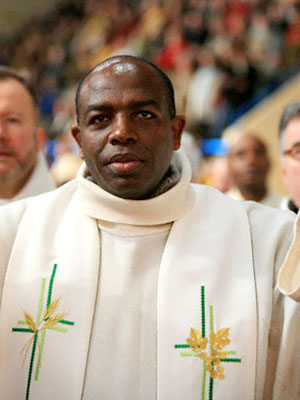
Abbé Wenceslas MUNYESHYAKA

La justice a confirmé jeudi 21 juin 2018 le non-lieu dont a bénéficié Wenceslas Munyeshyaka, un prêtre rwandais installé en Normandie et qui était visé par la plus ancienne plainte en France concernant le génocide de 1994 au Rwanda.

La justice a confirmé jeudi 21 juin 2018 le non-lieu dont a bénéficié Wenceslas Munyeshyaka, un prêtre rwandais installé en Normandie et qui était visé par la plus ancienne plainte en France concernant le génocide de 1994 au Rwanda.

La cour d’appel de Paris a ainsi confirmé l’ordonnance rendue, en octobre 2015, par les juges du pôle Crimes contre l’humanité au sujet de ce prêtre de 59 ans, dont les parties civiles avaient fait appel.

Les juges d’instruction avaient estimé que sa passivité face aux massacres ne pouvait suffire à l’accuser de « génocide » et à le juger devant la cour d’assises de Paris, malgré le rôle « trouble » qu’il avait joué dans sa paroisse de Kigali.

Un non-lieu requis par le parquet

Le parquet de Paris avait requis ce non-lieu, faute de charges suffisantes au terme d’une enquête de vingt ans, nourrie de centaines de témoignages et de plusieurs confrontations, ainsi que des déplacements sur place des juges et des gendarmes spécialisés.

« C’est au-delà de l’acquittement, cela signifie qu’il n’y a pas de charges », s’est félicité auprès de l’AFP Me Jean-Yves Dupeux, l’avocat de l’ecclésiastique. « Voilà un homme qui est mis en cause depuis 23 ans pour des faits gravissimes, qui s’est défendu pied à pied et qui a réussi à démontrer qu’il s’agissait d’accusations mensongères », a-t-il ajouté, dénonçant « une procédure mise en œuvre par des associations proches du pouvoir rwandais et sous pression politique permanente ».

« Nous allons envisager sérieusement la possibilité d’un pourvoi en cassation », a réagi Alain Gauthier, président du Collectif des parties civiles pour le Rwanda (CPCR), association en pointe dans les poursuites de possibles génocidaires réfugiés en France.

Une absence de réactions mais pas une participation active

L’enquête avait démarré dès les premières plaintes en 1995 en France, où s’était installé le prêtre. Le Tribunal pénal international pour le Rwanda, qui souhaitait le juger, s’était désisté au profit des juridictions françaises, dont la loi reconnaît une compétence universelle pour les crimes les plus graves. À l’époque des massacres, le prêtre était vicaire de la paroisse de la Sainte-Famille à Kigali, où furent accueillis des milliers de civils. Il y circulait armé et protégé d’un gilet pare-balles pendant le génocide qui a fait, selon l’ONU, quelque 800 000 morts entre avril et juillet 1994, principalement au sein de la minorité tutsi.

L’accusation des témoins la plus fréquente « était son absence de réaction lors de ces exactions » mais « peu de témoins rapportaient une contribution active du mis en examen » aux intrusions meurtrières des miliciens hutus, avaient souligné les juges d’instruction dans leur ordonnance.

Paris-Normandie

RWANDA. LA CNLG DE J.DAMASCÈNE BIZIMANA SE LIVRE AU LYNCHAGE MÉDIATIQUE CONTRE CHARLES NDEREYEHE. DÉCRYPTAGE.

Introduction

Ce Lundi 12 mars, le CNLG s’est livré à un lynchage médiatique contre Mr Ndereyehe Charles  commissaire des FDU Inkingi et de la Plateforme P5. Charles Ndereyehe est un néerlandais d’origine rwandaise.

Aucune des accusations de CNLG et les média[2] du FPR n’est nouvelle car elles ont toutes fait objet d’un procès dont l’arrêt du 3 juillet 2015 au tribunal de la Haye[3] a donné raison à C. Ndereyehe mettant ainsi fin aux enquêtes qui avaient commencé en 2010 après le retour de Mme Victoire Ingabire au Rwanda. Le Tribunal a fait tomber une à une les accusations fallacieuses montées de toutes pièces à partir de multiples articles publiés par Tom Ndahiro et Rakiya Omar entre 2010 et 2012. Il n’y a pas eu d’appel contre cet arrêt.

Le procureur improvisé

Les accusations actuelles contre Mr Charles Ndereyehe par le CNLG sont pilotées par Mr Jean Damascene Bizimana[4]. Mais qui est Mr Jean Damascène Bizimana ?

Monsieur BIZIMANA Jean-Damascène, tutsi d’origine de l’ancienne commune de Karama dans la préfecture de Gikongoro, paroisse Cyanika. Il ne peut être capable d’une quelconque objectivité dans une instance sur la question rwandaise. En effet, depuis plus de 23 ans, il n’a cessé de prendre fait et cause pour les réseaux des délateurs et des groupes extrémistes qui enfoncent la société rwandaise dans la haine et l’esprit de revanche. Aussi bien ses travaux que ses prises de position en public n’ont cessé de contribuer à creuser davantage la haine entre les Hutus et les Tutsis et compromettre toute cohabitation et pacification des composantes du peuple rwandais.

Qu’il nous soit permis, d’abord, de rappeler que le sieur BIZIMANA Jean-Damascène était parti aux études à l’Institut Catholique de Toulouse (France) au moment où le pays était en guerre. Des témoignages concordants affirment que le séminariste Jean-Damascène BIZIMANA, une fois arrivé à Toulouse, s’est distingué par un comportement et des actes d’indiscipline notoire devenant, dès lors, indigne et inadmissible aux yeux de ses supérieurs Pères-Blancs. C’est au moment où ces derniers, exacerbés, auraient envisagé de l’exclure de l’Institut qu’il préféra anticiper la sanction et se retirer. Désormais inscrit à la Faculté de Droit de l’Université de Montpellier depuis la rentrée académique 1995, et poussé par l’appât du gain matériel, il entreprit une série d’actes de représailles envers la communauté des Hutus réfugiés en Belgique, en France et envers l’Eglise catholique. C’est dans ce contexte de vengeance et de revanche qu’il publiera son premier livre intitulé « L’Eglise et le génocide au Rwanda : les Pères Blancs et le négationnisme », paru aux Editions L’Harmattan en mars 2001.


A lire également : Le génocide rwandais de nouveau à la rescousse d’un régime aux abois


Dans ce pamphlet acerbe, Jean-Damascène BIZIMANA se fera la « vuvuzela » des thèses les plus jusqu’au-boutistes et radicales des réseaux extrémistes. Servant de fer de lance au sein de la branche IBUKA de France, il se distinguera notamment comme témoin dans divers dossiers de suspects du génocide, notamment celui du Père Wenceslas MUNYESHYAKA envers qui un non- lieu a été prononcé par la justice française. Mais, à plusieurs reprises, c’est plus comme délateur que comme personne-ressource crédible sur le Rwanda qu’il marquera les esprits. Rappelons, pour mémoire, que le sieur Jean-Damascène BIZIMANA servira dans les Commissions MUTSINZI et MUCYO, respectivement sur la responsabilité de l’assassinat du Président HABYARIMANA et le rôle de la France dans le génocide rwandais. Précisons que les rapports produits par lesdites Commissions étaient tellement grotesques et mensongers aux yeux des observateurs qu’ils sont vite tombés dans les oubliettes.

Mr J.D. Bizimana est animé par la haine anti hutu et sa revanche contre l’Eglise catholique. Il est cité dans plusieurs affaires dans lesquelles il a accusé des personnes innocentes des crimes abominables dont le génocide. Il a fabriqué ainsi de fausses accusations de génocide contre Monseigneur Augustin MISAGO, évêque de Gikongoro (son évêque donc) uniquement parce qu’il était hutu et que Monsieur BIZIMANA Jean Damascène ne le voulait pas à ces hautes charges. Toutes ces fausses accusations ont été démontées par la défense de ce prélat qui a été finalement acquitté totalement de toutes les charges pour lesquelles les syndicats de délateurs avaient préparé les faux témoignages sous la direction de Monsieur BIZIMANA Jean Damascène. L’acquittement de Monseigneur Augustin MISAGO a mis à jour le rôle néfaste joué par Monsieur BIZIMANA Jean Damascène contre les dignitaires et tous les intellectuels hutus.

Monsieur BIZIMANA Jean Damascène a été l’architecte des accusations contre Père Guy THEUNIS, un belge membre de la congrégation des Pères Blancs, qu’il a fait arrêter et emprisonner à Kigali pour son rôle supposé pendant le génocide des Tutsi. Le Père Guy THEUNIS a pu démontrer que les accusations contre lui étaient farfelues mais a continué malgré tout à être détenu. Sous pression de la Belgique, il a été libéré avec promesse de continuation des poursuites en Belgique. Le Rwanda a transféré à la Belgique un dossier ridicule, sans pièces justifiant le sérieux des poursuites. Le parquet fédéral belge a décidé de n’y réserver aucune suite. Il s’agit d’une deuxième douche froide qui montre l’acharnement, le fanatisme mais surtout la haine qui anime le sieur BIZIMANA Jean Damascène dans la justice qu’il considère comme une arme du système politique en place au Rwanda au détriment de la vérité.

Monsieur BIZIMANA Jean Damascène s’est toujours comporté comme le Procureur Général bis du Rwanda, envers les Hutu politiciens et hommes de l’Eglise catholique. Son action nuisible ne s’est pas arrêtée sur le sol rwandais. Il s’est permis de poursuivre les Hutu même en Europe avec des fausses accusations à cause de sa haine ethnique et son projet d’anéantir les intellectuels hutus dans tous les domaines. Dans ce cadre, il s’est acharné contre l’Abbé SAGAHUTU Joseph pour l’empêcher d’être reconnu réfugié en Belgique et de pouvoir le mettre en prison en Belgique notamment en l’accusant de génocide. Suite à l’investigation des autorités belges, toutes les fausses accusations lancées contre cet homme d’Eglise notamment concernant la mort de l’Abbé RWANYABUTO Jean Marie Vianney ont fondu comme la neige. Dans ce dossier, Monsieur BIZIMANA Jean Damascène ne cessait de court-circuiter le parquet général du Rwanda pour envoyer lui-même des messages accusateurs farfelus et intoxiquer les médias belges, certaines organisations comme African Rights de Madame RAKIYA Omar pour arriver à ses fins mais sans résultat. En conséquence, aucune information judiciaire n’a été ouverte en Belgique contre cette cible privilégiée de Monsieur BIZIMANA Jean Damascène et finalement l’Abbé SAGAHUTU Joseph a été reconnu réfugié au sens de la Convention de Genève et naturalisé belge.

Ces affaires ont pu prouver, devant ces autorités européennes, que le sieur BIZIMANA Jean Damascène n’est pas crédible et ne peut rien apporter à l’œuvre de justice.

L’activisme du sieur BIZIMANA Jean-Damascène va évidemment lui valoir beaucoup d’estime de la part du régime en place au Rwanda, qui ne demandait qu’à avoir une caisse de résonnance pour l’aider à mâter toutes velléités d’opposition tant à l’intérieur qu’à l’extérieur du pays. C’est ainsi que, s’étant constamment distingué au sein des réseaux extrémistes d’IBUKA (Souviens-toi), il va rapidement monter dans les échelons jusqu’aux fonctions de Sénateur ; et par la suite, de Président de la Commission Nationale de Lutte contre le Génocide. La Commission Nationale de Lutte contre le Génocide (CNLG) au Rwanda est une institution de droit public de l’ETAT RWANDAIS et une émanation du parti FPR. Cette Commission a été créée par la loi n° 09/2007 du 16/02/2007[5]. Cette loi stipule que la Commission est une institution nationale permanente disposant d’une autonomie financière ; la politique de cette institution est définie par un Conseil Consultatif. Ce Conseil est chargé de définir les orientations et les lignes directrices de la Commission sous la direction du Président de la République ou de son représentant. A cet effet, le CNLG est donc un des outils[6] de persécution des opposants au gouvernement rwandais.


A lire également : Le professeur belge Filip Reyntjens dans le collimateur du régime de Paul Kagame


Dans son livre en Kinyarwanda « INZIRA YA JENOSIDE YAKOREWE ABATUTSI MU RWANDA » (Les origines du Génocide commis contre les Tutsi au Rwanda) publié en mars 2014, éditions Imprimerie Muhima, Mr Bizimana Jean Damascène devient l’idéologue de la commercialisation du crime de génocide en tentant de démontrer à tort que le génocide rwandais commence en 1956 avec Monsieur Joseph GITERA, un des leaders de la révolution rwandaise de 1959, qui a osé remettre en cause et dénoncer les injustices sociales qui se commettaient au Rwanda contre les Hutu depuis le XVIè siècle avec la féodalité tutsi (voir point 3.1 du livre p.21 à 24). Il remet également en cause et traite d’idéologues du génocide les premiers leaders politiques tels que le président Grégoire KAYIBANDA (point 3.4 du livre p.27 à 71), Jean Baptiste RWASIBO (voir point 3.3 p.24 à 26), le président Juvénal HABYARIMANA (voir p.72 à 250).

Monsieur BIZIMANA Jean Damascène qui est un docteur en droit, ne sait pas que le droit pénal est un droit clair, précis et concis. Il a su identifier les idéologues de la planification du génocide rwandais depuis 1956 alors que le Tribunal pénal international sur le Rwanda qui a mené des enquêtes à ce sujet, pendant 20 ans, adopte une attitude de grande réserve.

La Chambre qui a eu à juger entre autres l’Affaire Bagosora, parlant de la planification du génocide, s’exprime en ces termes : « La Chambre relève qu’en ce qui concerne le début de la planification, les opinions exprimées par les témoins experts diffèrent. Elle fait observer que lors de sa déposition, Alison Des Forges a précisé que la phase « organisationnelle » du génocide planifié a commencé en 1993 et au début de 1994, sauf à remarquer qu’un petit groupe de personnes avait déjà entrepris de conceptualiser et de planifier le génocide depuis « un temps assez considérable ». Elle souligne que selon Filip Reyntjens,  « il n’y avait pas eu un moment donné dans le temps où un certain nombre de personnes s’étaient réunies pour conspirer et dire : nous allons organiser un génocide ». La Chambre fait toutefois observer que Reyntjens a affirmé que l’intention de commettre le génocide était présente, et qu’elle s’est développée de manière progressive, à partir du 1er octobre 1990. Elle relève d’autre part, que Bernard Lugan a indiqué qu’il n’y avait aucune preuve de l’existence d’un plan ou d’une entente visant à tuer des Tutsi. Elle constate enfin qu’en ce qui concerne Helmut Strizek, il fait savoir qu’il n’y a eu aucune entente en vue de commettre le génocide, attendu qu’à ses yeux, c’est le fait que l’avion du Président ait été abattu qui avait déclenché le génocide. » (voir Jugement n°9841- 01, p.749, n°2095).

Au regard de ce qui précède, le sieur BIZIMANA Jean-Damascène est incapable de toute objectivité. Voici quelqu’un qui a énormément contribué à construire les stratégies de nature à obstruer le processus de vérité-justice au sein de la société rwandaise post-génocide. Etant un des érudits de l’organisme IBUKA qui a excellé en matière de fabrication de la preuve à charge et de constitution de syndicats de délateurs, Jean-Damascène BIZIMANA s’est distingué en lançant des campagnes d’accusation contre les Hutus de l’extérieur comme de l’intérieur sans avoir aucune preuve.

Malgré qu’il soit juriste de formation, Jean-Damascène BIZIMANA est pourtant célèbre par son manque de foi en la justice pénale internationale. En effet, dans ses différentes prises de position, notamment contre le Tribunal Pénal International pour le Rwanda et la justice des pays tiers, la seule justice acceptable est celle qui arrange les intérêts du FPR et qui écrase ses opposants réels ou supposés. C’est ainsi qu’il n’a pas hésité à réclamer, haut et fort, que les acquittés du TPIR et ceux qui ont purgé leurs peines rentrent au Rwanda pour être rejugés. L’on croirait que Monsieur BIZIMANA Jean Damascène, docteur en droit, ne reconnaîtrait pas l’un des principes fondamentaux du droit « Non bis in idem ».  Cela signifie, en fait, que pour lui aucun Hutu ne devrait être acquitté des accusations alors que parfois lesdites accusations sont purement mensongères.

Jean-Damascène BIZIMANA a excellé dans la délation, notamment dans le dossier contre les militaires français de l’Opération Turquoise qui avait été autorisée par l’ONU. Rappelons que la France a été félicitée par les Nations unies pour la réussite de cette opération. Par ailleurs, Monsieur BIZIMANA fait partie des ténors de la polémique ambiante sur l’implication de la France – son pays d’adoption pourtant – dans le génocide rwandais.

*1. L’activisme et le fanatisme ayant caractérisé le parcours du Dr BIZIMANA Jean Damascène, au cours des 20 dernières années, sont incompatibles avec les exigences d’objectivité ;

*2. Dr BIZIMANA Jean Damascène a, pendant très longtemps, servi de cheville ouvrière des réseaux délateurs et extrémistes, qui ne conçoivent la justice que comme outil de revanche et de vengeance entre les mains des rescapés Tutsi ;

*3. Les différentes publications, les activités militantes ainsi que les déclarations publiques du Dr BIZIMANA Jean Damascène montrent clairement qu’il ne saurait contribuer à la recherche de la vérité et de la justice étant donné qu’il est très engagé auprès des milieux tutsis radicaux et extrémistes ;

*4. La politique et les orientations stratégiques de la CNLG sont imprégnées de l’extrémisme anti hutu de son Président, Monsieur BIZIMANA Jean Damascène, depuis sa nomination à la tête de cette institution.

Le modus opérandi des extrémistes de la trempe de Mr J.D. Bizimana

De prime abord, soulignons que les extrémistes du FPR utilisent toutes les manœuvres diaboliques pour se maintenir au pouvoir. Ils exercent notamment le chantage et déstabilisent toute personne susceptible de mettre en cause leur autorité morale, contester leur légitimité ou s’opposer à leur dictature. Kagame n’a-t-il pas dit qu’il avait érigé un « mur de lois »[7] infranchissable par les opposants ?

Cet arsenal de lois liberticides fait justement partie de ce que l’opposition lui reproche :

*1. Le régime du FPR a mis en place une loi vague sur le négationnisme, le divisionnisme et l’idéologie génocidaire dont il se sert pour condamner toute personne qui critique sa mauvaise gouvernance, dénonce l’exclusion et la marginalisation d’une partie de la population, revendique un deuil non discriminatoire ou dénonce les crimes commis par certains éléments de son armée;

*2. Il s’immisce quotidiennement dans la justice, a utilisé les Gacaca comme tribunaux politiques pour éliminer tous les opposants politiques ou leaders d’opinions non acquis à leur cause, ainsi que des intellectuels qui occupent ou sont susceptibles d’occuper des postes d’emploi convoités par des membres du FPR, leurs supporteurs ou leurs sympathisants;

*3. Il a mis en place des syndicats des délateurs formés ou réseau de faux témoins bien encadrés vers lesquels sont orientés les enquêteurs étrangers à la recherche d’information prétendument « plausibles ». Certains témoignages sont extorqués par torture[8] ou suite aux promesses de libération des détenus souvent injustement emprisonnés. Ces faux témoignages, sont placés sur INTERNET et des socio-média pour amplifier l’effet multiplicateur pour appuyer des listes sauvages transmis à INTERPOL. Ces délateurs induisent en erreur et piègent les non-avertis par de fausses accusations montées de toutes pièces ; ils déstabilisent et portent des préjudices moraux, sociaux et matériels aux victimes certaines fois jetées en prison durant des années avant d’être disculpés ;

*4. Il harcèle, menace, terrorise, maltraite physiquement ou jette en prison les témoins à décharge ou même les avocats de la défense pour décourager toute personne susceptible de lutter pour une justice équitable ou défendre les droits de la personne humaine.

Les accusations contre Charles Ndereyehe

 1. Le CNLG accuse Ndereyehe d’avoir appartenu à la CDR et formation des milices :

Nous savons tous que Charles Ndereyehe n’a jamais appartenu à la CDR. Les listes des 51 membres fondateurs[9] de la CDR sont connus et on fait objet des enquêtes du TPIR. Aucun acteur de la scène politique rwandaise actif entre 1992-1994 ne peut pointer Charles Ndereyehe du doigt et affirmer qu’il aurait été membre de la CDR.

2. Les milices INTERAHAMWE

Ceux qui étaient au Rwanda savent que les affrontements des milices des partis politiques ont commencé début 1992 et se sont amplifiés en mai 1992. Où était Mr Bizimana et où était Mr Ndereyehe ? A notre connaissance ce dernier était à Rubona depuis février 1992. L’organisation des milices entre 1991-1993 est amplement documentée dans un texte que l’ancien ministre de la défense Dr James Gasana[10] a soumis à la Commission d’enquête du Parlement français. Les accusations concernant les milices en relation avec Mr Ndereyehe sont de la pure fiction.

3. De l’auto-défense civile et des actes de génocide en 1994

L’auto-défense civile (ADC) à Butare a fait également objet d’enquêtes fouillées du TPIR. En ce qui concerne Butare, la jurisprudence du TPIR[11] est sans équivoque : «Le Procureur c. Nyiramasuhuko et consorts, affaire n° ICTR-98-42-T ».

Le cas de la Défense civile à Butare a été largement débattu dans le procès  Ntezilyayo et Kanyabashi au TPIR. Les deux coaccusés responsables du recrutement, de l’armement et de l’entrainement de l’auto-défense civile à Butare ont été acquittés du chef d’accusation d’actes de génocides commis par certains individus de l’ADC. Le TPIR en a également déchargé les ministres Bizimungu Casimir, Bicamumpaka Jérôme et Ntagerura André alors qu’ils faisaient partie du gouvernement qui a mis en place le programme de l’auto-défense Civile (ADC).

Ceux qui commettaient des crimes dans cette période étaient des truands de droit commun.

4. Des GACACA et procès sur les crimes commis à l’ISAR-Rubona en Avril 1994

Contrairement à ce que affirment les délateurs de CNLG, nous savons, de sources sûres et dignes de fois que, jusqu’à la clôture des Gacaca, Mr Ndereyehe n’a jamais fais objet ni des Gacaca de RUBONA ni impliqué de près ou de loin dans les procès qui on eu lieu entre 2000 et 2002 concernant les crimes commis à l’ISAR- Rubona[12]. Les Tribunaux ont conclu que la responsabilité de ces crimes était personnelle et individuelle[13]. Par ailleurs, plusieurs auteurs affirment que la Station de Rubona fut le refuge de tous ceux qui se sentaient menacés dans les communes environnantes.

Si donc le CNLG insinue le contraire, c’est qu’il est en train de produire de faux documents y relatifs.

Le fait que Mr Ndereyehe figure sur les listes publiées par INTERPOL n’est pas une preuve de sa culpabilité. En effet, ces listes sont faites sur demande des pays membres. Les règles d’Interpol reposent sur le principe de souveraineté nationale qui fait que la source des données enregistrées reste propriétaire de ses données. Dans le cas d’espèce c’est le gouvernement du FPR qui est responsable des accusations envoyées à Interpol pour neutraliser ses opposants réels ou supposés.

Beaucoup de membres des FDU ont été mis sur des avis de recherche lancés par le gouvernement du FPR après la création des FDU-Inkingi en 2006. D’autres ont été ajoutés après l’arrivée au Rwanda de la Présidente des FDU-Inkingi Mme Victoire Ingabire Umuhoza en 2010 pour challenger le général Kagame dans les élections présidentielles. Enfin, beaucoup d’autres figurent actuellement sur la liste des personnes recherchées depuis la création de la plateforme P5, une coalition des organisations politiques AMAHORO P.C, FDU – INKINGI, PDP – IMANZI, PS – IMBERAKURI ET RWANDA NATIONAL CONGRESS (RNC);

Ce n’est donc pas pour rien que l’appartenance au FDU-Inkingi figure sur la liste des accusations[14] (n.5) portées contre Ndereyehe. Tout le monde sait que le parti FDU-Inkingi est une des principales forces politiques de l’opposition démocratique au FPR. Il est donc facile de comprendre pourquoi la dictature du FPR s’acharne contre ses leaders[15].

 Conclusion 

Que Mr Jean Damascène BIZIMANA s’acharne sur Mr NDEREYEHE Charles en l’accusant de crimes innommables, ceci n’étonne pas les personnes avisées.

Nous espérons que les autorités des Pays-Bas ne se laisseront pas berner, une fois de plus, par les agents du FPR.

La réconciliation des Rwandais ne sera effective que si on réussit d’isoler les extrémistes de tous bords.

Gaspard MUSABYIMANA
13/03/2018.

Source: musabyimana.net


[1] http://mobile.igihe.com/amakuru/u-rwanda/article/cnlg-yasabye-u-buholandi-gufata-ndereyehe-wa-fdu-ushinjwa-gutera-inkunga

https://www.bwiza.com/u-buholandi-ndereyehe-ntahontuye-charles-ukurikiranweho-uruhare-muri-jenoside-ni-muntu-ki/

[1]https://uitspraken.rechtspraak.nl/inziendocument?id=ECLI:NL:RBDHA:2015:7860&showbutton=true&keyword=NL%3aRBDHA%3a2015%3a7860

[2] http://www.newtimes.co.rw/section/read/229932/

[3] http://www.cnlg.gov.rw/about-us/vue-densemble/?L=2

[4] http://unity-club.org/IMG/doc/CYANIKA_26022012_1_.doc;

http://www.minagri.gov.rw/index.php?id=469&tx_ttnews%5Btt_news%5D=1087&cHash=af66284e701c775410ad04e79c1503b1;

http://www.newtimes.co.rw/section/article/2015-06-23/189988/

[5] http://www.fdu-rwanda.com/fr/l-illegitimite-du-proces-victoire-ingabire-umuhoza/

[6] https://www.hrw.org/fr/news/2017/10/10/rwanda-detention-militaire-illegale-et-torture

https://www.hrw.org/fr/news/2017/11/01/rwanda-une-tentative-de-nier-les-meurtres

https://www.hrw.org/world-report/2018/country-chapters/rwanda

https://www.youtube.com/watch?v=Y6a1MmkOdQw&feature=youtu.be

http://tbinternet.ohchr.org/_layouts/treatybodyexternal/Download.aspx?symbolno=CAT%2fC%2fRWA%2fCO%2f2&Lang=en

[7] André Guichaoua : Mars 2004 : Butare la Préfecture rebelle,  Tome 1, pagina 52, pt 3.2.2

[8] Commission Parlementaire Française et au TPIR :
http://jkanya.free.fr/Texte15/violencerwanda1991_1993.pdf

[9] http://unictr.unmict.org/sites/unictr.org/files/case-documents/ictr-98-42/appeals-chamber-judgements/en/151214.pdf

[10] http://unictr.unmict.org/sites/unictr.org/files/case-documents/ictr-98-42/appeals-chamber-judgements/en/151214-judgement.pdf

http://unictr.unmict.org/sites/unictr.org/files/case-documents/ictr-98-42/trial-judgements/en/110624.pdf

[11] RMP41640/S8/RP72/2/2000 à Butare et RPA145-1-201-NZA à Nyanza-Nyabisindu

www.asf.be/wp-content/publications/ASF_JurisprudenceGenocide_4.pdf  pages 11-27 et pages 293-313

[12]page 6-7 RMP41640/S8 RP76/2/2000 et page 13 RPA145-1-001-NZA/RP76/2/2000) .

[13] https://www.bwiza.com/u-buholandi-ndereyehe-ntahontuye-charles-ukurikiranweho-uruhare-muri-jenoside-ni-muntu-ki/

[14] http://www.fdu-rwanda.com/fr/rwanda-la-sentence-du-proces-des-leaders-des-fdu-ikingi-en-appel-pour-la-liberation-provisoire-fut-prononcee-loin-des-representations-diplomatiques-des-media-et-des-observateurs-de-droits-de-l/


Avis aux lecteurs: Nos articles peuvent être reproduits à condition de citer le nom d’auteur et le site web source.
Notice to readers: Our articles may be reproduced provided the author’s name and the source website are cited.

Rwanda: à quand le dialogue?

Devant les protestations de l’ambassade du Rwanda en Belgique, une conférence-débat qui devait se tenir à la demande de l’ASBL Jalmbo au Parlement fédéral sur le projet de loi du député Gilles Foret visant à réprimer la négation du génocide des Tutsis en 1994 a été annulée. L’auteur de cette carte blanche regrette cette occasion manquée pour l’ouverture d’un dialogue entre toutes les communautés concernées.

À la veille de la 24e commémoration du Génocide perpétré contre les Tutsis, les tensions ressurgissent au sein des populations rwandaises particulièrement ici en Belgique. La cause ? Une conférence qui devait se tenir à la Chambre à propos d’une loi visant à réprimer la négation du Génocide perpétré contre les Tutsis au Rwanda. Positions tranchées, accusations, insultes, diffamations, calomnies, caricatures d’opinion, stigmatisations… ont rythmé le dialogue de sourds qui s’est installé au sein des populations rwandaises. 24 ans n’ont pas suffi à panser les plaies, pourtant tous les remèdes ont été essayés. Tous, à part un : le dialogue.

Le 26 janvier 2018, dans sa 72e session, l’Assemblée générale des Nations Unies a décidé «  de proclamer le 7 avril Journée internationale de réflexion sur le génocide des Tutsis au Rwanda en 1994  » et a rappelé, à cette même occasion, «  que, durant le génocide des Tutsis en 1994, des Hutus et d’autres personnes s’étant opposées au génocide ont également été tués  ». Cela met fin à 24 ans de flou, où le terme « Génocide rwandais » habituellement utilisé a contribué à noyer l’ensemble des crimes de guerre, des massacres, des assassinats politiques et des crimes de génocide, qui ont été commis durant la tragédie qui a endeuillé le Rwanda depuis 1990, sous une seule et même appellation globalisante et non conforme à la réalité des faits. Tout le monde gagne à utiliser les mots qu’il faut pour qualifier les réalités historiques telles qu’elles se sont déroulées. À commencer par les rescapés tutsis, qui désormais peuvent légitimement revendiquer le droit à ce qu’il puisse y avoir des lois mémorielles visant à les protéger contre tous les discours tendant à la négation du génocide dont ils ont été victimes.

Le débat citoyen sacrifié

Justement, c’est dans cet esprit que le député Gilles Foret a déposé une proposition de loi visant à «  réprimer la négation, la minimisation, la justification ou l’approbation du génocide commis contre les Tutsis au Rwanda en 1994  ». Cette proposition de loi a suscité de nombreuses polémiques, tant sur la scène politique belge que sur les réseaux sociaux. Une organisation de droit belge du nom de Jambo ASBL a souhaité initier un débat citoyen, démocratique et contradictoire, afin de veiller à ce que «  cette loi qui est une nécessité pour la mémoire, serve seulement et uniquement à protéger les rescapés et ne puisse être instrumentalisée par quiconque au détriment des victimes et pour des intérêts politiques  ». Le débat citoyen qui devait se tenir à la Chambre des Représentants avec le soutien du MR et de Défi n’a finalement pas eu lieu. Pour cause, l’ingérence du gouvernement rwandais et de sa ministre des Affaires Etrangère Louise Mushikiwabo, dans le fonctionnement législatif belge. Au final, les députés Gilles Foret (MR) et Olivier Maingain (Défi), soutien de la première heure pour l’un et, pour l’autre, parrain de la conférence qui devait se tenir, n’ont pas résisté aux pressions politico-diplomatiques de ce gouvernement étranger. Tous deux ont fini par sacrifier une des valeurs fondamentales de la démocratie belge, le débat citoyen, face aux pressions de ce pays africain dont la « démocratie » est classée 159e sur 180 au classement de la liberté d’expression et de la presse.

Concurrence mémorielle

Pour autant, dans l’intérêt de la population rwandaise, de sa diaspora en Belgique et de l’Etat belge, cette proposition de loi aurait tout intérêt à marquer l’avènement d’un réel dialogue entre les rescapés rwandais toutes ethnies confondues. Aujourd’hui, ce que réclament les rescapés du Génocide perpétré contre les Tutsis, c’est que la mémoire des victimes de ce crime abominable soit reconnue de tous et que sa négation puisse enfin être pénalisée. De l’autre côté, les populations hutues réclament que leurs droits soient respectés, dont celui de pouvoir se déclarer « victime ». En effet, les crimes dont elles ont été victimes depuis 1990 dans le nord du Rwanda jusqu’à ceux commis dans les camps de réfugiés à l’Est du Congo en 1997 sont largement documentés dans des rapports des Nations Unies et de diverses organisations internationales. Certains de ces crimes, relatés très précisément dans « l’historique » Rapport Mapping, réalisé par de hauts experts de l’ONU, «  révèlent plusieurs éléments accablants qui, s’ils sont prouvés devant un tribunal compétent, pourraient être qualifiés de crimes de génocide  ». Ce droit à se déclarer victime est dénié tant par la communauté internationale, qui n’a toujours pas mis en place une juridiction compétente pour enquêter sur les crimes de masse qu’ont subis les populations hutues, que par le régime rwandais au pouvoir qui accuse tout Hutu qui se dit « victime », de « négationniste » du Génocide perpétré contre les Tutsis.

La tragédie qu’a connue le Rwanda a conduit à bon nombre d’histoires dramatiques. Mais toutes ne trouvent pas leur place dans la narrative officielle. Aujourd’hui, trop de Rwandais, toutes ethnies confondues, ont le sentiment que leur histoire n’est pas prise en compte à sa juste valeur, que les crimes dont ils ont été victimes ne sont pas suffisamment reconnus et que leur statut de victime n’est pas suffisamment respecté. Cela conduit inévitablement à une concurrence mémorielle à laquelle les seuls perdants sont ceux qui ont été victimes de ces crimes. C’est donc un cercle vicieux, où ceux qui ont échappé à la mort hier, continuent d’être victimes aujourd’hui en subissant négationnisme et déni de droit.

Le dialogue pour la co-construction d’une histoire réconcilié

L’entre-soi et le culte de la pensée unique ont conduit à la radicalisation des opinions et la stigmatisation de l’autre. La première étape à l’élaboration d’une histoire commune est l’acceptation de l’histoire de l’autre. Pour autant, cela ne pourra advenir qu’à la suite d’un réel dialogue, inclusif, ouvert et libre. Ce dialogue est le seul cadre propice à l´édification du climat de confiance entre les ethnies, indispensable à la réconciliation effective, à la paix et au développement durable au Rwanda et dans ses diasporas. Ce dialogue entre les victimes et rescapés, quels que soient les crimes dont ils ont été victimes, est aussi une condition sine qua non à l’élaboration d’une histoire mais aussi d’un avenir réconcilié.

Les liens historiques entre les peuples belge et rwandais, confèrent à la Belgique un rôle et une responsabilité. En cédant aux pressions du régime rwandais, Messieurs Maingain et Foret ont raté La Marche de l’histoire car ils auraient pu contribuer à la mise en place de ce dialogue inter-rwandais hautement nécessaire. Nous sommes toujours au carrefour de l’histoire, la Belgique peut soit initier ce dialogue et donc être un acteur prépondérant dans la reconstruction et la réconciliation du peuple rwandais, soit elle peut le refréner et ainsi contribuer à l’exacerbation des tensions au sein de la population rwandaise et dans ses diasporas. Ainsi donc, aux positions tranchées, accusations, insultes, diffamations, calomnies, caricatures d’opinion, stigmatisation… qui régissent les relations inter-rwandaises, le remède ne peut être que le dialogue pour qu’advienne enfin une co-construction d’une histoire réconciliée entre tous les Rwandais quels que soient les crimes dont ils ont été victimes.

Source: Le Soir

America’s secret role in the rwandan genocide

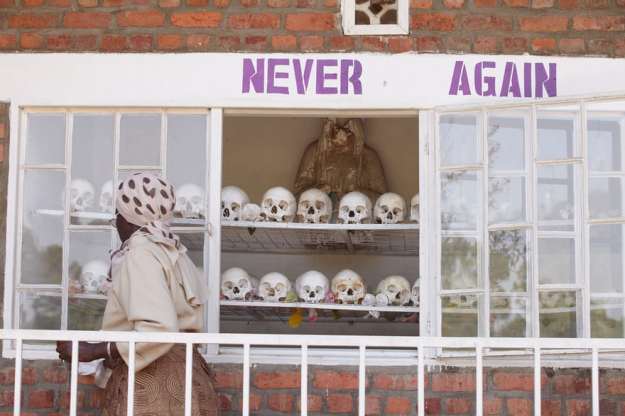
never againBetween April and July 1994, hundreds of thousands of Rwandans were murdered in the most rapid genocide ever recorded. The killers used simple tools – machetes, clubs and other blunt objects, or herded people into buildings and set them aflame with kerosene. Most of the victims were of minority Tutsi ethnicity; most of the killers belonged to the majority Hutus.

The Rwanda genocide has been compared to the Nazi Holocaust in its surreal brutality. But there is a fundamental difference between these two atrocities. No Jewish army posed a threat to Germany. Hitler targeted the Jews and other weak groups solely because of his own demented beliefs and the prevailing prejudices of the time. The Rwandan Hutu génocidaires, as the people who killed during the genocide were known, were also motivated by irrational beliefs and prejudices, but the powder keg contained another important ingredient: terror. Three and a half years before the genocide, a rebel army of mainly Rwandan Tutsi exiles known as the Rwandan Patriotic Front, or RPF, had invaded Rwanda and set up camps in the northern mountains. They had been armed and trained by neighbouring Uganda, which continued to supply them throughout the ensuing civil war, in violation of the UN charter, Organisation of African Unity rules, various Rwandan ceasefire and peace agreements, and the repeated promises of the Ugandan president, Yoweri Museveni.

During this period, officials at the US embassy in Kampala knew that weapons were crossing the border, and the CIA knew that the rebels’ growing military strength was escalating ethnic tensions within Rwanda to such a degree that hundreds of thousands of Rwandans might die in widespread ethnic violence. However, Washington not only ignored Uganda’s assistance to the Rwandan rebels, it also ramped up military and development aid to Museveni and then hailed him as a peacemaker once the genocide was underway.

The hatred the Hutu génocidaires unleashed represents the worst that human beings are capable of, but in considering what led to this disaster, it is important to bear in mind that the violence was not spontaneous. It emerged from a century or more of injustice and brutality on both sides, and although the génocidaires struck back against innocents, they were provoked by heavily armed rebels supplied by Uganda, while the US looked on.

The RPF rebel army represented Tutsi refugees who had fled their country in the early 1960s. For centuries before that, they had formed an elite minority caste in Rwanda. In a system continued under Belgian colonialism, they treated the Hutu peasants like serfs, forcing them to work on their land and sometimes beating them like donkeys. Hutu anger simmered until shortly before independence in 1962, then exploded in brutal pogroms against the Tutsi, hundreds of thousands of whom fled to neighbouring countries.

In Uganda, a new generation of Tutsi refugees grew up, but they soon became embroiled in the lethal politics of their adoptive country. Some formed alliances with Ugandan Tutsis and the closely related Hima – Museveni’s tribe – many of whom were opposition supporters and therefore seen as enemies by then-president Milton Obote, who ruled Uganda in the 1960s and again in the early 1980s.

After Idi Amin overthrew Obote in 1971, many Rwandan Tutsis moved out of the border refugee camps. Some tended the cattle of wealthy Ugandans; others acquired property and began farming; some married into Ugandan families; and a small number joined the State Research Bureau, Amin’s dreaded security apparatus, which inflicted terror on Ugandans. When Obote returned to power in the 1980s, he stripped the Rwandan Tutsis of their civil rights and ordered them into the refugee camps or back over the border into Rwanda, where they were not welcomed by the Hutu-dominated government. Those who refused to go were assaulted, raped and killed and their houses were destroyed.

In response to Obote’s abuses, more and more Rwandan refugees joined the National Resistance Army, an anti-Obote rebel group founded by Museveni in 1981. When Museveni’s rebels took power in 1986, a quarter of them were Rwandan Tutsi refugees, and Museveni granted them high ranks in Uganda’s new army.

Museveni’s promotion of the Rwandan refugees within the army generated not only resentment within Uganda, but terror within Rwanda where the majority Hutus had long feared an onslaught from Tutsi refugees. In 1972, some 75,000 educated Hutus – just about anyone who could read – had been massacred in Tutsi-ruled Burundi, a small country neighbouring Rwanda with a similar ethnic makeup. During the 1960s, Uganda’s Tutsi refugees had launched occasional armed strikes across the border, but Rwanda’s army easily fought them off. Each attack sparked reprisals against those Tutsis who remained inside Rwanda – many of whom were rounded up, tortured and killed – on mere suspicion of being supporters of the refugee fighters. By the late 1980s, a new generation of refugees, with training and weapons supplied by Museveni’s Uganda, represented a potentially far greater threat. According to the historian André Guichaoua, anger and fear hung over every bar-room altercation, every office dispute and every church sermon.

By the time Museveni took power, the plight of the Tutsi refugees had come to the attention of the west, which began pressuring Rwanda’s government to allow them to return. At first, Rwanda’s president, Juvénal Habyarimana, refused, protesting that Rwanda was among the most densely populated countries in the world, and its people, dependent upon peasant agriculture, needed land to survive. The population had grown since the refugees left, and Rwanda was now full, Habyarimana claimed.

Although he did not say so publicly, overpopulation almost certainly was not Habyarimana’s major concern. He knew the refugees’ leaders were not just interested in a few plots of land and some hoes. The RPF’s professed aim was refugee rights, but its true aim was an open secret throughout the Great Lakes region of Africa: to overthrow Habyarimana’s government and take over Rwanda by force. Museveni had even informed the Rwandan president that the Tutsi exiles might invade, and Habyarimana had also told US state department officials that he feared an invasion from Uganda.

One afternoon in early 1988 when the news was slow, Kiwanuka Lawrence Nsereko, a journalist with the Citizen, an independent Ugandan newspaper, stopped by to see an old friend at the ministry of transport in downtown Kampala. Two senior army officers, whom Lawrence knew, happened to be in the waiting room when he arrived. Like many of Museveni’s officers, they were Rwandan Tutsi refugees. After some polite preliminaries, Lawrence asked the men what they were doing there.

“We want some of our people to be in Rwanda,” one of them replied. Lawrence shuddered. He had grown up among Hutus who had fled Tutsi oppression in Rwanda before independence in 1962, as well as Tutsis who had fled the Hutu-led pogroms that followed it. Lawrence’s childhood catechist had been a Tutsi; the Hutus who worked in his family’s gardens wouldn’t attend his lessons. Instead, they swapped fantastic tales about how Tutsis once used their Hutu slaves as spittoons, expectorating into their mouths, instead of on the ground.

The officers went in to speak to the transport official first, and when Lawrence’s turn came, he asked his friend what had transpired. The official was elated. The Rwandans had come to express their support for a new open borders programme, he said. Soon Rwandans living in Uganda would be allowed to cross over and visit their relatives without a visa. This would help solve the vexing refugee issue, he explained.

Lawrence was less sanguine. He suspected the Rwandans might use the open borders programme to conduct surveillance for an invasion, or even carry out attacks inside Rwanda. A few days later, he dropped in on a Rwandan Tutsi colonel in Uganda’s army, named Stephen Ndugute.

“We are going back to Rwanda,” the colonel said. (When the RPF eventually took over Rwanda in 1994, Ndugute would be second in command.)

Many Ugandans were eager to see Museveni’s Rwandan officers depart. They were not only occupying senior army positions many Ugandans felt should be held by Ugandans, but some were also notorious for their brutality. Paul Kagame, who went on to lead the RPF takeover of Rwanda and has ruled Rwanda since the genocide, was acting chief of military intelligence, in whose headquarters Lawrence himself had been tortured. In northern and eastern Uganda, where a harsh counterinsurgency campaign was underway, some of the army’s worst abuses had been committed by Rwandan Tutsi officers. In 1989, for example, soldiers under the command of Chris Bunyenyezi, also an RPF leader, herded scores of suspected rebels in the village of Mukura into an empty railway wagon with no ventilation, locked the doors and allowed them to die of suffocation.

Lawrence had little doubt that if war broke out in Rwanda, it was going to be “very, very bloody”, he told me. He decided to alert Rwanda’s president. Habyarimana agreed to meet him during a state visit to Tanzania. At a hotel in Dar es Salaam, the 20-year-old journalist warned the Rwandan leader about the dangers of the open border programme. “Don’t worry,” Lawrence says Habyarimana told him. “Museveni is my friend and would never allow the RPF to invade.”

Habyarimana was bluffing. The open border programme was actually part of his own ruthless counter-strategy. Every person inside Rwanda visited by a Tutsi refugee would be followed by state agents and automatically branded an RPF sympathiser; many were arrested, tortured, and killed by Rwandan government operatives. The Tutsis inside Rwanda thus became pawns in a power struggle between the RPF exiles and Habyarimana’s government. Five years later, they would be crushed altogether in one of the worst genocides ever recorded.

On the morning of 1 October 1990, thousands of RPF fighters gathered in a football stadium in western Uganda about 20 miles from the Rwandan border. Some were Rwandan Tutsi deserters from Uganda’s army; others were volunteers from the refugee camps. Two nearby hospitals were readied for casualties. When locals asked what was going on, Fred Rwigyema, who was both a Ugandan army commander and the leader of the RPF, said they were preparing for Uganda’s upcoming Independence Day celebrations, but some excited rebels let the true purpose of their mission leak out. They crossed into Rwanda that afternoon. The Rwandan army, with help from French and Zairean commandos, stopped their advance and the rebels retreated back into Uganda. A short time later, they invaded again and eventually established bases in northern Rwanda’s Virunga mountains.

Presidents Museveni and Habyarimana were attending a Unicef conference in New York at the time. They were staying in the same hotel and Museveni rang Habyarimana’s room at 5am to say he had just learned that 14 of his Rwandan Tutsi officers had deserted and crossed into Rwanda. “I would like to make it very clear,” the Ugandan president reportedly said, “that we did not know about the desertion of these boys” – meaning the Rwandans, not 14, but thousands of whom had just invaded Habyarimana’s country – “nor do we support it.”

In Washington a few days later, Museveni told the State Department’s Africa chief, Herman Cohen, that he would court martial the Rwandan deserters if they attempted to cross back into Uganda. But a few days after that, he quietly requested France and Belgium not to assist the Rwandan government in repelling the invasion. Cohen writes that he now believes that Museveni must have been feigning shock, when he knew what was going on all along.

When Museveni returned to Uganda, Robert Gribbin, then deputy chief of mission at the US embassy in Kampala, had some “stiff talking points” for him. Stop the invasion at once, the American said, and ensure no support flowed to the RPF from Uganda.

Museveni had already issued a statement promising to seal all Uganda–Rwanda border crossings, provide no assistance to the RPF and arrest any rebels who tried to return to Uganda. But he proceeded to do none of those things and the Americans appear to have made no objection.

When the RPF launched its invasion, Kagame, then a senior officer in both the Ugandan army and the RPF, was in Kansas at the United States Army Command and General Staff College at Fort Leavenworth, studying field tactics and psyops, propaganda techniques to win hearts and minds. But after four RPF commanders were killed, he told his American instructors that he was dropping out to join the Rwandan invasion. The Americans apparently supported this decision and Kagame flew into Entebbe airport, travelled to the Rwandan border by road, and crossed over to take command of the rebels.

For the next three and a half years, the Ugandan army continued to supply Kagame’s fighters with provisions and weapons, and allow his soldiers free passage back and forth across the border. In 1991, Habyarimana accused Museveni of allowing the RPF to attack Rwanda from protected bases on Ugandan territory. When a Ugandan journalist published an article in the government-owned New Vision newspaper revealing the existence of these bases, Museveni threatened to charge the journalist and his editor with sedition. The entire border area was cordoned off. Even a French and Italian military inspection team was denied access.

In October 1993, the UN security council authorised a peacekeeping force to ensure no weapons crossed the border. The peacekeepers’ commander, Canadian Lt-Gen Roméo Dallaire, spent most of his time inside Rwanda, but he also visited the Ugandan border town of Kabale, where an officer told him that his inspectors would have to provide the Ugandan army with 12 hours’ notice so that escorts could be arranged to accompany them on their border patrols. Dallaire protested: the element of surprise is crucial for such monitoring missions. But the Ugandans insisted and eventually, Dallaire, who was much more concerned about developments inside Rwanda, gave up.

The border was a sieve anyway, as Dallaire later wrote. There were five official crossing sites and countless unmapped mountain trails. It was impossible to monitor. Dallaire had also heard that an arsenal in Mbarara, a Ugandan town about 80 miles from the Rwanda border, was being used to supply the RPF. The Ugandans refused to allow Dallaire’s peacekeepers to inspect that. In 2004, Dallaire told a US congressional hearing that Museveni had laughed in his face when they met at a gathering to commemorate the 10th anniversary of the genocide. “I remember that UN mission on the border,” Museveni reportedly told him. “We manoeuvred ways to get around it, and of course we did support the [RPF].”

US officials knew that Museveni was not honouring his promise to court martial RPF leaders. The US was monitoring Ugandan weapons shipments to the RPF in 1992, but instead of punishing Museveni, western donors including the US doubled aid to his government and allowed his defence spending to balloon to 48% of Uganda’s budget, compared with 13% for education and 5% for health, even as Aids was ravaging the country. In 1991, Uganda purchased 10 times more US weapons than in the preceding 40 years combined.

The 1990 Rwanda invasion, and the US’s tacit support for it, is all the more disturbing because in the months before it occurred, Habyarimana had acceded to many of the international community’s demands, including for the return of refugees and a multiparty democratic system. So it wasn’t clear what the RPF was fighting for. Certainly, negotiations over refugee repatriation would have dragged on and might not have been resolved to the RPF’s satisfaction, or at all. But negotiations appear to have been abandoned abruptly in favour of war.

At least one American was concerned about this. The US ambassador to Rwanda, Robert Flaten, saw with his own eyes that the RPF invasion had caused terror in Rwanda. After the invasion, hundreds of thousands of mostly Hutu villagers fled RPF-held areas, saying they had seen abductions and killings. Flaten urged the George HW Bush’s administration to impose sanctions on Uganda, as it had on Iraq after the Kuwait invasion earlier that year. But unlike Saddam Hussein, who was routed from Kuwait, Museveni received only Gribbin’s “stiff questions” about the RPF’s invasion of Rwanda.

“In short,” Gribbin writes, “we said that the cat was out of the bag, and neither the United States nor Uganda was going to rebag it.” Sanctioning Museveni might have harmed US interests in Uganda, he explains. “We sought a stable nation after years of violence and uncertainty. We encouraged nascent democratic initiatives. We supported a full range of economic reforms.” But the US was not fostering nascent democratic initiatives inside Uganda. While pressuring other countries, including Rwanda, to open up political space, Uganda’s donors were allowing Museveni to ban political party activity, arrest journalists and editors, and conduct brutal counterinsurgency operations in which civilians were tortured and killed. And far from seeking stability, the US, by allowing Uganda to arm the RPF, was setting the stage for what would turn out to be the worst outbreak of violence ever recorded on the African continent. Years later, Cohen expressed regret for failing to pressure Uganda to stop supporting the RPF, but by then it was far too late.

For Habyarimana and his circle of Hutu elites, the RPF invasion seemed to have a silver lining, at least at first. At the time, Hutu/Tutsi relations inside Rwanda had improved. Habyarimana had sought reconciliation with the Tutsis still living in Rwanda by reserving civil service jobs and university places for them in proportion to their share of the population. This programme was modestly successful, and the greatest tensions in the country now lay along class, not ethnic, lines. A tiny educated Hutu clique linked to Habyarimana’s family who called themselves évolués –the evolved ones – was living off the labour of millions of impoverished rural Hutus, whom they exploited just as brutally as the Tutsi overlords of bygone days.

The évolués subjected the peasants to forced labour and fattened themselves on World Bank “anti-poverty” projects that provided jobs and other perks for their own group, but did little to alleviate poverty. International aid donors had pressured Habyarimana to allow opposition political parties to operate, and many new ones had sprung up. Hutus and Tutsis were increasingly united in criticising Habyarimana’s autocratic behaviour and nepotism, and the vast economic inequalities in the country.

When Rwanda’s ethnic bonfires roared back to life in the days after the RPF invasion, Habyarimana and his circle seem to have sensed a political opportunity: now they could distract the disaffected Hutu masses from their own abuses by reawakening fears of the “demon Tutsis”, who would soon become convenient scapegoats to divert attention from profound socioeconomic injustices.

Shortly after the invasion, all Tutsis – whether RPF supporters or not – became targets of a vicious propaganda campaign that would bear hideous fruit in April 1994. Chauvinist Hutu newspapers, magazines and radio programmes began reminding Hutu audiences that they were the original occupants of the Great Lakes region and that Tutsis were Nilotics – supposedly warlike pastoralists from Ethiopia who had conquered and enslaved them in the 17th century. The RPF invasion was nothing more than a plot by Museveni, Kagame and their Tutsi co-conspirators to re-establish this evil Nilotic empire. Cartoons of Tutsis killing Hutus began appearing in magazines, along with warnings that all Tutsis were RPF spies bent on dragging the country back to the days when the Tutsi queen supposedly rose from her seat supported by swords driven between the shoulders of Hutu children. In December 1993, a picture of a machete appeared on the front page of a Hutu publication under the headline “What to do about the Tutsis?”

Habyarimana knew that the RPF, thanks to Ugandan backing, was better armed, trained and disciplined than his own army. Under immense international pressure, he had agreed in August 1993 to grant the RPF seats in a transitional government and nearly half of all posts in the army. Even Tutsis inside Rwanda were against giving the RPF so much power because they knew it could provoke the angry, fearful Hutus even more, and they were right. As Habyarimana’s increasingly weak government reluctantly acceded to the RPF’s demands for power, Hutu extremist mayors and other local officials began stockpiling rifles, and government-linked anti-Tutsi militia groups began distributing machetes and kerosene to prospective génocidaires. In January 1994, four months before the genocide, the CIA predicted that if tensions were not somehow defused, hundreds of thousands of people would die in ethnic violence. The powder keg awaited a spark to set it off.

That spark arrived at about 8pm on 6 April 1994, when rockets fired from positions close to Kigali airport shot down Habyarimana’s plane as it was preparing to land. The next morning, frantic Hutu militia groups, convinced that the Nilotic apocalypse was at hand, launched a ferocious attack against their Tutsi neighbours.

Few subjects are more polarising than the modern history of Rwanda. Questions such as “Has the RPF committed human rights abuses?” or “Who shot down President Habyarimana’s plane?” have been known to trigger riots at academic conferences. The Rwandan government bans and expels critical scholars from the country, labelling them “enemies of Rwanda” and “genocide deniers”, and Kagame has stated that he doesn’t think that “anyone in the media, UN [or] human rights organisations has any moral right whatsoever to level any accusations against me or Rwanda”.

Be that as it may, several lines of evidence suggest that the RPF was responsible for the downing of Habyarimana’s plane. The missiles used were Russian-made SA-16s. The Rwandan army was not known to possess these weapons, but the RPF had them at least since May 1991. Two SA-16 single-use launchers were also found in a valley near Masaka Hill, an area within range of the airport that was accessible to the RPF. According to the Russian military prosecutor’s office, the launchers had been sold to Uganda by the USSR in 1987.

Since 1997, five additional investigations of the crash have been carried out, including one by a UN-appointed team, and one each by French and Spanish judges working independently. These three concluded that the RPF was probably responsible. Two Rwandan government investigations conversely concluded that Hutu elites and members of Habyarimana’s own army were responsible.

2012 report on the crash commissioned by two French judges supposedly exonerated the RPF. But this report, although widely publicised as definitive, actually was not. The authors used ballistic and acoustic evidence to argue that the missiles were probably fired by the Rwandan army from Kanombe military barracks. But they admit that their technical findings could not exclude the possibility that the missiles were fired from Masaka Hill, where the launchers were found. The report also fails to explain how the Rwandan army, which was not known to possess SA-16s, could have shot down the plane using them.

Soon after the plane crash, the génocidaires began their attack against the Tutsis, and the RPF began advancing. But the rebels’ troop movements suggested that their primary priority was conquering the country, not saving Tutsi civilians. Rather than heading south, where most of the killings were taking place, the RPF circled around Kigali. By the time it reached the capital weeks later, most of the Tutsis there were dead.

When the UN peacekeeper Dallaire met RPF commander Kagame during the genocide, he asked about the delay. “He knew full well that every day of fighting on the periphery meant certain death for Tutsis still behind [Rwanda government forces] lines,” Dallaire wrote in Shake Hands With the Devil. “[Kagame] ignored the implications of my question.”

In the years that followed, Bill Clinton apologised numerous times for the US’s inaction during the genocide. “If we’d gone in sooner, I believe we could have saved at least a third of the lives that were lost,” he told journalist Tania Bryer in 2013. Instead, Europeans and Americans extracted their own citizens and the UN peacekeepers quietly withdrew. But Dallaire indicates that Kagame would have rejected Clinton’s help in any case. “The international community is looking at sending an intervention force on humanitarian grounds,” Kagame told Dallaire. “But for what reason? If an intervention force is sent to Rwanda, we,” – meaning the RPF – “will fight it.”


As the RPF advanced, Hutu refugees fled into neighbouring countries. In late April, television stations around the world broadcast images of thousands upon thousands of them crossing the Rusumo Bridge from Rwanda into Tanzania, as the bloated corpses of Rwandans floated down the Kagera river beneath them. Most viewers assumed that all the corpses were Tutsis killed by Hutu génocidaires. But the river drains mainly from areas then held by the RPF, and Mark Prutsalis, a UN official working in the Tanzanian refugee camps, maintains that at least some of the bodies were probably Hutu victims of reprisal killings by the RPF. One refugee after another told him that RPF soldiers had gone house to house in Hutu areas, dragging people out, tying them up and throwing them in the river. The UN estimated later that the RPF killed some 10,000 civilians each month during the genocide.

Lawrence Nsereko was among the journalists on the Rusumo Bridge that day and as the bodies floated by, he noticed something strange. The upper arms of some of them had been tied with ropes behind their backs. In Uganda, this method of restraint is known as the “three-piece tie”; it puts extreme pressure on the breastbone, causing searing pain, and may result in gangrene. Amnesty International had recently highlighted it as a signature torture method of Museveni’s army, and Lawrence wondered whether the RPF had learned this technique from their Ugandan patrons.

In June 1994, while the slaughter in Rwanda was still underway, Museveni travelled to Minneapolis, where he received a Hubert H Humphrey public service medal and honorary doctorate from the University of Minnesota. The dean, a former World Bank official, praised Museveni for ending human rights abuses in Uganda and preparing his country for multiparty democracy. Western journalists and academics showered Museveni with praise. “Uganda [is] one of the few flickers of hope for the future of black Africa,” wrote one. The New York Times compared the Ugandan leader to Nelson Mandela, and Time magazine hailed him as a “herdsman and philosopher” and “central Africa’s intellectual compass.”

Museveni also visited Washington on that trip, where he met with Clinton and his national security adviser, Anthony Lake. I could find no record of what the men discussed, but I can imagine the Americans lamenting the tragedy in Rwanda, and the Ugandan explaining that this disaster only confirmed his long-held theory that Africans were too attached to clan loyalties for multiparty democracy. The continent’s ignorant peasants belonged under the control of autocrats like himself.

Helen C Epstein

This is an adapted extract from Another Fine Mess: America, Uganda and the War on Terror, published by Columbia Global Reports. To order a copy for £9.34, go to guardianbookshop.com or call 0330 333 6846. Free UK p&p over £10, online orders only. Phone orders min. p&p of £1.99.


Didas GASANA: A rational inquiry into the ”Tutsi Genocide” and its declining currency as an export.

Something of fundamental importance happened last week in the Ethiopian capital Addis Abbeba. At the AU summit of heads of states, the AU peace and security commission’s proposal to send AU peace keepers to Burundi was unwelcome. That’s the basic message. But beneath the rejection lies a hidden message- that the world is waking up to the commercialization and politicization of a legal term “genocide”. This, assuming you know what underpinned the clamor for AU peacekeepers in Burundi, which has been aptly explained on this forum.

At the center of the trajectory lies a debate- and consequent exporting of it, of a genocide- central of which is what has been referred to as the “Tutsi genocide” of 1994. After the military 1 and 11 trials at the ICTR and the BBC’s untold story, the rejection of the AU PSC’s proposal is yet another indictment of people benefitting from the genocide currency.

In my earlier submissions, i presented a lot of legal literature on why the events of 1994 leave grey areas subject to a rational, legal inquiry. In this note, I intend to examine the events of 1994 from the RPA/F point of view.

To get to this; we need to examine the character of the RPA from the onset of the invasion. It is almost a “judicial notice” that prior to RPA invasion, there was already deadly intrigue within the military ranks of the RPF Tutsi exile community in Uganda. It was clan rivalry that would result in the murder of the first commander, Major General Fred Rwigyema at the hands of Maj. Dr. Peter Bayingana and Maj. Chris Bunyenyezi. Why is this important? It is important because, as my good friend Kalyegira put it, if there was this level of bad blood and struggle for power within the RPF and it could result in the murder of their overall commander so soon into the war, what havoc would these ruthless men inflict on the Hutu civilians they encountered in villages as they made their way into Rwanda after October 1990?

When the RPA invaded Rwanda, they made their rationale very clear. Reported the Uganda government-owned newspaper, the New Vision: “The force which invaded Rwanda on Monday [Oct. 1, 1990] has the prime aim of overthrowing the government of President Juvenal Habyarimana…They say they are not planning an immediate overthrow but a prolonged struggle which would mobilise the people…The RPF has an 8-point programme calling for, among other things, national unity, democracy, a self-sustaining economy and an end to corruption…They said they had no plans as to who should be Rwanda’s president and that the ‘people will choose”. The RPA further said they were prepared for a protracted war: ‘We don’t mind about speed, we mind about getting to the people’” (New Vision, Oct. 4, 1990, p.1, 12).

That was their first formal statement. Even the pro-RPF New Vision admitted that “its aim is to overthrow the government of President Juvenal Habyarimana.” There was no mention or allegation that the Habyarimana regime was massacring or planning to massacre the Tutsi. From there, we realize that had the RPF surely uncovered any plan by Habyarimana to exterminate the Tutsi, it would have been the number one point among the eight. Yet here was the summary of the RPF’s philosophy and goals and there was no single point on averting a genocide or even anything remotely to do with human rights.

Where then does genocide and death at a grisly, monumental level start, since we now know that at the time the RPF invaded Rwanda, there was no plan by the Hutu to massacre the Tutsi? Asks Kalyegira?

In late April 1994, a Kampala radio station, 91.3 Capital FM invited the long-serving Rwandese ambassador to Uganda, Claver Kanyarusoke as a guest on their Sunday evening programme, Desert Island Discs. Kanyarusoke, a Hutu, arrived on a Thursday afternoon for the recording, dressed in a dark brown business suit. At the time, the Rwanda genocide was underway and bodies were floating down the River Kagera from Rwanda into Lake Victoria in Uganda and during the interview, William Pike, then New Vision MD and co-Managing Editor of 91.3 Capital FM, asked Kanyarusoke to explain the massacre of innocent Tutsi civilians.

Kanyarusoke reminded Pike that under the 1993 Arusha peace accords between the Habyarimana government and the RPF guerrillas, Rwanda had been divided into two geographical areas of control, one for the Tutsi and the other for the Hutu. Since the world believed that the Tutsi-dominated RPF was a both a strong and disciplined force, fully in control of its area, Kanyarusoke asked, how were we to explain the fact that all the bodies floating down the river, without exception, were from the RPF-controlled region of Rwanda?

What happened in April 1994? 

Stephen Kinzer, in his book about Rwandan President Paul Kagame, writes that the Habyarimana regime started killing opposition members and presumed RPA sympathizers; indiscriminately. May be or may be not. But the truth of the matter is that in early 1994, as Kalyegira aptly puts it, Kigali saw a sudden rise in violence and insecurity, with many people being killed. Leaders of the opposition Social Democrat Party and Liberal Party, as well as 2,300 other people, were gunned down in the months before April 6, 1994.

The Ugandan newspsper, The Monitor published an interview on March 25, 1994, with Justin Bahunga, who was the Second Counsel at the Rwanda Embassy in Kampala. Bahunga’s answers give us a clue to what the world might be missing as to what happened in 1994. “In whose interests would the government of Habyarimana cause insecurity in Kigali”?

Bahunga further added: “If you want to rule, you can’t rule by insecurity…So the only person who can cause insecurity is the one who wants to make a government fail.”Less than two weeks later, President Habyarimana was dead in an assassination after a surface-to-air missile was fired on the presidential jet. Fighting broke out in Kigali and in many other parts of Rwanda.

Let us read the news reports of the time, starting with the French news agency AFP, in a report from Kigali by Annie Thomas: “Wednesday 13 April 1994, KIGALI – Tutsi rebels fought their way into the Rwandan capital yesterday, sending the government, foreigners and thousands of residents fleeing in fear of a new wave of tribal bloodletting. Below is the whole story:

Intense fighting rocked several parts of the city.

“The Hutu-dominated interim government fled its headquarters in the Hotel des Diplomates in the city centre ‘for a more secure place’, a Rwandan soldier in the hotel said. Unconfirmed reports said the week-old government had moved to the town of Gitarama, south-west of the city. As the rebels closed, residents emerged from hiding and tried to escape an expected wave of revenge killings by the Tutsi forces. ‘It’s going to be carnage,’ predicted a Nairobi-based Rwandan diplomat. 

The last foreign residents seeking to leave the city were escorted to the airport by French and Belgian paratroopers. France, Russia, Germany and the United States said they had evacuated virtually all their nationals from Kigali.

In Kampala, Christine Umutoni, spokeswoman for the Rwandan Patriotic Front (RPF), said its forces had entered Kigali and were about to join a battalion of 600 fellow rebels camped outside the city under a UN-sponsored peace plan approved by the government and the rebels in August.


She said RPF forces were awaiting instructions to seize the capital, where she said ‘government forces had dispersed, many of them surrendering with their arms to the RPF’. The rebels’ entry into the city was later confirmed by the UN in New York.

The RPF has around 20,000 soldiers, against an estimated 30,000 government troops. RPF radio said advancing rebel forces had signed an agreement with UN officials yesterday guaranteeing the evacuation of foreign nationals.”At this juncture, we pause to reflect.

Over the years, President Paul Kagame has railed against the UN and the world community for failing Rwanda in its time of great danger. “Where was the UN?” is a refrain we have heard countless times from Kagame in person and many of the top RPF leadership over the last 15 years.

…………………………………End of the story…………………………………………..

We now see, in the report, that the RPF’s own radio station broadcast a news item saying they had “signed an agreement with UN officials yesterday guaranteeing the evacuation of foreign nationals.” The UN was cooperating with the RPF, not standing by indifferently as we have been told.

Secondly, the first paragraph of this AFP report states that “Tutsi rebels fought their way into the Rwandan capital yesterday, sending the government, foreigners and thousands of residents fleeing in fear of a new wave of tribal bloodletting.”In other words, as the RPF advanced on Kigali, the former Habyarimana government fled. The second paragraph shows the government, still in disarray, fleeing to a “more secure place.”

Clearly the RPF was in a stronger position and was rapidly gaining the upper hand in the days following Habyarimana’s assassination.Thirdly, the AFP report said “In Kampala, Christine Umutoni, spokeswoman for the Rwandan Patriotic Front (RPF), said its forces had entered Kigali and were about to join a battalion of 600 fellow rebels camped outside the city…” The RPF was in Kigali, according to its spokeswoman, within a week of Habyarimanas death.

These news reports were written in the fast-moving atmosphere of the day, and so nobody can claim that because the AFP is a French state news agency, it was somehow doctoring its reports. However, just in case some detractors might dismiss the AFP report, is there any other we can turn to for an alternative angle to this story? Indeed there is.

The Monitor, founded by Kevin Aliro, Wafula Oguttu, James Serugo, Teddy Seezi Cheeye, Richard Tebere, Davi Ouma Balikowa, and Charles Onyango-Obbo was a decidedly pro-RPF Kampala newspaper. There can be no question about it for those who know its history.

Certainly there was a pro-RPF mood in Uganda in 1994, especially in central and western Uganda. So we can now go to a lead story in The Monitor of April 12, 1994, just six days after the shooting down of the Habyarimana plane. The story was written by Monitor reporters Steven Shalita and Dismas Nkunda:

…………………………..the he story here………………………….


“As the looting, indiscriminate killing by the Presidential Guard, regular troops and rampaging Hutu vigilantes went from bad to worse, there were indications that Kigali is about to fall to the rebel Rwanda Patriotic Army (RPA).

Information reaching The Monitor from Kigali said an advance RPA force which had been infiltrated into the capital earlier were poised to take the Post Office and the Central Bank…The RPA, which said it was going into the city to restore order and rescue the battalion of its 600 soldiers who had gone into Kigali as part of the peace process, had ben giving out a call for all foreigners to leave within 12 hours if they could…

Truckloads of reinforcements for RPA rebels could be seen moving to Kigali from their northern stronghold.

By day break [April 11] RPA had easy prey of the Rwanda army. The RPA commander-in-chief Maj. Gen. Paul Kagame told Voice of America (VOA) that his troops had overrun government positions in Mutara, formerly a stronghold for the government forces…

In another interview with the BBC Swahili, Maj. Gen. Kagame boasted ‘We are in Kigali and we have had very little resistance to get here.’

Hundreds of Rwanda government forces are said to be deserting to the RPA to secure positions in the subsequent government when the RPA topples the current interim government under the leadership of Theodore Sindikubwabo which was installed a few days ago. A member of the RPF Poliical Bureau (Maj.) Christine Umutoni yesterday told journalists at Speke Hotel [in Kampala] that the RPA will advance to ‘crush’ any forces which stand in defence of the ‘hoax government’ headed by Theodore Sindikubwabo, whether thos forces are local or foreign.

“If any foreign force comes our way, while we are advancing, we shall regard them as the enemy,’ she said. ‘We are going to crush them.” Though Umutoni could not commit herself to actual distances, she said the RPA forces are ‘very, very close.’ So far, RPA has faced minimal resistance and has reported 3 casualties and no deaths.

Reports from Kigali say that rampant massacres by Habyarimana loyalists have narrowed to specific targets, killing whole families of people opposed to their government. The targets include nearly every Tutsi and what has been described as ‘moderate Hutus.’ Umutoni however told journalists that Kigali remains a horror town and condemned the United Nations for their passive role. ‘The situation about massacres in Kigali now is very horrific,’ she said. ‘The UN has failed to control the situation.’ Maj. Umutoni boasted that the RPA had been capable of taking power as far back as February 8. ‘It was capable long ago…even February 8 when we were 30km from the town [Kigali].

Umutoni said the RPA was recruiting several more forces as it advanced to beef up its more than 20,000 strong man army. Commenting on the military strength of the RPA, she said their main source of armament is the Rwandese forces. “Habyarimana has always been our quarter master. Even now we are going to use those very weapons he bought.”

Once again, we stop and reflect on this story by the Monitor. It is even more revealing than the AFP story.

The reports by AFP and the Monitor showed :

1) The RPF in a position of increasing strength, advancing on Kigali and at various stages of taking control or having already taken control.

2) Hutu government troops either fleeing or surrendering to the RPF and the government in disarray.

The RPF is reported to be at 20,000-strong while the rapidly crumbling government army, the FAR, is at 30,000, so the two armies are at nearly the same strength.


We see, in fact, Christine Umutoni, the RPF spokesperson, “boasting” that the RPF was in a position to capture Kigali as far back as February 1994.

Take a careful look at this Monitor news story: “The overall RPF/RPA commander, Maj. Gen. Paul Kagame talks of the RPF overrunning government bases and positions and, according to the Monitor, boasting to the BBC World Service Kiswahili service that (in his own words) “We are in Kigali and we have had very little resistance to get here.”And then, we have the strange turnabout from Umutoni.

She was the first RPF official to accuse the UN of doing nothing, and yet all other reports, including one by the RPF’s own radio, were speaking of an agreement between the RPF and the UN to ease the humanitarian crisis. Umutoni’s comments at Speke Hotel in Kampala were the first indications of the dishonesty of the RPF. This is why it is so important for research and investigation to become a part of our societies. So much history is distorted and allowed to remain so, because we are not bothered about re-reading and re-searching what we have been told.

Having now seen, both from the AFP and the pro-RPF Monitor, that the RPF was in a position of rising strength and the remnant of the Habyarimana army and government was in disarray and either fleeing or surrendering, we come to the all-important question: What then happened? Remember, the RPF stalwarts Gerald Gahima and Claude Dusaidi had just penned an ultimatum to the UN with a clear threat: There are no Tutsis left to save and there is no need for additional UNAMIR troops to Rwanda (this writer is in possession of their letter to that effect).

It is clear that the RPF was in control, or gaining control, of Kigali and other towns and was unchallenged by the fleeing FAR government army. If, as we have seen too, the Hutu-dominated government was fleeing Kigali, the army also fleeing or surrendering, how then was this government, falling apart and fleeing, able to orchestrate a genocide that claimed more than 800,000 lives, with the 20,000-man RPF army in control or about to be, but not doing anything about it?

If Christine Umutoni told that Speke Hotel press conference that the RPF was strong enough to take power as far back as Feb. 8, 1994, what then prevented the RPA from stopping the genocide, if, as they claim, they knew of a plan by Habyarimana to exterminate the Tutsi minority? The answer begins to appear when we go to the next news excerpt from 1994.


Here once again is the The Monitor’s lead story in its April 15, 1994 edition, headlined: “RPA in trouble?”, written by Steven Shalita and Dismas Nkunda:

————————————–The story by The pro-RPF Monitor——————————–

“What is happening? Eleven days have gone and Rwandese Patriotic Army (RPA) is still in a bloody battle with Rwandese government troops for Kigali.”

Parts of the Rwandese capital remain in the hands of The Presidential Guard, regular troops and paramilitary forces to former president Juvenal Habyarimana who was assassinated in a rocket attack on his plane April 6…Anxiety has gripped supporters of the RPA/F cause who view their ‘delay’ to capture Kigali as a sign of trouble.

On Wednesday afternoon an RPF official told a Monitor reporter at Mulindi, the RPF headquarters, that Kigali would fall in 12 hours, but it did not happen. The rebels have besieged Kigali for almost a week now but have failed to take full control.

There is an estimated force of 18,000 RPA men laying siege to Kigali on three fronts. Latest reports say that some strategic hills around Kigali such as Nyamirambo, are in the hands of RPF.

According to a military analyst, the RPF is being cautious about destroying down-town Kigali. The Monitor was told that RPA was surrounding Kigali leaving only one outlet through Gitarama that could be used by fleeing soldiers.

RPF spokesman Shaban Rutayisire told the journalist at Mulindi that “It is a question of time and tactics so that we rout the murderous Rwanda army.” ‘The puzzlement that Kigali has not fallen is only deepened, because the entire interim cabinet fled Kigali on Tuesday. Interim President Theodore Sindikubwabo and 19 of his ministers fled to Gitarama, 50km, south west of Kigali.

A Uganda military expert told The Monitor yesterday that with the murders of civilians estimated about 20,000 so far, most of them suspected to be pro-RPF and Tutsi, RPA has a political obligation to go in to stop the bloodletting…


Another source watching developments said “The RPA was militarily ready to enter Kigali and there is no doubt they will win the fight within the week, but they were not politically ready.

But, on the face of it, the death of Habyarimana and the blood that flowed the Kigali streets was an ‘opportune time’ for the RPF to enter Kigali.

He said that while RPA had support, it was not clear whether they had the majority of the people on their side; and now that they were bogged down in Kigali, the Hutu hardliners have been given time to mobilise the people with fears of Tutsi massacring them.”

There we have it. The story of the 1994 Rwandan genocide, in crystal clear light at last. There is no question that the RPF held the upper hand militarily by the beginning of 1994.

That much Christine Umutoni was able to tell a public press conference at Kampala’s Speke Hotel. And in case we might want to dismiss her observation as that from a junior official, we have Maj. Gen. Paul Kagame’s own direct and unambiguous words to the BBC Kiswahili service that “‘We are in Kigali and we have had very little resistance to get here.

“Crucially, according to this Monitor news report, the RPF was so comfortably in control of Kigali a week after Habyarimana’s death that they even left the road to Gitarama open so that it “could be used by fleeing soldiers.”

Far from the FAR government army embarking on a mass murder of Tutsi, they were fleeing Kigali, as we have already seen and, in fact, even being helped by the RPF to escape. The comments by the Ugandan military expert to the Monitor fill in all the remaining blanks.

Here is the critical passage in the story by the Monitor on April 15, 1994: “Another source watching developments said ‘The RPA was militarily ready to enter Kigali and there is no doubt they will win the fight within the week, but they were not politically ready.’

But, on the face of it, the death of Habyarimana and the blood that flowed the Kigali streets was an ‘opportune time’ for the RPF to enter Kigali.

He said that while RPA had support, it was not clear whether they had the majority of the people on their side…”It confirms that the RPF was militarily victorious but, being a minority ethnic group, moreover from a foreign, English-speaking country Uganda, they could have walked into Kigali, taken control, but how would they have governed politically?


They had to develop their political standing. How? By resorting to the sinister tactics their mentor President Yoweri Museveni had employed so successfully in Luwero in central Uganda — commit atrocities against the population and then blame them on your adversary and by that make the population believe it was your enemy who carried out the massacre, so that you gain the population’s support, some have argued.

And they are not entirely wrong. Many a times have I expounded Yoweri Museveni’s under-graduate thesis at the university of Dar-El-Salaam where he dwelt on Franz Fanon’s theory of violence. If you have been following, then you know what is being talked about here.

Enter Museveni Yoweri- The mentor

A simple question can answer all this: If Museveni used the tactics of causing havoc in Luwero, dressing his NRA men up in UNLA uniform, in order to convince the population that it was the UNLA killing them, and it worked, leading many Baganda to support the NRA, and we read that Paul Kagame was deeply influenced by the tactics and success of the NRA in Luwero, would the RPF, made up of commanders who had served under Museveni in Luwero, not resort to the tactics they had seen work so well in Luwero when it came to Rwanda?

Let’s get a panoramic view of events: the RPF advances on Kigali and is within distance of gaining power by early February. When Habyarimana is killed on April 6, the government and the Hutu-majority army start to fall apart as the RPF rapidly moves in.

The RPF moves in, takes control or near control, then…..silence. It does nothing. It allows the Hutu soldiers to flee by way of the Kigali-Gitarama road.

It cooperates with the UN in evacuating all foreign nationals. They leave. The RPF is now in charge of Rwanda. But they sit….and do nothing.

For three months from April to July 1994, the RPF is in total charge of Rwanda, including the capital Kigali. A genocide starts to take place.

Bodies are scatterd everywhere. Tens of thousands float down the Kagera River into Uganda.


But this force of Tutsi exiles, most of them born in Uganda, away for 30 years, this force which says it knew of a plan by the Hutu government to massacre hundreds of thousands of Tutsi, is in full control of Kigali, as its own Paul Kagame and Christine Umutoni publicly boast, but it watches…and does nothing.

It is obvious, given all this evidence, given the fact that the RPF was part of the NRA that fought in the central Ugandan region of Luwero in the 1980s, that what was going on from April to July 1994 may prolly have been war crimes by the RPF against the Rwandans so as to have it blamed on the Hutu to acquire the much needed legitimacy.

Don’t rush. Let us cast an eagle’s eye on this.

Where have we heard of this guerrilla tactic before? Certainly in Luwero Triangle in central Uganda during the NRA war.

In the aforementioned book, A Thousand Hills: Rwanda’s rebirth and the man who dreamed it, the American journalist Stephen Kinzer described Kagame’s formative years as a guerrilla in Luwero:

“Central Uganda is a good place to wage guerrilla war. Its heartland, known as the Luweero Triangle, comprises 3,000 square miles of savannah and tropical forests. Enough people live there to provide a social base for rebels, but there are also vast empty areas where fighters can move and hide…This was Paul Kagame’s home for five years. The way the NRA fought made a deep impression on Kagame. It decisively shaped his idea of what a guerrilla force should be and do. The lessons he learned proved invaluable to him when he began to forge, and later emerged to lead, the force that would liberate his homeland.”

So if “The way the NRA fought made a deep impression on Kagame” and it “decisively shaped his idea of what a guerrilla force should be and do” and furthermore “it proved invaluable to him when he began to forge, and later emerged to lead, the force that would liberate his homeland,” we must then go to Luwero to examine what these vital lessons were that left such a mark on Kagame that he would use years later in Rwanda.

For the answer to that, we go — ironically (given his fanatically pro-RPF stance) — to an interview published on April 15, 2005 in the Daily Monitor by its then Political Editor Andrew Mwenda with the former President Milton Obote as he explained the Luwero killings. Said Obote, speaking in Lusaka, Zambia in Oct. 2004:


“Museveni has for the last twenty three years [2004] fought different enemies in different parts of Uganda…In all these wars, the adversaries are different, the theatre of war different, the period different. There are only two elements that are constant: Museveni on the one hand and massive atrocities on the other….It is Museveni who employs atrocities against civilians to achieve military victory, but in a more subtle way by ensuring that his adversary instead takes blame for Museveni’s atrocities.”

This method of fighting, where you commit the atrocities in order to blame them and have them blamed on your adversary, was the central plank of the NRA war in Luwero.

A report on this was published by the Shariat newsletter, a Kampala publication edited in the mid 1990s by Haruna Kanaabi and the late Musa Hussein Njuki.

Said the Shariat, Jan. 24, 1995: “On 6 February, 1981, Yoweri Museveni and a gang of his Rwandese cousins launched a war on the Republic of Uganda. They knew quite well that the people of Ankole where Museveni comes from could never support them in their madness which was a result of Museveni’s insatiable lust for power. They went to Luwero which was a good choice because they knew it had more Rwandese than any other part of Uganda……

A few days ago through Capital Radio’s “Desert Island Program”, Lt. Col. Pecos Kutesa, Museveni’s aide de camp in Luwero, revealed that they killed thousands and thousands of Obote’s soldiers in Luwero. It is also true that they killed thousands and thousands of non-Baganda and some Baganda who could not support them. They blew up buses killing many civilians who were passing through Luwero…

…[Museveni] kept the skulls of those he killed or caused to be killed to use in his campaigns…He knew that if he could keep on telling Baganda that the skulls are the creation of Milton Obote, he could remain a hero for as long as he showed the skulls of UNLA soldiers which he now claims to be of innocent civilians — something he calls ‘heroes’”.

Obote put it more succinctly to Andrew Mwenda:

“At the burial of [UPC stalwart] Adonia Tiberondwa recently [on December 28, 2004], Maj. Gen. Kahinda Otafiire, for example, revealed that the National Resistance Army rebels used to wear UPC colours and then go into villages in Luwero and kill people in order to make the people think these were actions of the UPC government. Otafiire was boasting of the “tricks” NRA employed to win support in Luwero, but was also revealing the sinister side of Museveni and his insurgents… Each time there was a reported case of mistreatment of civilians by the army, we arrested those responsible and punished them severely.

“The truth is that most of the soldiers in the army who were committing atrocities were Museveni’s people. And whenever we zeroed in on them, they would run to join him in the bush in Luwero. Take the example of [Colonel] Pecos Kutesa. He had an interview with William Pike on Capital Radio in Kampala in [January] 1995 in a programme called Desert Island Discs. He told Pike that he was in UNLA but as an NRA infiltrator whose mission was to undermine the credibility of the army from within.

“Pecos Kutesa’s testimony is instructive of how Museveni personally orchestrated the killings of innocent people and the harassment of civilians not just in Luwero but other parts of Uganda as well during the 1980s. His testimony is also important because it fits very well with what Otafiire and Lt. Gen. Elly Tumwine have confessed. Let us listen to Pecos Kutesa, whose interview on Capital Radio Tim has kept as evidence. He told Pike that he used to be at a roadblock in Konge. As a lieutenant, he was the man in charge of that roadblock. According to Pecos Kutesa’s own testimony on Capital Radio, Konge roadblock was the most notorious in harassing civilians, robbing them of their money and killing some. Kutesa says reports reached army headquarters of his harassment of the civilians and Oyite Ojok summoned him to Kampala for disciplinary action. He ran to the bush.” (Daily Monitor, April 15, 2005).

From all the above quotes, we must ask ourselves the all-important question: If this is the way Museveni’s NRA conducted itself in Luwero and according to Stephen Kinzer’s admiring book on Kagame, the methods of guerrilla warfare in Luwero we have just read about left a “deep impression on Kagame”, is there anything more to be said about the way the RPF fought its war under the command of the now Maj. Gen. Paul Kagame between 1990 and 1994?

According to the Citizen newspaper in Jan. 1991, this is late Dec. 1990 and what do we already see, long before the 1994 genocide? Reports of bodies floating down the Kagera River from the RPF-held areas.

Why do the international media, governments, historians, the ICTR in Arusha, and others not want to listen to this side of the story? Why are the Hutu being persecuted when this report plus the one on today’s cover story clearly point to who it was who orchestrated that 1990-94 genocide in order to have it blamed on the Hutu?

Keith Harmon Snow, a controversial war correspondent who has worked in 16 African countries, including conflict areas in Congo, Ethiopia, Rwanda, Uganda and Sudan and a former genocide and war crimes investigator for Genocide Watch, Survivor’s Rights International and the United Nations, who has worked at the International Criminal Tribunal on Rwanda, provides an insight in his essay in Global Research:

“The New York Times led the charge into Rwanda, and the Western media continued to beat the ‘Tutsis as victims’ drum roll. There was, after all, a lot of money to be made. Wall Street vultures began drooling. Military and intelligence operatives like David Kimche (Israel) and Roger Winter (USA) jockeyed for position – organizing logistics, maintaining supply chains, arranging weapons shipments – to support ‘our’ man Kagame and our proxy guerrilla army, the RPF. The Washington Post, Boston Globe, CNN, the Observer all described the RPF guerrillas as a highly ‘disciplined’ army: if any woman was raped or civilian massacred, it was an accident, a rogue soldier, and said soldier would be duly punished (of course, they never were).

Continues Keith: Paul Kagame put into practice what his teachers, the military strategists at the US Army Command and Staff College, Fort Leavenworth, Kansas (USA), taught him: psychological operations and how to overthrow a country. “As the English-speaking ‘Tutsis’ marched into Rwanda they conscripted and lured ‘Tutsi’ youth to the ‘freedom’ cause. These were young French-speaking Tutsis who were also subjected to Kagame’s ruthless modus operandi: many of them were tortured, killed, disappeared, but many survived the initiation into the RPF. Kagame and his elite Ugandan comrades didn’t trust Tutsis who had stayed behind, and they clearly sacrificed the French-speaking Tutsis of Rwanda for the cause of absolute military power.”

Just as Museveni had infiltrated, massacred and terrorized Uganda (1980-1985), the RPF infiltrated soldiers disguised as civilians into Hutu villages, Hutu political parties, even into Hutu youth groups organized to defend Rwanda from the invading terrorist guerrillas. While the RPF used the airwaves to terrorize the people, scapegoat and stereotype enemies real and perceived, and whip up fear of ‘Hutu power’ – the same kinds of nasty propaganda, often sexualized, used by the Kagame regime to demonize its detractors from the West even today – we only even hear about ‘Hutu power’ hate radio, not extremist Radio Muhabura.


Keith concludes: “No such planning or organization of genocidal intent has been proven against the Hutu government of Juvenal Habyarimana – which, in any case, was decapitated on April 6, 1994 – or against the Interim Hutu government that briefly held sway after April 6, 1994, and the judges at the ICTR have found as such. There were indeed hundreds of thousands of French-speaking Tutsis raped, brutalized and massacred in what amount to very real acts of genocide in Rwanda, and these occurred over the now sacred ‘100 days of genocide’. But there were also hundreds of thousands of Hutus killed, and far more Hutu than Tutsi.”

Don’t remind me that Keith is a genocide denier. I have already heard of that. But how about Jonathan Cook- an award winner of the Martha Gellhorn Special Prize for Journalism whose latest books include “Israel and the Clash of Civilisations: Iraq, Iran and the Plan to Remake the Middle East(Pluto Press) and Disappearing Palestine: Israel’s Experiments in Human Despair (Zed Books)?

According to him, Paul Kagame, the hero of the official story of Rwanda’s genocide, was almost certainly the biggest war criminal to have emerged from those horrifying events. Kagame led the Tutsis’ main militia, the RPF. He almost certainly ordered the shooting down of the Rwandan president’s plane, the trigger for a civil war that quickly escalated into a genocide; on the best estimates, his RPF was responsible for killing 80% of the 1 million who died inside Rwanda, making the Hutus, not the Tutsis, the chief victims; and his subsequent decision to extend the civil war into neighbouring Congo, where many Hutu civilians had fled to escape the RPF, led to the deaths of up to 5 million more.

From his own experience covering Israel-Palestine, he says: “I can guess what happened. The reporters on the ground feared straying too far from the consensus in their newsrooms. Rather than telling their editors what the story was (the model of news production most people assume to be the case), the editors were creating the framework of the story for the reporters, based on the official narrative being promoted in political and diplomatic circles. Correspondents who cared about their careers dared not challenge the party line too strongly, even when they knew it to be a lie.”

Are we still in doubt at what happened?

The Hutus have pleaded innocence but world opinion refuses to believe them. May be the world is right. I don’t claim to be right or wrong but rather making a rational inquiry.

In Dec. 2005, a British-based team of investigators, the Sanders Research Associates, published a report that questioned the basis for apportioning blame for the 1994 Rwandan genocide. We already discussed the Stam and Davenport report about the numbers of the dead; supported by the 1991 government census that clearly make the numbers of the Tutsi dead an impossibility.

But there is as well the Sanders report, which stated thus: “There is a stunning lack of documentary evidence of a [Habyarimana] government plan to commit genocide”.

There were no orders, minutes of meetings, notes, cables, faxes, radio intercepts or any other type of documentation that such a plan ever existed. The ICTR, needless to say, confirmed this in military trials 1 and 11. In fact, the documentary evidence establishes just the opposite.” (View from Rwanda: The Dallaire Genocide Fax: A Fabrication, Sanders Research Associated Ltd., December 1, 2005).

Of paramount importance is not only the fact that this story is being revisited but the fact that its export base is declining, as we saw last week in Addis Abbeba. But how about for the sake of historical clarity for the sake of a genuine co-existence between Rwanda’s bi-polar divide? Unless the right questions are asked, the past is blurred and the future is constructed on lies. It’s nigh that right questions should be asked at 10 Downing Street and the Pentagon. Till then!


Didas Gasana


Rwanda, the Clinton Dynasty, and the Case of Dr. Léopold Munyakazi

kagame-hillary

Three U.S. presidents – Clinton, Bush and Obama – have honored their alliance with Paul Kagame, one of the world’s premier war criminals, by dutifully deporting his critics to imprisonment, or worse, in Rwanda. Dr. Léopold Munyakaz awaits this same fate for describing the Rwandan conflict as a class struggle, not a genocide, thus undermining the “ideological foundation of U.S. ‘humanitarian’ war ideology.”

by Ann Garrison

“The war and massacres were fundamentally a conflict between the historically privileged Tutsi and the historically oppressed Hutu.

I answered some heartbreaking calls from Dr. Léopold Munyakazi phoning from Alabama jail this week. Dr. Munyakazi is a gentle Rwandan born scholar, with a PhD in linguistics and further advanced degrees French and African linguistics. He has lost his immigration case in the Fourth Circuit Court of Appeals and will all but certainly be deported to Rwanda to face prison or worse.  The Rwandan government accuses him of genocide crime committed in 1994, but they made no such accusations until after he gave several talks on northeastern college and university campuses in which he said that the Rwandan war and massacres of the 1990s were a class conflict, not an ethnic conflict, and therefore not genocide.  These talks constituted a threat to President Paul Kagame’s totalitarian Rwandan regime, to the Clinton dynasty, and to “humanitarian” war ideology.

On the phone Dr. Munyakazi protested his innocence. He spoke of witnesses who had testified that he was not where his accusers said he was and therefore could not have done what he was accused of doing there. I told him that he didn’t have to convince me because I have been following and reporting on cases like his for years.  A Rwandan exile speaks out against Rwandan totalitarianism, disagrees with Rwanda’s constitutionally codified description of the 1994 massacres as “genocide against the Tutsi,” or testifies in defense of another Rwandan, and soon a gaggle of anonymous witnesses say that he or she too was guilty of genocide in 1994 and the Rwandan government demands his or her return to Rwanda.

“If a million Rwandans died, and 200,000 of them were Tutsi, that means 800,000 of them were Hutu.

The Rwandan government has even accused  Lin Muyizere, the husband of celebrated Rwandan political prisoner Victoire Ingabire of genocide crime, and tried to have him extradited from the Netherlands. Ingabire herself is now in the sixth year of a 15-year sentence in Rwanda for daring to run for president against Paul Kagame in 2010 and for “genocide denial.”  She did not say, like Dr. Munyakazi, that the Rwandan conflict was about class rather than ethnicity, but she did say, in an equally challenging statement, that there were extremists on both sides, Hutu and Tutsi, that there were victims on both sides, and that all the victims must be remembered.  I had the honor of speaking to Victoire many times in 2010, and putting her voice on the air on Pacifica Radio’s KPFA-Berkeley and WBAI-NYC.      Yet another challenge to the Wikipedia/Hotel Rwanda story has come from Professors Allan Stam and Christian Davenport, after 10 years of research in Rwanda. In the 2015 BBC documentary Rwanda’s Untold Story, Allan Stam had this exchange with the BBC’s Jane Corbin:

Allan Stam: If a million people died in Rwanda in 1994 — and that’s certainly possible — there is no way that the majority of them could be Tutsi.

Jane Corbin: How do you know that?

Allan Stam: Because there weren’t enough Tutsi in the country.

Jane Corbin: The academics calculated there had been 500,000 Tutsis before the conflict in Rwanda; 300,000 survived. This led them to their final controversial conclusion.

Allan Stam: If a million Rwandans died, and 200,000 of them were Tutsi, that means 800,000 of them were Hutu.

Jane Corbin: That’s completely the opposite of what the world believes happened in the Rwandan genocide.

Allan Stam: What the world believes, and what actually happened, are quite different.

The Rwandan – and Burundian – Hutu and Tutsi divide

Dr. Munyakazi stated what seemed obvious to many who have studied the history of Rwanda and Burundi.  He said that Hutu and Tutsi speak the same language, share the same culture, eat the same food, and even marry each other, with membership in one group or the other determined patrilineally. Ninety-three percent of Rwandans are Christian. They are distinguished instead, by historical class privilege.  Prior to colonization, the Tutsi were a cattle owning, feudal ruling class, the Hutu a subservient peasant class.  Belgian colonists reified this divide by issuing ID cards that labeled Rwandans and Burundians as Hutu, Tutsi, or Twa.

Rwanda’s third population, the Twa, are traditionally forest people, hunter gatherers, but the Twa are only one percent of Rwanda’s population. They  also suffered in the Rwandan war and massacres of the 1990s, but the war and massacres were fundamentally a conflict between the historically privileged Tutsi and the historically oppressed Hutu.

“Prior to colonization, the Tutsi were a cattle owning, feudal ruling class, the Hutu a subservient peasant class.”

There is nothing like the UN Convention on the Prevention and Punishment of Genocide to prevent and punish class war.  Article II of the Convention says that “genocide means any of the following acts committed with intent to destroy, in whole or in part, a national, ethnical, racial or religious group.”  It says nothing about preventing or punishing the murder of masses of people in order to claim, reclaim or defend wealth and privilege. Nor does it say anything about the murder of masses of people in order to steal what they have, such as oil, land, water or mineral riches.

Dr. Munyakazi told me he believed the U.S. State Department had intervened in his case behind the scenes to make sure that he was sent back to Rwanda, and I told him that wouldn’t surprise me. President Bill Clinton’s Secretary ofState, Madeline Albright, openly intervened as a litigant to make sure that Pastor Elizaphan Ntakirutimana was extradited to stand trial at the International Criminal Tribunal on Rwanda in 1999. Former U.S. Attorney General Ramsey Clark defended Pastor Ntakirutimana in the U.S. and at the ICTR and called his conviction “a tragic miscarriage of justice.”

Dr. Munyakazi threatens President Paul Kagame, Samantha Power and the humanitarian warriors

Since a class conflict is not a genocide, Dr. Munyakazi is dangerous to Rwandan President Paul Kagame, who justifies his ruthless totalitarian regime by claiming to be the savior who stopped a genocide.  He is also dangerous to the Holocaust and genocide industries, whose false equation of the Holocaust and the Rwandan massacres is at the ideological foundation of “humanitarian” war ideology, as codified in Obama’s Executive Order — Comprehensive Approach to Atrocity Prevention and Response and in Mass Atrocities Prevention Operations, a Military Handbook, a collaboration between the Pentagon and Harvard’s Carr Center for Human Rights.  He is dangerous to UN Ambassador Samantha Power, who has built her entire career on a historically inaccurate, decontextualized, and grossly oversimplified account of the 1994 Rwandan massacres, during which U.S. officials “stood by.”  What would come of all their moral urgencies about “stopping the next Rwanda” in Libya, Syria, etc., if “Rwanda” were not the story we were all told?

And the Clinton dynasty

As if that weren’t enough, Dr. Munyakazi is  dangerous to the Clinton dynasty, which is so wedded to the lies about the Rwanda war and massacres that Bill Clinton presented one of his Global Citizen Awards to President Paul Kagame in 2009. For the past 22 years, Clinton has shed crocodile tears and called his “failure to intervene” in Rwanda the greatest mistake of his presidency.  This year, in support of his wife’s campaign, Bill Clinton claimed that she urged him to intervene in Rwanda. She affirmed that claim as evidence of her commitment to humanitarian “intervention.”

Trouble is President Bill Clinton did not “fail to intervene” in Rwanda.  He refused to intervene and stopped the UN Security Council from organizing an intervention, because the U.S. and UK had already intervened in support of General Paul Kagame and the Rwandan Patriotic Army that invaded Rwanda from Uganda in October 1990.  Clinton was not going to let an intervention stop Kagame from finally overthrowing the existing, Hutu-led Rwandan government and seizing power.  The evidence of this is laid out in Robin Philpot’s Rwanda and the New Scramble for Africa, Ed Herman and David Peterson’s Enduring Lies: Rwanda in the Propaganda System 20 Years Later, Peter Erlinder’sAccidental Genocide, Carla Del Ponte’s Madame Prosecutor: Confrontations with Humanity’s Worst Criminals and the Culture of Impunity and Jean-Marie Ndajigimana’s How Paul Kagame Deliberately Sacrificed the Tutsi.

“Clinton has tirelessly extolled the achievements of Rwandan President Paul Kagame, ‘the most important war criminal in office today.’”

Everything went according to the US/UK plan except that the loss of life in Rwanda was far greater than President Clinton or anyone at the Pentagon had anticipated. A massive cover-up was mounted at the International Criminal Tribunal of Rwanda, which indicted and prosecuted only Rwandan Hutus, and in the heroization of Rwandan President Paul Kagame.  Like Tony Blair, Clinton has tirelessly extolled the achievements of Rwandan President Paul Kagame, as the BBC reported in Rwanda’s Untold Story.  Belgian scholar Filip Reyntjens, in the same BBC doc, says that “their closeness is a closeness with what I call the most important war criminal in office today.”

On July 28, 1994, after General Paul Kagame had won the war and seized power in Rwanda, the New York Times reported that “the United States is preparing to send troops to help establish a large base in Rwanda to bolster the relief effort in the devastated African nation.”  Just over two years later, U.S. proxies Rwanda and Uganda invaded Zaire – what is now the Democratic Republic of the Congo – in 1996 and then again in 1998, overthrowing first Mobutu, then Laurent Kabila, establishing the U.S. as the dominant power in the region, and leaving millions more dead in the wars and ongoing conflict over eastern Congo’s vast mineral wealth.  “The United States has been the superpower that has dominated what has happened in this area in the Congo and in Rwanda,” says Professor Edward S. Herman. “The American people know almost nothing about the area, and since the United States has had a strong position of support for Kagame and for the invasion of the Congo, that dominated all the institutions that were associated with it.”  Bill Clinton’s so-called “failure to intervene” was in fact a proxy intervention causing massive loss of life.

“The International Criminal Tribunal of Rwanda indicted and prosecuted only Rwandan Hutus.”

And what was the justification of Rwanda’s repeated invasion of Zaire and its  plunder and occupation of the eastern Democratic Republic of the Congo?  Kagame said he was going to hunt down the Hutus guilty of genocide, which the international community had been quick to equate with the Holocaust.

I asked myself what else to say to Dr. Munyakazi, on the other end of a cell phone connection between Oakland and Alabama, except that I know he is innocent?  I could barely hear him because the connection kept breaking up, but I was able to understand that he wants to appeal to the Supreme Court. I said I would speak to his lawyer and some other lawyers, doubtful as I am that the Court would hear his case. I said I would try to produce some radio coverage, but that it would be difficult to garner any attention for his story right now without tying it to Bill and Hillary Clinton’s decades of involvement in the events leading up to his pending “removal” to Rwanda, and that that would do nothing to help his case.  He said that he was committed to telling the truth about what really happened in his country, regardless of the consequences.