Category Archives: Africa

Letter to the Senate Subcommittee On Africa and Global Health Policy Expressing Concerns of Human Rights

The Honorable Lindsey Graham
290 Russell Senate Office Building
Washington, DC 20510

The Honorable Tim Kaine
231 Russell Senate Office Building
Washington, DC 20510

Dear Chairman Graham and Ranking Member Kaine:

The narrative known worldwide is that Rwanda has been achieving remarkable economic and social progress over the past couple of decades. However, the reality on the ground tells a different story. The economic facts of Rwanda described at length in a recently published report entitled Rwanda Vision 2020 Development Programme Scrutiny, presents a comprehensive analysis of the country’s development program objectives.

As a concerned citizen of the United States of America and a Pastor with a keen interest in all matters relating to Rwanda and the Great Lakes region of Africa, I am writing to express my concern over the deterioration of human rights in Rwanda. Recently, the Rwandan government has intensified its policy of openly harassing human rights activists globally and any dissenting voices emanating from and outside of Rwanda. Most notably, the assassination of the late gospel singer and reconciliation activist Kizito Mihigo. Recently, Mr. Theophile Ntirutwa came close to death after being targeted by a killing squad who instead mistakenly murdered Reverend Theoneste Bapfakurera. This murder took place on the outskirts of Kigali in Rwamagana, on May 11, 2020.

On September 6, 2017, Mr. Ntirutwa Theophile, the leader of the United Democratic Forces (FDU) in Kigali, went missing. He was held incommunicado for seventeen days until his family found him on September 23, at the notorious Remera police station. The regime often uses bogus charges against anyone who opposes it and consequently imprisoned Ntirutwa and several other FDU members. He served 30 months in a maximum-security prison, and then he was released on January 25, 2020, after the court found him innocent. After his release, Ntirutwa joined a newly formed political party, DALFA Umurinzi, founded by the former president of the FDU, Ms. Ingabire Victoire. On Monday, May 11, 2020, a pro-government killing squad attacked the compound where Ntirutwa lives and conducts business. Ntirutwa narrowly survived the assassination. Unfortunately, Reverend Theoneste Bapfakurera was stabbed to death.

According to reliable information from a human rights activist based in Kigali, the attack took place around 7:30 PM local time. Ntirutwa, with friends and family members, were surprised by a killing squad armed with traditional weapons and pistols. When the attackers arrived at Ntirutwa’s boutique, they asked, “Who is Theo?” There were two Theos in the same boutique. Reverend Bapfakurera Theoneste, who also goes by the name “Theo,” responded, “I am Theo!” Without any hesitation.

Consequently, the killers stabbed Reverend Bapfakurera to death. Ntirutwa hid under the counter as members of the killing squad stated: “Mission accomplished we can leave now.” Little did they know, they had killed the wrong Theo.

After the killing squad left, Ntirutwa called the police to report the incident. However, the police appeared at the crime scene two hours later. Ntirutwa was treated as a suspect rather than a victim of attempted murder. In the past Rwanda National Police and other security organs have been utilized to harass, assassinate, or made disappear perceived opponents of the present regime. Fortunately, Ntirutwa narrowly survived murder. However, the police arrested his wife— who was not at the crime scene. In addition, Ntirutwa’s sister, and two other survivors were arrested.

When the attack took place, the following people were present: Reverend Bapfakurera Theoneste (Ntirutwa’s landlord), Mr. Ntirutwa Theophile, Mrs. Mushimiyimana Emerithe (Ntirutwa’s wife), Ms. Mukantwari Francine (Ntirutwa’s sister), Mr. Hakizimana Frodward, and Mr. Rudasingwa Jean Bosco. When the police arrested Ntirutwa Theophile and his wife, leaving their two underaged children, ages 5 and 7, unattended.

In addition to the arrest of Mr. Ntirutwa Theophile, his wife, and other survivors, a progovernment hate Youtube TV channel and website based tabloid named my250tv.com claims that Mrs. Ingabire Victiore was the mastermind of the assassination of Reverend Bapfakurera because “he refused to join her political party DALFA Umurinzi!” Furthermore, a reporter named Ellen Kampire said, “I ask myself why Ingabire Victoire is not locked up because in [the] past she was involved in acts of murder. It is not only the assassination in Rwamagana she masterminded. She was the mastermind behind grenades attacks in Kigali! I think she should also be murdered because she masterminded crimes that took the lives of many Rwandans.”

The government of Paul Kagame coordinates media propaganda with investigations through the Rwanda Investigation Bureau (RIB), which serves as a government tool to crush all opposition. Mrs. Ingabire Victoire was summoned by RIB for investigation on Monday, May 18, 2020. I am deeply concerned that these charges are politically motivated by the government of Rwanda. Mrs. Ingabire Victoire and additional opposition members may face fabricated charges and possibly assassination in the coming days.

Unfortunately, killing or making members of the opposition party disappear has been a norm by the current regime in Rwanda. For a few years, squads killed Jean Damascene Habarugira, Iragena Illuminee, Anselme Mutuyimana and Syrdio Dusabumuremyi. Furthermore, Eugene Ndereyimana disappeared and Boniface Twagirimana mysteriously disappeared while he was in prison.

As a concerned Citizen of the United States, a Pastor and human rights activist I am requesting the US Senate Subcommittee on Africa and Global Health to use its leverage under section 116 of Section 503 of the Foreign Assistance Act to urge the regime of General Paul Kagame to cease its human rights abuse and become tolerant to members of the opposition and dissenting voices in Rwanda and abroad.

Thank you for your time and consideration.

Sincerely, Rev. Dr. Innocent N Justice
Resident of the State of North Carolina
(980) 689-1839

CC

The Honorable David Perdue
455 Russell Senate Office Building
Washington, DC 20510

The Honorable Rob Portman
448 Russell Senate Office Building
Washington, DC 20510

The Honorable Ron Johnson 328
Hart Senate Office Building
Washington, DC 20510

The Honorable Ted Cruz
127A Russell Senate Office Building
Washington, DC 20510

The Honorable Christopher Coons
218 Russell Senate Office Building
Washington, DC 20510

The Honorable Cory Booker
717 Hart Senate Office Building
Washington, DC 20510

The Honorable Chris Murphy
136 Hart Senate Office Building
Washington, DC 20510
https://www.africanrescueministries.org

Révélations accablantes autour de l’attaque des gardes de l’ICCN à Rumangabo du 24 avril 2020.

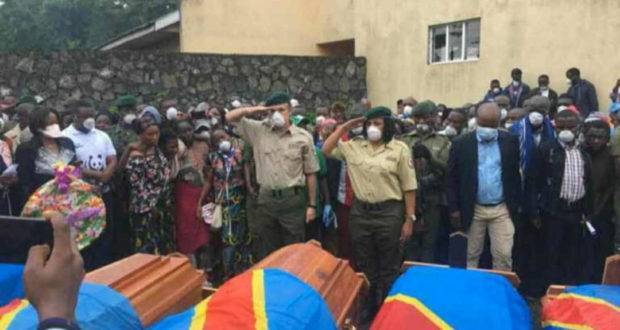
Hommage aux Garde Park de l’ICCN de Virunga

Nous avons promis d’offrir dans le délai le plus raisonnable possible les raisons pour lesquelles des agents de l’ICCN ont été attaqués à Rumangabo, juste à côté de leur station. Pour dévoiler les vérités autour de ce meurtre ignoble, nous avons voulu le faire le jour même où nos vaillants agents de l’ICCN sont en train d’être inhumés, afin de leur rendre, par notre contribution à la vérité, un chaleureux hommage. Que la terre de nos ancêtres leur soit douce. Et qu’ils reposent dans la paix aux côtés de tous les congolais qui sont morts pour défendre les intérêts de la nation.

Cela dit, voici les faits accablants qui entourent ce triste événement.

Pour ceux qui ne connaissent pas bien la géographie du Nord-Kivu, Rumangabo est un lieu référentiel quant à ce qui est des stratégies militaires à l’Est du Congo. Il y a un grand camp militaire, mais également une station des gardes du parc national de Virunga. C’est donc un lieu normalement contrôlé par les FARDC et leurs alliés. Les FDLR ne devraient donc pas s’y infiltrer facilement, moins encore avec un armement comme celui utilisé pour commettre l’élimination ignoble des vies humaines des rangers du Virunga le 24 avril 2020, dans une attaque qui a eu lieu juste à trois cent mètres de leur position de Rumangabo.

Quelques heures après cette attaque, nous avions signalé que des éléments armés rwandais venaient d’être signalés à cet endroit plusieurs jours avant. En fait, possédant une technologie qui leur permet d’infiltrer le système de communication de la station des grades parc et du camp militaire qui sont juste à côté, les militaires de Kagamé avaient déjà accédé à une série des informations qui compromettaient les responsables de l’ICCN au Nord-Kivu par rapport à une question très sensible pour le Rwanda.

Pourquoi cette attaque a-t-elle visé les agents de l’ICCN à Rumangabo ?

Voici les révélations au sujet des événements successifs qui ont conduit à cette attaque :

1. Quelques jours plus tôt, dans des opérations conjointes contre les FDLR, opérations cachées à l’opinion publique par Tshisekedi, l’ami improvisé et indolent de Kagame, les FARDC venaient d’attraper un élément très déterminant dans le commandement et l’intelligence des FDLR. Et, tout en réfléchissant sur ce qu’il fallait en faire, les commandants le cachèrent d’abord dans une prison à Vitshumbi.

2. Au lieu de l’offrir directement à l’abattoir de leurs collaborateurs sanguinaires, les militaires congolais décident de consulter préalablement, par coup de fil privé, les instances de Kinshasa, d’où ils reçoivent l’indication de transférer l’élément à la capitale, via Goma.

3. Cependant, n’ayant ni hélicoptère, ni autres moyen pratique pouvant leur permettre de réaliser l’opération sans que leurs amis-ennemis ne se rendent compte, les militaires congolais se sentent obligés de solliciter la collaboration de Mr Emmanuel De Merode, qui, lui-même, soumis à la peur liée aux circonstances, accepte de mettre en jeu ses véhicules et ses agents.

4. L’opération est lancée dans la matinée du 24 avril à partir de Rwindi, d’où partent les agents de De Merode, pour aller récupérer l’élément attrapé par les FARDC. Mais, en cours de route, ils se confrontent à plusieurs difficultés. Les FDLR, déjà informées par une source intérieure aux FARDC, veulent récupérer leur leader par tous les moyens. Au même moment, et c’est ce que les agents de l’ICCN ignoraient, les militaires rwandais, déjà mieux informés par plusieurs voies, notamment celle des collaborateurs ex M23 déversés dans les FARDC, ainsi que grâce aux infiltrations du système de communication de l’ICCN, etc., sont déjà en position d’attaque pour éliminer ce cadre des FDLR, avec tous ceux qui se trouveraient à son côté. Ainsi, les agents de l’ICCN se transforment en ennemis de deux ennemis.

5. Se sentant vraiment menacés, les agents de l’ICCN décident de se défaire du cadre des FDLR, et le laisse dans une prison, à Kiwanja, en mi-chemin. Malheureusement, au lieu de retourner à Rwindi, ils optent pour continuer la route vers Rumangabo jusqu’à Goma, où des ennemis plus farouches les attendaient. C’est là qu’ils vont être tués à la place de l’agent des FDLR.

6. A quelques centaines de mètres seulement de leur station de Rumangabo, ils sont réduits en cendres par des roquettes provenant des mains des militaires rwandais au Congo. En fait, les militaires rwandais étaient sûrs que le leader FDLR était dans ce véhicule brulé.

Nécessité d’une enquête indépendante

Le gouverneur du Nord-Kivu a annoncé que des enquêtes étaient en cours au sujet de cet acte ignoble.

Cependant, étant donné que le gouvernement congolais est complice dans ce meurtre, nous exigeons de tout notre vœu qu’une enquête internationale et indépendante soit mise en place pour élucider les circonstances et les causes de ce meurtre ignoble. Et que les auteurs soient conduits à la justice et répondent de leur crime.

De la présence des militaires rwandais au Congo

Ce n’est plus un secret, même si Tshisekedi fait tout pour cacher la vérité à l’opinion publique. Des militaires rwandais sont en train d’œuvrer aux  cotés des FARDC. On les trouvent surtout au Nord-Est du parc national des Virunga : Vitsumbi, Mugogo, Nyamilima, Nyabanira, Vusesa, Mabenga (aux entrées du lac Edouard), Kiwanja, Rutsuru, Jomba, Kisharo,Katwiguru, Mushumba, Kihorobo, etc. Et s’il faut y ajouter des ex CNDP et M23 incorporés au sein des FARDC, on comprend ce que cela signifie comme danger pour la région.

1. Pourquoi les FDLR, utilisées à la fois par les FARDC et les FPR comme cheval de Troie, continuent-elles d’être à la base de la mort des milliers des congolais ?

Que Mr Tshisekedi nous réponde.

2. Pourquoi le gouvernement du Congo continue-t-il de donner à Kagame un alibi qui lui permet de perpétrer des massacres et génocides à l’Est, tout en pillant les richesses du pays ?

Que Mr Tshisekedi nous réponde.

3. Pourquoi le gouvernement congolais continue-t-il à nier la présence des militaires rwandais à l’Est de la RD Congo depuis plusieurs mois, alors que tout le monde vivant dans les zones que nous avons citées est indubitablement témoin de ce forfait suicidaire sur la terre de nos ancêtres ? Ce n’est plus un secret. Il conviendrait que le gouvernement l’annonce clairement.

Que Mr Tshisekedi nous réponde.

BeniLubero

A sa sortie, Kagame est encore peu prometteur!

Ça faisait longtemps que Paul Kagame ne s’adressait pas aux Rwandais, et quand il fait ce 27 avril 2020, il s’exprime en anglais. Moins de 20% de Rwandais comprennent cette langue. Quant au contenu, le président rwandais ne livre rien. Absolument rien. La seule chose qu’il aura réussie, c’est de semer plus de doutes sur sa localisation sa conférence étant faite à distance.

Avant cette sortie, beaucoup de rumeurs circulaient. L’absence du président inquiétait les Rwandais, les uns allant jusqu’à poser qu’il est mort. C’est peut-être cette prétendue mort qui l’a poussé à sortir subitement, et visiblement, mal préparé. Dans ces réponses , aux journalistes bien sélectionnés comme si le message était destiné à une audience précise,  Kagame ne maîtrise rien. Ceci soulève plus de questionnements: Est-il vraiment vivant? Comment se peut-il qu’après plus d’un mois, un chef d’Etat ne s’adresse pas à son peuple pour exprimer une solidarité?

De la crise causée par la pandémie, Kagame ne livre rien. Pas de statistique. Pas de stratégie, pourtant demandée par plusieurs Rwandais. Le président ne dit rien sur la gestion des fonds déjà reçus dans l’effort de lutter contre Covid-19. Il ne pense pas aux citoyens du menu peuple dont le bien-être est mis à mal par les mesures de confinement décrétées sans suivre la procédure légale pourtant prévue par la Constitution rwandaise. Tout ce qu’il révèle est qu’un conseil des ministres va se tenir cette semaine pour déterminer la voie à suivre dans les prochains jours.

Une journaliste de RFI lui pose la question sur l’assassinat du chantre rwandais Kizito Mihigo mort en février 2020. Kagame, manifestement mal à l’aise avec cette question, réplique qu’il ne sera jamais capable de convaincre qui que ce soit sur la thèse du suicide. Lui-même sait que ce mensonge ne tient pas la route. Et, il demande à la journaliste: “Can we put it to rest, please?” Il évite d’en parler.

Rappelons que depuis l’assassinat de ce jeune homme, Kagame a du mal à justifier son innocence dans ce dossier. Dans ses notes, Kizito explique le rôle important de la directrice de cabinet de Kagame à l’époque, Inès MPAMBARA, dans son calvaire. La femme est même  allée jusqu’à menacer de mort le jeune artiste.

Une question intéressante sur l’incursion de l’armée rwandaise au Congo, une information qui circule depuis quelques semaines. Sauf que le chef de l’Etat nie toutes les allégations en bloc, tentant de façon maladroitement voilée, de justifier cette action militaire s’elle avait eu lieu. Pour tout observateur avisé, sa réponse constitue un aveu sans équivoque. Sauf un enfant né d’hier, l’on sait que les soldats rwandais ont toujours été au Congo, et que Kagame l’a toujours nié.

Le silence de Kagame au sujet de la misère du peuple rwandais, sa disparition des radars pendant longtemps, les actes de barbarie commis par son armée contre les citoyens, l’arrestation des journalistes au nom du Covid-19 mais, qui réellement, on le sait, vise à museler les lanceurs d’alerte, tout porte à croire que Kagame n’est pas l’homme de la situation, maintenant, encore moins pour la période après Covid-19.

Chaste Gahunde


Avis aux lecteurs: Nos articles peuvent être reproduits à condition de citer le nom d’auteur et le site web source.

Notice to readers: Our articles may be reproduced provided the author’s name and the source website are cited.

Uganda/ COVID-19: 883 prisoners released after Presidential pardon.

The Uganda Prisons Service has, on Monday, April 27, confirmed the pardon and release of 883 prisoners from their facilities across the nation.

While speaking to the media, Uganda Prisons Services Spokesperson, Frank Baine confirmed the development citing the 833 prisoners released was an effort to decongest prisons amid the COVID-19 Pandemic.

On April 6, the Commissioner-General of Uganda Prisons, Dr Johnson Byabashaija, disclosed that government was planning to decongest prisons by pardoning over 2,000 inmates as one of the ways to decongest prisons in a move to control the spread of COVID-19.

Byabasahija made this revelation while addressing the media at parliament after his appearance before the parliamentary committee on appointments for vetting following the renewal of his contract by President Museveni.

He said that inmates who were on light sentences and those who had covered three-quarters of their sentences are being considered. Others to be considered for pardon include; breastfeeding mothers and those inmates aged above 65 years.

“We are going to submit the list to the Attorney General for consideration of pardon in order to decongest the prisons. Secondly, we are also writing to the registrar of courts of judicature to release remands who have reached their remand mandatory period. This is not for capital offenders,” Byabashaija said.

He added that apart from decongesting the prisons, they have also isolated prisons around across the country where new prisoners are being held for the moment, also all prison staff have been prohibited from going back to their homes as one of the measures to contain the spread of the virus.


Avis aux lecteurs: Nos articles peuvent être reproduits à condition de citer le nom d’auteur et le site web source.

Notice to readers: Our articles may be reproduced provided the author’s name and the source website are cited.

The genocide plan against Rwandans currently disguised as COVID-19 confinement

The genocide plan against Rwandans currently disguised as COVID-19 confinement

1. The 1994 genocide as a precedent
During the period of April-June 1994, Hutus and Tutsis were killed for who they were in either controlled zones by the Rwandan Patriotic Front (RPF) led by Paul Kagame or the then Rwandan government headed by Jean Kambanda.
2. The enabler of the 1994 genocide
The then US president Bill Clinton refused to call genocide what was happening in Rwanda at that time, because of his administration’s strategy for non-intervention to enable RPF to gain power. This US attitude was part of a regional political game plan, which considered RPF as the main player to have more influence at the expense of France and Belgium.
3. A never-ending genocide
After RPF took over from the Hutu government, it put in place internal and external policies aimed at reducing the number of Hutus, among these were:

1. Targeting and killing Hutu political leaders and intellectuals inside and outside Rwanda, with an objective of retaining the political supremacy of RPF as long as possible; while this was happening, Hutu refugees were attacked, killed and persistently disturbed in their precarious lives everywhere.
2. Denying their survivors access to any sort of assistance that would help them to recover from suffered traumas.
3. Devising economic, agricultural, employment, health and educational policies aimed at making Hutus poorer, die silently or feel as second class citizens.

4. How Rwanda’s neighbouring countries are dealing with COVID-19 Burundi, DRC, Uganda and Tanzania, the neighbouring countries of Rwanda, haven’t instructed their citizens to strictly stay at home as a way of fighting the COVID-19 pandemic. After objective analysis of the conditions within which their people live, they consequently found that confining them without giving them food would’ve been like ordering them to die.

5. The suffering of Rwandan people under confinement
Since the Prime Minister’s public announcement of the confinement on March 21st, we have noticed that there is no provision of food to the population from the government. The journalists who went out to learn from the people how they were coping with the confinement and highlighted the dire conditions under which they were living, were arrested. Presently, the general public doesn’t know what is happening indoors across Rwanda, because no independent journalist is allowed to report about that situation.

6. The coverup of an ongoing genocide
The same way the RPF government has covered up deliberate killings of Rwandans over the past 26 years, it is feared that under the current COVID-19 pandemic, everything seems to point to a well-engineered strategy of drastically reducing the number of Rwandans. If the confinement is not immediately reversed, with the lack of any provision of food to the confined people, between 3 to 4 millions of Rwandans can die by the end of May. These deaths would only be discovered years later because of the RPF mastery of covering up its crimes.

Maniragena Valens   and Nzeyimana Ambrose


Avis aux lecteurs: Nos articles peuvent être reproduits à condition de citer le nom d’auteur et le site web source.

Notice to readers: Our articles may be reproduced provided the author’s name and the source website are cited.

Uganda: Mbarara has a new Archbishop, His Grace Lambert Bainomugisha.

Archbishop-elect His Grace Lambert Bainomugisha. (AGENCIES PHOTO)

Archbishop His Grace Lambert Bainomugisha.

Pope Francis has appointed Lambert Bainomugisha the new Archbishop of Pope Francis after His Grace Paul K. Bakyenga sought to retire.

In an April 25 letter by Apostolic Nuncio, Luigi Bianco confirmed Pope Francis’ acceptance the resignation of Archbishop Paul Bakyenga who had reached his canonical age limit.

“The Apostolic Nunciature has the joy to announce that the Holy Father Pope France has appointed Rt. Rev. Lambert Bainomugisha Auxilliary Bishop of Mbarara, as the new Archbishop of Mbarara, while accepting the resignation from the Pastoral Care of the Archdiocese presented by the Most Rev. Paul K Bakyenga, upon reaching the canonical age limit,” read part of the letter.

The Rt. Rev. Lambert Bainomugisha was born 12th July 1961 at Kashumba, Bukanga, Isingiro in what was at that time the Diocese of Mbarara. He studied both in Uganda and in Canada and obtained a degree in Canon Law through the University of St Paul of Ottowa. He was ordained priest on 13 July 1991 at Mbarara Cathedral.

He exercised his pastoral ministry for several years in St Joseph the Worker Parish in Rubindi, Mbarara. He then returned to Canada in 1994 to complete his studies. After returning to the Diocese, he was the Chancellor of the Archdiocese from 2000 to 2005.

On July 2, 2005, he was appointed Auxiliary Bishop for the Archdiocese of Mbarara and Titular Bishop of Tacia Montana. He received episcopal consecration on 1 October the same year.

On 13 November, 2009 Pope Benedict XVI appointed him Apostolic Administrator sedes plena et ad nutum Sanctae Sedis of the Diocese of Hoima, until a new Bishop of Hoima was ordained and appointed on 29 February 2016. Bishop Lambert then returned to the Archdiocese of Mbarara to continue his duties as Auxiliary Bishop.

Archbishop-elect Bainomugisha is also the President of the Legal Service Commission and is a member of other commissions of the Uganda Episcopal Conference.

Redpepper

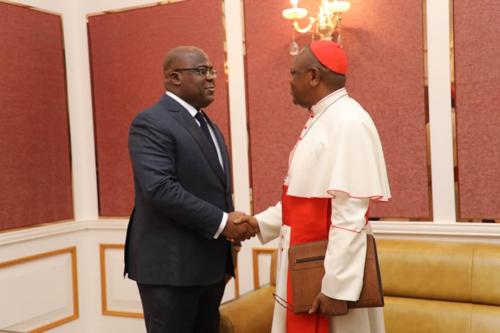
RDC: Le Cardinal Fridolin AMBONGO nommé pour la gestion du Fonds COVID – 19

Le président Félix Tshisekedi a nommé ce mercredi les membres du Comité de gestion du Fonds national de solidarité contre le Coronavirus (FNSCC). Ce comité est piloté par le cardinal Fridolin Ambongo, archevêque de Kinshasa. Il est secondé par le représentant légal de l’Eglise du Christ au Congo (ECC), le révérend André Bokundoa.

Le représentant de la Communauté islamique au Congo siègera comme membre aux côtés d’autres personnalités issues du monde scientifique et associatif.

Ce comité composé de 12 personnalités va gérer ce fonds.

L’équipe se présente de la manière suivante :

  • Cardinal Fridolin Ambongo Besugu, coordonnateur
  • Révérend André Bokundoa, coordonnateur adjoint
  • Pr Jean-Jacques Muyembe, membre
  • Cheick Abdallah Mangala, membre
  • Révérend pasteur Sony Kafuta, membre
  • Révérend Delphin Ebele Katalay, membre
  • Mme Liliane Bakeyela, membre
  • Mme Marie Madeline Kalala Ngoy, membre
  • Mr Roger Kamba, membre
  • Mr Patrick Ngulu, membre
  • Mr Patient Bashombe, membre
  • Mr Yvon Tshizumbu, membre

Le Chef de l’État, Félix Tshisekedi, a créé le Fonds national de solidarité pour la lutte contre le Covid-19 (FNSCC). Cette structure a pour mission de rechercher et collecter les moyens financiers qui aideront à soutenir les malades et le personnel soignant.

Selon cette ordonnance, le FNSCC va fonctionner durant toute la période d’état d’urgence sanitaire décrétée par Félix Tshisekedi. L’état, les entreprises publiques ou privées et les bailleurs de fonds vont alimenter le Fonds.

Le FNSCC est créé pour financer les fournitures essentielles comme les équipements de protections individuelles à la population et aux agents de santé qui sont en première ligne sur l’étendue du territoire national.

Il va aussi soutenir financièrement le Comité multisectoriel de riposte au Covid-19 en lui donnant les moyens de suivre et détecter la maladie et en renforçant les capacités du laboratoire par la formation et la fourniture des matériels adéquats.

Radio Okapi

Rwanda : Vague d’arrestations et d’abus liés au confinement

Il faut mettre fin à la répression des médias et aux arrestations arbitraires massives

La police rwandaise a arrêté arbitrairement des dizaines de personnes depuis que les directives pour empêcher la propagation du Covid-19 sont entrées en vigueur le 22 mars 2020. Les autorités ont accusé des personnes d’avoir enfreint les mesures, les détenant parfois dans des stades sans procédure régulière ni autorité légale.

MALAWI: High court blocked its coronavirus lockdown in a bid to protect the poor

A high court in Malawi has granted Human Rights Defenders Coalition a seven-day injunction stopping the government from implementing a 21-day national lockdown due to coronavirus. The injunction is temporary and an inter-partes hearing is expected within seven days.

On Tuesday, president Peter Mutharika announced a 21-day lockdown which was meant to begin on Saturday April 18 i n a bid to contain the spread of the virus in the country. In his address Mutharika, warned that up to 50,000 Malawians could lose their lives to the Covid-19 virus but he did not outline a  social safety net for the vulnerable during the lockdown, which prompted a civil society group to seek a stop order from the court.

“Our message is simple, we are not accepting this issue of lockdown unless government comes up with proper measures to protect the lives of Malawians, all we are saying is that different stakeholders such as religious leaders, civil society organizations should come together to digest this issue and come up with a proper solution,” said Gift Trapence chairperson for Human Rights Defenders Coalition.

Following Malawi government’s failure to put in place any measure to cushion the poor during the lockdown, thousands of informal traders in the cities of Mzuzu and Blantyre took it to the streets to protest against a coronavirus lockdown with placards that read “Lockdown more poisonous than Corona” and another “We’d rather die of corona than die of hunger.”

Many of these vendors are daily wage earners and a lockdown in the country could greatly affect them. A lot of people in Malawi operate on a hand to mouth basis. It is unclear if Malawi, one of the world’s poorest countries, can afford to offer cash transfers to its low income citizens as some policy analysts have been recommending.

Malawi’s economy relies on informal economies like most African countries. Many policy analysts and development economists across Africa and the developing world have started to criticize African governments for rushing to mimic the lockdown strategies of wealthier, developed countries in order to prevent the spread of coronavirus. There are now louder calls for countries to adapt preventive measures and policies that better suit each country. This is particularly relevant in congested urban areas where social distancing is difficult and there is little availability of clean water to wash hands.

“Our challenge is to adapt social distancing measures to informal economies which lack a comprehensive safety net to support those shut in,” writes W. Gyude Moore, a former Liberian public works minister. Moore recommends African countries focus on more flexible curfews rather than total lockdowns given most economies are 90% informal. He also recommends engaging with local community leaders to share the message and expand the definition of essential services.

So far Malawi has recorded 17 cases of Covid-19 with two deaths. The ministry of health has announced that three people who earlier tested positive have now tested negative but will re-do the tests.


Avis aux lecteurs: Nos articles peuvent être reproduits à condition de citer le nom d’auteur et le site web source.                                                                                              Notice to readers: Our articles may be reproduced provided the author’s name and the source website are cited.