Was Clinton’s “No Genocide” Dictate On Rwanda Meant To Ensure Kagame’s Military Victory In 1994?
By Milton Allimadi
Who killed Juvenal Habyarimana?
[Black Star News Commentary]
It’s generally accepted that Bill Clinton opposed a vigorous international community- and American armed intervention when the massacres erupted in Rwanda in 1994 because he feared this country could get bogged down in a messy operation with unpredictable outcome.
There has never been an internationally supervised research to estimate the numbers of civilians murdered in Rwanda however the figure of “nearly 800,000″ has been widely quoted and accepted for years.
It’s also generally accepted that Clinton wouldn’t allow his administration officials to use the term “genocide” to describe the mass killings in Rwanda because the word carries legal connotations that would have obligated intervention.
But how credible is this explanation as to why Clinton opposed use of the word and outside intervention?
If that was indeed the true motive for barring the use of the term and opposing intervention how did Clinton hope for the killings to come to an end? He was president of the United States, the world’s only remaining superpower.
Is it conceivable that Clinton was willing to let the U.S. stand aside and risk the possibility of Hutus, the 85% majority population in Rwanda, annihilating all Tutsis?
This is a difficult proposition to accept or believe.
The killings had been triggered when on April 6, 1994 the plane carrying Rwanda’s Hutu president Juvenal Habyarimana and Burundi’s Cyprian Ntaryamira was downed by two missiles as it approached Kigali airport.
Is it more likely that Clinton in fact knew that the massacres would come to an end — with victory by the RPF, under its leader Paul Kagame?
So, in fact, by refraining from calling the massacres a “genocide” and triggering an international armed intervention did Clinton’s decision at the time actually buy time for Kagame and allow his RPF to seize power?
Habyarimana was returning from Tanzania, where regional leaders were pressing the warring parties to carry out the Arusha Peace Accord to halt fighting between his army and the opposing force, which included units of Uganda’s army and the Rwanda Patriotic Front (RPF).
The Arusha deal was detrimental to the RPF’s goal and U.S. interests which included displacing France’s influence in the region.
Arusha called for a Transitional government, power-sharing between Habyarimana’s party, Kagame’s RPF, and other parties. It also called for elections and given that Hutus comprised 85% of the population, Kagame wouldn’t have become president.
Kagame stood to gain the most from the assassination of President Habyarimana and to lose the most from negotiated peace. The use of the term “genocide” by the Clinton administration and robust outside intervention most likely would have saved hundreds of thousands of lives.
It also would have closed Kagame’s path to presidential powers in Rwanda.
So was it mere coincidence that Clinton’s withholding the use of the term “genocide” benefitted Kagame?
Consider some points that indicate U.S. preference of an RPF/Kagame victory at the time.
1) At the time of the October 1, 1990 invasion of Rwanda from Uganda, Paul Kagame was being trained at the U.S. Military Academy at Fort Leavenworth, Kansas. He had been sent here by Uganda’s ruler Gen. Yoweri Museveni.
He came on a Ugandan passport because at the time he was chief of Uganda’s Military Intelligence. He and many Tutsis of his generation had grown up in Uganda; his family had fled the massacres of 1959 when the monarchy under King Kigeri V in Rwanda was overthrown by the Hutu majority.
When the first commander of the 1990 invading force from Uganda, Gen. Fred Rwigyema, who had been Uganda’s deputy defense minister, was killed under questionable circumstances, Museveni recalled Kagame and installed him commander of the invading army which initially included 4,000 regular Ugandan army soldiers. Later the force became the Rwanda Patriotic Front.
2) The U.S. took no action to censure Uganda or to denounce the invasion, which was a war of aggression which has consequences under international law. Moreover the U.S. allowed Uganda to keep sending more officers for U.S. training under the International Military Education Training (IMET) program that had brought Kagame to Fort Leavenworth.
In 1995 when I was a reporter at The City Sun newspaper, I asked then Vice President Al Gore about this and he told me Uganda “deceived” the U.S. It was a disingenuous response since in subsequent years after I asked the question the number of officers sent for IMET training by Uganda actually increased.
3) France, a supporter of the Habyarimana government, when Francois Mitterand was president, tried to bring action against Uganda for launching a war of aggression against Rwanda on October 1, 1990, through the United Nations Security Council. The U.S. opposed this move.
So a battlefield stalemate maintained from 1991 to 1994, with the RPF controlling much of the areas of Rwanda towards Uganda — the supply route for recruiting fighters and for obtaining arms. During this period, while abuses by Habyarimana’s army was widely quoted in media those of the RPF, including massacres documented by Human Rights Watch, were rarely mentioned.
The stalemate ended after the assassination of Habyarimana.
According to documents from French archives “Mitterrand and his advisers” believed “that the Rwandan Patriotic Front wanted to use its superior military position to restore a Tutsi-dominated regime in Rwanda. French military advisers reported that the rebel movement had acquired surface-to-air missiles from Uganda. When President Habyarimana’s plane was shot down by a SAM missile on April 6, 1994, triggering the genocide, French officials immediately suspected the RPF.”
In recent years, Theogene Rudasingwa, who had been Kagame’s chief of staff and then Rwanda’s ambassador to the United States has said Kagame in fact was the one who ordered the assassination of Habyarimana. A French government minister had claimed that the U.S. gave the missiles to Uganda, from stockpiles seized in Iraq; Uganda then provided them to the RPF — the U.S. denied the allegation.
According to Rudasingwa, the purpose was strategic. Knowing the ethnic volatility in Rwanda, Kagame was aware the Hutu civilian majority would unleash vengeful massacres after Habyarimana’s death. The power vacuum and the bloody mayhem would create the excuse for Kagame seizing power.
Kagame would then be hailed as Rwanda’s “savior.” Kagame would no longer have to fulfill the requirements of Arusha including the elections the RPF could not have won.
In subsequent years the United Nations and Human Rights Watch repory that Kagame has exported the war into the Democratic Republic of Congo (DRC).
Was Clinton, given U.S. intelligence capabilities, unaware of the alleged Machiavellian scheme by Kagame in 1990?
Source: Black Star News
What the author of this article forgets to mention is that the Arusha Peace Accord which was signed on August 3rd, 1993 recommended the presence of 5,000 UN peacekeepers to supervise its implementation. Though it was initially difficult to assemble such force, by mi-December of that year there were already in Rwanda near 2,500 for that contingent. However, surprisingly, even that number was going to be reduced significantly to the point that when the plane of President Juvenal Habyarimana was shot down on April 6th, 1994, there were only 297 UN peacekeepers left. Prior to that, the CIA Kigali desk had sent to Washington an analysis of the political situation prevailing in Rwanda around January 1994. One of the main points the report highlighted was the fact that the assassination of Habyarimana could cause between 300,000 and 500,000 casualties. And this prediction was apparently based on what had happened in neighboring Burundi when president Melchior Ndadaye had been assassinated in October 1993. In summary, when Washington resisted declaring the massacres of Rwanda genocide and probably ensured that there were not enough external forces to intervene, they knew what they were doing. This made the former UN secretary Boutros Boutros Ghali to say that the Rwandan genocide was a 100% US responsibility.
Was Clinton’s “No Genocide” Dictate On Rwanda Meant To Ensure Kagame’s Military Victory In 1994?
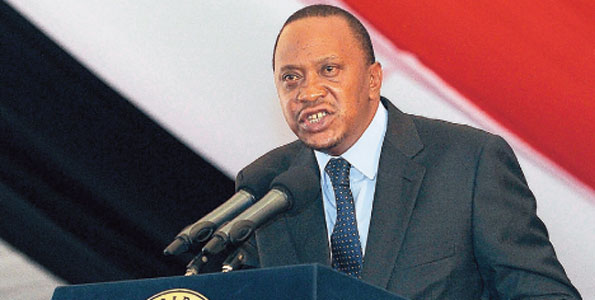
Kenyatta, Kagame under fire at media conference
Cape Town. President Uhuru Kenyatta of Kenya has been criticised for signing into law legislation giving the state the power to decide what journalists report.
Similar attention was given to President Paul Kagame of Rwanda for limiting media freedom and called on him to allow independent journalists to work freely.
The criticism came during the official opening of the International Press Institute 43rd world congress in Cape Town, South Africa, yesterday.
In her formal report to the congress on the state of press freedom worldwide, IPI executive director Alison Bethel McKenzie told delegates of increasing attacks on journalists.
“Kenya is another concern. President Kenyatta has signed legislation … the Information and Communication Act … that we believe would lead to state control of news and information during emergencies, plus give the government the power to perform functions currently executed by the country’s Media Council.”
She said IPI had protested the new measures by the Kenya government and acknowledged that local journalists had moved to the courts to fight for their freedom.
“Kenyan journalists are not about to have their rights trampled on. They’ve filed legal challenges against the Information and Communication Act on the grounds that it is unconstitutional,” Ms McKenzie said.
On Rwanda, the IPI boss said as the world marks the 20th anniversary of the genocide, even though some local media played a “terrible role in fanning ethnic hatred in 1994”, reasonable space must be curved for free expression.
“While there is no defence for such hate speech, we are concerned that the Rwandan authorities use that experience to maintain tight control over today’s news media and call on the government to allow independent media to flourish.” Globally, Turkey was identified as one of the worst countries for press freedom and the world’s leading jailer of journalists with 44 currently behind bars.
“Media owners’ economic dependence on government connections continues to stifle reporting in Turkey, as did the reported attacks by police on dozens of journalists as they covered protests that erupted last year following the brutal treatment of demonstrators opposing the demolition of Gezi Park in Istanbul,” she said.
IPI tracked 119 journalists killed in the line of duty in 2013, a slight decline from the 133 who died in 2012. So far in 2014, more than 20 have either been killed while on the job or died while on duty.
Kizito Mihigo, Cassien Ntamuhanga and Jean Paul Dukuzumuremyi survive police extrajudicial killing.
[Kizito Mihigo, Cassien Ntamuhanga and Jean Paul Dukuzumuremyi went missing for more than a week. Police was contacted on that issue but said they had no news. Different media houses and independent accused the police of trying to kill these three young men but police kept denying. Finally newtimes.co.rw confirms…] Admin
Police arrest Kizito Mihigo, Cassien Ntamuhanga and Jean-Paul Dukuzumuremyi
Rwanda National Police today revealed the arrest of three individuals suspected of offenses against state security.
The three who the Police believe had been recruited by Rwanda National Congress and working for some time in collaboration with the FDLR are: Kizito Mihigo, a musician who was arrested last Friday; Cassien Ntamuhanga, a journalist at Amazing Grace Radio who had earlier been reported missing was arrested this morning; and Jean-Paul Dukuzumuremyi, a demobilised soldier arrested last Saturday.
Mihigo, Ntamuhanga and Dukuzumuremyi are under investigation for involvement in planning terrorist attacks against Rwanda, planning violent overthrow of the government, planning to assassinate government officials and inciting violence among the population.
The three are suspected to be working closely with senior members of Rwanda National Congress (RNC) and the FDLR, and participating actively in a network that has carried out several grenade attacks and continues to plan terrorist action against Rwanda.
Police Spokesperson, ACP Damas Gatare said:
“The Police is in possession of ample evidence including grenades and testimonies obtained from other accomplices arrested during the course of investigation. Kizito Mihigo Cassien Ntamuhanga and Jean-Paul Dukuzumuremyi have admitted to working closely with senior members of RNC and FDLR, an active network that has carried out several grenade attacks in Rwanda.
“The case file will now be submitted to the prosecution. However, investigations continue to arrest other members of the network still at large. We encourage the public to continue to share relevant information with the Police.”
Source:http://www.newtimes.co.rw 14/04/2014
Jean Claude Lafourcade au colloque sur le Rwanda tenu le 1er Avril 2014 au Sénat de France.
Environnement géopolitique au Rwanda au moment du génocide.
Undi Munyarwanda yaburiwe irengero!
Nyuma y’ibura rya Mihigo Kizito na Ntamuhanga Cassien, noneho Niyomugabo Gerard nawe yaburiwe irengero. Polisi y’u Rwanda ntacyo itangaza nyamara numero za telefone z’abo bantu bose ziba zizwi ku buryo hakoreshejwe ikoranabuhanga byakoroha kumenya aho telefone ziherereye, abantu bavuganye bwa nyuma bityo aya makuru agaherwaho mu gukora iperereza. Cyakora hari iperereza ryakozwe ku ibura rya Cassien. Ariko nanone biratangaje cyane kubona umuntu nka Kizito wagombaga kuririmba indirimbo y’icyunamo kuwa 7 Mata 2014 aburirwa irengero Leta ikicecekera. Ibi bishobora gusobanura ko Leta ibifitemo uruhare cyangwa se ko itabizi. Ariko kubera ko byavuzwe cyane, nta kabuza leta irabizi. Bityo rero ibifitemo inyungu. Niyomugabo we se yaba azize iki? Dore uko igihe.com kibivuga.
Hashize icyumweru kirenga bivugwa ko Umwanditsi w’ibitabo Niyomugabo Nyamihirwa Gerard yaba yarabuze, gusa na Polisi mu mujyi wa Kigali yatangaje ko kugeza ubu nta makuru y’ibura rye izi.
Biravugwa ko Niyomugabo Nyamihirwa Gerard yaba yarabuze ku itariki ya 4 Mata 2014, kuko hari bamwe mu ncuti ze bemeza ko baherukaga kuvugana nawe mbere y’iyo tariki mu gihe abandi bavuga ko bamubonye bwa nyuma ku rubuga facebook ku itariki ya 3 Mata, ari nabwo bigaragara ko aheruka kwandika igitekerezo cye kuri urwo rubuga, gusa binagaragara ko kandi ku itariki ya 5 n’iya 6 Mata yakoze “share” ya link y’urubuga asangiye n’abandi bantu baganira umuco nyarwanda.
Kugeza ubu telefone ya Niyomugabo wibanaga mu nzu ku Kacyiru, ntiri ku murongo, gusa hari abavuga ko hari abo yashoboye kuvugana nabo ubwo bohererezanyaga ubutumwa kuri WhatsApp nyuma y’aho bivugiwe ko yabuze.
Umuvandimwe wa Niyomugabo yabwiye IGIHE ko yaherukaga kuvugana nawe ku itariki ya 2 Mata mu gihe indi ncuti ya Niyomugabo isanzwe imufasha kwandika no kugurisha ibitabo, yabonanye nawe bwa nyuma ku itariki ya 3 Mata.
Uyu muvandimwe akomeza avuga ko nyuma y’aho ku Cyumweru tariki ya 6 abari bafitanye gahunda na Niyomugabo mu ishuri ry’ibiganiro ryitwa “Uruganda rw’ubunyarwanda” risanzwe riteranira mu nyubako ya UTC, bamutegereje bakamubura, bagerageje guhamagara telefone ye ; rimwe igacamo ubundi nticemo.
Yagize ati “Byageze aho incuti ye imwoherereza ubutumwa (SMS), ariko Niyomugabo akamusubiza ibiterekeranye ; yamubaza aho ari, akamubwira ngo araza kumubwira.”
“Kuwa Kabiri tuvuye kugeza ikibazo kuri Polisi, telefone ya Niyomugabo yaje kumpamagara ariko nayitaba, ntihagire umuntu uvuga.”
Inshuti ya Niyomugabo twise Mugabo yaje kohereza ubutumwa Niyomugabo imubaza aho aherereye, yahise yakira ubutumwa bugira buti “na telefone irananiye, ndakubwira mwana ! Ubu ndi kujya muri Tz (Tanzaniya).”
Umuvandimwe yabwiye IGIHE ko Mugabo ari inshuti ya hafi cyane kuri Niyomugabo, ariko atari azi gahunda yo kujya muri Tanzaniya kuko byinshi akora aba abizi.
Nyuma yo kubura Niyomugabo, abari bamutegereje kuri gahunda mu ishuri “Uruganda rw’ubunyarwanda” rihurira mu kabari kitwa Carrefour des artistes mu nyubako UTC mu mujyi rwagati, bahise bahamagara umwe mu muryango we uba mu karere ka Nyanza.
Yahise aza, ajyana kwa Niyomugabo na Mugabo, bagezeyo basanga umugore – nyirinzu Niyomugabo abamo, ari we ufite urufunguzo. Yababwiye ko ari abana barumweretse munsi y’urugi.
Nyirinzu ntiyazuyaje kubaha urwo rufunguzo, dore ko yari anasanzwe abona Mugabo agendana na Niyomugabo. Binjiye mu nzu basanga inkweto n’imyenda byose bya Niyomugabo bihari.
“Gusa Mugabo yarabaze asanga haraburamo ipantaro imwe.”
Ese hari isano na Cassien Ntamuhanga nawe waburiwe irengero ?
Niyomugabo wanahoze ari umwarimu wungirije mu cyari Kaminuza Nkuru y’u Rwanda, yatangaga ibiganiro ku maradiyo atandukanye arimo n’Ubuntu butangaje, aho yakirwaga mu kiganiro na Cassien Ntamuhanga usanzwe ari umuyobozi w’iyi radiyo.
Niyomugabo akunda kugaragaza ko ashyigikiye cyane imyemerere gakondo y’Abanyarwanda. Ibi byatumaga muri iki kiganiro ajya impaka n’abayobozi b’amadini atandukanye nabo babaga batumiwemo.
Umuvandimwe yabwiye IGIHE ati : “Ntabwo nzi Cassien Ntamuhanga, usibye ko gusa njya mwumva kuri radiyo nkaba nzi ko anakorana ikiganiro na Niyomugabo ndetse bakaba bakora ama-CD y’ibiganiro by’imyemerere.”
“Ubundi Niyomugabo afite imyemerere itandukanye n’iy’abandi bantu. Yigeze kumara igihe akorana cyane na Cassien Ntamuhanga ikiganiro, gusa hari n’undi mugore witwa Hadidja wajyaga akorana na Niyomugabo mu gihe Cassien adahari.” Uku niko yongeraho.
Uyu Cassien Ntamuhanga uyobora Radio ya gikiristu yitwa Ubuntu butangaje ivugira i Kigali nawe yaburiwe irengero ku itariki ya 7 Mata, nyuma y’iminsi mike Niyomugabo nawe abuze.
Nta gihamya yerekana ko ibura ry’aba bagabo bombi ryaba rifitanye isano, gusa polisi y’u Rwanda ikomeje gushakisha irengero ryabo.
Iperereza ?
Mu kiganiro na IGIHE, Umuvugizi wa Polisi mu mujyi wa Kigali, SSP Mwiseneza Urbain, yavuze ko kugeza ubu bakomeje iperereza, gusa nta makuru araboneka ku irengero ry’Umuyobozi wa radiyo wabuze, mu gihe ngo aya makuru yaba abonetse biteguye kuyatangaza.
Mwiseneza yakomeje avuga ko abavuga ko umuryango w’Umwanditsi w’ibitabo Niyomugabo waba waratanze ikirego kuri Polisi, atabizi.
Umuvandimwe we yabwiye IGIHE ko Niyomugabo wandikaga ibitabo cyane ku mateka y’u Rwanda no ku myemerere gakondo y’Abanyarwanda bo hambere, yaburiwe irengero yitegura gushyira ahagaragara igitabo cye gishya cyitwa “Gatebe gatoki ya Gahutu na Gatutsi mu gihugu cya Kanyarwanda.”
Ibindi bitabo yaherukaga kwandika birimo : Ubumenyi gakondo bw’Abanyarwanda, Umusogongero ku ijambo ry’Imana y’ i Rwanda na Nta Yezu nta Ruganzu.
Muri ibi bitabo akunda kugaragazamo cyane ko atemera amadini yazanwe n’abakoloni, agasobanura ko n’Abanyarwanda ba kera bari bazi Imana kandi yari nziza kurusha iya none
“Sauver un maximum de vies… c’est le défi que beaucoup jugeaient impossible et que les troupes françaises de Turquoise ont pourtant relevé”, Jean-Yves Le Drian.
Génocide rwandais : pour Le Drian, “certaines accusations ne peuvent rester sans réponse”
Jean-Yves Le Drian a tenu vendredi à défendre l'”honneur” de l’armée française lors de l’opération Turquoise en 1994, après les accusations de complicité de génocide réitérées par le président rwandais, Paul Kagamé. Car, pour le ministre français de la Défense, “certaines accusations ne peuvent rester sans réponse”. Explications.
Après le Premier ministre Manuel Valls, c’est au tour du ministre de la Défense, Jean-Yves Le Drian, de réagir à la polémique entre la France et le Rwanda relancée par Paul Kagamé dans une interview à Jeune Afrique publiée le 7 avril. Dans un message aux armées, diffusé vendredi 11 avril, Jean-Yves Le Drian a défendu l'”honneur” de l’armée française lors de l’opération Turquoise en 1994, après les accusations de complicité de génocide réitérées par le président rwandais.
“Les mots ont un sens et, dans ces circonstances, certaines accusations ne peuvent rester sans réponse”, écrit Le Drian, sans mentionner le nom du chef de l’État rwandais. Selon le ministre, “l’honneur de la France et de ses armées, c’est d’avoir, avant les autres, réagi au drame qui se déroulait sous le regard d’une communauté internationale paralysée”.
“Sauver un maximum de vies sans prendre parti dans la lutte pour le pouvoir qui était alors engagée: c’est le défi que beaucoup jugeaient impossible et que les troupes françaises de Turquoise ont pourtant relevé”, poursuit Jean-Yves Le Drian.
>> Lire aussi : “L’histoire mythique de l’opération Turquoise ne correspond pas à la réalité” (Guillaume Ancel)
“Accusations inacceptables”
La France “ne s’est pas dérobée à son devoir”, affirme-t-il encore. “Les conclusions de la mission [menée par Paul Quilès en 1998, NDLR], indépendante et pluraliste, ne laissaient aucune place aux accusations inacceptables qui ont été proférées à l’encontre de l’armée française ces derniers jours”, insiste-t-il, en soulignant que “plus de 1 100 documents” ont été déclassifiés en vingt ans par le ministère de la Défense, dans le cadre des procédures judiciaires.
Lors de sa déclaration de politique générale mardi à l’Assemblée nationale, Manuel Valls avait déjà rejeté ces accusations, selon lui “injustes” et “indignes”.
Dans une interview à Jeune Afrique, le président rwandais Paul Kagamé avait accusé la France d’avoir eu un “rôle direct” dans “la préparation politique du génocide” et dans “son exécution même”.
Réagissant à ces déclarations, Paris avait annulé le voyage de la ministre de la Justice, Christiane Taubira, qui devait représenter la France à la commémoration du vingtième anniversaire du génocide, à Kigali le 7 avril. Après que Paris avait annoncé la participation de l’ambassadeur de France à Kigali, Michel Flesch, le ministère rwandais des Affaires étrangères avait fait savoir à ce dernier qu’il n’était pas le bienvenu.
(Avec AFP)
Rwanda : Le régime du FPR a toujours prononcé un « non catégorique » à la démocratie.
Paru en 2010 sur le site http://www.musabyimana.net/
Au moment où le monde entier aspire toujours à la démocratie, les tactiques du FPR pour accéder au pouvoir n’ont jamais été démocratiques, aujourd’hui il en est de même pour le maintenir. Mais les Rwandais croient que « mûr ou non mûr, par la force de l’Ouragan, le fruit finit par tomber »1.
Pendant quatre ans (1990-1994) que la guerre du FPR a endeuillé le Rwanda, de multiples efforts sans succès, ont été essayés par les mêmes rebelles pour s’assurer d’une victoire militaire. Les accords de Paix d’Arusha signés par les représentants des belligérants ne donnaient pas du tout avantage à l’FPR quoiqu’il ait eu cinq portefeuilles au moment où d’autres partis allaient en avoir moins.
Ces accords n’étaient pourtant pas la destination finale : les élections démocratiques allaient se tenir pour choisir les dirigeants dignes de confiance. Qui peut affirmer que le FPR allait avoir plus…
View original post 1,605 more words
Why US fracking companies are licking their lips over Ukraine
From climate change to Crimea, the natural gas industry is supreme at exploiting crisis for private gain – what I call the shock doctrine.
Naomi Klein
The way to beat Vladimir Putin is to flood the European market with fracked-in-the-USA natural gas, or so the industry would have us believe. As part of escalating anti-Russian hysteria, two bills have been introduced into the US Congress – one in the House of Representatives (H.R. 6), one in the Senate (S. 2083) – that attempt to fast-track liquefied natural gas (LNG) exports, all in the name of helping Europe to wean itself from Putin’s fossil fuels, and enhancing US national security.
According to Cory Gardner, the Republican congressman who introduced the House bill, “opposing this legislation is like hanging up on a 911 call from our friends and allies”. And that might be true – as long as your friends and allies work at Chevron and Shell, and the emergency is the need to keep profits up amid dwindling supplies of conventional oil and gas.
For this ploy to work, it’s important not to look too closely at details. Like the fact that much of the gas probably won’t make it to Europe – because what the bills allow is for gas to be sold on the world market to any country belonging to the World Trade Organisation.
Or the fact that for years the industry has been selling the message that Americans must accept the risks to their land, water and air that come with hydraulic fracturing (fracking) in order to help their country achieve “energy independence”. And now, suddenly and slyly, the goal has been switched to “energy security”, which apparently means selling a temporary glut of fracked gas on the world market, thereby creating energy dependencies abroad.
And most of all, it’s important not to notice that building the infrastructure necessary to export gas on this scale would take many years in permitting and construction – a single LNG terminal can carry a $7bn price tag, must be fed by a massive, interlocking web of pipelines and compressor stations, and requires its own power plant just to generate energy sufficient to liquefy the gas through super-cooling. By the time these massive industrial projects are up and running, Germany and Russia may well be fast friends. But by then few will remember that the crisis in Crimea was the excuse seized upon by the gas industry to make its longstanding export dreams come true, regardless of the consequences to the communities getting fracked or to the planet getting cooked.
I call this knack for exploiting crisis for private gain the shock doctrine, and it shows no signs of retreating. We all know how the shock doctrine works: during times of crisis, whether real or manufactured, our elites are able to ram through unpopular policies that are detrimental to the majority under cover of emergency. Sure there are objections – from climate scientists warning of the potent warming powers of methane, or local communities that don’t want these high-risk export ports on their beloved coasts. But who has time for debate? It’s an emergency! A 911 call ringing! Pass the laws first, think about them later.
Plenty of industries are good at this ploy, but none is more adept at exploiting the rationality-arresting properties of crisis than the global gas sector.
For the past four years the gas lobby has used the economic crisis in Europe to tell countries like Greece that the way out of debt and desperation is to open their beautiful and fragile seas to drilling. And it has employed similar arguments to rationalise fracking across North America and the United Kingdom.
Now the crisis du jour is conflict in Ukraine, being used as a battering ram to knock down sensible restrictions on natural gas exports and push through a controversial free-trade deal with Europe. It’s quite a deal: more corporate free-trade polluting economies and more heat-trapping gases polluting the atmosphere – all as a response to an energy crisis that is largely manufactured.
Against this backdrop it’s worth remembering – irony of ironies – that the crisis the natural gas industry has been most adept at exploiting is climate change itself.
Never mind that the industry’s singular solution to the climate crisis is to dramatically expand an extraction process in fracking that releases massive amounts of climate-destabilising methane into our atmosphere. Methane is one of the most potent greenhouse gases – 34 times more powerful at trapping heat than carbon dioxide, according to the latest estimates by the Intergovernmental Panel on Climate Change. And that is over a 100-year period, with methane’s power dwindling over time.
It’s far more relevant, argues the Cornell University biochemist Robert Howarth, one of the world’s leading experts on methane emissions, to look at the impact in the 15- to 20-year range, when methane has a global-warming potential that is a staggering 86-100 times greater than carbon dioxide. “It is in this time frame that we risk locking ourselves into very rapid warming,” he said on Wednesday.
And remember: you don’t build multibillion-dollar pieces of infrastructure unless you plan on using them for at least 40 years. So we are responding to the crisis of our warming planet by constructing a network of ultra-powerful atmospheric ovens. Are we mad?
Not that we know how much methane is actually released by drilling and fracking and all their attendant infrastructure. Even while the natural gas industry touts its “lower than coal!” carbon dioxide emissions, it has never systematically measured its fugitive methane leaks, which waft from every stage of the gas extraction, processing, and distribution process – from the well casings and the condenser valves to the cracked pipelines under Harlem neighbourhoods. The gas industry itself, in 1981, came up with the clever pitch that natural gas was a “bridge” to a clean energy future. That was 33 years ago. Long bridge. And the far bank still nowhere in view.
And in 1988 – the year that the climatologist James Hansen warned Congress, in historic testimony, about the urgent problem of global warming – the American Gas Association began to explicitly frame its product as a response to the “greenhouse effect”. It wasted no time, in other words, selling itself as the solution to a global crisis that it had helped create.
The industry’s use of the crisis in Ukraine to expand its global market under the banner of “energy security” must be seen in the context of this uninterrupted record of crisis opportunism. Only this time many more of us know where true energy security lies. Thanks to the work of top researchers such as Mark Jacobson and his Stanford team, we know that the world can, by the year 2030, power itself entirely with renewables. And thanks to the latest, alarming reports from the IPCC, we know that doing so is now an existential imperative.
This is the infrastructure we need to be rushing to build – not massive industrial projects that will lock us into further dependency on dangerous fossil fuels for decades into the future. Yes, these fuels are still needed during the transition, but more than enough conventionals are on hand to carry us through: extra-dirty extraction methods such as tar sands and fracking are simply not necessary. As Jacobson said in an interview just this week: “We don’t need unconventional fuels to produce the infrastructure to convert to entirely clean and renewable wind, water and solar power for all purposes. We can rely on the existing infrastructure plus the new infrastructure [of renewable generation] to provide the energy for producing the rest of the clean infrastructure that we’ll need … Conventional oil and gas is much more than enough.”
Given this, it’s up to Europeans to turn their desire for emancipation from Russian gas into a demand for an accelerated transition to renewables. Such a transition – to which European nations are committed under theKyoto protocol – can easily be sabotaged if the world market is flooded with cheap fossil fuels fracked from the US bedrock. And indeedAmericans Against Fracking, which is leading the charge against the fast-tracking of LNG exports, is working closely with its European counterparts to prevent this from happening.
Responding to the threat of catastrophic warming is our most pressing energy imperative. And we simply can’t afford to be distracted by the natural gas industry’s latest crisis-fuelled marketing ploy.
The guardian April 10, 2014
When the French clock off at 6pm, they really mean it
A new labour agreement in France means that employees must ignore their bosses’ work emails once they are out of the office and relaxing at home – even on their smartphones
Just in case you weren’t jealous enough of the French already, what with their effortless style, lovely accents and collective will to calorie control, they have now just banned bosses from bothering them once the working day is done.
Well, sort of. Après noticing that the ability of bosses to invade their employees’ home lives via smartphone at any heure of the day or night was enabling real work hours to extend further and further beyond the 35-hour week the country famously introduced in 1999, workers’ unions have been fighting back. Now employers’ federations and unions have signed a new, legally binding labour agreement that will require employers to make sure staff “disconnect” outside of working hours.
Under the deal, which affects around 250,000 employees in the technology and consultancy sectors (including the French arms of Google, Facebook, Deloitte and PwC), employees will also have to resist the temptation to look at work-related material on their computers orsmartphones – or any other kind of malevolent intrusion into the time they have been nationally mandated to spend on whatever the French call la dolce vita. And companies must ensure that their employees come under no pressure to do so. Thus the spirit of the law – and of France – as well as the letter shall be observed.
That’s right. While we poor, pallid, cowering Brits scurry about, increasingly cowed by the threat of recession-based redundancy and government measures that privilege bosses’ and shareholder comfort over workers’ rights, the continentals are clocking off. While we’re staring down the barrel of another late one/extra shift/all-nighter, across the Channel they’re sipping sancerre and contemplating at least the second half of a cinq à sept before going home to enjoy the rest of that lovely “work/133-hours-per-week-of-life” balance.
C’est all right pour some, quoi?
• This article was amended on 11 April 2014. An earlier version stated that the labour deal would affect “a million employees” and require staff “to switch off their phones after 6pm”. The deal obliges staff to “disconnect” from work calls and emails after working hours to ensure they receive the full minimum rest periods already mandated in French employment regulations but there is no particular time at which they are required to do so. While the deal was signed by unions representing 1 million employees, it will affect only 250,000 workers directly.
Source:http://www.theguardian.com/