Category Archives: Justice

Colloque du 09 mars 2020: Licra a menti!

Lundi le 09 mars 2020 au Palais de Luxembourg dans les locaux du sénat français s’est tenu un colloque intitulé “« L’Afrique des Grands Lacs, 60 ans de tragique instabilité ». Un peu avant le jour du colloque, l’esprit de peur et de panique a envahi Kigali. Le régime  en place à Kigali s’inquiétait beaucoup quant à ce qui pouvait se discuter au sein du sénat .

Kagame et ses hommes ont tenté d’infiltrer l’auditoire, mais en vain. Il était trop tard, les places étant limitées. Et puis, une tentative de bloquer le colloque a été lancée. En même temps le président du sénat rwandais s’est adressé à son homologue français pour demande l’annulation du colloque. Une pétition a été mise en ligne pour forcer le président du sénat d’abandonner son soutien au colloque. Ça n’a pas toujours pas marché. Les intervenants ont subi de chantages et menaces pour qu’ils ne participent pas, sauf que certains sont trop forts pour céder.

LICRA s’en mêle, maladroitement

Licra a écrit une lettre au président du sénat pour plaider au côté des Kagamistes, sauf que les maladresse, mensonge et turpitude sans précédent en inondaient le contenu. D’abord, le titre de la lettre : “génocide des Tutsi: le colloque de la honte”. Le signataire de la lettre voulait jouer avec les sentiments en évoquant ce malheur qu’a connu le Rwanda et dont personne n’ose parler et débattre en profondeur. Or, le thème du colloque tournait autour de l’instabilité qui a eu lieu pendant 60 ans! Et puis, délibérément ou manipulé, l’auteur de ladite lettre s’aventure: il commence par créer un prénom d’Adrien qu’il colle à l’un des intervenants, Charles Onana. Et sans vérifier ses sources ou pour se ridiculiser gratuitement ( il y en a qui aiment ça), l’auteur annonce un procès qui aurait été intenté à l’encontre de Charles Onana, soi-disant, suite aux propos négationnistes tenus à la chaîne LCI en 2019. 

Vincent Herouët, de la LCI contacté par LACROIX à ce sujet  met à nu Licra: “nous n’avons pas reçu l’ombre d’une plainte à ce sujet : cette phrase est sortie avec malhonnêteté de son contexte. Charles Onana n’a jamais nié sur notre antenne la réalité du génocide des Tutsi au Rwanda en 1994. On comprend bien dans cet entretien, qu’il parle de la période qui précède ce génocide”. 

A la question de ce fameux procès à son encontre, Charles Onana réplique à Réveil FM International : “n’importe quoi”, avant d’ajouter: “le ridicule ne tue pas et que rien ne les arrête dans la diffusion du mensonge!”.  

Enfin, Charles Onana lance un défi à Licra: “Ils seraient bien inspirés de s’intéresser à la situation dramatique de mon ami Déo Mushayidi, victime Tutsi du génocide de 1994, condamné à perpétuité parce qu’il a réclamé, comme moi, vérité et justice pour les Tutsi et les Hutu. Demandez à tous les journalistes et associations qui ont diffusé cette rumeur à quelle date se tient le procès ? C’est hallucinant ! Ce sont des méthodes de voyous. Le droit français reste tout de même précis. Vous aurez remarqué qu’ils m’ont même baptisé « Adrien » pour l’occasion. Je n’ai jamais vu ce prénom dans mes papiers d’identité. Cela vous donne une idée du niveau de rigueur de ceux qui me poursuivent. S’ils en sont à ne même pas savoir comment je m’appelle alors que mon nom est sur tous mes livres, je serais tenté de dire qu’ils vont jusqu’à nier publiquement le nom que m’ont donné mes parents… N’est-ce pas du « négationnisme » ça ?”

Rappelons que dans le passé le régime de Kagame avait porté plainte contre Charles Onana pour diffamation, plainte qui a été retirée par peur que toute la vérité éclate devant les juges, et le public, ce qui servirait de jurisprudence.

Chaste Gahunde


Avis aux lecteurs: Nos articles peuvent être reproduits à condition de citer le nom d'auteur et le site web source.
Notice to readers: Our articles may be reproduced provided the author's name and the source website are cited.

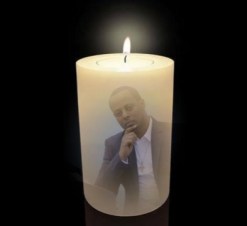
Kizito Mihigo Calvary: what he said before he was assassinated

One of motives to kill Kizito MIHIGO was to prevent him from talking about what he saw througout his ordeal. He had just discovered that all the Human Rights Watch’s reports on rights abuses, torture cases,.. which Kigali refuted all the time were true. He was ready to testify. Kagame’s men killed him. But it was to late he had managed to speak out.

The following text is an initial transcript of parts of the recordings he sent out to his contact whilst in prison.

This note was recorded on October, 6th, 2016. I am Kizito Mihigo. I am detained in the central prison of Kigali, officially called Nyarugenge prison, and alternatively called 1930, in reference to the year when it was built. In April 2014, after having composed and produced a christian song, I was kidnapped, detained and accused of plotting and conspiring against the regime and its president.

In fact, on March 5th, 2014 I had made public a new song titled “igisobanuro cy’urupfu”, (translation: explanation of death). And I published it on my youtube channel, on my personal website, and the official pages of my foundation. During the following days, I received insults, menaces and warning messages telling me that something bad was going to happen to me. I was also contacted several times by government officials, including the minister of culture, the chief of the criminal investigation department (CID), the responsible of culture in the ministry of defense, the executive director of the National Commission Against the Genocide (CNLG) and the office of the president. 

During his speech at the occasion of delivering new ranks to police officers on March 17th, 2014, the president had declared this: “I am not a singer to please the country’s enemies.” In the evening of April 1st, 2014 I was invited by the Chief of staff in the president office. The meeting took place in the office of the president of the senate. The current senate president at the time was vice president of the same institution. Both told me that the president had not liked my song. Therefore I had to apologise in writing to him. I had also to apologise to the population, which allegedly had been shocked by my song. At that meeting I tried to explain unsuccessfully that my song hadn’t been composed with the intention of harming anyone. It was rather a christian message which preached compassion, forgiveness and reconciliation to its audience.

The president’s chief of staff and the senate’s vice president told me that if I didn’t comply with what they were asking me to do, I was a dead man. Therefore I did what they had asked me, meaning apologizing to the president through a letter and the population through the media. The president’s chief of staff had reassured me that if I did what was asked from me, I wouldn’t have any more problems or face any other (translator emphasis – punitive) measures. 

But on April 06, 2014, between 10:00am and 11:00am, when, with my driver I arrived in front of the traffic lights located on the road between the Parliament building and the Rwanda Development Board (RDB) headquarters, a  person entered spontaneously into my car through an unlocked door. It was a policeman I knew. He ordered me to get out of my car and enter his. I went into his car. It was driven by another policeman that I also knew. They confiscated my phone, they told me that we were going to meet one of their superiors who wanted to talk to me. We didn’t go where they had mentioned, but instead we drove around the city of Kigali for tens of minutes. At the end I was taken to the police centre of Gikondo, generally known as Chez Gacinya.

I stayed there for nearly 30 minutes, in a conference room without anyone asking me anything. And when I tried to ask questions, nobody replied to me. I was thereafter put back into the car, then we drove towards Kicukiro. Before arriving at the destination, two individuals in civil uniforms joined us. They sat one on my left and the other on my right. The vehicle continued towards the Nyanza forest. The area is located in the city suburb in the direction leading to Bugesera.

I remained in the car parked in that forest, and surrounded by people I didn’t know and who were not talking to me. From midday until late evening around 8:00pm. Around 6:00pm, a thought came to my mind telling me that these people were going to kill me in that forest. My body was going to be discovered the following day, on April 07, the day of comemorating the 94 genocide. Then I said (to my kidnappers) that if the problem was my song, I had discussed the issue with the president’s chief of staff and the senate’s vice president. Within a few minutes, the car left the forest and I was again driven to the office of the senate’s vice president. I met with the same officials as before, but there was a third one this time, the deputy police commissioner.

They told me that, on top of the song, for which I was accused, they had found in my phone a whatsapp discussion where I exchanged views with someone from the opposition. And it was true. I had a conversation with someone from the opposition, and in our exchange we were very critical of the government. I knew that the Rwandan government didn’t like to be criticised. And for me it’s not a crime to criticise a government.

During that second meeting in the office of the senate’s vice president, I was seriously insulted by the three present personalities, and threatened of being killed. I said sorry. I was then told that I needed to continue asking for forgiveness, but that this time they were not sure if I was going to be forgiven. I was then taken to the car. Once inside, I had my head and face covered with a black balaclava. The vehicle was running but I couldn’t know where we were going. Within minutes, I found myself in a room with a bed, in a residential house, and I stayed there for nine days. 

I was handcuffed 24/7. I ate once every two days. On this very day while I am saying this, I can’t tell where that house/ prison is located. Because each time I was taken out or coming in, my head and face were always covered. I got seriously questioned in that house, and on several occasions. On April 10th for example, meaning four days after the kidnapping, I was taken to the office of the deputy police commissioner, Dan Munyuza, I was beaten up by policemen who were there, I was lying on the ground and getting hit on my back. Thereafter I was taken to a room at the offices of the prime minister. I found there many VIPs from the government. They asked me as well many questions about my song and my whatsapp conversation with a member of the opposition.

Up until April 15th, I stayed locked up in the same secret safe house. It was the same day that I was brought in front of the media. The deputy police commissioner came to me and said that if I continued asking for forgiveness publicly and pleading guilty for all the accusations against me, for the period of investigation and hearing in front of the court, things would be easier for me. On the other hand, if I pleaded not guilty and started denouncing all the injustices I had been victim of, I was going to be sentenced for life imprisonment. And I was certainly going to die in prison. He continued insisting on me pleading guilty on that day, before I appeared in front of the journalists. He explained that pleading guilty and asking for forgiveness, that’s how things will get easier for you, but if you start challenging the authority, pleading not guilty or denouncing your kidnapping or torture and other illegal practices inflicted unto you, you will get a life imprisonment.

I agreed on the terms of the arrangement. To the media and the judge I said that I was sorry for my deeds, but I couldn’t help saying that I only discussed with someone my song. During my hearing, nothing related to the song was mentioned, but I know well deep down that it is central to the whole saga. It was farther to its launch that I had been arrested, even if they hadn’t traced that conversation (with someone in the opposition), they would’ve caused me problems. That had already occurred uniquely because of that song.

On April 15th, after addressing the press, I was taken to the public attorney without a lawyer. The public attorney gave me one day to find myself a lawyer. During my hearing, I always pleaded guilty as I had promised. And on February, 27th 2015 I was sentenced to 10 years of imprisonment. I was told that I was guilty of all the accusations against me, except being complicit in acts of terrorism. Within 30 days after the sentencing, I introduced an appeal to the High Court and I am still waiting (on October 6th, 2016) to hear from them.

This note is recorded on February 8th, 2017 at the Central prison of Kigali, called 1930. I am Kizito Mihigo, detained since April 2014. Recently, exactly on January 21st 2017, I received the visit of the General Police Commissioner, Emmanuel Gasana, who came alone and I chatted with him in the office of the prison’s director. He explained to me that the motive of his visit was to ask me if I didn’t have any message to transmit to the highest authority of the country. I told him that the only message for him was to ask for forgiveness and be allowed to get back into society and become active again, pursue my musical activities. He asked me a few questions about my case. He asked me among other things why I had dared discussing with a member of the opposition, which is the main official offence for my imprisonment. I replied that I was frustrated. I disagreed with some government policies and actions. And that on a personal level I had also had opposing views with some political personalities. He asked me if there wasn’t any other way of solving issues which didn’t involve discussing with the opposition. I replied that I hadn’t anymore trust in the government, and that I needed someone who could understand me. He asked me if I wanted the president to forgive me or a presidential pardon. I said yes. I wanted to be forgiven, but that I wanted to be allowed to pursue my artistic and christian work, which promotes peace and reconciliation. I explained to him that by advocating for peace and reconciliation as an artist, I would be contributing to the work of the government for national reconciliation. After around ten minutes of conversation, the police commissioner left without saying goodbye. The same way as he had come in and didn’t greet me. I didn’t know exactly the motive of his visit, neither who had sent him. 

In conclusion, in my view, my case is political, with fabricated evidence. For example, I didn’t know the individuals who were brought to testify against me. I only knew Cassien Ntamuhanga who was a journalist. I find that there wasn’t any connection between our cases. But the prosecution needed those false witnesses to prove that I was guilty. And the evidence of such manipulation is that the witness called Jean Paul indicated to the judge in the courtroom that the police had tortured him telling him that he had to plead guilty to make Kizito become guilty. It was a political case, without any respect for proper legal procedures. It was characterised by many illegal practices, including torture, kidnapping, unauthorised detention. The arrest procedure was also illegal. Normally, when someone is arrested, they are told the motive of the arrest and shown a legal document authorising it. This wasn’t the case in my situation.”

The list of the people in high positions of authority in Rwanda, from government officials, to security forces and civilians, who tortured Kizito Mihigo directly and or indirectly by giving orders, includes the following names. The list is not comprehensive.
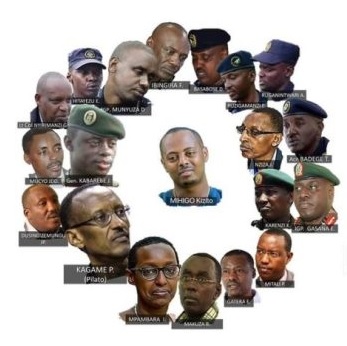
abishi

Paul Kagame, Protais Mitali, Gerard Nyilimanzi, Ines Mpambara, Bernard Makuza, Athanase Ruganintwali, Aphrodis, Dan Munyuza, Jean de Dieu Mucyo, James Kabarebe, Karenzi Karake, Jack Nziza, Fred Ibingira, Rurayi Gasana, Jean Pierre Dusingizemungu, and Egide Gatera.

Source: The Rising Continent


Avis aux lecteurs: Nos articles peuvent être reproduits à condition de citer le nom d'auteur et le site web source.
Notice to readers: Our articles may be reproduced provided the author's name and the source website are cited.

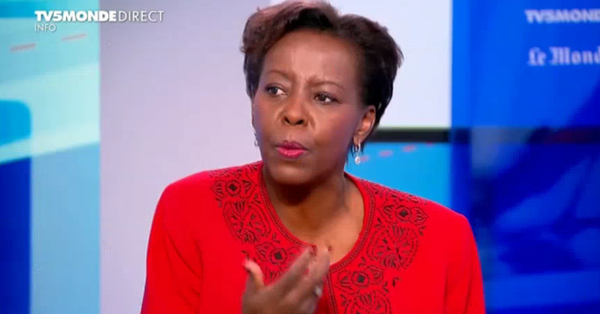
A son tour, Mushikiwabo crucifie Kizito Mihigo!

Le contraire aurait été étonnant. Après quelques semaines de silence imposé, Mushikiwabo ne va pas échapper à la question sur la mort de Kizito Mihigo. Comme on l’aurait deviné, Madame ne se donne pas la peine de feindre l’empathie envers celui qu’elle déshumanise pour le seul fait d’avoir réclamé la reconnaissance des victimes de crimes commis par le Front Patriotique Rwandais (FPR).

L’on reconnait la maîtresse de la diplomatie rwandaise au lendemain de la strangulation dans une chambre d’hôtel Sud-africain de l’ex chef espion rwandais, Patrick Karegeya. Comme tout âme bienveillante attribuait l’assassinat de Karegeya aux escadrons de la mort de Kagame, Mushikiwabo a fustigé ces accusations, sans pour autant manquer d’exprimer l’excitation (ou plus) que la mort de “l’ennemi” de son pays l’avait procurée.

Et qui pourrait oublier son arrogance inégalée lors du sommet France – Afrique tenu à Dakar en 2014? Lors de ce sommet le président français , François Hollande dans le temps, avait critiqué les dirigeants qui manœuvrent les Constitutions  de leurs pays en vue de s’éterniser au pouvoir. Mushikiwabo a vu le doigt pointé à Kagame, et a évacué les propos qui ne pouvaient que l’abaisser, sauf qu’elle s’en tapait, aussi longtemps qu’elle faisait plaisir à son chef. Une année plus tard Kagame a changé la Constitution pour se faire réélire président en 2017. Une autre histoire!

Cette fois-ci, Mushikiwabo tente de justifier l’assassinat de Kizito : “Ce jeune homme avait basculé dans une sorte de recherche de célébrité auprès de toute sorte d’individus qui n’étaient pas des gens qui voulaient du bien au pays”1.  En d’autres termes, la peine de mort “par pendaison” est décrétée à quiconque tente de (1) être une célébrité et/ ou (2) parle aux gens qui ne veulent pas du bien au pays. C’est bien noté Madame. Vous me rappelez un truc: j’ai entendu dire que le prétexte avancé lors du génocide contre les Tutsi était qu’ils s’associaient aux “individus qui n’étaient pas des gens qui voulaient du bien au pays”   et que, de ce fait, leur mort était justifiée. Je n’ai pas été d’accord avec ce prétexte, tout comme je n’achète pas vos conneries sur Kizito.

Chaste Gahunde


(1) Lemonde.fr


Avis aux lecteurs: Nos articles peuvent être reproduits à condition de citer le nom d’auteur et le site web source.                                                                                                          Notice to readers: Our articles may be reproduced provided the author’s name and the source website are cited.
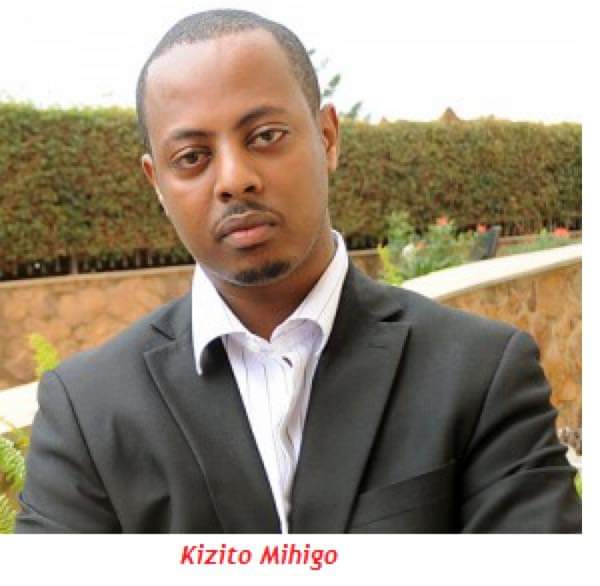
L’assassinat de Kizito Mihigo: Ines MPAMBARA risque la prison à vie.

IMG-20200217-WA0069

Depuis le 17 février 2020, le monde entier en général et les Rwandais en particulier n’ont cessé de pleurer le chantre de la réconciliation rwandaise, feu Kizito MIHIGO tué dans les locaux de la police rwandaise. Bien avant sa mort, pressentant le malheur qui le guettait, Kizito est parvenu à enregistrer le conte de son calvaire. Il a aussi pu sortir quelques manuscrits qui feraient objet d’un “bon” film d’horreur.

De son témoignage, nous connaissons désormais ses tortionnaires ainsi que tous leurs complices qui tôt ou tard ne pourront plus échapper à la justice. Parmi eux, une femme toute-puissante, seconde à la première dame du Rwanda: Inès MPAMBARA.

Directrice de cabinet du président KAGAME pendant près de 12 ans, Madame MPAMBARA se serait installée au Québec avec ses parents dans les années 1990 en provenance du Burundi, le pays d’exil de ses parents. Aujourd’hui elle a une double nationalité ( rwando – canadienne) à l’instar de son maître Kagame, rwando – ougandais.

Le Canada est intransigeant envers ses citoyens qui se rendent auteurs ou complices des crimes de guerre, génocides et crimes contre l’humanité, même si ces crimes sont commis en dehors des frontières. Ainsi l’article 6, de la loi sur les crimes contre l’humanité et les crimes de guerre (1)  stipule :

Quiconque commet à l’étranger une des infractions ci-après, avant ou après l’entrée en vigueur du présent article, est coupable d’un acte criminel et peut être poursuivi pour cette infraction aux termes de l’article 8:

a)génocide;

b) crime contre l’humanité;

C)crime de guerre.

Et l’article 8 :

 Quiconque est accusé d’avoir commis une infraction visée aux articles 6 ou 7 peut être poursuivi pour cette infraction si l’une des conditions suivantes est remplie :

a) à l’époque :

(i)soit lui-même est citoyen canadien ou employé au service du Canada à titre civil ou militaire,

(ii) soit lui-même est citoyen d’un État participant à un conflit armé contre le Canada ou employé au service d’un tel État à titre civil ou militaire,

(iii) soit la victime est citoyen canadien,

(iv) soit la victime est un ressortissant d’un État allié du Canada dans un conflit armé;

b)après la commission présumée de l’infraction, l’auteur se trouve au Canada.

Le paragraphe 3 de l’article 6 définit le crime contre l’humanité comme: meurtre, extermination, réduction en esclavage, déportation, emprisonnement, torture, violence sexuelle, persécution ou autre fait — acte ou omission — inhumain, d’une part, commis contre une population civile ou un groupe identifiable de personnes et, d’autre part, qui constitue, au moment et au lieu de la perpétration, un crime contre l’humanité selon le droit international coutumier ou le droit international conventionnel ou en raison de son caractère criminel d’après les principes généraux de droit reconnus par l’ensemble des nations, qu’il constitue ou non une transgression du droit en vigueur à ce moment et dans ce lieu“.

Quant aux peines, quiconque commet ce genre d’infractions, (dans le cas de Kizito MIHIGO, madame Inès MPAMBARA) est passible de l’emprisonnement à perpétuité.

Chaste GAHUNDE


(1) https://laws-lois.justice.gc.ca/fra/lois/  

Avis aux lecteurs: Nos articles peuvent être reproduits à condition de citer le nom d’auteur et le site web source.

“Yolande MUKAGASANA’s remarks on Kizito MIHIGO made me sick” – Venant NKURUNZIZA.

“Kizito, I don’t judge your deed. See how your death is being exploited by the enemies of your homeland. Nothing is more destructive than never being satisfied with who you are and what you have.”

yomu

Yolande MUKAGASANA  

Reading the above statement of Yolande Mukagasana I become not only shocked but also sick. Imagine someone who doesn’t care about someone’s death but she cares only about how the so called enemies of KIZITO MIHIGO’s homeland believed in him for being the true man of peace and reconciliation!

It sounds like Yolande Mukagasana saw the unexpected, wondering how a simple Tutsi such as Kizito Mihigo was loved and respected by many Rwandans Hutu and Tutsi alike, inside and outside of Rwanda, and even by foreigners. Something which has never happened to any high authority. Continue reading

Mu ijwi rye bwite, KIZITO MIHIGO yavuze abamukoreye iyicarubozo.

Mu gice cya mbere cya filime mbarankuru, documentaire twateguriwe kandi tugezwaho n’umuryango mpuzamahanga uharanira uburenganzira bw’abanyarwanda , Global Campaig for Rwandans’ Human Rights ufite icyicaro mu Bwongereza.


Source: Global Campaign for Rwandans’ Human Rights

Lyon, France: Le tortionnaire de Kizito MIHIGO dans les remparts d’Interpol.

De sa propre voix, alors qu’il était en prison, feu Kizito Mihigo a déclaré qu’avant sa détention illégale, il avait été torturé, les généraux de l’armée et les hauts fonctionnaires, tels que les ministres, le vice-président du Sénat rwandais se sont relayés pour le torturer . Parmi eux Continue reading

An Interpol officer involved in Kizito Mihigo’s death.

In his own voice, while he was in prison, the late Kizito Mihigo stated that prior to his unlawful detention, he was tortured, the generals and those high ranking officials, such as ministers, the Vice President of Rwandan  senate took turn in torturing him. Notable Among them is a woman called Ines Mpambara, who was the chief of staff in Kagame’s office. Continue reading

Rwanda : Kizito Mihigo was killed for acknowledging that Hutu are human.

IMG-20200223-WA0023Rwanda: Kizito was not killed for preaching the sole peace and recociliation, rather for acknowledging that Hutu are humans.

How many sang peace and reconciliation and were killed for it? No one. The message from National Unity and Reconciliation, isn’t about peace and reconciliation? Pastor Rutayisire doesn’t teach peace and reconciliation? How about Gitwaza and all churches, etc ? Aren’t they safe?
Now it must be clear in all your heads.

Kizito Mihigo was not killed because he sang peace and reconciliation. His only sin was that he dared say ” Na bo ni abantu, ndabazirikana” Meaning, they are also humans, I think of them.
Rwandans from hutu families are not allowed to express their sufferings and their mistreatment. Not only Kizito Mihigo, whoever else will say it openly, will face consequences.

Because that is the political pillar of the RPF: dehumanize the Hutu, negate their existence, diabolize them in order to control the power. Kizito was killed for the sole reason that he acknoweledged that Hutu are human, that their victims must be commemorated as it is done for Tutsi victims, no matter what kind of death they faced.

I call on all citizens of goodwill to distance themselves from this satanic mindset, rebuke the RPF regime, and know that our diversity constitutes more an advantage than a disadvantage.

Being Hutu or Tutsi is not a crime, it is rather our social construct on which we can build an equal and equitable society by cooperation and “comparative advantage”.
May the blood of Kizito Mihigo help us grasp this great principle.

Chaste Gahunde

ISHEMA Party : 17 Gashyantare, umunsi ngarukamwaka w’ubwiyunge witiriwe Kizito Mihigo.

IMG-20200302-WA0017

TUGENNYE KO ITARIKI NGARUKAMWAKA YA 17 GASHYANTARE IBAYE “UMUNSI W’UMURAGE W’UBWIYUNGE” WITIRIWE KIZITO MIHIGO.

ITANGAZO RIGENEWE ITANGAZAMAKURU N° Ish 2020/02/001

Nyuma yo kumenyeshwa inkuru y’incamugongo y’urupfu rutunguranye kandi ruteye agahinda rwa Kizito MIHIGO,

Komite Nyobozi y’Ishyaka Ishema ry’u Rwanda yateranye kuwa 23/02/2020 iyobowe na Nyakubahwa Claire Nadine KASINGE tuzirikana ubutwari bwaranze ubuzima bwa Nyakwigendera Kizito MIHIGO.

Abataripfana bari muri iyo nama banzuye ibi bikurikira:

1.       Kizito MIHIGO ntiyiyahuye nk’uko byakwirakwijwe n’ubutegetsi bwa RPF/INKOTANYI, ahubwo yahotowe n’ubwo butegetsi, ku itegeko rya Paul Kagame.

2.       Twamaganye twivuye inyuma uyu muco mubi w’ubwicanyi wokamye Leta ya Paul Kagame n’Agatsiko ke kigaruriye Ishyaka rya FPR/INKOTANYI bakaba barihaye intego mbisha yo kurimbura abenegihugu bose badashyigikiye politiki ruvumwa y’irondakoko  bubakiyeho ubutegetsi bwabo.

3.       Turashimira byimazeyo intwari Kizito MIHIGO kubera ibikorwa bye by’indashyikirwa byubatse inkingi z’ubwiyunge nyakuri mu myunvire y’abanyarwanda benshi.

4.       By’umwihariko, turemera kandi turashimangira ko Kizito MIHIGO yishwe azira ubutumwa bwubaka bukubiye mu ndirimbo ye yise “Igisobanuro cy’urupfu”, aho atinyuka kwemeza ko amahoro arambye n’ubwiyunge nyabwo bizagerwaho ari uko Abahutu nabo bahawe uburenganzira bwabo bwose nk’abenegihugu ndetse n’ababo bishwe na RPF/INKOTANYI bakajya bibukwa uko bikwiye.

Mu rwego rwo gusigasira uwo murage mwiza adusigiye:

5.       Tugennye ko itariki ngarukamwaka ya 17 Gashyantare ibaye “Umunsi w’Umurage w’Ubwiyunge” witiriwe Kizito MIHIGO.

6.       Dusabye Abataripfana n’abanyarwanda muri rusange kujya bitabirana ishema uwo munsi, aho bari hose, bamurika intambwe bateye mu kugera ikirenge mu cy’iyo ntwari.

7.       Twiyemeje ko mu gihe rubanda izaba yatwizeye ikadushinga kuyobora igihugu, tuzubaka Bazilika y’akataraboneka tukayita “Ingoro y’Ubwiyunge”, ikazashyingurwamo abanyarwanda bose bishwe kuva taliki ya 1 Ukwakira 1990 kandi tukazayitirira intwari Kizito MIHIGO.

8.       Tuzaharanira twivuye inyuma ko umuryango wa Kizito MIHIGO, kimwe n’indi miryango yose yabuze abayo, uhabwa impozamarira n’ubutabera bunoze bityo abagize uruhare bose mu kwica iyo ntwari y’u Rwanda cyangwa mu bundi bwicanyi bwose bakazafatwa bakabiryozwa.

9.       Mu gusoza twihanganishije umuryango n’umubyeyi wibarutse iyo ntwari y’igihugu, dufatanya gushimira Imana yamuhaye u Rwanda ho impano y’akataraboneka.


Bikorewe i Montréal, ku wa 27 Gashyantare 2020

Mme Claire Nadine KASINGE

Perezida w’Ishyaka Ishema ry’u Rwanda

logo ishema