Twaganiriye na Madame KAYIJUKA Emérance ajya impaka na Jean Jacques BOSCO ku gikwiye gukorwa ngo “NEVER AGAIN” ireke kuba mu mvugo gusa.

Buriya butegetsi si ubw’abatutsi, ni ubw’agatsiko ka FPR – Madame KAYIJUKA Emerance
Leave a reply

Twaganiriye na Madame KAYIJUKA Emérance ajya impaka na Jean Jacques BOSCO ku gikwiye gukorwa ngo “NEVER AGAIN” ireke kuba mu mvugo gusa.
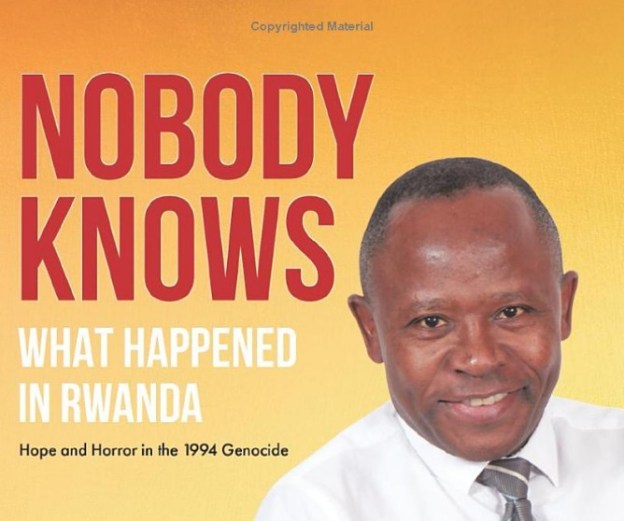
Jean Jacques BOSCO aratubwira uko byagenze muri Kaminuza ya MUDENDE.
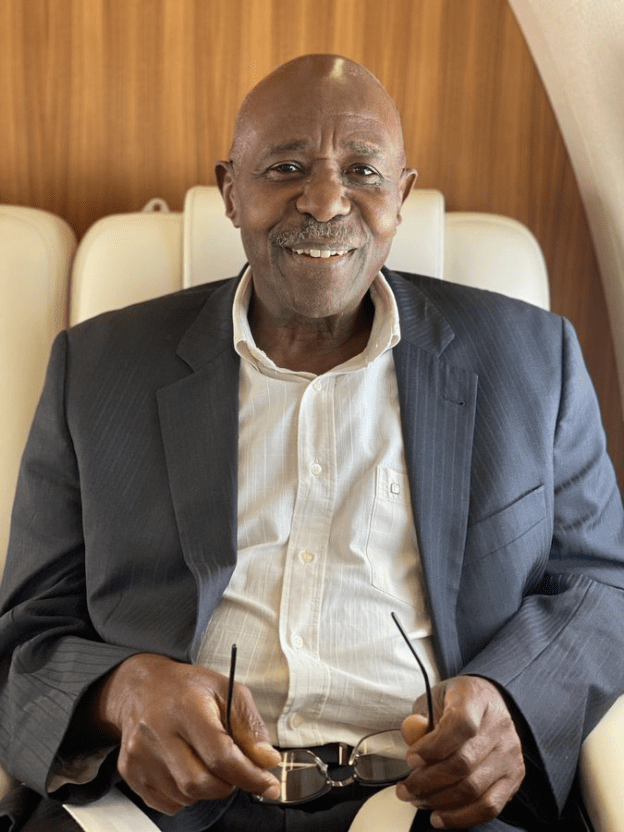
Paul Rusesabagina, who hid more than 1,000 potential victims of genocide in Rwanda in 1994, has come home to San Antonio.
Kidnapped and imprisoned for 2½ years by a Rwandan regime lambasted by the European Union for its human rights abuses, Rusesabagina, 68, was released last weekend and landed Wednesday afternoon at Houston’s George Bush Intercontinental Airport. From there, he was to enter Brooke Army Medical Center in San Antonio.
“They have LANDED!” Kathleen Tobin Krueger, wife of the late Ambassador Robert Krueger and a close friend of the Rusesabagina family, said in a text message just before 4 p.m.
At BAMC, he’ll be cared for in a facility known for its treatment of former prisoners of war and hostages. Its patients have included three Americans held captive for five years by rebels in Colombia and WNBA star Brittney Griner, who was released in December from a Russian penal colony where she was held on drug charges.
Continue reading
Comment la théorie de Paul Kagame d’user de son droit d’ intervenir partout où les “rwandophones” seraient menacés dans le monde, est non seulement absurde mais surtout dangereuse.
Rwandophones? Une mise au point sémantique
Ces derniers temps quand Paul Kagame parle de “rwandophones”, il veut en réalité parler de Tutsi et pas de tous les locuteurs du Kinyarwanda. Ceci pour tenter de se tirer de la contradiction que soulèverait son décret annonçant que les ethnies Hutu, Tutsi et Twa n’existeraient pas au Rwanda ni ailleurs, et en même temps continuer à dire qu’il est en croisade pour défendre les intérêts des Tutsi partout dans la région comme il le chantait depuis 1990-94 en conquérant le Rwanda. Ses conseillers lui ont donc convaincu de changer d’appellation et de parler de “rwandophones” en lieu et place des “Tutsi”. Mais, ce faisant, il rend cette mission qu’il s’est fixée, à savoir “défendre les rwandophones partout dans le monde”, plus ridicule et plus encore dangereux comme nous allons le voir.
Il faudra donc lire et entendre dans le vocable “rwandophones” venu de la bouche ou de la plume de Kagame , les “Tutsi”.
Continue reading
Il y a lieu de se demander où se situe la responsabilité de la RDC sur cette question. Il s’agit bel et bien d’une question rwandaise qui stipule une réponse appropriée du Gouvernement rwandais élude sa responsabilité depuis des décennies, la renvoyant paradoxalement au gouvernement de la RDC, avec la compréhension complaisante et la fuite en avant de la communauté internationale.
Faut-il rappeler, aussi douloureux que soit ce souvenir, que le génocide de 1994 au Rwanda, s’est passé entre Rwandais, sans aucune implication des Congolais.
Continue reading
Last year, the world was shocked to learn that Rwandan President Paul Kagame was using Israeli spy software, Pegasus to spy on his perceived enemies. They include Americans. One American citizen he targeted is Carine Kanimba. She found out the security on her phone had been compromised when she was in Belgium advocating for her father’s release.
Kanimba said, “It was bad enough that they kidnapped my father, tortured him, and robbed him of his legal rights. Now we find out that they have listened to my conversations with the US State Department, Belgium Foreign Minister Sophie Wilmes, and our attorneys. This adds insult to injury.”
Continue reading
Paul Rusesabagina is serving 25 years in prison in Rwanda on terrorism charges which his supporters say are a sham.
Published On 30 Apr 2022
The family of Paul Rusesabagina, whose heroism during the 1994 Rwandan genocide was depicted in the Hollywood film Hotel Rwanda, have filed a $400m lawsuit in the US over his alleged abduction and torture by the government in Kigali.
The lawsuit names the government of Rwanda, President Paul Kagame, and other senior officials including the former justice minister and intelligence chief.
“The complaint alleges that the Government of Rwanda and high-ranking Rwandan officials conspired to facilitate and execute an elaborate plot to lure Paul Rusesabagina from his home in Texas to Rwanda, where he would be tortured and illegally detained,” the family and his lawyers said in a statement on Saturday.
Continue reading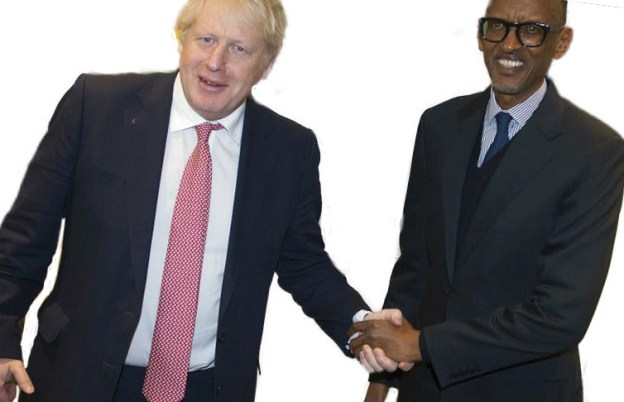
Jeudi le 14 avril 2022, tous les principaux médias occidentaux ont diffusé la nouvelle faisant état de la signature entre le Royaume Uni et le Rwanda d’un accord selon lequel tous les demandeurs d’asile en Grande Bretagne qui auraient atteint ce pays illégalement seraient dorénavant expulsés et déportés au Rwanda.
Les réactions ont été nombreuses à travers le monde. Que ce soit au Royaume Uni-même où les partis d’opposition ont critiqué cet accord ou dans les ONG qui l’ont dénoncé aussi. Même le HCR, chargé de veiller sur la protection des réfugiés partout dans le monde, mandat qu’il tient en tant qu’organe des Nations Unies, l’a dénoncé.
Au-delà des considérations juridiques et humanitaires que relèvent ces instances, il y a lieu de souligner aussi et faire observer les dessous des cartes dans ce marché en ce qui concerne Paul Kagame et sa clique au pouvoir à Kigali mais aussi Boris Johnson et son gouvernement conservateur. Tel est l’objet du présent article.
L’accord avec le Rwanda, qui sera financé par le Royaume Uni à hauteur 120 millions de livres (144 millions EUR), prévoit que les migrants – dont ni les nationalités ni les conditions d’arrivée ne sont pas précisées – soient « intégrés dans les communautés à travers le pays », selon le communiqué publié par Kigali.
Continue reading
(Nairobi) – Judicial authorities in Rwanda are prosecuting opposition members, journalists, and commentators on the basis of their speech and opinions, Human Rights Watch said today. Throughout 2020 and 2021, Human Rights Watch monitored trials in which judicial authorities pursued politically motivated prosecutions and perpetuated a culture of intolerance of dissent.
Less than two years out from the 2024 presidential election campaign season, the Rwandan government should ensure an end to violations against civil society activists, journalists, and opposition figures. The government should also protect their right to freedom of expression – a precondition to creating a conducive environment for free and fair elections.
“Judicial authorities in Rwanda, lacking the independence to stand up and protect free speech in accordance with international law, have unjustly convicted and jailed people based on their protected speech and opinions,” said Lewis Mudge, Central Africa director at Human Rights Watch. “All those jailed unjustly should be immediately and unconditionally released, and the abusive legal framework that allowed their prosecution should be reviewed and brought in line with international free speech standards.”
Since the publication of a March 2021 report on the arrests of, and threats against, several Rwandans for posts on YouTube, Human Rights Watch has monitored trials and reviewed trial documents and verdicts to examine the evidence and arguments of prosecutorial authorities, and the basis for judges’ rulings.
Researchers also reviewed content published on various channels managed by journalists and commentators on trial and interviewed 11 opposition members and people who post on YouTube. The cases documented are not exhaustive – Human Rights Watch also received information about other similar cases.
On March 3, 2022, Human Rights Watch wrote a letter to Justice Minister Emmanuel Ugirashebuja to share information about the cases it has documented and to request information on the Rwandan authorities’ steps to address violations of the right to freedom of expression. The government has not responded.
Rwanda has very few opposition parties, and human rights organizations and independent media remain weak. Victoire Ingabire, who was the president of the unregistered opposition party FDU-Inkingi before founding Dalfa-Umurinzi in November 2019, was released from prison in 2018. Members of her party have repeatedly been harassed, threatened, and arrested, or have died or disappeared in suspicious circumstances. Since October 2021, at least eight members of her party have been arrested and charged with offenses, including spreading rumors and forming a criminal association, in relation to a book they acquired and an online training session they attended to learn strategies for peaceful dissent.
Journalists using YouTube as a platform have also been targeted for prosecution for not registering with the Rwanda Media Commission (RMC) or for publishing information that contradicts the government’s version of certain events, such as the suspicious death in custody of Kizito Mihigo, a gospel singer and activist, or disappearances of government opponents.
The cases of Dieudonné Niyonsenga – alias Cyuma Hassan – and Théoneste Nsengimana, which Human Rights Watch documented, could further erode journalists’ legal protections and narrow the space for media and online speech. Niyonsenga, a high-profile YouTuber, was found guilty on appeal of forgery, impersonation, hindering public works, and “humiliation of national authorities and persons in charge of public service.” The last charge, which was added during the first appeal, is no longer a criminal offense in Rwanda. The prosecution authority announced it was lodging a “second appeal” to correct the error. Its verdict is expected on March 18. On March 9, Human Rights Watch received reports and confirmed that Ishema TV was no longer available on YouTube. At time of writing, it is unclear whether the channel was removed voluntarily.
Since 1994, speaking about crimes committed by the ruling Rwandan Patriotic Front (RPF) in the aftermath of the genocide, or sometimes even simply commemorating Hutu who were killed during the genocide, is perceived as crossing a red line, with the government presenting it as a threat to Rwandan unity, or the country’s security as a whole.
“When you are pro-government, you don’t have any problems. When you talk about bad things, you become persecuted, you are a genocide denier,” one YouTuber told Human Rights Watch.
Another said, “They take one word, and they create a crime for you…. Here, the problem is talking the truth. If you do, they go after you.”
The Rwandan government may have legitimate grounds to seek to restrict the kind of dangerous, vitriolic speech that led to the deaths of over half a million people in 1994, but current laws and practices go far beyond this purpose – creating fear and effectively stifling opinions, debate, and criticism of the government.
As Rwanda approaches the 30-year mark since the genocide, and the government aims to ramp up efforts to combat genocide ideology, there is a need to ensure that Rwandans can peacefully express legitimate grievances related to the genocide and post-genocide periods, Human Rights Watch said.
Article 38 of the 2015 Constitution protects freedom of expression but limits that protection by permitting ill-defined restrictions based on “public order, good morals, the protection of the youth and children, the right of every citizen to honor and dignity and protection of personal and family privacy.” The government, with the support of the judiciary, has used this clawback clause to impose restrictions on freedom of expression in ways that are incompatible with Rwanda’s regional and international obligations.
As Rwanda prepares to host the Commonwealth Heads of Government Meeting, scheduled to take place in June, the international community should take a stand and press the authorities to stop harassing, immediately release, and drop all charges against opposition members, YouTube commentators and journalists facing abusive prosecutions that violate freedom of expression. The authorities should also open credible, independent, and transparent investigations into suspicious deaths and disappearances of critics, opposition members, civil society actors, and journalists, and prosecute those responsible.
“The evidence provided by the prosecuting authorities, and what judges have chosen to rely on to justify their conclusions, clearly demonstrates that these cases violate African and international human rights law,” Mudge said. “Prosecuting those who challenge the government of incitement to insurrection or of attempting to tarnish the country’s image is an indication of how little dissent is tolerated in Rwanda.”
For details of the recent cases, please see below.
Cases Against the Political Opposition
In October 2021, at least eight members of Victoire Ingabire’s opposition party, Dalfa-Umurinzi, were arrested in the largest crackdown against the party in recent years. Sylvain Sibomana, Alexis Rucubanganya, Hamad Hagenimana, Jean-Claude Ndayishimiye, Alphonse Mutabazi, Marcel Nahimana, and Emmanuel Masengesho were all detained in the days leading up to and following “Ingabire day,” scheduled for October 14.
On that day, Ingabire was planning to speak about political repression in Rwanda, cases of suspicious deaths, killings, disappearances, and abusive prosecutions. Théoneste Nsengimana, a journalist who was planning to cover the event, was arrested on October 13 and is being tried with the group of seven.
Criminal charges of “spreading false information or harmful propaganda with intent to cause a hostile international opinion against Rwandan government” and “formation of or joining a criminal association” were brought against Sibomana, Rucubanganya, Hagenimana, Ndayishimiye, Mutabazi, Nahimana, and Masengesho. On November 9, during a pretrial hearing, the Kicukiro court said it is also considering evidence to support other, undetermined charges against them. The prosecution contended that the defendants were also responsible for inciting insurrection.
Claudine Uwimana, a party member who was arrested on December 14 in Rutsiro, is being tried separately. She is charged with spreading false information, publishing rumors, forming a criminal association, and inciting insurrection, and has been denied bail.
The arrests send a clear message to those who may wish to mobilize, organize, or campaign on a political platform in the lead-up to the elections that efforts to peacefully change the power structures in place can be considered a criminal offense, Human Rights Watch said.
In both cases, the prosecution based its accusations on the group’s decision to acquire “Blueprint for Revolution,” a book written by Srdja Popovic, and to follow a training organized by the author’s organization, Canvas – the Center for Applied Non-Violent Actions and Strategies. Both the book and the training focus on peaceful strategies to resist authoritarianism, such as nonviolent protest, noncooperation, boycott, and mobilization. The prosecution used as evidence the contents of the book and training, the use of Jitsi – an encrypted online communication platform – and the use of pseudonyms during the training.
The prosecution also accused the group of planning activities such as mobilizing, among others, street vendors and others who are routinely rounded up and subjected to abuse, and a commemoration of political activists and critics who have died, disappeared, or been jailed, on “Ingabire Day,” based on the strategies proposed during the training.
Social protest and mobilization offer people the opportunity to peacefully communicate legitimate complaints and grievances. Governments have a responsibility to create a safe and enabling environment for individuals and groups to exercise their rights to freedom of peaceful assembly, of expression, and of association.
Journalists Under Threat
Dieudonné Niyonsenga
Dieudonné Niyonsenga, also known as “Cyuma Hassan,” runs Ishema TV, a popular YouTube channel on which he has published his sensitive and critical reports. Ishema TV has millions of views, and Niyonsenga is one of the most popular YouTube contributors in Rwanda.
In April 2020, police arrested Niyonsenga and his driver, Fidèle Komezusenge, as they were reporting on the impact of the Covid-19 guidelines on vulnerable populations in a poor neighborhood of Kigali. Niyonsenga and Komezusenge were accused of forgery, impersonating journalists, and hindering public works for being outside during lockdown without a valid RMC-issued press card. Both spent almost a year in detention, but then were acquitted on March 12, 2021. After his release, Niyonsenga gave several interviews on YouTube describing his treatment in detention. In one, he said:

Ces derniers temps la France est en train de perdre son influence dans ce que l’on a appelé son « pré carré africain » à savoir les anciennes colonies françaises. Pour garder la face, elle a décidé de recourir au régime rwandais connu pour être une dictature sanguinaire sous la gouvernance du Front Patriotique Rwandais (le FPR) dirigé par Paul Kagame. Ce dernier est aidé par des oligarques composé majoritairement des hauts gradés de l’armée rwandaise. C’est dans cet optique que chef d’état-major français des armées le général Thierry Burkhard reçoit en ce moment une délégation composée des Officers rwandais à sa tête le chef d’Etat major de l’armée rwandaise Jean Bosco Kazura. La visite a commencé le 14 et terminera le 17 mars 2022.
Le passé criminel de Jean Bosco Kazura
Si l’on en croit sa page Wikipédia[1] Kazura a rejoint l’armée patriotique rwandaise en 1992 et a occupé les fonctions de général de brigade et de division entre 1998 et 2003, les années durant lesquelles l’Armée Patriotique Rwandaise a décimé des milliers de civils hutus au Nord du Rwanda dans la guerre dit des infiltrés (Abacangezi) et en République Démocratique du Congo. Wikipedia citant le journal Foreign Policy paru en en décembre 2013 nous apprend que Jean Bosco Kazura : « Est l’auteur de crimes de guerre durant la phase finale du conflit [génocide et guerre civile au Rwanda], agissant comme commandant d’escadrons de la mort, sous le commandement de Patrick Nyamvumba, en compagnie de John Birasa et d’Emmanuel Butera. Le « bataillon Oscar », avec Kazura à sa tête, est chargé de ratisser les campagnes des préfectures de Byumba et Kibungo. Selon certains témoignages, Kazura a organisé et assisté en juin-juillet 1994 à des tueries de civils hutus à Nasho, Rutonde, Rwanteru, ainsi qu’à des opérations d’épuration de l’administration en 1995 et 1996, les accusations portant même sur une implication personnelle dans l’assassinat et l’incinération des corps ».
Continue reading GAHUNDE