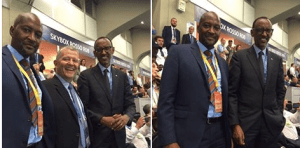
KUJYA GUKORERA POLITIKI MU RWANDA: Umukandida wa Opozisiyo Padiri Thomas Nahimana n’ intumwa ayoboye bakiriwe n’Ubuyobozi bwa COMMONWEALTH.


Commonwealth delegation

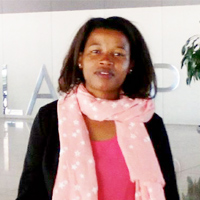
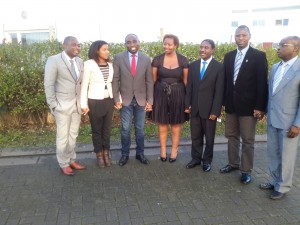
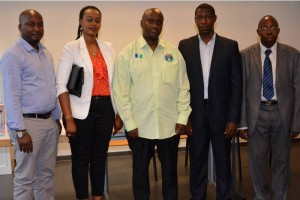
1. Nyuma y’ingendo z’ingirakamaro zakorewe mu bihugu bya Australia, Leta zunze ubumwe z’Amerika na Canada ndetse no mu muryango w’ubumwe bw’ibihugu by’Uburayi, Nyakubahwa Padiri Thomas Nahimana, umukandida wa Opozisiyo mu matora ya Perezida wa Repubulika azaba mu 2017, hamwe n’intumwa ayobowe bakiriwe n’Ubunyamabanga bw’Umuryango wa Commonwealth, kuri uyu wa mbere taliki ya 4 Nyakanga 2016.

2. Muri uru ruzinduko bakoreye i Londres mu Bwongereza, guhera taliki ya 3 kugeza ku ya 5 Nyakanga 2016, Nyakubahwa Padiri Thomas Nahimana yari aherekejwe na Délégation y’abarwanashyaka batandatu bahagarariye Ishyaka ISHEMA na Coalition ya Nouvelle Génération.

3.Impamvu nyamukuru yagenzaga aba Bataripfana ni ugusobanurira byimbitse ubuyobozi bwa Commonwealth ibibazo bikomeye bihangayikishije abaturage muri iki gihe cyana cyane urubyiruko bikanabuza Demokarasi gutera imbere mu Rwanda, bikaba bishingiye ahanini ku miyoborere mibi y’Abategetsi b’igihugu bakomoka mu Ishyaka rukumbi rya FPR n’abambari baryo batagihisha ko bashaka kwihambira ku butegetsi ubuziraherezo hagamijwe gukomeza kwikubira ibyiza byose by’igihugu.

4.Indi ngingo ibiganiro byibanzeho ni iyerekeye amatora y’ Umukuru w’igihugu n’ay’ Intumwazarubanda ateganyijwe mu mwaka w’2017 n’uw’2018, Ishyaka ISHEMA ry’u Rwanda rikaba ryarafashe umwanzuro udakuka wo kuzayagiramo uruhare. Hasobanuwe inzitizi zose Ishyaka rya FPR Inkotanyi rigenda rishyiraho hagamijwe cyane cyane kubangamira no kwigizayo abakandida nyakuri ba Opozisiyo.

5.Bashyikirije ubuyobozi bwa Commonwealth ingingo z’ingenzi zubakiyeho Umushinga wa politiki witwa  » Together to modernize Rwanda » (Kunga Abanyarwanda kugira ngo bafatanye kwiyubakira u Rwanda-moderne »; Rassembler pour moderniser le Rwanda ) umukandida Padiri Thomas Nahimana ateganya gushyikiriza Abanyarwanda mu minsi ya vuba aha.

6.Reka twibutse ko U Rwanda rwinjiye mu muryango wa Commonwealth mu mwaka w’2009, Leta ya Paul Kagame ikaba yari yijeje uwo muryango ko izakora ibishoboka byose, igashingira imiyoborere y’igihugu ku mahame n’indangagaciro z’uwo muryango arizo Demokarasi (Democracy) imiyoborere myiza ( Good governance), igihugu kigendera ku mategeko abereye abenegihugu ( Rule of law), kubaha uburenganzira bw’ikiremwamuntu (Human rights), n’iterambere rirambye kandi risaranganyijwe ( Social and economic development).

7.Nyakubahwa Padiri Thomas Nahimana na Delegation bajyanye mu butumwa barashimira babikuye ku mutima Abayobozi bakuru ba Commonwealth ku kuba babakiriye neza, bakabatega amatwi, bakaganira mu mutuzo no mu bwubahane.

Harakabaho ISHEMA ry’u Rwanda na Nouvelle Génération,

Harakabaho Repubulika y’u Rwanda,

Harakabaho umuryango wa COMMONWEALTH

logo-300x135commomwealth logo

Twizihize Isabukuru y’ubwigenge duharanira kwitorera abayobozi batunyuze mu 2017

logo-300x135

TWIZIHIZE ISABUKURU Y’UBWIGENGE BW’ U RWANDA DUHARANIRA KWITORERA ABAYOBOZI BATUNYUZE MU 2017.

1.Birakwiye kandi biratunganye kwizihizanya ishema ryinshi isabukuru y’Ubwigenge bw’U Rwanda ku ncuro ya 54. Buri munyarwanda wese, aho ari hose ,akwiye rwose kwerekeza umutima ku mateka y’igihugu cye, akibuka uko cyavuye mu maboko y’Umukoloni, kigahabwa ijambo mu ruhando rw’amahanga, akibukana icyubahiro kandi akishimira Abalideri bitanze ngo ubwigenge bw’u Rwanda bugerweho barimo Nyaguhorayibukwa Gregoire KAYIBANDA na bagenzi be.

2.Ukwigenga k’u Rwanda si amateka akwiye gucamo Abanyarwanda ibice. Utazi aho yavuye ntamenya aho ageze n’aho yerekera. Uwiha guhinyura ubwigenge bw’u Rwanda cyangwa kubunenga ari mu ruhande rw’ikinyoma. Ukutigenga k’u Rwanda nta wundi kwari gufitiye inyungu uretse Umukoloni na gashakabuhake.

Ku isabukuru nziza nk’iyi birakwiye kwibukiranya ibihe by’ingenzi cyane by’amateka yacu tutagomba kwibagirwa.

3.Nyuma y’Italiki ya mbere Nyakanga 1962, abategetsi ba Repubulika ya mbere n’iyakabiri bakoze uko bashoboye bubaka ibikorwa byinshi by’iterambere ryafashije abaturage mu buryo bwinshi: amashuri,amavuriro, imihanda, amazi meza, amashanyarazi, amasoko, ibibuga by’indege, amazu y’ubuyobozi, n’ibindi. Kubihakana ni ukwirengagiza nkana amateka y’u Rwanda.

4.Kuva ku munsi w’ubwigenge kugera mu 1990, abayobozi b’igihugu cyacu bakoze n’amakosa atari make kandi akomeye yaje kugira ingaruka zikomeye mu gusenya ibyiza bari bararushye bubaka. By’umwihariko ntibashoboye gukumira no guhashya burundu amacakubiri ashingiye ku irondakoko n’irondakarere yabangamiye cyane ukwishyira n’ukwizana kwa bamwe mu benegihugu. Kubyirengagiza byasa no guhingira ku rwiri.

5.Naho guhera taliki ya 1/10/1990 igihugu cyinjiye mu ntambara y’amasasu isenya kandi ikica yatangijwe ku mugaragaro n’Ishyaka FPR-INKOTANYI. Guhera uwo munsi ntitwahwemye kwicirwa abacu no gusenyerwa ibyiza by’iterambere. Jenoside, itsembatsemba. ….byatutumazeho abantu hasigara « imfungwa, imfubyi n’amatongo « !

1962_IndependanceRwanda-300x209

6.Nyuma ya Nyakanga 1994 , FPR yifatiye ubutegetsi bwose, iyoboresha igitugu n’iterabwoba rikaze, yibagiza Abanyarwanda igisobanuro cy’ubwigenge baronse taliki ya 1 Nyakanga 1962 n’ukwisanzura kwa buri munyarwanda kwari ngombwa.

7.Hari ibikorwa by’iterambere bitari bike FPR yubatse muri iyi myaka 21 imaze ku butegetsi. Kutabyemera ni ukwigiza nkana cyangwa kwitiranya ibibazo.Ikibazo nyamukuru si ibikorwa byiza biriho kandi bigaragara, ikibazo ni ukumenya neza uwo bifitiye akamaro, no kumenya niba bizaramba!

8.Kuri iyi Sabukuru ngarukamwaka y’ubwigenge bw’u Rwanda, biragaragara kandi ko ikibazo cy’amacakubiri ashingiye ku irondakoko n’irondakarere ntaho cyagiye. Leta ya FPR-INKOTANYI ntiyashoboye kuyakumira no kuyarandura burundu. AHUBWO ndetse bigaragarira bose ko Ubutegetsi bw’igitugu bwa FPR bwakomeje kuyacirira, kuyahembera no kuyongerera ubukana. Ibyemezo byinshi bifatwa n’ubutegetsi bikitwa « Gahunda za Leta » nibyo bishyidika icyo kibazo.

9.Ishyaka ISHEMA ry’u Rwanda rirahamagarira Abanyarwanda cyane cyane urubyiruko kutibagirwa ko ubwigenge bw’igihugu(Independence) n’ « Ukwishyira ukizana kwa buri mwenegihugu (Freedom) arizo ndangagaciro zisumba izindi zituma abaturage bashobora kubana mu gihugu kimwe, bareshya kandi batekanye. Bityo rero ubutegetsi bwose bwimika ubusumbane, ivangura n’iterabwoba bukaba budashobora kugeza igihugu ku iterambere rirambye kandi risangiwe.

10.Aho niho Ishyaka ISHEMA ry’u Rwanda rihera ryemeza ko igihugu cyacu gikeneye Abalideri bashya( Nouvelle Génération) , batagize uruhare mu byaha bikomeye byasenye u Rwanda, cyane cyane ibyaha byo kumena amaraso no gusahura umutungo w’igihugu.

11.Turasaba Abanyarwanda bose kwizihiza Isabukuru y’ubwigenge baharanira mu buryo bwose bushoboka KUZITABIRA amatora ateganyijwe mu 2017 na 2018, bityo bakazitorera Umukuru w’igihugu ndetse n’Intumwa za rubanda zitaboshywe n’imyumvire ishaje yo gutegekesha iterabwoba, ikinyoma no gukubira ibyiza byose by’igihugu mu maboko y’Udutsiko duheeza abandi benegihugu, bagahindurwa Abagereerwa n’Inkomamashyi mu gihugu cyabo. Rubanda igomba kandi kwitegura bihagije kuzarengera amajwi yatanze mu gihe hagira ubagaruraho ka kageso ka « TORA AHA » cyangwa ako kwiba amajwi.

12. Niyo mpamvu twafashe icyemezo cyo gufata inzira tugatahuka mu Rwatubyaye bitarenze ukwezi k’Ugushyingo (11) 2016 kugira ngo dufatanye n’Abanyarwanda bari mu gihugu muri iyo gahunda nziza yo  » Kwunga abenegihugu kugira ngo dufatanye kwiyubakira U Rwanda-Moderne « (TOGETHER TO MODERNIZE RWANDA).

kayibanda

13. Turarikiye Abanyarwanda batuye mu gihugu cy’Ububiligi kuzitabira Igiterane kidasanzwe cyo kubasezeraho tuzakora ku cyumweru taliki ya 31 Nyakanga 2016. Icyo giterane kizabera mu mujyi wa Buruseli, icyumba tuzahuriramo muzakimenyeshwa bidatinze.

14. Twifurije umunsi mwiza umunyarwanda wese, ari uri mu gihugu cyangwa hanze hacyo, ari ufashwe neza n’ubutegetsi buriho cyangwa uwo bwagize nyagupfa, …iyi sabukuru y’ubwigenge ibabere UMUNSI W’AMIZERO : Dore impinduka ngiyi yaje kandi nta kigishoboye kuyisubiza inyuma.

Uwemera nahaguruke aze dufatanye urugendo.

Harakabaho u Rwanda rwigenga
Harahakabaho Abanyarwanda batewe ishema no guharanira ukwishyira ukizaza kwa buri mwenegihugu.

Padiri Thomas Nahimana,
Umuyobozi w’Ishema Party
Umukandida wa Opozisiyo mu matora y’umukuru w’igihugu yo mu 2017

ITANGAZO: ISHYAKA ISHEMA RY’U RWANDA RIRAMAGANA POLITIKI Y’ ICURAMATIKU Y’ISHYAKA PSD.

Dr-Vincent-Biruta-300x243

Dr Visenti Biruta, umukuru wa PSD arasabwa kwihanangiriza Visi Perezida w’ishyaka ryabo.

Nyuma yo kwitegereza neza imikorere ishaje ishingiye kuri politiki yo gucura amatiku, kugambana, gusebanya no kwiyoberanya y’ishyaka PSD nk’uko bigaragazwa n’ibikorwa bya Visi Perezida waryo, Bwana Olivier NDUHUNGIREHE, Komite Nyobozi y’Ishyaka ISHEMA ry’u Rwanda yifuje gutangariza rubanda ibi bikurikira:

1.Abanyarwanda benshi bashobora kwibuka uko Ishyaka ISHEMA ry’u Rwanda ryatangiye taliki ya 28 Mutarama 2013, n’Indangacaciro zihanitse ryahisemo kubakiraho.

2.Ntawe uribagirwa ko kuva mu ntangiriro, Ishyaka ISHEMA ry’ u Rwanda ryerekanye ubushake bwo guca ukubiri na «politiki ishaje» ubwo ryemezaga ku mugaragaro ko ridakeneye kubakira inzego z’ubuyobozi bwaryo ku bantu bafite «ibiganza bijejeta amaraso».

3.Muri urwo rwego, abayobozi bose b’Ishyaka ISHEMA, guhera ku Makipe kugera kuri Komite Nyobozi, batoranyijwe hashingiwe ku kuba bafite «ibiganza byera» ku bibazo by’ingenzi byasenye igihugu cyacu cyane cyane jenoside yakorewe Abatutsi n’ubundi bwicanyi bwarimbuye abenegihugu batagira ingano.

4.Ibwiriza risobanutse kandi rizwi neza n’abayobozi bose b’ISHEMA ry’u Rwanda ni uko uwagaragarwaho n’icyaha cyo kugira uruhare muri jenoside yakorewe Abatutsi cyangwa mu bwicanyi ubwo aribwo bwose agomba «kwamburwa inshingano». Nguwo umwihariko w’ Ishyaka ry’Abataripfana.

5.Bityo rero, turamagana imikorere mibisha n’imyitwarire ya gicancuro y’umugabo witwa NDUHUNGIREHE Olivier, Visi Perezida wa PSD, udatinya gukoresha umuyoboke w’ Ishyaka rya PSD, Bwana HABIMANA Come wahinduye izina akiyita Benoit UWIMANA wigeze gutoranyirizwa kuyobora ikipe imwe y’Ishyaka ISHEMA i Buruseli. Bwana NDUHUNGIREHE ari muri gahunda yo gushuka rubanda mu kwerekana ko bwana HABIMANA Come ari umuntu w’intangarugero n’umuvugizi w’ishyaka ISHEMA atabanje kwiga ngo asobanukirwe imvo n’imvano yo kuba uwo muntu yarakuwe mu nzego z’ubuyobozi bw’ Ishyaka.

komite_yatowe_ikikije_amb._olivier_nduhungirehe-300x200

6.Koko rero Ishyaka PSD rishobora kwinjiza mu nzego zaryo abo rishatse bose rititaye ku bweramutima bwabo ariko nirimenye ko nta shyaka rikorera mu rindi. Nta jambo na rito abayobozi ba PSD bafite ku Ishyaka ISHEMA ry’u Rwanda, kereka niba umurongo mushya wa politiki bihaye ari « uguharabika» Ishyaka ry’Abataripfana.

7.Muri urwo rwego, turasanga ibikorwa Bwana NDUHUNGIREHE Olivier, Visi Perezida wa PSD, ahugiyemo byo « kwitwikira Ambasade y’u Rwanda iri i Buruseli », agacura kandi agakwirakwiza, mu bitangazamakuru no ku mbuga nkoranyambaga amavidewo «atekinitse» yuzuye ibinyoma bigamije kudusebya no kutugambanira, bikwiye gufatwa nk’ibikorwa by’ubushotoranyi n’igitero tugabweho n’Ishyaka PSD.

8.Turasaba Perezida wa PSD, Bwana Vincent BIRUTA, gutanga ibisobanuro bikwiye, Abanyarwanda bakamenya neza niba koko amatiku NDUHUNGIREHE ahugiyemo ari ubutumwa yahawe n’Ishyaka rya PSD.

9.Twongeye kandi kwizeza Abanyarwanda ko Ubushotoranyi bwa Nduhungirehe n’Ishyaka PSD bitazaturangaza cyangwa ngo bitubuze gusohoza inshingano twihaye yo gusanga Abanyarwanda bari mu gihugu ngo dufatanye kwimakaza politiki nshya yubakiye ku ndagagaciro z’UKURI, UBUTWARI N’UGUSARANGANYA ibyiza by’igihugu.

Harakabaho Repubulika y’u Rwanda,
Harakabaho Demokarasi
Harakabaho ISHEMA ry’u Rwanda.

Chaste GAHUNDE, Umunyamabanga Nshingwabikorwa,
ISHEMA .

Here is the reason why Kagame wants to stay in power: he is scared of poverty.

President Paul Kagame has been of late living like a happy king. The Kagames happily showcased the posh city of Kigali, and Rwanda’s “economic miracle” by hosting the World Economic Forum in May 2016. And then the Kagames were off to Europe to watch the UEFA Championship League finals in Milan, Italy. From there they jetted to the United States to celebrate the youngest son’s graduation from high school. That is truly a lifestyle fitting a king, queen, princess and princes.

But Kagame’s Rwanda is far from a happy kingdom — the latest GDP rankings are out and confirm what we already know. While King Paul is on top of the world, his country is among the top for the wrong reasons; in poverty. Here is the list, beginning with the poorest all the way to the richest in the world.

Kagame’s Rwanda is the 17th most poorest in the world. Here is the 2015 GDP per capita rankings (by Purchasing power parity, (PPP)), beginning with the poorest of the poor, the Central African Republic.

— — — — — — — — — — — — — —

  1. Central African Republic
  2. DR, Congo
  3. Malawi
  4. Liberia
  5. Burundi
  6. Niger
  7. Mozambique
  8. Eritrea
  9. Guinea
  10. Madagascar
  11. Guinea-Bissau
  12. Togo
  13. Mali
  14. Kiribati
  15. Ethiopia
  16. Comoros
  17. Rwanda
  18. Burkina Faso
  19. Uganda
  20. Haiti
  21. Gambia
  22. Solomon Islands
  23. Benin
  24. Aghanistan
  25. Tanzania
  26. Zimbabwe
  27. Sierra Leone
  28. South Sudan
  29. Senegal
  30. Nepal
  31. Vanuatu
  32. Chad
  33. Tajikistan
  34. Papua New Guinea
  35. Côte D’Ivoire
  36. Lesotho
  37. Cameroon
  38. Djibouti
  39. Micronesia, Federated States O
  40. Marshall Islands
  41. Kenya
  42. Sao Tome And Principe
  43. Cambodia
  44. Kyrgyz Republic
  45. Mauritania
  46. Bangladesh
  47. Yemen
  48. Ghana
  49. Zambia
  50. Sudan
  51. Honduras
  52. Pakistan
  53. Nicaragua
  54. Moldova
  55. Myanmar
  56. Tonga
  57. Samoa
  58. Lao People’S Democratic Republic
  59. Uzbekistan
  60. Viet Nam
  61. India
  62. Nigeria
  63. Bolivia
  64. Cape Verde
  65. Congo, Rep.
  66. Guyana
  67. Timor Leste
  68. Philippines
  69. Guatemala
  70. Armenia
  71. Swaziland
  72. Morocco
  73. Georgia
  74. Bhutan
  75. El Salvador
  76. Belize
  77. Ukraine
  78. Fiji
  79. Angola
  80. Paraguay
  81. Jamaica
  82. Bosnia And Herzegovina
  83. Indonesia
  84. Dominica
  85. Mongolia
  86. Sri Lanka
  87. Namibia
  88. Saint Vincent And The Grenadines
  89. Saint Lucia
  90. Egypt, Arab Republic
  91. Albania
  92. Ecuador
  93. Tunisia
  94. Grenada
  95. Jordan
  96. Peru
  97. Serbia
  98. Maldives
  99. South Africa
  100. Dominica
  101. Macedonian Republic
  102. China
  103. Colombia
  104. Algeria
  105. Thailand
  106. Brazil
  107. Costa Rica
  108. Turkmenistan
  109. Palau
  110. Montenegro
  111. Barbados
  112. Botswana
  113. Iran, Islamic Republic Of
  114. Suriname
  115. Venezuela, Bolivarian Republic Of
  116. Bulgaria
  117. Lebanon
  118. Mexico
  119. Mauritius
  120. Belarus
  121. Azerbaijan
  122. Libyan Arab Jamahiriya
  123. Turkey
  124. Romania
  125. Croatia
  126. Saint Kitts And Nevis
  127. Uruguay
  128. Panama
  129. Argentina
  130. Gabon
  131. Antigua And Barbuda
  132. Chile
  133. Latvia
  134. Russian Federation
  135. Kazakhstan
  136. Hungary
  137. Seychelles
  138. Poland
  139. Bahamas
  140. Malaysia
  141. Greece
  142. Portugal
  143. Estonia
  144. Lithuania
  145. Cyprus
  146. Slovak Republic
  147. Czech Republic
  148. Equatorial Guinea
  149. Slovenia
  150. Trinidad And Tobago
  151. Malta
  152. Israel
  153. Spain
  154. Italy
  155. New Zealand
  156. Korea, Republic Of
  157. Japan
  158. United Kingdom
  159. Finland
  160. France
  161. Belgium
  162. Iceland
  163. Oman
  164. Denmark
  165. Canada
  166. Taiwan
  167. Germany
  168. Sweden
  169. Austria
  170. Australia
  171. Ireland
  172. Netherlands
  173. Bahrain
  174. Saudi Arabia
  175. Switzerland
  176. United States
  177. Hong Kong
  178. United Arab Emirates
  179. Norway
  180. Kuwait
  181. Brunei Darussalam
  182. Singapore
  183. Luxembourg
  184. Qatar

David Himbara

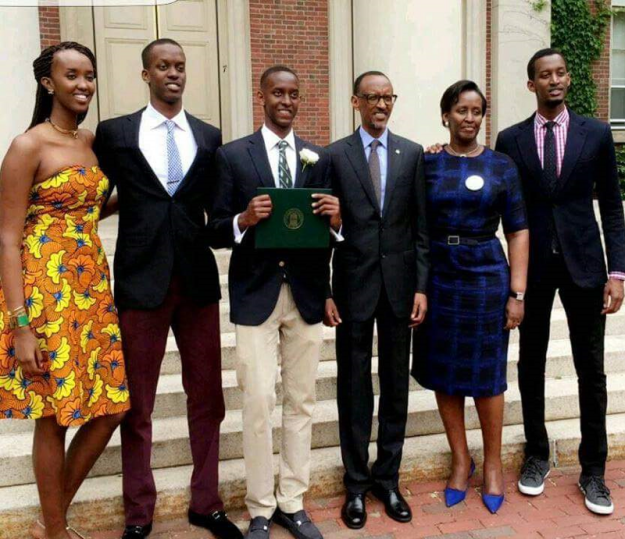
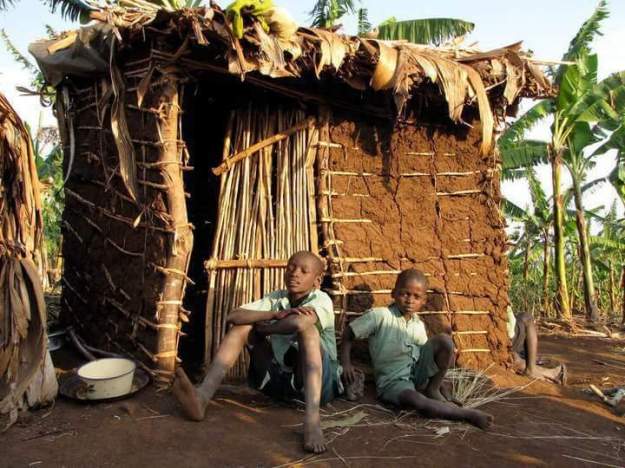
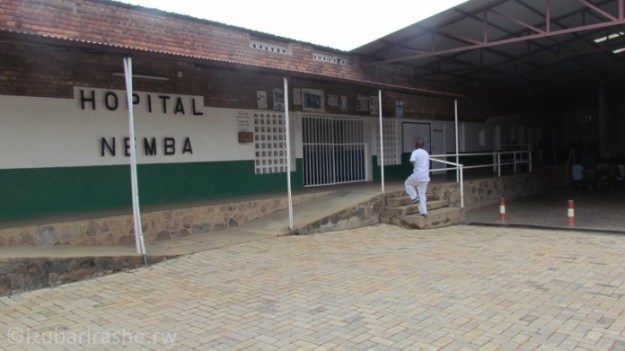
In meanhwile, Paul Kagame has changed the constitution to allow himself rights to a third term in presidency. Some observers reason that in Africa, being a president is a way to get rich and enjoy all best privileges. There are those who think, due to his unhappy childhood, Kagame is taking advantage to compensate all joys and happines he did not get when he was still a street boy. Apparently, Mr President does not want to go back to the poverty in which more than 60% of his peaople are living in. Even though the man would have saved a lot of money, by losing presidency, he would have lost privileges that go with his seat. Following are pictures that depict the contrast in Rwandans’ lifestyle:

Kagames

The Kagames

poor children

Ordinary Rwandan kids

brian-ange

Kagame’s kids

utwana

Ordinary Rwandan kids

water problem

That is the water the ordinary people drink

street women

Clean streets , yet the signs of poverty.

Igice-kimwe-cyinyubako-zibitaro-bya-Nemba-696x391

What about this decaying Hospital in the Northern Province?

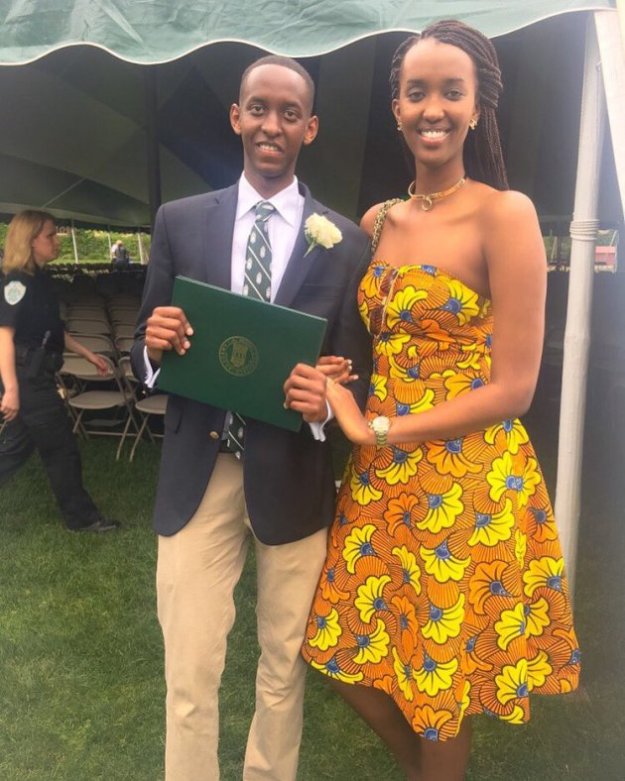
Mu gihe ubukene bunuma, amashuri y’umwana wa Paul Kagame yatwaye akayabo ka miliyoni 150

brian-ange

Ese koko Brian (ari kumwe na mushiki we Ange) ngo yajyanywe kwiga muri America kuko FPR yanze guteza imbere uburezi mu Rwanda muri gahunda yo gupyinagaza rubanda rugufi?!

Tumaze kumenya ko Perezida Paul Kagame afite umwana warangije amashuri yisumbuye muri Amerika, twashatse kumenya amafaranga iryo shuri ryaka abana baryigamo. Nkuko twabibwiwe Brian Kagame, ubucura bwa Paul na Jeannette Kagame, yigaga mw’ishuri rihenze ryitwa Deerfield Academy riherereye muri leta ya Massachussets.

Ku mwaka iryo shuri ririhisha ibihumbi hafi 50 by’amadorari ($49,625) ku mwaka. Nukuvuga ko mu myaka ine byatwaye hafi ibihumbi 200 ($200,000) by’amadorari angana na Miliyoni 150 z’amanyarwanda kugirango umuhungu wa Kagame Brian yige amashuri yisumbuye.

Dore ibibazo umuntu yakwibaza nyuma yo kumva ko undi muhungu wa Kagame yarangije kwiga amashuri yisumbuye muri Amerika:

  1. Ese ko batubwira ko u Rwanda rwateye imbere, Perezida Kagame yabuze ishuri mu Rwanda ryashobora guha abana be inyigisho ku rwego rw’amashuri yisumbuye?
  2. Ese kuba Kagame yohereza abana be kwiga hanze ntibyaba ari ikimenyetso simusiga ko nawe atemera aho uburezi mu Rwanda buhagaze? Perezida Habyarimana we yanze ko abana be bajya kwiga amashuri yisumbuye hanze kuburyo bose bigaga mu gihugu akabohereza hanze bagiye kwiga za kaminuza.
  3. None se kuriha $200,000 (Ibihumbi 200 by’amadorari) amashuri yisumbuye nabyo twabyita kwiha agaciro cyangwa ni ugutesha agaciro uburezi bw’u Rwanda?
  4. None se aya mafaranga ninde uyariha? Ni Kagame cyangwa ni igihugu? Ese koko niba Kagame ariwe uriha akaba hari gihe yari afite abana 4 bose biga muri Amerika bivuga ko wenda yarihaga $200,000 ku mwaka, aya mafaranga ayakurahe mu gihe tuzi ko umushara we ku mwaka utarenze ibihumbi 200 by’amadorari?

Mu gusoza njye nakwemeza mvuga ko kuriha $50,000 k’umwaka amashuri yisumbuye ari ugusesagura cyane cyane ko mu Rwanda hari abarimu badahembwa neza ndetse n’ibindi bibazo igihugu gifite nk’iby’inzara, ubukene n’ibindi.

Justin Gatabazi
Los Angeles

There is a need of an independent audit into Kagame’s luxurious life.

pk

Last night (28 May 2016) Rwanda’s extravagant, selfish and egocentric king was at it again. Like in the past, an annual habit, he attended last night’s Champion league final between Real Madrid and Atletico Madrid.

While the Country is going through horrendous economic failures and unpleasant poverty; Rwanda’s self-proclaimed king was spending the Country’s meagre resources in feeding his addiction and uncontrolled celebrity lifestyle. The usual habit of living like a King of a petroleum producing state, rather than a ruthless ruler from a banana republic state.

As usual, the government spent the tax payer’s money in hiring a private transport jet from Kagame’s own Crystal Venture Company to take him for this game, the resources spent on hotels for him, his delegation which include advanced and close protection team, the parking airport fee -tax for the plane , the air tax – space tax which include pollution tax, foreign trip allowances for his delegation including his escorts, air tickets for his advanced escort team….etc. All these are paid courtesy of the state.

While the junta was in San Siro enjoying the Champion league, Rwanda’s economy is in a nose dive spiral. Price of commodities is increasing on daily basis, soon it will be uncontrolled inflation. The currency is losing its value, the central bank for long, have failed to stabilise the Rwandan francs against international currencies like the dollar. The government is facing high levels of trade deficit, importing more than it exports and this is due to medieval economic policies agitated by this criminal regime.

There is massive capital flight due to negative business conditions, irresponsible fiscal policies and political interferences, thus, small scale investors, local traders and businessmen are opting to relocate to neighbouring countries like Uganda and Tanzania or the Southern Countries of Mozambique, Zambia, Malawi and Angola. There is total lack of foreign currencies on the market, we all know the economic consequences of this!!

Mortgage foreclosures is rampant and on the increase, this is due to people losing their work – redundancy, business bankruptcies – collapses, inflation and high interest rates of these mortgages.

The country is facing high levels of unemployment especially among the youth and no clear government policy to curb this trend. As the economy continues to contract, the level of unemployment will also continue to increase. Rwanda’s minister of finance – Claver Gatete recently told the IMF that, the country is left with 3 months of reserved cash and it need IMF fund injection to re-boost the dying economy.

As the Junta lives a celebrity life style, the Country is living on credit card, the Country’s borrowing levels 2014 – 15 quadruples that of Burundi, yet both countries have a similar economic base. Rwanda’s credit rating has been down graded due to its loan payment failures, thus making borrowing rates to be high.

For the purpose of getting operational funds for this criminal government, while also maintaining the celebrity lifestyle of the Junta. The governmet has been selling government bonds, the majority of which have been bought/purchased by
financial sharks at exuberant high interest rate. This has put the future generation at risk, the Country will service these debts at high interest rates.

As the Junta was wining and dining, civil servants are receiving salaries which doesn’t reflect the rate of inflation and in most cases salarues and wages being paid late.

Like in any totalitarian regime, as the Junta is enjoying in Milan, his paid apologists with the help of well paid Public Relations firms based in Western World; they will continue to paint doctored picture of Rwanda under Dictator Kagame as a heaven on earth. Just this week, a reknown sycophant and head of National Itorero Taskforce refered to Rwanda’s junta as “god”.

We all know that, Rwanda can’t be heaven when the smell of poverty has engulfed the whole Country. Rwanda can’t be heaven when nepotism, injustice and unfairness are daily occurrences. Rwanda can’t be heaven when inequality is a state norm. Rwanda can’t be heaven when human right abuses are state policies. Rwanda can’t be heaven when all freedoms have been suppressed by all means necessary.

According to Atifete Jahjaga, “Democracy must be built through open societies that share information. When there is information, there is enlightenment. When there is debate, there are solutions. When there is no democracy and sharing of power, there is no rule of law, no accountability, there is abuse, corruption, subjugation and indignation.”

Source:    Great Lakes Post

Hakwiye iperereza ku mitungo ya Paul Kagame

mobile president
Perezida wa Repubulika y’u Rwanda, Paul Kagame, mu mpera z’icyumweru gishize tariki ya 28/052016 yagiye mu gihugu cy’u Butaliyani mu mujyi wa Milan, ngo ajyanywe no kureba umupira w’amaguru.
Ibinyamakuru byinshi byagarutse kuri iyi nkuru ndetse bimwe ugasanga bigaya uru rugendo. Nyamara ariko ibi binyamakuru birasa n’ibishakira ikibazo aho kitari, bitavuze ko ikibazo kidahari! Ubwabyo kuba umuntu yafata akanya ko kwishimisha si ikibazo.
Ahubwo ikibazo ni iki:
  1. Kagame amafaranga afite ayabona mu buryo bufututse?
  2. Ese ajya akorerwa igenzura nk’umukuru w’igihugu ngo ibyerekeranye n’umutungo we bijye ahabona?
  3. Iryo genzura ryerekana iki?
  4. Ese ingendo nk’izi zo kujya kwishimisha zishyurwa na nde?
  5. Aramutse ari amafranga ye, yabonye mu buryo bufututse nta mpungenge byatera.

Ni ngombwa ko Paul Kagame atanga ibisubizo kuri ibi bibazo kugira ngo abaturage babone koko ko umukuru wabo atari umunyamurengwe wokamwe n’ingeso yo gukorakora agasabikwa no gusesagura umutungo w’igihugu.

Iyo umukuru w’igihugu adatanga urubuga rw’ubwisanzure ngo inzego zibishinzwe zimukorere Igenzura, zimenye umutungo we n’uburyo ucungwamo, haba hari impungenge ko ashobora gukoresha umwanya afite agasesagura umutungo w’igihugu akenshi uba waturutse mu misoro cyangwa mu nguzanyo igihugu cyafashe zikazishyurwa na buri mwenegihugu. Nko mu minsi ishize byagaragaye ko isanduku ya keta yabuzemo amafranga arenga miliyoni 200 n’imisago, nyamara nta perereza ryakozwe ngo ababikoze babiryozwe. Ni iki cyemeza ko Kagame atakoze muri aya?

Hari inyandiko nyinshi zagiye zigaragazwa n’abamwegereye zigaragaza uburyo uyu mugabo Paul Kagame yaba yigwizaho imitungo kandi akayisesagura mu gihe umuturage usanzwe atabasha kubona ibyo kurya bimuhagije, igihe abakozi badahembwa,igihe abanyeshuri badahabwa inguzanyo ngo babashe kwiga, igihe igihugu gikomeje gutega amaboko inkunga z’amahanga ngo kibashe guhuza icyuho mu ngengo y’imari.
Igitangaje ni uko ingendo z’uyu mukuru w’igihugu ziba zihenze cyane kuko agenda mu ndege ya wenyine (private jet) yishyurwa akayabo, aho ihagarikwa mu gihe imutegereje naho hakishyurirwa, hoteli araramo ikaba ihenze cyane( hagati y’ibihumbi 15 na 20 by’amadolari ku ijoro rimwe),…Ikindi kandi iyi ndege imutwara yanditse ku izina rye, ni ukuvuga ko Leta iyikodesha amafranga akajya kuri compte ye!
Ibi byose iyo byikusanyije niho usanga urugendo rwose akoze rukurura impaka. Hiyongeraho ko muri raporo zimaze iminsi zisohoka zerekana ibigo by’imari bya Paul Kagame bifite amafaranga menshi abitse hanze y’igihugu mu buryo budasobanutse. Kagame ntiyigeze agira icyo abivugaho wenda akibwira ko bizacira aho!?
Umuti:
Ntawe umubujije kwishimisha kuko ni ngombwa mu buzima. Ariko hagomba kubaho urubuga rw’ubwisanzure mu gihugu abantu bakamubaza ibi bibazo nawe akabisubiza niba yumva ntacyo yishisha. Nareke opposition ikore mu bwisanzure izamufasha kwikosora kuko ariyo yonyine yasaba ko audit yigenga ikorwa maze iyo mitungo ye ndetse n’iy’abandi bategetsi ikagaragara ko itanyuze mu bujura n’amanyanga.
Kubera ko mu gihugu hari ubukene bwinshi, ariko bikaba bigaragara ko perezida we butamugeraho, kandi buri wese yifuza kuva mu bukene, byatuma buri wese ashaka kuba perezida wa repubulika. Ibaze abantu miliyoni 12 bose barwanira ubukire ni ukuvuga bashaka kuba ba perezida wa repubulika! Ibi bisobanura intambara mu gihugu ishobora guhanganisha abakize n’abakennye, bamwe bashaka gukomeza kwigwizaho imitungo mu gihe abandi baharanira kuyigira.
Nta majyambere arambye ashoboka mu gihe hatabayeho transparency mu micungire y’imari no mu mitegekere yigihugu.
Ubwanditsi.

Rwanda : vers une solution de l’énergie électrique?

centrale_electrique 2

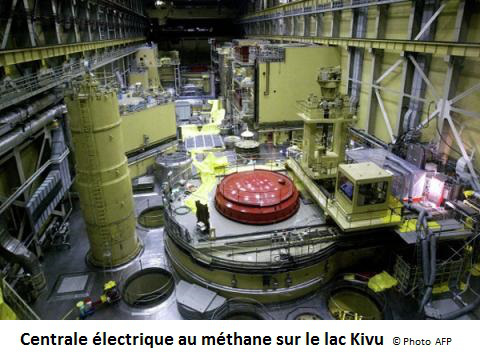
C’est à juste titre que les Rwandais et particulièrement les riverains du lac Kivu, peuvent être fiers de la centrale KivuWatt. D’abord parce que le pompage du méthane réduira le niveau du gaz (potentielle menace à la vie), et ensuite, du fait que ce produit, au départ dangereux, sera transformé en énergie électrique; une première au « pays des mille collines ». Après 14 mois, le Rwanda vient donc, d’inaugurer une nouvelle centrale. Mais, la production est-elle satisfaisante au jour d’aujourd’hui?

Au regard de la situation, on est encore trop loin du compte. Les attentes restent trop élevées, et deux questions pertinentes se posent. Pourquoi un tel retard dans un secteur aussi important? Pourquoi l’électrification n’a pas été parmi les priorités? Ces mêmes questionnements méritent également des solutions dans un autre secteur vital, très en retard, à savoir l’alimentation en eau potable et raccordement au réseau d’eau.

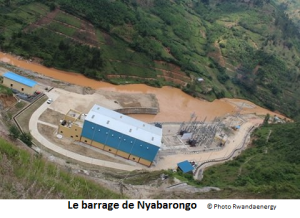
Restons sur le sujet en titre. Il est vrai que 54MW acquis en une année,  ne sont pas négligeables. En mars 2015, c’était la centrale hydro-électrique de Nyabarongo pour produire 28MW, et le 16 mai 2016 c’était l’inauguration de la centrale au méthane sur le lac Kivu, déjà opérationnelle depuis décembre 2015 avec 26 mégawatts. Construite à l’Ouest du pays, cette centrale produit de l’énergie qui s’ajoute à la capacité de production d’environ 160MW dont disposait déjà le pays.

Quel était l’objectif 2020 en électrification?

Le gouvernement rwandais avait tablé sur 563MW d’une valeur de 2.7milliards d’ici 2019-2020. De très bonnes ambitions, mais avec quelles stratégies et capacités financières? Le pays prévoit d’importer 30MW du Kenya (sachant que la distance est de 1350kms) et 400MW de l’Ethiopie (à 2700kms du Rwanda). C’est un projet coûteux et difficile à réaliser dans 3 ans. En 2012, le ministre de l’époque, ayant en charge des infrastructures, avait même promis la production de 1000MW pour 2017!

Selon  geopolitique-electricite.fr, « 700 000 Rwandais avaient accès à l’électricité en 2008, et presque un million en plus début 2013. La proportion est passée de 6 à 17% de la population de 2008 en 2014 ». Un pas a été franchi,  cependant, beaucoup reste à faire. En 2016, on n’a même pas atteint ¼ de la population ayant accès à l’électricité.

Ce ne sont pas des financements qui font défaut!

Selon la Banque mondiale, le programme de déploiement d’électricité au Rwanda, en anglais EARP (Electricity Access Rollout Project) est financé par un crédit de 70 millions de dollars, sans intérêts, de l’Association internationale de développement (IDA), de la Banque mondiale, en partenariat avec la Banque africaine de développement, la Banque arabe pour le développement économique en Afrique, la Belgique, l’Union européenne (UE), le Japon, les Pays-Bas, le Fonds de l’OPEP pour le développement international (OFID) et le Fonds saoudien pour le développement qui ont, au total, mobilisé 348,2 millions de dollars pour ce programme.
nyabarongo 2

Les coupures, problèmes d’entretien, exploitation et le coût élevé

Il y a deux ans, une enquête menée par la Banque mondiale faisait état de 14 coupures d’électricité par mois, c’est-à-dire, une coupure tous les deux jours. Sur une dizaine de centrales inspectées, huit n’étaient pas en état d’entretien régulier, et subissaient des pannes fréquentes. Les inspecteurs auront aussi remarqué que les transformateurs et pylônes n’étaient pas tous intacts. Par ailleurs, la centrale hydro-électrique de Nyabarongo avait été en arrêt quelques mois seulement, suite à la forte diminution du flux liée au manque de stratégies efficaces en faveur de l’écologie.

D’après un responsable de la Commission Economique des Nations Unies pour l’Afrique (UNECA) basé à Kigali, l’électricité est plus chère au Rwanda qu’à ses voisins. En moyenne, le prix est de 0,24 $ le kWh, comparé à 0,15 $ au Kenya, 0,17$ en Ouganda et 0,05$ en Tanzanie. Même en se basant sur une autre source qui indique 0,20$ le kWh, le prix reste plus élevé.

Les experts dans le domaine, estiment qu’il faudrait au moins 1000MW pour satisfaire les attentes de 12millions de Rwandais, en plus des investisseurs étrangers, les ambitions d’aménagement et planification à moyen et long terme.

En toute évidence, les responsables du pays ont du pain sur la planche, pour rattraper le temps perdu, et pour améliorer le système de fonctionnement. L’électricité et l’eau sont des produits de première nécessité. Certains observateurs n’hésitent pas à relever que ces deux secteurs importants n’ont pas retenu l’attention ni la priorité qu’ils méritaient, ni les efforts qu’il fallait.

Au contraire, les investissements ont été orientés vers des secteurs moins urgents, l’objectif étant la belle image du pays, réellement en « trompe l’œil ». L’accent a été mis sur les « gratte-ciel » et la décoration de la capitale! La construction des « buildings » et l’embellissement d’une ville, est une bonne chose, si et seulement si, elle est précédée par le développement de ces deux secteurs vitaux, l’eau et l’électricité. Lors de la CHAN 2016, les organisateurs ont frôlé le scandale. Il suffit de lire les articles des journalistes étrangers venus couvrir l’évènement. Ils n’ont pas manqué de souligner le manque d’eau et les difficultés en électricité. Il est grand temps, de redoubler les efforts et mettre en avant les priorités.

Source: mulijeanclaude.wordpress.com

“The battle against entrenched power is not only a battle for democracy; it is also a battle for efficiency and shared prosperity” J. Stiglitz

Stiglitz

Monopoly’s New Era

NEW YORK – For 200 years, there have been two schools of thought about what determines the distribution of income – and how the economy functions. One, emanating from Adam Smith and nineteenth-century liberal economists, focuses on competitive markets. The other, cognizant of how Smith’s brand of liberalism leads to rapid concentration of wealth and income, takes as its starting point unfettered markets’ tendency toward monopoly. It is important to understand both, because our views about government policies and existing inequalities are shaped by which of the two schools of thought one believes provides a better description of reality.

For the nineteenth-century liberals and their latter-day acolytes, because markets are competitive, individuals’ returns are related to their social contributions – their “marginal product,” in the language of economists. Capitalists are rewarded for saving rather than consuming – for their abstinence, in the words of Nassau Senior, one of my predecessors in the Drummond Professorship of Political Economy at Oxford. Differences in income were then related to their ownership of “assets” – human and financial capital. Scholars of inequality thus focused on the determinants of the distribution of assets, including how they are passed on across generations.

The second school of thought takes as its starting point “power,” including the ability to exercise monopoly control or, in labor markets, to assert authority over workers. Scholars in this area have focused on what gives rise to power, how it is maintained and strengthened, and other features that may prevent markets from being competitive. Work on exploitation arising from asymmetries of information is an important example.

In the West in the post-World War II era, the liberal school of thought has dominated. Yet, as inequality has widened and concerns about it have grown, the competitive school, viewing individual returns in terms of marginal product, has become increasingly unable to explain how the economy works. So, today, the second school of thought is ascendant.

After all, the large bonuses paid to banks’ CEOs as they led their firms to ruin and the economy to the brink of collapse are hard to reconcile with the belief that individuals’ pay has anything to do with their social contributions. Of course, historically, the oppression of large groups – slaves, women, and minorities of various types – are obvious instances where inequalities are the result of power relationships, not marginal returns.

In today’s economy, many sectors – telecoms, cable TV, digital branches from social media to Internet search, health insurance, pharmaceuticals, agro-business, and many more – cannot be understood through the lens of competition. In these sectors, what competition exists is oligopolistic, not the “pure” competition depicted in textbooks. A few sectors can be defined as “price taking”; firms are so small that they have no effect on market price. Agriculture is the clearest example, but government intervention in the sector is massive, and prices are not set primarily by market forces.

US President Barack Obama’s Council of Economic Advisers, led by Jason Furman, has attempted to tally the extent of the increase in market concentration and some of its implications. In most industries, according to the CEA, standard metrics show large – and in some cases, dramatic – increases in market concentration. The top ten banks’ share of the deposit market, for example, increased from about 20% to 50% in just 30 years, from 1980 to 2010.

Some of the increase in market power is the result of changes in technology and economic structure: consider network economies and the growth of locally provided service-sector industries. Some is because firms – Microsoft and drug companies are good examples – have learned better how to erect and maintain entry barriers, often assisted by conservative political forces that justify lax anti-trust enforcement and the failure to limit market power on the grounds that markets are “naturally” competitive. And some of it reflects the naked abuse and leveraging of market power through the political process: Large banks, for example, lobbied the US Congress to amend or repeal legislation separating commercial banking from other areas of finance.

The consequences are evident in the data, with inequality rising at every level, not only across individuals, but also across firms. The CEA report noted that the “90th percentile firm sees returns on investments in capital that are more than five times the median. This ratio was closer to two just a quarter of a century ago.”

Joseph Schumpeter, one of the great economists of the twentieth century, argued that one shouldn’t be worried by monopoly power: monopolies would only be temporary. There would be fierce competition for the market and this would replace competition in the market and ensure that prices remained competitive.

My own theoretical work long ago showed the flaws in Schumpeter’s analysis, and now empirical results provide strong confirmation. Today’s markets are characterized by the persistence of high monopoly profits.

The implications of this are profound. Many of the assumptions about market economies are based on acceptance of the competitive model, with marginal returns commensurate with social contributions. This view has led to hesitancy about official intervention: If markets are fundamentally efficient and fair, there is little that even the best of governments could do to improve matters. But if markets are based on exploitation, the rationale for laissez-faire disappears. Indeed, in that case, the battle against entrenched power is not only a battle for democracy; it is also a battle for efficiency and shared prosperity.

Source: Project Syndicate

Rwanda cricket captain Eric Dusingizimana creates Guinness record

Eric Dusingizimana on his way to a Guinness record. Photo Courtesy: @NewTimesRwanda Twitter account

Rwandan cricket captain broke the Guinness record of batting for the most number of hours in the nets. Eric Dusingizimana batted for 51 hours in the nets between May 11 to May 13. Rwanda Cricket Board shared a picture of Dusingizimana batting in the nets. He was apparently batting for a cause. He was raising money to build the first ever international ground in Rwanda. The President of the country Paul Kagame was aked to bowl a few deliveries at him, but he did not. Dusingizimana had also tweeted to the President before embarking this mission, but did not get a response. READ: Virag Mare creates Guinness record of batting for 50 hours in nets

“@PaulKagame i’ll be attemptin 2 set a new Guinness World Record of longest batting 51hr from 11-13 May @petitstade, great if you bowled at me,” he tweeted, as reported by bbc.com.

Dusingizimana broke the record of an Indian player, Virag Mare, who set the record of batting for 50 hours in the nets. He batted from December 22 to December 24 for a time of 50 hours. Ahead of this record, English duo Dave Newman  and Richard Wells had the record to their names, batting for 48 hours, according to sportskeeda.com. Mare came from the same academy from where Sachin Tendulkar had graduated. READ: Nagaraju Budumuru aims for Guinness Record of longest net session by an individual

When the English batsmen were batting UK’s Prime Minister David Cameroon cheered the boys on. As far as Dusingizimana is concerned, it will be interesting to see if his efforts has given him enough funds to build an international cricket stadium. The Rwanda Cricket Association is the governing body that controls their cricket. Their headquarters is in Kigali, which is the capital.

Source:Cricketcountry