U.S. Statement at the Universal Periodic Review of Rwanda
37th SessionGeneva, January 25, 2021
As Delivered by Charles Bentley, U.S. Mission to International Organizations in GenevaThe United States warmly welcomes the Rwandan delegation.We recommend that Rwanda:
Promote the right to freedom of expression by ending detentions and harassment of members of the media and civil society for their reporting.
Independently and transparently investigate credible allegations of unlawful or arbitrary arrests and detentions, killings, and enforced disappearances of human rights defenders, political opponents, and journalists, prosecuting alleged perpetrators under the law.
Enforce the protection of all persons’ rights to life and liberty by strengthening the independence of the justice system and ensuring no one is convicted on the basis of information extracted under torture or duress.
We commend Rwanda’s progress increasing gender equality and access to education. However, we are concerned about limited civic and political space, specifically unduly burdensome permitting requirements which inhibit the right of peaceful assembly.
The UK delivered a statement on Rwanda at the 37th Session of Universal Periodic Review (UPR), sharing recommendations to improve their human rights record.
Published 25 January 2021
Ambassador Julian Braithwaite, UK Permanent Representative to the UN, Geneva.
The United Kingdom welcomes Rwanda’s strong record on economic and social rights, and promotion of gender equality. We remain concerned, however, by continued restrictions to civil and political rights and media freedom. As a member of the Commonwealth, and future Chair-in-Office, we urge Rwanda to model Commonwealth values of democracy, rule of law, and respect for human rights.
We recommend that Rwanda:
Conduct transparent, credible and independent investigations into allegations of extrajudicial killings, deaths in custody, enforced disappearances and torture, and bring perpetrators to justice.
Protect and enable journalists to work freely, without fear of retribution, and ensure that state authorities comply with the Access to Information law.
Screen, identify and provide support to trafficking victims, including those held in Government transit centres.
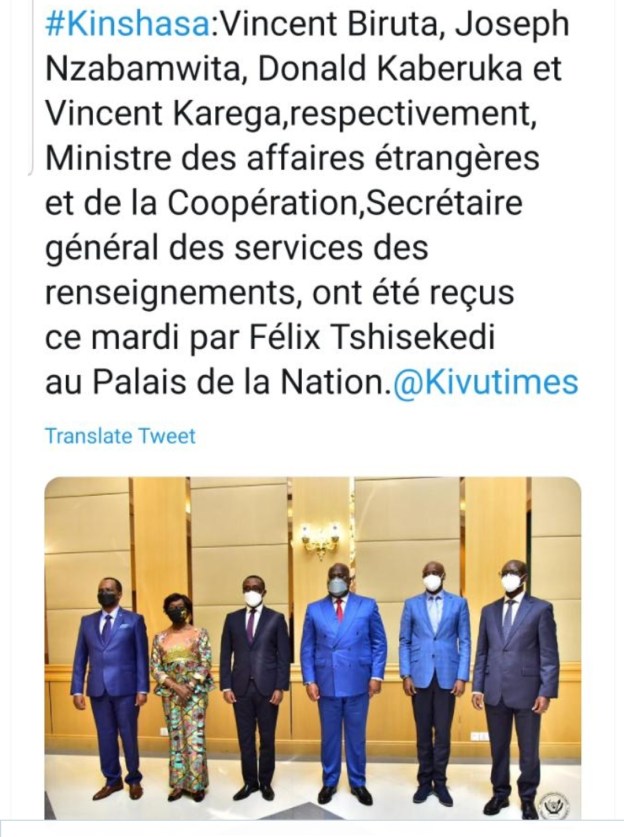
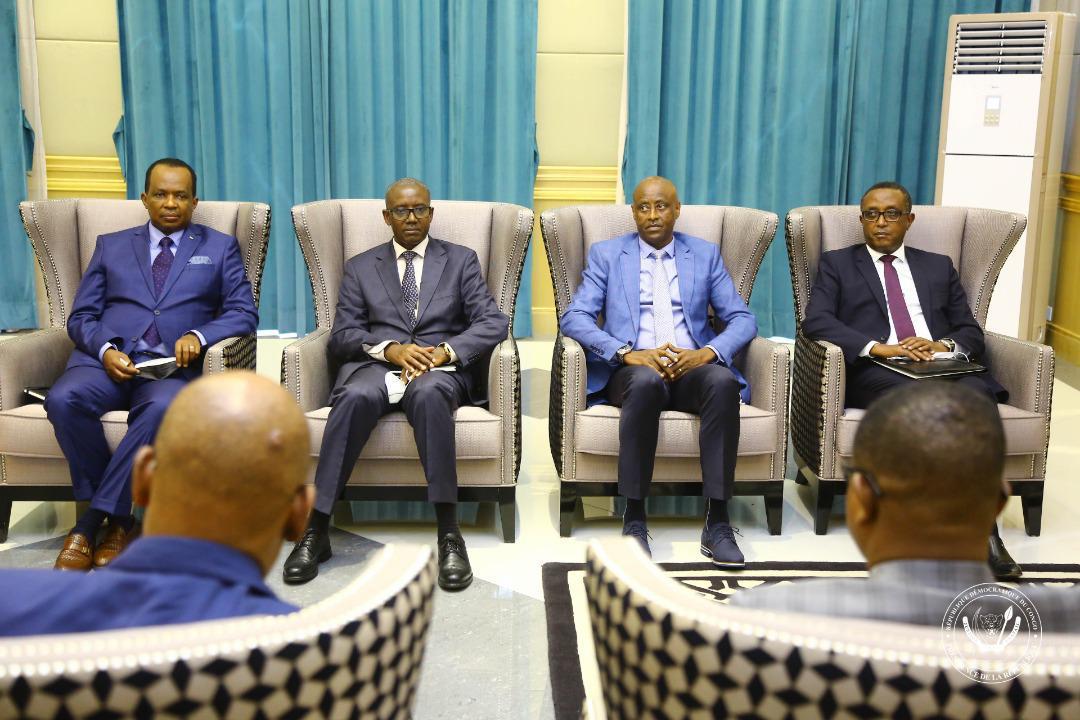
Mardi dernier ( 19/01/2021), Félix Tshisekedi a reçu une délégation rwandaise au Palais de nation pour des entretiens sur la coopération bilatérale entre la RD Congo et le Rwanda. La composition de cette délégation interroge : il y avait bien entendu l’ambassadeur du Rwanda à Kinshasa, le tonitruant Vincent Karega, le ministre des Affaires étrangères et de la coopération Vincent Biruta et le secrétaire général des services de renseignement, le général Joseph Nzabamwita. Il y avait également la ministre du Commerce et de l’Industrie du Rwanda, Soraya Hakuziyaremye, qui est arrivée après.
De Gauche à droite : Ambassadeur Vincent KAREGA, Général Joseph NZABAMWITA, Général Jean Bosco KAZURA, Dr Vincent BIRUTA.
Juste à voir la composition de cette délégation rwandaise, les Congolais auraient dû se poser des questions. Surtout quand on sait qu’un récent rapport de l’ONU a révélé la présence des troupes rwandaises sur le territoire congolais. Hélas ! Ils ont préféré s’enfermer dans des débats stupides sur l’Union sacrée. Jusqu’à présent, personne n’a interpellé le gouvernement sur la présence des Rwandais sur le sol congolais. Les gens se battent pour savoir combien ils vont empocher en rejoignant ou non l’Union sacrée. D’autres (des journalistes et certains membres de la société dite civile) préfèrent se lancer dans le djalelo pour le compte de leur leader. Le Congo n’a que les politicards et les journaleux qu’il mérite.
Mais revenons à la rencontre entre le pouvoir congolais et l’imposante délégation rwandaise. Selon la presse présidentielle à Kinshasa, les Rwandais ont porté un « message spécial » du président Paul Kagame à Félix Tshisekedi. Le contenu de ce fameux message n’a pas été dévoilé, et la délégation rwandaise a été avare de commentaires à ce sujet. Mais quand on analyse la composition de cette délégation et les propos de Madame Soraya Hakuziyaremye, on comprend qu’il est question de coopération bilatérale entre Kinshasa et Kigali dans plusieurs domaines. Sur le plan sécuritaire, il n’y a pas de doute que Félix Tshisekedi va continuer à soumettre le Congo aux desiderata du Rwanda. Pour la petite histoire, il ne s’est jamais prononcé sur la présence des Forces de défense rwandaises sur le sol congolais. Plus intrigant, c’est la coopération économique et commerciale. Madame Soraya Hakuziyaremye a fait allusion à la zone de libre-échange continentale africaine (ZLEC). Or la ZLEC ne peut profiter à la RDC dans les conditions actuelles. Ce qu’il va permettre, c’est la légalisation du commerce illicite des ressources naturelles congolaises. En soutenant ce projet, Félix Tshisekedi s’engage à légaliser et à légitimer l’exploitation illégale et le commerce des minerais à l’est de la RDC. Le Rwanda n’aura donc plus besoin de cacher ou de falsifier les chiffres de ses exportations d’or et de coltan congolais (pour ne citer que ces deux minerais), comme l’ont montré les experts de l’ONU, il y a deux ans.
La RDC est trop faible politiquement, économiquement et sur le plan sécuritaire. Elle n’aurait déjà pas dû adhérer à la ZLEC, qui est un projet certes ambitieux mais problématique à certains égards. Avec le renforcement des relations avec le Rwanda, c’est l’avenir du pays qui est compromis à moyen et à long terme. Parce qu’en l’état actuel de la situation, le Rwanda gagnera à tous les niveaux et à tous les coups. Un cadeau signé Félix Tshisekedi Tshilombo. À voir comment cet homme se comporte, c’est à se demander s’il n’est pas en service commandé pour le compte du Rwanda tout simplement. Même Joseph Kabila, qui est voué aux gémonies, n’est pas allé aussi loin…
L’Histoire du Rwanda ne devrait pas nous diviser. Nous ne devrions pas non plus nous attaquer à ceux qui contribuent au rétablissement de la vérité par des faits historiques, scientifiquement vérifiés. Quand on est en désaccord, on a droit d’avancer, avec motivation, sa version des faits, plutôt que de proférer des menaces envers autrui. On n’est pas obligé d’être d’accord sur toute la ligne, avec Judi Rever. Mais ce n’est pas pour autant qu’on doit se déchaîner contre elle. Dans une situation pareille, la place revient au débat, et on laisse les faits parler d’eux-mêmes.
Judi Rever est une journaliste d’investigation. Elle a été au Rwanda et en RDC (ancien Zaïre). Elle raconte ce qu’elle a vu. Elle a, elle-même, recueilli des témoignages de Rwandais de tous bords, et en outre, elle a eu accès aux documents confidentiels du TPIR, et bien d’autres.
Est-il possible d’étouffer, déformer ou dissimuler l’Histoire ? Les faits sont têtus comme dirait l’autre ! La véritable Histoire récente de la tragédie rwandaise est bel et bien connue : d’abord, par ceux qui l’ont vécue, ensuite par ceux qui ont croisé les différents acteurs ou les victimes, et enfin, par ceux qui ont pris connaissance de cette Histoire grâce aux témoignages fiables.
Pourquoi certaines personnes se déchainent contre Judi Rever ?
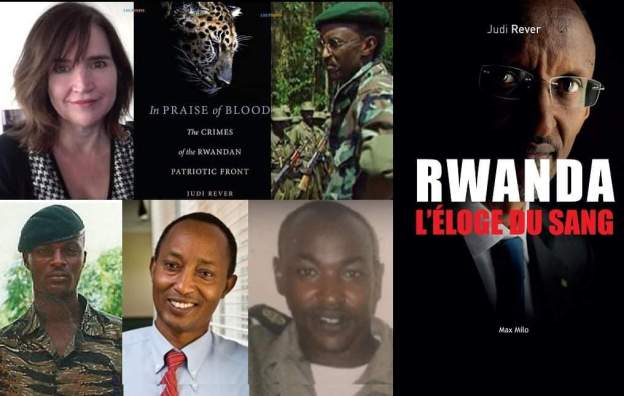
Judi Rever, journaliste, auteure de In Praise of Blood, The crimes of the Rwandan Patriotic Front
Journaliste d’investigation, Judi Rever a révélé des faces cachées ou peu abordées par les grandes organisations tant nationales qu’internationales. Elle est aussi, en quelque sorte, témoin d’une partie de l’Histoire de la région des grands lacs africains. Ceux qui ont de lourdes responsabilités dans la tragédie de cette région ont tout fait pour étouffer la vérité. Ils racontent les événements à leur guise ; or l’Histoire ne s’invente pas. Ce sont des faits réels. Et celle ou celui qui met la lumière sur ces faits, se voit malmené par ces puissants « éphémères »
Il est impossible d’imposer sa narration, surtout quand elle est biaisée. Au contraire, ce sont des faits, avérés, qui s’imposent. Depuis plusieurs années, ceux qui ont combattu dans les rangs du FPR (comme par exemple, les Majors Alphonse Furuma, Michael Mupende, Dr Théogène Rudasingwa, Lt Abdul Ruzibiza, Deus Kagiraneza, James Munyandinda, Jonathan Musonera, Noble Marara, Aloys Ruyenzi, Abdallah Jabo Akishuli, et bien d’autres), n’ont cessé de raconter ce qui s’est réellement passé sur le terrain qu’ils occupaient, que ce soit au Rwanda ou en RDC (ancien Zaïre). Des écrits signés, des audios, des vidéos sous forme de témoignages sont disponibles sur différents canaux de communication ou réseaux sociaux, et tout le monde peut y avoir accès. La plupart d’entre eux racontent la même chose que Judi Rever. Ces personnes sont aussi témoins oculaires. Judi Rever a rencontré certaines d’entre elles, et bien d’autres témoins. Ce que publie Judi Rever sur le Rwanda, se fonde sur ce qu’elle a vu, elle-même, et sur son travail de recherche et d’investigation.
A juste titre, comme d’autres, Judi Rever parle du génocide perpétré contre les tutsi. Elle ne l’a jamais nié ni minimisé. Il suffit de consulter ses publications (articles, reportages en audio ou vidéo, livres etc.). Est-ce que quelqu’un qui se positionne de cette façon, doit être obligé d’occulter les crimes innommables commis par l’armée du FPR ? Y a-t-il quelqu’un qui puisse nier ces crimes alors que ceux qui ont combattu pour le compte du FPR le prouvent de manière irréfutable ? Judi Rever a mené une enquête de 20 ans dans le souci de recherche de la vérité. Est-il sensé d’étouffer ou dissimuler l’Histoire ? Non.
Quand Judi Rever dit qu’il y a eu aussi un génocide perpétré contre les hutu, cela n’implique pas du tout la négation de l’autre génocide ni forcément sa minimisation.
Le traitement intolérable et les propos violents dont fait l’objet Judi Rever sont injustes et inadmissibles. Je ne le dis pas seulement parce que Judi Rever est une consœur, mais tout simplement parce qu’elle a fait son travail de journaliste, et en plus, en sacrifiant de longues années pour une recherche minutieuse basée sur les faits, les témoignages de victimes de la tragédie et d’autres sources crédibles.
Ikibazo hagati y’abahutu n’abatutsi bo mu Rwanda nta kugica ku ruhande.
Ndashimira Bwana NKULIYINGOMA Jean Baptiste watanze igitekerezo ku nyandiko ya Amiel NKULIZA (Ibihe turimo: Gupfukirana ukuri kw’amateka yacu bimariye iki abayobozi ba «Rwanda Bridge Bulders-RBB»?). Mu gisubizo cye, (Nunganire Amiel Nkuliza ku kibazo cy’imibanire y’abahutu n’abatutsi mu masezerano ya ARUSHA) Bwana NKULIYINGOMA avuga ko abona ikibazo hagati y’abahutu n’abatutsi kitirengagijwe mu masezerano y’Arusha. Ibi akabishingira ko mbere y’uko amasezerano ashyirwaho umukono, impande zombi zari zihanganye (FPR-Inkotanyi na Leta y’u Rwanda) zabanje kwemeranywa ku mahame y’igihugu kigendera ku mategeko (Etat de droit /Rule of Law). Ikinzinduye uyu munsi, ni ukwerekana ko kubaka igihugu kigendera ku mategeko byonyine bidahagije ngo bikemure ikibazo hagati y’ibyo bice bibiri by’abanyarwanda ari byo abahutu n’abatutsi.
Icyo kibazo giteye gite ?
Mu by’ukuri iyo witegereje usanga ikibazo hagati y’abahutu n’abatutsi gishingiye ku butegetsi. Mu myaka yose Abatutsi bategetse igihugu, byiswe ko nta kibazo cyari kiriho kugeza igihe abahutu nabo basabye kwinjira mu myanya y’ubuyobozi/ubutegetsi. Aha ni ho abigiza nkana bahera bashima ubutegetsi bwa cyami mbere y’umwaduko w’abazungu, bakagira bati mu gihugu nta bibazo by’amoko byari bihari. N’uyu munsi wa none, abahutu baramutse bicecekeye ntibasabe uburinganire n’abatutsi hari abavuga bati nta kibazo Hutu -Tutsi kiriho ! Gusa rero aho ibihe bigeze abahutu bamenye ko nabo bafite uburenganzira bwo kujya mu myanya y’ubutegetsi kandi ntibazahwema gusaba ko ubwo burenganzira bwubahirizwa. Iki kibazo rero gishingiye ku buringanire bw’amoko imbere y’amategeko, uburinganire mu gusaranganya ibyiza by’igihugu byose.
Mu gushaka gupfukirana ibyo abahutu basabaga mbere ya revolisiyo ya rubanda (1959-1962), abagaragu b’ibwami babanje kuvuga ko ntacyo bapfana n’abahutu, ko bo ari ibimanuka byaje gutegeka, abahutu bakaba abasangwabutaka bagomba gutegekwa, ko abagabana ari abava inda imwe. Ibi ariko ntibyaciye intege abaharaniraga uburenganzira bw’abahutu, bigeza aho umwami azanye andi mayeri, avuga ko nta moko ahari ko u Rwanda rutuwe n’inyabutatu nyarwanda. Yibagirwa ko ubwabyo iyi nyito yamutamazaga : kuki ari inyabutatu ntibe inyabutanu cyangwa butandatu ? (ubutatu ni Hutu, Tutsi na Twa). Kuri we, gukemura ikibazo kwari ukuvuga ko kitariho bikaba birarangiye. N’uyu munsi wa none FPR-Inkotanyi ni wo muvuno ikoresha. Ivuga ko nta moko ariho, yayavanye mu Itegekonshinga, iyasimbuza utundi tubyiniriro. Abacitse ku icumu, interahamwe, abasigajwe inyuma n’amateka, ni ibice abanyarwanda bumva bakamenya niba uri umuhutu, umutwa cyangwa umututsi.
Iyo witegereje uko ubutegetsi bw’u Rwanda bumeze muri iki gihe, uhita ubona ikibazo gikomeye : Abatutsi ni bo bonyine bari mu myanya yose ifatirwamo ibyemezo, ibigo by’imari n’ubucuruzi, inzego z’ubuyobozi bw’ingabo, ….mu gihe abahutu bakomeje kwigizwayo no gukeneshwa, kwamburwa amasambu n’ibindi. Yemwe no mu buyobozi bw’amadini, ubuyobozi ni ubw’abatutsi !
Uku kwikubira ibyiza by’igihugu ni ikibazo gikomeye cyane gikwiye kwitonderwa.
Arusha yarakirengagije : kubaka igihugu kigendera ku mategeko byonyine ntibihagije
Bwana NKULIYINGOMA yemeza ko ubwo Arusha yemeraga ko hajyaho igihugu gishingiye ku mahame yubahiriza amategeko (Etat de droit/ Rule of law) ubwo yari ikemuye ikibazo hagati y’abahutu n’abatutsi ndetse agasoza agira ati : « Muri make, umuti wari wavugutiwe Arusha ntabwo ari uwo gusuzugura. Njyewe nkeka wenda amaherezo ariwo tuzagarukaho ».
Kubaka igihugu kigendera ku mategeko ntibihagije ngo ikibazo hagati y’abahutu n’abatutsi gikemuke. Hakwiye ingamba zikakaye kandi zidaca ku ruhande ikibazo ubwacyo. Ntushobora gukemura ikibazo udashatse no kukivuga. “Ushaka gukira indwara arayirata”. FPR ntiyashakaga ko ikibazo Hutu -Tutsi kivugwa ni nayo mpamvu Kanyarengwe w’umuhutu yashyirwaga imbere ngo asinyane amasezerano na Habyarimana w’umuhutu, bityo bigaragare ko nta kibazo Hutu -Tutsi. Ntabwo FPR-Inkotanyi itandukanye na Lunari (UNAR) ishyaka ry’umwami, wa mwami wabonaga ko abahutu badakwiye gusaba kujya mu butegetsi. Iyi UNAR (RANU mu cyongereza) niyo yahindutse FPR-Inkotanyi mu mwaka wa 1987. Utaziga amateka azasigara !
Arusha yaravugaga ngo ikibazo Hutu-Tutsi ni kimwe mu bibazo byari biriho, kandi koko byari ukuri. Ariko si ikibazo gishobora kubonerwa umuti ngo ni uko ibindi byakemutse, kuko aho ibihe byari bigeze ndetse kugeza n’uyu munsi ibyo bibazo bindi si byo bituma abahutu n’abatutsi bashyamirana. Muti gute? Buriya n’iyo wafata u Rwanda ukarushyiramo demokarasi, buri wese agahabwa uburenganzira bwe, agakora umurimo yatsinze ibizamini kurusha abandi (méritocracie), ubukungu ukabufungura ( libéralisation), ubutegetsi bugatandukana ( séparation des pouvoirs), ubutabera bukigenga, amategeko yose akubahirizwa, ntiwaba utanze igisubizo gikwiye. Kubera ko kuva abahutu basaba uburenganzira bwabo mu myaka ya za 1950, abatutsi bashyizwemo ibitekerezo ko abahutu babanga. Intambara y’inyenzi, iya FPR, ubwicanyi bwibasiye abahutu, ubwibasiye abatutsi, ibi byose byatumye intera itandukanya abahutu n’abatutsi iba ndende. Ubashyize mu matora asesuye, abahutu batora umuhutu, abatutsi bagatora umututsi, bityo kubera ko abatutsi ari ba nyamuke, ntibazagera ku butegetsi. Aha niho ruzingiye. Abatutsi babangukirwa no gutegekesha imbunda kurusha demokarasi kuko ibakandamiza kabone n’iyo igihugu cyaba kigendera ku mategeko. Hari n’abatekereza bati ubwo abahutu ari benshi uwagenda abica gahoro gahoro tukazagera aho basigara aribo bakeya. Simbona ko kwica abantu ari ugukemura ikibazo mu buryo bwiza.
Ku kibazo kimaze kuba nk’igiti cy’inganzamarumbo hakenewe igihe kirekire ngo gikemuke tugere aho kugendera ku mategeko byonyine biba bihagije. Ihame rya “démocratie consensuelle” (demokarasi irimo ibirungo) hagati y’abahutu n’abatutsi nemera ko ryadufasha mu gihe cyo kubaka icyizere hagati y’abanyarwanda nibura mu gihe cy’imyaka 30. U Rwanda si rwo rwonyine rufite ba nyamuke bakwiye kurindwa, twakwigira ku bandi. Ubutaha nzabagezaho umushinga wa demokarasi y’impanga ishyaka ISHEMA rigeza ku Banyarwanda ngo bawutangeho ibitekerezo.
RBB nikora nka Arusha tuzaba dusubiye inyuma ho imyaka 30 kandi bizatugora. Kwicara mu Gacaca ni ngombwa mbere y’uko abantu bagira icyo bafatanya.
Hari abantu bamaze iminsi bandika ku mbuga zitandukanye ko opozisiyo igomba gukora igisirikare cyo gukuraho Kagame. Njye siko mbibona kuko gukora ikirebeli ubu ni ugutuma Kagame agarura ubuyanja kandi nta munyarwanda ubyifuza, kandi abifuza intambara wenda baba basa na ba bandi nita ba Kozivuze Rutemayeze, Kagame ajya imbere akivovota, akivuga imyato atagira, akababwira ukuntu agiye kwica abanyekongo bagakoma amashyi, bati ubwo abatutsi bazakugwa inyuma twe tuzakugwa imbere; bariya ntawe uzi ko isasu ryica kuko batagiye ku rugamba, kuribo Kagame yishe ntacyo bivuze icya ngombwa ni umutekano wa miliyoni zabo bafata buri kwezi.
Kagame ariho arasamba rwose igisigaye ni ukumuhirika wa mugani wa Padri Nahimana Tomasi. Ikindi nkuko mwabibonye muri iriya mbonerahamwe iri hejuru, Opozisiyo ntishobora gukora icyo kirebeli mu gihe amashyaka ayigize afite ibyerekezo binyuranye; urugero mwarwiboneye, bamwe ntibemera ko revolisiyo yo muri 1959 yari Revolisiyo, ngo ishyaka rishaka gukorana nabo rigomba kubanza kuyihakana, njye rero mbona gutaburura abayoboye iriya revolisiyo nka Mbonyumutwa Dominiko cyangwa se ukandangaza abandi nka Kayibanda Gregoire, Gitera Habyarimana Joseph, Bicamumpaka B., Habyarimana, Juvenal, Makuza Anastase, Habamenshi Callixte ngo bari ibiyobyabwenge, bitabuza revolisiyo yo muri 1959 kuba yo; abaturage bayikoreye nibo bonyine bagomba kubazwa niba bayihakana si amashyaka. Aba kandi bakongeraho ko abahutu bose n‘abataravuka n’abazavuka, bafite icyaha rusange cy’ubujenosideri, ese amashyaka y’abahutu azemera iyi ngengabitekerezo ni angahe? Iki wenda nacyo bashobora guca ku nshuti zabo kikemezwa na Loni!
Revolisiyo “IKARAMU” rero niyo yonyine ishobora kwirukana Kagame na FPR ye, nta maraso yongeye kumeneka mu Rwanda kandi abenshi ndumva aribyo twifuza, ikanazanira umunezero buri munyarwanda. Rwose impamvu zatumye ba Hosni Mubarak wari Prezida wa Misri, Mouamar EL Kadafi wari Prezida wa Libya, na Zen El Abdin Ben Ali wari Prezida wa Tuniziya bahirikwa ku butegetsi na Revolisiyo z’abaturage, zirahari mu Rwanda kandi ziraruta izari muri biriya bihugu kiriya gihe nkuko twiboneye zimwe murizo mu gice cya kabiri cy’iyi nyandiko. Tugarutse kuri biriya bihugu navuze hejuru, urubyiruko rw’abashomeri rwari rwararangije amashuri rukabura imirimo nirwo rwagiye kuri Internet, face book, twitter maze rugenda ruganira ku bibazo byarwo. Icyakurikiyeho ni ukumvisha ababyeyi babo ko mu gihugu hari ibibazo kandi kugirango birangire hagomba kuba impinduramatwara mu gihugu. Icya gatatu n’uko urubyiruko rwashyize uwo mwuka mushya no mu bandi bashomeri batize. Icya kane n’uko abahembwaga imishahara idafashije nabo bahumutse. Abari hanze y’igihugu nabo bagiye bashyiraho akabo bakoresheje ziriya mbuga basobanurira abaturage uko bagomba kwifata kugirango bahirike izo ngoma. Urebye iriya muhuha yakoresheje ikoranabuhanga kugirango igere ku mugambi wayo. Dore rero uko byakorwa no mu Rwanda:
INTAMBWE YA MBERE: ( GUHUMURA)
Abafite imbuga bose ni ugusobanurira abaturage ibibazo biri mu Rwanda, icyabiteye n’uko byakemuka.( Ibi byaratangiye, ntawabura gushima intambwe imbuga zimaze gutera muri iyi gahunda)
Gukangurira abanyarwanda gusoma ibyo imbuga zanditse, bagashirika ubwoba bakumva ko Kagame n’abicanyi be batazashobora gusoma no kwica abazasoma ibyo banditse, kandi abaturage bagasobanurirwa n’ ukuntu umuntu akoresha amwirondoro muhimbano.
Za kaminuza ( abarimu n’abanyeshuri) nibo bagomba gusobanurira bagenzi babo bari mu mashuri yisumbuye icyo revolisiyo yabo “IKARAMU” igamije: kwigobotora ingoma y’injiji hakajyaho ubutegetsi bubereye bose, budasahura, budatonesha, butica, butaroga, butari ubwa ba gasurantambara, kandi budateranya abanyarwanda.
Abanyeshuri barangije ayisumbuye bari muri TIG n’abo mu mashuri yisumbuye nabo bagomba gukwiza ibi bitekerezo mu mashuri mato no mu baturage.
1. Abaturage bose, abanyeshuri bo mu mashuri yose n’abakozi b’ingeri zose bagomba guteranira ku KAGARI kabo buri wa mbere kuva saa mbiri kugeza saa sita basaba ko bakurirwaho imisoro baka idafututse: agaciro, uw’ingabo, amashuri, sacco n’iyindi; bagasaba n’ibindi bagiye babuzwa na Leta y’agahotoro ukurikije akagari barimo.
2. Gusaba ko abana babo batangiye amafranga atabarika mu mashuri barangije bakaba ari abashomeri bahabwa akazi.
3. Abana barangije amashuri yisumbuye bariho bakora TIG ya Kagame na Rucagu nabo bagomba kugira icyo babona buri kwezi, byibura amafranga yo kugura isabune yo kumesa imyenda bajyana muri iyo TIG.
5. Kubaza leta impamvu imfashanyo z’amahanga zihagarara.
6. Kubuza leta gukomeza gushora intambara mu bihugu by’abaturanyi, zitikiriramo abana babo aba Kagame n’agatsiko bariho basamara mu misoro yabo muri Amerika.
INTAMBWE YA GATATU: ( GUSHYIGURA)
Mu gihe kimwe muri biriya bivuzwe hejuru kitabonewe igisubizo, abaturage bagomba bose kujya guhurira ku mirenge yabo buri wa Kabiri, baka ko Leta y’Agatsiko ivaho hakabaho amatora.
Gusaba ko ingabo za East African Community zaza gufasha abaturage kurinda ubusugire bw’igihugu n’umutekano igihe cy’umwaka, no gufasha mu gushyiraho igipolisi cyo kurinda umutekano mu gihugu.
Gusaba abasoda, abapolisi, inkeragutabara gusubira mu bigo byabo.
Uyoboye umurenge ni nawe ugomba gushaka uko umutekano wa buri muturage wubahirizwa( Abaturage nibo bagomba kwishyiriraho inzego z’umutekano wabo).
Bamwe mu basirikare bakuru na polisi bataranzweho kwica cyane kuko bose ubundi ari abicanyi ukurikije ibyabereye mu Rwanda na Congo, bashobora guhura na komite igizwe n’abantu 3 bavuye muri buri murenge, abantu babiri bavuye muri buri shyaka ryo hanze y’igihugu, 2 bavuye muri buri shyaka ry’imbere bakumvikana uko bashyiraho inzego zihamye z’umutekano zafatanya na kiriya gisoda cya EAC.
Aba bo hejuru bahita banareba uko amatora yo gushyiraho inzego z’ubuyobozi bw’ibanze mu gihugu yakorwa.
Gushyiraho Leta y’agateganyo imara amezi 6 gusa. Iyi niyo yafatanya n’inzego za Loni, n’Afrika Yiyunze ( African Union) na East African community kureba uko hashyirwaho itegeko nshinga rirengera buri munyarwanda; n’amatora y’abadepite(Ay’abasenateri ntiyaba yihutirwa).
Gusaba Loni gukora anketi muri ibi bikurikira: a) Uko Jenoside yo muri 1994 yateguwe no guhana abayigizemo uruhare bose. b) Guhana abantu bose bo mu gisoda bagize uruhare mu kwica impunzi i Kibeho, mu Ruhengeri, Gisenyi, na Byumba na RDC. c)Gushyiraho urukiko rwemeza cyangwa rugahakana ko ubwicanyi bwakorewe abahutu muri Republika iharanira rubanda ya Congo ari Jenoside; maze hakabaho Arusha II yo gucira imanza abahamwa n’icyaha.
Gushyiraho ingabo z’igihugu zihuriwemo n’amoko yose kuva hasi kugeza hejuru, no gusezerera ingabo za East African Community.
UMWANZURO
FPR igiye idusigiye akaga katazibagirana mu mateka y’u Rwanda n’isi yose: miliyoni z’abacu twabuze, imfubyi zitagira kirera, abapfakazi, n’ibirema , urwango ibindi bihugu byanga abanyarwanda kubera ubwicanyi n’ubusambo bakeka ko twese duhuriyeho n’abategetsi bacu. FPR ariko nanone igiye idusigiye isomo ko ntawe ukwiye kwiheba mu buzima, wa mugani ngo ntawiheba agihumeka, ko ushobora kuzunguza ipaki imwe y’isigara n’agapaki k’ubunyobwa ejo ukagura indege, ukubaka imiturirwa, amabanki n’ibindi ariko byose ukazabibamo nabi ukanabisiga nabi nta wawe ubiriyeho kubera kubigeraho uri inkirabuheri, ibona buri wese ko ari injiji, icyontazi, amabyi n’ibigarasha! Aha rero ba bandi bavuga ko ikilo cy’amahirwe kiruta ibilo jana by’ubwenge niho babonye ko bibeshyaga.
Ikindi ihirima rya FPR risigiye abanyarwanda, ni uko nta muntu uzongera kubeshya abanyarwanda ngo ateye aje kurenganura ubwoko ubu n’ubu. Ubutaha ushaka kwiyibira azajye aza ninjoro asahure agwe ku gahinga atabeshya ko aje kuvuganira ubwoko bwe, ba Musa b’ibisambo n’abicanyi turabarambiwe. Uku kuvumbura izi nyangabirama gushobora kuzatuma habaho ubumwe n’ubwiyunge nyakuri igihe hazaba habayeho ubutabera: abicanyi bose bashyikirijwe ubutabera. Umuntu nanone ntiyarangiza atagiriye inama bariya barwaye indwara yo kumva ko bavukiye gutegeka; gushaka ukuntu bakumvikana bo n’imiryango yabo maze iyi ndwara ikavurirwa mu ngo zabo, nk’umugabo akaba umwami cyangwa perezida icyumweru mu rugo rwe, umugore nawe akaba ministri w’intebe, hashira ukwezi bakagurana bityo bityo kugeza batashye kwa Rurema.
Rwose bagenjeje batyo nta maraso yazongera kumeneka mu Rwanda. Utagira umugore nawe ufite iyo ndwara, ashobora kubikora n’umuboyi we cyangwa umuyaya! Abanyarwanda bagomba kubahwa nk’ibiremwamuntu, bizi gutekereza nk’abandi baturage b’isi maze icyo bihitiyemo kikubahirizwa na buri wese. Turambiwe kumva ko u Rwanda kuva rwabaho rwagiwe ruyoborwa n’abantu b’abicanyi cyangwa se abazi ubutiriganya kurusha abandi. Niyo mpamvu rero abaturage bagiye gusezerera abo bose bari bafite ibisigisigi bya gihake bakoresheje revolisiyo IKARAMU itamena amaraso kandi izazana amahoro arambye kuri buri wese, mu Rwanda hose kandi y’igihe cyose.
Narangiza rero mbaza uriya ushaka gusubira mu ndaki, impamvu ashaka kubikora. Ko uvuga ko watowe +90% ibyo bikaba byerekana ko intore zose zigukunda ni ikihe kigarasha, amabyi, ikiyobyabwenge , bihwahwa kiguhungese ukumva ko ugomba gusubira mu ndaki mutware? Ese ziriya ndege, na ya miturirwa, na ya magorufa, na ya mabanki, na za nganda, na ya mafamu, waraye amajoro udasinziriye ubikorera imipango nabyo urabijyana? Wakwerekanye ko uri intwari, wenda abawe bakazagira icyo baramira muri ibyo mvuze hejuru, ugakora nka Mbarushimana Callixte ukajya kwitanga mu rukiko Mpanabyaha Mpuzamahanga i La Haye, ukiyeza ukaza ukayobora u Rwanda mu mahoro na FPR yawe, n’ejo wenda ukazayobora Isi dore ko ngo wavukiye gutegeka gusa! Mu kinyarwanda babwira usamba amagambo meza yo kumusezeraho bati: “ugende amahoro kandi neza” ibi ni ukugirango umuzimu we atazagaruka kubadurumbanya. Nawe FPR ugende amahoro kandi neza. REVOLISIYO IKARAMU nitubohore twese twese, maze umwicanyi, isiha rusahuzi FPR igende nk’ifuni iheze!
Nkusi Joseph Shikama ku Kuri na Demukarasi (SKUD) ____________________________________________________ Iyi nyandiko yatangajwe bwa mbere kuri :1. Urubuga Umuhanuzi (leprophete) :www.leprophete.fr mu Kuboza 2012 2. Radio Ijwi rya Rubanda : 13.1.2013
Kuva iki gitekerezo cya Guverinoma ikorera mu buhungiro cyavuka hari bamwe batasobanukiwe. Ni initiative igamije guhuriza hamwe imbaraga zitavuga rumwe na FPR , bakaba babona ko koko aribo bagombye kuba bayobora igihugu ( qui réclament la légitimité du gouvernement). Iyo abaturage babujijwe uburenganzira bwo kwishyiriraho ubutegetsi , bashobora gushinga Guverinoma yabo igahangana n’iyo batemera.
Muri Kenya hari umugabo washinze Guverinoma ye bamaze kumwiba amajwi. Uretse ko we yari mu gihugu , iyo aza kwirukanwa agahunga, iyo Guverinoma yari kuba ibaye iyo mu buhungiro. Usanga hari abantu batumva iyi innovation muri politiki nyarwanda bigatuma batinjira muri iyi Guverinoma. Hari n’abandi banga kandi bakarwanya iyi Guverinoma byonyine ngo kuko igitekerezo atari icyabo.
Ngaho nimumbwire: 1. Ni gute warwanya iyi Guverinoma ngo ntibibaho, ngo ni ukwikinisha, nyamara washinze ishyaka mu buhungiro, nk’aho ryo hari itegeko ribikwemerera?
Ni gute wakwanga kwinjira muri Guverinoma nyamara ukinjira muri Rwanda Bridge Builders ? ( uretse ko basanze Nahimana Thomas yarabatanze idée ya Guverinoma – yabatanze umushi).
Ni gute warwanya Guverinoma ikorera mu buhungiro kandi wowe ufite cg ushaka gushinga ingabo? ( ubundi Ingabo z’igihugu zagombye kuba zihagije)
Maze rero abantu bajye basobanukirwa ko yaba amashyaka ya politiki, yaba Guverinoma yo mu buhungiro, zaba ingabo, zose ni outils de résistance à l’oppression zishyirwaho mu bihe bidasanzwe nk’ibyo turimo. Cyakora koko niba ubona leta ya FPR ifite légitimité na légalité mu maso y’abanyarwanda, byo koko Guverinoma yindi ntiwayemera. Ushobora no kwanga kujya muri Guverinoma kuko yashyizweho n’umuntu udakunda ariko ibyo ni ibibazo hagati y’abantu kandi bibaho. Ahubwo ikimbabaza ni uko idakora cyane uko bikwiye.
En date du 14 novembre 2020 on apprenait le retrait d’un des membres de la “Commission de recherche sur les archives françaises relatives au Rwanda et au génocide des Tutsi (1990-1994)”. Cette commission mise sur pied par le président Emmanuel Macron a pour but d’éplucher les archives et déterminer quel a(urait) été le rôle de la France dans le conflit rwandais qui a culminé en génocide de 1994. Un travail très délicat si l’on considère les implications diplomatiques et politiques du sujet. Les acteurs de la société civile et universitaires d’origine rwandaise réunis sous Groupe d’Initiative France Rwanda (GIFR) avaient partagé par avance avec cette commission leurs inquiétudes avant de soumettre des recommandations. Les membres du GIFR pressentent les tentatives de manipulations de la commission par le FPR à travers les trous que la démocratie française pourrait naïvement offrir à la dictature rwandaise.
Leur lettre est reprise ci-bas.
Note à la Commission de recherche sur les archives françaises relatives au Rwanda et au génocide des Tutsi (1990-1994)
Mesdames, Messieurs, membres de la Commission ;
Le Groupe d’Initiative France Rwanda (GIFR) salue votre dévouement et votre bon travail pour atteindre les objectifs définis lors de la création de la Commission de recherche sur les archives françaises relatives au Rwanda et au génocide des Tutsi (1990-1994). Le monde entier en général, la France et le Rwanda en particulier attendent de vous les réponses aux questions qui, jusqu’ici, n’ont pas eu de réponses définitives et convaincantes sur le rôle qu’aurait joué la France dans la tragédie rwandaise il y a 26 ans.
En tant que Rwandais et Français d’origine rwandaise vivant en France, nous avons suivi ce dossier de près car il nous est indéniable que seule la vérité sur ce qui s’est réellement passé, pourra nous permettre de renforcer les relations bilatérales entre les deux pays dans un esprit de respect mutuel. Pour les Rwandais spécialement, il nous sera enfin possible de nous réconcilier avec notre passé, de rendre justice à tous ceux qui en ont soif depuis déjà trop longtemps, de mettre un point à notre deuil, et d’avancer en envisageant un avenir durable.
Par cette note nous nous permettons d’apporter notre observation en termes de contribution et soutien au travail qui vous est confié et qui requiert l’objectivité, l’éthique et le professionnalisme. Nos apports sont fondés et soutenus par nos expériences en tant qu’acteurs de la société civile rwandaise et acteurs politiques, universitaires et/ ou témoins de certains événements de la période concernée par votre travail.
Des objectifs précis mais aux antipodes de la politique menée par le Front Patriotique Rwandais (FPR).
Les objectifs de cette mission sont très clairs et concis ne laissant aucune fenêtre au moindre doute, et le résultat reflètera la position de la France à ce sujet et guidera les décisions et actions dans l’avenir. Cependant, il est commode de souligner que le FPR a déjà sa version des faits, une version que le régime de Kigali est prêt à défendre, une hypothèse que le régime fera tout pour qu’elle soit confirmée. Selon cette hypothèse, la France est complice dans le génocide et au moins 13 anciens dirigeants français sont incriminés[1]. Par exemple, selon la conclusion du rapport “MUCYO” de la Commission nationale chargée de rassembler les preuves montrant l’implication de l’état français dans le génocide perpétré au Rwanda en 1994 « Durant toute la période du génocide, la France a soutenu diplomatiquement et militairement le gouvernement intérimaire qui, au su du monde entier, en temps réel, était en train d’organiser et d’exécuter un génocide [2]».
Et dans ses recommandations, la même Commission encourage l’Etat rwandais de soutenir toute action individuelle ou collective de victimes qui souhaiteraient porter plainte pour le préjudice causé par l’Etat français. La Commission ajoute que, cependant, le gouvernement rwandais pourrait se contenter d’un arrangement diplomatique avec l’Etat français pour trouver une solution à cette question. Ceci, dit la Commission, dépendrait de la décision de l’Etat français de reconnaître toutes ses responsabilités dans le génocide et de procéder à des réparations[3].
Bien que les méthodologie et témoignages utilisés par la Commission étaient vivement critiqués, les conclusions de l’enquête ont été saluées par le Gouvernement Rwandais. Le rapport constitue un instrument important et une arme pour mettre à genoux la France. Aucun travail de professionnels aussi intègre qu’il soit ne saura faire bouger le FPR de sa position, car il s’agit d’une cause existentielle.
Une démarche scientifique versus une pratique machiavélique
Lors de la composition de votre Commission, le Président Emmanuel Macron s’est basé sur vos valeurs et professionnalisme confirmés par vos travaux et succès dans vos missions du passé. Pour cela, les membres du GIFR n’ont aucun doute sur vos neutralité et sincérité. Pourtant, votre démarche scientifique est une chose inexistante au Rwanda. Le FPR utilise toute sorte de pression et n’épargne rien, y compris le mensonge, la manipulation de statistiques[4] et les méthodes les plus illégales, pour arriver à ses fins. Les chercheurs[5] les plus fidèles à leurs carrières sont victimes de chantage et terrorisme orchestrés par les services secrets rwandais pour les contraindre à revenir aux conclusions de leurs travaux qui contredisent la version officielle de Kigali. Tel a été le modus operandi du FPR, et ça a marché dans plusieurs cas.
Dans son jeu, le FPR paie des lobbies et média pour véhiculer le faux narratif en sa faveur, ce qui en partie façonne l’opinion internationale susceptible d’influencer les conclusions si on adopte la démarche scientifique. En effet, la littérature sur le sujet est pleine de ce genre de sources. Un exemple frappant concerne la thèse du génocide contre les Tutsis qui aurait été planifié, une thèse qui continue d’être répétée même par les chercheurs sérieux alors que même le Tribunal Pénal International pour le Rwanda (TPIR) n’a pas reconnu cette planification par le gouvernement rwandais de l’époque[6]. Aujourd’hui la France est encore accusée de complicité dans cette « prétendue » planification.
L’on pourrait aussi citer l’assertion de « la communauté internationale qui a manqué à ses responsabilités d’intervenir pour assister aux Tutsis qui faisaient massacrer en 1994 ». Or, c’est bien le FPR qui s’est opposé au déploiement de la force onusienne, car, le mouvement rebelle craignait qu’une telle intervention aurait pu empêcher sa conquête militaire qui s’annonçait inévitable[7]. Et des observateurs avisés estiment que les décisions de l’Etat français prises par rapport au dossier du génocide rwandais, tendent à céder au chantage de l’Etat rwandais[8]. Ainsi, quand on s’attendait à la vérité, c’est la realpolitik qui a été privilégiée.
La démocratie française au service de la dictature rwandaise
La démocratie française et ses nobles valeurs offrent une porte d’entrée exploitable par la dictature rwandaise. En effet, au moment où tous les témoignages au Rwanda sont manipulés, la liberté d’expression est garantie à chacun en France. Nous avons observé des associations françaises, des universitaires, des médias, ou de simples citoyens[9] défendre les intérêts du Rwanda au détriment de leur pays, seulement parce qu’ils sont tombés sur une source attractive mais mensongère, ou qu’ils ont cru naïvement en la version officielle de Kigali, ou qu’ils sont payés pour ça.
Bien qu’il y ait pas mal de suspicions sur les relations qu’entretiennent certaines associations et le régime de Kigali, aucune enquête sérieuse n’est menée par des instances habilitées pour déterminer à quel point ça pourrait constituer un danger à la démocratie. Ces associations et individus au service du FPR créeront une sorte de populisme et serviront en tant que groupes de pression sur n’importe quelle Commission pour faire triompher la version de Kigali. Ils iraient même jusqu’à dire que les archives ont été altérées s’il arrivait que les résultats ne correspondent pas aux attentes du FPR.
Cas de l’Association Survie
Lors de la sortie de votre note intermédiaire[10], l’association Survie a fait une réaction avec indignation comme quoi « la grande lessive a déjà commencé[11]». Toujours en quête de protéger la bonne relation entre Survie et le FPR, la stratégie utilisée reste inchangée : partir d’une réalité, la sortir de son contexte temporaire, légal et légitime, pour en faire une situation tout à fait différente, horrible et condamnable. Il s’ensuit de faire beaucoup de bruit à ce sujet dans des actions encouragés par le FPR, premier profiteur de la situation. Mais à en juger de plus près, Survie n’a aucune autorité morale dans cette affaire pour des raisons bien connues.
En effet, le FPR et Survie marchent main dans la main depuis un peu avant 1994. Se présentant comme une association contre la néo-colonisation française en Afrique, Survie propose ses services au FPR. En 1994, le fondateur de l’association, Monsieur Jean Carbonare devient Conseiller du Président Pasteur BIZIMUNGU. Son rôle principal était de faire la promotion de l’image du nouveau régime post-génocide et sera impliqué dans plusieurs projets à caractère commercial contrairement aux objectifs de l’association Survie. L’héritage de Monsieur Carbonare sera ( Ndlr: et reste) bien entretenu après sa mort.
Recommandations
La France était présente au Rwanda et a encouragé le multipartisme et les négociations entre les deux camps opposés dans la guerre lancée par le FPR en 1990, néanmoins, force est de constater que les acteurs dans ce conflit étaient plus nombreux. Pour cela, malgré l’importance que les archives françaises représentent, elles ne peuvent pas à elles seules expliquer les actions et réactions des deux camps. C’est dans cette optique qu’il serait judicieux de consulter, dans la mesure du possible, les archives de l’Ouganda, des Etats Unis d’Amérique, de Belgique, du Canada, et de l’Organisation des Nations Unies.
L’Etat rwandais vous invite à consulter les « chercheurs » rwandais pour avoir une vue complète de toute la situation. Cependant, le FPR n’était pas aux affaires pendant la période concernée et la totalité d’archives a été détruite pendant la guerre. Cette lacune pourrait être en partie comblée par les entretiens avec les personnes qui ont servi dans la diplomatie rwandaise de l’époque, mieux placés que le FPR.
[2] Commission nationale indépendante chargée de rassembler les preuves montrant l’implication de l’Etat français dans le génocide perpétré au Rwanda en 1994, p. 328
For years, UN investigators secretly compiled evidence that implicated Rwandan President Paul Kagame and other high-level officials in mass killings before, during and after the 1994 Rwandan genocide.
The explosive evidence came from Tutsi soldiers who broke with the regime and risked their lives to expose what they knew. Their sworn testimony to a UN court contradicted the dominant story about the country’s brutal descent into violence, which depicted Kagame and his RPF as the country’s saviours.
Despite the testimonies, a UN war crimes tribunal — on the recommendation of the United States — never prosecuted Kagame and his commanders. Now, for the first time, a significant portion of the UN evidence is revealed, in redacted form.
In early July 1994, as the genocide in Rwanda was nearing its end, Christophe, whose real name and location are being withheld for safety reasons, was recruited by the Tutsi-led Rwandan Patriotic Front (RPF).
Christophe, a medical student before the war, was assigned to care for wounded RPF soldiers in Masaka, a neighborhood in the southeast of Rwanda’s capital, Kigali.
The RPF was on the brink of winning the war. It was the culmination of a bloody campaign that began in 1990 when its forces invaded Rwanda from their base in Uganda, where their Tutsi families had been forced into exile for three decades.
Their struggle for political power in Rwanda took a drastic turn on 6 April 1994, when a plane carrying Rwanda’s then president Juvénal Habyarimana, a Hutu, was shot down in Kigali, killing everyone aboard, and abruptly ending a power-sharing deal that was supposed to end three-and-a-half years of violence. The plane attack set off a killing spree that left hundreds of thousands of Tutsis dead, mostly at the hands of their Hutu countrymen. By mid-July, the RPF had routed the former Hutu government, and purportedly put an end to the massacres.
Blame game: RPF soldiers investigate the site of the plane crash that killed then Rwandan president Juvénal Habyarimana in 1994. One theory suggests that Hutu hardliners shot down the plane, but RPF informants have told the ICTR that the RPF planned and executed the attack. (Photo: Scott Peterson/Liaison)
From his battle clinic in Masaka, though, Christophe saw that the killings were continuing. “People were disappearing,” he recently told the Mail & Guardian. Many of the new recruits Christophe treated began to share sobering details about what they were being ordered to do to Hutu civilians — men, women and children who had no apparent connection to the killing of Tutsis. These Hutus were being arrested in different areas of the capital by RPF officials, they said, and brought to a nearby orphanage called Sainte Agathe, where they were summarily executed.
The young recruits told Christophe that they were being forced by their RPF superiors to tie up civilians and kill them with hammers and hoes, before burning the victims on site and burying their ashes. It was grisly, traumatising work conducted daily, they told him.
Many of the soldiers asked Christophe to provide them with a sick leave note to avoid taking part in the killings. “They didn’t want to kill anybody,” he said. One of the recruits told Christophe that over a mere five days, more than 6 000 people were slaughtered at the orphanage.
In late July, the RPF sent Christophe and thousands of other recruits to Gabiro, a military training camp located in eastern Rwanda, on the edge of the vast wilderness that made up Akagera National Park. The rebel army had established a base there earlier in the war, and it was off limits to international nongovernmental organisations, United Nations personnel, and journalists.
The RPF had begun to recruit Hutu men, promising them safety if they joined the RPF cause. Many heeded the call. But at Gabiro, Christophe saw that these new Hutu recruits had been deceived. Instead of receiving training, on arrival they were screened by military intelligence agents, taken to a field and shot.
Even Tutsi recruits from Congo, Burundi and Uganda, whom military intelligence considered disloyal or suspect, were disappearing, he said.
Even more chilling, though, were the truckloads of Hutu civilians Christophe witnessed arriving in another part of the camp, in an area he could see from a distance. Every day, for months on end, he said, RPF soldiers killed these Hutus and then burned the bodies. Backhoes — which Christophe referred to by their brand name, Caterpillar — worked day and night burying their remains. “You could see the trucks, you could see the smoke. You could smell burning flesh,” Christophe told M&G. “All those lorries were bringing people to be killed. I saw the Caterpillar and could hear it. They were doing it in a very professional way.”
As the massacres continued, Christophe became worried that as a witness he, too, could be a target. Some soldiers, traumatised by what they were forced to do, tried to escape Gabiro. But they were caught and executed, he said. To his relief, in April 1995, he was transferred out of Gabiro, and a week later, he fled Rwanda and never returned.
Several years after leaving, Christophe began speaking to investigators from the UN International Criminal Tribunal for Rwanda (ICTR). The tribunal, set up in the aftermath of the genocide, was tasked with prosecuting the most serious crimes committed in 1994. Publicly, the tribunal focused exclusively on prosecuting high-level Hutu figures suspected of organising and committing genocide against Tutsis. But privately, a clandestine entity within the ICTR, known as the Special Investigations Unit (SIU), gathered evidence of crimes committed by the RPF. By 2003, investigators at the SIU had recruited hundreds of sources, with dozens giving sworn statements.
According to a summary report submitted to the ICTR’s chief prosecutor in 2003, the SIU’s investigative team had gathered explosive evidence against the RPF. Numerous witnesses corroborated Christophe’s testimony that the RPF had engaged in massacres of Hutu civilians in Gabiro and elsewhere before, during, and after the genocide. Sources testified to the SIU that the RPF was behind the 6 April 1994 attack on Habyarimana’s plane.
Former soldiers even told investigators that RPF commandos undertook false flag operations. Some commandos, operating in civilian clothes, had allegedly infiltrated Hutu militias, known as Interahamwe, to incite even more killings of Tutsis in a bid to further demonise the Hutu regime and bolster the RPF’s moral authority in the eyes of the international community.
In the report, UN investigators listed potential RPF targets for indictment, including President Paul Kagame himself. But when the tribunal officially wound down in 2015, the more than 60 individuals who were convicted and jailed for genocide and other war crimes were all linked to the former Hutu-led regime. Not a single indictment of the RPF was ever issued by the UN; all evidence of RPF wrongdoing was effectively buried.
Christophe met with investigators three times, and provided a written, sworn testimony to the tribunal, but for nearly two decades, his testimony, together with that of dozens of other RPF soldiers who witnessed RPF crimes, have remained sealed in the tribunal’s archive.
Behind bars: A crowd of prisoners stand at mealtime in the Giterama prison in Rwanda. The prison, 50km outside Kigali, was built to house 1 000 people, but in 1995 held 6 000 men and women accused by the RPF of complicity in the 1994 genocide. (Photo: Malcolm Linton/Liaison)
In this exclusive report, the Mail & Guardianis publishing 31 documents based on testimonies the witnesses provided to UN investigators. The documents were leaked to M&G by various sources with extensive experience at the tribunal. The witness statements, which contain identifying information, have been redacted by the tribunal and by the M&G to protect the informants’ privacy and safety.
The informants who testified against the RPF to the tribunal faced serious risks, and some were kidnapped, according to the investigators. However, it is widely believed by our sources that the unredacted witness statements are already in the possession of the RPF. One statement is unredacted because the witness died in 2010.
Since 1994, many human rights researchers, journalists, academics and legal experts at the ICTR have contended that the crimes committed by the RPF were not comparable in nature, scope, or organisation to the Hutu-led atrocities against Tutsis.
The Rwandan government has asserted that any crimes committed by members of the RPF were only acts of revenge that have already been tried by the competent Rwandan authorities.
These testimonies, which include gruesome details about RPF massacres — often from soldiers who directly participated in the killings — challenge that understanding. Although these accounts do not in any way prove culpability, they may constitute prima facie evidence needed for indictments.
Taken as a whole, the evidence collected by the SIU suggests that RPF killings were not a reaction to the killing of Tutsis but instead were highly organised and strategic in nature. If proven by a court, the RPF not only played a seminal role in triggering the genocide by shooting down Habyarimana’s plane; its senior members also engaged in widespread, targeted massacres of civilians before, during and after the genocide.
Many of the RPF commanders implicated in the crimes documented by the SIU have held, or continue to hold, important positions in the Rwandan government and military. Kagame, who was the leader of the RPF at the time of the 1994 genocide, has been the president of Rwanda since 2000 and remains a close ally of the United States.
General Patrick Nyamvumba, who was head of the Gabiro training camp, served as the head of the Rwandan military from 2013 until 2019, and before that, from 2009 until 2013, as commander of Unamid, the joint UN-Africa Union peacekeeping force in Sudan. He was also minister of internal security until April 2020.
Lieutenant Colonel James Kabarebe, whom witnesses cited for his leading role in massacres in northern Rwanda and in planning the assassination of Habyarimana, was Rwanda’s minister of defence from 2010 until 2018 and remains a senior adviser to Kagame. General Kayumba Nyamwasa, who was head of the RPF’s military intelligence during the genocide, is alleged to have conceived and organised the RPF infiltration of Hutu militia and the mass killings of Hutu civilians throughout Rwanda. Nyamwasa fled the country in 2010 and is a major figure in the Rwandan opposition in exile.
Neither the RPF, the Rwandan president’s office, the Rwandan Media High Council, nor Nyamwasa responded when asked for comment on the documents. On Twitter, Yolande Makolo, an adviser to Kagame, dismissed an M&G query about the documents and called the questions “ridiculous”.
Filip Reyntjens, a Belgian political scientist who has spent decades studying Rwanda and provided expert testimony to the ICTR, said the RPF’s legitimacy is based on saving Tutsis and stopping the genocide, and that any critical examination of its real record would undermine that official narrative.
“The legitimacy of the RPF is in large part based on its image as representing and defending the victims of the 1994 genocide against the Tutsi. They are the ‘good guys.’ Any evidence that points to the RPF committing massive crimes or having a role in shooting down the presidential plane, an act that sparked the genocide, challenges that legitimacy, which is why they have to fight it tooth and nail,” Reyntjens told the M&G.
Christophe, whose statements and interviews with the M&G are corroborated by other witnesses who offered similar testimony, said he believed the killings that he witnessed at Gabiro could not have been carried out as revenge for the crimes individual Hutus committed during the genocide.
The killings by the RPF went on “for too long [ and] were too programmed and well organised,” to amount to retaliation, he said.
The Gabiro massacres
Other witnesses bolstered Christopher’s account, providing testimony that the RPF began killing at Gabiro in April 1994, shortly after Habyarimana was assassinated. Speaking to investigators in French, one witness, a former soldier who joined the RPF in 1992, told investigators that displaced Hutu civilians from villages in northern Rwanda were brought to Gabiro aboard tractor-trailer trucks, and left at a residential complex called the House of Habyarimana, 3km from the military camp.
The intelligence officer selected the intelligence staff and instructors to execute the people brought by trucks … The soldiers tied their elbows behind their backs, and one by one, made them walk to a ‘grave site’ above the House of Habyarimana, where they were shot … These summary executions were done day and night between four and five weeks that I was there … By the end of April, early May, after two weeks of summary executions, the smell of corpses reached the Gabiro camp. Two bulldozers were used to bury the bodies.
The witness said he participated in burning bodies using a mixture of oil and gasoline to turn the corpses into ash in a forest near another training camp called Gako. The soldier in question said a lieutenant called Silas Gasana who was in charge of security for a man referred to as “PC-Afandi”, oversaw the killings at Gabiro. “PC-Afandi” is a military moniker for Kagame, according to former members of the RPF who were separately interviewed on the topic.
The witness told investigators that Gasana was in communication with Nyamvumba, who at the time was the operations commander and chief instructor at Gabiro.
Another former RPF soldier who was sent to Gabiro in mid-April 1994 told the tribunal:
Many trucks came from different regions around the camp. Recruits who went to get firewood could see these trucks pass. In two instances, while I was about a kilometre from our camp looking for wood, I personally observed these trucks. They were tractor-trailers, or semi-trailers. The vehicles had 18 or 24 wheels with no licence plates. They drove past me, very close. They were full of men, women, children and old people. They were brought to an area near the houses of the former head of state, near the Gabiro airstrip, and massacred.
The witness said the victims were from northern areas of Rwanda and were killed so that Tutsi refugees living in Uganda could acquire their land. The testimony highlighted the RPF’s alleged practice of falsely blaming Hutus for atrocities they didn’t commit.
The main objective of these massacres … was to prepare the land and pastures for the people who had been [Tutsi] refugees in Uganda and who were repatriated. Until today, anyone [that is Hutus] who might think of living there without having returned from Uganda, would run the risk of being accused of being an Interahamwe.
Other witnesses spoke of killings at the military camp on the edge of the park. A former intelligence officer described Gabiro as a main “killing hub”.
The officer took part in operations in Giti, in northern Rwanda, from April 1994, in an area where no Tutsis had been killed during the genocide. Despite the commune being safe for Tutsis, RPF special forces killed up to 3 000 Hutus there, he testified.
Between two and three thousand [civilians] were executed in the commune of Giti, and were buried in mass graves and latrines. Thousands of other victims were brought to Gabiro. It was a killing hub, above all isolated and near Akagera Park … At one point, victims from areas surrounding Giti began to arrive in military trucks, on their way to Gabiro, where they were simply eliminated.
Massacres in northern Rwanda before the Genocide
Anumber of former RPF soldiers testified that Hutu civilians were attacked prior to the genocide, in particular in northern Rwanda.
One soldier said that as soon as the RPF seized an area — which he referred to as a “liberated zone” — Hutus living there were systematically slaughtered.
The [RPF] was convinced that Hutus were uncontrollable, so it was better to get rid of them. That’s why a systematic ethnic cleansing was organised in these ‘liberated zones’. Two methods were used to achieve this goal. The RPF would organise murderous attacks, where hundreds of Hutu peasants were killed. The survivors would then flee and empty the zone. The RPF would also spread rumours about imminent attacks, a tactic that would cause peasants to flee.
A RPF soldier who served in the northwestern region near Ruhengeri testified that in 1993, the purpose of his unit was to “kill the enemy and bury or burn their corpses.” The soldier said he was part of this unit until August 1994.
The goal of our group was to kill Hutus. That included women and children. We killed many people, maybe 100 000. Our unit killed on average between 150 and 200 people a day. People were killed with a cord [around their neck], a plastic bag [over their head], a hammer, a knife, or with traditional weapons [machete, panga]. The bodies were then put into mass graves or sometimes burned.
In their summary report, SIU investigators cited a host of methods used by the RPF to kill victims, including strangling them with cords, smothering them with bags, pouring burning plastic on their skin, and hacking Rwandans with hoes and bayonets.
The RPF infiltration of Interahamwe
According to three testimonies, RPF soldiers wore uniforms seized from the [Hutu government] Rwandan Armed Forces (FAR) and used government-issued weapons to commit crimes in false flag operations. One former RPF soldier described the logic behind RPF attacks against civilians in a demilitarised zone before the genocide:
The most important task was to destabilise the regime by killing civilians. Once they [the RPF] withdrew, they spread the rumour that the [Habyarimana] regime was incapable of protecting civilians.
These RPF commandos, known as “technicians”, embedded within the Interahamwe, were stationed in zones controlled by the Interahamwe and participated in killing civilians at road blocks during the genocide, according to the witness. “They even killed Tutsis,” said one former RPF soldier.
Coalition: Then Rwandan president Pasteur Bizimungu and his deputy, Paul Kagame, in July 1994. Photo: Alexander Joe/AFP/Getty Images
Another former RPF soldier, who was based in Kigali from April to July 1994, witnessed similar events. He told investigators that RPF commandos dressed up as government soldiers or disguised themselves as members of the Interahamwe, and used machetes to kill Tutsi civilians at roadblocks. The witness claimed the RPF deployed more than two battalions of these commandos in the capital alone.
They checked IDs [and] killed people by machete exactly like the Interahamwe, so no one would be suspicious.
False flag operations continued until well after the end of the genocide, according to various testimonies.
Triggering the bloodbath
Early on in the genocide, it was widely believed that Hutu hardliners were responsible for shooting down the president’s plane in a bid to hold on to power. The belief in this hypothesis remains widespread. However, RPF informants told the tribunal that the RPF planned and executed the attack on Habyarimana’s plane.
A number of former RPF soldiers said the RPF unearthed secret weapons caches immediately preceding the 6 April attack to prepare for battle. Sources told the SIU that Kagame and his senior commanders held three meetings to prepare the attack. In the summary report, UN investigators “confirmed” the existence of a RPF team in charge of surface-to-air missiles, which were allegedly transported to Kigali from the RPF’s military headquarters in northern Rwanda, near the Ugandan border. SIU documents named the individuals who allegedly brought the missiles into the capital, hid them and fired them on April 6, 1994, and included Kagame and Nyamwasa as potential targets for indictment.
One witness testified that before the attack on the plane, on the night of 6 April, RPF soldiers were told to get ready:
On 6 April 1994 at 19:00 hours, the order was received from Kayonga to be on ‘stand-by one’. This meant to be in full battle dress and ready for an attack. All the companies moved outside the camp into the trenches … At approximately 20:30 hours, I saw the president’s plane crash.
Another witness was later told by an intelligence agent that the RPF was indeed behind the plane attack:
He told me that it was the RPF who shot down Habyarimana’s plane. When he realised his indiscretion, he threatened me with reprisals if I didn’t keep it to myself.
The testimonies support the work of an earlier investigation undertaken in 1997 by the ICTR, by a lawyer called Michael Hourigan, who collected evidence indicating that the RPF was behind the plane attack. Louise Arbour, the UN tribunal’s chief prosecutor at the time, shut down the probe and told Hourigan that she did not have the mandate to investigate acts of terror, according to a number of interviews Hourigan gave after he quit his job in frustration with her decision. In later years, Arbour told The Globe and Mail newspaper that Kagame’s government blocked efforts to investigate RPF crimes and the tribunal did not have the resources to carry out such an inquiry safely.
In 2000, Carla Del Ponte, who took over after Arbour, made it clear she intended to indict the RPF. “For me, a victim is a victim, a crime falling within my mandate as the [Rwanda tribunal’s] prosecutor is a crime, irrespective of the identity or ethnicity or the political ideas of the person who committed the said crimes,” she said in a speech in 2002. “If it was Kagame who had shot down the plane, then Kagame would have been the person most responsible for the genocide,” she later said at a symposium organised by the French Senate.https://www.youtube.com/embed/mzSGKIF2rYs?feature=oembed&enablejsapi=1
But in 2003, the US government warned Del Ponte that if she went ahead with her plans to indict the RPF, she would be fired, according to her memoir. Within a few months of a tense meeting she had with Pierre-Richard Prosper — then US Ambassador for War Crimes Issues, who had served as a prosecutor for the ICTR from 1996 to 1998 — Del Ponte was removed from the ICTR.
According to this leaked memo, dated 2003, Prosper struck a deal with the court to transfer jurisdiction for prosecuting RPF crimes — and evidence of RPF crimes collected by UN investigators — from the UN tribunal to the Rwandan government.
Prosper is currently a partner at Arent Fox, where he advises and represents the Rwandan government in international arbitration and litigation, according to the firm’s website . Prosper did not respond to our request for comment.
Hassan Jallow, Del Ponte’s successor, who oversaw the court’s prosecution until it closed in 2015, was ultimately unwilling to indict the RPF. In 2005, he defended the ICTR’s decision not to prosecute the RPF, writing that Kagame’s army had “waged a war of liberation and defeated the Hutu government of the day, putting an end to genocide.”
Since 1994, several other UN agencies have investigated RPF attacks on Hutu civilians, both inside Rwanda and in neighbouring countries. These reports were also suppressed, or became the focus of vigorous denials from Kigali. Although they address other alleged crimes of the RPF, they corroborate the SIU’s general findings that the RPF committed widespread, targeted crimes against Hutus.
Robert Gersony, a US consultant, was hired by the UN High Commissioner for Refugees in the summer of 1994 to assess whether it was safe for Hutu refugees who had fled Rwanda to neighbouring countries to return home. Gersony’s 1994 report was never officially made public, but according a version that was leaked in 2010, investigators concluded that the RPF killing of Hutus during the genocide was “systematic” and resulted in the death of tens of thousands of civilians.
Taking the capital: RPF soldiers gather on a road on 26 May 1994 to prepare to march into Kigali. Photo: Scott Peterson/Liaison
A senior official of the UN’s peacekeeping force in Rwanda said Gersony gave a verbal briefing in which he put forward evidence that the RPF had carried out a “calculated, pre-planned and systematic genocide against the Hutus.”
The UN Mapping Report, which investigated abuses committed by pro-Rwandan forces in the DRC between March 1993 and June 2003, concluded that attacks against Hutu civilians in that country, “if proven before a competent court, could be characterised as crimes of genocide.”
Efforts by France to investigate the shooting down of Habyarimana’s plane have similarly failed to establish any accountability. In 2006, after a lengthy investigation, a French judge issued arrest warrants for several RPF officials in connection with the assassination of the Rwandan president, a move that triggered a diplomatic row between Kigali and Paris.
Supporters of incumbent President Paul Kagame carry a large photograph of him during the campaign’s closing rally in Kigali, on August 2, 2017. (Marco Longari/AFP)
In December 2018, a court dismissed the case against the RPF, citing insufficient evidence to proceed to a trial and, on 3 July this year, an appeals court in Paris confirmed the decision and agreed not to reopen an investigation.
Researchers have recently attempted to estimate the number of victims of violence, both Tutsi and Hutu. In January, the Journal of Genocide Researchpublished several studies that estimated between 500 000 to 600 000 Tutsis were killed during the genocide, and between 400 000 and 550 000 Hutus lost their lives in the 1990s.
Marijke Verpoorten, an academic at the University of Antwerp, says it remains impossible to establish a reliable death toll of the killings of Hutus. Instead, she attempts to estimate how many Hutu lives were lost in the 1990s, either as a direct result of violence, or indirectly, after the rapid spread of contagious diseases in refugee camps, and the dire war conditions. She arrives at a “guesstimate” of 542 000, although admits there is a very large uncertainty interval.
Yet only one ethnic group has been internationally recognised as victims. Inside Rwanda, community-based gacaca courts tried more than 1.2-million alleged perpetrators of the Tutsi genocide. An official genocide survivor fund does not recognise Hutus who were killed, even if they lost their lives trying to protect Tutsis. Hutus are not allowed to publicly grieve their loved ones or request justice for RPF crimes in Rwanda.
After formally closing, the ICTR became a residual tribunal — now called the International Residual Mechanism for Criminal Tribunals (MICT) — and continues to search for high-profile, alleged Hutu génocidaires. In May, French police arrested 87-year-old Félicien Kabuga, who had lived in hiding for 26 years. He stands accused of financing the genocide against Tutsis by funding an extremist radio station. Kabuga has denied the allegations and is currently in the Hague awaiting a trial.
The MICT did not respond when asked for comment on prosecuting RPF officials.
Never indicted: Rwandan President Paul Kagame greets a crowd after addressing supporters at the closing rally of his presidential campaign in Kigali in August 2017. (Photo: Marco Longari/AFP)
PHOTO ROBERT SKINNER, ARCHIVES LA PRESSELéon Mugesera a été expulsé du Canada en 2012 au terme d’une saga judiciaire portant sur son immigration au pays, en 1993 ; il a ensuite été jugé au Rwanda pour incitation au génocide.
Le Rwanda s’est livré à un « traitement cruel, inhumain et dégradant » à l’égard de l’ancien résidant canadien Léon Mugesera, a statué vendredi la Cour africaine des droits de l’homme et des peuples.
Le jugement ne change pas la condamnation à la prison à vie de Léon Mugesera, reconnu coupable d’incitation au génocide par un tribunal rwandais en 2016, mais blâme Kigali pour ses conditions de détention.
La Cour africaine conclut également que le Rwanda a violé le droit à la vie et le droit à la famille de l’ancien résidant de Québec.
En revanche, l’État rwandais n’a pas violé le droit à la défense de Léon Mugesera, tel que l’alléguait la poursuite déposée en 2017 devant le tribunal basé à Arusha, en Tanzanie.
« Nous sommes très contents que la souffrance de Léon soit reconnue enfin », a déclaré à La Presse sa femme, Gemma Uwamariya.
La famille espère un jour « revoir vivant celui qui [lui] a sauvé la vie » en lui faisant fuir le Rwanda à l’aube du génocide de 1994, confie Mme Uwamariya.
Nous implorons le Canada de s’assure que le Rwanda cesse immédiatement les souffrances cruelles dont Léon est victime.
Gemma Uwamariya, la femme de Léon Mugesera
Le cabinet du ministre des Affaires étrangères du Canada, François-Philippe Champagne, n’avait pas réagi au jugement au moment d’écrire ces lignes.
Dédommagement de 32 000 $
Dans son jugement, la Cour africaine des droits de l’homme et des peuples condamne le Rwanda à verser 25 millions de francs rwandais, soit près de 33 000 $, à Léon Mugesera et sa famille, dont 10 millions à titre de préjudice moral.
Elle ordonne également qu’un médecin indépendant soit désigné pour évaluer l’état de santé de Léon Mugesera et déterminer les « mesures nécessaires à son assistance ».
Le tribunal a aussi rejeté la demande de Léon Mugesera d’ordonner sa remise en liberté et l’annulation de sa condamnation pour incitation au génocide, estimant que le litige portait sur ses conditions de détention et non pas sur la légalité de sa détention.
La Cour africaine a refusé également d’ordonner au Rwanda d’entamer des discussions avec le Canada pour que Léon Mugesera puisse purger le reste de sa peine d’emprisonnement à perpétuité au Canada, affirmant que cela relève de la compétence des États concernés et non du tribunal.
Léon Mugesera a été expulsé du Canada en 2012 au terme d’une saga judiciaire portant sur son immigration au pays, en 1993 ; il a ensuite été jugé au Rwanda pour incitation au génocide.
Au terme d’un procès jugé inéquitable par ses avocats, Léon Mugesera a été déclaré en 2016 coupable d’incitation publique à commettre un génocide, de persécution et d’enseignement de la haine basée sur l’ethnicité par la Haute Cour du Rwanda, qui l’a en revanche acquitté des chefs d’accusation de complot et de complicité de génocide.
Les dates clés de Léon Mugesera
– 1987 : Il obtient son doctorat à l’Université Laval, à Québec.
– Novembre 1992 : Il prononce, dans le nord-ouest du Rwanda, le discours qui lui a valu d’être accusé d’incitation au génocide.
– Août 1993 : Il arrive au Canada avec son épouse et leurs cinq enfants mineurs. Ils ont tous le statut de réfugiés.
– Juillet 1996 : La Commission de l’immigration et du statut de réfugié du Canada (CISR) ordonne son expulsion, considérant que le discours de 1992 constituait une incitation au meurtre, une incitation au génocide et à la haine ainsi qu’un crime contre l’humanité.
– Janvier 2012 : Après des années de démarches judiciaires, il est finalement renvoyé au Rwanda par le Canada.
– Janvier 2013 : Début de son procès pour incitation au génocide à Kigali, au Rwanda.
– Avril 2016 : Il est condamné à l’emprisonnement à perpétuité.










 GAHUNDE