Ghana doing better than Rwanda, South Africa…
2 Replies


Lettre ouverte à Son Excellence Madame Jeannette KAGAME (envoyée mardi 07 juillet 2020)
En tant que coordinateur du CLIIR, je suis dans l’obligation de vous envoyer ma seconde lettre sur la souffrance du peuple rwandais.
Un jour votre mari a fait un discours de mépris contre une de ses victimes, le défunt président Habyarimana. Il s’est exprimé en ces mots en kinyarwanda :
« Bati dufite urutonde rw’abanyarwanda tugomba gucira urubanza bahanuye indege. Mu ndege harimo iki ? Muri iyo ndege harimo iki, kigomba kwica abanyarwanda miliyoni ? » Son discours, qui traduit également son mépris vis-à-vis de toutes les victimes du génocide rwandais, se résume en français comme suit : « ils nous ont dit qu’ils avaient une liste de rwandais à traduire en justice pour avoir abattu l’avion. Dans l’avion, il y avait quoi? Dans cet avion qu’est-ce qu’il y avait qui pouvait justifier le massacre d’un million de rwandais ? » Je vous demande d’aider votre mari à prendre conscience que c’est l’attentat terroriste du 06 avril 1994 et l’infiltration des commandos du FPR dans les milices Interahamwe et CDR qui ont déclenché le génocide de 1994. Ces commandos du FPR qui ont participé aux massacres avaient été formés par les meilleurs instructeurs militaires et cadres politiques du FPR-Inkotanyi. Ces infiltrés du FPR ont supervisé des massacres sur plusieurs barrières partout dans le pays. Le Sénateur Tito Rutaremara l’a confirmé à Kigali le 13/04/2020 et s’en vanté à la Rwanda TV. Le chiffre de plus de 3.500 cellules clandestines du FPR dispersées sur tout le territoire rwandais, a été cité le 02 mai 1997 par M. Tito RUTAREMARA, qui venait de reconnaître pour la première l’existence de ces infiltrés du FPR dans tous les milieux lors d’une conférence-débat organisée par le Parti du Travail Belge (PTB) à Bruxelles.
Pour cacher la vérité sur cette participation des infiltrés du FPR au génocide, votre mari Kagame a mis en place un régime totalitaire de terreur qui contrôle et paralyse toutes les institutions officielles du Rwanda. Les spécialistes décrivent tout régime totalitaire comme suit :
« Les régimes totalitaires méprisent la raison et n’accordent aucune valeur à la vie humaine. Ils ne font aucun effort pour évaluer les conséquences de leur idéologie et de leurs activités. Ils méprisent également la liberté intellectuelle, l’essor des connaissances et le respect de la justice. Le mépris des dirigeants pour les individus au service d’un idéal aveugle conduit également à n’accorder aucune valeur à l’autre, et par extension à la vie humaine.
Ceux qui sont au service des dictateurs et en exécutent les ordres sont souvent frappés du même aveuglement et du même mépris de la vie humaine. Comme l’explique Todorov, tous les régimes extrémistes se servent du principe : « Qui n’est pas pour moi est contre moi », mais seuls les régimes totalitaires ajoutent : « Et qui est contre moi doit périr ». Ce qui caractérise plus spécifiquement le totalitarisme est que cet ennemi se trouve à l’intérieur même du pays, et que l’on étend le principe de guerre aux relations entre groupes de compatriotes.
Les systèmes totalitaires renoncent à l’universalité et divisent l’humanité en êtres supérieurs (leurs partisans) et en êtres inférieurs (leurs opposants qui doivent être punis, voire éliminés).
C’est le régime qui détient la mesure du bien et du mal et décide de la direction dans laquelle la société doit évoluer.
L’Etat doit contrôler l’intégralité de la vie sociale d’un individu : son travail, son lieu d’habitation, ses biens, l’éducation de ses enfants, et même sa vie familiale et amoureuse.
Cette totale mainmise lui permet d’obtenir la soumission de ses sujets : il n’y a plus de lieu où ils pourraient s’abriter et lui échapper ».
C’est ce mépris de la raison, ci haut décrit, qui caractérise la plupart des discours de votre mari, le président Paul Kagame. Et c’est pour cette raison que personne dans l’assistance n’a répondu à sa question stupide de savoir « ce qu’il y avait dans l’avion ». Pourquoi n’ont-ils pas répondu ?
Tout d’abord, parce que Kagame savait très bien que dans l’avion présidentiel abattu, il y avait deux présidents de la République qui étaient tous deux Hutus. Il y avait aussi un bon nombre de leurs collaborateurs qui ont péri dans ce cet assassinat destiné à créer le chaos par l’écroulement de l’ordre public. Ensuite, c’est parce que les opprimés préfèrent garder le silence. Mais tout silence parle. Surtout le silence de l’offensé. Car ce silence a cette capacité insondable de pulvériser, ne serait-ce qu’un instant, la violence de l’offenseur. Devant l’injure, la calomnie, la médisance, le silence a valeur d’éternité.
Ce jour-là, le silence des opprimés du Rwanda n’a pas attiré l’attention de votre mari très arrogant. Ils ne pouvaient pas oser blesser son orgueil et son prestige d’avoir déclenché la descente aux enfers du peuple rwandais. Ce silence peut traduire soit le respect soit la crainte de l’agressé vis-à-vis de l’agresseur.
Parce que ce dernier sait absolument qu’il écrase, piétine, flagelle…
L’offensé, malgré l’affront qui lui est fait, en se taisant révèle, à celui qui le blesse sa propre blessure et peut le soigner mystérieusement.
Le silence de l’opprimé, alors, a cette vertu étrange de révéler la compassion insondable qu’on porte à un être profondément blessé. Car votre mari est un grand blessé de l’exil forcé qu’il a vécu. Mais aujourd’hui vous devez l’aider à dialoguer où alors à se suicider par le feu ou par un nouvel exil. A méditer !
L’histoire tragique de votre mari explique en partie ses profondes blessures. Comme il refuse tous les soins et les conseils dont il a besoin pour cesser d’humilier et de faire souffrir des millions de citoyens rwandais, je compte sur Vous, en tant que son épouse qui connaît le Rwanda d’avant 1990 pour l’aider à dialoguer d’urgence avec ses opposants avant qu’il ne soit trop tard.
Ma présente lettre vous explique que son système totalitaire impitoyable mis en place depuis l’assassinat du Général Fred Rwigema le 02/10/1990 ne suffit plus à lui assurer l’impunité. Seul le dialogue urgent et l’héritage de réconciliation du martyr Kizito MIHIGO peuvent l’aider à échapper à la justice pour ces nombreux crimes commis en Uganda, au Kenya, au Rwanda, au Burundi et en République Démocratique du Congo (RDC). Pouvez-vous mesurer l’ampleur de ses crimes organisés dans la Région de l’Afrique des Grands Lacs (RAGL) ?
Pour approfondir le contenu de ma présente lettre, je vous transmets, en annexe, les conseils de sagesse que Sa Sainteté le Dalaï Lama donne « A Ceux qui font souffrir les autres ». Même lorsqu’ils ont été blessés dans leur passé comme s’est arrivé à votre époux, les oppresseurs doivent savoir que « Plus on fait souffrir les autres plus on accumule les causes de sa propre souffrance. En outre, comme on nuit à la société, on nuit doublement à soi-même ».
Je vous supplie de faire soigner votre mari et d’atténuer ses souffrances qui le maintiennent dans la violence extrême contre des opposants pacifiques. Les Conseils du Dalaï Lama ne manqueront pas de vous inspirer. Un des remèdes très efficaces serait par exemple de rencontrer et de dialoguer d’urgence avec ses opposants politiques pacifiques. Plutôt que de les menacer de toutes sortes de punitions, alors qu’ils ne font qu’exercer leurs droits et leurs libertés reconnus par la Constitution rwandaise et les autres lois en vigueur au Rwanda.
Continuer à les présenter comme des « terroristes » est un gros mensonge qui ne tient plus la route devant l’opinion publique. Si votre mari estime qu’il a fait taire le peuple et muselé les journalistes depuis 26 ans, je Vous rappelle que « devant l’injure, la calomnie, la médisance, le silence a valeur d’éternité. »
Jusqu’au moment opportun où le peuple rwandais reprendra sa liberté.
Je vous prie d’agréer l’assurance de ma considération très distinguée.
Fait à Bruxelles, mardi le 07 juillet 2020
Pour le CLIIR, MATATA Joseph, Coordinateur (GSM :+32 476701569)

Le gouvernement rwandais vient de débloquer plus de 9,4 millions d’euros, soit 10 milliards de francs rwandais pour la préservation de la rivière Sebeya. Ce financement sera utilisé pour mettre en oeuvre une partie du projet « Restauration du paysage et gestion intégrée des ressources en eau à Sebeya et d’autres bassins versants » lancé par les autorités du pays en juin 2019. Celui-ci mobilisera à terme plus de 20,8 millions d’euros (22 milliards de francs rwandais).

Le gouvernement rwandais vient de lever un financement de plus de 9,4 millions d’euros, soit 10 milliards de francs rwandais. Ces fonds font partie de l’enveloppe d’une valeur de plus de 20,8 millions d’euros (22 milliards de francs rwandais), octroyée au Rwanda par l’ambassade du Royaume des Pays-Bas pour financer le projet baptisé « Restauration du paysage et gestion intégrée des ressources en eau à Sebeya et d’autres bassins versants » en cours dans le pays.
La rivière Sebeya prend sa source dans les montagnes du district de Rutsiro, le long de la ligne de partage des eaux du Nil au Congo, dans l’ouest du Rwanda. Depuis plusieurs années, elle est à l’origine de la destruction des infrastructures publiques et privées et fait des victimes dans le district de Rubavu et de ses environs. « Le problème de ce bassin versant est lié à l’érosion causée par les activités humaines (les mauvaises pratiques agricoles, la déforestation, des méthodes d’exploitation minière non durables…) et lorsqu’il pleut, cela déclenche l’érosion des sols et des inondations », indique Ngabonziza, le directeur général de l’Office rwandais des Ressources en eau.
Le projet « Restauration du paysage et gestion intégrée des ressources en eau à Sebeya et d’autres bassins versants » vise donc à améliorer les moyens de subsistance et la gestion des ressources naturelles à Sebeya et dans d’autres bassins versants. « Les activités mises en œuvre aideront la communauté à stopper l’érosion des sols. Ils offriront également des possibilités d’emploi aux Rwandais », affirme Vincent Biruta, le ministre rwandais des Affaires étrangères.
Le projet sera mis en œuvre par l’Office des ressources en eau du Rwanda, en collaboration avec l’Union internationale pour la conservation de la nature (UICN) et l’Organisation néerlandaise de développement (SNV).
Le projet « Restauration du paysage et gestion intégrée des ressources en eau à Sebeya et d’autres bassins versants » comprend la construction des barrages, le creusage des tranchées et le reboisement des sols autour du fleuve Sebeya. Il se concentrera aussi sur le développement de mécanismes de financement et de chaînes de valeur innovants pour améliorer les moyens de subsistance grâce à des avantages écologiques et économiques. Le projet de conservation de la rivière Sebeya déploiera enfin des systèmes de gestion des connaissances pour la restauration des paysages et la gestion intégrée des ressources en eau.
Inès Magoum
Source: Afrik21.Africa
Le plus attristant est que l’on pourra croire que le jeu politique entre la France et le Rwanda via la Francophonie se joue avec une variable d’ajustement, celle des vies des opposants politiques. Comment en votre qualité de représentants du peuple français pouvez-vous laisser faire cela ? Peut-on imaginer une France dans laquelle les opposants politiques seront assassinés ou portés disparus sans qu’une enquête indépendante ne soit menée ?
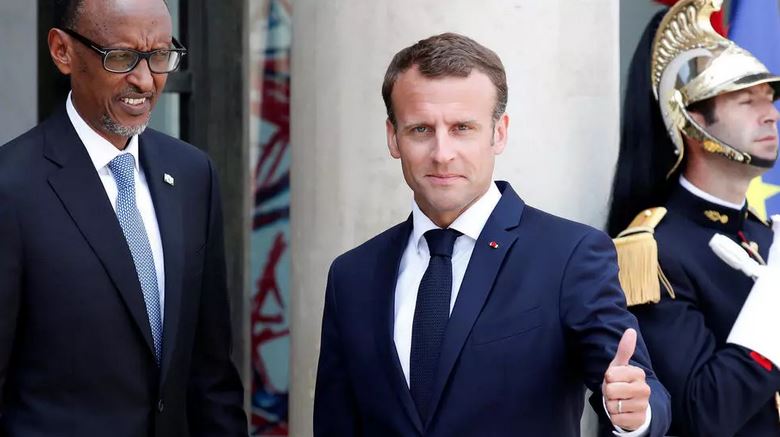
En restant sur la Francophonie, Paul kagame a été obligé de libérer un autre prisonnier politique, il s’agit de Kizito Mihigo. C’est important de revenir sur lui car le 07 avril 2020, Emmanuel Macron a tenu à saluer « la capacité de réconciliation » du peuple rwandais et cela m’a interpellée pour deux raisons :
L’exemple ici est trois jeunes trentenaires, membres fondateurs de l’Alliance Rwandaise pour le Pacte National (RANP-Abaryankuna, un mouvement composé des jeunes résistants rwandais) qui en 2014 avaient mis en place une action d’envergure pour amorcer des dialogues sur la vraie unité dont le peuple rwandais a besoin. Lorsque le gouvernement rwandais a découvert leur action, la réponse n’a pas tardé :
Les trois jeunes étaient des activistes de la réconciliation rwandaise, celle fondée sur l’égalité parfaite entre les individus, le pardon et l’amour de l’autre et du pays. Ce faisant, ils se distanciaient de l’idéologie officielle du régime du FPR, celle de « Ndi Umunyarwanda » qui demandait aux descendants de ce qui a été considéré comme l’ethnie hutue de demander éternellement pardon aux descendants de ce qui é été considéré comme l’ethnie tutsie pour les crimes qui ont été commis en leur nom. Dans ses oeuvres, Kizito Mihigo chantait notamment une réconciliation basée sur l’humanité en indiquant « Je suis rwandais (Ndi Umunyarwanda) devrait être précédé par je suis humain (Ndi umuntu) » et a été emprisonné en raison de ces paroles.

En dehors du contexte de la Francophonie, je souhaite vous parler de :
Pour finir, il est primordial de ne pas oublier les victimes des exécutions extrajudiciaires par les forces de sécurité rwandaise en toute impunité. Depuis le 01 janvier 2020, au moins dix-sept civils[1] non armés ont été assassinés par la police rwandaise ou affiliée. Pour l’année 2019, il y a eu au moins cinquante civils[2] non armés exécutés par la police rwandaise.

Tout cela se déroule dans une impunité totale et sous silence complète de la communauté internationale dont la France fait partie. La lutte contre l’impunité est primordiale pour que le peuple rwandais puisse vivre en paix. Le Dr Denis Mukwege, prix Nobel de la paix, l’a souligné dans son discours du 10 décembre 2018 : «Seule la lutte contre l’impunité peut briser la spirale des violences». Vos voix pour arrêter la spirale des violences au Rwanda peuvent non seulement aider le peuple rwandais à retrouver la paix et la sécurité mais aussi peut sauver des vies, notamment celle des opposants politiques dans le collimateur du pouvoir du FPR au Rwanda ou à l’étranger. A défaut d’agir, vous pouvez vous abstenir de soutenir ce régime pour celles et ceux qui le font et encourager Emmanuel Macron à arrêter de soutenir le dictateur sanguinaire Paul Kagame.
Je vous prie de croire, Mesdames, Messieurs, les Députés de la République française, à l’assurance de ma plus haute considération.
Constance Alice Mutimukeye
[1] https://www.rwandanlivesmatter.site/#/numbers
[2] Ibid

Umwimere w’iyi nyandiko ufite umutwe ugira uti: “Intabaza yerekana aho u Rwanda rwagana abarwanya ingoma mpotozi ya FPR Inkotanyi batereranye rubanda”. Mu rwego rwo kubwira Rubanda ko na rwo rwifitemo imbaraga, kandi rukaba rugomba gutanga umusanzu warwo, twahisemo guhindura umutwe tuwita : “Impuruza. Dore aho u Rwanda rwerekera niba ntawe ufashije Rubanda kwirwanaho”. Turashimira abayitugejejeho kandi turahamagarira abasomyi gutanga ibitekerezo byabo uko babyumva nk’umusanzu wo kubaka igihugu kizira umunabi.
Duhereye ku mateka y’igihugu cyacu, hari ibimenyetso bigaragara byerakana ko niba nta gihindutse mu maguru mashya, abanyarwanda bashobora kwibona mu bintu byibutsa imyaka ya 1959-1961, n’imyaka ya 1990-1994.
Kuva aho umwami Mutara III Rudahigwa yangiye guha agaciro ibitekerezo yari yagejejweho n’impirimbanyi za demokarasi byari bikubiye mu nyandiko izwi ku izina rya “Manifeste des Bahutu” yerekanaga akarengane abenegihugu barimo, Kigeri V Ndahindurwa wamusimbuye mu mwaka w’1959 akadukana ahubwo urugomo rwo kwica izo mpirimbanyi, byarangiye byose ubwami buciwe, hashingwa Repubulika.
Repubulika imaze gushingwa, abatarishimiye ishingwa ryayo bahunze igihugu ndetse barema n’umutwe w’ingabo wo kurwanya iyo Repubulika uzwi ku izina “Inyenzi”. Igihe ubutegetsi bwa Repubulika bwari buri mu biganza by’impirimbanyi zishyize hamwe, bwabashije gukumira ibitero by’inyenzi.
Nyuma y’imyaka 25 u Rwanda rubonye ubwigenge, bamwe mu bahunze igihugu mu myaka ya 1959-1961 bavuguruye ishyaka ryari irya Kigeri V Ndahindurwa baryita RANU, ari na ryo ryaje guhinduka FPR Inkotanyi ubwo bateraga u Rwanda mu mwaka
w’1990.
Intambara y’Inkotanyi zishaka gufata no kwiharira ubutegetsi mu Rwanda kuva mu Ukwakira 1990 kugeza 1994 yaranzwe n’ibi bikurikira:
● Ubwumvikane buke mu bari imbere mu gihugu cyane cyane nyuma y’aho amashyaka menshi yemerewe;
● Ingorane z’ubutegetsi bwa Habyarimana zo kurwana intambara ebyiri icyarimwe: iy’amasasu n’iya demokarasi;
● Ubufatanye hagati y’abateye u Rwanda na ba mpatsibihugu bashakaga ko inyungu zabo mu karere zakwitabwaho kurushaho;
● Ibikorwa by’iterabwoba mu gihugu n’urugomo byakozwe na FPR Inkotanyi hagamijwe gutera ubwoba abanyarwanda muri rusange n’abanyapolitiki by’unwihariko;
● Iyicwa rya bamwe mu banyapolitiki b’abanyarwanda ryashojwe n’iyicwa rya Perezida Habyarimana kuya 6 Mata 1994 hagamijwe gushyira igihugu mu kangaratete kugira ngo FPR Inkotanyi ishobore gufata ubutegetsi nta nkomyi.
Kuva Inkotanyi zafata ubutegetsi i Kigali muri Nyakanga 1994, ntizahwemye gukora ibikorwa by’iterabwoba, haba mu gihugu imbere ndetse no hanze, zica abo zibona bose bazibangamiye kubera ibitekerezo byabo byo kubanisha abanyarwanda mu mahoro n’ubwumvikane.
Uretse kwica zakomeje n’ibikorwa byo gufunga inzirakarengane ziziziza gutekereza ku
buryo bunyuranye n’ubw’Inkotanyi.
Nko mu gihe bicaga Gapyisi Emmanuel (18.05.1993) wahamagariraga abanyarwanda bari imbere mu gihugu gushyira hamwe ngo bivune FPR Inkotanyi yari yabashoye mu ntambara bakicana ari abavandimwe, ni ko bishe umuhanzi Kizito Mihigo (17.02.2020) wahamagariraga abanyarwanda bose kwiyunga nyabyo kugira ngo babashe guhangana n’ibibazo baterwa n’ubutegetsi bubi.
Uko Mbonyumutwa Dominiko yakubiswe muri 1959, ba Secyugu na ba Mukwiye bakicwa, niko ubu abayoboke b’amashyaka arwanya FPR Inkotanyi bicwa cyangwa bakagaraguzwa agati.
Nk’uko ihohoterwa ryakorewe Mbonyumutwa Dominiko n’iyicwa ry’abarwanashyaka byatumye ubwami buseswa hakavuka Repubulika;
Nk’uko kandi iyicwa rya ba Gapyisi Emmanuel (MDR, perezida wa komisiyo y’iteganyamigambi), Rwambuka Fideli (MRND, Burugumesitiri wa komini Kanzenze), Gatabazi Felisiyani (PSD, Minisitiri w’ibikorwa bya Leta), Bucyana Martini (CDR, Perezida w’ishyaka) na Perezida Habyarimana n’abo bari kumwe mu ndege byatumye abanyarwanda bicwa ari benshi bitari ngombwa;
Ihohoterwa rikomeje ry’abanyapolitiki batavuga rumwe na FPR Inkotanyi n’iyicwarubozo rya bamwe muri bo bishobora gutuma igihugu kijya mu ijoro ry’icuraburindi risumba iryakigwiriye muri 1994.
Dukurikije iyi mikorere yaranze abarunari ikaba ubu iranga FPR Inkotanyi, yo kwanga ko abanyarwanda bakumvikana bakareshya imbere y’amategeko;
Tuzirikanye urugomo rukabije ruyiranga ubu rugaragarira mu kugaraguza agati madamu Ingabire Victoire, Me Ntaganda Bernard n’abandi banyapolitiki no kwica abayoboke b’amashyaka atavuga rumwe na FPR Inkotanyi;
Ni ngombwa ko abanyarwanda badakomeza kuba ba Bwoba, Ntibindeba ahubwo bagashishikazwa no kurengera igihugu cyabo n’uburenganzira bwabo busesuye.
Ibi byakorwa gute rero?
1. Gushyigikira birushijeho no gushingana Madamu Ingabire Victoire, Me Ntaganda Bernard, n’izindi mpirimbanyi za demokarasi ziri mu Rwanda mu buryo butaziguye;
2. Gushira ubwoba no gutinyuka gushyigikira ku mugaragaro amashyaka arwanya ubutegetsi buriho mu Rwanda no kwanga gukomeza kogerwaho uburimiro n’abambari b’ingoma mpotozi;
3. Abaharanira ko uburyo igihugu kiyobowe bwahinduka neza mu buryo buboneye abanyarwanda bose bakore ibikorwa bateganyije batagombye gutegereza ibikorwa bigayitse bya FPR, mu gihe ibi byaba bibaye, bo bakabyamagana bivuye inyuma;
4. Abarwanya ingoma mpotozi ya FPR bakurikiza umurongo wa politiki ushyira imbere inyungu za rubanda bakwiye kwikusanya bidatinze bagahuza ingufu zabo;
5. Kwiga uburyo abakeka ko baremewe gutegeka mu Rwanda batitaye ku nyungu za rubanda bataba imbogamizi mu kubahiriza inyungu z’abanyarwanda bose muri rusange, ahubwo bakumva ko uburenganzira bafite mu gihugu babunganya n’abandi banyarwanda;
6. Kuzirikana ko impinduka mu Rwanda ishoboka ari uko abanyarwanda ubwabo babishatse kandi bakabikora, inkunga y’abanyamahanga ikaba gusa yaza ibunganira kuko “Akimuhana kaza imvura ihise”.
Bikozwe ku ya 24 Gicurasi 2020 na:
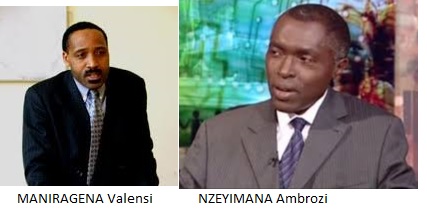
Maniragena Valensi
Nzeyimana Ambrozi

20 April 2020
H.E. Mr Tijjani Muhammad-Bande
President of the United Nations General Assembly
Your Excellency,
I have the honour to submit the UK’s Explanation of Position on the draft resolution entitled “International Day of Reflection on the 1994 Genocide against the Tutsi in Rwanda” (A/74/L.40).
Yours sincerely,
Jonathan Allen
Explanation of Position by the United Kingdom on draft resolution entitled “International
Day of Reflection on the 1994 Genocide against the Tutsi in Rwanda” (A/74/L.40.) The UK thanks the President of the General Assembly for the circulation of the draft General Assembly resolution on the Rwandan genocide.
We strongly support the remembrance of victims of the 1994 Rwandan genocide and believe it is important to ensure that these commemorations recognise all victims. Whilst
we did not break silence on the text, we would like to use this opportunity to express some reservations on the text. These reservations relate to the substance – we disagree with the framing of the genocide purely as the “1994 genocide against the Tutsi”.
As noted in previous resolutions, we believe that Hutus and others who were killed should also be recognised. Our concerns also relate to the process – we note that there were some shortcomings in regards to transparency in the negotiation and adoption processes.
The UK remembers the tragic events in April 1994 and is firmly committed to ensuring that such atrocities never happen again.
UK-EOP-on-Rwandan-genocide-resolution-20-April

Ni inama yahawe izina rya Rwanda Bridge Builders. Yabaye kuwa 23 kugeza kuwa 24 Gicurasi 2020. Yahuje abari hafi 60 harimo amashyaka ya politiki atavuga rumwe na FPR ndetse n’imiryango itegamiye kuri Leta yita ku bibazo by’u Rwanda.
Inkuru ya Radiyo Ijwi ry’Amerika.
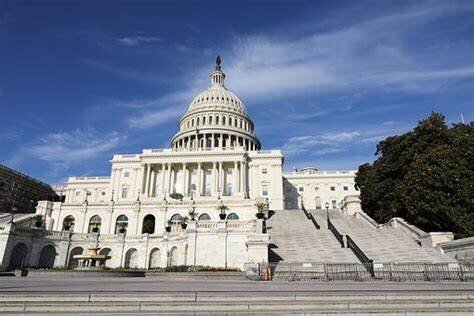
The Honorable Lindsey Graham
290 Russell Senate Office Building
Washington, DC 20510
The Honorable Tim Kaine
231 Russell Senate Office Building
Washington, DC 20510
Dear Chairman Graham and Ranking Member Kaine:
The narrative known worldwide is that Rwanda has been achieving remarkable economic and social progress over the past couple of decades. However, the reality on the ground tells a different story. The economic facts of Rwanda described at length in a recently published report entitled Rwanda Vision 2020 Development Programme Scrutiny, presents a comprehensive analysis of the country’s development program objectives.
As a concerned citizen of the United States of America and a Pastor with a keen interest in all matters relating to Rwanda and the Great Lakes region of Africa, I am writing to express my concern over the deterioration of human rights in Rwanda. Recently, the Rwandan government has intensified its policy of openly harassing human rights activists globally and any dissenting voices emanating from and outside of Rwanda. Most notably, the assassination of the late gospel singer and reconciliation activist Kizito Mihigo. Recently, Mr. Theophile Ntirutwa came close to death after being targeted by a killing squad who instead mistakenly murdered Reverend Theoneste Bapfakurera. This murder took place on the outskirts of Kigali in Rwamagana, on May 11, 2020.
On September 6, 2017, Mr. Ntirutwa Theophile, the leader of the United Democratic Forces (FDU) in Kigali, went missing. He was held incommunicado for seventeen days until his family found him on September 23, at the notorious Remera police station. The regime often uses bogus charges against anyone who opposes it and consequently imprisoned Ntirutwa and several other FDU members. He served 30 months in a maximum-security prison, and then he was released on January 25, 2020, after the court found him innocent. After his release, Ntirutwa joined a newly formed political party, DALFA Umurinzi, founded by the former president of the FDU, Ms. Ingabire Victoire. On Monday, May 11, 2020, a pro-government killing squad attacked the compound where Ntirutwa lives and conducts business. Ntirutwa narrowly survived the assassination. Unfortunately, Reverend Theoneste Bapfakurera was stabbed to death.
According to reliable information from a human rights activist based in Kigali, the attack took place around 7:30 PM local time. Ntirutwa, with friends and family members, were surprised by a killing squad armed with traditional weapons and pistols. When the attackers arrived at Ntirutwa’s boutique, they asked, “Who is Theo?” There were two Theos in the same boutique. Reverend Bapfakurera Theoneste, who also goes by the name “Theo,” responded, “I am Theo!” Without any hesitation.
Consequently, the killers stabbed Reverend Bapfakurera to death. Ntirutwa hid under the counter as members of the killing squad stated: “Mission accomplished we can leave now.” Little did they know, they had killed the wrong Theo.
After the killing squad left, Ntirutwa called the police to report the incident. However, the police appeared at the crime scene two hours later. Ntirutwa was treated as a suspect rather than a victim of attempted murder. In the past Rwanda National Police and other security organs have been utilized to harass, assassinate, or made disappear perceived opponents of the present regime. Fortunately, Ntirutwa narrowly survived murder. However, the police arrested his wife— who was not at the crime scene. In addition, Ntirutwa’s sister, and two other survivors were arrested.
When the attack took place, the following people were present: Reverend Bapfakurera Theoneste (Ntirutwa’s landlord), Mr. Ntirutwa Theophile, Mrs. Mushimiyimana Emerithe (Ntirutwa’s wife), Ms. Mukantwari Francine (Ntirutwa’s sister), Mr. Hakizimana Frodward, and Mr. Rudasingwa Jean Bosco. When the police arrested Ntirutwa Theophile and his wife, leaving their two underaged children, ages 5 and 7, unattended.
In addition to the arrest of Mr. Ntirutwa Theophile, his wife, and other survivors, a progovernment hate Youtube TV channel and website based tabloid named my250tv.com claims that Mrs. Ingabire Victiore was the mastermind of the assassination of Reverend Bapfakurera because “he refused to join her political party DALFA Umurinzi!” Furthermore, a reporter named Ellen Kampire said, “I ask myself why Ingabire Victoire is not locked up because in [the] past she was involved in acts of murder. It is not only the assassination in Rwamagana she masterminded. She was the mastermind behind grenades attacks in Kigali! I think she should also be murdered because she masterminded crimes that took the lives of many Rwandans.”
The government of Paul Kagame coordinates media propaganda with investigations through the Rwanda Investigation Bureau (RIB), which serves as a government tool to crush all opposition. Mrs. Ingabire Victoire was summoned by RIB for investigation on Monday, May 18, 2020. I am deeply concerned that these charges are politically motivated by the government of Rwanda. Mrs. Ingabire Victoire and additional opposition members may face fabricated charges and possibly assassination in the coming days.
Unfortunately, killing or making members of the opposition party disappear has been a norm by the current regime in Rwanda. For a few years, squads killed Jean Damascene Habarugira, Iragena Illuminee, Anselme Mutuyimana and Syrdio Dusabumuremyi. Furthermore, Eugene Ndereyimana disappeared and Boniface Twagirimana mysteriously disappeared while he was in prison.
As a concerned Citizen of the United States, a Pastor and human rights activist I am requesting the US Senate Subcommittee on Africa and Global Health to use its leverage under section 116 of Section 503 of the Foreign Assistance Act to urge the regime of General Paul Kagame to cease its human rights abuse and become tolerant to members of the opposition and dissenting voices in Rwanda and abroad.
Thank you for your time and consideration.
Sincerely, Rev. Dr. Innocent N Justice
Resident of the State of North Carolina
(980) 689-1839
CC
The Honorable David Perdue
455 Russell Senate Office Building
Washington, DC 20510
The Honorable Rob Portman
448 Russell Senate Office Building
Washington, DC 20510
The Honorable Ron Johnson 328
Hart Senate Office Building
Washington, DC 20510
The Honorable Ted Cruz
127A Russell Senate Office Building
Washington, DC 20510
The Honorable Christopher Coons
218 Russell Senate Office Building
Washington, DC 20510
The Honorable Cory Booker
717 Hart Senate Office Building
Washington, DC 20510
The Honorable Chris Murphy
136 Hart Senate Office Building
Washington, DC 20510
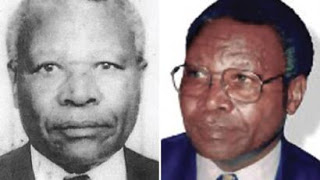
Félicien Kabuga qui vient d’être arrêté en France est présenté comme étant à la fois le financier de l’Akazu, une cellule familiale qui aurait préparé le génocide, et le fondateur des Interahamwe, milice associée au génocide des Tutsi et des Hutu alliés au FPR du général Kagamé, les « Hutu modérés » des médias. Or, l’Akazu n’a jamais existé et Félicien Kabuga n’a pas fondé les Interahamwe.
1) L’Akazu n’a jamais existé
Devant le TPIR, le Procureur a échoué à convaincre les juges « au-delà de tout doute possible », que :
– le génocide du Rwanda avait été planifié au sein de l’Akazu, une prétendue cellule familiale postulée avoir été financée par Félicien Kabuga et dirigée par Protais Zigiranyirazo, beau-frère du président Habyarimana,
-que le maître-d’œuvre de cette opération criminelle était le colonel Théoneste Bagosora, qu’il présentait comme le« cerveau du génocide ».
Considérant que le Procureur n’avait « pas établi le bien-fondé de sa thèse » , dans leur jugement du 18 décembre 2008, tout en le condamnant pour n’avoir pas su contrôler ses prétendus subordonnés, les juges acquittèrent le colonel Bagosora du principal chef d’accusation, l’ « entente en vue de commettre un génocide ». Celui qui avait été présenté comme le « cerveau » du génocide n’avait donc pas programmé ce dernier…
Puis, le 16 novembre 2009, la Chambre d’appel du TPIR acquitta Protais Zigiranyirazo, le chef du prétendu Akazu. Il était d’ailleurs difficile de faire autrement car la Défense avait démontré que l’Akazu n’avait jamais existé puisqu’il s’agissait d’une invention de l’opposition au président Habyarimana…Les deux « inventeurs » vinrent même témoigner devant le TPIR pour expliquer toute l’affaire (voir à ce sujet mes publications citées en fin de communiqué).
Et pourtant, dans la plus totale ignorance du dossier, les médias osent écrire que Félicien Kabuga était le financier d’un Akazu fantasmé…
2) Félicien Kabuga n’a pas fondé les Interahamwe
Dans le contexte de pré-guerre civile qui ensanglantait le Rwanda des années 1992-1994, tous les partis politiques se dotèrent de milices. Tous, y compris le PSD (Parti social-démocrate), un parti très largement tutsi dont la milice était les Abakombozi (Libérateurs).
Chronologiquement, la première de ces milices, les Inkuba (Foudre) fut fondée par le MDR (Mouvement démocratique républicain) un parti hutu à dominante sudiste qui combattait le régime du président Habyarimana.
En réaction, à la création des Inkuba, le parti présidentiel, le MRND (D) (Mouvement révolutionnaire national pour le développement et la démocratie), se dota des Interahamwe (Ceux qui vont ensemble).
Cette milice fut fondée par un Tutsi nommé Anastase Gasana. Membre du MRND (D), ce dernier adhéra ensuite au MDR et devint conseiller du premier ministre (MDR) Nsengiyaremye avant d’être nommé Ministre des Affaires étrangères du gouvernement d’Agathe Uwilingiyimana, un gouvernement d’opposition au président Habyarimana. Anastase Gasana rallia ensuite le FPR et il devint même ministre dans le premier gouvernement constitué au mois de juillet 1994, après la victoire militaire du général Kagamé.
Ainsi donc, le fondateur des Interahamwe, ces « tueurs de Tutsi », était lui-même Tutsi…et il fit une brillante carrière ministérielle sous le régime tutsi victorieux… Pour mémoire, le co-fondateur de ces mêmes Interahamwe, Eric Karagezi était également Tutsi (TPIR-2001-73-T, lundi 6 mars 2006, Des Forges, page 31). Quant à la milice elle-même, elle était dirigée par un autre Tutsi, Robert Kajuga…
Il est donc pour le moins insolite de constater que tant de Tutsi aient pu avoir de tels rôles essentiels dans la création, l’organisation et le fonctionnement d’une milice présentée comme ayant préparé et commis le génocide des Tutsi…
Le FPR avait également infiltré nombre de ses membres au sein des Interahamwe. Devant le TPIR les noms et les pseudonymes de plusieurs d’entre eux ont été cités. Dans la période qui précéda le génocide, donc avant le 6 avril 1994, leur mission était double :
– discréditer les partisans de ce dernier aux yeux de l’opinion internationale en faisant porter sur eux la responsabilité des violences qui secouaient alors le pays.
Devant le TPIR, l’ancien Premier ministre Jean Kambanda a déclaré à ce propos sous serment que:
« (…) les Interahamwe (…) étaient commandés à partir du siège de l’état-major du FPR. Sur les cinq dirigeants des Interahamwe au niveau national, je parle du Président, du premier et du deuxième vice-président et de deux trésoriers, trois sur cinq avaient été officiellement recrutés et injectés dans la direction des Interahamwe par le FPR dans sa tactique d’infiltration » (TPIR-98-41-T Kambanda, 20 novembre 2006, p.69).
Voilà qui illustre une fois encore la fausse histoire du génocide du Rwanda « pieusement », et hélas, parfois même servilement, récitée par les médias qui parlent et écrivent sans savoir, se contentant de recopier les notes distribuées par les services du général Kagamé.
On se reportera à ce sujet à mon livre Rwanda: un génocide en questions et mes Dix ans d’expertises devant le TPIR
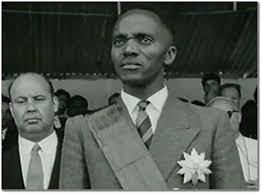
On May 6th 2020 Dr David Himbara on his own blog confirmed unverified hypothesis that “Every post-independence Rwandan dictator weaponized genocide”. “This is an indisputable fact”, he wrote. This post is a reproduction of another he wrote on April 26th 2017 at the same blog.
Despite insufficiency of tangible evidence in both articles, you may understand how it is so important to him to find the dictator Paul Kagame and other Republican leaders in the same basket. By my right and duty of a good citizen, I would like to help him by answering the questions on which he based his thoughts.
Himbara’s only argument that HE Gregoire Kayibanda would be a genocidaire like Kagame is that he did not sign the Genocide Convention during his 11 years on power. Dr Himbara supports his sole argument with the fact that some other African countries quickly ratified that convention!
Assuming that Himbara has no other thought behind, one would like to know why he has never worried nor questioned why no king of Rwanda signed such genocide convention. I think this should be a good way to reason in the best possible way, as from the date when the Genocide Convention was opened for signature on December 09th 1948, both Mutara III Rudahigwa and Kigeli V Ndahindurwa were absolute kings of Rwanda, respectively. In fact, at that time any Member of the United Nations and any non-member State to which an invitation to sign had been addressed by the General Assembly, had the right to be a party to the Convention and Rwanda was one of them (See Article 11 of the genocide convention). I very much doubt that Himbara jumped this period of time from 1948 to 1962 without knowledge of this fact. He merely wanted to rush on HE Gregoire Kayibanda who is quite innocent in this matter of Rwanda genocides.
To proceed I may remind Himbara that even today in 2020, not in 1962, the Convention on genocide still stands a low rate of acceptance by many countries. For instance, the United States signed on only yesterday, after decades with protracted debates, and I hope they have not weaponized genocide. To be complete, one should list and examine each state which has not yet ratified or acceded to the Genocide Convention in order to let Himbara prove himself wrong and apologize to the public for luck of intellectual honesty.
If to Himbara a non-ratifying state weaponizes genocide, many countries are now concerned, as of in February 2018, at least 45 United Nations Member States had not yet ratified the Genocide Convention. Some of those are: Dominica, Grenada, Guyana, Angola, Botswana Cameroon, Central African Republic, Chad, Congo, Djibouti, Equatorial Guinea, Eritrea, Kenya, Madagascar, Mauritania, Mauritius, Niger, Sao Tome and Principe, Sierra Leone, South Sudan, Swaziland Zambia, Indonesia, Japan, Kiribati, Nauru, Oman, Palau, Qatar, Samoa, Thailand, Timor-Leste, Turkmenistan, Tuvalu and Vanuatu. Etc.
Briefly speaking, signature subject to ratification of multilateral convention is an act of interests towards other countries. Like any other contract, it is negotiated and signed, ratified or accessed considering in first place always the interests of your own nation. Therefore, HE Gregoire Kayibanda did not refuse to adopt or sign the convention because at the time of its adoption (1948), Rwanda was not ruled by him but by the King Mutara III Rudahigwa. Nor he did not refuse ratification of the convention as it is a process done always by the country not by a president as a person. In this case, Dr Himbara should have asked why His Majesty MUTARA III Rudahigwa did not sign the genocide convention. Following Himbara’s reasoning, King MUTARA “knew that he would sooner or later unleash genocide” (Himbara’s own words on Habyarimana).
Theoretically and practically, a country cannot be bound without its consent, and consequently no convention can be effective on the territory against the will of that country, therefore, no ratification without its agreement thereto. That is why Rwanda was subjected to the “Accession”, the act whereby a state accepts the offer to become a party to a convention or treaty already negotiated and signed by other states. Accordingly, Rwanda accessed to the genocide convention on April 16th 1975.
Thanks to HE Gregoire Kayibanda, Rwanda has become an independent Republic until today. For sure he will remain a father of our nation, because not only he served many from slavery to liberty, from domination to equality but also, he established democracy in our young Republic. And with the wisdom he had, he could not accept such event of genocides on Rwandan soil or elsewhere in pursuit of Tutsi who fled the country.
To the first question raised, Dr David Himbara was against HE Gregoire Kayibanda because he did not “adopt” the genocide convention. Now the convention is accessed but he is still accusing HE Juvenal Habyarimana that he did block the ICJ to try genocide crimes because of “a reservation” he made during the time of accession. In both articles since 2017? Himbara argued that “Habyarimana effectively blocked the International Court of Justice from holding Rwanda accountable for genocide crimes in Rwanda. It is as if Habyarimana knew that he would sooner or later unleash genocide. Habyarimana would not give up his genocide weapon.”
And he concludes that the former president Juvenal HABYARIMANA like his predecessor, used the genocide as a weapon. But Himbara fails to explain when, how and where exactly this happened? I wish Himbara himself would have provided more information. But he did not, probably and may be, he will. The only argument he advances, is constituted on the fact that the president accepted the accession to the Genocide Convention in 1970s, with a reservation. To Himbara, this is a crime! Not an ordinary one, but a genocide. I must say that this is wrong, wicked, and dangerous!
Before I proceed, I may ask Himbara if he knows any act of genocide committed during Habyarimana regime. And why did this wait so long after his assassination (on the 06th April 1994) to be discovered by Himbara? Moreover, why this was not mentioned in the reasons of the RPF’s attack of October 1st, 1990?
It is true that Rwanda’s instrument of accession to the Convention, contains a reservation worded as follows: “The Rwandese Republic does not consider itself as bound by Article IX of the Convention.” However, this reservation cannot block the ICJ to try genocide crimes especially that the court itself is not competent for crimes matters like genocide. (See the ICJ statute, Article 36, pt.2). I will provide more explanation below, by answering your 3rd question.
Yet, someone may wonder what the content of this Article IX of the Genocide Convention is. It reads as follows:
“Disputes between the Contracting Parties relating to the interpretation, application or fulfillment of the present Convention, including those relating to the responsibility of a State for genocide or for any of the other acts enumerated in article III, shall be submitted to the International Court of Justice at the request of any of the parties to the dispute.”
Except Himbara, everyone including Paul Kagame who reads this article can easily find out that “this reservation to Article IX is not incompatible with the object and purpose of the convention, inasmuch as the reservation relates not to the substantive obligations of the parties to the Convention but to a procedural provision”. In addition, many other States maintain similar reservations, and the majority of the 151 States parties to the Convention have raised no objection to that reservation.
Just for information, even the USA has ratified the Convention, though after forty years (1988) with significant reservations on the same Article IX. It states that with respect to any disputes involving the United States, such disputes may only be submitted to the International Court of Justice with the specific consent of the United States. (see reservation 782). Following Dr Himbara’s reasoning, the sole purpose for such reservation can be also a genocide plan.
Notwithstanding that the question of reservation to Genocide Convention has been even solved in 1951, Himbara still fails to understand it in 2020. In fact, when Rwanda made its reservation on April 16th, 1975; this confusion of Dr Himbara was already removed 24 years before Rwanda accessed to the convention. Generally speaking, the Jurisprudence made by the ICJ has already found that reservations are not prohibited under the Genocide Convention. “It is well established that even if a convention contained no article on subject of reservations, it does not mean that these are prohibited”. (See the ICJ Advisory Opinion on Reservations to the Genocide Convention, ICJ, May 28, 1951, P.12, 22 (1951 I.C.J. 15).
David Himbara should know that the reservation made by Rwanda to the Genocide Convention was legal and lawfully accepted, otherwise it would had been disputed among states members. And he should also know that the reservation is raised when the interests of the country is flouted. Therefore, it was in the best interests of Rwanda as a country and its citizens, not Habyarimana as an individual.
Dear Dr Himbara, first, the ICJ is not competent for criminal matters, much less to try genocide crimes. Only states may be parties in cases before this court because its jurisdiction in all legal disputes is limited to:
Therefore, in its application the DRC contended that Rwanda has violated Articles II and III of the Genocide Convention as the “result from acts of armed aggression perpetrated by Rwanda on the territory of the Democratic Republic of the Congo in flagrant breach of its sovereignty and territorial integrity. (See ICJ, DRC v Rwanda, 3 February 2006, No. 126, pt 22).
Nevertheless, I agree with you that Paul Kagame not only planned genocide but also committed it either in Rwanda or in Democratic Republic of the Congo. But he did not block the criminal prosecution just by reservation as you said. Normally, due to the interests of colonial power (via Kagame) all reservation including this one should have been removed according to the Article 15 of the Arusha Protocol as signed on 3 August 1993, later on confirmed through a décret-loi No. 014/01 of 15 February 1995. For sure, one day he will face justice under Rwandans people’s court or under the ICC or any other court through universal jurisdiction. It is a matter of time.
In your second article you well mentioned the violation of the Article II of the Convention to define the crime of genocide. Actually, Paul Kagame’s criminal responsibility is based on those acts found in that Article, together with other two important elements:
Thus, to constitute “crime of genocide”, it needs to be established that the victims are deliberately targeted not randomly because of their real or perceived membership of the group protected under the Convention. This means that the target of destruction must be the group, as such, or even a part of it, but not its members as individuals. For instance, the target of Hutu by RPA, in Byumba alone should be qualified as genocide, the same the devastation of Kibeho camp, alone constitutes genocide, and also extermination of Hutu Refugees in DRC alone constitutes genocide as well.
With the same idea, why in your first Article in April 2017, do you write as follows: “As we mourn our loved ones who departed from us during the 1994 Rwandan genocide”, but for second time on the May 6th 2020, you change the gear to “the commemoration of the genocide against Tutsi”? Dr Himbara why and what is the difference?
Why did you insist on equating Paul Kagame to Juvenal HABYARIMANA? It is true that Kagame used genocide as a tool to avoid justice but why do you want to convince everyone that Kagame is as bad as Habyarimana. Let me tell you something which I can stand on until I die, Kagame will stay a unique tyrant in the history of Rwanda until the end. No one can be compared to Kagame, he is the worst.
Dear Dr HIMBARA,
When I find that you served as the Principal Private Secretary (PPS) to the President Paul Kagame, and that before that you headed the Strategy and Policy Unit (SPU) in the Office of the President, I understand how very difficult it is to oppose a system that you yourself have built.
However, it is a universal principle that “no one may profit by his own wrongdoing”.
Venant Nkurunziza
Your fellow Rwandan
Avis aux lecteurs: Nos articles peuvent être reproduits à condition de citer le nom d’auteur et le site web source. Notice to readers: Our articles may be reproduced provided the author’s name and the source website are cited.

