Kuva iki gitekerezo cya Guverinoma ikorera mu buhungiro cyavuka hari bamwe batasobanukiwe. Ni initiative igamije guhuriza hamwe imbaraga zitavuga rumwe na FPR , bakaba babona ko koko aribo bagombye kuba bayobora igihugu ( qui réclament la légitimité du gouvernement). Iyo abaturage babujijwe uburenganzira bwo kwishyiriraho ubutegetsi , bashobora gushinga Guverinoma yabo igahangana n’iyo batemera.
Muri Kenya hari umugabo washinze Guverinoma ye bamaze kumwiba amajwi. Uretse ko we yari mu gihugu , iyo aza kwirukanwa agahunga, iyo Guverinoma yari kuba ibaye iyo mu buhungiro. Usanga hari abantu batumva iyi innovation muri politiki nyarwanda bigatuma batinjira muri iyi Guverinoma. Hari n’abandi banga kandi bakarwanya iyi Guverinoma byonyine ngo kuko igitekerezo atari icyabo.
Ngaho nimumbwire: 1. Ni gute warwanya iyi Guverinoma ngo ntibibaho, ngo ni ukwikinisha, nyamara washinze ishyaka mu buhungiro, nk’aho ryo hari itegeko ribikwemerera?
Ni gute wakwanga kwinjira muri Guverinoma nyamara ukinjira muri Rwanda Bridge Builders ? ( uretse ko basanze Nahimana Thomas yarabatanze idée ya Guverinoma – yabatanze umushi).
Ni gute warwanya Guverinoma ikorera mu buhungiro kandi wowe ufite cg ushaka gushinga ingabo? ( ubundi Ingabo z’igihugu zagombye kuba zihagije)
Maze rero abantu bajye basobanukirwa ko yaba amashyaka ya politiki, yaba Guverinoma yo mu buhungiro, zaba ingabo, zose ni outils de résistance à l’oppression zishyirwaho mu bihe bidasanzwe nk’ibyo turimo. Cyakora koko niba ubona leta ya FPR ifite légitimité na légalité mu maso y’abanyarwanda, byo koko Guverinoma yindi ntiwayemera. Ushobora no kwanga kujya muri Guverinoma kuko yashyizweho n’umuntu udakunda ariko ibyo ni ibibazo hagati y’abantu kandi bibaho. Ahubwo ikimbabaza ni uko idakora cyane uko bikwiye.
En date du 14 novembre 2020 on apprenait le retrait d’un des membres de la “Commission de recherche sur les archives françaises relatives au Rwanda et au génocide des Tutsi (1990-1994)”. Cette commission mise sur pied par le président Emmanuel Macron a pour but d’éplucher les archives et déterminer quel a(urait) été le rôle de la France dans le conflit rwandais qui a culminé en génocide de 1994. Un travail très délicat si l’on considère les implications diplomatiques et politiques du sujet. Les acteurs de la société civile et universitaires d’origine rwandaise réunis sous Groupe d’Initiative France Rwanda (GIFR) avaient partagé par avance avec cette commission leurs inquiétudes avant de soumettre des recommandations. Les membres du GIFR pressentent les tentatives de manipulations de la commission par le FPR à travers les trous que la démocratie française pourrait naïvement offrir à la dictature rwandaise.
Leur lettre est reprise ci-bas.
Note à la Commission de recherche sur les archives françaises relatives au Rwanda et au génocide des Tutsi (1990-1994)
Mesdames, Messieurs, membres de la Commission ;
Le Groupe d’Initiative France Rwanda (GIFR) salue votre dévouement et votre bon travail pour atteindre les objectifs définis lors de la création de la Commission de recherche sur les archives françaises relatives au Rwanda et au génocide des Tutsi (1990-1994). Le monde entier en général, la France et le Rwanda en particulier attendent de vous les réponses aux questions qui, jusqu’ici, n’ont pas eu de réponses définitives et convaincantes sur le rôle qu’aurait joué la France dans la tragédie rwandaise il y a 26 ans.
En tant que Rwandais et Français d’origine rwandaise vivant en France, nous avons suivi ce dossier de près car il nous est indéniable que seule la vérité sur ce qui s’est réellement passé, pourra nous permettre de renforcer les relations bilatérales entre les deux pays dans un esprit de respect mutuel. Pour les Rwandais spécialement, il nous sera enfin possible de nous réconcilier avec notre passé, de rendre justice à tous ceux qui en ont soif depuis déjà trop longtemps, de mettre un point à notre deuil, et d’avancer en envisageant un avenir durable.
Par cette note nous nous permettons d’apporter notre observation en termes de contribution et soutien au travail qui vous est confié et qui requiert l’objectivité, l’éthique et le professionnalisme. Nos apports sont fondés et soutenus par nos expériences en tant qu’acteurs de la société civile rwandaise et acteurs politiques, universitaires et/ ou témoins de certains événements de la période concernée par votre travail.
Des objectifs précis mais aux antipodes de la politique menée par le Front Patriotique Rwandais (FPR).
Les objectifs de cette mission sont très clairs et concis ne laissant aucune fenêtre au moindre doute, et le résultat reflètera la position de la France à ce sujet et guidera les décisions et actions dans l’avenir. Cependant, il est commode de souligner que le FPR a déjà sa version des faits, une version que le régime de Kigali est prêt à défendre, une hypothèse que le régime fera tout pour qu’elle soit confirmée. Selon cette hypothèse, la France est complice dans le génocide et au moins 13 anciens dirigeants français sont incriminés[1]. Par exemple, selon la conclusion du rapport “MUCYO” de la Commission nationale chargée de rassembler les preuves montrant l’implication de l’état français dans le génocide perpétré au Rwanda en 1994 « Durant toute la période du génocide, la France a soutenu diplomatiquement et militairement le gouvernement intérimaire qui, au su du monde entier, en temps réel, était en train d’organiser et d’exécuter un génocide [2]».
Et dans ses recommandations, la même Commission encourage l’Etat rwandais de soutenir toute action individuelle ou collective de victimes qui souhaiteraient porter plainte pour le préjudice causé par l’Etat français. La Commission ajoute que, cependant, le gouvernement rwandais pourrait se contenter d’un arrangement diplomatique avec l’Etat français pour trouver une solution à cette question. Ceci, dit la Commission, dépendrait de la décision de l’Etat français de reconnaître toutes ses responsabilités dans le génocide et de procéder à des réparations[3].
Bien que les méthodologie et témoignages utilisés par la Commission étaient vivement critiqués, les conclusions de l’enquête ont été saluées par le Gouvernement Rwandais. Le rapport constitue un instrument important et une arme pour mettre à genoux la France. Aucun travail de professionnels aussi intègre qu’il soit ne saura faire bouger le FPR de sa position, car il s’agit d’une cause existentielle.
Une démarche scientifique versus une pratique machiavélique
Lors de la composition de votre Commission, le Président Emmanuel Macron s’est basé sur vos valeurs et professionnalisme confirmés par vos travaux et succès dans vos missions du passé. Pour cela, les membres du GIFR n’ont aucun doute sur vos neutralité et sincérité. Pourtant, votre démarche scientifique est une chose inexistante au Rwanda. Le FPR utilise toute sorte de pression et n’épargne rien, y compris le mensonge, la manipulation de statistiques[4] et les méthodes les plus illégales, pour arriver à ses fins. Les chercheurs[5] les plus fidèles à leurs carrières sont victimes de chantage et terrorisme orchestrés par les services secrets rwandais pour les contraindre à revenir aux conclusions de leurs travaux qui contredisent la version officielle de Kigali. Tel a été le modus operandi du FPR, et ça a marché dans plusieurs cas.
Dans son jeu, le FPR paie des lobbies et média pour véhiculer le faux narratif en sa faveur, ce qui en partie façonne l’opinion internationale susceptible d’influencer les conclusions si on adopte la démarche scientifique. En effet, la littérature sur le sujet est pleine de ce genre de sources. Un exemple frappant concerne la thèse du génocide contre les Tutsis qui aurait été planifié, une thèse qui continue d’être répétée même par les chercheurs sérieux alors que même le Tribunal Pénal International pour le Rwanda (TPIR) n’a pas reconnu cette planification par le gouvernement rwandais de l’époque[6]. Aujourd’hui la France est encore accusée de complicité dans cette « prétendue » planification.
L’on pourrait aussi citer l’assertion de « la communauté internationale qui a manqué à ses responsabilités d’intervenir pour assister aux Tutsis qui faisaient massacrer en 1994 ». Or, c’est bien le FPR qui s’est opposé au déploiement de la force onusienne, car, le mouvement rebelle craignait qu’une telle intervention aurait pu empêcher sa conquête militaire qui s’annonçait inévitable[7]. Et des observateurs avisés estiment que les décisions de l’Etat français prises par rapport au dossier du génocide rwandais, tendent à céder au chantage de l’Etat rwandais[8]. Ainsi, quand on s’attendait à la vérité, c’est la realpolitik qui a été privilégiée.
La démocratie française au service de la dictature rwandaise
La démocratie française et ses nobles valeurs offrent une porte d’entrée exploitable par la dictature rwandaise. En effet, au moment où tous les témoignages au Rwanda sont manipulés, la liberté d’expression est garantie à chacun en France. Nous avons observé des associations françaises, des universitaires, des médias, ou de simples citoyens[9] défendre les intérêts du Rwanda au détriment de leur pays, seulement parce qu’ils sont tombés sur une source attractive mais mensongère, ou qu’ils ont cru naïvement en la version officielle de Kigali, ou qu’ils sont payés pour ça.
Bien qu’il y ait pas mal de suspicions sur les relations qu’entretiennent certaines associations et le régime de Kigali, aucune enquête sérieuse n’est menée par des instances habilitées pour déterminer à quel point ça pourrait constituer un danger à la démocratie. Ces associations et individus au service du FPR créeront une sorte de populisme et serviront en tant que groupes de pression sur n’importe quelle Commission pour faire triompher la version de Kigali. Ils iraient même jusqu’à dire que les archives ont été altérées s’il arrivait que les résultats ne correspondent pas aux attentes du FPR.
Cas de l’Association Survie
Lors de la sortie de votre note intermédiaire[10], l’association Survie a fait une réaction avec indignation comme quoi « la grande lessive a déjà commencé[11]». Toujours en quête de protéger la bonne relation entre Survie et le FPR, la stratégie utilisée reste inchangée : partir d’une réalité, la sortir de son contexte temporaire, légal et légitime, pour en faire une situation tout à fait différente, horrible et condamnable. Il s’ensuit de faire beaucoup de bruit à ce sujet dans des actions encouragés par le FPR, premier profiteur de la situation. Mais à en juger de plus près, Survie n’a aucune autorité morale dans cette affaire pour des raisons bien connues.
En effet, le FPR et Survie marchent main dans la main depuis un peu avant 1994. Se présentant comme une association contre la néo-colonisation française en Afrique, Survie propose ses services au FPR. En 1994, le fondateur de l’association, Monsieur Jean Carbonare devient Conseiller du Président Pasteur BIZIMUNGU. Son rôle principal était de faire la promotion de l’image du nouveau régime post-génocide et sera impliqué dans plusieurs projets à caractère commercial contrairement aux objectifs de l’association Survie. L’héritage de Monsieur Carbonare sera ( Ndlr: et reste) bien entretenu après sa mort.
Recommandations
La France était présente au Rwanda et a encouragé le multipartisme et les négociations entre les deux camps opposés dans la guerre lancée par le FPR en 1990, néanmoins, force est de constater que les acteurs dans ce conflit étaient plus nombreux. Pour cela, malgré l’importance que les archives françaises représentent, elles ne peuvent pas à elles seules expliquer les actions et réactions des deux camps. C’est dans cette optique qu’il serait judicieux de consulter, dans la mesure du possible, les archives de l’Ouganda, des Etats Unis d’Amérique, de Belgique, du Canada, et de l’Organisation des Nations Unies.
L’Etat rwandais vous invite à consulter les « chercheurs » rwandais pour avoir une vue complète de toute la situation. Cependant, le FPR n’était pas aux affaires pendant la période concernée et la totalité d’archives a été détruite pendant la guerre. Cette lacune pourrait être en partie comblée par les entretiens avec les personnes qui ont servi dans la diplomatie rwandaise de l’époque, mieux placés que le FPR.
[2] Commission nationale indépendante chargée de rassembler les preuves montrant l’implication de l’Etat français dans le génocide perpétré au Rwanda en 1994, p. 328
For years, UN investigators secretly compiled evidence that implicated Rwandan President Paul Kagame and other high-level officials in mass killings before, during and after the 1994 Rwandan genocide.
The explosive evidence came from Tutsi soldiers who broke with the regime and risked their lives to expose what they knew. Their sworn testimony to a UN court contradicted the dominant story about the country’s brutal descent into violence, which depicted Kagame and his RPF as the country’s saviours.
Despite the testimonies, a UN war crimes tribunal — on the recommendation of the United States — never prosecuted Kagame and his commanders. Now, for the first time, a significant portion of the UN evidence is revealed, in redacted form.
In early July 1994, as the genocide in Rwanda was nearing its end, Christophe, whose real name and location are being withheld for safety reasons, was recruited by the Tutsi-led Rwandan Patriotic Front (RPF).
Christophe, a medical student before the war, was assigned to care for wounded RPF soldiers in Masaka, a neighborhood in the southeast of Rwanda’s capital, Kigali.
The RPF was on the brink of winning the war. It was the culmination of a bloody campaign that began in 1990 when its forces invaded Rwanda from their base in Uganda, where their Tutsi families had been forced into exile for three decades.
Their struggle for political power in Rwanda took a drastic turn on 6 April 1994, when a plane carrying Rwanda’s then president Juvénal Habyarimana, a Hutu, was shot down in Kigali, killing everyone aboard, and abruptly ending a power-sharing deal that was supposed to end three-and-a-half years of violence. The plane attack set off a killing spree that left hundreds of thousands of Tutsis dead, mostly at the hands of their Hutu countrymen. By mid-July, the RPF had routed the former Hutu government, and purportedly put an end to the massacres.
Blame game: RPF soldiers investigate the site of the plane crash that killed then Rwandan president Juvénal Habyarimana in 1994. One theory suggests that Hutu hardliners shot down the plane, but RPF informants have told the ICTR that the RPF planned and executed the attack. (Photo: Scott Peterson/Liaison)
From his battle clinic in Masaka, though, Christophe saw that the killings were continuing. “People were disappearing,” he recently told the Mail & Guardian. Many of the new recruits Christophe treated began to share sobering details about what they were being ordered to do to Hutu civilians — men, women and children who had no apparent connection to the killing of Tutsis. These Hutus were being arrested in different areas of the capital by RPF officials, they said, and brought to a nearby orphanage called Sainte Agathe, where they were summarily executed.
The young recruits told Christophe that they were being forced by their RPF superiors to tie up civilians and kill them with hammers and hoes, before burning the victims on site and burying their ashes. It was grisly, traumatising work conducted daily, they told him.
Many of the soldiers asked Christophe to provide them with a sick leave note to avoid taking part in the killings. “They didn’t want to kill anybody,” he said. One of the recruits told Christophe that over a mere five days, more than 6 000 people were slaughtered at the orphanage.
In late July, the RPF sent Christophe and thousands of other recruits to Gabiro, a military training camp located in eastern Rwanda, on the edge of the vast wilderness that made up Akagera National Park. The rebel army had established a base there earlier in the war, and it was off limits to international nongovernmental organisations, United Nations personnel, and journalists.
The RPF had begun to recruit Hutu men, promising them safety if they joined the RPF cause. Many heeded the call. But at Gabiro, Christophe saw that these new Hutu recruits had been deceived. Instead of receiving training, on arrival they were screened by military intelligence agents, taken to a field and shot.
Even Tutsi recruits from Congo, Burundi and Uganda, whom military intelligence considered disloyal or suspect, were disappearing, he said.
Even more chilling, though, were the truckloads of Hutu civilians Christophe witnessed arriving in another part of the camp, in an area he could see from a distance. Every day, for months on end, he said, RPF soldiers killed these Hutus and then burned the bodies. Backhoes — which Christophe referred to by their brand name, Caterpillar — worked day and night burying their remains. “You could see the trucks, you could see the smoke. You could smell burning flesh,” Christophe told M&G. “All those lorries were bringing people to be killed. I saw the Caterpillar and could hear it. They were doing it in a very professional way.”
As the massacres continued, Christophe became worried that as a witness he, too, could be a target. Some soldiers, traumatised by what they were forced to do, tried to escape Gabiro. But they were caught and executed, he said. To his relief, in April 1995, he was transferred out of Gabiro, and a week later, he fled Rwanda and never returned.
Several years after leaving, Christophe began speaking to investigators from the UN International Criminal Tribunal for Rwanda (ICTR). The tribunal, set up in the aftermath of the genocide, was tasked with prosecuting the most serious crimes committed in 1994. Publicly, the tribunal focused exclusively on prosecuting high-level Hutu figures suspected of organising and committing genocide against Tutsis. But privately, a clandestine entity within the ICTR, known as the Special Investigations Unit (SIU), gathered evidence of crimes committed by the RPF. By 2003, investigators at the SIU had recruited hundreds of sources, with dozens giving sworn statements.
According to a summary report submitted to the ICTR’s chief prosecutor in 2003, the SIU’s investigative team had gathered explosive evidence against the RPF. Numerous witnesses corroborated Christophe’s testimony that the RPF had engaged in massacres of Hutu civilians in Gabiro and elsewhere before, during, and after the genocide. Sources testified to the SIU that the RPF was behind the 6 April 1994 attack on Habyarimana’s plane.
Former soldiers even told investigators that RPF commandos undertook false flag operations. Some commandos, operating in civilian clothes, had allegedly infiltrated Hutu militias, known as Interahamwe, to incite even more killings of Tutsis in a bid to further demonise the Hutu regime and bolster the RPF’s moral authority in the eyes of the international community.
In the report, UN investigators listed potential RPF targets for indictment, including President Paul Kagame himself. But when the tribunal officially wound down in 2015, the more than 60 individuals who were convicted and jailed for genocide and other war crimes were all linked to the former Hutu-led regime. Not a single indictment of the RPF was ever issued by the UN; all evidence of RPF wrongdoing was effectively buried.
Christophe met with investigators three times, and provided a written, sworn testimony to the tribunal, but for nearly two decades, his testimony, together with that of dozens of other RPF soldiers who witnessed RPF crimes, have remained sealed in the tribunal’s archive.
Behind bars: A crowd of prisoners stand at mealtime in the Giterama prison in Rwanda. The prison, 50km outside Kigali, was built to house 1 000 people, but in 1995 held 6 000 men and women accused by the RPF of complicity in the 1994 genocide. (Photo: Malcolm Linton/Liaison)
In this exclusive report, the Mail & Guardianis publishing 31 documents based on testimonies the witnesses provided to UN investigators. The documents were leaked to M&G by various sources with extensive experience at the tribunal. The witness statements, which contain identifying information, have been redacted by the tribunal and by the M&G to protect the informants’ privacy and safety.
The informants who testified against the RPF to the tribunal faced serious risks, and some were kidnapped, according to the investigators. However, it is widely believed by our sources that the unredacted witness statements are already in the possession of the RPF. One statement is unredacted because the witness died in 2010.
Since 1994, many human rights researchers, journalists, academics and legal experts at the ICTR have contended that the crimes committed by the RPF were not comparable in nature, scope, or organisation to the Hutu-led atrocities against Tutsis.
The Rwandan government has asserted that any crimes committed by members of the RPF were only acts of revenge that have already been tried by the competent Rwandan authorities.
These testimonies, which include gruesome details about RPF massacres — often from soldiers who directly participated in the killings — challenge that understanding. Although these accounts do not in any way prove culpability, they may constitute prima facie evidence needed for indictments.
Taken as a whole, the evidence collected by the SIU suggests that RPF killings were not a reaction to the killing of Tutsis but instead were highly organised and strategic in nature. If proven by a court, the RPF not only played a seminal role in triggering the genocide by shooting down Habyarimana’s plane; its senior members also engaged in widespread, targeted massacres of civilians before, during and after the genocide.
Many of the RPF commanders implicated in the crimes documented by the SIU have held, or continue to hold, important positions in the Rwandan government and military. Kagame, who was the leader of the RPF at the time of the 1994 genocide, has been the president of Rwanda since 2000 and remains a close ally of the United States.
General Patrick Nyamvumba, who was head of the Gabiro training camp, served as the head of the Rwandan military from 2013 until 2019, and before that, from 2009 until 2013, as commander of Unamid, the joint UN-Africa Union peacekeeping force in Sudan. He was also minister of internal security until April 2020.
Lieutenant Colonel James Kabarebe, whom witnesses cited for his leading role in massacres in northern Rwanda and in planning the assassination of Habyarimana, was Rwanda’s minister of defence from 2010 until 2018 and remains a senior adviser to Kagame. General Kayumba Nyamwasa, who was head of the RPF’s military intelligence during the genocide, is alleged to have conceived and organised the RPF infiltration of Hutu militia and the mass killings of Hutu civilians throughout Rwanda. Nyamwasa fled the country in 2010 and is a major figure in the Rwandan opposition in exile.
Neither the RPF, the Rwandan president’s office, the Rwandan Media High Council, nor Nyamwasa responded when asked for comment on the documents. On Twitter, Yolande Makolo, an adviser to Kagame, dismissed an M&G query about the documents and called the questions “ridiculous”.
Filip Reyntjens, a Belgian political scientist who has spent decades studying Rwanda and provided expert testimony to the ICTR, said the RPF’s legitimacy is based on saving Tutsis and stopping the genocide, and that any critical examination of its real record would undermine that official narrative.
“The legitimacy of the RPF is in large part based on its image as representing and defending the victims of the 1994 genocide against the Tutsi. They are the ‘good guys.’ Any evidence that points to the RPF committing massive crimes or having a role in shooting down the presidential plane, an act that sparked the genocide, challenges that legitimacy, which is why they have to fight it tooth and nail,” Reyntjens told the M&G.
Christophe, whose statements and interviews with the M&G are corroborated by other witnesses who offered similar testimony, said he believed the killings that he witnessed at Gabiro could not have been carried out as revenge for the crimes individual Hutus committed during the genocide.
The killings by the RPF went on “for too long [ and] were too programmed and well organised,” to amount to retaliation, he said.
The Gabiro massacres
Other witnesses bolstered Christopher’s account, providing testimony that the RPF began killing at Gabiro in April 1994, shortly after Habyarimana was assassinated. Speaking to investigators in French, one witness, a former soldier who joined the RPF in 1992, told investigators that displaced Hutu civilians from villages in northern Rwanda were brought to Gabiro aboard tractor-trailer trucks, and left at a residential complex called the House of Habyarimana, 3km from the military camp.
The intelligence officer selected the intelligence staff and instructors to execute the people brought by trucks … The soldiers tied their elbows behind their backs, and one by one, made them walk to a ‘grave site’ above the House of Habyarimana, where they were shot … These summary executions were done day and night between four and five weeks that I was there … By the end of April, early May, after two weeks of summary executions, the smell of corpses reached the Gabiro camp. Two bulldozers were used to bury the bodies.
The witness said he participated in burning bodies using a mixture of oil and gasoline to turn the corpses into ash in a forest near another training camp called Gako. The soldier in question said a lieutenant called Silas Gasana who was in charge of security for a man referred to as “PC-Afandi”, oversaw the killings at Gabiro. “PC-Afandi” is a military moniker for Kagame, according to former members of the RPF who were separately interviewed on the topic.
The witness told investigators that Gasana was in communication with Nyamvumba, who at the time was the operations commander and chief instructor at Gabiro.
Another former RPF soldier who was sent to Gabiro in mid-April 1994 told the tribunal:
Many trucks came from different regions around the camp. Recruits who went to get firewood could see these trucks pass. In two instances, while I was about a kilometre from our camp looking for wood, I personally observed these trucks. They were tractor-trailers, or semi-trailers. The vehicles had 18 or 24 wheels with no licence plates. They drove past me, very close. They were full of men, women, children and old people. They were brought to an area near the houses of the former head of state, near the Gabiro airstrip, and massacred.
The witness said the victims were from northern areas of Rwanda and were killed so that Tutsi refugees living in Uganda could acquire their land. The testimony highlighted the RPF’s alleged practice of falsely blaming Hutus for atrocities they didn’t commit.
The main objective of these massacres … was to prepare the land and pastures for the people who had been [Tutsi] refugees in Uganda and who were repatriated. Until today, anyone [that is Hutus] who might think of living there without having returned from Uganda, would run the risk of being accused of being an Interahamwe.
Other witnesses spoke of killings at the military camp on the edge of the park. A former intelligence officer described Gabiro as a main “killing hub”.
The officer took part in operations in Giti, in northern Rwanda, from April 1994, in an area where no Tutsis had been killed during the genocide. Despite the commune being safe for Tutsis, RPF special forces killed up to 3 000 Hutus there, he testified.
Between two and three thousand [civilians] were executed in the commune of Giti, and were buried in mass graves and latrines. Thousands of other victims were brought to Gabiro. It was a killing hub, above all isolated and near Akagera Park … At one point, victims from areas surrounding Giti began to arrive in military trucks, on their way to Gabiro, where they were simply eliminated.
Massacres in northern Rwanda before the Genocide
Anumber of former RPF soldiers testified that Hutu civilians were attacked prior to the genocide, in particular in northern Rwanda.
One soldier said that as soon as the RPF seized an area — which he referred to as a “liberated zone” — Hutus living there were systematically slaughtered.
The [RPF] was convinced that Hutus were uncontrollable, so it was better to get rid of them. That’s why a systematic ethnic cleansing was organised in these ‘liberated zones’. Two methods were used to achieve this goal. The RPF would organise murderous attacks, where hundreds of Hutu peasants were killed. The survivors would then flee and empty the zone. The RPF would also spread rumours about imminent attacks, a tactic that would cause peasants to flee.
A RPF soldier who served in the northwestern region near Ruhengeri testified that in 1993, the purpose of his unit was to “kill the enemy and bury or burn their corpses.” The soldier said he was part of this unit until August 1994.
The goal of our group was to kill Hutus. That included women and children. We killed many people, maybe 100 000. Our unit killed on average between 150 and 200 people a day. People were killed with a cord [around their neck], a plastic bag [over their head], a hammer, a knife, or with traditional weapons [machete, panga]. The bodies were then put into mass graves or sometimes burned.
In their summary report, SIU investigators cited a host of methods used by the RPF to kill victims, including strangling them with cords, smothering them with bags, pouring burning plastic on their skin, and hacking Rwandans with hoes and bayonets.
The RPF infiltration of Interahamwe
According to three testimonies, RPF soldiers wore uniforms seized from the [Hutu government] Rwandan Armed Forces (FAR) and used government-issued weapons to commit crimes in false flag operations. One former RPF soldier described the logic behind RPF attacks against civilians in a demilitarised zone before the genocide:
The most important task was to destabilise the regime by killing civilians. Once they [the RPF] withdrew, they spread the rumour that the [Habyarimana] regime was incapable of protecting civilians.
These RPF commandos, known as “technicians”, embedded within the Interahamwe, were stationed in zones controlled by the Interahamwe and participated in killing civilians at road blocks during the genocide, according to the witness. “They even killed Tutsis,” said one former RPF soldier.
Coalition: Then Rwandan president Pasteur Bizimungu and his deputy, Paul Kagame, in July 1994. Photo: Alexander Joe/AFP/Getty Images
Another former RPF soldier, who was based in Kigali from April to July 1994, witnessed similar events. He told investigators that RPF commandos dressed up as government soldiers or disguised themselves as members of the Interahamwe, and used machetes to kill Tutsi civilians at roadblocks. The witness claimed the RPF deployed more than two battalions of these commandos in the capital alone.
They checked IDs [and] killed people by machete exactly like the Interahamwe, so no one would be suspicious.
False flag operations continued until well after the end of the genocide, according to various testimonies.
Triggering the bloodbath
Early on in the genocide, it was widely believed that Hutu hardliners were responsible for shooting down the president’s plane in a bid to hold on to power. The belief in this hypothesis remains widespread. However, RPF informants told the tribunal that the RPF planned and executed the attack on Habyarimana’s plane.
A number of former RPF soldiers said the RPF unearthed secret weapons caches immediately preceding the 6 April attack to prepare for battle. Sources told the SIU that Kagame and his senior commanders held three meetings to prepare the attack. In the summary report, UN investigators “confirmed” the existence of a RPF team in charge of surface-to-air missiles, which were allegedly transported to Kigali from the RPF’s military headquarters in northern Rwanda, near the Ugandan border. SIU documents named the individuals who allegedly brought the missiles into the capital, hid them and fired them on April 6, 1994, and included Kagame and Nyamwasa as potential targets for indictment.
One witness testified that before the attack on the plane, on the night of 6 April, RPF soldiers were told to get ready:
On 6 April 1994 at 19:00 hours, the order was received from Kayonga to be on ‘stand-by one’. This meant to be in full battle dress and ready for an attack. All the companies moved outside the camp into the trenches … At approximately 20:30 hours, I saw the president’s plane crash.
Another witness was later told by an intelligence agent that the RPF was indeed behind the plane attack:
He told me that it was the RPF who shot down Habyarimana’s plane. When he realised his indiscretion, he threatened me with reprisals if I didn’t keep it to myself.
The testimonies support the work of an earlier investigation undertaken in 1997 by the ICTR, by a lawyer called Michael Hourigan, who collected evidence indicating that the RPF was behind the plane attack. Louise Arbour, the UN tribunal’s chief prosecutor at the time, shut down the probe and told Hourigan that she did not have the mandate to investigate acts of terror, according to a number of interviews Hourigan gave after he quit his job in frustration with her decision. In later years, Arbour told The Globe and Mail newspaper that Kagame’s government blocked efforts to investigate RPF crimes and the tribunal did not have the resources to carry out such an inquiry safely.
In 2000, Carla Del Ponte, who took over after Arbour, made it clear she intended to indict the RPF. “For me, a victim is a victim, a crime falling within my mandate as the [Rwanda tribunal’s] prosecutor is a crime, irrespective of the identity or ethnicity or the political ideas of the person who committed the said crimes,” she said in a speech in 2002. “If it was Kagame who had shot down the plane, then Kagame would have been the person most responsible for the genocide,” she later said at a symposium organised by the French Senate.https://www.youtube.com/embed/mzSGKIF2rYs?feature=oembed&enablejsapi=1
But in 2003, the US government warned Del Ponte that if she went ahead with her plans to indict the RPF, she would be fired, according to her memoir. Within a few months of a tense meeting she had with Pierre-Richard Prosper — then US Ambassador for War Crimes Issues, who had served as a prosecutor for the ICTR from 1996 to 1998 — Del Ponte was removed from the ICTR.
According to this leaked memo, dated 2003, Prosper struck a deal with the court to transfer jurisdiction for prosecuting RPF crimes — and evidence of RPF crimes collected by UN investigators — from the UN tribunal to the Rwandan government.
Prosper is currently a partner at Arent Fox, where he advises and represents the Rwandan government in international arbitration and litigation, according to the firm’s website . Prosper did not respond to our request for comment.
Hassan Jallow, Del Ponte’s successor, who oversaw the court’s prosecution until it closed in 2015, was ultimately unwilling to indict the RPF. In 2005, he defended the ICTR’s decision not to prosecute the RPF, writing that Kagame’s army had “waged a war of liberation and defeated the Hutu government of the day, putting an end to genocide.”
Since 1994, several other UN agencies have investigated RPF attacks on Hutu civilians, both inside Rwanda and in neighbouring countries. These reports were also suppressed, or became the focus of vigorous denials from Kigali. Although they address other alleged crimes of the RPF, they corroborate the SIU’s general findings that the RPF committed widespread, targeted crimes against Hutus.
Robert Gersony, a US consultant, was hired by the UN High Commissioner for Refugees in the summer of 1994 to assess whether it was safe for Hutu refugees who had fled Rwanda to neighbouring countries to return home. Gersony’s 1994 report was never officially made public, but according a version that was leaked in 2010, investigators concluded that the RPF killing of Hutus during the genocide was “systematic” and resulted in the death of tens of thousands of civilians.
Taking the capital: RPF soldiers gather on a road on 26 May 1994 to prepare to march into Kigali. Photo: Scott Peterson/Liaison
A senior official of the UN’s peacekeeping force in Rwanda said Gersony gave a verbal briefing in which he put forward evidence that the RPF had carried out a “calculated, pre-planned and systematic genocide against the Hutus.”
The UN Mapping Report, which investigated abuses committed by pro-Rwandan forces in the DRC between March 1993 and June 2003, concluded that attacks against Hutu civilians in that country, “if proven before a competent court, could be characterised as crimes of genocide.”
Efforts by France to investigate the shooting down of Habyarimana’s plane have similarly failed to establish any accountability. In 2006, after a lengthy investigation, a French judge issued arrest warrants for several RPF officials in connection with the assassination of the Rwandan president, a move that triggered a diplomatic row between Kigali and Paris.
Supporters of incumbent President Paul Kagame carry a large photograph of him during the campaign’s closing rally in Kigali, on August 2, 2017. (Marco Longari/AFP)
In December 2018, a court dismissed the case against the RPF, citing insufficient evidence to proceed to a trial and, on 3 July this year, an appeals court in Paris confirmed the decision and agreed not to reopen an investigation.
Researchers have recently attempted to estimate the number of victims of violence, both Tutsi and Hutu. In January, the Journal of Genocide Researchpublished several studies that estimated between 500 000 to 600 000 Tutsis were killed during the genocide, and between 400 000 and 550 000 Hutus lost their lives in the 1990s.
Marijke Verpoorten, an academic at the University of Antwerp, says it remains impossible to establish a reliable death toll of the killings of Hutus. Instead, she attempts to estimate how many Hutu lives were lost in the 1990s, either as a direct result of violence, or indirectly, after the rapid spread of contagious diseases in refugee camps, and the dire war conditions. She arrives at a “guesstimate” of 542 000, although admits there is a very large uncertainty interval.
Yet only one ethnic group has been internationally recognised as victims. Inside Rwanda, community-based gacaca courts tried more than 1.2-million alleged perpetrators of the Tutsi genocide. An official genocide survivor fund does not recognise Hutus who were killed, even if they lost their lives trying to protect Tutsis. Hutus are not allowed to publicly grieve their loved ones or request justice for RPF crimes in Rwanda.
After formally closing, the ICTR became a residual tribunal — now called the International Residual Mechanism for Criminal Tribunals (MICT) — and continues to search for high-profile, alleged Hutu génocidaires. In May, French police arrested 87-year-old Félicien Kabuga, who had lived in hiding for 26 years. He stands accused of financing the genocide against Tutsis by funding an extremist radio station. Kabuga has denied the allegations and is currently in the Hague awaiting a trial.
The MICT did not respond when asked for comment on prosecuting RPF officials.
Never indicted: Rwandan President Paul Kagame greets a crowd after addressing supporters at the closing rally of his presidential campaign in Kigali in August 2017. (Photo: Marco Longari/AFP)
Ceux qui se connaissent en droit sont familiers avec la locution « nemo auditur propriam turpitudinem allegans » qui peut se traduire par « personne ne peut se prévaloir de sa propre turpitude ». Tout simplement, ceci veut dire que l’on ne peut utiliser en sa faveur une faute que l’on a commise. Prenons l’exemple de quelqu’un qui conduit en état d’ivresse, renverse un piéton, et tente de se dédouaner de son crime en disant que ce n’était pas sa faute, qu’il faut blâmer l’alcool qu’il avait ingéré ! Ou encore, cet homme accusé de malversation financière qui va se défendre en disant qu’il a toujours agi de la même manière, que personne ne s’est plaint, qu’il ne voit pas pourquoi ça lui arrive cette fois-ci ! Dans une manœuvre désespérée visant à défendre son serment et ses manières coercitives de rejoindre sa famille politique, le Front Patriotique Rwandais (FPR) invoque sa propre turpitude.
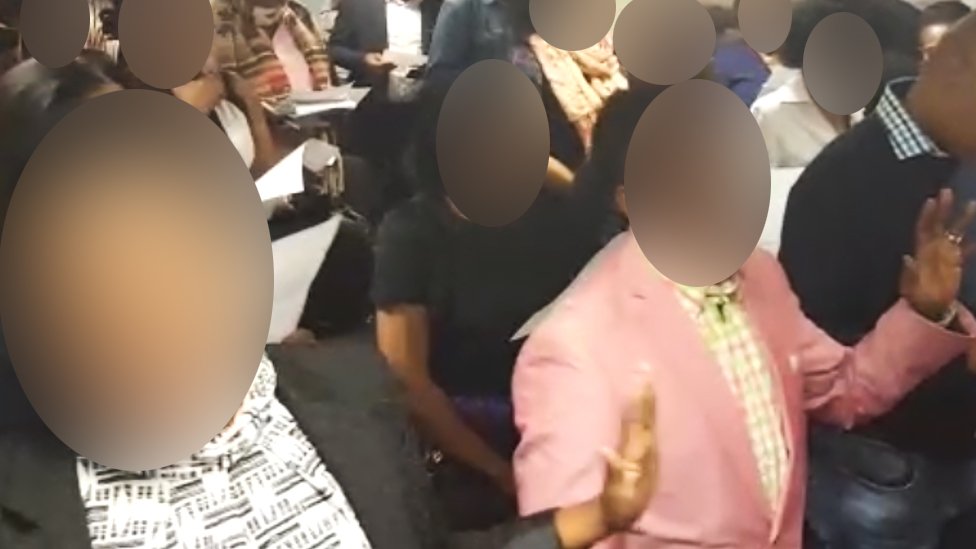
Tout commence par la circulation d’une vidéo amateur qui montre une centaine de membres de la diaspora rwandaise établis sur le territoire londonien entrain de prêter serment d’allégeance au FPR, un exercice que tout nouveau membre de ce parti est appelé à faire. Jusque-là, tout a l’air normal. Qu’on fasse une promesse de rester fidèle à une cause, ce n’est que logique. Sauf que le serment est non seulement illogique et antidémocratique, mais aussi anticonstitutionnel.
Suivantes sont les paroles prononcées dans ce fameux serment :
« A cette étape indéniable que je franchis, Moi… (Nom et prénom) après avoir bien appris, bien compris et discerné l’assermenté du FPR, je prête serment en jurant
Avoir bien appris, compris et discerné le sens de mon engagement au parti avec les autres membres ;
Sauvegarder et être gardien du parti en combattant contre tous les “ennemis du pays” partout où ils seraient et par tous les moyens ;
Respecter sans discuter toutes les directives du parti FPR, actuelles et celles qui viendront ;
Me préparer à être tué par crucifixion comme tout malfaiteur, si jamais je venais à transgresser une directive du parti, car j’aurais trahi tous les rwandais.”
« Le serment existe, presque inchangé, depuis la formation du FPR en 1987. Les tentatives des détracteurs de le présenter à tort comme quelque chose de sinistre sont pathétiques ».
Un serment anticonstitutionnel et antidémocratique
L’article 159 de la Constitution rwandaise telle que révisée à ce jour prévoit que la défense nationale est assurée par les forces de défense rwandaises (FRD). En jurant pour « combattre les ennemis du pays », les membres du FPR se prennent pour membres de l’armée nationale. C’est anticonstitutionnel.
L’article 55 de la même Constitution donne droit à tout Rwandais d’adhérer à un parti politique de son choix ou de n’adhérer à aucun parti. Transgresser la directive du FPR revient à choisir ne plus faire partie de cette organisation, un droit constitutionnel. Que le FPR tue par crucifixion quelqu’un qui exerce son droit, c’est plus que pathétique. Rappelons qu’au Rwanda la peine de mort est abolie depuis le 25 juillet 2007. Et puis, en quoi trahir le FPR, un parti politique comme tous les autres, signifie trahir tous les Rwandais même ceux qui appartiennent à d’autres mouvements politiques ?
Sauf dans des républiques bananières, dans quel autre pays du monde un parti politique contraindrait les citoyens de « respecter ‘sans discuter’ toutes les directives ‘actuelles’ et ‘celles qui viendront’ » sans savoir si, le moment venu, celles-ci répondront aux besoins ou satisferont les intérêts socioéconomiques et politiques, entre autres ?
Conclusion :
A vouloir justifier un serment aussi ignoble, antidémocratique et anticonstitutionnel dans un pays qui se targue d’être un état de droit sous prétexte que le serment existe et reste le même depuis 1987, le FPR mis en difficultés, n’a plus d’arguments et invoque sa propre turpitude. Franchement, ce mouvement est voué à disparaitre.
PHOTO ROBERT SKINNER, ARCHIVES LA PRESSELéon Mugesera a été expulsé du Canada en 2012 au terme d’une saga judiciaire portant sur son immigration au pays, en 1993 ; il a ensuite été jugé au Rwanda pour incitation au génocide.
Le Rwanda s’est livré à un « traitement cruel, inhumain et dégradant » à l’égard de l’ancien résidant canadien Léon Mugesera, a statué vendredi la Cour africaine des droits de l’homme et des peuples.
Le jugement ne change pas la condamnation à la prison à vie de Léon Mugesera, reconnu coupable d’incitation au génocide par un tribunal rwandais en 2016, mais blâme Kigali pour ses conditions de détention.
La Cour africaine conclut également que le Rwanda a violé le droit à la vie et le droit à la famille de l’ancien résidant de Québec.
En revanche, l’État rwandais n’a pas violé le droit à la défense de Léon Mugesera, tel que l’alléguait la poursuite déposée en 2017 devant le tribunal basé à Arusha, en Tanzanie.
« Nous sommes très contents que la souffrance de Léon soit reconnue enfin », a déclaré à La Presse sa femme, Gemma Uwamariya.
La famille espère un jour « revoir vivant celui qui [lui] a sauvé la vie » en lui faisant fuir le Rwanda à l’aube du génocide de 1994, confie Mme Uwamariya.
Nous implorons le Canada de s’assure que le Rwanda cesse immédiatement les souffrances cruelles dont Léon est victime.
Gemma Uwamariya, la femme de Léon Mugesera
Le cabinet du ministre des Affaires étrangères du Canada, François-Philippe Champagne, n’avait pas réagi au jugement au moment d’écrire ces lignes.
Dédommagement de 32 000 $
Dans son jugement, la Cour africaine des droits de l’homme et des peuples condamne le Rwanda à verser 25 millions de francs rwandais, soit près de 33 000 $, à Léon Mugesera et sa famille, dont 10 millions à titre de préjudice moral.
Elle ordonne également qu’un médecin indépendant soit désigné pour évaluer l’état de santé de Léon Mugesera et déterminer les « mesures nécessaires à son assistance ».
Le tribunal a aussi rejeté la demande de Léon Mugesera d’ordonner sa remise en liberté et l’annulation de sa condamnation pour incitation au génocide, estimant que le litige portait sur ses conditions de détention et non pas sur la légalité de sa détention.
La Cour africaine a refusé également d’ordonner au Rwanda d’entamer des discussions avec le Canada pour que Léon Mugesera puisse purger le reste de sa peine d’emprisonnement à perpétuité au Canada, affirmant que cela relève de la compétence des États concernés et non du tribunal.
Léon Mugesera a été expulsé du Canada en 2012 au terme d’une saga judiciaire portant sur son immigration au pays, en 1993 ; il a ensuite été jugé au Rwanda pour incitation au génocide.
Au terme d’un procès jugé inéquitable par ses avocats, Léon Mugesera a été déclaré en 2016 coupable d’incitation publique à commettre un génocide, de persécution et d’enseignement de la haine basée sur l’ethnicité par la Haute Cour du Rwanda, qui l’a en revanche acquitté des chefs d’accusation de complot et de complicité de génocide.
Les dates clés de Léon Mugesera
– 1987 : Il obtient son doctorat à l’Université Laval, à Québec.
– Novembre 1992 : Il prononce, dans le nord-ouest du Rwanda, le discours qui lui a valu d’être accusé d’incitation au génocide.
– Août 1993 : Il arrive au Canada avec son épouse et leurs cinq enfants mineurs. Ils ont tous le statut de réfugiés.
– Juillet 1996 : La Commission de l’immigration et du statut de réfugié du Canada (CISR) ordonne son expulsion, considérant que le discours de 1992 constituait une incitation au meurtre, une incitation au génocide et à la haine ainsi qu’un crime contre l’humanité.
– Janvier 2012 : Après des années de démarches judiciaires, il est finalement renvoyé au Rwanda par le Canada.
– Janvier 2013 : Début de son procès pour incitation au génocide à Kigali, au Rwanda.
– Avril 2016 : Il est condamné à l’emprisonnement à perpétuité.
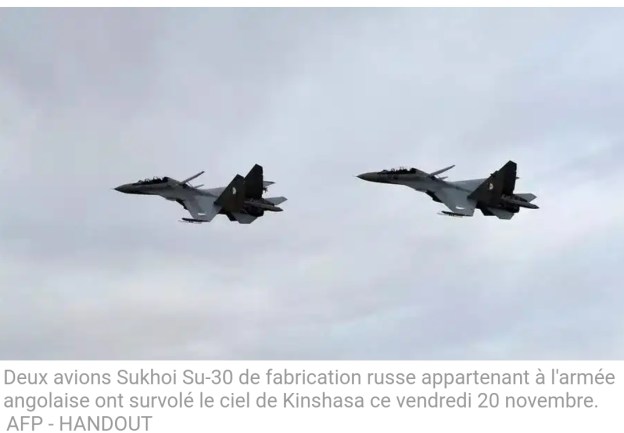
L’Angola. Oui, parlons un peu de l’Angola puisqu’il se raconte des choses depuis le passage de Félix Tshisekedi dans ce pays et la signature d’un accord de coopération militaire entre Luanda et Kinshasa. Dans le camp de la talibanie, on exulte en criant déjà victoire à la suite du fameux «meeting aérien» qui s’est déroulé dans le ciel kinois ce vendredi 20 novembre. Mais que peut-on retenir de tout ceci ?
Le fait que Félix Tshisekedi ait sollicité l’Angola pour l’aider dans le bras de fer qui l’oppose à Joseph Kabila signifie que lui Félix n’a pas confiance en l’armée congolaise, ce qui peut se comprendre. Mais contrairement à ce que pensent les intégristes de la secte et certaines personnes, l’Angola n’a jamais été le « faiseur de rois » en RDC. Jamais.
En 1997, l’Angola était intervenu aux côtés de l’AFLD à l’étape de Kisangani sur demande américaine, mais aussi et surtout parce que son adversaire de toujours, l’UNITA, s’était positionnée aux côtés du président Mobutu. Cette implication de l’Angola aux côtés de l’AFDL n’avait pas changé grand-chose sur le terrain militaire.
En 1998, l’intervention de l’Angola, mais aussi du Zimbabwe, aux côtés de Laurent-Désiré Kabila avait permis de défaire les troupes rwando-ougandaises au niveau du triangle Kitona-Banana-Moanda, sans plus. Avec le recul, on peut affirmer que l’implication de Luanda avait pour but de rééquilibrer les rapports de force sans nécessairement donner un avantage militaire conséquent à la RDC dont la partie Est était restée sous occupation des forces d’invasion jusqu’à la signature des accords de paix.
Sous Joseph Kabila, l’Angola a été un bon protecteur, mais pas un « faiseur de Rois » pour la simple et bonne raison que le pouvoir de Joseph venait de loin… si vous voyez ce que je veux dire. Le soutien que semble apporter l’Angola à Félix Tshisekedi aujourd’hui pourrait-il faire la différence en cas de confrontation armée avec Joseph Kabila ?
Dans une certaine mesure seulement puisque l’enjeu est régional et dépend de la position des acteurs composant aussi bien cet écosystème que l’échiquier international. Je vais y revenir dans une prochaine analyse sur Sputnik.
Pour le reste, il faut rappeler à certains rêveurs que l’Angola a besoin d’une RDC faible, que le soutien militaire qu’il avait apporté à Laurent-Désiré Kabila en 1998 n’avait pas empêché que celui-ci se fasse descendre dans son bureau…
By Andrew Harding Africa correspondent, BBC NewsPublished6 hours ago
image captionThe footage, which the BBC has chosen to blur, shows members of the group promising to fight “enemies” of Rwanda
Leaked footage of a controversial “oath” ceremony at the Rwandan High Commission in London has fuelled allegations of an aggressive global crackdown on dissent by the authoritarian government of the small East African nation, dubbed the new “North Korea” by its critics.
Members of the Rwandan diaspora have told the BBC that such ceremonies are commonplace and designed to instil fear and obedience.
One man said his relatives back in Rwanda had been abducted and possibly killed to punish him for refusing to co-operate. The Rwandan authorities have dismissed the allegations as false and unsubstantiated.
In the video footage, recently circulated on WhatsApp, more than 30 individuals can be seen standing in a crowded conference room at the Rwandan embassy in the UK, raising their hands and pledging loyalty to the governing party, the Rwandan Patriotic Front (RPF).
“If I betray you or stray from the RPF’s plans and intentions, I would be betraying all Rwandans and must be punished by hanging,” the group says, in Kinyarwanda, while also promising to fight “enemies of Rwanda, wherever they may be”.
The RPF’s use of an embassy – which in London is close to Marylebone Station – for an overtly political pledge is, in itself, noteworthy.
‘They’re terrified’
But, while some of those attending the ceremony – understood to have taken place in 2017 – may well have been genuine supporters of the governing party, now living abroad, others have told the BBC that many attendees were there under duress.BBC”This is what happens everywhere. It’s routine. Either you take [the oath] or you are [the] enemy. It is black and white”David Himbara Ex-adviser to President Kagame
“I am certain the majority of people taking that oath did not believe it. We were lying to protect ourselves and our families back in Rwanda,” said one person who was – according to our investigation – present at the ceremony, but who asked us not to reveal their name for fear of reprisals.
“This is what happens everywhere. It’s routine. Either you take [the oath] or you are [the] enemy. It is black and white,” said David Himbara, who was once a senior adviser to Rwanda’s President Paul Kagame.
He is a Canadian citizen, academic and activist who says his life has repeatedly been threatened by Rwanda’s security services.
“The vast majority go because they’re terrified. They think that if they don’t go, something will happen to their family [in Rwanda],” said Rene Mugenzi, a British-Rwandan human rights activist, who was recently convicted of theft in the UK and jailed.
“You need to be active [in the RPF]. Even if you are neutral… they suspect you to be supporting opposition groups,” he said.
Asked about the “oath” ceremony, the Rwandan High Commission replied, by email, that members of the diaspora used its conference room for a variety of cultural engagements and that participation in an RPF loyalty pledge was legal and “entirely of their own choice and no-one is forced to do so”.
‘My brothers were abducted’
But the BBC has heard new evidence that Rwanda’s government has not only sought to threaten members of the diaspora seen as disloyal, but also that it seeks to punish such people by targeting their relatives still living in Rwanda.
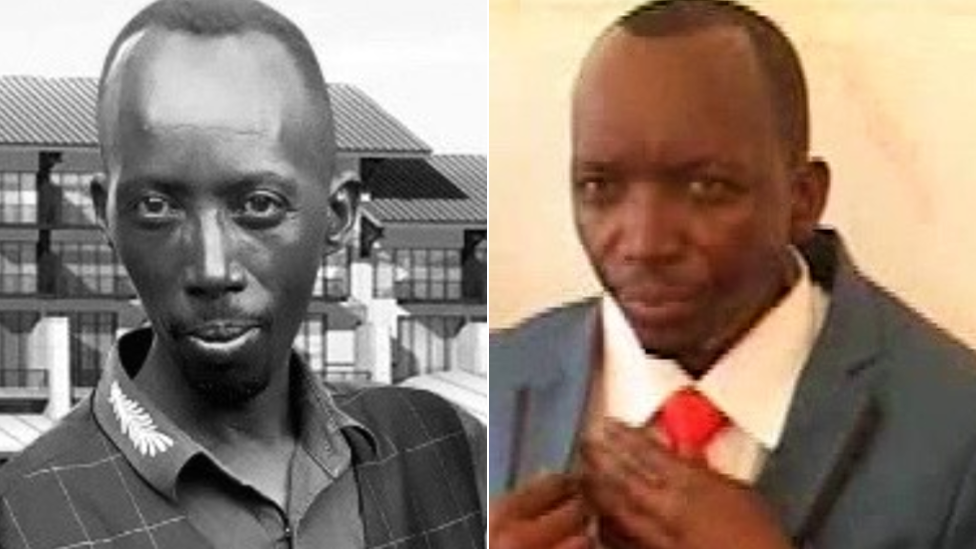
image captionFamily photos of Jean Nsengimana (L) and Antonine Zihabamwe (R), who have been missing for more than a year
“In order to intimidate me, they abducted my two brothers. They were never involved in politics. They were on Rwanda soil. Why should they be paying such a heavy price for doing nothing?” asked an emotional Noel Zihabamwe, from his home in Australia.
Mr Zihabamwe is a prominent member of the Rwandan diaspora in Sydney, who came to the country as a refugee in 2006, seeking to escape what he saw as an increasingly stifling and repressive political climate.
He says his refusal to actively support the RPF government prompted a public death threat from a visiting Rwandan diplomat in late 2017, which he reported to the Australian authorities.Noel ZihabamweThey often use this kind of kidnapping or murdering family members. This has to stop. We have had enough”Noel Zihabamwe A Rwandan living in Australia
That was followed by the alleged abduction of his two brothers, Jean Nsengimana and Antonine Zihabamwe, who were reportedly taken off a bus by police officers near the Rwandan town of Karangazi in September 2019 and have not been seen again.
“They often use this kind of kidnapping or murdering family members. This has to stop. We have had enough,” Mr Zihabamwe said.
“We would like to see the Rwandan government restore democratic rights to all citizens, cease targeted killings, kidnappings, illegal arrests and campaigns of intimidation of former citizens, like me, who are living overseas,” added Mr Zihabamwe, who now believes his brothers are probably dead and has decided to speak out in public, despite what he believes are considerable risks for himself and his extended family.
“Why can’t they let the family know where their bodies are, so we can organise a formal funeral? There are many Rwandans outside who have lost or missed their beloved ones.
“I want to speak against injustice. We need leadership that can stand for everyone, not for some,” he told the BBC.
‘No basis to allegations’
The Rwandan High Commission in London dismissed Mr Zihabamwe’s allegations as “tired and recycled” falsehoods and a “cheap ploy by political detractors to get free media attention”.
But allegations such as these are considered credible by many researchers, human rights groups and foreign diplomats, who say the Rwandan authorities appear to have calculated that – despite provoking some criticism from Western governments – such actions, which have included several targeted assassinations abroad, never appear to result in any long-term damage to Rwanda’s international relations.
The Rwandan government has received widespread global praise and financial support, over decades, for its hugely successful development agenda, which has helped to combat poverty and transformed Rwanda into one of the continent’s most impressive economies.
“Their view is – we can do what we like, kill who we like,” said one source, speaking on condition of anonymity.
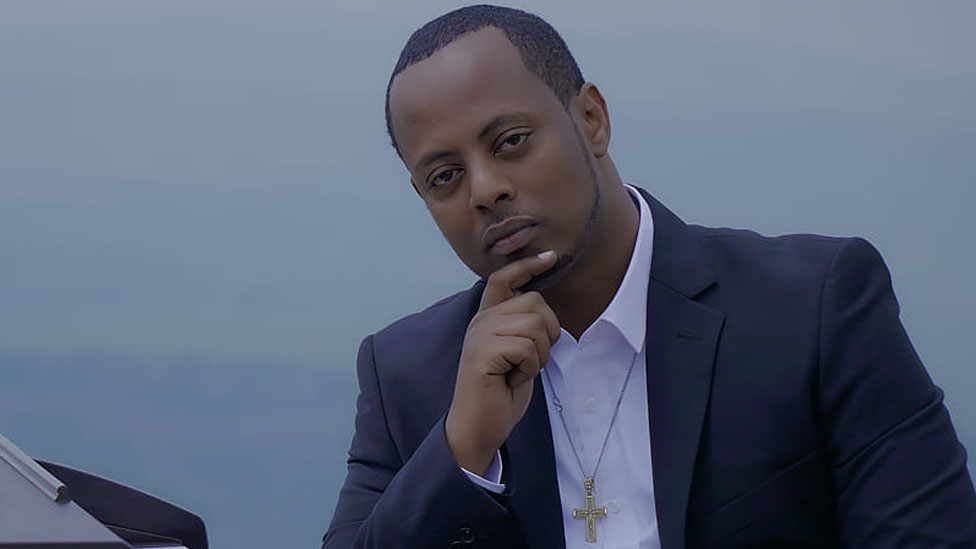
The death earlier this year, in police custody, of the popular gospel singer Kizito Mihigo also stirred huge anger.
image captionGospel singer Kizito Mihigo was found dead earlier this year, at the age of 38, in a police cell
Kizito, as he was popularly known, had tried to cross Rwanda’s border illegally, the authorities said. They say he killed himself – a version which is widely disputed in the diaspora and by many analysts.
“If you’re Rwandan, it’s simply safer to stay silent,” said Sarah Jackson, Amnesty International’s deputy director for East Africa.
“The Rwandan authorities have a whole toolbox of tactics that they use to supress dissent at home and abroad, ranging from harassment to threats to illegal detention, disappearances, torture, and even extending to returning Rwandan dissidents from other countries back to Rwanda without going through extradition proceedings… and to threatening family members too.”
The Rwandan High Commission in London said such allegations had no basis, and were being spread by a “handful of opponents… in order to damage the image and continued development journey of Rwanda”.
‘Totalitarianism’
President Kagame officially secured almost 99% of the vote in Rwanda’s last presidential election in 2017.
In London, Abdulkarim Ali, an official in the opposition Rwandan National Congress, said: “Either you pay allegiance to the RPF or… you become an enemy of the state. We normally compare it to North Korea.”
In Canada, Mr Himbara described the Rwandan government’s ideology as one of “totalitarianism – a government that wants to control all aspects of the Rwandan people, even in the diaspora”.
The Rwandan High Commission in London said the government’s main focus was to lift Rwandans out of poverty and create a good quality of life and opportunities for all of them.
“The focus of the High Commission is not on a handful of opponents who consistently spread false information in order to damage the image and continued development journey of Rwanda.”
Un nouvel exemple caractérisé de censure et d’exigence de repentance : l’ « affaire » Julie d’Andurain ou comment les officines du général Kagamé et leurs relais médiatiques font pression sur la France
C’est une « édifiante » histoire que je vais exposer ici et qui mérite d’être connue par le public le plus large ; d’abord par les naïfs qui croient encore que nous vivons dans un pays de liberté. Le 5 avril 2019, cédant une nouvelle fois à son tropisme de la repentance, le président Macron décida la création d’une « Commission chargée de mener un travail de fond centré sur l’étude de toutes les archives françaises concernant le Rwanda entre 1990 et 1994 (afin) d’analyser le rôle et l’engagement de la France durant cette période. »
Première remarque, tout a déjà été dit et écrit sur le sujet, notamment à travers le Rapport d’information de la commission d’enquête parlementaire présidée par M. Paul Quilès publié au mois de décembre 1998. Mais aussi à travers mes expertises devant le TPIR 10 ans d’expertise et mon livre Rwanda, un génocide en questions.
La seconde remarque pose un sérieux problème de crédibilité car aucun des membres de la dite commission n’a travaillé sur le Rwanda, ni même sur l’Afrique des Grands Lacs ou encore sur l’Afrique en général… Quant aux deux seuls spécialistes français, experts durant des années auprès du TPIR (Tribunal Pénal International pour le Rwanda), à savoir André Guichaoua pour l’Accusation et Bernard Lugan pour la Défense, tous deux ont été écartés d’emblée de cette insolite commission… En revanche, y siègent une archiviste paléographe, deux professeurs de droit public, un spécialiste du génocide des Arméniens, une spécialiste des « femmes et du genre » ( ?), un conseiller d’Etat, deux spécialistes de la Shoah, une « spécialiste du général de Gaulle » (?), un spécialiste « des organisations (?) », un professeur certifié du secondaire spécialiste des « archives secrètes », une doctorante (traduction une étudiante qui n’a pas soutenu de thèse) spécialiste des « ressources images, photos et vidéos » et Julie d’Andurain, spécialiste d’histoire militaire contemporaine.
A cette « liste à la Prévert », manque le président de la commission, à savoir le professeur Vincent Duclerc, dont la thèse porte sur « L’engagement des savants dans l’affaire Dreyfus », et le mémoire d’habilitation sur « L’histoire des engagements démocratiques depuis le XIXe siècle »… Une double garantie de compétence scientifique pour appréhender la complexité des questions ethno-politiques du Rwanda…Comment en effet oser prétendre analyser les archives françaises consacrées à ce pays sans en connaître l’environnement, la complexe histoire, les rapports entre les hommes de la houe et de la glèbe et ceux de la vache et de la lance ? Toutes choses totalement inconnues des membres de cette insolite commission. Le Père Ubu en rirait de bon cœur…
Or, au sein de cette commission à la « crédibilité » pour le moins « problématique », Julie d’Andurain se trouva victime d’un montage digne des pires procès de Moscou, avec, dans le rôle des dénonciateurs et du procureur, comme à l’habitude en pareil cas, ses « chers collègues ». Une « affaire » montée de toutes pièces par le tandem Canard Enchaîné – Mediapart alimenté en sous-main par les« compagnons de route » du général Kagamé et autres « amis démocrates desdictateurs ».
En toute modération, objectivité et retenue, Mediapart titra ainsi le 13 novembre 2020 « Une historienne décrédibilise la commission sur le rôle de la France au Rwanda (…) et suscite l’indignation ». Puis les accusations de « négationnisme » furent lancées ici et là.
Quel crime avait donc commis Julie d’Andurain ? Pourquoi ce lynchage ? Tout simplement parce que, ayant été enseignante à l’Ecole militaire entre 2010 et 2017, elle était accusée de ne pas avoir une vision « objective » de la question du Rwanda…Et cela, naturellement à la différence des autres membres de l’insolite commission qui, eux, tels des agneaux venant de naître sont d’une totale objectivité en la matière, alors que plusieurs d’entre eux ont soit signé des pétitions ou bien manifesté publiquement leur adhésion à la thèse de la culpabilité de la France… Il faut dire que la malheureuse Julie d’Andurain avait osé soutenir que les détracteurs de l’armée française sont des civils qui ne comprennent pas les contraintes opérationnelles. Pourtant, rien de plus exact et constaté par tous les hommes de terrain. Mais voilà qui a suffi à la meute lancée à ses trousses pour la qualifier d’historienne « négationniste », sous-entendu, à ranger dans la catégorie de ceux qui réhabilitent le IIIe Reich, nient l’existence des camps de concentration et de la Shoah… Une véritable mise à mort scientifique dont Julie d’Andurain aura du mal à se relever.
Mais surtout, et là est la clé de l’affaire, Survie avait relevé des « biais » dans le rapport mi-mandat publié par l’insolite « commission Duclerc ». Et, dans la plus pure méthode stalinienne, de demander : « Etaient-ils dus à Julie d’Andurain ? » Cette aimable question était suivie d’un chantage : « On peut espérer (maintenant que Julie d’Andurain a été exclue de la commission mon ajout) une vision plus nuancée, plus indépendante ». Traduction : Survie, donc le général Kagamé, attend une conclusion du rapport reprenant les thèses de Kigali à travers des « résultats qui pourront aider les décideurs politiques à procéder à la reconnaissance officielle par la France de son rôle précis dans le génocide des Tutsi ».
L’impudence de Survie, officine porte-voix du régime de Kigali est donc sans limites. Pourquoi d’ailleurs en aurait-elle alors qu’elle est totalement immergée dans les cercles du pouvoir politique et médiatique français ?
Quant à Vincent Duclerc, drapé dans la toge immaculée de l’« impartialité », il ne pouvait pas ne pas réagir. Aussi, au nom de cette sacro-sainte « impartialité » dont il ne cesse de se réclamer, accepta-t-il la « mise en retrait », – hypocrite synonyme de démission-, de Julie d’Andurain obtenue à travers d’ « amicales » pressions.
Or, le moins que l’on puisse dire de l’« impartialité » de Vincent Duclerc dans la question qui est au cœur des travaux de l’insolite commission qu’il préside, est qu’elle est « discutable ». En effet, à de nombreuses reprises, et parfois même ès-qualités, comme cela sera publié, avec détails et références, dans le numéro du mois de décembre 2020 de l’Afrique Réelle que les abonnés recevront le 1er décembre, il a en effet montré qu’il est partisan de la thèse de la « culpabilité de la France »… ce qui annonce clairement la couleur des conclusions de la commission dont il est le président.
Dans les hautes terres du Forez, l’on a coutume de dire de qui veut monter au mât de cocagne « qu’il doit avoir le fond du froc propre »… Or, visiblement le « cher collègue » Vincent Duclerc a oublié de faire passer le sien à la lessiveuse… Rendez-vous donc à la prochaine parution de l’Afrique Réelle pour plus de détails…
Au sein de la communauté scientifique, on n’hésitait pas à parler de “l’affaire Julie d’Andurain”. L’historienne militaire, membre de la commission chargée de faire la lumière sur le rôle de la France au Rwanda lors du génocide de 1994, est accusée de parti pris. La commission a annoncé samedi 14 novembre dans un bref communiqué qu’elle avait “pris acte” de “la décision” de l’universitaire française de “se mettre en retrait” des travaux.
Polémique après un article du “Canard enchaîné”
D’après le communiqué, cette décision a été prise le 25 août, mais n’a été rendue publique que près de trois mois plus tard. L’annonce survient après la parution fin octobre d’un article du Canard enchaîné qui a déclenché la polémique. L’hebdomadaire a exhumé un texte de l’historienne sur l’opération Turquoise lancée par la France au Rwanda de juin à août 1994. La professeure y estimait notamment que “l’histoire rendrait raison” au bilan de cette opération controversée.
Après la publication de l’article du Canard enchaîné, plusieurs chercheurs et universitaires avaient dénoncé les “erreurs”, le “parti pris”, voire le “négationnisme” du texte de Julie d’Andurain. Ils avaient estimé qu’il discréditait le travail de la commission.
Le rapport attendu début avril
“Cette mise en retrait volontaire signifie que madame d’Andurain ne consulte plus d’archives, qu’elle ne participe plus aux réunions d’équipe et qu’elle ne contribue pas à la rédaction du rapport”, a expliqué à l’AFP l’historien Vincent Duclert qui préside la commission. “Le rapport sera remis le 5 avril au président Macron, lequel le rendra aussitôt public avec l’intégralité des sources in extenso, comme cela a toujours été décidé et annoncé”, a assuré le haut fonctionnaire.
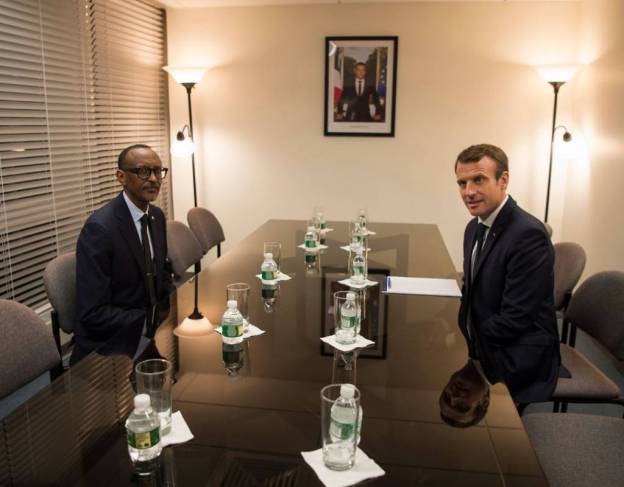
Mise en place en avril 2019 par Emmanuel Macron, cette commission indépendante de 15 membres doit examiner les archives françaises relatives à l’implication politico-militaire de Paris au Rwanda entre 1990 et 1994. Le chef de l’Etat s’était engagé à cet accès facilité à de tels documents, en mai 2018, lorsqu’il avait reçu le président rwandais Paul Kagame à l’Elysée.
Les zones d’ombre sur le rôle de la France dans le génocide rwandais empoisonnent les relations entre Paris et Kigali depuis plus de 25 ans. Parmi les points les plus disputés figurent l’ampleur de l’assistance militaire apportée par la France au régime du président Habyarimana de 1990 à 1994, ainsi que les circonstances de l’attentat qui a coûté la vie au chef d’Etat, le 6 avril 1994, et déclenché le génocide.
1:Gusura bariya baturage ba Kangondo bagiye kumara umwaka mumatongo y’amazu yabo basenyewe n’abayobozi b’igihugu.Bakaba barimwe ingurane.Dore ko kuva basenyerwa ntamuyobozi n’umwe wigeze uhagera ngo abahumurize,yumve ibibazo byabo, abanyamakuru bagerageje kuhagera bose barafunzwe.Bariya baturage bari muri diyoseze ayoboye.kuba yabasura akanabatabariza munzego z’ibishinzwe biri munshingano ze. Kandi byashimisha Nyirubutungane Papa udahwema kubasaba kwegera imbabare, kuvugira abarengana. 2: Gushyingura mucyubahiro abihaye Imana biciwe i Gakurazo.
Ngibyo ibyo nifuzaga kugeza kuri Cardinal wacu. Ntabwo ari byinshi rwose kandi ndumva bitamugora. Ahari ubushake haboneka inzira .
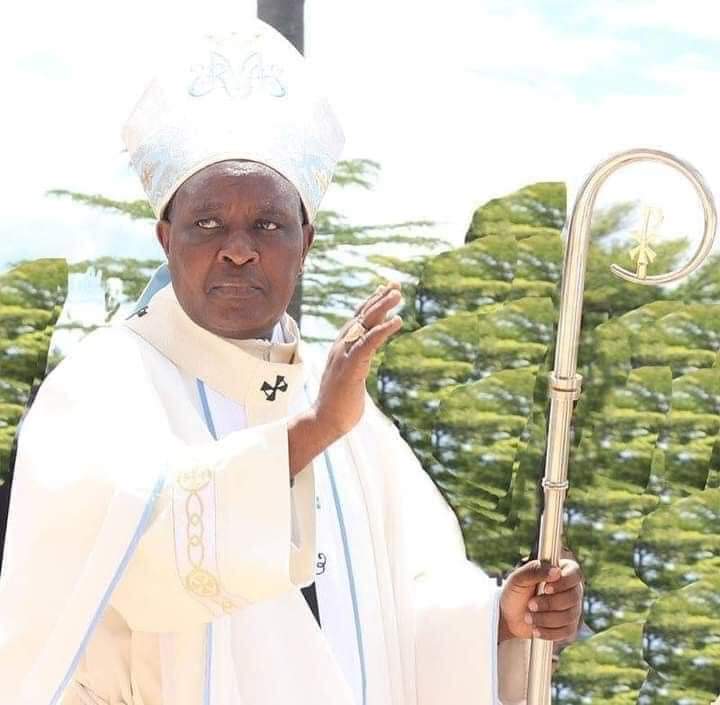
Mgr Antoine Kambanda
Nyiricyubahiro Cardinal Antoni Kambanda, niba ntagihindutse nanyuma yo kuva i Roma mwambitswe ingofero y’ubu Cardinal, nzakoresha ubundi buryo mbahamagare mbagezeho ibi bibazo kimwe n’ibindi Abanyarwanda bakomeje guhura nabyo bitewe na leta y’a FPR.
Nshobora no kuzaza i Roma k’umunsi w’iyimikwa ryanyu mfite pancarte iriho amashusho y’Abasenyeri bishwe n’abasirikare ba Kagame bakaba barundiye mucyobo rusange i Gakurazo mwarananiwe kubashyingura mu cyubahiro. Nshobora no kuzitwaza ishusho nini cyane y’abaturage ba Kangondo basenyewe na leta ya Kagame bakaba barimwe ingurane, bari muri diyoseze muyoboye, ntimwigeze mubasura cg ngo mubatabarize. Ndacyari gusaba roho mutagatifu kunyobora no kumpa amagambo y’igitaliyani n’ikilatini nzandika kuri pancartes zanjye.kuri 28/11 mubo muzifotozanya nanjye ndimo mfite pancartes zanjye. Turikumwe.









 GAHUNDE